
Neck Lift Surgery in Mumbai: A Defined Jaw-to-Neck Line, Built From the Layer That Caused the Problem

Indian Board Certified Plastic Surgeon
M.CH, MS, ISAPS Mentor
16000+ Cosmetic Surgeries
270+ Necklift Surgery
Sometimes the face still looks relatively fresh and the neck tells a different story: vertical bands appear, loose skin gathers beneath the chin, or the once-clear line between jaw and neck becomes blurred. A neck lift treats those structural changes rather than simply tightening the skin surface depending on your anatomy, it may address loose skin, the platysma muscle and fat beneath the chin. At Allure Medspa, Dr. Milan Doshi assesses the face and neck together in Andheri, Mumbai, because the first question is not which procedure you want, but which layer is actually causing the change.
Neck Lift Surgery Before and After Images
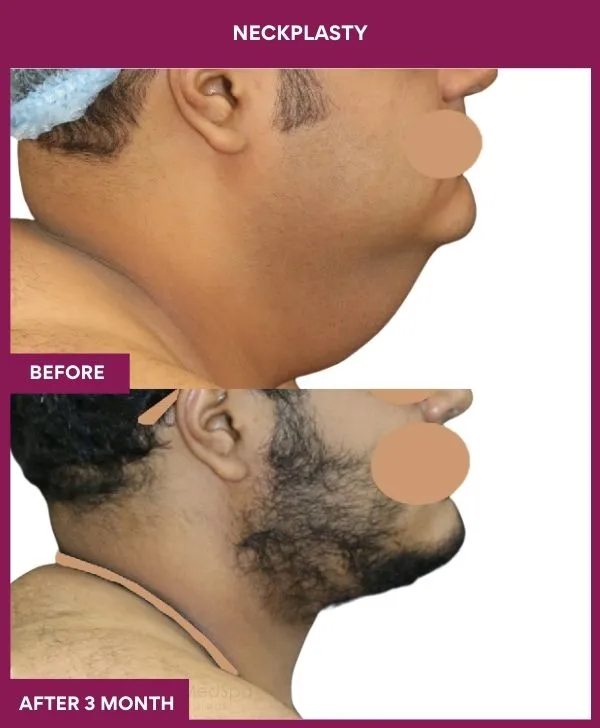
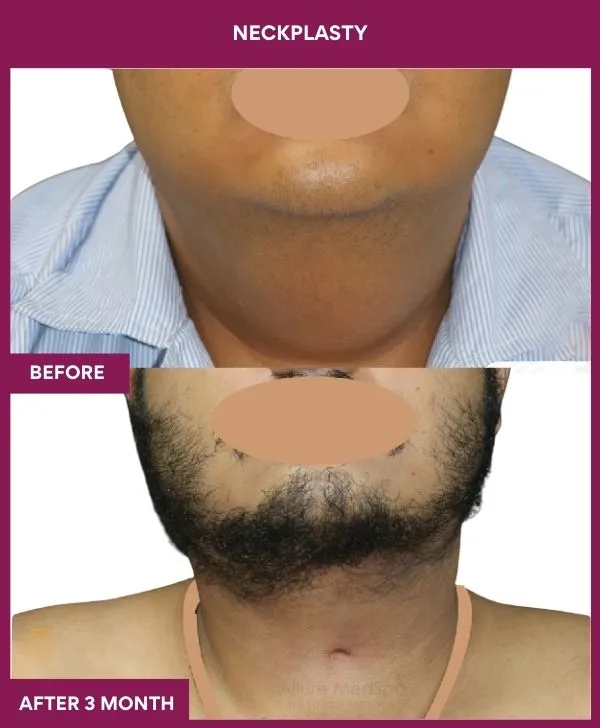
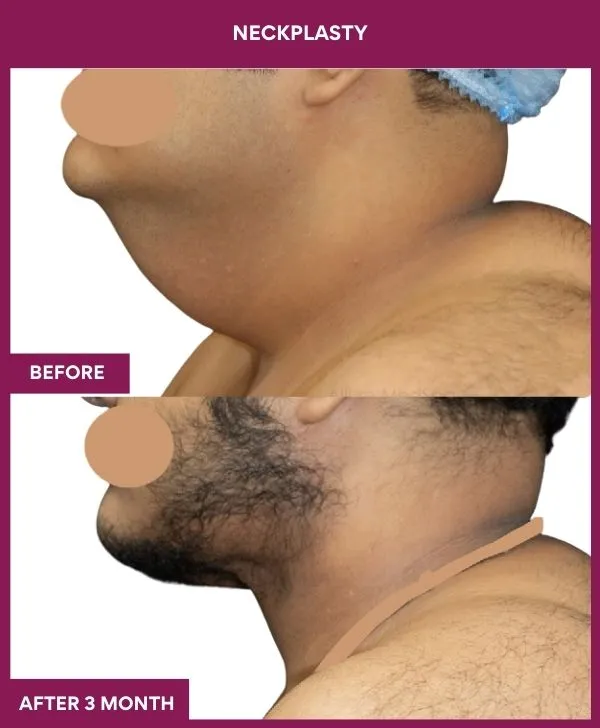
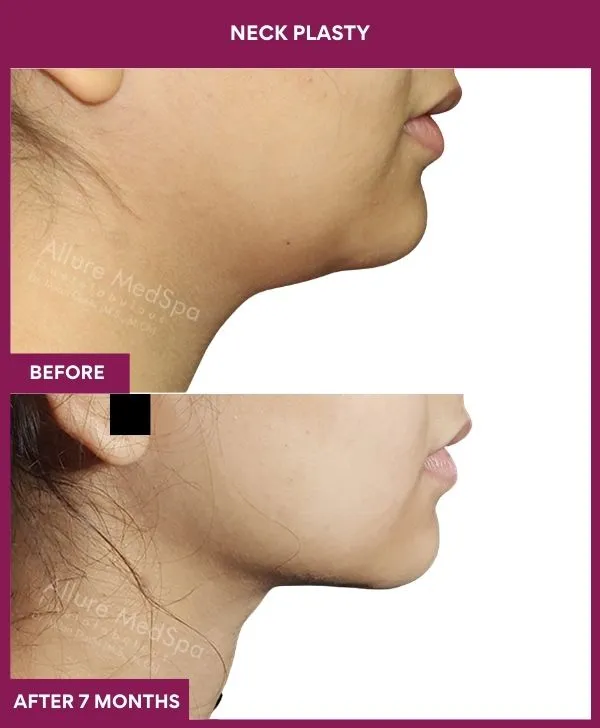
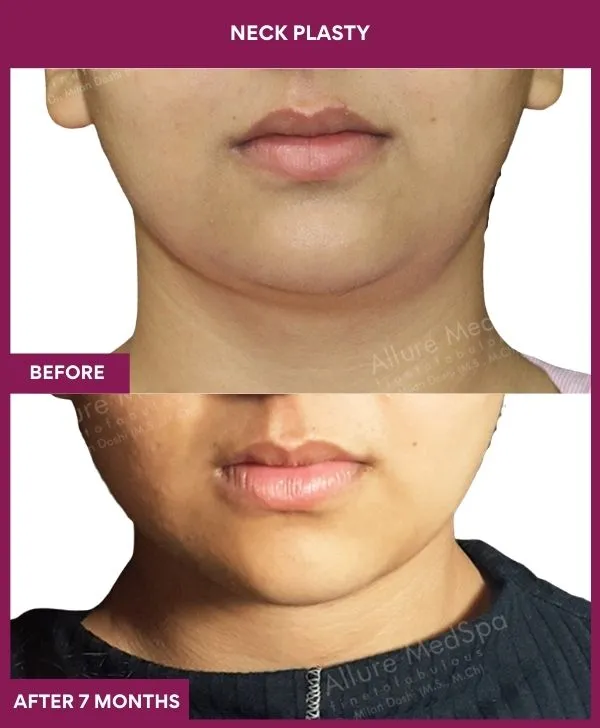
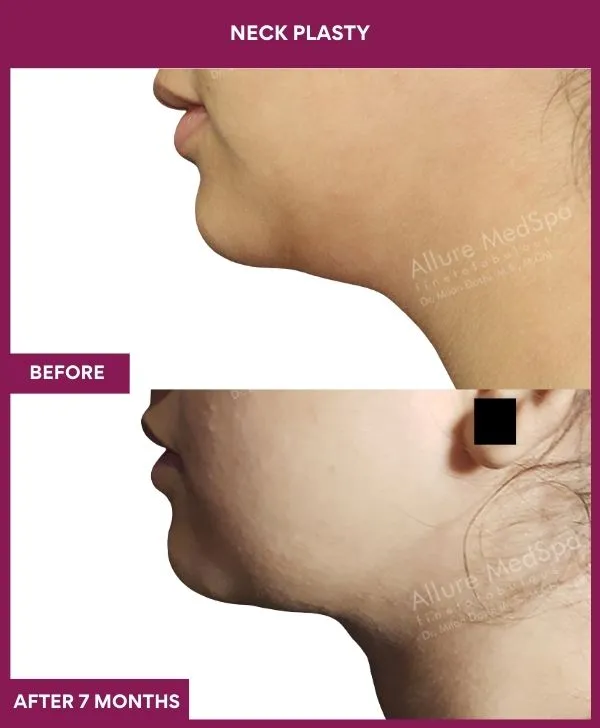
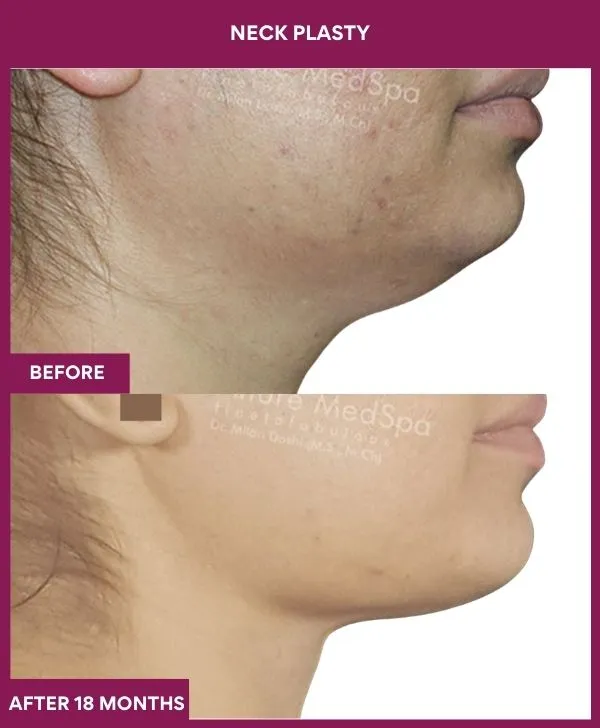
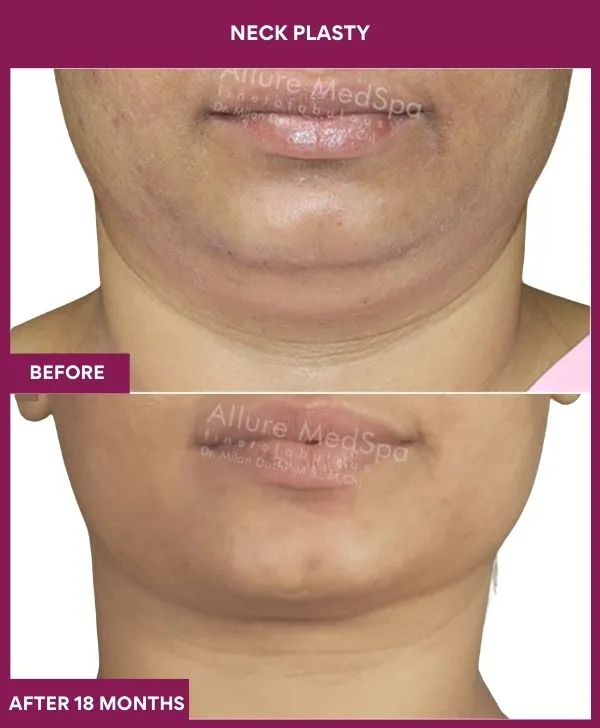
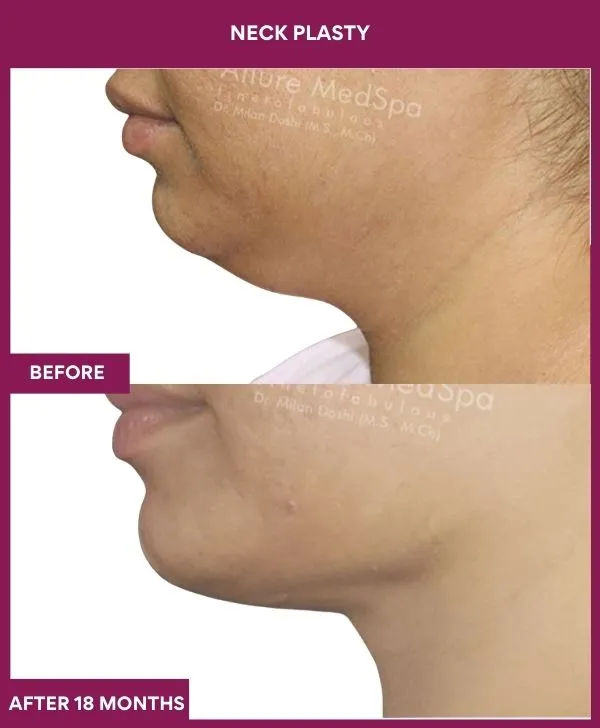
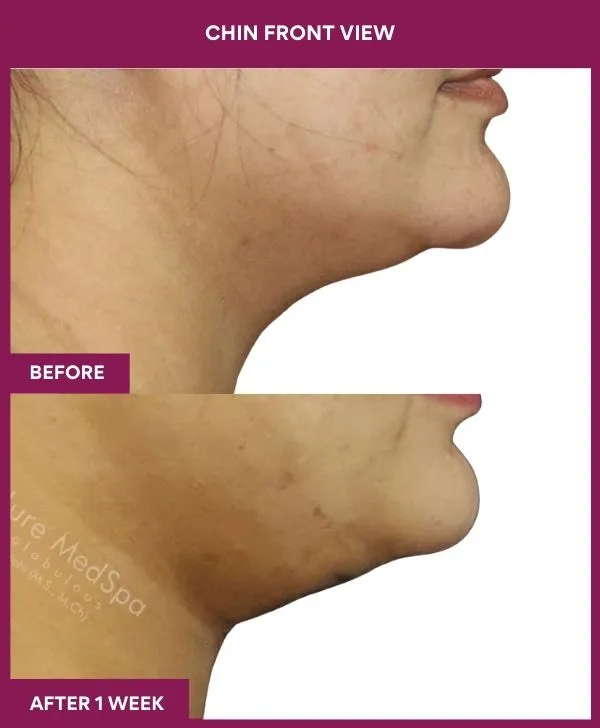
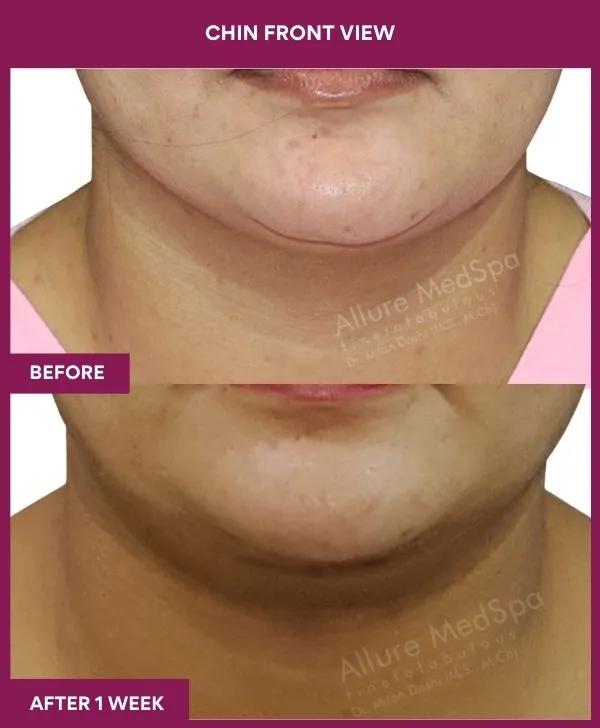
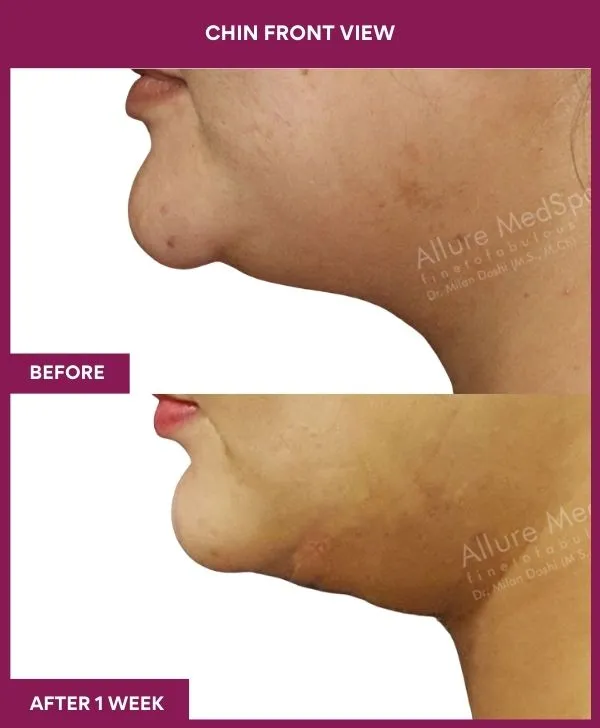
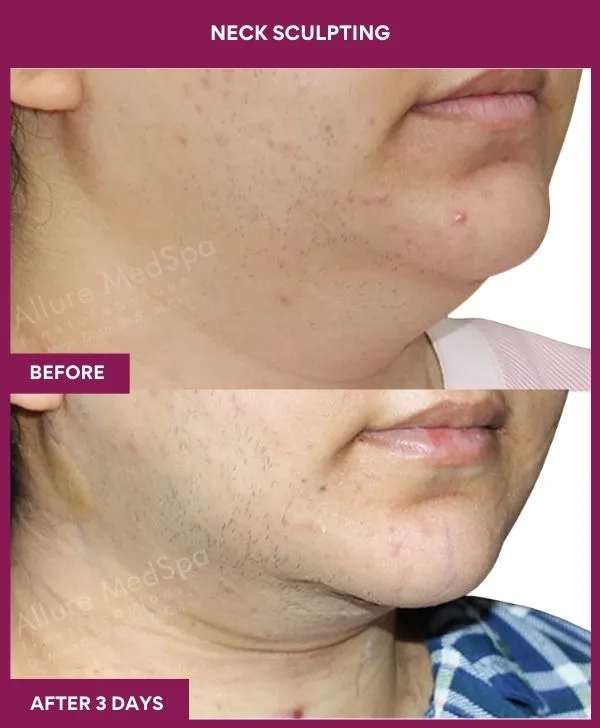
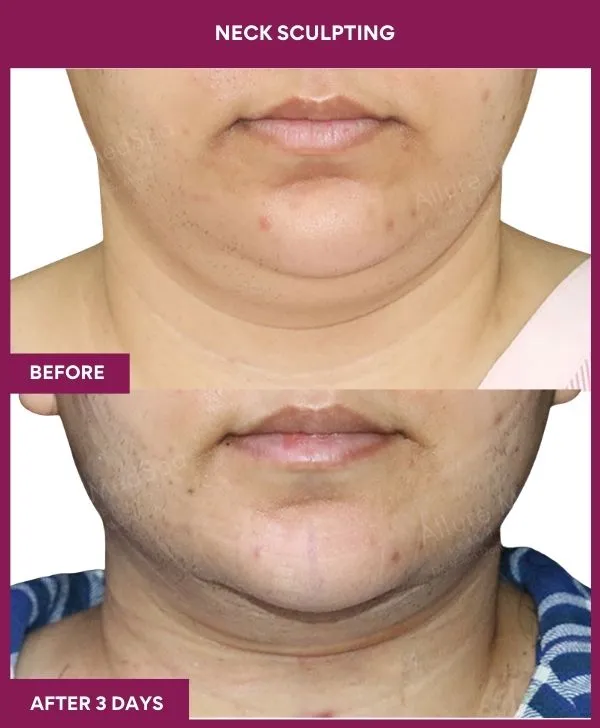
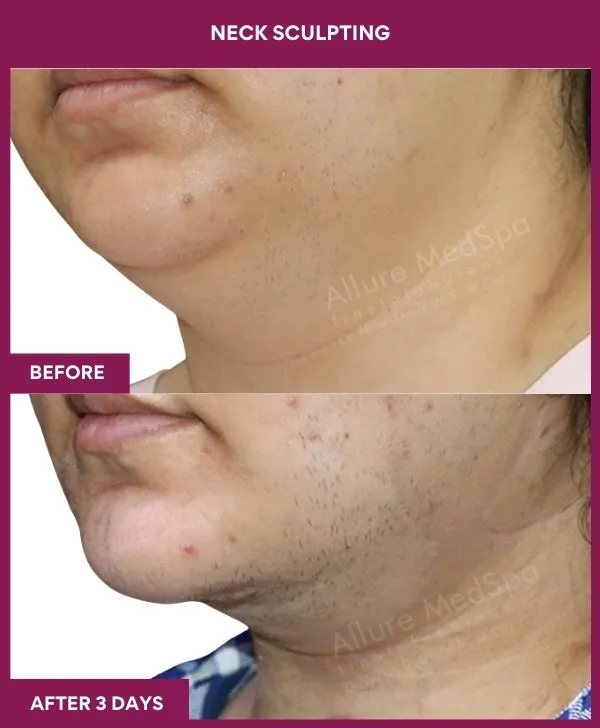
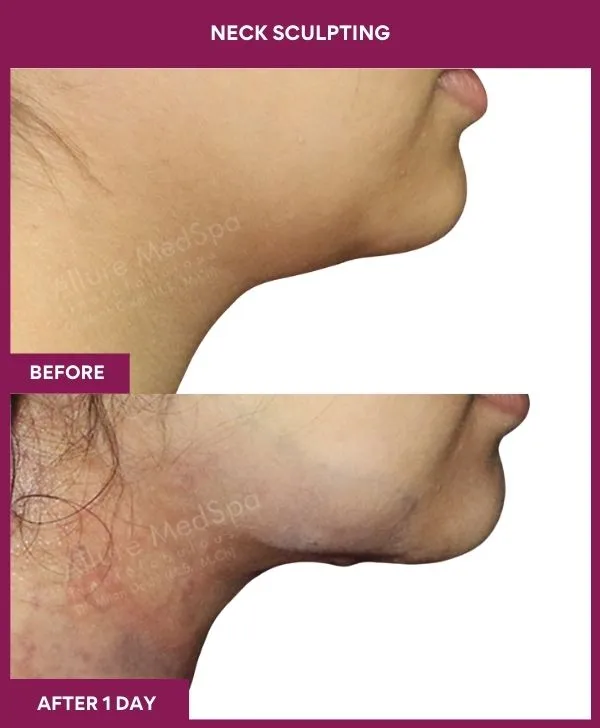
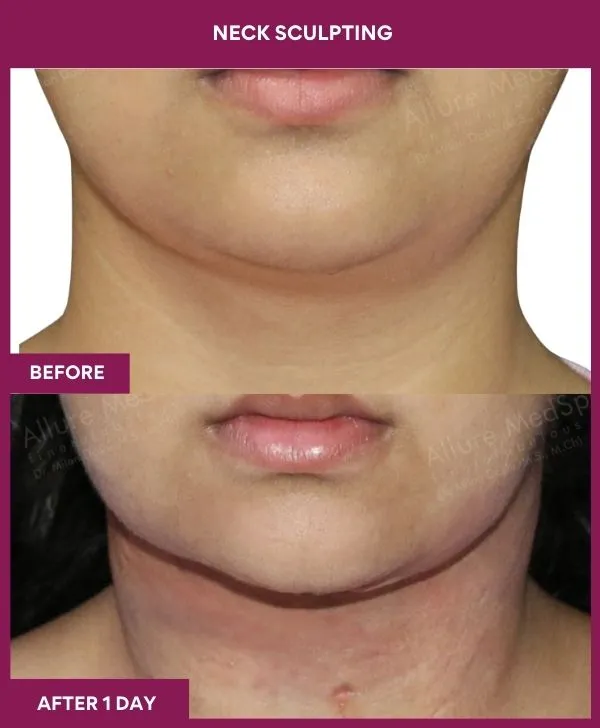
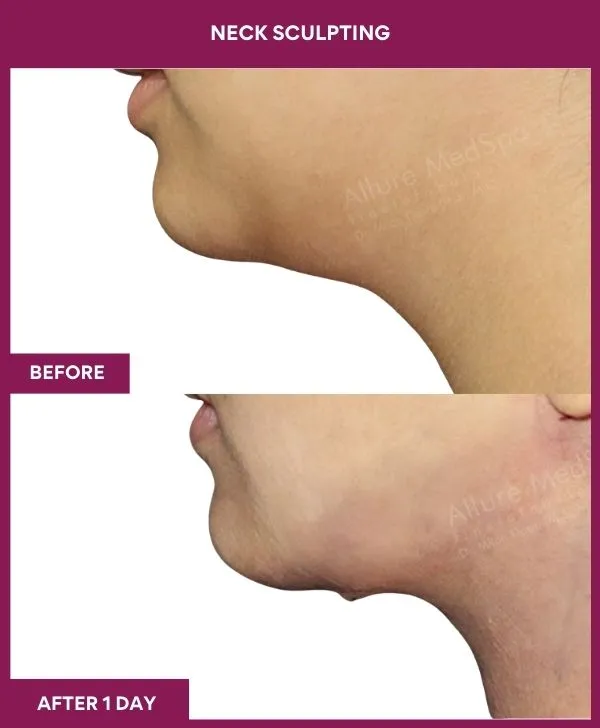
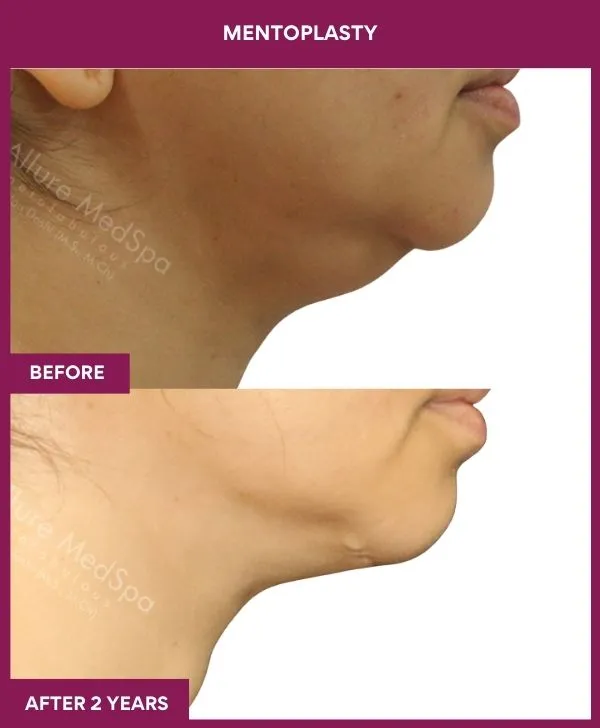
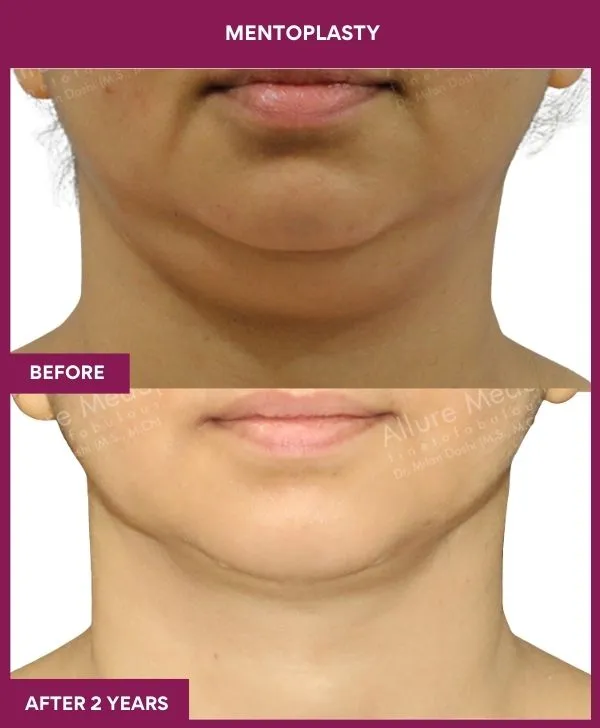
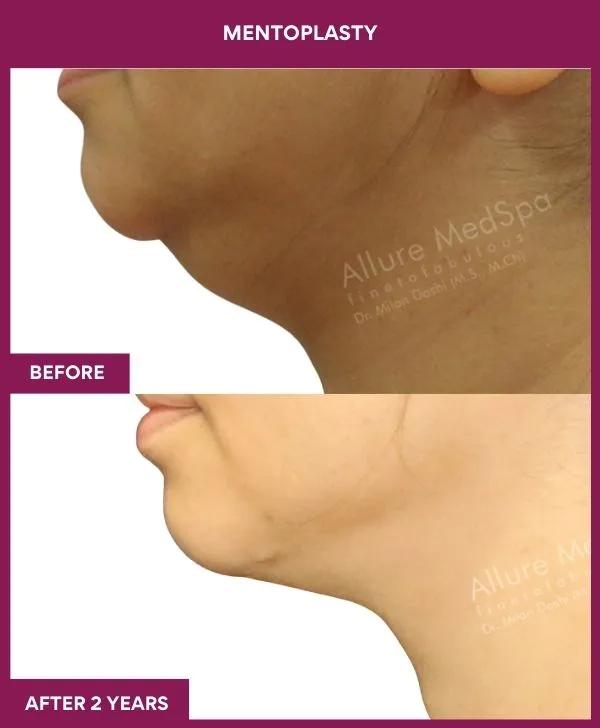
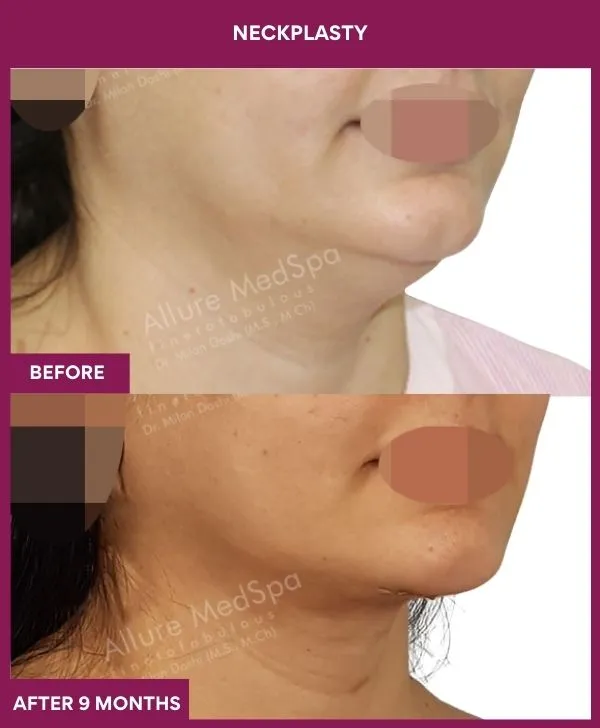
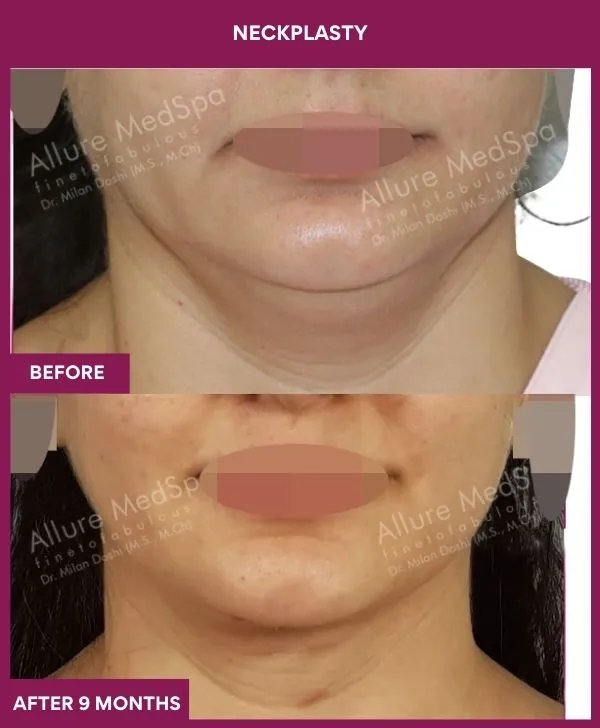
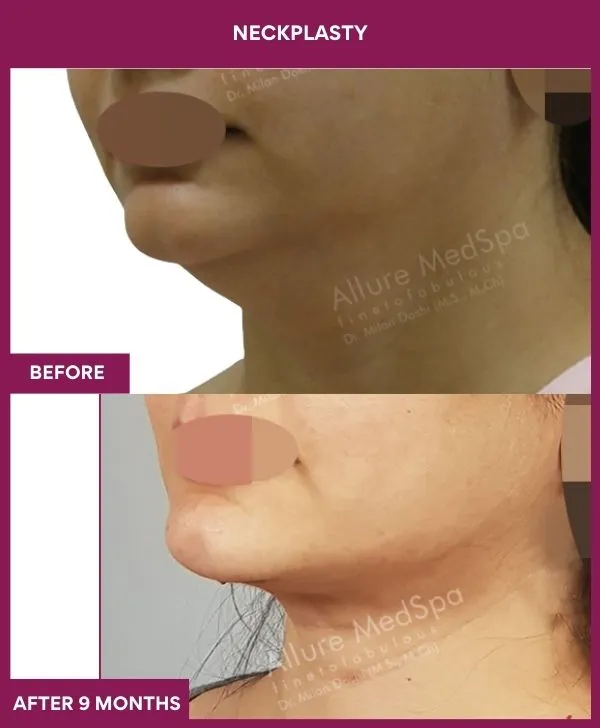
“Neck Lift Surgery Cost in Mumbai”
Neck Lift Surgery Patient Testimonials: Fine To Fabulous Journeys

Awarded by Google.com
Rating: 4.7
Reviews: 485+

Awarded by WhatClinic.com
Rating: 4.8
Reviews: 119+

Awarded by Realself
Rating: 4.9
Reviews:453+

Awarded by Facebook
Rating: 4.6
Reviews:105+
Dr Milan Doshi and his staff are very professional and committed as the centre is highly equipped with advanced technology. I had closed rhinoplasty 4 months back and I’m seeing the results as to how it becomes successful.
Deepika Shetty
The doctor explained everything clearly and the surgery was smooth. Recovery was faster than I expected and the team was very supportive.
Rahul Mehta
Very natural results and excellent staff. From consultation to follow-up, the experience was outstanding and boosted my confidence.
Sneha Kapoor
Am I a Candidate?
(4 quick questions)
Quick Facts About Facelift Surgery
TIME REQUIRED
2 - 3 Hours
ANESTHESIA
General
HOSPITAL STAY
1 Day
PAIN LEVEL
Mild–moderate
BACK TO WORK
2 days
RESULTS
8–12 Months
SUCCESS RATE
97–98%
COMPLICATIONS
Under 2–3%
How Much Does Neck Lift Surgery Cost in Mumbai?
Neck lift surgery in Mumbai starts from ₹1,60,000 to ₹2,10,000 for an isolated neck procedure, and rises when the neck is treated together with the face. The figure depends on the operation actually required whether platysmaplasty, fat contouring or deeper neck work is needed, the surgical extent, anaesthesia and facility requirements. A final quotation follows examination and a written surgical plan; it cannot be given accurately from photographs or over the phone.
Procedure | Indicative price range |
Neck lift alone | ₹1,60,000 – ₹2,10,000 |
Face and neck lift | ₹2,30,000 – ₹3,00,000 |
Full / SMAS facelift | ₹2,00,000 – ₹2,60,000 |
Mini facelift | ₹1,60,000 – ₹2,00,000 |
+5% GST · Includes surgeon, anaesthesia, OT, hospital stay, medicines and follow-ups. EMI available.
Platysmaplasty is usually a component of the neck lift rather than a separately priced procedure.
Get your exact quote & surgery plan
Share your details — our team responds within working hours with cost, EMI options and next steps.
Most Common Question People Ask
Q1. Neck lift vs facelift - what is the difference?
Ans. A neck lift focuses on the neck; a facelift primarily repositions descended facial tissues and jowls. Many patients have changes in both regions and may benefit from combined surgery. An isolated neck lift can be reasonable when facial laxity is limited and the main problem sits below the jaw.
Q2. Will a neck lift remove neck bands or "turkey neck"?
Ans. It can improve both when the underlying anatomy is properly treated. Loose skin can be redraped, while significant vertical bands usually require treatment of the platysma muscle itself. The degree of correction varies with muscle anatomy, skin quality, skeletal support and the operation selected.
Q3. Can a neck lift remove a double chin?
Ans. It can include treatment of submental fat when fat is contributing. Superficial fat above the platysma may be suitable for controlled liposuction, while deeper fat beneath the muscle sits closer to nerves and vessels and requires direct visual assessment rather than blind liposuction.
Q4. How long is neck lift recovery?
Ans. Visible bruising and swelling commonly improve substantially over the first couple of weeks, while tightness, firmness and altered sensation take longer to settle. Because a neck lift is not one identical operation, timelines differ. Clearance for work, exercise and travel comes from Dr. Doshi at follow-up.
Q5. Can a neck lift be done without a facelift?
Ans. Yes, in selected patients whose aging changes are largely confined to the neck. If significant jowls or lower-face descent are also present, treating the neck alone may leave those concerns unchanged. The decision follows examination of the face and neck together.

Why Choose Dr. Milan Doshi?
Dr. Milan Doshi, MCh, MS — Indian board-certified plastic surgeon with 27+ years in aesthetic surgery. ISAPS mentor, trusted by patients from 70+ countries. Consults at Andheri West; surgeries at the NABH-accredited surgical centre, Goregaon West.
The Complete Guide About Neck Lift Surgery
What Is a Neck Lift?
A neck lift is surgery designed to improve loose neck skin, platysmal bands, submental fullness and loss of definition between the chin, jaw and neck. Depending on the anatomical problem, it may combine skin redraping, platysma repair and fat contouring, and it can be performed alone or together with facelift surgery.
The term covers several possible surgical manoeuvres rather than one identical operation. Common neck-ageing concerns are described as skin laxity, vertical platysmal bands, submental fat accumulation and effacement of the cervicomental angle the transition between the underside of the chin and the front of the neck.
This is why a good neck assessment asks what is actually creating the fullness or sagging. Is it mainly:
- skin;
- superficial fat;
- platysma muscle;
- deeper neck anatomy; or
- a combination.
The operation should address the relevant layer rather than treating every neck with the same technique.
Source: StatPearls (NIH National Library of Medicine) — Neck Rejuvenation, Pérez P, Hohman MH.
What Neck Concerns Can a Neck Lift Correct?
Neck-lift surgery addresses four common structural concerns: loose or hanging skin, visible platysmal bands, excess fat beneath the chin and loss of the jaw-to-neck transition. Treatment differs according to cause, which is why a double chin created mainly by fat is not managed identically to one created by muscle laxity and loose skin.
| Concern | Main anatomical contributor | How surgery may address it |
|---|---|---|
| Vertical neck bands | Medial platysma borders becoming prominent or separated | Platysma repair, plication or another selected muscle manoeuvre |
| Loose or “turkey neck” skin | Skin redundancy and reduced elasticity | Skin mobilisation, redraping and removal of true excess |
| Submental fullness / double chin | Superficial fat, sometimes with deeper contributors | Selected fat contouring; method depends on anatomical depth |
| Blurred jaw-to-neck angle | Combined skin, fat, platysma and skeletal factors | Layer-specific neck contouring |
Why the type of fat matters.
Not all fat beneath the chin sits in the same anatomical plane. Preplatysmal, or superficial, fat lies above the platysma and may be suitable for controlled liposuction in selected patients. Subplatysmal fat lies beneath the muscle, closer to important nerves, vessels and deeper neck structures and published guidance specifically advises that this deep fat should not be treated with blind liposuction; when correction is indicated, it is approached under direct visualisation. That distinction matters, because excessive or poorly placed fat removal can create contour irregularity rather than a cleaner neck.
Sources: StatPearls (NIH NLM) — Neck Rejuvenation, on preplatysmal vs subplatysmal fat and deep-fat safety | Cleveland Clinic — Neck Lift (Platysmaplasty)
What Is Platysmaplasty?
Platysmaplasty is surgery on the platysma, the broad, thin muscle sheet covering much of the front and side of the neck. When its medial borders become prominent with ageing, vertical neck bands can appear. Repairing or repositioning the muscle can soften these bands and help restore support beneath the jawline.
Age-related platysmal bands become visible when the medial borders of the muscle separate and move laterally. Reapproximating those borders can reduce banding and create a muscular sling that contributes to neck contour.
Why tightening the skin alone may not correct neck bands.
Visible vertical bands are not simply wrinkles in the overlying skin; they arise substantially from the platysma itself. Redraping loose skin may improve the surface, but if clinically significant muscle banding remains untreated, the underlying cords can remain visible. The distinction is straightforward: skin laxity requires skin management; platysmal banding may require muscle management.
Is every platysmaplasty a “corset” repair?
No. Medial or corset platysmaplasty, in which the medial platysma borders are brought toward the midline, is one recognised approach. Other patients may require lateral suspension, a combination of medial and lateral treatment, or another muscle manoeuvre; in selected severe banding, additional platysma release or division has also been described. The operation should follow anatomy rather than the popularity of a particular technique.
Sources: StatPearls (NIH NLM) — Neck Rejuvenation, on platysmal band anatomy and medial border separation | Cambiaso-Daniel J, Giordano S, Agnelli B, La Bella L, Gualdi A. Neck Lift to Treat Platysma Bands and Defining Cervical Angle: A Systematic Review and Pooled Analysis. Facial Plastic Surgery. DOI: 10.1055/s-0044-1791690
Do I Need a Neck Lift, a Facelift, or Both?
A neck lift concentrates on the neck: loose skin, platysmal bands, submental fullness and neck-jawline definition. A facelift addresses descended facial tissues and jowls. Because facial and neck ageing frequently overlap, some patients need both; others with a relatively good lower face may be suitable for an isolated neck procedure.
The key question is where the laxity begins.
- If the jawline is still reasonably defined and the main problem sits beneath the chin, an isolated neck-focused operation may provide the required correction.
- If jowls and lower-face tissues have also descended, treating only the neck may leave the facial component unchanged.
- Conversely, lifting the lower face without addressing meaningful neck bands or loose neck skin may leave an imbalance between face and neck.
Neck lifts are frequently performed alongside a facelift as part of full facial rejuvenation, though they can be done on their own. For lower-face concerns, see the facelift surgery guide.
Sources: Mayo Clinic — Neck lift, noting it is often done as part of a face-lift | American Society of Plastic Surgeons — The beauty of a neck lift
How Is a Neck Lift Performed?
Neck-lift surgery is individualised. Access may include a small incision beneath the chin, incisions around the ears, or both. Depending on the findings, the surgeon can contour superficial fat, expose and repair the platysma, redrape loose skin and refine the transition between the lower jaw and neck.
Preoperative evaluation matters because neck contour depends on more than loose skin. Relevant anatomy platysmal bands, jowls and the mandibular border is assessed and marked with the patient upright, and access is planned as submental, peri-auricular or both depending on the work required.
| Layer | What may be done |
|---|---|
| 1. Superficial fat | Selected preplatysmal fat reduced where excess fullness contributes to the contour |
| 2. Platysma | Where bands or muscle laxity are significant, the platysma may be repaired, repositioned or suspended according to anatomy |
| 3. Deeper structures | Deep neck fullness is not treated by simply performing more liposuction. The deeper compartment contains subplatysmal fat, digastric muscles and submandibular glands; intervention requires direct anatomical assessment and is undertaken only when the benefit justifies the added complexity |
| 4. Skin | Once the underlying contour is corrected, genuine excess skin is redraped and removed without relying on excessive surface tension |
Sources: StatPearls (NIH NLM) — Neck Rejuvenation, on upright marking, submental and peri-auricular access, and deep-compartment anatomy | Cleveland Clinic — Neck Lift (Platysmaplasty), on incision options
Am I a Good Candidate for a Neck Lift?
A potential neck-lift candidate has a structural neck concern that surgery can reasonably improve, acceptable medical fitness and realistic expectations. Loose skin, platysmal bands and submental fullness may all be appropriate indications but the chin, jaw, hyoid position, skin quality and lower face must be assessed before promising a sharper contour.
Chin and jaw structure matter. A relatively small or set-back chin can reduce apparent jaw-neck definition even when the soft tissues are treated successfully. Retrognathia and microgenia are recognised anatomical factors that may limit the aesthetic outcome of neck rejuvenation. That does not mean every such patient needs a chin implant; it means skeletal support should be recognised before deciding what a neck lift alone can realistically achieve.
Hyoid position matters too. The hyoid is a deeper neck structure whose position contributes to neck shape. An unfavourable or low hyoid can limit how acute the cervicomental contour can become, and should be recognised during planning. Surgery can improve your anatomy; it cannot safely redesign every fixed anatomical relationship.
General suitability also depends on overall health, non-smoking status, wound-healing capacity, bleeding risk and the ability to follow postoperative care.
Sources: StatPearls (NIH NLM) — Neck Rejuvenation, on retrognathia, microgenia and hyoid position as limiting factors | American Society of Plastic Surgeons — candidacy criteria including good health, non-smoking and realistic expectations
Is Neck Lift Surgery Safe and What Are the Risks?
Neck lift and platysmaplasty are established operations, but they carry recognised surgical risks. Expected early effects include swelling, bruising, tightness and altered sensation. Recognised complications include bleeding under the skin (haematoma), infection, wound-healing problems, nerve injury, contour irregularity, skin loss, open wounds, reaction to anaesthetic, fluid or salivary collection, and recurrent platysmal bands.
The strongest pooled evidence comes from a systematic review of 12 studies covering 2,106 patients undergoing neck-lift procedures involving the platysma. It reported the following pooled rates:
| Outcome in the published literature | Pooled rate |
|---|---|
| Platysmal-band recurrence | 1.4% |
| Overall nerve damage | 0.9% |
| Haematoma | 1.8% |
| Sialoma (salivary-fluid collection) | 0.3% |
A low percentage also does not make a complication unimportant. Haematoma can require urgent treatment. Nerve injury may cause sensory or movement changes. Excessive fat removal can create contour deformity, and deeper-neck surgery introduces additional anatomical considerations.
Sources: Cambiaso-Daniel J, Giordano S, Agnelli B, La Bella L, Gualdi A. Neck Lift to Treat Platysma Bands and Defining Cervical Angle: A Systematic Review and Pooled Analysis. Facial Plastic Surgery. DOI: 10.1055/s-0044-1791690 — 12 studies, 2,106 patients | Mayo Clinic — Neck lift, on recognised risks
What Is the Neck Lift Recovery Timeline?
Visible swelling and bruising generally improve over the first couple of weeks, while tightness, firmness and altered sensation take longer to settle. Recovery depends on whether surgery involves skin only, platysmaplasty, fat contouring, deeper neck work or a combined facelift — so one timeline does not apply to every neck lift.
A supportive dressing or neck garment is commonly used after surgery, and drains may be used depending on the operation. These details are surgeon- and procedure-specific rather than universal.
| Allure neck-lift protocol | Detail |
|---|---|
| Support garment / dressing | Pressure garment to be used |
| Drain protocol | 1 weeks for 24 hours then next 1 weeks 10-12 hours per day |
| Return to desk work | 2 Days |
| Exercise clearance | 2 – 3 Weeks |
Source: Cleveland Clinic — Neck Lift (Platysmaplasty), on postoperative course and support dressings.
What Aftercare Is Needed After Neck Lift Surgery?
Aftercare centres on protecting the incisions, wearing any support garment exactly as instructed, taking medication as prescribed, avoiding nicotine entirely and attending every follow-up. These are general principles your written personal instructions always take priority.
- Keep your head elevated when sleeping and resting, as instructed, to help control swelling.
- Wear the support dressing or garment exactly as directed, and do not adjust or remove it without instruction.
- Care for drains correctly if used empty and record output as demonstrated; do not pull, twist or disconnect them.
- Protect the incisions – keep the area clean and dry; do not pick scabs or apply unapproved products.
- Stop blood-thinning medicines and supplements as advised before surgery, and do not restart them without approval.
- Avoid nicotine in every form, direct sun on healing scars, heavy lifting, straining and vigorous exercise until cleared.
- Attend all follow-up appointments, and do not judge the result in the first weeks swelling and firmness make the early appearance unrepresentative.
If you are travelling to Mumbai for surgery, plan the first week before booking: accommodation, an accompanying adult, follow-up dates and return-travel clearance.
Sources: Mayo Clinic — Neck lift, on stopping blood-thinning medication before surgery | Cleveland Clinic — Neck Lift (Platysmaplasty)
How Long Do Neck Lift Results Last?
A neck lift can provide durable structural improvement, but it does not stop aging. Skin quality, platysma behaviour, weight change, nicotine exposure, skeletal anatomy and the operation actually performed all influence how the neck changes with time. No exact duration should be promised to every patient.
The systematic review of 2,106 patients reported a 1.4% pooled recurrence rate for platysmal bands during the follow-up periods of the included studies. That supports meaningful durability of band correction in the published literature, but it does not establish a universal lifetime recurrence risk, and it does not prove that every neck-lift technique lasts equally long.
Sources: Cambiaso-Daniel J, et al. Neck Lift to Treat Platysma Bands and Defining Cervical Angle: A Systematic Review and Pooled Analysis. Facial Plastic Surgery. DOI: 10.1055/s-0044-1791690 | Mayo Clinic — Neck lift, noting results can be long lasting but surgery cannot stop ageing
Why Is a Consultation Important Before a Neck Lift?
The most useful neck-lift consultation does not begin by choosing a procedure name. It begins by determining which layer is creating the problem: skin, fat, platysma, skeletal support, deeper neck anatomy or several together.
What to prepare: why you want surgery and what outcome you expect; any medical conditions, drug allergies and current treatments; all medicines, vitamins, herbal supplements, alcohol, tobacco or recreational drug use; and previous surgeries. Photographs of yourself from 5–10 years ago help separate change from long-standing features.
Can it start online? If you are outside Mumbai, you can request a preliminary WhatsApp photo pre-check with front, side and three-quarter photographs in even, natural lighting, without makeup or filters. This is preliminary guidance only. Photographs cannot assess skin elasticity, muscle tone, skeletal support or medical fitness, and no definitive diagnosis or final quotation can be given from them.
Consultation fee: ₹1,500
Sources: Cleveland Clinic — Neck Lift (Platysmaplasty), on consultation preparation |
American Society of Plastic Surgeons — surgeon selection and ABPS certification
Medical Codes for Necklift Surgery
| CPT | Description | ICD-10 |
| 15825 | Rhytidectomy, neck with platysmal tightening | Z41.1 |
| 15828 | Rhytidectomy, cheek, chin and neck | Z41.1 |
| 15876 | Suction-assisted lipectomy, head and neck | Z41.1 |
(FAQs) Frequently Asked Question About Necklift Surgery
Q1. Do I need platysmaplasty, or just a neck lift?
Ans. Not every neck-lift patient needs the same platysma procedure. Platysmaplasty becomes relevant when muscle laxity or visible bands contribute meaningfully to the neck contour. Someone whose main problem is isolated superficial fat or skin laxity may need a different plan. Examination identifies which layer needs treatment.
Q2. Is a neck lift painful?
Ans. Most patients describe tightness, pressure and soreness rather than severe pain, usually most noticeable in the first 48 hours and controlled with prescribed medication. Sudden, severe or increasing pain on one side is not expected and requires urgent contact with the surgical team.
Q3. Does a neck lift leave visible scars?
Ans. Yes. Incisions are usually placed beneath the chin, around the ears, or both, depending on the operation. Scars generally fade and become inconspicuous but do not disappear. Visibility depends on incision placement, tension, healing and aftercare.
Q4. Can non-surgical treatments replace a neck lift?
Ans. Non-surgical options include botulinum toxin injections for neck bands, deoxycholic acid injections for submental fat, dermal fillers and fractionated laser treatments. They may need multiple sessions and the results are temporary. They cannot remove substantial excess skin or reproduce a surgical repositioning of the platysma.
Q5. Is a neck lift the same as double chin surgery?
Ans. No. If a double chin is the only concern, fat-focused treatment may be more appropriate than a full neck lift. A neck lift becomes relevant when skin laxity, muscle banding or loss of the jaw-to-neck angle are also present.
Q6. Can men have a neck lift?
Ans. Yes. Male planning requires attention to beard-bearing skin, sideburn position and hairline preservation. Male skin is often thicker and more vascular, which influences both planning and bleeding risk.
Q7. Will I need a chin implant as well?
Ans. Not necessarily. A set-back or small chin can limit apparent jaw-neck definition, and recognising this before surgery matters more than automatically adding a procedure. Whether skeletal support should be addressed is a decision made at examination.
Q8. When can I fly after a neck lift?
Ans. Only after written clearance at a follow-up review. Timing depends on the extent of surgery, drain and suture management, and healing progress.
Q9. Does insurance cover a neck lift?
Ans. Cosmetic neck lift surgery should not be assumed to be covered by health insurance. Coverage, where it exists at all, applies only to specific medically necessary indications and must be confirmed directly with your insurer before surgery.
Q10. What happens if my neck bands come back?
Ans. Recurrence is uncommon in the published literature but not impossible, and it is influenced by technique, muscle anatomy and continued ageing. Revision options exist and are assessed individually, taking account of what the first operation did and did not treat.