
Glutathione Injection in Mumbai: Doctor-Led Skin Brightening With Honest Expectations

Indian Board Certified Plastic Surgeon
M.CH, MS, ISAPS Mentor
16000+ Cosmetic Surgeries
1000+ Gluthathione Injections
Glutathione injection is a non-surgical skin-brightening treatment that delivers the antioxidant glutathione to support a more even, radiant complexion and reduce the look of pigmentation. At Allure Medspa, treatment is doctor-led: your skin type, goals, medical history and the most appropriate route (oral, topical or IV) are assessed before any plan is recommended — and you are told plainly that results are gradual, reversible and dependent on the route, not an instant or permanent change in your natural colour.
Glutathione Injection Before and After Images
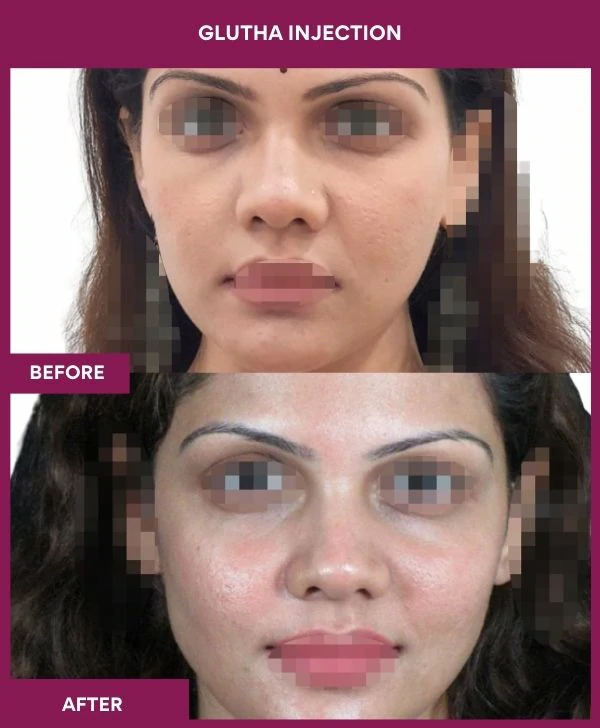
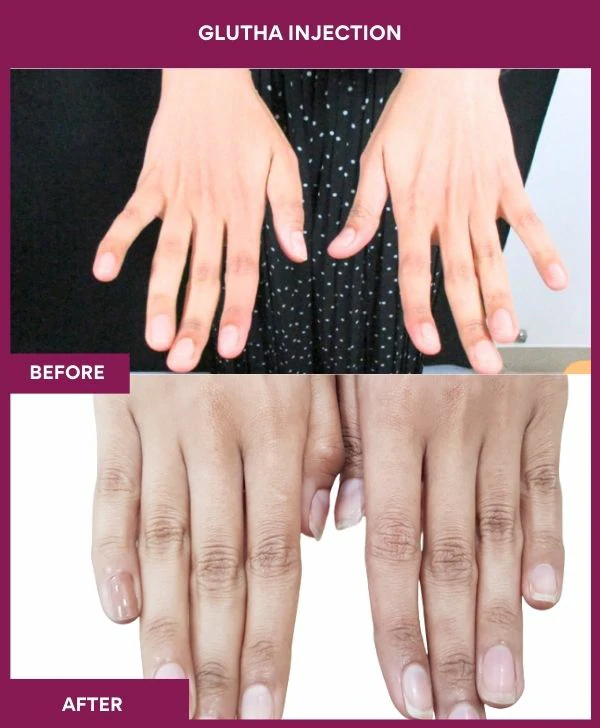
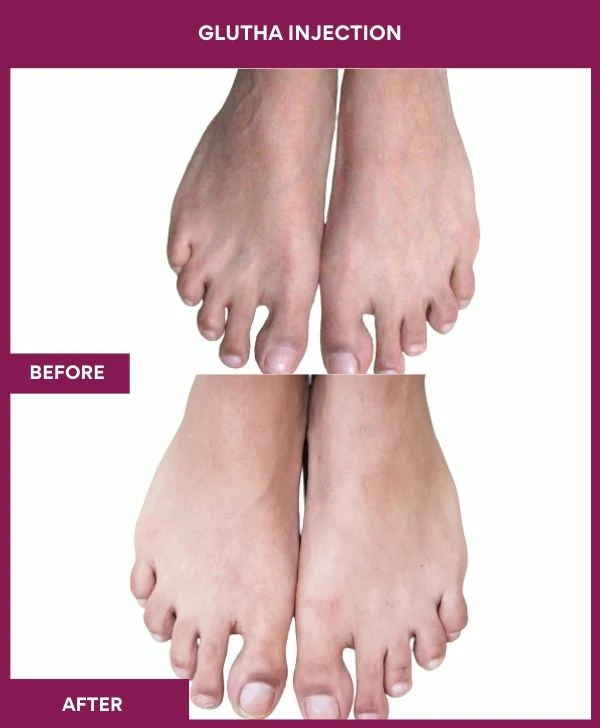
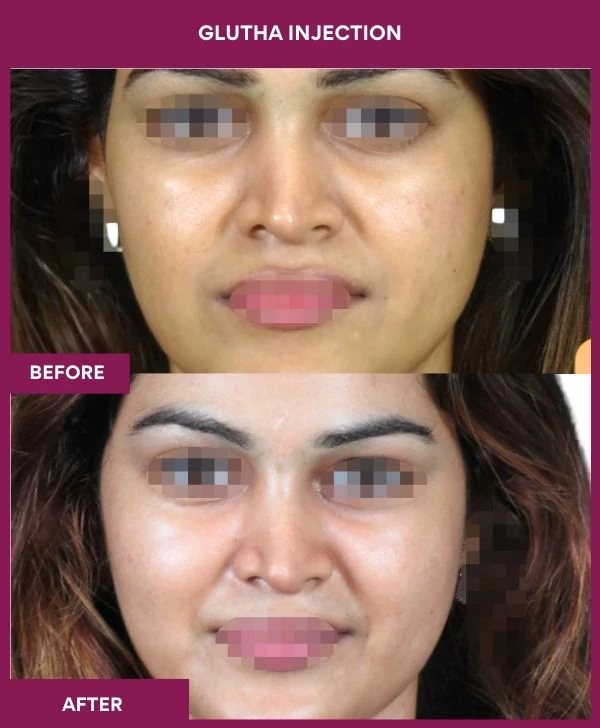
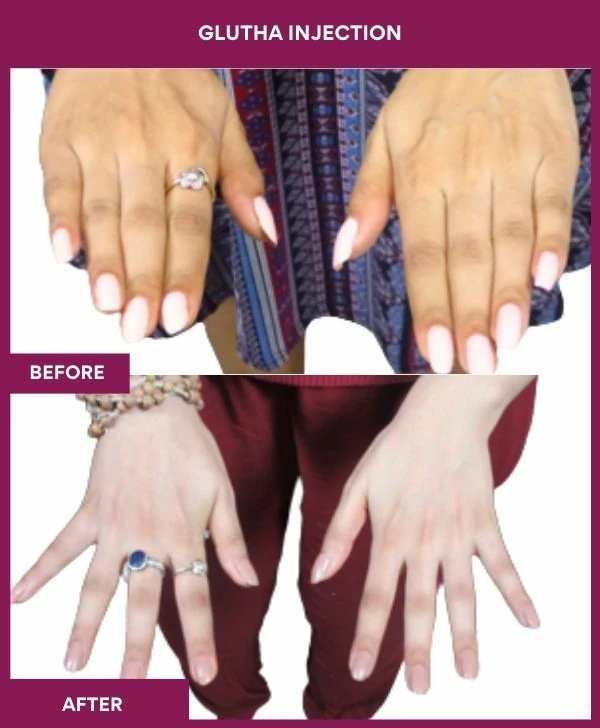
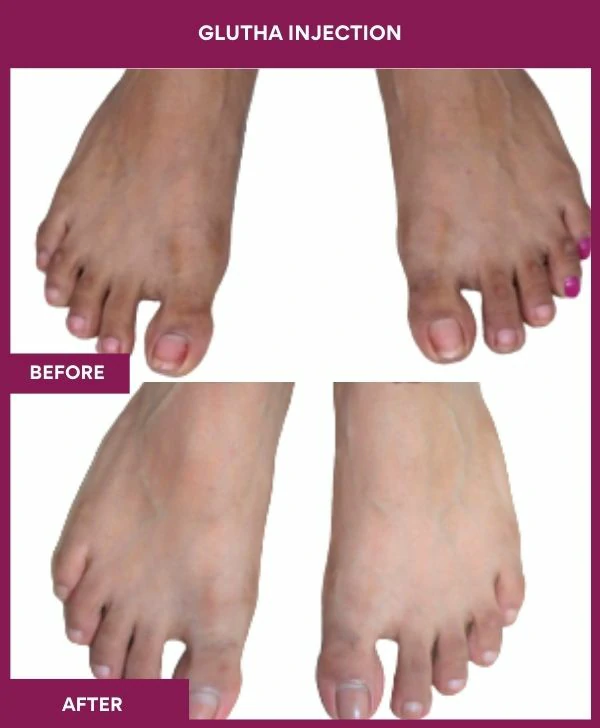
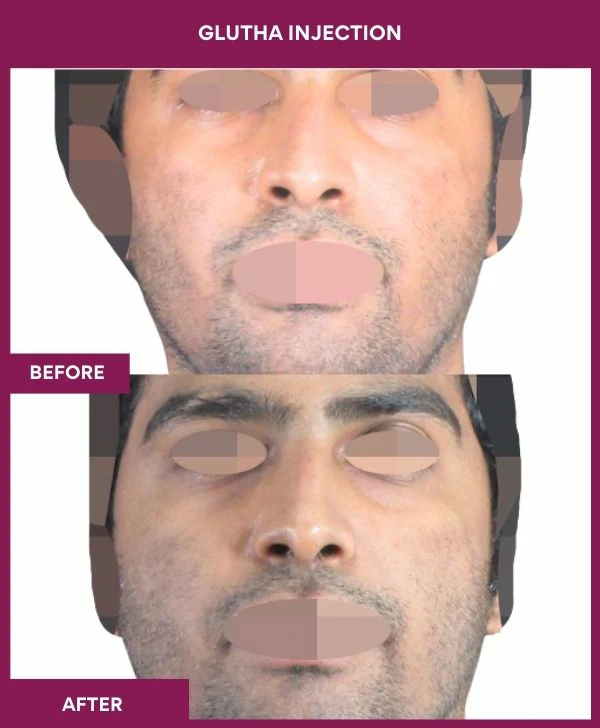
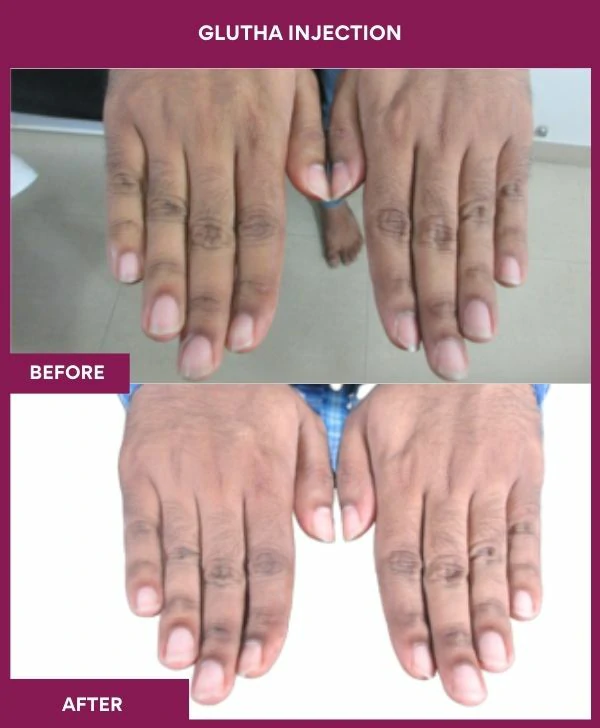
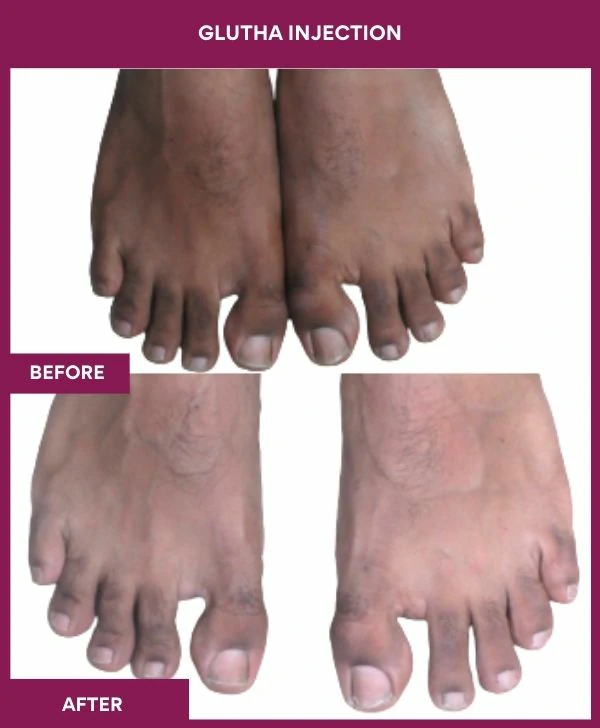
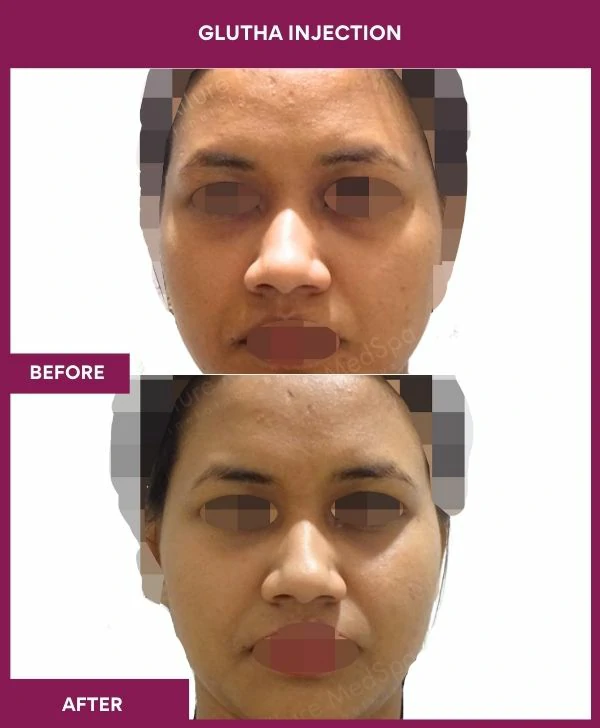
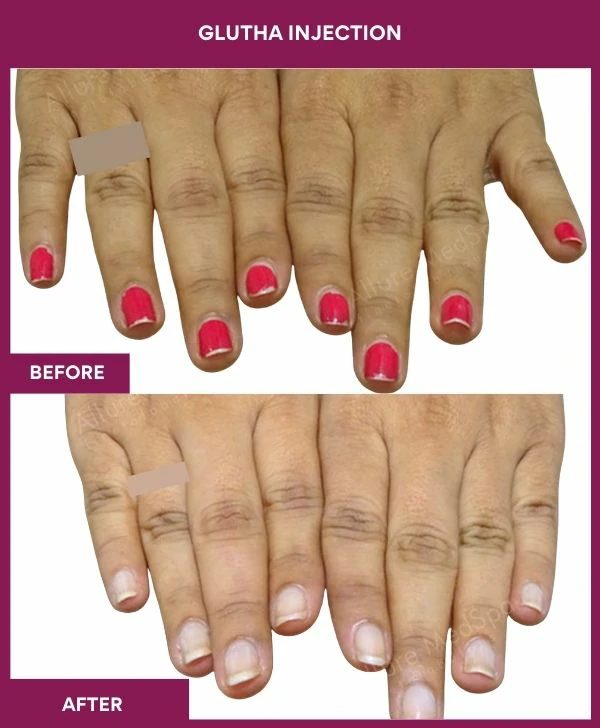
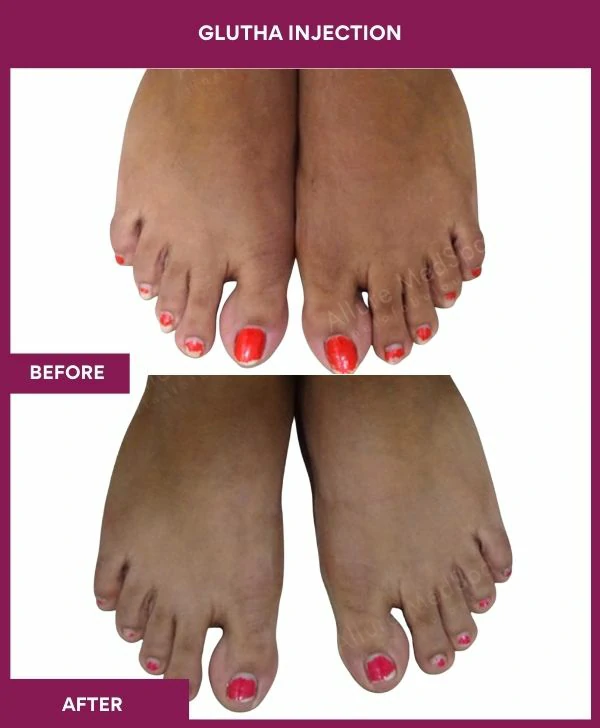
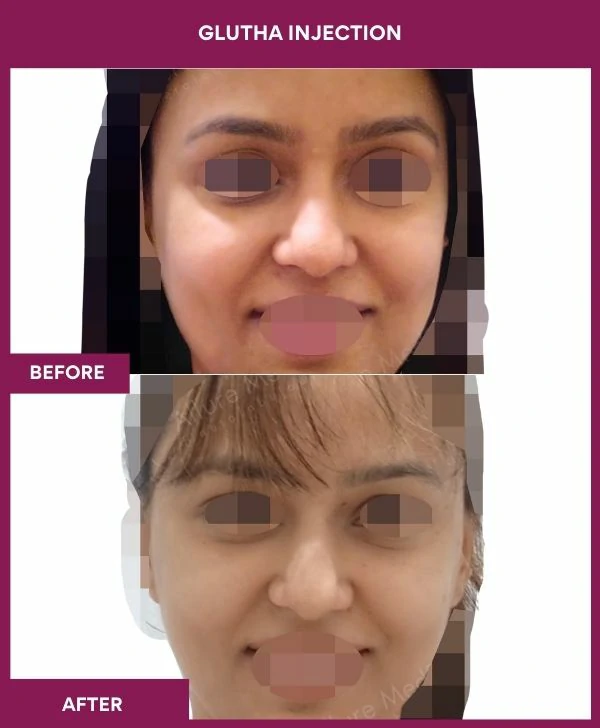
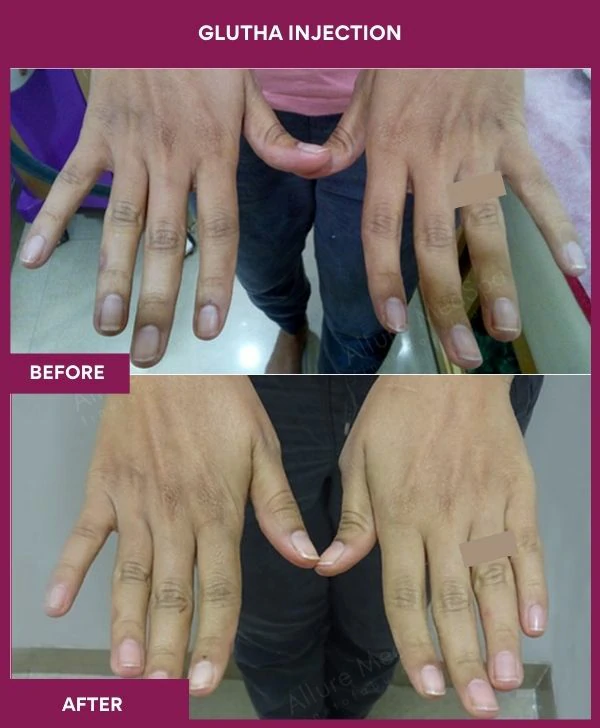
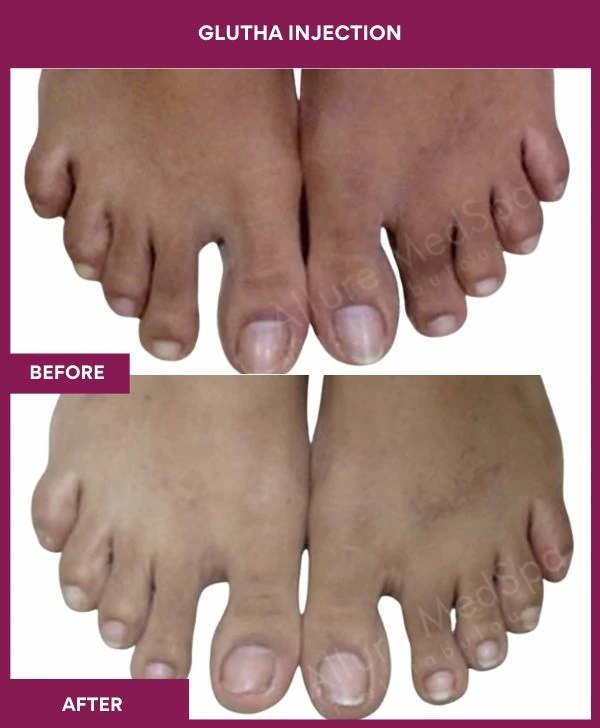
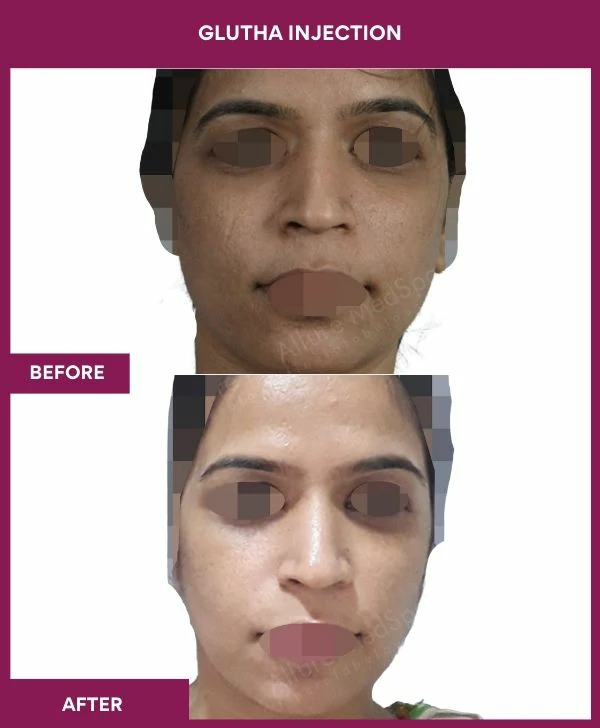
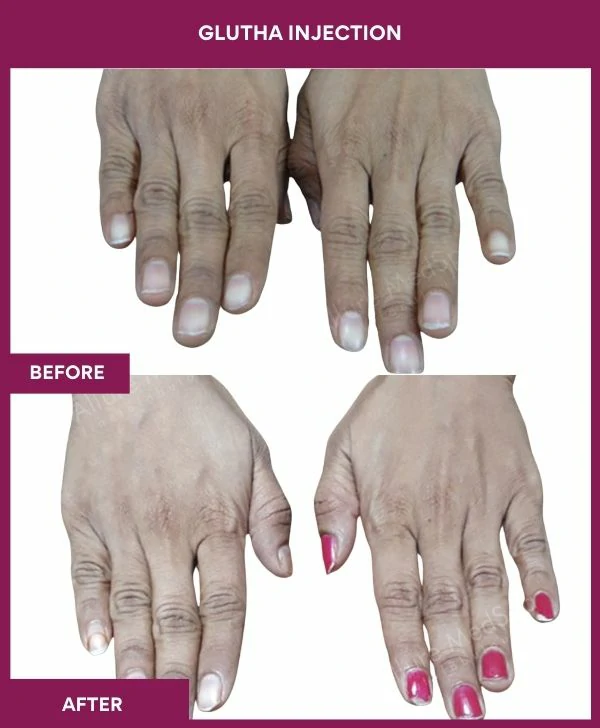
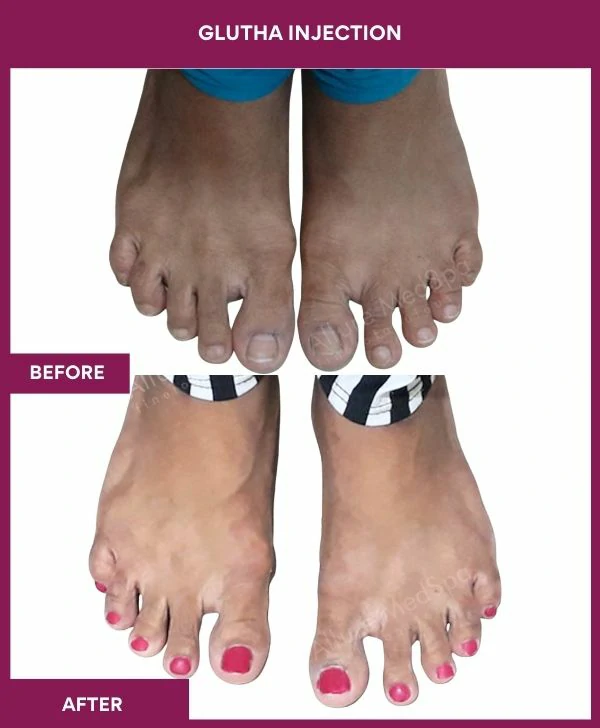
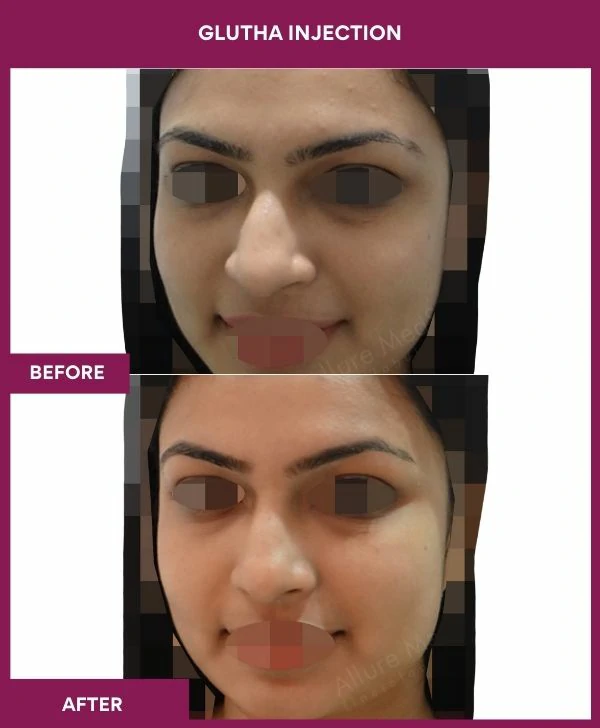
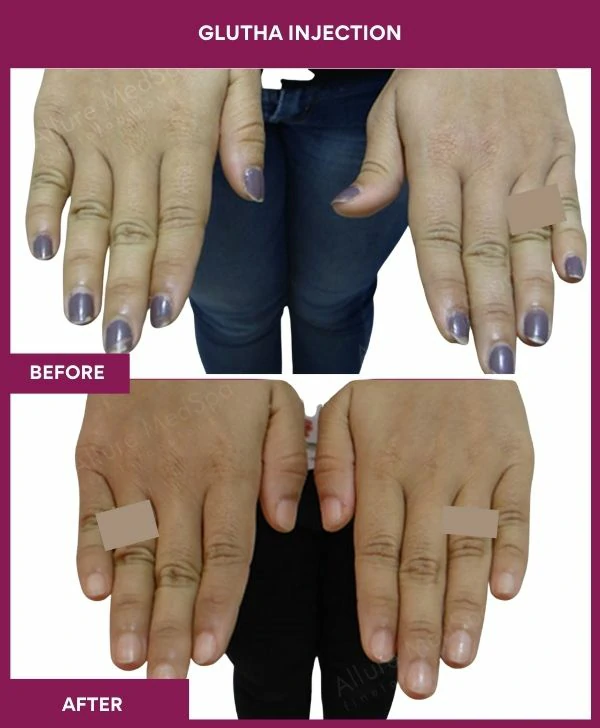
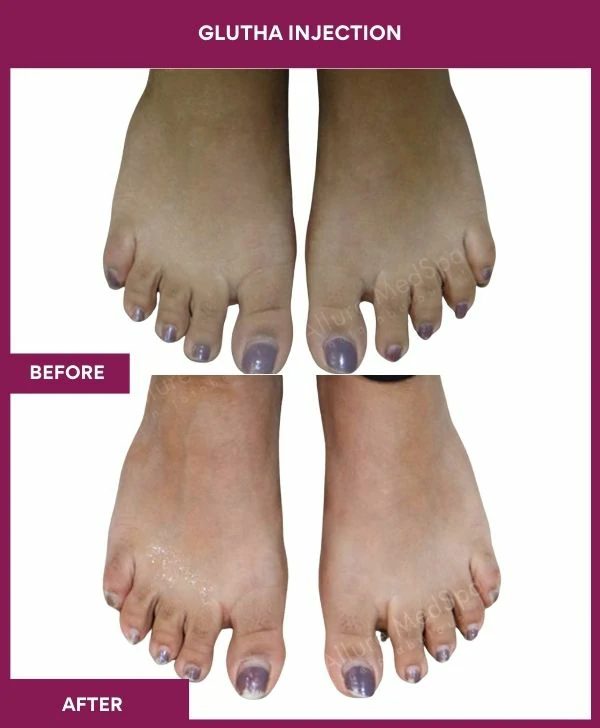
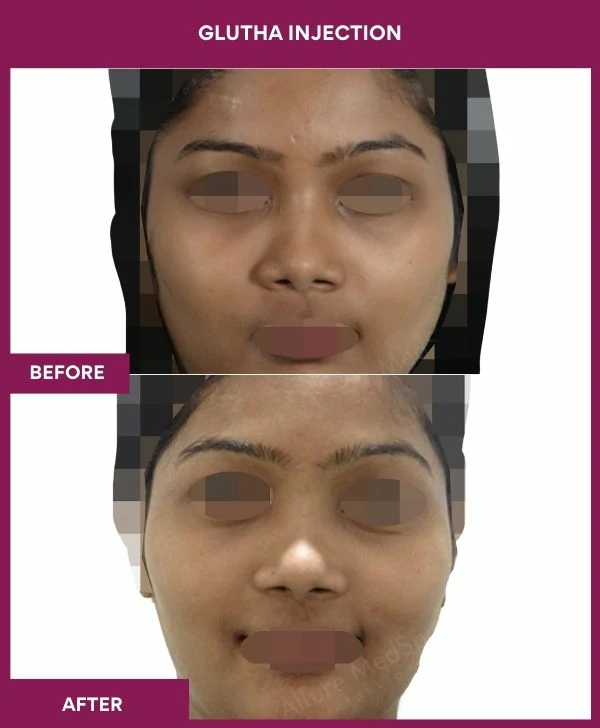
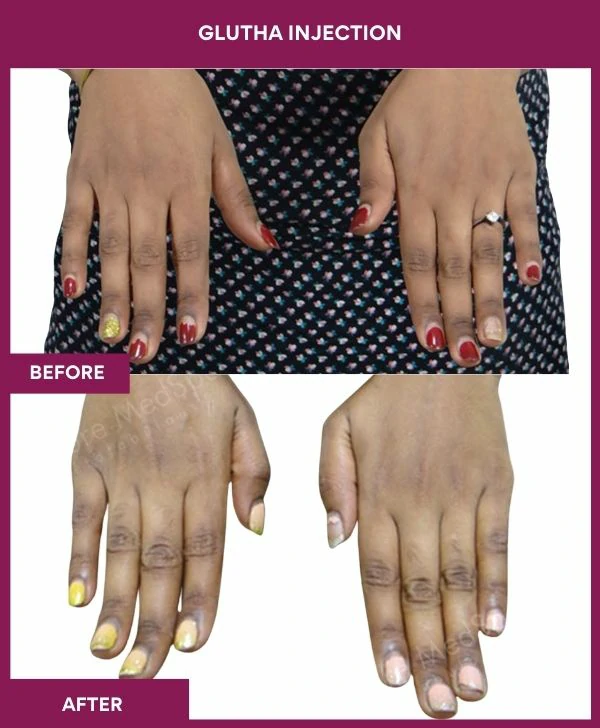
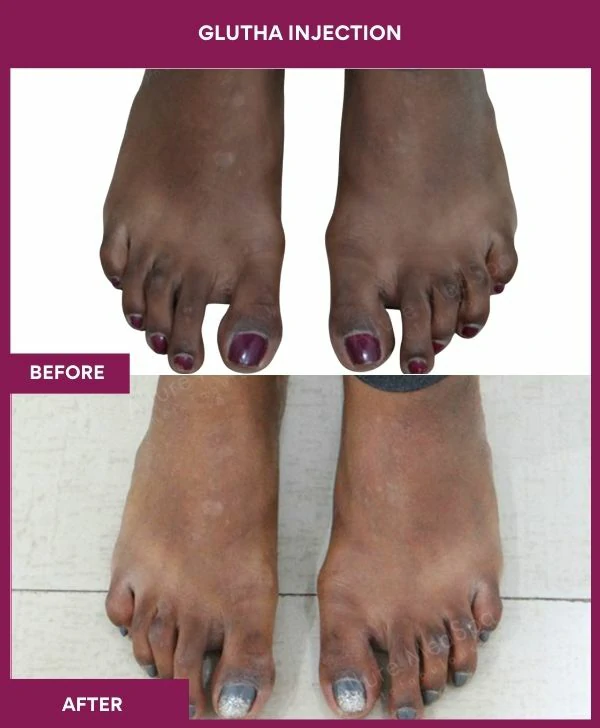
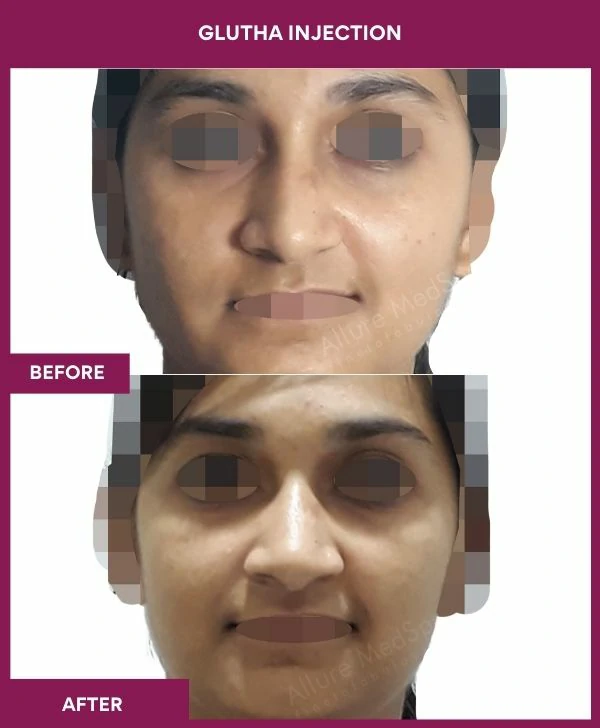
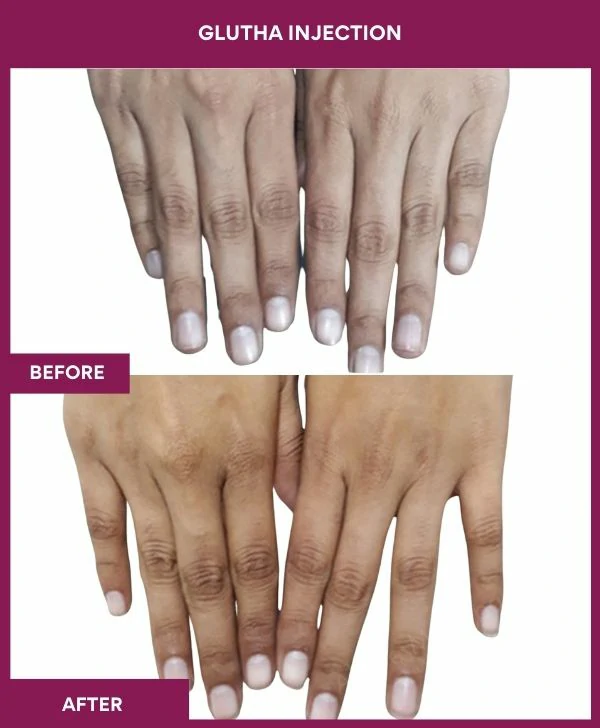
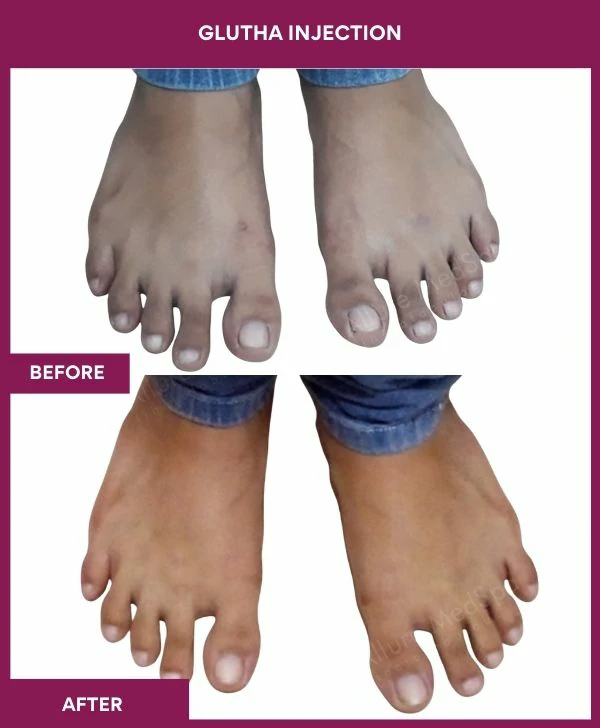
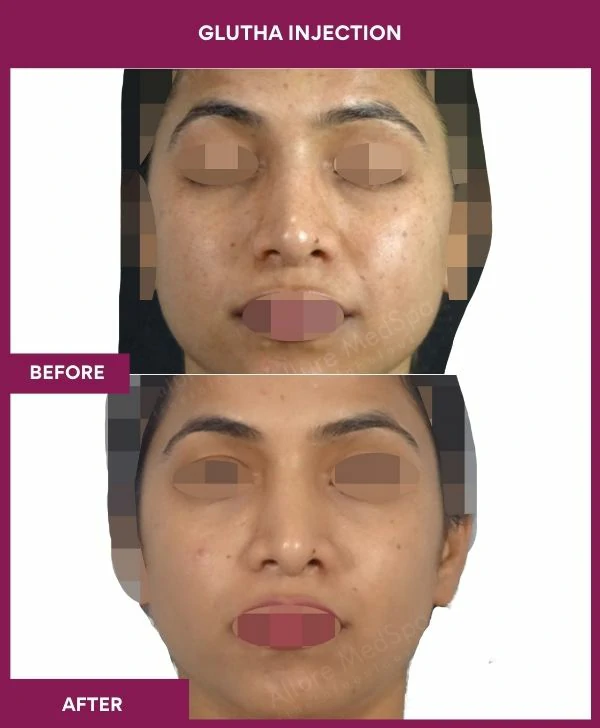
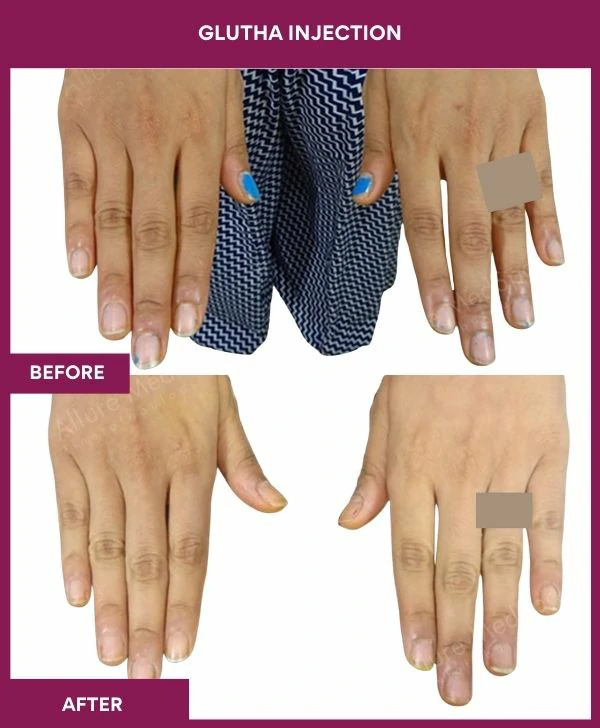
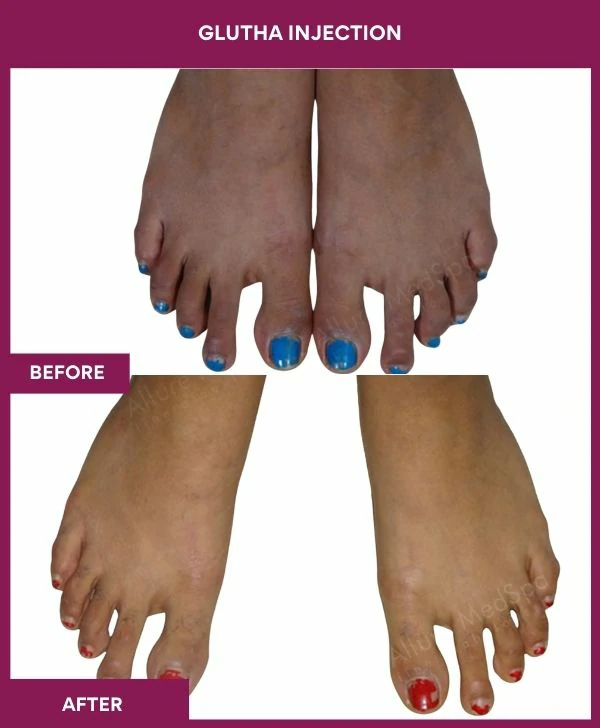
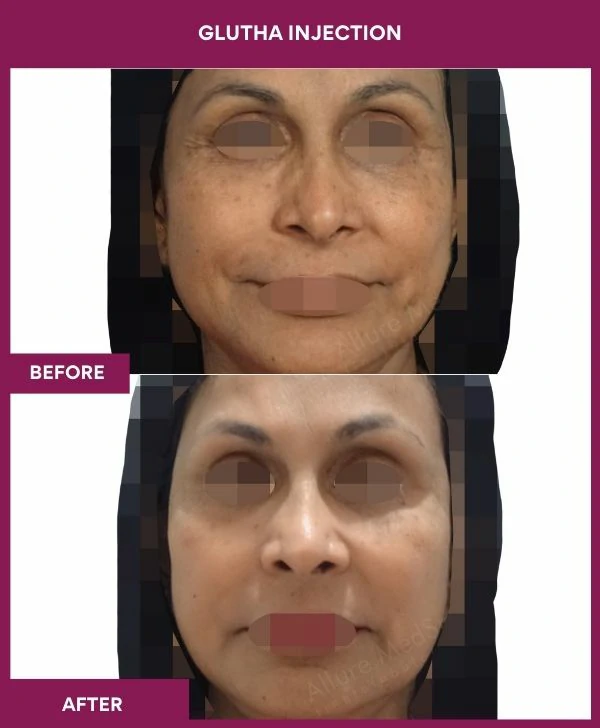
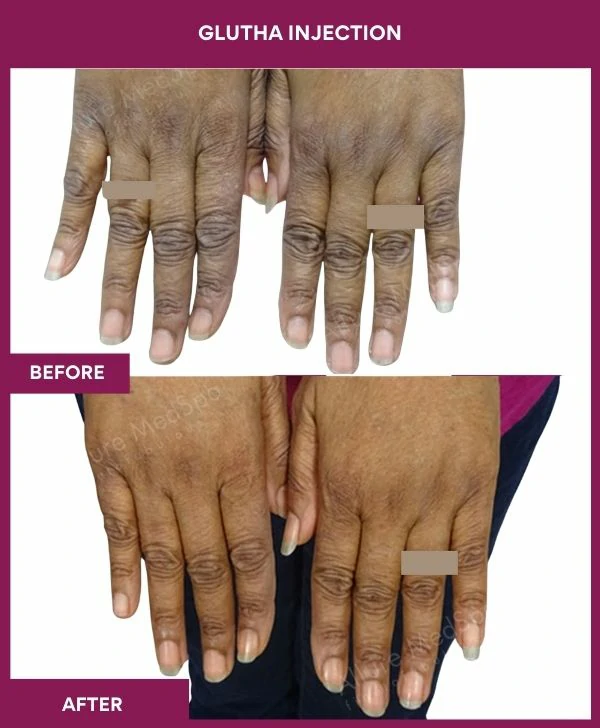
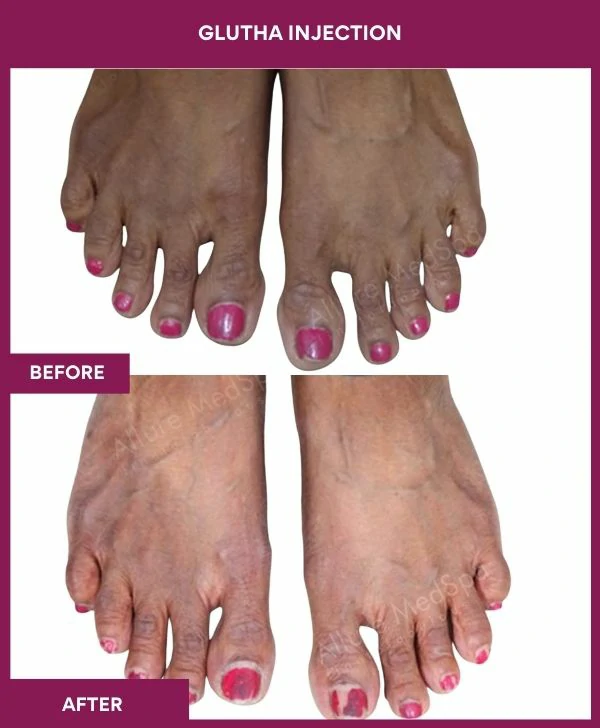
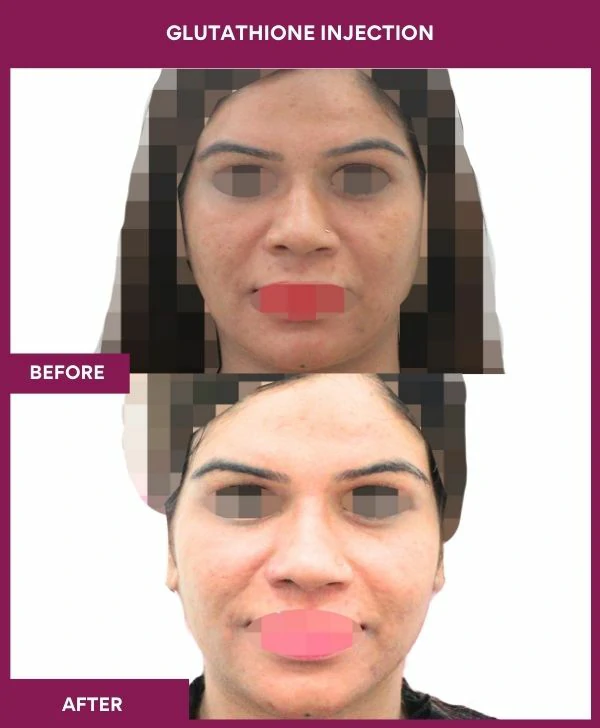
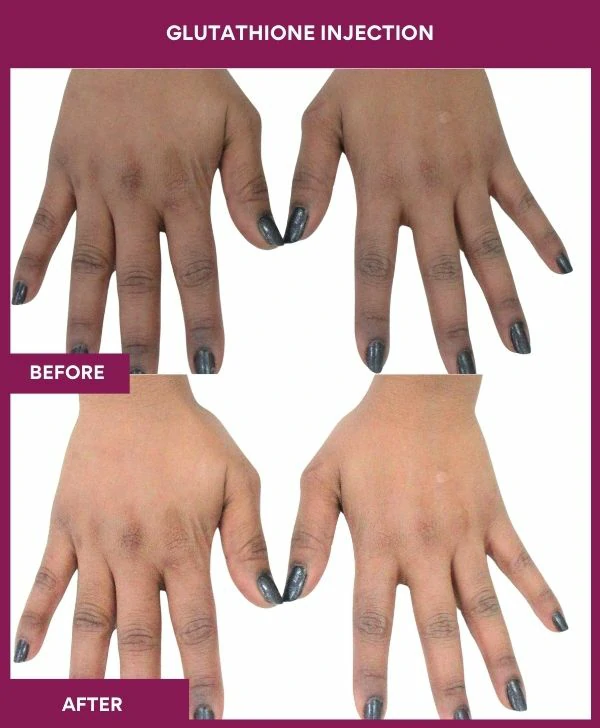
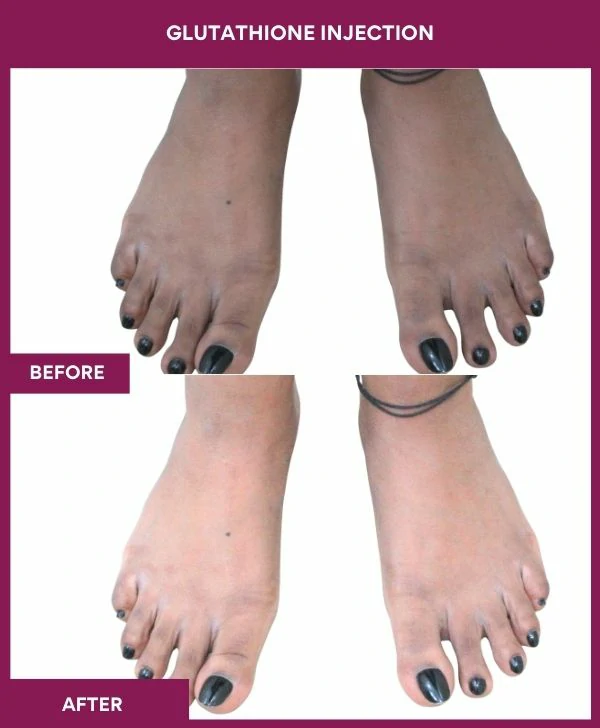
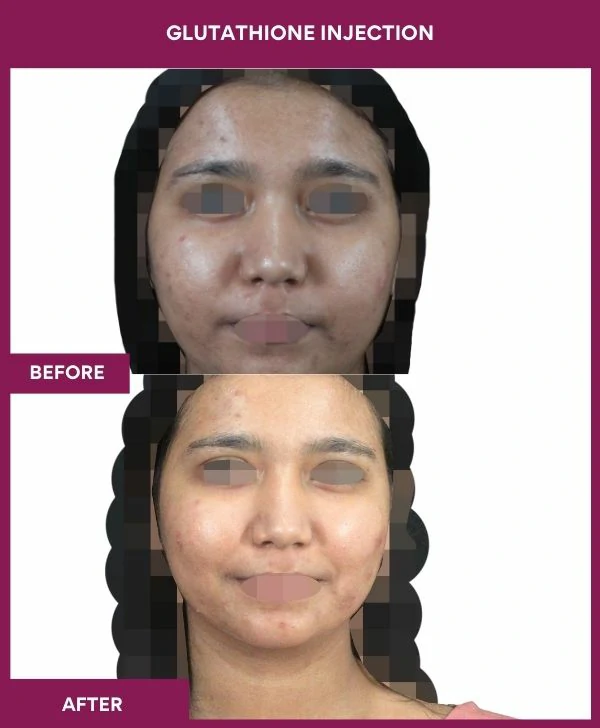
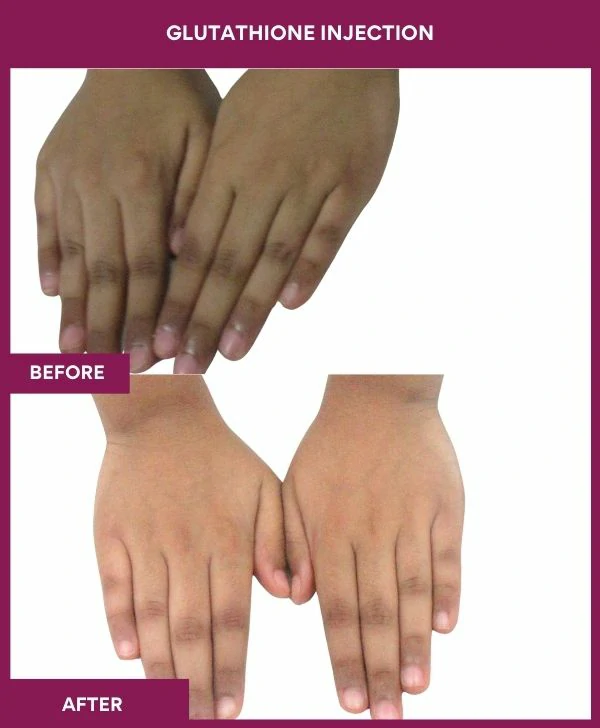
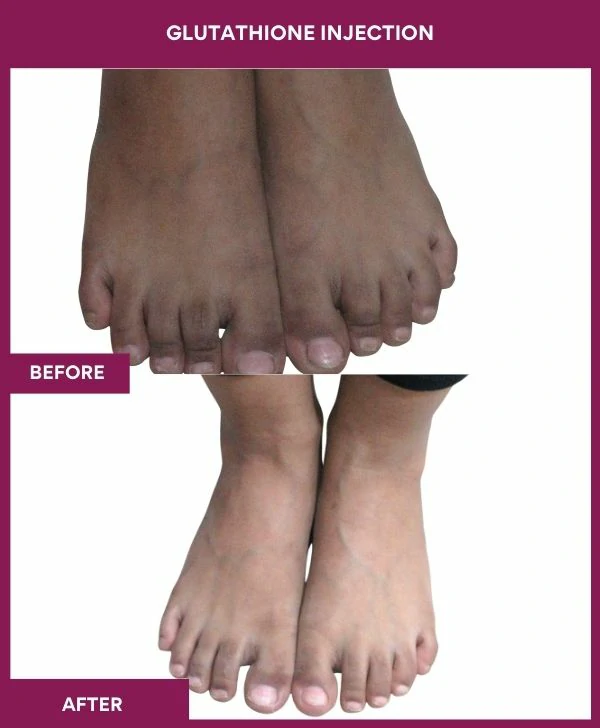
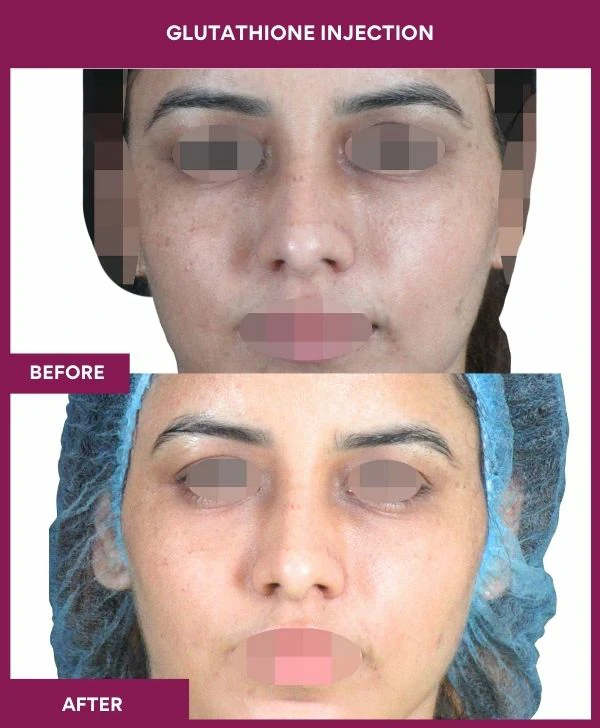
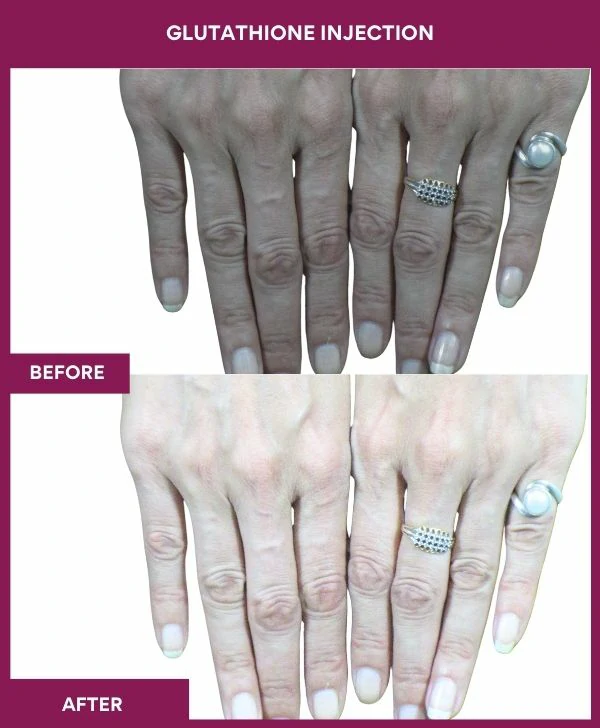
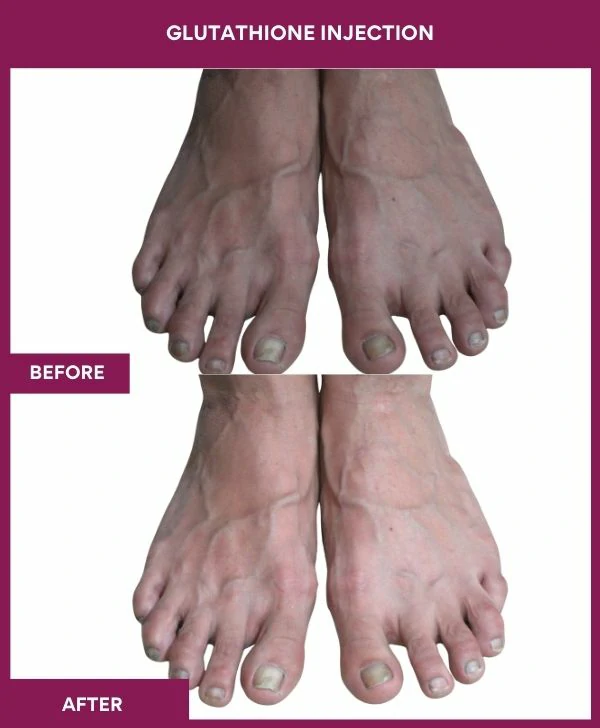
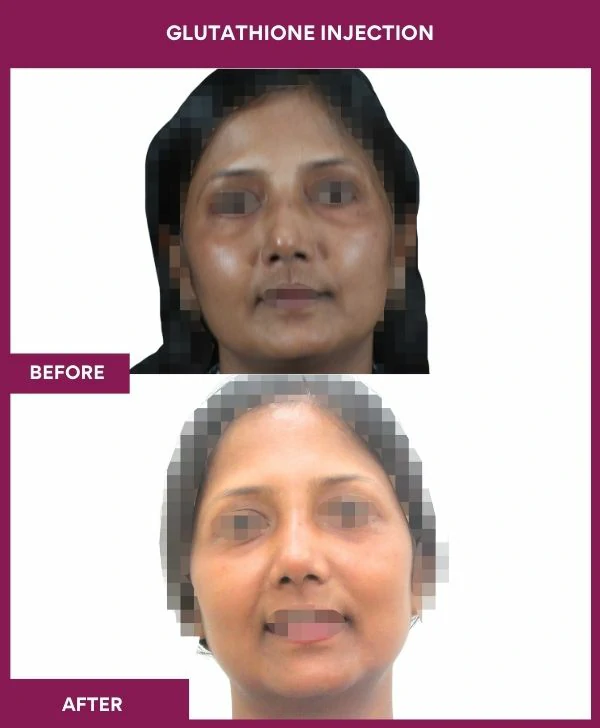
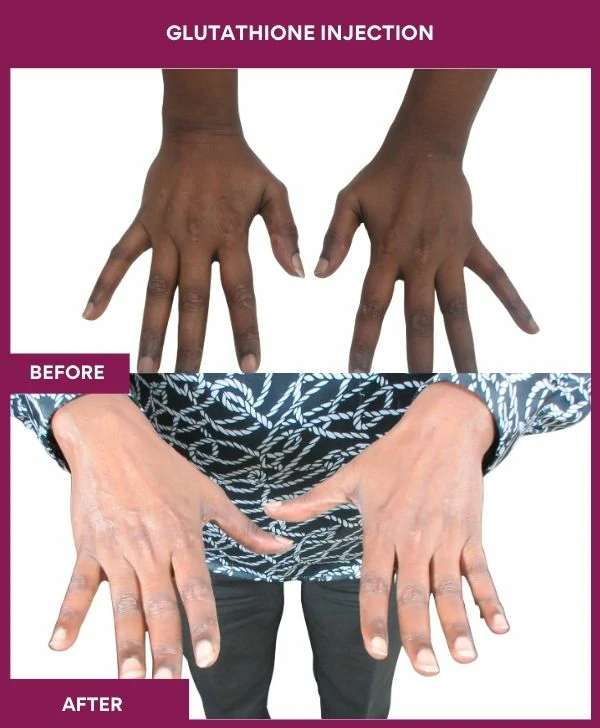
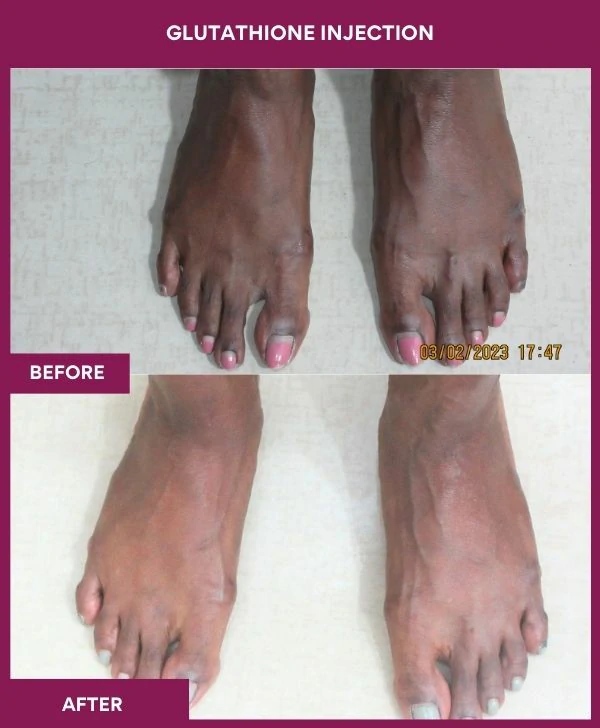
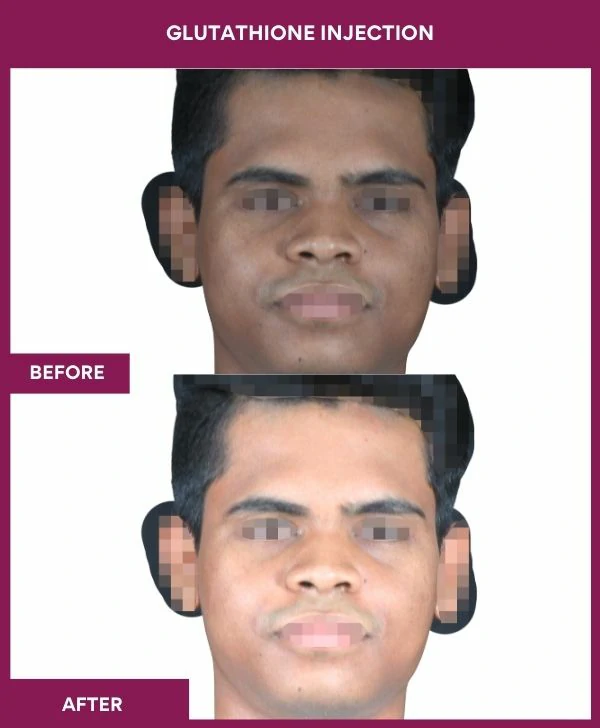
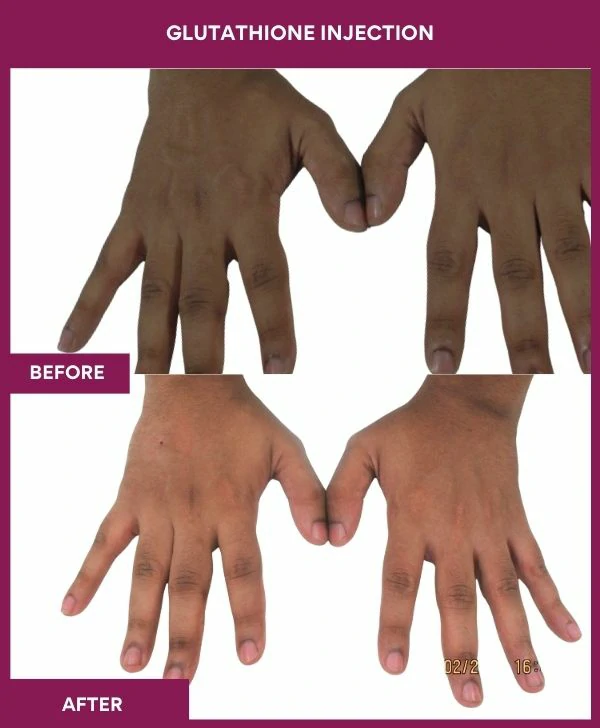
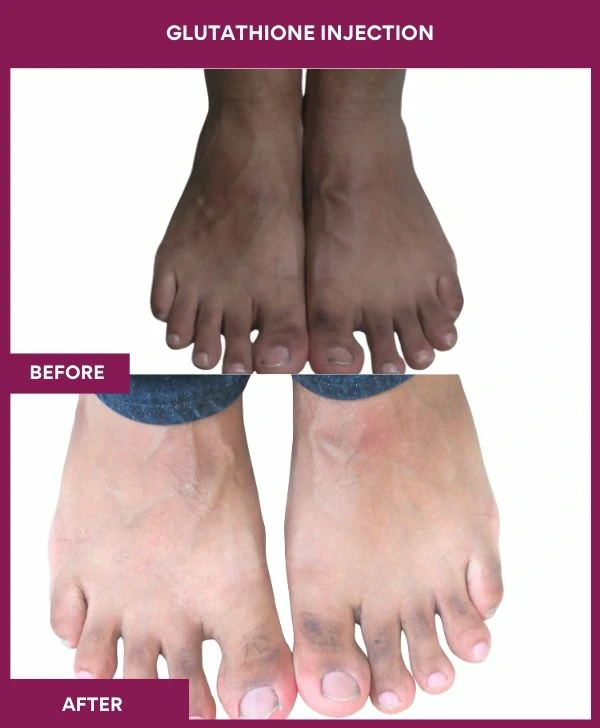
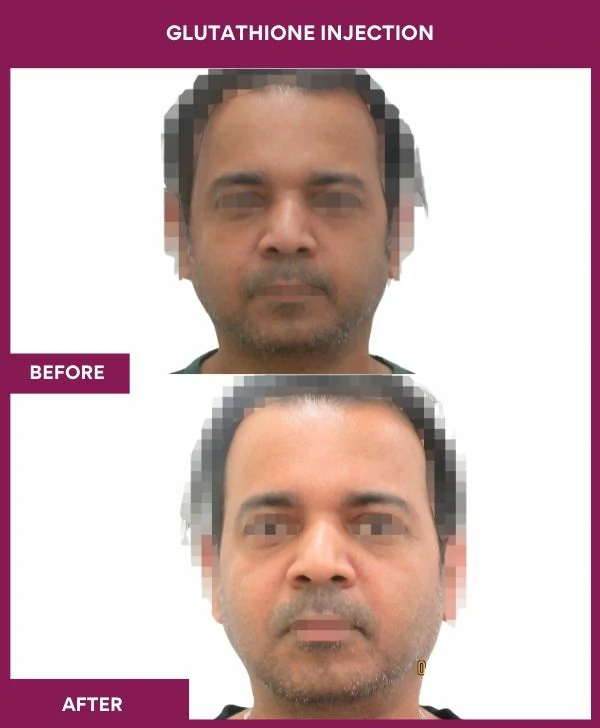
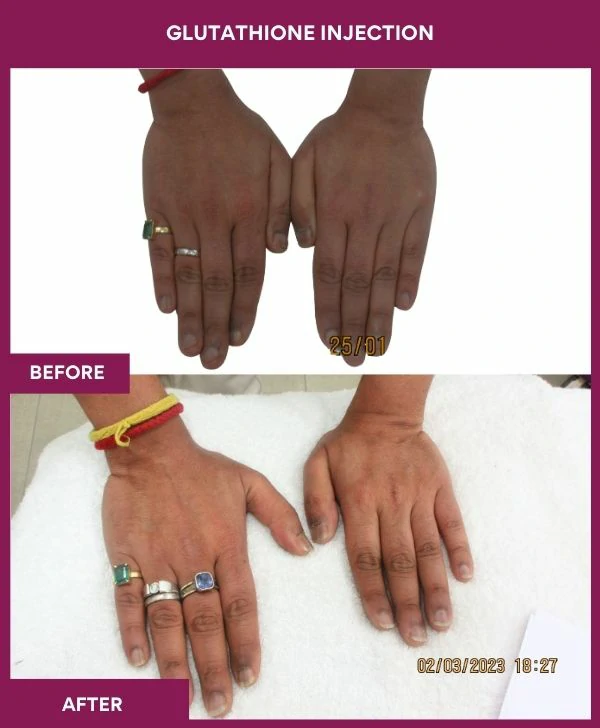
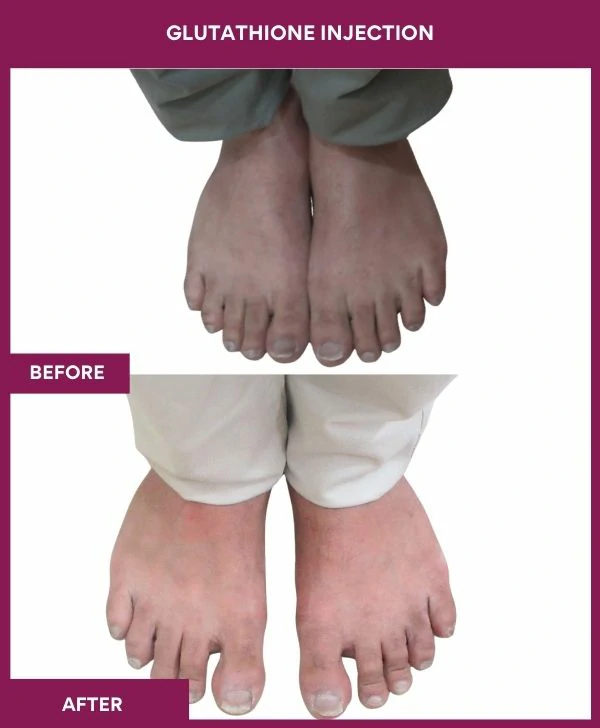
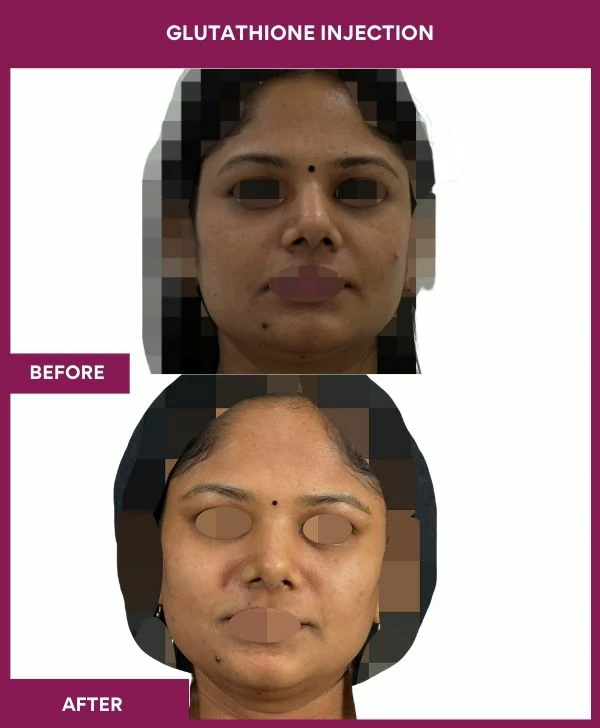
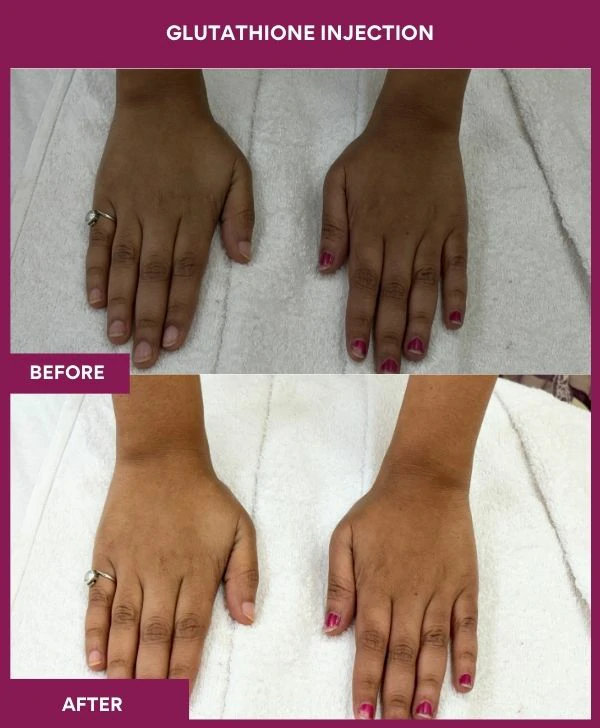
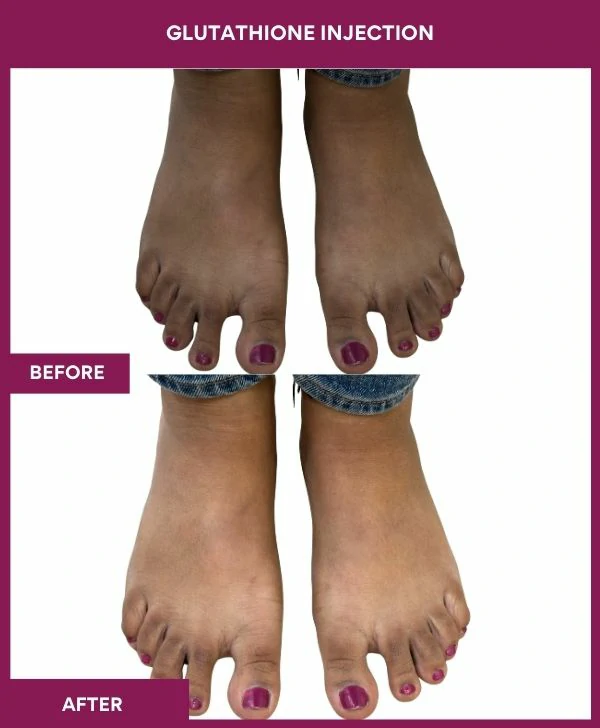
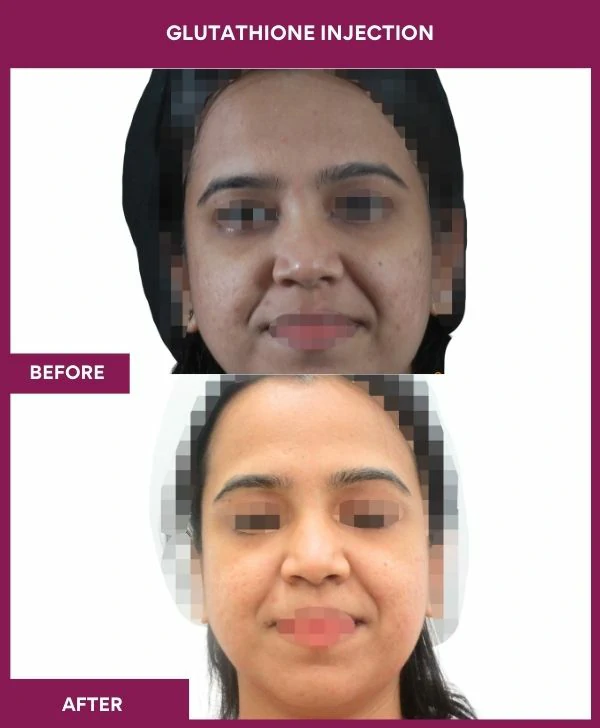
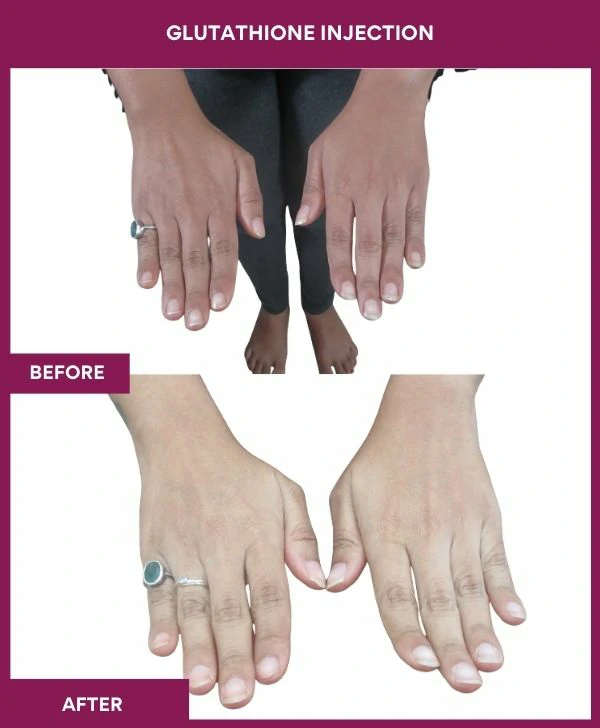
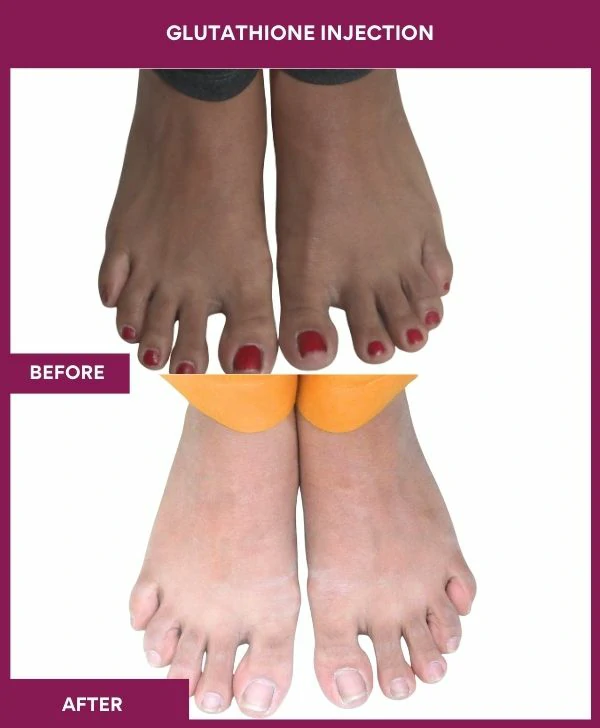
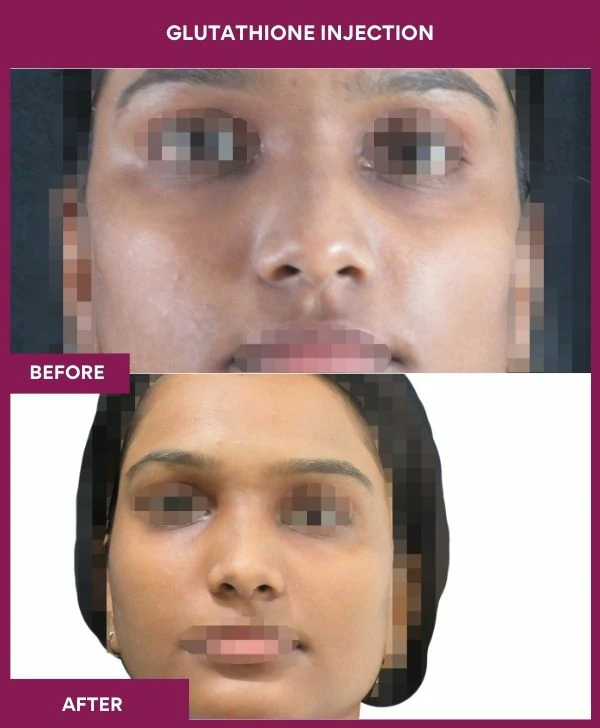
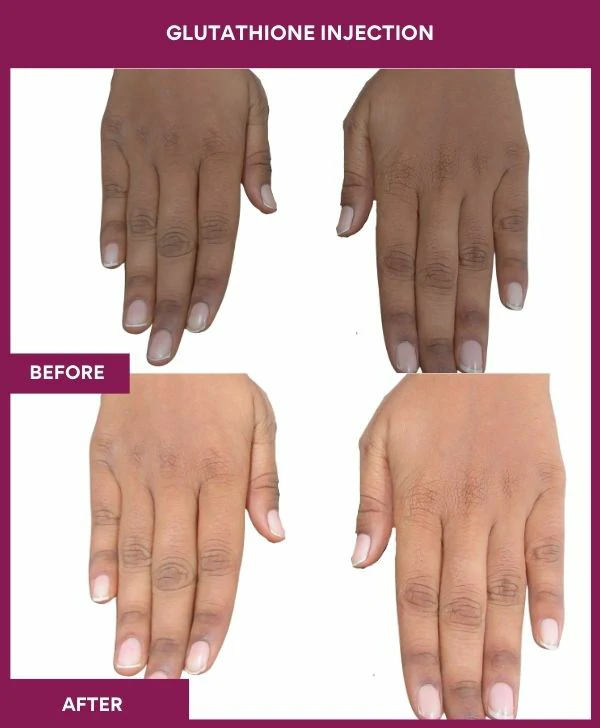
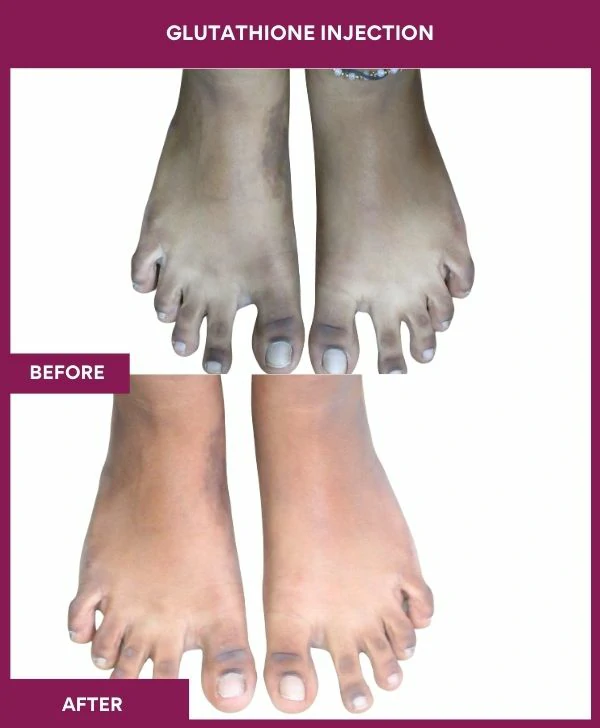
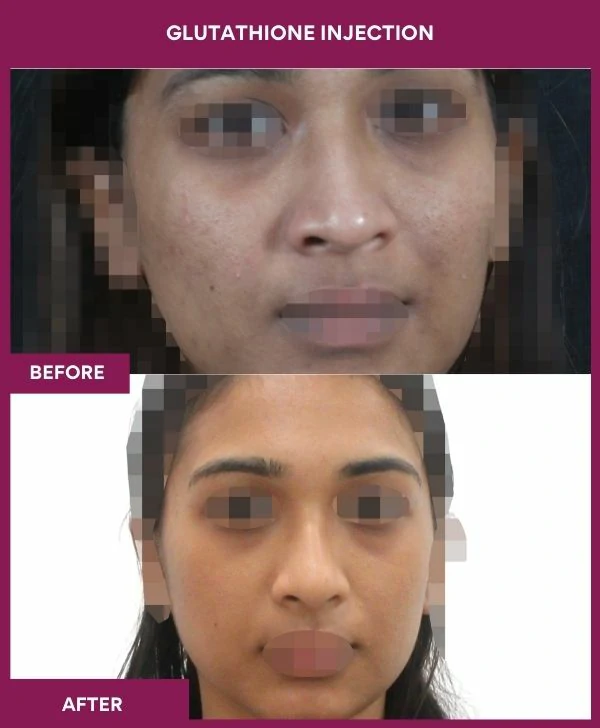
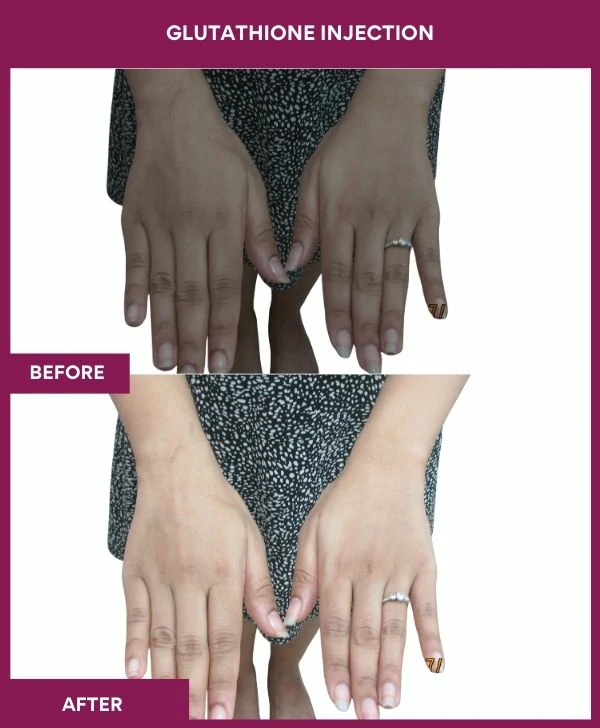
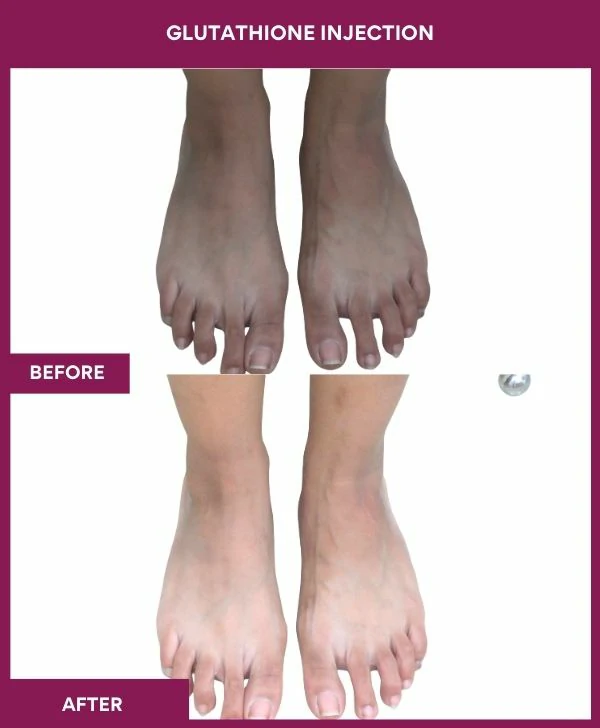
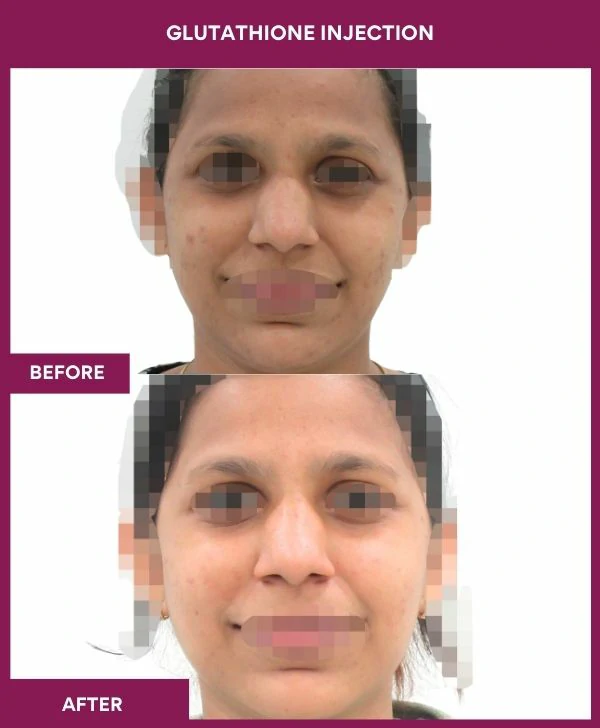
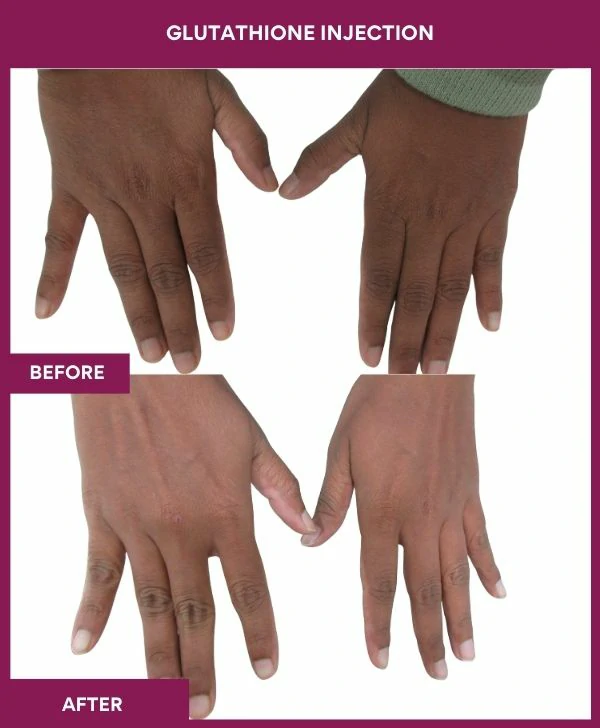
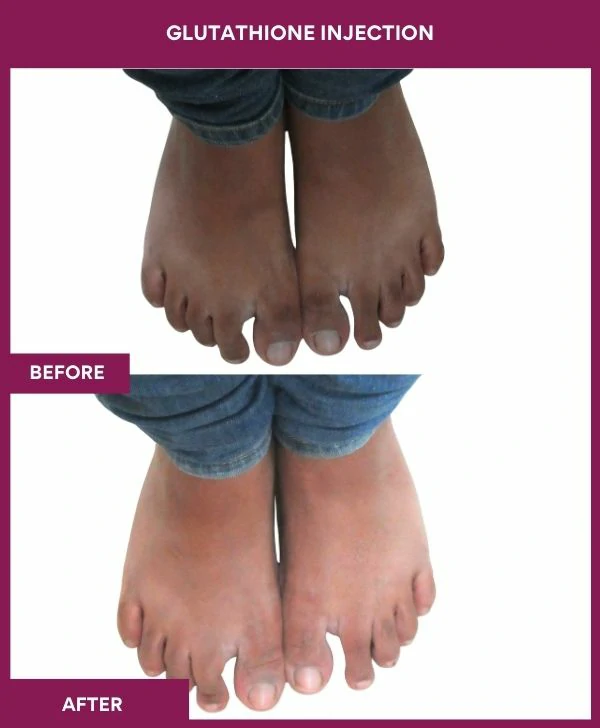
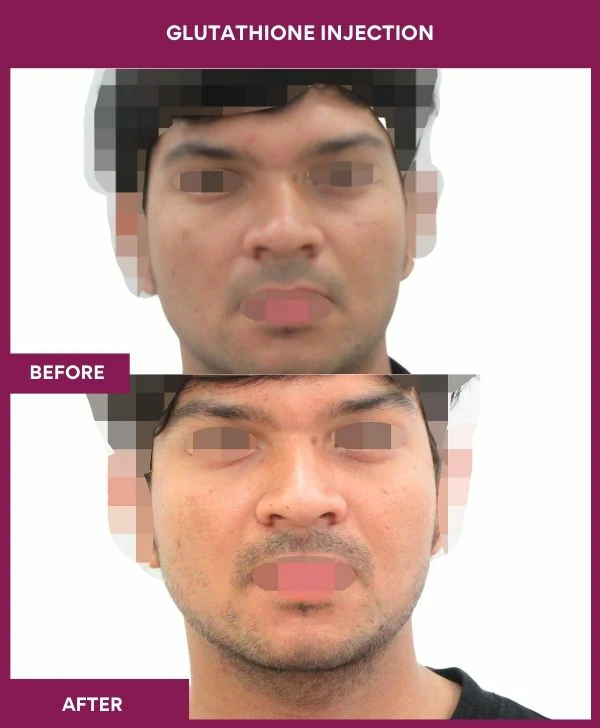
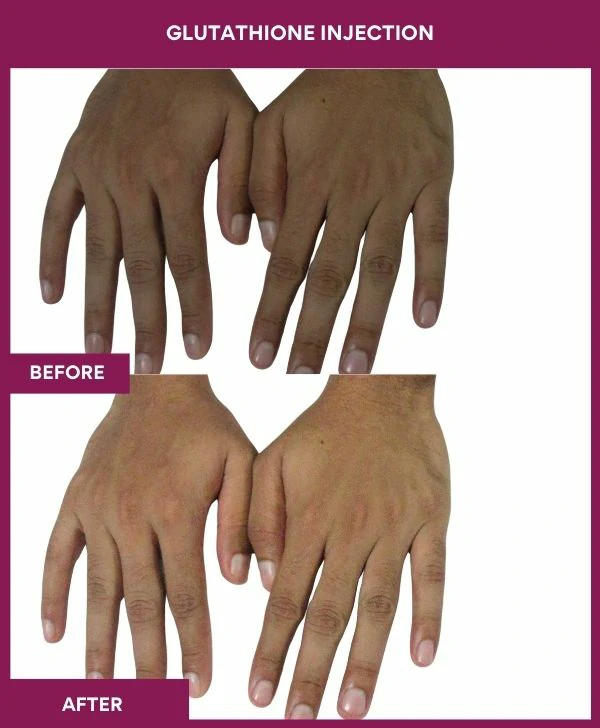
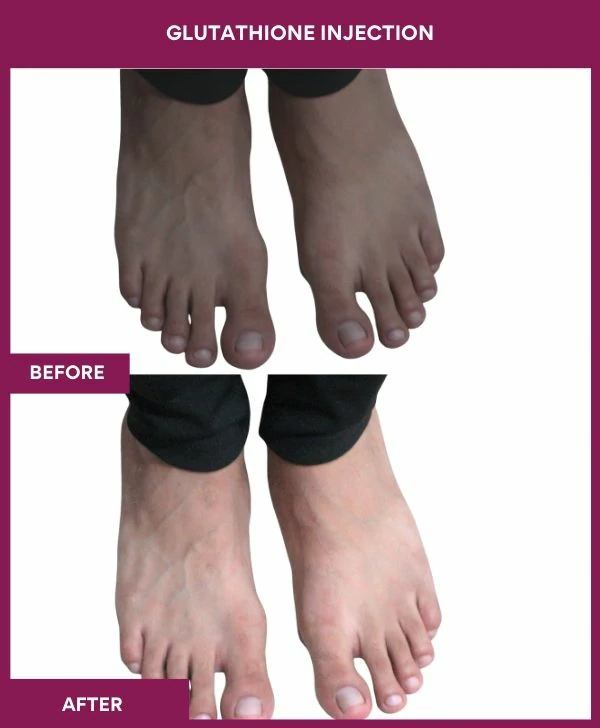
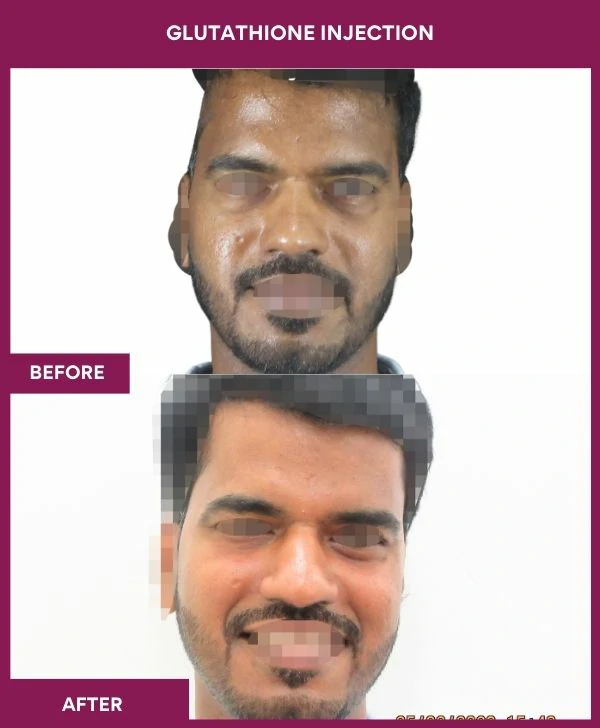
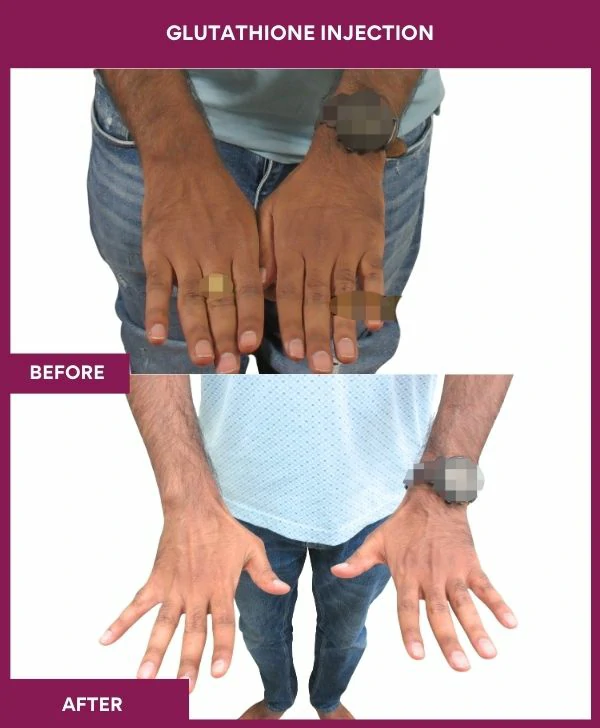
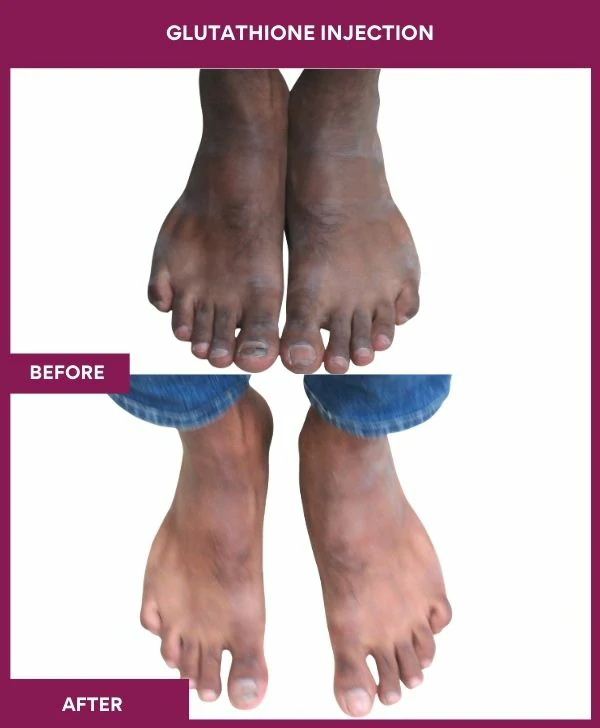
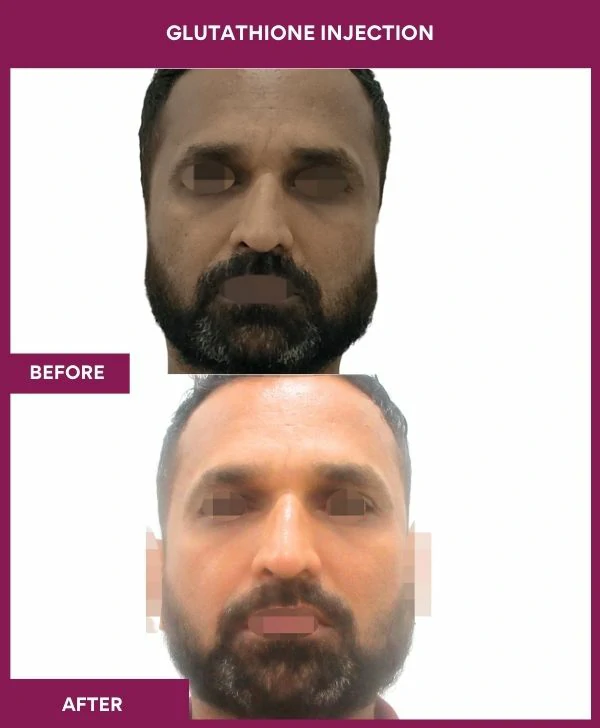
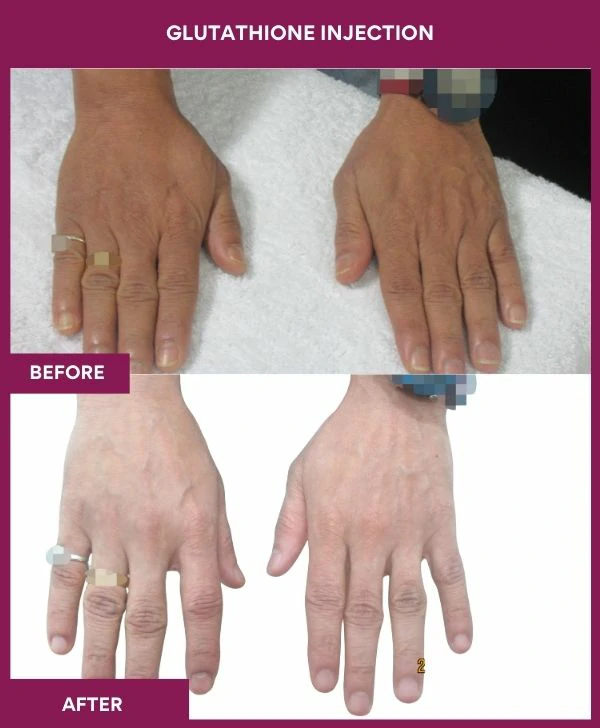
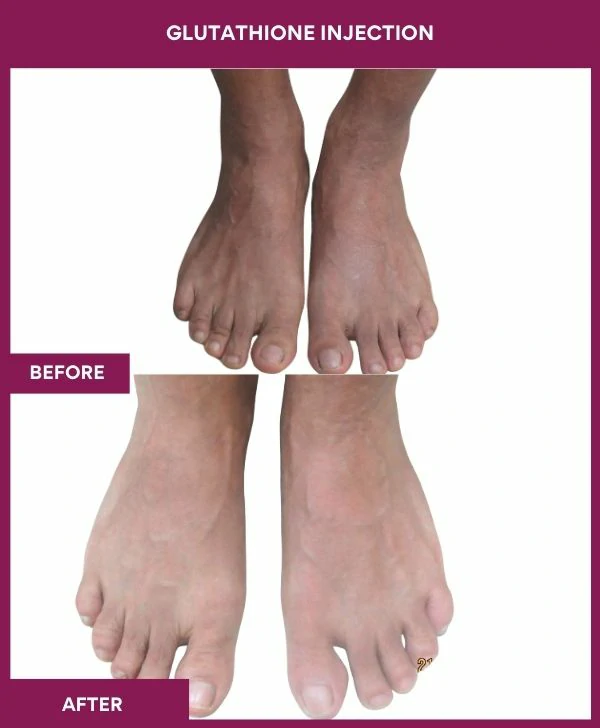
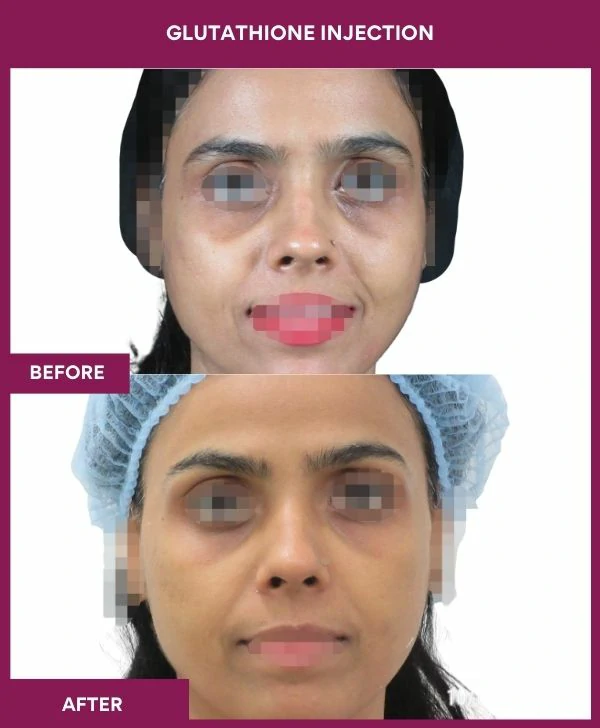
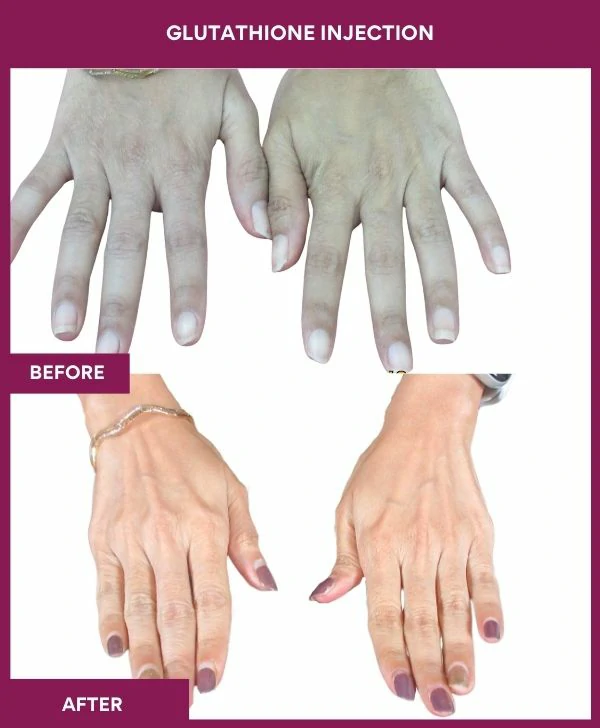
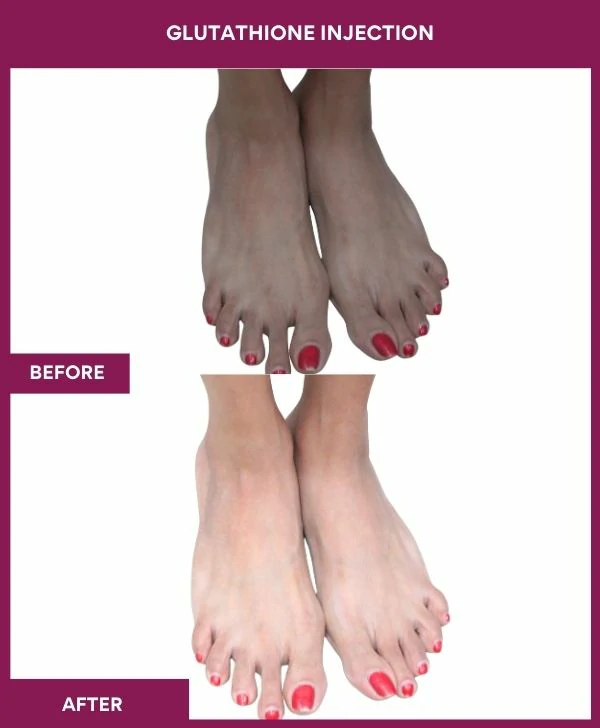
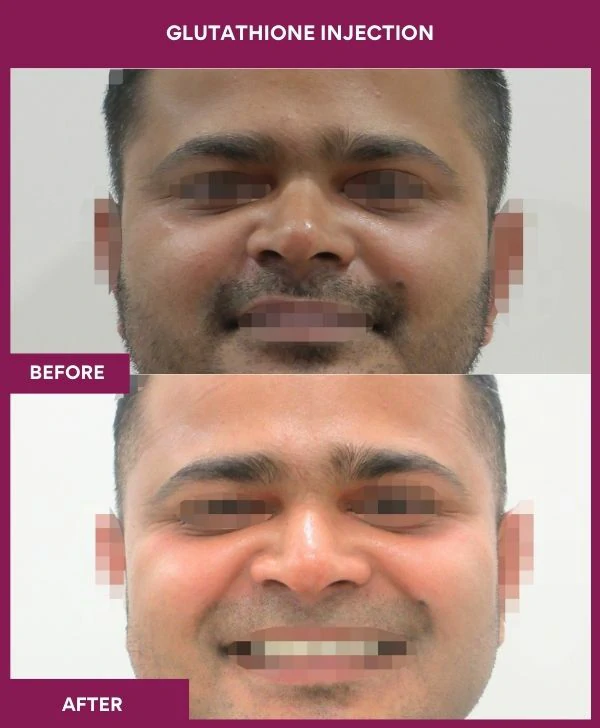
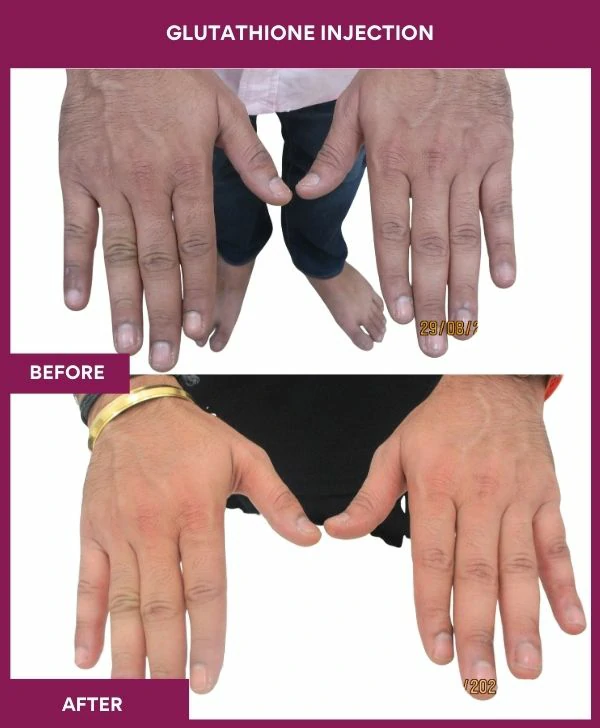
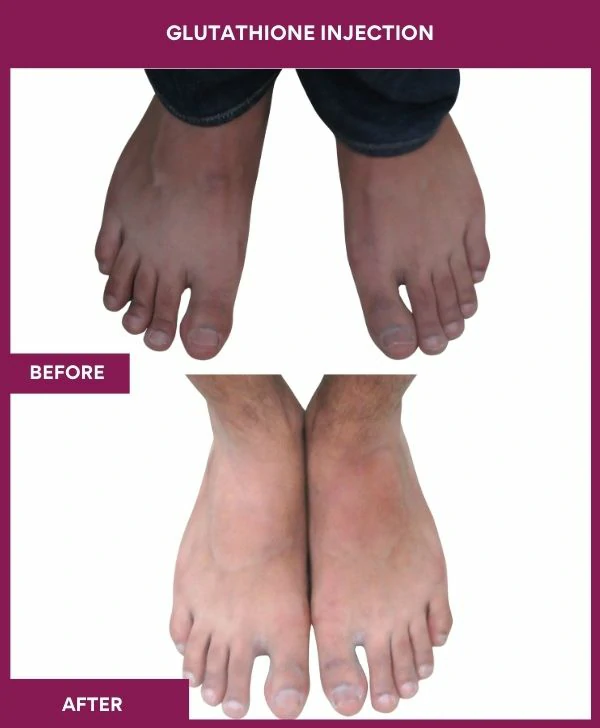
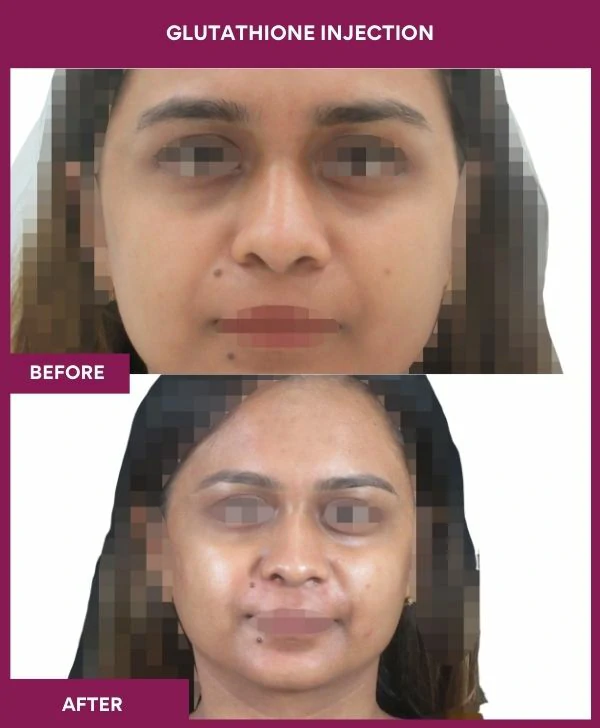
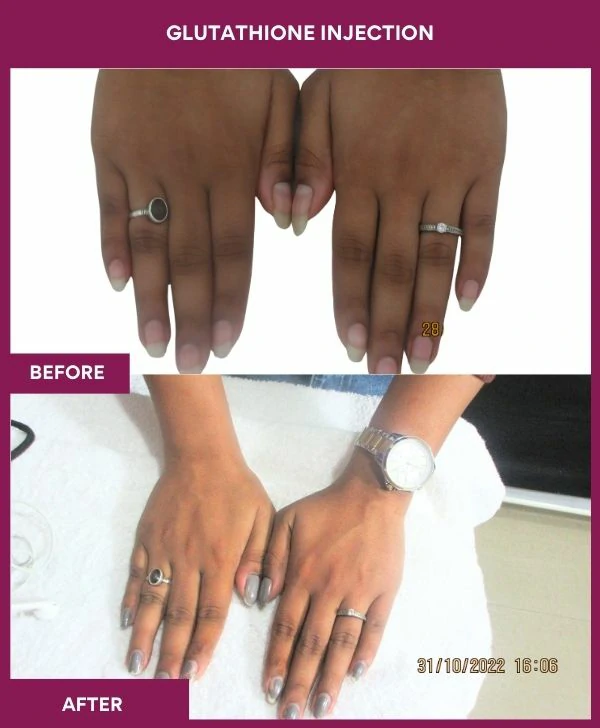
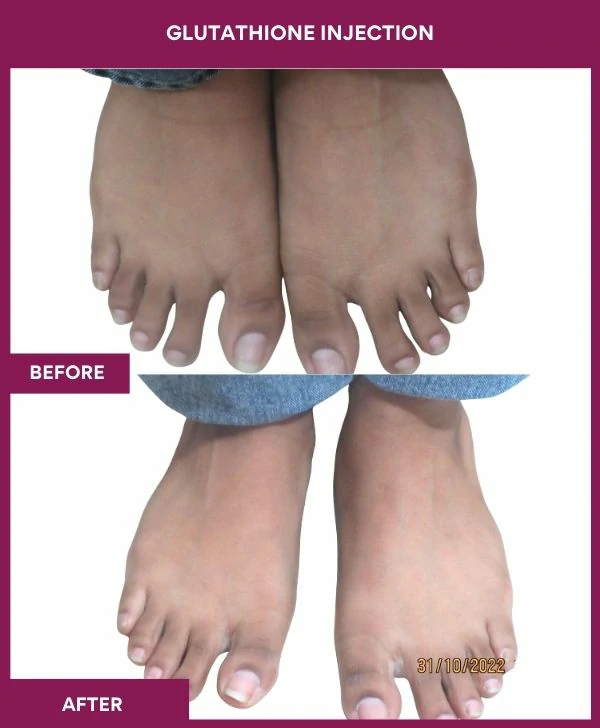
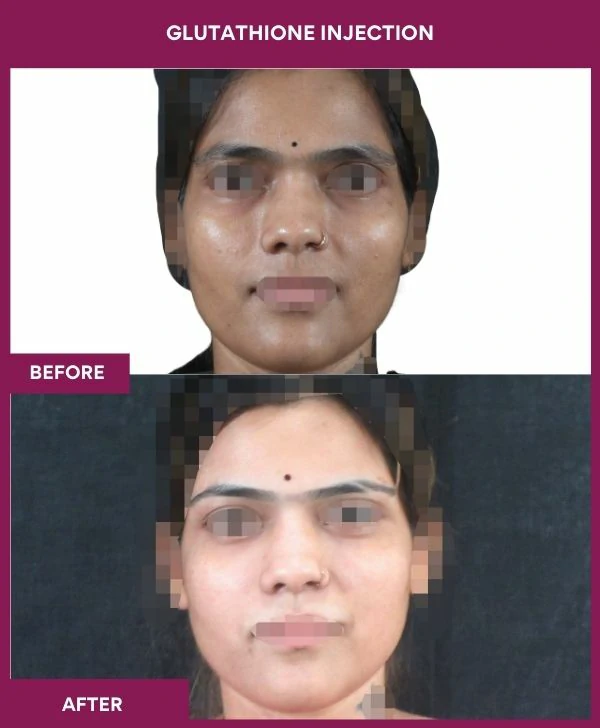
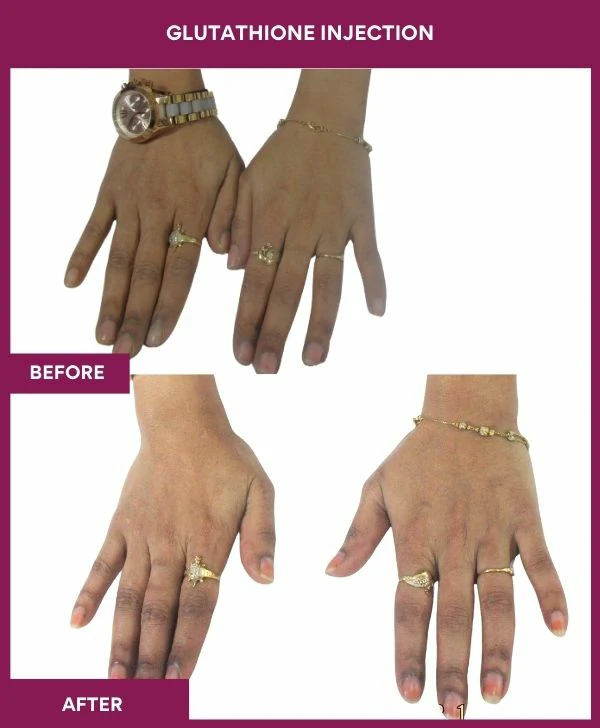
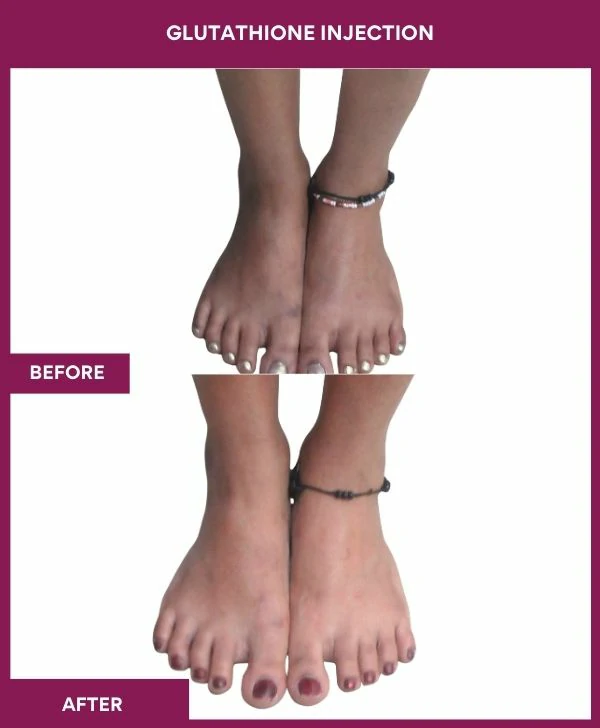
“Impressed by results? Know the cost to get yours!”
Glutathione Injection For Skin Whitening Testimonials: Fine To Fabulous Journeys

Awarded by Google.com
Rating: 4.7
Reviews: 485+

Awarded by WhatClinic.com
Rating: 4.8
Reviews: 119+

Awarded by Realself
Rating: 4.9
Reviews:453+

Awarded by Facebook
Rating: 4.6
Reviews:105+
Dr Milan Doshi and his staff are very professional and committed as the centre is highly equipped with advanced technology. I had closed rhinoplasty 4 months back and I’m seeing the results as to how it becomes successful.
Deepika Shetty
The doctor explained everything clearly and the surgery was smooth. Recovery was faster than I expected and the team was very supportive.
Rahul Mehta
Very natural results and excellent staff. From consultation to follow-up, the experience was outstanding and boosted my confidence.
Sneha Kapoor
“Heard the stories—now it’s your turn to shine!”
Am I a Candidate?
(4 quick questions)
Perfect match, or a better option? Find out first.
Check My SuitabilityHonest routing — even if it’s a peel, not a drip
Quick Facts About Facelift Surgery
TIME REQUIRED
30–45 minutes (IV infusion)
ANESTHESIA
None
SESSIONS
6–10 sessions
PAIN LEVEL
Minimal Discomfort
DOWNTIME
None
RESULTS VISIBLE
3–4 weeks
side effects
Mild reactions possible
Cost
₹4,000 – ₹9,000 per session
How Much Does Glutathione Injection Cost in Mumbai?
| Plan | Typical range (₹) | What it includes |
|---|---|---|
| Single IV session | 4,000 – 9,000 | Doctor-set dose, ± Vitamin C, 30–45 min supervised infusion |
| Booster add-on (Vitamin C / NAC) | Included – 1,500 | Where prescribed; some doses include it |
| 6-session course | 33,000 – 50,000 | Weekly / fortnightly; skin review at session 3 and 6 |
| 10-session course | 55,000 – 80,000 | For medium–darker tones or larger areas; review every 3 sessions |
| Maintenance session | 4,000 – 9,000 | Every 4–8 weeks as advised, to hold the result |
| Oral / liposomal glutathione (monthly) | 2,500 – 6,000 | Capsules ± Vitamin C; the route many patients start with |
| Topical glutathione / brightening peel session | 3,000 – 8,000 | Cream protocol or glutathione peel; see pigmentation treatment |
| Mesotherapy combination session | See mesotherapy page | Micro-injections with Vitamin C/E → Mesotherapy treatment |
Get your exact quote & surgery plan
Share your details — our team responds within working hours with cost, EMI options and next steps.
Most Common Question People Ask
Q1. What does a glutathione injection do?
Ans. Glutathione is an antioxidant that, in the skin, reduces tyrosinase activity and shifts melanin production toward lighter pheomelanin. In selected patients this can gradually brighten and even out skin tone and soften the look of pigmentation. Its other roles in the body — cellular defence, detoxification pathways — are general physiological functions, not a treatment claim.
Q2. Is glutathione safe for skin whitening?
Ans. Oral and topical glutathione are well tolerated in small trials. IV glutathione is generally well tolerated under medical supervision but has limited efficacy evidence for whitening and is used off-label for that purpose; India’s regulator approves it for certain liver conditions, not skin lightening. That is why it must be prescribed and given by a qualified doctor, never self-administered.
Q3. How long do glutathione injections take to show results?
Ans. Results are gradual. Some patients notice brighter, more even skin after 3–4 weeks of a course; medium to darker skin tones typically need 3–6 months of consistent treatment, sun protection and skincare.
Q4. Is glutathione injection permanent?
Ans. No. The effect is reversible — skin tone gradually returns toward its natural baseline if treatment stops, faster with sun exposure. Maintenance sessions, daily SPF and good skincare extend the result.
Q5. What is the cost of glutathione injections in Mumbai?
Ans. Typically ₹6,000 to ₹9,000 per session (+5% GST), depending on dose, boosters and clinic. A course of 6–10 sessions is usual; the exact plan is confirmed at consultation.
Q6. Which is better — IV, oral or topical glutathione?
Ans. It depends on the patient. Oral and topical routes have the most consistent (if modest) trial evidence and are easier to maintain; IV acts faster but its whitening evidence is limited and it needs medical supervision. Dr. Doshi chooses the route after assessing skin type, pigmentation pattern, history and expectations.
Q7. What are the possible side effects of glutathione injections?
Ans. Mild allergic or skin reactions, possible lowering of zinc with overuse, and interactions with undisclosed supplements. With unsupervised or high-dose IV use, more serious reactions have been reported — which is why dose, route and monitoring are set by a doctor.

Why Choose Dr. Milan Doshi?
Dr. Milan Doshi, MCh, MS — founder of Allure Medspa, Indian board-certified plastic and cosmetic surgeon with 27+ years of experience and a strong focus on safe, natural-looking skin and pigmentation care. Patients choose him for personalised, in-depth consultation and route selection; emphasis on natural-looking, safe results with medical-grade products; pre-treatment guidance on diet, supplements and realistic expectations — and for practising at NABH-accredited Allure Medspa, Mumbai, a sterile setting with daily fumigation protocols, pharmaceutical glutathione, personalised dose adjustments and a trained post-procedure care team.
The Complete Guide About Glutathione Injection
What Is Glutathione Injection Treatment?
Glutathione injection treatment delivers glutathione — a naturally occurring antioxidant made of three amino acids — to help brighten skin tone, soften the appearance of pigmentation, and support the body’s antioxidant defences. It is most often chosen for overall skin radiance, an uneven complexion, and tan or melasma-related dullness.
As we age or face environmental stress (sun, pollution, smoking), the body’s glutathione levels naturally fall, which can leave skin looking dull and tired. Glutathione is often combined with Vitamin C, which is used both to support absorption and for its own role in skin brightening.
What is glutathione made of?
Glutathione is a tripeptide — a small molecule built from three amino acids: cysteine, glutamic acid and glycine. Together they give glutathione its antioxidant action and its role in regulating melanin.
- Cysteine — Supplies the reactive thiol group central to antioxidant activity
- Glutamic acid — Structural amino acid in the tripeptide
- Glycine — Completes the tripeptide structure
| Cosmetic use | Medical use |
|---|---|
| Skin brightening, evening of tone, tan and pigmentation support — oral, topical or IV, all off-label for whitening | IV glutathione is approved in India (CDSCO) for certain alcohol-related liver conditions; also studied in other medical contexts |
| Elective; not insured; doctor-led at Allure Medspa | Prescribed by treating physicians; not what this page offers |
Also called: skin brightening injection, glutathione skin-lightening therapy, IV skin glow drip, antioxidant injection therapy, glutathione detox injection. (These are marketing synonyms; the active ingredient is the same glutathione tripeptide.)
Sources:
Sonthalia et al., Indian J Dermatol Venereol Leprol 2016 · Sonthalia et al., Dermatol Pract Concept 2018 · Narrative review, 2025
Does Glutathione Actually Work For Skin Brightening? What The Evidence Says
| Route | What the research shows | Key caveat |
|---|---|---|
| Oral | Small RCTs show modest, measurable lightening; well tolerated | Effect is reversible; bioavailability debated |
| Topical | Limited RCT support for tone & texture; well tolerated | Acts mainly at the application site |
| Intravenous (IV) | Popular, fast-acting, but efficacy evidence is limited/low-quality | Regulatory warnings exist for off-label whitening use |
What Are The Benefits Of Glutathione Injections?
Used under medical guidance, glutathione offers a non-surgical way to support brighter, more even skin alongside its antioxidant role. Benefits are gradual and best maintained with sun protection and a sensible skincare routine.
- Helps brighten dull, uneven or tan-affected skin
- May soften the look of pigmentation and dark patches over time
- Supports the skin’s antioxidant defence against environmental stress
- Non-surgical, with little to no downtime
- Can be combined with Vitamin C and clinic skincare for better results
For targeted pigment concerns, glutathione is often one part of a wider plan that may include pigmentation treatment, Cosmelan peel or skin-brightening protocols.
What does glutathione do in the body besides skin?
Beyond appearance, glutathione is one of the body’s primary antioxidants and plays a role in cellular defence and detoxification. These are general physiological roles of glutathione — not promises of medical treatment.
- Neutralises free radicals and supports cellular defence
- Helps regulate hydrogen peroxide levels
- Supports recycling of vitamins C and E
- Contributes to normal immune function
- Plays a role in the body’s detoxification pathways
Which Skin Concerns Can Glutathione Help — And How Does It Work?
Glutathione is thought to brighten skin in two linked ways: by inhibiting tyrosinase and shifting melanin synthesis from darker eumelanin toward lighter pheomelanin. The visible result is a gradually brighter, more even tone — it evens out your natural colour rather than “bleaches” the skin.
| Pigment type | What it is |
|---|---|
| Eumelanin | Brown–black pigment; more of it = deeper tone and tanning |
| Pheomelanin | Red–yellow pigment; the shift toward it reads as lighter |
| Neuromelanin | Found in the brain (not related to skin tone; listed only for completeness) |
| Concern | What glutathione can do | Better-suited or combined treatment |
|---|---|---|
| Overall dullness, tired or tanned skin | Primary use — gradual brightening | — (add SPF and skincare) |
| Uneven tone, patchy tan | Helps even the tone over a course | Chemical peels |
| Melasma, dark patches | Supportive role only | Pigmentation treatment · Cosmelan · laser toning |
| Dark circles | Minimal | Dark circle removal |
| Acne marks and post-inflammatory pigmentation | Mild support | Acne & scar treatment · Microneedling RF |
| Body areas (hands, arms, legs) | Gradual evening; longer courses | Photo facial |
| “Full-body fairness” or intimate-area lightening | Not an appropriate goal for glutathione | Consultation to reset expectations |
Sources: Sonthalia et al., 2016
What Are The Limitations Of Glutathione Injections?
Glutathione may gradually improve uneven tone, but it does not bleach skin, give permanent fairness or replace targeted pigmentation treatment.
- It evens your natural tone; it does not bleach or change your skin colour.
- Results are gradual (weeks to months) and reversible — tone drifts back toward baseline if you stop, faster with sun exposure.
- IV glutathione’s whitening evidence is limited and low-quality; it is used off-label and carries regulatory cautions.
- It is a weak tool for melasma, dark circles or scars on its own — those need targeted treatment.
- It is not suitable in pregnancy or breastfeeding, with known allergy, or with undisclosed supplements or liver/kidney disease without medical review.
- It cannot replace sunscreen: without daily SPF, no brightening route holds.
Common myths vs facts
- Myth: It’s only for skin whitening.
Fact: It’s primarily an antioxidant; brightening is one effect, not its only role. - Myth: It gives permanent fairness.
Fact: Effects are reversible — tone gradually returns toward baseline if you stop. - Myth: It works instantly.
Fact: Visible change is gradual, typically over several sessions. - Myth: IV glutathione is proven for whitening.
Fact: Efficacy evidence for IV whitening is limited, and it’s used off-label — supervision matters. - Myth: It bleaches or changes your whole skin tone.
Fact: It helps even out your natural tone by reducing melanin — it doesn’t bleach.
Why Is A Consultation Essential Before Glutathione Treatment?
A glutathione consultation confirms whether treatment is suitable, which route and dose fit your skin, and whether another treatment would work better.
What happens
- Skin assessment in daylight: skin type, pigmentation pattern (tan, melasma, post-inflammatory), sun damage.
- Medical history: allergies (including sulphites), asthma, liver or kidney disease, pregnancy or breastfeeding, all medicines and supplements.
- Expectation-setting: what evens, what does not; timeline; reversibility.
- Route and dose decided; boosters (Vitamin C, NAC) considered; session plan and cost confirmed in writing.
- Photographs for baseline; SPF and skincare plan.
How to prepare
- Come without make-up; bring a list of every supplement, cream and medicine.
- Photographs of your skin from 6–12 months ago if the change is recent.
- Your questions on sessions, cost, maintenance and side effects.
Online consultation
A video consultation with daylight photographs can settle suitability and route before you visit:
Online consultation.
Route, dose, sessions — decided by a doctor, not a menu.
What Are The Different Routes And Types Of Glutathione Treatment?
Glutathione is available as IV, oral, liposomal, topical and mesotherapy forms, with the best route chosen by skin goals, safety and medical assessment.
| Route | How it is given | Speed / evidence | Best suited to |
|---|---|---|---|
| Intravenous (IV) | Delivered directly into the bloodstream; 30–45 min supervised infusion | Fastest-acting; whitening evidence limited; regulatory cautions; qualified doctor only | Patients who have been assessed and counselled, want faster visible change, and accept off-label status |
| Oral | Capsules or tablets, often paired with Vitamin C | Most consistent (if modest) trial support; absorption debated; slower | Most patients — first-line and maintenance |
| Liposomal | Oral form encapsulated in fat molecules to improve gut absorption | Favoured for longer-term antioxidant support | Long-term maintenance; patients who prefer no needles |
| Topical | Creams, lotions and glutathione-based peels at the application site | Limited RCT support for tone and texture | Localised concerns; combined with peels or mesotherapy |
| Mesotherapy | Micro-injections into the skin, often with Vitamin C/E | Targets dullness locally | Face and neck radiance → Mesotherapy treatment |
Is IV always better than oral?
No. IV delivers more glutathione, faster, but “more, faster” has not translated into strong evidence for whitening, and it is the route regulators have warned about when used unsupervised. For many patients an oral or liposomal course with daily SPF achieves a similar gradual evening of tone with less risk and easier maintenance. IV is chosen only after assessment, for the right patient, under supervision.
“There is no single ‘best’ form of glutathione for everyone. At Allure Medspa, I first assess the patient’s skin type, pigmentation pattern, medical history, lifestyle, and expectations before recommending any route. Oral, liposomal, or topical options may be preferred for many patients because they are gradual and easier to maintain, while IV glutathione should be considered only after proper medical evaluation and under qualified supervision. The aim is safe, controlled, even-toned skin improvement — not blindly following what is trending.”
Found your route? Now see what it costs.
How Is Glutathione Dosage Decided — And How Does It Compare With Other Brightening Treatments?
Glutathione dosage depends on the route, body weight, skin type and treatment goals, and should always be set by a qualified doctor.
The ranges below are indicative only.
| Route | Typical approach (indicative) | Notes |
|---|---|---|
| IV | Doctor-determined dose, usually weekly/biweekly courses | Off-label for whitening; supervision essential |
| Oral | Often paired with Vitamin C | Slower, gradual effect |
| Topical | Creams/lotions or glutathione peels | Acts at application site |
| Mesotherapy | Micro-injections, often with Vitamin C/E | Targets dullness; see mesotherapy page |
Glutathione vs other skin-brightening treatments
Glutathione is one of several routes to a brighter, more even tone — alongside topical creams, chemical peels and laser toning. The best choice depends on your concern, skin type and how much downtime you’ll accept.
| Treatment | Method | Typical course | Best for |
|---|---|---|---|
| Glutathione (IV/oral) | Injectable / oral antioxidant | Several sessions | Overall radiance, gradual evening of tone |
| Topical creams | External application | 6–12 weeks | Mild, surface-level brightening |
| Chemical peels | In-clinic exfoliation | 3–6 sessions | Texture, spots, dullness |
| Laser toning | Light-based therapy | 5–8 sessions | Melasma and targeted spots |
Explore the alternatives:chemical peels, laser treatments, photo facial and microneedling RF. A consultation helps match the method to your skin.
Aware of the risks? Now let a doctor manage them.
What Happens In A Glutathione IV Session? (Step By Step)
A glutathione IV session typically takes 30–45 minutes, with medical checks, supervised infusion, monitoring and review built into each visit.
| Step | What happens | Why it matters |
|---|---|---|
| 1 | Consultation and written consent; route and dose already decided | No infusion without assessment |
| 2 | Baseline photographs in standard light (first session and every third session) | Honest tracking of gradual change |
| 3 | Medical check: allergies, asthma, pregnancy, current medicines and supplements re-confirmed | Catches new risks since consultation |
| 4 | Vitals recorded (blood pressure, pulse) | Safety baseline for the infusion |
| 5 | Hand hygiene; skin at the cannula site cleaned | Infection prevention |
| 6 | A small cannula placed in a hand or forearm vein | Minimal discomfort; no anaesthesia needed |
| 7 | Pharmaceutical-grade glutathione (± Vitamin C / NAC as prescribed) prepared and checked by the nurse and doctor | Correct product, dose and expiry |
| 8 | Slow, supervised infusion over 30–45 minutes; you sit or recline | Slow delivery reduces reactions |
| 9 | Continuous observation for flushing, itching, breathlessness or dizziness | Early detection of any reaction |
| 10 | Cannula removed; pressure dressing | Prevents bruising |
| 11 | Post-session advice: water, SPF, no alcohol that day; next date fixed | Consistency drives results |
| 12 | Review at sessions 3, 6 and course end; dose or route adjusted | Plan changes with the skin, not the calendar |
Elements used
| Element | Purpose |
|---|---|
| Pharmaceutical-grade glutathione (injectable) | The active tripeptide, from a licensed manufacturer |
| Vitamin C (ascorbic acid) | Supports absorption and has its own brightening role |
| N-acetyl cysteine (NAC), where prescribed | Glutathione precursor booster |
| Sterile IV set, cannula, normal saline | Safe, slow delivery |
| Pulse oximeter / BP monitor | Vitals during infusion |
| Emergency tray (antihistamine, adrenaline, oxygen) | Managed within a NABH-accredited facility |
When Will I See The Results Of Glutathione Treatment?
Glutathione results are gradual, often becoming clearer over 6–12 weeks, with maintenance, SPF and lifestyle affecting how long improvement lasts.
| Time | What you see |
|---|---|
| After session 1–2 | Usually nothing visible — some report a “fresh” look for a day or two |
| 3–4 weeks | Early brightening and evening of tone in lighter and medium skin; more so with daily SPF |
| 6–8 weeks (mid-course) | Photographs show a clearer difference than the mirror; tan-related unevenness softens |
| 3 months | Course-end result for many lighter–medium tones |
| 3–6 months | Medium to darker tones reach their best result with consistent treatment |
| After stopping | Gradual drift back toward baseline over months, faster with sun; maintenance every 4–8 weeks holds it |
Factors that affect the result: route and dose; baseline skin tone and pigmentation type (tan responds; melasma less so); sun exposure and SPF discipline; smoking and alcohol; consistency of sessions; combined peels or skincare.
What Aftercare Does Glutathione Treatment Require?
- Broad-spectrum SPF 30–50 every morning and re-applied — non-negotiable; without it the result does not hold.
- Drink water normally; eat normally (no diet restrictions).
- Keep the cannula site clean for 24 hours; a small bruise is normal.
- Continue prescribed oral glutathione / Vitamin C between sessions if part of the plan.
- Keep the session schedule — gaps slow the result.
- Report rash, itching, breathlessness, abdominal pain or unusual tiredness after a session.
| Avoid | For how long |
|---|---|
| Unprotected sun, tanning | Throughout the course and maintenance |
| Alcohol | On the day of each session |
| Smoking / nicotine | Ideally throughout — it depletes glutathione and dulls the result |
| Self-bought glutathione injections, tablets or “whitening” drips from non-medical sources | Always |
| Undisclosed new supplements or medicines | Tell the team before the next session |
| Harsh scrubs, bleaching creams, unsupervised steroid creams | Throughout |
| Judging the result in the mirror after every session | Compare photographs at 6 weeks and 3 months instead |
Is Glutathione Safe? Side Effects, Precautions And The Regulatory Context
Glutathione is generally well tolerated when prescribed and supervised by a qualified doctor — but it is not risk-free, and the IV route in particular needs caution. Never self-administer glutathione or buy injectables for home use.
Possible side effects
- Mild allergic or skin reactions in sensitive individuals
- Possible lowering of zinc levels with overuse
- Interactions if combined with other, undisclosed supplements
- With unsupervised or high-dose IV use, more serious reactions have been reported
Regulatory context you should know
IV glutathione is widely marketed for whitening, but it is used off-label for this purpose. India’s drug regulator (CDSCO) approves IV glutathione for certain alcohol-related liver conditions — not for skin lightening — and the FDA of the Philippines has publicly warned against unsupervised off-label whitening use because of reported adverse effects. This is exactly why a board-certified, doctor-led setting matters.
Precautions before treatment
- Disclose your full medical history, medicines and supplements
- Get a personalised dose and route from a qualified doctor
- Avoid if pregnant or breastfeeding
- Flag any known allergies or sensitivities
Self-medication or IV use without medical supervision can pose serious health risks.
| Risk | How Allure Medspa minimises it |
|---|---|
| Allergic reaction | Allergy and asthma screening; slow infusion; continuous observation; emergency tray in a NABH facility |
| Wrong dose or product | Doctor-set dose; pharmaceutical-grade product checked by nurse and doctor; no home kits |
| Zinc lowering / nutritional effects | Course limits; review every 3 sessions; oral route preferred for long-term use |
| Interactions | Full supplement and medicine disclosure at every session |
| Unrealistic expectations | Written expectation-setting: gradual, reversible, evens not bleaches |
| Infection at cannula site | Sterile technique; single-use sets |
breathlessness, wheeze or throat tightness · widespread rash, itching or swelling of the face · chest pain, severe dizziness or fainting · severe abdominal pain or yellowing of the eyes in the days after. Call the clinic (+91 82918 63159) or your local emergency number.
Sources: Sonthalia et al., 2018 · Narrative review, 2025
Aware of the risks? Now let a doctor manage them.
What Does A Typical Glutathione Course Look Like?
Glutathione treatment usually involves a planned course, with progress reviewed over time and maintenance guided by skin response and sun protection.
| Phase | What happens | Your part |
|---|---|---|
| Consultation | Assessment, route and dose decided, plan in writing | Bring supplements list; daylight photos |
| Sessions 1–3 (weeks 1–3/6) | Weekly or fortnightly infusions; first review at session 3 | SPF daily; keep dates |
| Sessions 4–6 | Brightening visible in photographs; dose adjusted if needed | Compare photos, not mirror |
| Sessions 7–10 (if planned) | For medium–darker tones or body areas | Consistency |
| Course end (3–6 months) | Best result; maintenance plan agreed — IV every 4–8 weeks, or switch to oral / liposomal | Choose a maintenance route you can keep |
| Maintenance | Holds the result; without it tone drifts back over months | SPF for life |
Key points: no downtime at any stage; sessions fit a lunch hour; the course, not the session, is the unit of treatment; oral maintenance is often the sensible long-term route.
Medical Codes Related To Glutathione Treatment
For documentation only — cosmetic glutathione treatment is elective and not covered by insurance.
| Code system | Code | Description |
|---|---|---|
| CPT | 96365 / 96366 | Intravenous infusion, for therapy/prophylaxis; initial hour / each additional hour |
| CPT | 96374 | Therapeutic intravenous push, single or initial substance |
| CPT | 96372 | Therapeutic injection, subcutaneous or intramuscular (mesotherapy-type) |
| CPT | 99202–99215 | Office consultation, new / established patient |
| ICD-10-CM | L81.4 | Other melanin hyperpigmentation |
| ICD-10-CM | L81.1 | Chloasma (melasma) |
| ICD-10-CM | L81.0 | Post-inflammatory hyperpigmentation |
| ICD-10-CM | Z41.1 | Encounter for cosmetic procedure |
| ICD-10-CM | T50.995A | Adverse effect of other drugs, medicaments and biological substances (reaction documentation) |
Frequently Asked Questions About Glutathione Injection
Q1. How long do glutathione injection results last?
Ans. Results can be long-lasting if maintained with sun protection, healthy habits, and occasional maintenance sessions. For many, results last several months or longer with proper care — but they are not permanent, and tone gradually returns toward baseline without maintenance.
Q2. What happens if I stop taking glutathione injections?
Ans. Your skin tone may gradually return to its natural baseline over time, especially with frequent sun exposure or lack of maintenance. However, some brightness may be retained with good skincare.
Q3. Does glutathione remove tan and pigmentation?
Ans. It helps reduce melanin production, which can gradually soften tan, dark spots and uneven tone over a course of sessions. Melasma and deeper pigmentation usually need targeted treatment (peels, laser toning, pigmentation protocols) with glutathione in a supporting role.
Q4. Which skin-brightening treatment is most effective?
Ans. There is no single most effective treatment — it depends on the concern. Overall dullness responds to glutathione with SPF; texture and spots to peels; melasma and targeted spots to laser toning. Combining Vitamin C, sun protection and lifestyle changes improves every route.
Q5. Can glutathione lighten intimate areas or private parts?
Ans. Glutathione acts on the whole body’s melanin gradually and is not a treatment for intimate-area lightening. Localised pigmentation in those areas needs a dermatological assessment and specific, supervised depigmentation protocols — and unsupervised products for these areas carry real risk.
Q6. Is glutathione good for liver health?
Ans. Glutathione is a major antioxidant and IV glutathione is approved in India for certain alcohol-related liver conditions under a treating physician. That is a medical use, unrelated to skin treatment — cosmetic sessions are not a liver treatment and should not be taken for that purpose.
Q7. What depletes glutathione in the body?
Ans. Factors like pollution, stress, UV radiation, smoking, alcohol, poor diet, and strenuous exercise can significantly deplete your body’s natural glutathione levels.
Q8. How is glutathione administered?
Ans. Glutathione can be taken orally (including liposomal forms), applied topically, given by mesotherapy micro-injections, or infused intravenously. IV delivers the most glutathione fastest, but its whitening evidence is limited and it is used off-label — so the route is chosen by the doctor, not by speed alone.
Q9. When should I stop glutathione treatment?
Ans. When you have reached the result you and the doctor planned, or if the skin is not responding after a full course. Maintenance — occasional IV sessions or an oral route — is discussed at that point; there is no benefit in indefinite high-dose IV use.
Q10. Can I combine glutathione with peels or laser?
Ans. Yes — that is often how pigmentation plans are built: a peel or laser toning for the target concern, glutathione and Vitamin C for overall tone, SPF for everything. Sequencing is set by the doctor so the skin is not over-treated.
Q11. Are there people who should not have glutathione?
Ans. Pregnant or breastfeeding women; anyone with a known allergy to glutathione or sulphites; patients with asthma (IV caution), liver or kidney disease, or on medicines and supplements that have not been disclosed. A consultation settles suitability.