
Breast Asymmetry Correction Surgery in Mumbai: Achieve Balanced, Natural Results Safely

Indian Board Certified Plastic Surgeon
M.CH, MS, ISAPS Mentor
16000+ Cosmetic Surgeries
300+ Breast Asymmetry Surgeries
Breast asymmetry correction surgery balances differences in the size, shape or position of the breasts, using a tailored combination of implants, lift, reduction or fat transfer. Almost everyone has some natural asymmetry. One important point first: asymmetry you’ve had since your breasts developed is benign, but a new or changing asymmetry in an adult should be medically assessed before any cosmetic surgery. At Allure Medspa, Dr. Milan Doshi measures both breasts, often adjusts both sides so they match in shape as well as size, and operates in 2–4 hours under general anaesthesia. Most women return to desk work in 7–10 days. The goal is natural balance, not identical breasts.
Breast Asymmetry Correction Surgery Before and After Images
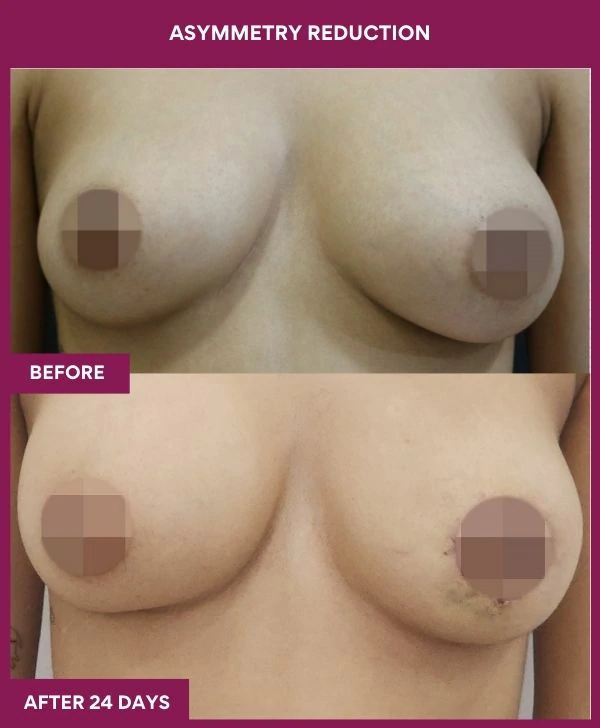
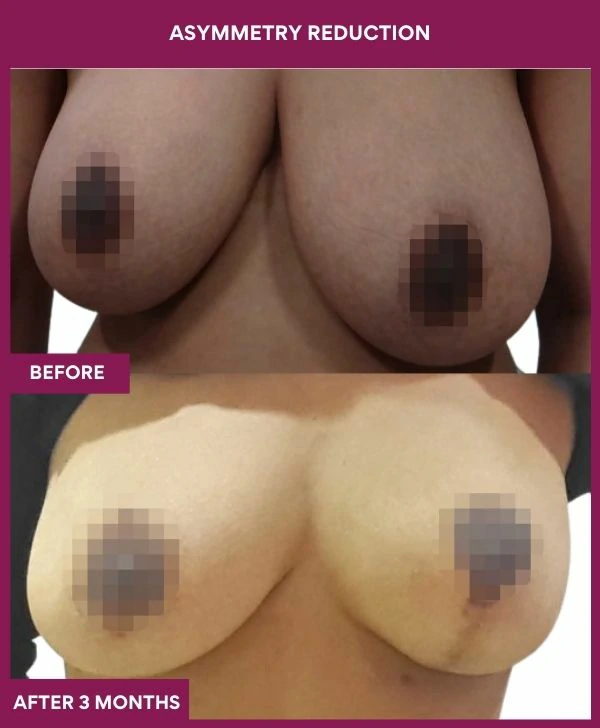
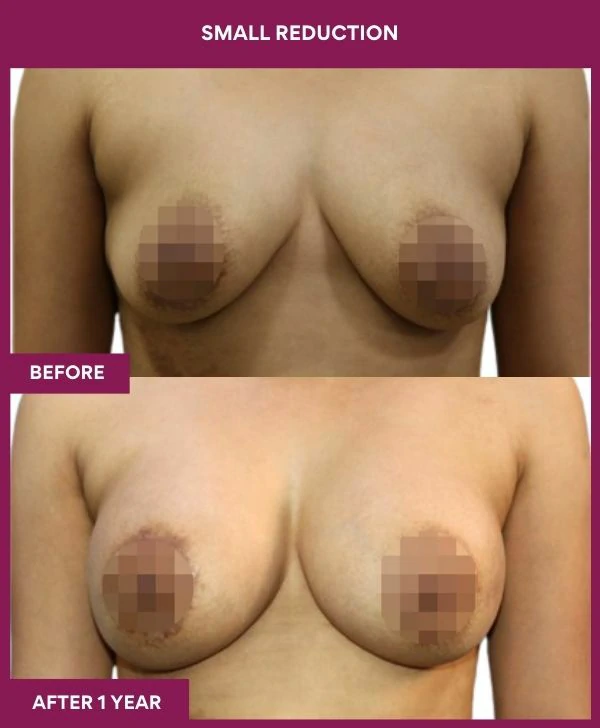
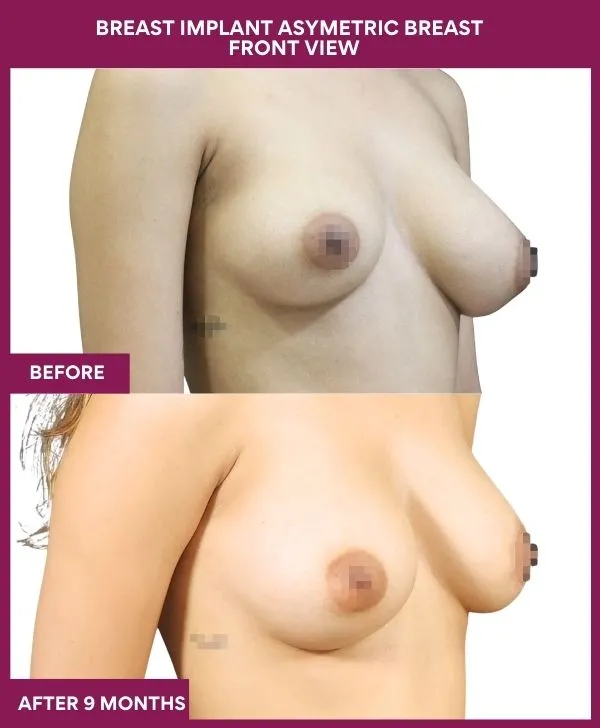
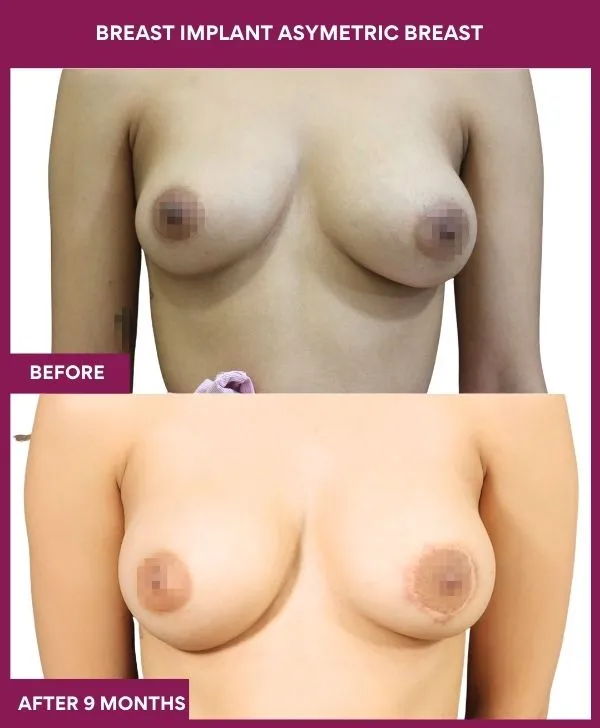
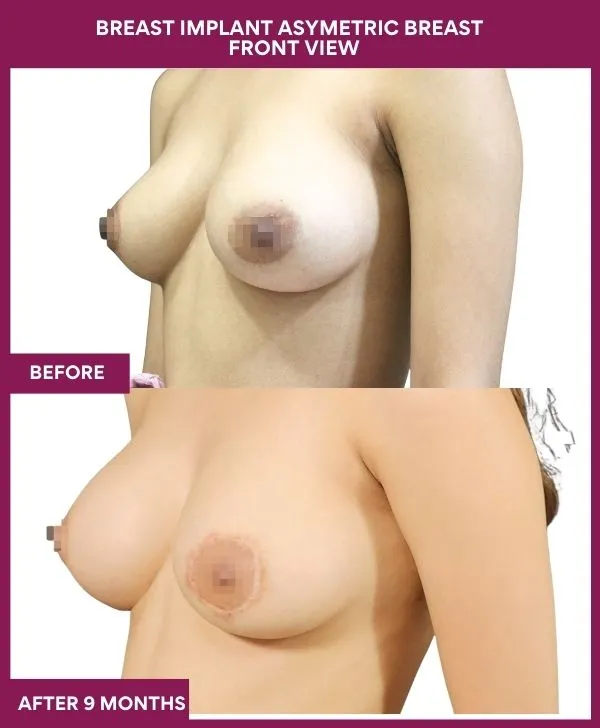
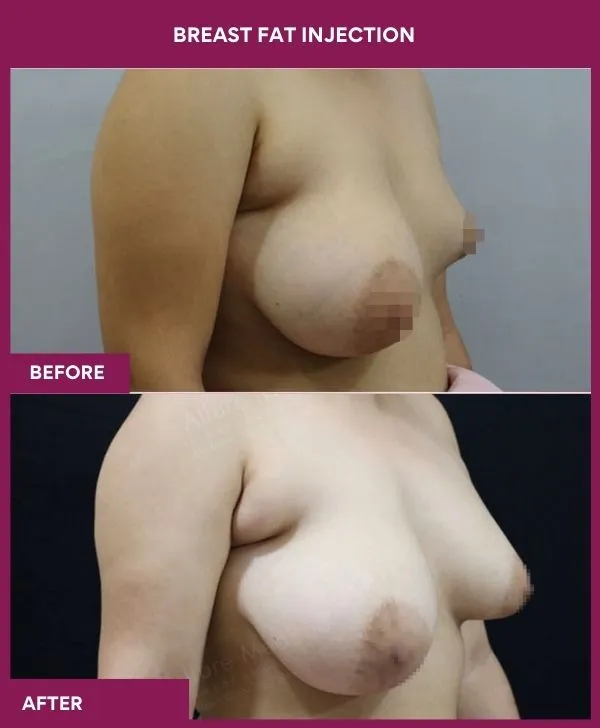
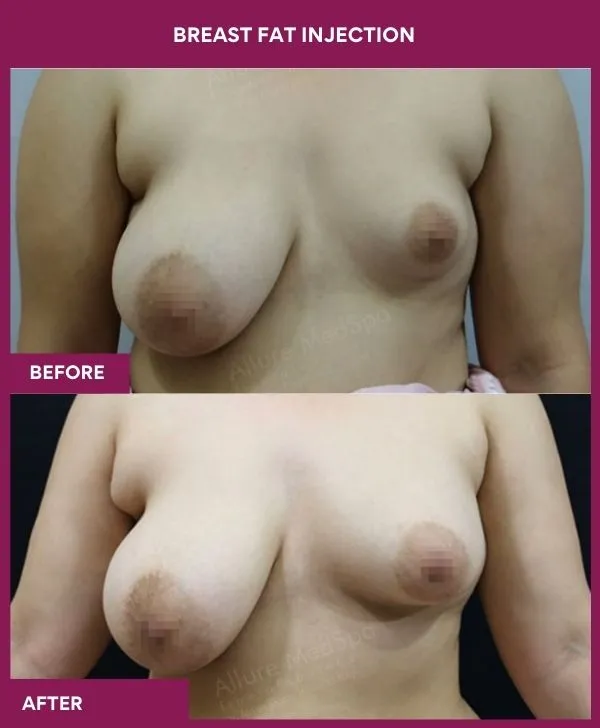
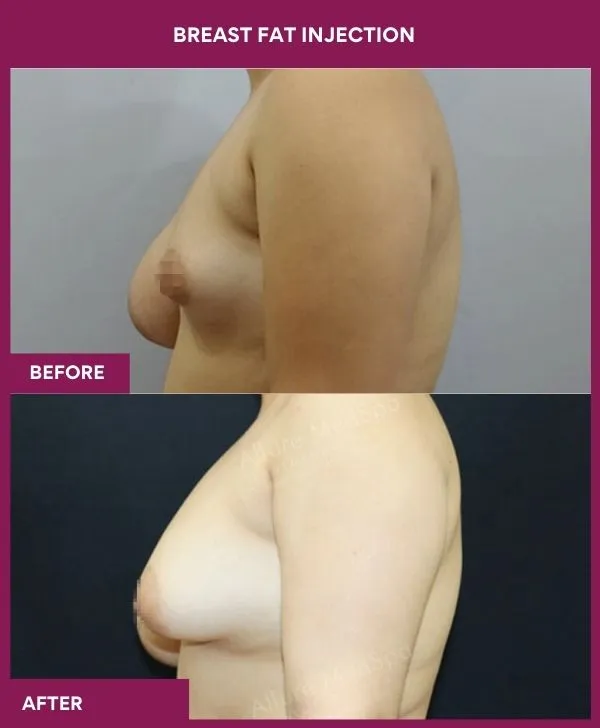
“Liked the results? Let's plan yours.”
Breast Asymmetry Correction Surgery Testimonials: Fine To Fabulous Journeys

Awarded by Google.com
Rating: 4.7
Reviews: 485+

Awarded by WhatClinic.com
Rating: 4.8
Reviews: 119+

Awarded by Realself
Rating: 4.9
Reviews:453+

Awarded by Facebook
Rating: 4.6
Reviews:105+
Dr Milan Doshi and his staff are very professional and committed as the centre is highly equipped with advanced technology. I had closed rhinoplasty 4 months back and I’m seeing the results as to how it becomes successful.
Deepika Shetty
The doctor explained everything clearly and the surgery was smooth. Recovery was faster than I expected and the team was very supportive.
Rahul Mehta
Very natural results and excellent staff. From consultation to follow-up, the experience was outstanding and boosted my confidence.
Sneha Kapoor
Video: Facelift Surgery Explained By Dr. Milan Doshi
Dr. Milan Doshi explains how a natural facelift is planned — technique, safety and realistic results.
Am I a Candidate?
(4 quick questions)
When, what, how much, which size — four answers start your plan.
Check My OptionsHonest routing — including “see a doctor first”
Quick Facts About Breast Asymmetry Surgery
TIME REQUIRED
2–4 hours
ANESTHESIA
General / Local
HOSPITAL STAY
1–2 days
PAIN LEVEL
Mild–moderate
BACK TO WORK
7–10 days
SUPPORT BRA
4–6 weeks
SUCCESS RATE
97–98%
COMPLICATIONS
Under 2–3%
How Much Does Breast Asymmetry Correction Cost in Mumbai?
It depends on what each side needs: the live range is ₹50,000–₹1,50,000 plus 5% GST, and an implant or two-sided surgery costs more.
| Plan | Cost (INR) |
|---|---|
| Live published range | ₹50,000 – ₹1,50,000 |
| Fat transfer to one side | Lower end of the ₹50,000 – ₹1,50,000 range 🩺 |
| Lift of one side | ₹70,000 – ₹1,25,000 🩺 |
| Reduction of one side | Quoted after assessment 🩺; bilateral breast reduction range ₹1,30,000 – ₹2,20,000 |
| Implant(s), different sizes | ₹1,40,000 – ₹2,00,000 🩺 |
| Combination, both sides | Quoted after assessment 🩺 |
| Consultation | ₹1,500 🩺 |
| Usually included | Not included |
|---|---|
| Surgeon’s fee, OT and anaesthesia, hospital stay, compression garments and follow-ups | Implant (adds to the total if used), pre-op tests and breast imaging 🩺, take-home medicines; 5% GST |
- Congenital or post-surgical asymmetry may be treated as reconstructive by some insurers — ask, do not assume 🩺
- EMI
Get your exact quote & surgery plan
Share your details — our team responds within working hours with cost, EMI options and next steps.
Most Common Question People Ask
Q1. Is it normal for one breast to be bigger than the other?
Ans. Yes — minor asymmetry is very common and usually harmless. Correction is considered when the difference is noticeable or causes distress. A recent change in a previously even breast, however, should be checked.
Q2. When is breast asymmetry a sign of something serious?
Ans. Asymmetry you’ve had since your breasts developed is almost always harmless. But a new or changing asymmetry in an adult — one breast that has recently changed size, shape or contour, or that comes with a lump, skin change or nipple change — should be checked by a doctor with imaging before any cosmetic surgery, as it can occasionally signal a breast problem including cancer.
Q3. Will the surgery make my breasts identical?
Ans. The goal is natural balance, not perfect symmetry — which isn’t achievable, since almost everyone has some natural difference. A good result looks even in clothing and proportionate unclothed, but small differences may remain.
Q4. Can surgery fix breast asymmetry?
Ans. Yes. Asymmetry is corrected by combining techniques — an implant, reduction, lift or fat transfer — to balance the breasts in size, shape and position. The plan depends on your specific type of asymmetry.
Q5. Can breast asymmetry be fixed without surgery?
Ans. Mild asymmetry can be managed with a padded or custom bra or a partial prosthesis. Surgery is the only way to achieve a lasting correction of significant asymmetry.
Q6. What’s the best age for asymmetry surgery?
Ans. Usually after the breasts have finished developing — often late teens or early twenties — because operating while they are still growing risks a poor long-term result.
Q7. How much does breast asymmetry correction cost?
Ans. It depends on what each side needs — fat, a lift, a reduction or an implant; you get an exact quote after examination.

Why Choose Dr. Milan Doshi?
Dr. Milan Doshi, MCh, MS — plastic surgeon with 27+ years and 300+ asymmetry corrections 🩺. He first establishes whether the difference is long-standing or new, arranges imaging when it is new, measures each breast separately, and then plans each side on its own — implant, fat, lift or reduction — often adjusting both so they match in shape as well as size. Consults and operates in Goregaon West.
The Complete Guide About Breast Asymmetry Correction
What Is Breast Asymmetry Correction Surgery?
A customised operation that balances uneven breasts in size, shape or nipple position using an implant, lift, reduction or fat transfer.
| Feature | What it means |
|---|---|
| Tailored, not one operation | It may use implants, a lift, a reduction, or fat transfer, on one or both sides |
| Corrects volume, shape and position | From a size mismatch to a difference in height or projection |
| Often operates on both breasts | The “normal” side is frequently adjusted too, so the two match in shape, not just size |
| Goal | Natural balance, not identical breasts |
- Also called: uneven breast correction, asymmetrical breast surgery, breast symmetry surgery, correction of one breast bigger than the other
- Related: breast augmentation · reduction · lift · fat grafting
Do Uneven Breasts Affect Your Confidence?
If a visible difference between your breasts affects how you feel or dress, correction can restore balance once a medical cause is ruled out.
- Do your breasts appear uneven in size, shape, or nipple position?
- Do you struggle to find clothes, lingerie or swimsuits that fit properly because of the imbalance?
- Do you feel self-conscious in intimate situations, or avoid certain outfits because of visible asymmetry?
- Because almost everyone has some asymmetry, the aim is natural balance, not identical breasts (live copy kept)
How common is breast asymmetry?
Very common — almost every woman has some difference between her breasts; only a noticeable difference usually leads to surgery.
What Are The Benefits Of Breast Asymmetry Correction?
Balanced size, shape and nipple position, bras and clothes that fit both sides, less self-consciousness and a plan made for your anatomy.
| Benefit | What it means |
|---|---|
| Improved symmetry | A lift, reduction, implant or fat transfer brings the breasts into balance in size, shape and position |
| Greater confidence | Less self-consciousness in social and intimate settings |
| Better clothing fit | More comfortable, better-fitting bras, tops and swimwear |
| Personalised results | Techniques matched to your anatomy and goals, not a single template |
| Corrects significant cases | Even marked or congenital asymmetry (Poland syndrome, tuberous breast) can be substantially improved |
What Causes Breast Asymmetry — And When Is It A Warning Sign?
Usually uneven growth at puberty, hormones, pregnancy or weight change; a NEW change in an adult must be checked by a doctor first.
| Cause | Note |
|---|---|
| Normal development | Uneven growth during puberty; the most common cause, and benign |
| Hormonal changes | Puberty, menstrual cycle, pregnancy, breastfeeding, menopause |
| Weight change | Gain or loss can shift the balance |
| Congenital conditions | Poland syndrome (underdeveloped chest muscle and breast on one side), tuberous breast, chest-wall differences such as scoliosis or pectus excavatum |
| Previous surgery or trauma | Including after breast-cancer surgery, injury or burns |
| A new medical cause | Less common, but the reason a recent change is assessed first |
What are the types of breast asymmetry?
Volume difference, one side sagging more, breasts at different heights, nipple or areola difference, and tuberous (constricted) breast.
| Type | What you see | Usual correction |
|---|---|---|
| Volume difference | One breast larger (hypertrophy) or one underdeveloped (hypoplasia) | Implant or fat to the small side, or reduction of the large side |
| Ptosis (sagging) asymmetry | One breast sits lower due to laxity or a volume difference | Lift of one or both sides |
| Positional asymmetry | Similar volume, but the breasts sit at different heights on the chest wall | Fold adjustment; limits explained |
| Areola asymmetry | Nipple or areola differ in size, projection or position | Areola reduction; inversion repair |
| Tuberous (constricted) breast | Narrow base and herniated areola | Release + implant or fat, often staged |
| Poland syndrome | One side of the chest and breast underdeveloped | Implant and / or fat; specialist plan 🩺 |
When is breast asymmetry a warning sign you should not ignore?
When breasts that were even change in size or shape, or there is a lump, skin dimpling, nipple change or discharge — see a doctor first.
| Developmental (since puberty) | New-onset or changing |
|---|---|
| Differences present since your breasts grew; a normal variation, and what cosmetic surgery safely corrects | One breast that has recently changed in size, shape or contour when it was previously even. This needs assessment first |
- A recent change — one breast becoming larger, smaller, or differently shaped after years of being even
- A lump or thickening — anything new in the breast or armpit
- Skin changes — dimpling, puckering, redness, or an orange-peel texture
- Nipple changes — new inversion, or bloody or clear one-sided discharge
- Family history or age — extra reason to have a new change checked, especially over 40
- Imaging comes first — ultrasound and / or mammography confirm the cause is benign before any elective operation
Sources: Cleveland Clinic — Breast Asymmetry: What It Is, Causes & Possible Risks — a new asymmetry on a screening mammogram carries roughly a 12% chance of cancer, about 27% if confirmed on follow-up imaging 🩺
What Are The Limitations Of Breast Asymmetry Surgery?
Perfect symmetry is not possible, chest-wall and height differences cannot be fully corrected, scars are permanent and revision is sometimes needed.
- Small differences remain — the aim is balance in clothing and proportion unclothed
- Chest-wall causes (scoliosis, pectus, rib prominence) limit how level the breasts can be made
- The two sides can age differently — especially when only one has an implant
- Implants are not lifetime devices
- Fat transfer has volume limits and part of the fat is absorbed
- Pregnancy and weight change can bring some difference back
- A second, smaller procedure is occasionally needed to fine-tune
Why Is A Consultation Important — And Am I A Candidate?
It confirms the cause, rules out anything medical, measures each breast and matches the plan to your type of unevenness.
| What happens | Detail |
|---|---|
| Confirms the cause | Developmental, congenital, or a recent change that needs assessment first |
| Personalised plan | Measuring volume, shape, nipple position and chest-wall anatomy on each side |
| Technique selection | Lift, augmentation, reduction, fat transfer, or a combination |
| Sizers and simulation | Trying different sizes on each side 🩺 |
| Pre-op assessment | Health, breast tissue and skin quality reviewed for surgical readiness |
| Honest expectations | Benefits, limits, scars and the small chance of revision explained before you decide |
- How to prepare: lab tests and fitness assessment · baseline breast imaging (mammogram and / or ultrasound) 🩺 · stop aspirin, anti-inflammatories and herbal supplements as advised · stop smoking well in advance · time off work and someone to stay for the first 24 hours
- A lady staff member is present for examination and photographs 🩺
- Online consultation · outstation
Am I the right candidate for breast asymmetry correction?
A healthy woman with fully developed breasts, a stable weight, any new change already checked, and a wish for balance, not perfection.
| Often suitable | Wait or reconsider |
|---|---|
| Physically healthy — stable weight, no uncontrolled medical conditions | Breasts still developing |
| Bothered by the asymmetry — in size, shape, height or nipple position | New or changing asymmetry not yet assessed |
| Development complete — size is stable | Pregnant, breastfeeding, or weight still changing |
| Realistic expectations — minor differences may remain | Expecting identical breasts |
Can teenagers have breast asymmetry surgery?
Usually it waits until growth has settled in the late teens; marked congenital asymmetry causing distress may be treated earlier, in stages.
- Psychological wellbeing matters — the emotional impact on a young person is taken seriously and factored into timing
- Meanwhile: a padded bra or partial prosthesis on the smaller side
What Techniques Are Used To Correct Breast Asymmetry?
An implant or fat adds volume to the smaller side, a reduction shrinks the larger side, and a lift raises a lower breast or nipple.
| Technique | What it does | Best for | Trade-off |
|---|---|---|---|
| Breast augmentation | An implant (often a different size on each side) adds volume | Clear volume difference; wants larger | Device needs lifelong follow-up |
| Fat transfer | Your own fat adds modest volume and refines shape | Small differences; no implant wanted | Volume limits; some fat absorbed; may need two sittings |
| Breast reduction | Reduces the larger breast to match the smaller one | Wants smaller; one heavy side | Scars; possible sensation / breastfeeding effect |
| Breast lift (mastopexy) | Reshapes and raises a sagging or lower breast | Unequal droop or nipple height | Scars |
| Nipple / areola correction | Corrects size, position or inversion | Areola asymmetry | — |
| Tissue release | Scores a tight, narrow base | Tuberous breast | Often staged 🩺 |
- Combination approaches — most corrections use more than one technique, and frequently adjust the “normal” side too
- Implant-specific planning — different cc each side, saline for fine-tuning
Is it better to enlarge the smaller breast or reduce the larger one?
It depends on the size you prefer: enlarging needs an implant or fat; reducing avoids a device but leaves longer scars.
How Is The Plan Chosen For Each Type Of Asymmetry?
By what differs: size differences get volume or reduction, unequal droop gets a lift, and tuberous or Poland cases need staged plans.
| Your situation | Typical plan |
|---|---|
| One side a cup smaller, both firm | Implant or fat to the smaller side; small implant on the other for matching shape 🩺 |
| One side much larger and heavier | Reduction of the larger side ± lift of the other |
| Both small, one smaller | Two implants of different sizes |
| Both sag, one more | Two lifts with different patterns |
| One breast narrow / tubular | Release + implant or fat; areola reduction |
| Poland syndrome | Implant and / or fat; sometimes staged 🩺 |
| After earlier breast surgery or implants | Revision on the affected side |
How Is Breast Asymmetry Correction Performed, Step By Step?
Both breasts are measured and marked standing, each side is treated as planned under general anaesthesia, then compared sitting up and closed.
| Step | What happens |
|---|---|
| 1. Measuring & marking | Standing: volume, nipple height, fold level and midline marked on each side |
| 2. Anaesthesia | Usually general; occasionally local for a minor single-side adjustment |
| 3. First side | Lift, reduction, implant or fat transfer as planned |
| 4. Second side | The “normal” side adjusted if needed so the shapes match |
| 5. Sizers | Trial implants used to choose the final size on each side 🩺 |
| 6. Sitting-up check | The patient is sat up on the table and the two sides compared |
| 7. Fine-tuning | Small changes to volume or skin until balanced |
| 8. Closure | Layered sutures; drain only if needed |
| 9. Dressing | Surgical bra applied |
How long does breast asymmetry surgery take?
About 2–4 hours for a two-sided plan; a single-side fat transfer or implant is shorter.
What Results Can I Expect — And How Long Do They Last?
A clear improvement shows in 3–4 weeks and the final result at about 3 months; balance usually lasts for years with a stable weight.
| Point | Detail |
|---|---|
| Durable balance | The reshaped, matched breasts hold their improved appearance for years |
| Natural changes still happen | Gravity, hormones and ageing continue, but the symmetry is generally preserved |
| Protect the result | Maintain a stable weight, avoid big fluctuations, and follow aftercare |
| Implants aren’t lifetime devices | If implants are used, they may eventually need monitoring or replacement |
| Small differences | May remain or reappear with healing; a minor touch-up is occasionally offered |
What Aftercare Is Needed After Breast Asymmetry Correction?
Wear the surgical bra as advised, take medicines on time, keep incisions dry, sleep on your back and avoid strenuous activity for 4–6 weeks.
| Do | Why |
|---|---|
| Support garment — surgical bra as advised | Reduces swelling and supports the tissues |
| Medications — antibiotics and pain relief exactly as directed | Comfort; infection prevention |
| Wound care — keep incisions clean and dry | Healing |
| Sleep on your back, elevated | Reduces swelling and pressure |
| Attend follow-ups | Each side is checked as it settles |
| Avoid | For |
|---|---|
| Heavy lifting or strenuous exercise | 4–6 weeks |
| Underwire bras | Until allowed |
| Smoking | 2–4 weeks before and after |
| Judging the result early | 3 months — the two sides swell and settle at different speeds |
What Are The Risks And Complications Of Breast Asymmetry Surgery?
Risks include infection, bleeding, scars, changed sensation, some remaining or returning asymmetry, and implant or fat-related problems.
| General | Technique-specific | Asymmetry-specific |
|---|---|---|
| Infection — uncommon | Fat necrosis — firm lumps after fat transfer | Residual asymmetry — perfect symmetry is not achievable |
| Bleeding or haematoma | Capsular contracture, malposition, later revision — with implants | Recurrent asymmetry with healing, weight or pregnancy |
| Scarring — fades with care | Changed nipple sensation — with lift or reduction | Different ageing of the two sides |
| Anaesthesia risks; slower healing in smokers or diabetes | Reduced breastfeeding ability on an operated side 🩺 | Possible revision to fine-tune |
How are these risks reduced?
Imaging before surgery, careful measurement, treating both sides when needed, a sitting-up check in theatre, no smoking and close follow-up.
What Is The Recovery Timeline After Breast Asymmetry Correction?
Home the same day or next morning, desk work in 7–10 days, swelling down in 2 weeks, exercise at 4–6 weeks, final result at 3 months.
| Time | What to expect |
|---|---|
| Day 0–1 | Surgical bra; home the same day or next morning 🩺 |
| First 2 weeks | Swelling and bruising reduce noticeably; take it easy |
| Days 7–10 | Desk work |
| Weeks 3–4 | Major improvement visible; the sides may still look slightly different |
| Weeks 4–6 | Strenuous activity returns |
| Month 3 | Final result; scars still fading |
- Implant vs lift / reduction — similar 4–6 week healing, with the exact course depending on the techniques used
- Outstation patients: plan 5–7 days in Mumbai 🩺 → Outstation Patients
Will asymmetry surgery affect future mammograms or breastfeeding?
Tell the radiographer about any surgery or implant so views are adapted; breastfeeding is often possible but never guaranteed.
Medical Codes for Breast Asymmetry Correction
Acquired asymmetry is usually ICD-10 N64.89 and congenital forms Q83.8; the CPT code follows the procedure done — 19325, 19318 or 19316.
| Code | Description |
|---|---|
| ICD-10 N64.89 | Other specified disorders of breast (acquired asymmetry) |
| ICD-10 Q83.8 | Other congenital malformations of breast (e.g. tuberous breast) |
| ICD-10 Q79.8 | Other congenital malformations of musculoskeletal system (Poland syndrome) 🩺 |
| ICD-10 N65.1 | Disproportion of reconstructed breast (after reconstruction) 🩺 |
| ICD-10 Z41.1 | Encounter for cosmetic surgery |
| CPT 19325 | Breast augmentation with implant |
| CPT 19318 | Breast reduction |
| CPT 19316 | Mastopexy |
| CPT 15771 / 15772 | Fat grafting to trunk / breasts; first 50 cc / each additional 50 cc 🩺 |
(FAQs) Frequently Asked Question About Breast Asymmetry Correction
Q1. What causes breast asymmetry?
Ans. Normal uneven development at puberty is the commonest cause. Others include hormonal changes, pregnancy and breastfeeding, weight change, congenital conditions (Poland syndrome, tuberous breast), and previous surgery or trauma.
Q2. Can implants fix asymmetry?
Ans. Yes — using different-sized implants, or an implant on one side only, is a common way to correct a volume difference. Often the larger side is adjusted too, so the shapes match.
Q3. Can fat transfer correct asymmetry?
Ans. Fat transfer can add modest volume and refine shape naturally using your own fat, avoiding an implant. It has volume limits and some of the grafted fat is reabsorbed, so it suits smaller corrections or works alongside other techniques.
Q4. Is the surgery painful?
Ans. Most patients have mild to moderate discomfort that settles within a few days and is well controlled with medication.
Q5. How long is recovery?
Ans. Desk work in about 7–10 days; strenuous activity avoided for 4–6 weeks. Swelling settles over the first couple of weeks.
Q6. Are the results permanent?
Ans. The balance is long-lasting, but ageing, pregnancy and weight change still affect the breasts, and implants may need replacing in time.
Q7. Will there be visible scars?
Ans. Yes, where a lift, reduction or implant incision is used; they are placed in natural lines and fade over 6–12 months. Fat transfer leaves only tiny marks.
Q8. Can losing weight fix asymmetry?
Ans. Rarely — weight loss shrinks both breasts and can make a difference more or less visible; it does not correct it.
Q9. Is uneven development common during puberty?
Ans. Yes. Breasts often grow at different rates and many even out by the late teens; a difference that remains after growth stops can be corrected.
Q10. Will I need revision surgery?
Ans. Sometimes. A small second procedure to fine-tune size or shape is occasionally needed, and the possibility is explained before surgery.
Q11. Can one breast suddenly become bigger?
Ans. A sudden or recent change is not typical of harmless asymmetry — see a doctor for examination and imaging before thinking about cosmetic correction.
Q12. I live outside Mumbai — how long should I stay?
Ans. Usually 5–7 days for the first check 🩺; later reviews can be online → Outstation Patients.