
Inverted Nipple Correction Surgery in Mumbai — Safe, Natural Results

Indian Board Certified Plastic Surgeon
M.CH, MS, ISAPS Mentor
16000+ Cosmetic Surgeries
1100+ Inverted Nippple Surgeries
Inverted nipple correction surgery is a short procedure, usually under local anaesthesia, that releases the tight ducts or fibrous bands pulling a nipple inward, restoring a natural outward projection. It treats all three grades of inversion. One important point first: an inversion present since puberty is almost always harmless, but a nipple that has recently turned inward — especially in one breast — should be medically assessed before any cosmetic surgery. At Allure Medspa, Dr. Milan Doshi performs it in about 30 minutes as day-care, and most people are back at work in 1–2 days. Where the milk ducts can be kept, breastfeeding may still be possible; where they must be divided, it usually is not. Cost is about ₹30,000–₹60,000.
Inverted Nipple Correction Surgery Before and After Images
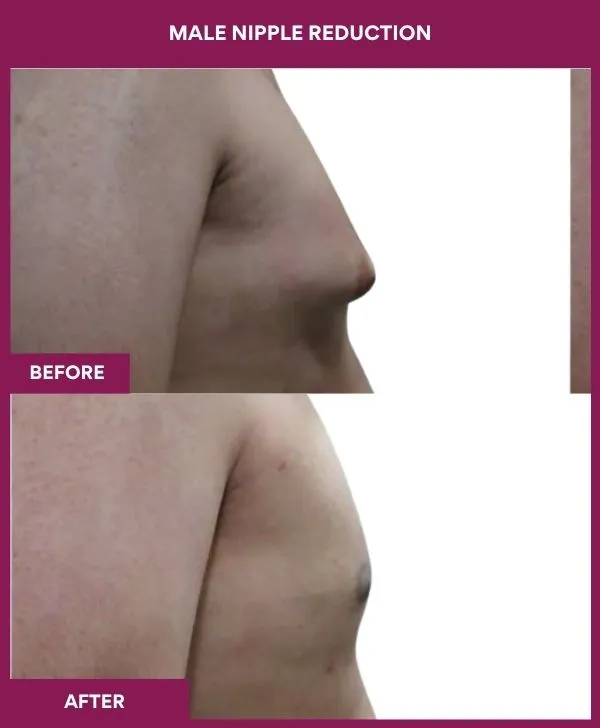
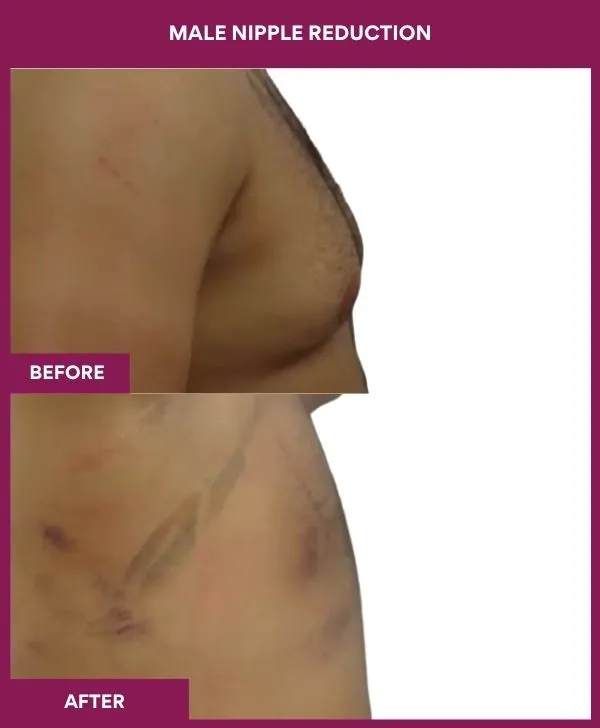
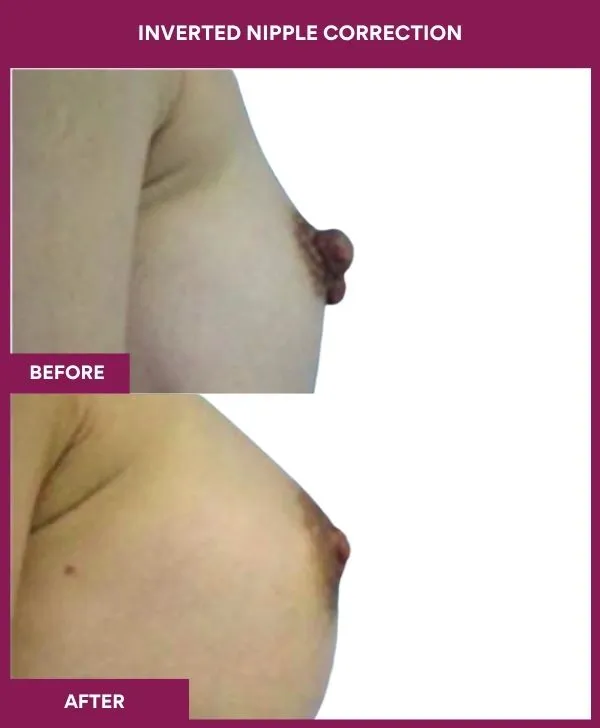
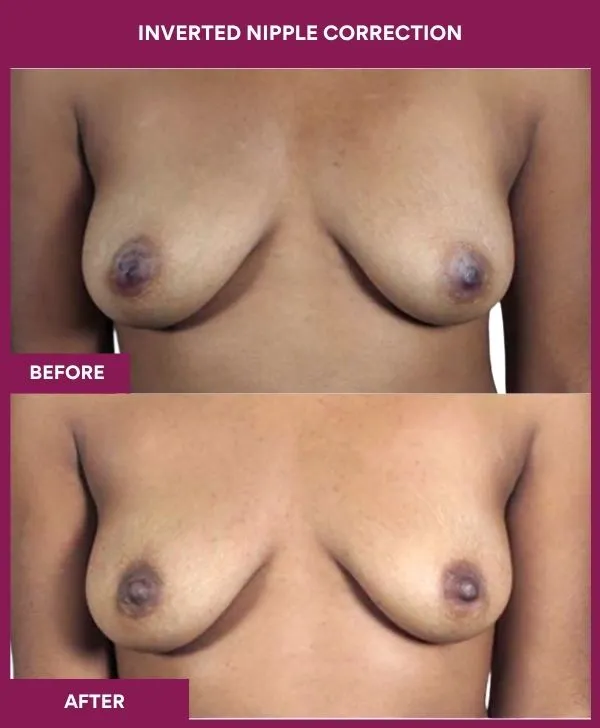
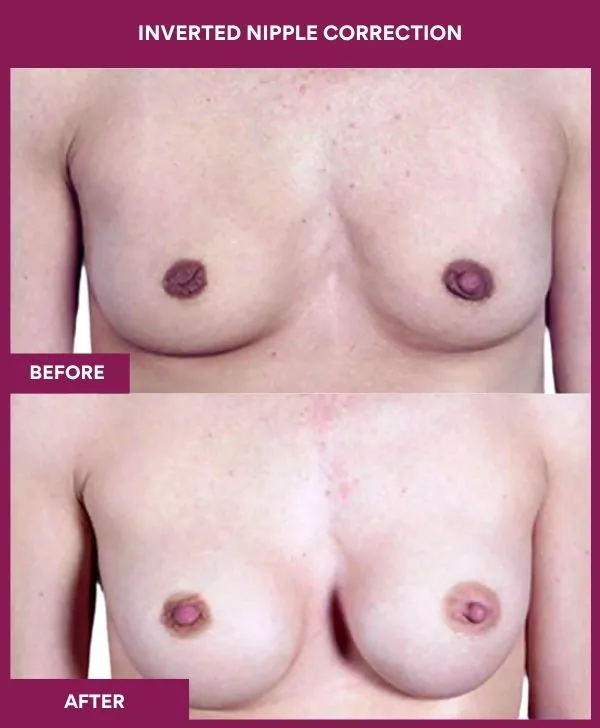
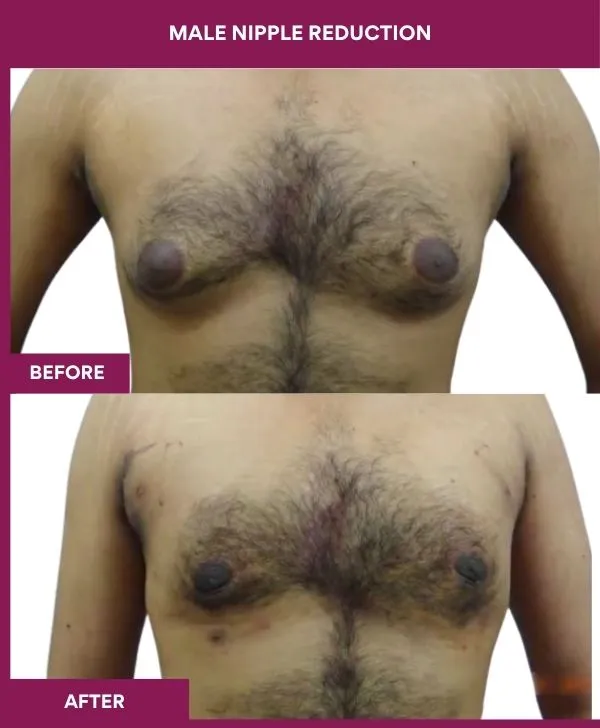
“Liked the results? Let's plan yours.”
Inverted Nipple Correction Surgery Testimonials: Fine To Fabulous Journeys

Awarded by Google.com
Rating: 4.7
Reviews: 485+

Awarded by WhatClinic.com
Rating: 4.8
Reviews: 119+

Awarded by Realself
Rating: 4.9
Reviews:453+

Awarded by Facebook
Rating: 4.6
Reviews:105+
Dr Milan Doshi and his staff are very professional and committed as the centre is highly equipped with advanced technology. I had closed rhinoplasty 4 months back and I’m seeing the results as to how it becomes successful.
Deepika Shetty
The doctor explained everything clearly and the surgery was smooth. Recovery was faster than I expected and the team was very supportive.
Rahul Mehta
Very natural results and excellent staff. From consultation to follow-up, the experience was outstanding and boosted my confidence.
Sneha Kapoor
“Get Cost For Inverted Nipple Surgery”
Video: Facelift Surgery Explained By Dr. Milan Doshi
Dr. Milan Doshi explains how a natural facelift is planned — technique, safety and realistic results.
Am I a Candidate?
(4 quick questions)
Onset, warning signs, grade, breastfeeding — four answers.
Check My OptionsHonest routing — including “see a doctor first”
Quick Facts About Inverted Nipple Correction
TIME REQUIRED
30 minutes
ANESTHESIA
Local
HOSPITAL STAY
Day-care
PAIN LEVEL
Mild–moderate
BACK TO WORK
1–2 days
Final RESULTS
2-4 weeks
SUCCESS RATE
97–98%
COMPLICATIONS
Under 2–3%
How Much Does Inverted Nipple Correction Surgery Cost in Mumbai?
Inverted nipple correction at Allure Medspa costs about ₹30,000–₹60,000, depending on one or both sides and the technique used.
| Case | Cost (INR) |
|---|---|
| One nipple | ₹30,000 – ₹45,000 🩺 |
| Both nipples | ₹45,000 – ₹60,000 🩺 |
| Combined with augmentation, lift or reduction | Quoted after assessment; added to the cost of the main breast procedure 🩺 |
| Revision after recurrence | Quoted after assessment 🩺 |
| Consultation | ₹1,500 🩺 |
| Usually included | Not included |
|---|---|
| Surgeon, local anaesthesia, procedure room, dressings 🩺 | Pre-operative tests, breast imaging if needed, take-home medication, management of rare complications; GST 🩺 |
- Usually not covered by insurance as a cosmetic procedure; correction of a medically significant cause may differ 🩺
- EMI
Get your exact quote & surgery plan
Share your details — our team responds within working hours with cost, EMI options and next steps.
Most Common Question People Ask
Q1. When is an inverted nipple a sign of something serious?
Ans. An inversion you’ve had since puberty is almost always harmless. But a nipple that has recently turned inward — especially in one breast, or with a lump, discharge, or eczema-like skin changes — should be checked by a doctor before any cosmetic surgery, as new-onset inversion can occasionally be a sign of breast cancer.
Q2. Can surgery fix inverted nipples?
Ans. Yes. Inverted nipples, especially Grade 2 and 3, can be corrected surgically by releasing the tight ducts or fibrous bands pulling the nipple inward. Results are usually lasting, with a small recurrence rate.
Q3. Will I be able to breastfeed after surgery?
Ans. It depends on the technique. Duct-preserving surgery (usually Grade 1–2) may keep breastfeeding possible, though it’s never guaranteed. Duct-dividing surgery (usually Grade 3) generally means breastfeeding is no longer possible on that side. If you may want to breastfeed, tell your surgeon before surgery.
Q4. Can I fix inverted nipples without surgery?
Ans. Grade 1 and mild Grade 2 inversions can sometimes be improved with suction devices such as a nipple retractor, though results may not be permanent. Fixed Grade 3 inversion generally needs surgery.
Q5. Is the surgery painful?
Ans. Discomfort is usually mild and lasts a day or two, managed with simple painkillers. It’s done under local anaesthesia, so the procedure itself is painless.
Q6. Are the results permanent?
Ans. Usually long-lasting, but not guaranteed permanent — the nipple can retract again in a minority of cases, mostly in the first year. Pregnancy and hormonal changes can also affect the result.
Q7. How much does it cost in Mumbai?
Ans. Approximately ₹30,000 to ₹60,000, depending on one or both sides, the technique, and whether it’s combined with another procedure.

Why Choose Dr. Milan Doshi?
Dr. Milan Doshi, MCh, MS — plastic surgeon with 27+ years. He first establishes whether the inversion is long-standing or new and arranges imaging when it is new, grades it on examination, and then matches the technique — duct-preserving or duct-dividing — to your grade and your breastfeeding plans, explaining the trade-off before you decide. Consults and operates in Goregaon West.
The Complete Guide About Inverted Nipple Correction Surgery
What Is Inverted Nipple Correction Surgery?
A short procedure that releases the short milk ducts or tight fibrous bands pulling the nipple inward, so it points outward naturally.
| Feature | What it means |
|---|---|
| Releases the tether | The short ducts or fibrous bands pulling the nipple in are divided or loosened |
| Restores projection | The nipple is everted and supported to point outward naturally |
| Treats all grades | From mild (Grade 1) to fully retracted (Grade 3) |
| Local anaesthesia, day-care | Most patients go home the same day |
- Also called: inverted nipple repair, nipple eversion surgery, retracted nipple correction, flat nipple correction
- Related breast procedures: breast augmentation · breast reduction · breast lift · breast asymmetry correction
Do Your Inverted Nipples Affect Your Confidence?
If flat or retracted nipples make you self-conscious, correction is safe, quick and lasting — once any medical cause has been ruled out.
- Do your nipples appear flat, sunken, or pulled inward instead of projecting outward?
- Do you feel insecure in intimate moments, or avoid certain clothes because of nipple appearance?
- Have breastfeeding challenges or post-pregnancy changes left you frustrated and self-conscious?
- Where the milk ducts can be preserved, breastfeeding may still be possible; where they must be divided, it usually is not (live copy kept)
How common are inverted nipples?
Common — published estimates range from about 2% to 10% of women, and men can have them too; most are present from puberty.
What Are The Benefits Of Inverted Nipple Correction?
A natural outward nipple, more confidence in clothes and intimacy, easier hygiene, and a quick recovery under local anaesthesia.
| Benefit | What it means |
|---|---|
| Natural appearance | An outward projection that matches your breast contour |
| Improved confidence | Many patients report greater comfort in intimate settings and clothing |
| Better hygiene | Deep inversion can trap moisture and debris, causing irritation or recurrent infection; correction relieves this |
| Quick and minimally invasive | Local anaesthesia, day-care, back to work in 1–2 days |
| Can be combined | Often done alongside breast augmentation, reduction or lift |
What Causes Inverted Nipples — What Are The Grades, And When Is It A Warning Sign?
Short milk ducts or tight bands, usually from puberty; graded 1–3 by how easily the nipple comes out. A NEW inversion needs a doctor first.
| Cause | Note |
|---|---|
| Congenital | Short ducts or fibrous bands present since puberty; the most common cause, and benign |
| After breastfeeding or pregnancy | Changes in the ducts can draw the nipple in |
| Duct ectasia or infection | Mammary duct ectasia and past mastitis can scar and tether the nipple |
| Trauma or previous breast surgery | Scarring can pull the nipple inward |
| Breast cancer | A rarer but important cause of NEW inversion |
What are the grades of inverted nipple?
Grade 1 comes out easily and stays; Grade 2 comes out but slips back; Grade 3 cannot be pulled out at all and usually needs surgery.
| Grade | What happens | Ducts | Usual treatment |
|---|---|---|---|
| Grade 1 (mild) | Protrudes easily with touch or cold and stays out for a while | Usually normal | Often suits non-surgical methods (suction device) |
| Grade 2 (moderate) | Can be drawn out but retracts quickly | Some shortening | Surgery, usually duct-preserving |
| Grade 3 (severe) | Stays fully retracted and cannot be pulled out | Short ducts, dense fibrosis | Surgery, often with duct division |
Sources: Han S, Hong YG. The inverted nipple: its grading and surgical correction. Plast Reconstr Surg. 1999;104(2):389–395. PMID 10654681 — the three-grade system 🩺
Sources: StatPearls — Inverted Nipple (NBK563190): grades, causes and a treatment algorithm centred on the patient’s lactation wishes
When is an inverted nipple a warning sign you should not ignore?
When a nipple that used to point out turns inward — especially on one side, or with a lump, discharge or scaly skin — see a doctor promptly.
| Congenital (since puberty) | Acquired (new-onset) |
|---|---|
| Present since your breasts developed; a normal anatomical variation with almost no cancer risk. This is what surgery safely corrects | A nipple that used to point outward and has recently turned inward. This needs assessment before anything else |
- One-sided change — sudden inversion of a single nipple that was previously normal
- A breast lump — any new lump or thickening in the breast or armpit
- Nipple discharge — especially bloody or clear discharge from one duct
- Skin changes — dimpling, puckering, redness, or an eczema-like scaly, crusting or itchy nipple (which can indicate Paget’s disease, a form of breast cancer)
- Persistent changes — anything that doesn’t settle, or is new after age 40 or with a family history of breast cancer
- A proper assessment: clinical examination of both breasts and armpits, then ultrasound and / or mammography; cosmetic correction only once malignancy is excluded
Sources: StatPearls — Inverted Nipple (NBK563190): grades, causes and a treatment algorithm centred on the patient’s lactation wishes
What Are The Limitations Of Inverted Nipple Correction?
It can end breastfeeding on that side if ducts are cut, the nipple can retract again, and sensation or symmetry may change slightly.
- Duct division is irreversible — breastfeeding is usually not possible on that side afterwards
- Recurrence — more likely when ducts are preserved in a severe inversion
- Sensation — usually returns, occasionally altered for good
- Symmetry — two nipples rarely project identically
- Suction devices help mild cases only, and the effect may not last
- It does not change breast size or shape
Why Is A Consultation Important — And Am I A Candidate?
It confirms the cause, rules out anything serious, grades the inversion and matches the technique to your breastfeeding plans.
| What happens | Detail |
|---|---|
| Rules out a medical cause | Particularly for any newly acquired or one-sided inversion |
| Grades the inversion | Grade 1, 2 or 3, which determines surgical vs non-surgical options |
| Plans the technique | Duct-preserving or duct-dividing, based on your anatomy and lactation wishes |
| Medical safety check | History, medications and allergies reviewed |
| Sets expectations | Results, downtime, recurrence risk and breastfeeding, made clear before you decide |
- A lady staff member is present for examination and photographs 🩺
- Online consultation · outstation
Am I the right candidate for inverted nipple correction?
An adult in good health with a long-standing inversion, or a new one already medically cleared, who understands the breastfeeding trade-off.
| Often suitable | Wait or reconsider |
|---|---|
| Persistent inversion — nipples that stay retracted or don’t respond to stimulation | New inversion not yet assessed |
| Medically cleared — a serious cause excluded | Pregnant or breastfeeding now |
| Aesthetic or functional concern — self-consciousness, hygiene or irritation | Active infection or discharge |
| Good health — non-smoker or willing to stop | Wants to breastfeed and has grade 3 — discuss timing first |
| Realistic expectations — recurrence and breastfeeding understood | Still in puberty |
Duct-Preserving Or Duct-Dividing — Which Technique Is Right?
Duct-preserving keeps breastfeeding possible but can recur; duct-dividing is the most reliable but usually ends breastfeeding on that side.
| — | Duct-preserving (duct-sparing) | Duct-dividing |
|---|---|---|
| What it does | Releases the fibrous bands while keeping the milk ducts intact | Divides the short milk ducts that anchor the nipple |
| Best for | Grade 1–2, and anyone who wants to keep the option of breastfeeding | Grade 3, where the ducts are too short to release any other way |
| Breastfeeding | May still be possible, though never guaranteed by any nipple surgery | Usually not possible on the treated side afterwards; this is irreversible |
| Trade-off | A slightly higher chance the inversion returns | The most reliable, lasting correction with the lowest recurrence |
- Your lactation wishes come first — recognised treatment algorithms put your breastfeeding plans at the centre of the choice, because duct division is irreversible
- Then the grade — severe Grade 3 inversion often leaves duct division as the only option that works
- An honest conversation — if you may want to breastfeed, say so before surgery; it directly shapes the technique
Sources: StatPearls — Inverted Nipple (NBK563190): grades, causes and a treatment algorithm centred on the patient’s lactation wishes
Can inverted nipples be treated without surgery?
Mild (grade 1) cases may improve with a suction device or nipple retractor worn regularly, but the effect is often temporary.
What Are The Different Types Of Nipple Surgery?
Inverted nipple correction, nipple reduction for long or wide nipples, and areola reduction — done alone or with other breast surgery.
| Type | What it does | Often combined with |
|---|---|---|
| Inverted nipple correction | Releases the tension or ducts pulling the nipple inward to restore projection | Augmentation, lift or reduction |
| Nipple reduction | Reduces the width or length of enlarged nipples for a more proportionate look | Standalone, local anaesthesia 🩺 |
| Areola reduction | Reduces a wide areola | Breast lift or reduction |
| Male inverted nipple | Same release technique | Gynecomastia surgery where gland is present |
How Is Inverted Nipple Correction Performed, Step By Step?
The nipple is numbed, a tiny cut is made at its base, the tight bands or ducts are released, and fine stitches hold the nipple out.
| Step | What happens |
|---|---|
| 1. Marking & photos | Grade confirmed; both sides compared |
| 2. Local anaesthesia | A small injection numbs the nipple and areola |
| 3. Small incision | At the base of the nipple, where any scar is well hidden |
| 4. Release the tether | The fibrous bands (and, if needed, the short ducts) pulling the nipple in are divided |
| 5. Support the projection | Internal sutures hold the nipple everted while it heals |
| 6. Closure | Fine dissolvable stitches |
| 7. Protective dressing | A ring-shaped dressing or splint keeps pressure off the nipple 🩺 |
| 8. Home | The same day |
How long does inverted nipple surgery take?
About 30 minutes in total — roughly 15 minutes per nipple — under local anaesthesia.
What Results Can I Expect — And Do They Last?
The nipple projects straight away and looks settled in 2–4 weeks; results usually last, though a minority retract again in the first year.
| Point | Detail |
|---|---|
| Immediate change | The nipple points outward at the end of the procedure |
| Settling | Swelling eases over 2–3 weeks |
| Scar | Small and placed at the base of the nipple, so usually very hard to see once healed |
| Longevity | Usually long-lasting; pregnancy and hormonal changes can affect the result |
| If it recurs | A revision, often with duct division, can be done |
What Aftercare Is Needed After Inverted Nipple Correction?
Keep the dressing dry, protect the nipple from pressure, take medicines as advised and avoid chest exercise for about 2 weeks.
| Do | Why |
|---|---|
| Keep the protective dressing or splint in place as advised | Prevents the nipple being pressed flat while it heals |
| Wear a soft, non-padded bra or the garment given | Comfort without pressure |
| Take prescribed medication | Comfort; infection prevention |
| Attend review visits | Confirm healing and result |
| Avoid | For |
|---|---|
| Tight or padded bras, sleeping on the chest | About 2 weeks 🩺 |
| Strenuous activity and chest / upper-body exercise | About 2 weeks |
| Soaking the wound (swimming, baths) | Until healed |
| Smoking | 2 weeks before and after |
What Are The Risks — And How Safe Is Inverted Nipple Correction?
It is a low-risk minor procedure; the main trade-offs are loss of breastfeeding if ducts are divided and a small chance of recurrence.
| Most important | Common, temporary | Uncommon |
|---|---|---|
| Loss of breastfeeding — if milk ducts are divided (typically Grade 3), usually permanent on that side | Swelling, bruising, mild soreness | Infection |
| Recurrence — the nipple can retract again, mostly within the first year, more so with duct-preserving techniques in severe inversion | Temporary numbness or altered sensation | Permanent sensation change |
| — | Small scar at the nipple base | Asymmetry or overcorrection; poor blood supply to the nipple (very rare) 🩺 |
How are these risks reduced?
Choosing the technique by grade and breastfeeding plans, gentle release, internal support stitches, a protective dressing and no smoking.
What Is The Recovery Timeline After Inverted Nipple Correction?
Home the same day, work in 1–2 days, exercise after about 2 weeks, stitches dissolve, and healing is complete in 2–4 weeks.
| Time | What to expect |
|---|---|
| Day 0 | Home the same day; protective dressing on |
| Days 1–2 | Mild discomfort and swelling; back to work |
| Week 1 | Review; dressing changed or removed 🩺 |
| Week 2 | Exercise and normal bras return |
| Weeks 2–4 | Dissolvable sutures gone; fully healed |
| Months 6–12 | Final check that the projection has held |
- Outstation patients: 1–2 days in Mumbai is usually enough 🩺; later reviews online → Outstation Patients
Can inverted nipple correction be combined with other breast surgery?
Yes — it is often done with breast augmentation, a lift or a reduction, under the same general anaesthetic.
| Combination | Link |
|---|---|
| Breast augmentation | Volume enhancement |
| Breast lift | Lift and nipple repositioning |
| Breast reduction | Reduction and reshaping |
| Breast asymmetry correction | Balances uneven breasts |
Medical Codes for Inverted Nipple Correction Surgery
Nipple retraction is ICD-10 N64.53 and correction of inverted nipples is CPT 19355; cosmetic cases use Z41.1.
Code | Description |
ICD-10 N64.53 | Retraction of nipple |
ICD-10 Q83.8 | Other congenital malformations of breast (congenital inversion) 🩺 |
ICD-10 Z41.1 | Encounter for cosmetic surgery |
CPT 19355 | Correction of inverted nipples |
(FAQs) Frequently Asked Question About Inverted Nipple Correction Surgery
Q1. What’s the difference between duct-preserving and duct-dividing surgery?
Ans. Duct-preserving keeps the milk ducts intact to protect breastfeeding, with a slightly higher chance of recurrence. Duct-dividing cuts the ducts for the most reliable, lasting correction, but usually ends breastfeeding on that side. Your grade and your plans decide which is right.
Q2. How long is recovery?
Ans. Most people return to work within 1–2 days and resume exercise after about 2 weeks. Full healing takes 2–4 weeks.
Q3. What is the success rate?
Ans. High, and highest with duct-dividing methods in severe inversion; the exact figure depends on grade and technique, and your surgeon will give you a realistic estimate for your case.
Q4. At what age can it be done?
Ans. Usually after puberty, once the breasts are fully developed. Adults of any age can have it, depending on health and goals.
Q5. Will I have a visible scar?
Ans. The incision is small and placed at the base of the nipple, so any scar is usually very hard to see once healed.
Q6. Will I lose nipple sensation?
Ans. Temporary changes in sensation are common and usually settle as healing progresses. Permanent change is uncommon.
Q7. Can it be combined with breast augmentation or lift?
Ans. Yes. Many patients combine inverted nipple correction with augmentation, reduction or a lift. General anaesthesia may be used for the combined procedure.
Q8. What anaesthesia is used?
Ans. Local anaesthesia for a standalone correction. General anaesthesia only if it’s combined with a larger breast procedure.
Q9. Can nipple correction go wrong?
Ans. Complications are uncommon but can include infection, asymmetry, overcorrection or recurrence.
Q10. Can I drive after the procedure?
Ans. Wait at least 1–2 days before driving or strenuous activity, and follow your surgeon’s specific advice.
Q11. Do men get inverted nipple correction?
Ans. Yes — inverted nipples affect men too, and correction is available. Where enlarged male breast tissue is also a concern, it may be assessed alongside gynaecomastia.
Q12. Can I get my nipples pierced after correction?
Ans. Wait until healing is complete and ask your surgeon first; a piercing does not reliably hold a nipple out and can introduce infection 🩺.