
Buccal Fat Removal (Cheek Reduction) in Mumbai — A Slimmer Profile, Honestly Explained

Indian Board Certified Plastic Surgeon
M.CH, MS, ISAPS Mentor
16000+ Cosmetic Surgeries
400+ Cheek Reduction Surgery
Buccal fat removal (cheek reduction) slims the lower mid-face by removing part of the deep buccal fat pad through a 1–1.5 cm cut inside the mouth, so there is no visible scar. It takes 30–45 minutes under local anaesthesia, you go home the same day, and most people are back at work in 3–5 days. At Allure Medspa it costs ₹35,000–₹50,000. The change is permanent — and because the face naturally loses volume with age, it suits only a genuinely round, full lower face. Dr. Milan Doshi removes a conservative amount, and will tell you honestly when fillers, a chin implant or masseter injections would serve your face better.
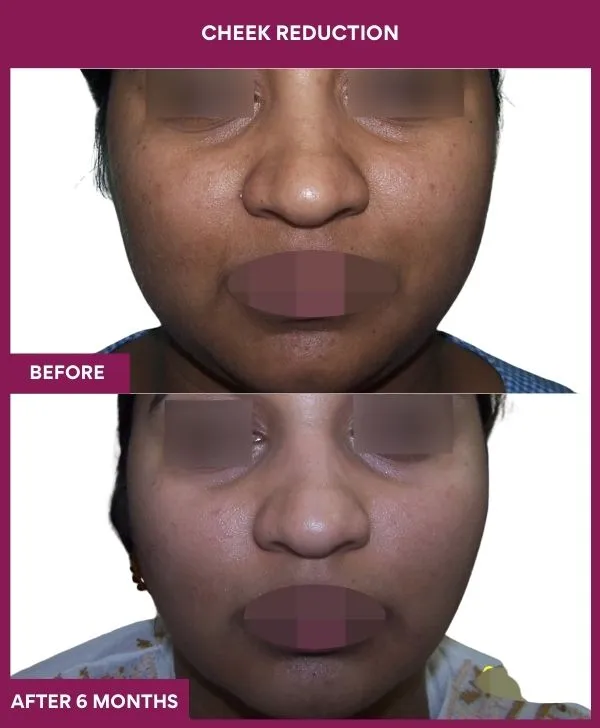
Cheek Reduction Surgery Before and After Images
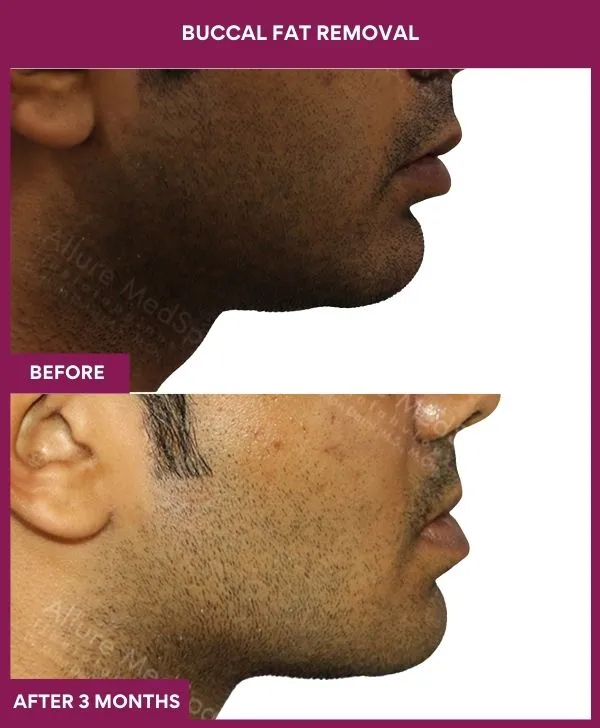
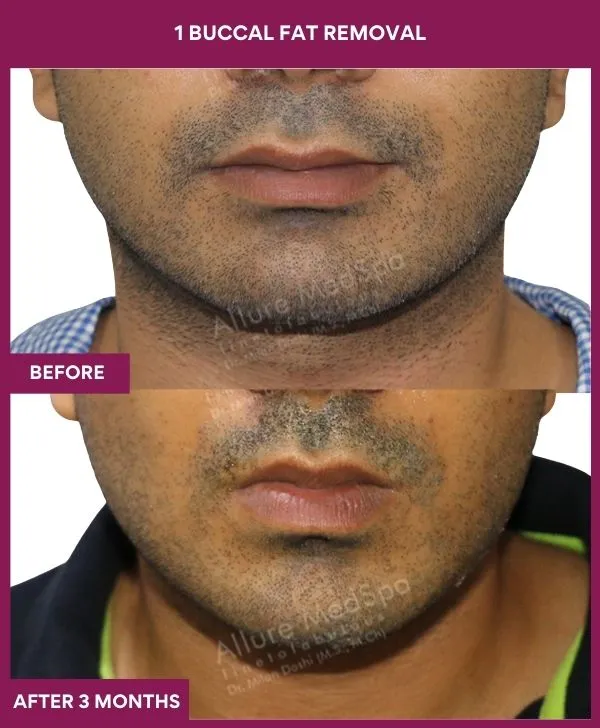
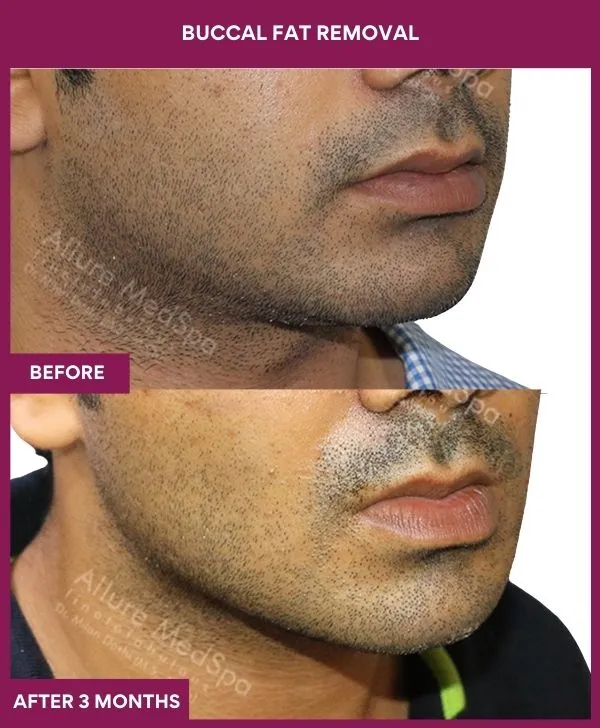
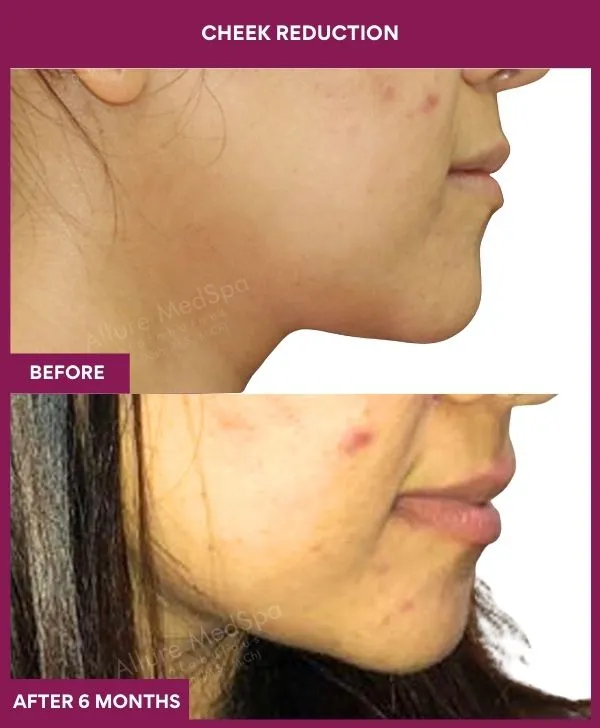
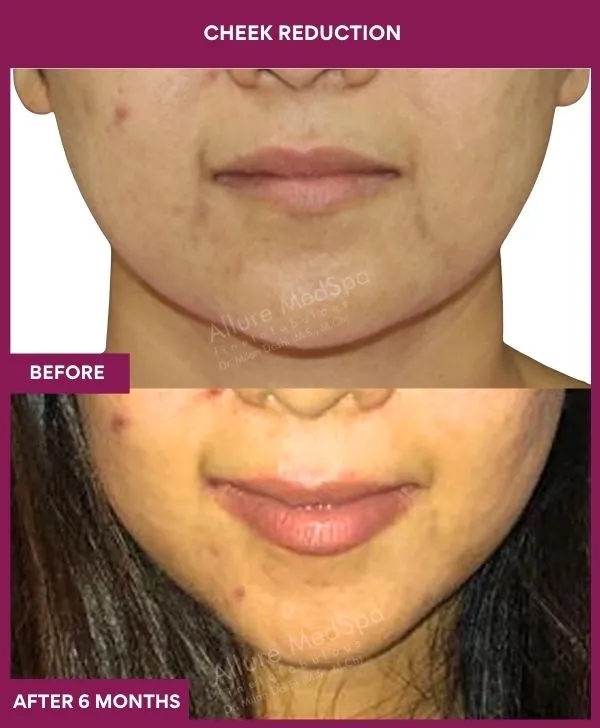
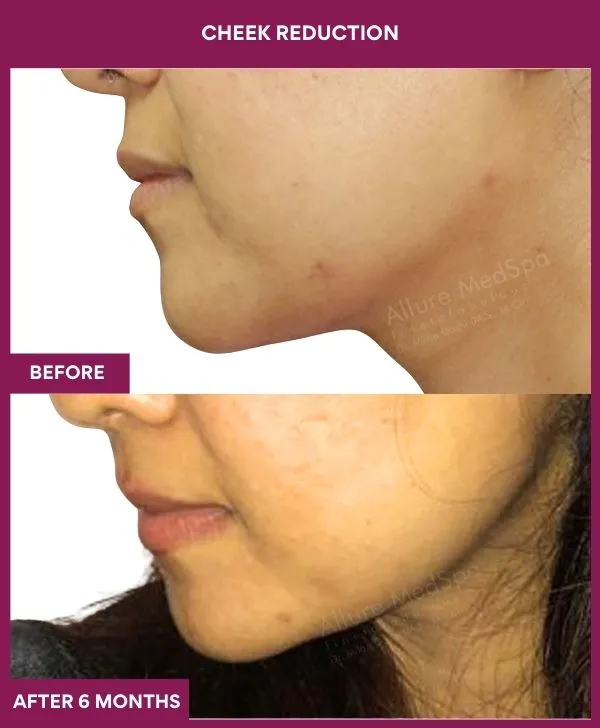
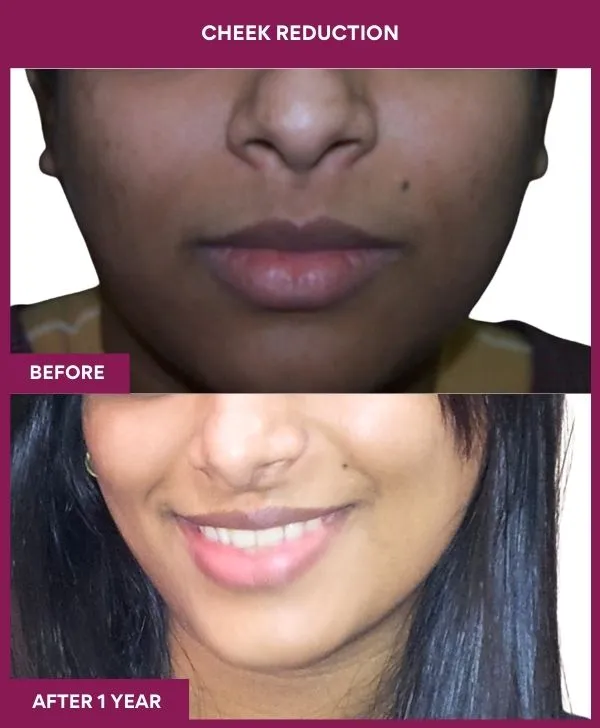
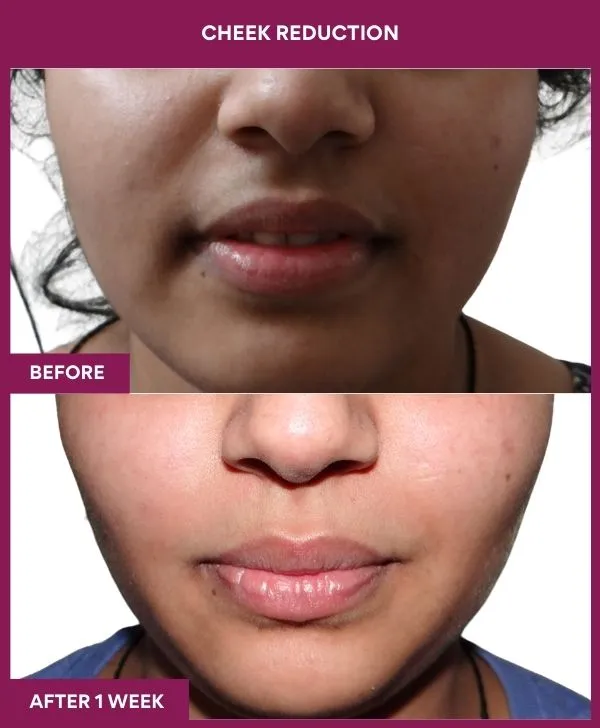
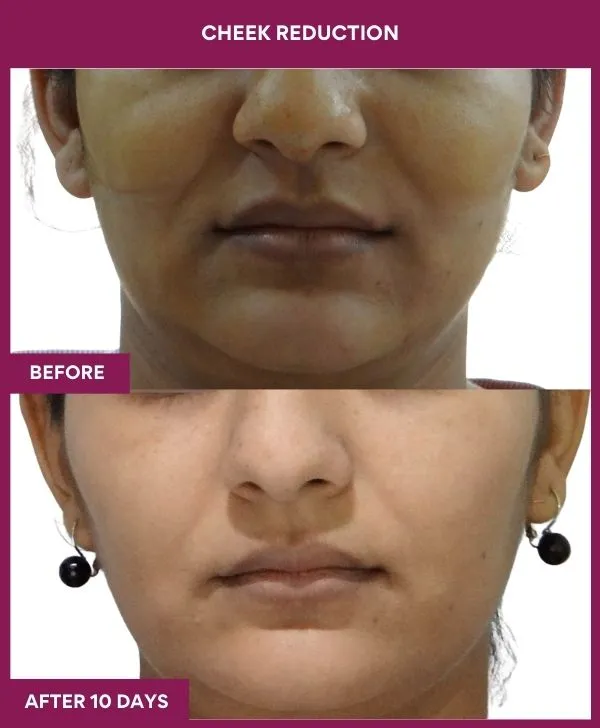
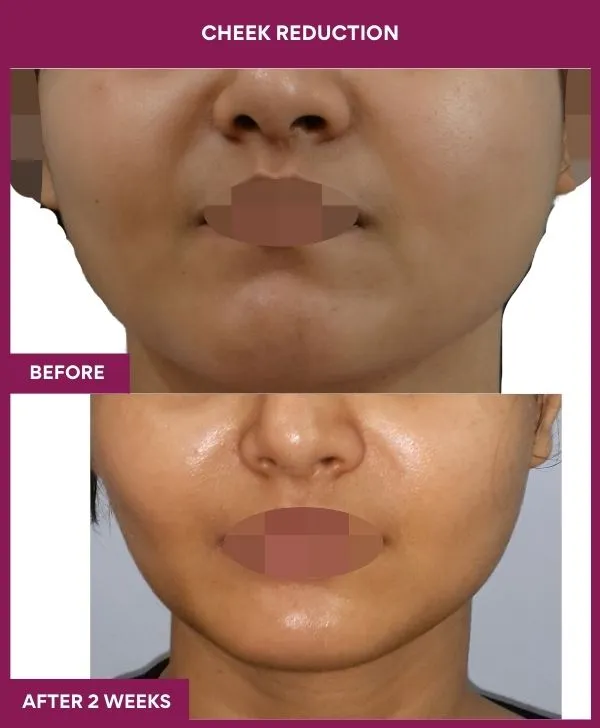
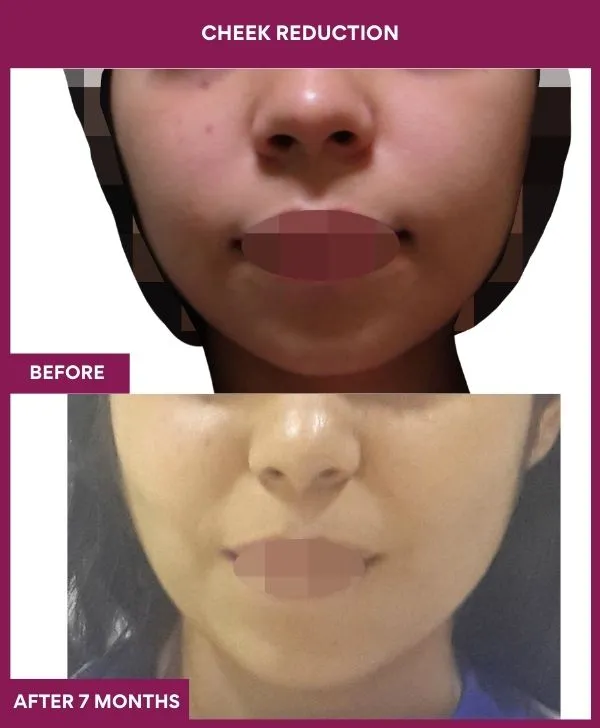
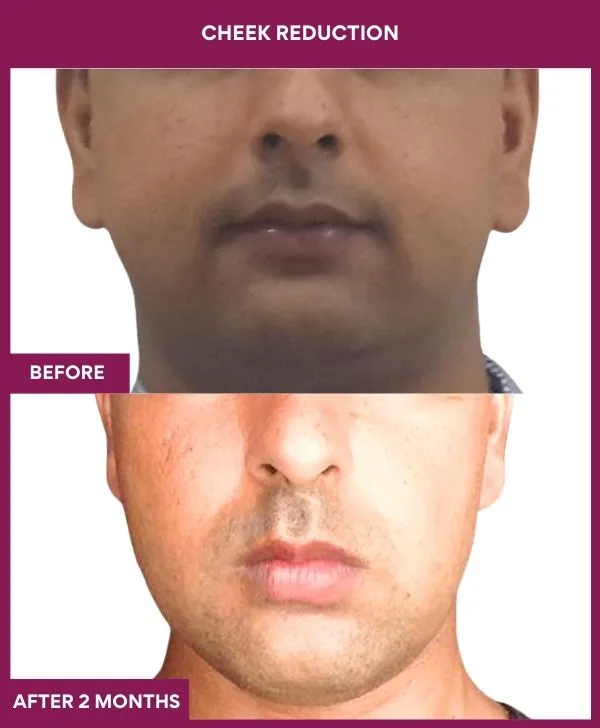
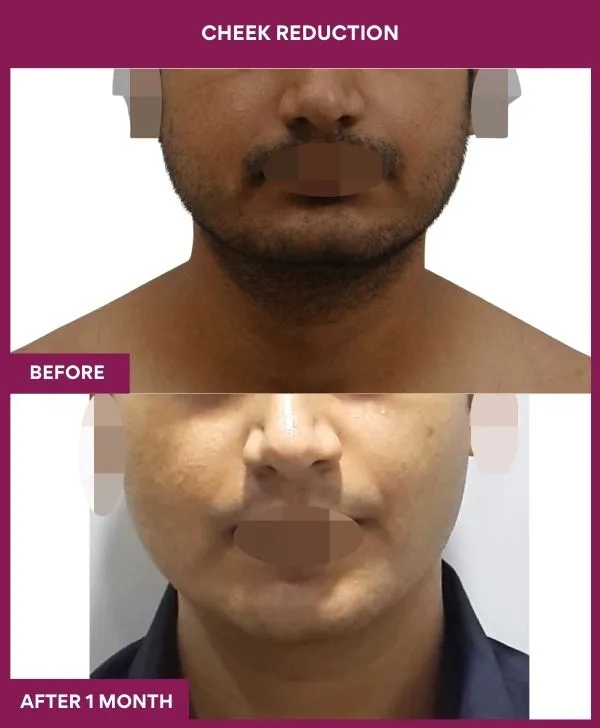
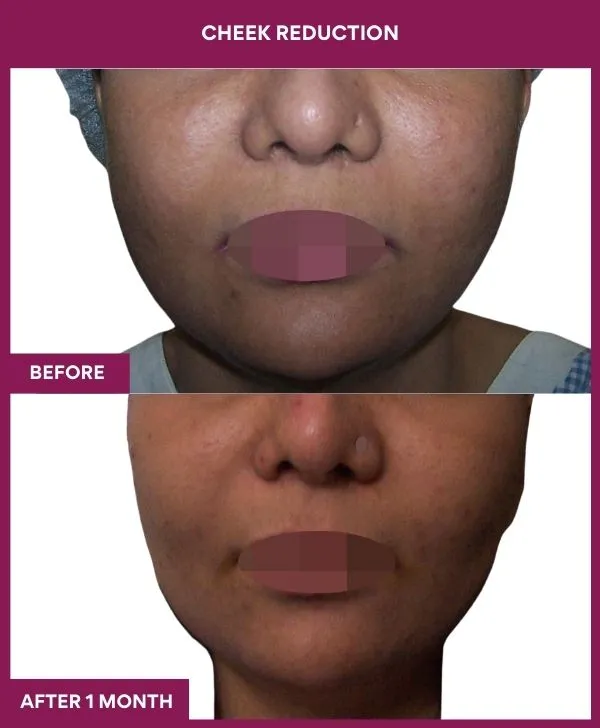
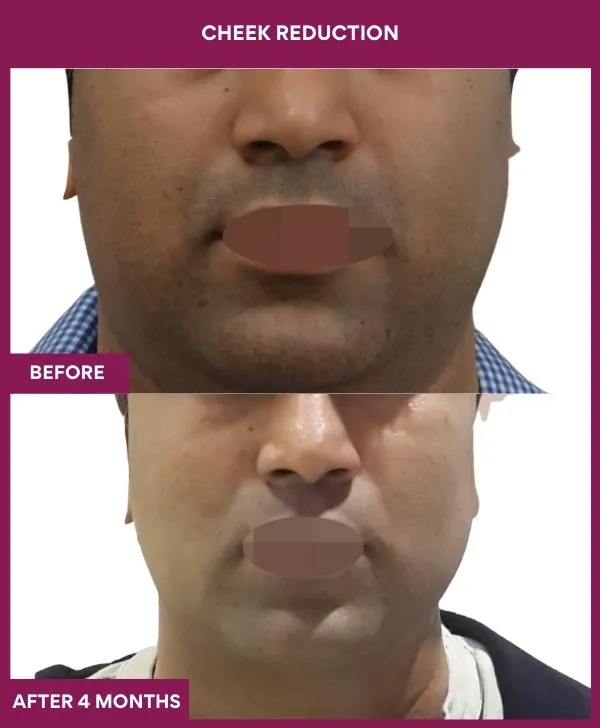
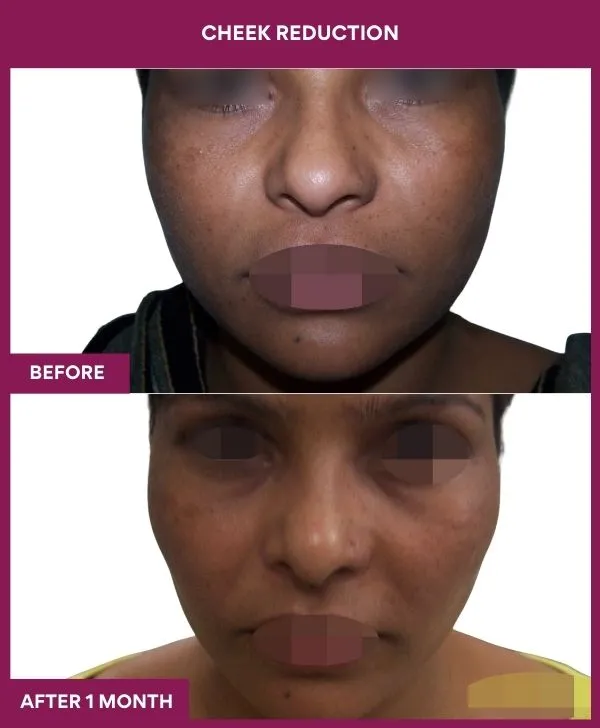
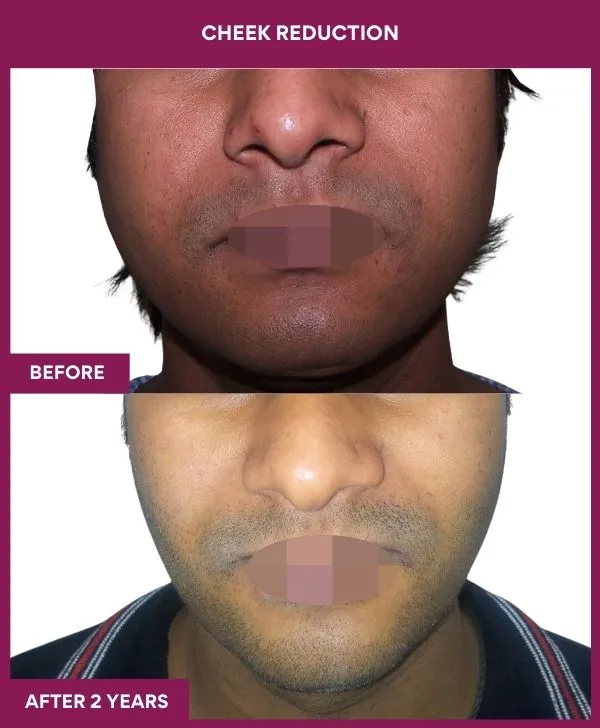
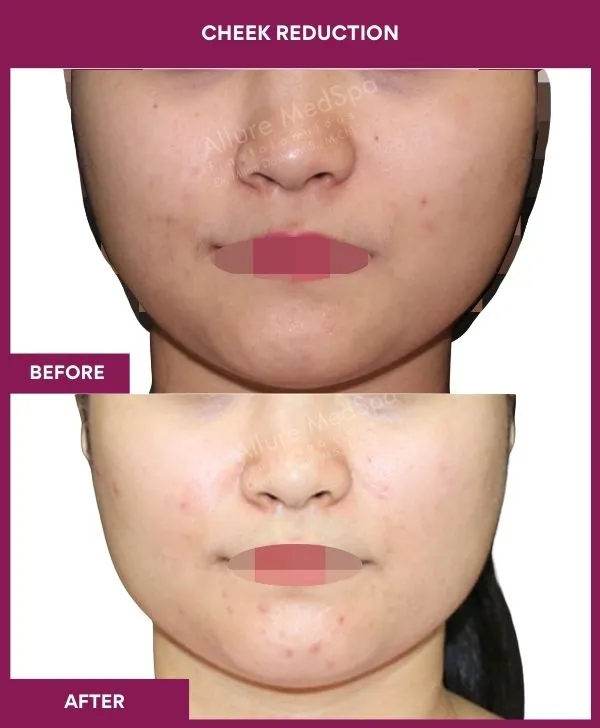
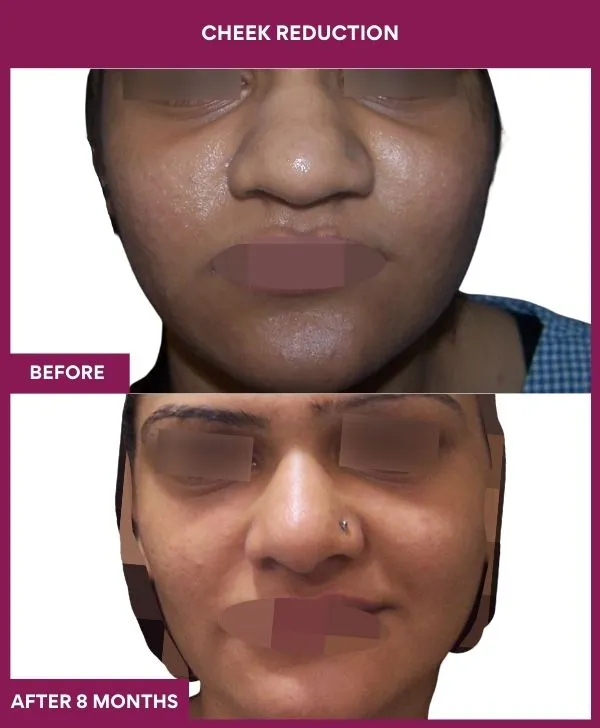
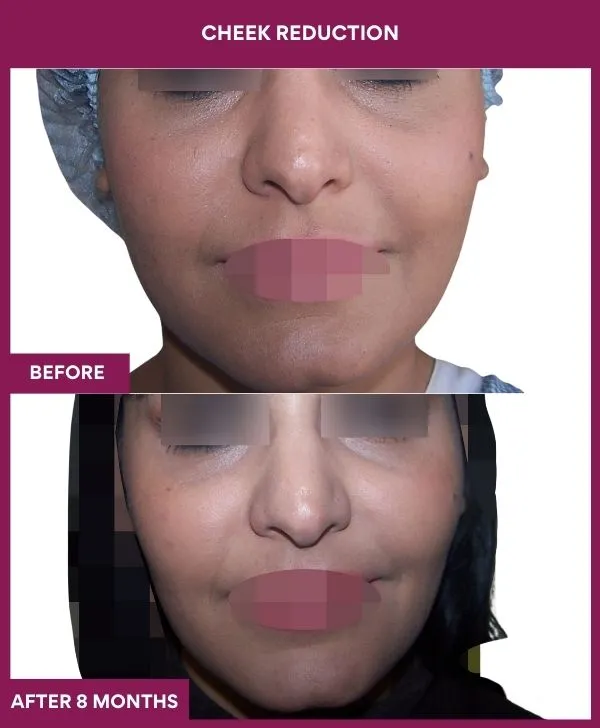
“ Your Cheek Reduction Surgery Cost”
Cheek Reduction Surgery Testimonials: Fine To Fabulous Journeys

Awarded by Google.com
Rating: 4.7
Reviews: 485+

Awarded by WhatClinic.com
Rating: 4.8
Reviews: 119+

Awarded by Realself
Rating: 4.9
Reviews:453+

Awarded by Facebook
Rating: 4.6
Reviews:105+
Dr Milan Doshi and his staff are very professional and committed as the centre is highly equipped with advanced technology. I had closed rhinoplasty 4 months back and I’m seeing the results as to how it becomes successful.
Deepika Shetty
The doctor explained everything clearly and the surgery was smooth. Recovery was faster than I expected and the team was very supportive.
Rahul Mehta
Very natural results and excellent staff. From consultation to follow-up, the experience was outstanding and boosted my confidence.
Sneha Kapoor
“Know More Cheek Reduction Surgery”
Is Buccal Fat Removal Right For Me?
(4 quick questions)
Face shape, age, jaw muscle, weight — four questions, an honest answer.
Check My SuitabilityWe say so if it is not for you
Quick Facts About Buccal Fat Removal
TIME REQUIRED
30–45 minutes
ANESTHESIA
Local/General
HOSPITAL STAY
Day care
PAIN LEVEL
Mild–moderate
BACK TO WORK
3–5 days
Final RESULTS
2–3 months
SUCCESS RATE
97–98%
COMPLICATIONS
Under 2–3%
What Is The Cost Of Buccal Fat Removal In Mumbai?
Buccal fat removal at Allure Medspa typically costs ₹35,000–₹50,000 under local anaesthesia; general anaesthesia or combined contouring costs more.
| Option | Typical cost (Mumbai) |
|---|---|
| Buccal fat removal, both sides (local) | ₹35,000 – ₹50,000 |
| With general anaesthesia | Adds to cost 🩺 |
| + Double-chin liposuction | ₹40,000 – ₹80,000 separately |
| + Chin augmentation | ₹1,00,000 – ₹1,80,000 separately |
| Masseter injections (alternative) | ₹14,000 – ₹24,000 per session |
| Consultation | ₹1,500 🩺 |
| Usually included (live) | Not included (live) |
|---|---|
| Surgeon’s fee, local anaesthesia, consumables, facility and immediate follow-ups | Pre-op tests, take-home medicines and GST; cosmetic surgery is not insured |
- What changes the price — anaesthesia, complexity, combined contouring
- EMI
- Exact quote after assessment
Get your exact quote & surgery plan
Share your details — our team responds within working hours with cost, EMI options and next steps.
Most Common Question People Ask
Q1. How much does buccal fat removal cost?
Ans. At Allure Medspa in Mumbai it typically costs ₹35,000–₹50,000, depending on anaesthesia and whether it is combined with other procedures. You get an exact quote after assessment.
Q2. How long does the surgery take?
Ans. About 30–45 minutes, usually under local anaesthesia, as a day-care procedure.
Q3. Does buccal fat removal hurt?
Ans. The surgery is painless under anaesthesia. Mild soreness, swelling and a tight jaw afterwards settle within a few days.
Q4. Is buccal fat removal safe?
Ans. Generally, with an experienced surgeon — but about 1 in 4 people have a temporary issue such as swelling or stiff jaw, and nerve injury, though rare, is possible.
Q5. Could buccal fat removal make me look older later?
Ans. It can, if too much is removed or your face is not suited. Buccal fat supports the mid-face with age, so conservative removal and careful selection are essential.
Q6. When will I see the final result?
Ans. Swelling can make cheeks look fuller at first. The true contour appears over 2–3 months.
Q7. Can cheek fat come back?
Ans. The removed buccal fat does not regrow, but significant weight gain can still change your overall facial fullness.

Why Choose Dr. Milan Doshi?
Dr. Milan Doshi, MCh, MS — Indian board-certified plastic surgeon with 27+ years who first confirms the fullness is truly buccal fat (not muscle, skin or weight), removes only a measured part of the pad while protecting the facial-nerve branches and salivary duct, and recommends alternatives when your face is lean or ageing. Consults at Andheri West; surgery at Vardan Hospital, Goregaon West.
Dr Doshi Note: “I recommend buccal fat removal only when the fullness truly comes from the buccal fat pad. Lean faces, older patients, or those already losing facial volume may not be suitable. When surgery is appropriate, I remove fat conservatively to avoid future hollowing and an prematurely aged appearance.”
The Complete Guide About Buccal Fat Removal
What Is Buccal Fat Removal (Cheek Reduction)?
A short operation that removes part of the deep buccal fat pad through a small cut inside the mouth to slim the lower cheek and sharpen the contour.
- What is removed — part (not all) of the buccal fat pad; conservative removal keeps a natural look
- How — 1–1.5 cm incision inside the cheek near the upper molars; no external scar
- The goal — a subtly sharper cheek-and-jaw line that suits your face, not maximum removal
- Honest caveat — permanent; the right amount depends on your face and age
What are other names for buccal fat removal?
Cheek reduction, buccal lipectomy, buccal fat pad excision, cheek fat removal and, loosely, “chubby cheek surgery”.
- It is not liposuction — the pad is teased out by hand, not suctioned
- Double-chin fat is different and is treated by liposuction
What is the buccal fat pad?
A deep, encapsulated pad of fat in each cheek, between the cheekbone and the jaw, that cushions chewing muscles and supports the mid-face.
- Average volume removed in studies — about 2.7 mL per side (range 1.8–4.9 mL)
- It is one of the last facial fat compartments to shrink with age — so it supports the cheek later in life
- The facial-nerve buccal branches and the parotid (salivary) duct run close to it
Is Buccal Fat Removal Right For You?
Consider it if your lower cheeks stay full at a healthy weight and hide your bone structure — but only after ruling out muscle, skin and weight.
- Are full lower cheeks softening your facial definition?
- Does your face look rounder than the rest of you?
- Has the fullness stayed despite a stable, healthy weight?
- If your face is lean or showing early volume loss, skin tightening or chin augmentation may balance it better
How popular is buccal fat removal?
It has grown quickly with social-media “V-line” trends, which is exactly why careful selection matters more than ever.
- Live copy: “among the fastest-growing aesthetic surgeries” and “strong demand among people aged 21–40” credited to the ISAPS Global Survey 2024
What Makes A Face Look Round Or Full?
Four things: buccal fat, a strong jaw muscle (masseter), overall body fat, or skin laxity — and each needs a different fix.
| Cause | Clue | Better treatment |
|---|---|---|
| Buccal fat pad | Fullness in the hollow below the cheekbone, at a healthy weight | Buccal fat removal |
| Masseter muscle | Jaw-angle bulge when you clench; square lower face | Masseter injections |
| General body fat | Face fuller along with weight gain; double chin | Weight loss; double-chin liposuction |
| Skin laxity / jowls | Heaviness lower down along the jaw, over 40 | Facelift / neck lift |
| Weak chin / bone | Round look from a short profile | Chin augmentation · implants |
What Are The Benefits Of Buccal Fat Removal?
A slimmer mid-face, more visible cheekbones and jaw, no visible scar, a short procedure and a lasting result in the right face.
- Slimmer mid-face — less fullness in the lower cheek
- Sharper contour — cheekbone-and-jaw line shows
- No visible scar — incision inside the mouth
- Quick — 30–45 minutes, local anaesthesia
- Long-lasting — removed fat does not regrow
What Are The Techniques For Buccal Fat Removal?
Essentially one: a small intra-oral incision through which a measured part of the pad is gently teased out — sometimes combined with other contouring.
| Approach | What it involves | When used |
|---|---|---|
| Intra-oral partial excision | Pad teased out and trimmed through a 1–1.5 cm cut | Standard |
| Combined contouring | With chin augmentation, double-chin liposuction or a facelift | When balance needs more than fat removal |
| Conservative removal | Only the bulging portion is taken | Younger or borderline faces — protects the future |
- “Through a facelift incision” — sometimes the pad is repositioned rather than removed during a facelift 🩺
Who Is The Right Candidate For Buccal Fat Removal?
A healthy adult, usually under about 35, at a stable weight, with a genuinely round lower face from buccal fat and good skin.
| You may be suitable if you | You may NOT be suitable if you |
|---|---|
| Have genuine buccal fullness — not weight, skin or jaw muscle | Have a naturally lean or angular face |
| Are at a stable, healthy weight | Are older or already losing facial volume |
| Have good skin quality without sagging | Want a weight-loss effect |
| Understand the change is permanent | Have fullness from a strong masseter or skin laxity |
Is there an age limit?
No fixed limit, but most surgeons prefer patients roughly 18–35; beyond that the face is already deflating and removal can look hollow sooner.
Can Buccal Fat Removal Cause Premature Ageing?
Yes, if too much is taken or the face is unsuited: the face deflates with age, and losing this support early can look hollow years sooner.
- The face ages by deflating, not only sagging — deep fat compartments shrink over time
- The buccal pad is among the last to shrink, so it acts as late mid-face support
- Removing it early “front-loads” ageing — volume time would take slowly is taken at once
- It is hard to reverse — fillers or fat grafting can help, less predictably
- Our approach — conservative removal, honest counselling, and alternatives when better
What Happens At A Buccal Fat Removal Consultation?
Dr. Doshi checks the cause of fullness, your face shape, age and skin, plans a conservative amount, and explains the long-term picture honestly.
- Confirm the cause — fat, muscle, skin or weight
- Assess suitability — face shape, age, skin quality, likely ageing
- Plan conservatively — how much to remove
- Medical and dental review — history, medicines, smoking, oral health
- Photos — front, three-quarter and profile
- Book online → Online Consultations or in person → Contact Us
What should you ask the surgeon?
Ask how they know it is buccal fat, how much they will remove, what the face will look like at 45, and what happens if one side looks different.
- Is my fullness buccal fat or masseter?
- Partial or full removal — how much, and why?
- Can I see results 2+ years later?
- What is the plan for asymmetry or hollowing?
- Would fillers, injections or a chin implant suit me better?
What Pre-Operative Steps Should You Follow?
Medical and dental review, stop smoking and blood thinners as advised, treat any mouth infection, and stock soft foods and mouthwash.
- Dental check — treat gum or tooth infection first
- Stop smoking and alcohol at least a week before
- Blood thinners and supplements — stop only as advised
- Stock soft foods and the prescribed antiseptic rinse
- Plan 3–5 days off
How Is Buccal Fat Removal Performed Step By Step?
The cheek is numbed, a small cut is made inside near the upper molars, part of the pad is teased out, and dissolving stitches close it.
| Step | What happens |
|---|---|
| 1. Assessment | Amount to remove agreed and both sides marked |
| 2. Anaesthesia | Local (general only if combined) |
| 3. Incision | 1–1.5 cm inside the cheek, near the upper molars |
| 4. Removal | A measured part of the pad gently teased out, protecting the facial-nerve branches and parotid duct |
| 5. Matching | Amounts compared side to side for symmetry |
| 6. Closure | Dissolving stitches; no external dressing |
Is Buccal Fat Removal Painful?
Not during surgery; afterwards expect mild soreness, swelling and a stiff jaw for a few days, eased by painkillers and cold compresses.
- Opening the mouth wide may be stiff for a week (trismus) — common and temporary
- A soft diet keeps the incision comfortable
What Results Can You Expect — And When?
Cheeks may look fuller in the first weeks from swelling; the slimmer contour emerges over 4–6 weeks and settles fully at 2–3 months.
| Time | What you see |
|---|---|
| Days 1–7 | Swelling — cheeks can look bigger, not smaller |
| Weeks 2–4 | Swelling settling; contour starting to show |
| Weeks 4–8 | Slimmer lower cheek visible |
| 2–3 months | Final contour |
| Long term | Removed fat does not return; the face still ages and changes with weight |
How Long Does Recovery Take — And What Aftercare Helps?
Most people return to work in 3–5 days; swelling settles over 1–2 weeks with soft food, antiseptic rinses and the head raised.
| Aftercare | Why |
|---|---|
| Antiseptic rinse after every meal for a week | Incision is inside the mouth |
| Soft / liquid diet 2–3 days; avoid spicy, hard, crunchy food | Protects the incision |
| No strenuous activity or facial massage for about a week | Limits swelling and bleeding |
| Sleep with the head raised | Reduces swelling |
| No smoking or alcohol for at least a week | Aids healing |
When should you call the clinic?
Call promptly for fever, increasing pain, one-sided swelling that keeps growing, pus or a bad taste, or any weakness of the smile or lip.
- Facial weakness needs same-day review — early steroids help nerve recovery (Franco 2024)
- Ask for the after-hours number at booking 🩺
What Are The Risks And Complications Of Buccal Fat Removal?
About 1 in 4 people have a complication, mostly temporary swelling or stiff jaw; asymmetry occurs in about 12% and nerve weakness in about 1%.
| Complication | Pooled rate* | Note |
|---|---|---|
| Swelling (oedema) | 38.4% | Commonest; temporary |
| Trismus (stiff jaw opening) | 30.1% | Eases over days to weeks |
| Pain | 19.4% | Usually mild |
| Asymmetry | 11.7% | May need correction |
| Facial-nerve paralysis | 0.97% | Usually temporary |
| Infection / haematoma | 0.48% each | Hygiene and antibiotics |
| Over-resection / hollowing | Not measured | The key long-term risk |
How serious is facial-nerve injury?
Rare — about 1% in pooled studies — and usually temporary; high-dose steroids and facial therapy help recovery when it occurs.
How Long Do The Results Last?
The fat removed does not grow back, so the slimming is permanent — but your face still ages and changes with weight.
- Lasting — buccal fat cells removed do not return
- Not frozen — weight gain and ageing still change the face
- If hollowing appears later — fillers or fat grafting can restore volume → Dermal Fillers · Fat Injections Surgery
What Are The Alternatives To Buccal Fat Removal?
Masseter injections for a muscular jaw, double-chin liposuction, chin or cheek implants for balance, or skin tightening for laxity.
| Alternative | Best for | Cost (live pages) |
|---|---|---|
| Masseter injections | Square jaw from muscle | ₹14,000 – ₹24,000 per session → Anti-Aging Injections |
| Double-chin liposuction | Fat under the chin | ₹40,000 – ₹80,000 → Double Chin Liposuction |
| Chin augmentation | Short or weak chin rounding the face | ₹1,00,000 – ₹1,80,000 → Chin Augmentation |
| Cheek fillers | Adding cheekbone definition instead of removing fat | ₹17,000 – ₹30,000 per syringe → Dermal Fillers |
| HIFU / thread lift | Mild laxity | ₹15,000 – ₹25,000 / ₹50,000 – ₹1,00,000 → HIFU · Thread Lift |
- Weight loss slims the face overall but often leaves the deep buccal pad
Can Buccal Fat Removal Be Combined With Other Procedures?
Yes — commonly with chin augmentation, double-chin liposuction or dimple creation, planned together so the whole lower face stays balanced.
| Combination | Why |
|---|---|
| Chin augmentation / implants | Lengthens the profile so less fat needs removing → Chin Augmentation · Facial Implants |
| Double-chin liposuction | Defines the jawline below → Double Chin Liposuction |
| Dimple creation | Same intra-oral access; plan dimple position on the slimmer cheek → Dimple Creation |
| Facelift (older patients) | Pad may be repositioned rather than removed → Facelift |
Medical Codes for Buccal Fat Removal
Cosmetic buccal fat removal uses ICD-10 Z41.1; it has no dedicated CPT code, so an unlisted code such as 40899 or 21299 is used.
| Code | Description |
|---|---|
| ICD-10 Z41.1 | Encounter for cosmetic surgery |
| CPT 40899 | Unlisted procedure, vestibule of mouth (as already used in this page’s schema) |
| CPT 21299 | Unlisted craniofacial and maxillofacial procedure (alternative) |
(FAQs) Frequently Asked Question About Buccal Fat Removal
Q1. What is buccal fat removal and why is it done?
Ans. It removes part of the deep buccal fat pad to slim the lower cheeks and sharpen the contour, in people whose fullness genuinely comes from buccal fat.
Q2. What are the risks?
Ans. Mostly temporary swelling, stiff jaw and soreness; asymmetry in about 1 in 9; nerve weakness about 1%, usually temporary. Over-removal causing hollowing is the key long-term risk.
Q3. Is buccal fat removal permanent?
Ans. The fat removal is permanent — those cells do not come back. Your face still ages and responds to weight change.
Q4. Can weight loss reduce cheek fat instead?
Ans. Overall weight loss slims the face, but the buccal pad often resists diet and exercise. Surgery is worth considering only once buccal fat is confirmed as the cause.
Q5. Is it right for everyone?
Ans. No. It suits younger people with a genuinely round lower face and good skin; it is usually not advised for lean faces, older patients or as a weight-loss method.
Q6. How do I care for my face after surgery?
Ans. Use the prescribed rinses after meals, eat soft foods, avoid strenuous activity and facial massage for about a week, and keep your head raised.
Q7. What happens right after surgery?
Ans. Mild swelling and soreness are normal for a few days; the cheeks may look fuller before they slim down.
Q8. Will there be a scar?
Ans. No visible scar — the incision is inside the mouth and closes with dissolving stitches.
Q9. When can I eat normally?
Ans. Soft foods for 2–3 days, then normal food as comfortable; avoid very spicy or hard food for a week.
Q10. When can I go back to work?
Ans. Usually after 3–5 days; some swelling may still show for 1–2 weeks.
Q11. Do men have buccal fat removal?
Ans. Yes — often for a more angular look. The same caution about lean faces applies.
Q12. What if my face looks gaunt later?
Ans. Volume can be restored with fillers or fat grafting, though less predictably — which is why conservative removal matters.
Q13. Does it remove a double chin?
Ans. No — buccal fat sits in the cheek. Fat under the chin is treated with double-chin liposuction.
Q14. I live outside Mumbai — how long should I stay?
Ans. It is a day procedure; plan 2–3 days for the check-up, with online follow-ups after → Outstation Patients