
Brow Lift & Temporal Lift in Mumbai: Refresh the Upper Face

Indian Board Certified Plastic Surgeon
M.CH, MS, ISAPS Mentor
16000+ Cosmetic Surgeries
225+ BrowLift Surgery
Do Your Eyes Look Tired Even When You Feel Rested?
Heavy-looking upper eyes are not always caused by excess eyelid skin. A descended brow can also push tissue downward, and many patients have a combination of both.
This distinction matters because removing eyelid skin alone cannot reposition a low brow.
A brow lift repositions the brow and may also address forehead or frown-line tissues. At Allure Medspa in Andheri, Mumbai, Dr. Milan Doshi assesses the brow, eyelids, forehead, hairline and facial proportions together before planning treatment.
Photographs can help with an initial assessment, but final planning requires examination.
Brow Lift Surgery Before and After Images
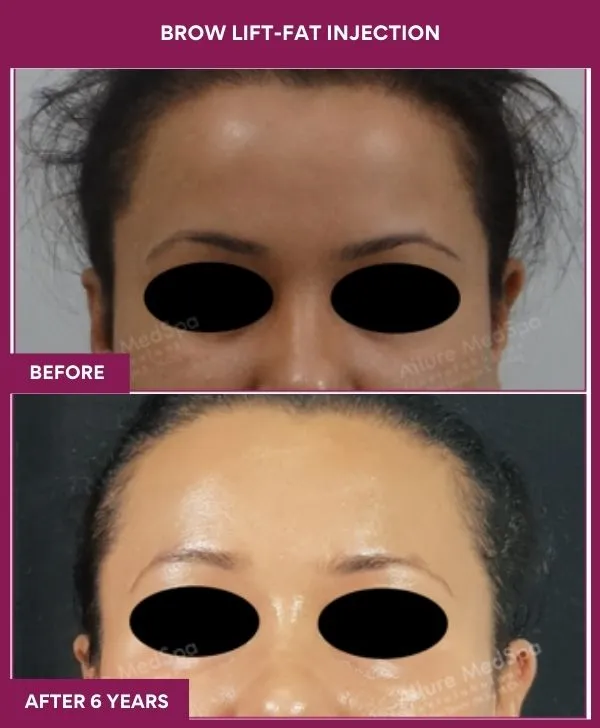
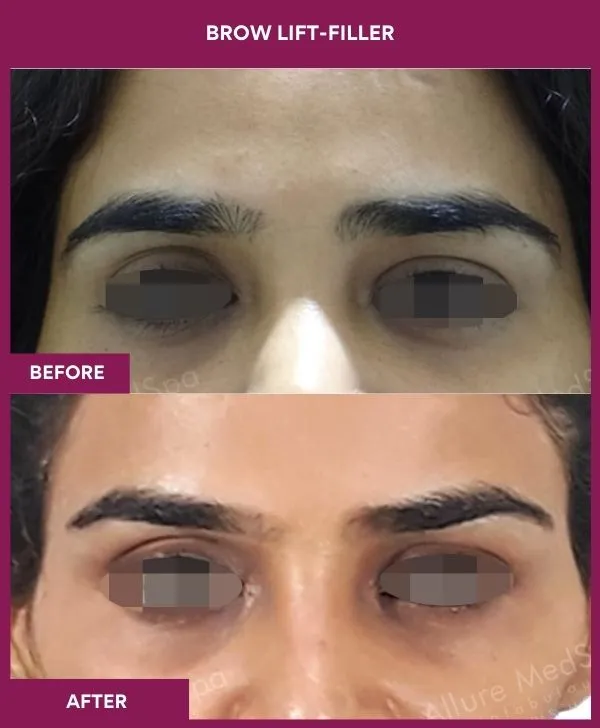
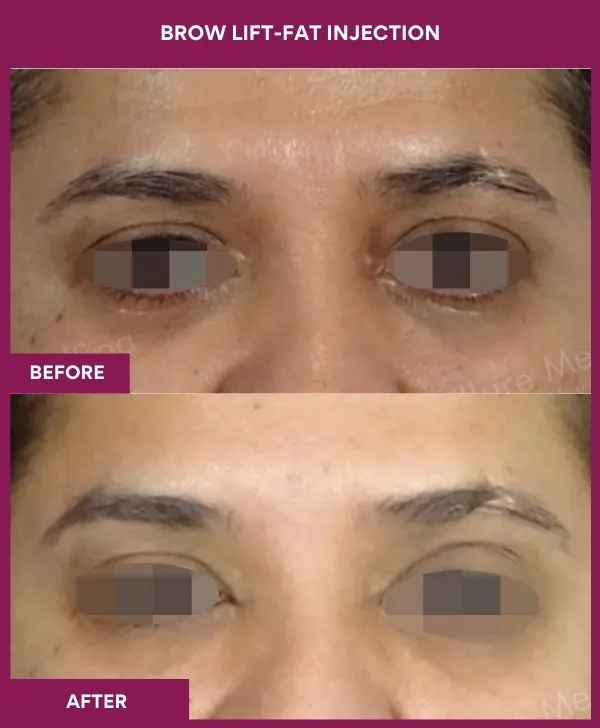
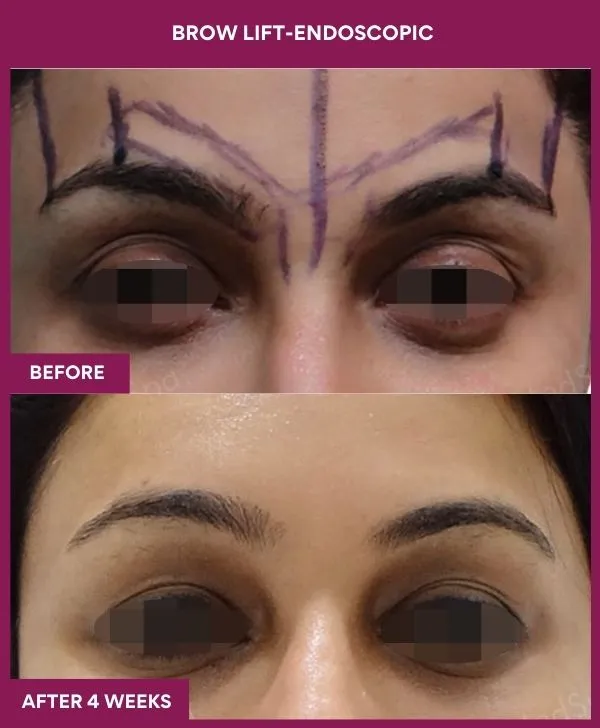
“Brow Lift Surgery Cost in Mumbai”
Brow lift Surgery Testimonials: Fine To Fabulous Journeys

Awarded by Google.com
Rating: 4.7
Reviews: 485+

Awarded by WhatClinic.com
Rating: 4.8
Reviews: 119+

Awarded by Realself
Rating: 4.9
Reviews:453+

Awarded by Facebook
Rating: 4.6
Reviews:105+
Dr Milan Doshi and his staff are very professional and committed as the centre is highly equipped with advanced technology. I had closed rhinoplasty 4 months back and I’m seeing the results as to how it becomes successful.
Deepika Shetty
The doctor explained everything clearly and the surgery was smooth. Recovery was faster than I expected and the team was very supportive.
Rahul Mehta
Very natural results and excellent staff. From consultation to follow-up, the experience was outstanding and boosted my confidence.
Sneha Kapoor
“Forehead lift Surgery Cost in India”
Brow Lift Surgery Video by Celebrity Cosmetic Surgeon Dr. Milan Doshi
Endoscopic Brow Lift Procedure with Celebrity Cosmetic Surgeon Dr. Milan Doshi
Am I a Candidate?
(4 quick questions)
Quick Facts About Brow Lift Surgery
TIME REQUIRED
2 hours
ANESTHESIA
General
HOSPITAL STAY
Overnight
PAIN LEVEL
Mild–moderate
BACK TO WORK
1 Week
RESULTS LAST
10 - 12 Years
SUCCESS RATE
97–98%
COMPLICATIONS
Under 2–3%
How Much Does Brow Lift Surgery Cost in Mumbai?
Brow-lift cost depends on the technique and surgical extent, anaesthesia requirements, and whether treatment is performed alone or combined with another facial procedure. A personalised quotation follows assessment and selection of the appropriate surgical plan.
| Procedure | Indicative price range |
|---|---|
| Temporal / lateral brow lift | ₹80,000 – ₹1,20,000 |
| Endoscopic brow lift | ₹1,00,000 – ₹1,80,000 |
| Pretrichial / hairline brow lift | ₹1,00,000 – ₹1,80,000 |
| Brow lift combined with upper blepharoplasty | ₹1,50,000 – ₹2,50,000 |
| Upper eyelid surgery alone | See Eyelid Surgery — ₹60,000 – ₹1,00,000, priced separately |
GST: +5% · Includes: surgeon, anaesthesia, OT, hospital stay, medicines and follow-ups · EMI: available
Get your exact quote & surgery plan
Share your details — our team responds within working hours with cost, EMI options and next steps.
Most Common Question People Ask
Q1. What is a brow lift or forehead lift?
Ans. A brow lift repositions a descended eyebrow and forehead tissues to improve brow position and upper-face heaviness. Different operations include endoscopic, temporal, hairline and selected open approaches.
The appropriate method depends on where the brow has descended, hairline anatomy, scar considerations and the degree of correction required.
Q2. Will a brow lift fix my hooded or tired-looking eyes?
Ans. It may, when brow descent is creating the hooding but not every hooded eye is a brow problem. True upper-eyelid skin excess, eyelid ptosis and brow descent can occur separately or together.
Examination should identify which structure is responsible before surgery is chosen.
Q3. Brow lift versus blepharoplasty - what is the difference?
Ans. A brow lift changes brow and forehead position; upper blepharoplasty treats genuine excess upper-eyelid tissue.
If both are required, brow repositioning affects how much eyelid skin remains redundant, which is why surgical planning considers the brow before final eyelid-skin removal.
Q4. Does a brow lift help forehead lines and frown lines?
Ans. It can soften selected lines, but wrinkle correction depends on their cause and the operation performed.
Horizontal forehead creases relate partly to frontalis activity, while vertical “11” lines are associated with the corrugator muscles. Some brow-lift techniques permit treatment of these depressor muscles when appropriate.
Q5. Endoscopic versus temporal brow lift - what is the difference?
Ans. An endoscopic brow lift can mobilise a broader forehead and brow region through small scalp incisions, while a temporal or lateral lift concentrates more on the outer brow.
A patient with isolated lateral hooding may need a different operation from someone with broader brow descent.
Q6. Will a brow lift affect my hairline or leave visible scars?
Ans. Every surgical brow lift leaves incisions, but their location varies by technique. Endoscopic incisions generally sit within the scalp, while a pretrichial lift places an incision along the frontal hairline.
Scar visibility, hairline cha
Q7. Can a brow lift be combined with a facelift or eyelid surgery?
Ans. Yes, when each procedure addresses a separate anatomical concern and the combined surgical plan is appropriate.
Brow lift and upper blepharoplasty are commonly planned together when both brow descent and true eyelid excess are present; lower-face aging may separately justify facelift surgery.
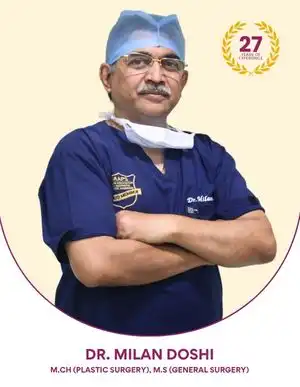
Why Choose Dr. Milan Doshi?
Dr. Milan Doshi, MCh, MS — Indian board-certified plastic surgeon with 27+ years in aesthetic surgery. ISAPS mentor, trusted by patients from 70+ countries. Consults at Andheri West; surgeries at the NABH-accredited surgical centre, Goregaon West. Upper-face surgery depends on identifying which structure is producing the heaviness before choosing an operation and on repositioning the brow rather than simply elevating it.
Dr Doshi Note: We first assess the brow position before judging excess upper-eyelid skin. If lifting the brow corrects the hooding, brow descent is the main cause. If excess eyelid skin remains with the brow correctly positioned, blepharoplasty may be advised. When both brow descent and eyelid skin excess are present, both procedures may be recommended.
The Complete Guide About Brow Lift Surgery
What Is a Brow Lift or Forehead Lift?
A brow lift, also called a forehead lift, is a cosmetic procedure that repositions a descended brow and forehead tissues to create a more balanced and refreshed upper-face appearance.
Unlike a lower facelift, a brow lift specifically treats the forehead and eyebrow region.
What Can a Brow Lift Improve?
- Low or drooping eyebrows
- A tired or heavy-looking upper face
- A stern or concerned expression
- Brow asymmetry or changes in brow shape
- Forehead and frown-line concerns, when appropriate
Brow position plays an important role in facial expression. For example, a low outer brow may make the eyes appear tired, while a low inner brow can create a more serious or stern look.
The goal is not simply to lift the eyebrows higher. Brow shape and position vary depending on age, sex, ethnicity, facial structure and natural features, so treatment should focus on balanced repositioning.
A brow lift may also be planned alongside upper eyelid surgery (blepharoplasty) because the forehead, brow and eyelids work together as one anatomical region.
Source
What Does a Brow Lift Correct?
Brow-lift surgery primarily addresses brow descent and the secondary heaviness it creates around the upper eyes. It does not automatically correct every wrinkle or every form of upper-eyelid heaviness.
| Concern | What you may notice | How brow surgery may help |
|---|---|---|
| Brow ptosis | Brow sits lower than before; upper face looks heavy or tired | Repositions the brow |
| Lateral hooding | Outer brow descends over the outer upper eyelid | Selected lateral or temporal elevation |
| Forehead lines | Horizontal creases, sometimes from frontalis overactivity | Repositioning may soften selected lines |
| Frown lines, or “11s” | Vertical lines between the eyebrows | Selected techniques can address corrugator activity |
Lateral brow descent can contribute to temporal hooding and apparent upper-eyelid heaviness. Vertical glabellar or “11” lines are produced substantially by the corrugator muscles, while horizontal forehead lines relate to frontalis activity.
A brow lift should therefore be planned around which component is actually creating the concern, rather than treating every forehead line with the same operation.
Sources
Is My Hooded Eye a Brow Problem or an Eyelid Problem?
A hooded upper eye is not always caused by excess eyelid skin. It may result from:
- Brow descent
- True upper-eyelid skin excess
- Eyelid droop
- A combination of these concerns
Identifying the main cause is important because it can change the surgical plan.
How Does the Surgeon Tell the Difference?
During examination, the surgeon may gently reposition the brow to its proposed level and then reassess how much upper-eyelid skin remains.
This helps distinguish:
- True dermatochalasis — genuine excess eyelid skin
- Apparent eyelid excess caused partly by brow ptosis
If brow descent is a major contributor, eyelid surgery alone will not reposition the brow.
Why Does the Order Matter?
When a brow lift and upper blepharoplasty are planned together, the brow is usually repositioned first.
This is important because lifting the brow can already reduce some of the apparent upper-eyelid excess. The surgeon can then determine more accurately how much eyelid skin, if any, needs to be removed.
Removing too much upper-eyelid skin can be difficult to correct, which is why careful assessment and surgical sequencing matter.
Ultimately, the procedure should follow the underlying diagnosis, not simply the procedure a patient initially believes they need.
Sources
- Raggio BS, Winters R. Endoscopic Brow Lift. StatPearls, 2025 — on brow-before-blepharoplasty planning and distinguishing dermatochalasis from brow ptosis.
- Patel BC, Malhotra R. Mid Forehead Brow Lift. StatPearls [archived by NCBI] — eyelid interaction context only.
Am I a Good Candidate for a Brow Lift?
You may be a suitable candidate for a brow lift if brow descent or upper-face heaviness is affecting your appearance, you are medically fit for surgery, and your expectations are realistic.
| You May Benefit From Assessment If You Have | Why It Matters |
|---|---|
| Brow descent | The brows sit lower than they did previously |
| Outer-brow drooping | Can contribute to upper-eye hooding |
| Forehead overactivity | You may be constantly lifting your brows to keep the eyes looking open |
| Brow asymmetry | One brow may sit noticeably lower than the other |
| Upper-eye heaviness | The cause may be the brow, eyelid or a combination of both |
What Else Is Assessed Before Brow Lift Surgery?
| Factor | Why It Is Important |
|---|---|
| Hairline position | Helps determine the most suitable incision approach |
| Forehead height | Influences brow-lift technique selection |
| Hair density | Affects how well scalp incisions may be concealed |
| Eyelid anatomy | Helps distinguish brow-related heaviness from eyelid skin excess |
| Previous surgery | May influence surgical planning and scar placement |
| Scar tolerance | Important when considering scalp or hairline approaches |
A receding hairline or possible future hair loss may make certain incision patterns less suitable. For this reason, brow lift surgery should be planned according to individual anatomy rather than using one technique for every patient.
Sources
What Are the Types of Brow Lift?
There is no single brow lift technique that is best for everyone. The approach depends on factors such as:
- Which part of the brow has descended
- Forehead height
- Hairline position
- Hair density
- Previous surgery
- Scar visibility and healing considerations
Endoscopic Brow Lift
An endoscopic brow lift uses several small incisions hidden within the scalp. A camera and specialised instruments are used to release and reposition the forehead tissues.
It is commonly used as a minimally invasive approach, but current evidence does not show that it is superior to every other brow lift technique for all patients.
Temporal or Lateral Brow Lift
A temporal brow lift mainly targets the outer or lateral part of the eyebrow.
It may be considered when the brow tail has descended and causes outer-eye hooding while the central brow remains in a relatively acceptable position.
Because it is more targeted, it should not be considered the same as a complete forehead lift.
Pretrichial or Hairline Brow Lift
A pretrichial brow lift, also called a hairline brow lift, places the incision at or just in front of the hairline.
It can be useful when brow position needs to be corrected together with forehead or hairline position. It may also provide access to forehead and frown-line muscles.
Possible trade-offs include:
- A visible hairline scar
- Temporary or persistent numbness
- Hairline irregularity
- Hair loss around the incision
Direct or Mid-Forehead Brow Lift
A direct or mid-forehead lift uses incisions closer to the brow than scalp-based techniques.
It is generally reserved for selected anatomical or reconstructive situations and may be particularly suitable in some men with heavy brows and deep forehead creases that can help camouflage the scar.
Because the incision may remain visible, it is not simply a more aggressive version of cosmetic brow lifting.
Which Brow Lift Technique Is Best?
There is no universally superior brow lift technique.
The most appropriate method depends on the patient’s anatomy, brow position, forehead height, hairline, scar tolerance and treatment goals. The technique should therefore be selected after examination rather than chosen simply because one method is marketed as “advanced” or “best.”
Sources
- Raggio BS, Winters R. Endoscopic Brow Lift. StatPearls, 2025
- Dunn T, Hohman MH. Pretrichial Brow Lift. StatPearls — on hairline selection, corrugator access, incision trade-offs and complications.
- Patel BC, Malhotra R. Mid Forehead Brow Lift. StatPearls [archived by NCBI].
How Is a Brow Lift Performed?
A brow lift surgery is performed according to the technique selected for the patient’s anatomy, brow position, forehead height and hairline.
Through carefully planned scalp, temporal, hairline or other incisions, the surgeon releases the forehead tissues, repositions the brow and secures it at the planned level.
What Happens During an Endoscopic Brow Lift?
In an endoscopic brow lift:
- Small incisions are made within the scalp
- A camera helps the surgeon visualise the forehead tissues
- Tissue attachments around the brow are carefully released
- The brow is repositioned to the planned level
- The tissues are secured in their new position
- Incisions are closed with sutures or staples
Drains are often not required in standard endoscopic techniques, although postoperative protocols may vary.
How Is Safety Considered During Brow Lift Surgery?
Careful knowledge of facial anatomy is essential during a brow lift.
Important structures include:
- Frontal branch of the facial nerve — involved in forehead and brow movement
- Supraorbital nerve — contributes to forehead sensation
- Supratrochlear nerve — also contributes to sensation around the forehead and brow
Protecting these structures is an important part of safe and precise brow lift surgery.
Source: Raggio BS, Winters R. Endoscopic Brow Lift. StatPearls, 2025 — on technique, closure, drains and relevant nerve anatomy.
Is Brow Lift Surgery Safe, and What Does the Evidence Show?
Brow lift surgery has recognised risks, as with any surgical procedure. Most are temporary, but some complications can be more significant.
| Possible Risk | What It May Involve |
|---|---|
| Numbness | Temporary altered sensation of the scalp or forehead |
| Swelling | Common during early recovery |
| Brow asymmetry | Temporary or persistent difference in brow position |
| Hair thinning | May occur around incision sites |
| Difficulty closing the eyes | Usually temporary |
| Scarring | Scar visibility varies with technique and healing |
| Haematoma or infection | Less common but recognised surgical complications |
| Facial nerve weakness | Injury to the frontal branch may affect brow movement; temporary weakness is reported more often than permanent paralysis |
What Does Published Research Show?
A 2025 retrospective study of 100 patients undergoing a specific endoscopic forehead-lift technique reported measurable brow elevation at six months.
| Study Finding | Reported Result |
|---|---|
| Median brow-to-pupil distance before surgery | 19 mm |
| Median distance at 6 months | 24 mm |
| Median change | 5 mm |
| Haematoma reported | None |
| Frontal-branch facial-nerve palsy reported | None |
How Should These Results Be Interpreted?
These findings relate to one specific technique and one retrospective study. They should not be interpreted as guaranteed results or as outcomes from Allure Medspa.
Three points are especially important:
- Zero complications does not mean zero risk. A study of 100 patients cannot exclude uncommon complications.
- The 5 mm increase was a median value. Individual brow elevation varied between patients.
- Different techniques may produce different outcomes. The approach used should depend on individual anatomy and surgical planning.
Published evidence can help explain the potential outcomes and risks of brow lift surgery, but individual results depend on the technique, anatomy, healing and other patient-specific factors.
Sources
- Raggio BS, Winters R. Endoscopic Brow Lift. StatPearls, 2025 — on recognised complications and frontal-branch injury.
- Wongkietkachorn A, et al. Endoscopic Gliding Forehead Lift. 2025 — retrospective Level IV series, 100 patients.
- Dunn T, Hohman MH. Pretrichial Brow Lift. StatPearls — on scarring, hairline irregularity, numbness and alopecia.
⚠️ Contact the surgical team the same day for
- rapidly increasing swelling of the forehead or around one eye
- severe or escalating pain
- heavy or continuing bleeding
- fever
- spreading redness
- abnormal discharge or foul smell from an incision
- a concerning change in skin colour
- new inability to close an eye properly
In an emergency, go to the nearest emergency department or call emergency services. Do not wait for a WhatsApp or email reply.
What Is Brow Lift Recovery Like?
Recovery after a brow lift varies depending on the surgical technique, individual healing and your surgeon’s advice.
What You May Notice During Recovery
- Swelling and bruising around the forehead and eyes
- Scalp tightness during the early healing period
- Itching around the scalp or incision areas
- Temporary numbness or altered sensation
- Mild tenderness around the treated area
Swelling and bruising usually improve gradually over the following days to weeks, while scalp sensation may take longer to settle.
When Can You Return to Normal Activities?
There is no single brow lift recovery timeline for everyone. Return to work, exercise and usual activities depends on:
- The type of brow lift performed
- How quickly you heal
- The extent of swelling or bruising
- Your surgeon’s clearance
Patients are usually advised to:
- Keep the head elevated during early recovery
- Avoid vigorous activity temporarily
- Attend follow-up visits for wound checks
- Have sutures or staples removed as advised
Do Not Be Surprised by Scalp Itching
Scalp itching is a common but often unexpected part of brow lift recovery. It may continue for several weeks or even longer as sensation gradually returns.
Knowing about this beforehand can make the healing process feel much less concerning.
→ For the full aftercare framework and postoperative warning signs, see the facelift recovery guide.
What Are the Risks and Complications of Facelift Surgery?
Facelift surgery is generally safe for an appropriately selected patient operated on by a trained plastic surgeon in an equipped facility, but it remains major surgery with recognised risks. Expected postoperative effects must be separated from true complications — and no surgeon can eliminate risk.
Common / expected early effects (normal healing, not complications): swelling and bruising; tightness and firmness across treated areas; numbness or altered sensation, particularly around the ears and cheeks; temporary asymmetry during the swelling phase; mild-to-moderate discomfort; temporary difficulty with facial movement due to swelling; fatigue in the first week.
Uncommon complications: haematoma — a collection of blood beneath the skin flap and the most frequently reported early complication of facelift surgery, which may require urgent drainage; infection; delayed wound healing, particularly at areas of tension or in nicotine users; conspicuous, widened or thickened scars; hair loss around incisions; contour irregularity or asymmetry requiring revision; seroma; prolonged altered sensation; dissatisfaction leading to a request for revision.
Rare but important: skin compromise or necrosis, most strongly associated with nicotine exposure and excessive tension; facial nerve weakness — usually temporary, with permanent weakness rare but recognised; great auricular nerve injury affecting ear sensation; significant bleeding requiring return to theatre; anaesthesia-related complications; thromboembolic events.
TABLE — how risk is minimised (this describes responsible risk reduction; it does not promise that complications can be eliminated):
| Risk area | How we work to minimise it |
|---|---|
| Inappropriate patient selection | Honest assessment of whether anatomy, expectations and health justify surgery; willingness to decline or defer |
| Undetected medical risk | Preoperative medical evaluation, investigations and anaesthetic review before scheduling |
| Nicotine-related healing failure | A clear, enforced nicotine cessation requirement before and after surgery |
| Bleeding and haematoma | Medication and supplement review, blood-pressure control, meticulous haemostasis, selective drain use, early observation |
| Poor surgical planning | Upright marking, technique matched to anatomy, appropriate vector selection, conservative skin excision |
| Facility and equipment risk | Surgery at an NABH-accredited surgical centre with appropriate equipment |
| Infection | Sterile technique, theatre sterilisation protocols, appropriate perioperative antibiotics, wound-care instruction |
| Anaesthetic events | Qualified anaesthesia team with continuous intraoperative monitoring |
| Delayed recognition of a problem | Structured postoperative observation, written warning signs, accessible follow-up |
| Scar problems | Tension-minimising closure at natural junctions, scar-care instruction, sun protection guidance |
⚠️ WHEN TO SEEK URGENT MEDICAL ATTENTION
Seek urgent advice or immediate emergency care for: rapidly increasing swelling on one side of the face or neck · severe or escalating pain · heavy or continuing bleeding · difficulty breathing · a concerning change in skin colour over the face or neck · fever · abnormal discharge or foul smell from an incision.
In an emergency, go to the nearest emergency department or call emergency services. Do not wait for a WhatsApp or email reply.
Medical Codes for Brow Lift Surgery
Codes below are for administrative and documentation reference. All codes must be verified against the current CPT and ICD-10 code sets before publication and before any use in documentation.
| CPT | Description | Possible ICD-10 |
| 15824 | Rhytidectomy, forehead | Z41.1 |
| 15826 | Rhytidectomy, glabellar frown lines | Z41.1 |
| 67900 | Repair of brow ptosis — the functional route, not the cosmetic one | H02.4- |
(FAQs) Frequently Asked Question About Facelift Surgery
Q1. How long do brow lift results last?
Ans. A surgical brow lift typically lasts 8–10 years, though ageing and lifestyle affect longevity. The brow can gradually descend again over time.
Q2. Will a brow lift make me look surprised?
Ans. Not when done well. An experienced surgeon aims for a natural, refreshed look — not an over-elevated, ‘surprised’ one.
Q3. Can a brow lift improve my vision?
Ans. Yes — when a heavy, sagging brow pushes down on the upper eyelid and blocks peripheral vision, lifting it can help. This may make the case partly functional.
Q4. Is a brow lift better than botulinum toxin?
Ans. They do different jobs. Anti-wrinkle injections give a subtle, temporary lift (3–6 months); a surgical brow lift gives a stronger, long-lasting result for genuine brow descent.
Q5. Who is a good candidate?
Ans. Healthy non-smokers with sagging brows, forehead wrinkles or hooded upper lids, and realistic expectations.
Q6. Will I need another brow lift later?
Ans. Most people enjoy long-lasting results, but because the brow keeps ageing, a touch-up may be considered after several years.
Q7. Can I combine it with other procedures?
Ans. Yes — it’s commonly combined with eyelid surgery (blepharoplasty) or a facelift for balanced facial rejuvenation.
Q8. Will a brow lift leave visible scars?
Ans. Incisions are usually hidden in or at the hairline, so scars are well concealed. Endoscopic incisions are very small.
Q9. How soon can I return to work?
Ans. Desk work is often possible within a day or two; most people are back to routine within about 2 weeks once bruising fades.
Q10. What happens right after surgery?
Ans. Mild swelling, tightness and bruising are normal and settle within 1–2 weeks. Scalp numbness followed by itching is common as nerves recover.
Q11. Can a brow lift be done without surgery?
Ans. Anti-wrinkle injections can lift the brow slightly and temporarily; for real, sustained sagging, surgery is more reliable.
Q12. What age is best for a brow lift?
Ans. Most patients are 40–60, but people with genetically low brows may consider it earlier.
Q13. Does a brow lift affect hair growth?
Ans. Some thinning around the incision can occur and is usually temporary; permanent hair loss is rare.
Q14. Can a brow lift change the shape of my eyes?
Ans. Yes — by lifting the brow it can open up the eye area and reduce hooding, for a more alert look.
Q15. What should I avoid after a brow lift?
Ans. Strenuous activity, heavy lifting and direct sun for 2–3 weeks, plus smoking and alcohol while healing.