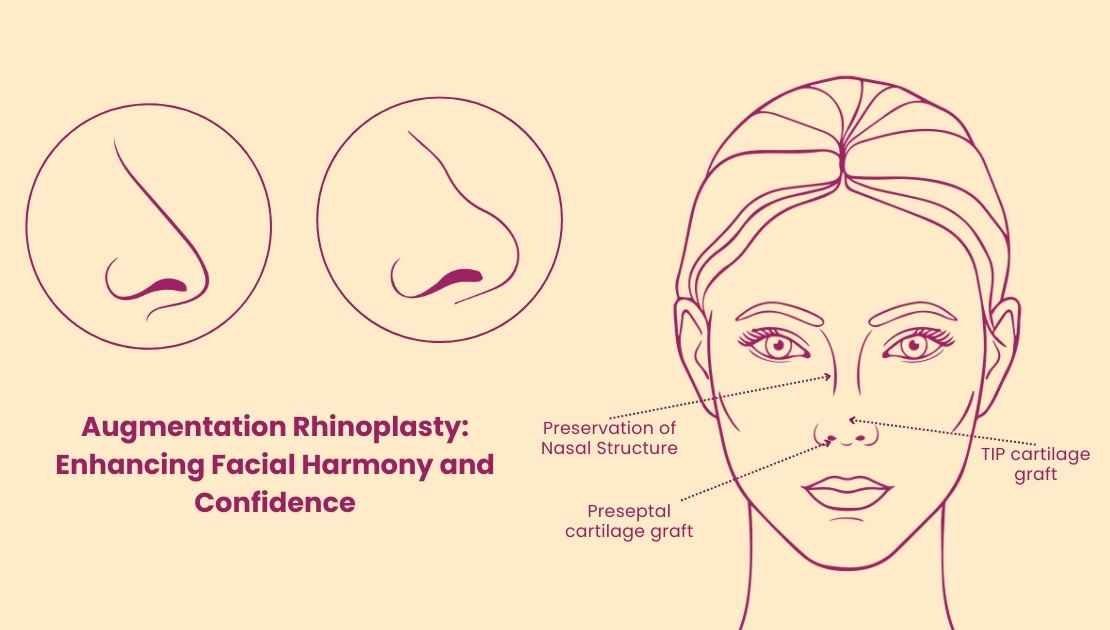
Augmentation rhinoplasty in Mumbai is for patients who feel their nasal bridge looks low, flat, under-projected, collapsed, or weak in profile. At Allure Medspa, the aim is a stronger, natural bridge built with support and safe material planning — not the biggest possible bridge. It is a focused part of the wider rhinoplasty surgery family of procedures.
What Is Augmentation Rhinoplasty and Why Is a Bridge Low?
Augmentation rhinoplasty improves a low or flat nasal bridge by adding height, definition, and support to the radix and dorsum using cartilage grafts, diced cartilage, or selected implants when appropriate. A bridge may be low because of ethnic anatomy, trauma, saddle nose collapse, previous over-resection, or weak structural support.
A flat bridge can make the nose look less defined from the side and broader from the front. In many Indian, South-Asian, and Asian noses, the issue is not excess bone to remove — it is insufficient dorsal height or weak support that needs to be built.
Common reasons include:
- Congenital low bridge: naturally low radix or dorsum.
- Ethnic framework: low dorsum with thicker skin and weaker support.
- Post-traumatic collapse: old injury causing saddle deformity.
- Previous surgery: over-resection of the nasal bridge.
- Structural weakness: insufficient septal or cartilage support.
- Saddle nose: severe dorsal loss from trauma, disease, or surgery.
Sources: PMC11056355 · PMC7752089 · PMC4656153
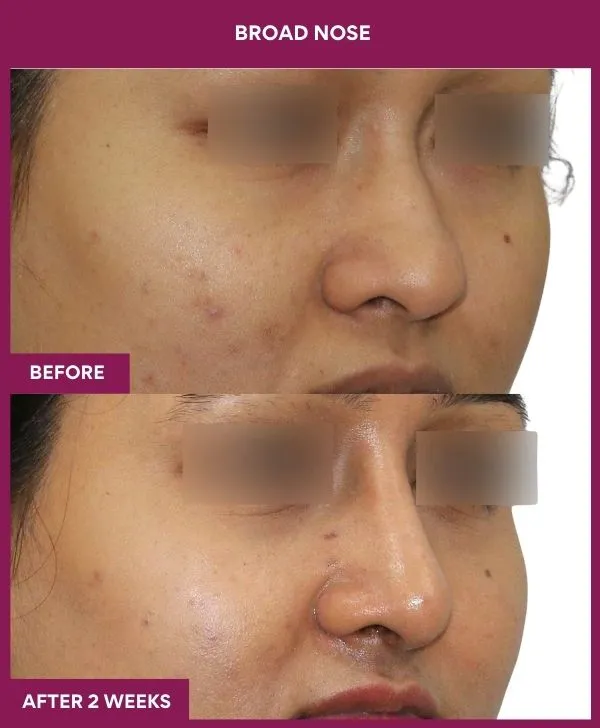
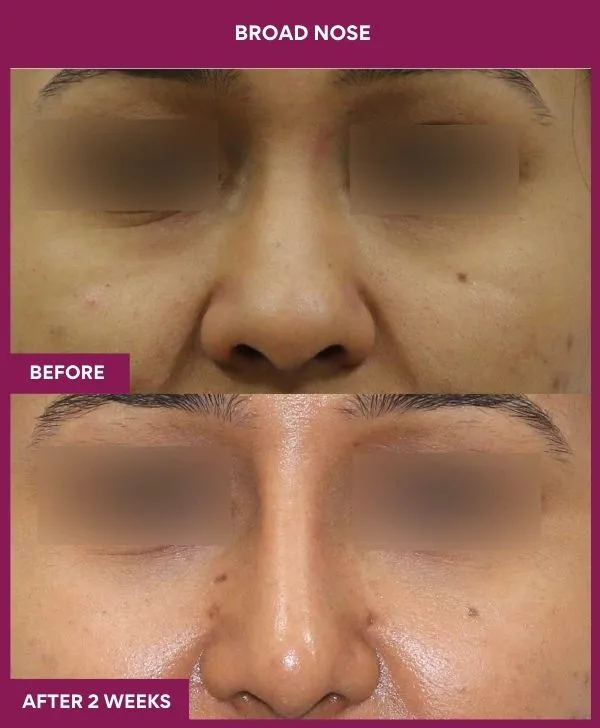
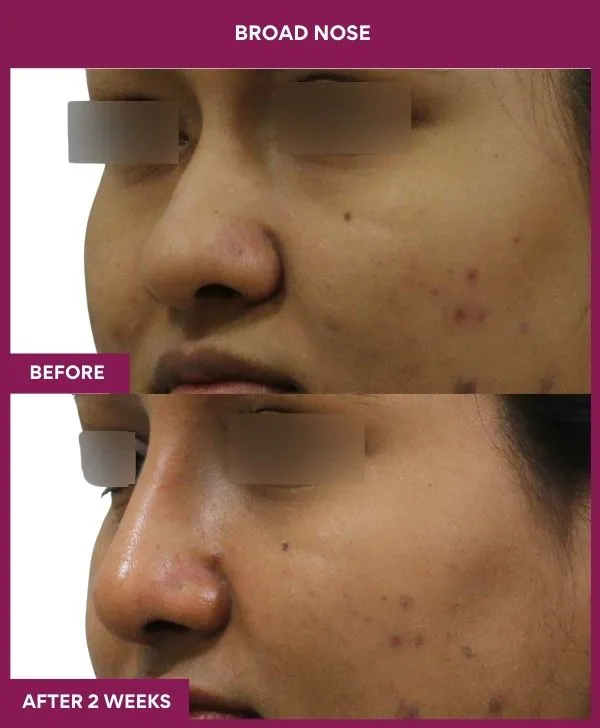
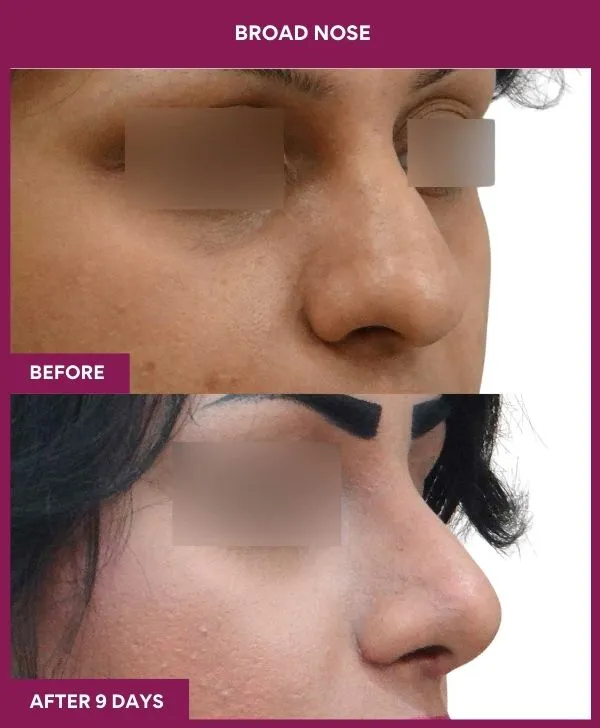
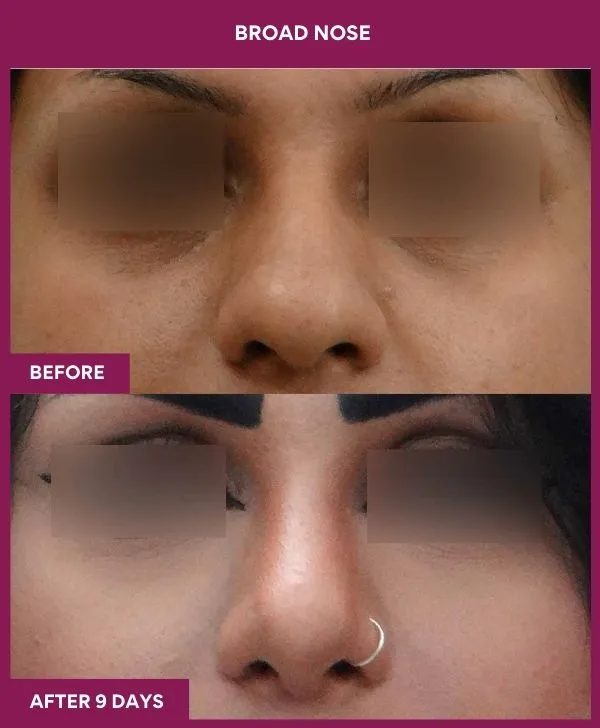
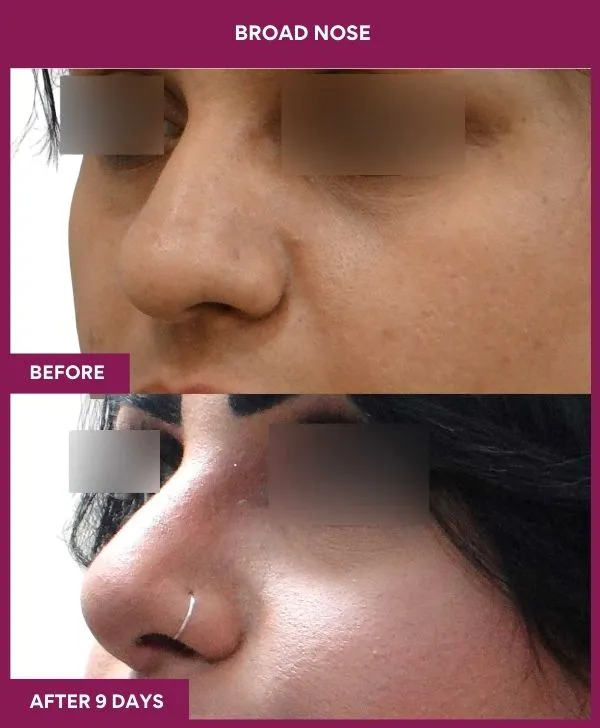
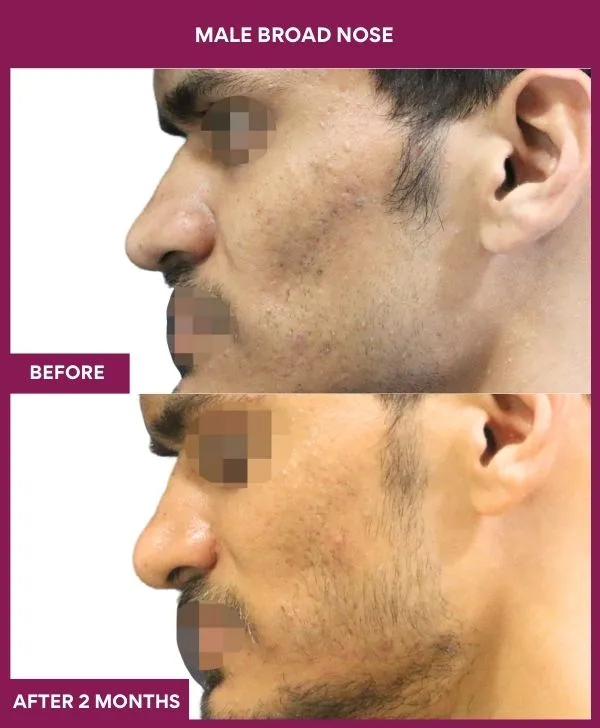
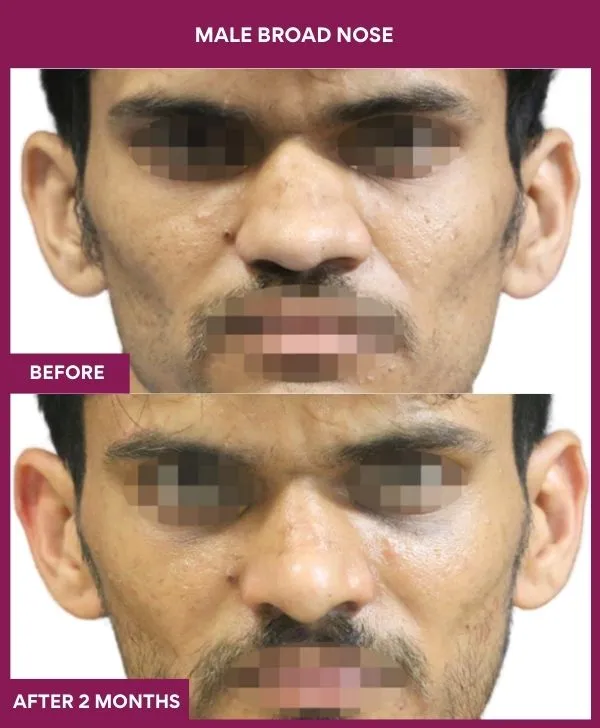
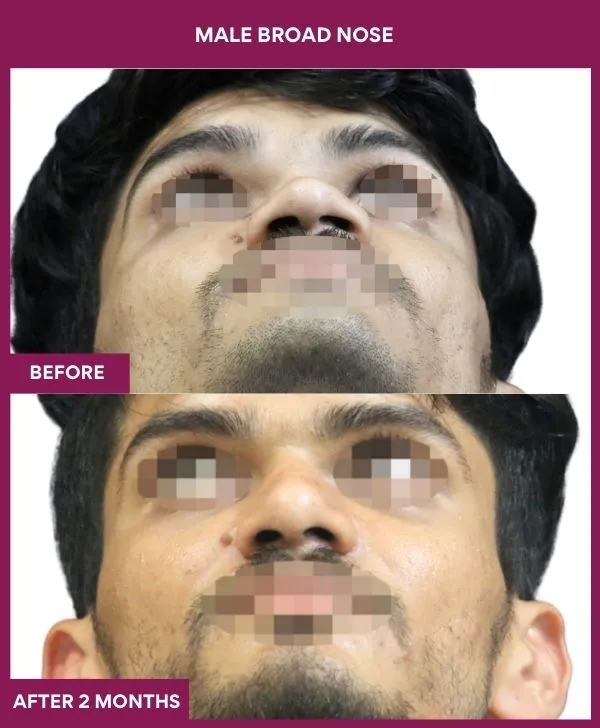
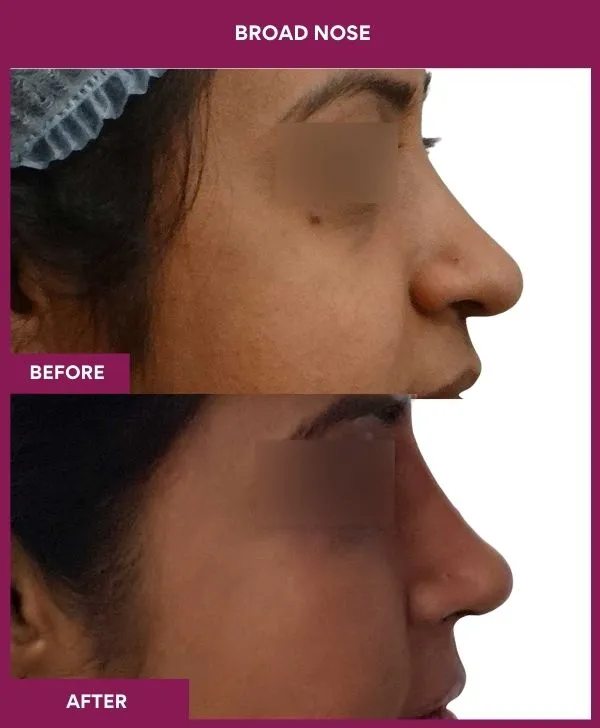
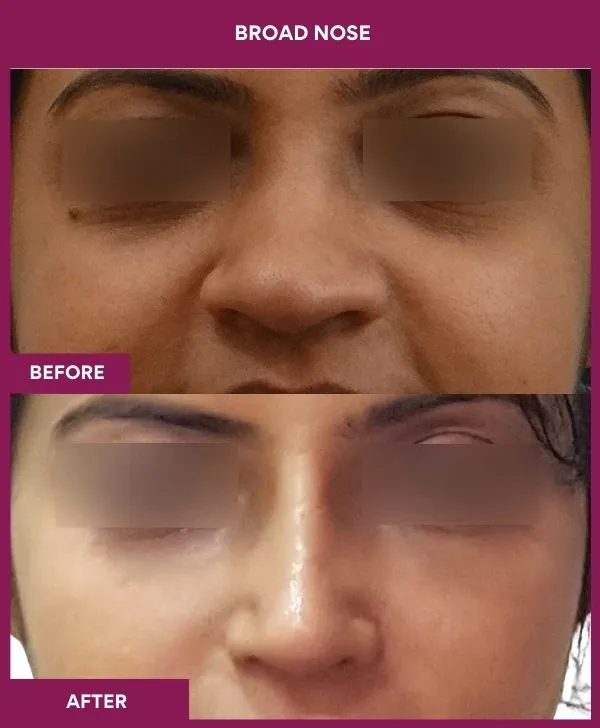
Augmentation Rhinoplasty Surgery Before and After Results
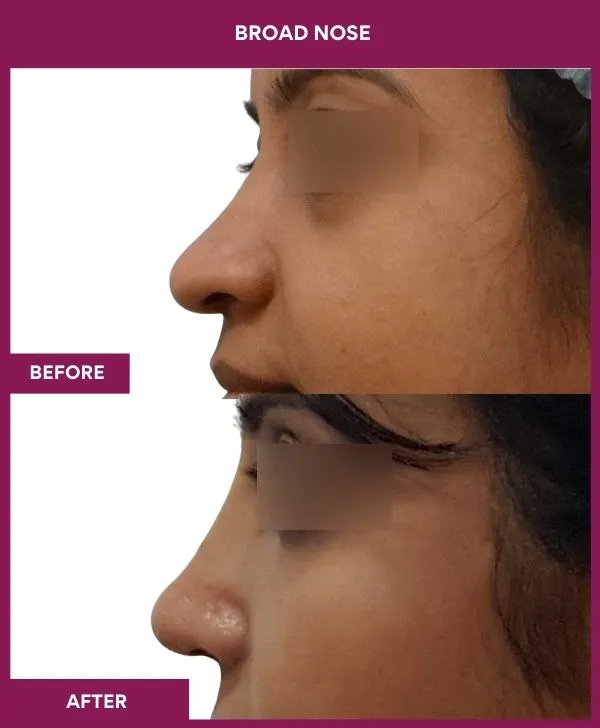


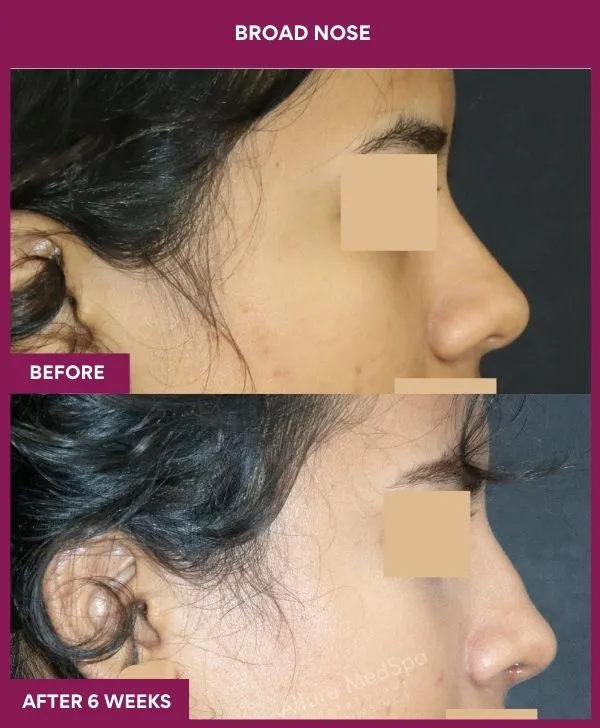
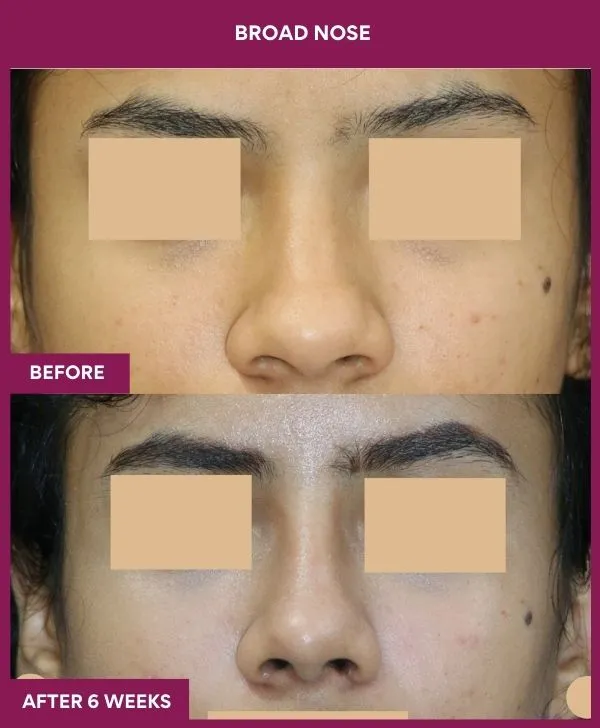
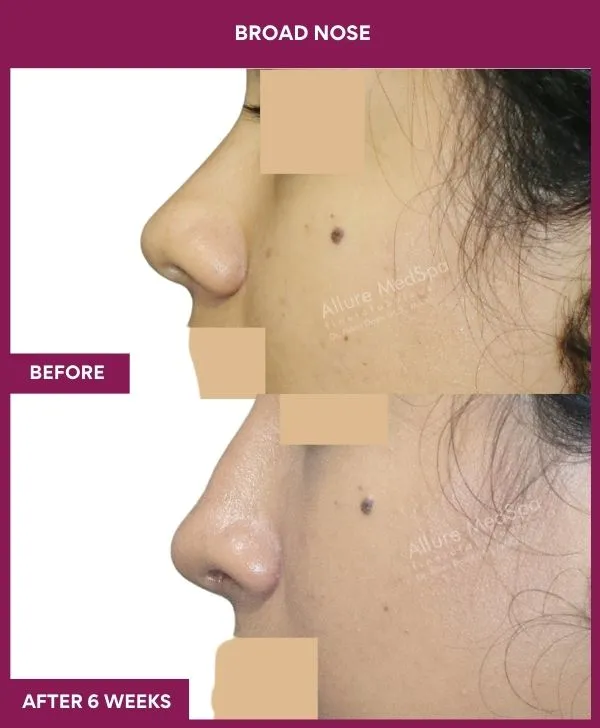


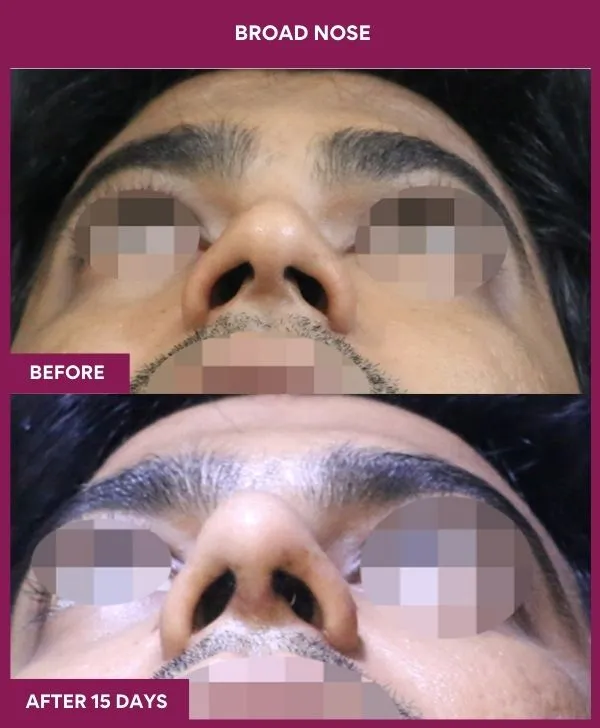


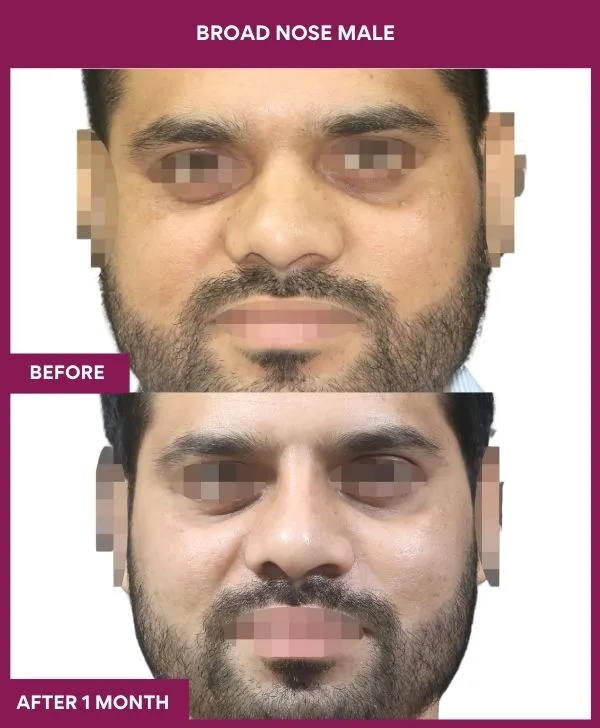
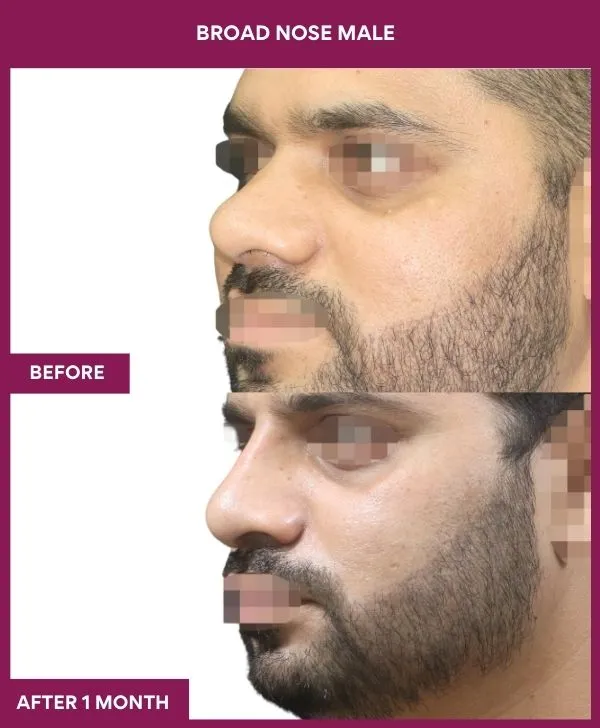


Augmentation Rhinoplasty Surgery Testimonials: Celebrities Patient

Awarded by Google.com
Rating: 4.7
Reviews: 485+

Awarded by WhatClinic.com
Rating: 4.8
Reviews: 119+

Awarded by Realself
Rating: 4.9
Reviews:453+

Awarded by Facebook
Rating: 4.6
Reviews:105+
Dr Milan Doshi and his staff are very professional and committed as the centre is highly equipped with advanced technology. I had closed rhinoplasty 4 months back and I’m seeing the results as to how it becomes successful.
Deepika Shetty
The doctor explained everything clearly and the surgery was smooth. Recovery was faster than I expected and the team was very supportive.
Rahul Mehta
Very natural results and excellent staff. From consultation to follow-up, the experience was outstanding and boosted my confidence.
Sneha Kapoor
Video: Best Rhinoplasty Surgeon explain nose reshape procedure
Dr Milan Doshi is describing the Rhinoplasty Surgery in detail with benefits, techniques, recovery, result, risk and complecations
Why Does My Nose Look Flat in Photos?
If your nose looks flat in photos, you may be noticing a low bridge, weak tip support, thick skin, or lack of dorsal shadow rather than a single bridge problem. The concern is real, but the solution should come from facial analysis, not simply adding more height.
You may be thinking: “my side profile looks flat,” “my nose disappears in front-view photos,” “my glasses sit low because the bridge is weak,” “my nose looks broad because the bridge is low,” or “I want a higher bridge, but not an obvious implant look.”
A good plan separates what needs height, what needs support, and what should be left alone. A natural augmentation rhinoplasty should improve projection while still matching the eyes, lips, forehead, and chin.
How Is Augmentation Rhinoplasty Different From Reduction Rhinoplasty?
Augmentation rhinoplasty adds bridge height and projection, while reduction rhinoplasty removes or reduces excess bone or cartilage. The two operations have different goals and risks: augmentation is mainly about material choice, support, contour, infection risk, extrusion risk, and long-term stability.
| Feature | Augmentation rhinoplasty | Reduction rhinoplasty |
|---|---|---|
| Main goal | Add height, support, or projection | Reduce hump, size, or excess height |
| Common concern | Low bridge, flat nose, saddle nose | Dorsal hump, large bridge, over-projection |
| Material issue | Cartilage, diced cartilage, implant choice | Usually less material-dependent |
| Key risk focus | Warping, resorption, infection, extrusion, migration | Over-resection, irregularity, narrowing |
| Common in | Low-dorsum or saddle-nose cases | Hump or over-projected noses |
| Planning theme | Build with support | Reduce with restraint |
Sources: PubMed 19910845 · PMC4656153
What Can Be Used to Raise the Bridge?
A low bridge can be raised using the patient’s own cartilage, diced cartilage wrapped in fascia, or selected implants such as silicone or ePTFE. The right material depends on bridge deficiency, skin thickness, revision status, infection risk, donor-site acceptance, available cartilage, support requirement, patient expectations, and long-term follow-up practicality.
| Material | Common indication | Longevity / stability | Key risk |
|---|---|---|---|
| Septal cartilage | Mild to moderate support or grafting | Natural tissue; limited quantity | May not be enough for major augmentation |
| Ear cartilage | Small contour or selected support | Natural tissue; curved shape useful | Donor-site scar/soreness |
| Rib cartilage | Major augmentation, revision, saddle nose | Strong support and volume | Warping, chest scar, pain, rare pneumothorax |
| Diced cartilage in fascia | Smooth dorsal contour; primary or revision | Lower warping tendency in selected series | Resorption, deviation, visible bulging |
| Silicone implant | Selected dorsal augmentation | Predictable shape; no donor site | Infection, extrusion, displacement |
| ePTFE / Gore-Tex | Selected dorsal augmentation | Low rates reported in some series | Infection, extrusion, difficult revision |
| Medpor | Selected alloplastic augmentation | Tissue ingrowth | Secondary surgery may be difficult |
Sources: PMC11786243 · PubMed 26229125 · PubMed 34387329 · PubMed 29705398
Should I Choose an Implant or My Own Cartilage?
The most important material decision in augmentation rhinoplasty is whether to use an implant or the patient’s own cartilage. Implants can give predictable bridge height, but cartilage is biologic tissue with lower extrusion concern; each option has trade-offs that must be understood before surgery.
Implant advantages
- Shape: predictable dorsal height and contour.
- No donor site: avoids rib, ear, or septal harvest.
- Efficiency: may reduce operative time in selected cases.
- Availability: useful when cartilage is insufficient.
Implant concerns
- Infection: may require antibiotics, removal, or revision.
- Extrusion: implant may threaten skin or become exposed.
- Migration: implant may shift or look displaced.
- Visibility: edges can show if skin coverage is poor.
- Revision: removal or replacement can be complex.
- Over-augmentation: larger implants may increase risk.
Cartilage advantages
- Biocompatibility: patient’s own tissue.
- Lower extrusion concern: compared with alloplasts.
- Structural support: useful in saddle nose or revision.
- Custom shaping: can be carved or diced for contour.
Cartilage concerns
- Donor site: rib or ear adds another healing area.
- Warping: especially with costal cartilage.
- Resorption: some volume may change over time.
- Availability: septal cartilage may be limited.
- Irregularity: contour may need careful shaping.
Sources: PubMed 15613873 · PMC12451693 · PubMed 26229125 · PubMed 29705398
When Is Rib Cartilage Needed?
Rib cartilage is usually considered when augmentation rhinoplasty needs strong volume and structural support, especially in saddle nose correction, major low-bridge augmentation, revision rhinoplasty, or cases where septal and ear cartilage are insufficient. It is powerful, but it is not a small decision.
Rib cartilage can help rebuild a bridge that has collapsed or been over-resected, and can support major dorsal augmentation when the available septal cartilage is inadequate. However, it brings its own considerations:
-
Donor site: chest incision and healing.
-
Pain: temporary chest discomfort may occur.
-
Warping: cartilage can bend over time.
-
Pneumothorax: rare but important risk.
-
Overbuilding: bridge can look too high if not planned carefully.
-
Revision complexity: rib grafts require precise shaping.
Sources: https://pubmed.ncbi.nlm.nih.gov/15023843/ · https://pmc.ncbi.nlm.nih.gov/articles/PMC6074934/ · https://www.oaepublish.com/articles/2347-9264.2018.74 · https://pubmed.ncbi.nlm.nih.gov/23820790/
Am I a Candidate for Augmentation Rhinoplasty?
You may be a candidate if your bridge is low, flat, collapsed, under-supported, or previously over-resected. The best candidates understand that material choice matters and want a natural profile, not the highest bridge possible.
Good signs
- Low bridge: side profile lacks dorsal height.
- Flat nose: front view lacks dorsal shadow.
- Saddle deformity: bridge appears collapsed.
- Revision need: previous surgery removed too much support.
- Ethnic anatomy: low dorsum with thick skin may need support.
- Realistic goal: natural height, not maximum height.
- Material awareness: you are open to implant/cartilage counselling.
Needs careful counselling
| Situation | Why it matters |
|---|---|
| Thin skin | Implant or graft edges may show |
| Large bridge request | Over-augmentation increases risk |
| Active infection | Surgery should be delayed |
| Autoimmune saddle nose | Disease control must be reviewed |
| Previous implant issue | Revision plan may be complex |
| Filler history | Vascular and tissue history matters |
| Unclear goal | Surgery should not proceed without defined planning |
Is Filler a Good Alternative for a Low Bridge?
Filler can temporarily raise a low bridge or camouflage minor contour irregularity, but it does not provide structural support and cannot replace augmentation rhinoplasty for saddle nose, major low-dorsum deficiency, or long-term bridge reconstruction. It also carries rare but serious vascular risk. See non-surgical rhinoplasty for detail.
Non-surgical augmentation may suit selected patients who want a temporary change or small contour improvement. It does not build cartilage support, correct collapse, or offer the same long-term predictability as surgery. While large non-surgical rhinoplasty series report low overall adverse-event rates, serious complications include vascular occlusion, skin necrosis, and vision loss — which is why nasal filler should be performed only by appropriately trained medical professionals.
Sources: https://pubmed.ncbi.nlm.nih.gov/33588622/ · https://pmc.ncbi.nlm.nih.gov/articles/PMC4859242/
What Risks Are Specific to Augmentation Rhinoplasty?
Augmentation-specific risks include implant infection, extrusion, migration, visibility, graft warping, graft resorption, donor-site healing, over-augmentation, and difficult revision. These differ from simple reduction rhinoplasty because material is being added to the nasal bridge.
| Risk | More relevant to | What it means |
|---|---|---|
| Infection | Implant or graft | May need treatment or removal |
| Extrusion | Implant | Implant may become exposed |
| Migration | Implant | Bridge may shift or look uneven |
| Visibility / edge show | Implant or graft | Edges may show under skin |
| Warping | Rib cartilage | Graft may bend over time |
| Resorption | Cartilage graft | Volume may reduce |
| Donor-site morbidity | Rib or ear cartilage | Scar, pain, or donor healing |
| Over-augmentation | Large implant or graft | Nose looks artificial; higher risk |
Sources: PubMed 19910845 · PubMed 15613873 · PMC12451693 · PubMed 26229125
Severe pain, spreading redness, fever, implant exposure, or sudden vision change after filler need urgent medical care — see our recovery & warning-signs guide.
What Is Recovery Like After Augmentation Rhinoplasty?
Recovery depends on whether the bridge was raised with an implant, septal cartilage, ear cartilage, rib cartilage, diced cartilage, or combined structural work. Swelling improves gradually, and graft or implant position needs follow-up rather than early judgement. This is a summary only — for full aftercare, see the rhinoplasty recovery timeline.
| Recovery point | Summary |
|---|---|
| Early phase | Swelling, bruising, splint or dressing care |
| Social recovery | Usually improves over weeks |
| Material monitoring | Graft or implant position is followed clinically |
| Final judgement | Depends on skin, graft type, and complexity |
Sources: PubMed 27752742 · PMC11056355
What Is the Cost of Augmentation Rhinoplasty in Mumbai?
Augmentation rhinoplasty cost in Mumbai at Allure Medspa depends on bridge deficiency, implant or cartilage choice, rib cartilage need, revision status, saddle nose reconstruction, anaesthesia, and facility. It follows the clinic’s structural rhinoplasty band — the exact figure is confirmed on the rhinoplasty cost guide and after consultation, with 5% GST extra. Any implant material cost is quoted separately from the surgical fee.
Why Choose Dr. Milan Doshi for Augmentation Rhinoplasty?
Choosing a surgeon for augmentation rhinoplasty is mainly about material judgement, profile restraint, and long-term planning. The consultation should help you understand whether your nose needs bridge height, tip support, cartilage grafting, implant augmentation, or no augmentation at all. Dr. Milan Doshi is a plastic and cosmetic surgeon (MCh, MS) with 27+ years of experience, 16,000+ surgeries, and 1,500+ rhinoplasties.
A stronger bridge should still look like it belongs to your face. The plan should explain the material choice clearly, including what can go wrong and how future revision would be handled if needed — noticeable for balance, not obvious for surgery.
| Credential | Detail |
|---|---|
| Surgeon | Dr. Milan Doshi |
| Qualification | MCh (Plastic Surgery), MS, MBBS |
| Experience | 27+ years |
| Surgeries | 16,000+ total · 1,500+ rhinoplasties |
| Memberships | ISAPS, IAAPS, ASPS, MUHS |
| Clinic | Allure Medspa, Andheri West, Mumbai |
| Surgical facility | Vardan Hospital, Goregaon (NABH-certified) |
Read his full profile and credentials on the Dr. Milan Doshi profile page.
What Are the Most Common Questions About Augmentation Rhinoplasty?
Q1. Is augmentation rhinoplasty the same as reduction rhinoplasty?
Ans. No. Augmentation adds bridge height or projection using grafts or implants; reduction removes bone or cartilage to reduce a hump or size. The goals and risk profile are different because augmentation adds material to the nose.
Q2. What materials can raise a low bridge?
Ans. Options include septal cartilage, ear cartilage, rib cartilage, diced cartilage wrapped in fascia, silicone implants, and ePTFE/Gore-Tex implants. Each material has different advantages, limitations, risks, and revision implications.
Q3. Is a silicone implant safe for the nose?
Ans. Silicone implants are widely used in Asian dorsal augmentation and may be suitable in selected patients. They still carry risks of infection, extrusion, displacement, and visibility, especially if over-sized or placed under poor soft-tissue coverage.
Q4. Will a nose implant last for life?
Ans. It is better not to assume “for life.” Implants can last many years, but late infection, extrusion, shifting, or aesthetic dissatisfaction may require removal or revision. The long-term plan should be discussed before choosing an implant.
Q5. When is rib cartilage used?
Ans. Rib cartilage is considered for major augmentation, saddle nose reconstruction, and revision cases where septal or ear cartilage is insufficient. It offers strong support but adds donor-site healing and a recognised warping risk.
Q6. What is diced cartilage in fascia?
Ans. It means the patient’s cartilage is finely diced and wrapped in fascia to create a smoother dorsal graft. It may reduce warping risk compared with solid cartilage in selected cases, but resorption or contour issues can still occur.
Q7. Can filler correct a flat bridge?
Ans. Filler can temporarily raise a low bridge or smooth minor irregularities. It does not provide structural support and is not a substitute for saddle nose reconstruction or major augmentation. Nasal filler also carries rare but serious vascular risks.
Q8. Can augmentation make my nose look narrower?
Ans. Yes, in selected low-bridge, thick-skin noses, increasing dorsal height can create better dorsal lines and make the nose appear narrower without aggressive bone narrowing. This is a proportion effect, not simply width reduction.
Q9. What are serious warning signs after augmentation?
Ans. Increasing pain, spreading redness, fever, pus, implant exposure, or sudden visual symptoms after filler need urgent medical review. These may suggest infection, extrusion, or vascular compromise and should not be ignored.
Q10. Is recovery different from reduction rhinoplasty?
Ans. The early recovery may look similar, but augmentation needs material-specific follow-up. The surgeon monitors graft shape, implant position, swelling, and skin response over time. Rib cartilage also adds a separate donor-site recovery.
Q11. Can augmentation rhinoplasty be combined with other procedures?
Ans. Yes. It may be combined with tip refinement, alar-base work, septal correction, or broad-nose planning when needed for balance. Each added procedure changes complexity, recovery, and cost.
Q12. Is revision harder after implant augmentation?
Ans. Revision can be more complex after implant augmentation because of scar tissue, capsule formation, infection risk, or tissue ingrowth with some porous implants. Some revisions require implant removal and replacement with cartilage.