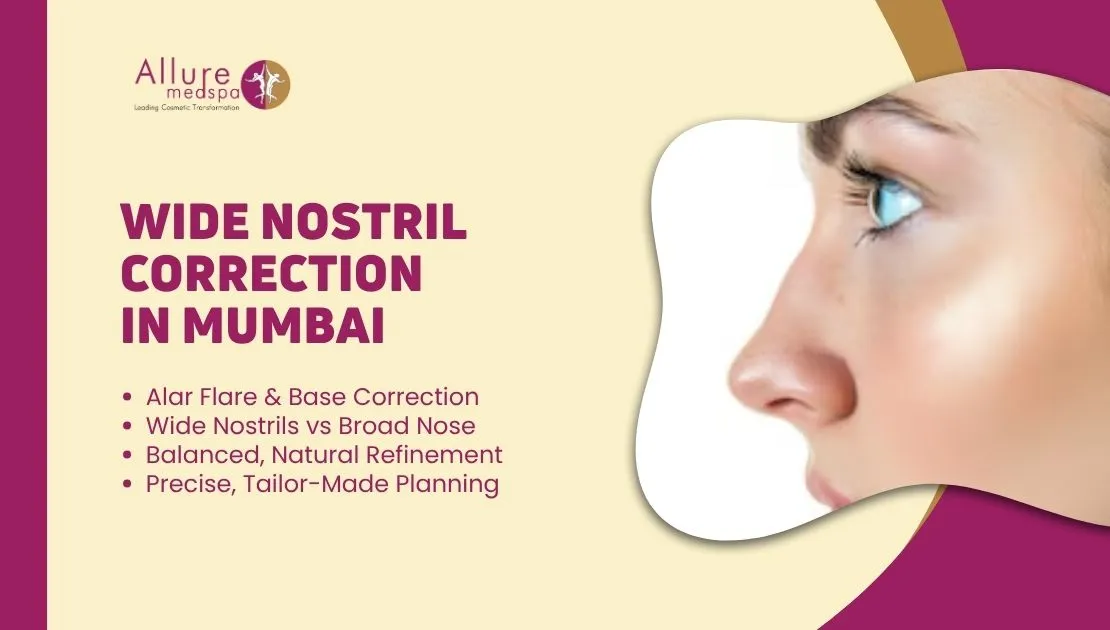
Wide nostril correction in Mumbai is for patients who feel their nostrils, alar base, or nasal base look too wide, flared, or broad in front, smile, or base view. At Allure Medspa, Dr. Milan Doshi plans nostril reduction in the Indian facial context — where facial width, cheek fullness, bridge height, tip shape, and ethnic identity all matter. The aim is not a Western-looking narrow nose, but balanced, natural nostril reduction that suits the patient’s own face. It is a focused part of the wider rhinoplasty surgery family of procedures.
What Are Wide Nostrils and What Causes Them?
Wide nostrils are usually an alar base or nostril-opening concern where the nostril width, alar flare, or interalar distance looks broad for the face. Correction focuses on the nostril base and must distinguish true base excess from facial-proportion imbalance.
Patients may describe this as “big nostrils,” “flared nostrils,” “wide base,” or “nostrils spreading when smiling.” Surgically, the concern may come from the alar base, nostril sill, alar rim, alar lobule, or dynamic flare during smiling or breathing.
A wider alar base is common in many ethnic groups, including South-Asian, East-Asian, African, and Middle-Eastern noses. The aim is not to erase ethnicity — it is a more balanced nostril base that still looks natural.
| Concern | What it means | How it looks | Planning direction |
| Wide alar base | Outer nostril edges are far apart | Base looks broad at rest | Alar base reduction may help |
| Alar flare | Alar rims spread outward | Nostrils look flared from front/base | Weir excision or flare correction |
| Wide nostril sill | Nostril floor is broad | Nostrils look horizontally wide | Sill excision may be considered |
| Large alar lobule | Side nostril tissue looks bulky | Alar sidewall appears heavy | Alar wedge planning may help |
| Dynamic flare | Flare increases with smiling/inspiration | Base spreads during movement | Functional/dynamic assessment |
| Optical width | Wide look from low bridge or weak tip | Measurement may be acceptable | Bridge/tip planning may be better |
Sources: https://pmc.ncbi.nlm.nih.gov/articles/PMC5122555/ · https://pubmed.ncbi.nlm.nih.gov/34782134/
🩺 Dr. Doshi’s Note
Wide nostril correction in Indian patients should not follow Western measurements blindly. Indian faces are often softer and more rounded, so the nostril base must be planned according to the patient’s own facial proportion. I assess alar flare, nostril base width, tip shape, bridge height, smile changes, and full face balance before advising correction. The goal is balanced nostril reduction — not an over-narrow, tight, or operated-looking nose.
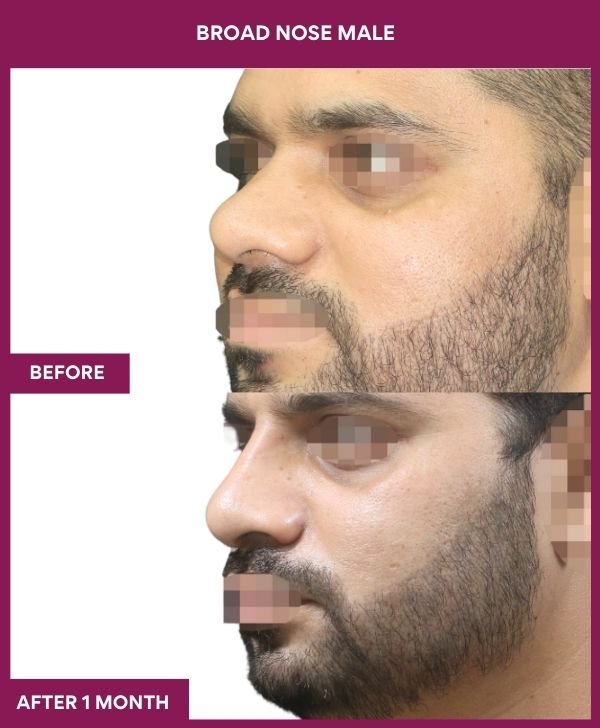
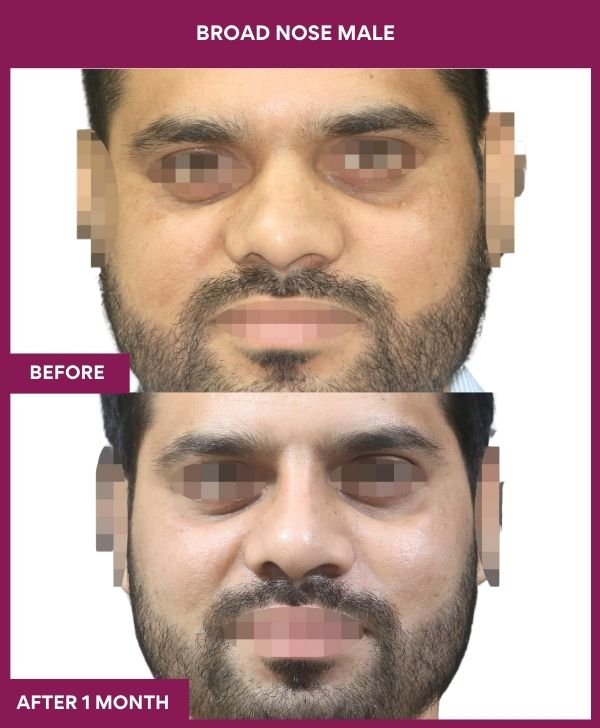
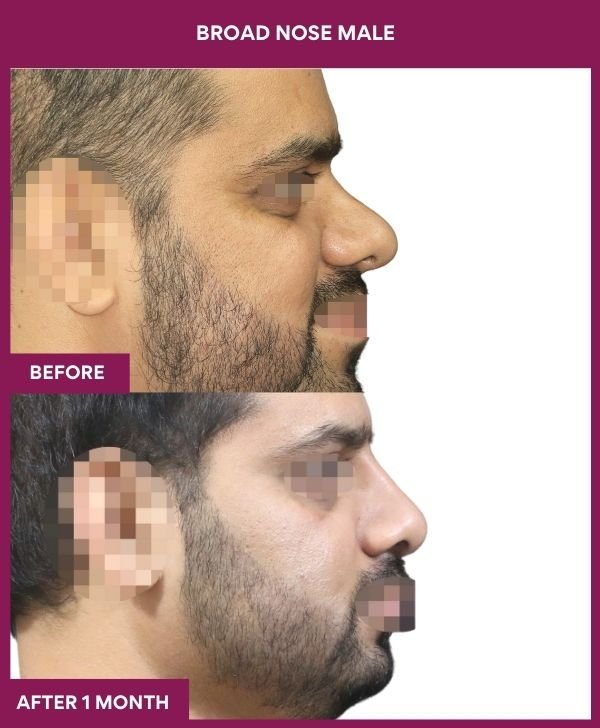
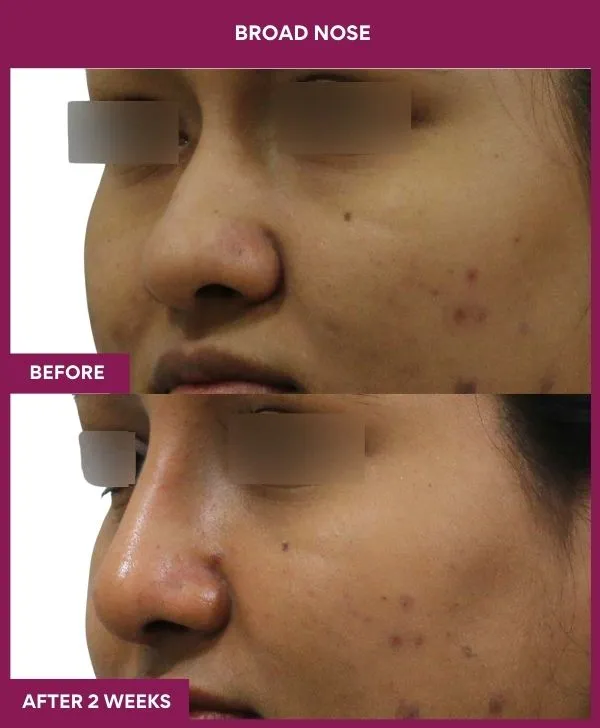
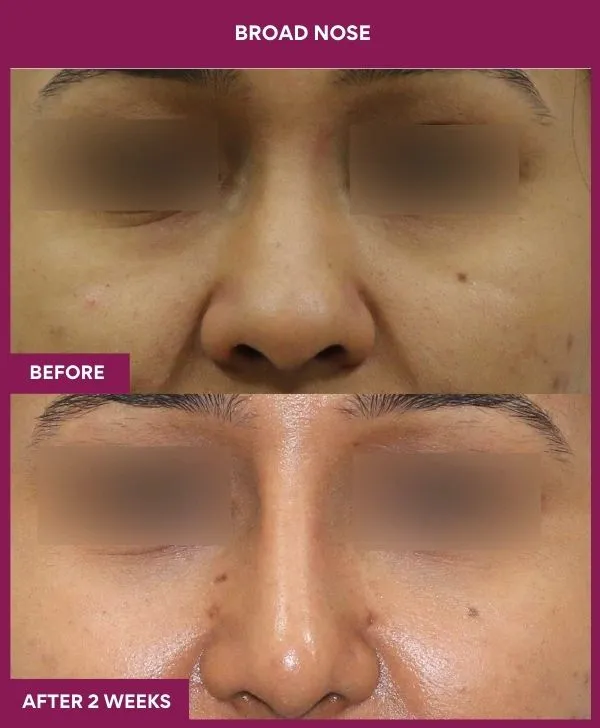
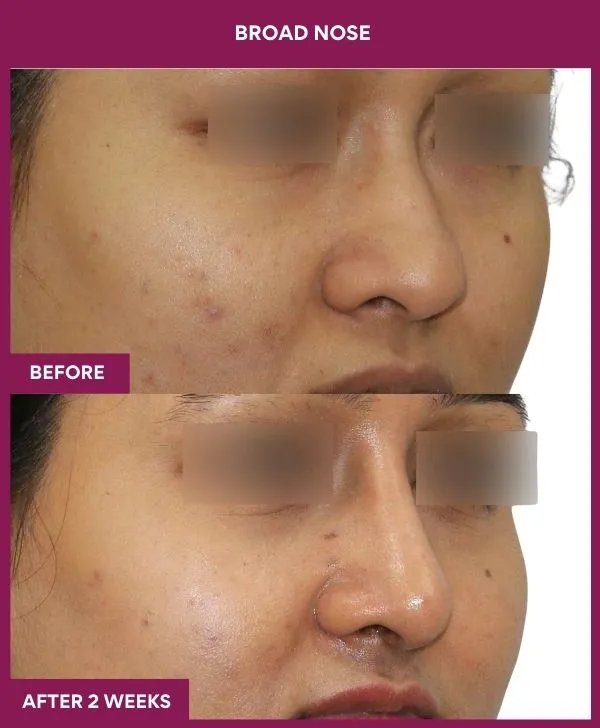
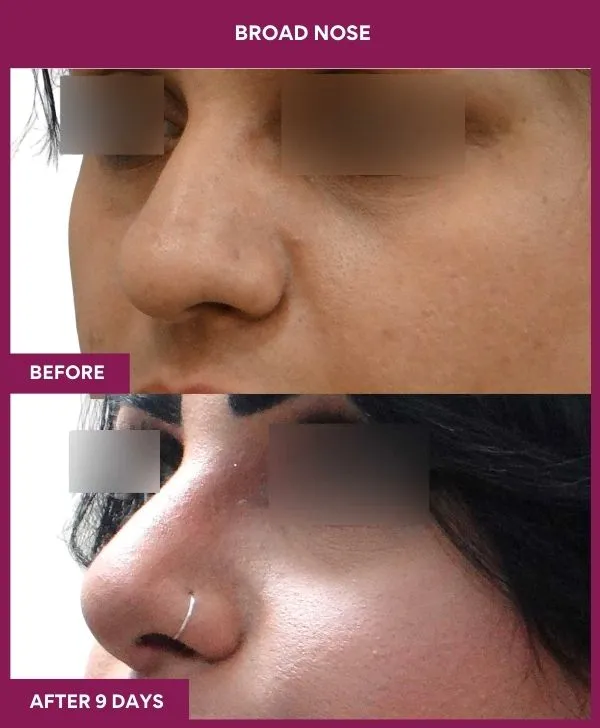
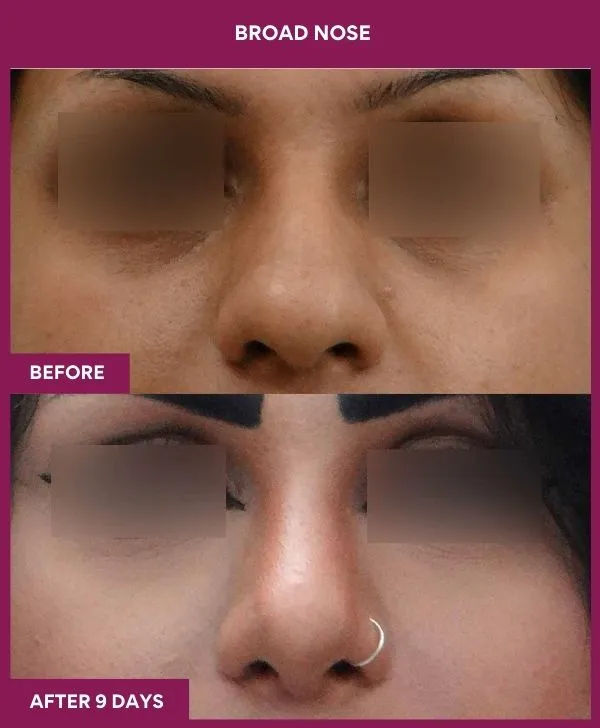
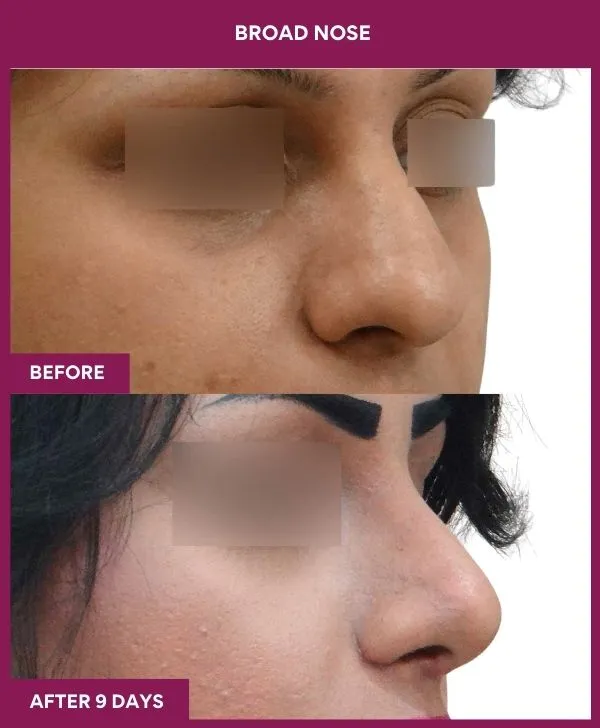
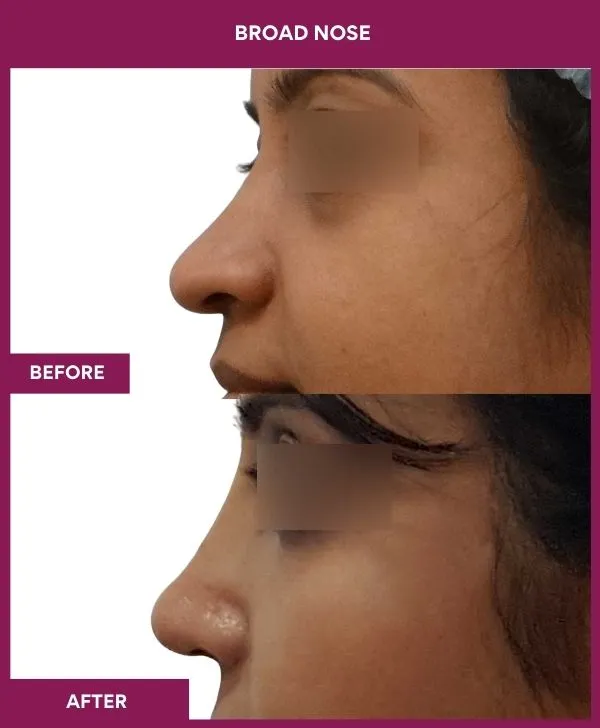
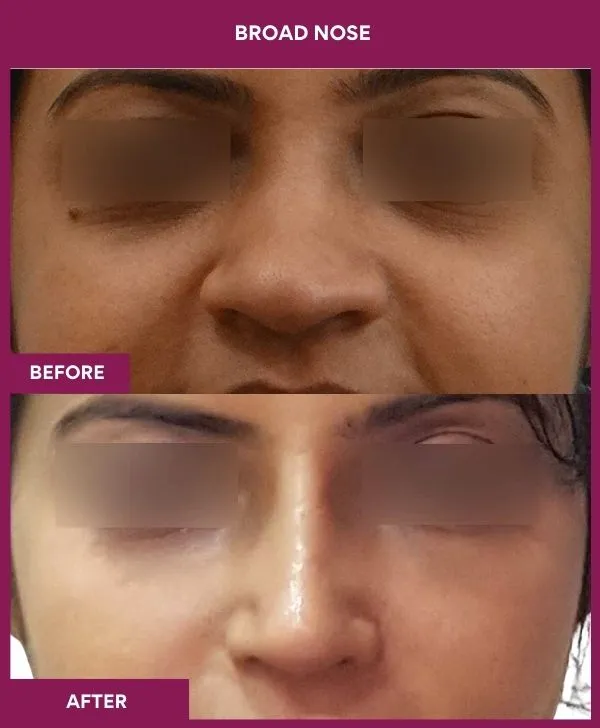
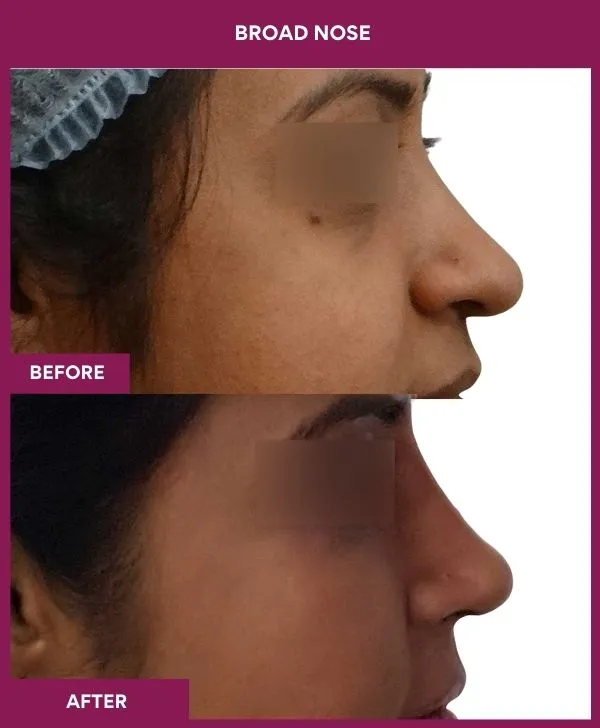
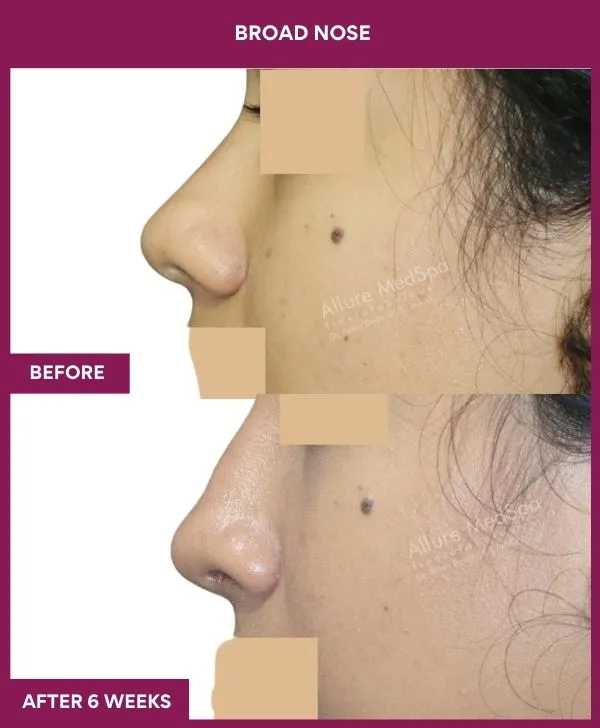
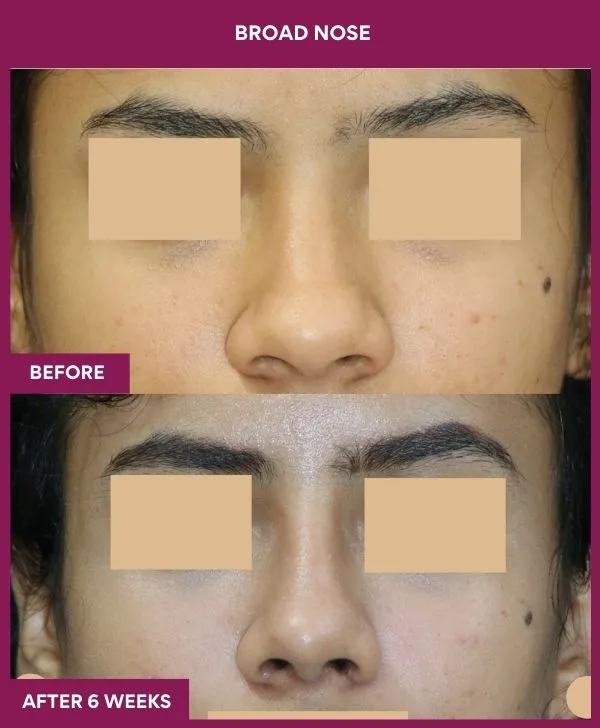
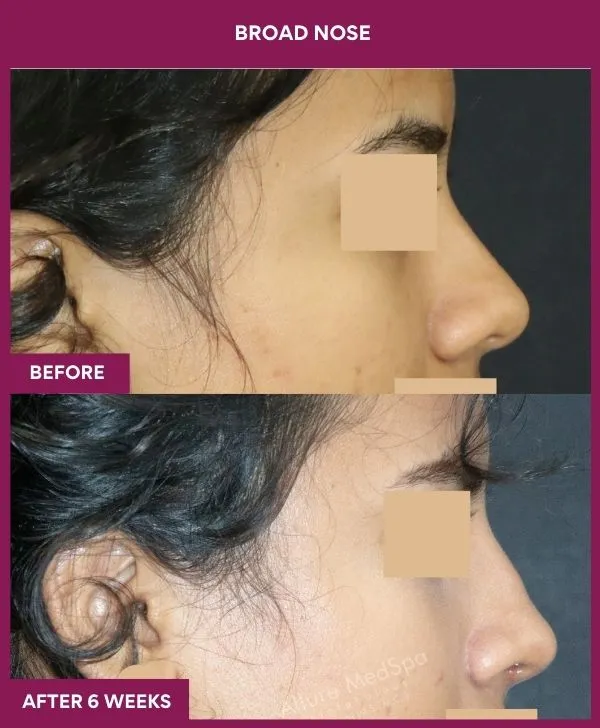
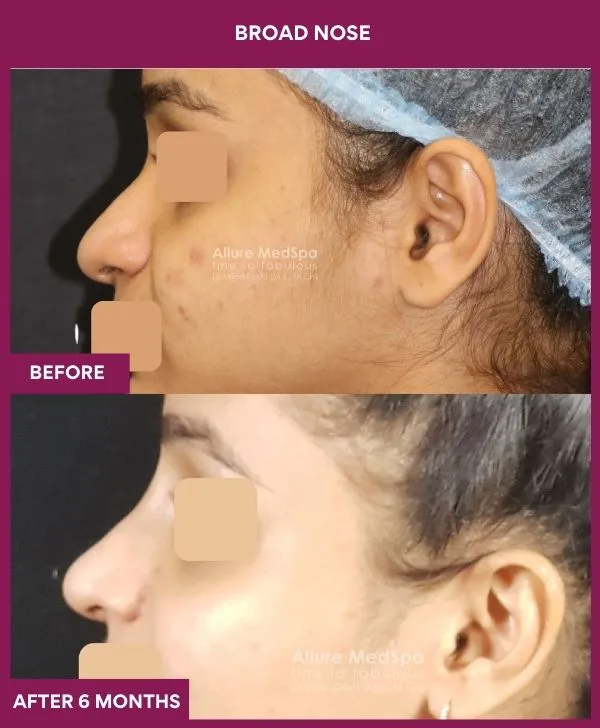
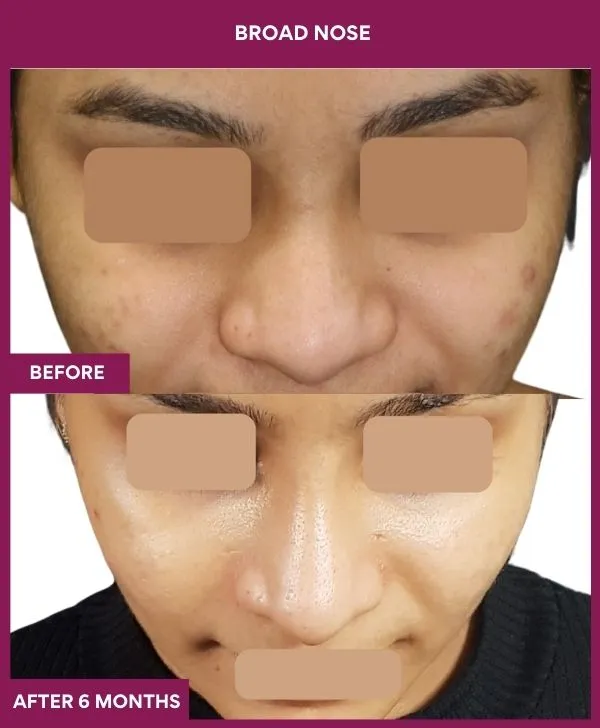
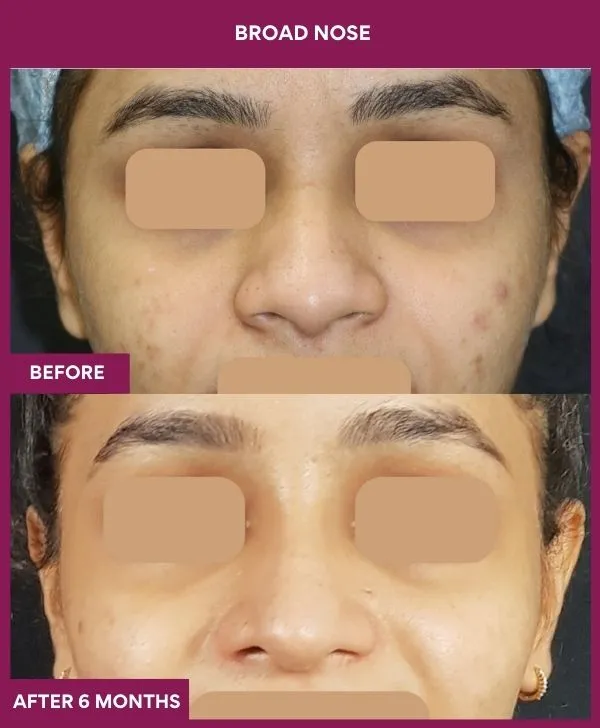
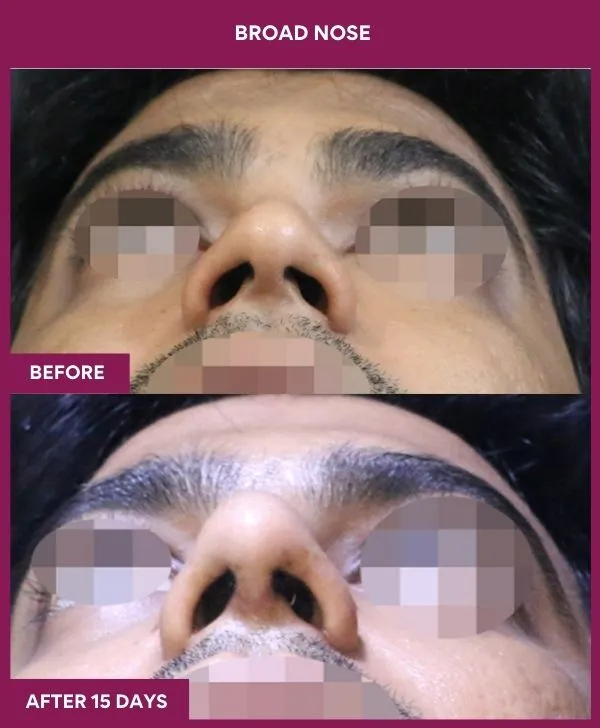
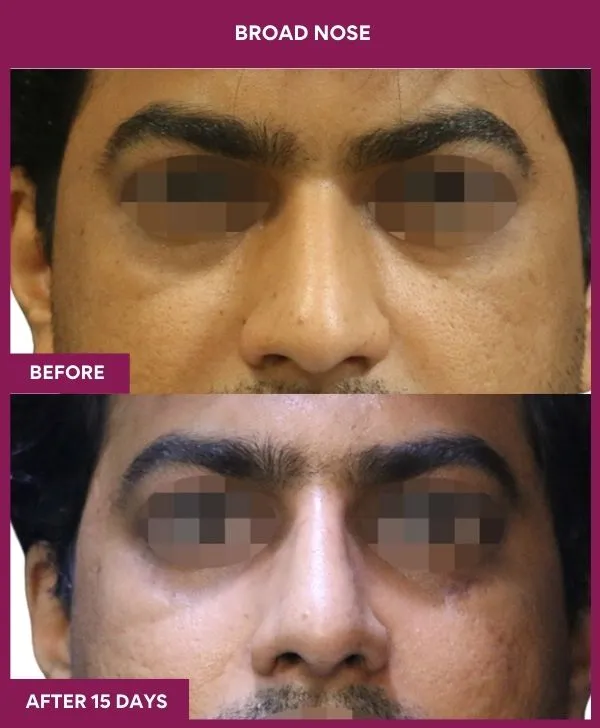
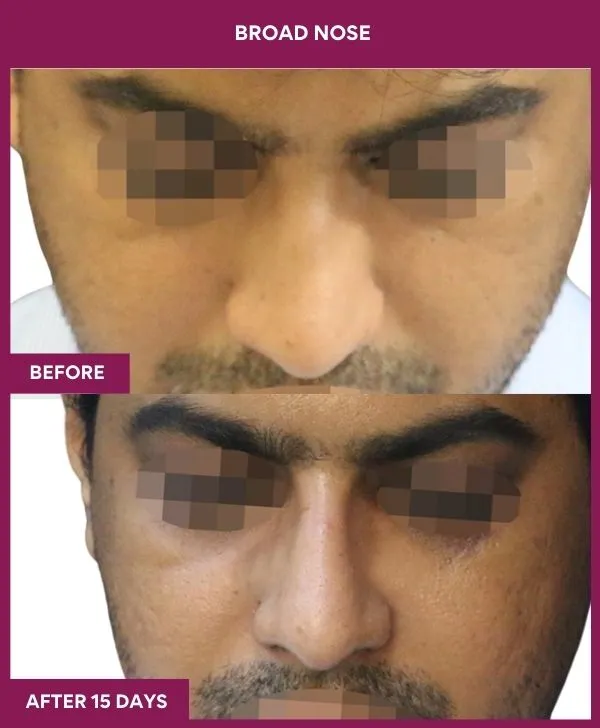
Wide Nostril Correction Surgery Before and After Results
Rhinoplasty Surgery Testimonials: Celebrities Patient

Awarded by Google.com
Rating: 4.7
Reviews: 485+

Awarded by WhatClinic.com
Rating: 4.8
Reviews: 119+

Awarded by Realself
Rating: 4.9
Reviews:453+

Awarded by Facebook
Rating: 4.6
Reviews:105+
Dr Milan Doshi and his staff are very professional and committed as the centre is highly equipped with advanced technology. I had closed rhinoplasty 4 months back and I’m seeing the results as to how it becomes successful.
Deepika Shetty
The doctor explained everything clearly and the surgery was smooth. Recovery was faster than I expected and the team was very supportive.
Rahul Mehta
Very natural results and excellent staff. From consultation to follow-up, the experience was outstanding and boosted my confidence.
Sneha Kapoor
Video: Best Rhinoplasty Surgeon explain nose reshape procedure
Dr Milan Doshi is describing the Rhinoplasty Surgery in detail with benefits, techniques, recovery, result, risk and complecations
How Are Wide Nostrils Different From a Broad Nose or Bulbous Tip?
Wide nostrils refer to the alar base and nostril opening, while a broad nose refers to overall nasal width and a bulbous tip refers to tip shape. If the whole nose looks wide, broad nose correction is the better owner; if the tip looks round or heavy, bulbous tip correction should guide planning. These can coexist, but the diagnosis should be separated first.
| Concern | Main area | Patient usually says | Owned by |
| Wide nostrils | Alar base / nostril opening | “My nostrils are too wide.” | This page |
| Alar flare | Alar rim / nostril sidewall | “My nostrils flare outward.” | This page |
| Broad nose | Overall bridge, midvault, width | “My whole nose looks wide.” | Broad nose correction |
| Bulbous tip | Nasal tip / lower third | “My tip is round or bulky.” | Bulbous tip correction |
| Low-bridge illusion | Bridge and tip projection | “Nostrils look wide because the nose looks flat.” | Dorsum / tip planning |
Do Your Nostrils Only Look Wide?
Wide nostrils may sometimes be an optical effect rather than true alar base excess. A low bridge, under-projected tip, or bulbous tip can make the nostrils appear wider, so correction should be planned only after the bridge, tip, and base are assessed together.
This is especially relevant in South-Asian and Asian noses, where a low dorsum or weak tip projection may visually exaggerate the base. In such patients, aggressive nostril reduction can make the base too narrow compared with the rest of the nose.
If rhinoplasty is being combined with alar base reduction, nostril planning is often considered after the new bridge and tip proportions are understood. This helps avoid over-reduction.
Sources: https://pubmed.ncbi.nlm.nih.gov/27261942/ · https://journals.sagepub.com/doi/10.1001/archfaci.7.2.94
Sometimes it's the bridge, not the nostrils.
Whole-nose check prevents over-cutting
Am I a Candidate for Wide Nostril Correction?
Wide nostril correction may suit patients whose main concern is nostril width, alar flare, or a broad nostril base. The best candidates want balanced refinement, understand scar placement, and do not need overall nose narrowing or tip correction as the main procedure.
Good signs for wide nostril correction
- Base-focused concern: Nostrils or alar base are the main issue.
- Visible flare: Alar rims spread outward in front or base view.
- Stable shape: The concern is not from temporary swelling.
- Balanced nose: Bridge and tip do not need major correction.
- Realistic goal: Natural reduction, not extreme narrowing.
- Scar awareness: You understand incision placement and healing.
- Ethnic respect: You want refinement without identity loss.
Needs careful counselling
| Situation | Why it matters |
| Low bridge | Nostrils may only appear wide |
| Under-projected tip | Tip support may need correction first |
| Bulbous tip | Tip page may be more relevant |
| Overall broad nose | Broad nose correction may be needed |
| Thick or pigmented skin | Scar visibility risk may be higher |
| Over-narrowing desire | Can create notching or stenosis |
| Breathing issue | External valve function must be checked |
How Is Wide Nostril Correction Performed?
Wide nostril correction is performed using alar base reduction techniques such as Weir excision, nostril sill excision, combined wedge-and-sill excision, or alar cinch sutures. The selected method depends on whether the main issue is flare, base width, nostril size, or combined alar imbalance.
Alar base reduction is a small-area surgery, but not a casual one. A few millimetres can change nostril shape, scar position, facial balance, and symmetry, so planning must be conservative, accurate, and customised to the patient’s facial proportion, nostril shape, smile movement, and Indian facial anatomy.
| Technique | Purpose | Used for | Key caution |
|---|---|---|---|
| Weir excision / alar wedge | Reduces alar flare and lobule width | Excessive flare on front view | Avoid notching or unnatural crease |
| Nostril sill excision | Reduces interalar distance and sill width | Wide nostril floor or wide base | Avoid nostril stenosis |
| Combined wedge + sill excision | Reduces both flare and base width | Mixed flare + wide nostril size | Preserve natural curve |
| Alar cinch suture | Pulls alae inward without external excision | Selected flare or orthognathic context | Effect may be limited |
| Refined incision designs | Help hide scars, preserve alar curve | Selected ethnic/thick-skin cases | Technique-specific |
| With rhinoplasty | Matches base with new tip/dorsum | When bridge or tip is also corrected | Usually planned after tip/dorsum changes |
Sources: PubMed 32812083 · PubMed 34782134 · SAGE Journals – Alar Base Surgery
Millimetres decide this surgery — plan them well.
Weir, sill or suture — explained
Will There Be a Scar After Wide Nostril Correction?
Wide nostril correction usually places scars in the alar-facial crease, nostril sill, or natural nostril-base shadow to keep them discreet. Scar visibility still varies by skin type, pigment, incision design, wound tension, healing biology, and aftercare, so scar counselling should be honest.
No incision should be promised completely invisible, but careful placement can make the scar very subtle in many patients. The nostril base is visible in conversation, smiling, and close-view photos, which is why incision placement and conservative tissue removal matter.
Thicker or more pigmented skin may have a higher risk of hyperpigmentation, hypertrophic scarring, or delayed scar maturation. Over-reduction can also create alar rim notching, step-off deformity, stenosis, or asymmetry.
| Issue | What it means |
|---|---|
| Visible scar | Scar may be noticeable depending on healing |
| Hyperpigmentation | Scar may darken in some skin types |
| Hypertrophic scar | Scar may thicken or raise |
| Alar notching | Nostril rim may look indented |
| Step-off deformity | Alar-base curve looks interrupted |
| Nostril stenosis | Nostril opening becomes too narrow |
| Asymmetry | Two sides heal or sit differently |
Source: PMC11578213
The scar question deserves a straight answer.
Honest counselling, Indian skin expertise
What Is Recovery Like After Wide Nostril Correction?
Recovery is usually focused on swelling, incision healing, scar maturation, and nostril symmetry. Many patients return to normal daily activity within about 1–2 weeks, while scar maturation and subtle nostril-base refinement continue over several months. This page gives a summary only — for full aftercare, sleeping position, nasal care, and sun protection, see the rhinoplasty recovery timeline.
| Recovery point | Summary |
|---|---|
| Early healing | Swelling, tightness, and incision care |
| Daily activity | Often around 1–2 weeks |
| Scar maturation | Continues gradually over months |
| Final scar appearance | May take 6–12 months |
Sources: PubMed 17398339 · PMC11578213
What Are the Risks and When Should You Seek Urgent Care?
Wide nostril correction has risks such as bleeding, infection, delayed healing, visible scarring, asymmetry, over-correction, under-correction, alar notching, nostril stenosis, and breathing change. Urgent review is needed for rapidly increasing swelling, severe pain, fever, discharge, or new obstruction.
| Risk | Meaning |
|---|---|
| Bleeding | Early or delayed bleeding |
| Infection | Fever, pain, redness, discharge |
| Delayed healing | Incision takes longer to settle |
| Visible scar | Scar may remain noticeable |
| Asymmetry | Nostril sides may heal differently |
| Over-correction | Base becomes too narrow |
| Under-correction | Width remains more than desired |
| Alar notching | Rim looks indented or cut |
| Nostril stenosis | Nostril opening becomes narrowed |
| Breathing change | External valve may be affected |
Seek immediate care
| Red flag | Why it matters |
|---|---|
| Rapidly increasing swelling | Bleeding or infection concern |
| Severe pain | Not routine healing |
| Fever | Infection must be ruled out |
| Purulent discharge | Possible infection |
| New or worsening obstruction | Airway concern |
| Spreading redness | Infection concern |
| Wound opening | Delayed healing concern |
| Chest pain or breathlessness | Emergency medical care |
Sources: Cleveland Clinic – Rhinoplasty · PMC11578213
What Is the Cost of Wide Nostril Correction in Mumbai?
Isolated alar base reduction (wide nostril correction) at Allure Medspa is a guide range of ₹70,000–₹1,80,000, with 5% GST extra. When alar base reduction is combined with rhinoplasty, it is quoted as part of the full surgical plan rather than separately. This is a guide range, not a final quote — final cost is confirmed only after consultation. See the rhinoplasty cost guide for the fuller breakdown.
Small surgery, clear price — ₹70,000 up.
Combined-with-rhinoplasty quotes explained
Why Choose Dr. Milan Doshi for Wide Nostril Correction?
Patients choose Dr. Milan Doshi for wide nostril correction because his planning combines rhinoplasty experience, Indian facial-proportion judgement, scar-conscious incision design, conservative reduction, and a philosophy of natural refinement. He is a plastic and cosmetic surgeon (MCh, MS) with 27+ years of experience, 16,000+ surgeries, and 1,500+ rhinoplasties.
The goal is a balanced base, not over-reduction. A natural result should look like refinement, not a visibly narrowed or operated nostril — everyone notices better proportion, but no one knows it was surgery.
| Credential | Detail |
|---|---|
| Qualification | MCh, MS |
| Specialty | Plastic & cosmetic surgery |
| Experience | 27+ years |
| Surgeries | 16,000+ |
| Rhinoplasties | 1,500+ |
| Memberships / roles | ISAPS, IAAPS, MUHS |
Read his full profile and credentials on the Dr. Milan Doshi profile page.
Why expertise matters
- Diagnosis: True wide base must be separated from optical width.
- Scar planning: Incisions must respect natural creases.
- Symmetry: Both nostrils must be balanced carefully.
- Restraint: Over-reduction can create notching or stenosis.
- Ethnic identity: Natural features should be respected.
- Timing: Alar work must match tip and bridge changes.
- Airway: External valve function must be protected.
Frequently Asked Questions About Wide Nostril Correction
These questions usually focus on whether nostrils can be reduced, whether scars show, whether breathing changes, and whether the concern is different from broad nose or bulbous tip. The safest answer is conservative, identity-respecting reduction with careful scar placement.
Q1. Is wide nostril correction the same as broad nose correction?
Ans. No. Wide nostril correction treats the alar base and nostril opening. Broad nose correction treats overall nasal width, including the bridge, bones, and midvault. Some patients need both, but they are different surgical problems.
Q2. Can wide nostrils be made smaller?
Ans. Yes, wide nostrils can be reduced using alar base reduction techniques such as Weir excision, sill excision, or combined wedge-and-sill excision. The result depends on anatomy, surgical planning, scar behaviour, and healing.
Q3. Will there be a visible scar?
Ans. Scars are usually placed in the alar-facial crease or nostril sill so they are less obvious. Scar visibility depends on skin type, pigmentation, incision design, wound tension, healing, and aftercare. Thick or darker skin may need extra counselling.
Q4. Can alar base reduction be done alone?
Ans. Yes, it can be done alone when the concern is isolated nostril width or flare. It can also be combined with rhinoplasty when the bridge, tip, or overall nose proportions need correction together.
Q5. Can nostril reduction affect breathing?
Ans. Most patients do not need airway correction for nostril reduction alone, but over-narrowing can affect the external nasal valve and cause obstruction. Functional assessment and conservative planning are important before reducing the base.
Q6. Is wide nostril correction the same as bulbous tip correction?
Ans. No. A bulbous tip is a tip-definition problem, while wide nostrils are an alar-base problem. They may coexist, but the techniques differ — tip surgery reshapes the tip, alar base reduction changes nostril-base width or flare.
Q7. How long is recovery after wide nostril correction?
Ans. Many patients return to normal daily activity within about 1–2 weeks. Swelling settles over weeks, and scars mature gradually over several months. Final scar appearance may take 6–12 months.
Q8. Can wide nostril correction be overdone?
Ans. Yes. Over-reduction can create a pinched base, alar notching, nostril stenosis, asymmetry, or an unnatural nostril shape. Conservative planning is especially important in ethnic noses where identity should be preserved.
Q9. Does wide nostril correction work for Indian noses?
Ans. Yes, but planning must respect Indian and South-Asian facial features. Wider alar bases and thicker skin are common, so the goal should be balanced, natural reduction rather than excessive narrowing that changes ethnic character.
Q10. If my bridge is low, do I still need nostril reduction?
Ans. Not always. A low bridge or under-projected tip can make nostrils look wider. In some cases, bridge augmentation or tip refinement may reduce the apparent base width and reduce the need for aggressive alar base reduction.
Q11. What is the cost of wide nostril correction in Mumbai?
Ans. The guide range for isolated alar base reduction is around ₹70,000–₹1,80,000 with 5% GST extra. If combined with rhinoplasty, pricing changes. The final quote is given only after consultation.
Q12. When should I seek urgent help after nostril reduction?
Ans. Seek urgent help for rapidly increasing swelling, severe pain, fever, pus-like discharge, wound opening, spreading redness, or new/worsening obstruction. These symptoms are not routine healing and need prompt review.
Your nostrils, your answers — one consult away.
Personal assessment with our specialist, ₹1500