Crooked Nose Correction in Mumbai: A Straighter, Balanced Nose That Breathes Well
Indian Board Certified Plastic Surgeon
M.CH, MS, ISAPS Mentor
16000+ Cosmetic Surgeries
1500+ Rhinoplasty Surgeries
Crooked nose correction straightens a nose that sits off the facial midline — whether it curves, tilts, bends in two directions or points away at the tip — by realigning the bones, septum and cartilage that are pulling it sideways. At Allure Medspa Mumbai, Dr. Milan Doshi assesses shape and breathing together, so the nose ends up straighter, stable and natural-looking, not forced.
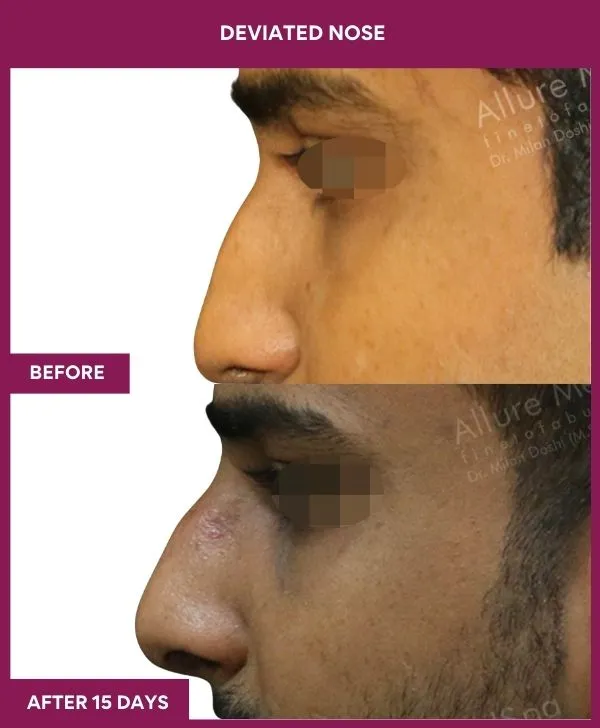
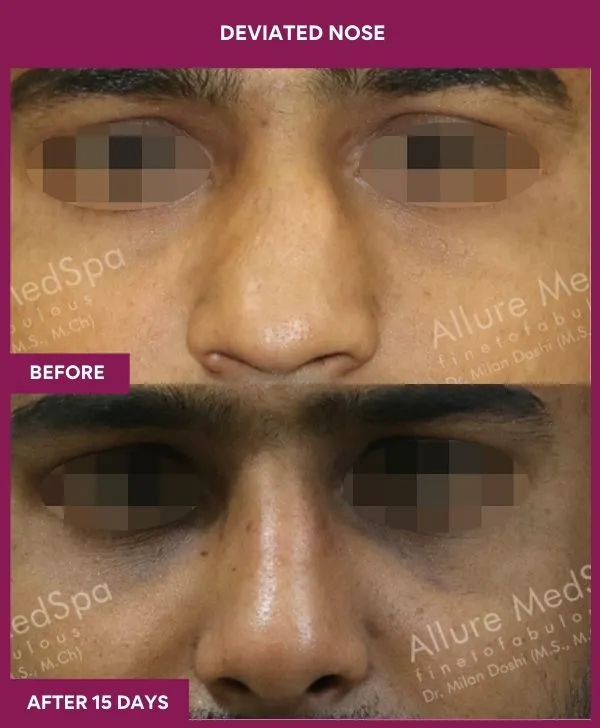
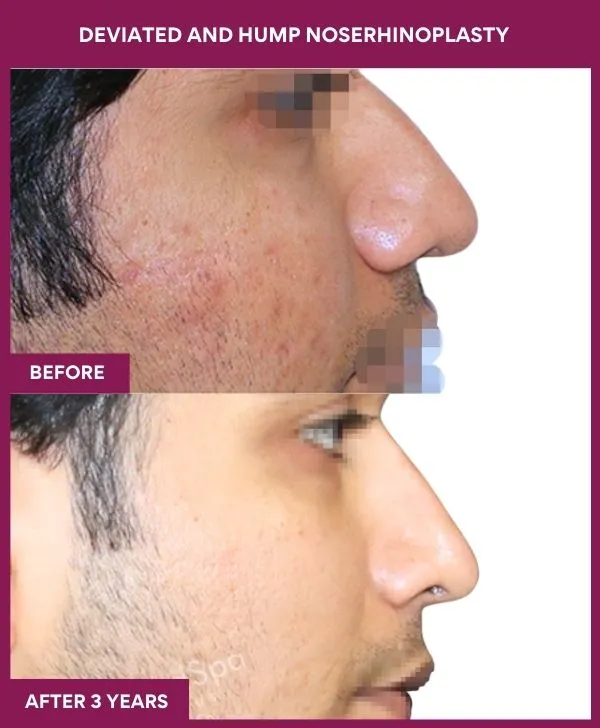
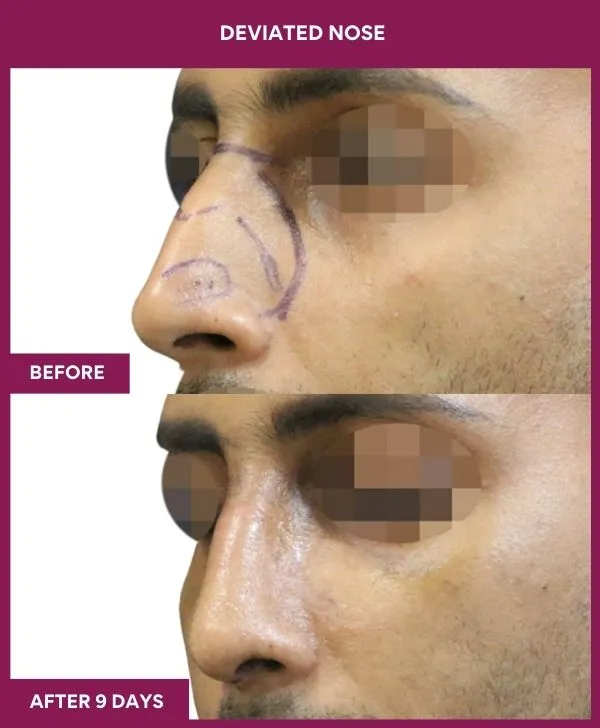
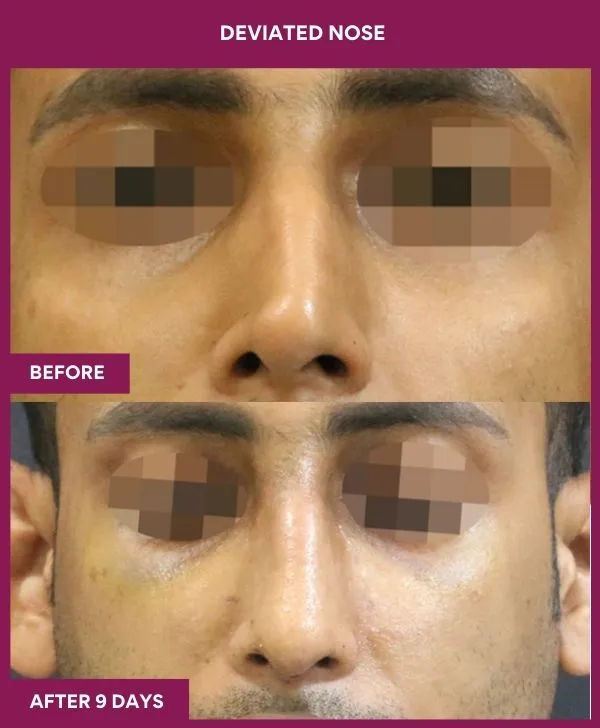
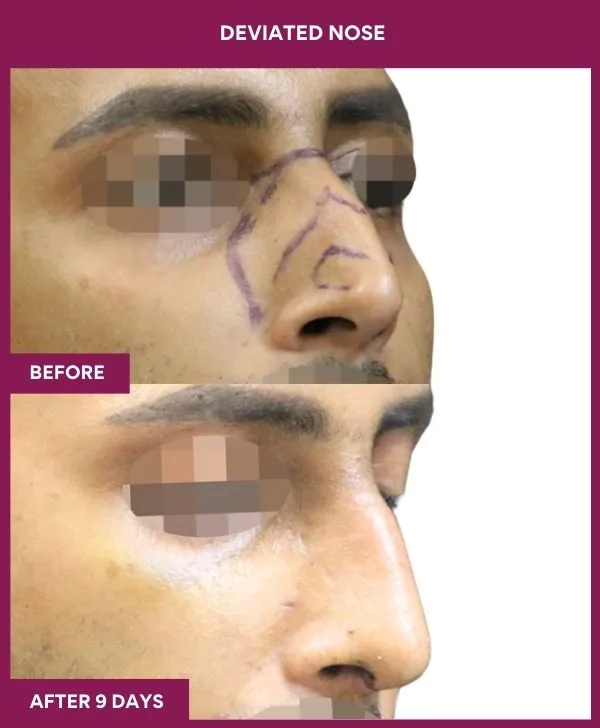
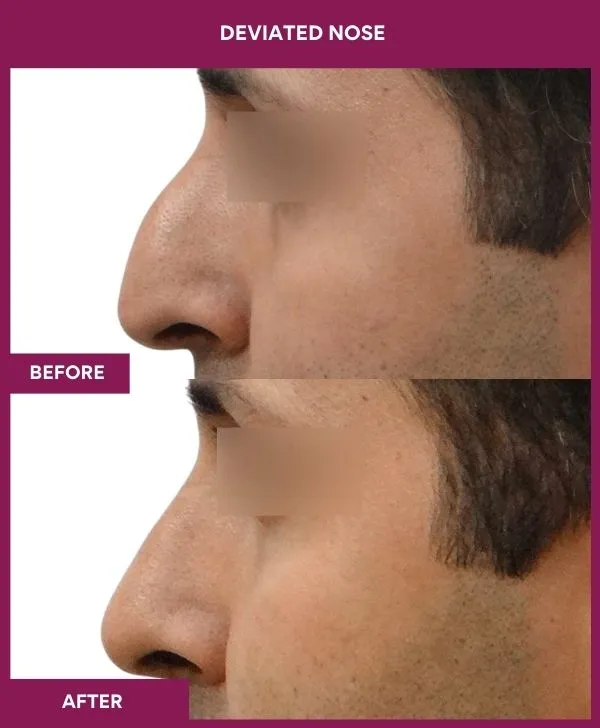
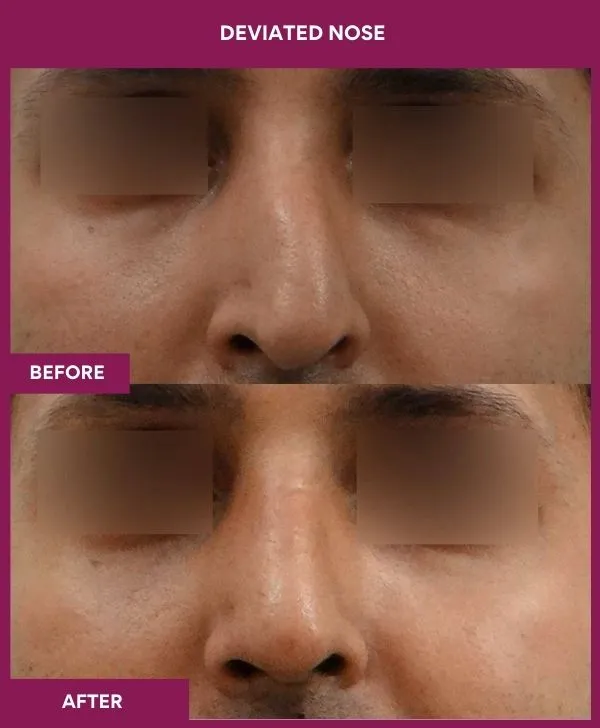
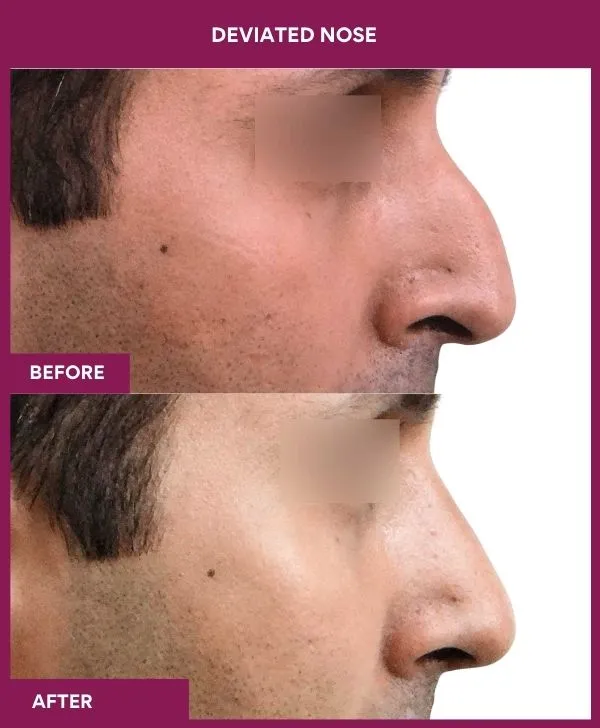
Crooked Nose Correction Rhinoplasty Before And After Images
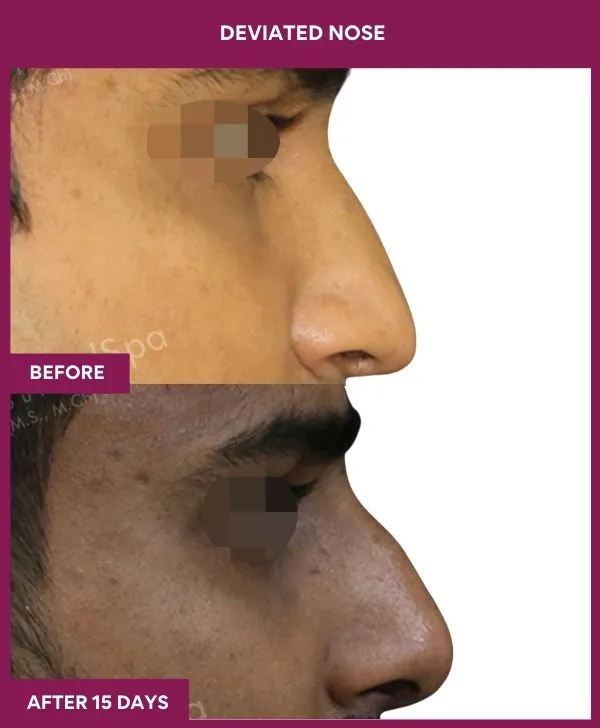
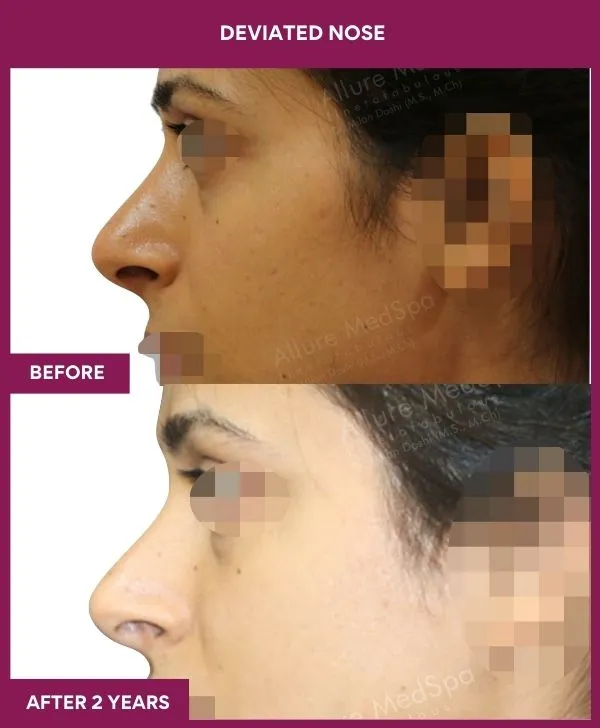
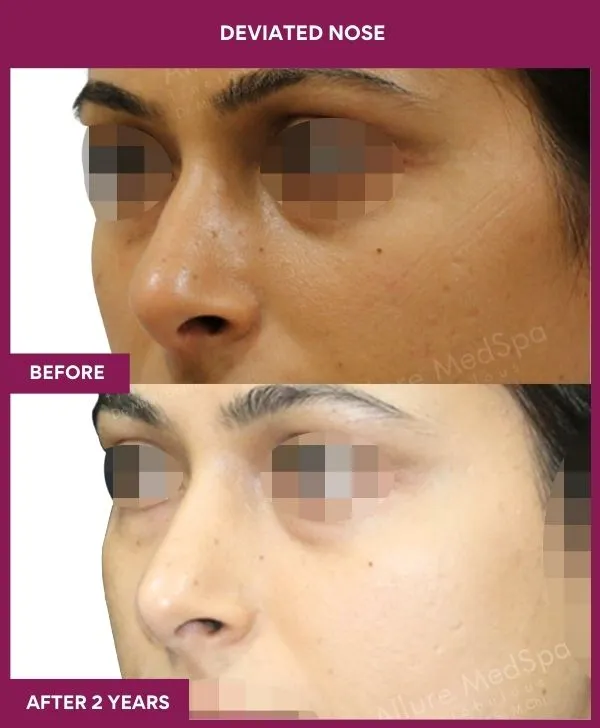
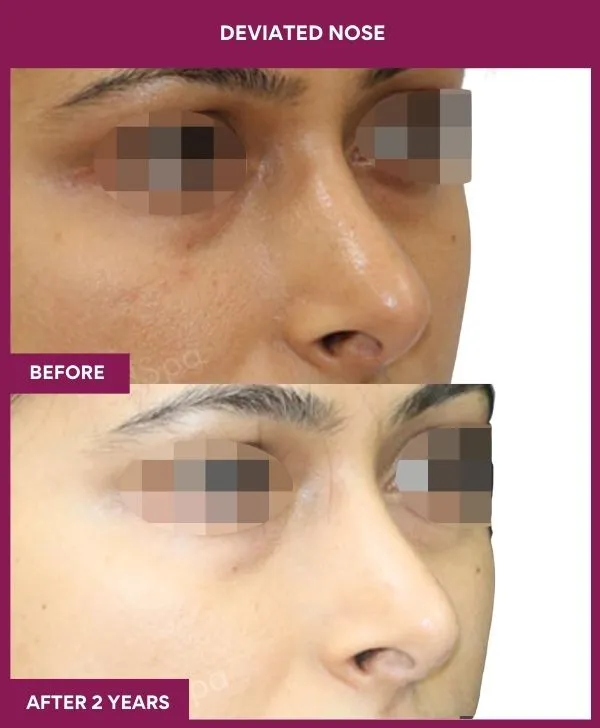
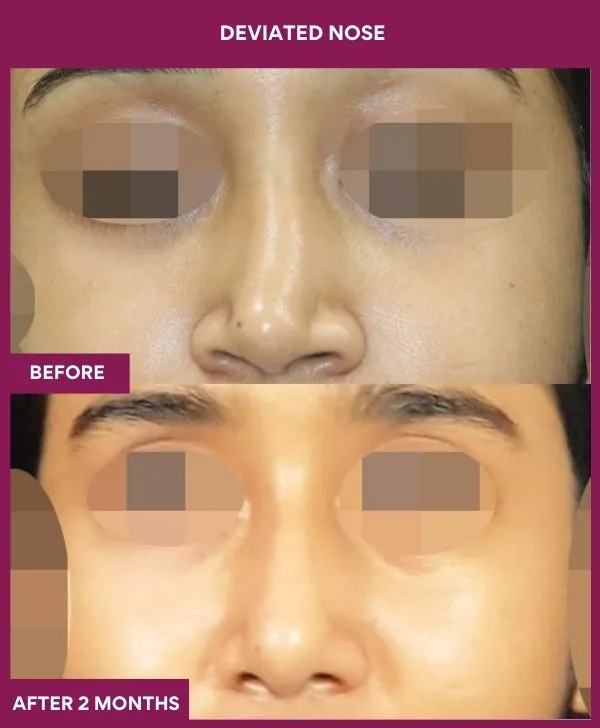
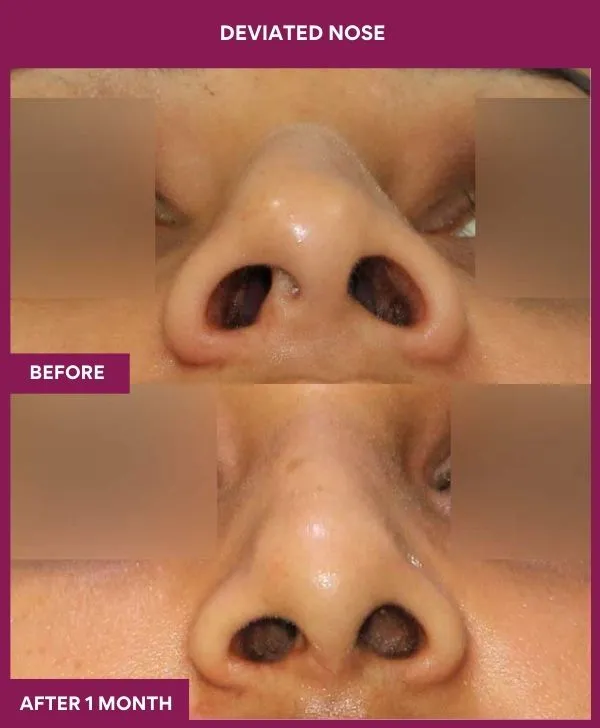
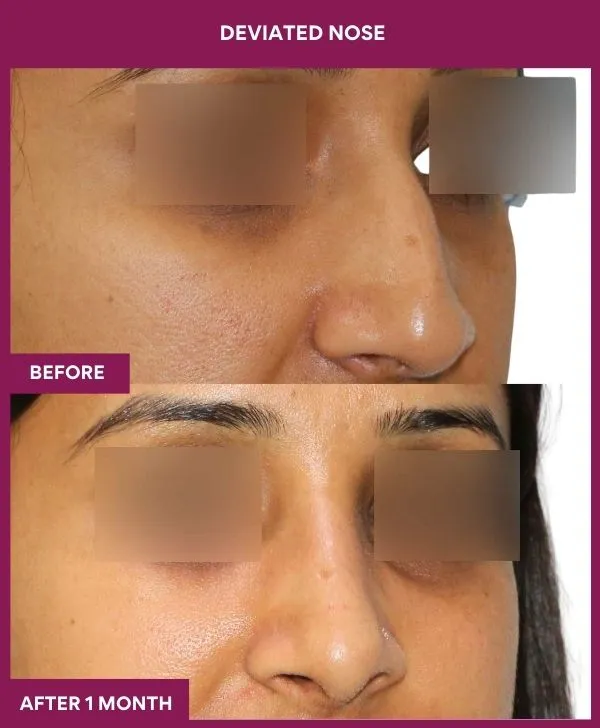
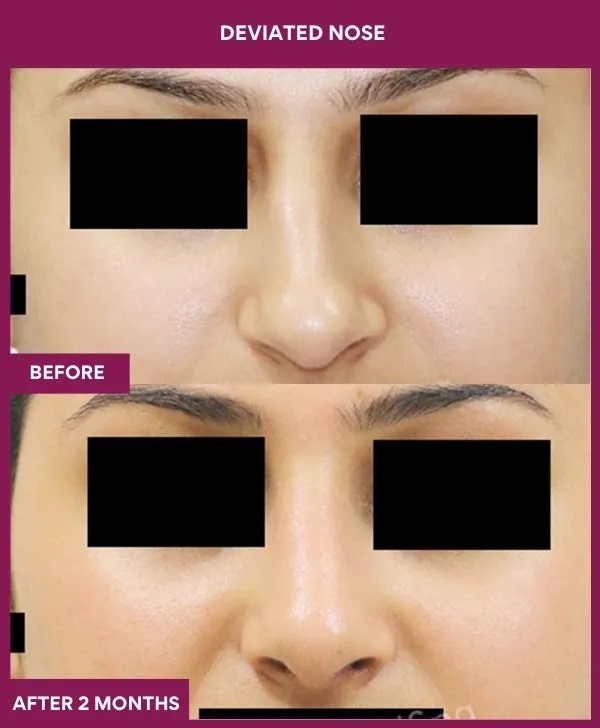
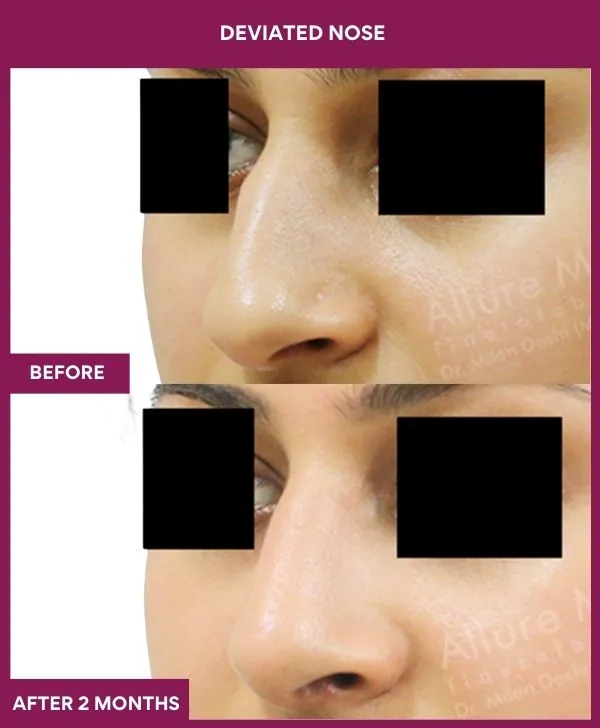
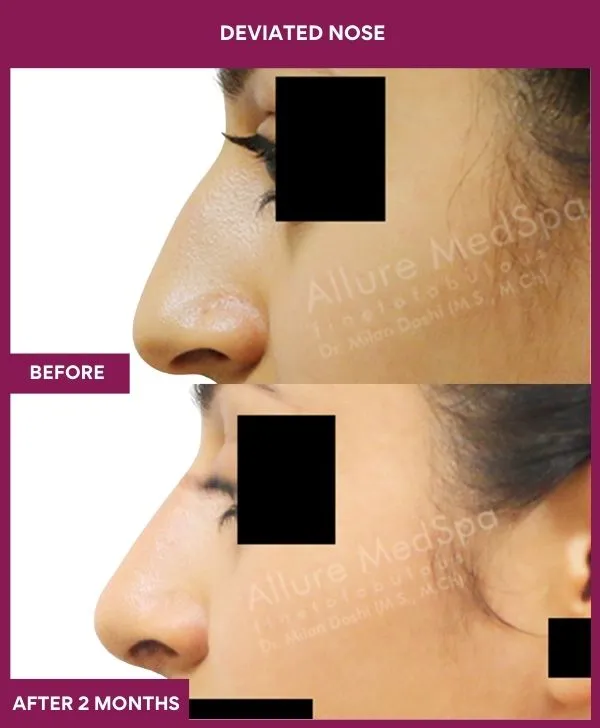
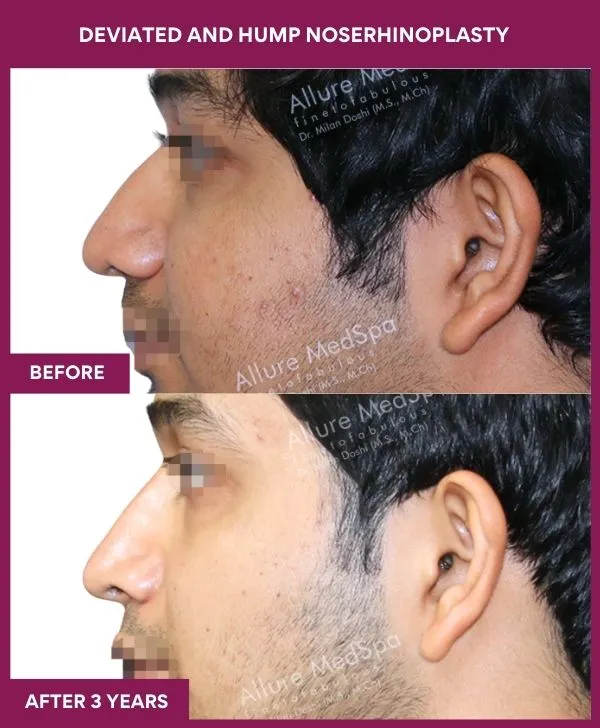
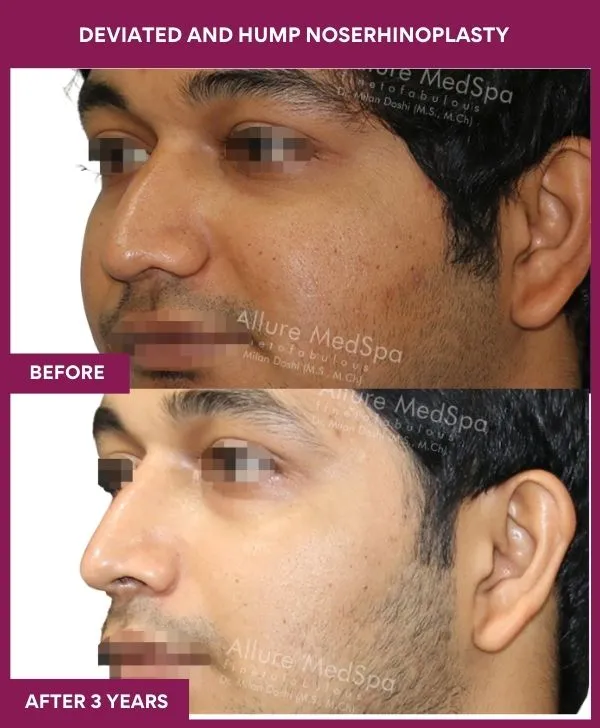
Rhinoplasty Surgery Testimonials: Celebrities Patient

Awarded by Google.com
Rating: 4.7
Reviews: 485+
Awarded by WhatClinic.com
Rating: 4.8
Reviews: 119+
Awarded by Realself
Rating: 4.9
Reviews:453+

Awarded by Facebook
Rating: 4.6
Reviews:105+
Dr Milan Doshi and his staff are very professional and committed as the centre is highly equipped with advanced technology. I had closed rhinoplasty 4 months back and I’m seeing the results as to how it becomes successful.
Deepika Shetty
The doctor explained everything clearly and the surgery was smooth. Recovery was faster than I expected and the team was very supportive.
Rahul Mehta
Very natural results and excellent staff. From consultation to follow-up, the experience was outstanding and boosted my confidence.
Sneha Kapoor
Video: Best Rhinoplasty Surgeon explain nose reshape procedure
Dr Milan Doshi is describing the Rhinoplasty Surgery in detail with benefits, techniques, recovery, result, risk and complecations
Am I a Candidate?
(4 quick questions)
Stable, visible deviation? You likely qualify.
Get My AssessmentStraight answers about straightening
Quick Facts About Crooked Nose Correction
TIME REQUIRED
2–3 hours
ANESTHESIA
General
HOSPITAL STAY
Day-care or 1 night
PAIN LEVEL
Mild–moderate
BACK TO WORK
7–10 days
RESULTS LAST
Permanent
SUCCESS RATE
97–98%
COMPLICATIONS
Under 2-3%
How Much Does Crooked Nose Correction Cost in Mumbai?
Crooked nose correction in Mumbai starts from ₹1,20,000 to ₹2,80,000 and varies with whether the deviation is in the bone, septum, cartilage or all three, whether breathing (functional) work is combined, whether grafts are needed and from where, the open or closed approach, and whether the case is primary, post-traumatic or revision. A final quotation follows examination and a written surgical plan — it cannot be given accurately by phone or from photographs.
| Crooked nose correction scope | Indicative price range |
|---|---|
| Bony deviation only (osteotomies) | ₹1,20,000 – ₹1,60,000 |
| Crooked nose + septoplasty (septorhinoplasty) | ₹1,50,000 – ₹2,10,000 |
| Tip deviation correction (cartilage realignment + strut) | ₹1,40,000 – ₹1,90,000 |
| Post-traumatic crooked nose (bone + septum + grafts) | ₹1,80,000 – ₹2,50,000 |
| Severe C / S-shaped deviation with extracorporeal septoplasty | ₹2,00,000 – ₹2,80,000 |
| Crooked nose with functional valve repair (spreader / batten grafts) | ₹1,80,000 – ₹2,60,000 |
| Revision crooked nose correction (ear / rib cartilage) | ₹2,20,000 – ₹2,80,000+ |
Get your exact quote & surgery plan
Share your details — our team responds within working hours with cost, EMI options and next steps.
Most Common Question People Ask
Q1. Is a crooked nose the same as a deviated septum?
Ans. No. A crooked nose is visible external asymmetry, while a deviated septum is internal septal displacement that can block breathing. They often occur together, so some patients need septorhinoplasty rather than appearance-only correction.
Q2. How much does crooked nose correction cost in Mumbai?
Ans. The guide range is ₹1,20,000–₹2,80,000 plus 5% GST. Final cost depends on bony deviation, septal work, open or closed approach, grafting, facility charges, revision status and whether functional documentation is required. A written quotation follows examination.
Q3. Can a crooked nose be made completely straight?
Ans. Many crooked noses can be made noticeably straighter and more balanced, but exact symmetry cannot be promised. Cartilage memory, skin thickness, old trauma, facial asymmetry, graft behaviour and healing variability all affect the final result.
Q4. Can crooked nose surgery improve breathing?
Ans. Yes, if blockage is caused by septal deviation, internal valve collapse or structural narrowing. In those cases septoplasty, spreader grafts or functional septorhinoplasty are included. Pure cosmetic straightening may not improve airflow.
Q5. Is post-traumatic crooked nose surgery different?
Ans. Often yes. A crooked nose after trauma may involve old fractures, septal deviation, scar tissue, bony pyramid shift or cartilage deformity. Correction may need osteotomy, septal reconstruction, grafting or functional airway planning.
Q6. How long before I see the result?
Ans. Major swelling and bruising often improve within 2–4 weeks, but meaningful contour takes longer. Final straightness is usually judged after most swelling and tissue settling — often around 9–12 months, or longer in complex cases.
Q7. Will it look natural?
Ans. A natural result depends on straightening the actual structure — bone, septum, cartilage — rather than camouflaging it, and on keeping the nose in proportion to a face that is itself slightly asymmetric. The aim is a straighter version of your own nose, not a different one. Results vary between individuals and cannot be guaranteed.
Why Choose Dr. Milan Doshi?
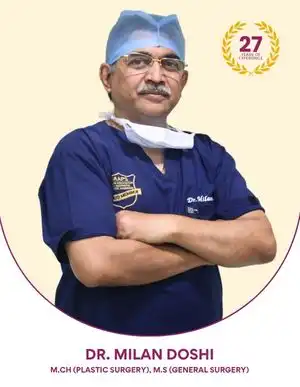
Dr. Milan Doshi, MCh, MS — Indian board-certified plastic surgeon with 27+ years in aesthetic surgery and 1,500+ rhinoplasties, including post-traumatic and revision straightening. ISAPS mentor, trusted by patients from 70+ countries. Consults at Andheri West; surgeries at the NABH-accredited surgical centre, Goregaon West.
Read his full profile and credentials → About Dr Milan Doshi
🩺 Dr Doshi Note: “Crooked nose correction is not just ‘straightening the nose.’ I first study whether the deviation is from bone, septum, cartilage, tip, airway support, or old trauma. The aim is a straighter-looking, stable, natural nose — without sacrificing breathing or making the correction look forced.”
The Complete Guide About Crooked Nose Correction
What Is Crooked Nose Correction?
Crooked nose correction is a form of structural rhinoplasty that brings a nose deviated away from the facial midline back towards centre. A crooked nose is visible external deviation of the nasal bridge, tip or whole nasal framework; correction may involve bones, septum, upper cartilages, lower cartilages or tip support, because the visible curve usually reflects deeper structural asymmetry, not skin position alone.
A crooked nose may look C-shaped, S-shaped, tilted to one side, or mainly deviated at the tip. Some patients notice it most in selfies; others notice it only from the front view or after trauma. The key surgical question is not only “how crooked does it look?” but “which structures are pulling it off-centre?”
This distinction matters. Camouflaging a bend with grafts on the concave side leaves the underlying forces in place and the nose tends to drift back. Straightening the actual structure — repositioning the bones, correcting the septum, realigning the cartilage — is what gives a stable result.
Patterns of crooked nose
| Pattern | How it looks | Common structural issue |
|---|---|---|
| C-shaped deviation | Nose curves in one broad direction | Bony and cartilaginous framework bending |
| S-shaped deviation | Nose bends in two directions | Complex septal and cartilage deformity |
| I-shaped / tilted nose | Whole nose shifts to one side | Bony pyramid and septal displacement |
| Tip deviation | Tip points away from midline | Lower lateral cartilage or caudal septal issue |
| Post-traumatic crooked nose | Nose appears bent after injury | Fracture, septal deviation, cartilage distortion |
| Revision crooked nose | Crookedness after previous surgery | Scar tissue, graft shift, cartilage memory |
What causes a crooked nose?
Common causes include trauma, childhood injury, untreated nasal fracture, developmental asymmetry, congenital deformity, previous rhinoplasty, previous septoplasty or uneven cartilage growth. Trauma is frequently reported as a major cause in clinical series, but the exact cause should be confirmed during consultation. A childhood knock that was never treated is a very common story — the nose grew around the injury.
Is crooked nose correction cosmetic or reconstructive?
| Type | Main purpose | Common example |
|---|---|---|
| Cosmetic (aesthetic) | Straighten a visibly deviated nose that breathes normally | Developmental C-shaped deviation without obstruction |
| Functional / reconstructive | Restore breathing and structure after fracture, septal deviation or failed surgery | Post-traumatic septorhinoplasty with valve repair |
Many crooked noses sit in both columns. Appearance-only correction should not be assumed to be covered by health insurance; where documented nasal obstruction needs medically necessary septoplasty or functional correction, the functional component may be considered by insurers depending on policy wording and pre-authorisation.
Synonyms for crooked nose correction
Patient terms: deviated nose surgery, bent nose surgery, twisted nose correction, nose straightening surgery, broken nose correction, off-centre nose surgery
Medical terms: deviated nose rhinoplasty, septorhinoplasty, nasal osteotomy, septal reconstruction, extracorporeal septoplasty, post-traumatic rhinoplasty, functional rhinoplasty
Sources: PMC6057124 · PMC7700863
Does Your Nose Look Off-Centre in Every Photo?
Many people describe the same experience: the nose looks fine in the mirror, but in photographs and video calls it seems to lean, the bridge curves, or the tip points to one side — and sometimes one nostril has always felt harder to breathe through. That gap between what you feel and what the camera shows is real and worth discussing.
Three questions patients actually ask at consultation:
- “I broke my nose years ago and it healed fine — why does it still look bent?”
- “Is my nose crooked or is my whole face a bit uneven?”
- “If you straighten the outside, will the inside breathe better too?”
These concerns do not automatically mean surgery is needed. Mild deviation on an already slightly asymmetric face may be best left alone. A nose that breathes poorly needs an airway plan, not just cosmetic straightening. The useful question is not “can it be made perfectly straight?” but “which structures are off-centre, and how much can be safely corrected?”
Global and Indian trends
Rhinoplasty remains among the most frequently performed cosmetic surgical procedures worldwide and one of the top facial procedures in India. Crooked and post-traumatic noses are a large share of that demand — sports injuries, road accidents and untreated childhood fractures are common in the Indian patient history — which is why straightening is planned as structural surgery combining cosmetic and functional goals.
What Are the Benefits of Crooked Nose Correction?
The main benefits of crooked nose correction are a straighter bridge that follows the facial midline, a tip that points forward rather than sideways, restored symmetry between the two sides of the nose, and — when the septum and valves are treated — improved breathing. Because bone and septum are realigned rather than camouflaged, the correction is structural and long-lasting.
Cosmetic benefits
- A straighter dorsal line — bones repositioned symmetrically so the bridge runs from brow to tip along the midline.
- Centred tip — a deviated tip realigned with cartilage sutures and support, so the nose no longer “points” to one side.
- Symmetric nostrils and sidewalls — when the caudal septum is corrected, nostril shape often evens out too.
- Correction of an old injury — a fracture that healed crooked can be re-broken in a controlled way and set straight.
- Better facial balance in photographs — the nose stops drawing the eye off-centre.
- Preserved identity — the aim is your nose, straighter; no one should be able to tell it was operated.
Functional benefits (when airway work is included)
- A deviated septum straightened in the same operation (septorhinoplasty) can relieve one-sided blockage.
- Spreader and batten grafts open a narrowed internal or external valve.
- Restoring sidewall support reduces collapse on breathing in — and reduces snoring where nasal blockage contributes.
Which Problems Can Crooked Nose Correction Correct?
Crooked nose correction mainly treats bony deviation, septal deviation, middle-vault bending or collapse, tip deviation and post-traumatic deformity, alone or combined. It does not reliably correct: facial asymmetry itself (a nose can be straight on a face whose midline is not), a hump or width that is a separate concern, skin thickness, or a nose that is still healing from a recent injury.
| Concern | Relevance to this page | Possible approach | Learn more |
|---|---|---|---|
| Bony deviation (bridge tilted) | Core target | Osteotomies and bone repositioning | This page |
| Septal deviation with external bend | Core target | Septoplasty / septal reconstruction with rhinoplasty | Septorhinoplasty |
| Middle-vault bend or collapse | Core target | Spreader grafts, cartilage scoring | This page |
| Tip deviation | Core target | Lower lateral cartilage realignment, columellar strut | Nasal Tip Plasty |
| Post-traumatic crooked nose | Core target | Osteotomy + septal reconstruction + grafting | This page |
| Blocked breathing / valve collapse | Assessed first | Functional rhinoplasty, batten grafts | Functional Rhinoplasty |
| Crooked after previous surgery | Revision case | Revision rhinoplasty with ear or rib cartilage | Revision Rhinoplasty |
| Hump on a crooked nose | Combined when present | Hump reduction + straightening | Nasal Dorsum Deformities |
| Wide nose that also deviates | Combined when present | Osteotomies serve both goals | Broad Nose Correction |
| Facial asymmetry (chin, cheeks, jaw) | Not corrected by nose surgery | Counselling; separate facial planning | Facial Implants (if live) or consult |
The anatomy of a crooked nose — the structures this surgery works on
Understanding a few terms makes consultation far easier.
- Nasal bones (bony pyramid) — the upper third. A fracture that healed off-centre, or bones that grew asymmetrically, tilt the whole bridge.
- Septum — the central wall of cartilage and bone. It is the nose’s main support beam; when it bends, the nose above it bends too. This is the structure most often driving a crooked nose.
- Upper lateral cartilages (middle vault) — attached to the septum; they follow its bend and house the internal nasal valve, the narrowest part of the airway.
- Lower lateral cartilages (tip) — asymmetric tip cartilages, or a caudal septum leaning to one side, point the tip away from centre.
- Nasal valves and sidewalls — the internal valve (middle vault) and external valve (nostril) collapse when support is lost — often on the concave side of a crooked nose.
- Skin–soft-tissue envelope — thick skin hides both the deformity and the correction; scar from an old injury or surgery can pull the nose during healing.
What Are the Limitations of Crooked Nose Correction?
Crooked nose correction can make a nose noticeably straighter, but it cannot promise mathematical symmetry, cannot straighten a facial midline that is itself uneven, cannot fully overcome cartilage memory in every case, and cannot guarantee that a nose which has been broken before will never drift. It realigns what is there. Being clear about these boundaries before surgery is one of the strongest predictors of satisfaction afterwards.
A crooked nose has forces inside it. Cartilage can have memory, bones may have healed in an old position, and the septum may be bent in more than one plane. Facial asymmetry can make the nose look off-centre even when the nasal framework is improved. Soft tissue and scar can influence healing; grafts may warp, shift or resorb.
Some patients need complementary planning — hump reduction, tip refinement or chin work — to get the balance they are picturing, and a small residual deviation is common even after a good correction. Results vary by individual anatomy and healing.
Why relapse or residual deviation can occur
- Cartilage memory: cartilage may tend to bend back.
- Soft-tissue forces: scar and skin can influence healing.
- Graft behaviour: grafts may warp, shift or resorb.
- Facial asymmetry: the midline itself may be imperfect.
- Severe trauma: old fractures are harder to realign.
- Revision tissue: previous surgery changes tissue planes.
- Healing variability: individual biology affects final shape.
Sources: PMC6057124 · PMC7700847
Why Consult Before Crooked Nose Correction?
A crooked nose consultation is a diagnostic appointment, not a sales appointment. Its purpose is to work out which structures are pulling the nose off-centre — bone, septum, middle vault, tip — whether breathing is affected, and whether straightening, airway repair or both is the proportionate answer.
What happens during a crooked nose consultation?
Assessment typically covers the facial midline and nasal axis with the patient upright; palpation of the bony pyramid for old fracture lines and asymmetry; the dorsal line and middle vault; tip direction and caudal septum position; an internal examination of the septum, turbinates and both nasal valves, with a breathing history and a check for sidewall collapse on inspiration; skin thickness; documented facial asymmetry; full medical history including medicines, supplements and nicotine use; previous nasal injury, fillers or surgery; and your goals in your own words. You should leave understanding which structures are deviated, the recommended plan, the alternatives including no treatment, the realistic extent of straightening, the risks and the recovery required.
What should I prepare before consultation?
- Your main concerns, written down in order of priority — appearance, breathing or both.
- Injury history — when, how, whether it was ever set or treated; old X-rays or reports if you have them.
- All medicines and supplements, including blood thinners, nasal sprays, herbal supplements and hormone therapy.
- Medical and surgical history, including anaesthetic problems, sinus disease, allergies and snoring.
- Previous nasal treatments — septoplasty, rhinoplasty, fillers — with approximate dates.
- Front-view photographs in even light without makeup, and an old photo from before the injury if the crookedness followed one.
- Reference photographs, useful for discussing goals — not as a target to replicate.
Is an online crooked nose consultation possible?
If you are outside Mumbai, you can request a preliminary WhatsApp photo pre-check with front, side, three-quarter and basal photographs in even, natural lighting, without makeup or filters. This is preliminary guidance only. Photographs cannot assess the septum, nasal valves, bone mobility, airflow or medical fitness, and no definitive diagnosis, technique recommendation or final quotation can be given from them.
Consultation fee: ₹1,500
Link: How to prepare
Which Techniques Are Used in Crooked Nose Correction?
“Technique” in crooked nose correction refers to how each deviated structure is handled — bones repositioned, septum straightened or reconstructed, cartilage realigned, valves supported — and whether the surgery is done through an open or closed approach. These are surgical decisions made from your anatomy, not a menu.
Crooked nose surgery is usually not one single manoeuvre. A bony deviation may need controlled nasal bone repositioning; a septal deviation may need septoplasty; a middle-vault collapse may need spreader grafts; a deviated tip may need lower lateral cartilage realignment.
| Technique | Purpose | Used for | Key caution |
|---|---|---|---|
| Osteotomy | Repositions nasal bones | Bony crooked nose | Needs controlled planning |
| Septoplasty | Straightens septal support | Septal deviation and airway issues | Preserve support |
| Extracorporeal septoplasty | Reconstructs severe septal deformity | Severe C / S-shaped deviation | Complex; case-dependent |
| Spreader graft | Supports internal valve and dorsal line | Middle vault deviation or valve narrowing | Requires cartilage source |
| Cartilage scoring / suturing | Realigns cartilage | Cartilage memory or tip deviation | Over-weakening must be avoided |
| Batten graft | Supports weak sidewall | Valve weakness or collapse | Case-dependent |
| Columellar strut / septal extension | Supports tip position | Tip deviation or weak tip support | Must suit anatomy |
| Camouflage (onlay) graft | Fills a concave side | Small residual asymmetry after structural correction | Never a substitute for straightening |
| Open approach | Better exposure | Complex asymmetry, grafting, revision | Small columellar scar |
| Closed approach | Internal incisions | Selected limited deviations | Less exposure |
Bone repositioning (osteotomies): The nasal bones are cut along their base — and, where an old fracture has healed unevenly, along the fracture line — then moved to the midline. Asymmetric cuts are often deliberate: the two sides are rarely mirror images in a crooked nose.
Septal straightening: The septum is the beam holding the nose up; if it stays bent, the nose bends with it. Deviated segments are removed or scored while an L-shaped strut of at least 1–1.5 cm is preserved for support. In severe C- or S-shaped septa the whole cartilage can be taken out, straightened on the table and replaced (extracorporeal septoplasty).
Middle-vault and valve support: Spreader grafts straighten the dorsal line and hold the internal valve open; batten grafts stiffen a collapsing sidewall. Grafts are usually asymmetric — thicker on the concave side.
Tip realignment: A tip that points sideways is repositioned by suturing the tip cartilages to a straight septal strut or extension graft, so it points forward.
Is open rhinoplasty always better than closed for a crooked nose?
No. Neither approach is universally superior — although crooked noses are more often open cases than most.
- Anatomy matters most. Severe septal deformity, extracorporeal reconstruction and asymmetric grafting need the exposure of an open approach; a simple bony tilt with a straight septum can often be corrected closed.
- Surgeon experience matters. A technique performed well within a surgeon’s established expertise generally serves a patient better than an unfamiliar one chosen for its label.
- Revision and trauma favour open. Scar and missing cartilage are easier to assess and rebuild under direct vision.
- Scar is minor either way. The open columellar scar is a few millimetres and usually fades to near-invisible; it should not be the deciding factor.
The right question at consultation is not “do you do closed rhinoplasty?” but “which approach does my nose need, and why?”
Links: Open technique · Closed technique
Sources: PMC6057124 · PMC7700863
What Are the Types of Crooked Nose Correction?
Where technique describes how each structure is handled, type describes the scope — which structures are treated and how extensive the operation is. Scope is matched to the deviation pattern and the airway.
- Bony crooked nose correction — for a tilted bony pyramid with a reasonably straight septum. Osteotomies with or without spreader support. The most limited option; recovery is shorter but it will not fix a bent septum or tip.
- Septorhinoplasty for crooked nose — for the common combination of external bend plus septal deviation, with or without blocked breathing. Septum and external nose straightened together. → Septorhinoplasty
- Tip deviation correction — for a tip that points sideways on a straight bridge. Caudal septum and tip cartilages realigned with a strut or extension graft. → Nasal Tip Plasty
- Post-traumatic crooked nose correction — for a nose bent by a fracture, old or recent. Healed bone is re-cut along the old fracture, the septum reconstructed and support grafts added. If the injury is under 2–3 weeks old, closed reduction (manipulating the bones back before they set) may avoid a later operation.
- Severe C / S-shaped deviation correction — for septa bent in more than one plane. Extracorporeal septoplasty rebuilds the septum outside the nose and replaces it straight. The most comprehensive standard option.
- Functional crooked nose correction — when valve collapse or sidewall weakness drives the breathing problem. Spreader and batten grafts are the core of the plan. → Functional Rhinoplasty
- Revision crooked nose correction — for a nose that drifted, collapsed or was never fully straightened after earlier surgery. Scar, altered blood supply and missing cartilage make this technically more demanding; ear or rib cartilage is often required. → Revision Rhinoplasty
Combined planning: a crooked nose frequently also has a hump or is wide, and osteotomies serve both goals; these are combined only when each solves a separate anatomical concern. → Nasal Dorsum Deformities · Broad Nose Correction
Non-surgical options: filler on the concave side can visually soften a mild bend for 12–18 months. It does not move bone or septum, does nothing for breathing, and is not appropriate after trauma. → Non-Surgical Rhinoplasty
Does a crooked nose affect breathing?
A crooked nose may or may not affect breathing. Patients often assume a crooked-looking nose always means blocked breathing. That is not always true — some visibly crooked noses breathe well, and some nearly straight-looking noses have significant septal deviation or valve narrowing. Correction becomes functional when the internal septum, nasal valve or sidewall support is also affecting airflow. A functional assessment is important when there is one-sided blockage, mouth breathing (particularly at night), snoring, exercise discomfort, a trauma history, visible sidewall collapse on breathing in, or prior surgery.
Sources: PMC7700847
How Is Crooked Nose Correction Performed Step-by-Step?
Crooked nose correction straightens the foundation first — the septum — then repositions the bones onto it, then supports the middle vault and tip, so nothing is left leaning on a bent beam. Incisions sit inside the nostrils (closed) or inside the nostrils plus a small cut across the columella (open).
| Step | What happens |
|---|---|
| 1. Consultation and planning | Deviation mapped structure by structure; airway examined; injury history; open/closed approach, graft source and scope decided; alternatives, risks and recovery discussed |
| 2. Preoperative preparation | Medical assessment, investigations, anaesthetic review, medication and supplement adjustment, confirmed nicotine cessation, photographs from standard views |
| 3. Surgical markings | Facial midline, nasal axis, planned osteotomy lines (often asymmetric), tip target and existing facial asymmetry marked with the patient upright |
| 4. Anaesthesia | General anaesthesia with the airway protected; local anaesthetic with adrenaline to limit bleeding. Monitoring is continuous |
| 5. Incision and exposure | Closed or open approach; skin and soft tissue lifted off the framework in the correct plane, releasing scar from any old injury |
| 6. Septal correction | Deviated septal segments removed or scored; L-strut preserved; severe deformity reconstructed outside the nose and replaced (extracorporeal); cartilage harvested for grafts |
| 7. Osteotomies | Controlled bone cuts along the base of each nasal bone and, where needed, along the old fracture; bony pyramid moved to the midline |
| 8. Middle-vault support | Spreader grafts (usually asymmetric) placed to straighten the dorsal line and hold the internal valve open |
| 9. Tip realignment | Tip cartilages sutured to a straight strut or septal extension graft so the tip points forward; caudal septum repositioned |
| 10. Sidewall and valve support | Batten grafts added where a sidewall collapses on inspiration |
| 11. Camouflage and refinement | Small onlay grafts to smooth any residual concavity; hump or width addressed if part of the plan |
| 12. Closure, splints and observation | Incisions closed with fine sutures; internal septal splints placed; external tapes and splint applied; monitored recovery, day-care or overnight |
Surgical elements and devices
| Element / device | Possible role | Important consideration |
|---|---|---|
| Osteotomes (conventional) | Controlled bone cuts for repositioning | Technique-dependent; bruising expected |
| Piezoelectric (ultrasonic) device | Precise bone cuts sparing soft tissue | Not needed in every case; availability varies |
| Septal cartilage | Spreader, strut and batten grafts | Preferred graft; often deformed or scarce in crooked / revision noses |
| Ear (conchal) or rib (costal) cartilage | Grafts when septal cartilage is insufficient | Additional donor site; rib carries warping risk |
| PDS plate (absorbable) | Scaffold for extracorporeal septal reconstruction | Absorbs over months; used selectively |
| Absorbable / non-absorbable sutures | Cartilage realignment, graft fixation, closure | Fine sutures at columella removed at about a week |
| Internal silicone splints | Hold the straightened septum, prevent adhesions | Removed at first follow-up |
| External splint and tapes | Hold repositioned bones in place, control swelling | Must not be removed or wet by the patient |
Sources: PMC6057124 · PMC7700863
When Will I See Final Crooked Nose Correction Results?
The straightened bridge is visible when the splint comes off at about a week, but swelling — often more on the side that was more deviated — hides the true line. A clearer sense of the new axis emerges at 4–6 weeks, contours refine over 3–6 months, and final straightness is usually judged around 9–12 months or longer in complex, thick-skin or revision cases.
| Time | What you may notice |
|---|---|
| First few days | Splint on, bruising under the eyes from the osteotomies, blocked feeling from internal splints. Do not judge the result at this stage |
| 1 week | Splint, internal splints and columellar sutures removed. Nose already straighter; swelling often asymmetric — this is normal |
| 2–4 weeks | Most bruising gone. Nose presentable in public but still swollen, and may look slightly over-corrected or under-corrected as swelling settles unevenly |
| 4–6 weeks | Bones knit in the new position; dorsal line becomes visible |
| 3 months | Upper nose close to final; tip and grafted areas still settling |
| 6 months | Most patients see the intended alignment; residual firmness softens |
| 9–12 months+ | Final straightness and tip position, particularly in post-traumatic, thick-skin and revision noses. Revision, if ever needed, is not assessed before this point |
What can affect the final result?
Severity and pattern of the deviation; whether the septum was reconstructed; cartilage memory; graft strength, source and take; old fracture lines and scar; skin thickness; facial asymmetry; smoking and nicotine exposure; individual healing; whether glasses, pressure or knocks disturbed the bones early; and adherence to taping, activity restriction and follow-up.
What Is the Aftercare After Crooked Nose Correction?
Aftercare after straightening centres on protecting the repositioned bones and septum — no pressure, no knocks, no glasses on the bridge, no nose blowing — keeping the head elevated, keeping the splint dry, taking medication exactly as prescribed and attending every follow-up. These are general principles — your written personal instructions always take priority.
What care is usually advised?
- Keep your head elevated on two pillows for the first week or as instructed, to help control swelling and bruising.
- Protect the splint and tapes — keep them dry; do not press, adjust or remove them.
- Do not blow your nose for the period advised; sneeze with the mouth open. Internal splints are protecting the straightened septum.
- Use saline spray and ointment inside the nostrils as shown, to keep the lining moist and reduce crusting.
- Cold compresses on the cheeks (not the nose) in the first 48 hours if advised.
- Take medicines exactly as prescribed and do not restart blood-thinning medicines or supplements without approval.
- Walk gently — short walks support circulation; bending, straining and exercise wait until cleared.
- Attend all follow-up appointments — splint removal, checking that the bones remain in the midline, taping review, and later photographs.
What should patients avoid after crooked nose correction?
| Avoid | Why |
|---|---|
| Glasses resting on the bridge (usually 4–6 weeks) | Pressure can push freshly repositioned bones back off-centre; tape glasses to the forehead or use contact lenses |
| Contact sports, crowded transport, playing with small children near the face | A knock can displace the bones before they knit — a real risk in a nose that has been broken before |
| Smoking, vaping, nicotine in any form | Reduces blood supply to skin and grafts; increases healing problems and septal perforation risk |
| Strenuous exercise and heavy lifting (2–4 weeks) | Raises blood pressure and swelling; increases bleeding risk |
| Nose blowing, sniffing hard | Can cause bleeding and disturb the straightened septum |
| Swimming, steam, sauna | Wets the splint; heat increases swelling |
| Direct sun on the nose | Worsens swelling and can darken the columellar scar |
| Unapproved medicines or supplements | Some affect bleeding or healing — check every product with your surgeon |
| Sleeping on your side or face | Pressure on one side can push the bones asymmetric |
| Judging your result in the first weeks | Uneven swelling makes early alignment unrepresentative |
Full aftercare detail: Rhinoplasty recovery timeline
What Are the Risks and Complications of Crooked Nose Correction?
Crooked nose correction is generally safe for an appropriately selected patient operated on by a trained plastic surgeon in an equipped facility, but it is bone, septum and cartilage surgery with recognised risks. Expected postoperative effects must be separated from true complications — and no surgeon can eliminate risk.
Common / expected early effects (normal healing, not complications): swelling of the nose and cheeks, often uneven; bruising under the eyes from the osteotomies; a blocked, stuffy nose while internal splints are in; numbness of the tip; mild-to-moderate aching; temporary asymmetry during the swelling phase; firmness over the bones for weeks.
Uncommon complications: bleeding or haematoma requiring review; infection; septal haematoma; residual deviation (nose remains partly off-centre); recurrent deviation (nose drifts after healing) from cartilage memory; graft warping, shift or resorption; persistent nasal obstruction; palpable step at an osteotomy line; prolonged numbness; dissatisfaction leading to a revision request.
Rare but important: septal perforation (a hole in the septum, which may cause whistling, crusting or bleeding); saddle deformity if septal support is over-resected; internal valve collapse; skin compromise, most strongly associated with nicotine and revision surgery; anaesthesia-related complications.
How risk is minimised
| Risk area | How we work to minimise it |
|---|---|
| Missed septal or airway problem | Internal examination and breathing assessment at consultation; shape and function planned together |
| Relapse from cartilage memory | Structural straightening (not camouflage), scoring and suturing of bent cartilage, asymmetric support grafts on the concave side |
| Residual deviation | Upright marking against the facial midline, deliberate asymmetric osteotomies, intra-operative check from the head end |
| Septal perforation / saddle | L-strut of at least 1–1.5 cm preserved; mucosa handled carefully; internal splints |
| Valve collapse | Spreader and batten grafts placed before closure where support is weak |
| Undetected medical risk | Preoperative medical evaluation, investigations and anaesthetic review before scheduling |
| Nicotine-related healing failure | A clear, enforced nicotine cessation requirement before and after surgery |
| Bleeding | Medication and supplement review, blood-pressure control, meticulous haemostasis, selective packing |
| Infection | Sterile technique, theatre sterilisation protocols, perioperative antibiotics, wound-care instruction |
| Facility and equipment risk | Surgery at an NABH-accredited surgical centre with appropriate equipment |
| Delayed recognition of a problem | Structured postoperative observation, written warning signs, accessible follow-up |
“The crooked noses that come back crooked are the ones where the bend was hidden rather than fixed — a graft on the hollow side, the septum left alone. Cartilage remembers. I would rather spend an extra hour straightening the septum properly than see the nose drift back over the next year.”
⚠️ When to seek urgent medical attention
Seek urgent advice or immediate emergency care for: severe or persistent bleeding · expanding swelling or a tense, painful septum (possible haematoma) · high fever · spreading redness · sudden airway obstruction · whistling with crusting or bleeding (possible septal perforation) · severe worsening pain · chest pain or breathlessness.
In an emergency, go to the nearest emergency department or call emergency services. Do not wait for a WhatsApp or email reply.
Full risk guide: Rhinoplasty Risks & Safety
Sources: PMC7700847
What Is the Crooked Nose Correction Recovery Timeline?
Recovery after crooked nose correction is gradual. Bruising from the osteotomies is most noticeable in the first few days and commonly clears over 2 weeks; the splint and internal septal splints come off at about a week; most patients return to desk work within 7–10 days. Bones knit over 4–6 weeks, and alignment continues to settle for months. This is a summary — for detailed day-by-day guidance on sleeping position, nasal care, glasses, exercise, travel and sun protection, see the rhinoplasty recovery timeline.
| Timepoint | What typically happens |
|---|---|
| First 24–48 hours | External splint, tapes and internal septal splints in place. Swelling, bruising under the eyes, blocked nose and mild-to-moderate aching expected. Rest head-elevated; day-care discharge or overnight observation |
| Days 3–7 | Bruising peaks then fades; swelling begins reducing. Saline spray and ointment routine. Splints and sutures removed at the first follow-up around day 7; breathing usually opens up noticeably once internal splints are out |
| Weeks 2–4 | Most bruising gone; taping may continue at night. Many patients return to desk work and light social activity; swelling is often uneven side to side |
| Weeks 4–6 | Bones knit. Glasses, gentle exercise and travel usually cleared at review. Dorsal line straightens visibly |
| 3–6 months | Upper nose near final; tip and grafted areas keep refining. Firmness over the bones softens |
| 9–12 months+ | Final alignment and definition, particularly in post-traumatic, thick-skin and revision noses. Scars mature and fade. Any revision assessment waits until here |
Key recovery points: bruising is greatest at day 2–3 and settles over 2 weeks · uneven swelling in the first weeks is normal and does not mean the nose is still crooked · the splint protects the repositioned bones and is removed at about a week · glasses stay off the bridge for 4–6 weeks · flying requires written clearance at follow-up — do not book non-refundable travel around an assumed date · outstation patients usually stay in Mumbai until the splints are removed.
Do not use another patient’s timeline as permission for glasses, exercise, travel or restarting medication.
“After straightening, the nose often swells more on one side than the other, and patients panic that it is still crooked. I tell everyone before surgery: for the first month, judge the bones with your fingers, not the swelling with your eyes. The line is there — the swelling just has not caught up yet.”
Links: Recovery timeline day 1 to final result · Outstation patients
Medical Codes for Crooked Nose Correction
Codes below are for administrative and documentation reference. All codes must be verified against the current CPT and ICD-10 code sets before publication and before any use in documentation.
| CPT Code | CPT Description | ICD-10 |
|---|---|---|
| 30410 | Rhinoplasty, primary; complete, external parts including bony pyramid, lateral and alar cartilages, and/or elevation of nasal tip | M95.0 (acquired deformity of nose) · Q67.4 (congenital deformity of nose) · Z41.1 (cosmetic) |
| 30420 | Rhinoplasty, primary; including major septal repair | J34.2 (deviated nasal septum) · M95.0 |
| 30520 | Septoplasty or submucous resection, with or without cartilage scoring, contouring or replacement with graft | J34.2 · J34.3 |
| 30435 / 30450 | Rhinoplasty, secondary; intermediate (bony work) / major (nasal tip and osteotomies) | M95.0 · Z98.890 |
| 30465 | Repair of nasal vestibular stenosis (e.g. spreader grafting, lateral nasal wall reconstruction) | J34.89 · J34.2 |
| 21325 / 21335 | Open treatment of nasal fracture; complicated / with concomitant septal fracture (recent trauma) | S02.2XXA (fracture of nasal bones) |
| 21235 | Graft; ear cartilage, autogenous, to nose or ear | — |
(FAQs) Frequently Asked Questions About Crooked Nose Correction
Q1. Can crooked nose correction fail or need revision?
Ans. Yes. Residual deviation, recurrent drift from cartilage memory, graft warping or persistent obstruction can occur. Revision is considered only after complete healing — usually 9–12 months or longer — unless an urgent functional problem exists. Revision is technically more demanding because scar and missing cartilage constrain the plan.
Q2. Is crooked nose correction safe in India?
Ans. It is generally safe for an appropriately selected patient when performed by a qualified plastic surgeon in an accredited facility with proper anaesthetic support. Recognised risks remain — bleeding, infection, septal perforation, residual or recurrent deviation. Judge the surgeon’s qualification, rhinoplasty volume and the facility’s accreditation, not the country.
Q3. How long does crooked nose correction surgery take?
Ans. Usually 2–3 hours. Extracorporeal septal reconstruction, rib cartilage harvest or revision may take longer. The planned duration is confirmed only after examination and surgical planning.
Q4. When is revision considered?
Ans. Revision is considered if persistent or recurrent deviation remains after complete healing and causes aesthetic or functional concern. Many surgeons wait around 9–12 months or longer before revision assessment, unless urgent functional problems exist.
Q5. Is open or closed rhinoplasty better for a crooked nose?
Ans. Open rhinoplasty gives better exposure for complex asymmetry, grafting and revision work. Closed rhinoplasty may suit selected limited deviations. The better approach depends on anatomy, deformity pattern and surgeon judgement.
Q6. Is cartilage grafting necessary?
Ans. Cartilage grafting may be needed when the nose needs support, middle-vault stabilisation, valve improvement or tip realignment. Septal cartilage is often preferred, but conchal (ear) or costal (rib) cartilage may be required if septal cartilage is insufficient or deformed.
Q7. How often is septal work needed in crooked nose correction?
Ans. Septal involvement is common in surgically treated crooked noses, so septal straightening or support is frequently part of the plan. Whether your case needs septal work is confirmed during examination.
Q8. Does skin thickness affect crooked nose correction?
Ans. Yes. Thick skin can mask structural refinement and delay visible settling. It may also require stronger support and longer follow-up before judging the final result — especially relevant in many South-Asian noses.
Q9. I broke my nose recently — should I wait?
Ans. No — call early. Within roughly the first 2–3 weeks of a fracture, the bones can sometimes be manipulated back into position (closed reduction) before they set, which may avoid a formal rhinoplasty later. Once the bones have healed crooked, correction waits until swelling has fully settled, usually several months.
Q10. When can I fly after crooked nose correction?
Ans. Only after written clearance at a follow-up review, usually once the external and internal splints are off and there is no bleeding concern. Outstation patients typically stay in Mumbai for about a week. Do not book non-refundable travel around an assumed date.
Q11. Will insurance cover crooked nose surgery in India?
Ans. Appearance-only rhinoplasty is usually self-paid. If documented nasal obstruction needs medically necessary septoplasty or functional correction, the functional component may be considered by insurers depending on policy wording and pre-authorisation. Confirm directly with your insurer before surgery.
Related Links
- Rhinoplasty Surgery (hub)
- Rhinoplasty Cost
- Rhinoplasty Before & After Gallery
- Septorhinoplasty
- Functional Rhinoplasty
- Broad Nose Correction
- Nasal Hump / Dorsum Deformities
- Drooping Tip Correction
- Bulbous & Boxy Tip Correction
- Wide Nostril Correction
- Nasal Deformities Treated by Rhinoplasty
- Revision Rhinoplasty
- Rhinoplasty Recovery Timeline
- How to Prepare for Rhinoplasty
- Rhinoplasty Risks & Safety