
Gynecomastia Surgery (Male Breast Reduction) in Mumbai: Flatter, Firmer, Masculine Chest

Indian Board Certified Plastic Surgeon
M.CH, MS, ISAPS Mentor
16000+ Cosmetic Surgeries
1600+ Gynecomastia Surgeries
Gynecomastia surgery (male breast reduction) removes the firm gland and extra fat that make a man’s chest look like breasts. Because the gland does not shrink with diet or gym work, surgery is the only lasting fix for true gynecomastia. Dr. Milan Doshi combines VASER liposuction for fat with gland excision through a 3–5 mm cut at the edge of the areola, in 60–90 minutes as daycare under local anaesthesia. Most men are back at a desk in 2–3 days, in the gym at 4–6 weeks, and see the final chest at 3–6 months. At Allure Medspa it costs about ₹50,000–₹1,50,000 depending on grade. Scars are small and hidden for most grades; only severe sagging needs a longer, planned scar.
Gynecomastia Surgery Before After Results
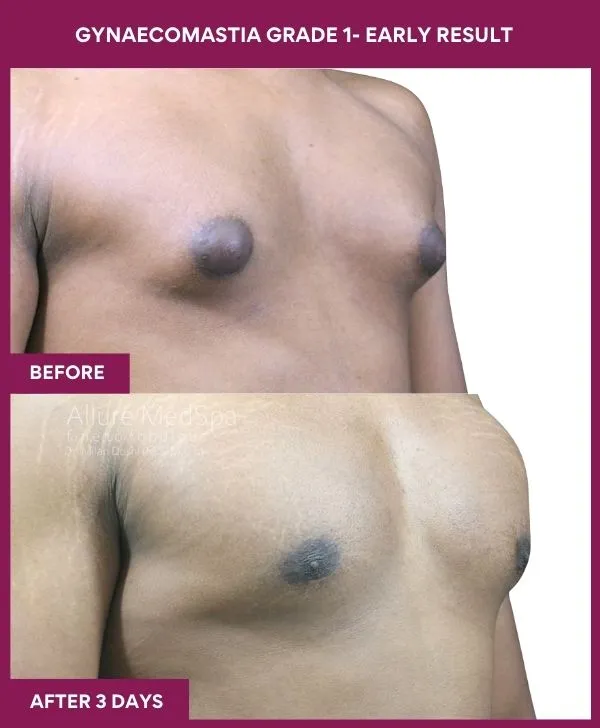
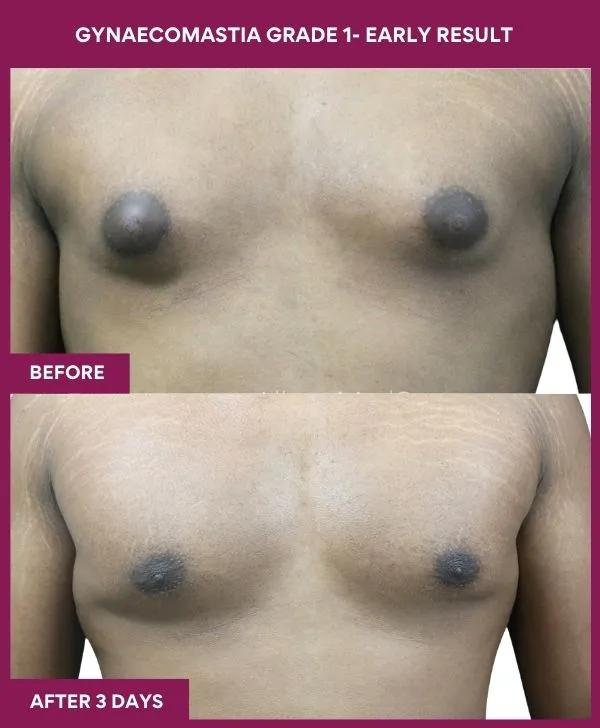
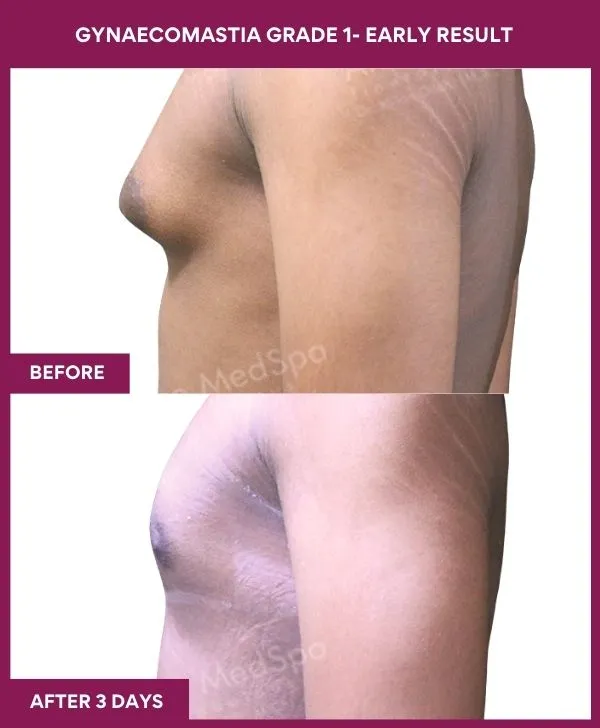
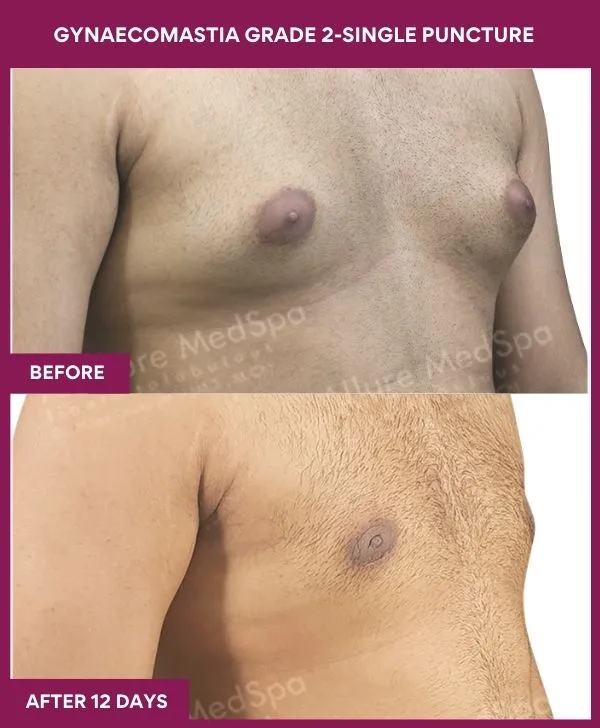
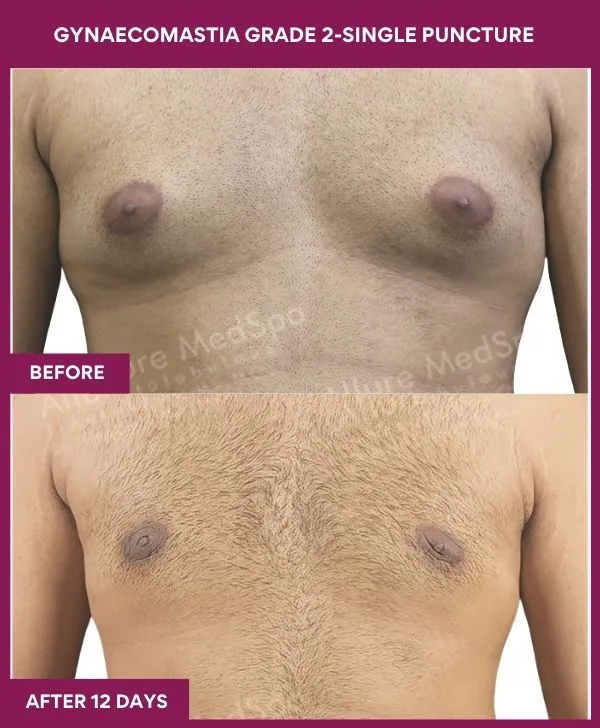
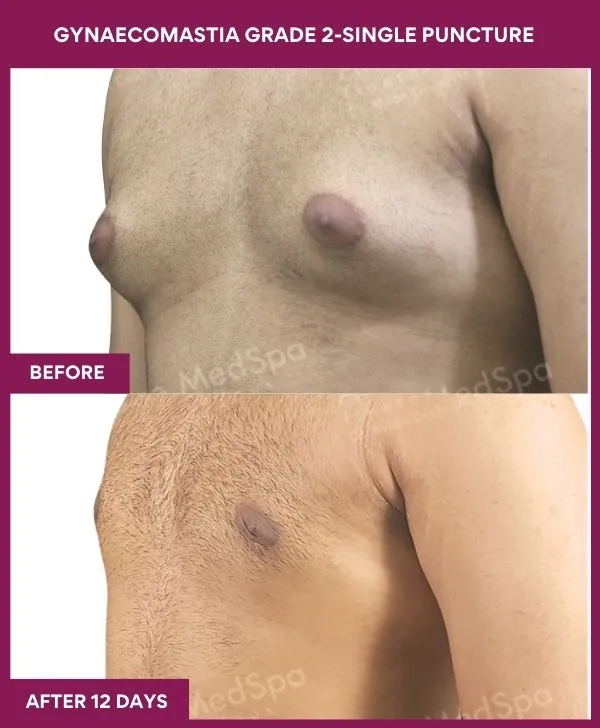
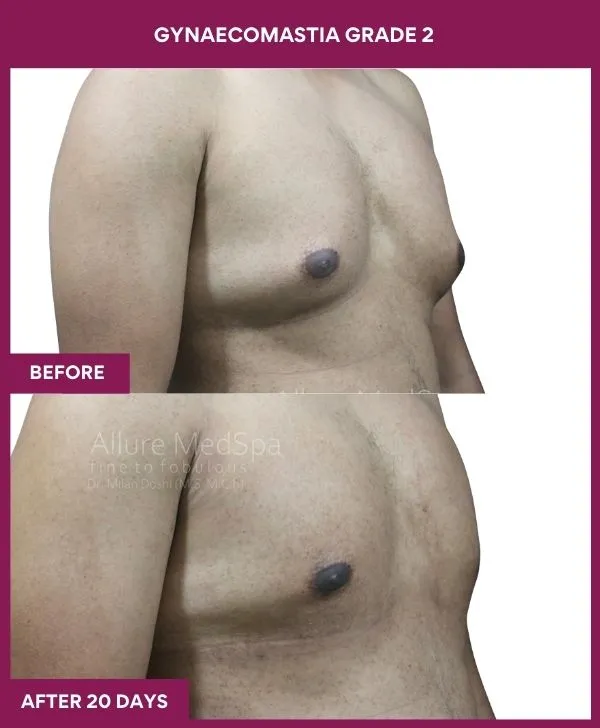
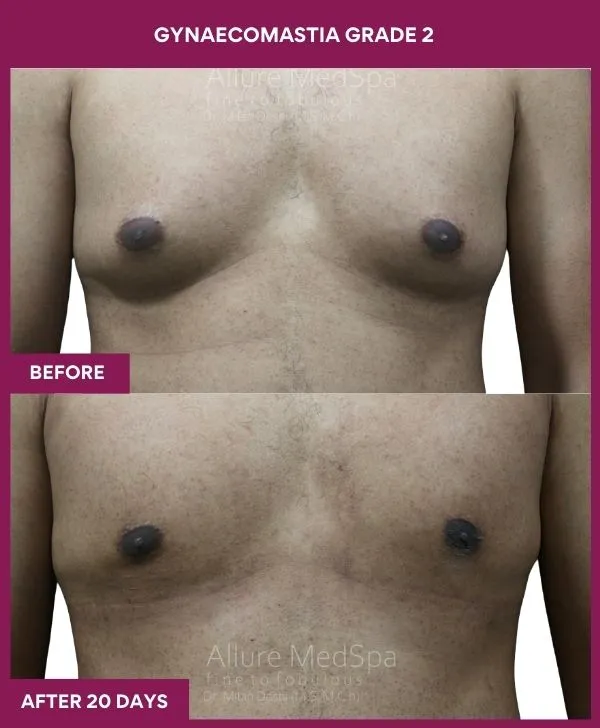
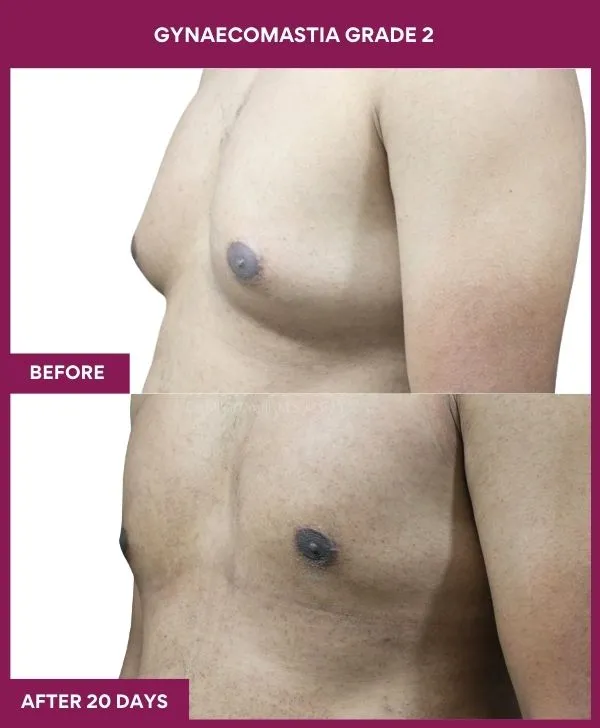
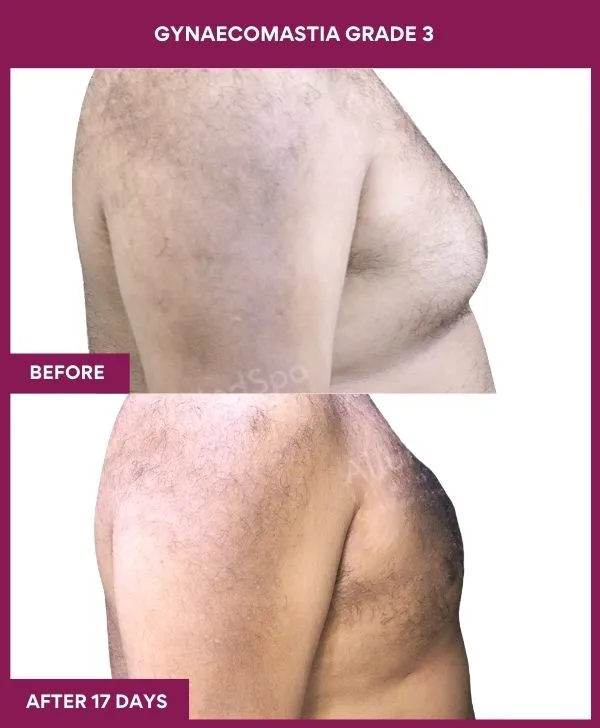
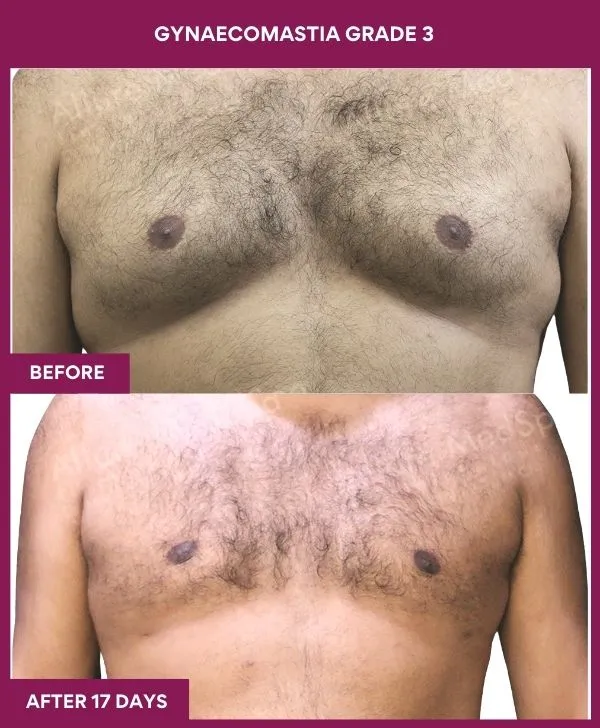
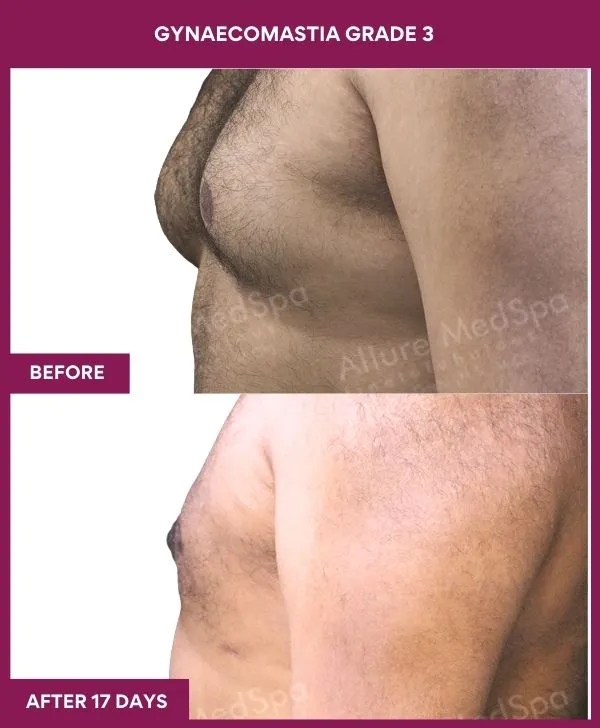
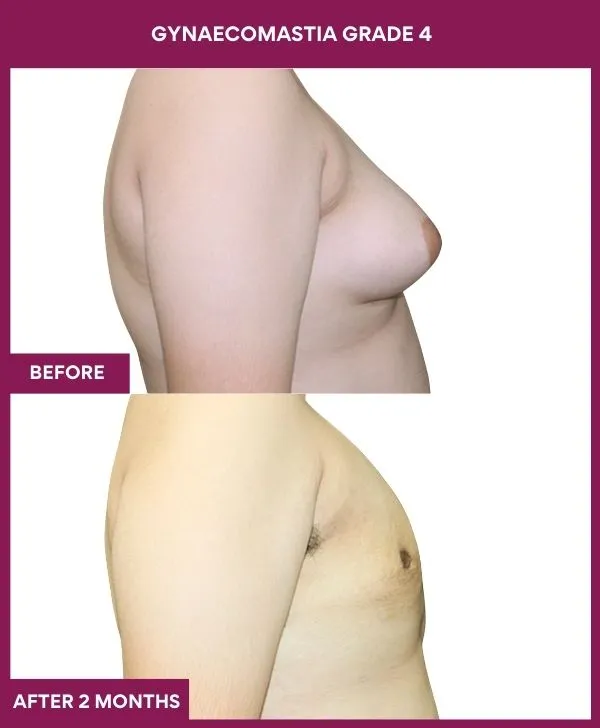
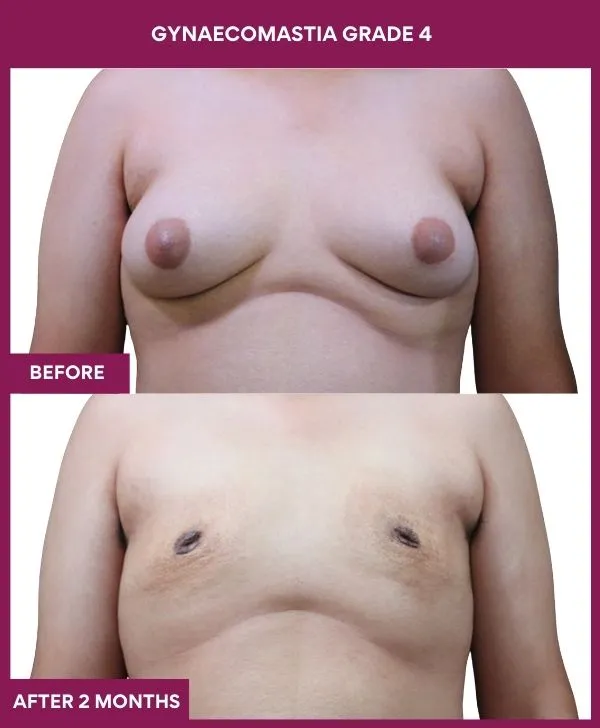
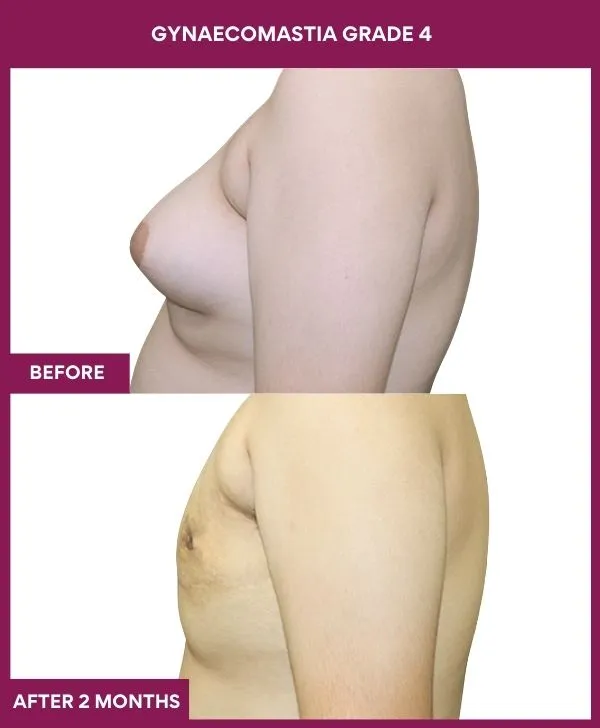
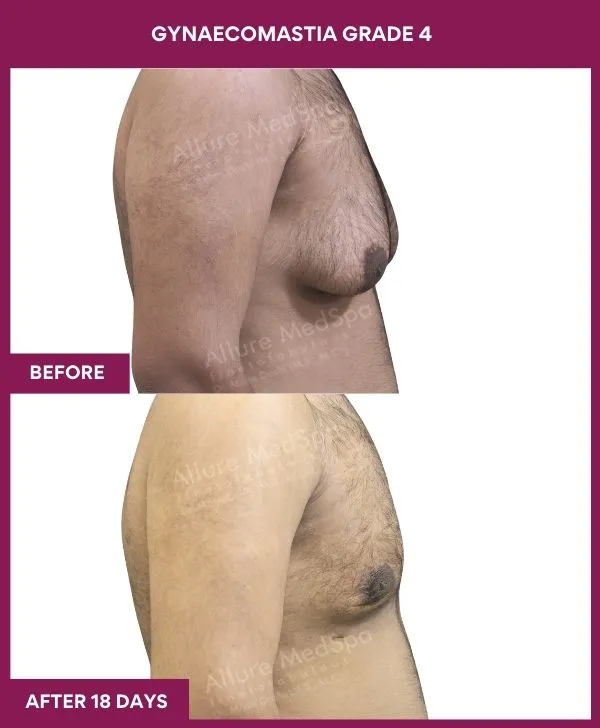
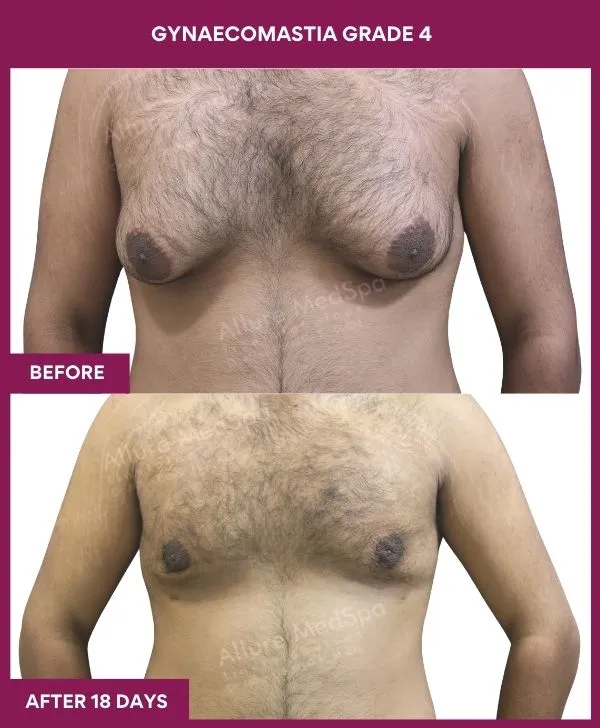
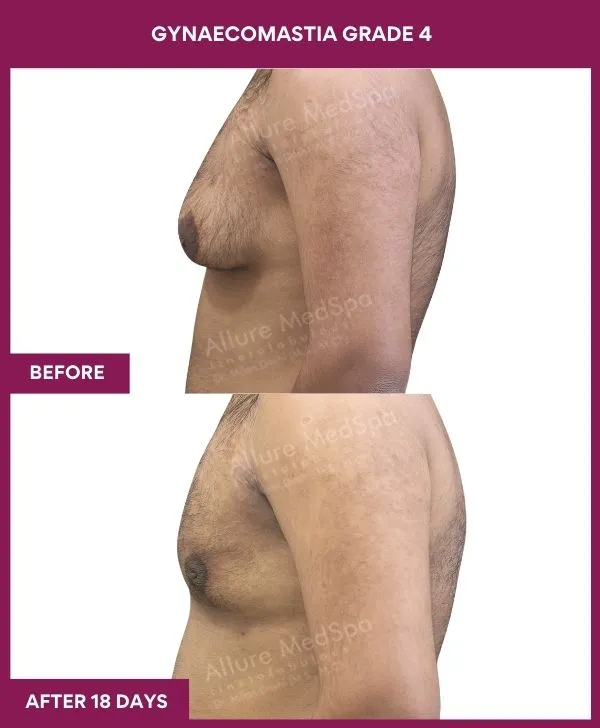
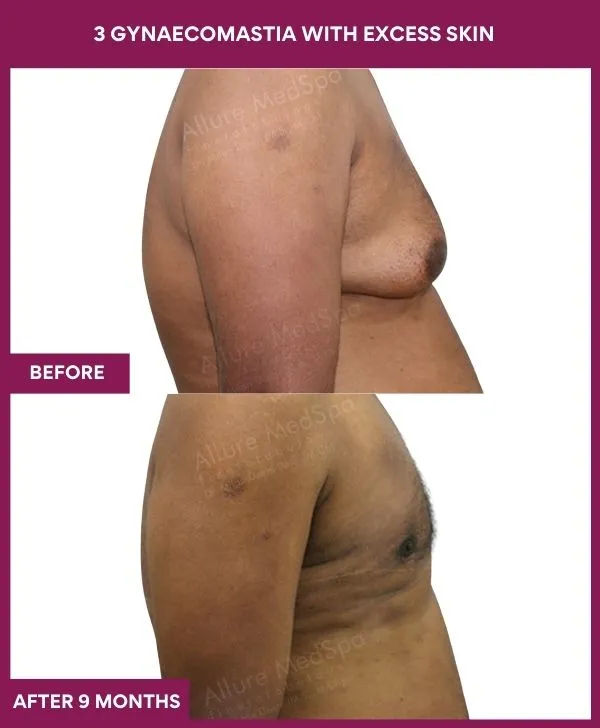
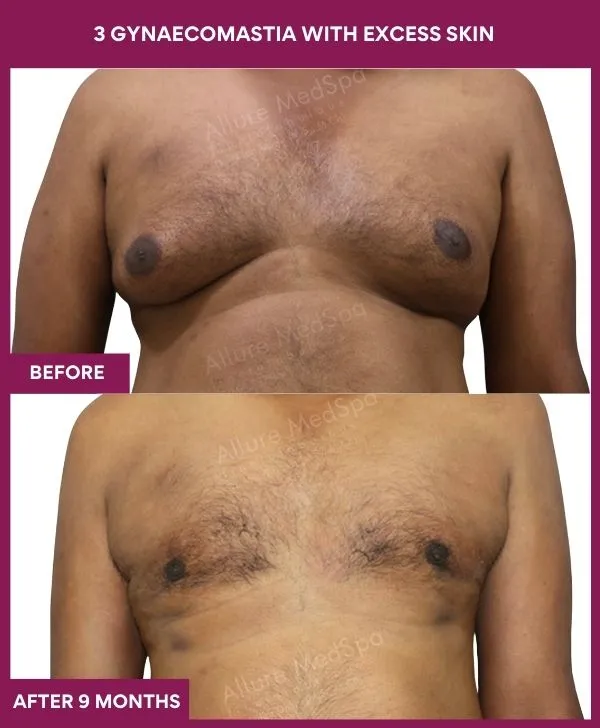
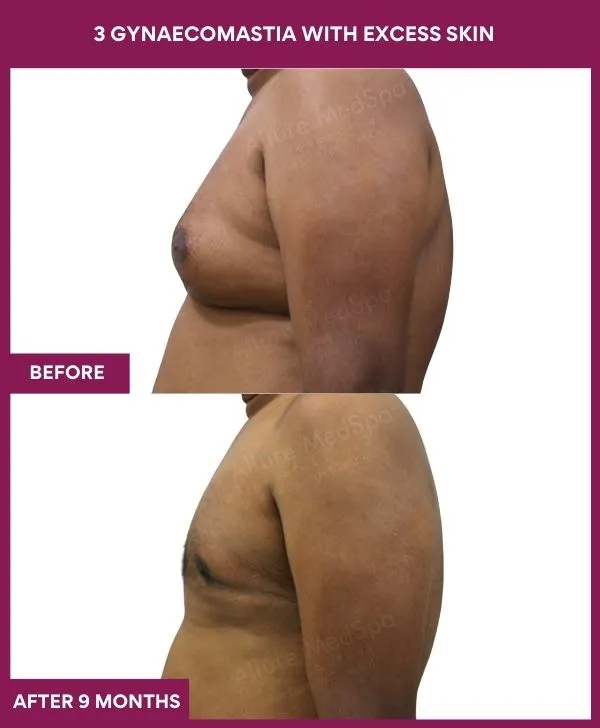
From self-conscious to self-assured—see the change.
Gynecomastia Surgery Testimonials: Fine To Fabulous Journeys

Awarded by Google.com
Rating: 4.7
Reviews: 485+

Awarded by WhatClinic.com
Rating: 4.8
Reviews: 119+

Awarded by Realself
Rating: 4.9
Reviews:453+

Awarded by Facebook
Rating: 4.6
Reviews:105+
Dr Milan Doshi and his staff are very professional and committed as the centre is highly equipped with advanced technology. I had closed rhinoplasty 4 months back and I’m seeing the results as to how it becomes successful.
Deepika Shetty
The doctor explained everything clearly and the surgery was smooth. Recovery was faster than I expected and the team was very supportive.
Rahul Mehta
Very natural results and excellent staff. From consultation to follow-up, the experience was outstanding and boosted my confidence.
Sneha Kapoor
You’re one step away from your own transformation story.
Video: Gynecomastia Surgery Explained by Dr Milan Doshi
Dr Milan Doshi is describing the Male Breast Reduction Surgery in detail with benefits, candidacy, associated risks and significance
Am I a Candidate?
(4 quick questions)
Quick Facts About Gynecomastia Surgery
TIME REQUIRED
1–2 hours
ANESTHESIA
General or local
HOSPITAL STAY
Day care
PAIN LEVEL
Mild–moderate
BACK TO WORK
5–7 days
RESULTS LAST
Long-lasting (permanent)
SUCCESS RATE
97–98%
COMPLICATIONS
Under 2–3%
How Much Does Gynecomastia Surgery Cost in Mumbai?
Gynecomastia surgery at Allure Medspa costs about ₹50,000–₹1,50,000, depending on grade, gland vs fat, technique and any skin removal.
| Grade / case | Typical cost (Mumbai) | Note |
|---|---|---|
| Grade 1 — puffy nipples | Lower end 🩺 | Gland excision ± lipo |
| Grade 2 — moderate | Middle 🩺 | VASER + gland excision |
| Grade 3 — with mild skin excess | Upper-middle 🩺 | ± skin tightening |
| Grade 4 — with sagging skin | Upper end or above 🩺 | Skin excision ± nipple graft |
| One side only | Lower 🩺 | → One-Sided Gynecomastia |
| Revision | Quoted after exam 🩺 | → Risks & Complications |
| Consultation | ₹1,500 🩺 | Goregaon West or online |
| Included | Not included |
|---|---|
| Surgeon, anaesthesia, OT, garment, medicines and follow-ups (live says “garments, medicines and follow-ups”) 🩺 | Pre-op tests, histopathology of removed tissue 🩺, GST 🩺; cosmetic surgery is not insured |
- Full breakdown → Gynecomastia Surgery Cost (cost page absorbs cost-by-grade, VASER cost and inclusions pages per the master plan)
- EMI → Cosmetic Surgery Payment Process
Get your exact quote & surgery plan
Share your details — our team responds within working hours with cost, EMI options and next steps.
Most Common Question People Ask
Q1. Can gynecomastia go away with exercise?
Ans. Exercise reduces chest fat but cannot shrink gland. True glandular gynecomastia needs surgery → https://www.alluremedspa.in/gynecomastia-surgery/get-rid-man-boobs/
Q2. Is gynecomastia surgery painful?
Ans. Under local anaesthesia the operation is comfortable; afterwards there is mild tightness for a few days, managed with oral painkillers.
Q3. Are the scars noticeable?
Ans. Usually a 3–5 mm mark at the edge of the areola plus tiny liposuction punctures; only severe sagging needs a longer, planned scar → https://www.alluremedspa.in/gynecomastia-surgery/scars/
Q4. Will gynecomastia come back after surgery?
Ans. Rarely, once the gland is fully removed — unless steroids, hormonal drugs or an untreated condition restart it → https://www.alluremedspa.in/gynecomastia-surgery/recurrence/
Q5. How long is recovery?
Ans. Desk work in 2–3 days, light cardio at 2–3 weeks, chest workouts at 4–6 weeks, final shape at 3–6 months.
Q6. How much does it cost?
Ans. About ₹50,000–₹1,50,000 at Allure Medspa, depending on grade and technique; you get an exact quote after examination.
Q7. Does gynecomastia mean low testosterone?
Ans. Not necessarily. It can occur with normal testosterone when oestrogen activity is relatively high; blood tests clarify this when needed.

Why Choose Dr. Milan Doshi?
Dr. Milan Doshi, MCh, MS — plastic surgeon with 27+ years and 1,600+ gynecomastia operations 🩺 who grades every chest for gland, fat and skin, combines VASER liposuction with gland excision through a small areolar cut, removes tissue conservatively to avoid a “saucer” dip, and treats steroid-related and post-weight-loss cases. Consults and operates in Goregaon West.
The Complete Guide About Gynecomastia Surgery
What Is Gynecomastia?
Gynecomastia is an increase in breast gland tissue in boys or men that usually feels like a firm or rubbery area centred behind the nipple, can affect one or both sides, and differs from enlargement caused by fat alone. A fuller chest does not always contain enlarged gland — some men have mainly fat, some have gland, and many have both. Understanding what is present comes before choosing a treatment.
Why does breast gland tissue grow in men?
Gynecomastia develops when the effect of oestrogen on breast tissue becomes stronger relative to the effect of testosterone — sometimes during a temporary life stage, and sometimes because of medicines, anabolic steroids or an underlying health condition. Oestrogen encourages breast tissue growth; testosterone normally limits it. That does not mean every man with gynecomastia has an ongoing hormone disorder: puberty can produce a temporary change, and tissue that developed years ago may remain after the original trigger has passed.
How common is gynecomastia?
| Life stage | How common is it? | What usually happens? |
|---|---|---|
| Newborn boys | More than half; published infant estimates range from 60–90% | Pregnancy-related hormonal effects commonly settle within 2–3 weeks of birth |
| Puberty | Up to 60% have detectable breast tissue by age 14 | Many settle within 6 months–2 years; reviews describe resolution in 75–90% over 1–3 years |
| Men aged 50–80 | Approximately 24–65%, depending on population and method | Age-related hormonal changes, medicines and health conditions may contribute; many men have no symptoms |
These figures describe populations. They cannot identify the cause of an individual lump or tell you whether your own chest needs treatment.
Is gynecomastia the same as chest fat?
No. Gynecomastia involves enlarged glandular tissue, while pseudogynecomastia is enlargement caused by fat without gland growth. Gland usually feels firmer and more defined behind the nipple; fat tends to feel softer and more spread out — useful clues that overlap, especially when gland sits within a thicker fat layer. Weight loss may improve the fat component; it does not remove established gland tissue. That is why two men with a similar-looking chest can need different advice.
Gynecomastia is not a measure of effort or masculinity. A lean man can have it, and a man who trains regularly can still notice a persistent mound behind the areola — the darker circle of skin around the nipple.
Sources: Mayo Clinic. Gynecomastia: symptoms and causes · Swerdloff RS, Ng JCM. Gynecomastia: etiology, diagnosis, and treatment. Endotext, NCBI Bookshelf, 2023, NBK279105 · Lemaine V, Cayci C, Simmons PS, Petty P. Gynecomastia in adolescent males. Semin Plast Surg. 2013;27(1):56–61, PMC3706045
How Does Gynecomastia Develop?
Gynecomastia develops when hormonal influences stimulate breast gland growth, often beginning with an active, sometimes tender phase and becoming more fibrous over time — which explains why the tenderness may disappear while a firm area remains behind the nipple. The process is gradual, tissue can contain a mixture of active and fibrous changes, and its course depends on age and cause.
| Stage | What happens in the tissue? | What might you notice? |
|---|---|---|
| 1. A trigger acts | Puberty, ageing, a medicine, anabolic steroids or a health condition changes the hormonal influence on breast tissue | A change may begin before it is obvious in the mirror |
| 2. Active growth (florid phase) | Breast ducts and surrounding supporting tissue increase; the tissue may be swollen and tender | A sensitive, rubbery or firm area develops behind the nipple |
| 3. Increasing fibrosis (fibrous phase) | Denser, scar-like supporting tissue develops; longer-standing tissue responds less readily to medical treatment | Soreness may ease while the fullness or disc remains |
Endotext notes that regression becomes less likely after more than six months, and reviews describe more fibrous tissue after about a year. These observations explain a general trend; they should not be used to tell every teenager that spontaneous improvement is no longer possible. Pubertal gynecomastia can still settle over its longer natural course, and follow-up helps show whether a case is progressing, stabilising or improving.
Common triggers, in brief
Normal hormonal changes, some prescribed medicines, anabolic steroids, pro-hormone products and conditions affecting the liver, kidneys, thyroid or testes can be involved. Some medicines used for prostate conditions, heart disease, stomach problems or mental-health conditions are among those associated with gynecomastia — about one in five cases is attributed to medicines or other external chemicals. In many men no single cause is identified. That does not make the condition imaginary, or mean the person caused it through poor habits.
Never stop a prescribed medicine on your own. If the timing suggests a medicine may be involved, discuss it with the doctor who prescribed it — the benefit of the medicine, possible alternatives and the underlying illness all need consideration. → Causes of Gynecomastia
Sources: Swerdloff RS, Ng JCM. Gynecomastia: etiology, diagnosis, and treatment. Endotext, NCBI Bookshelf, 2023, NBK279105 · Vandeven HA, Pensler JM. Gynecomastia. StatPearls, NCBI Bookshelf, NBK430812 · Lemaine V, Cayci C, Simmons PS, Petty P. Gynecomastia in adolescent males. Semin Plast Surg. 2013;27(1):56–61, PMC3706045 · Mayo Clinic. Gynecomastia: symptoms and causes
What Are the Grades of Gynecomastia?
Gynecomastia is commonly described using the Simon classification, which groups enlargement into Grade I, IIa, IIb and III according to breast size and excess skin. It helps clinicians describe the chest — it is not a measure of personal distress.
| Simon grade | Clinical description | What the appearance may be like |
|---|---|---|
| Grade I | Small enlargement without excess skin | A small mound, sometimes concentrated around the areola |
| Grade IIa | Moderate enlargement without excess skin | More noticeable chest fullness with the skin still fitting the contour |
| Grade IIb | Moderate enlargement with minor excess skin | Fuller tissue with some skin looseness or a lower fold |
| Grade III | Marked enlargement with excess skin | Greater breast-like volume and drooping, described medically as ptosis |
These are broad categories, not a diagnosis you need to make from a photograph. A surgeon also assesses gland, fat, symmetry and the condition of the skin. A small enlargement may be very noticeable to its owner; a larger one may cause little concern to someone else. The grade describes anatomy — your experience deserves its own conversation. → Gynecomastia Grades and Types · Gynecomastia Surgery Cost
Sources: Simon BE, Hoffman S, Kahn S. Classification and surgical correction of gynecomastia. Plast Reconstr Surg. 1973;51(1):48–52, PMID 4687568 · Lemaine V, Cayci C, Simmons PS, Petty P. Gynecomastia in adolescent males. Semin Plast Surg. 2013;27(1):56–61, PMC3706045
Who Gets Gynecomastia, and at What Age?
Gynecomastia can occur at any age, with natural peaks in newborns, boys going through puberty and older men. A new enlargement in an adult also calls for a review of medicines, substances and possible underlying health conditions.
| Age group | What is typical? | What usually guides the next step? |
|---|---|---|
| Newborn babies | Pregnancy-related hormonal effects can cause temporary breast enlargement | Commonly settles within weeks; concerns about a baby’s breast swelling belong with a paediatric clinician |
| Puberty | Gland development can begin around age 10 and is most common around 13–14 | Many cases improve over time; examination, observation and the teenager’s emotional well-being matter |
| Adult men | Persistent pubertal tissue, medicines, anabolic steroids or health conditions may be relevant | Establish whether the fullness is longstanding or new, and assess the cause before choosing treatment |
| Men over 50 | Hormonal changes with ageing, medicines and health conditions may contribute | Don’t assume a new lump is simply due to age; assessment identifies whether investigation is appropriate |
Published estimates of teenage resolution vary. Mayo Clinic describes a typical course of six months to two years; an adolescent review reports improvement in 75–90% over one to three years. A minority continue to have gland tissue into adulthood.
For a teenager, observation should include attention to comfort, school participation and emotional distress — not dismissing the concern with “just ignore it”. At the same time, distress does not remove the need to consider ongoing puberty and the possibility of natural improvement. → Gynecomastia by Age — Puberty, Teens and Older Men
Sources: Mayo Clinic. Gynecomastia: symptoms and causes · Swerdloff RS, Ng JCM. Gynecomastia: etiology, diagnosis, and treatment. Endotext, NCBI Bookshelf, 2023, NBK279105 · Lemaine V, Cayci C, Simmons PS, Petty P. Gynecomastia in adolescent males. Semin Plast Surg. 2013;27(1):56–61, PMC3706045
What Are Puffy Nipples in Men, and Are They Gynecomastia?
Puffy nipples can be a visible presentation of gynecomastia when gland tissue beneath the areola pushes it forwards — but appearance alone cannot confirm gland growth, distinguish it from surrounding fat or establish a grade. The word “nipple” is often used for the whole darker circle; in many puffy-nipple concerns it is the areola that forms a dome. The rest of the chest may look relatively flat, which can make the difference frustrating.
What do gland-related puffy nipples look and feel like?
- Shape: one or both areolas project forwards instead of lying close to the chest.
- Feel: a firm or rubbery area may be noticeable directly behind the areola.
- Surroundings: the rest of the chest may have little fullness or loose skin.
- Clothing: the projection may show through thin or fitted fabric.
- Symmetry: one side may be more noticeable than the other.
When enlargement is small and there is no excess skin, the chest may fit Simon Grade I — but a puffy appearance alone is not enough to assign that grade.
What causes puffy nipples — and why can they look worse after training?
The same triggers apply as elsewhere in the male breast — puberty, anabolic steroids, pro-hormone products, certain medicines or health conditions — while some men have no clear cause. Being lean doesn’t prevent gland growth, and neither does building a strong chest muscle: a hormonal stimulus acts on gland, which is different from the fat and muscle that change with diet and training. Tell the doctor about any product marketed for muscle growth or hormonal effects, with names and timing.
Puffiness can look more prominent once training reduces the fat around a persistent gland mound. That is a change in contrast, not proof that exercise enlarged the gland. Some men see clear improvement with fat loss; others mainly notice that the central puffiness remains.
| Feature | Mainly gland beneath the areola | Mainly chest fat | Gland and fat together |
|---|---|---|---|
| Distribution | Concentrated beneath the nipple–areola area | Softer fullness spread more broadly | A firmer centre with surrounding softness |
| Feel | Often rubbery or firm | Usually softer and less defined | A combination of both |
| With fat loss | Established gland can remain noticeable | Fullness may improve | Fat can reduce while a gland mound remains |
| Appropriate first step | Confirm the tissue and assess its cause | Assess the role of weight and exclude gland | Assess both components rather than one assumption |
How are puffy nipples corrected when gland is responsible?
Persistent gland causing puffy nipples may be treated by surgically removing gland tissue, sometimes with liposuction for surrounding fat. A commonly used approach places the incision at the areola edge, where the change in skin colour helps make the scar less conspicuous; other techniques use small access points elsewhere on the chest. Removing more tissue is not automatically better — excessive removal immediately beneath the areola can cause a dip or distortion; the aim is a natural contour that blends into the surrounding chest.
Not every puffy-nipple concern needs an operation. Recent pubertal changes may be observed, and a medicine-related or medical cause may need attention first. → Gynecomastia Techniques Compared · Gynecomastia Surgery Cost
Sources: Swerdloff RS, Ng JCM. Gynecomastia: etiology, diagnosis, and treatment. Endotext, NCBI Bookshelf, 2023, NBK279105 · Mayo Clinic. Gynecomastia: symptoms and causes · Simon BE, Hoffman S, Kahn S. Classification and surgical correction of gynecomastia. Plast Reconstr Surg. 1973;51(1):48–52, PMID 4687568 · Lemaine V, Cayci C, Simmons PS, Petty P. Gynecomastia in adolescent males. Semin Plast Surg. 2013;27(1):56–61, PMC3706045 · Morselli PG, Morellini A. Breast reshaping in gynecomastia by the “pull-through technique”: considerations after 15 years. Eur J Plast Surg. 2012, PMC3332338
How Does Gynecomastia Affect You Emotionally?
Gynecomastia can affect body image, self-esteem and participation in everyday life, and research in adolescent boys has found poorer social and mental well-being even with mild enlargement. The visible change may be small, but the effort of hiding it — which shirt feels safe, whether to join a swim, how to change at the gym — can take up a large part of the day. You don’t have to feel distressed to deserve an explanation, and you don’t need to prove your distress is severe enough before speaking about it.
What might living with gynecomastia look like day to day?
| Situation | A possible avoidance pattern | What may help you explain the concern |
|---|---|---|
| Clothing | Choosing loose, dark or layered tops even when uncomfortable | Describe which clothes you avoid and what shows through the fabric |
| Pools and beaches | Keeping a shirt on or declining the activity | Explain whether worry about your chest changes what you join in |
| Gym and changing rooms | Avoiding shared changing areas | Mention whether the concern affects exercise or social life |
| Photographs | Crossing the arms or angling away from the camera | Explain what you’re trying to hide rather than relying on a photo |
| Relationships and intimacy | Feeling anxious about being seen without a shirt | Share the effect on comfort and closeness, if you wish to |
| Family activities | Staying out of swimming or beach trips with children | Mention the experiences you’d like to join more comfortably |
These are general illustrative patterns, not patient testimonials or clinic outcome data. “I avoid swimming” or “I change clothes several times before leaving” gives a clinician more useful context than trying to decide whether your concern counts as serious.
What does the research show?
- Self-esteem: a 2013 Plastic and Reconstructive Surgery study of 47 boys (mean age 16.5) found lower self-esteem in those with gynecomastia.
- Social and mental health: general health, social functioning and mental-health scores were lower, even after adjusting for body mass index.
- Severity: mild enlargement could still be associated with meaningful difficulty; visible size did not explain the whole experience.
- Eating attitudes: scores were higher, but clinical eating disorders were not more common.
These findings identify an association in one study population. They do not mean every boy with gynecomastia will develop depression, or that surgery is the right response to every emotional concern.
How can parents, partners and families help?
Let a teenager explain what bothers him before offering reassurance — “nobody notices” may not answer the concern. If teasing or bullying is involved, speak with the school; he shouldn’t be left to solve that by changing his body. Many pubertal cases settle naturally, and that possibility should sit alongside a plan for review and support. For partners and families, focusing on participation — joining a holiday, a swim or a photograph — is often more helpful than debating how the chest looks. Support should leave room for every choice: observation, treating a cause, psychological support, surgery after assessment, or no cosmetic treatment.
When should you seek support for low mood?
- Mood: low mood on most days for two weeks or more deserves a conversation with a doctor or mental-health professional.
- Withdrawal: avoiding work, college, friends, family or activities because of the chest.
- Preoccupation: repeated checking, concealment or appearance worries that take up much of the day.
- Expectations: feeling that only a completely different body could make life bearable.
- Safety: thoughts of self-harm need immediate support, not a cosmetic appointment.
In India, Tele-MANAS offers free, round-the-clock mental-health support on 14416. If there is immediate danger, call 112 or go to the nearest emergency department. The clinic’s WhatsApp service is not an emergency mental-health service.
What can surgery change — and what can it not promise?
| What treatment may address | What it cannot promise |
|---|---|
| Gland-related projection and excess fat, where appropriate | A particular level of confidence or a different personality |
| A physical feature that makes certain clothing uncomfortable | That you’ll never feel self-conscious again |
| The chest contour behind avoiding some activities | That past bullying or embarrassment will no longer matter |
| An identified physical concern after assessment | Treatment of depression or broader body-image distress through surgery alone |
A 2025 study (online 2024) surveyed young men years after they’d had surgery as teenagers: 37 of 76 invited patients responded, and their BODY-Q chest-satisfaction and psychological-function scores were above the comparison norms. The study was small, single-centre and had no pre-operative scores, so it cannot show how much surgery changed each person’s well-being. It supports a careful conversation about possible benefits — not an emotional promise.
Sources: American Society of Plastic Surgeons. Gynecomastia has psychological impact on adolescent boys (Plast Reconstr Surg, April 2013) · Vandeven HA, Pensler JM. Gynecomastia. StatPearls, NCBI Bookshelf, NBK430812 · Karpinski M, et al. Quality of life measured using the BODY-Q after adolescent gynecomastia surgery: a cross-sectional analysis. Plast Surg (Oakv). 2025;33(4):601–608 (online 2024), PMC11561927 · Ministry of Health and Family Welfare, Government of India. Tele-MANAS — 14416 · Emergency Response Support System, Government of India. Dial 112
What Are the Treatment Options for Gynecomastia?
Treatment depends on cause, duration and effect on daily life. A teenager with recent gland development, an adult with a new medicine-related change and a man with longstanding mixed gland and fat need different discussions. The ladder below describes the available approaches — it is not a requirement to try every step before receiving appropriate care.
| Step | When it may fit | What it can and cannot do |
|---|---|---|
| 1. Observe with review | Pubertal changes, some recent-onset cases, or after a cause has been addressed | Allows time for possible improvement while monitoring the course |
| 2. Assess and treat the cause | A medicine, anabolic steroids, a hormonal condition or other illness may be involved | Addressing the trigger may help, especially early; the prescribing doctor guides any change to prescribed medicines |
| 3. Reduce excess fat | Fat contributes to the fullness | May improve the fat component; does not remove established gland |
| 4. Consider specialist medication | Selected recent, symptomatic cases | Evidence in selected situations only; not routine, and less useful for fibrous tissue |
| 5. Consider surgery | Persistent gland that doesn’t regress and causes a physical or personal concern | Removes appropriate tissue and reshapes the chest; suitability needs individual assessment |
Can gynecomastia go away without surgery?
Yes, in many newborn and pubertal cases, and some recent adult cases improve once an underlying cause is addressed. Removing a trigger doesn’t always remove tissue that has already become established — and a long duration does not by itself mean an operation is necessary.
Can medicines treat gynecomastia?
A specialist may consider medication for selected recent cases, but the 2019 European Academy of Andrology guideline does not recommend hormone-blocking treatment generally, and established fibrous gland responds less readily. Endotext discusses evidence for tamoxifen in selected acute cases without an identified cause — not to be confused with an over-the-counter “gyno pill” or a self-prescribed hormone regimen. This page does not recommend a drug, dose or self-treatment course.
Which popular remedies do not remove settled gland?
| Common suggestion | What to understand |
|---|---|
| Push-ups and chest workouts | Build muscle and fitness; do not remove gland tissue |
| Dieting or fat loss | May reduce the fat component; a gland mound can remain |
| Herbal or over-the-counter “gyno” tablets | No reliable evidence for removing established gland |
| Creams and gels | Should not be presented as a way to dissolve gland |
| Fat-dissolving injections | Not an established treatment for gynecomastia gland tissue |
| Compression vests | Conceal or flatten while worn; do not remove the tissue |
→ How to Get Rid of Man Boobs — An Honest Guide · Gynecomastia Surgery in Mumbai
Sources: Kanakis GA, Nordkap L, Bang AK, et al. EAA clinical practice guidelines — gynecomastia evaluation and management. Andrology. 2019;7(6):778–793, PMID 31099174 · Swerdloff RS, Ng JCM. Gynecomastia: etiology, diagnosis, and treatment. Endotext, NCBI Bookshelf, 2023, NBK279105 · Vandeven HA, Pensler JM. Gynecomastia. StatPearls, NCBI Bookshelf, NBK430812 · NHS. Gynaecomastia · Mayo Clinic. Gynecomastia: symptoms and causes
What Are The Types Of Gynecomastia Surgery?
Surgery is tailored by type: pubertal, drug- or steroid-induced, bodybuilder’s, older men’s, post-weight-loss and one-sided gynecomastia.
| Type | Typical patient | Approach |
|---|---|---|
| Pubertal (persisting) | Late teens | Surgery if it persists beyond 18 / 1–2 years |
| Drug / steroid-induced | On medicines or steroids | Stop the cause; careful complete gland excision |
| Bodybuilder’s | Lean, muscular | Micro-incision gland removal |
| Older men | 50+ | Lipo + gland ± skin tightening; red-flag check |
| Post-weight-loss | After bariatric / major loss | Lipo + gland + chest skin lift → Bariatric Surgery |
| One-sided | Either side | Rule out red flags; match the sides → One-Sided Gynecomastia |
How Is Gynecomastia Surgery Performed, Step By Step?
The chest is marked, numbed, fat removed by VASER, the gland excised through the areola edge, the wound closed and a compression vest applied.
| Step | What happens |
|---|---|
| 1. Marking & photos | Standing marks for gland, fat and symmetry |
| 2. Anaesthesia | Local (tumescent) ± sedation |
| 3. Access | 3–4 mm punctures at the chest fold / armpit |
| 4. VASER | Ultrasound loosens fat |
| 5. Liposuction | Fat removed and edges feathered |
| 6. Areolar incision | 3–5 mm at the lower areola edge |
| 7. Gland excision | Gland removed, thin cushion left under the nipple |
| 8. Haemostasis | Careful bleeding control |
| 9. Symmetry check | Sitting-up comparison |
| 10. Closure | Fine dissolvable stitches; drain only if needed |
| 11. Specimen | Tissue sent for histopathology 🩺 |
| 12. Compression vest | Applied; home the same day |
How long does the operation take?
About 60–90 minutes for most grades; skin-excision cases take longer.
When Will I See My Gynecomastia Surgery Results?
The chest is flatter immediately; swelling eases over 2–3 weeks, the skin settles over 6–12 weeks and the final contour shows at 3–6 months.
| Time | What you notice |
|---|---|
| Day 1 | Flatter under the vest; swelling |
| Weeks 2–3 | Bruising and most swelling gone |
| Weeks 4–6 | Firmness softening; gym returns |
| Months 3–6 | Skin retracted; final shape; scars fading |
Factors: grade, skin quality, garment use, avoiding steroids and weight gain
What Aftercare Is Needed After Gynecomastia Surgery?
Wear the compression vest day and night for the first weeks, walk early, avoid chest workouts for 4–6 weeks and stay off steroids.
| Do | Why |
|---|---|
| Compression vest 24×7, then daytime | Swelling, skin retraction |
| Walk from day 1 | Circulation |
| Sleep on your back, head up, 1 week | Less swelling |
| Scar care once healed | Fades faster |
| Avoid | For |
|---|---|
| Chest workouts, heavy lifting | 4–6 weeks |
| Smoking and alcohol | 2 weeks |
| Steroids, testosterone boosters | Always — regrowth risk |
| Early massage of the chest | Until advised |
- Full day-by-day aftercare → Recovery Timeline Day by Day (recovery bible absorbs the aftercare-guide and scars pages per the master plan)
What Are The Risks And Complications Of Gynecomastia Surgery?
Mostly minor: swelling, bruising, numbness, seroma or haematoma; less often residual gland, asymmetry, a saucer dip, visible scars or regrowth.
| Common, temporary | Less common | Rare |
|---|---|---|
| Swelling, bruising | Seroma | Nipple skin loss |
| Numbness | Haematoma | Infection |
| Firmness under the areola | Residual gland / puffiness | Recurrence after steroids |
| Tightness | Asymmetry; saucer deformity | Thick or wide scar |
- In a 2022 review of 7,294 patients, complications (mostly minor) were 11.8% with combined liposuction + excision vs 30.6% with excision alone
How are these risks reduced?
Grading before surgery, combined lipo + excision, leaving a thin cushion under the nipple, careful bleeding control, compression and no steroids.
| Risk | How it is reduced |
|---|---|
| Residual gland | Feel and remove gland, not lipo only |
| Saucer deformity | Conservative excision; feathered edges |
| Haematoma / seroma | Haemostasis; compression; drain if needed |
| Asymmetry | Sitting-up comparison |
| Recurrence | Complete excision; stop steroids / treat cause |
- Full guide incl. “Can it come back?” → Risks & Complications (absorbs recurrence page per the master plan)
Dr. Doshi note slot: not used here — live note under techniques; one new note under Why Choose.
What Is The Gynecomastia Surgery Recovery Timeline?
Home the same day, desk work in 2–3 days, light cardio at 2–3 weeks, gym and chest work at 4–6 weeks, final contour at 3–6 months.
| Time | What to expect |
|---|---|
| Day 0 | Home in the vest |
| Days 1–2 | Drain out if used; shower after 48 h if advised |
| Days 2–3 | Desk work |
| Weeks 2–3 | Walking, light cardio; bruising fades |
| Weeks 4–6 | Vest daytime only; gym, driving, chest work gradually |
| Months 2–6 | Skin tightens; final shape |
- Outstation patients: plan 3–4 days in Mumbai 🩺
- Live page had TWO recovery H2s (“Post-Gynecomastia Surgery Recovery: What to Expect” and “What Is Recovery Like…”) with the same content and an empty H3 — merged here
- /gynecomastia-surgery/recovery/ REDIRECTS to the hair-transplant timeline — link Recovery Timeline Day by Day
Can gynecomastia surgery be combined with other procedures?
Yes — commonly with VASER liposuction of the abdomen and flanks, or a tummy tuck or body lift after major weight loss.
| Combination | Why |
|---|---|
| Abdomen / flank liposuction | Full torso contour → Liposuction Surgery |
| Tummy tuck | After weight loss → Tummy Tuck Surgery |
| Upper body lift | Massive weight loss → Body Lift Surgery |
Medical Codes for Facelift Surgery
Gynecomastia is ICD-10 N62; gland excision is CPT 19300 and chest liposuction CPT 15877; cosmetic encounters use Z41.1.
| Code | Description |
|---|---|
| ICD-10 N62 | Hypertrophy of breast (includes gynecomastia) |
| ICD-10 Z41.1 | Encounter for cosmetic surgery |
| CPT 19300 | Mastectomy for gynecomastia |
| CPT 15877 | Suction-assisted lipectomy, trunk |
| CPT 15839 | Excision, excessive skin and subcutaneous tissue, other area — chest skin excision in grade 4 🩺 |
(FAQs) Frequently Asked Question About Facelift Surgery
Q1. What is the main cause of gynecomastia?
Ans. An oestrogen–testosterone imbalance; triggers include puberty, ageing, weight, anabolic steroids and some medicines. Often no cause is found → Causes of Gynecomastia.
Q2. How can I check for gynecomastia at home?
Ans. A firm or rubbery disc under the nipple suggests gland; soft, spread-out fullness suggests fat. An exam or ultrasound confirms it.
Q3. Can gynecomastia shrink on its own?
Ans. Pubertal gynecomastia often shrinks within 1–2 years; established adult gland rarely does.
Q4. Can men with gynecomastia have children?
Ans. Yes — gynecomastia itself does not affect fertility; the underlying cause (such as steroid use) sometimes can 🩺.
Q5. I used steroids — can I still have surgery?
Ans. Yes, after stopping; tell the surgeon honestly, because it changes planning and the regrowth risk.
Q6. Can teenagers have surgery?
Ans. Usually only if it persists beyond about 1–2 years or late teens and causes real distress → Gynecomastia by Age.
Q7. What happens if gynecomastia is left untreated?
Ans. It is usually medically harmless but can cause ongoing distress; established adult gland will not go away by itself.
Q8. Is gynecomastia hard or soft?
Ans. Gland feels firm or rubbery under the nipple; fat feels soft and diffuse.
Q9. When can I play sports again?
Ans. Light cardio at 2–3 weeks; contact sports and chest training at about 4–6 weeks.
Q10. Can only one side be operated?
Ans. Yes — after red flags are excluded; the other side is checked so both match → One-Sided Gynecomastia.
Q11. I live outside Mumbai — how long should I stay?
Ans. Usually 3–4 days for the first check; later reviews can be online → Outstation Patients.