
PRP Treatment in Mumbai — Natural Rejuvenation for Hair & Skin, Honestly Explained

Indian Board Certified Plastic Surgeon
M.CH, MS, ISAPS Mentor
16000+ Cosmetic Surgeries
500+ PRP Treatments
PRP (platelet-rich plasma) treatment concentrates your own blood platelets and injects them into the scalp or skin to stimulate thinning hair follicles and collagen — 3–4 sessions 4–6 weeks apart, visible change at 3–6 months, about ₹5,000–₹7,000 per hair session. The evidence is strongest for early hair thinning: a 2025 meta-analysis of 43 randomised trials found activated PRP improved hair density. It is not a cure, not FDA-approved for hair loss, and works best alongside proven medical treatment rather than instead of it. Because your own blood is re-injected, sterile single-use technique is the whole safety story — at Allure Medspa, Andheri West, Dr. Milan Doshi’s team labels your tube in front of you and uses nothing twice.
PRP Hair Treatment Before and After
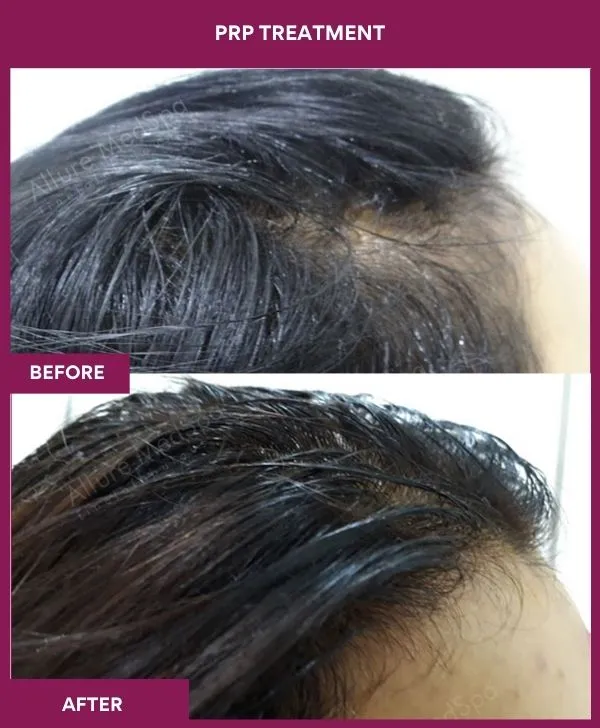
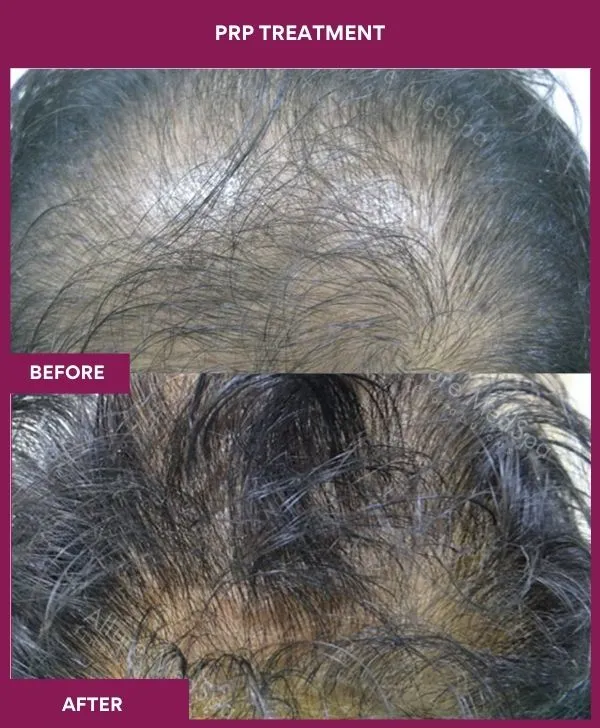
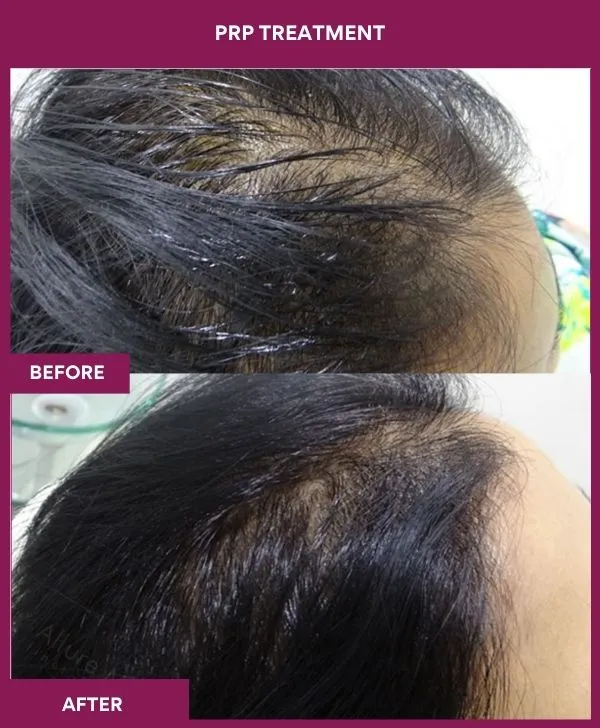
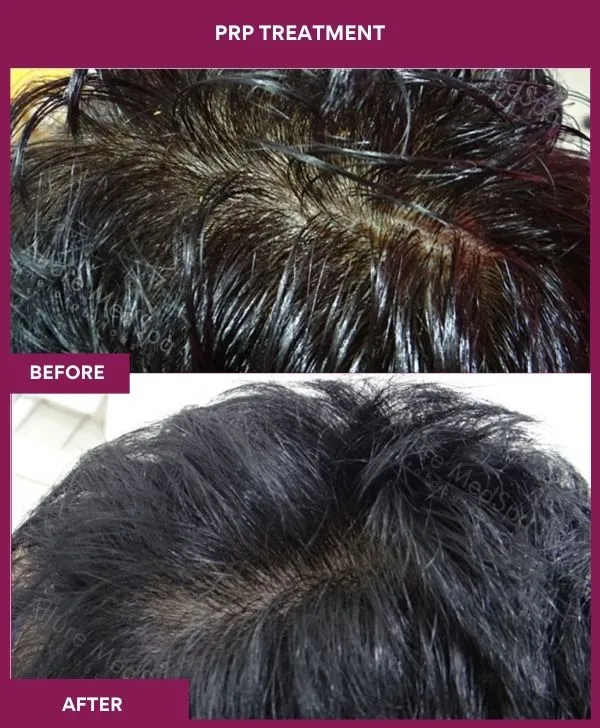
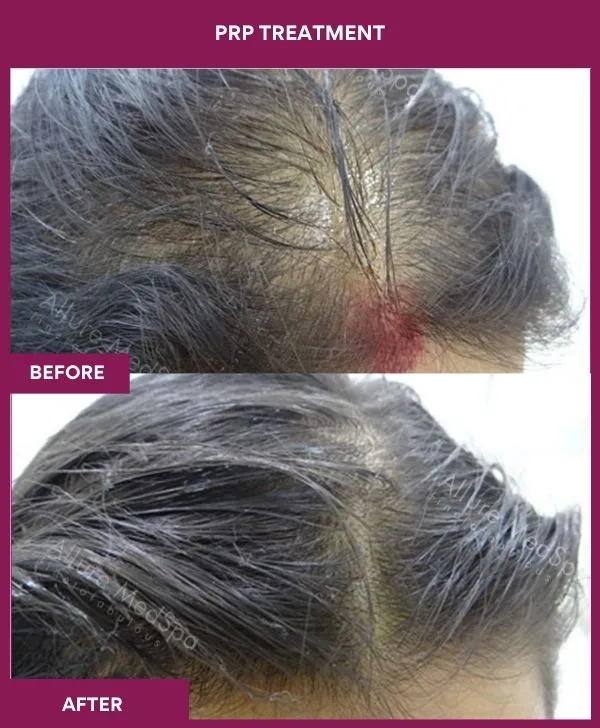
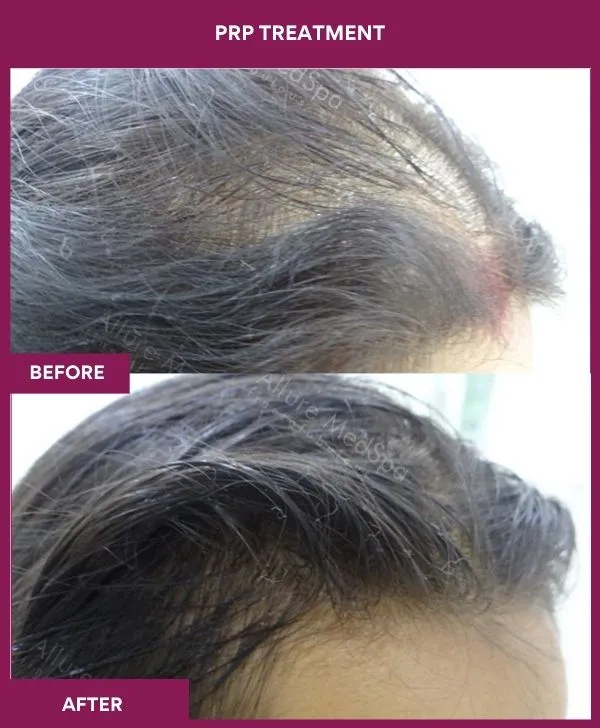
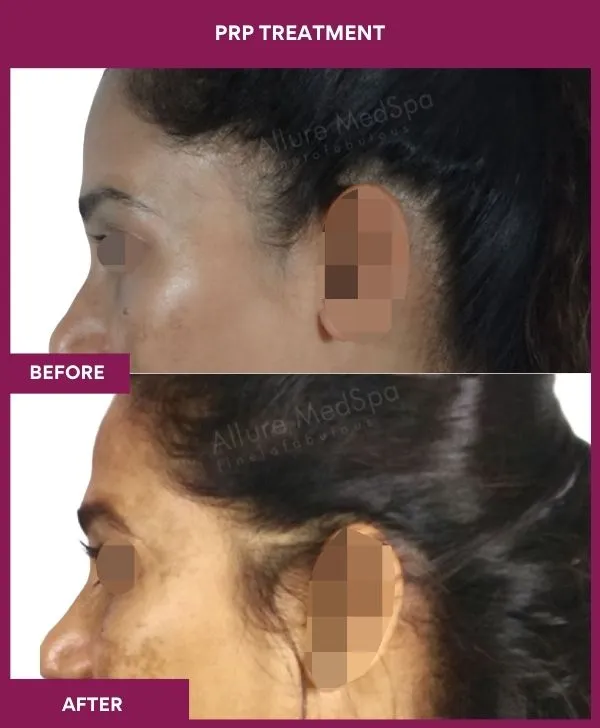
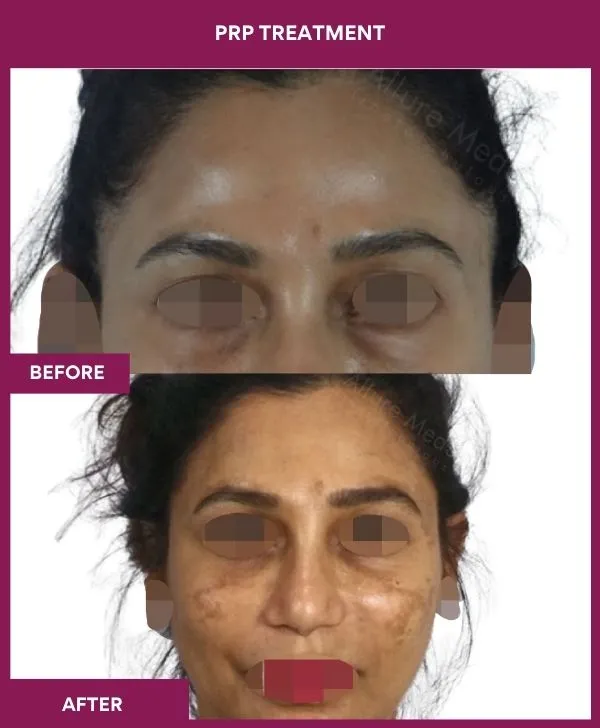
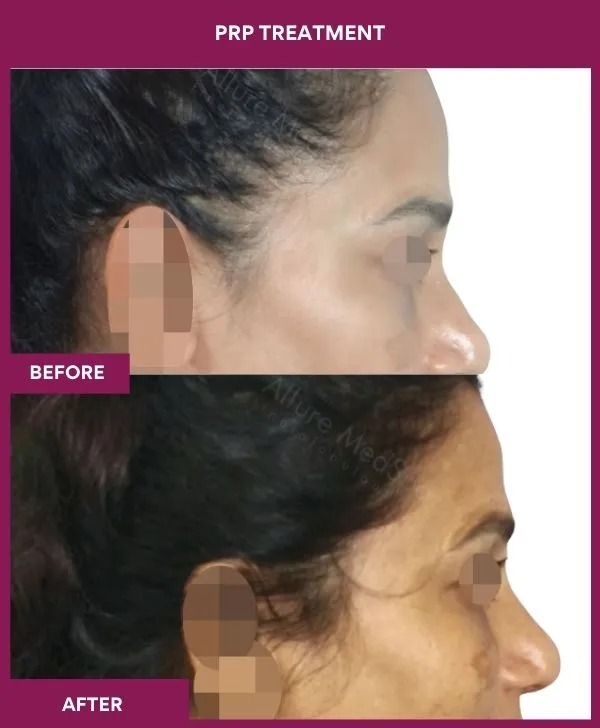
“Liked the results? Let's plan yours. ”
PRP Treatment Testimonials: Fine To Fabulous Journeys

Awarded by Google.com
Rating: 4.7
Reviews: 485+

Awarded by WhatClinic.com
Rating: 4.8
Reviews: 119+

Awarded by Realself
Rating: 4.9
Reviews:453+

Awarded by Facebook
Rating: 4.6
Reviews:105+
Dr Milan Doshi and his staff are very professional and committed as the centre is highly equipped with advanced technology. I had closed rhinoplasty 4 months back and I’m seeing the results as to how it becomes successful.
Deepika Shetty
The doctor explained everything clearly and the surgery was smooth. Recovery was faster than I expected and the team was very supportive.
Rahul Mehta
Very natural results and excellent staff. From consultation to follow-up, the experience was outstanding and boosted my confidence.
Sneha Kapoor
“Inspired by their journey? Start yours.”
Is PRP Treatment Right For Me?
(4 quick questions)
Concern, diagnosis, health, commitment — four questions start the plan.
Check My SuitabilityHonest routing
Quick Facts About PRP Treatment
SESSION TIME
40–90 minutes
ANESTHESIA
Topical / Local
SESSIONS
Course of 3–4
RESULTS SHOW
4–8 weeks
DOWNTIME
2–3 days
RESULTS LAST
4–6 months
SUCCESS RATE
97–98%
COST
₹5,000–₹25,000
What Is The Cost Of PRP Treatment In Mumbai?
PRP in Mumbai costs about ₹5,000–₹7,000 per hair session at Allure Medspa, up to ₹25,000 for skin; a 3–4-session hair course is ₹15,000–₹28,000.
| Treatment | Per session (₹) | Course | Course total (₹) |
|---|---|---|---|
| Hair PRP — scalp | 5,000 – 7,000 | 3–4 sessions | 15,000 – 28,000 |
| Skin PRP — face with microneedling (“vampire facial”) | 8,000 – 15,000 🩺 | 2–3 sessions | 16,000 – 45,000 🩺 |
| Under-eye PRP | 6,000 – 10,000 🩺 | 2–3 sessions | 12,000 – 30,000 🩺 |
| Acne-scar PRP with MNRF | Up to 25,000 🩺 | 3 sessions | Quoted at consultation |
| PRP with a hair transplant | Quoted with the surgery | 1–2 sessions | See Hair Transplant Cost · PRP After Hair Transplant |
| Maintenance | Same per-session rate | Every 4–6 months | — |
| What changes the price | Why |
|---|---|
| Hair vs skin | Different volumes, devices and session counts |
| Number of sessions | The biggest driver of total cost |
| Preparation protocol | Single vs double spin, activation, platelet concentration achieved |
| Who performs it | Doctor-performed and supervised vs technician-delivered |
| Sterile single-use kit | Costs money — and is the point |
- Includes consultation, blood draw, preparation, numbing, injection and review · +5% GST 🩺 · EMI → Cosmetic Surgery Payment Process
- The planned hair-loss /cost/ page will become the pricing owner; this page and Hair Loss Treatment must show the same hair figure
Get your exact quote & surgery plan
Share your details — our team responds within working hours with cost, EMI options and next steps.
Most Common Question People Ask
Q1. Can PRP regrow hair?
Ans. It can stimulate existing follicles and improve density in early thinning. Across 43 randomised trials, activated PRP significantly improved hair density versus placebo. It cannot regrow hair where the follicle is already gone.
Q2. Is PRP FDA-approved for hair loss?
Ans. No. The FDA has not approved PRP for androgenetic alopecia, and US regulators treat hair-regenerative therapies as experimental. It is used as an evidence-supported, off-label therapy.
Q3. Is PRP 100% effective?
Ans. No. Success depends on the cause of hair loss, age, genetics and scalp health; it works best in early to moderate cases. Protocols vary widely between clinics, so results are not directly comparable.
Q4. Is PRP better than minoxidil or finasteride?
Ans. There is no evidence that it is. Minoxidil and finasteride are the approved first-line treatments; PRP is best used alongside them, not instead of them.
Q5. Is the “vampire facial” safe?
Ans. Yes, when a qualified doctor performs it in a licensed clinic with sterile, single-use equipment. In 2024 the CDC documented HIV transmission at an unlicensed spa that reused single-use equipment. The blood is yours; the risk comes from the facility.
Q6. What should I ask a clinic before PRP?
Ans. Whether a doctor performs it, whether all needles, syringes, cartridges and tubes are single-use, and whether you can watch your labelled tube go into the centrifuge.
Q7. Is PRP painful?
Ans. Mild discomfort. Numbing cream is applied beforehand; most patients describe pressure, stinging or warmth rather than pain.
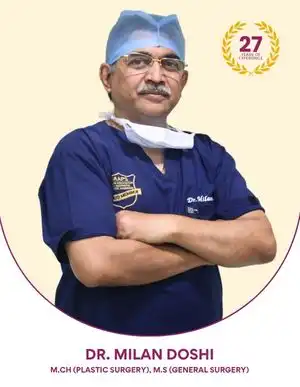
Why Choose Dr. Milan Doshi?
Dr. Milan Doshi, MCh, MS — Indian board-certified plastic surgeon with 27+ years and 500+ PRP treatments who diagnoses before injecting and offers the whole pathway — medical therapy, PRP and hair transplant — so PRP is advised only when it fits. Consults and treats at Andheri West; surgeries at the NABH-accredited surgical centre, Goregaon West.
Dr Doshi Note: “PRP works best in early hair thinning, not advanced baldness. I often combine it with evidence-based medical treatment rather than present it as a replacement. At Allure Medspa, PRP is prepared using a sterile, single-use protocol, while patients with advanced hair loss may be better suited for a hair transplant.”
The Complete Guide About PRP Treatment
What Is PRP Treatment And How Does It Work?
PRP is your own blood spun to concentrate platelets, which release growth factors (PDGF, VEGF) that stimulate follicles and collagen when injected.
- Blood is drawn and centrifuged to separate platelet-rich from platelet-poor plasma
- PRP is injected into the scalp or skin, releasing growth factors that stimulate follicles and collagen; often combined with microneedling
- Autologous — your own cells, so allergy and rejection are essentially not a concern
- Used for early hair loss and thinning, acne scars, dull skin and skin quality
- Regulatory status — not FDA-approved for hair loss or facial rejuvenation; an evidence-supported, off-label regenerative therapy
Synonyms for PRP treatment
PRP therapy, platelet-rich plasma injections, PRP hair restoration, PRP skin rejuvenation and the “vampire facial” describe the same treatments.
- Patient terms: PRP hair treatment, PRP injections for hair, vampire facial, PRP facial, blood facial
- Medical terms: platelet-rich plasma injection, autologous platelet concentrate, activated PRP, intradermal PRP
- NOT synonyms — GFC (growth factor concentrate) is a different preparation with its own planned page; mesotherapy is a vitamin/peptide cocktail → Mesotherapy Treatment
| PRP | GFC (growth factor concentrate) | Mesotherapy | |
|---|---|---|---|
| What it is | Your own platelets, concentrated and activated | Platelet-derived growth factors without the cells | Vitamin / peptide / drug cocktails |
| Evidence | Best-evidenced of the three (43 RCTs) | Emerging; smaller studies | Limited, unstandardised |
| Sessions | 3–4 + maintenance | Fewer claimed 🩺 | 6–10 |
| Page | This page | /gfc/ planned (404 today) 🩺 | Mesotherapy Treatment |
Source: FDA has not approved PRP as a treatment modality for androgenetic alopecia (PMC12480729 — existing live citation).
Does PRP Treatment Actually Work? What Does The Evidence Show?
For early thinning, yes: a 2025 review of 43 randomised trials (1,877 people) found activated PRP raised hair density — but it is not FDA-approved.
| What the research supports | What the research does not support |
|---|---|
| Activated PRP improves hair density — 43 randomised trials, 1,877 participants, versus placebo | FDA approval — for androgenetic alopecia or facial rejuvenation; US regulators treat hair-regenerative therapies as experimental |
| Non-activated PRP performed worse — and was linked to more adverse effects; activation matters | Large definitive trials — studies are typically small; one 35-patient placebo-controlled trial did not reach significance on density |
| Hair count rises measurably — an earlier meta-analysis found a significant gain in hairs per cm² versus control | Standardisation — platelet concentration, activation and spin protocol differ between clinics, so results are not comparable |
| It may improve hair transplant outcomes — supporting graft survival | Superiority to minoxidil or finasteride — the approved first-line treatments |
| Strong facial and skin evidence — weaker than hair, smaller studies | |
| A cure — results fade without maintenance |
What does “activated” PRP mean — and why does it matter?
Activation — usually with calcium chloride — releases growth factors before injection; the 2025 review found activated PRP worked better.
- Ask whether your PRP is activated and with what
- Non-activated preparations rely on the body to trigger release after injection, and performed worse with more side effects in the review
- Activation method is one of the protocol variables that makes clinic results hard to compare
Sources: Activated vs non-activated PRP in alopecia — 43 RCTs, 1,877 participants (Dermatol Ther 2025, s13555-025-01542-8) · Meta-analysis PMC5803844 · FDA status PMC12480729 ·
What Are The Benefits Of PRP Treatment For Hair And Skin?
For hair, PRP extends the growth phase and reduces shedding in thinning areas; for skin, it stimulates collagen to soften scars and improve texture.
| For hair | For skin |
|---|---|
| Stimulates dormant follicles in thinning areas | Stimulates collagen and elastin for firmer texture over months |
| Extends the growth (anagen) phase and counters miniaturisation | Improves acne scarring with microneedling or MNRF → Microneedling RF |
| Reduces hair fall in early loss, in men and women | Softens fine lines; improves skin quality and glow |
| Supports hair transplant results → PRP After Hair Transplant | Supports under-eye rejuvenation → Dark Circle Removal |
| Delivers PDGF, VEGF and cytokines directly to the scalp | Autologous — no synthetic material, no allergy risk |
Which Body Areas Can Be Treated With PRP?
PRP is used on the scalp, face, acne scars, neck, hands and under-eyes; the evidence is strongest for the scalp and progressively weaker for the rest.
| Area | Use | Evidence |
|---|---|---|
| Scalp | Early thinning and loss; supporting transplant outcomes | Best-supported |
| Facial skin | Tone, texture, quality; with microneedling = vampire facial | Moderate, smaller studies |
| Acne and injury scars | With microneedling or alongside scar revision → Acne & Scar Treatment | Among the better skin uses |
| Neck | Early lines and skin quality | Limited |
| Hands | Thin, ageing skin → Hand & Feet Rejuvenation | Limited |
| Stretch marks | Weak; better options → Stretch Mark Removal | Weak |
| Under-eye | Needs particular caution — thinnest skin | Limited |
Who Is A Good Candidate For PRP — And Who Should Avoid It?
Good candidates have early thinning with living follicles or mild skin concerns and normal blood counts; low platelets or clotting disorders exclude.
| You may be a good candidate if you | Avoid it, or seek assessment first, if you have |
|---|---|
| Have early-stage hair loss or mild-to-moderate thinning with follicles present | A low platelet count or platelet dysfunction |
| Have localised thinning patches | A bleeding or clotting disorder, or anticoagulation that cannot safely be adjusted |
| Have mild skin concerns — fine lines, sun damage, uneven tone, acne scars | Active infection at the site, or systemic infection |
| Are in good health with normal blood counts | Active or recent cancer — especially blood cancers |
| Expect results over months with maintenance | Significant anaemia, liver disease or chronic illness |
| Pregnancy or breastfeeding — generally deferred | |
| Advanced baldness with no viable follicles → Hair Transplant Surgery |
- Never stop blood thinners for a cosmetic procedure without your prescribing doctor’s explicit approval
Which Types Of Hair Loss Will PRP Not Fix?
PRP will not fix hair loss from thyroid disease, iron deficiency, stress shedding, scarring alopecia or traction, or bald areas — diagnose first.
| Cause | Why PRP is the wrong first step | What to do |
|---|---|---|
| Thyroid disease, low ferritin, vitamin D deficiency | The shedding is driven by a deficiency or hormone — injecting does not correct it | Blood tests and medical treatment → Hair Loss Treatment |
| Telogen effluvium (shedding after illness, fever, childbirth, crash diets, stress) | Usually recovers on its own in 6–9 months once the trigger passes | Diagnosis, reassurance, treat the trigger |
| Alopecia areata (round patches) | Autoimmune — PRP does not treat the immune process | Dermatological treatment; specialist assessment |
| Scarring alopecia (shiny scalp, itching, burning) | Follicles are being destroyed — urgent medical treatment, not PRP | Same-week specialist review; biopsy |
| Traction alopecia | Caused by tight styling | Stop the traction; PRP only for early, non-scarred cases |
| Smooth, completely bald scalp | No living follicles to stimulate | Hair transplant assessment → Hair Transplant Surgery |
Where on the scalp does PRP work best — hairline or crown?
PRP tends to show most at the crown and mid-scalp where thinning is diffuse; a receded hairline with no follicles rarely refills without a transplant.
| Area | Typical response | Note |
|---|---|---|
| Crown / vertex | Good when thinning is diffuse and recent | Photograph from above with the same lighting |
| Mid-scalp / parting | Good — common in women | Widening part is the classic female pattern |
| Frontal hairline | Limited once the line has receded | Recession with bare skin → hairline transplant |
| Temples | Limited | Sensitive; slower response |
| Beard or eyebrow patches | Little evidence 🩺 | Assess for alopecia areata first |
Does PRP Work For Women’s Hair Loss?
PRP can help early female-pattern thinning once thyroid, iron, PCOS and postpartum shedding are excluded — as support to medical treatment.
- Female-pattern hair loss shows as a widening part rather than a receding hairline
- Blood tests first: thyroid, ferritin, vitamin D, and hormonal screening if periods are irregular or acne is present (PCOS) 🩺
- Postpartum shedding usually recovers by 9–12 months without treatment
- PRP is generally deferred during pregnancy and breastfeeding
- A dedicated female hair loss page is planned in the hair-loss cluster 🩺
Why Is A Consultation Important Before PRP — And How Should You Prepare?
The consultation confirms the cause with trichoscopy and blood tests, decides if PRP fits, and sets the plan; preparation starts 1–3 weeks before.
- Trichoscopy — the ratio of vellus to terminal hairs in the thinning areas
- Root cause — thyroid disease, iron deficiency and telogen effluvium need treating, not injecting
- Honest expectations — what PRP is not approved for and where evidence is thin
- Customised plan — sessions, activation protocol, combination with medical therapy
- Online → Online Consultations · in person → Contact Us · outstation → Outstation Patients · fee ₹1,500 🩺
What are the pre-care instructions before PRP?
Pause steroids 2–3 weeks and NSAIDs 5–7 days only with medical approval, never stop anticoagulants yourself, hydrate, eat and disclose all medicines.
| Pre-care instruction | Why |
|---|---|
| Avoid corticosteroids for 2–3 weeks, if your doctor agrees | They blunt the healing response PRP relies on |
| Pause NSAIDs (ibuprofen, aspirin) for 5–7 days — only with approval | They impair platelet function |
| Never stop anticoagulants on your own | Prescribed for serious reasons; if they cannot be paused, PRP may not be appropriate |
| Hydrate the day before; eat before the appointment | Easier blood draw; avoids fainting |
| Wash hair the morning of the session; no gels, sprays or oils | Clean scalp, lower infection risk |
| Disclose all medicines and supplements | Biotin, iron and blood thinners change the plan |
Which tests may be ordered before PRP for hair loss?
A blood count, ferritin, thyroid profile and vitamin D are the usual baseline; hormone tests are added for women with irregular periods or acne.
| Test | Why it matters 🩺 confirm panel |
|---|---|
| Complete blood count (CBC) with platelets | Low platelets make PRP ineffective and may contraindicate it |
| Serum ferritin | Low iron stores are a common, treatable cause of shedding |
| Thyroid profile (TSH) | Hypo- and hyperthyroidism both cause diffuse loss |
| Vitamin D, B12 | Deficiencies associated with shedding |
| Hormonal panel (women) | PCOS and androgen excess when periods are irregular or acne is present |
| Trichoscopy | Confirms pattern loss, miniaturisation and living follicles |
Questions to ask any PRP clinic
Ask who performs it, whether everything is single-use, whether your tube is labelled in front of you, which spin and activation, and the course cost.
- Will a doctor perform the injections, or a technician?
- Are needles, syringes, tubes and microneedling cartridges single-use and opened in front of me?
- Can I watch my labelled tube go into the centrifuge?
- Single or double spin? Activated? What platelet concentration do you achieve?
- What is the total course cost, including maintenance?
How Is PRP Prepared And Injected? (Step By Step)
Blood is drawn, labelled, spun, activated and injected into the scalp or skin after numbing — about 30–45 minutes, all with single-use equipment.
| Step | What happens |
|---|---|
| 1. Blood draw | A sterile, single-use syringe draws blood from your arm like a routine test; labelled with your identity at once and never left unattended |
| 2. Centrifugation | Spun at a controlled speed to separate platelet-rich from platelet-poor plasma; ACD-A anticoagulant is standard; ask to see your tube go in |
| 3. Activation | PRP activated, commonly with calcium chloride — the 2025 evidence favours activated PRP |
| 4. Numbing | Numbing cream or local anaesthetic |
| 5. Injection | Fine-needle injections into the scalp or dermis, or applied with microneedling; every needle, syringe, cartridge and tube single-use |
| 6. Finish | Scalp cleaned; written aftercare; next session booked in 4–6 weeks |
Single spin or double spin — does the protocol change the result?
Double-spin protocols usually reach higher platelet concentrations than single-spin kits; concentration and activation are rarely disclosed.
| Protocol | What it means | What to ask 🩺 |
|---|---|---|
| Single spin (closed kit) | One centrifugation; quicker; moderate concentration | Which kit, and the concentration achieved |
| Double spin | Second spin concentrates platelets further | Platelet count vs your baseline (×2–×5 is commonly cited) |
| Activated vs non-activated | Calcium chloride or thrombin triggers growth-factor release | Is my PRP activated? |
| Leukocyte-rich vs leukocyte-poor | White cells increase inflammation | Which type is used for hair |
Does PRP Hurt — And What Happens During The Session?
Most patients feel pressure, stinging or warmth rather than pain; numbing cream, cold air or vibration make 30–45 minutes of injections comfortable.
- Mild pressure, stinging or warmth; the hairline and temples are the most sensitive
- Extra numbing, cold compress or a vibration device help if you are sensitive
- Light-headedness during the blood draw is the commonest reason to pause — eat beforehand
- Full appointment 40–90 minutes; you drive or travel home the same day
What Is Skin PRP — And How Does The “Vampire Facial” Work?
Skin PRP is applied during microneedling or injected into the dermis to stimulate collagen; the “vampire facial” is PRP plus microneedling.
| Skin protocol | How it is done | Best for |
|---|---|---|
| PRP + microneedling (vampire facial) | Microneedling channels, then PRP applied and pressed in | Texture, pores, mild acne scars |
| PRP + MNRF | Radiofrequency microneedling with PRP | Deeper acne scars → Microneedling RF |
| Intradermal PRP | Micro-injections into the dermis | Under-eye crepiness, fine lines |
- Expect 24–48 hours of redness after a vampire facial; SPF daily
- Skin evidence is weaker than hair evidence — expect a modest improvement in quality, not a lift
When Will You See Results — And What Are The Long-Term Effects?
Shedding slows at 4–8 weeks, density improves at 3–6 months after 3–4 sessions, peaks at 6–12 months, and fades without maintenance every 4–6 months.
| Time | What you may notice |
|---|---|
| Days 1–3 | Redness, tenderness, mild swelling at the site |
| Weeks 2–4 | Some temporary shedding before regrowth — normal |
| Weeks 4–8 | Reduced shedding; skin patients see better glow and texture |
| 3–6 months (after 3–4 sessions) | Measurable density increase in responsive areas; scar softening |
| 6–12 months | Peak effect; maintenance every 4–6 months keeps it |
| Without maintenance | Gains fade gradually towards the prior state |
What affects how well PRP works for you?
Stage of loss, its cause, age, whether you also use minoxidil or finasteride, the protocol and finishing the course decide how much PRP achieves.
| Factor | Effect |
|---|---|
| Stage of thinning | Early thinning responds; long-standing baldness does not |
| Cause | Pattern loss responds; deficiency, autoimmune or scarring causes do not |
| Combination with medication | PRP + minoxidil / finasteride outperforms either alone in most protocols 🩺 |
| Protocol | Activation and concentration matter |
| Completing the course | Stopping after one session is the commonest reason for “PRP didn’t work” |
| Smoking, crash diets, illness | Reduce response |
What Aftercare Should You Follow After PRP?
No hair wash or skincare for 24 hours, no anti-inflammatories, no gym, steam or colouring for 2–3 days, cold compresses, and report fever at once.
| Aftercare | Why |
|---|---|
| Expect mild swelling, tenderness or redness for 3–5 days | Part of the mechanism |
| Avoid ibuprofen or aspirin unless your doctor approves | They blunt the growth-factor response |
| Cold compresses 2–3 times daily for 10–20 minutes | Eases swelling |
| No hair wash or skincare for 24 hours | Lets injection sites close |
| Skip workouts, steam, head massage, straightening, colouring for 2–3 days | Avoids irritation and infection |
| SPF if PRP was on the face | Protects healing skin |
| Call the clinic for spreading redness, fever or escalating pain | May signal infection |
What Are The Risks Of PRP — And Is The “Vampire Facial” Safe?
Redness, tenderness and bruising are common and brief; the serious risk is infection from reused equipment, as a 2024 CDC HIV investigation showed.
| Category | Risk | Detail |
|---|---|---|
| Common, temporary | Redness and mild swelling | Settles within 48–72 hours |
| Common, temporary | Tenderness or scalp soreness | 3–5 days |
| Common, temporary | Bruising at injection or blood-draw site | Resolves over days |
| Common, temporary | Temporary shedding | Before regrowth |
| Uncommon | Infection at the injection site | Sterile technique is everything |
| Uncommon | Adverse effects with non-activated PRP | Reported more often than with activated PRP |
| Uncommon | Fainting during the blood draw | Vasovagal reaction |
| The serious risk | Bloodborne infection from unsterile equipment | CDC / New Mexico: four clients of one unlicensed spa and one partner diagnosed with HIV (2018–2023) after reused single-use equipment in PRP microneedling — the first documented HIV transmission via cosmetic injection services |
What does a safe PRP clinic look like?
A licensed, accredited facility, a doctor injecting, single-use everything, your tube labelled in front of you, and proper records for every session.
- Licensed and accredited, with documented infection-control protocols
- Single-use needles, syringes, cartridges and tubes — nothing reused
- Your tube labelled in front of you and never leaving the room
- A qualified doctor performs it — not an unsupervised technician
- Proper records — the New Mexico investigation was hampered because the spa kept none
Sources: CDC MMWR 2024;73(16) — presumptive HIV transmission from PRP microneedling facials, New Mexico 2018–2023 · The Aesthetic Society patient-safety statement · non-activated PRP adverse effects (2025 review) .
What Are The Limitations Of PRP Treatment?
PRP takes months, cannot revive dead follicles, needs 3–4 sessions plus maintenance, varies by person, and has not been shown to beat minoxidil.
| Limitation | Why it matters |
|---|---|
| Results take months | PRP does not stop hair loss immediately |
| No effect on dead follicles | Completely bald areas will not respond |
| Multiple sessions and maintenance | Cost and commitment are ongoing |
| Variable response | Age, genetics, lifestyle and severity all matter |
| Not a replacement for medical therapy | No evidence it outperforms minoxidil or finasteride |
| Protocols vary between clinics | Another clinic’s result may not predict yours |
| Maintenance text still unconfirmed | LIVE page publishes “[clinic to confirm one interval]” twice — remove the bracket 🩺 |
How Does PRP Compare With Minoxidil, Finasteride And A Hair Transplant?
Minoxidil and finasteride are the approved foundation, PRP supports living follicles, and a transplant is the only option once follicles are gone.
| Factor | PRP | Minoxidil / finasteride | Hair transplant |
|---|---|---|---|
| Regulatory status | Not approved for hair loss | FDA-approved, first-line | Established surgery |
| What it does | Stimulates existing follicles | Slows loss, promotes growth | Relocates living follicles |
| Works on dead follicles? | No | No | Yes — the only option |
| Timeline | 3–6 months | 4–6 months | 9–12 months to full growth |
| Ongoing use | Maintenance sessions | Daily, indefinitely | One-time (may need a second) |
| Best used | Alongside medication, or to support a transplant | As the foundation | When thinning is advanced |
| Owner page | This page | Hair Loss Treatment | Hair Transplant Surgery · cost Hair Transplant Cost |
Can PRP be used with a hair transplant?
Yes — PRP may support graft survival and post-transplant growth; timing and sessions after surgery are covered on the PRP aftercare page.
- Discuss PRP as part of the transplant plan, not as a separate purchase
- Post-transplant timing and session count → PRP After Hair Transplant
- Transplant candidacy and cost → Hair Transplant Surgery · Hair Transplant Cost
Source: PMC5803844 — PRP vs minoxidil / finasteride; PRP may improve transplantation outcomes
How Many PRP Sessions Will You Need?
Most hair patients need 3–4 sessions 4–6 weeks apart, skin patients 2–3, then a maintenance session every 4–6 months to hold the result.
| Plan | Sessions | Spacing |
|---|---|---|
| Hair — initial course | 3–4 | 4–6 weeks apart |
| Skin — initial course | 2–3 | 4–6 weeks apart |
| Maintenance | 1 | Every 4–6 months 🩺 (live text still says “[clinic to confirm one interval]”) |
| Advanced thinning or deep scarring | May need more | Reassessed at 3 months |
What does PRP cost over a year — and over five?
A 4-session hair course plus 2 maintenance sessions costs about ₹30,000–₹42,000 in year one, then ₹10,000–₹21,000 a year to maintain.
- Year one: 4 × ₹5,000–₹7,000 + 2 maintenance = ₹30,000–₹42,000 🩺 arithmetic on the hair rate
- Later years: 2–3 maintenance sessions = ₹10,000–₹21,000 a year
- Compare with daily medication (owner page Hair Loss Treatment) and, for advanced loss, a one-time transplant (Hair Transplant Cost)
Medical Codes for PRP Treatment
PRP is coded with CPT 0232T (platelet-rich plasma injection) and ICD-10 L64.9 or L65.9 for hair loss, L90.5 for scars and Z41.1 for cosmetic use.
| Code | Description | Note |
|---|---|---|
| ICD-10 L64.9 | Androgenic alopecia, unspecified | The usual PRP hair indication |
| ICD-10 L65.9 | Nonscarring hair loss, unspecified | PRP hair restoration |
| ICD-10 L63.9 | Alopecia areata, unspecified | PRP does not treat the autoimmune process |
| ICD-10 L90.5 | Scar conditions and fibrosis of skin | Acne-scar PRP |
| ICD-10 R23.4 | Changes in skin texture | Skin PRP |
| ICD-10 Z41.1 | Encounter for cosmetic procedure | Rejuvenation |
| CPT 0232T | Injection(s), platelet-rich plasma, any site, incl. harvesting and preparation | Primary PRP code |
| CPT 86999 | Unlisted transfusion medicine procedure | If preparation billed separately |
| CPT 17999 | Unlisted procedure, skin | When no specific code applies |
(FAQs) Frequently Asked Question About PRP Treatment
Q1. How many sessions will I need?
Ans. Typically 3–4 for hair and 2–3 for skin, 4–6 weeks apart, then maintenance. Ask for the total course cost.
Q2. What is the PRP success rate?
Ans. There is no single reliable figure, and any clinic quoting one should be asked for its source. Activated PRP improved density versus placebo across 43 trials, with results varying by person and protocol.
Q3. What are the risks?
Ans. Common: redness, swelling, tenderness, bruising, temporary shedding. Uncommon: infection, fainting during the blood draw. The serious risk is infection from reused equipment, not from PRP itself.
Q4. Who should not have PRP?
Ans. Anyone with low platelets or a platelet disorder, a bleeding or clotting disorder, active infection, active cancer, significant anaemia or liver disease, or who is pregnant.
Q5. Are PRP results permanent?
Ans. No. Results are maintained with periodic sessions; if you stop, growth gradually returns towards its previous state.
Q6. What are the disadvantages of PRP?
Ans. Multiple sessions, results take months, no effect on advanced baldness, not approved for hair loss, and ongoing maintenance.
Q7. Can PRP help my hair transplant?
Ans. It may support graft survival and follicular activity. Plan it with your surgeon — timing after surgery is on the PRP After Hair Transplant page.
Q8. Can I wash or comb my hair after PRP?
Ans. Wait 24 hours before washing; comb gently after 24 hours; avoid harsh brushing on the day.
Q9. Can I colour or straighten my hair after PRP?
Ans. Wait at least 2–3 days, ideally a week, before colouring, straightening or chemical treatments.
Q10. Is PRP good for dandruff or an itchy scalp?
Ans. No — dandruff and seborrhoeic dermatitis need medicated treatment. Itching with burning or shiny patches needs urgent review for scarring alopecia.
Q11. Is GFC better than PRP?
Ans. GFC uses growth factors without cells and claims fewer sessions; evidence is still emerging. A dedicated GFC page is planned 🩺.
Q12. Does PRP work for women?
Ans. For early female-pattern thinning, alongside medical treatment and after blood tests — yes, it can help; it will not fix deficiency or thyroid-driven shedding.
Q13. At what age does PRP work best?
Ans. Age matters less than stage: men and women in their 20s–40s with early thinning tend to respond best.
Q14. How much does PRP cost in Mumbai?
Ans. About ₹5,000–₹7,000 per hair session and up to ₹25,000 for skin protocols (+5% GST 🩺). Ask for the total course cost.