

Indian Board Certified Plastic Surgeon
M.CH, MS, ISAPS Mentor
16000+ Cosmetic Surgeries
1100+ Inverted Nippple Surgeries
Inverted Nipple Correction Surgery in Mumbai — Safe, Natural Results
Inverted nipple correction surgery is a short procedure, usually under local anaesthesia, that releases the tight ducts or fibrous bands pulling a nipple inward, restoring a natural outward projection. It treats all three grades of inversion. One important point first: an inversion present since puberty is almost always harmless, but a nipple that has recently turned inward — especially in one breast — should be medically assessed before any cosmetic surgery.
What Is Inverted Nipple Correction Surgery?
Inverted nipple correction surgery is a cosmetic and functional procedure that corrects nipples which point inward instead of outward, by releasing the shortened milk ducts or tight connective tissue holding them retracted. It is usually done under local anaesthesia in under an hour, with minimal downtime.
Releases the tether — the short ducts or fibrous bands pulling the nipple in are divided or loosened
Restores projection — the nipple is everted and supported to point outward naturally
Treats all grades — from mild (Grade 1) to fully retracted (Grade 3)
Local anaesthesia, day-care — most patients go home the same day
Synonyms of Inverted Nipple Correction Surgery
nipple correction surgery, inverted nipple repair, nipple eversion surgery, nipple retraction surgery
Related breast procedures — breast augmentation, breast reduction, breast lift and breast asymmetry correction
Inverted Nipple Correction Surgery Before and After Images
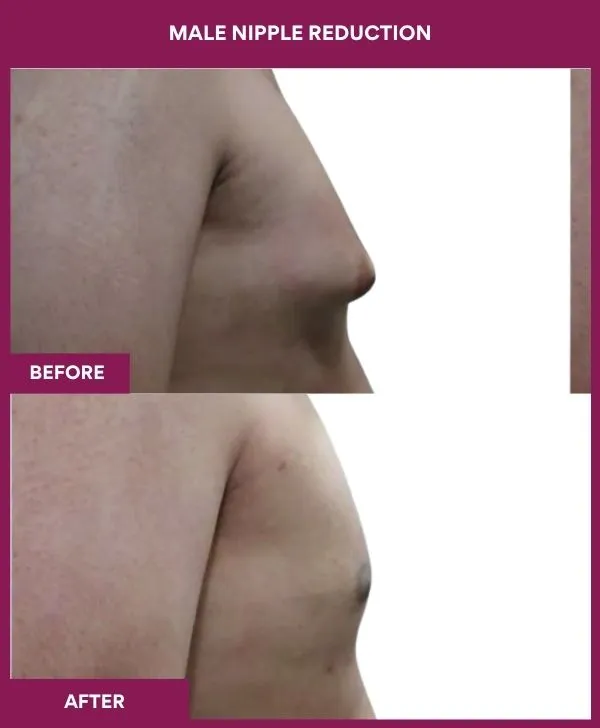
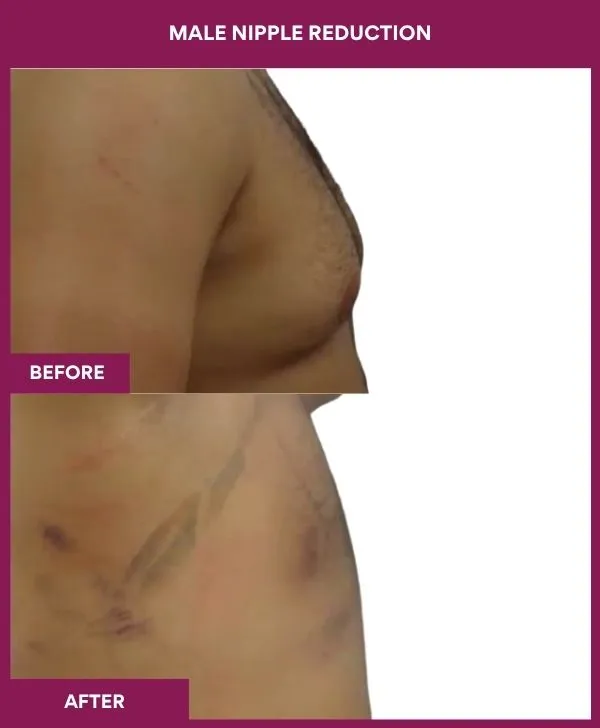
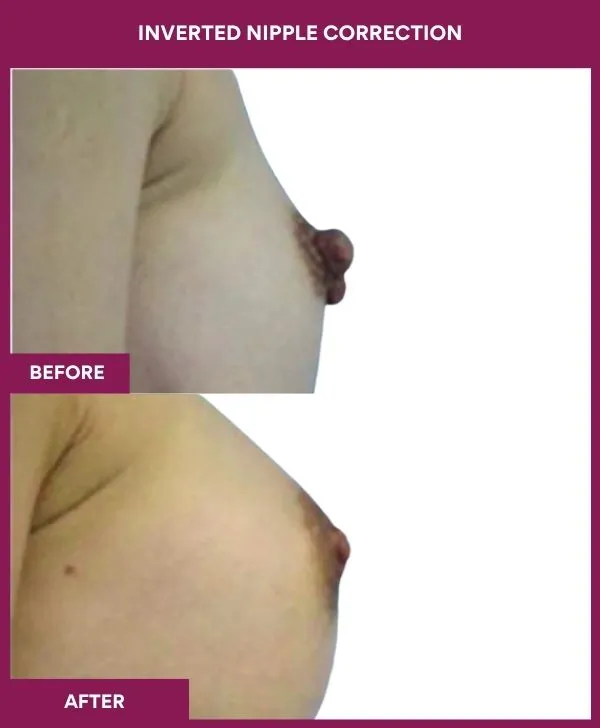
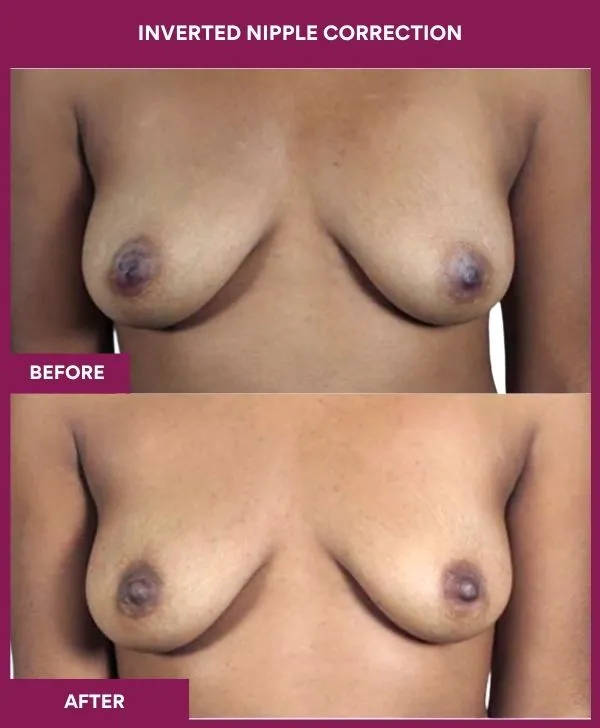
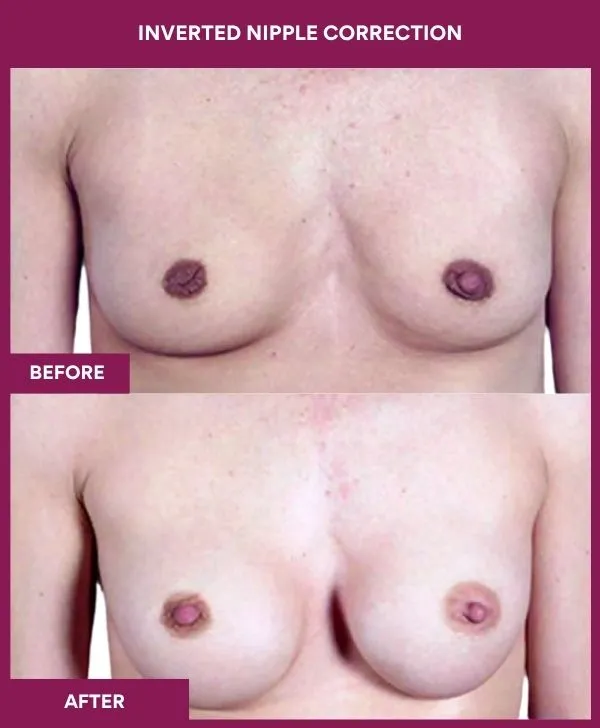
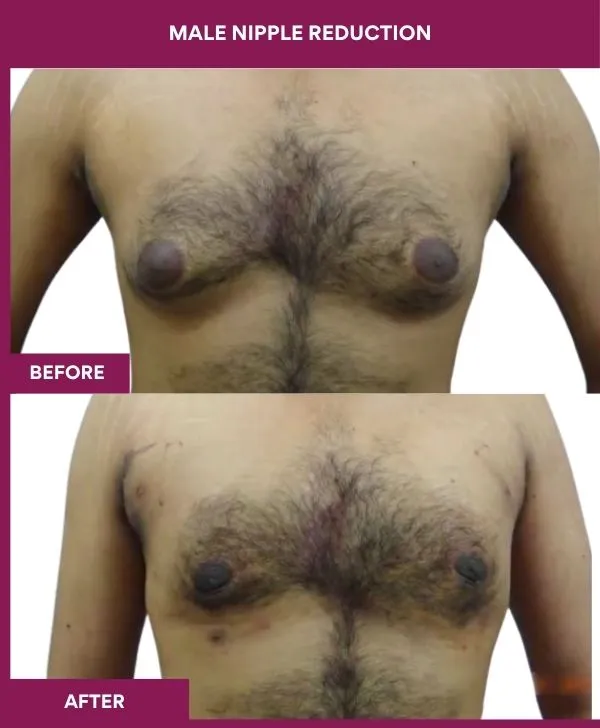
“Liked the results? Let's plan yours.”
Inverted Nipple Correction Surgery Testimonials: Fine To Fabulous Journeys

Awarded by Google.com
Rating: 4.7
Reviews: 485+

Awarded by WhatClinic.com
Rating: 4.8
Reviews: 119+

Awarded by Realself
Rating: 4.9
Reviews:453+

Awarded by Facebook
Rating: 4.6
Reviews:105+
Dr Milan Doshi and his staff are very professional and committed as the centre is highly equipped with advanced technology. I had closed rhinoplasty 4 months back and I’m seeing the results as to how it becomes successful.
Deepika Shetty
The doctor explained everything clearly and the surgery was smooth. Recovery was faster than I expected and the team was very supportive.
Rahul Mehta
Very natural results and excellent staff. From consultation to follow-up, the experience was outstanding and boosted my confidence.
Sneha Kapoor
“Get Cost For Inverted Nipple Surgery”
Do Your Inverted Nipples Affect Your Confidence?
If flat or retracted nipples make you self-conscious, inverted nipple correction surgery offers a safe, quick and lasting solution — once any medical cause has been ruled out.
Do your nipples appear flat, sunken, or pulled inward instead of projecting outward?
Do you feel insecure in intimate moments, or avoid certain clothes because of nipple appearance?
Have breastfeeding challenges or post-pregnancy changes left you frustrated and self-conscious?
You are not alone. Inverted nipples affect many people — estimated at up to around 10–20% — often leading to embarrassment, reduced confidence, and sometimes functional problems like difficulty nursing or trapped moisture and irritation. While it may feel like a small concern, its emotional impact can be real, affecting wardrobe choices, intimacy and body confidence.
The good news is that inverted nipple correction surgery offers a safe, quick and effective solution. This minor procedure, usually under local anaesthesia, releases the shortened ducts or connective tissue to restore a natural outward projection — a more confident you, aesthetically and emotionally. Where the milk ducts can be preserved, breastfeeding may still be possible; where they must be divided, it usually is not. Your surgeon will talk you through that choice honestly before you decide.
Global & Indian trends (2024)
Over 2.2 million breast procedures were performed worldwide, with nipple procedures increasingly done as part of combined breast enhancement.
In India, demand for corrective breast surgery, including inverted nipple repair, continues to rise.
Source: ISAPS Global Survey 2024
“Get Cost For Inverted Nipple Surgery”
Quick Facts About Inverted Nipples Surgery
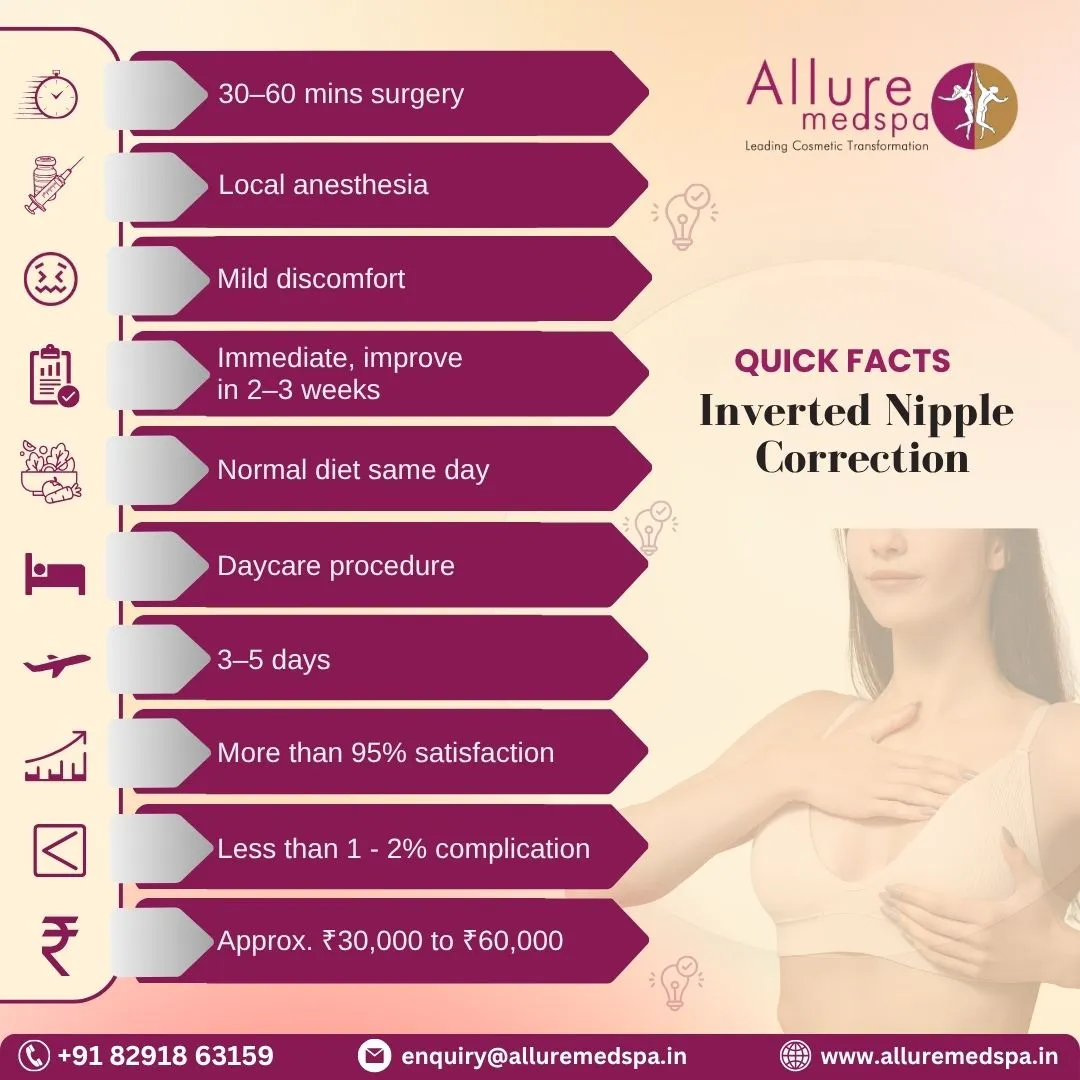
| Time Required | 30–60 Mins |
| Anesthesia | Local Anesthesia |
| Pain Level | Mild Discomfort |
| Hospital Stay | 1–2 Days |
| Flyback | 3–5 Days |
| Success Rate | 97% to 98% |
| Result | Major improvement immediately; final result in 2–3 weeks |
| Diet | No Restrictions |
| Complication Rate | Less than 1–2% |
| Cost | INR 30,000 to 60,000 Approx. |
“Get Cost For Inverted Nipple Surgery”
When Is an Inverted Nipple a Warning Sign You Shouldn't Ignore?
Most inverted nipples are harmless — but a newly inverted nipple in an adult, especially in one breast, can occasionally be an early sign of breast cancer and must be medically evaluated before any cosmetic correction. An inversion you’ve had since puberty is almost always a benign anatomical trait.
Congenital vs acquired — the key distinction
Congenital (since puberty) — present since your breasts developed; a normal anatomical variation with almost no cancer risk. This is what surgery safely corrects
Acquired (new-onset) — a nipple that used to point outward and has recently turned inward. This needs assessment before anything else
See a doctor promptly if a newly inverted nipple comes with:
One-sided change — sudden inversion of a single nipple that was previously normal
A breast lump — any new lump or thickening in the breast or armpit
Nipple discharge — especially bloody or clear discharge from one duct
Skin changes — dimpling, puckering, redness, or an eczema-like scaly, crusting or itchy nipple (which can indicate Paget’s disease, a form of breast cancer)
Persistent changes — anything that doesn’t settle, or is new after age 40 or with a family history of breast cancer
What a proper assessment involves
Clinical examination — of both breasts and the armpits
Imaging — ultrasound and/or mammography to confirm the cause is benign
Then, and only then, cosmetic correction — once malignancy is excluded, surgery is a safe, appropriate choice
Sources: Inverted nipples and breast cancer — when new-onset inversion is a red flag, Acquired inversion and malignancy risk; congenital inversion benign
🩺 Dr. Milan Doshi’s note:
“I always ask when the inversion began, whether it affects one or both breasts, and check for any lump, discharge, or skin change. A newly inverted nipple—especially on one side—must be evaluated with appropriate imaging before cosmetic correction. Surgery is considered only after a serious underlying cause has been excluded.”
“Get Cost For Inverted Nipple Surgery”
What Are the Causes and Grades of Inverted Nipples?
nverted nipples are caused by short milk ducts or tight fibrous bands tethering the nipple inward, and are graded 1 to 3 by how easily the nipple can be drawn out — which guides whether treatment is non-surgical or surgical.
The three grades
Grade 1 (mild) — the nipple protrudes easily with touch or cold and stays out for a while; ducts usually normal. Often suits non-surgical methods
Grade 2 (moderate) — the nipple can be drawn out but retracts quickly; some ductal shortening
Grade 3 (severe) — the nipple stays fully retracted and cannot be pulled out; dense fibrosis and short ducts. Surgery, often with duct division, is usually needed
Common causes
Congenital — short ducts or fibrous bands present since puberty; the most common cause, and benign
After breastfeeding or pregnancy — changes in the ducts can draw the nipple in
Duct ectasia or infection — mammary duct ectasia and past mastitis can scar and tether the nipple
Trauma or previous breast surgery — scarring can pull the nipple inward
Breast cancer — a rarer but important cause of NEW inversion; see the warning-signs section above
Source: Inverted nipple grades and causes; StatPearls treatment algorithm
“Get Cost For Inverted Nipple Surgery”
What Are the Benefits of Inverted Nipple Correction Surgery?
Inverted nipple correction offers both cosmetic and functional benefits — a natural outward projection, improved confidence, and relief of the hygiene and irritation problems that deep inversion can cause.
Natural appearance — an outward projection that matches your breast contour
Improved confidence — many patients report greater comfort in intimate settings and clothing
Better hygiene — deep inversion can trap moisture and debris, causing irritation or recurrent infection; correction relieves this
Quick and minimally invasive — local anaesthesia, day-care, back to work in 1–2 days
Can be combined — often done alongside breast augmentation, reduction or lift
“Get Cost For Inverted Nipple Surgery”
Who Is the Right Candidate for Inverted Nipple Correction Surgery?
You are a good candidate for inverted nipple correction if your inversion is longstanding (or a new inversion has been medically cleared), you are in good general health, and you have realistic expectations — including about breastfeeding.
Persistent inversion — nipples that stay retracted or don’t respond to stimulation
Medically cleared — any newly acquired inversion has been evaluated and a serious cause excluded
Aesthetic or functional concern — self-consciousness, or hygiene and irritation problems
Good health — non-smoker or willing to stop; no uncontrolled medical conditions
Breastfeeding considered — especially for Grade 3, where ducts may be divided; ideally after completing your family if duct division is likely
Realistic expectations — understanding the small recurrence rate and the breastfeeding trade-off
“Get Cost For Inverted Nipple Surgery”
What Are the Different Types of Nipple Surgery?
Nipple surgery covers correction of inverted nipples and reduction of enlarged nipples — done alone or with other breast procedures.
Inverted nipple correction — releases the tension or ducts pulling the nipple inward to restore projection
Nipple reduction — reduces the width or length of enlarged nipples for a more proportionate look
Combined with — breast lift, augmentation or reduction, where appropriate
“Get Cost For Inverted Nipple Surgery”
Duct-Preserving or Duct-Dividing? The Inverted Nipple Surgery Choice That Affects Breastfeeding
There are two broad surgical approaches to inverted nipple correction: duct-preserving (which aims to keep breastfeeding possible) and duct-dividing (which cuts the ducts, usually preventing breastfeeding on that side but giving the most reliable, lasting correction). The right choice depends on your grade and your plans.
Duct-preserving (duct-sparing) technique
What it does — releases the fibrous bands while keeping the milk ducts intact
Best for — Grade 1–2, and anyone who wants to keep the option of breastfeeding
Breastfeeding — may still be possible, though never guaranteed by any nipple surgery
Trade-off — a slightly higher chance the inversion returns, because the underlying tether isn’t fully divided
Duct-dividing technique
What it does — divides the short milk ducts that anchor the nipple
Best for — Grade 3, where the ducts are too short to release any other way
Breastfeeding — usually not possible on the treated side afterwards; this is irreversible
Trade-off — the most reliable, lasting correction with the lowest recurrence
How the decision is made
Your lactation wishes come first — recognised treatment algorithms put your breastfeeding plans at the centre of the choice, because duct division is irreversible
Then the grade — severe Grade 3 inversion often leaves duct division as the only option that works
An honest conversation — if you may want to breastfeed, say so before surgery; it directly shapes the technique
Sources: StatPearls: treatment algorithm centres on the patient’s lactation wishes; duct-damaging procedures cause irreversible loss of breastfeeding, Duct-preserving ~97.6% success/1.5% recurrence vs duct-dividing ~99.1%/0.9% in a 3,300-case review
“Get Cost For Inverted Nipple Surgery”
Why Is Consultation Important Before Inverted Nipple Correction Surgery?
A consultation confirms the cause of your inversion, excludes anything serious, and matches the technique to your grade and your breastfeeding plans — so the result is both safe and right for you.
Rules out a medical cause — particularly for any newly acquired or one-sided inversion
Grades the inversion — Grade 1, 2 or 3, which determines surgical vs non-surgical options
Plans the technique — duct-preserving or duct-dividing, based on your anatomy and lactation wishes
Medical safety check — history, medications and allergies reviewed
Sets expectations — results, downtime, recurrence risk and breastfeeding, made clear before you decide
“Get Cost For Inverted Nipple Surgery”
How Is Inverted Nipple Correction Surgery Performed?
Inverted nipple correction is a quick, minimally invasive procedure under local anaesthesia: a small incision at the base of the nipple releases the tight fibres or ducts, and the everted nipple is supported with fine sutures.
Small incision — at the base of the nipple, where any scar is well hidden
Release the tether — the fibrous bands (and, if needed, the short ducts) pulling the nipple in are divided
Support the projection — internal sutures hold the nipple everted while it heals
Duration — about 30 minutes total, roughly 15 minutes per nipple
Can be combined — with augmentation, reduction or lift (where general anaesthesia may then be used)
What is the downtime?
Same-day home — a day-care procedure under local anaesthesia
Mild discomfort — controlled with prescribed medication
Breastfeeding note — if ducts are divided, breastfeeding on that side may not be possible; confirm your plans beforehand
“Get Cost For Inverted Nipple Surgery”
What Should I Expect During Recovery After Inverted Nipple Correction Surgery?
Recovery from inverted nipple correction is quick — most people return to work within 1–2 days, with only mild, manageable discomfort and full healing over a few weeks.
Home the same day — a day-care procedure; no hospital stay
Mild discomfort and swelling — expected for a few days, easily controlled
Back to work — usually within 1–2 days; avoid strenuous activity and chest/upper-body exercise for about 2 weeks
Protect the nipple — a supportive dressing or garment, and avoid pressure on the area as advised
Healing time — dissolvable sutures; full healing over 2–4 weeks
Follow-up — review visits confirm healing and result
“Get Cost For Inverted Nipple Surgery”
How Safe Is Inverted Nipple Correction Surgery?
Inverted nipple correction is a safe, minor procedure with a low complication rate, particularly when performed under local anaesthesia by an experienced, board-certified plastic surgeon in an accredited facility.
Local anaesthesia — avoids the risks of general anaesthesia for a standalone correction
Minimally invasive — a small incision and dissolvable stitches
Quick recovery — back to work in 1–2 days
Low complication rate — infection, scarring or asymmetry are uncommon and usually manageable
Experience matters — outcomes are best with a board-certified plastic surgeon in a NABH-accredited centre
“Get Cost For Inverted Nipple Surgery”
What Are the Risks and Complications of Inverted Nipple Correction Surgery?
Inverted nipple correction is low-risk, but like any surgery it carries some possibilities you should understand — the most important being loss of breastfeeding if ducts are divided, and a small chance of recurrence.
Loss of breastfeeding — if milk ducts are divided (typically Grade 3), breastfeeding on that side is usually no longer possible. This is the key trade-off
Recurrence — the nipple can retract again in roughly 5–10% of cases, mostly within the first year, more so with duct-preserving techniques in severe inversion
Changed nipple sensation — temporary numbness or altered sensation is common; permanent change is uncommon
Infection — uncommon in a sterile, accredited facility; treatable with proper aftercare
Scarring — usually minimal and hidden at the nipple base
Asymmetry or overcorrection — uncommon, and usually correctable
Minimise the risk — choose a board-certified surgeon and an accredited centre, and follow aftercare carefully
“Get Cost For Inverted Nipple Surgery”
How Much Does Inverted Nipple Correction Surgery Cost in Mumbai, India?
The cost of inverted nipple correction surgery in Mumbai is approximately ₹30,000 to ₹60,000, depending on whether one or both nipples are treated, the technique used, and whether it’s combined with another breast procedure. EMI options are on our payment process page.
What changes the price — unilateral vs bilateral, duct-sparing vs duct-dividing, surgeon’s experience, and facility
Anaesthesia — local for a standalone correction; general if combined with augmentation, reduction or lift
Combined procedures — cost more overall but share the operating and anaesthesia time
Not included — pre-operative tests, take-home medication, and management of rare complications
Usually not covered by insurance — as a cosmetic procedure; though correction of a medically significant cause may differ. Book a consultation for an exact quote
“Get Cost For Inverted Nipple Surgery”
Who Is the Best Surgeon for Inverted Nipple Correction in Mumbai, India?
Dr. Milan Doshi, a board-certified plastic surgeon and founder of Allure Medspa, is widely trusted for inverted nipple correction — combining screening for any medical cause with precise, natural-looking correction.
Board-certified — M.Ch (Plastic Surgery), MS; member of ASPS, ISAPS, APSI, IAAPS; ISAPS Mentor; 27+ years
Experienced in nipple surgery — routinely performs inverted nipple correction across all grades [clinic to confirm the case number; see flag]
Screens first — assesses whether an inversion is congenital or newly acquired before proposing cosmetic surgery
Technique matched to you — duct-preserving or duct-dividing, based on your grade and breastfeeding plans
Patient-centric — personalised care, detailed follow-up, transparent guidance
“Get Cost For Inverted Nipple Surgery”
Which Is the Best Cosmetic Surgery Centre for Inverted Nipple Correction in Mumbai, India?
Allure Medspa is a NABH-accredited cosmetic surgery centre in Mumbai offering inverted nipple correction with a discreet, safety-first, dual-location model.
Two centres — Andheri West for consultations and non-surgical care; Goregaon West, the NABH-accredited surgical centre, for procedures
Accredited and equipped — dual operation theatres, ETO and autoclave sterilisation, real-time monitoring
Privacy — strict confidentiality for a sensitive, personal procedure
Comfortable recovery — private rooms for anyone needing a combined, larger procedure
Outstation and overseas patients — supported through our outstation patients guide
“Get Cost For Inverted Nipple Surgery”
Medical Code for Inverted Nipple Correction Surgery
ICD-10 Codes for Inverted Nipple Correction Surgery
| ICD-10 Code | Description |
|---|---|
| N64.59 | Other signs and symptoms in breast (commonly used for nipple inversion) |
| N64.89 | Other specified disorders of breast (general category for nipple deformities) |
| Q83.9 | Congenital malformation of breast, unspecified (if nipple inversion is congenital) |
| Z41.1 | Encounter for cosmetic surgery (when correction is for aesthetic reasons) |
CPT Codes for Inverted Nipple Correction Surgery
| CPT Code | Description |
|---|---|
| 19350 | Nipple/areola reconstruction (used for surgical correction of inverted nipple) |
| 19499 | Unlisted procedure, breast (used if no other specific code applies) |
(FAQs) Frequently Asked Question About Inverted Nipple Correction Surgery
Q1. When is an inverted nipple a sign of something serious?
Ans. An inversion you’ve had since puberty is almost always harmless. But a nipple that has recently turned inward — especially in one breast, or with a lump, discharge, or eczema-like skin changes — should be checked by a doctor before any cosmetic surgery, as new-onset inversion can occasionally be a sign of breast cancer.
Q2. Can surgery fix inverted nipples?
Ans. Yes. Inverted nipples, especially Grade 2 and 3, can be corrected surgically by releasing the tight ducts or fibrous bands pulling the nipple inward. Results are usually lasting, with a small recurrence rate.
Q3. Can I fix inverted nipples without surgery?
Ans. Grade 1 and mild Grade 2 inversions can sometimes be improved with suction devices such as a nipple retractor, though results may not be permanent. Fixed Grade 3 inversion generally needs surgery.
Q4. Will I be able to breastfeed after surgery?
Ans. It depends on the technique. Duct-preserving surgery (usually Grade 1–2) may keep breastfeeding possible, though it’s never guaranteed. Duct-dividing surgery (usually Grade 3) generally means breastfeeding is no longer possible on that side. If you may want to breastfeed, tell your surgeon before surgery.
Q5. What’s the difference between duct-preserving and duct-dividing surgery?
Ans. Duct-preserving keeps the milk ducts intact to protect breastfeeding, with a slightly higher chance of recurrence. Duct-dividing cuts the ducts for the most reliable, lasting correction, but usually ends breastfeeding on that side. Your grade and your plans decide which is right.
Q6. Is the surgery painful?
Ans. Discomfort is usually mild and lasts a day or two, managed with simple painkillers. It’s done under local anaesthesia, so the procedure itself is painless.
Q7. How long is recovery?
Ans. Most people return to work within 1–2 days and resume exercise after about 2 weeks. Full healing takes 2–4 weeks.
Q8. Are the results permanent?
Ans. Usually long-lasting, but not guaranteed permanent — the nipple retracts again in roughly 5–10% of cases, mostly in the first year. Pregnancy and hormonal changes can also affect the result.
Q9. What is the success rate?
Ans. High — published series report roughly 90–99% depending on the grade and technique, with duct-dividing methods giving the most reliable correction. Success is best with an experienced surgeon.
Q10. At what age can it be done?
Ans. Usually after puberty, once the breasts are fully developed. Adults of any age can have it, depending on health and goals.
Q11. Will I have a visible scar?
Ans. The incision is small and placed at the base of the nipple, so any scar is usually very hard to see once healed.
Q12. Will I lose nipple sensation?
Ans. Temporary changes in sensation are common and usually settle as healing progresses. Permanent change is uncommon.
Q13. Can it be combined with breast augmentation or lift?
Ans. Yes. Many patients combine inverted nipple correction with augmentation, reduction or a lift. General anaesthesia may be used for the combined procedure.
Q14. What anaesthesia is used?
Ans. Local anaesthesia for a standalone correction. General anaesthesia only if it’s combined with a larger breast procedure.
Q15. Can nipple correction go wrong?
Ans. Complications are uncommon but can include infection, asymmetry, overcorrection or recurrence. Choosing an experienced, board-certified surgeon in an accredited centre keeps the risk low.
Q16. Can I drive after the procedure?
Ans. Wait at least 1–2 days before driving or strenuous activity, and follow your surgeon’s specific advice.
Q17. How much does it cost in Mumbai?
Ans. Approximately ₹30,000 to ₹60,000, depending on one or both sides, the technique, and whether it’s combined with another procedure. Book a consultation for an exact quote.
Q18. Do men get inverted nipple correction?
Ans. Yes — inverted nipples affect men too, and correction is available. Where enlarged male breast tissue is also a concern, it may be assessed alongside gynaecomastia.
“Get Cost For Inverted Nipple Surgery”
Related Links
Note: The author of this content is Dr. Milan Doshi, An Indian board-certified plastic & cosmetic Surgeon wholly & solely confirms the authenticity of the information & knowledge delivered by this write-up.