Scar Revision Surgery in Mumbai: Improving Scars, Honestly Explained
Indian Board Certified Plastic Surgeon
M.CH, MS, ISAPS Mentor
16000+ Cosmetic Surgeries
500+ Scar Revision Surgery
Scar revision makes a scar flatter, finer and better matched to the skin around it, and can release a tight scar that limits movement. Dr. Milan Doshi chooses the method by scar type: silicone, steroid injections, laser or microneedling for many scars, and excision, Z-plasty, grafts or flaps when surgery is needed. Most surgical revisions take 30 minutes to 2 hours under local anaesthesia as day care, stitches come out in 5–10 days, and the scar keeps improving for 6–12 months. At Allure Medspa it costs about ₹20,000–₹80,000. No treatment erases a scar completely — the honest aim is a scar that is much less noticeable. Keloids are different: they need combination treatment, never surgery alone.
Scar Revision Surgery Before and After
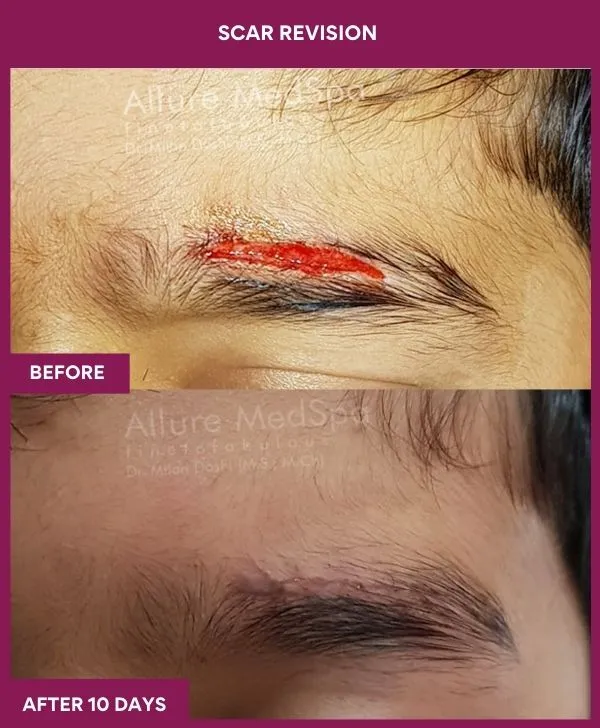
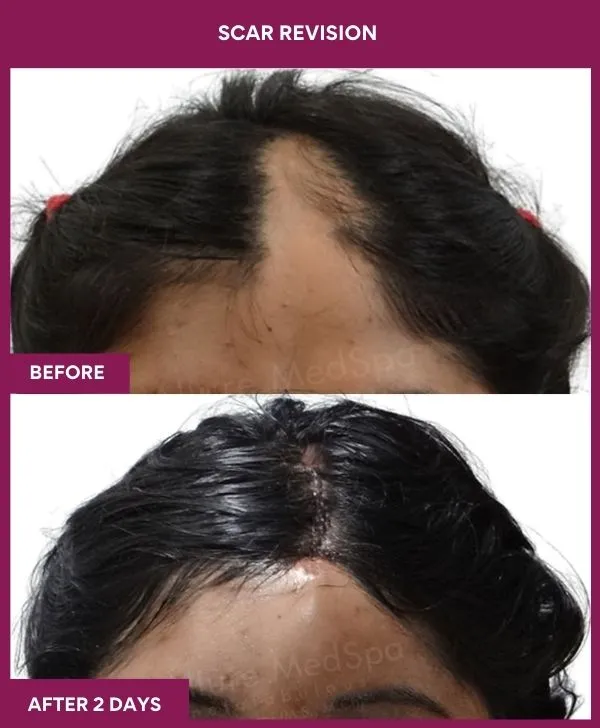
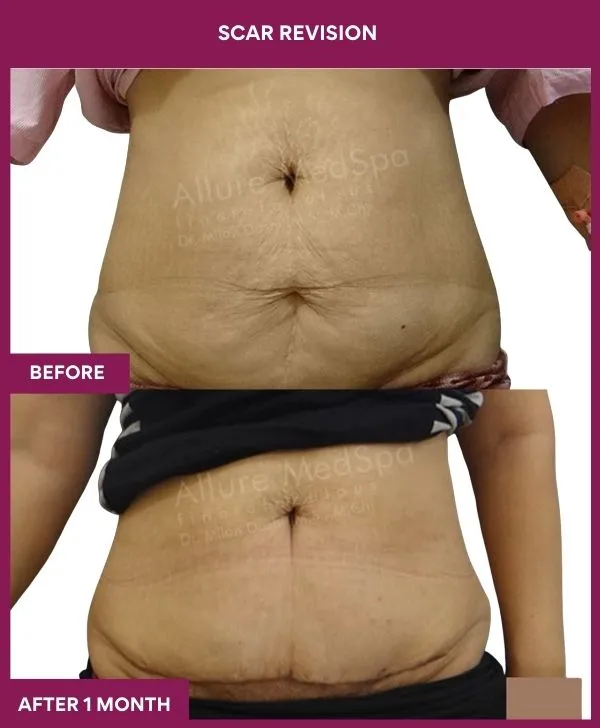
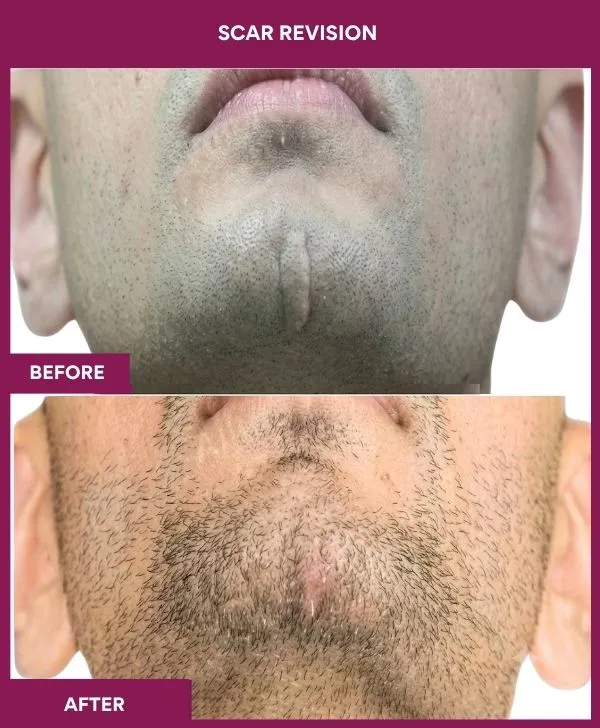
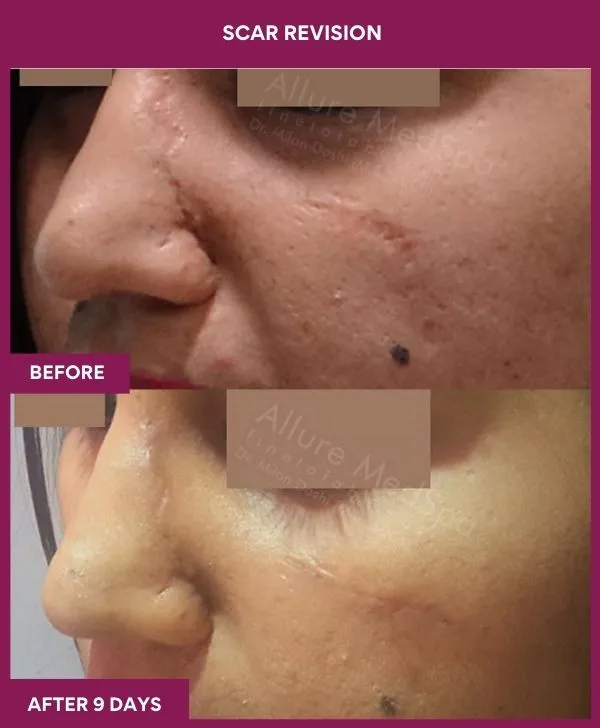
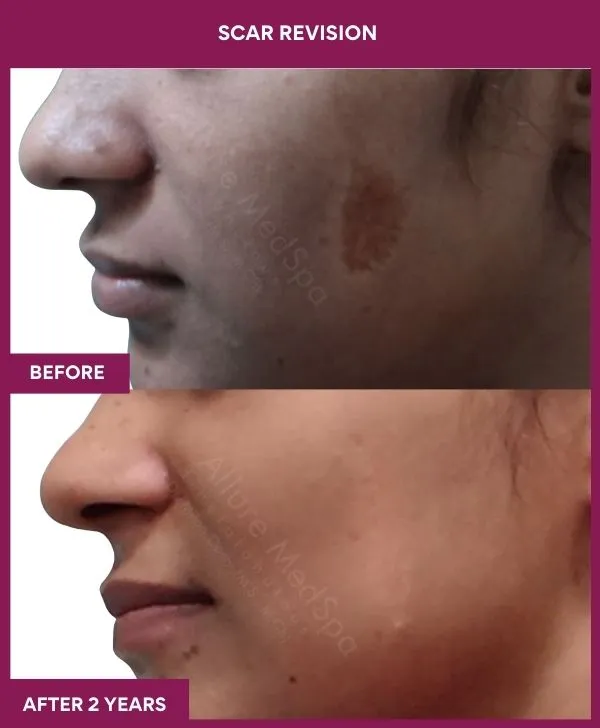
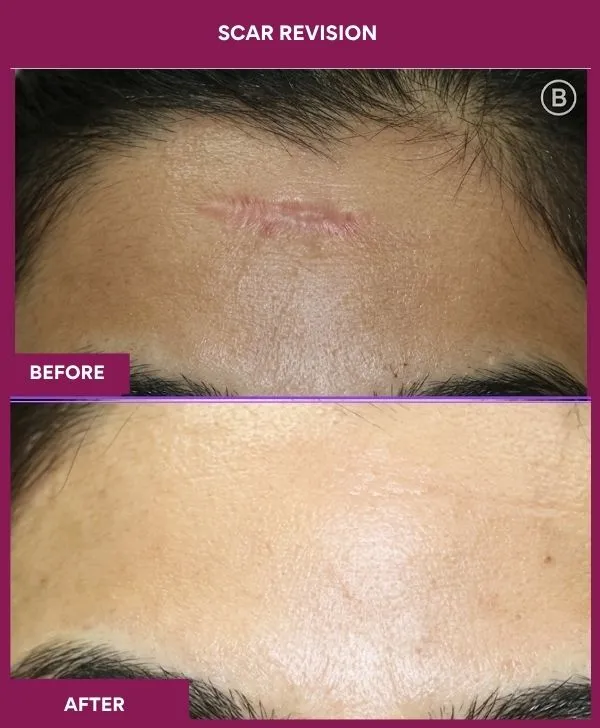
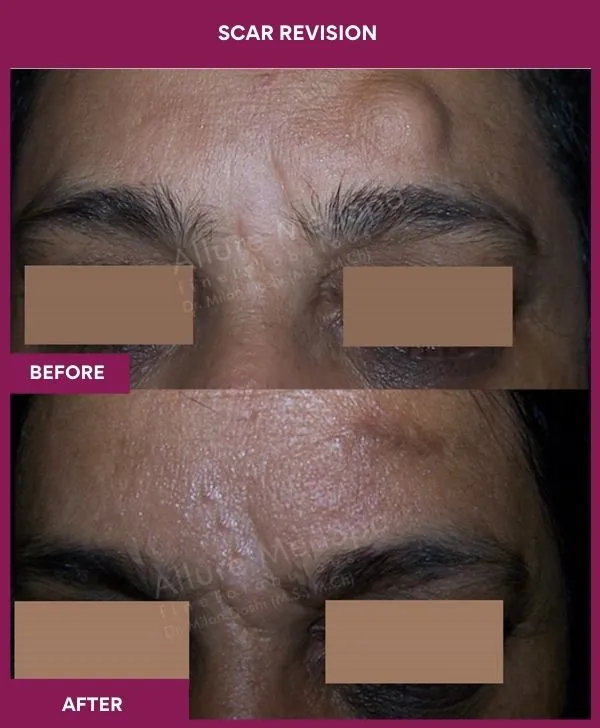
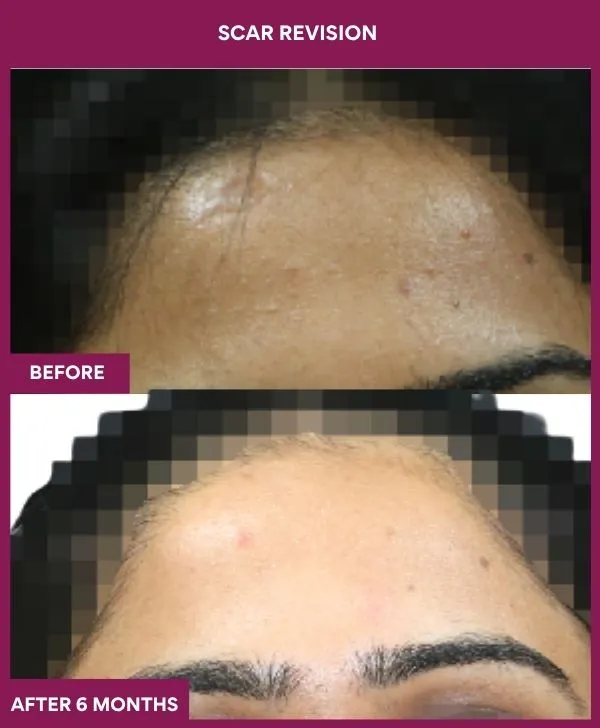
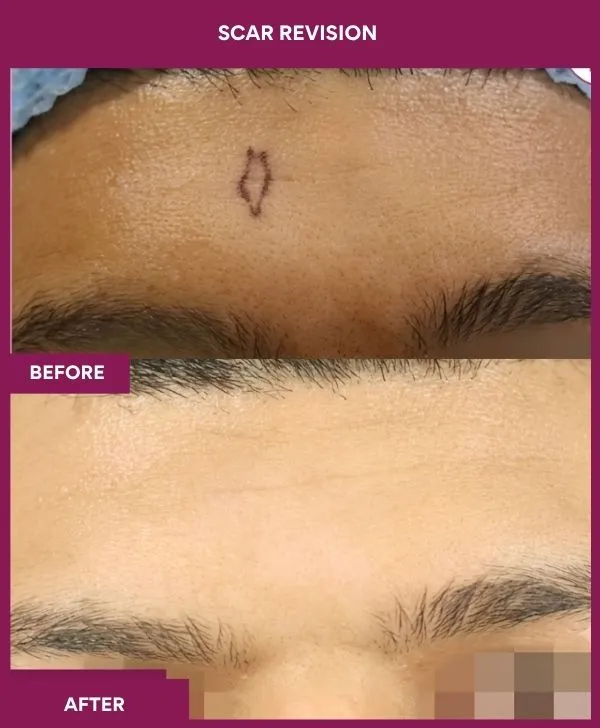
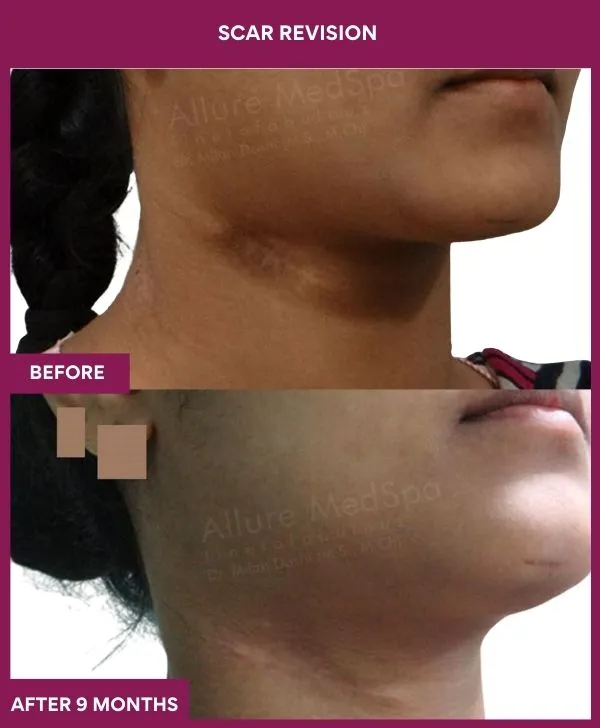
“Liked the results? Let's plan yours.”
Scar Revision Surgery Testimonials: Fine To Fabulous Journeys

Awarded by Google.com
Rating: 4.7
Reviews: 485+

Awarded by WhatClinic.com
Rating: 4.8
Reviews: 119+

Awarded by Realself
Rating: 4.9
Reviews:453+

Awarded by Facebook
Rating: 4.6
Reviews:105+
Dr Milan Doshi and his staff are very professional and committed as the centre is highly equipped with advanced technology. I had closed rhinoplasty 4 months back and I’m seeing the results as to how it becomes successful.
Deepika Shetty
The doctor explained everything clearly and the surgery was smooth. Recovery was faster than I expected and the team was very supportive.
Rahul Mehta
Very natural results and excellent staff. From consultation to follow-up, the experience was outstanding and boosted my confidence.
Sneha Kapoor
“Inspired by their journey? Start yours”
Is Scar Revision Right For Me?
(4 quick questions)
Age, shape, regrowth, tightness — four answers start the plan.
Check My SuitabilityHonest routing — including “not surgery yet”
Quick Facts About Scar Revision Surgery
TIME REQUIRED
30 - 120 min
ANESTHESIA
Local/General
HOSPITAL STAY
Day care
PAIN LEVEL
Mild–moderate
BACK TO WORK
2–7 days
RESULTS Shown
4–6 weeks
SUCCESS RATE
97–98%
COMPLICATIONS
Under 2–3%
What Is The Cost Of Scar Revision In Mumbai?
Scar revision at Allure Medspa costs about ₹20,000–₹80,000, depending on scar type, size, site and whether it is non-surgical, surgical or staged.
| Option | Typical cost (Mumbai) |
|---|---|
| Non-surgical sessions (steroid, laser, microneedling) | ₹5,000 – ₹20,000 per session |
| Small surgical excision / Z-plasty | ₹20,000 – ₹40,000 |
| Keloid excision + adjuvant course | ₹30,000 – ₹60,000 |
| Large or contracture scar (graft / flap) | ₹60,000 – ₹80,000+ |
| Consultation | ₹1,500 |
| Included | Not included |
|---|---|
| Consultation, surgeon’s fee, anaesthesia, OT / hospital, consumables, immediate follow-ups (live) | Pre-op fitness tests, take-home medicines, rare complication care (live); GST 🩺 |
- What changes the price — scar size and site, technique (laser vs excision vs graft / flap), single or multi-stage
- Insurance — cosmetic revision is not covered; reconstructive revision after burns or trauma, or where a scar limits function, may be partly reimbursable
- EMI → Cosmetic Surgery Payment Process
Get your exact quote & surgery plan
Share your details — our team responds within working hours with cost, EMI options and next steps.
Most Common Question People Ask
Q1. Can scar revision remove a scar completely?
Ans. No — and any honest surgeon will say so. Revision makes a scar much less noticeable — flatter, finer and better blended — but no treatment erases a scar entirely.
Q2. How painful is scar revision?
Ans. Most procedures are done under local anaesthesia, so discomfort is minimal. Mild soreness or tightness afterwards settles within days.
Q3. What is the recovery time?
Ans. Initial healing takes about 1–2 weeks; stitches come out in 5–10 days, and the scar keeps maturing over 6–12 months.
Q4. Why do keloids come back after removal?
Ans. Cutting a keloid stimulates fresh collagen. Excision alone has reported recurrence of 45–100%, so keloids are treated with combination therapy, not surgery alone.
Q5. When is the best time for scar revision?
Ans. Usually once the scar has matured — often 6–12 months after the injury — though silicone or steroids can start earlier, especially in keloid-prone skin.
Q6. How much does scar revision cost?
Ans. At Allure Medspa about ₹20,000–₹80,000 depending on scar size, type and technique; you receive an exact quote after assessment.
Q7. Does insurance cover scar revision?
Ans. Purely cosmetic revision usually is not covered. Revision after trauma or burns, or where a scar limits function, may be partly reimbursable — check with your insurer.
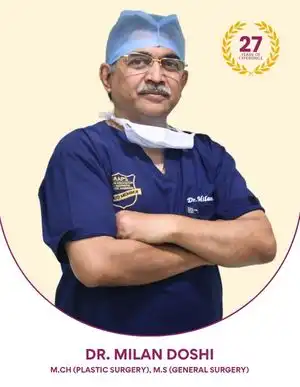
Why Choose Dr. Milan Doshi?
Dr. Milan Doshi, MCh, MS — Indian board-certified plastic surgeon with 27+ years who treats every scar type with both surgical and non-surgical tools, matches the method to the scar rather than one machine, plans keloids as a staged combination, and tells you plainly what is realistic. Consults at Andheri West; surgery at Vardan Hospital, Goregaon West.
Dr Doshi Note: “A scar has to be read before it is treated. A raised scar that stays inside the wound, a keloid that spreads beyond it and a sunken acne scar look similar to a patient but need completely different plans — choosing the wrong one is how scars get worse.”
The Complete Guide About Scar Revision Surgery
What Is Scar Revision Surgery?
Surgical or non-surgical treatment that makes a scar flatter, finer and closer in colour to nearby skin, or releases a scar that limits movement.
| Aim | What it means | Examples |
|---|---|---|
| Cosmetic | Make a visible scar less noticeable | Facial injury scar, wide C-section or surgical scar |
| Functional | Release a tight scar that limits movement | Burn contracture across a joint or neck |
| Preventive | Stop a healing wound scarring badly | Silicone and steroid care in keloid-prone skin |
- Improves, does not erase — the honest goal is a scar that is much less noticeable
- Synonyms: scar removal surgery, scar correction, scar refinement, keloid revision, Z-plasty scar revision, laser scar revision, post-surgical scar correction, trauma scar improvement
Do Visible Scars Affect Your Confidence?
If a scar makes you avoid certain clothes, photos or situations, or reminds you of an injury or surgery, revision can make it far less noticeable.
- Do visible scars make you self-conscious, however small?
- Are you reminded of an accident or operation every time you look in the mirror?
- Do you choose clothes or hairstyles to hide a mark on your face or body?
- Does a tight scar pull when you move?
How common is scar revision?
Scar treatment is common, but the ISAPS global survey does not report scar revision as its own category, so reliable totals are not published.
Why does scarring need extra care in Indian skin?
Melanin-rich skin is more prone to keloids and to darkening after injury or laser, so treatments are chosen and dosed conservatively.
- Higher keloid tendency — especially chest, shoulders, earlobes and jawline
- Post-inflammatory hyperpigmentation — after injury, peels or aggressive laser → Pigmentation Treatment
- Sun — SPF 50+ for 3–6 months after any revision
What Are The Benefits Of Scar Revision?
A flatter, narrower, better-coloured scar, freer movement where a scar was tight, less itch or tenderness, and more confidence in how you look.
| Benefit | What it means |
|---|---|
| Flatter | Raised scars softened and lowered |
| Finer | Wide or stretched scars narrowed |
| Better colour | Redness and darkening reduced over time |
| Better line | Scar redirected into natural skin creases (Z-plasty) |
| Movement | Contracture released across joints or neck |
| Comfort | Less itch, pain or tightness in keloid and hypertrophic scars |
What Types Of Scars Can Be Treated?
Hypertrophic, keloid, atrophic (including acne), contracture, wide or stretched, and pigmented scars — each needs a different plan.
| Scar type | What it is | Usual first plan |
|---|---|---|
| Hypertrophic | Raised, red, stays within the wound | Silicone + steroid injections; excision if persistent |
| Keloid | Raised, grows BEYOND the wound; often itchy | Injections ± 5-FU, silicone, pressure; surgery only with adjuvant |
| Atrophic / acne | Sunken or pitted | MNRF, fractional laser, subcision, TCA CROSS, fillers |
| Contracture | Tight scar after burns or skin loss | Z-plasty, graft or flap + physiotherapy |
| Wide / stretched | Spread, flat, pale | Excision and layered tension-free closure |
| Pigmented | Colour change, not a true scar | Peels, pigment treatment, sun care |
Sources: Ogawa R, et al. The most current algorithms for the treatment and prevention of hypertrophic scars and keloids: a 2020 update. Plast Reconstr Surg 2022;149(1):79e-94e. PMID 34813576 ✔ (live link PMC8687618)
What are hypertrophic scars and how are they treated?
Thick, red, raised scars confined to the wound edges; they often improve with silicone and steroid injections and can be excised if needed.
- May soften by themselves over 6–12 months — early treatment helps
- Silicone gel or sheets — guideline first-line, though trial evidence is modest
- Steroid injections — flatten and soften
- Surgical revision — tension-reduced closure, with post-op silicone or steroid
What are keloid scars and why do they need special treatment?
Keloids grow beyond the original wound and recur easily after cutting, so they are treated with combination therapy, never surgery alone.
- Firm, itchy or tender; can appear long after the injury; commoner in melanin-rich skin
- Excision alone: recurrence reported in 45–100%
- Combination: excision + steroid injections, silicone, pressure, and in selected cases radiotherapy
- Intralesional excision (leaving a rim of keloid) had a pooled 13% recurrence in one meta-analysis
- Many keloids are managed with injections first, before any surgery is considered
What are contracture scars?
Tight scars after burns or large wounds that pull the skin and can restrict movement; they are released with Z-plasty, grafts or flaps.
- May involve deeper tissue near joints, neck or hands
- Tissue expansion grows extra skin for large defects
- Physiotherapy and splints maintain the movement gained
How are acne scars treated?
Most are improved without surgery — MNRF, fractional laser, subcision, TCA CROSS or fillers — with punch excision for deep ice-pick scars.
| Acne scar | Usual treatment |
|---|---|
| Ice-pick | Punch excision or TCA CROSS |
| Boxcar | Fractional laser → Fractional CO2 Laser · fillers → Dermal Fillers |
| Rolling | Subcision; MNRF → Acne Scar MNRF |
| Dark marks | Peels → Skin Peels · pigmentation care |
| Mixed | Combined plan over several sessions |
- Active acne first → Acne Treatment
What Are The Limitations Of Scar Revision?
No method erases a scar; keloids can return; skin type and site limit the result; and fresh scars usually need 6–12 months to mature first.
- A scar is replaced by a better scar — never by unmarked skin
- Keloids and hypertrophic scars can recur, even after good treatment
- Darker skin may darken after treatment
- Areas under tension (chest, shoulders, joints) scar more
- Large contractures may need more than one stage
- Results depend on aftercare — silicone, sun protection, follow-up
Why Is A Consultation Important — And Am I A Candidate?
The consultation identifies the scar type, its age and your keloid history, checks skin and health, and sets a plan with an honest, written quote.
| What happens | Detail |
|---|---|
| History | Cause and age of scar; previous treatment; keloid history; family history |
| Examination | Type, size, site, tension, colour, movement |
| Medical screen | Diabetes, smoking, blood thinners, isotretinoin, allergies |
| Plan | Non-surgical, surgical or staged; number of sessions |
| Quote | Itemised cost |
- Prepare: routine blood tests for surgery; stop smoking; pause blood thinners only as advised; fast 6–8 hours for surgical revision under sedation
- Online consultation → Online Consultations · outstation support → Outstation Patients
Am I the right candidate?
A healthy adult or teen with a mature scar, realistic expectations, no active infection or acne at the site, and willingness to follow aftercare.
| Often suitable | Wait or reconsider |
|---|---|
| Scar 6–12 months old or more | Fresh scar — early silicone / steroid care first |
| Wide, raised or tight scar | Active acne or infection at the site |
| Keloid with a combination plan | Expecting complete removal |
| Non-smoker or willing to stop | Uncontrolled diabetes |
What Are The Techniques Of Scar Revision?
Excision with layered closure, Z-plasty or W-plasty to redirect the line, skin grafts or flaps for large defects, and lasers or injections to refine.
| Technique | How it works | Best for |
|---|---|---|
| Excision + layered closure | Scar cut out; deep stitches take the tension | Wide or stretched scars |
| Z-plasty | Two triangular flaps swapped to lengthen and redirect the scar | Contractures; scars across skin lines |
| W-plasty / geometric broken line | Zig-zag line that is harder for the eye to follow | Long straight facial scars |
| Skin graft | Healthy skin moved from a donor site | Large or deep defects (donor scar) |
| Local or free flap | Skin and fat with its own blood supply moved | Complex contractures |
| Tissue expansion | Balloon grows extra skin over weeks | Large burn scars |
| Intralesional keloid excision | Core removed, rim left; adjuvant follows | Keloids |
Sources: Ogawa R, et al. The most current algorithms for the treatment and prevention of hypertrophic scars and keloids: a 2020 update. Plast Reconstr Surg 2022;149(1):79e-94e. PMID 34813576 ✔ | Lawera NG, et al. Keloid intralesional excision reduces recurrence: meta-analysis of 608 keloids. Plast Reconstr Surg Glob Open 2024;12(3):e5652 — pooled recurrence 13% vs 45–100% previously reported after complete excision. PMID 38463702 ✔ (new)
Which technique is best?
None suits every scar — the technique follows the scar type, size, site and skin tension; many scars do best with surgery plus a laser or injections.
What Are The Types Of Scar Treatment?
Non-surgical (silicone, steroid, laser, microneedling, peels), surgical (excision, Z-plasty, grafts, flaps) and combined or staged plans.
| Type | What it includes | Downtime |
|---|---|---|
| Silicone gel / sheets | Daily for 2–3 months | None |
| Steroid injections (± 5-FU) | Every 3–6 weeks | None |
| Laser | Fractional CO2 (texture) · pulsed-dye (redness) → Fractional CO2 Laser | A few days |
| Microneedling / MNRF | Collagen remodelling for sunken scars → Microneedling RF | 1–3 days |
| Dermabrasion / peels | Surface resurfacing → Skin Peels | Days to a week |
| Surgical revision | Excision, Z-plasty, graft, flap | 1–2 weeks |
| Combined / staged | Surgery + injections or laser over months | Varies |
How Is Scar Revision Surgery Performed Step By Step?
The scar and closure lines are marked, numbed, excised or rearranged, closed in layers with fine stitches and dressed, and you go home the same day.
| Step | What happens |
|---|---|
| 1. Final planning | Photos; technique and sessions confirmed |
| 2. Marking | Excision and flap lines along skin creases |
| 3. Antiseptic | Area cleaned and draped |
| 4. Anaesthesia | Local; sedation or general for grafts / flaps |
| 5. Incision | Around or through the scar |
| 6. Scar removal or release | Excision, Z-plasty or intralesional core |
| 7. Undermining | Skin freed to reduce tension |
| 8. Deep closure | Dissolvable deep stitches carry the tension |
| 9. Skin closure | Fine stitches or glue |
| 10. Adjuvant | Steroid into keloid margins if planned |
| 11. Dressing | Tape or silicone-friendly dressing |
| 12. Home | Same day with instructions |
How long does the procedure take?
About 30 minutes for a small excision or Z-plasty and up to 2 hours for grafts, flaps or several scars.
When Will I See My Scar Revision Results?
Redness and thickness ease over 4–6 weeks; the scar keeps flattening and fading for 6–12 months, and sometimes longer.
| Time | What you notice |
|---|---|
| Week 1–2 | Fresh line, mild swelling; stitches out 5–10 days |
| Weeks 4–6 | Pink, flat line; texture improving |
| Months 3–6 | Colour fading; softer |
| Months 6–12 | Mature, pale, flat scar |
- Factors: scar type, site, skin tone, tension, aftercare, smoking
- Touch-ups — laser, microneedling or injections may refine the result
What Aftercare Is Needed After Scar Revision?
Keep the wound clean, start silicone once healed, protect it from sun for 3–6 months, avoid stretching it and keep every follow-up.
| Do | Why |
|---|---|
| Keep clean and dry for 48 h | Infection prevention |
| Silicone gel / sheets once closed, 2–3 months | Flatter, paler scar |
| SPF 50+ and cover for 3–6 months | Prevents darkening |
| Keep keloid follow-ups and injections | Catches early recurrence |
| Avoid | For |
|---|---|
| Stretching or heavy lifting across the scar | 2–3 weeks |
| Smoking | 2 weeks before and after |
| Swimming, sauna | Until stitches are out and the wound is closed |
| Picking scabs or massaging early | Until advised |
What Are The Risks And Complications Of Scar Revision?
Mainly recurrence — especially keloids — plus colour change, infection, wound opening, asymmetry and a result that improves less than hoped.
| Common, temporary | Less common | Rare |
|---|---|---|
| Redness and swelling | Infection | Wound breakdown |
| Bruising | Darkening or lightening | Graft or flap loss |
| Tightness | Hypertrophic return | Allergic reaction to tape or sutures |
| Itch while healing | Keloid recurrence | Steroid skin thinning (injections) |
Sources: Khan C, et al. Keloid recurrence after excision and radiation, 2-year follow-up. Scars Burn Heal 2025;11 — 17 patients, 11 (65%) recurred. PMID 40171302 ✔ · Lawera NG, et al. Keloid intralesional excision reduces recurrence: meta-analysis of 608 keloids. Plast Reconstr Surg Glob Open 2024;12(3):e5652 — pooled recurrence 13% vs 45–100% previously reported after complete excision. PMID 38463702 ✔ (new)
How are these risks reduced?
Correct diagnosis of scar type, tension-free closure, combination therapy for keloids, silicone, sun protection, no smoking and regular follow-up.
| Risk | How it is reduced |
|---|---|
| Keloid recurrence | Never excision alone; injections, silicone, pressure, ± radiotherapy |
| Hypertrophic return | Tension-free layered closure; silicone |
| Pigment change | Conservative laser settings; SPF 50+ |
| Infection / breakdown | Hygiene; stop smoking; control diabetes |
⚠️ WHEN TO CALL
- Fever, spreading redness, pus, a wound that opens, bleeding that will not stop, or a scar that starts to grow again — call the clinic the same day
What Is The Scar Revision Recovery Timeline?
Home the same day, desk work in 2–7 days, stitches out in 5–10 days, exercise after 2–3 weeks, and a mature scar by 6–12 months.
| Time | What to expect |
|---|---|
| Day 1–2 | Mild soreness; dressing stays on |
| Days 2–7 | Back to desk work for most |
| Days 5–10 | Stitches out; start silicone when advised |
| Weeks 2–3 | Light exercise; avoid stretching the scar |
| Weeks 3–6 | Normal activity; keloid injections as planned |
| Months 6–12 | Scar matures |
- Outstation patients: plan 7–10 days in Mumbai for stitch removal 🩺
- Live H2 “Scar Revision Recovery Timeline” anchor exists, but /scar-revision-surgery/recovery/ REDIRECTS to the hair-transplant timeline
Can scar revision be combined with other procedures?
Yes — commonly with a tummy tuck or body lift for old abdominal scars, a facelift for facial scars, and laser or MNRF for texture.
| Combination | Why |
|---|---|
| Tummy tuck | Removes a low C-section or old abdominal scar |
| Body lift | Post-weight-loss scars |
| Facelift | Facial scars redirected |
| Fractional laser / MNRF | Texture after surgery |
| Stretch-mark treatment | Similar devices |
Medical Codes for Scar Revision Surgery
Scars are coded L90.5, hypertrophic scars and keloids L91.0, and cosmetic revision Z41.1; CPT depends on repair length and body site.
| Code | Description |
|---|---|
| ICD-10 L90.5 | Scar conditions and fibrosis of skin (atrophic, burn, acne and other scars) |
| ICD-10 L91.0 | Hypertrophic scar — includes keloid |
| ICD-10 L70.0 | Acne vulgaris (active acne, not the scar) |
| ICD-10 Z41.1 | Encounter for cosmetic surgery |
| CPT 13100–13102 | Complex repair, trunk 🩺 |
| CPT 13120–13122 | Complex repair, scalp, arms, legs 🩺 |
| CPT 13131–13133 | Complex repair, forehead, cheeks, chin, mouth, neck, axillae, genitalia, hands, feet 🩺 |
| CPT 13151–13153 | Complex repair, eyelids, nose, ears, lips 🩺 |
| CPT 14000–14061 | Adjacent tissue transfer (Z-plasty, W-plasty, local flaps) 🩺 |
| CPT 11900 / 11901 | Intralesional injection (keloid steroid) 🩺 |
| CPT 15780–15782 | Dermabrasion: total face / segmental face / regional, other than face 🩺 |
(FAQs) Frequently Asked Question About Scar Revision Surgery
Q1. Does scar revision look natural?
Ans. Yes, in experienced hands — the aim is a scar that blends with the surrounding skin in tone, texture and level so it is far less obvious.
Q2. Can laser remove scars permanently?
Ans. Laser can fade scars and improve texture significantly, but complete removal is not guaranteed, and maintenance sessions may help.
Q3. Can a dermatologist do scar revision?
Ans. Dermatologists and plastic surgeons both manage scars; surgical revision, Z-plasty, grafts and flaps are typically done by a plastic surgeon.
Q4. Do I need general anaesthesia?
Ans. Most revisions use local anaesthesia; larger grafts, flaps or several scars may need sedation or general anaesthesia.
Q5. Can scar revision be done on the face?
Ans. Yes — facial scars are often revised with precise excision, Z-plasty or W-plasty, lasers or microneedling to sit in natural creases.
Q6. Is it safe for darker skin?
Ans. Yes, with care — darker skin is more prone to keloids and darkening, so settings are conservative and sun protection is strict.
Q7. Is laser scar treatment painful?
Ans. It feels like heat or a snapping sensation; numbing cream is applied first.
Q8. Can a C-section scar be revised?
Ans. Yes — a wide or tethered C-section scar can be excised, often during a tummy tuck when there is loose skin → Tummy Tuck
Q9. Can an earlobe keloid be treated?
Ans. Yes — usually excision with steroid injections and a pressure earring afterwards, with follow-up for recurrence 🩺.
Q10. How can I get the best result?
Ans. Use silicone and steroids as advised, protect from the sun, do not smoke, keep follow-ups and be patient — the final result takes months.
Q11. I live outside Mumbai — how long should I stay?
Ans. Plan about 7–10 days so stitches can be removed; later checks can be online → Outstation Patients