
Laser Tattoo Removal in Mumbai: Safe, Effective & Expert Care For Clear Skin

Indian Board Certified Plastic Surgeon
M.CH, MS, ISAPS Mentor
16000+ Cosmetic Surgeries
500+ Laser Tatto Removal
Laser tattoo removal is a safe, non-surgical procedure that uses focused laser energy to shatter ink particles in the skin into fragments small enough for the body’s immune system to clear — fading the tattoo over a series of sessions until it is gone or nearly so. Modern Pico and Q-switched Nd:YAG lasers target specific ink colours while sparing surrounding skin, which matters on Indian skin where pigment change is the main risk. At Allure Medspa every tattoo is assessed for size, colour, depth and age before you are told how many sessions it will realistically take.
Laser Tattoo Removal Treatment Before and After
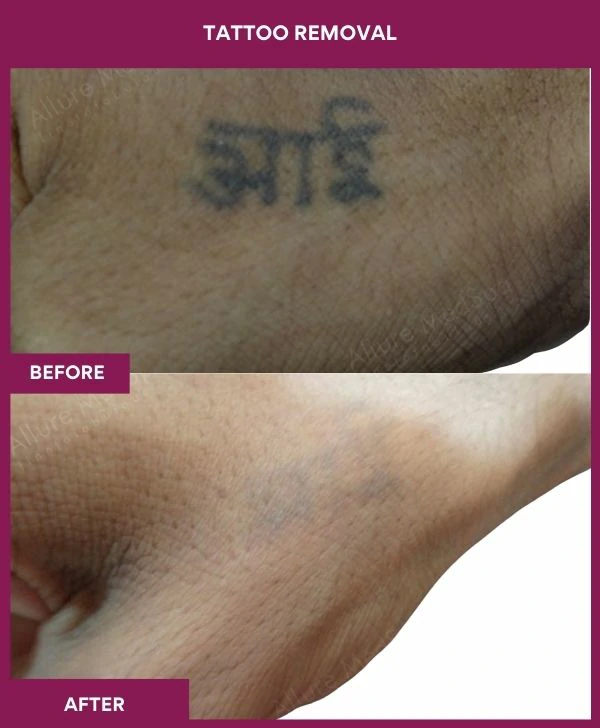
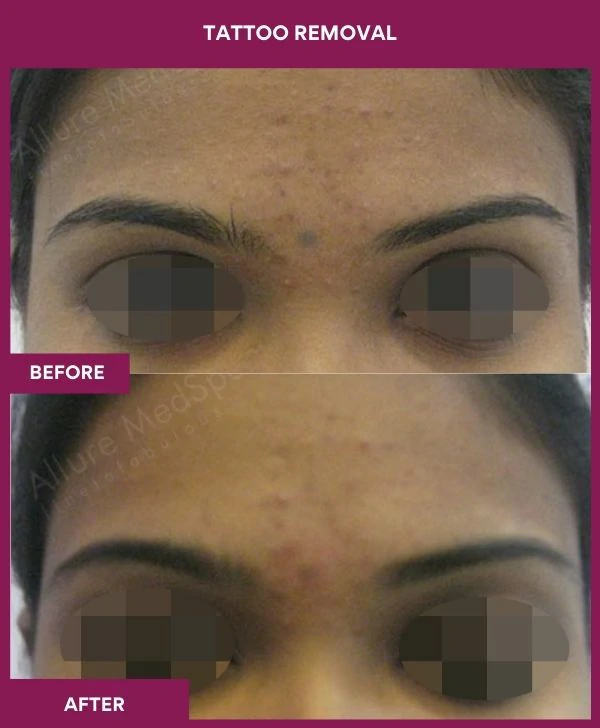
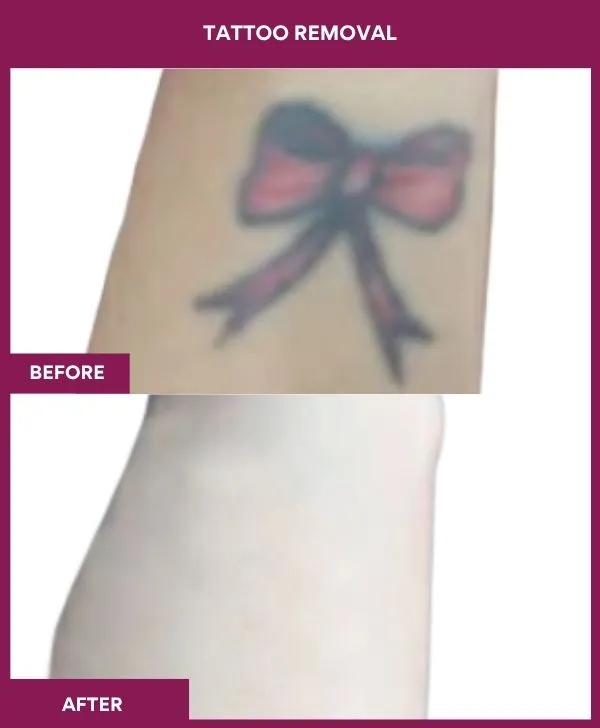
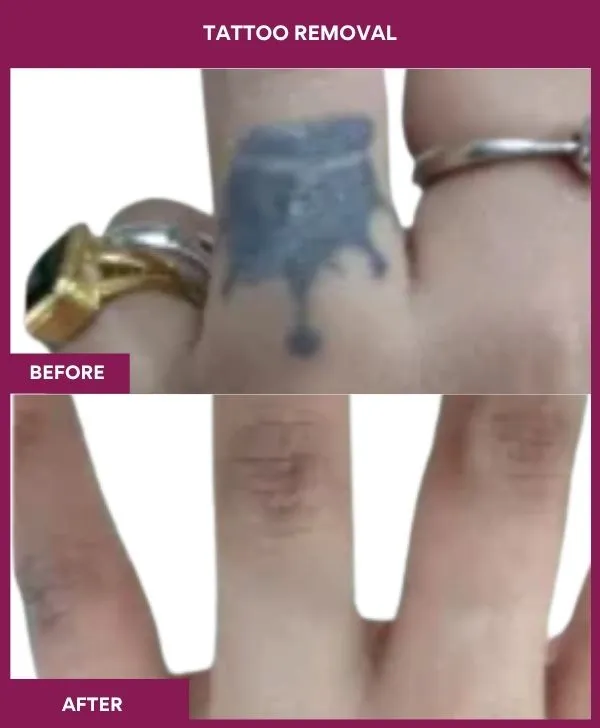
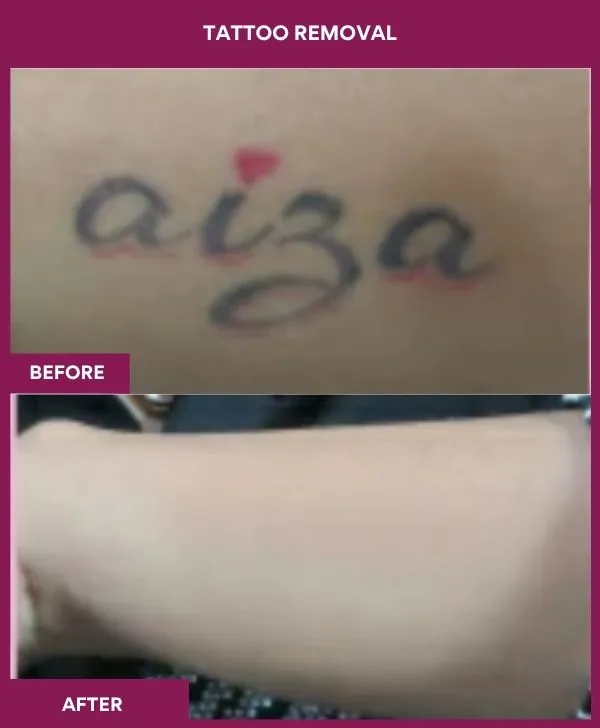
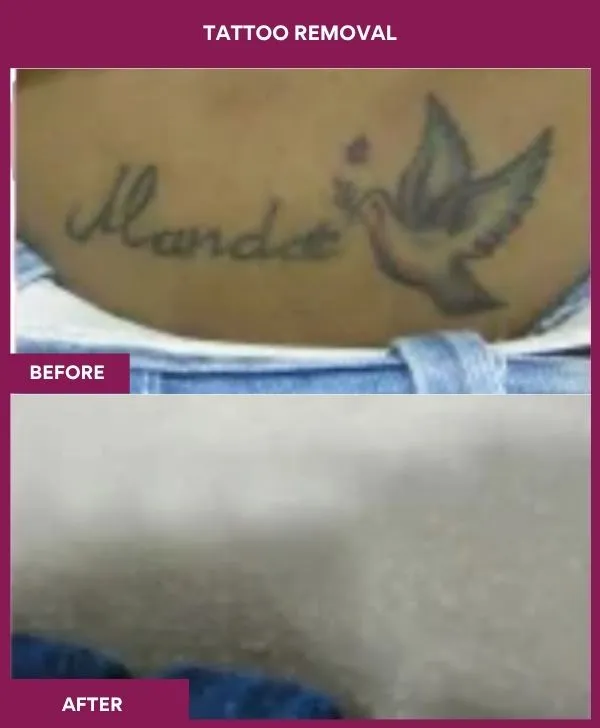
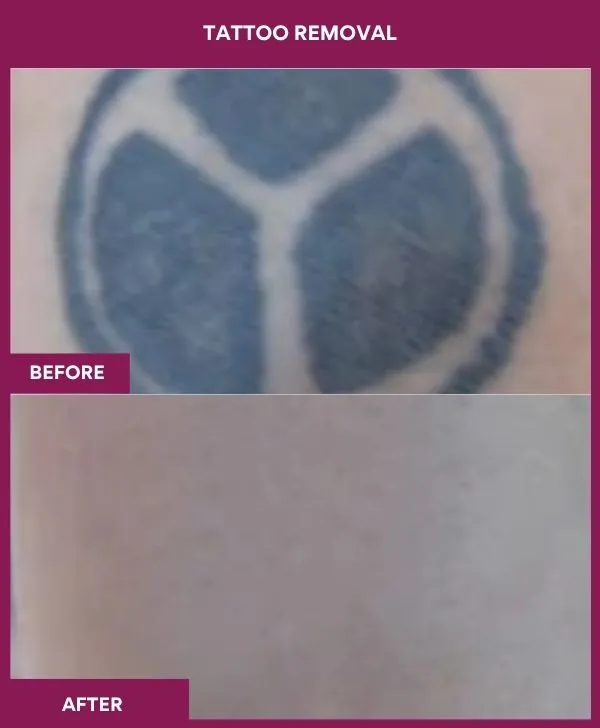
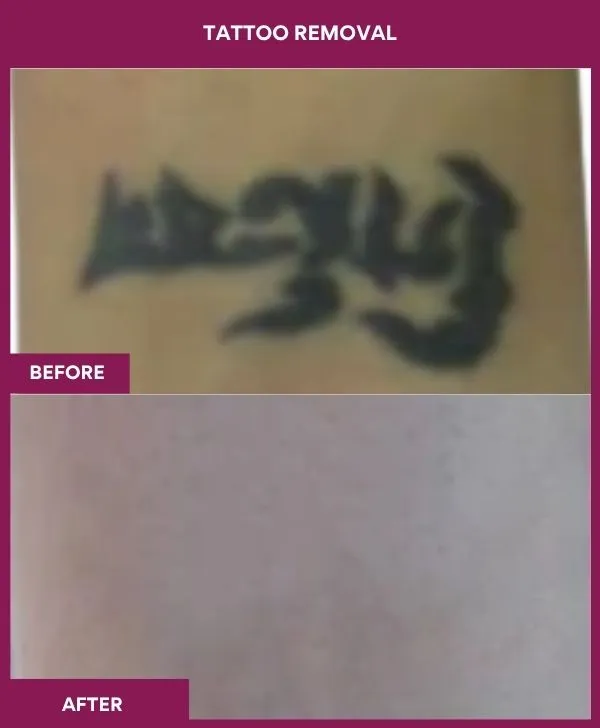
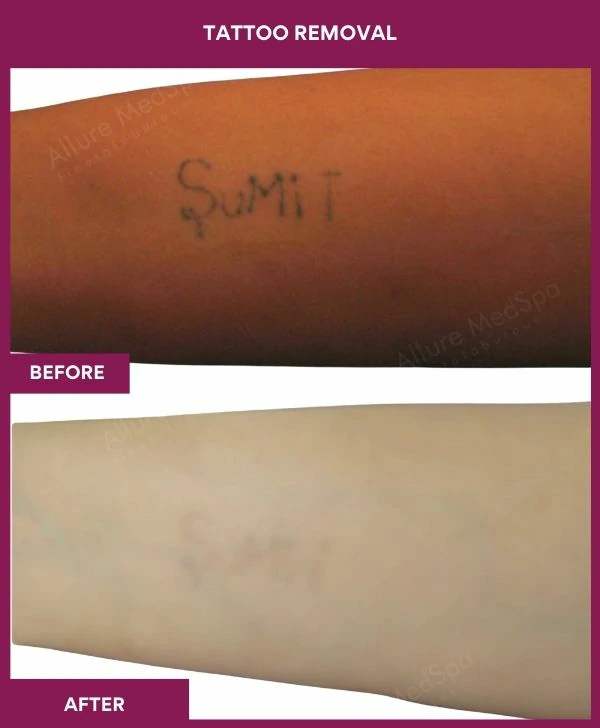
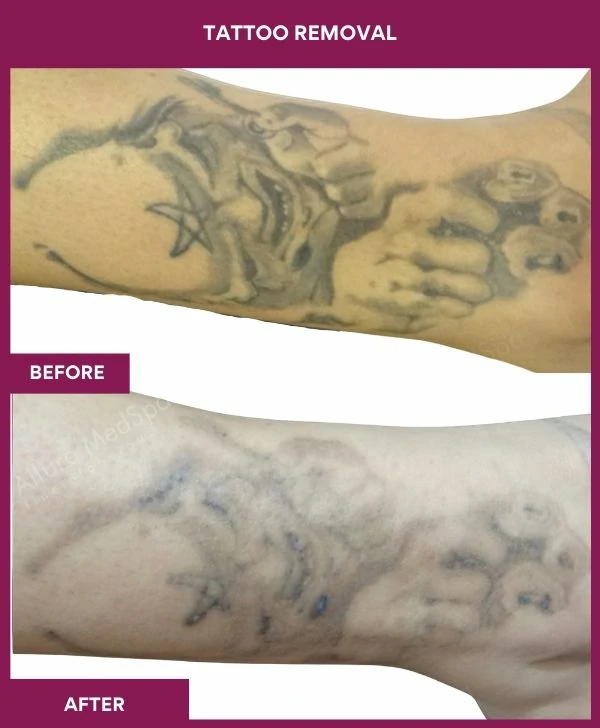
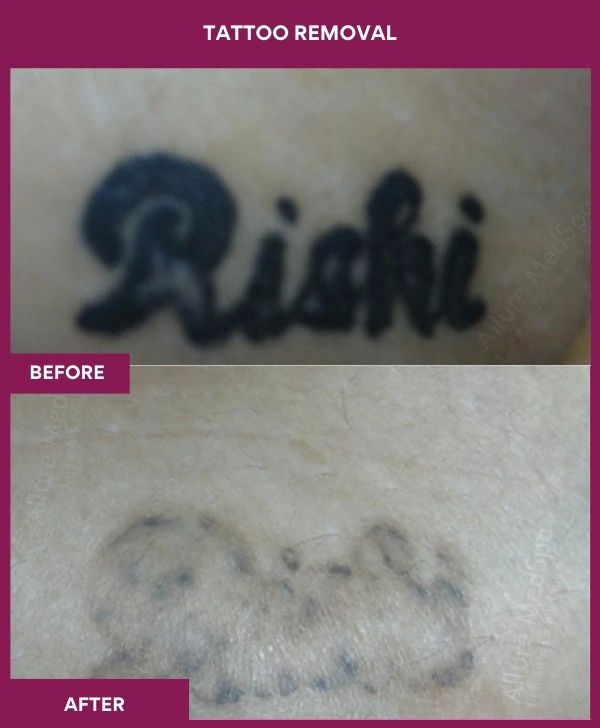
“Laser Tattoo Removal Treatment Cost”
Laser Tattoo Removal Testimonials: Fine To Fabulous Journeys

Awarded by Google.com
Rating: 4.7
Reviews: 485+

Awarded by WhatClinic.com
Rating: 4.8
Reviews: 119+

Awarded by Realself
Rating: 4.9
Reviews:453+

Awarded by Facebook
Rating: 4.6
Reviews:105+
Dr Milan Doshi and his staff are very professional and committed as the centre is highly equipped with advanced technology. I had closed rhinoplasty 4 months back and I’m seeing the results as to how it becomes successful.
Deepika Shetty
The doctor explained everything clearly and the surgery was smooth. Recovery was faster than I expected and the team was very supportive.
Rahul Mehta
Very natural results and excellent staff. From consultation to follow-up, the experience was outstanding and boosted my confidence.
Sneha Kapoor
“Laser Tattoo Removal Treatment Cost”
Is Laser Tattoo Removal Right For Me?
(4 quick questions)
Quick Facts About Laser Tattoo Removal
SESSION TIME
15–45 minutes
ANESTHESIA
None
SESSIONS
Course of 4–5
RESULTS SHOW
4–8 sessions
DOWNTIME
None to 3 days
RESULTS LAST
Permanent
SIDE-EFFECT RATE
Under 1%
COST
₹3,000 – ₹20,000
What Is The Cost Of Laser Tattoo Removal In Mumbai?
Laser tattoo removal in Mumbai costs ₹3,000–₹20,000 per session depending on tattoo size, ink colours, age of the tattoo, skin type and the laser used. There is no fixed cost because every tattoo differs: larger tattoos need more energy, time and sessions; multicoloured tattoos (especially green, yellow and blue) need specific wavelengths and more sessions; older tattoos often fade faster; individual healing and pigment depth affect speed. A personalised quote is given after a tattoo assessment. Avoid choosing a clinic solely for the lowest price — poor-quality treatment risks scarring, incomplete removal or infection. EMI options are on our payment process page.
| Tattoo | Per session (₹) | Typical sessions | Indicative course (₹) |
|---|---|---|---|
| Small (under 5 cm) — black | 3,000 – 5,000 | 4–6 | 15,000 – 30,000 🩺 |
| Medium (5–10 cm) — black | 5,000 – 8,000 | 6–8 | 30,000 – 60,000 🩺 |
| Medium — multicoloured | 7,000 – 10,000 | 8–10 | 55,000 – 1,00,000 🩺 |
| Large (10–20 cm) / half-sleeve | 10,000 – 15,000 | 8–10 | 80,000 – 1,50,000 🩺 |
| Very large / full sleeve | 15,000 – 20,000 | 10+ | Quoted 🩺 |
| Cosmetic tattoo (brows, eyeliner, lips) | 3,000 – 6,000 | 2–5 | 10,000 – 25,000 🩺 |
| Partial fade for cover-up | 3,000 – 8,000 | 2–4 | 10,000 – 25,000 🩺 |
Get your exact quote & surgery plan
Share your details — our team responds within working hours with cost, EMI options and next steps.
Most Common Question People Ask
Q1. How many sessions does laser tattoo removal take?
Ans. Most professional tattoos need 6–10 sessions spaced 6–8 weeks apart; amateur tattoos 4–5. Black and dark blue fade fastest; purple and orange moderately; green and yellow need the most sessions or specific wavelengths.
Q2. Does laser tattoo removal hurt?
Ans. It feels like a rubber band snapping against the skin. Numbing cream and cold-air cooling make it well tolerated; local anaesthetic is used for large pieces.
Q3. Is tattoo removal permanent?
Ans. Yes — once ink particles are broken down and cleared by the immune system they do not return. Very deep or densely coloured tattoos may leave a faint shadow, which is discussed before you start.
Q4. Will it leave a scar?
Ans. When done with the right laser and settings and with proper aftercare, the risk of scarring is minimal. Scarring that is already in the tattoo (from the tattooing) will remain.
Q5. How much does laser tattoo removal cost in Mumbai?
Ans. ₹3,000–₹20,000 per session (+5% GST) depending on size and colours; a small black tattoo may cost ₹15,000–30,000 for a full course, a large multicoloured piece considerably more.
Q6. Is it safe for Indian / darker skin?
Ans. Yes, with the 1064 nm wavelength, a test spot and conservative settings. The main risk on darker skin is temporary lightening or darkening of the treated area, which is why device choice matters.
Q7. Can I remove only part of a tattoo, or fade it for a cover-up?
Ans. Yes — the laser can target specific areas, and 2–4 sessions of fading make a much better cover-up possible.
Why Choose Dr. Milan Doshi?
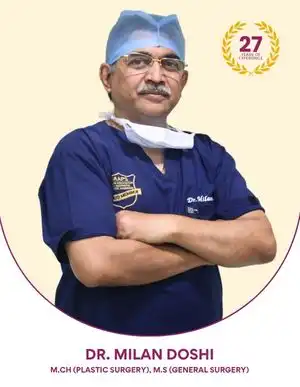
Dr. Milan Doshi, MCh, MS — Indian board-certified plastic and cosmetic surgeon with 27+ years and 16,000+ procedures, trusted for safety standards and proven results; Allure Medspa’s laser programme runs under his oversight with an experienced cosmetic dermatology team. Advanced Pico and Q-switched Nd:YAG lasers for faster, safer clearance across ink colours; customised plans by tattoo size, colour and depth; test spots and conservative settings for Indian skin; state-of-the-art, NABH-accredited infrastructure; and a convenient consultation process for personalised guidance. If a tattoo has left a raised scar, scar revision is available under the same roof. Outstation and overseas patients supported end-to-end.
The Complete Guide About Laser Tattoo Removal
What Is Laser Tattoo Removal?
Laser tattoo removal is a safe, non-surgical procedure that uses focused laser energy to break down ink particles embedded in the skin. Specific wavelengths are absorbed by the ink pigment and not by the surrounding skin; the ink shatters into microscopic fragments; the immune system gradually eliminates them; and the tattoo fades over multiple sessions. Modern laser systems target specific ink colours while minimising damage to surrounding skin, making the procedure suitable for all skin types and tattoo styles.
| Laser tattoo removal | Other methods |
|---|---|
| Selective photothermolysis / photoacoustic shattering of ink; skin surface intact | Surgical excision — removes skin, leaves a scar; only for small tattoos |
| 4–10 sessions; no scar when done correctly | Dermabrasion, salabrasion, acid “removal creams” — scarring, pigment loss, ineffective |
| ₹3,000–20,000 per session | Cover-up tattoo — hides, does not remove; fading first improves it |
Also called: permanent tattoo removal, laser ink removal, tattoo fading treatment, laser pigment removal, laser skin ink clearing, body ink removal procedure.
Laser Tattoo Removal — Say Goodbye To Unwanted Ink
- Ever look at your old tattoo and wish you could erase it completely?
- Does your job demand a clean, professional appearance?
- Or maybe you simply want to replace an outdated design with something new and meaningful?
Living with an unwanted tattoo can be frustrating — it might remind you of a past you’ve outgrown, limit your career opportunities, or clash with your current style. The constant effort to hide it under clothes or makeup can be exhausting and confidence-draining. Laser tattoo removal is a safe, effective and advanced solution to clear your skin of unwanted ink: precision laser technology breaks tattoo pigments into tiny particles that your body naturally eliminates, restoring your skin’s natural tone without invasive surgery. Whether your tattoo is black-and-grey or multicoloured, this minimally invasive treatment can give you the freedom to start fresh.
Global & Indian statistics (ISAPS 2024): Globally, over 1.2 million tattoo removal procedures were performed in 2023, showing a 17% rise compared to 2022 · India is among the top 10 countries for tattoo removal demand, with increasing adoption in urban centres like Mumbai, Delhi and Bangalore.
Sources: ISAPS Global Survey 2024
What Are The Benefits Of Laser Tattoo Removal?
Laser tattoo removal can gradually fade or remove unwanted tattoo ink without surgically cutting the skin. Modern laser systems use targeted energy to break tattoo pigment into smaller particles that the body clears over time, while minimising damage to the surrounding skin. Treatment can address multiple ink colours, allows partial fading for cover-up tattoos, and usually involves short sessions with limited downtime.
- Fewer sessions with Pico: ultra-short pulses break ink into ultra-fine particles for quicker fading.
- Effective on stubborn colours: black, blue, red, purple — and with the right wavelengths, green and yellow.
- Minimal downtime: resume daily activities immediately.
- Safe for all skin types: with the correct wavelength and settings, lower risk of burns or pigment change.
- Comfort-focused: numbing, cold-air cooling and short sessions.
- Skin rejuvenation bonus: Pico lasers can improve overall skin texture in the treated zone.
- Partial removal possible: fade or reshape for a cover-up.
Which Tattoos Can Be Removed — And What Are The Limitations?
Laser tattoo removal can effectively erase professional, amateur, accidental and most coloured tattoos, with extra sessions needed for yellow or green ink.
- Professional tattoos — sterile machines, dense high-quality inks: 6–10 sessions.
- Amateur tattoos — hand-done, shallower and uneven: 4–5 sessions, though ink depth varies.
- Cosmetic tattoos — microbladed brows, permanent eyeliner and lip tint: precise, low-energy work; some cosmetic pigments can darken on the first pass and need a test spot.
- Traumatic / accidental tattoos — road-rash or pencil-lead pigment: usually responds well.
- Medical tattoos — radiotherapy markers; nipple reconstruction tattoos are left alone unless asked.
Limitations
- A faint shadow can remain in very dense, deep or multicoloured tattoos even after a full course.
- Green, yellow and light blue need specific wavelengths and more sessions; white and flesh-tone inks can darken and are hard to clear.
- Scars created by the original tattooing will remain.
- Henna and temporary tattoos are NOT laser-treated — henna sits in the top skin layer and fades on its own in weeks.
- Not during pregnancy, on tanned skin, over active infection, or within 6 months of isotretinoin.
- Very dark skin tones need 1064 nm only, gentler settings and more sessions.
Why Should You See A Doctor Before Tattoo Removal?
Tattoo removal is a highly individualised procedure — every patient has unique needs, tattoo types and skin responses. A personalised approach: no two tattoos are alike; treatment plans vary by size, colour, ink depth and skin type. Realistic expectations: avoid being influenced by internet photos — a consultation is essential to understand achievable results. A qualified expert: a trained cosmetic dermatologist or surgeon with years of laser experience. Technology matters: not all lasers have the same power or capabilities, and not all practitioners equal expertise. Multiple sessions: especially for colourful tattoos; in some cases a faint image may remain. Tattoo removal in India should be performed only by an expert — claims by unqualified “beauty clinics” can be unsafe and ineffective.
How to prepare
- No sun or tanning on the tattoo for 4 weeks; SPF daily.
- Tell us about keloids, cold sores, isotretinoin, blood thinners, pregnancy.
- Shave the area if hairy; arrive with clean skin, no creams.
- Bring a photo of the tattoo when it was fresh if you have one — it shows the ink density.
Online consultation
A photo of the tattoo with a coin for scale, in daylight, and a video call settle colours, size and the session estimate: Online Consultation
Which Laser Is Used — Pico Versus Q-Switched Nd:YAG?
Both lasers target tattoo ink with specific wavelengths and shatter it into particles the body clears; the difference is pulse duration. Pico lasers fire in picoseconds (one-trillionth of a second) and shatter pigment photoacoustically — by pressure rather than heat — into ultra-fine particles; Q-switched Nd:YAG lasers fire in nanoseconds and break pigment into larger fragments.
| Feature | Pico laser | Q-switched Nd:YAG laser |
|---|---|---|
| Pulse duration | Picoseconds — ~10× shorter; ultra-fine fragments | Nanoseconds — larger fragments |
| Mechanism | Photoacoustic (pressure) — less heat, less redness | Photothermal + photoacoustic |
| Effectiveness | Stubborn, dense and previously treated tattoos; stubborn pigmentation, melasma, acne scars | Standard tattoo removal and pigmentation; slower on resistant cases |
| Colours | Black, blue, red, and with 532 / 785 nm handpieces green and yellow | Black, blue, red and some stubborn shades; green / yellow need Alexandrite 755 nm |
| Session time | ~15 minutes for a small tattoo | Generally longer |
| Downtime | Minimal to none | Slightly more redness / frosting |
| Sessions | Fewer | More |
| Cost per session | Higher | Lower |
Which one for you: at Allure Medspa Pico is preferred for faster, more comfortable clearance and for colours; Q-switched Nd:YAG remains an excellent, economical choice for black and dark-blue tattoos and for the 1064 nm-only approach on deeper skin tones. Settings are adjusted to ink colour and skin type at every session.
Tattoo Types, Ink Colours — And The Sessions Each Needs
Tattoos come in various styles and purposes — some purely aesthetic, others medical or cosmetic — and the type decides the plan. Professional tattoos alone come in over 50 styles: traditional (bold lines, limited colours), realism, watercolour (soft, no outlines), tribal, new school, neo-traditional, Japanese (orange and black tones), blackwork (entirely black) — the dense, layered styles take longest.
| Ink colour | Response | Wavelength | Extra sessions |
|---|---|---|---|
| Black, dark blue | Fastest — absorbs all wavelengths | 1064 nm | None |
| Red, orange, purple | Good | 532 nm | +1–2 |
| Green, teal | Slow | 755 nm Alexandrite / 785 nm Pico | +2–4 |
| Yellow, light blue | Slowest | 532 nm / Pico | +3–5; may not clear fully |
| White, flesh tones | Can darken (oxidise) on treatment | Test spot first | Variable |
| Tattoo type | Typical sessions | Note |
|---|---|---|
| Professional | 6–10 | Dense, deep, uniform ink |
| Amateur | 4–5 | Shallow, uneven; sometimes very deep spots |
| Cosmetic (brows, eyeliner, lips) | 2–5 | Low energy; test spot for iron-oxide pigments; eye protection |
| Traumatic | 2–6 | Depends on particle type |
| Cover-up fade | 2–4 | Lightens enough for a new design |
How Is Laser Tattoo Removal Performed? (Step By Step)
Tattoo fading happens gradually between sessions rather than immediately after the laser treatment. Most patients begin to notice clearer fading over the following weeks, with progressively more lightening after several sessions. Complete removal is not guaranteed, and some tattoos—especially dense, deep or multicoloured ones—may leave a faint residual shadow even after a full treatment course.
| Time | What you see |
|---|---|
| Session day | Frosting, then redness and swelling; occasionally small blisters |
| Week 1 | Skin settles; tattoo looks the same or slightly lighter |
| Weeks 2–8 | Gradual fading as fragments are cleared — most visible just before the next session |
| After 3–4 sessions | Clear lightening; black lines breaking up |
| After 6–10 sessions | Removed, or a faint shadow in dense / coloured areas |
| Permanent | Cleared ink does not return; a new tattoo can be placed after full healing (8+ weeks) |
Factors: ink depth, colour, skin tone, age of tattoo, immune response, laser used, aftercare and — often forgotten — smoking, which slows clearance.
What Results Can You Expect?
After laser tattoo removal, keep the treated area clean, protected and moisturised while the skin heals. Mild redness, swelling, crusting or small blisters can occur temporarily, but they should not be picked or popped. Avoid sun, friction, heat, swimming and heavy sweating during early healing, and use sunscreen once the skin surface is intact to reduce the risk of pigmentation changes.
- Keep the area clean and lightly moisturised; apply the soothing cream provided.
- Cool compresses for swelling; do not pop blisters — cover them and let them settle.
- No sun on the area for the whole course; SPF 30+ once the skin is intact.
- Loose clothing over the site for a few days.
- Do not pick scabs — that is where pigment change and scarring start.
| Avoid | For how long |
|---|---|
| Sun exposure and tanning | Whole course; SPF always |
| Hot showers, sauna, swimming | 3–5 days (until skin is intact) |
| Scratching, picking, scrubbing | Until fully healed |
| Tight clothing / friction on the site | 3–5 days |
| Gym / heavy sweating | 48 hours |
| Getting a new tattoo over the area | 8+ weeks after the final session |
What Aftercare Is Needed After Laser Tattoo Removal?
Laser tattoo removal is generally safe when performed by an experienced practitioner; most side effects are temporary and manageable.
Common and temporary
- Redness, mild swelling, frosting, pin-point bleeding; settle within hours to a few days. Soothing lotion is provided.
Uncommon
- Blistering and crusting (heal in a week with care); temporary hyper- or hypopigmentation — more likely on darker skin and after sun.
Rare
- Scarring or keloid in predisposed patients; allergic reaction to released ink (especially red); paradoxical darkening of white / flesh / cosmetic pigments; textural change.
| Risk | How it is minimised at Allure Medspa |
|---|---|
| Pigment change | 1064 nm and conservative settings on deeper tones; test spot; no treatment on tanned skin; SPF |
| Blistering / scarring | Correct fluence; cooling; 6–8-week interval; no picking |
| Ink allergy | History of reaction to the tattoo; test spot on red ink |
| Paradoxical darkening | Test spot on cosmetic / white pigments before full treatment |
| Eye injury | Goggles; corneal shields for eyeliner tattoos |
Related reading: Advantages of laser therapy → Advantages of Laser Therapy
What Are The Side Effects Of Laser Tattoo Removal?
Most tattoos require multiple laser sessions spaced 6–8 weeks apart, with results depending on ink colour, depth and tattoo type: professional 6–10, amateur 4–5; dark inks fade fastest; purple and orange moderately; yellow and green may need more sessions or an Alexandrite wavelength. Larger or deeper tattoos need more sessions; professional, amateur, cosmetic and medical tattoos all respond differently.
| Phase | What happens | Your part |
|---|---|---|
| Session day | Frosting, redness, swelling | Cool compress; soothing cream; dressing |
| Days 1–7 | Possible blisters / crust; skin heals | Clean, moisturise, no picking |
| Weeks 2–8 | Immune clearance — fading | SPF; no sun; be patient |
| Week 6–8 | Next session | Photographs; settings adjusted |
| After course | Cleared or faint shadow | New tattoo only after 8+ weeks if wanted |
Will the results be permanent?
Yes. Once laser tattoo removal completely breaks down and clears the ink particles, the results are permanent — the removed tattoo will not return, because the ink has been eliminated by the immune system. Any remaining faint shadow means additional sessions may be needed, and a new tattoo can be placed in the same area later if desired.
🩺 Dr. Doshi’s Note —“Patients want the sessions closer together, and I understand — but the laser does not remove the ink, your immune system does, in the weeks after each session. Coming back at three weeks just re-treats ink that was already on its way out and adds risk to the skin. Six to eight weeks apart, with sun kept off the area, is the fastest route to clear skin.”
Sessions, Recovery — And How Permanent Is It?
Facelift recovery is gradual. Bruising and swelling are most noticeable in the first few days and commonly improve over 2–3 weeks, with most patients returning to desk work around 2–3 weeks. Tightness, numbness and firmness take longer to settle.
TABLE — week by week:
| Timepoint | What typically happens |
|---|---|
| First 24–48 hours | Swelling, bruising, tightness, numbness and mild-to-moderate discomfort expected. Facial dressing and small drains may be in place. Rest head-elevated; monitored observation as indicated |
| Days 3–7 | Swelling and bruising remain visible but begin reducing. Dressings, drains and sutures checked at scheduled follow-up. Gentle walking encouraged; most people remain at home |
| Weeks 2–3 | Most visible bruising and swelling improve. Many patients feel comfortable returning to desk work or limited social activity. Camouflage with hairstyle and makeup may be possible once permitted |
| Weeks 3–6 | Contours become clearer; tissues feel softer. Exercise, lifting, travel and salon treatments resume only after your surgeon’s approval |
| 2–3 months | The face generally feels settled, though mild swelling, firmness or altered sensation may remain in some areas |
| Several months on | Incisions continue healing, scars flatten and fade, contour refines. Scar maturation may continue for a year or longer |
Key recovery points: swelling is greatest in week one and settles progressively, with subtle swelling persisting for months · bruising typically resolves over 2–3 weeks · early tightness is normal and is not the final tension · numbness around the ears and cheeks usually improves over weeks to months · social downtime is often 1–2 weeks after a more extensive facelift · travel and flying require written clearance at follow-up, so do not book non-refundable travel around an assumed date.
Do not use another patient’s timeline as permission for driving, exercise, travel, hair treatment or restarting medication.
🩺 Dr. Doshi’s Note — “Almost every facelift patient has the same low point around day four or five — swelling peaks, bruising is at its most colourful, and the face does not yet look like the plan. I now warn people about that day in advance, because knowing it is coming changes it from alarming to expected.”
Medical Codes for Laser Tattoo Removal
Codes below are for administrative and documentation reference. All codes must be verified against the current CPT and ICD-10 code sets before publication and before any use in documentation.
| Code system | Code | Description |
|---|---|---|
| ICD-10 | L81.8 | Other specified disorders of pigmentation (tattoo pigmentation) |
| ICD-10 | L81.9 | Disorder of pigmentation, unspecified |
| ICD-10 | L90.5 | Scar condition and fibrosis of skin (post-tattoo scarring treatment) |
| ICD-10 | L92.3 | Foreign body granuloma of skin (ink granuloma) — added |
| ICD-10 | Z41.1 | Encounter for cosmetic procedure (elective tattoo removal) |
| CPT | 17999 | Unlisted procedure, skin (commonly used for laser tattoo removal) |
| CPT | 96999 | Unlisted special dermatological service or procedure |
| CPT | 17110 / 17111 | Destruction of benign skin lesions (only when medically necessary) |
(FAQs) Frequently Asked Question About Laser Tattoo Removal
Q1. How long does a laser tattoo removal session take?
Ans. Each session typically lasts 15–45 minutes depending on the size and complexity of the tattoo — plus 30–45 minutes for numbing cream beforehand.
Q2. Is laser tattoo removal safe for all skin types?
Ans. Yes — advanced Pico and Q-switched lasers are safe for all skin types when operated by trained professionals using skin-specific settings and a test spot; deeper tones use the 1064 nm wavelength.
Q3. Is there any downtime?
Ans. No major downtime. Redness, swelling or mild blistering usually subsides in a few days; you can work the same day.
Q4. Can coloured tattoos be removed completely?
Ans. Most can. Modern Pico lasers and 532 / 755 nm wavelengths target green and blue, which older lasers struggled with; yellow and white are the hardest and may leave traces.
Q5. What factors affect the success of tattoo removal?
Ans. Ink depth, colour, skin tone, age of the tattoo, immune response, smoking and the type of laser used all play a role.
Q6. Is laser tattoo removal better than a tattoo cover-up?
Ans. To erase the tattoo completely, removal is ideal. For redesigning, 2–4 sessions of fading make a lighter, better cover-up possible.
Q7. How soon can I get another tattoo after removal?
Ans. Wait at least 6–8 weeks after the final session for the skin to heal fully before new ink.
Q8. Can I undergo tattoo removal while pregnant?
Ans. It is not recommended during pregnancy, given limited data on laser exposure and skin sensitivity; wait until after breastfeeding.
Q9. What should I avoid after a session?
Ans. Sun exposure, scratching, hot showers and tight clothing on the area for a few days; keep the skin clean and moisturised; do not pick blisters or scabs.
Q10. Does tattoo removal affect hair growth?
Ans. Tattoo removal lasers target ink, not follicles; hair in the area is not significantly affected with proper settings.
Q11. Who should avoid laser tattoo removal?
Ans. People with active infection over the tattoo, keloid tendency, recent tan, isotretinoin use in the last 6 months, pregnancy, or photosensitising medication should postpone or avoid treatment — always consult first.