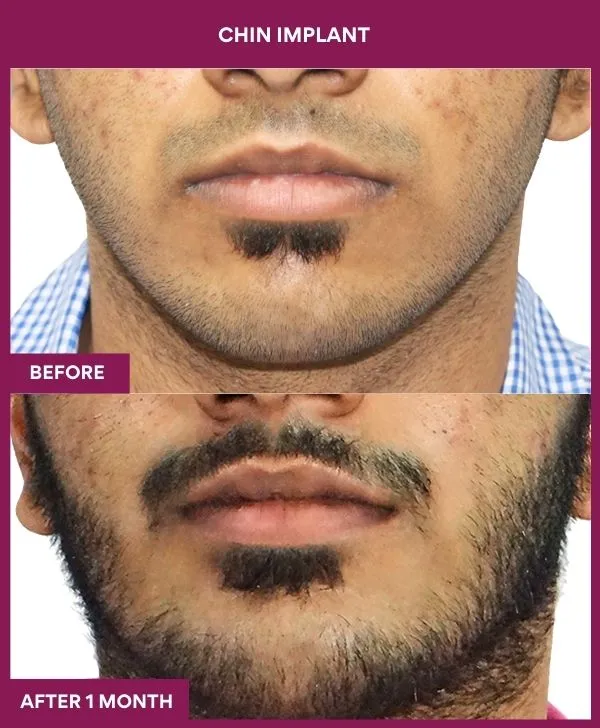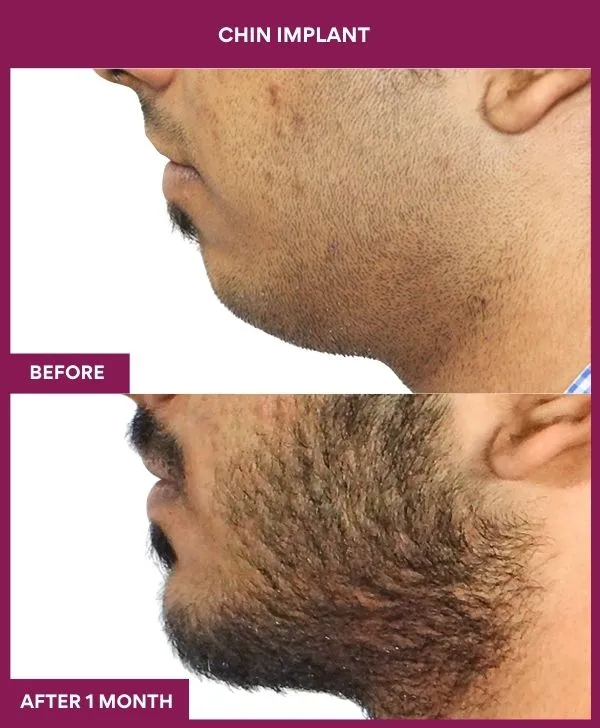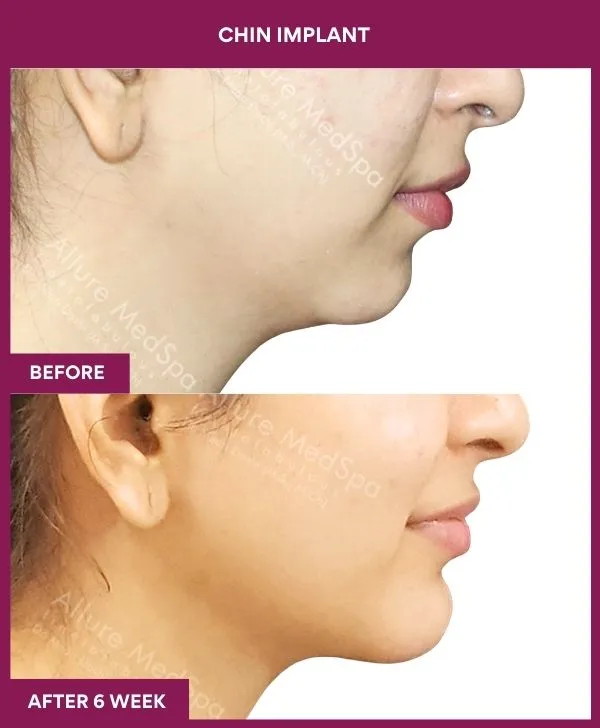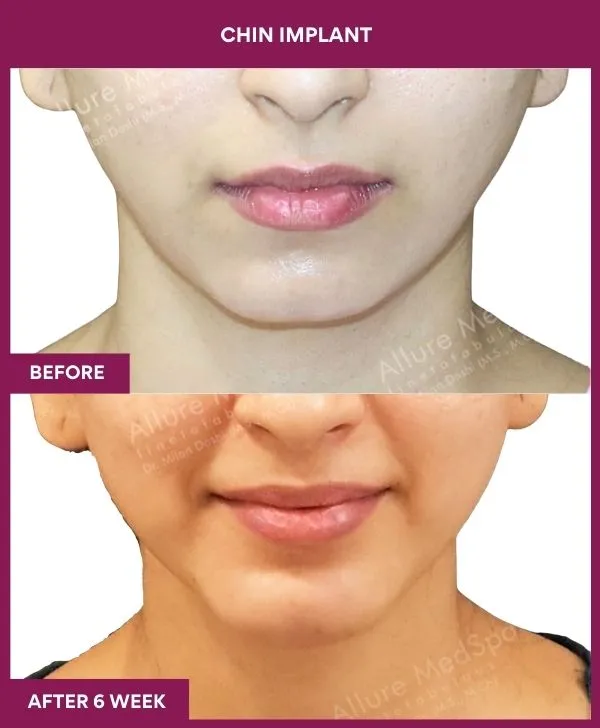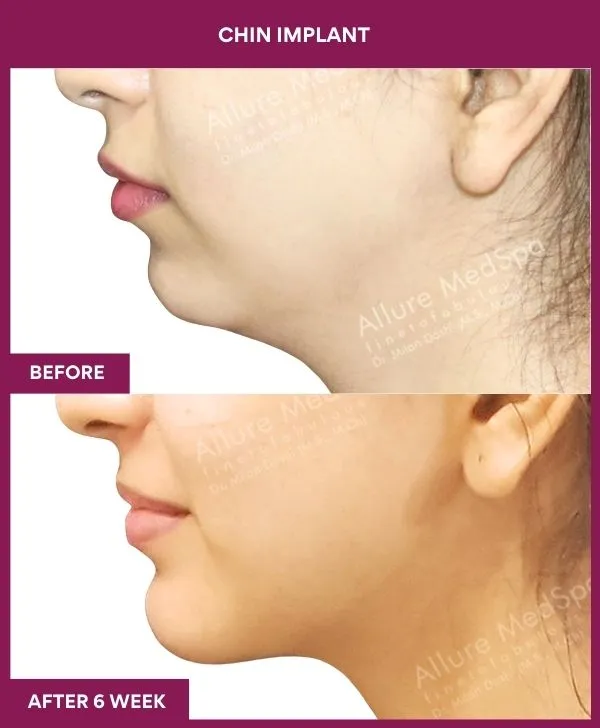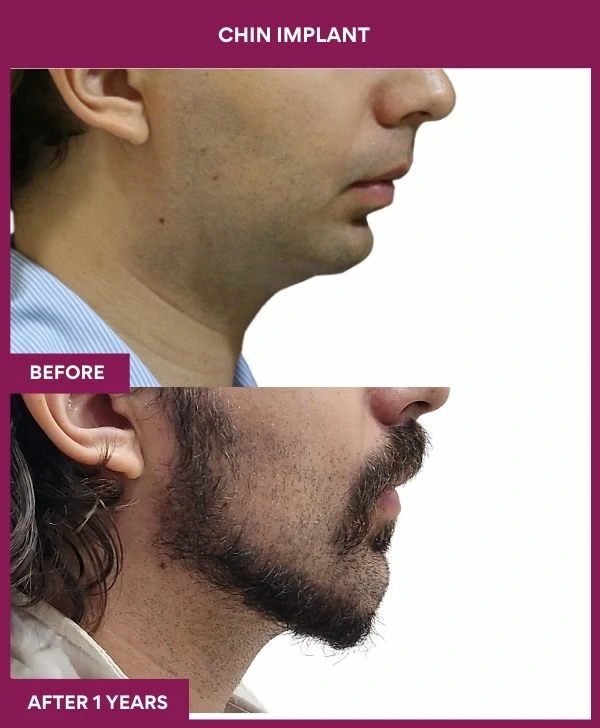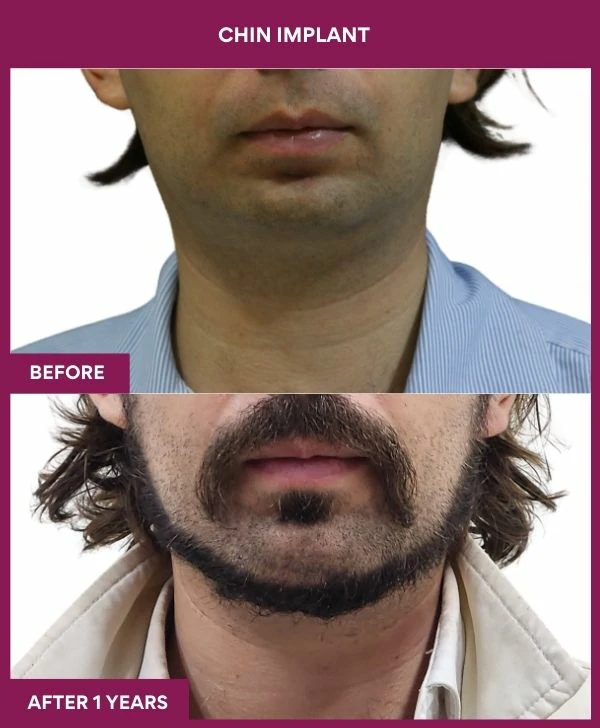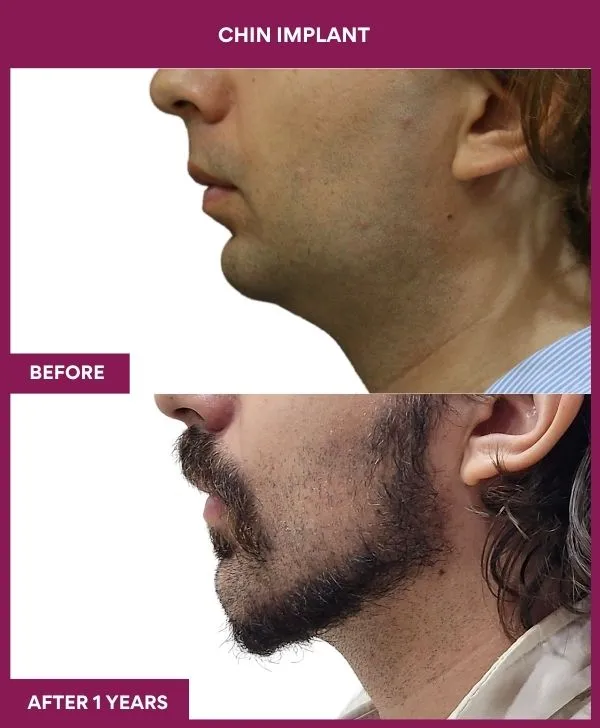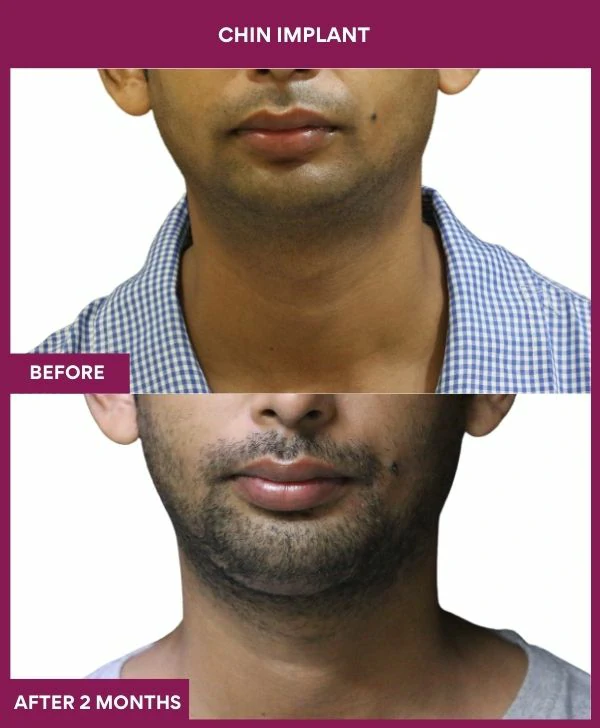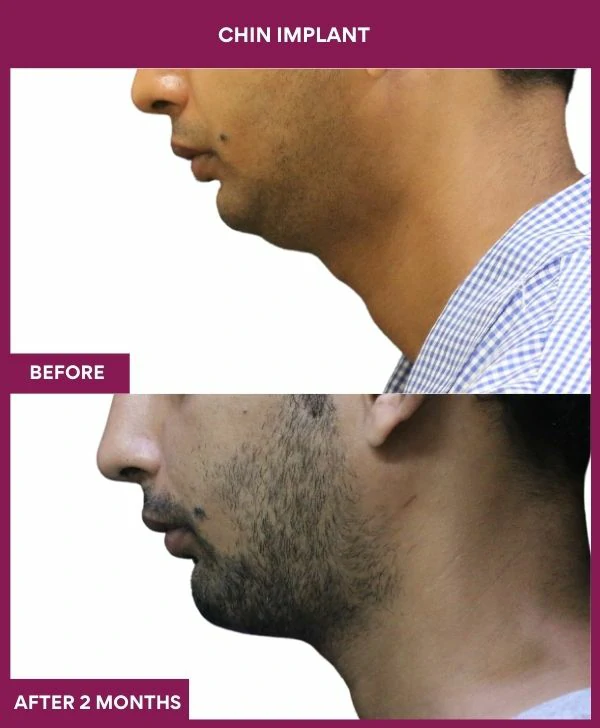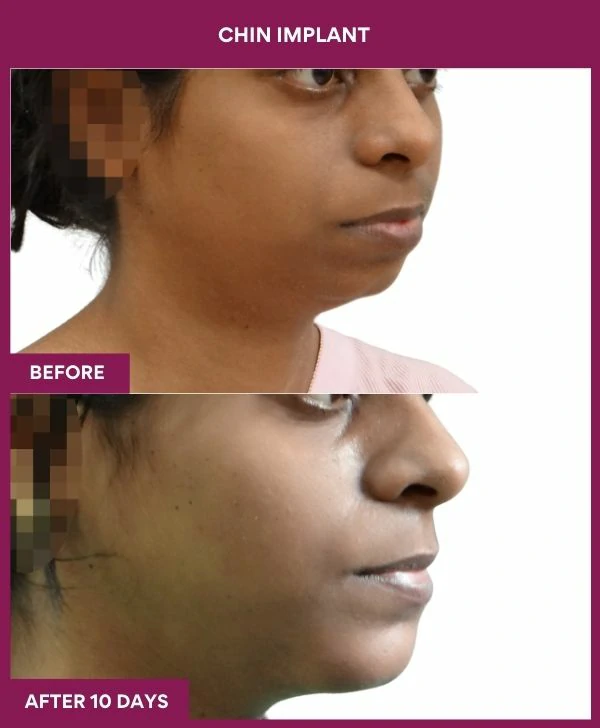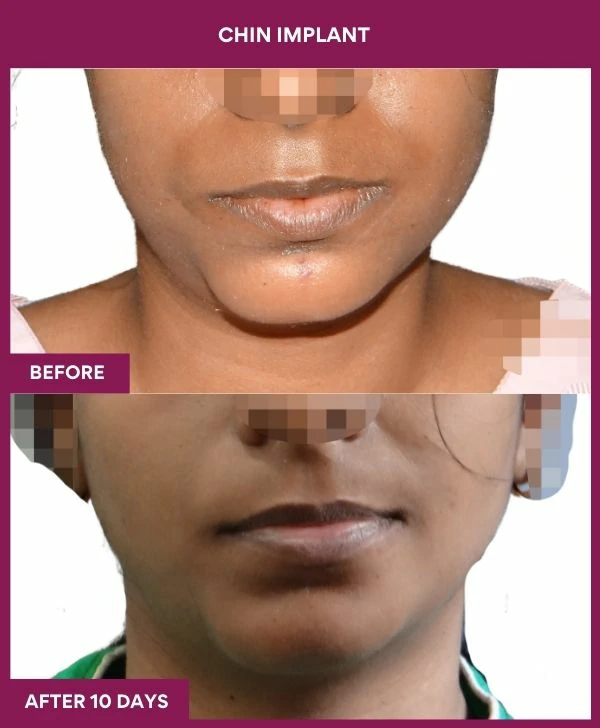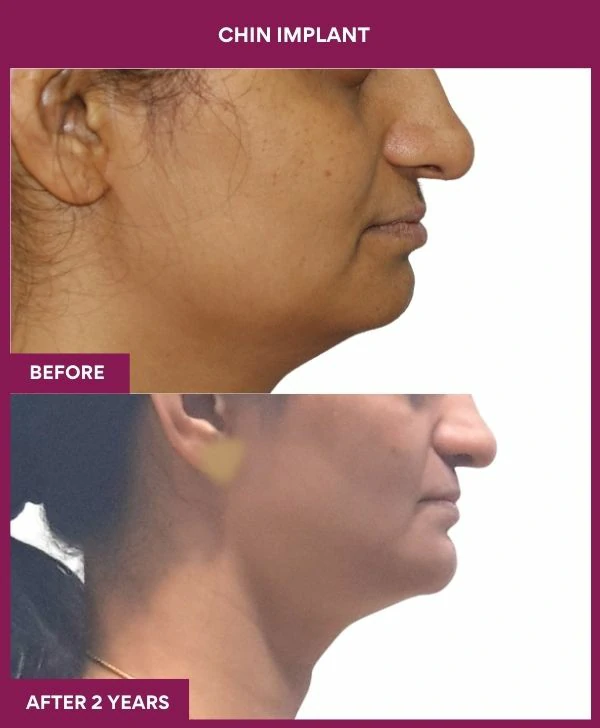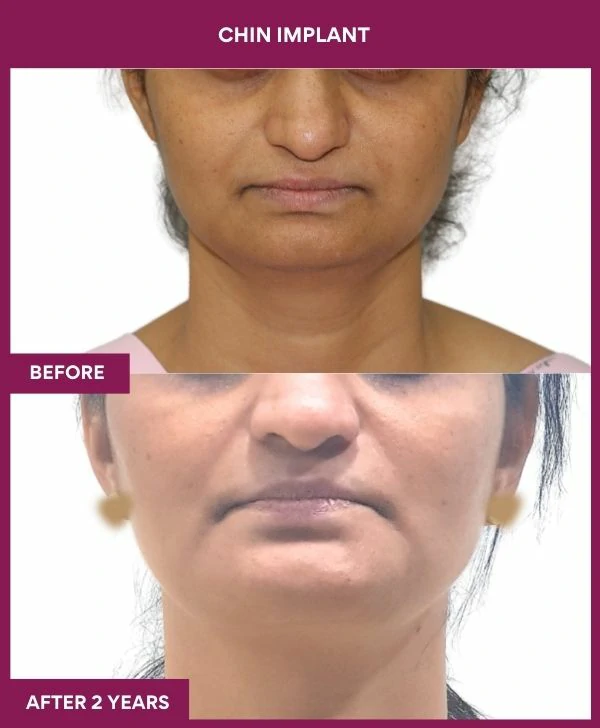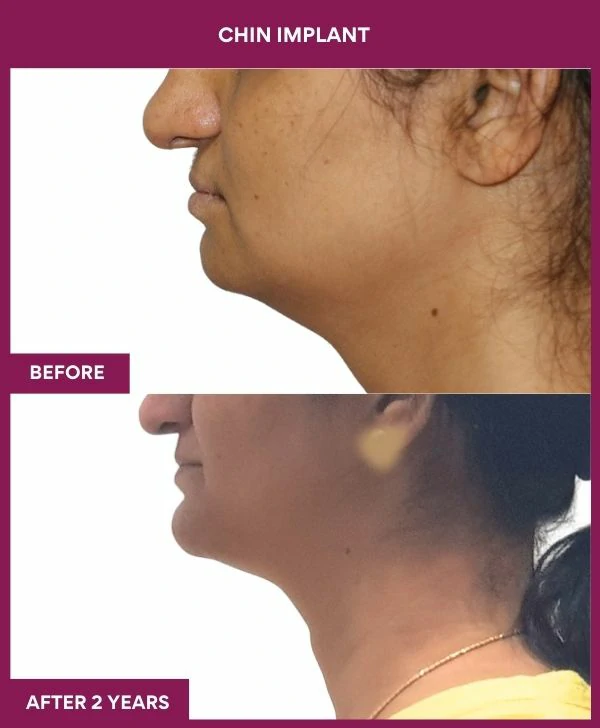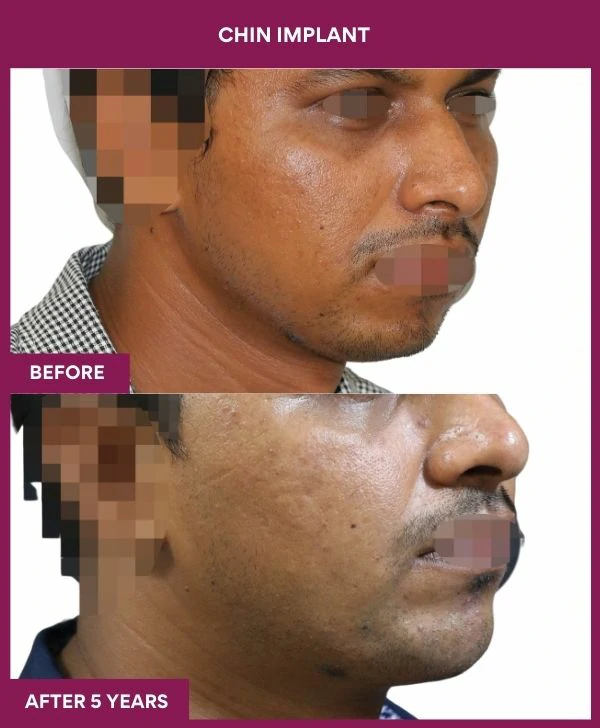

Chin Augmentation (Genioplasty) in Mumbai — Balanced Profile, Honestly Explained
Chin augmentation (genioplasty) reshapes or projects the chin to balance the profile and strengthen the jawline — using either a chin implant or bone reshaping (sliding genioplasty), and, for subtle cases, non-surgical fillers or fat transfer. The right method depends on your anatomy and goals; each has honest tradeoffs, which is what the consultation is for.
What Is Chin Augmentation (Genioplasty)?
Chin augmentation (genioplasty) is a cosmetic procedure that reshapes, enhances or projects the chin for better facial balance — done surgically with an implant or bone reshaping, or non-surgically with fillers or fat for subtle changes.
Two surgical routes — a chin implant (fixed to the bone) or a sliding genioplasty (the chin bone itself is repositioned)
Non-surgical options — dermal fillers or fat transfer for temporary, subtle enhancement or as a ‘trial’ before surgery
Best for — a naturally small, recessed or asymmetric chin, or lost definition from ageing or injury
Choosing between them — see our detailed guides on chin implant vs sliding genioplasty and chin filler vs chin implant
Also called — genioplasty, mentoplasty, chin implant surgery, chin enhancement, chin reconstruction, facial contouring
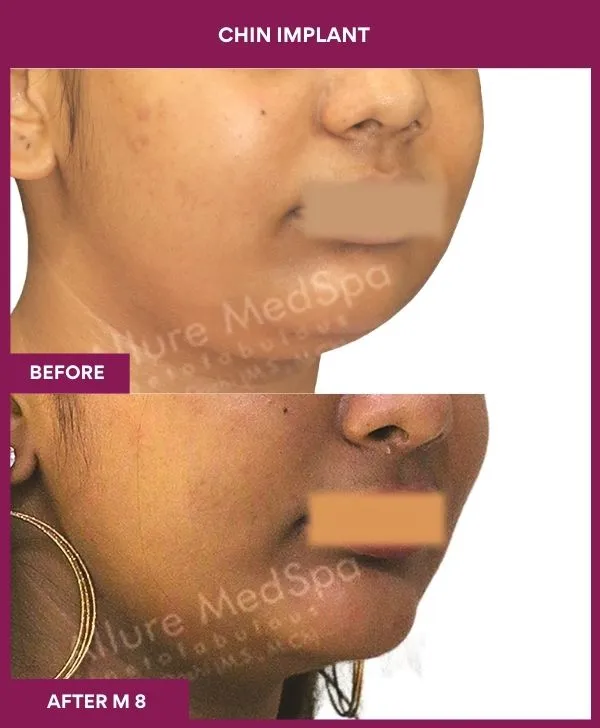
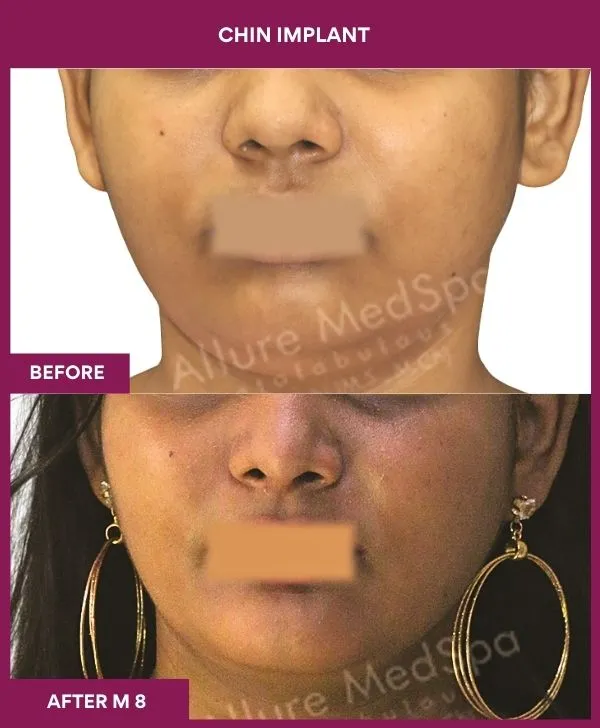
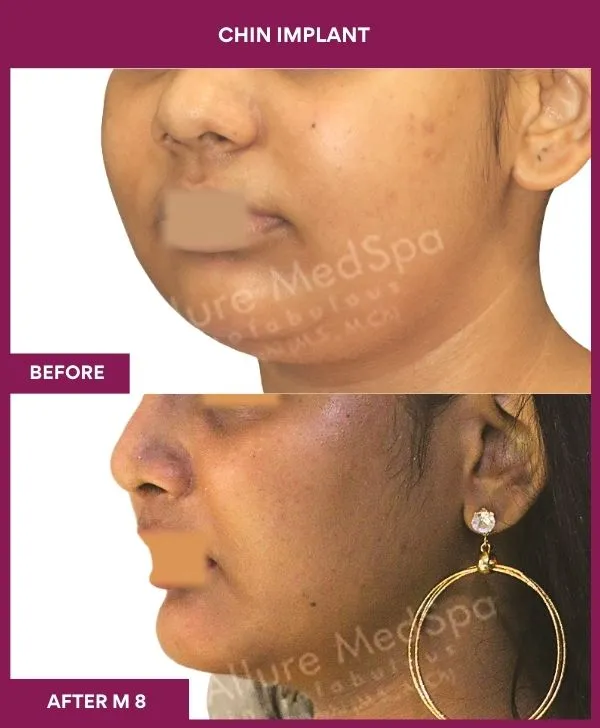
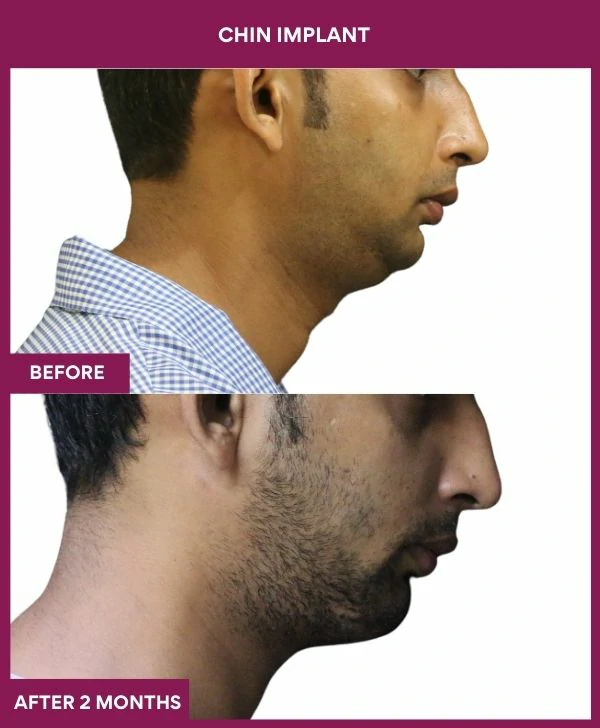
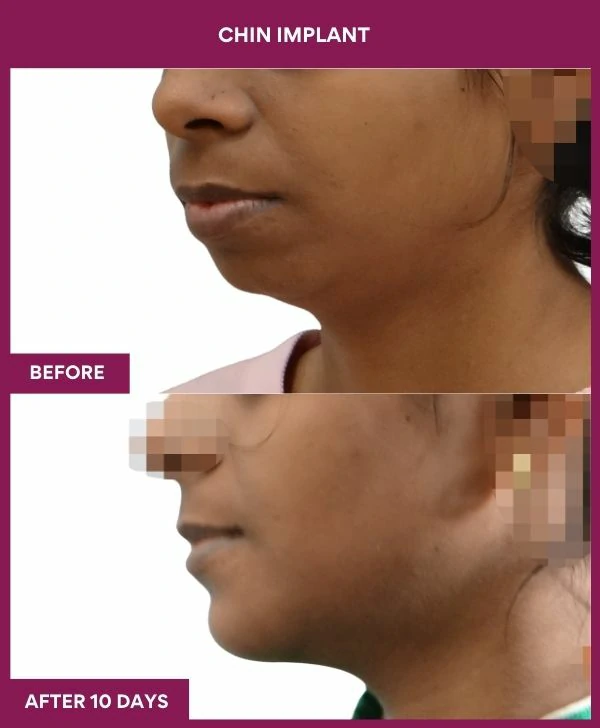
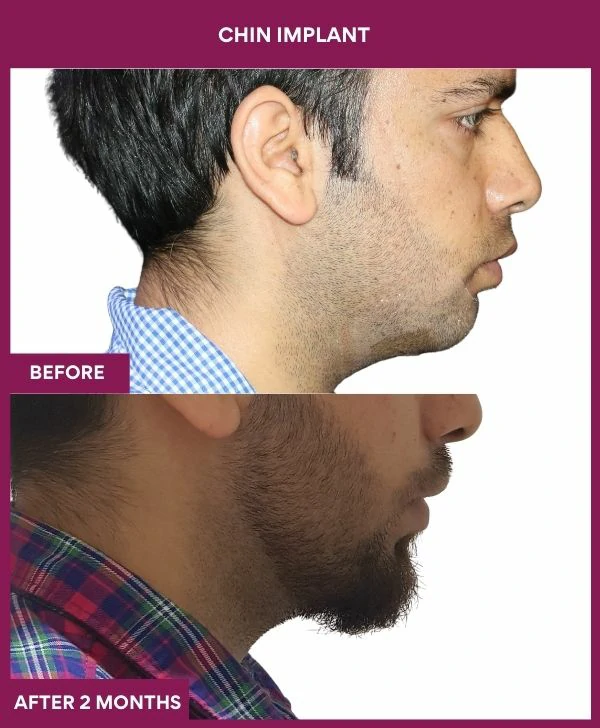
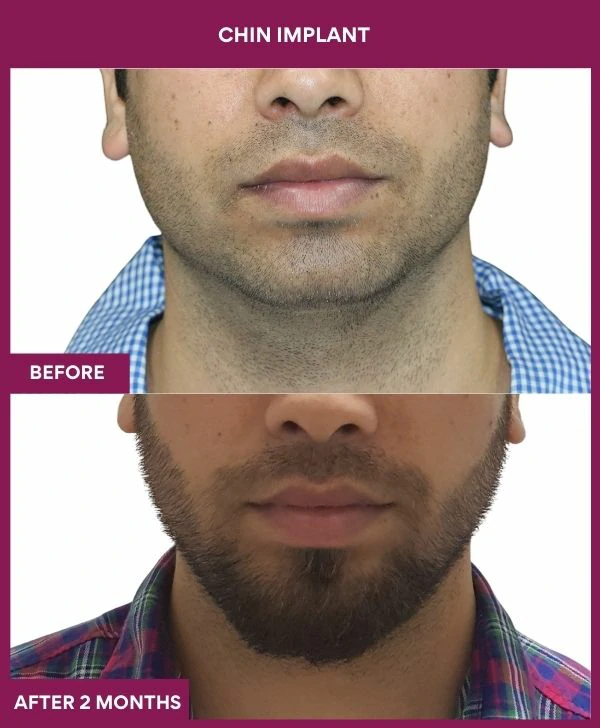
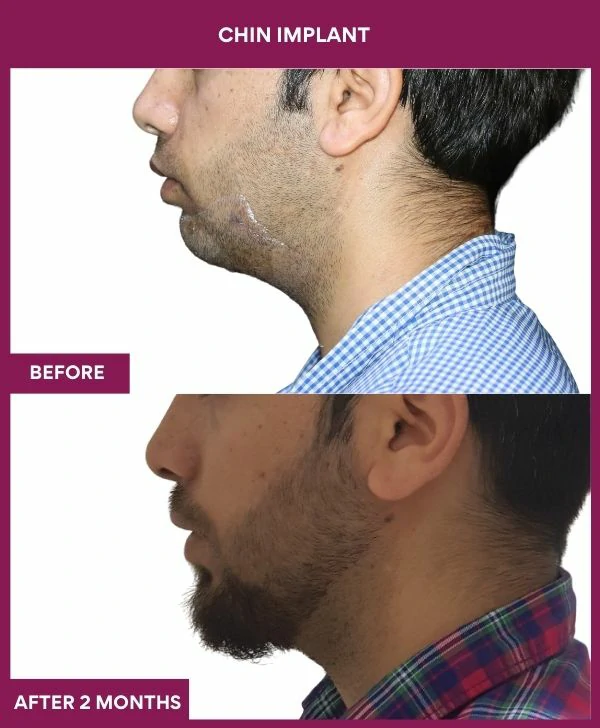
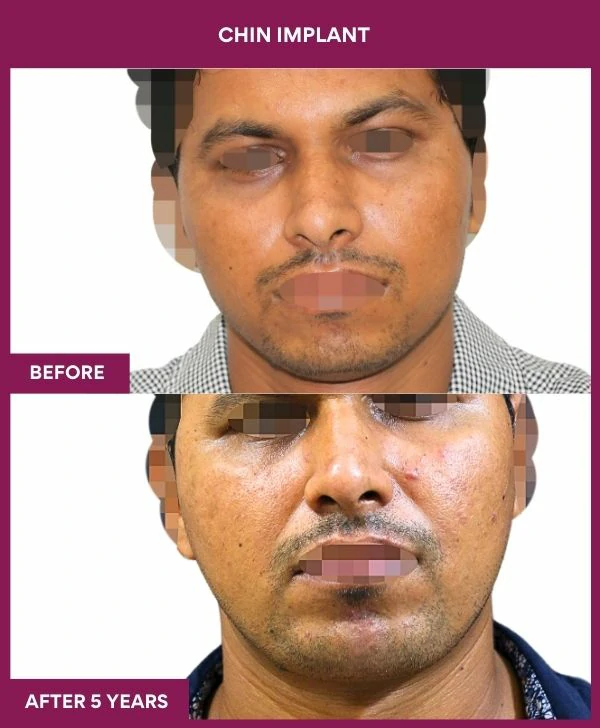
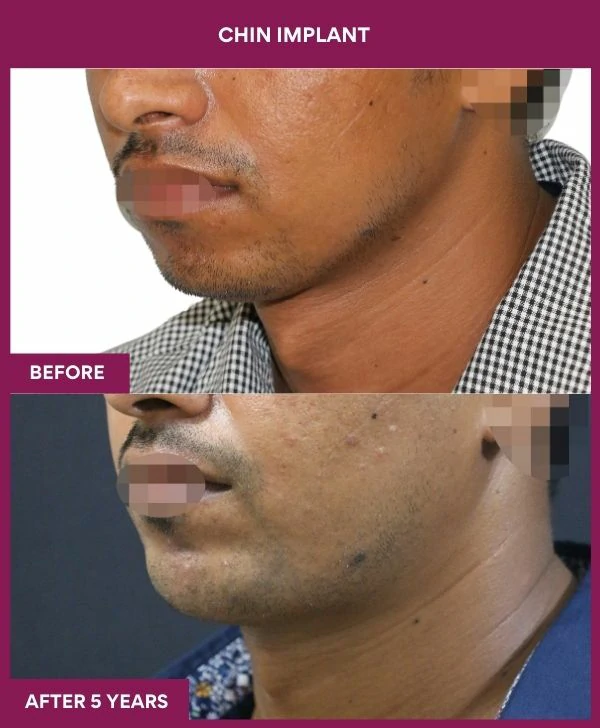
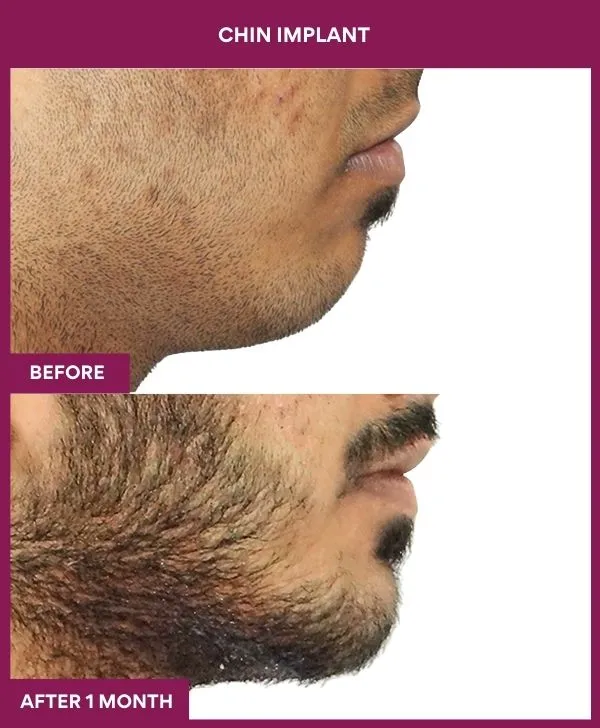
Chin Augmentation Before & After Result
“Liked the results? Let's plan yours.”
Chin Augmentation Surgery Testimonials: Fine To Fabulous Journeys

Awarded by Google.com
Rating: 4.7
Reviews: 485+
Awarded by WhatClinic.com
Rating: 4.8
Reviews: 119+
Awarded by Realself
Rating: 4.9
Reviews:453+
Awarded by Facebook
Rating: 4.6
Reviews:105+
Dr Milan Doshi and his staff are very professional and committed as the centre is highly equipped with advanced technology. I had closed rhinoplasty 4 months back and I’m seeing the results as to how it becomes successful.
Deepika Shetty
The doctor explained everything clearly and the surgery was smooth. Recovery was faster than I expected and the team was very supportive.
Rahul Mehta
Very natural results and excellent staff. From consultation to follow-up, the experience was outstanding and boosted my confidence.
Sneha Kapoor
“Inspired by their journey? Start yours”
Does a Weak Chin Make You Consider Chin Augmentation?
If a small or recessed chin makes your profile feel unbalanced, chin augmentation can strengthen the chin and jawline and bring your side profile into harmony — subtly and naturally.
Do you feel your chin is too small or lacks definition, making your face look unbalanced?
Does a weak chin profile affect your confidence in photographs or during social interactions?
Have you ever wished for a stronger jawline that enhances your overall facial harmony?
A recessed or under-projected chin can disrupt facial proportions, making the nose or neck look more prominent than they really are. That imbalance can affect confidence in both personal and professional settings.
Chin augmentation — genioplasty or mentoplasty — offers a lasting solution. Whether through a chin implant, bone reshaping, or non-surgical dermal fillers or fat transfer, it restores balance and strengthens the jawline. Because the chin and nose together define the profile, it’s often planned alongside rhinoplasty — see our chin-with-rhinoplasty profile strategy. At Allure Medspa, 3D imaging helps you preview your profile before surgery.
Global & Indian trends (2024)
Over 74,000 chin augmentation procedures were performed worldwide in 2023, reflecting steady growth in facial-balancing surgery.
India ranks among the leading countries for chin enhancement and jawline definition, with demand concentrated in Mumbai, Delhi and Bangalore.
Source: ISAPS Global Survey 2024
“Ready to reshape your body?”
Quick Facts About Chin Augmentation Surgery
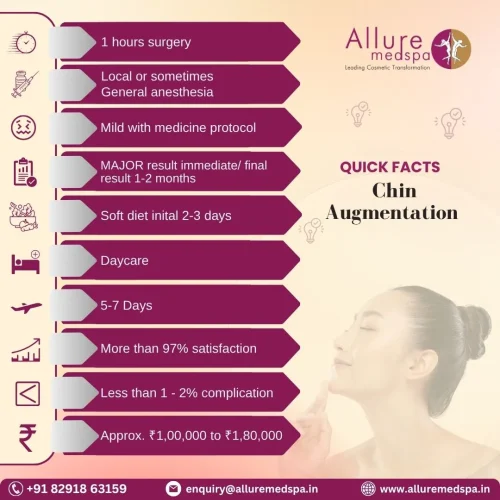
| Time Required | 1 Hours |
| Anesthesia | Local Anesthesia, Sometime General Anesthesia |
| Pain Level | Mild to Moderate Well Managed With Medications |
| Result | Major Difference Visible Immediately Final Result 1 to 2 Months |
| Diet | Soft Diet Initial 2 to 3 Days |
| Hospital Stay | Day Care Surgery |
| Flyback | 2-3 Days |
| Satisfaction Rate | More than 95% |
| Complication Rate | Less than 1 to 2% |
| Chin Surgery Cost Mumbai, India | ₹1,00,000 to ₹1,80,000 INR |
What Are the Benefits of Chin Augmentation?
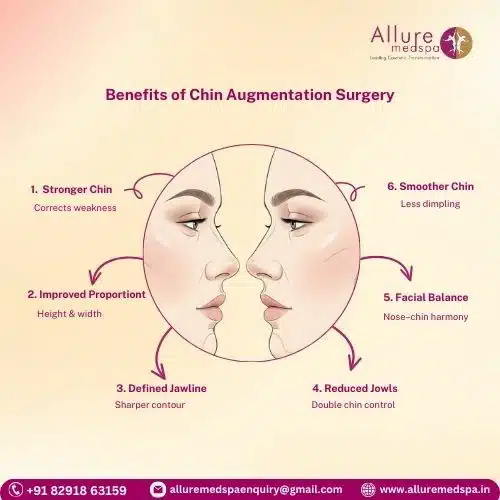
Chin augmentation improves facial balance, strengthens a weak chin and defines the jawline — giving a more harmonious profile, especially in relation to the nose.
Strengthens a weak chin — adds projection to an under-developed or recessed chin
Improves proportion — increases chin height or width for balance
Defines the jawline — a sharper, more attractive lower-face contour
Softens a double chin/jowls — a stronger chin can improve the neck-chin line
Balances the profile — harmonises the chin with the nose — often planned with rhinoplasty
What Is the Ideal Chin Shape for Augmentation?
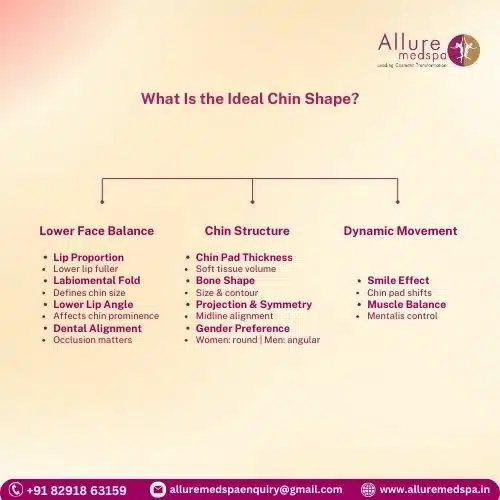
The ideal chin shape depends on gender, facial proportions and lower-face harmony — women often suit a softer, rounder chin and men a more angular projection. A good chin augmentation is planned around your whole lower face, not a template.
Lower-face evaluation
Lip & labiomental fold — the lower lip’s fullness and the lip-to-chin fold influence how the chin reads
Occlusion (bite) — dental alignment affects lower-face aesthetics; a deep bite or prior orthodontics matters
Chin evaluation
Chin-pad thickness & bone — soft-tissue pad and bony projection assessed by palpation and, where needed, cephalograms
Projection & symmetry — the chin point should align with the facial midline
Dynamic assessment — how the chin pad moves when you smile, and mentalis-muscle activity
What Are the Non-Surgical Chin Augmentation Options?
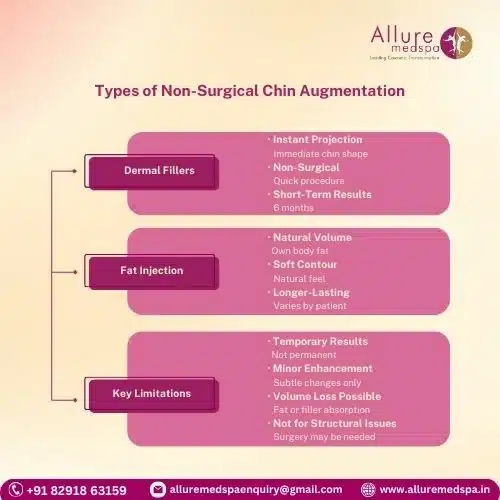
Non-surgical chin augmentation — dermal fillers or fat transfer — offers quick, minimally invasive enhancement for subtle changes, with temporary results and no surgery.
Dermal fillers — dermal fillers give immediate projection, last about 6 months, and are often used as a ‘trial’ before committing to an implant or genioplasty
Fat transfer — fat grafting uses your own fat for natural volume; results can last longer than fillers but vary by patient
Limitations — temporary (often ~9–12 months for fat), best for minor corrections, and can’t fix structural or bite issues; sometimes combined with surgery
Filler or implant? — see our detailed chin filler vs chin implant comparison
What Are the Surgical Types of Chin Augmentation?
Surgical chin augmentation is done either by reshaping the chin bone (sliding/osseous genioplasty) or by placing a chin implant — each with honest tradeoffs in versatility, recovery and risk.
Sliding / osseous genioplasty (bone reshaping)
Uses your own bone — the chin bone is cut and repositioned (forward, back, up or down), then fixed with a plate and screws — no implant material
Most versatile — can correct projection, height and asymmetry (subtle 5–6mm changes, up to ~10mm), and complex cases; often paired with orthodontics
Tradeoff — a bigger operation with a longer recovery, but a stably permanent result and, in comparative studies, higher satisfaction
Chin implant (alloplastic)
Simpler & less invasive — a pre-shaped implant (silicone, Medpor/polyethylene or others) is fixed to the bone through a hidden incision
Best for — straightforward under-projection; the implant is sized and trimmed to fit
Tradeoff — less versatile than genioplasty, and carries implant-specific risks over time (infection, migration, bone resorption) — see the risks section
Which is right for you — this is an important decision; read our full chin implant vs sliding genioplasty guide and discuss it at your consultation
Sources: Comparative cohort: implants had higher infection/reoperation; genioplasty higher satisfaction, Systematic review of alloplastic chin implant materials/complications
What Are the Limitations of Chin Augmentation?
Chin augmentation greatly improves facial balance, but it has limits — it doesn’t fix jaw-alignment or major bite problems, and each method has its own constraints.
Doesn’t fix the bite — jaw-alignment or major occlusion problems may need orthodontics or orthognathic surgery, not just augmentation
Implant constraints — projection is limited to the implant’s size and shape
Bone-movement limits — in genioplasty, very large shifts risk bone stability or nerve safety
Healing varies — final results depend on individual healing and tissue response
Revision possible — some patients need adjustment or secondary surgery for symmetry
Am I the Right Candidate for Chin Augmentation?
Good candidates for chin augmentation are healthy adults who want to improve a small, recessed or asymmetric chin, and who have realistic expectations — with any bite or medical issue assessed first.
Often suitable for
Enhancing or reducing chin projection — or lengthening/shortening the chin
Congenital or post-traumatic chin deformity or asymmetry — and as part of gender-affirmation surgery
Not ideal for
Active periodontal (gum) disease — should be treated first, especially for intraoral incisions
Certain dental/jaw anatomy — e.g. long teeth with short mandibular height — assessed case by case
General eligibility
18 or older, in good health — no uncontrolled conditions (e.g. uncontrolled diabetes, coronary disease); realistic goals and a stable mindset
Why Is a Consultation Important Before Chin Augmentation?

A consultation ensures your chin augmentation is planned around your whole lower face — choosing implant vs genioplasty, setting realistic expectations, and previewing your profile.
Method choice — implant vs sliding genioplasty vs non-surgical, based on your anatomy and goals
Detailed evaluation — chin height, projection, chin-pad position, dynamic movement and any pad droop
3D preview — imaging software simulates your post-surgery profile
Safety review — medical and dental history, and screening for bite issues
Honest expectations — what each method can and can’t do; book online or in person
What Post-Operative Care Is Needed After Genioplasty?

Optimize health, share full medical history, and follow your surgeon’s instructions to ensure a safer operation and smoother, faster recovery.
- Complete labs and medical clearance; stabilize conditions (diabetes, BP, thyroid).
- Stop smoking 2–4 weeks pre‑op; limit alcohol as advised.
- Pause blood thinners/herbal supplements if your surgeon approves.
- Practice sun protection; keep skin clean on surgery day.
- Arrange a responsible escort and 24‑hour home support.
- Prepare questions and align expectations during consultation.
How Is Chin Augmentation (Genioplasty) Performed?
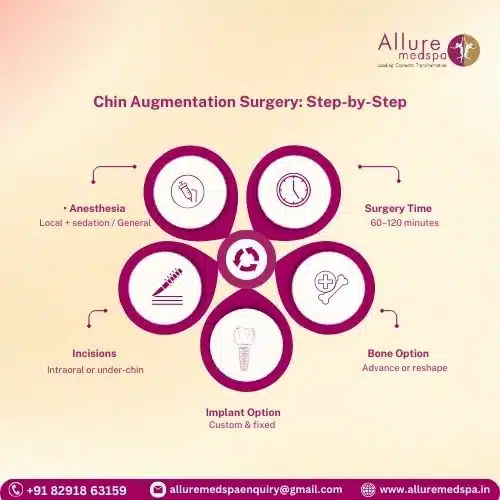
Chin augmentation is done through hidden incisions — the surgeon either places and fixes a tailored implant, or cuts and repositions the chin bone — then secures and closes for a natural result.
Anaesthesia — usually local with sedation; general in select cases
Incision — intraoral (inside the lip, no visible scar) or a discreet submental (under-chin) incision
Implant route — a sized implant is placed in a precise pocket on the bone and fixed
Genioplasty route — the chin bone is advanced/set back/shortened/lengthened and fixed with a plate and screws
Time — about 60–120 minutes; day-care in most patients
What Post‑Operative Care Is Needed After Genioplasty?

After chin augmentation, expect swelling and mild discomfort early on — protect the incision, eat soft foods, keep the area clean, and attend follow-ups for stable healing.
First 24–48 hours — cold compresses and head elevation to reduce swelling
Medication — pain relief and antibiotics as prescribed; avoid smoking and alcohol
Oral hygiene — meticulous care and rinses for intraoral incisions
Activity — no strenuous activity for ~2–3 weeks; protect the chin from pressure or trauma
Warning signs — fever, worsening pain or bleeding — contact your surgeon promptly; final contour refines over 3–6 months. See our week-by-week recovery timeline
What Is the Recovery Process After Chin Augmentation?
Most people recover from chin augmentation within 1–2 weeks for daily life, with swelling settling over weeks and the final contour refining over a few months.
Dressings/tape — supportive tape for a few days to keep soft tissue against bone
Cold therapy — ice packs for 48–72 hours
Diet & oral care — soft/liquid foods if the incision is intraoral; rinse after meals
Activity — back to routine in a few days; avoid exercise for ~10 days and contact sports for 6–8 weeks
Sleep — head elevated on 2–3 pillows to reduce swelling
How Long Do Chin Augmentation Results Last?
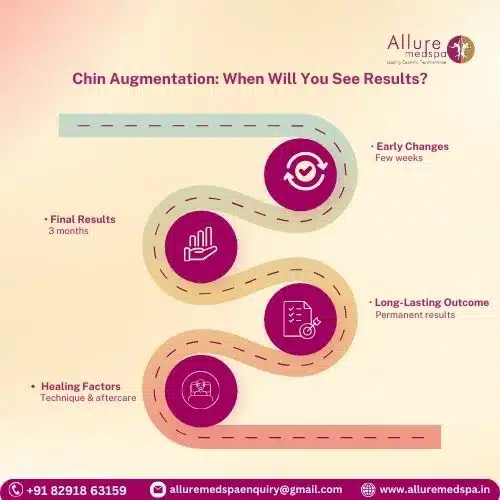
Chin augmentation gives long-lasting results — a bony (sliding) genioplasty is stably permanent, while a chin implant is a durable device that occasionally needs revision or replacement over the years. The final contour appears by about 3 months.
Final result — visible improvement within weeks; settles fully by around 3 months as swelling resolves
Sliding genioplasty — moves your own bone, so once healed it’s stably permanent
Chin implant — long-lasting, but an implant is a device: over years it can occasionally shift, cause mild bone resorption beneath it, or (rarely) need removal or exchange — not a guaranteed ‘never-touch-again’ part
Revision — some patients choose refinement later; implants are the more likely of the two to need future attention
Source: Long-term bone resorption under silicone chin implants (erosion in 14/15; 80% under 2mm)
What Are the Risks and Complications of Chin Augmentation?

Chin augmentation is generally safe in experienced hands, with uncommon and usually minor complications — but the specific risks differ between a bony genioplasty and a chin implant, and both deserve an honest look.
General surgical risks
Nerve (mental nerve) injury — temporary numbness of the lip/chin is not unusual; lasting numbness is rare
Infection & hematoma — uncommon; managed with antibiotics or drainage
Swelling & bruising — expected, settling over weeks
Genioplasty-specific
Tooth-root injury — mandibular tooth roots can rarely be affected during bone cutting or screw placement
Fixation issues / relapse — poor bone fixation can cause asymmetry; avoided with secure plating
Implant-specific
Migration or displacement — an implant can shift if not securely fixed
Bone resorption — the bone under an implant can slowly erode over time (usually minor, but occasionally significant)
Extrusion or infection — uncommon, but an infected or exposed implant may need removal; comparative studies show implants have somewhat higher infection and reoperation rates than genioplasty
Minimised by expertise — careful planning, secure fixation and sterile technique by a board-certified plastic surgeon keep these risks low; read is chin augmentation safe?
Sources: Implant complications: migration, resorption, extrusion, infection, Implants had significantly higher infection & reoperation than osseous genioplasty

What Is the Cost of Chin Augmentation in Mumbai?
At Allure Medspa, chin augmentation costs ₹1,00,000 to ₹1,80,000, depending on the technique (implant vs genioplasty), the implant, and your individual needs. See the detailed cost page; EMI options are on our payment process page.
| Procedure | Approx. cost (INR) |
|---|---|
| Augmentation genioplasty | ₹1,00,000 – ₹1,80,000 |
| Reduction genioplasty | ₹1,00,000 – ₹1,80,000 |
| Chin implant (incl. implant) | ₹80,000 – ₹1,80,000 |
- What changes the price — technique, implant material/quality, complexity, and any revision.
- Usually included — surgeon’s fee, consumables, day-stay facility, technology, implant (if applicable), immediate follow-ups.
- Not included — pre-op tests, take-home medicines, and 18% GST; cosmetic surgery isn’t insured.
- Exact quote — after assessment; book a consultation.
“Want to know the exact cost for you?”
Which Is the Best Centre for Chin Augmentation in Mumbai?
Allure Medspa, led by Dr. Milan Doshi, is a NABH-certified cosmetic surgery centre in Mumbai purpose-built for aesthetic procedures, with 3D previews, modern theatres and end-to-end care for chin augmentation.
NABH-certified & safe — high safety, hygiene and care standards
Purpose-built facility — dedicated cosmetic centre led by Dr. Milan Doshi
3D consultation — preview your profile before surgery
Modern theatres — life-support systems and current surgical technology
Outstation & overseas — travel and coordination support via our outstation patients guide
“Trust Mumbai’s leading aesthetic centre.”
Who Is the Best Surgeon for Chin Augmentation in Mumbai?
Dr. Milan Doshi is an Indian board-certified plastic surgeon in Mumbai known for natural, balanced chin augmentation results, matching the method (implant or genioplasty) to each patient’s anatomy and goals.
Board-certified — M.Ch, MS; 27+ years’ experience
Experienced — 500+ chin augmentation surgeries
Method-matched — recommends implant vs genioplasty based on your facial proportions
Artistic & safety-focused — natural profiles with careful planning and follow-up
“Ready to meet the expert?”
Medical Code for Chin Augmentation Surgery
ICD-10 Codes for Chin Augmentation Surgery
| ICD-10 Code | Description |
|---|---|
| M95.2 | Acquired deformity of head and face (post-traumatic or post-surgical chin deformity) |
| Q67.0 | Congenital deformity of face/skull (microgenia, congenital chin deficiency) |
| Q75.9 | Congenital malformation of skull and face bones, unspecified |
| Z41.1 | Encounter for cosmetic procedure (elective chin reshaping/augmentation) |
CPT Codes for Chin Augmentation Surgery
| CPT Code | Description |
|---|---|
| 21120 | Genioplasty, augmentation (sliding osteotomy) |
| 21121 | Genioplasty, reduction |
| 21122 | Genioplasty, advancement |
| 21209 | Insertion of chin prosthesis (alloplastic implant) |
| 21210 | Graft, bone; chin, mandibular |
| 21215 | Graft, bone; mandible, partial |
(FAQs) Frequently Asked Questions About Chin Augmentation Surgery
Q1. What age can I have chin augmentation?
Ans. Generally 18 or older, once facial and jaw growth is complete.
Q2. Is chin augmentation painful?
Ans. It’s essentially painless during surgery under local or general anaesthesia. Mild discomfort afterward settles with medication.
Q3. Is bleeding normal after chin augmentation?
Ans. Significant bleeding is unusual after genioplasty. Minor oozing settles quickly; contact your surgeon if bleeding is heavy or persistent.
Q4. What are the possible risks?
Ans. Mostly minor and uncommon: swelling, bruising, temporary numbness, and rarely infection. With an implant, there’s a small added risk of migration, bone resorption or (rarely) needing removal. Choosing an experienced surgeon and accredited facility keeps risks low.
Q5. How safe is chin augmentation?
Ans. It’s a safe, well-established procedure in experienced hands, with a low overall complication rate (roughly 3–5% for implants, mostly minor). See our detailed ‘is chin augmentation safe?’ guide.
Q6. Who is it not suitable for?
Ans. People with active gum disease, or certain dental/jaw anatomy (e.g. long teeth with short mandibular height), and anyone whose concern is really a bite problem needing orthodontics or jaw surgery.
Q7. Is chin augmentation permanent?
Ans. A sliding genioplasty (moving your own bone) is stably permanent once healed. A chin implant is long-lasting but is a device — it can occasionally shift, cause minor bone resorption, or need revision over the years.
Q8. What should I avoid afterwards?
Ans. Smoking, blood thinners (unless prescribed), and vigorous exercise early on; protect the chin from pressure and stay well hydrated.
Q9. When can I work out?
Light activity in about 10 days; heavier exercise in about 2–3 weeks, and contact sports in 6–8 weeks.
Q10. How soon can I return to work?
Ans. Many people return in about 2–5 days, depending on the technique and swelling.
Q11. Implant or sliding genioplasty — which is better?
Ans. It depends on your anatomy and goals. Implants are simpler and less invasive; sliding genioplasty is more versatile (and, in studies, has higher satisfaction) but is a bigger operation. See our detailed comparison.
Q12. What is the success rate?
Ans. High — published patient satisfaction after genioplasty is around 85–90%, and higher when the method is well matched to the patient. (No surgery is ‘100%’, so be cautious of pages that claim it.)
Q13. Does insurance cover chin augmentation?
Ans. Not for cosmetic chin augmentation. Reconstructive cases (after trauma, or with a functional jaw problem) may be treated differently — check with your insurer.
Q14. Does genioplasty improve the jawline?
Ans. Yes — a stronger, better-projected chin improves the jaw and neck line and overall profile.
Q15. Is a chin implant worth it?
Ans. For the right patient with straightforward under-projection, a chin implant is a minimally invasive, effective option — as long as you understand it’s a device that may occasionally need future attention.
“Still have questions? We’re here. ”
Related Links
Note: The author of this content is Dr. Milan Doshi, An Indian board-certified plastic & cosmetic Surgeon wholly & solely confirms the authenticity of the information & knowledge delivered by this write-up.