
9 Rhinoplasty Techniques Explained: Which Nose Surgery Is Right For You?

Indian Board Certified Plastic Surgeon
M.CH, MS, ISAPS Mentor
16000+ Cosmetic Surgeries
1500+ Rhinoplasty Surgeries
“Rhinoplasty” is one word for at least nine different operations. Some change how the nose looks, some change how it breathes, some do both; some remove, some add, some rebuild what an earlier surgery took away; and any of them can be done through an open or a closed approach. Patients usually arrive knowing what bothers them — a hump, a droop, a blocked side, a flat bridge — not which technique fixes it. This guide lists the nine techniques Dr. Milan Doshi uses in Mumbai, what each is for, how long it takes, what it costs and how you recover, so you can walk into a consultation already speaking the same language as your surgeon.
Rhinoplasty Techniques At A Glance
Rhinoplasty techniques differ mainly in what they are designed to correct, how the nose is accessed, the complexity of surgery, recovery time and cost. Cosmetic, functional, septorhinoplasty, reduction, augmentation, ethnic, tip-plasty and revision rhinoplasty each address different concerns, while open and closed rhinoplasty describe the surgical approach rather than a separate procedure. The right technique depends on your nasal anatomy, breathing function, skin thickness, previous surgery and the changes required.
| # | Technique | Best for | Approach | Time | Back to work | Guide cost (₹) |
|---|---|---|---|---|---|---|
| 1 | Cosmetic rhinoplasty | Appearance: hump, size, tip, bridge, symmetry | Open or closed | 2–3 h | 5–7 days | 1,00,000 – 3,50,000 |
| 2 | Functional rhinoplasty | Breathing: valve collapse, obstruction | Usually open | 2–3 h | 5–7 days | 1,20,000 – 3,50,000 |
| 3 | Septorhinoplasty | Deviated septum + shape in one surgery | Usually open | 2–3.5 h | 7–10 days | 1,20,000 – 3,50,000 |
| 4 | Reduction rhinoplasty | Hump, large or long nose | Open or closed | 2–3 h | 7–10 days | 1,40,000 – 3,00,000 |
| 5 | Augmentation rhinoplasty | Low or flat bridge, weak tip | Open (closed for implant) | 2–3 h (rib 3–4 h) | 7–10 days | 1,20,000 – 2,80,000 (+ implant 15–20k) |
| 6 | Ethnic rhinoplasty | Refinement that preserves identity | Usually open | 2.5–3.5 h | 7–10 days | 1,40,000 – 2,80,000 |
| 7 | Nasal tip plasty | Droopy, boxy, flat, pinched or uneven tip only | Closed or open | 1.5–2.5 h | 7–10 days | 70,000 – 1,80,000 |
| 8 | Revision rhinoplasty | Correcting a previous rhinoplasty | Almost always open | 3–4 h | 10–14 days | 1,50,000 – 3,50,000 |
| 9 | Open vs closed | Not a procedure — the route into the nose | — | Closed slightly shorter | Similar | Within the technique’s range |
All figures +5% GST; guide ranges, not quotes. Back-to-work figures are for desk work; final shape 8–12 months for every technique, longer in thick skin.
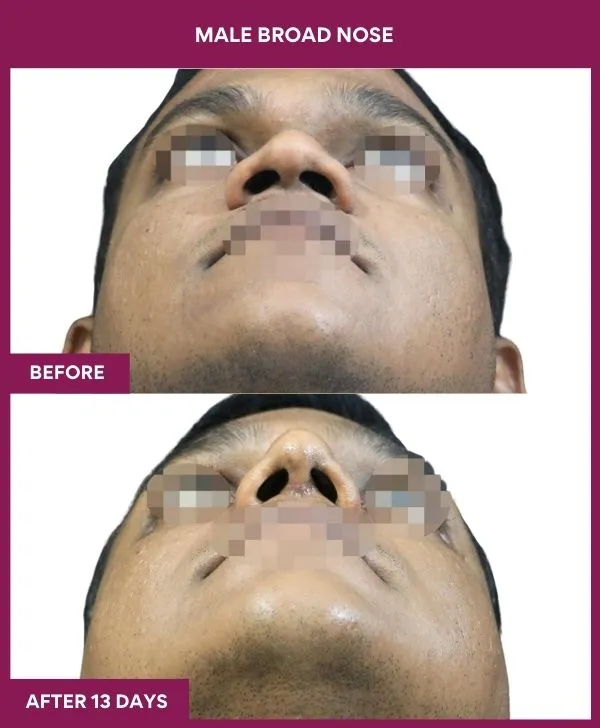
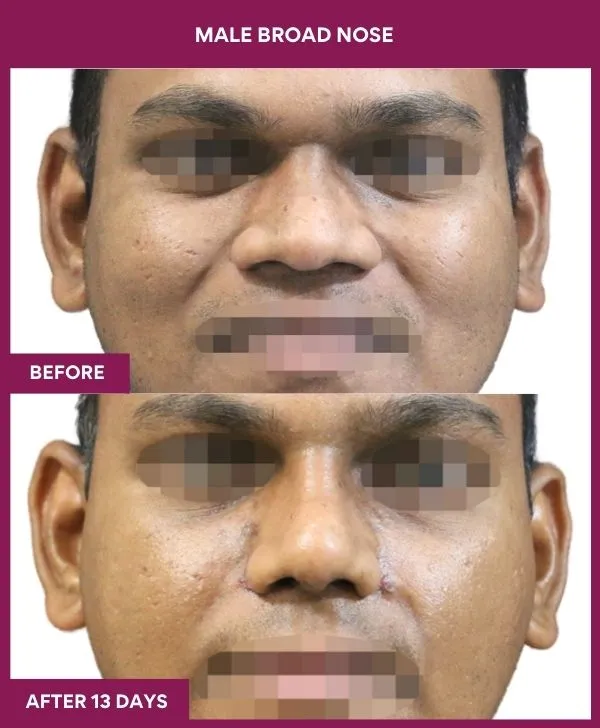
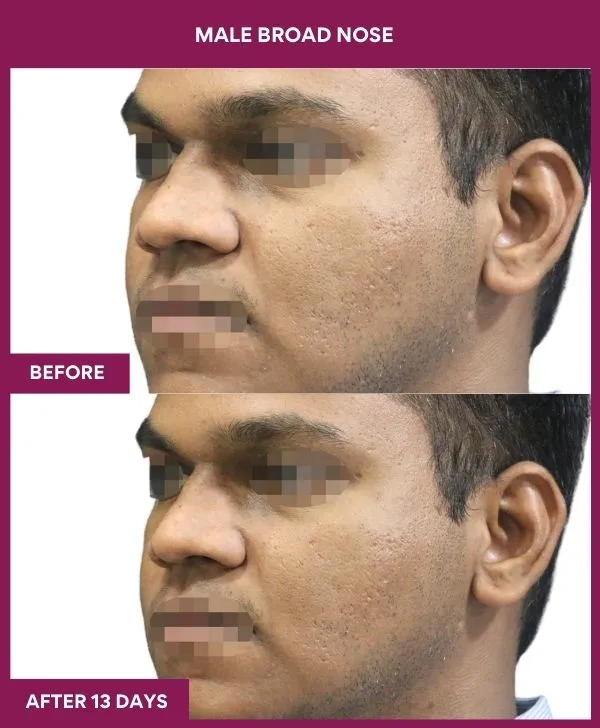
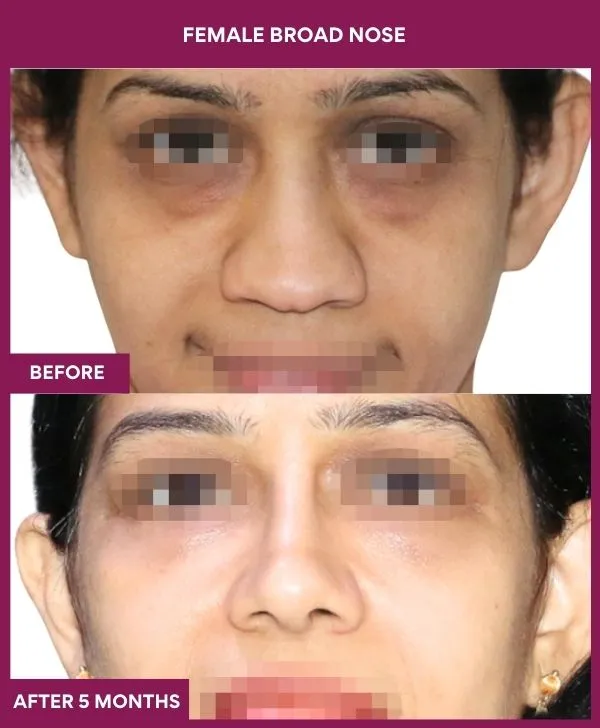
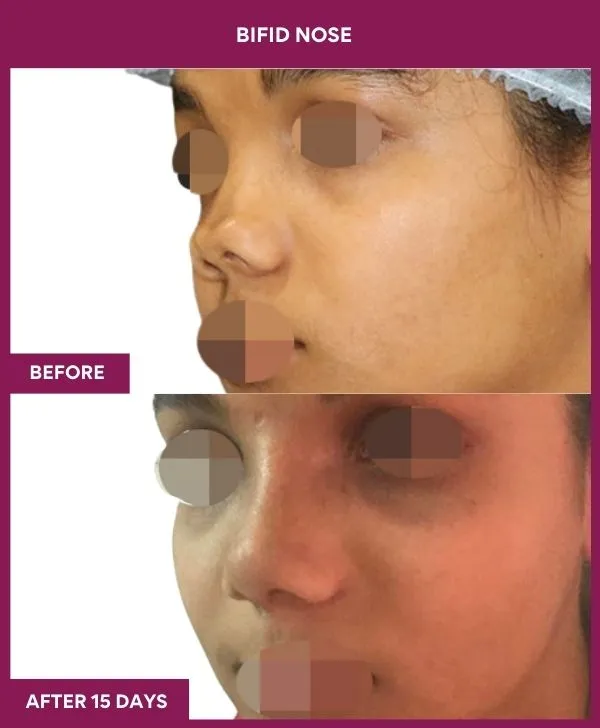
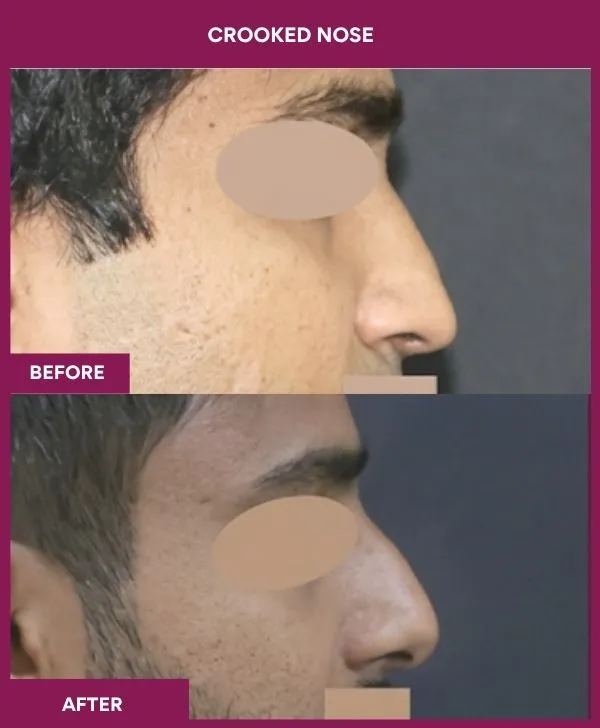
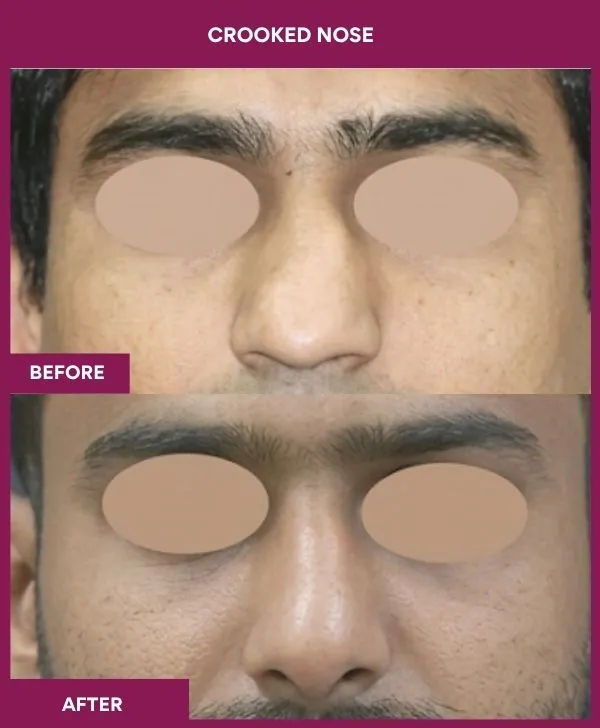
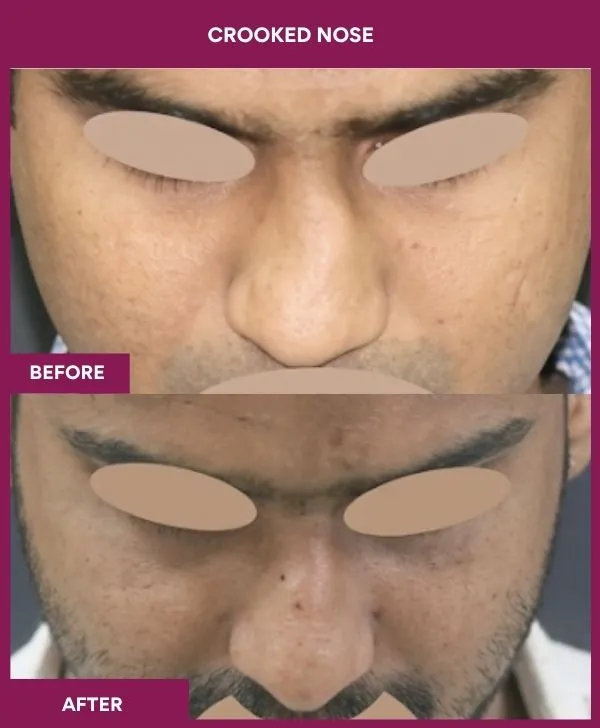
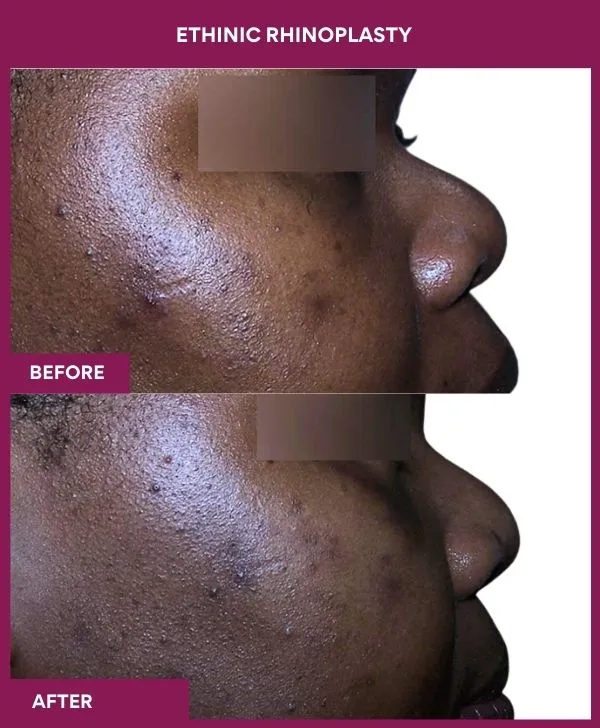
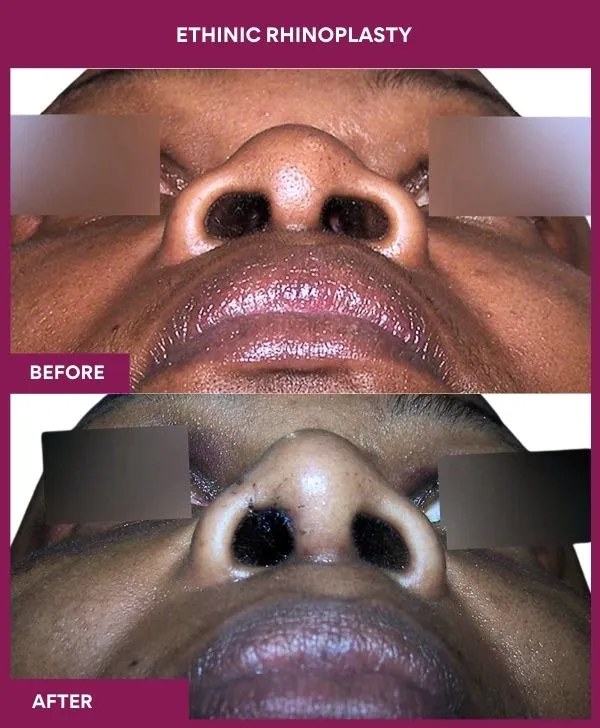
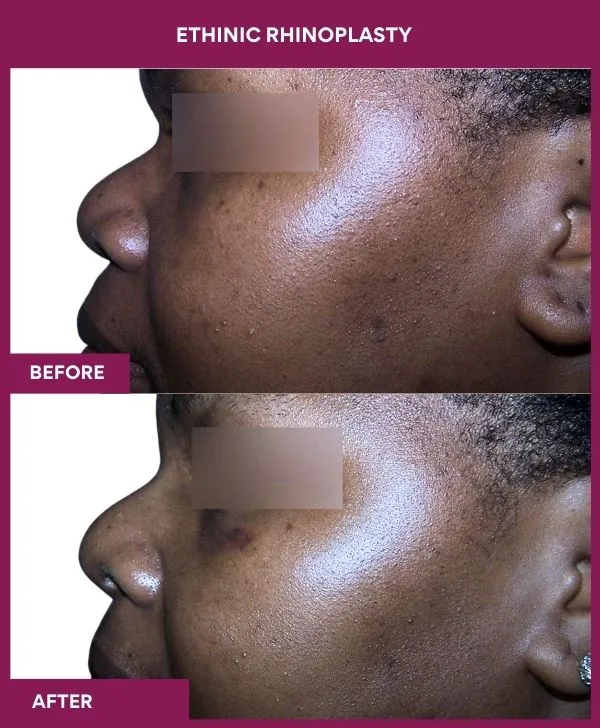
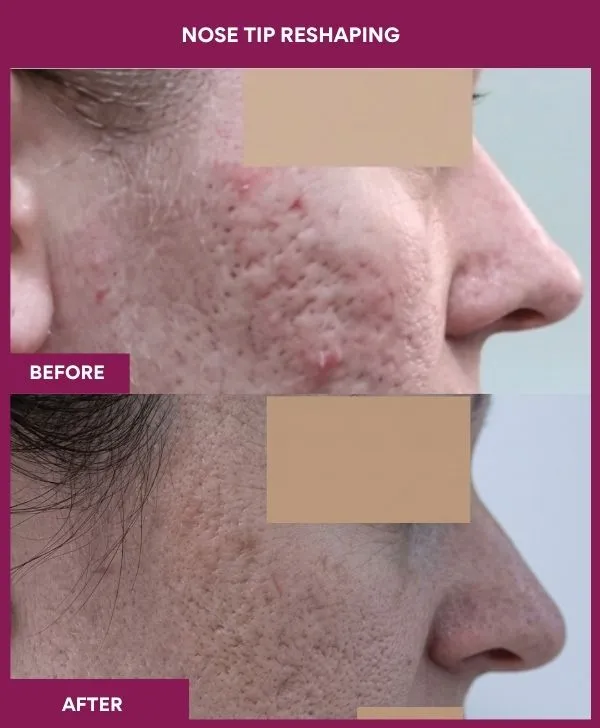
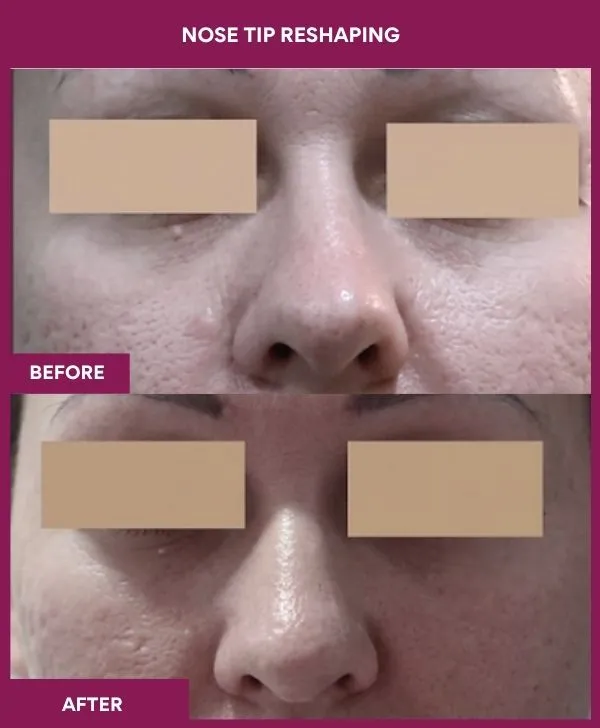
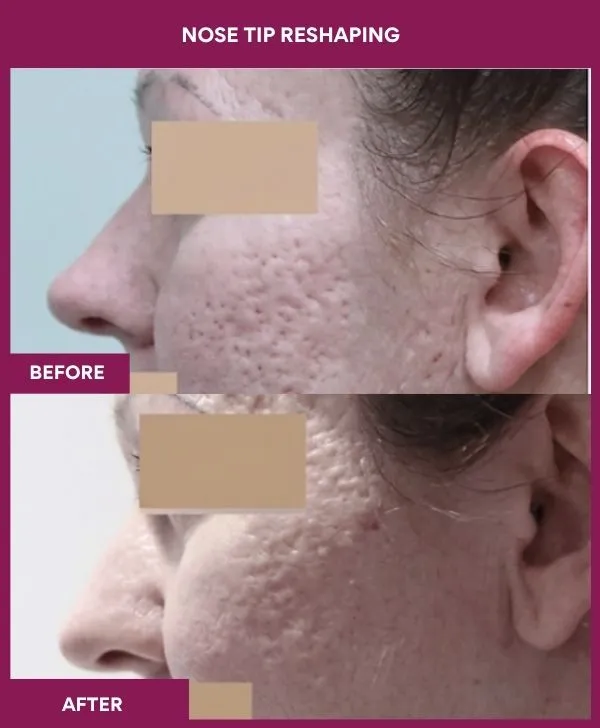
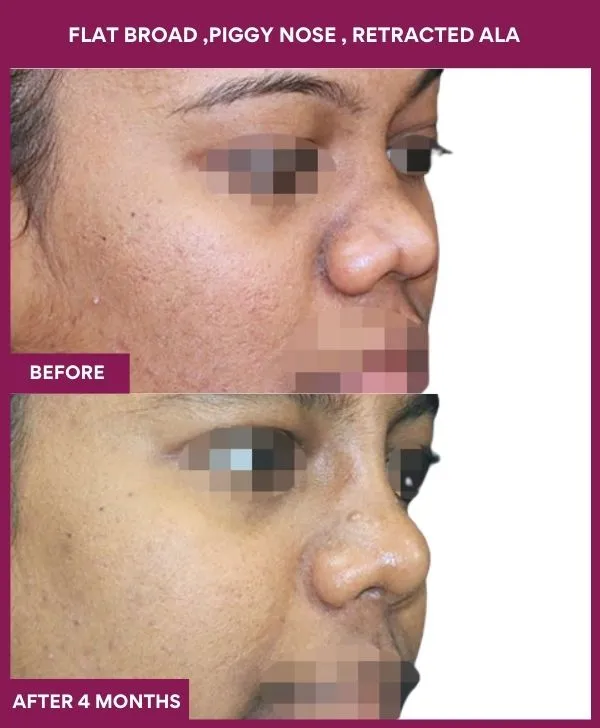
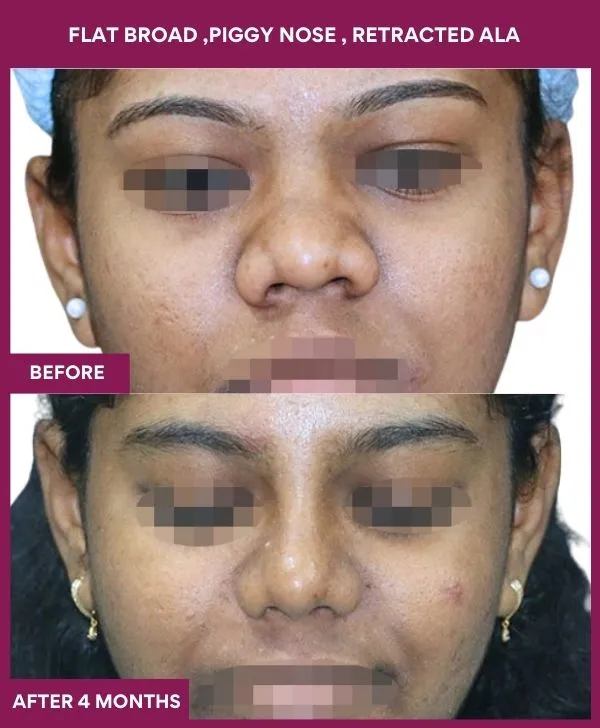
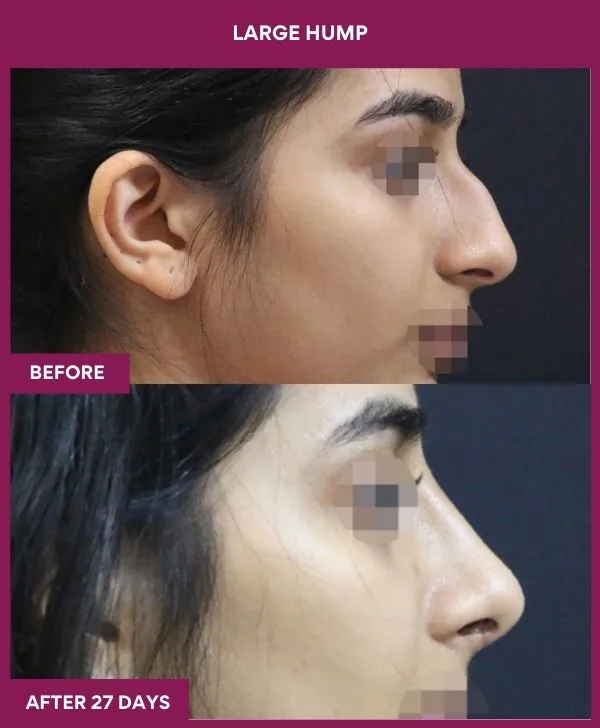
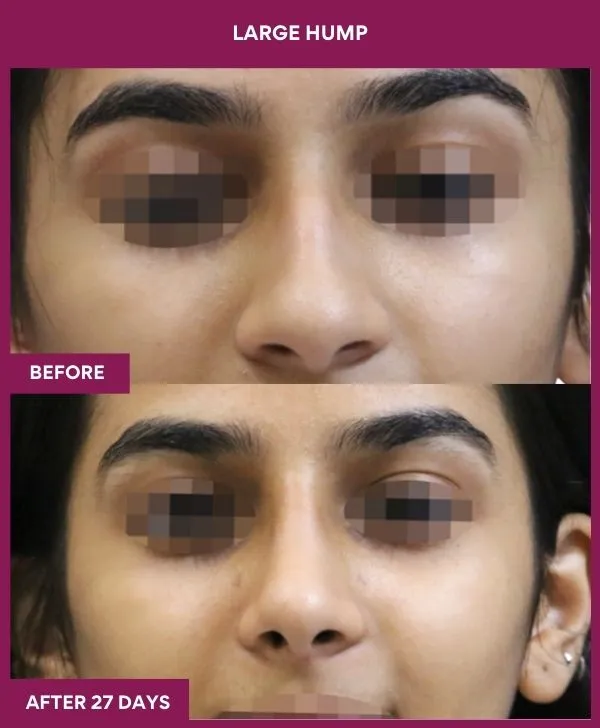
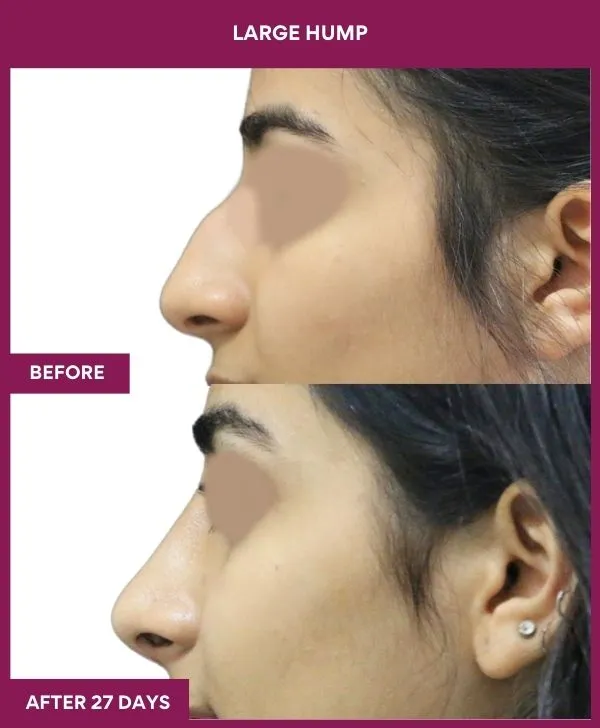
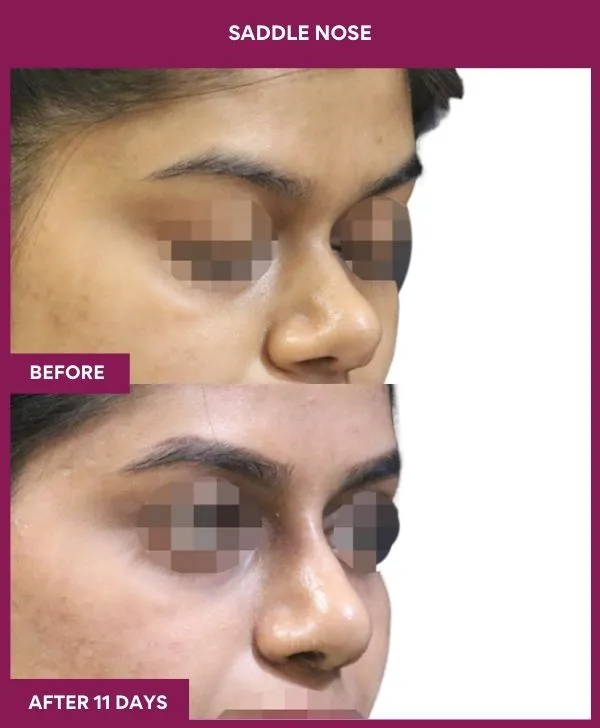
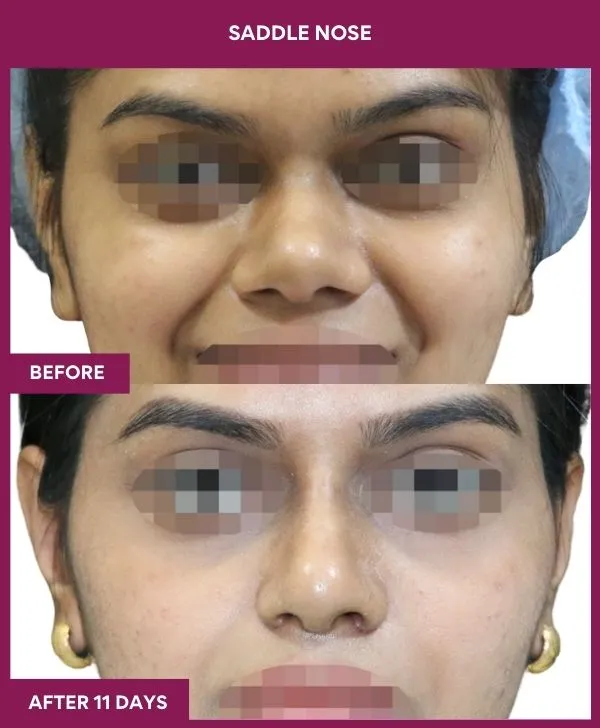
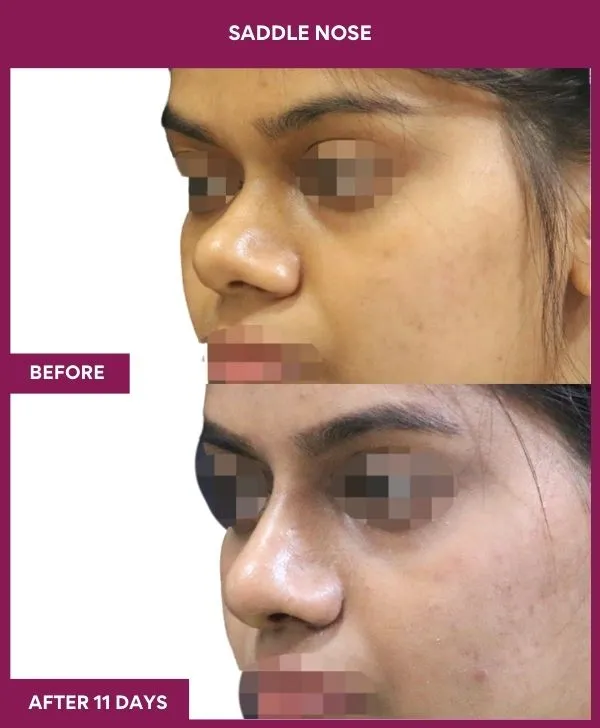
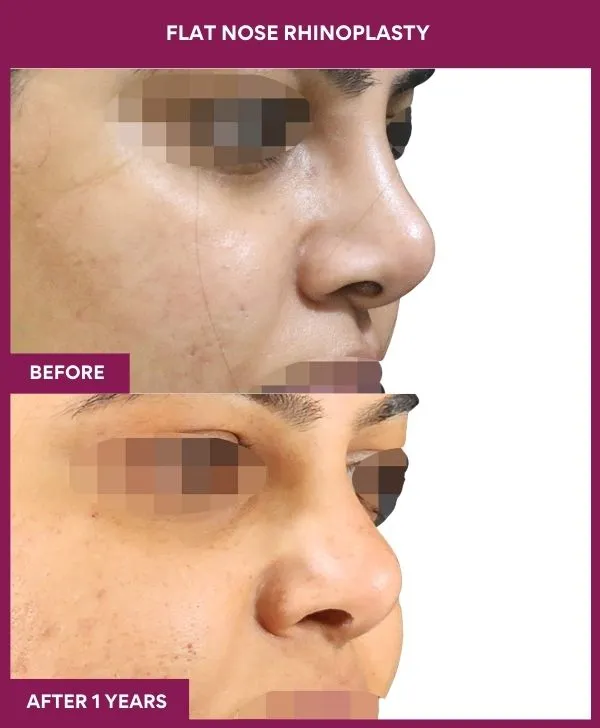
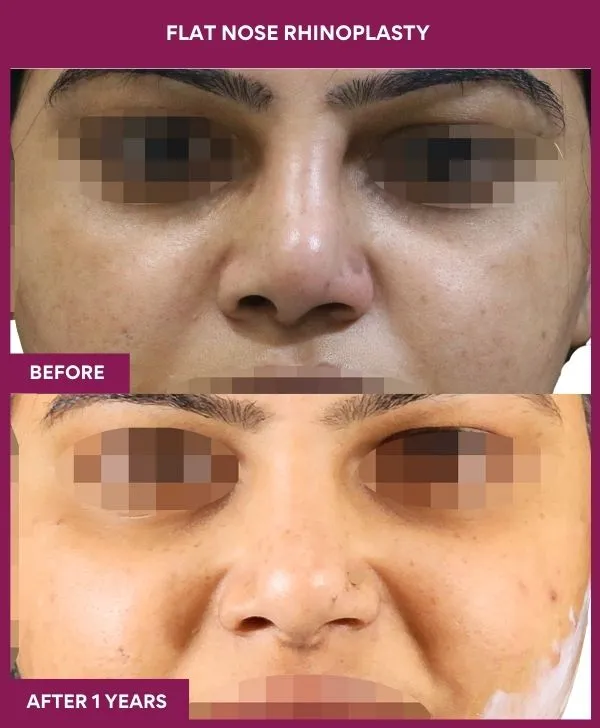
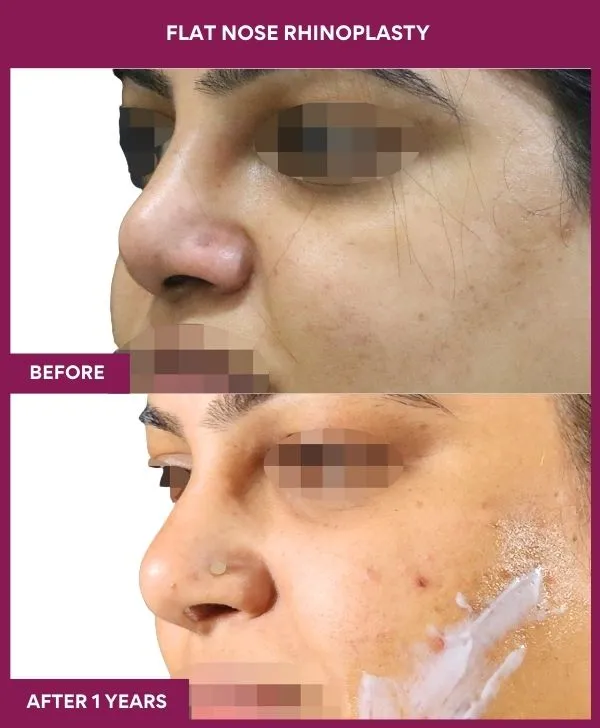
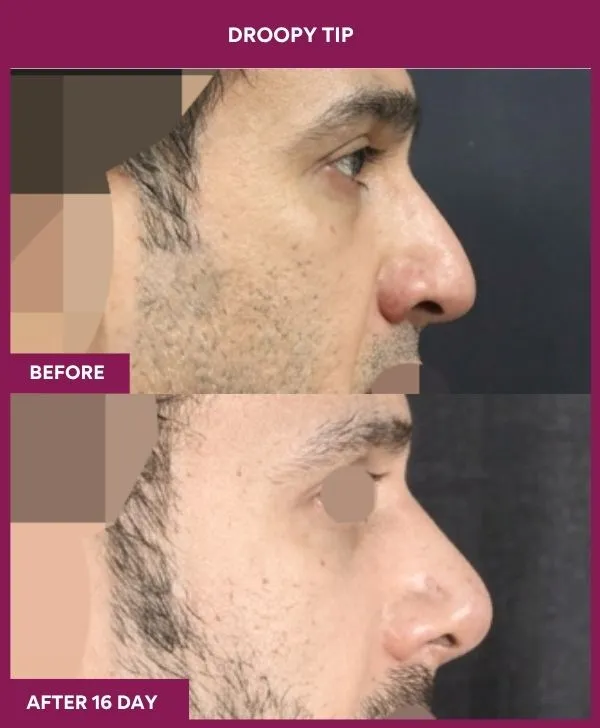
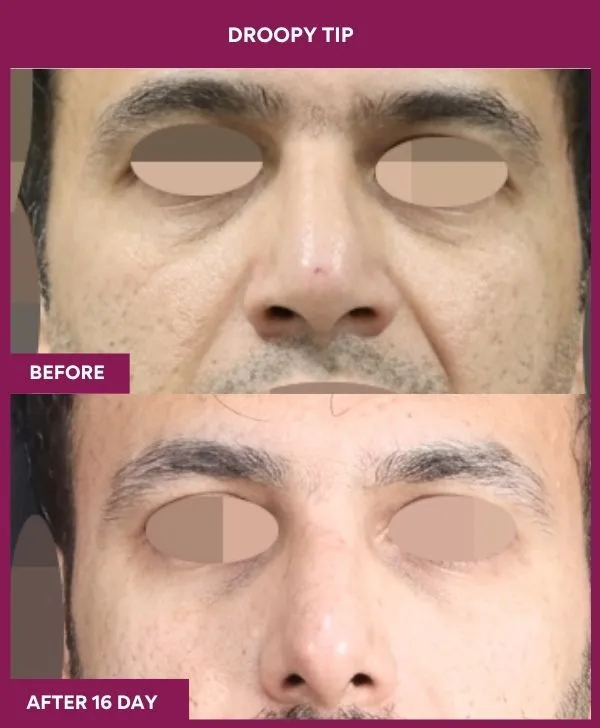
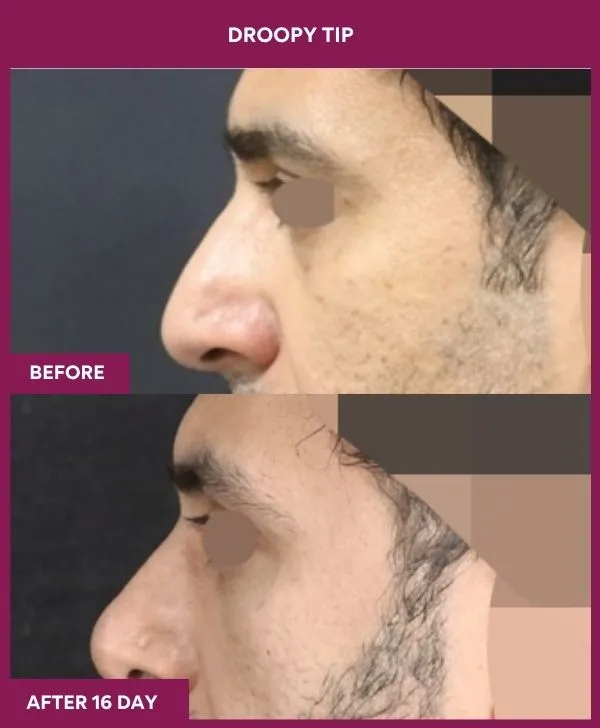
Rhinoplasty Surgery Before And After Images
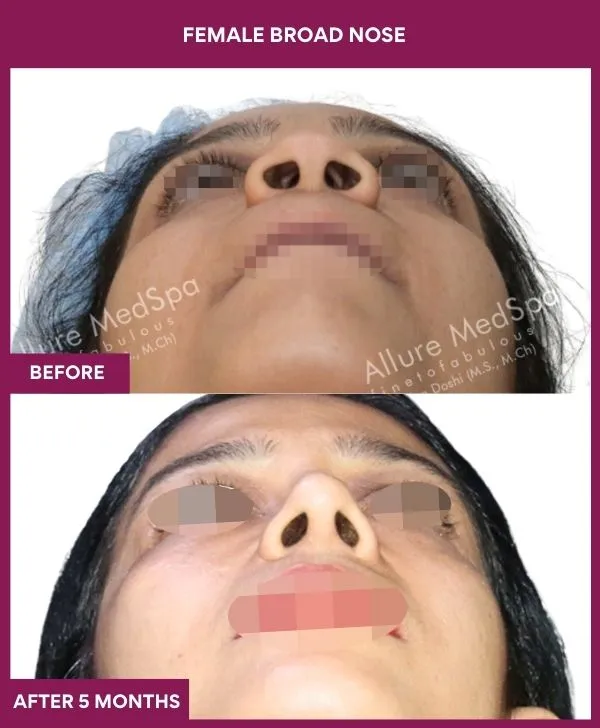
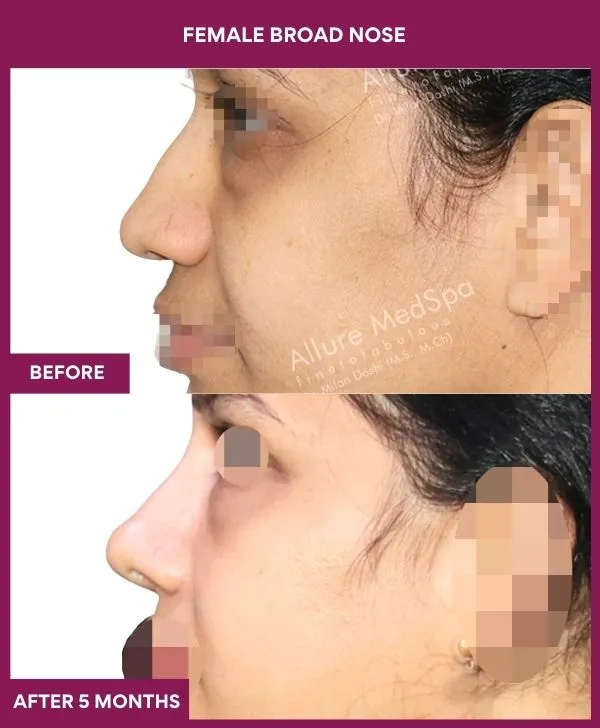
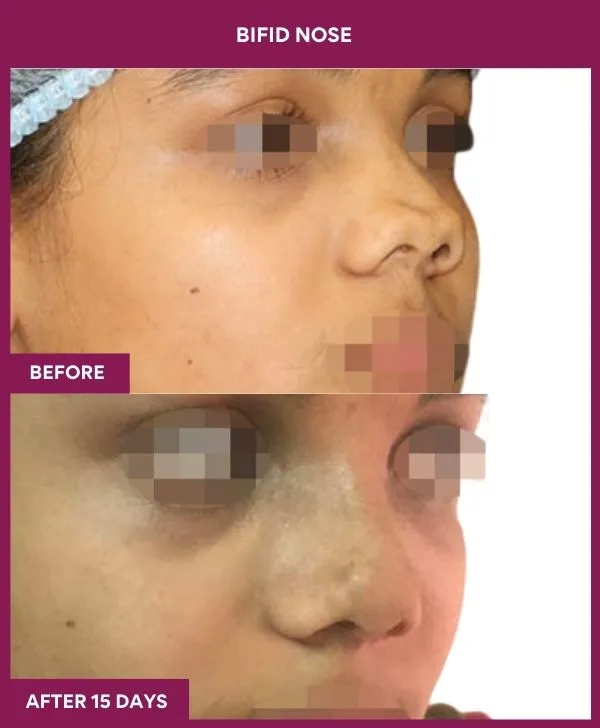
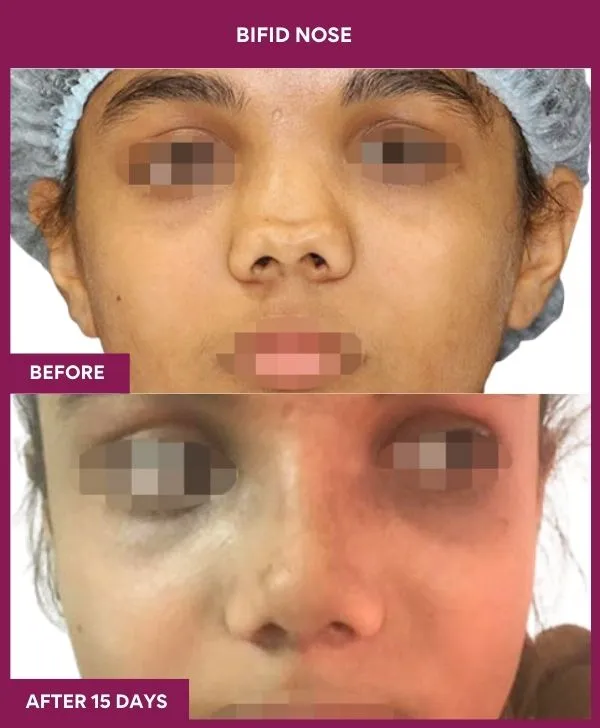
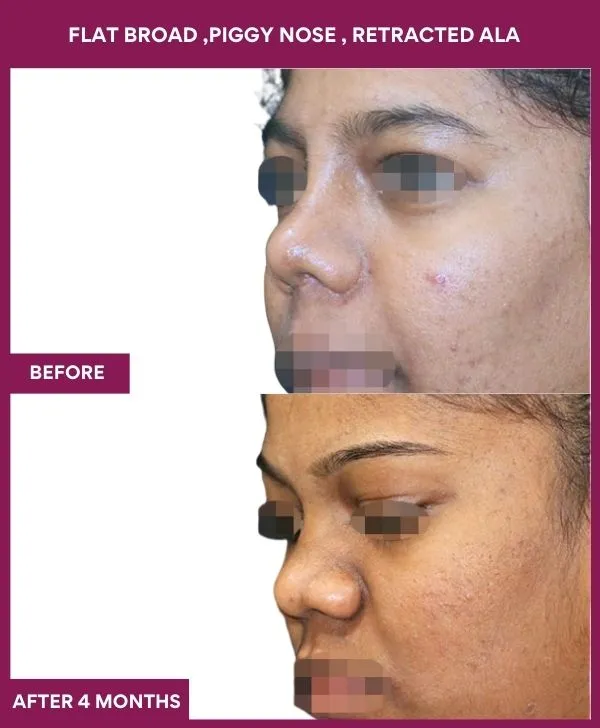
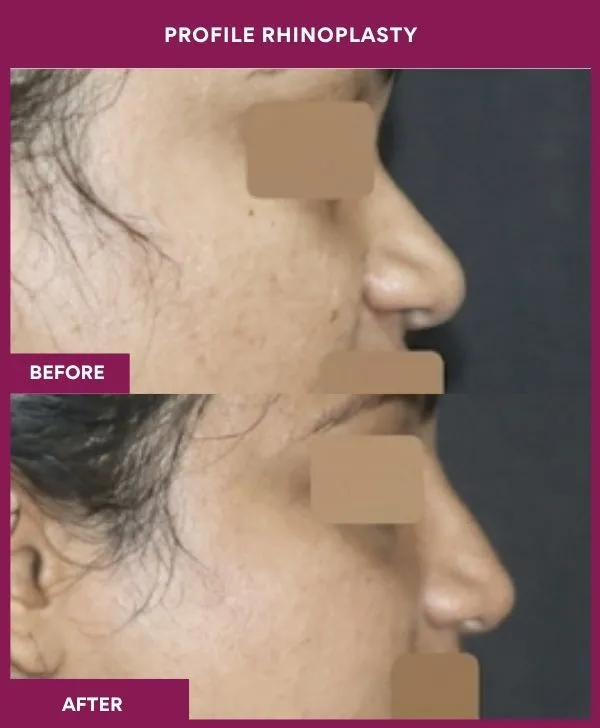
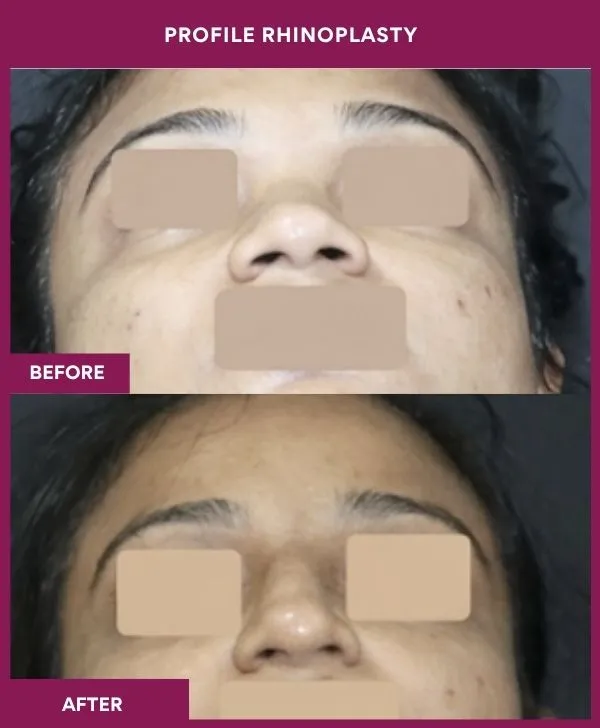
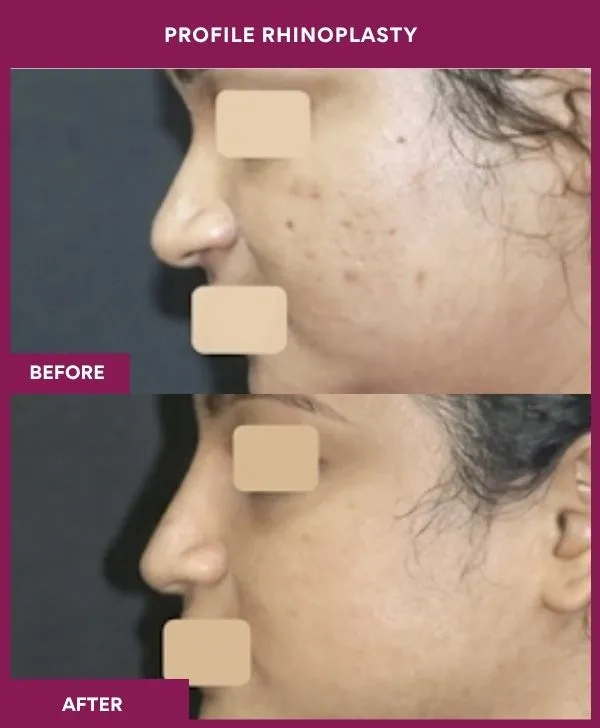
Rhinoplasty Surgery Testimonials: Celebrities Patient

Awarded by Google.com
Rating: 4.7
Reviews: 485+

Awarded by WhatClinic.com
Rating: 4.8
Reviews: 119+

Awarded by Realself
Rating: 4.9
Reviews:453+

Awarded by Facebook
Rating: 4.6
Reviews:105+
Dr Milan Doshi and his staff are very professional and committed as the centre is highly equipped with advanced technology. I had closed rhinoplasty 4 months back and I’m seeing the results as to how it becomes successful.
Deepika Shetty
The doctor explained everything clearly and the surgery was smooth. Recovery was faster than I expected and the team was very supportive.
Rahul Mehta
Very natural results and excellent staff. From consultation to follow-up, the experience was outstanding and boosted my confidence.
Sneha Kapoor
Video: Best Rhinoplasty Surgeon explain nose reshape procedure
Dr Milan Doshi is describing the Rhinoplasty Surgery in detail with benefits, techniques, recovery, result, risk and complecations
Which Rhinoplasty Technique Is Right For Me?
Nine techniques. One of them — maybe two — is yours.
Find My TechniqueHonest routing, even if it’s “not yet”
Quick Facts About Rhinoplasty Surgery
TIME REQUIRED
2–4 hours
ANESTHESIA
General
HOSPITAL STAY
1 night
PAIN LEVEL
Mild–moderate
BACK TO WORK
7–10 days
RESULTS LAST
Permanent
SUCCESS RATE
97–98%
COMPLICATIONS
Under 2-3%
How Much Does Rhinoplasty Cost By Technique In Mumbai
Rhinoplasty in Mumbai costs ₹70,000 to ₹3,50,000 depending on the technique, the approach, whether grafts or an implant are used, and how many techniques are combined. The table repeats the guide range of each technique page; a combined plan is quoted as one package, not as the sum of the parts.
| Technique | Guide range (₹) | What moves the price |
|---|---|---|
| Nasal tip plasty | 70,000 – 1,80,000 | Closed suture-only vs open with grafts |
| Cosmetic rhinoplasty | 1,00,000 – 3,50,000 | Number of areas treated; grafts |
| Functional rhinoplasty | 1,20,000 – 3,50,000 | Grafts needed; turbinate work; cosmetic add-on |
| Septorhinoplasty | 1,20,000 – 3,50,000 | Extent of septal work; osteotomies; grafts |
| Augmentation rhinoplasty | 1,20,000 – 2,80,000 + implant 15,000–20,000 | Implant vs septal/ear vs rib cartilage |
| Reduction rhinoplasty | 1,40,000 – 3,00,000 | Hump size; osteotomies; preservation technique; tip work |
| Ethnic rhinoplasty | 1,40,000 – 2,80,000 | Augmentation + base narrowing + tip; rib cartilage |
| Revision rhinoplasty | 1,50,000 – 3,50,000 | Extent of reconstruction; rib cartilage; functional repair |
| Open vs closed | Within the technique’s range | Complexity drives cost, not the approach |
Get your exact quote & surgery plan
Share your details — our team responds within working hours with cost, EMI options and next steps.
Most Common Question People Ask
Q1. What are the different types of rhinoplasty?
Ans. The main types are cosmetic, functional, septorhinoplasty, reduction, augmentation, ethnic, nasal tip plasty and revision rhinoplasty. Each can be performed through an open or a closed approach, and most real cases combine two or more.
Q2. How do I know which rhinoplasty technique I need?
Ans. Start with the concern, not the technique: looks, breathing or both; too big, too flat, or only the tip; first surgery or revision. The quiz on this page routes you to the likely technique, but the decision is made at consultation after examining the whole nose, the airway and the skin.
Q3. What is the difference between cosmetic and functional rhinoplasty?
Ans. Cosmetic rhinoplasty changes appearance; functional rhinoplasty restores breathing by repairing the valves, septum or sidewalls. Septorhinoplasty does both in one operation. The functional component may be eligible for insurance pre-authorisation; the cosmetic component is not.
Q4. Is open or closed rhinoplasty better?
Ans. Neither is better in general. Open gives full exposure for grafts, asymmetry and revision at the cost of a small columellar scar; closed suits simpler reductions and refinements with no external scar. The surgeon chooses by what the case needs.
Q5. Which rhinoplasty technique is the least invasive?
Ans. Nasal tip plasty through a closed approach is the smallest operation on this list — no bone work, often no black eyes, daily activity in 7–10 days. Non-surgical rhinoplasty (filler) is smaller still but temporary and carries vascular risk.
Q6. Which technique has the longest recovery?
Ans. Revision rhinoplasty, followed by rib-cartilage augmentation and full septorhinoplasty. Swelling and firmness last longer when scar tissue and large grafts are involved, and final results are judged at 12–18 months.
Q7. Can two techniques be done in one surgery?
Ans. Yes — that is the norm. Septorhinoplasty plus reduction for a crooked nose, augmentation plus tip plasty for a flat nose, functional grafts inside a cosmetic rhinoplasty. One anaesthetic, one recovery, one package price.
Q8. Which rhinoplasty technique costs the most?
Ans. Revision rhinoplasty and complex septorhinoplasty or functional cases sit at the top of the range (up to ₹3,50,000 + GST) because of rib-cartilage harvest, longer surgery and reconstruction. Tip plasty is the least expensive (from ₹70,000 + GST).
Q9. What is preservation rhinoplasty — is it a separate technique?
Ans. Preservation rhinoplasty is a way of doing reduction rhinoplasty that lowers the bridge without removing and rebuilding its roof, keeping the natural dorsal lines. It is covered on the reduction page as a technique choice within reduction, not as a separate type.
Q10. Is ethnic rhinoplasty a different operation from cosmetic rhinoplasty?
Ans. It uses the same techniques (augmentation, tip plasty, base narrowing) but with a different plan and philosophy: support-first, conservative removal, and deliberate preservation of the features that identify your face. The difference is in the planning, not the instruments.

Why Choose Dr. Milan Doshi?
Dr. Milan Doshi, MCh, MS — Indian board-certified plastic surgeon with 27+ years in aesthetic surgery, 16,000+ surgeries and 1,500+ rhinoplasties across every technique on this page. Choosing a rhinoplasty surgeon is choosing someone who knows all nine techniques well enough to say which one you do not need. ISAPS mentor, trusted by patients from 70+ countries. Consults at Andheri West; surgeries at the NABH-accredited surgical centre, Goregaon West.
🩺 Dr Doshi Note: “Patients ask me which technique I prefer. The honest answer is none — I prefer the diagnosis. A hump needs reduction, a flat bridge needs augmentation, a blocked nose needs functional work, and a nose that has been operated on before needs a surgeon who will rebuild before he reshapes. The technique is the last decision I make, not the first. What I do prefer, in every case, is to preserve support, protect breathing and keep the nose looking like it belongs to your face.”
The Complete Guide About Rhinoplasty Technique
1. Cosmetic Rhinoplasty
Cosmetic rhinoplasty is the umbrella term for nose surgery done to change appearance: it can reduce or increase nasal size, refine nostrils, reshape the tip, and adjust the bridge to improve symmetry and bring the nose into harmony with your facial contours. Most of the techniques below are cosmetic rhinoplasty done for a specific concern.
Best for
- A dorsal hump, a nose that looks too large, small or disproportionate
- A bulbous or drooping tip; wide nostrils; a broad, deviated or crooked nose
- Patients whose breathing is normal and whose goal is appearance
What is done
Depending on the concern: bone and cartilage reduction, tip suturing and grafting, nostril narrowing, bridge augmentation — often several in one operation. The specific technique pages below explain each.
| Approach | Recovery nuance | Guide cost |
|---|---|---|
| Open or closed, by case | Swelling and bruising largely settle in 1–2 weeks; the nose settles into its refined shape over 9–12 months | ₹1,00,000 – ₹3,50,000 (hub range) 🩺 |
Full guide: Cosmetic Rhinoplasty →
2. Functional Rhinoplasty
Functional rhinoplasty corrects the structures that make breathing difficult — the nasal valves, a collapsed or weak sidewall, enlarged turbinates or a deviated septum — with breathing, not appearance, as the goal. It is the technique for the patient who says “I can’t breathe through one side” rather than “I don’t like my nose”.
Best for
- Nasal obstruction, mouth-breathing, snoring or poor sleep from a blocked nose
- Valve collapse (the sidewall caves in when you breathe in)
- Breathing problems after trauma or a previous rhinoplasty
What is done
Septal straightening, spreader grafts to open the internal valve, alar batten or lateral crural strut grafts to support the external valve, turbinate reduction. Any cosmetic change is incidental, and the cosmetic portion (if requested) is planned and billed separately.
| Approach | Recovery nuance | Guide cost |
|---|---|---|
| Usually open | Breathing often feels worse for 1–2 weeks (swelling and splints), then clearly better; final airway at 3–6 months | ₹1,20,000 – ₹3,50,000 🩺 (proposed, mirrors septorhinoplasty) |
Full guide: Functional Rhinoplasty →
3. Septorhinoplasty
Septorhinoplasty straightens a deviated septum and reshapes the outside of the nose in a single operation. It is the answer when the same crooked septum that blocks the airway also bends the visible nose — fixing one without the other leaves half the problem behind.
Best for
- A deviated septum with a crooked, twisted or asymmetric external nose
- Breathing difficulty plus a cosmetic concern the patient wants addressed at the same time
- Post-traumatic noses
What is done
Septoplasty (straightening and, where needed, harvesting septal cartilage for grafts) combined with osteotomies, dorsal and tip work. One anaesthetic, one recovery.
| Approach | Recovery nuance | Guide cost |
|---|---|---|
| Usually open | Slightly longer than cosmetic-only — splints inside and out for about a week; back to desk work at 7–10 days | ₹1,20,000 – ₹3,50,000 🩺 |
Full guide: Septorhinoplasty →
4. Reduction Rhinoplasty
Reduction rhinoplasty makes the nose smaller or less prominent — removing a dorsal hump, shortening a long nose, narrowing wide bones or de-projecting a tip that stands too far from the face. It is the most requested cosmetic technique in most practices, and the one where restraint matters most.
Best for
- A dorsal hump or a high bridge
- A nose that is too long, too big or too projected for the face
- Wide nasal bones
What is done
Hump removal by rasping or resection (or preservation rhinoplasty, which lowers the bridge without breaking its line), osteotomies to narrow the bones, tip de-projection and refinement. Structure is preserved so the nose does not collapse or look scooped years later.
| Approach | Recovery nuance | Guide cost |
|---|---|---|
| Open or closed | Bruising under the eyes when bones are moved — 10–14 days; splint 7 days; final bridge line at 6–12 months | ₹1,40,000 – ₹3,00,000 🩺 (page says “from ₹1,40,000”; upper bound proposed) |
Full guide: Reduction Rhinoplasty →
5. Augmentation Rhinoplasty
Augmentation rhinoplasty builds the nose up — raising a low or flat bridge, projecting a weak tip, or filling a saddle deformity — using the patient’s own cartilage (septum, ear or rib) or a silicone implant. It is the opposite of reduction and common in Indian and East-Asian noses.
Best for
- Low, flat or wide bridge; a “no bridge” profile
- Saddle nose after injury or previous surgery
- A weak, under-projected tip that needs structural support
What is done
Dorsal onlay graft or implant along the bridge; columellar strut, septal extension or tip grafts for the tip. Rib cartilage is used when a large, stable augmentation is needed or septal cartilage is gone.
| Approach | Recovery nuance | Guide cost |
|---|---|---|
| Usually open (closed possible for a simple implant) | Bridge swelling firm for weeks; rib-harvest cases have a small chest incision and chest soreness for 1–2 weeks; final at 12 months | ₹1,20,000 – ₹2,80,000 + implant ₹15,000–₹20,000 🩺 (proposed) |
Full guide: Augmentation Rhinoplasty
6. Ethnic Rhinoplasty
Ethnic rhinoplasty refines the nose while deliberately preserving the features that make it belong to your face and heritage — the goal is a better version of your nose, not a different nose. Indian, Middle-Eastern, African and East-Asian noses each bring predictable patterns of thick skin, weak cartilage, low bridges and wide bases that need a different plan from a textbook Caucasian rhinoplasty.
Best for
- Patients who want refinement without losing their identity
- Thick-skinned noses with wide, under-defined tips
- Low bridges with wide nostril bases that need augmentation and narrowing together
What is done
Support-first planning: structural grafts for definition under thick skin, conservative bridge augmentation, nostril-base narrowing, tip refinement without pinching. Removal is used sparingly.
| Approach | Recovery nuance | Guide cost |
|---|---|---|
| Usually open | Thick skin holds tip swelling longest — 12–18 months to the final result; the bridge settles sooner | ₹1,40,000 – ₹2,80,000 🩺 |
Full guide: Ethnic Rhinoplasty →
7. Nasal Tip Plasty
Nasal tip plasty is a focused rhinoplasty for the lower third of the nose only — tip projection, rotation, definition, symmetry and support — when the bridge and upper nose are already acceptable. It is smaller than full rhinoplasty but one of the most judgement-sensitive: a few millimetres change the whole expression of the face.
Best for
- A droopy, boxy, flat, over-projected, pinched or asymmetric tip with a bridge you are happy with
- Patients who want a shorter recovery and no bone work
- Ageing tips that have lost support
What is done
Transdomal and interdomal sutures, conservative cephalic trim, columellar strut or tip grafts, lateral crural support for pinched tips. Tip-only works only if it is truly tip-only.
| Approach | Recovery nuance | Guide cost |
|---|---|---|
| Closed or open, by case | No black eyes in most cases (bones untouched); daily activity at 7–10 days; the tip is the slowest part of the nose to settle | ₹70,000 – ₹1,80,000 🩺 |
Full guide: Nasal Tip Plasty →
8. Revision Rhinoplasty
Revision rhinoplasty corrects a previous rhinoplasty — for shape, breathing or both. Scar tissue, missing cartilage and altered blood supply make it the most complex technique on this list, and the one where surgeon experience matters most.
Best for
- Dissatisfaction with a previous rhinoplasty’s shape (pinched tip, scooped bridge, asymmetry, pollybeak)
- Breathing that worsened after surgery
- Implant problems or graft visibility
What is done
Almost always open; rebuilding with cartilage (often ear or rib because septal cartilage was used before); releasing scar; restoring support before reshaping. Operated only after the previous result has fully settled — at least 12 months.
| Approach | Recovery nuance | Guide cost |
|---|---|---|
| Almost always open | Longer swelling than a primary surgery; firmness for months; final at 12–18 months | ₹1,50,000 – ₹3,50,000 🩺 |
Full guide: Revision Rhinoplasty
9. Open vs Closed Rhinoplasty — The Two Approaches
Open and closed are not techniques in themselves — they are the two routes into the nose, and any of the eight techniques above can be done through either. In the closed approach all incisions are inside the nostrils and there is no external scar; in the open approach a small incision across the columella (the strip of skin between the nostrils) is added so the skin can be lifted and the whole framework seen directly.
| Open approach | Closed approach | |
|---|---|---|
| Incision | Internal + a small columellar incision | Internal only |
| Visible scar | A fine line under the nose that fades to near-invisible | None |
| Exposure | Full, direct view of cartilage | Limited; surgery by feel and partial view |
| Typical use | Tip grafts, asymmetry, revision, augmentation, functional work | Hump reduction, simple tip refinement, small changes |
| Surgery time | Slightly longer | Slightly shorter |
| Tip swelling | Somewhat longer | Somewhat shorter |
| Cost effect | Within the technique’s range; complexity, not the approach, drives cost | Often the lower end of the range |
Dr. Doshi’s position: the approach is chosen by what the nose needs, not by a preference for “no scar” — a closed operation that cannot reach the problem is worse than an open one with a scar nobody notices.
Full guide: Open vs Closed Rhinoplasty
How Rhinoplasty Techniques Combine In Real Cases
Most noses need more than one technique. A crooked nose usually needs septorhinoplasty plus reduction; a flat Indian nose usually needs augmentation plus tip plasty plus nostril narrowing under an ethnic plan. The table shows the most common combinations Dr. Doshi plans — and why “which technique?” is really “which techniques?”.
| Your concern | Techniques usually combined | Read |
|---|---|---|
| Crooked nose after injury, blocked side | Septorhinoplasty + reduction (osteotomies) ± functional grafts | Crooked Nose Correction |
| Broad nose with wide nostrils | Reduction (osteotomies) + tip plasty + alar base narrowing | Broad Nose Correction |
| Flat bridge, bulbous tip, thick skin | Augmentation + tip plasty + ethnic planning | Ethnic Rhinoplasty |
| Hump with droopy tip | Reduction + tip plasty (support and rotation) | Drooping Tip Correction |
| Breathing problem, happy with looks | Functional only | Functional Rhinoplasty |
| Previous surgery, pinched tip, can’t breathe | Revision + functional (lateral crural struts, rib or ear cartilage) | Revision Rhinoplasty |
| Only the tip bothers me | Tip plasty alone (if truly tip-only) | Nasal Tip Plasty |
| Minor bump, no surgery wanted | Non-surgical rhinoplasty (filler camouflage; temporary; vascular risk) | Non-Surgical Rhinoplasty |
Related Links
- Rhinoplasty Surgery (hub)
- Cosmetic Rhinoplasty
- Functional Rhinoplasty
- Septorhinoplasty
- Reduction Rhinoplasty
- Augmentation Rhinoplasty
- Ethnic Rhinoplasty
- Nasal Tip Plasty
- Revision Rhinoplasty
- Open vs Closed Rhinoplasty
- Non-Surgical Rhinoplasty
- Nasal Deformities Treated by Rhinoplasty
- Rhinoplasty Cost
- How to Prepare for Rhinoplasty
- Rhinoplasty Recovery Timeline
- Rhinoplasty Risks & Safety
- Rhinoplasty Before & After Gallery