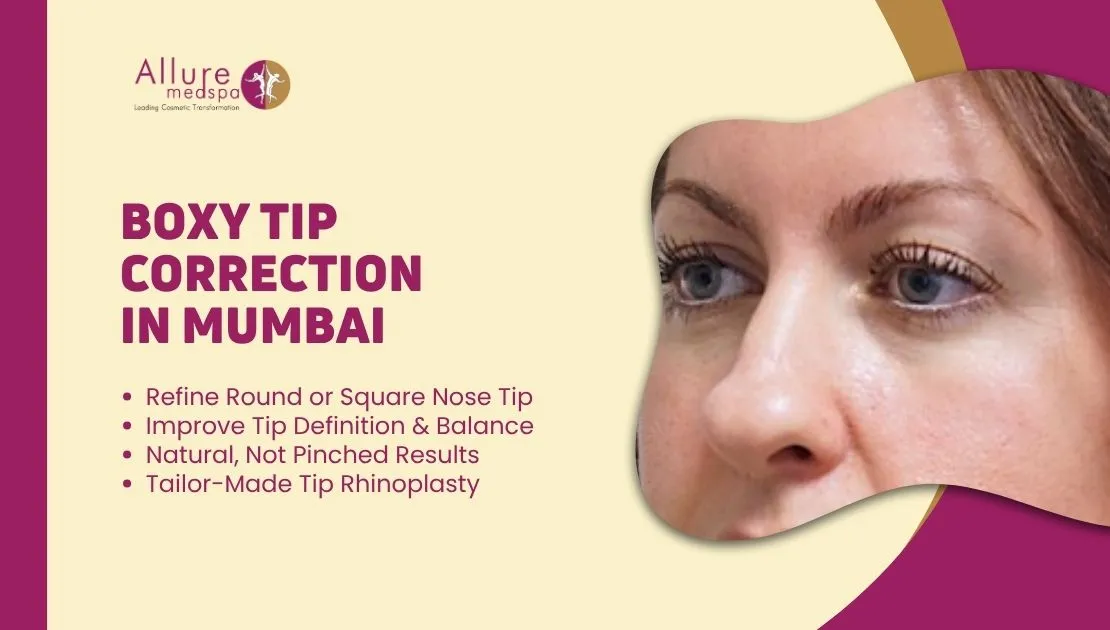
Bulbous and boxy tip correction in Mumbai is for patients who feel their nasal tip looks round, broad, square, heavy, or under-defined. At Allure Medspa, the aim is natural refinement — a balanced nasal tip that suits the face, not a sharp or visibly operated look. This is a focused part of the wider rhinoplasty surgery and nasal tip plasty family of procedures.
Bulbous vs Boxy Tip — What Are They and What Causes Them?
Bulbous tip and boxy tip are lower-nose shape concerns, not whole-nose diagnoses. A bulbous tip usually looks round, full, and under-defined, while a boxy tip looks broader, squarer, or more angular because of lower lateral cartilage shape, skin thickness, and tip-support anatomy.
A bulbous or boxy nasal tip can make the nose look heavier than the rest of the face. Some patients describe it as “too round,” “not defined,” “wide at the end,” or “not elegant in photos.” The key is to identify the true cause before planning correction.
Bulbous and boxy tips can overlap. A patient may have thick skin plus broad lower lateral cartilages, or a square cartilage framework hidden under a soft-tissue envelope. Treatment should be planned according to the patient’s skin, cartilage, support, nostril shape, and facial balance — not copied from a standard “sharp nose” template.
| Feature | Bulbous tip | Boxy tip |
|---|---|---|
| Main appearance | Round, full, soft, under-defined | Square, broad, angular |
| Main area | Lower third of nose | Lower third of nose |
| Common cause | Broad lower lateral cartilages, thick skin, soft-tissue fullness | Wide domal/interdomal configuration, widened cartilage geometry |
| Light reflection | Diffuse, rounded highlight | Flatter, broader, more angular highlight |
| Skin role | Often important, especially in thick skin | Can blunt definition; cartilage geometry usually key |
| Treatment goal | Better definition without over-sharpening | Softer, narrower, more natural dome shape |
| Main caution | Avoid artificial sharpness | Avoid pinching or support loss |
Sources: NCBI – Nasal Tip Surgery (StatPearls) · PubMed 34936611
🩺 Dr. Doshi’s Note
A bulbous or boxy tip is not corrected by one standard formula. First we must understand whether the problem is thick skin, broad cartilage, weak support, or poor tip definition. If we remove too much, the tip can look pinched or artificial. My aim is simple: better definition, natural shape, and a nose that suits the patient’s face.
Bulbous Tip Surgery Before and After Results
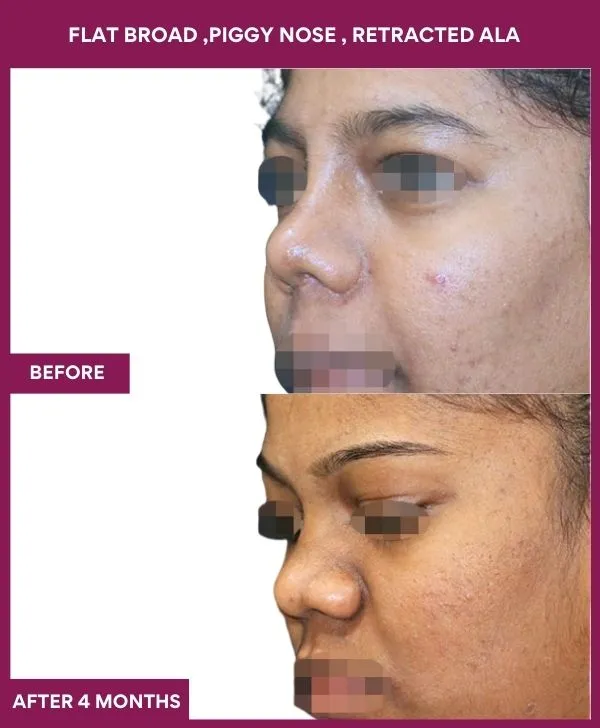
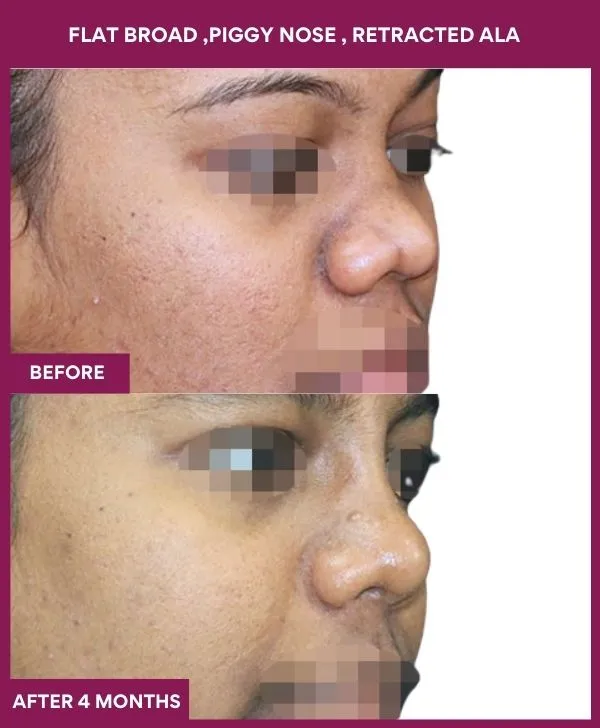
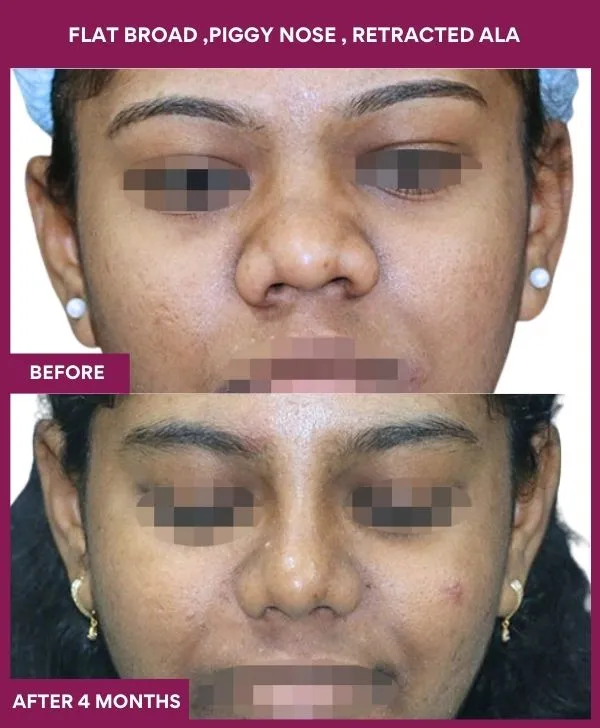
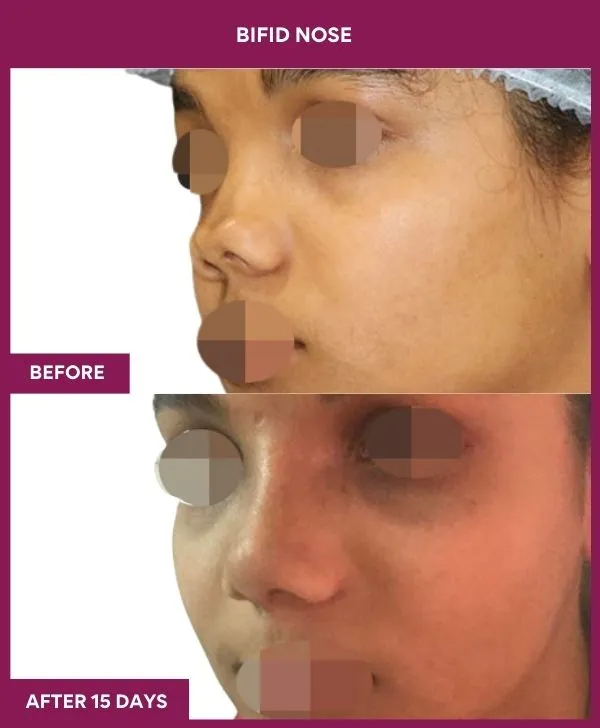
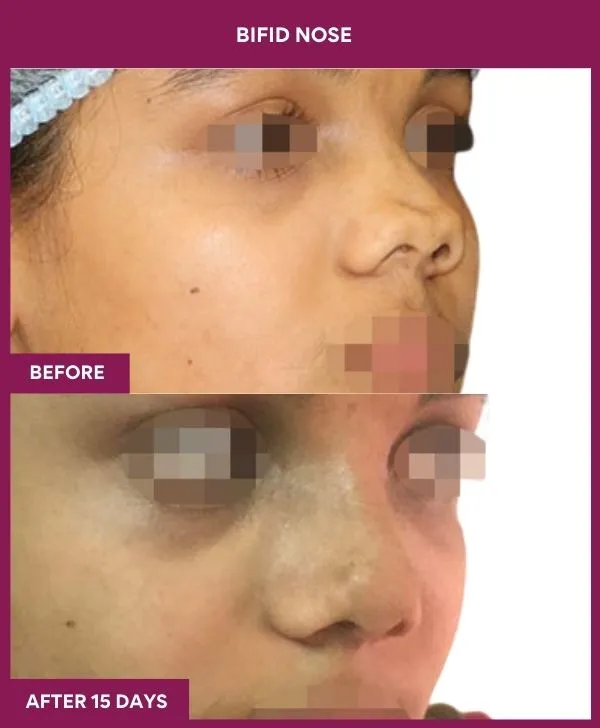
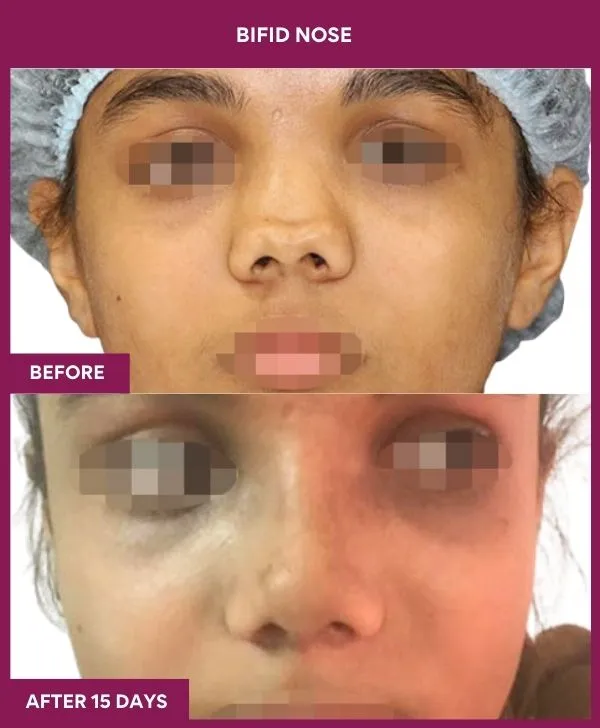
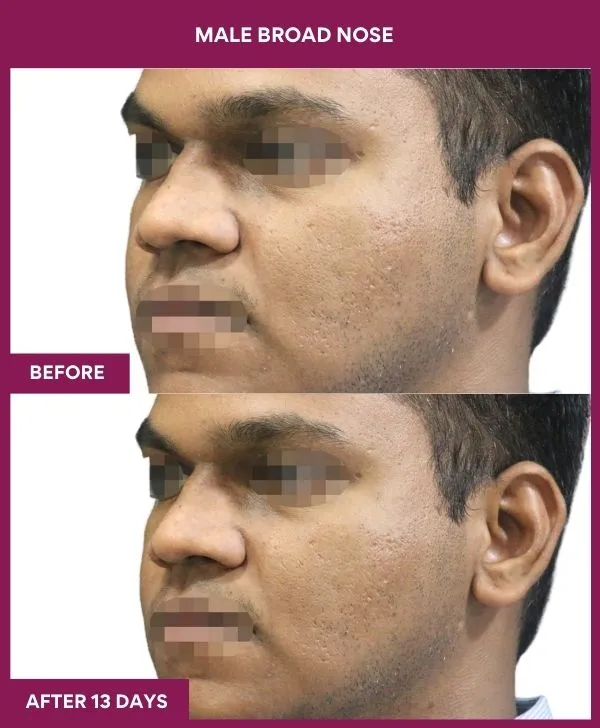
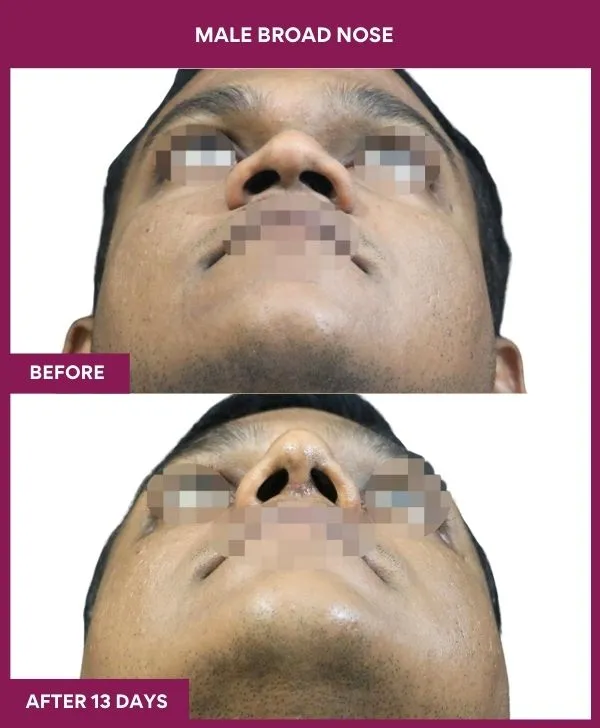
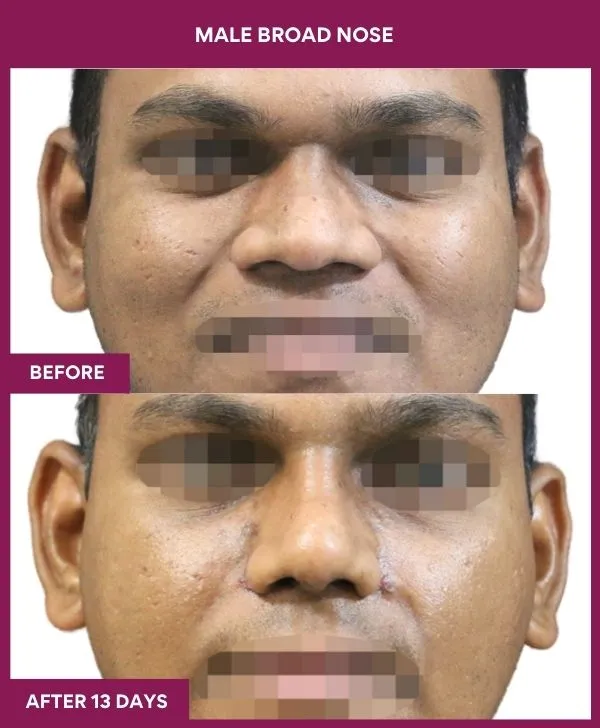
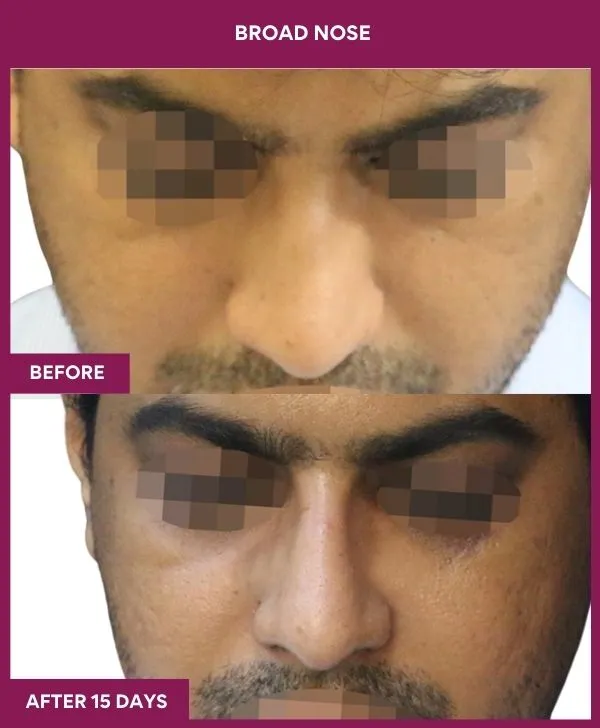
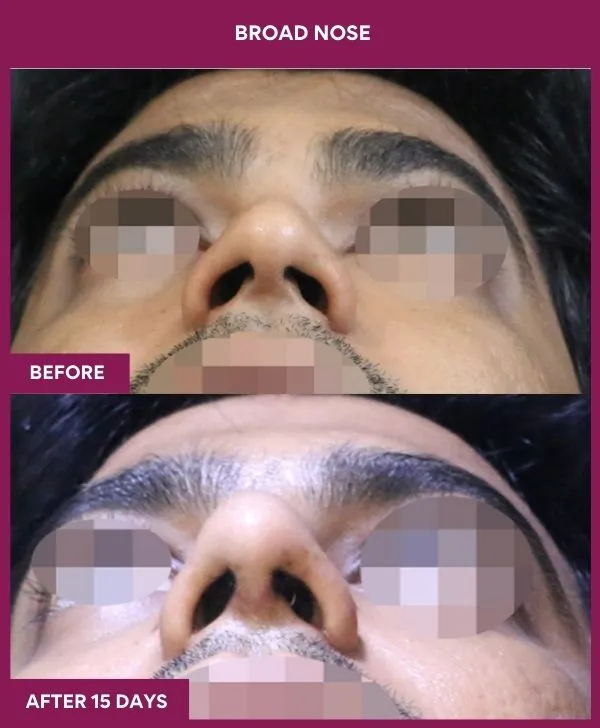
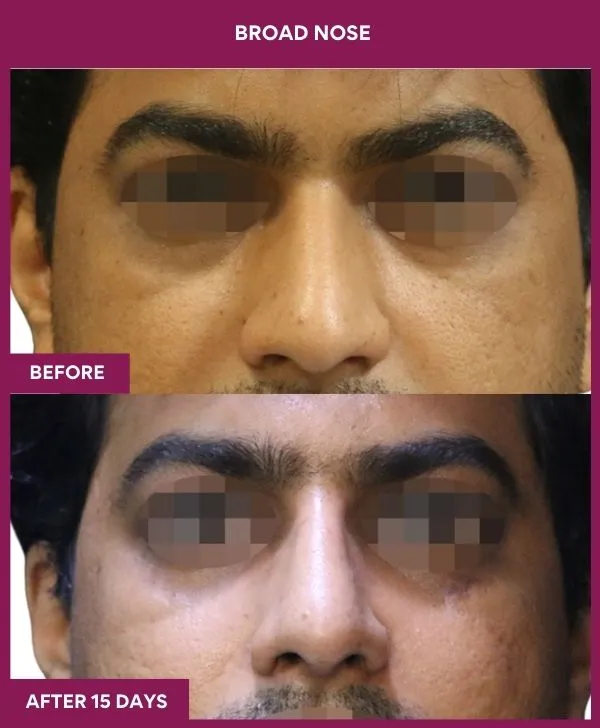
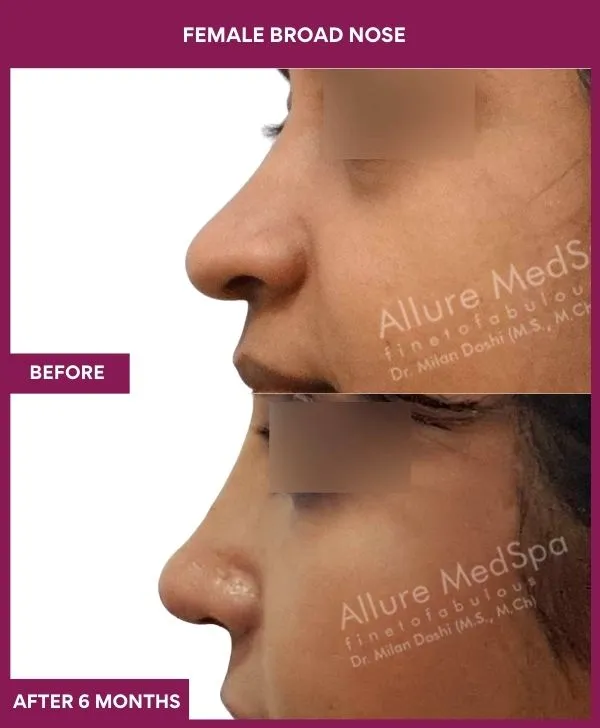
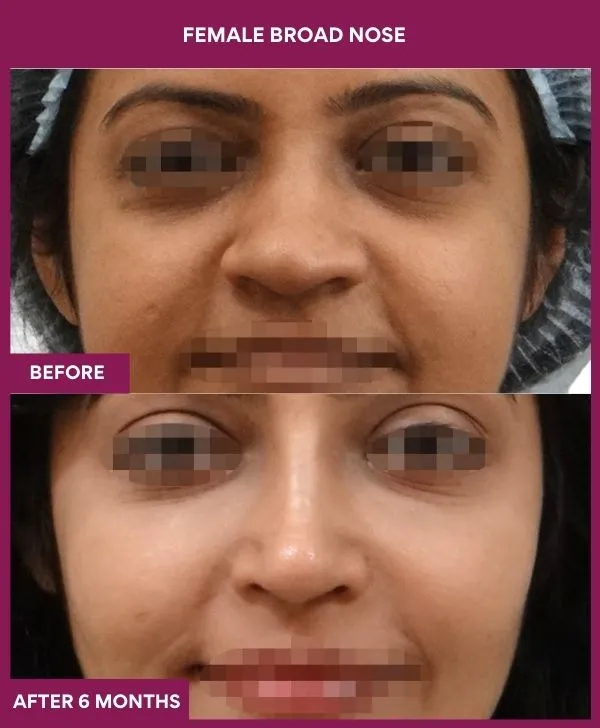
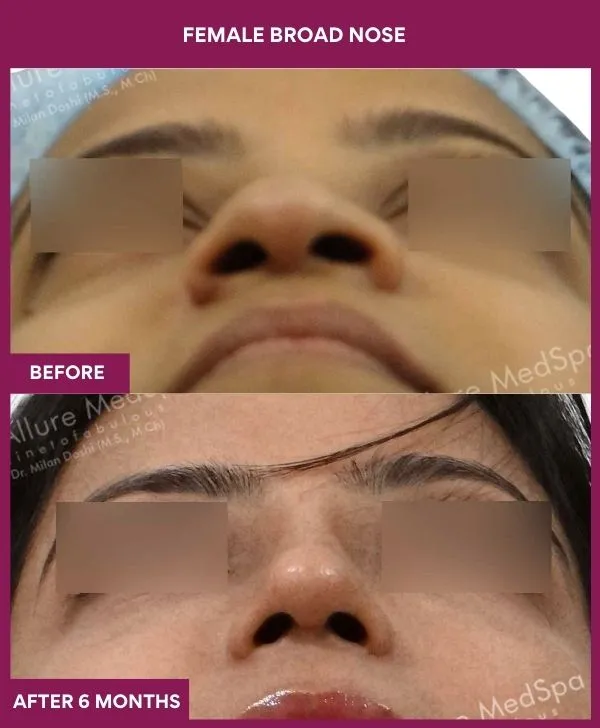
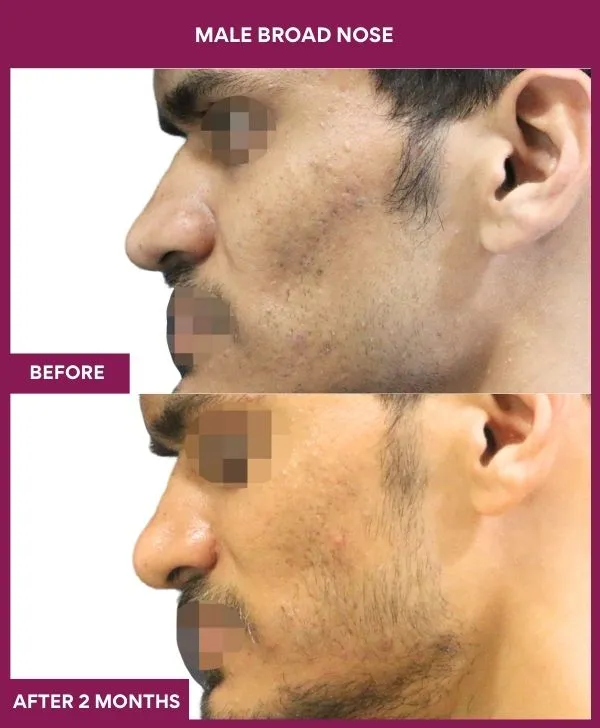
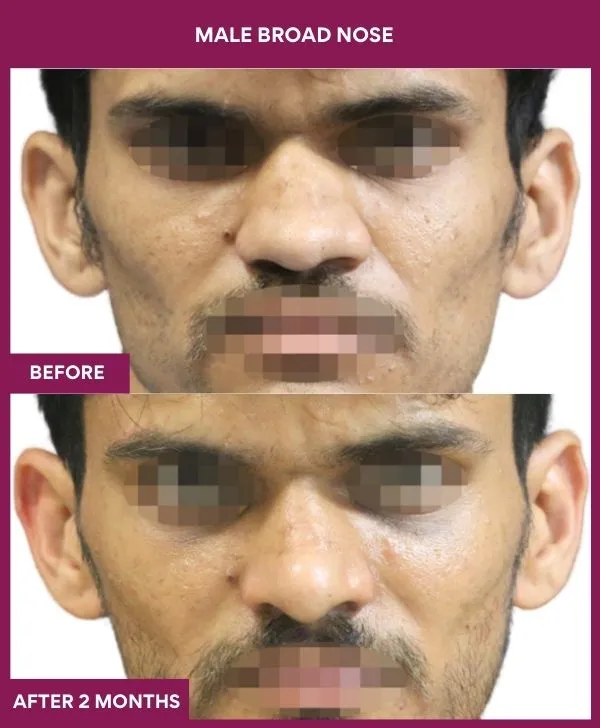
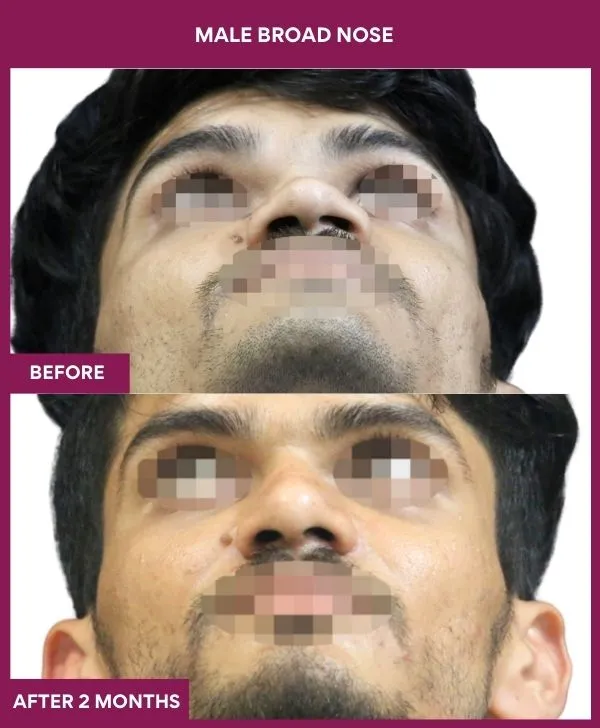
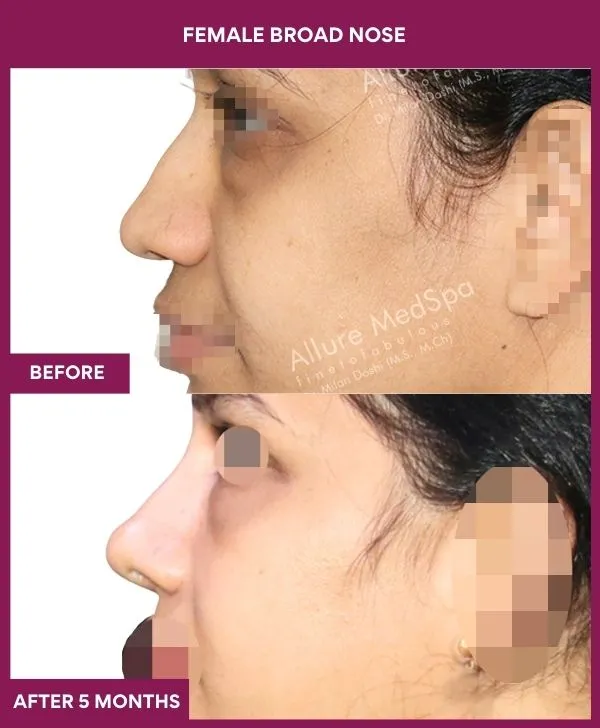
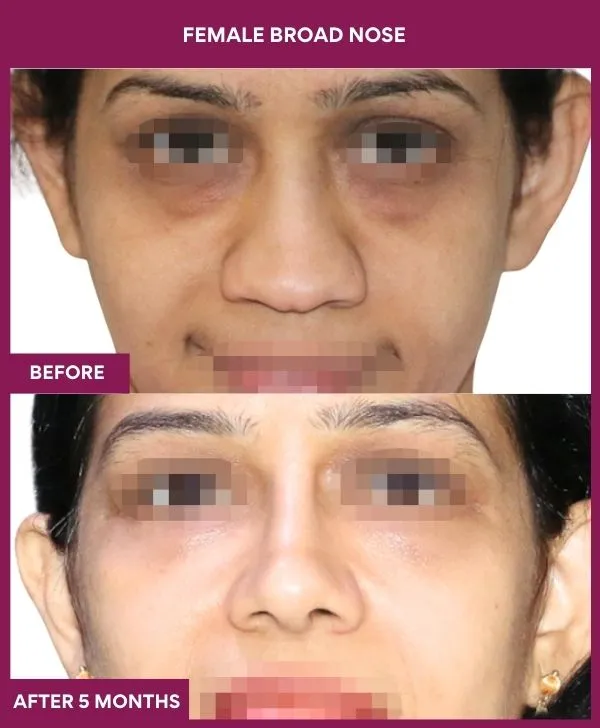
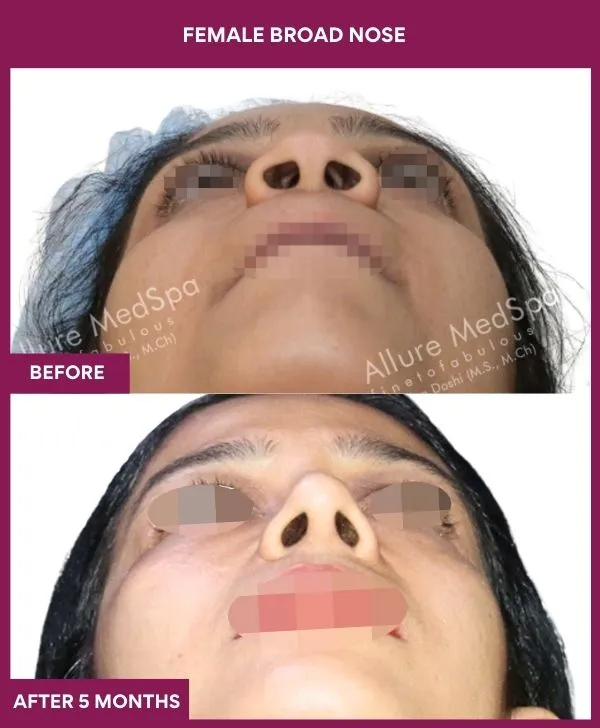
Refined, not fake — see it in real patients.
Private photo review, fully confidential
Rhinoplasty Surgery Testimonials: Celebrities Patient

Awarded by Google.com
Rating: 4.7
Reviews: 485+

Awarded by WhatClinic.com
Rating: 4.8
Reviews: 119+

Awarded by Realself
Rating: 4.9
Reviews:453+

Awarded by Facebook
Rating: 4.6
Reviews:105+
Dr Milan Doshi and his staff are very professional and committed as the centre is highly equipped with advanced technology. I had closed rhinoplasty 4 months back and I’m seeing the results as to how it becomes successful.
Deepika Shetty
The doctor explained everything clearly and the surgery was smooth. Recovery was faster than I expected and the team was very supportive.
Rahul Mehta
Very natural results and excellent staff. From consultation to follow-up, the experience was outstanding and boosted my confidence.
Sneha Kapoor
Video: Best Rhinoplasty Surgeon explain nose reshape procedure
Dr Milan Doshi is describing the Rhinoplasty Surgery in detail with benefits, techniques, recovery, result, risk and complecations
How Is a Bulbous or Boxy Tip Different From a Broad Nose or Wide Nostrils?
Bulbous tip and boxy tip describe the nasal tip, while broad nose and wide nostrils describe different width problems. A broad nose may involve the nasal bones, sidewalls, or base, while wide nostrils are usually an alar-base issue rather than a tip-definition issue.
This distinction prevents the wrong surgery. A patient may have a narrow bridge with a bulbous tip; another may have a broad bridge but a non-bulbous tip; another may have wide nostrils but a reasonably defined tip. Tip refinement alone does not correct a wide bony vault, and nostril-base narrowing does not automatically refine a bulbous tip. The right diagnosis decides the right surgical plan.
| Concern | Main area | Typical appearance | Owned by |
|---|---|---|---|
| Bulbous tip | Nasal tip | Round, full, under-defined tip | This page |
| Boxy tip | Nasal tip | Square, broad, angular tip | This page |
| Broad nose | Bridge, sidewalls, base, or overall width | Nose looks wide overall | Broad nose correction |
| Wide nostrils | Alar / nostril base | Wide nostril opening or wide base | Wide nostril correction |
Am I a Candidate for Bulbous or Boxy Tip Correction?
Good signs for tip correction
- Tip-focused concern: The main issue is the lower third of the nose.
- Stable bridge: No major hump or crooked upper nose.
- Breathing acceptable: No major functional obstruction.
- Realistic goal: Better definition, not a razor-sharp tip.
- Healthy healing: No uncontrolled medical problem.
- Skin awareness: Thick-skin expectations are realistic.
- Support-first mindset: Structure is valued over over-narrowing.
Needs careful counselling
| Situation | Why it matters |
|---|---|
| Thick skin | Final sharpness may be limited |
| Broad nose | May need broader rhinoplasty planning |
| Wide nostrils | May need alar-base correction |
| Deviated septum | May need septorhinoplasty |
| Previous rhinoplasty | May need revision planning |
| Desire for a very sharp tip | May look unnatural or weaken support |
| Breathing complaint | External valve and septum must be assessed |
How Is Bulbous or Boxy Tip Correction Performed?
Bulbous and boxy tip correction are performed by reshaping, supporting, and refining the nasal tip rather than simply cutting cartilage away. Techniques may include transdomal sutures, interdomal sutures, conservative cephalic trim, tip grafts, shield grafts, structural support grafts, and selective soft-tissue management.
The philosophy is shape and support, not removal. A good tip should look softer, cleaner, and more balanced, while still breathing well.
| Technique | Purpose | Used for | Key caution |
|---|---|---|---|
| Transdomal sutures | Refine dome shape | Bulbous or broad domes | Avoid over-narrowing |
| Interdomal sutures | Adjust distance between domes | Boxy or widely spaced domes | Maintain natural contour |
| Conservative cephalic trim | Reduce excess cartilage width | Selected broad tips | Over-resection can destabilise |
| Tip graft | Improve definition/support | Weak or under-defined tips | Can show in thin skin |
| Shield graft | Improve definition/projection | Selected cases | Must avoid artificial projection |
| Structural support graft | Add stable support | Weak support, thick skin, revision | Case-dependent |
| Soft-tissue management | Manage thick fibrofatty envelope | Selected thick-skin cases | Must preserve vascularity |
| Open approach | Better exposure | Complex or thick-skin cases | Small columellar scar |
| Closed approach | Internal incisions | Selected limited refinements | Less exposure |
Sources: PubMed 34936611 · PMC3901916
🩺 Dr. Doshi’s Note
Bulbous or boxy tip correction is not about cutting more cartilage. It is about creating better shape and support without making the nose look pinched or artificial. I first check skin thickness, cartilage width, tip support, nostril shape, and facial balance. The goal is a refined, natural tip — not an over-sharp operated look.
Why Is Over-Sharpening a Mistake in Bulbous or Boxy Tip Correction?
Bulbous and boxy tip correction should create refined definition, not an over-sharp or pinched nasal tip. Over-resection can weaken the lower lateral cartilages, cause alar retraction, create visible asymmetry, narrow the external nasal valve, and affect breathing.
A very sharp tip may look appealing in an edited photograph but unnatural on a real face. In thick skin, removing more cartilage does not automatically make the skin shrink beautifully — it may simply weaken the support underneath.
The lower lateral cartilages help support the external nasal valve. If too much is removed, the tip may look pinched and the nostril sidewalls may lose stability, creating both aesthetic and functional problems.
Why “smaller” is not always better
- Pinching: Tip may look squeezed or operated.
- Alar retraction: Nostril rim may pull upward.
- Valve collapse: Breathing may worsen.
- Asymmetry: Weak cartilage can heal unevenly.
- Irregularity: Edges may become visible.
- Revision risk: Structural repair may be needed later.
- Unnatural result: The tip may not match the face.
Why Does Thick Skin Matter in Bulbous Tip Correction?
Bulbous tip correction in thick skin needs realistic planning, because the soft-tissue envelope can hide fine cartilage refinement. Thick skin does not mean surgery cannot help, but it may limit sharpness, slow the visible shrink-wrap effect, and delay final tip definition.
This is important in many Indian and South-Asian noses, where the tip skin may be thicker and more sebaceous. The surgeon can refine the structure underneath, but the skin must settle over time and may not show the same crisp contour seen in thin-skinned noses.
Good thick-skin planning often means improving support and shape rather than chasing extreme sharpness. Early swelling should not be judged as the final result. Results vary by individual anatomy and healing.
Sources: https://pubmed.ncbi.nlm.nih.gov/20442073/ · https://www.ncbi.nlm.nih.gov/books/NBK558970/
Thick skin? Honest limits, real improvement.
Indian skin expertise, candid advice
What Is Recovery Like After Bulbous or Boxy Tip Correction?
| Recovery point | Summary |
|---|---|
| Early swelling | Common around the tip and lower nose |
| Tip definition | Improves gradually over weeks to months |
| Thick skin | May take longer to reveal refinement |
| Final judgement | Should not be made too early |
Source: NCBI – Rhinoplasty (StatPearls)
What Are the Risks and When Should You Seek Urgent Care?
Bulbous and boxy tip correction have risks such as asymmetry, under-correction, over-correction, pinching, supratip fullness, prolonged swelling, visible irregularity, and breathing change. Urgent care is needed for heavy bleeding, fever, worsening pain, obstruction, colour change, or vision symptoms after filler.
| Risk | Meaning |
|---|---|
| Asymmetry | Tip may heal unevenly |
| Under-correction | Tip remains too full or boxy |
| Over-correction | Tip looks too narrow or artificial |
| Pinched tip | External valve may narrow |
| Supratip / pollybeak fullness | Fullness above the tip |
| Prolonged swelling | More likely in thick skin |
| Visible irregularity | More noticeable in thin skin |
| Airway compromise | Tip support or valve function may be affected |
| Revision need | May be required in selected cases |
Seek immediate care
| Red flag | Why it matters |
|---|---|
| Heavy bleeding | Needs urgent review |
| Fever | Infection must be ruled out |
| Worsening pain or redness | Not routine healing |
| Worsening obstruction after initial improvement | Airway issue needs assessment |
| Rapidly increasing swelling | Bleeding, infection, or inflammation concern |
| Pale, dusky, or painful skin after filler | Possible vascular compromise |
| Blanching after injectable treatment | Emergency warning sign |
| Any vision symptom after filler | Emergency — vision risk |
| Chest pain or breathlessness | Emergency medical care |
Sources: PMC3901916 · NCBI – Rhinoplasty (StatPearls) · PMC6624005 · PMC4859242
What Is the Cost of Bulbous or Boxy Tip Correction in Mumbai?
Bulbous and boxy tip correction cost in Mumbai at Allure Medspa follows one consistent site-wide guide range of ₹70,000–₹1,80,000, with 5% GST extra. This is a guide range, not a final quote — the exact estimate depends on cartilage shape, skin thickness, open or closed approach, grafting, anaesthesia, facility charges, and whether full rhinoplasty is required. Revision cases are quoted separately after examination. See the rhinoplasty cost guide for the fuller breakdown.
Why Choose Dr. Milan Doshi for Bulbous or Boxy Tip Correction?
| Credential | Detail |
|---|---|
| Qualification | MCh, MS |
| Specialty | Plastic & cosmetic surgery |
| Experience | 27+ years |
| Surgeries | 16,000+ |
| Rhinoplasties | 1,500+ |
| Memberships / roles | ISAPS, IAAPS, MUHS |
Why expertise matters
- Diagnosis: Bulbous and boxy tips need different planning.
- Restraint: Over-sharpening can create deformity.
- Support: Tip strength and external valve must be protected.
- Skin realism: Thick skin needs honest counselling.
- Balance: Tip must suit the full face.
- Technique choice: Sutures, grafts, and trim must be selected carefully.
- Revision prevention: Structure-first planning reduces avoidable problems.
🩺 Dr. Doshi’s Note
For bulbous or boxy tip correction, patients should not look only for a “sharp nose.” They should look for a surgeon who understands natural refinement. In Indian noses, thick skin, cartilage width, tip support, and facial balance must be judged carefully. My aim is to create a tip that looks more defined and elegant, but still belongs to your face. The best rhinoplasty result is when everyone notices improvement, but no one knows exactly what was done."Everyone notices, no one knows" — that's the aim.
MCh, MS — 1,500+ rhinoplasties
What Are the Most Common Questions About Bulbous and Boxy Tip Correction?
These questions usually focus on thick skin, natural definition, whether the tip can be made sharper, surgery type, recovery, cost, filler, and breathing risk. The safest answer is consistent: refined shape with preserved support, not aggressive narrowing.
Q1. Are bulbous and boxy tips the same?
Ans. No. A bulbous tip usually looks round, full, and under-defined, while a boxy tip looks square, broad, or angular. Both affect the nasal tip, but the underlying cartilage shape, dome spacing, skin thickness, and correction plan may differ.
Q2. Can thick skin be corrected in bulbous tip surgery?
Ans. Thick skin can be managed surgically, but it limits how sharply the final tip can show refinement. Surgery can improve cartilage support and definition, but the skin envelope may settle slowly and may not reveal a razor-sharp contour.
Q3. Will bulbous tip correction make my tip very sharp?
Ans. The goal is natural definition, not an over-sharp or artificial tip. In many Indian and South-Asian noses, a balanced refined tip looks better than extreme sharpness. Over-narrowing can weaken support and affect breathing.
Q4. Is this always full rhinoplasty?
Ans. No. Bulbous or boxy tip correction may be done as focused tip surgery in selected patients. If the bridge, nasal bones, septum, or nostril base also need correction, full rhinoplasty, septorhinoplasty, or another procedure may be recommended.
Q5. What techniques are used for bulbous tip correction?
Ans. Techniques may include transdomal sutures, interdomal sutures, conservative cephalic trim, tip grafts, shield grafts, structural grafting, and selective soft-tissue management. The method depends on skin thickness, cartilage shape, support, and desired refinement.
Q6. Why is over-resection risky?
Ans. Over-resection can create a pinched tip, alar retraction, visible irregularity, asymmetry, or external valve collapse. The tip cartilage supports both shape and airflow, so correction should reshape and support rather than simply remove tissue.
Q7. How long does swelling last after tip correction?
Ans. Tip swelling often lasts longer than bridge swelling. Many patients see gradual improvement over weeks to months, but thick skin or open surgery can delay visible definition. Early swelling should not be judged as the final result.
Q8. Can closed surgery correct a bulbous or boxy tip?
Ans. Closed surgery may suit selected limited refinements, while open surgery gives better exposure for complex cartilage reshaping, thick-skin cases, grafting, or asymmetry. The correct approach depends on anatomy and surgeon assessment.
Q9. What is the cost of bulbous tip correction in Mumbai?
Ans. The site-wide guide range is ₹70,000–₹1,80,000 with 5% GST extra. Final cost is confirmed only after consultation. Revision, grafting, or full rhinoplasty may change the estimate.
Q10. Can filler correct a bulbous tip?
Ans. Filler usually cannot reduce a bulbous tip, because it does not remove soft tissue or reshape cartilage. It may camouflage selected minor contour concerns, but nasal filler carries vascular risk and should not be treated as a casual shortcut.
Q11. What are warning signs after nasal filler?
Ans. Severe pain, blanching, dusky colour, skin colour change, eye pain, or any vision symptom after nasal filler should be treated urgently. Contact the injector immediately and seek emergency medical care.
Q12. Can bulbous tip correction affect breathing?
Ans. Yes, if the tip is over-narrowed or lower lateral cartilage support is weakened. The external nasal valve depends partly on tip support, so the surgical goal must include stable airflow as well as improved shape.
Last doubts cleared? Make it personal now.
Personal assessment with our specialist, ₹1500
Medical Disclaimer
This page is educational and does not replace consultation, diagnosis, surgical planning, filler safety counselling, or postoperative care from a qualified doctor. Bulbous tip and boxy tip correction suitability, risks, recovery, cost, and results vary by individual anatomy and healing.