Rhinoplasty Recovery Timeline & Aftercare: From Day 1 to Final Result
Rhinoplasty recovery is gradual. The splint may come off within the first week, but swelling, tip definition, scar maturation, and final contour continue changing for months. At Allure Medspa, patients are guided through recovery from Day 1 to the final result. For the full procedure overview, see the main rhinoplasty surgery guide.
How Long Does Rhinoplasty Recovery Take?
Rhinoplasty recovery usually improves visibly within 1–2 weeks, but final refinement commonly takes around 12 months and may take up to 18 months in thicker skin or complex cases. The tip usually settles last, so early swelling should not be judged as the final result.
Rhinoplasty recovery has two parts: social recovery and biological recovery. Social recovery means you can return to routine life. Biological recovery means swelling, scar maturation, and tissue remodelling continue underneath the skin.
Sources: Mayo Clinic – Rhinoplasty · ASPS – Rhinoplasty Recovery
Recovery at a glance
| Stage | What usually happens | Swelling trend | Activities |
|---|---|---|---|
| First 48–72 hours | Swelling and bruising peak; congestion common | Peak swelling | Rest, head elevation, cold compresses if advised |
| Week 1 | Splint/cast in place; bruising visible | Early reduction begins | Light walking only |
| Day 5–7 | Splint often removed | Shape visible but still swollen | Short routine movement |
| Week 2 | Bruising improves; swelling still present | Visible swelling reducing | Desk work often possible |
| Week 3 | Congestion and swelling continue improving | Gradual soft-tissue settling | Mild cardio only if cleared |
| Week 4 | Social recovery better; tip still swollen | Major bruising usually resolved | Light exercise may resume if cleared |
| Months 1–3 | Remodelling continues | Swelling continues to reduce | Gradual return to exercise |
| 6 months | Most swelling improved; tip may remain puffy | Largely settled; tip lags | More normal activity |
| 12 months | Common benchmark for final outcome | More stable contour | Final assessment in many cases |
| Up to 18 months | Thicker skin or revision cases may take longer | Tip refinement continues | Follow surgeon review plan |
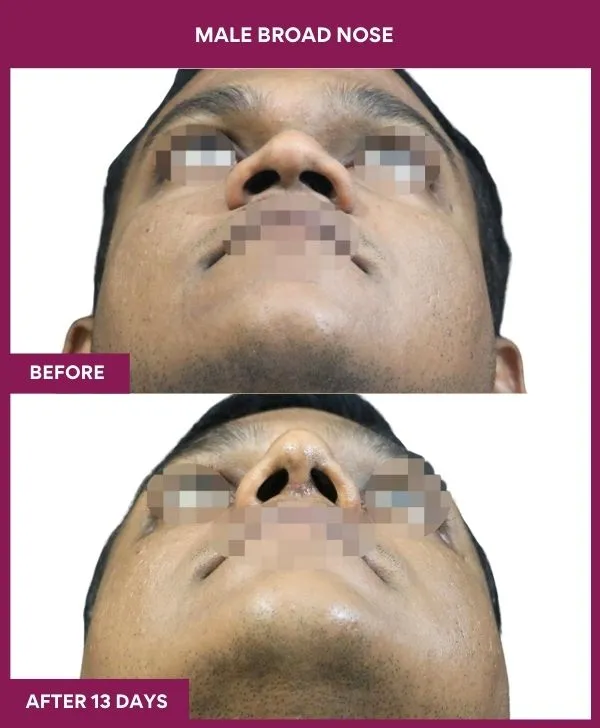
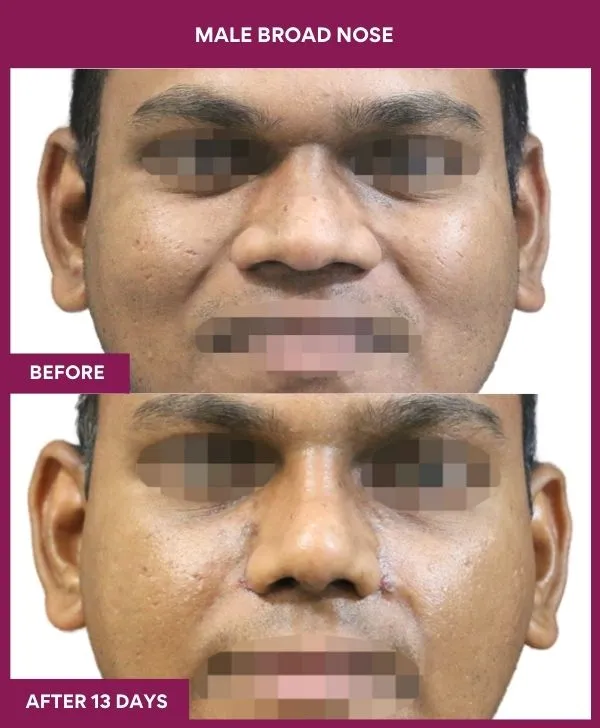
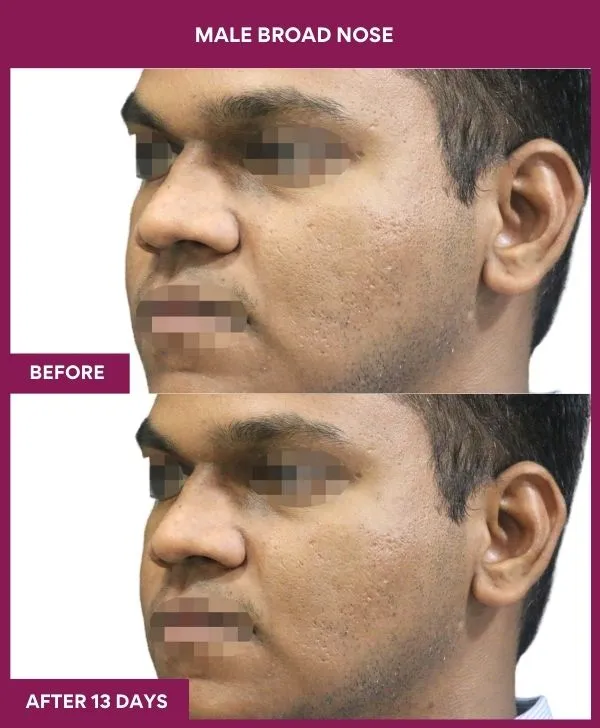
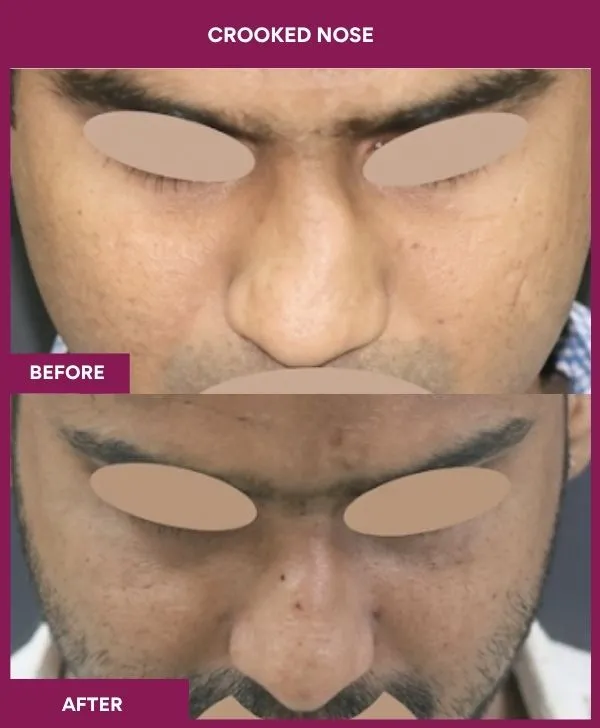
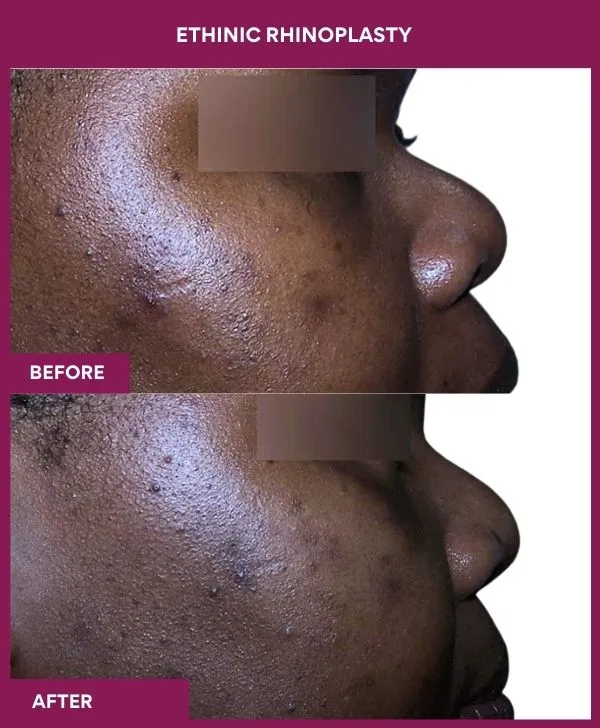
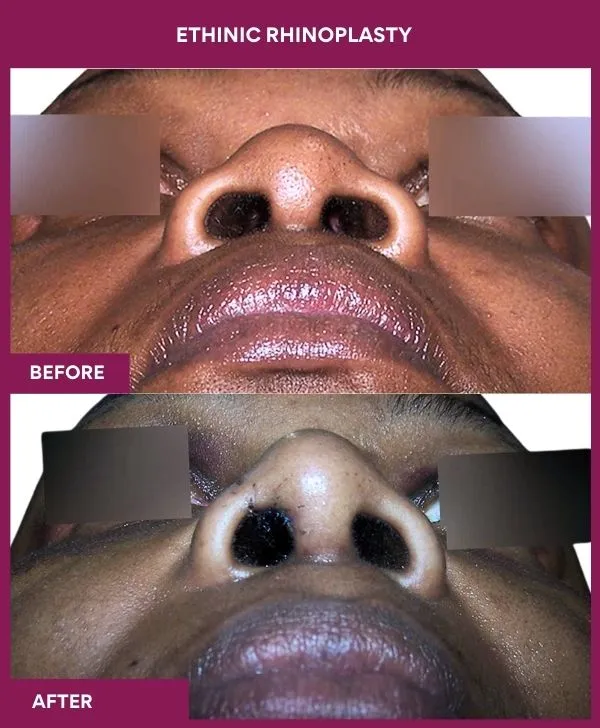
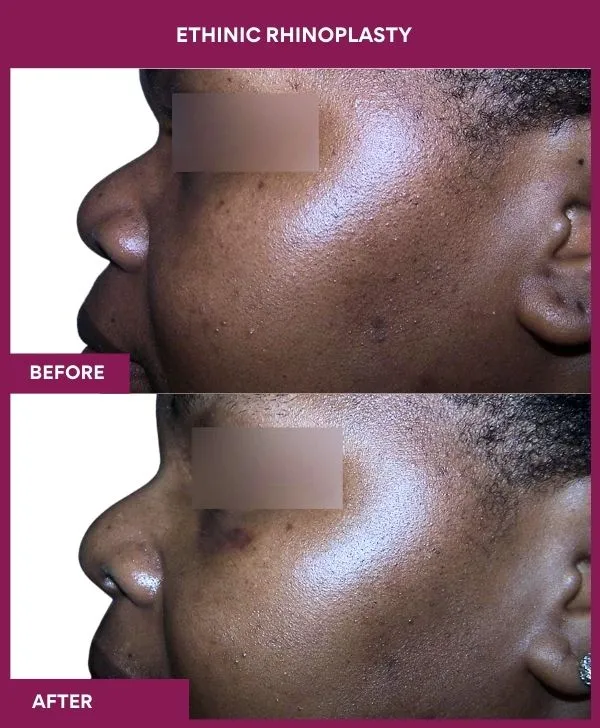
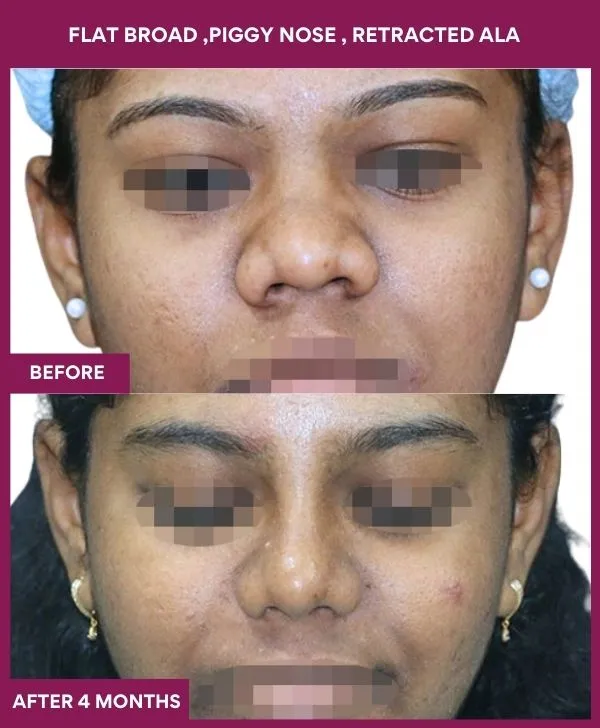
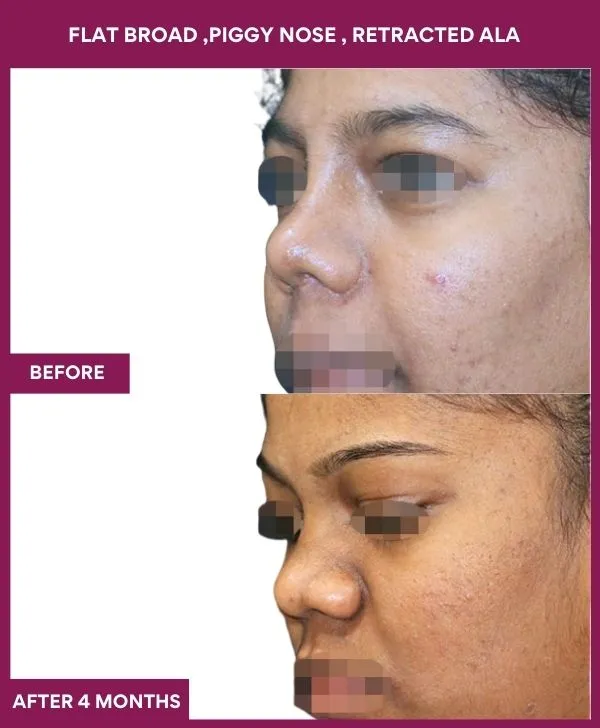
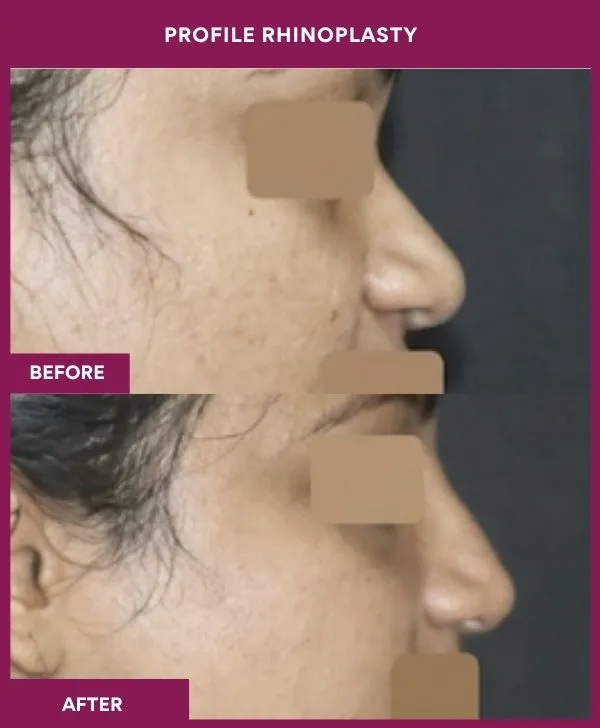
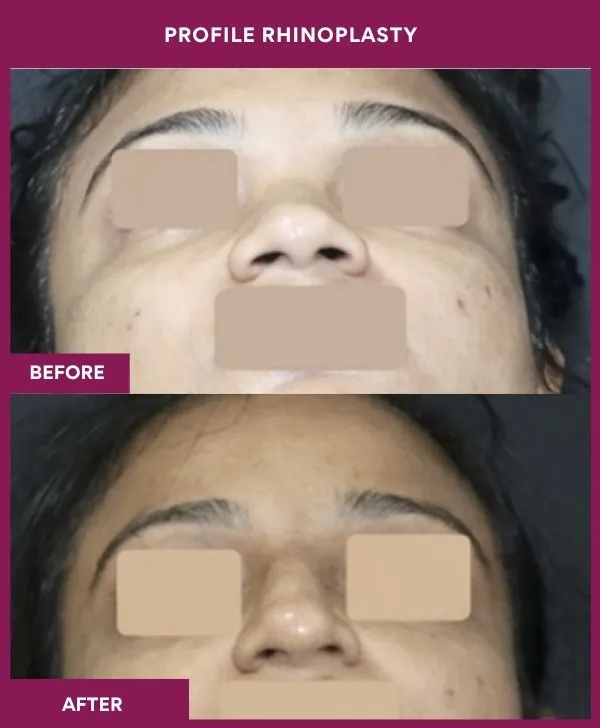
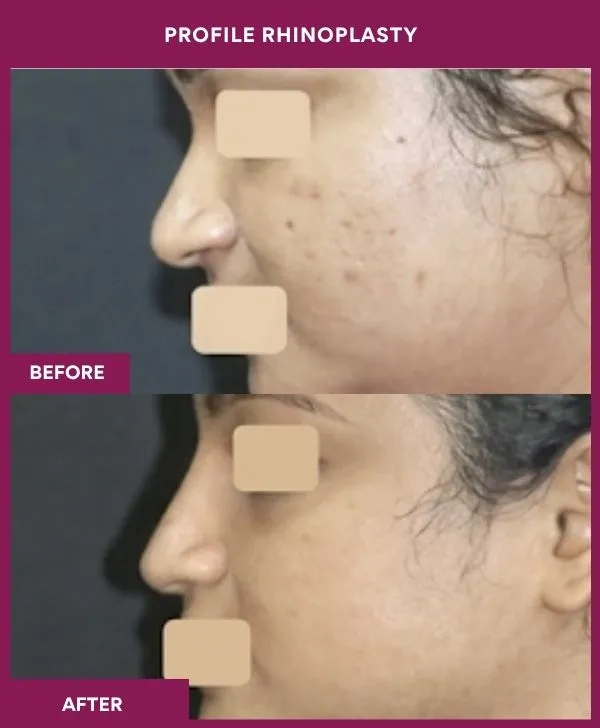
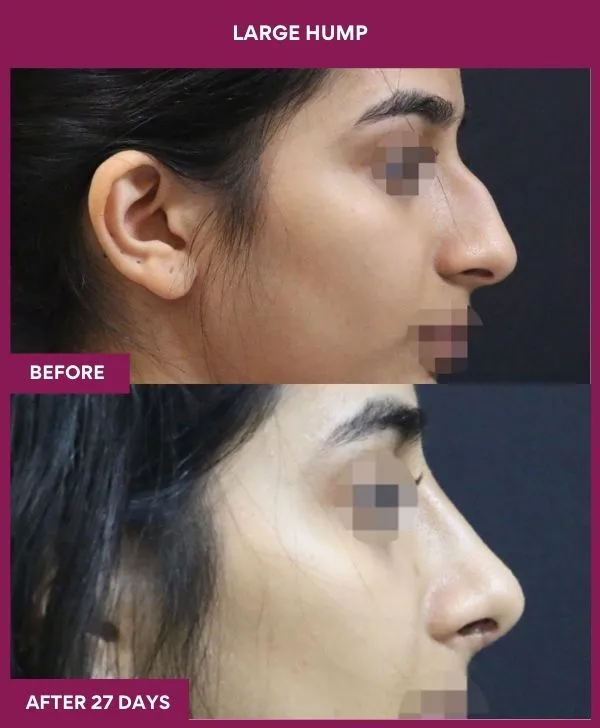
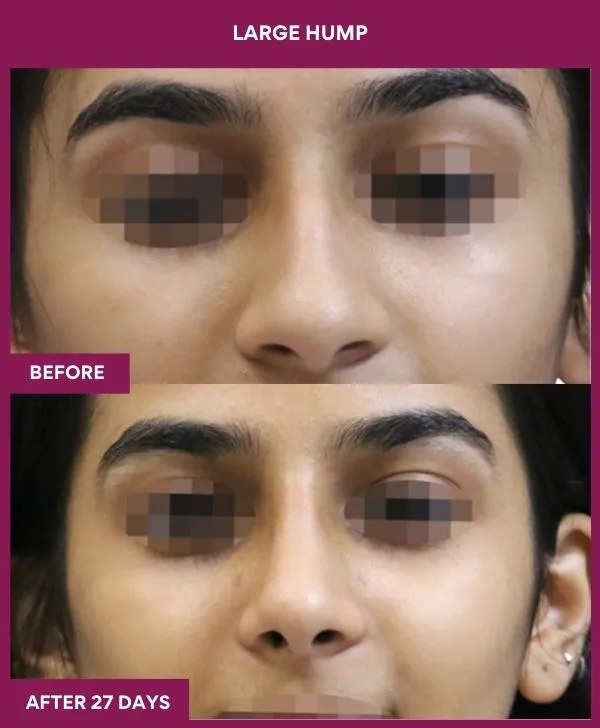
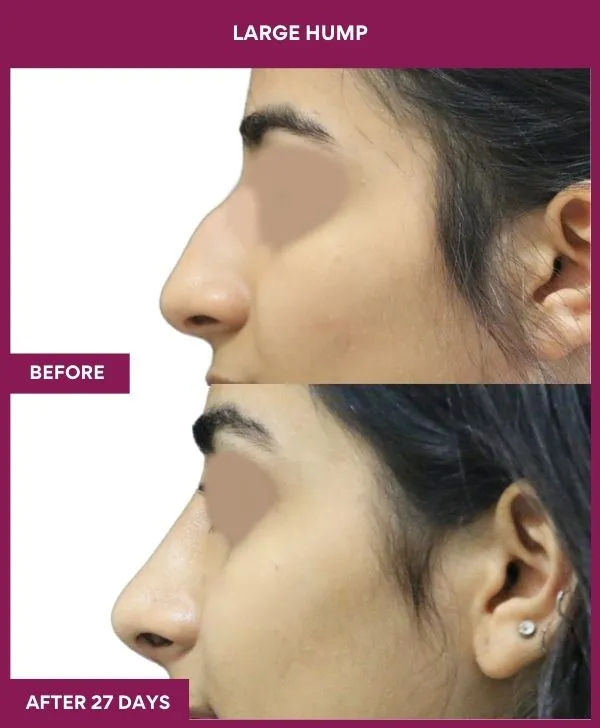
Rhinoplasty/ Nose Job Surgery Results: Before & After
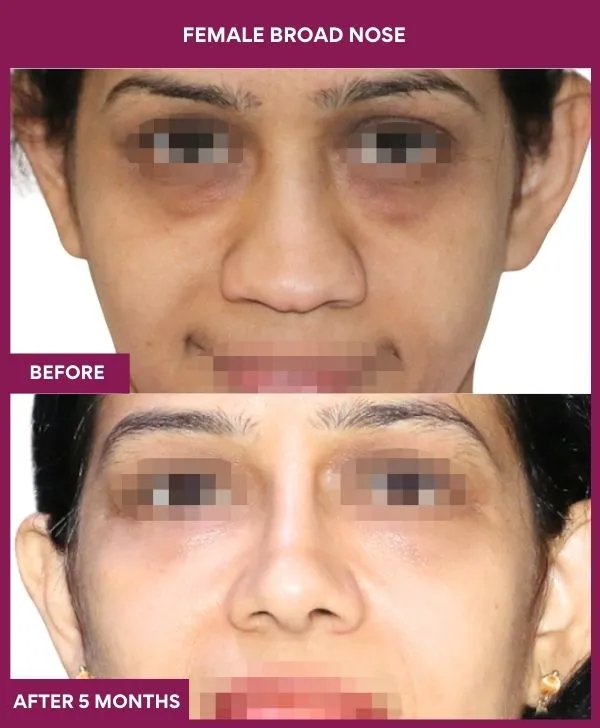
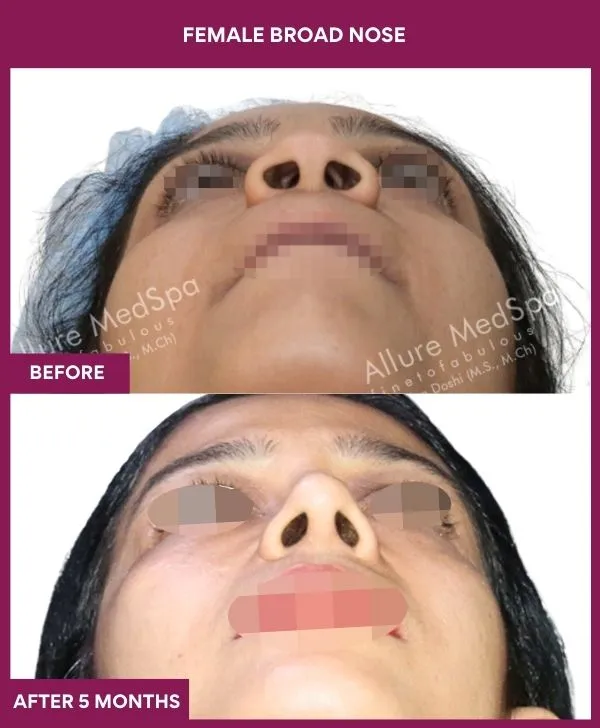
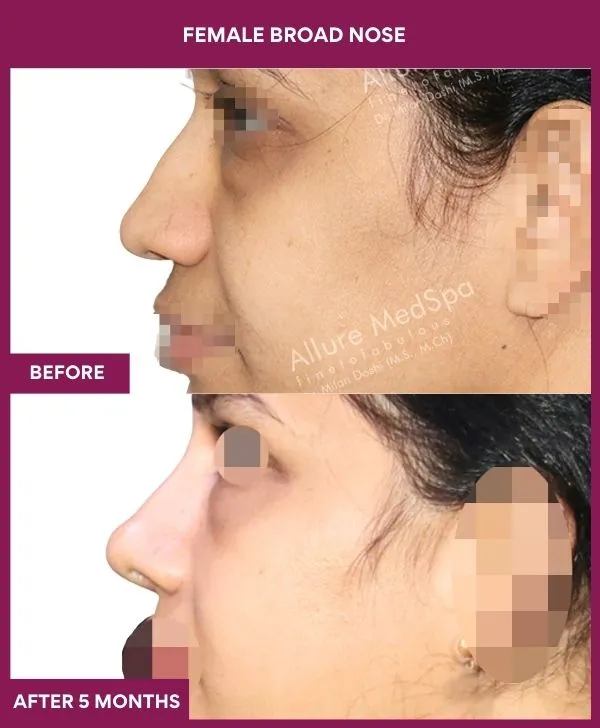
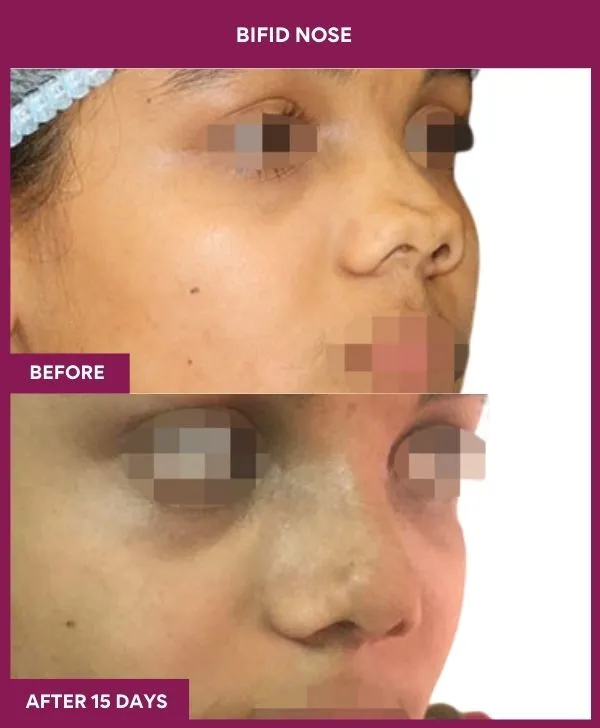
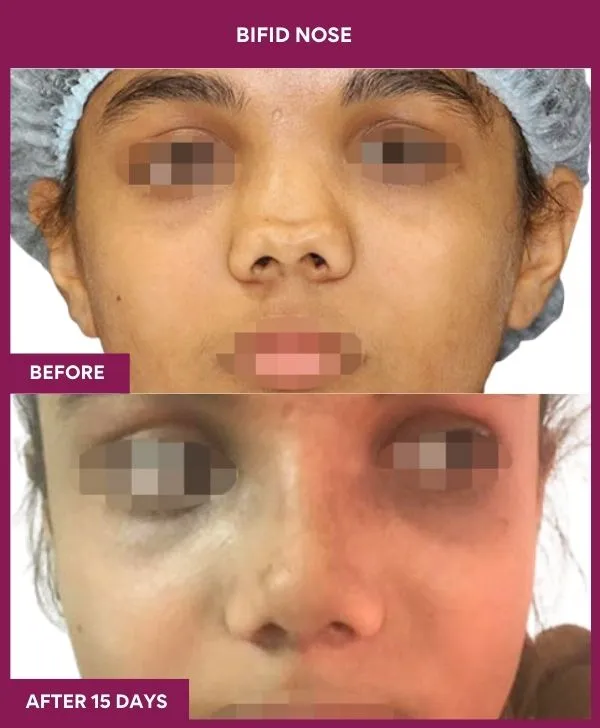
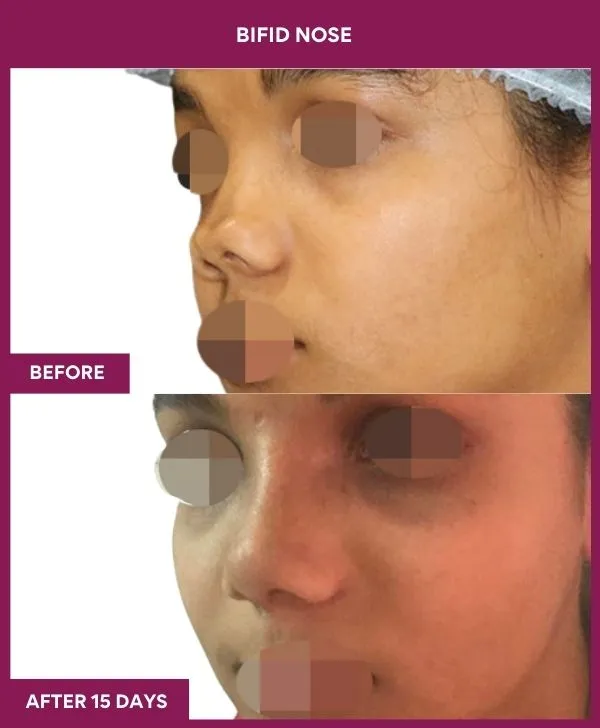
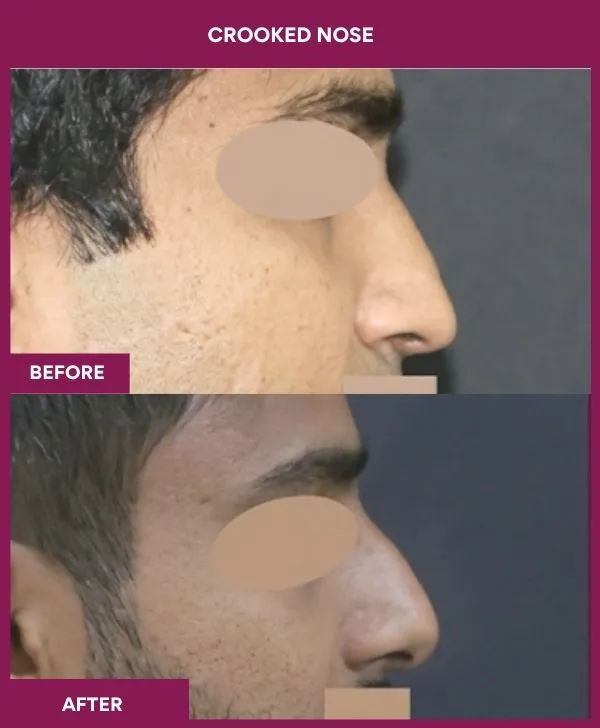
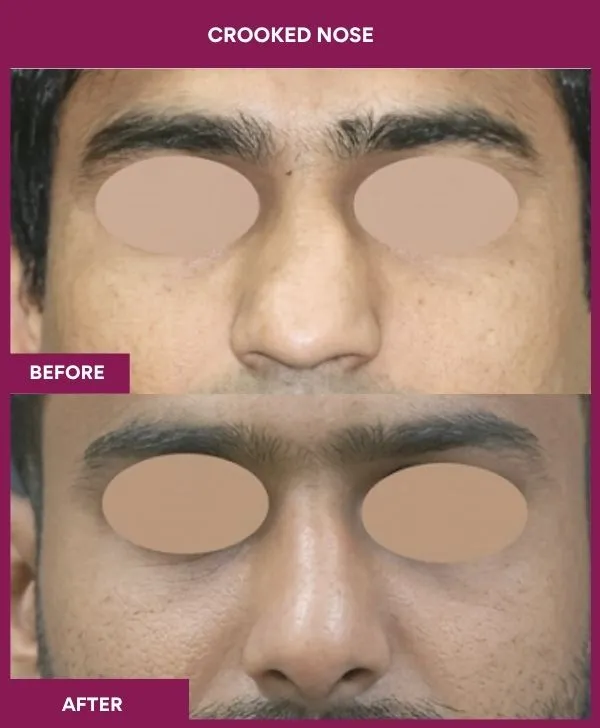
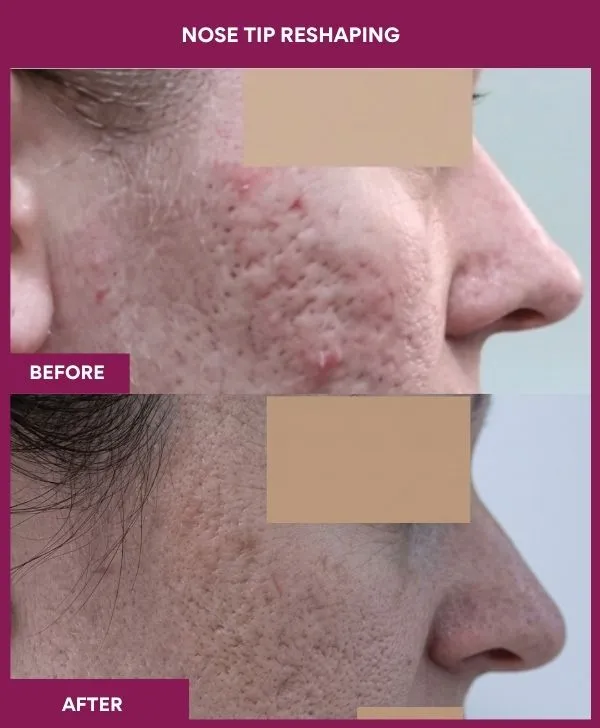
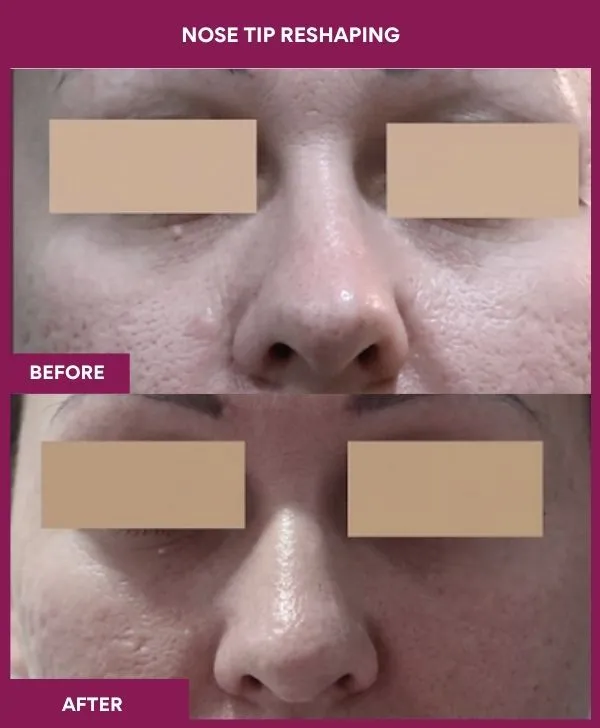
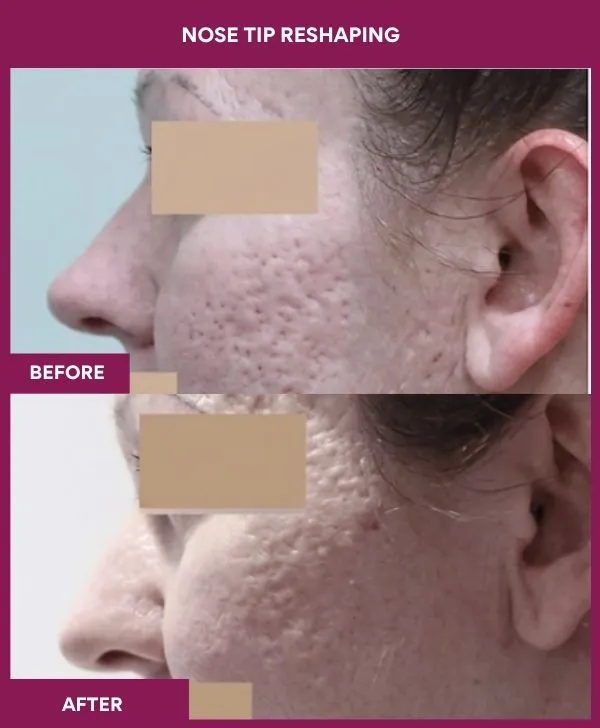
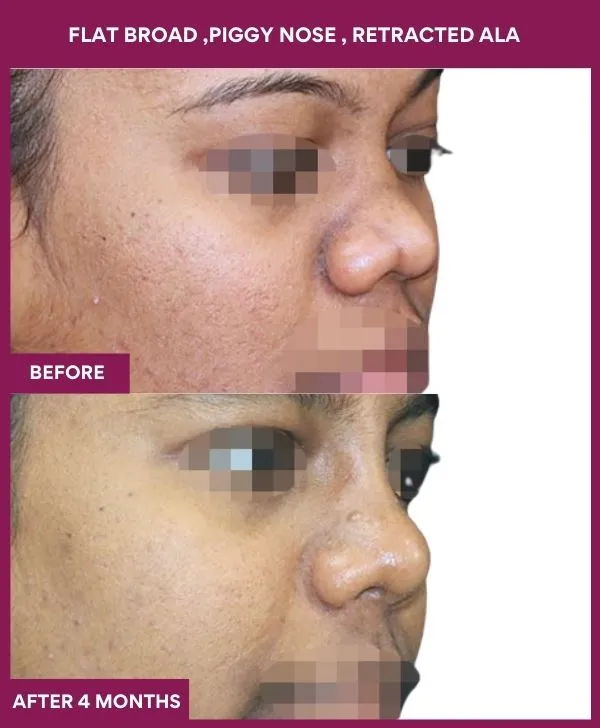
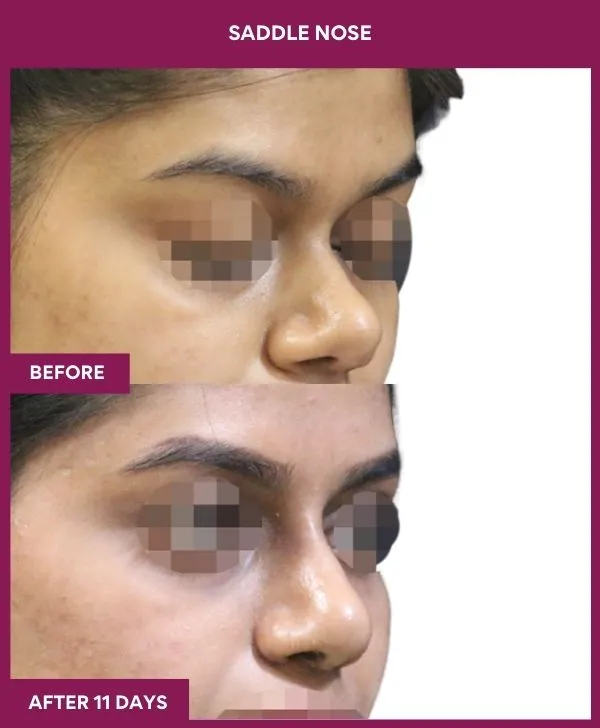
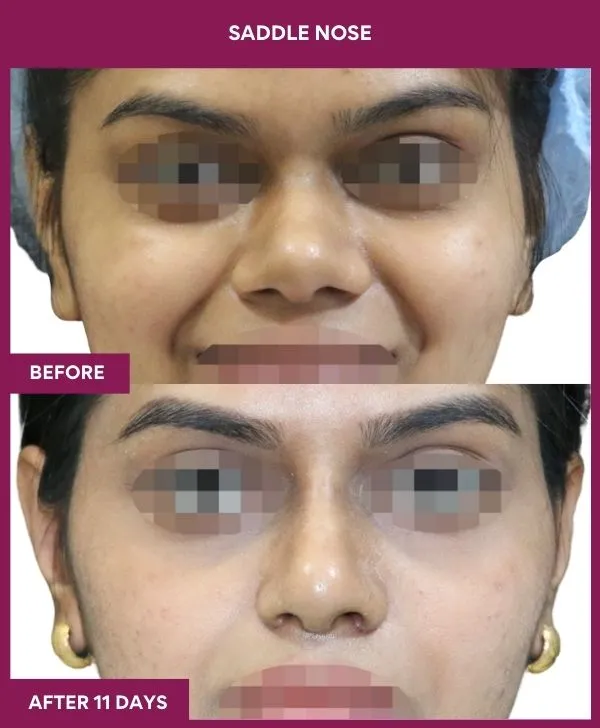
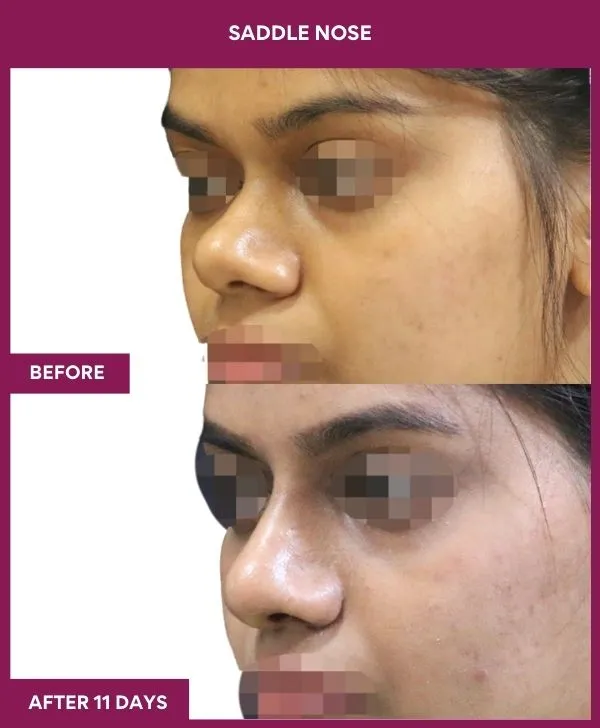
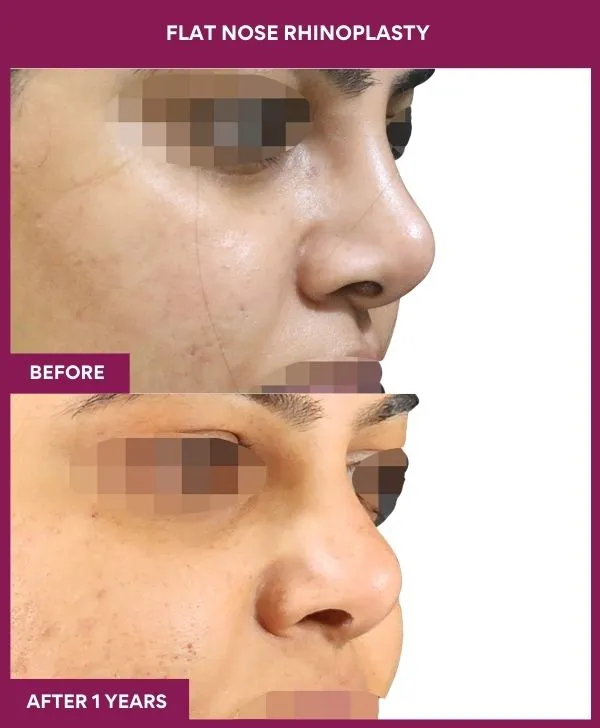
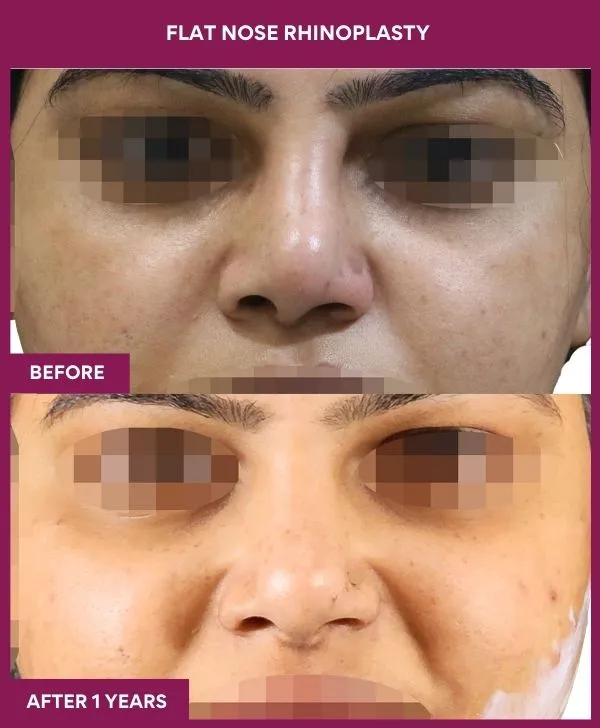
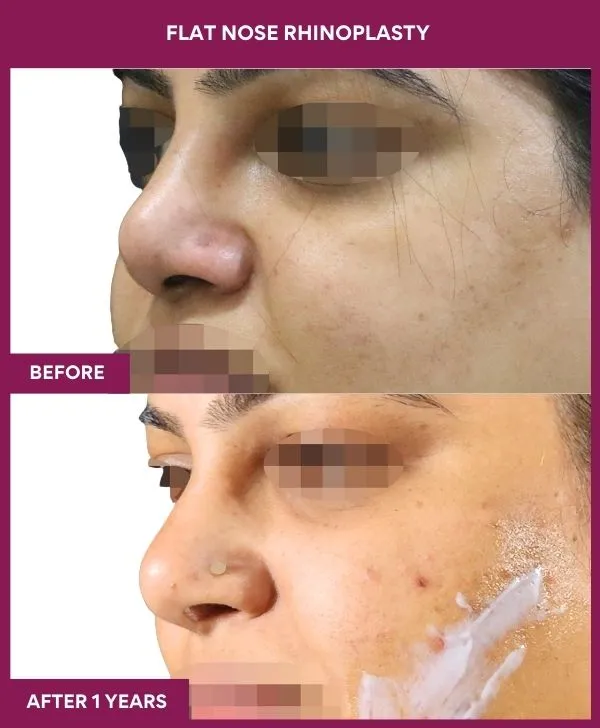
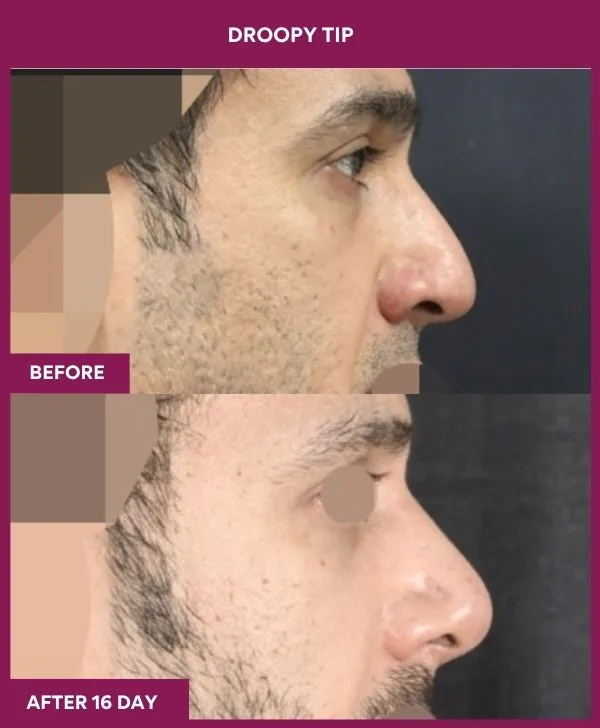
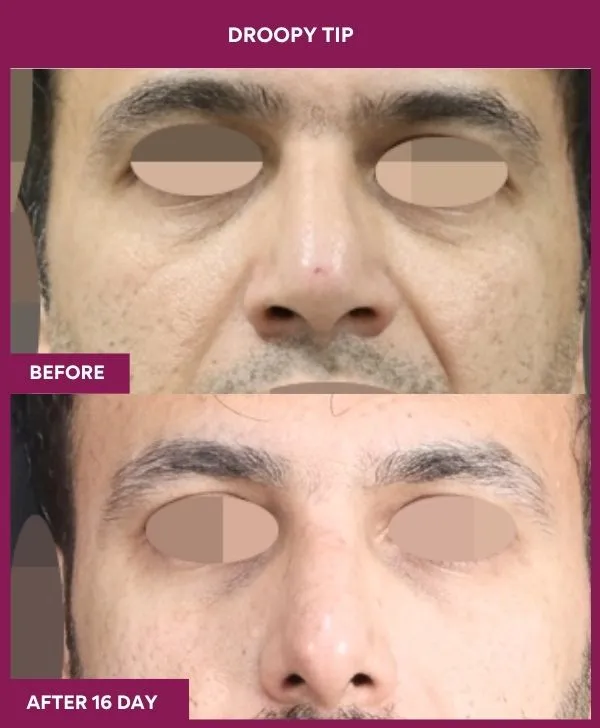
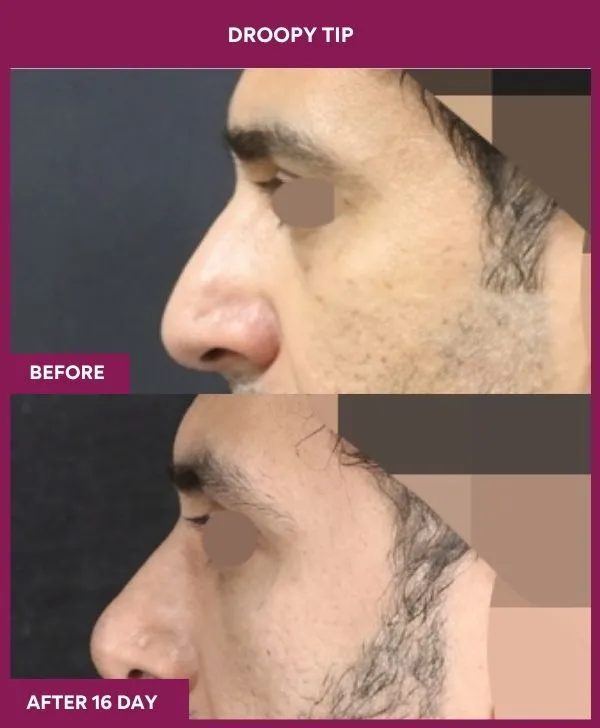
Rhinoplasty Surgery Testimonials: Celebrities Patient

Awarded by Google.com
Rating: 4.7
Reviews: 485+
Awarded by WhatClinic.com
Rating: 4.8
Reviews: 119+

Awarded by Realself
Rating: 4.9
Reviews:453+

Awarded by Facebook
Rating: 4.6
Reviews:105+
Dr Milan Doshi and his staff are very professional and committed as the centre is highly equipped with advanced technology. I had closed rhinoplasty 4 months back and I’m seeing the results as to how it becomes successful.
Deepika Shetty
The doctor explained everything clearly and the surgery was smooth. Recovery was faster than I expected and the team was very supportive.
Rahul Mehta
Very natural results and excellent staff. From consultation to follow-up, the experience was outstanding and boosted my confidence.
Sneha Kapoor
When Should I See My Surgeon Urgently?
Rhinoplasty recovery should be reviewed urgently if there is heavy or persistent bleeding, fever, worsening redness, increasing pain, vision change, severe eye swelling, sudden worsening obstruction, suspected septal haematoma, chest symptoms, or any symptom that feels rapidly worse rather than gradually improving.
| Red flag | Why it matters |
|---|---|
| Heavy or persistent bleeding | May need urgent surgical review |
| Fever with worsening redness | Possible infection |
| Increasing severe pain | Not typical routine healing |
| Vision change or eye pain | Emergency warning sign |
| Severe orbital swelling | Needs urgent evaluation |
| Sudden worsening obstruction | Could indicate haematoma or collapse |
| One-sided painful blockage | Septal haematoma must be excluded |
| Chest pain or breathlessness | Emergency medical care required |
| Fainting or severe weakness | Needs urgent assessment |
Sources: NCBI – Rhinoplasty (StatPearls) · AAO-HNS – Rhinoplasty FAQ (PDF)
Allure postoperative emergency line: +91 82918-63159
The Week-by-Week Recovery Guide
What Happens in the First 48–72 Hours After Rhinoplasty?
What is common in the first 72 hours?
- Swelling: Usually peaks early.
- Bruising: May appear around the eyes.
- Congestion: Internal swelling can block airflow.
- Pressure: Tightness around the nose and face is common.
- Mild spotting: Small blood-tinged discharge may occur early, but heavy or persistent bleeding should be reported to the clinic.
- Fatigue: Anaesthesia and surgery can cause tiredness.
- Sleep difficulty: Positioning and congestion may disturb sleep.
Sources: NCBI – Rhinoplasty (StatPearls) · ASPS – Rhinoplasty Recovery
What should patients do?
| Do | Why |
|---|---|
| Keep head elevated | Helps reduce swelling and congestion |
| Use cold compresses if advised | May reduce bruising and swelling early |
| Take medicines as prescribed | Controls pain and infection risk |
| Walk gently indoors | Helps circulation |
| Avoid bending | Reduces bleeding and pressure risk |
| Avoid nose blowing | Prevents pressure on healing tissues |
| Contact the clinic for heavy bleeding | Heavy bleeding is not normal recovery |
What Happens During Week 1 After Rhinoplasty?
Sources: ASPS – Rhinoplasty Recovery · AAO-HNS – Rhinoplasty FAQ (PDF)
Week 1 checklist
- Splint: Keep it dry and protected.
- Sleep: Keep head elevated.
- Activity: Walk gently; avoid exertion.
- Nasal care: Use only prescribed cleaning or saline.
- Food: Prefer soft, easy-to-chew food if uncomfortable.
- Sneezing: Sneeze with your mouth open if needed.
- Follow-up: Attend splint removal as scheduled.
What Happens During Week 2?
Rhinoplasty recovery during Week 2 usually becomes easier because bruising and obvious swelling start improving, and many patients can return to desk work or routine non-strenuous activity. However, the nose still remains fragile, congested, and swollen internally.
This is the week patients often feel “almost normal” and then do too much. That is the trap. The outside may look calmer before the inside has recovered.
What is usually possible in Week 2?
| Activity | General guidance |
|---|---|
| Desk work | Often possible after about 1 week |
| Social outings | Possible if bruising is acceptable |
| Walking | Usually encouraged gently |
| Light chores | Avoid bending, lifting, straining |
| Exercise | Still limited unless surgeon clears |
| Glasses | Avoid bridge pressure until cleared |
| Nose blowing | Avoid unless surgeon permits |
Source: ASPS – Rhinoplasty Recovery
What Happens During Weeks 3?
What can Week 3 feel like?
- Breathing: May fluctuate as internal swelling changes.
- Swelling: Often improves but does not disappear.
- Tip: Usually remains the slowest part to settle.
- Energy: Better, but stamina may still be low.
- Exercise: Mild cardio may resume only after clearance.
- Photos: Selfies can still look misleading.
- Emotion: Impatience is common; the final shape is not here yet.
Source: NCBI – Rhinoplasty (StatPearls)
What Happens During Weeks 4?
Week 4 activity guide
| Activity | Typical status |
|---|---|
| Office work | Usually possible |
| Walking | Usually possible |
| Mild cardio | May be allowed if cleared |
| Heavy gym | Usually delayed 4–6 weeks or more |
| Contact sports | Delayed for weeks to months |
| Glasses | Only if surgeon clears bridge pressure |
| Sun exposure | Use protection; avoid tanning |
Sources: AAO-HNS – Rhinoplasty FAQ (PDF) · ASPS – Rhinoplasty Recovery
What Happens From Months 1–3?
Sources: NCBI – Rhinoplasty (StatPearls) · SAGE Journals – Rhinoplasty study
What should patients watch?
- Swelling trend: Should generally improve, not worsen steadily.
- Tip firmness: Can persist.
- Airflow: May fluctuate.
- Skin colour: Protect from sun.
- Photos: Monthly photos are better than daily comparison.
- Follow-up: Structured reviews may continue.
- Expectations: Results vary by individual anatomy and healing.
Source: PubMed 30593070
What Happens After 6 Months?
What may still be present?
| Finding | Meaning |
|---|---|
| Tip swelling | Common, especially in thick skin |
| Firmness | Soft tissue still remodelling |
| Mild asymmetry | May improve, but needs review |
| Variable breathing | Internal swelling may still fluctuate |
| Numbness | Sensory recovery can take months |
| Scar maturity | Continues over time |
| Photo changes | Monthly changes may still occur |
Source: NCBI – Rhinoplasty (StatPearls)
When Is the Final Rhinoplasty Result Seen After 1 Year?
What may still be present?
| Finding | Meaning |
|---|---|
| Tip swelling | Common, especially in thick skin |
| Firmness | Soft tissue still remodelling |
| Mild asymmetry | May improve, but needs review |
| Variable breathing | Internal swelling may still fluctuate |
| Numbness | Sensory recovery can take months |
| Scar maturity | Continues over time |
| Photo changes | Monthly changes may still occur |
Source: NCBI – Rhinoplasty (StatPearls)
What Are the Main Rhinoplasty Aftercare Do’s and Don’ts?
| Do | Don’t |
|---|---|
| Sleep with head elevated early | Sleep face-down or press nose into pillow |
| Use cold compresses if advised | Put direct pressure on the nose |
| Take medicines as prescribed | Self-start aspirin, blood thinners, supplements, or painkillers without approval |
| Use saline spray or cleaning only as advised | Forcefully blow the nose |
| Eat soft, nutritious food early | Chew hard foods if uncomfortable |
| Protect from sun | Tan or expose healing skin |
| Walk gently | Lift heavy weights early |
| Ask before wearing glasses | Rest spectacles on the bridge before clearance |
| Sneeze with your mouth open if advised | Create forceful nasal pressure |
| Attend follow-ups | Judge the final result too early |
Sources: AAO-HNS – Nasal Form & Function Guideline · AAO-HNS – Rhinoplasty FAQ (PDF)
How Can I Speed Up Rhinoplasty Recovery Safely?
Evidence-based recovery support
- Elevation: Helps early swelling and congestion.
- Cold compresses: Useful early if advised.
- Saline care: Helps crusting and comfort when prescribed.
- No smoking: Smoking can impair wound healing.
- No strain: Heavy lifting can increase bleeding/swelling risk.
- Sun care: Reduces risk of pigmentation and prolonged redness.
- Follow-up: Detects issues before they become bigger.
Sources: NCBI – Rhinoplasty (StatPearls) · AAO-HNS – Nasal Form & Function Guideline
What Affects How Fast You Heal After a Facelift?
Healing-speed factors
| Factor | Effect on recovery |
|---|---|
| Thick skin | Tip definition may take longer |
| Open approach | May have more oedema than selected closed cases |
| Revision surgery | Scar tissue makes healing less predictable |
| Structural grafting | May increase swelling duration |
| Osteotomies | Bone work can add bruising/swelling |
| Smoking | Can impair wound healing |
| Poor aftercare | Can increase swelling or complications |
| Sun exposure | Can worsen pigmentation/redness |
Sources: NCBI – Rhinoplasty (StatPearls) · SAGE Journals – Rhinoplasty study
Frequently Asked Questions About Facelift Recovery
Rhinoplasty recovery questions usually focus on swelling, pain, bruising, splint removal, work, exercise, glasses, flying, final results, and warning signs. The most honest answer is that early recovery is weeks, but final refinement is months, especially at the nasal tip.
1. How long does rhinoplasty recovery take?
Most visible bruising and early swelling improve within 1–2 weeks, and many patients resume routine activity during this period. Final refinement usually takes around 12 months, and thicker skin, revision, or grafting cases may take up to 18 months.
2. When is the splint removed after rhinoplasty?
The splint is commonly removed around Day 5–7, depending on the surgeon’s protocol and surgical details. The nose usually looks swollen when the splint comes off, so patients should not judge final shape at that visit.
3. Why does swelling look worse in the first few days?
Swelling and bruising often peak in the first 48–72 hours because of surgical inflammation and tissue response. Cold compresses and head elevation may help early comfort if advised by the surgeon.
Source: ASPS – Rhinoplasty Recovery
4. Why does the nasal tip take longest to settle?
The nasal tip often settles last because the lower third of the nose has thicker soft tissue and complex support structures. In thick-skinned Indian or South-Asian noses, tip definition may take longer to appear clearly.
Source: NCBI – Rhinoplasty (StatPearls)
5. When can I return to office work?
Desk work is often possible after about 1 week if pain, bruising, swelling, and bandaging are manageable. This varies by surgery type, commute, anaesthesia recovery, and patient comfort. Surgeon clearance matters more than the calendar.
6. When can I restart exercise?
Light walking usually starts early, but mild cardio is often delayed until about 2–3 weeks and strenuous gym training until at least 4–6 weeks or longer. Osteotomies, grafting, and revision surgery may need more restriction.
7. Can I wear glasses after rhinoplasty?
Spectacles should not rest on the nasal bridge until the surgeon clears it, because pressure can affect healing bone and cartilage. Patients who need glasses should ask about taping or alternative support methods.
8. Can I fly after rhinoplasty?
Flying depends on congestion, bleeding risk, splint status, and the type of surgery performed. There is no universal flying timeline for every patient. Surgeon clearance is safer than following a generic online rule.
9. Is nasal numbness normal after rhinoplasty?
Temporary numbness of the nasal tip or skin can occur during recovery as sensory nerves heal. It may last weeks to months. Persistent, worsening, or unusual symptoms should be reviewed by the surgeon.
10. Can saline spray speed up healing?
Saline irrigation or spray may reduce crusting and improve comfort when prescribed, but it does not speed structural healing. Use only the type, timing, and technique advised by your surgeon.
Source: AAO-HNS – Nasal Form & Function Guideline
11. When should I worry after rhinoplasty?
Seek urgent review for heavy bleeding, fever, worsening redness, increasing pain, severe eye swelling, vision change, sudden obstruction, suspected septal haematoma, chest symptoms, or anything rapidly worsening instead of gradually improving.
12. When will I see my final result?
A common benchmark is around 12 months. Thick skin, revision rhinoplasty, open approach, or structural grafting may take longer, sometimes up to 18 months. Daily mirror-checking is not clinical follow-up; it is anxiety cardio.
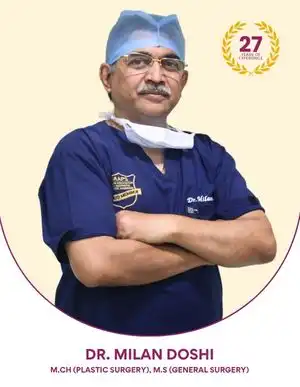
Why Choose Dr. Milan Doshi?
Dr. Milan Doshi, MCh, MS — Indian board-certified plastic surgeon with 27+ years in aesthetic surgery and 1,500+ rhinoplasty procedures. He focuses on safe healing, structured follow-up, and clear aftercare guidance throughout rhinoplasty recovery. Consults at Andheri West; surgeries at the NABH-accredited surgical centre, Goregaon West.
Read more: About Dr Milan Doshi