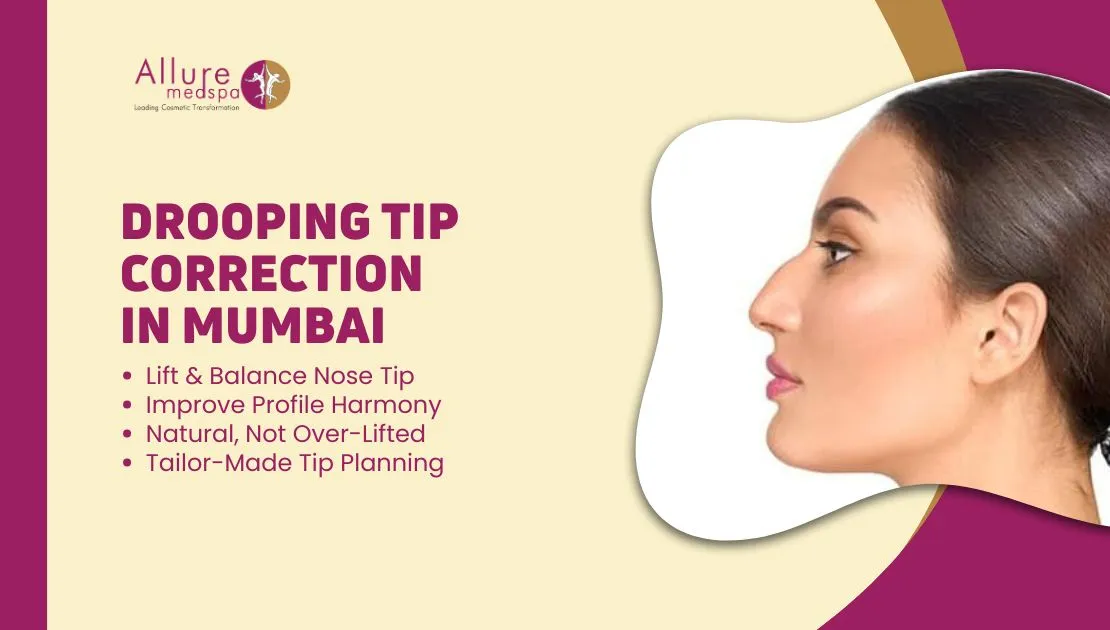
Drooping tip correction in Mumbai helps lift and support a nasal tip that looks low, heavy, under-rotated, or drops further while smiling. At Allure Medspa, Dr. Milan Doshi plans droopy nose tip surgery with one clear aim: a naturally balanced nasal tip, not an over-lifted or artificial “piggy” look. It is a focused part of the wider rhinoplasty surgery family of procedures.
A drooping nasal tip may be static (visible even at rest) or dynamic (appearing more when smiling, because of depressor septi nasi muscle activity). Correction may involve tip support, controlled rotation, grafting, and selective muscle treatment depending on anatomy.
What Is a Drooping Tip & What Causes It?
A drooping tip, also called tip ptosis, means the nasal tip sits lower than ideal and gives the nose a heavy, under-rotated, or hanging appearance. It may happen because of cartilage shape, long lower lateral cartilages, weak tip support, a long caudal septum, ageing, thick skin, previous surgery, or downward muscle pull while smiling.
You may describe it as “my nose tip hangs down,” “my nose looks long from the side,” “my tip drops when I smile,” “my nose looks heavy at the bottom,” or “I want a nasal tip lift, but natural.”
Medically, drooping tip correction is not just “lifting the tip.” The surgeon must assess tip rotation, projection, caudal septum length, lower lateral cartilage support, skin thickness, nasal length, and breathing. Tip ptosis can be aesthetic, functional, or both when valve support is weak.
| Cause | What it means |
|---|---|
| Weak tip support | Lower lateral cartilages do not hold the tip strongly |
| Long caudal septum | Septal length pushes the tip downward |
| Heavy or thick skin | Soft-tissue weight makes the tip look lower |
| Ageing | Tip support weakens over time |
| Previous rhinoplasty | Prior cartilage disruption may cause de-rotation |
| Long lower lateral cartilages | Long or heavy tip cartilages make the nose look droopy or under-rotated |
| Dynamic muscle pull | Depressor septi nasi pulls the tip down while smiling |
| Weak base support | Insufficient maxillary / anterior nasal spine support |
Sources: PubMed 19608069 · PMC7700863
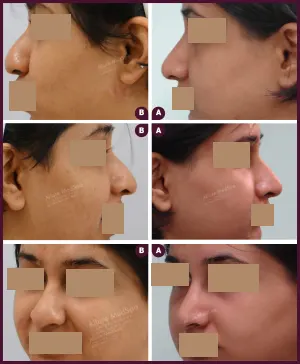
Drooping Tip Surgery Before and After Results
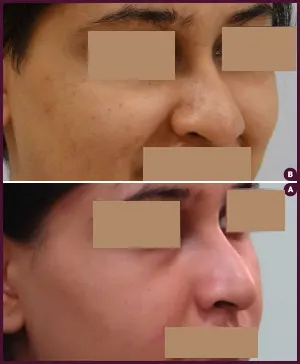
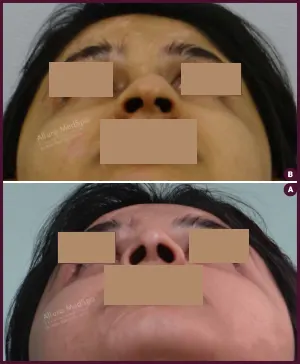
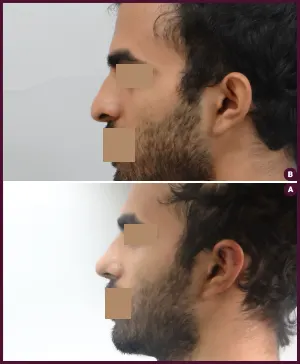
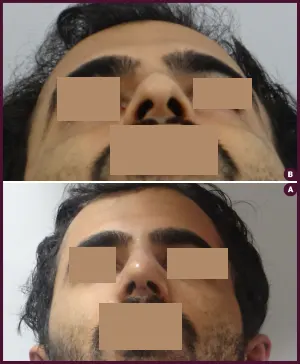
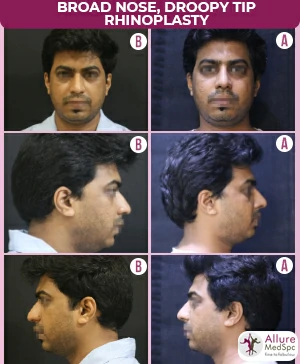
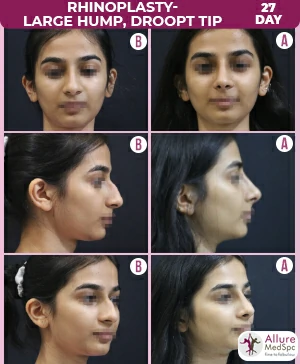
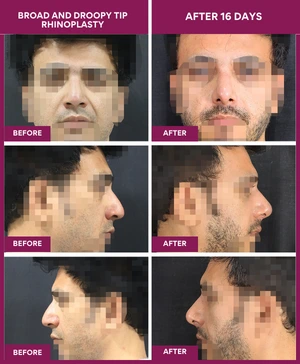
Rhinoplasty Surgery Testimonials: Celebrities Patient

Awarded by Google.com
Rating: 4.7
Reviews: 485+

Awarded by WhatClinic.com
Rating: 4.8
Reviews: 119+

Awarded by Realself
Rating: 4.9
Reviews:453+

Awarded by Facebook
Rating: 4.6
Reviews:105+
Dr Milan Doshi and his staff are very professional and committed as the centre is highly equipped with advanced technology. I had closed rhinoplasty 4 months back and I’m seeing the results as to how it becomes successful.
Deepika Shetty
The doctor explained everything clearly and the surgery was smooth. Recovery was faster than I expected and the team was very supportive.
Rahul Mehta
Very natural results and excellent staff. From consultation to follow-up, the experience was outstanding and boosted my confidence.
Sneha Kapoor
Video: Best Rhinoplasty Surgeon explain nose reshape procedure
Dr Milan Doshi is describing the Rhinoplasty Surgery in detail with benefits, techniques, recovery, result, risk and complecations
Why Does My Tip Droop When I Smile?
A tip that droops while smiling is usually a dynamic droop. The depressor septi nasi muscle can pull the nasal tip downward during smiling or speaking, making the nose look longer and the upper lip shorter. This is different from a static droop that is visible at rest.
| Type | When it appears | Likely reason | Treatment direction |
|---|---|---|---|
| Static droop | Visible at rest | Weak support, long septum, low rotation | Structural tip support |
| Dynamic droop | Worse while smiling | Depressor septi nasi activity | DSN treatment + support if needed |
| Mixed droop | At rest and worse smiling | Structure + muscle pull | Combined correction |
The depressor septi nasi muscle has attachments around the upper lip, septum, and alar region. When hyperactive, it can pull the tip downward during animation; research describes DSN treatment and structural support as options for smile-related tip descent. Botulinum toxin may temporarily improve the dynamic component in some patients, but it does not correct a true structural drooping tip — surgical release may be considered during rhinoplasty when appropriate.
Sources: PMC5584101 · PubMed 23698211 · PubMed 33868871
How Is a Drooping Tip Different From a Bulbous Tip or a Long Nose?
A drooping tip is a position and rotation problem, a bulbous tip is a shape and definition problem, and a long nose is a length problem. They can overlap, but they should not be treated as the same diagnosis. See nasal tip plasty for the general tip overview and bulbous tip correction for tip shape.
| Concern | Main problem | Patient usually says | Owned by |
|---|---|---|---|
| Drooping tip / tip ptosis | Tip sits low or under-rotated | “My tip hangs down.” | This page |
| Smile-related droop | Tip drops during smiling | “My tip falls when I smile.” | This page |
| Bulbous tip | Tip is round, broad, or boxy | “My tip is fat or wide.” | Bulbous tip correction |
| Long nose | Nose length is excessive | “My nose looks too long.” | Rhinoplasty hub / long nose page |
| Combined concern | Tip is long, droopy, and bulky | “The whole lower nose looks heavy.” | Consultation-based plan |
Sources: Aesthetic Surgery Journal – Nasal Tip Ptosis · PMC7700863
Am I a Good Candidate for Drooping Tip?
You may be a candidate for drooping tip correction if your nasal tip looks low, heavy, hanging, under-rotated, or drops more when you smile. The best candidate wants natural refinement, understands healing time, and is not chasing an extreme lifted look.
Good candidate signs
- Tip appears low from side view.
- Tip droops more during smiling.
- Nose looks longer because the tip hangs.
- Tip support is weak or under-rotated.
- You want a natural nasal tip lift.
- Breathing is checked before surgery.
- Expectations are realistic.
Needs careful evaluation
| Situation | Why it matters |
|---|---|
| Very thick skin | Final definition may take longer |
| Previous rhinoplasty | Revision planning is more complex |
| Weak cartilage | Structural grafting may be needed |
| Breathing concern | Valve support must be protected |
| Desire for very upturned tip | High risk of artificial look |
| Bulbous tip concern | Shape correction belongs to tip-plasty planning |
| Long nose concern | Length correction may need broader rhinoplasty |
How Is a Drooping Tip Corrected?
Drooping tip correction is usually done by rotating and supporting the nasal tip. Techniques may include a columellar strut graft, septal extension graft, tongue-in-groove fixation, caudal septal adjustment, lateral crural work, and depressor septi treatment for dynamic droop. The right technique depends on whether the droop is structural, dynamic, or mixed.
| Technique | Purpose | Used for | Key caution |
|---|---|---|---|
| Columellar strut graft | Supports and stabilises the tip | Mild to moderate weak support | Must avoid excessive projection |
| Septal extension graft | Strong control of rotation/projection | More significant droop or weak tip | Avoid stiffness or over-rotation |
| Tongue-in-groove | Sets medial crura against caudal septum | Controlled tip rotation | Requires precise planning |
| Caudal septal shortening | Reduces downward septal push | Long caudal septum | Must protect support |
| Lateral crural work | Refines lower lateral cartilage support | Tip malposition or heavy tip | Avoid over-resection |
| Depressor septi treatment | Reduces smile-related downward pull | Dynamic droop | Must diagnose correctly |
| Open approach | Direct visualisation | Complex tip correction | Small columellar scar |
| Closed approach | Endonasal access | Selected cases | Limited exposure in complex cases |
Sources: PubMed 38595160 · PMC8076873 · PubMed 26862961
Why Is Over-Rotation a Mistake?
Over-rotation can make the nose look upturned, short, artificial, or “piggy.” In drooping tip correction, too much lift is not refinement — it is a new deformity. This matters especially in Indian and South-Asian faces, where natural ethnic balance is important: a tip lifted too high can expose too much nostril, shorten the nose, disturb facial harmony, and make rhinoplasty obvious.
Possible problems from over-rotation
| Problem | Why it matters |
|---|---|
| Upturned appearance | Nose looks operated |
| Excess nostril show | Tip appears too high |
| Short-nose look | Facial balance changes |
| Airflow concern | Valve narrowing may occur |
| Revision complexity | Scar and cartilage shortage make correction harder |
The safest aesthetic direction is controlled rotation with structural support, not aggressive lifting.
Sources: Aesthetic Surgery Journal – Tip Rotation · PMC3321146 · Plastic and Aesthetic Research
What Is the Recovery at a Glance?
Recovery is mainly about swelling, tip settling, and judging final rotation. Early tip position may look slightly high or swollen, while the final nasal tip shape is usually judged over months. This page gives a summary only — for full recovery instructions, see the rhinoplasty recovery timeline.
| Timeline | What to expect |
|---|---|
| First week | Swelling, dressing/splint care, early tightness |
| 1–2 weeks | Many patients resume normal daily activity |
| 3–6 months | Tip position becomes easier to judge |
| 6–12 months | Final refinement, especially in thicker skin |
Sources: PubMed 17398339 · Cleveland Clinic – Rhinoplasty · SAGE Journals – Nasal Tip Rotation
What Are the Risks & When Should You Seek Urgent Care?
Risks of drooping tip correction include bleeding, infection, delayed healing, asymmetry, under-correction, over-correction, altered projection, breathing change, and revision need. Urgent review is needed for red-flag symptoms after surgery.
| Risk | Meaning |
|---|---|
| Bleeding | Early or delayed bleeding |
| Infection | Fever, redness, discharge, pain |
| Swelling | Tip swelling may persist longer |
| Asymmetry | Tip may heal unevenly |
| Under-correction | Tip remains low |
| Over-correction | Tip looks too lifted |
| Breathing change | Valve support may be affected |
| Revision | May be needed in selected cases |
Seek immediate care
| Red flag | Why it matters |
|---|---|
| Rapidly increasing swelling | Bleeding or infection concern |
| Severe pain | Not routine healing |
| Fever | Infection must be ruled out |
| Pus-like discharge | Possible infection |
| Wound opening | Needs prompt review |
| Spreading redness | Infection concern |
| New/worsening nasal obstruction | Airway concern |
| Chest pain or breathlessness | Emergency medical care |
Sources: Cleveland Clinic – Rhinoplasty · PubMed 17398339
What Is the Cost of Drooping Tip Correction?
Drooping tip correction cost depends on whether it is isolated tip surgery or part of full rhinoplasty. As a focused tip procedure, the guide range at Allure Medspa is ₹70,000–₹1,80,000, with 5% GST extra. This is a guide range, not a final quote — final cost is confirmed after consultation, because technique, grafting, anaesthesia, revision status, and combined rhinoplasty needs can change the plan. See the rhinoplasty cost guide for the fuller breakdown.
₹70,000–₹1,80,000 — technique sets your point.
Guide range, exact after consultation
Why Choose Dr. Milan Doshi for Droopy Tip Rhinoplasty?
Drooping tip correction needs judgement, restraint, and strong structural planning, because a few millimetres can change the entire expression of the nose. Dr. Milan Doshi is a plastic and cosmetic surgeon (MCh, MS) with 27+ years of experience, 16,000+ surgeries, and 1,500+ rhinoplasties.
At Allure Medspa, the focus is natural balance: the tip should look supported and elegant, not pulled up. The philosophy is refinement over exaggeration — everyone notices better proportion, but no one knows it was surgery.
| Credential | Detail |
|---|---|
| Surgeon | Dr. Milan Doshi |
| Qualification | MCh, MS |
| Specialty | Plastic & cosmetic surgery |
| Experience | 27+ years |
| Total surgeries | 16,000+ |
| Rhinoplasties | 1,500+ |
| Memberships / roles | ISAPS, IAAPS, MUHS |
| Centres | Allure Medspa, Andheri West, Mumbai & Goregaon, Mumbai |
Read his full profile and credentials on the Dr. Milan Doshi profile page.
Millimetres change expressions — judgement matters.
MCh, MS · 1,500+ rhinoplasties
Frequently Asked Questions About Drooping Tip Correction
Q1. Is drooping tip correction the same as rhinoplasty?
Ans. Drooping tip correction is one part of rhinoplasty focused on tip position, rotation, and support. If the bridge, nostrils, septum, or overall length also need correction, it becomes part of a larger rhinoplasty plan.
Q2.Why does my nose tip droop when I smile?
Ans. This is often dynamic droop caused by depressor septi nasi muscle activity — the muscle pulls the tip downward during smiling or speaking. Some patients need DSN treatment, but structural support may also be needed if the tip is droopy at rest.
Q3.Can a drooping tip be corrected without surgery?
Ans. If the problem is purely dynamic, botulinum toxin may temporarily reduce downward pull from the depressor septi nasi muscle. It does not correct structural ptosis from cartilage, septum, or weak support. Results are temporary and case-dependent.
Q4.Which surgery is used for a droopy nose tip?
Ans. Common techniques include a columellar strut graft, septal extension graft, tongue-in-groove fixation, caudal septal adjustment, lateral crural work, and depressor septi treatment for dynamic droop. The method depends on anatomy and smile movement.
Q5.Will my nose look too lifted after surgery?
Ans. It should not if planning is conservative. Over-rotation is a real mistake, because it can create an upturned, artificial, short-nose look. The aim is controlled support and natural rotation, not a visibly operated tip.
Q6.Is a drooping tip the same as a long nose?
Ans. No. A drooping tip means the tip is under-rotated or hanging; a long nose means the whole nose length is excessive. They can occur together, but the surgical priorities are different.
Q7.Is a drooping tip the same as a bulbous tip?
Ans. No. A drooping tip is a position problem; a bulbous tip is a shape and definition problem. If the tip is both droopy and broad, the plan may combine rotation support with tip refinement.
Q8.How long does recovery take?
Ans. Many patients resume normal daily activity in about 1–2 weeks. Tip swelling can take months to settle, and final tip rotation is usually judged closer to 6–12 months, especially in thick skin.
Q9.Can drooping tip correction affect breathing?
Ans. Proper support should protect breathing, but excessive manipulation or over-rotation can affect valve function in selected cases. This is why functional assessment is important before tip correction.
Q10.Does thick skin affect the result?
Ans. Yes. Thick skin can make the tip look heavier, delay swelling resolution, and mask fine definition. Many Indian noses need stronger support and realistic counselling rather than aggressive cartilage removal.
Q11.Is the result permanent?
Ans. It is better described as long-lasting than permanent. Structural grafting can provide durable support, but ageing, healing, scar contracture, and tissue behaviour can still change the nose gradually over time.
Q12.What is the cost of droopy nose tip surgery in Mumbai?
Ans. As a focused tip procedure, the guide range is ₹70,000–₹1,80,000 with 5% GST extra. If it is part of full rhinoplasty, pricing changes. See the cost page for details; the final quote is given after consultation.
Enough reading — your tip wants specifics.
Personal assessment with our specialist, ₹1500