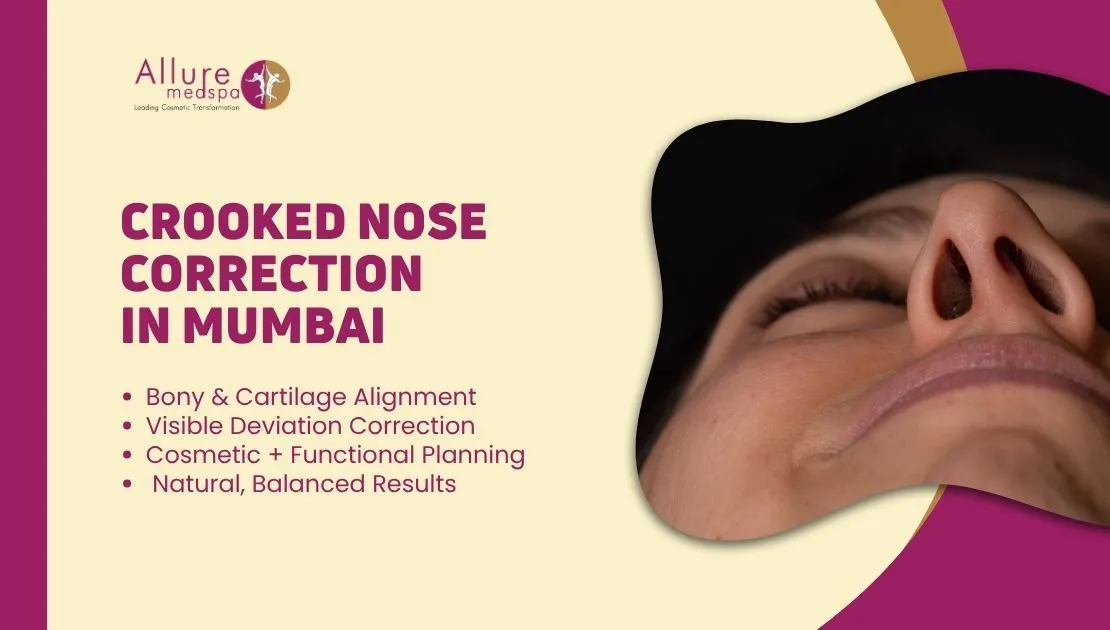
Crooked nose correction in Mumbai is for patients whose nose appears shifted, curved, tilted, post-traumatic, or visibly off the facial midline. At Allure Medspa, the aim is a straighter-looking, balanced, natural nose — not an overcorrected or artificial result. It is a focused part of the wider rhinoplasty surgery family of procedures.
What Is a Crooked Nose and What Causes It?
A crooked nose is visible external deviation of the nasal bridge, tip, or whole nasal framework away from the facial midline. Correction may involve bones, septum, upper cartilages, lower cartilages, or tip support, because the visible curve usually reflects deeper structural asymmetry, not skin position alone.
A crooked nose may look C-shaped, S-shaped, tilted to one side, or mainly deviated at the tip. Some patients notice it most in selfies; others notice it only from the front view or after trauma. The key surgical question is not only “how crooked does it look?” but “which structures are pulling it off-centre?”
Common causes include trauma, childhood injury, untreated nasal fracture, developmental asymmetry, congenital deformity, previous rhinoplasty, previous septoplasty, or uneven cartilage growth. Trauma is frequently reported as a major cause in clinical series, but the exact cause should be confirmed during consultation.
| Pattern | How it looks | Common structural issue |
|---|---|---|
| C-shaped deviation | Nose curves in one broad direction | Bony and cartilaginous framework bending |
| S-shaped deviation | Nose bends in two directions | Complex septal and cartilage deformity |
| I-shaped / tilted nose | Whole nose shifts to one side | Bony pyramid and septal displacement |
| Tip deviation | Tip points away from midline | Lower lateral cartilage or caudal septal issue |
| Post-traumatic crooked nose | Nose appears bent after injury | Fracture, septal deviation, cartilage distortion |
| Revision crooked nose | Crookedness after previous surgery | Scar tissue, graft shift, cartilage memory |
Source: PMC6057124
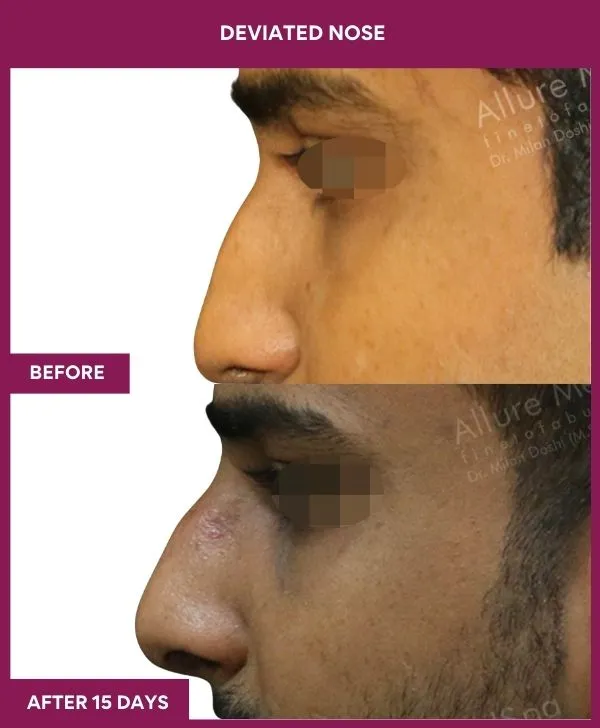
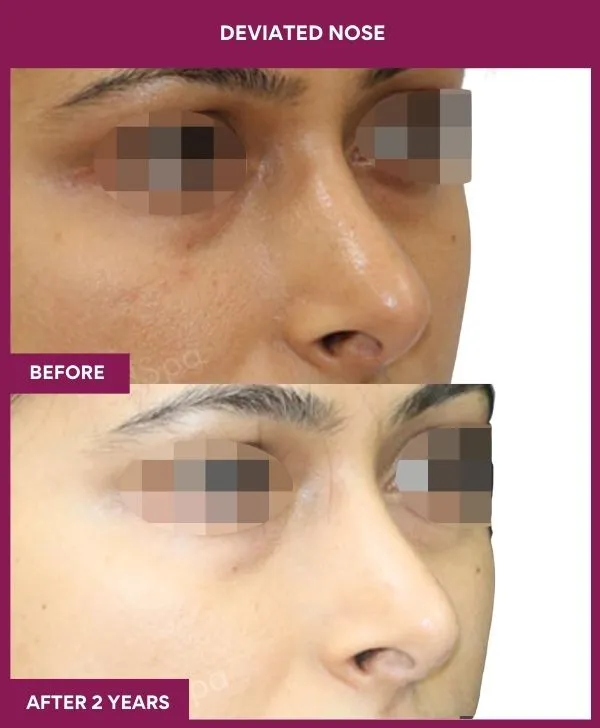
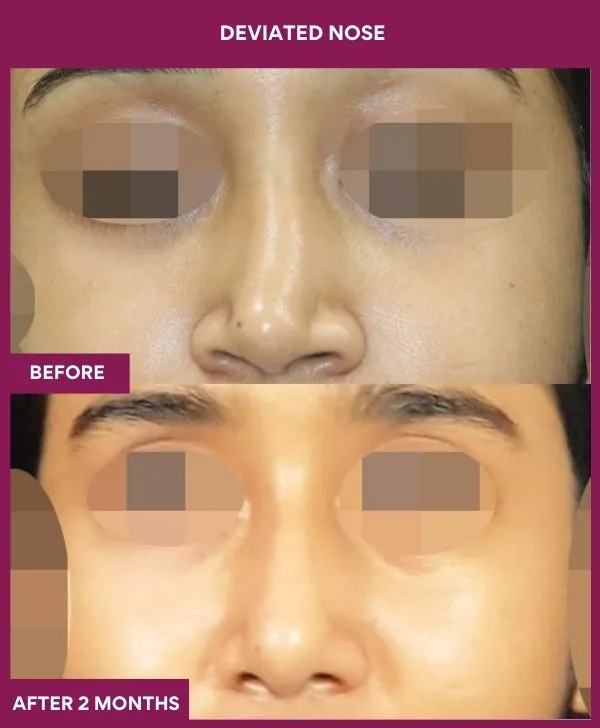
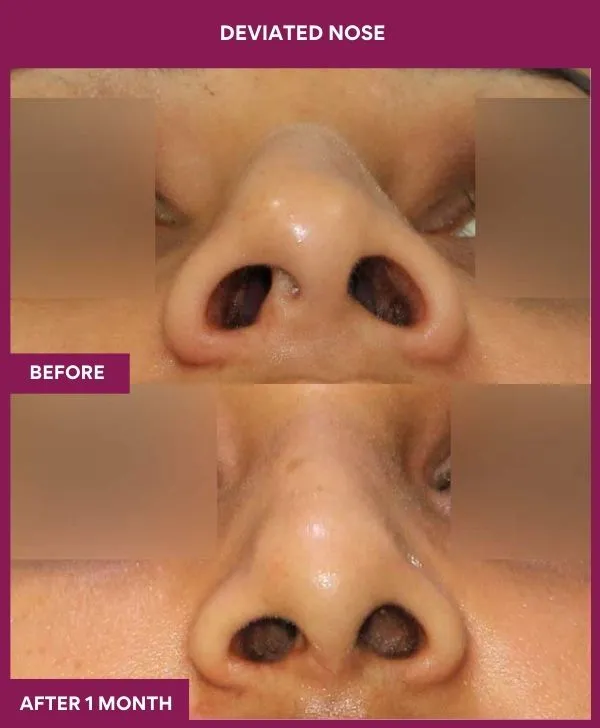
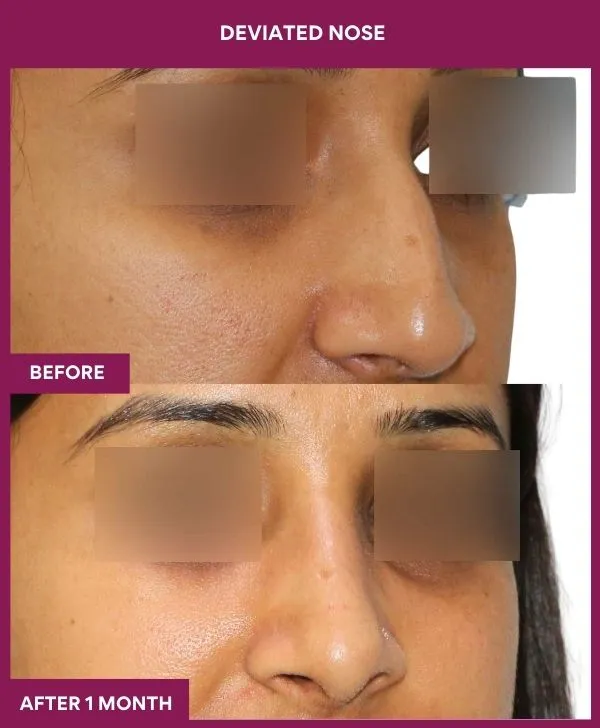
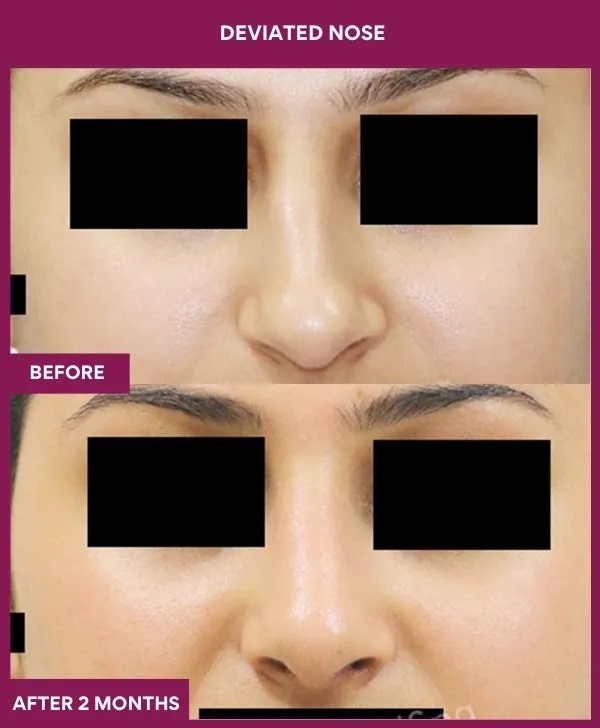
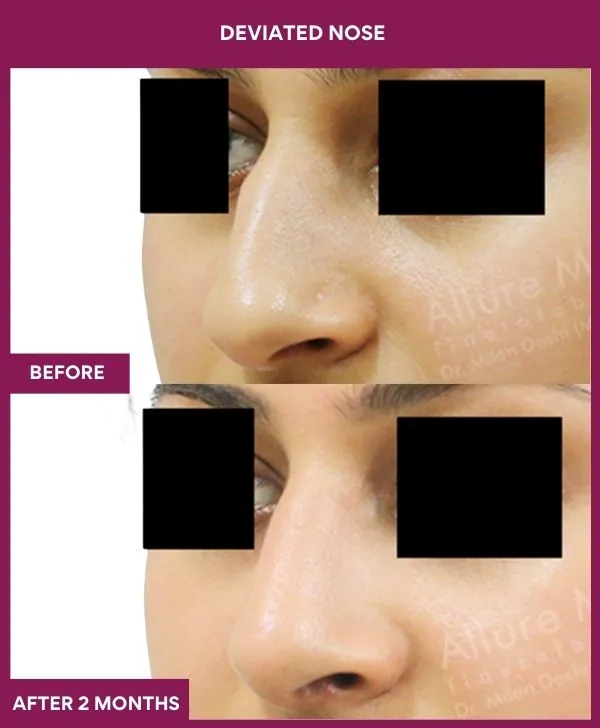
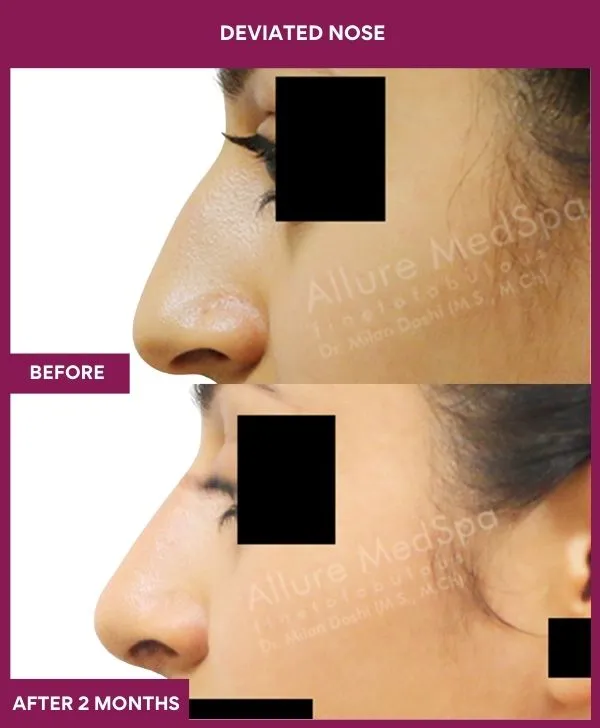
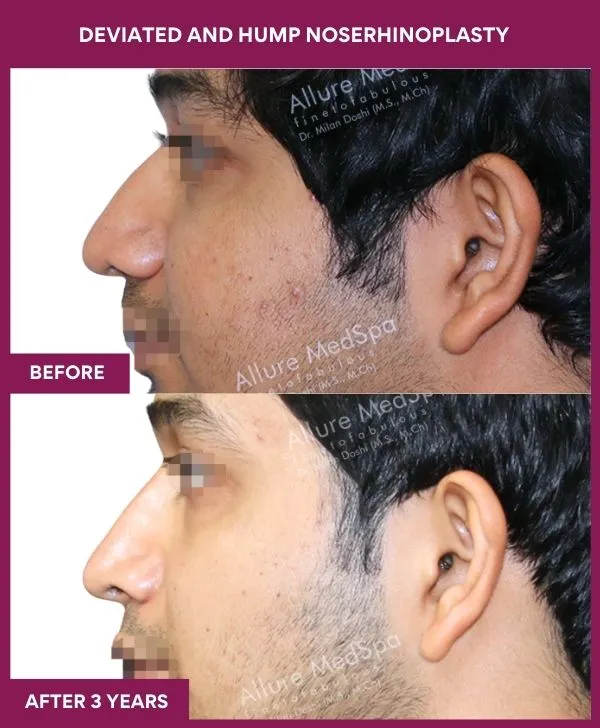
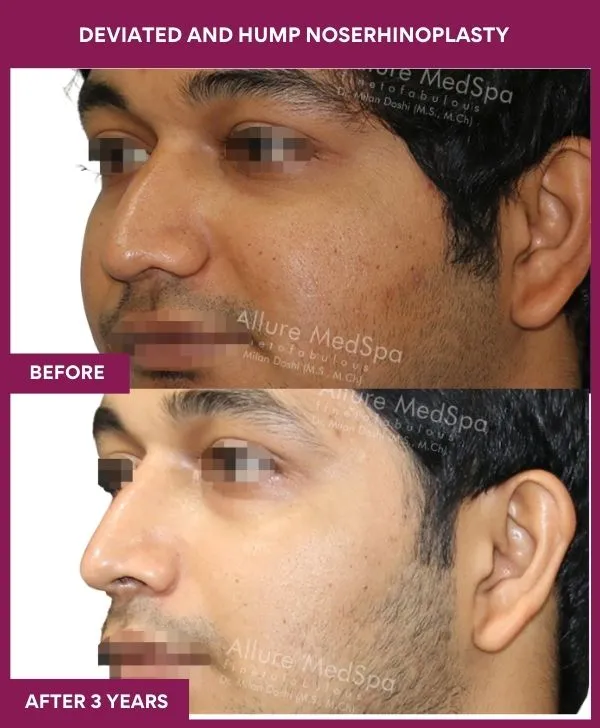
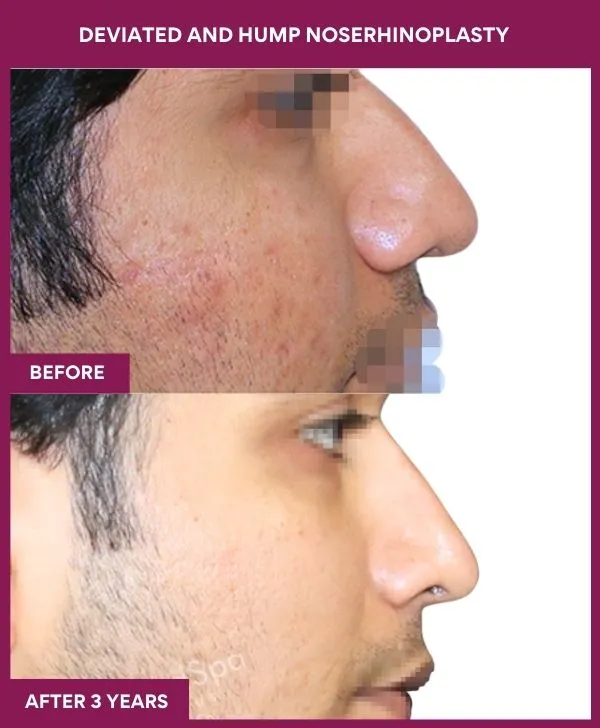
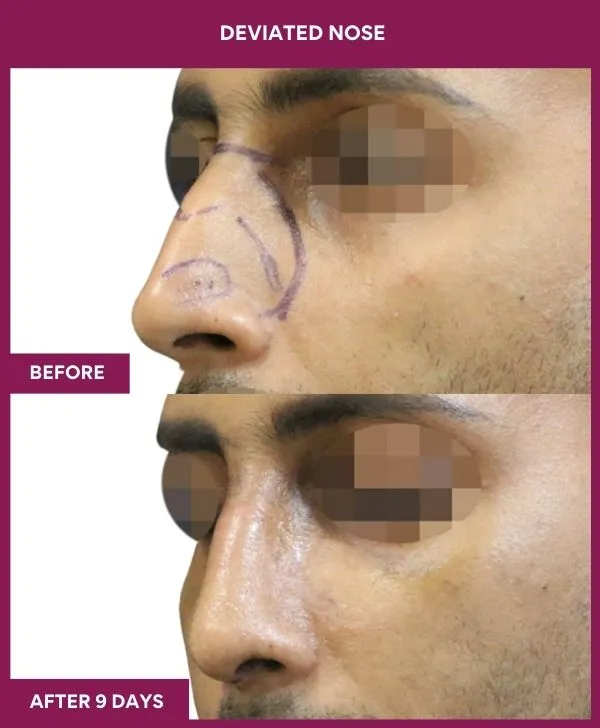
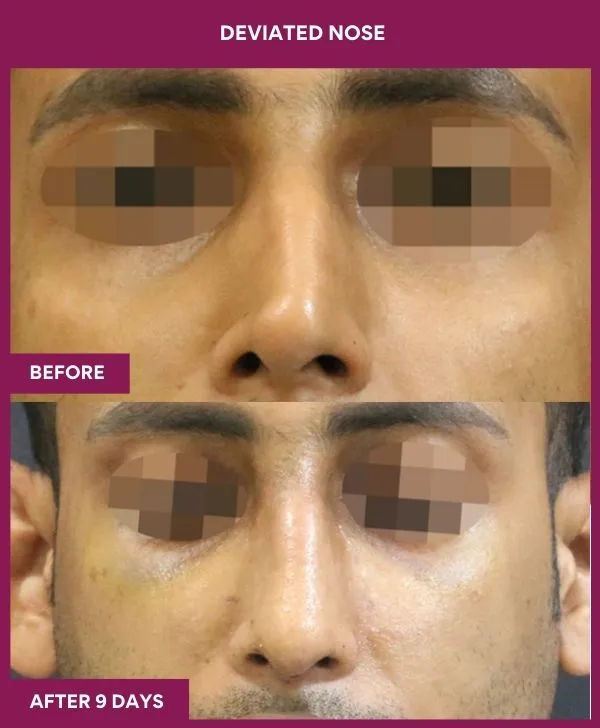
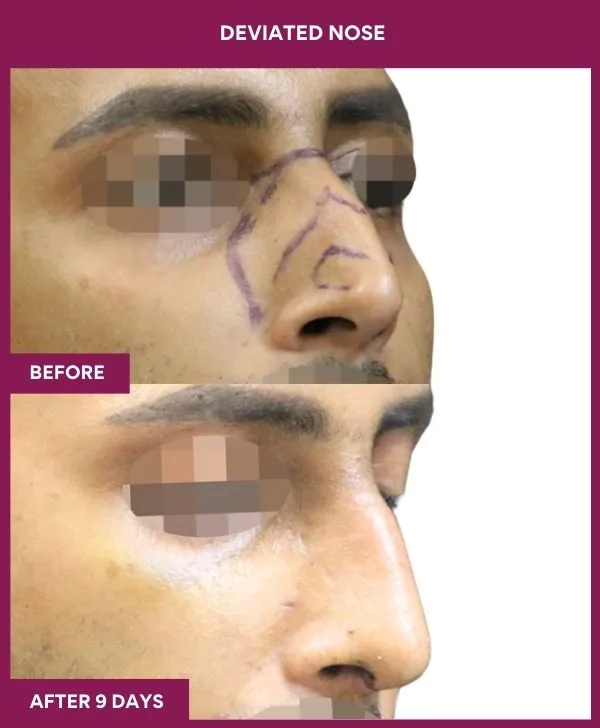
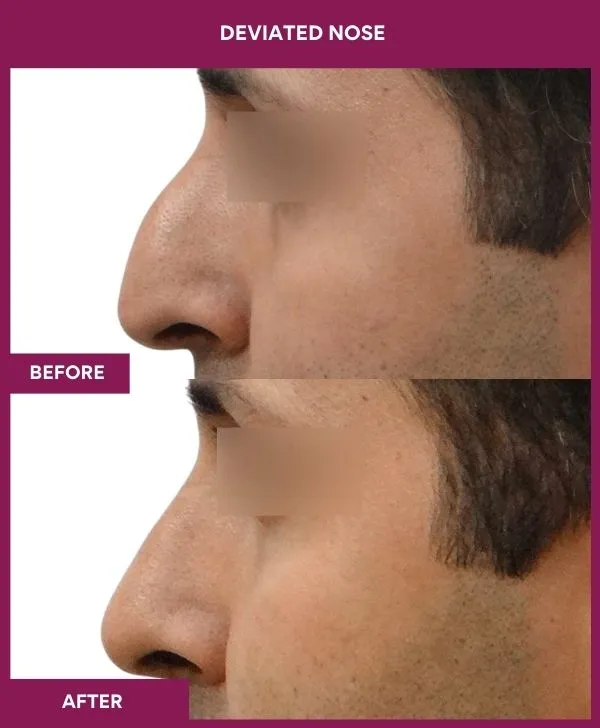
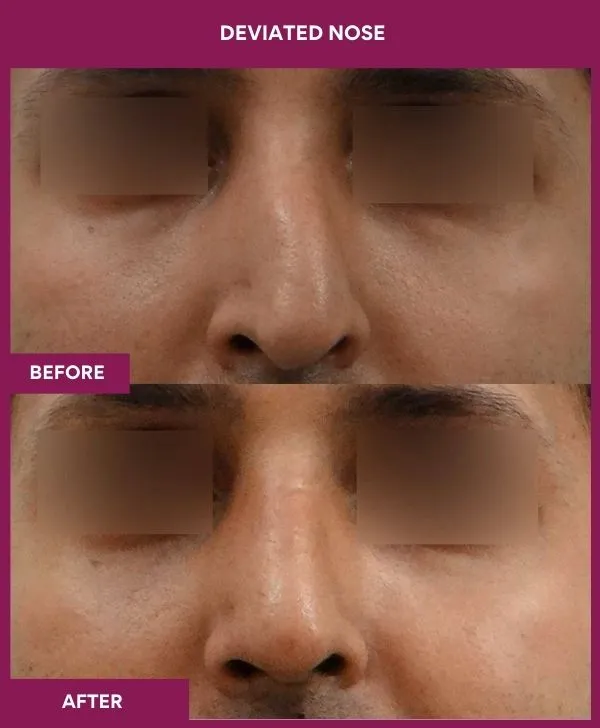
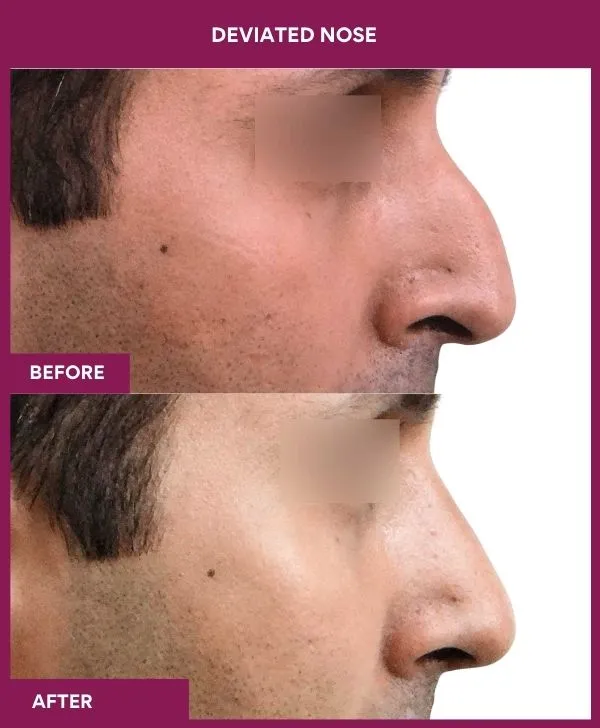
Crooked Nose Correction Surgery Before and After Results
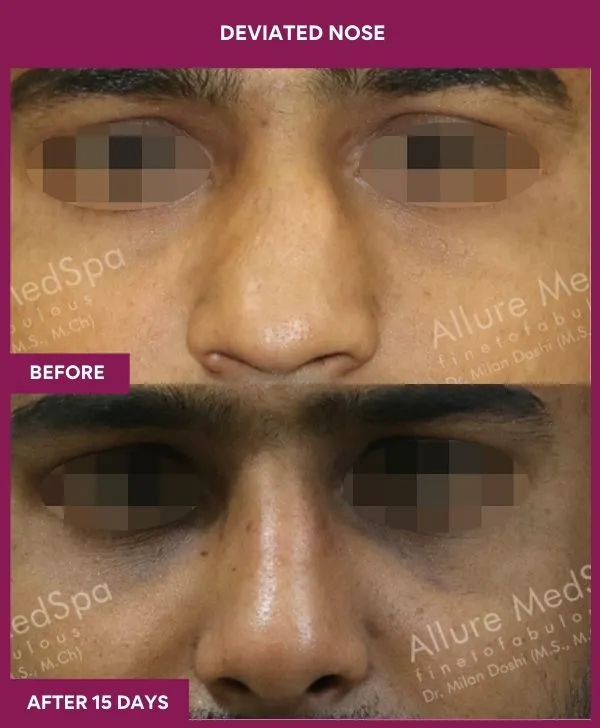
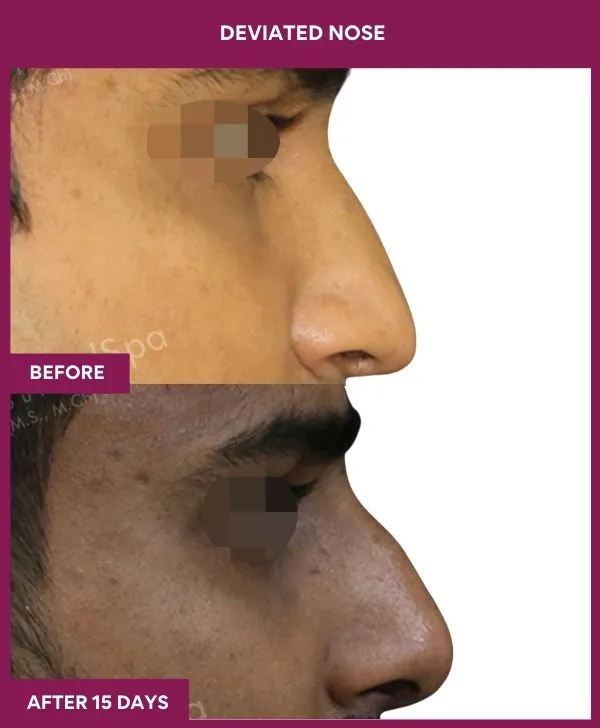
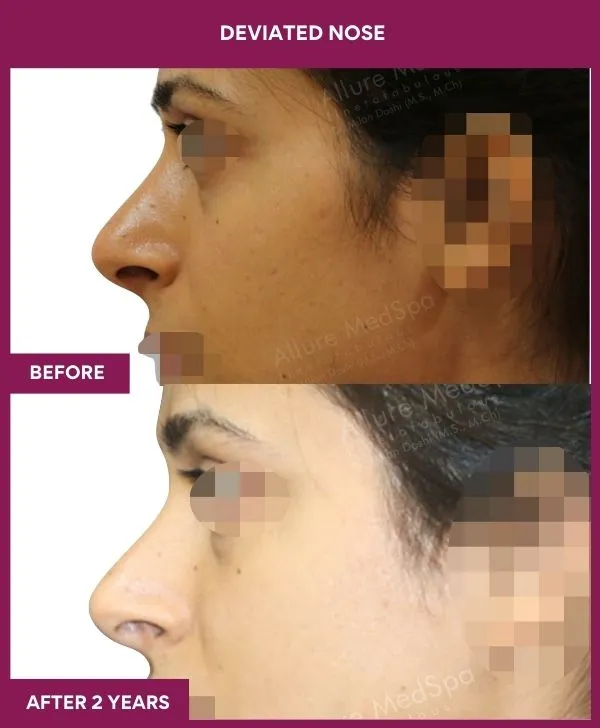
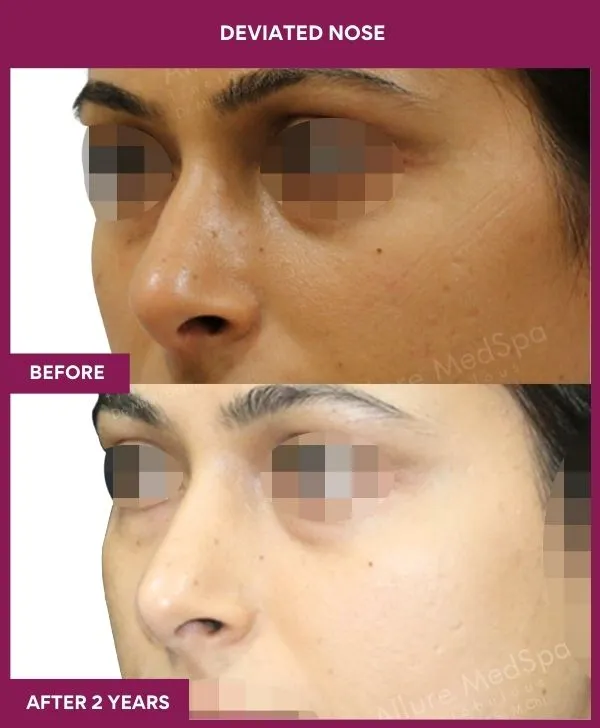
Rhinoplasty Surgery Testimonials: Celebrities Patient

Awarded by Google.com
Rating: 4.7
Reviews: 485+

Awarded by WhatClinic.com
Rating: 4.8
Reviews: 119+

Awarded by Realself
Rating: 4.9
Reviews:453+

Awarded by Facebook
Rating: 4.6
Reviews:105+
Dr Milan Doshi and his staff are very professional and committed as the centre is highly equipped with advanced technology. I had closed rhinoplasty 4 months back and I’m seeing the results as to how it becomes successful.
Deepika Shetty
The doctor explained everything clearly and the surgery was smooth. Recovery was faster than I expected and the team was very supportive.
Rahul Mehta
Very natural results and excellent staff. From consultation to follow-up, the experience was outstanding and boosted my confidence.
Sneha Kapoor
Video: Best Rhinoplasty Surgeon explain nose reshape procedure
Dr Milan Doshi is describing the Rhinoplasty Surgery in detail with benefits, techniques, recovery, result, risk and complecations
The video ends; your question doesn't have to.
Team replies in plain language
How Is a Crooked Nose Different From a Deviated Septum?
A crooked nose is external visible nasal asymmetry, while a deviated septum is internal displacement of the nasal septum that may affect breathing. They often overlap because the septum supports the nose, but they are not the same diagnosis. If breathing is blocked, septal deviation, nasal valve narrowing, or lateral wall weakness must be assessed — see the septorhinoplasty and functional rhinoplasty guides.
| Feature | Crooked nose | Deviated septum |
|---|---|---|
| Main issue | External nose looks off-centre | Internal septum is displaced |
| Patient notices | Asymmetry in photos or mirror | Blocked nose, mouth breathing, snoring |
| Main structure | Bones, upper/lower cartilages, tip, septum | Septal cartilage and bone |
| Can affect breathing? | Yes, if septum/valve involved | Yes, if airway is narrowed |
| Procedure route | Crooked nose correction / rhinoplasty | Septoplasty or septorhinoplasty |
| Insurance relevance | Usually cosmetic if appearance-only | Functional part may be considered |
Source: PMC7700863
Crooked outside, blocked inside — or both?
Outside and inside assessed together
Does a Crooked Nose Affect Breathing?
A crooked nose may or may not affect breathing. Correction becomes functional when the internal septum, nasal valve, or sidewall support is also affecting airflow — in that case septorhinoplasty or functional rhinoplasty may be more appropriate than appearance-only correction.
Patients often assume a crooked-looking nose always means blocked breathing. That is not always true — some visibly crooked noses breathe well, and some nearly straight-looking noses have significant septal deviation or valve narrowing.
A functional assessment is important when there is:
- One-sided blockage: Especially persistent obstruction.
- Mouth breathing: Particularly at night.
- Snoring: When nasal blockage contributes.
- Exercise discomfort: Nasal airflow feels limited.
- Trauma history: Old fracture may affect septum.
- Valve collapse: Sidewall collapses during inspiration.
- Prior surgery: Scar or support loss may affect breathing.
Source: PMC7700847
Am I a Candidate for Crooked Nose Correction?
Good signs for crooked nose correction
- Visible deviation: Nose looks shifted or curved from the front.
- Stable concern: Shape is not changing from recent injury.
- Photo concern: Deviation appears consistently in standard views.
- Realistic goal: Straighter and balanced, not flawless symmetry.
- Health readiness: No uncontrolled medical issue.
- Breathing assessed: Airway status is checked before planning.
- Patience: Final alignment should not be judged too early.
Needs careful counselling
| Situation | Why it matters |
|---|---|
| Severe trauma | May need bone, septum, and graft work |
| Septal deviation | May need septorhinoplasty |
| Valve collapse | Functional correction may be needed |
| Previous surgery | Tissue planes and cartilage may be altered |
| Thick skin | Refinement may appear slower |
| Facial asymmetry | Nose may look crooked even after correction |
| Desire for exact symmetry | Not a realistic surgical promise |
Stable, visible deviation? You likely qualify.
Straight answers about straightening
How Is a Crooked Nose Corrected?
Crooked nose correction may use osteotomy, septal straightening, cartilage realignment, spreader grafts, structural grafts, tip correction, and open or closed rhinoplasty. The technique depends on whether the crooked nose involves bone, septum, middle vault, tip, airway, or previous surgical changes.
Crooked nose surgery is usually not one single manoeuvre. A bony deviation may need controlled nasal bone repositioning; a septal deviation may need septoplasty; a middle-vault collapse may need spreader grafts; a deviated tip may need lower lateral cartilage realignment.
| Technique | Purpose | Used for | Key caution |
|---|---|---|---|
| Osteotomy | Repositions nasal bones | Bony crooked nose | Needs controlled planning |
| Septoplasty | Straightens septal support | Septal deviation and airway issues | Preserve support |
| Extracorporeal septoplasty | Reconstructs severe septal deformity | Severe C/S-shaped deviation | Complex; case-dependent |
| Spreader graft | Supports internal valve and dorsal line | Middle vault deviation or valve narrowing | Requires cartilage source |
| Cartilage scoring/suturing | Realigns cartilage | Cartilage memory or tip deviation | Over-weakening must be avoided |
| Batten graft | Supports weak sidewall | Valve weakness or collapse | Case-dependent |
| Columellar strut | Supports tip position | Tip deviation or weak tip support | Must suit anatomy |
| Open approach | Better exposure | Complex asymmetry, grafting, revision | Small columellar scar |
| Closed approach | Internal incisions | Selected limited deviations | Less exposure |
Sources: PMC6057124 · PMC7700863
🩺 Dr. Doshi’s Note
A crooked nose is rarely corrected by one simple step. I first identify whether the deviation is in the bone, septum, middle vault, tip, or airway support. The aim is not only to make the nose look straighter, but to keep it stable, functional, and natural-looking.
Why Is Straightening a Crooked Nose Demanding?
Crooked nose correction is demanding because the deformity may involve three-dimensional asymmetry, bony deviation, septal bend, cartilage memory, valve support, soft-tissue contracture, and healing variability. A crooked nose can be improved significantly, but exact midline symmetry should not be promised.
A crooked nose has forces inside it. Cartilage can have memory, bones may have healed in an old position, and the septum may be bent in more than one plane. Facial asymmetry can make the nose look off-centre even when the nasal framework is improved.
Relapse or residual deviation can occur because of:
- Cartilage memory: Cartilage may tend to bend back.
- Soft-tissue forces: Scar and skin can influence healing.
- Graft behaviour: Grafts may warp, shift, or resorb.
- Facial asymmetry: The midline itself may be imperfect.
- Severe trauma: Old fractures are harder to realign.
- Revision tissue: Previous surgery changes tissue planes.
- Healing variability: Individual biology affects final shape.
Sources: PMC6057124 · PMC7700847
Results vary by individual anatomy and healing.
What Is Recovery Like After Crooked Nose Correction?
Crooked nose correction may suit patients whose external nose is visibly shifted, curved, tilted, post-traumatic, or asymmetric, especially when the concern is stable and expectations are realistic. Careful counselling is needed when breathing problems, severe trauma, revision surgery, thick skin, or facial asymmetry are present.
A good candidate wants improvement in balance, not mathematical perfection. The aim is to bring the nose closer to the facial midline while maintaining natural character and safe function.
Good signs for crooked nose correction
- Visible deviation: Nose looks shifted or curved from the front.
- Stable concern: Shape is not changing from recent injury.
- Photo concern: Deviation appears consistently in standard views.
- Realistic goal: Straighter and balanced, not flawless symmetry.
- Health readiness: No uncontrolled medical issue.
- Breathing assessed: Airway status is checked before planning.
- Patience: Final alignment should not be judged too early.
Needs careful counselling
| Situation | Why it matters |
|---|---|
| Severe trauma | May need bone, septum, and graft work |
| Septal deviation | May need septorhinoplasty |
| Valve collapse | Functional correction may be needed |
| Previous surgery | Tissue planes and cartilage may be altered |
| Thick skin | Refinement may appear slower |
| Facial asymmetry | Nose may look crooked even after correction |
| Desire for exact symmetry | Not a realistic surgical promise |
What Are the Risks and When Should You Seek Urgent Care?
Crooked nose correction has risks such as bleeding, infection, haematoma, septal perforation, persistent obstruction, graft warping or resorption, residual deviation, recurrent deviation, and possible revision. Urgent review is needed for heavy bleeding, fever, spreading redness, sudden obstruction, or septal-perforation symptoms.
| Risk | Meaning |
|---|---|
| Bleeding / haematoma | Blood collection or persistent bleeding |
| Infection | Fever, redness, pain, discharge |
| Septal perforation | A hole in the septum |
| Airway compromise | Persistent or worsened breathing issue |
| Graft warping / resorption | Graft shape or support may change |
| Residual deviation | Nose remains partly off-centre |
| Recurrent deviation | Nose drifts after healing |
| Revision need | Further correction may be required |
Seek immediate care
| Red flag | Why it matters |
|---|---|
| Severe persistent bleeding | Needs urgent review |
| Expanding swelling or haematoma | May need urgent treatment |
| High fever | Infection must be ruled out |
| Spreading redness | Infection concern |
| Sudden airway obstruction | Breathing risk |
| Whistling with crusting/bleeding | Septal perforation concern |
| Severe worsening pain | Not routine healing |
| Chest pain or breathlessness | Emergency medical care |
Source: PMC7700847
What Is the Cost of Crooked Nose Correction in Mumbai?
Crooked nose correction cost in Mumbai at Allure Medspa usually follows a structural range, because crooked noses often involve bone, cartilage, septum, or graft work. The guide range is ₹1,20,000–₹2,80,000 with 5% GST extra. This is a guide range, not a final quote — final cost depends on bony deviation, septal work, open or closed approach, grafting, anaesthesia, facility charges, revision status, and whether functional documentation is required. See the rhinoplasty cost guide for the fuller breakdown.
Structural work, structured pricing — see yours.
₹1.2L–2.8L guide, exact after review
Why Choose Dr. Milan Doshi for Crooked Nose Correction?
Crooked nose correction requires rhinoplasty experience, airway understanding, bone realignment skill, cartilage judgement, graft planning, and honest counselling. Dr. Milan Doshi is a plastic and cosmetic surgeon (MCh, MS) with 27+ years of experience, 16,000+ surgeries, and 1,500+ rhinoplasties.
The goal is a straighter-looking, balanced, natural nose that fits the face. A good correction should not look forced: everyone notices better balance, but no one should feel the nose looks operated.
| Credential | Detail |
|---|---|
| Qualification | MCh, MS |
| Specialty | Plastic & cosmetic surgery |
| Experience | 27+ years |
| Surgeries | 16,000+ |
| Rhinoplasties | 1,500+ |
| Memberships / roles | ISAPS, IAAPS, MUHS |
Read his full profile and credentials on the Dr. Milan Doshi profile page.
Why expertise matters
- Diagnosis: External crookedness and septal deviation must be separated.
- Bone work: Osteotomies need controlled planning.
- Cartilage memory: Relapse risk must be anticipated.
- Airway: Breathing must not be sacrificed for appearance.
- Grafting: Structural support may be needed.
- Realism: Improvement is the goal, not impossible symmetry.
- Revision prevention: Planning must account for healing forces.
What Are the Most Common Questions About Crooked Nose Correction?
These questions usually focus on whether the nose can be straightened, whether breathing will improve, how surgery differs from septoplasty, recovery timing, revision risk, and cost. The honest answer is that crooked noses can often improve significantly, but exact symmetry should not be promised.
Q1. Is a crooked nose the same as a deviated septum?
Ans. No. A crooked nose is visible external asymmetry, while a deviated septum is internal septal displacement that can block breathing. They often occur together, so some patients need septorhinoplasty rather than appearance-only correction.
Q2. Can crooked nose surgery improve breathing?
Ans. Yes, if blockage is caused by septal deviation, internal valve collapse, or structural narrowing. In those cases, septoplasty, spreader grafts, or functional septorhinoplasty may be included. Pure cosmetic straightening may not improve airflow.
Q3. Can a crooked nose be made completely straight?
Ans. Many crooked noses can be made noticeably straighter and more balanced, but exact symmetry cannot be promised. Cartilage memory, skin thickness, old trauma, facial asymmetry, graft behaviour, and healing variability all affect the final result.
Q4. Is post-traumatic crooked nose surgery different?
Ans. Often yes. A crooked nose after trauma may involve old fractures, septal deviation, scar tissue, bony pyramid shift, or cartilage deformity. Correction may need osteotomy, septal reconstruction, grafting, or functional airway planning.
Q5. How long before I see the result?
Ans. Major swelling and bruising often improve within 2–4 weeks, but meaningful contour takes longer. Final straightness is usually judged after most swelling and tissue settling, often around 9–12 months or longer in complex cases.
Q6. What are the risks of crooked nose correction?
Ans. Risks include bleeding, infection, haematoma, septal perforation, persistent obstruction, graft warping or resorption, residual deviation, recurrent deviation, and possible revision. Serious symptoms need urgent review.
Q7. When is revision considered?
Ans. Revision is considered if persistent or recurrent deviation remains after complete healing and causes aesthetic or functional concern. Many surgeons wait around 9–12 months or longer before revision assessment, unless urgent functional problems exist.
Q8. Is open or closed rhinoplasty better for a crooked nose?
Ans. Open rhinoplasty gives better exposure for complex asymmetry, grafting, and revision work. Closed rhinoplasty may suit selected limited deviations. The better approach depends on anatomy, deformity pattern, and surgeon judgement.
Q9. Is cartilage grafting necessary?
Ans. Cartilage grafting may be needed when the nose needs support, middle-vault stabilisation, valve improvement, or tip realignment. Septal cartilage is often preferred, but conchal or costal cartilage may be required if septal cartilage is insufficient.
Q10. Will insurance cover crooked nose surgery in India?
Ans. Appearance-only rhinoplasty is usually self-paid. If documented nasal obstruction needs medically necessary septoplasty or functional correction, the functional component may be considered by insurers depending on policy wording and preauthorisation.
Q11. How often is septal work needed in crooked nose correction?
Ans. Septal involvement is common in surgically treated crooked noses, so septal straightening or support is frequently part of the plan. Whether your case needs septal work is confirmed during examination.
Q12. Does skin thickness affect crooked nose correction?
Ans. Yes. Thick skin can mask structural refinement and delay visible settling. It may also require stronger support and longer follow-up before judging the final result — especially relevant in many South-Asian noses.
Medical Disclaimer
This page is educational and does not replace consultation, diagnosis, surgical planning, airway assessment, insurance advice, or postoperative care from a qualified doctor. Crooked nose correction suitability, risks, recovery, cost, functional outcome, and appearance vary by individual anatomy and healing.