
Breast Liposuction in Mumbai: Scar-Minimal Reduction for the Right Candidate

Indian Board Certified Plastic Surgeon
M.CH, MS, ISAPS Mentor
16000+ Cosmetic Surgeries
4000+ Liposuction Surgeries
Breast liposuction reduces breast volume through two or three access points only a few millimetres long, avoiding the longer lollipop or anchor-shaped scars required for traditional breast reduction.
Pathway callout: Do you want to be lighter, or lifted?
- It suits: predominantly fatty breasts, a reasonably positioned nipple, minimal sagging, and a goal of becoming lighter.
- It doesn’t suit: dense or glandular breasts, a nipple well below the breast crease, or a priority of lifting and reshaping.
- The trade-off: much smaller scars — but unpredictable lift, and no tissue specimen for laboratory examination.
- A current breast concern is assessed before any cosmetic plan.
If your breast is dense or glandular, your nipple sits significantly below the breast crease, or your priority is lifting and reshaping, surgical breast reduction is usually the more appropriate discussion. This guide explains who suits liposuction-only reduction, what the smaller scars do and don’t buy, what the lift evidence shows, the pathology and screening trade-off, recovery, and when surgical reduction does more. → Liposuction Surgery · Breast Reduction Surgery
Female Breast Liposuction Surgery Before and After Images
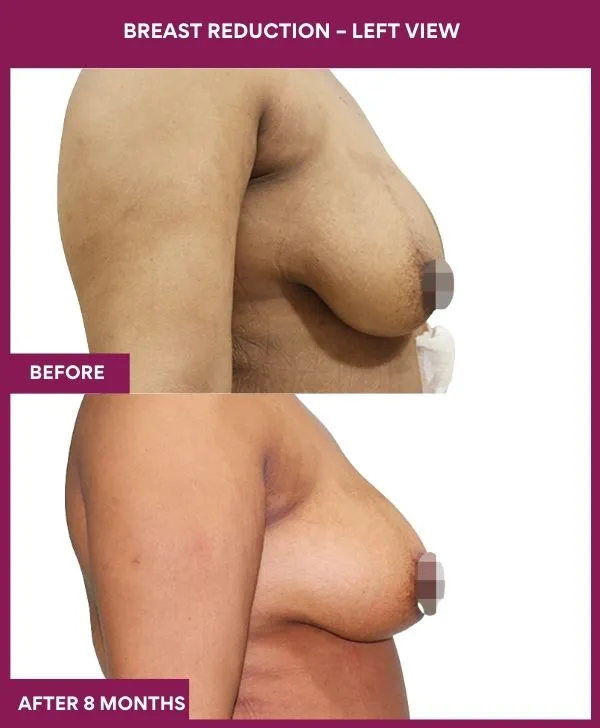
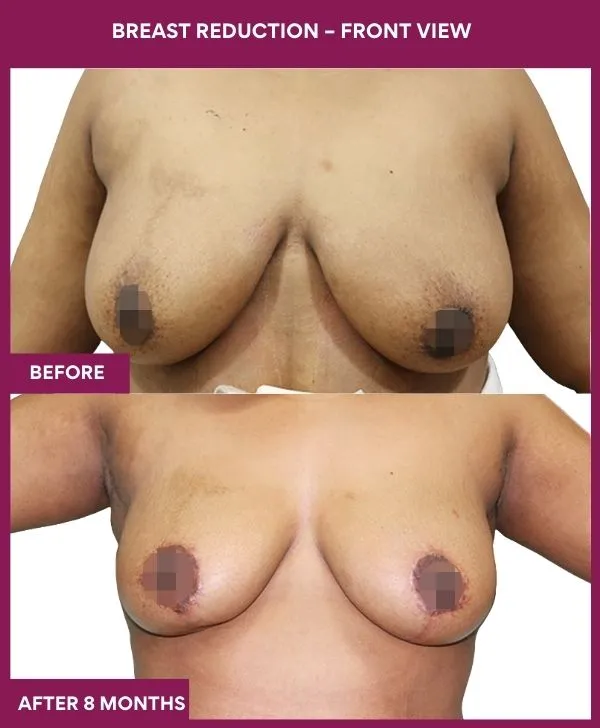
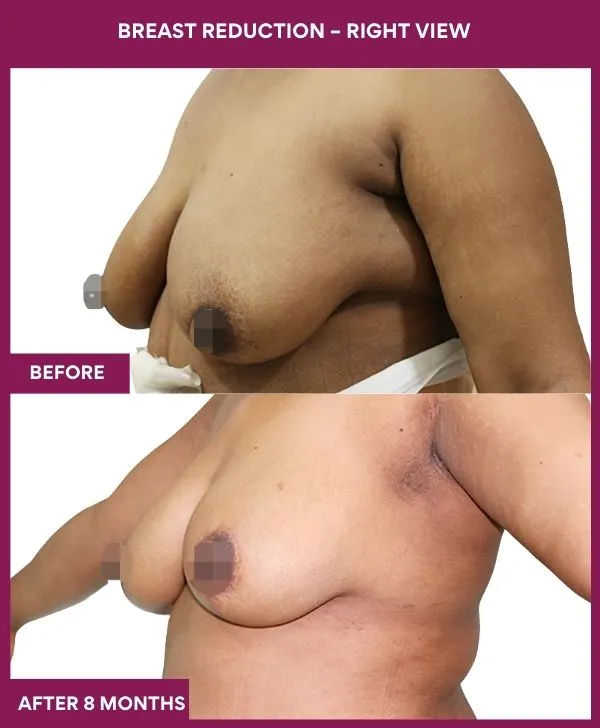
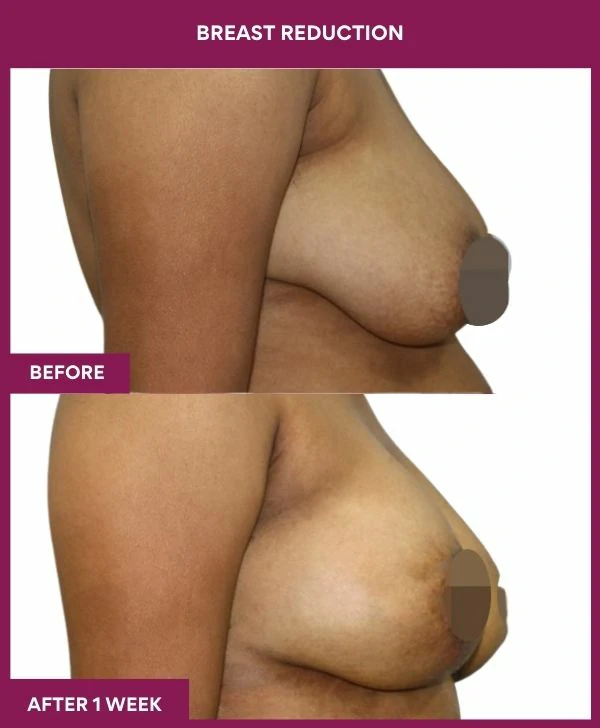
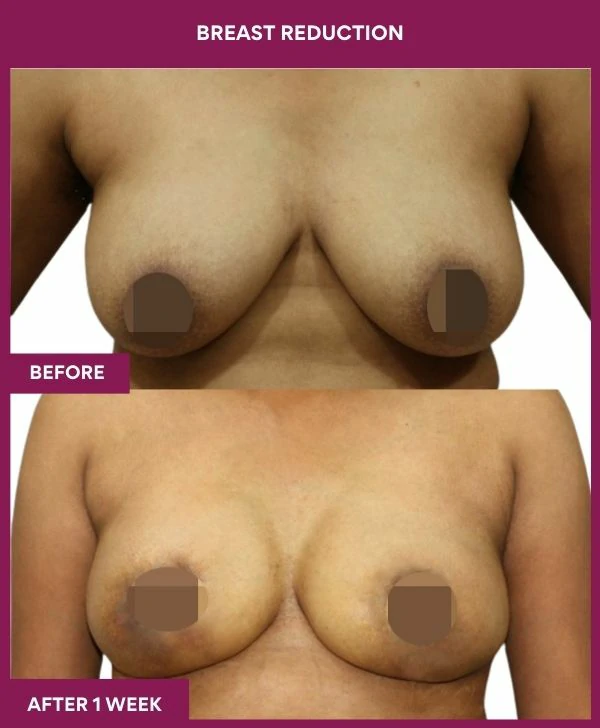
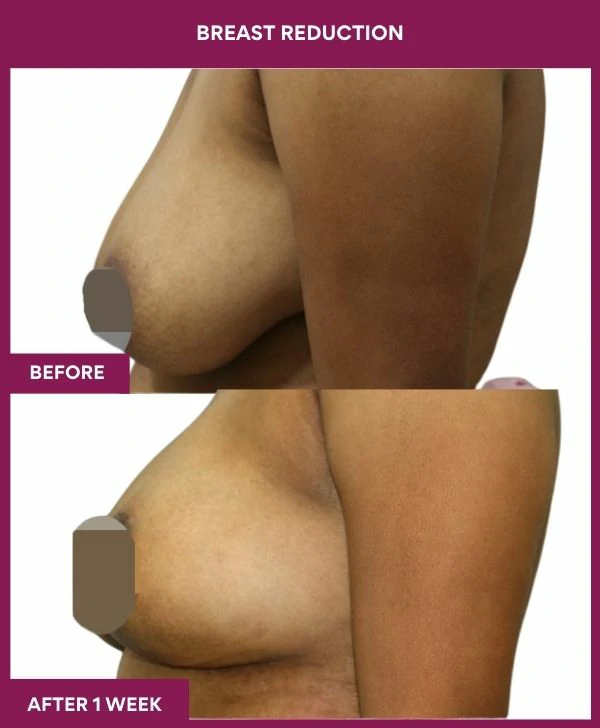
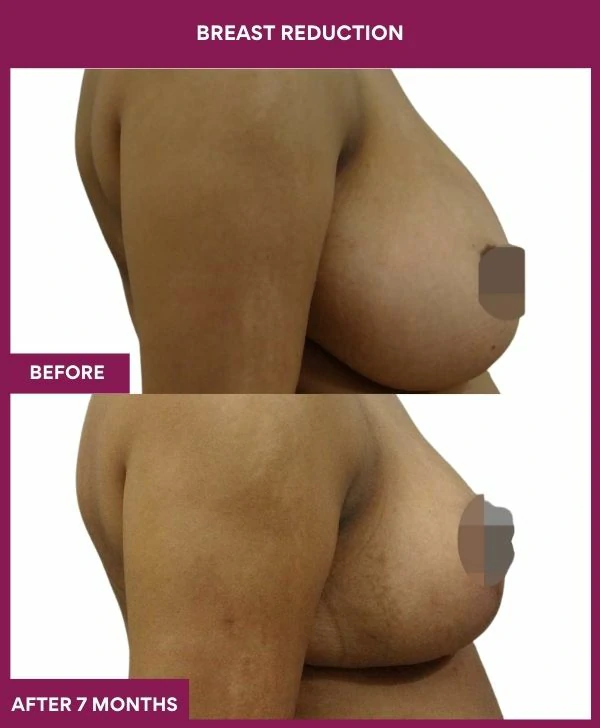
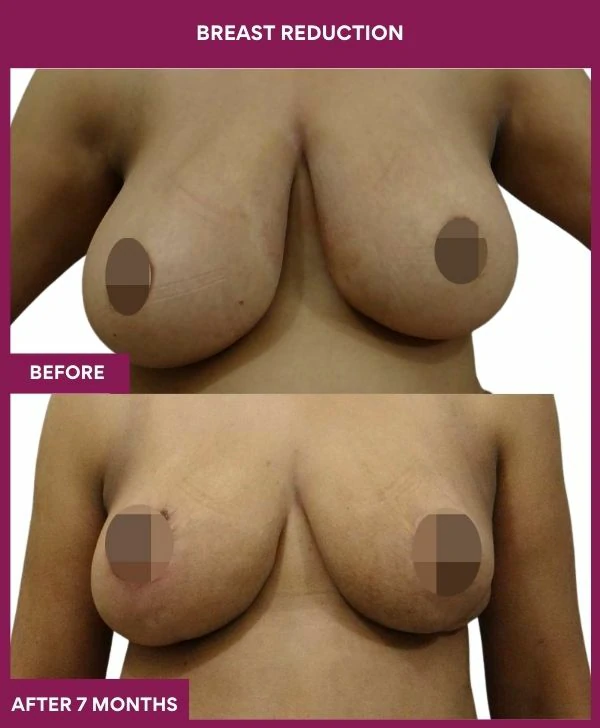
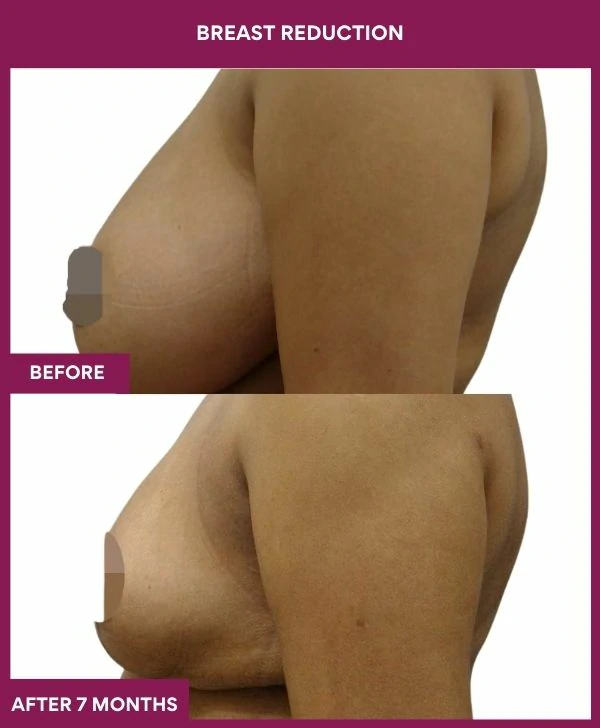
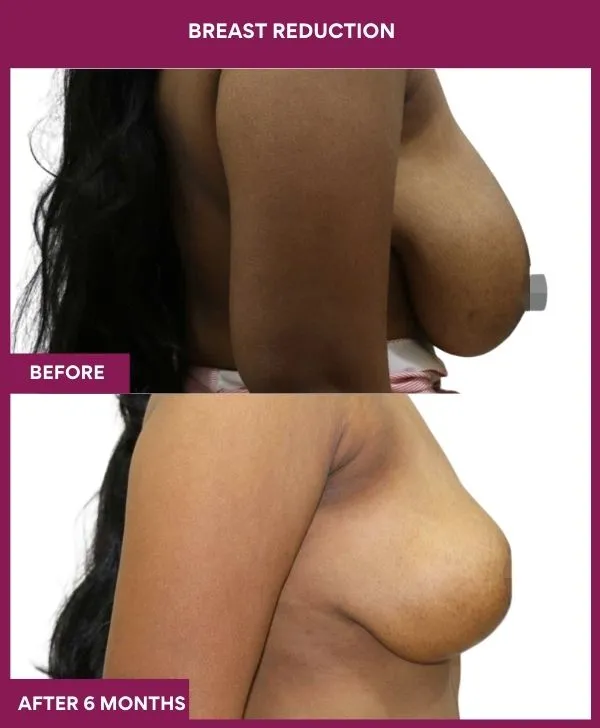
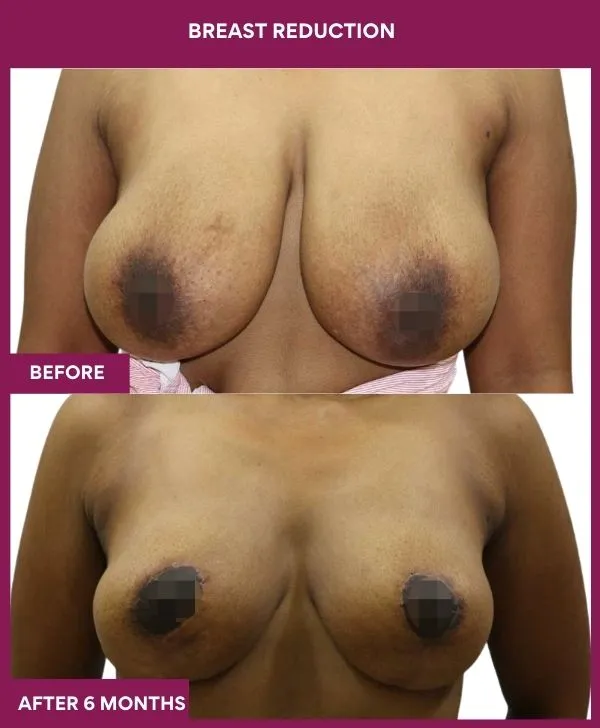
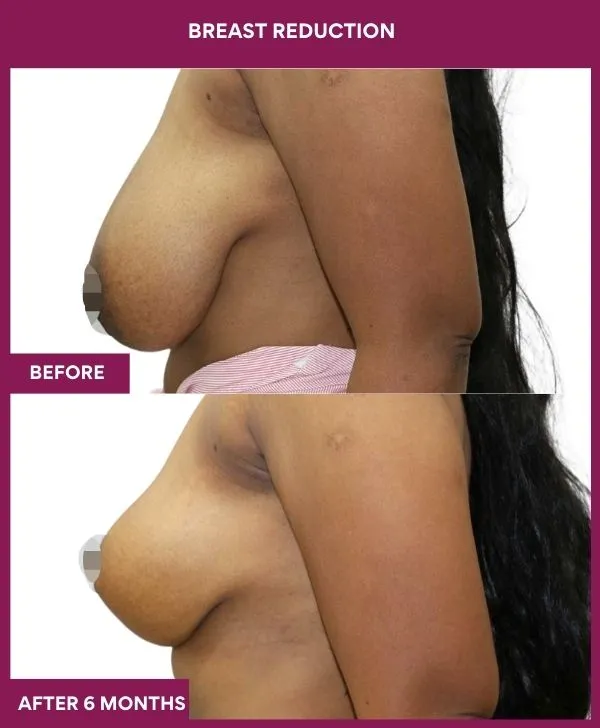
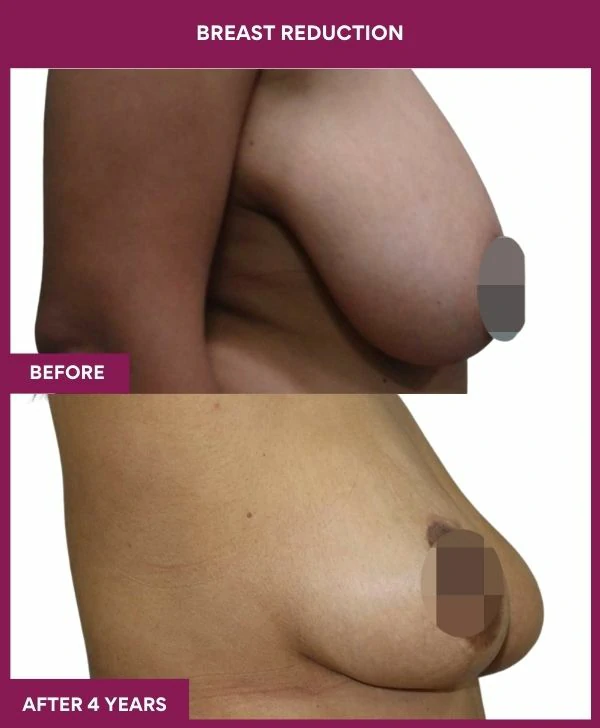
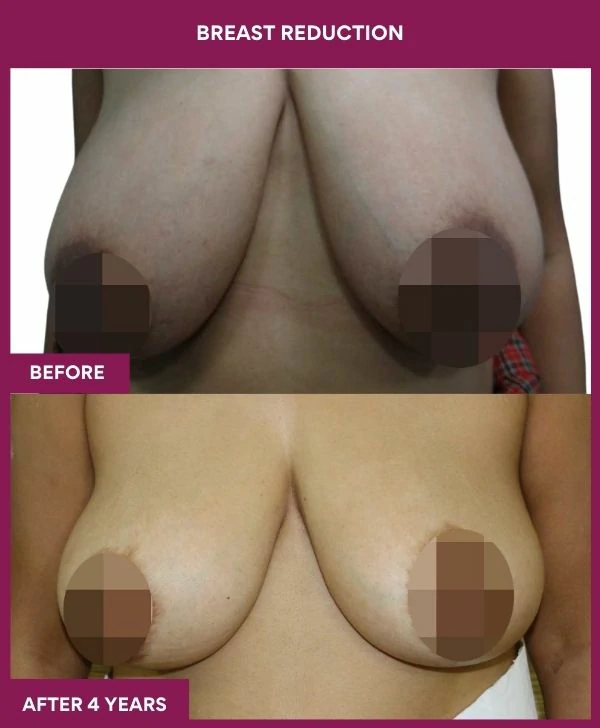
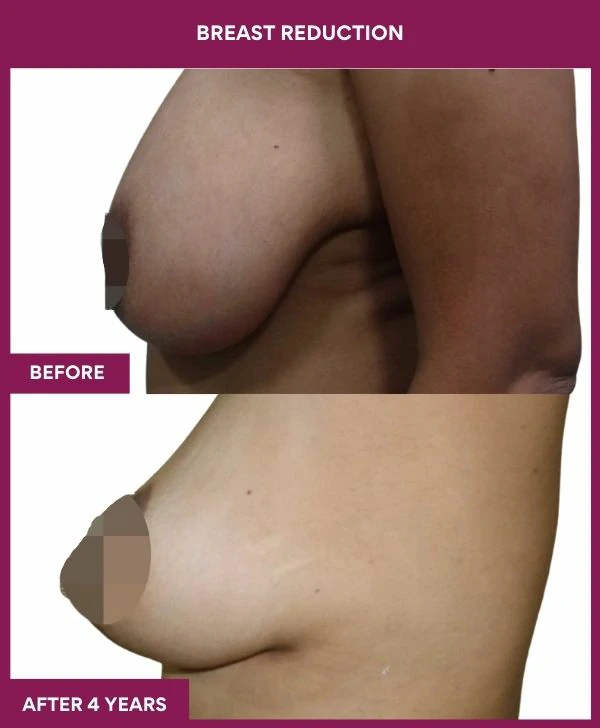
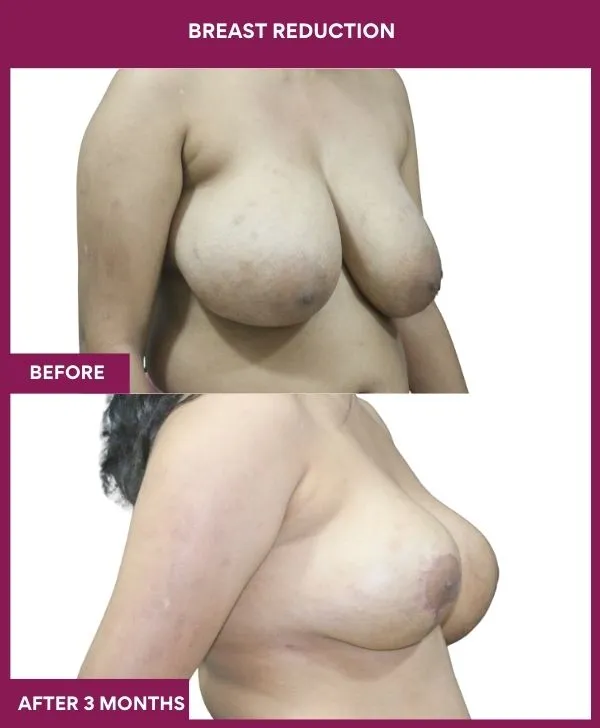
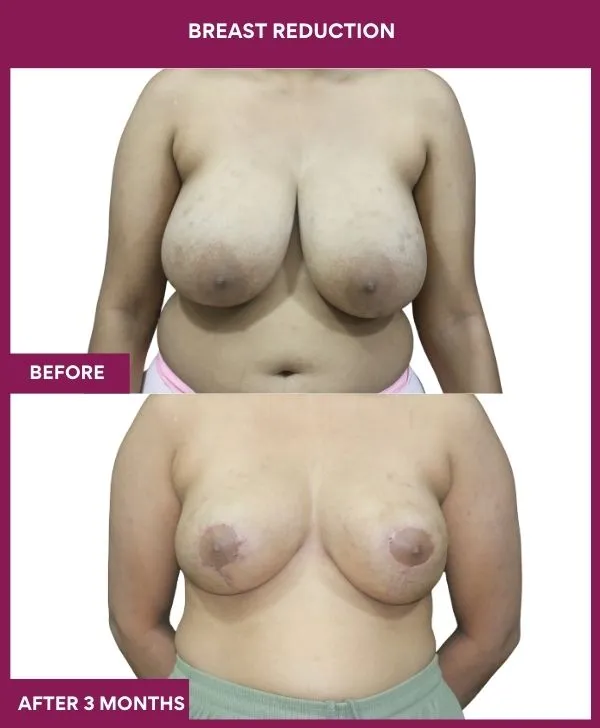
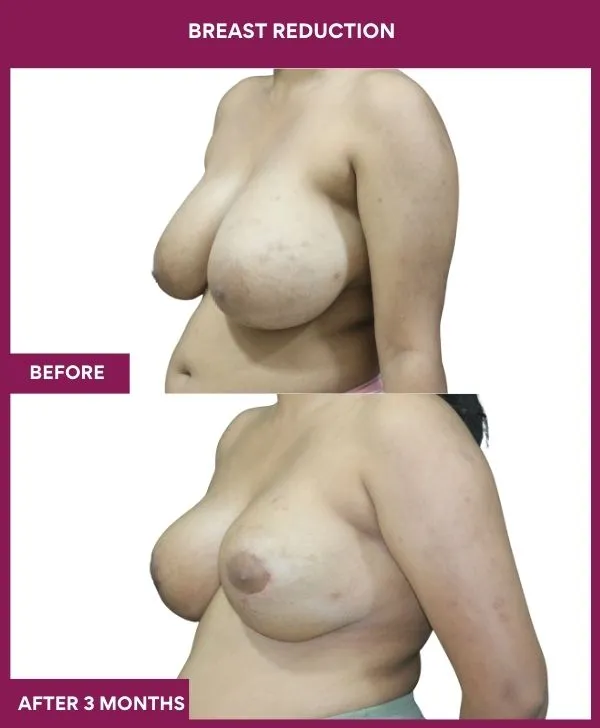
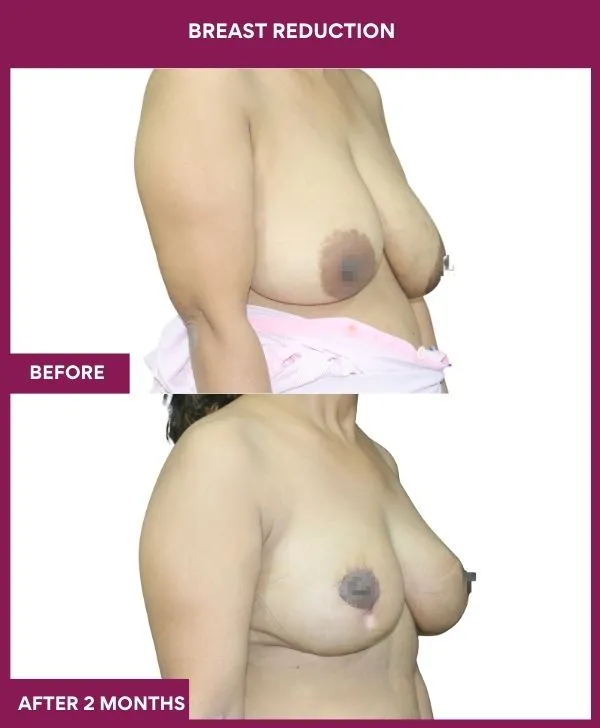
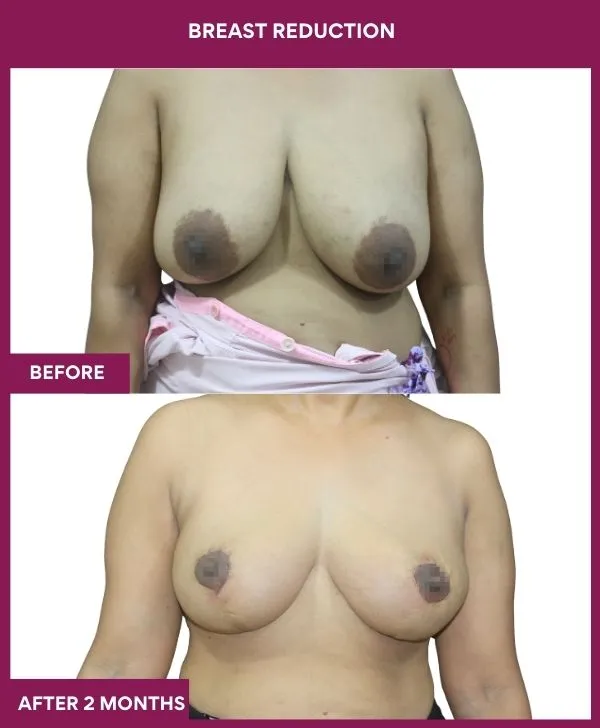
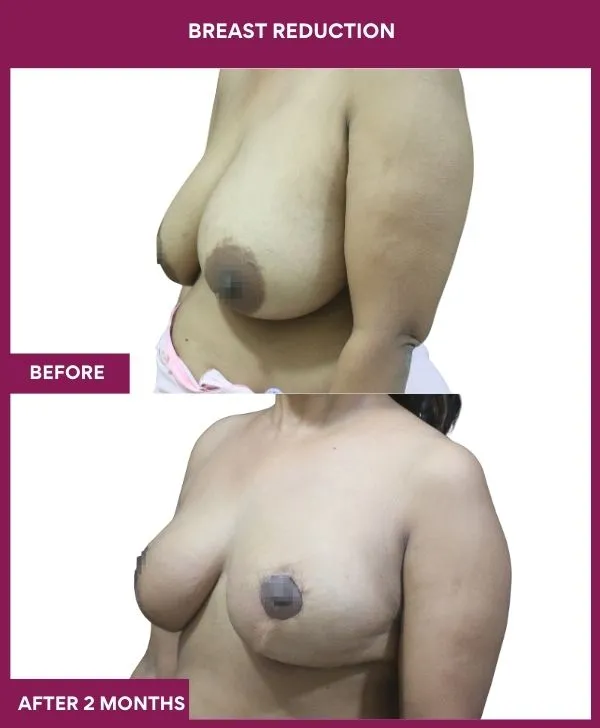
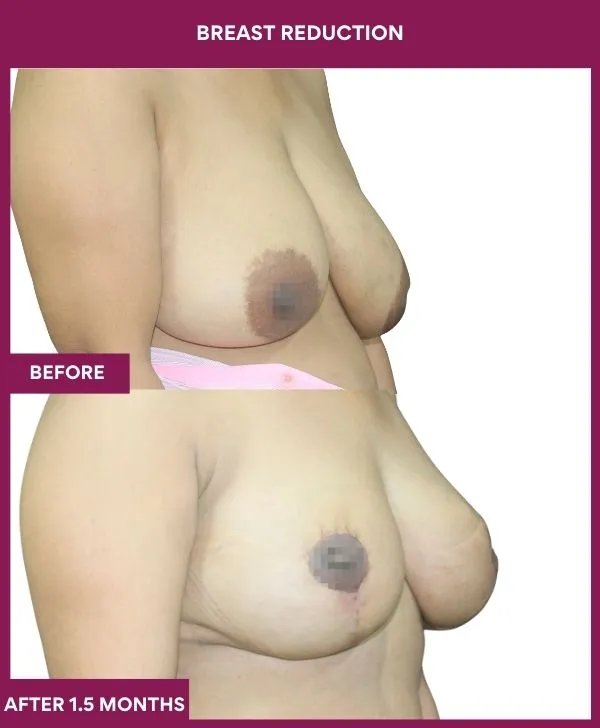
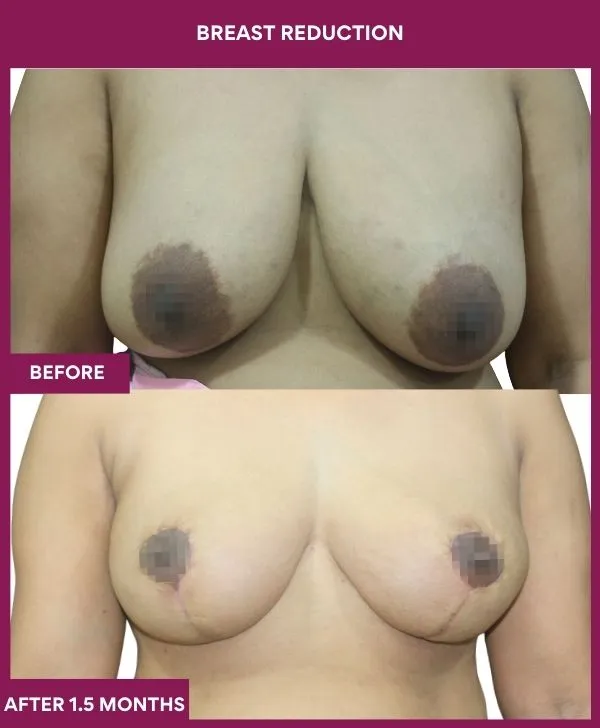
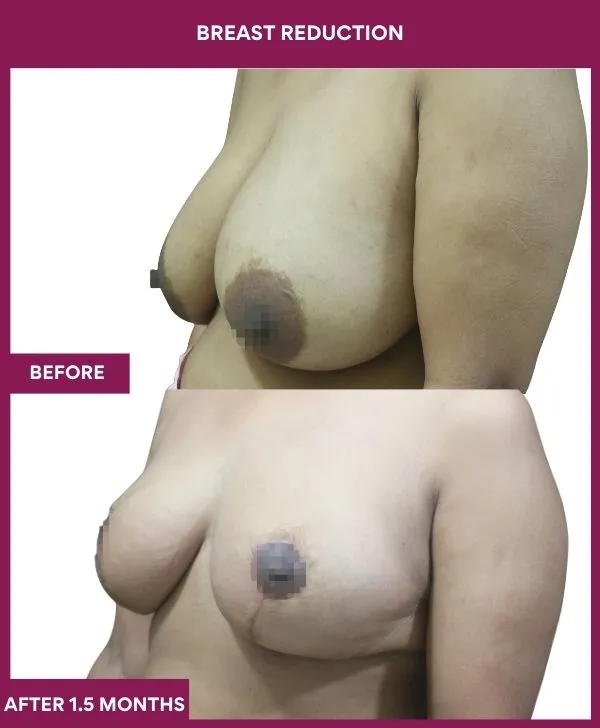
“Feamle Breast Liposuction Surgery Cost.”
Female Breast Surgery Testimonials: Fine To Fabulous Journeys

Awarded by Google.com
Rating: 4.7
Reviews: 485+

Awarded by WhatClinic.com
Rating: 4.8
Reviews: 119+

Awarded by Realself
Rating: 4.9
Reviews:453+

Awarded by Facebook
Rating: 4.6
Reviews:105+
Dr Milan Doshi and his staff are very professional and committed as the centre is highly equipped with advanced technology. I had closed rhinoplasty 4 months back and I’m seeing the results as to how it becomes successful.
Deepika Shetty
The doctor explained everything clearly and the surgery was smooth. Recovery was faster than I expected and the team was very supportive.
Rahul Mehta
Very natural results and excellent staff. From consultation to follow-up, the experience was outstanding and boosted my confidence.
Sneha Kapoor
From Fine to Fabulous — Let Dr. Milan Doshi Help You Begin Your Confidence Journey.”
Video: Liposuction Surgery Explain By Dr. Milan Doshi
Dr Milan Doshi is describing the Liposuction Surgery in detail with benefits, candidacy, associated risks and significance
Am I a Candidate?
(4 quick questions)
Quick Facts About Breast Liposuction Surgery
TIME REQUIRED
1–3 hours
ANESTHESIA
General / local
HOSPITAL STAY
Day care
PAIN LEVEL
Mild–moderate
BACK TO WORK
3–7 days
Final RESULTS
3–6 months
SUCCESS RATE
97–98%
COMPLICATIONS
Under 2–3%
How Much Does Breast Liposuction Surgery Cost in Mumbai?
Breast liposuction is quoted after examination, with the final price depending on breast volume, whether armpit or lateral-chest fat is included, the technique — and whether examination shows that liposuction-only reduction is actually suitable. If your breast needs surgical reduction rather than liposuction, the procedure and the price are different.
| What is treated | Indicative price |
|---|---|
| Breast liposuction — both sides | Quoted after examination |
| Breast liposuction + armpit or lateral-chest fat | Quoted after examination |
| Breast liposuction + upper back or bra roll | Quoted after examination |
| Surgical breast reduction | Priced separately — see Breast Reduction Surgery |
| Consultation | ₹1,500 |
| Is the consultation fee adjusted against surgery? | Yes — adjusted against surgery if the surgery is done within 6 months. |
| GST | Shown separately on your invoice |
| EMI | Available |
What is included — and what isn’t?
| Included | Not included |
|---|---|
| Surgeon, anaesthetist and surgical team | Blood tests and pre-operative checks |
| Facility and day-care stay | Breast imaging, if needed before surgery |
| First support garment | GST — shown as its own line |
| Initial postoperative medication | Travel and accommodation |
| Scheduled follow-up reviews | Treatment of unrelated conditions |
Is breast liposuction covered by insurance?
Cosmetic breast liposuction is generally excluded under standard health-insurance provisions for cosmetic procedures. Surgical breast reduction performed for documented functional symptoms may be assessed differently by some insurers. Coverage depends on policy wording, clinical indication, documentation and insurer assessment — Allure Medspa can provide appropriate documentation, but no insurance outcome should be promised. Be cautious of any provider guaranteeing approval before an insurer has assessed the claim.
Get your exact quote & surgery plan
Share your details — our team responds within working hours with cost, EMI options and next steps.
Most Common Question People Ask
Q1. Am I a candidate for liposuction-only breast reduction?
Ans. You may be if your breasts are predominantly fatty, your nipple remains reasonably positioned relative to the breast fold, sagging is limited and your main goal is becoming lighter rather than substantially lifted. Breast composition can’t be judged reliably from photographs, so examination — and sometimes imaging — confirms it.
Q2. Will breast liposuction lift my breasts?
Ans. Not predictably. One published series reported mean nipple elevation of about 2.57 cm, while another study concluded that improvement in breast shape and correction of sagging cannot be achieved in elderly patients, where liposuction simply reduces weight. A higher nipple is not the same as a better shape.
Q3. What scars will breast liposuction leave?
Ans. Usually two or three access points only a few millimetres long, positioned in the breast fold and near the armpit, rather than the longer scars of excisional breast reduction. It is surgery, so it is scar-minimal — not scarless — and Indian skin can pigment at access sites for a while.
Q4. Will breast liposuction affect my mammograms?
Ans. A published series found radiographic changes after liposuction breast reduction were not statistically different from those after traditional reduction. Some critics have raised imaging concerns, so continue normal breast screening and always tell the radiologist you have had breast surgery, at every future appointment.
Q5. Does breast liposuction allow the removed tissue to be checked for abnormalities?
Ans. No. Traditional reduction removes tissue that can be sent for histopathology, while liposuction provides no intact reduction specimen for routine laboratory examination. That makes appropriate preoperative breast assessment and imaging more important, not less, and is part of every breast liposuction consultation.
Q6. Can I breastfeed after breast liposuction?
Ans. Breast liposuction disturbs breast tissue, and future breastfeeding can’t be guaranteed after any breast operation. Pregnancy and breastfeeding also change breast size and shape afterwards. If you’re planning a pregnancy, discuss timing with Dr. Doshi before scheduling surgery rather than after it.
Q7. Can my breasts become larger again?
Ans. Fat removed by liposuction is reduced long-term, but breast volume can still change with weight gain, pregnancy, breastfeeding and hormonal changes, including hormone therapy. A result obtained at a stable weight can therefore change later, which is why weight stability and future plans are discussed beforehand.
Q8. Should I choose breast liposuction or surgical breast reduction?
Ans. Start by asking whether you want to be lighter or lifted. If you mainly want less volume and have fatty breasts with limited sagging, liposuction may fit. If you want lift, reshaping or dense-tissue reduction, surgical breast reduction generally does more, despite the longer scars.
Q9. How long is recovery after breast liposuction?
Ans. Many desk-based patients return within about three to seven days. Heaviness often feels better within days, while shape settles over weeks to months; light exercise usually returns around four to six weeks and upper-body exercise later, around six to eight weeks, after clearance.
Q10. Is breast liposuction covered by insurance?
Ans. Cosmetic breast liposuction is generally excluded under Indian health policies. Surgical breast reduction for documented functional symptoms may be assessed differently by some insurers, but coverage depends on the policy wording and the insurer’s assessment, and no outcome should be promised in advance.

Why Choose Dr. Milan Doshi?
Dr. Milan Doshi, MCh, MS — Indian board-certified plastic surgeon · 27+ years in aesthetic surgery · 16,000+ cosmetic surgeries · ISAPS Mentor. Breast liposuction requires careful patient selection, because its scar advantage is meaningful only when a smaller, lighter breast without major reshaping genuinely matches the patient’s goal — and his planning begins with that distinction. Breast liposuction forms one part of his broader breast and body-contouring practice.
What does that mean for you?
- “Lighter or lifted?” settled first — before devices, scars or price.
- Breast composition examined — fatty or glandular.
- Screening history reviewed before any cosmetic plan.
- Conservative work beneath the nipple — no depression.
- Referral to surgical reduction when it will do more.
The Complete Guide About Facelift Surgery
What is Breast Liposuction (Suction Mammaplasty)?
Breast liposuction — also called liposuction breast reduction or suction mammaplasty — reduces fatty breast volume through small access points without removing a traditional breast-reduction specimen or surgically repositioning the nipple. Liposuction alone was introduced as a standalone breast-reduction technique in 1991; it had already been used as an adjunct to traditional reduction before that.
| Use | What it aims to do |
|---|---|
| Cosmetic | Reduce volume or improve proportion in a fatty-predominant breast at a stable weight |
| Functional | Reduce weight-related symptoms — back and neck discomfort, bra grooving, fold irritation |
| Adjunct or reconstructive | Improve symmetry or lateral contour alongside another breast procedure |
Why are “scarless” and “non-surgical” the wrong words?
Breast liposuction is surgery: it uses anaesthesia, cannulas, small access points and postoperative recovery. Usually two or three access points a few millimetres long are placed in the breast fold or near the armpit. Scar-minimal is the accurate description.
| Patients say | Medically |
|---|---|
| Breast fat removal | Liposuction breast reduction |
| Scarless breast reduction (inaccurate) | Suction mammaplasty |
| Breast reduction without surgery (inaccurate) | Reduction mammaplasty by suction · liposuction-only breast reduction |
Sources: Matarasso A, Courtiss EH. Suction mammaplasty: the use of suction lipectomy to reduce large breasts. Plast Reconstr Surg. 1991;87(4):709–717, PMID 2008469 · Moskovitz MJ, Baxt SA, Jain AK, Hausman RE. Liposuction breast reduction: a prospective trial in African American women. Plast Reconstr Surg. 2007;119(2):718–726, PMID 17230112 · American Society of Plastic Surgeons. Liposuction
Do Your Breasts Feel Heavier Than You'd Like?
Breast liposuction can reduce the fatty component contributing to breast weight, which may help selected women whose symptoms arise partly from heavy breasts — but it doesn’t remove dense glandular tissue or surgically reshape the skin envelope. Women commonly describe shoulder grooving from bra straps, neck discomfort, upper-back discomfort, skin irritation beneath the breast, difficulty exercising and difficulty finding clothing that fits comfortably.
What determines breast weight?
Breast volume contains varying proportions of fat and glandular tissue. The balance differs between women and changes through life, with breasts often becoming fattier with age and after menopause. That’s why two women with similar bra sizes may need completely different procedures.
| Question | Answer |
|---|---|
| What does liposuction remove? | Fat — it doesn’t directly remove dense gland, reduce skin, reposition the nipple or resize the areola |
| Can that improve symptoms? | A prospective trial reported significant reductions in breast-related symptoms and pain; in an earlier outcome study, neck and back pain, strap grooving and skin irritation improved or resolved in the large majority of respondents |
| How common is breast reduction? | The ISAPS Global Survey 2024 counted 652,676 breast reductions worldwide; liposuction was the second most common aesthetic surgical procedure — figures for the procedures overall, not breast liposuction specifically |
Sources: Moskovitz MJ, Baxt SA, Jain AK, Hausman RE. Liposuction breast reduction: a prospective trial in African American women. Plast Reconstr Surg. 2007;119(2):718–726, PMID 17230112 · Moskovitz MJ, Muskin E, Baxt SA. Outcome study in liposuction breast reduction. Plast Reconstr Surg. 2004;114(1):55–60, PMID 15220568 · International Society of Aesthetic Plastic Surgery (ISAPS). Global Survey 2024 — full report (published June 2025)
What Are the Benefits of Breast Liposuction?
Breast liposuction can provide meaningful weight and volume reduction with much smaller access scars than traditional reduction, while also improving selected functional symptoms in women whose breast composition and nipple position make them suitable candidates.
| Functional benefits | Cosmetic benefits |
|---|---|
| Reduced breast weight | Much smaller access scars than lollipop or anchor patterns |
| Less bra-strap pressure and shoulder load | Meaningful volume reduction in well-selected fatty breasts |
| Less skin-fold irritation beneath a heavy breast | Possible nipple elevation through skin recoil — amount unpredictable |
| Easier exercise | Shorter recovery, with no long excisional wound edges |
| Improved clothing fit | Armpit and lateral-chest fat can be treated at the same time |
In one outcome study, return to work averaged five days and about 80% of respondents were very or completely satisfied.
What doesn’t it provide?
It doesn’t reliably lift the breast, remove dense glandular tissue, reposition the nipple, resize the areola, correct major sagging, or provide a surgical tissue specimen for pathology.
Sources: Moskovitz MJ, et al. Plast Reconstr Surg. 2007;119(2):718–726, PMID 17230112 · Moskovitz MJ, Muskin E, Baxt SA. Outcome study in liposuction breast reduction. Plast Reconstr Surg. 2004;114(1):55–60, PMID 15220568 · Mellul SD, et al. Dermatol Surg. 2006;32(9):1124–1133, PMID 16970692 · Crombie C, et al. In: Mastopexy and Breast Reduction. Springer; 2009:267–274, doi:10.1007/978-3-540-89873-3_35
Which Problems Can Breast Liposuction Correct?
Liposuction-only breast reduction is best suited to women with predominantly fatty breasts, a reasonably well-positioned nipple–areola complex, limited sagging and a goal of reducing breast weight rather than substantially lifting or reshaping the breast.
How do you know if your breast is fatty or dense?
A fatty breast feels relatively soft; a dense or glandular breast contains more fibrous and glandular tissue. A liposuction cannula removes fat — it doesn’t remove dense glandular tissue in the same way. Breast composition also changes through life and may become fattier with age, which is one reason the operation may suit some older women better than younger women with denser breasts.
Why does nipple position matter?
| Nipple position relative to the breast fold | What it usually means |
|---|---|
| Clearly above the fold | More favourable for liposuction |
| Around the fold | Needs individual assessment |
| Clearly below the fold | Usually needs surgical reshaping — liposuction doesn’t reposition the nipple |
Are you trying to become lighter, or lifted?
| Your main goal | More appropriate discussion |
|---|---|
| Less breast weight and volume, accepting broadly similar shape | Breast liposuction |
| A lifted and reshaped breast, with nipple repositioning | Breast Reduction Surgery |
| Same volume but improved position | Breast Lift (mastopexy) |
| Reduction of dense glandular breasts | Surgical breast reduction |
| Reduction with significant sagging | Surgical breast reduction |
| If… | Then… |
|---|---|
| Your breasts are predominantly fatty, the nipple sits reasonably high and you want less weight | Breast liposuction offers meaningful reduction through marks a few millimetres long |
| Your breast is dense, the nipple sits at or below the fold, or you want a different shape rather than a smaller one | The smaller scars aren’t a saving — they’re a limitation, and surgical reduction will do more |
| You have a current breast concern | Have that assessed first |
Sources: Crombie C, Galaria II, Stern C, Rockwell WB. Breast reduction techniques and outcomes. In: Shiffman MA, ed. Mastopexy and Breast Reduction. Springer; 2009:267–274, doi:10.1007/978-3-540-89873-3_35 · Jakubietz RG, Jakubietz DF, Gruenert JG, et al. Breast reduction by liposuction in females. Aesthetic Plast Surg. 2011;35(3):402–407, doi:10.1007/s00266-010-9611-x · Mellul SD, et al. Dermatol Surg. 2006;32(9):1124–1133, PMID 16970692
What Are the Limitations of Breast Liposuction?
Breast liposuction can’t reliably lift a breast, remove dense glandular tissue, reduce the areola or correct significant sagging, and it doesn’t provide an intact tissue specimen for routine histopathological assessment.
| Limitation | What it means |
|---|---|
| It doesn’t reliably lift | Skin may recoil and the nipple may rise, but the degree is unpredictable — a woman choosing it mainly for lift may be disappointed even if lighter |
| It doesn’t remove dense gland | A predominantly glandular breast is a poor target |
| It doesn’t tighten the skin envelope | If breast skin is already stretched, reducing volume can make laxity more apparent |
| Breast size can change again | Weight change, pregnancy, breastfeeding and hormones can alter a stable result |
| Both breasts won’t be identical | Most women have pre-existing asymmetry, and some difference usually remains |
| Future breastfeeding | Can’t be guaranteed after any breast operation — discuss pregnancy plans before scheduling |
Does breast liposuction lift the breast?
The evidence is mixed, and it should stay mixed rather than being simplified into a marketing claim.
| Source | Finding |
|---|---|
| Mellul et al. 2006 — liposuction breast reduction series | Volume change about 696–713 mL per breast; 93% satisfaction; mean nipple elevation 2.57 cm — 3.16 cm in patients aged 60 and over versus 1.79 cm in younger patients |
| Jakubietz et al. 2011 — breast reduction by liposuction | In elderly patients, improvement in breast shape and correction of ptosis cannot be achieved — liposuction simply reduces weight |
| Crombie et al. — breast reduction techniques chapter | Skin recoil may improve ptosis to some degree, but the amount is unpredictable |
How can these findings both be true? Because nipple position and breast shape are not the same outcome. A nipple can move upward as breast volume decreases. That doesn’t mean the breast has been surgically reshaped, tightened or repositioned, or given the contour achievable through excisional reduction.
Sources: Mellul SD, Dryden RM, Remigio DJ, Wulc AE. Breast reduction performed by liposuction. Dermatol Surg. 2006;32(9):1124–1133, PMID 16970692 · Jakubietz RG, Jakubietz DF, Gruenert JG, et al. Breast reduction by liposuction in females. Aesthetic Plast Surg. 2011;35(3):402–407, doi:10.1007/s00266-010-9611-x · Crombie C, Galaria II, Stern C, Rockwell WB. Breast reduction techniques and outcomes. In: Shiffman MA, ed. Mastopexy and Breast Reduction. Springer; 2009:267–274, doi:10.1007/978-3-540-89873-3_35 · Carman W. Ten common misconceptions about liposuction. American Society of Plastic Surgeons, 2018
Why Consult Before Breast Liposuction?
A consultation should determine whether your breast is predominantly fatty or glandular, establish nipple position and skin quality, clarify whether your goal is lighter or lifted, and review breast-screening history before deciding whether liposuction is appropriate.
| Examined | History covered |
|---|---|
| Breast composition by examination | Medicines and supplements |
| Nipple position relative to the fold | Hormonal contraception and hormone therapy |
| Degree of sagging and skin elasticity | Family history of breast cancer |
| Symmetry | Known genetic risk |
| Lateral chest and armpit fat | Pregnancy or breastfeeding plans |
| Clinical breast examination | Breast-screening and imaging history |
| Front and profile photographs | Your goal — lighter, or lifted? |
Have these assessed before any cosmetic plan: a lump or swelling in the breast, chest or armpit · a change in size or shape of one or both breasts · nipple discharge (if you’re not pregnant or breastfeeding), which may contain blood · a nipple turning inwards or a rash on it · a change in the skin, such as dimpling or a change in colour.
What is the pathology trade-off?
Traditional breast reduction removes actual pieces of breast tissue, which are normally sent for histopathology — examination under a microscope. Breast liposuction produces no intact tissue specimen, so that incidental diagnostic opportunity doesn’t exist.
| Published finding | Detail |
|---|---|
| Clinically relevant incidental findings | Published series report 0% to 4.6%; one 783-specimen series found 5.1%, including 0.38% invasive carcinoma |
| Incidental breast cancer | 0.0% to 2.0% across 23 studies, median 0.4% (2025 systematic review) |
| 534-patient series | Carcinoma in situ in 0.9% — 0.4% in women with no previous breast cancer |
| 15-year follow-up, 1,349 patients | High-risk lesions in 1.3% of specimens, mostly in women over 40 |
| ASPS 2022 guideline | Recommends sending reduction tissue for pathology in post-menarche patients |
| 2025 systematic review | All included studies supported universal histopathological evaluation |
Does that make breast liposuction unsafe? No — it changes what needs attention before surgery. Appropriate preoperative breast assessment, and imaging where indicated by your age, family history and examination, become more important, not less. A published breast-liposuction series found radiographic changes weren’t statistically different from traditional reduction; critics have raised septal distortion, increased density and fat necrosis producing microcalcification, while noting post-liposuction calcifications can be reliably distinguished from malignant ones. The question isn’t fully settled.
Is an online consultation enough? No. Photographs help with size, general position and visible asymmetry, but can’t determine fatty versus glandular composition, tissue feel, breast-health findings or medical fitness. Bring previous imaging reports, the date of your last breast examination, your family history and medication list, and your goal in one sentence. Consultation fee ₹1,500, adjusted against surgery if the surgery is done within 6 months.
Sources: Usón Junior PLS, Callegaro Filho D, Bugano DDG, et al. Incidental findings in reduction mammoplasty specimens in patients with no prior history of breast cancer: an analysis of 783 specimens. Pathol Oncol Res. 2018;24(1):95–99, PMID 28391513 · Gong JH, Akiki RK, Sullivan R. Incidental breast carcinoma in reduction mammoplasty: a systematic review. Eplasty. 2025;25:e8, PMC12257971 · Tadler M, Vlastos G, Pelte MF, et al. Breast lesions in reduction mammaplasty specimens: a histopathological pattern in 534 patients. Br J Cancer. 2014;110(3):788–791, PMID 24231955 · Üstün GG, Çırak A, Yüceer ÖS, et al. Long-term outcomes and oncologic implications of histopathological findings in breast reduction specimens: a 15-year follow-up study. Aesthet Surg J. 2026;46(3):329–335, doi:10.1093/asj/sjaf263 · Perdikis G, Dillingham C, Boukovalas S, et al. American Society of Plastic Surgeons evidence-based clinical practice guideline revision: reduction mammaplasty. Plast Reconstr Surg. 2022;149(3):392e–409e, PMID 35006204 · Mellul SD, et al. Dermatol Surg. 2006;32(9):1124–1133, PMID 16970692 · Kaminer MS, Tan MH, Hsu TS, Alam M. Limited breast reduction by liposuction. Skin Therapy Lett. 2002;7(10), PMID 12658331 · National Health Service (UK). Symptoms of breast cancer in women · American Society of Plastic Surgeons. Executive Summary — Practice Advisory on Liposuction
Which Techniques Are Used in Breast Liposuction?
Breast liposuction can use tumescent, ultrasound-assisted or power-assisted approaches, but no device can compensate for unsuitable breast composition or turn a volume-reduction operation into reliable surgical lifting and reshaping.
| Technique | How it works | May suit | Extent |
|---|---|---|---|
| Tumescent foundation | Dilute anaesthetic and adrenaline solution infiltrated first | Every case | Baseline |
| Ultrasound-assisted / VASER | Ultrasound helps emulsify fibrous fatty tissue | Selected breasts with a fibrous component | Moderate |
| Power-assisted / PAL | Vibrating cannula assists fat removal | Larger-volume or lateral-chest treatment | Moderate |
| Surgical reduction | Tissue and skin removed; nipple repositioned | Dense breasts, major sagging, lift priority | More extensive |
Does energy assistance help?
It may help selected breasts with a fibrous component, but it can’t change the fundamental question of whether liposuction-only reduction is the correct procedure. Across this liposuction cluster, energy assistance isn’t treated as automatically superior — the argument is stronger in fibrous tissue such as the male chest and back than in soft fatty areas. The best-known VASER trial was small (20 patients), registered with the device manufacturer as sponsor, and wasn’t a breast study. Ultrasound can’t remove dense gland like excisional surgery, reposition the nipple, remove loose skin, or reliably create a lifted breast.
Sources: Crombie C, et al. In: Mastopexy and Breast Reduction. Springer; 2009:267–274, doi:10.1007/978-3-540-89873-3_35 · Nagy MW, Vanek PF Jr. A multicenter, prospective, randomized, single-blind, controlled clinical trial comparing VASER-assisted lipoplasty and suction-assisted lipoplasty. Plast Reconstr Surg. 2012;129(4):681e–689e, PMID 22456382 · ClinicalTrials.gov. VASER-assisted lipoplasty compared with suction-assisted lipoplasty, NCT00731354 (sponsor: Sound Surgical Technologies) · Advances in liposuction for breast reduction. The Dermatologist, 2008
What Are the Types of Breast Reduction?
Breast reduction can be performed through liposuction alone, excisional reduction or a combination, while a breast lift addresses position rather than size — so the correct choice depends on breast composition and whether you want less volume or more lift.
| Type | Best suited to |
|---|---|
| 1. Liposuction-only breast reduction | Predominantly fatty breasts, a reasonably positioned nipple, limited sagging and a volume-reduction goal — this page |
| 2. Surgical breast reduction | Dense breasts, significant sagging, a low nipple, or lift and shape as priorities — removes fat, gland and skin, repositions the nipple |
| 3. Breast lift / mastopexy | When position, not volume, is the main problem |
| 4. Liposuction added to surgical reduction | Improving the lateral breast, armpit or nearby torso alongside excision |
| 5. Breast liposuction with lateral chest or bra-roll contouring | When some of the bulk sits outside the breast itself → Back liposuction |
What is the scar advantage — and what does it cost you?
| Traditional breast reduction | Breast liposuction | |
|---|---|---|
| Scars | Around the areola, vertically down to the fold, sometimes along the fold | Two or three access points, a few millimetres each, in the fold or near the armpit |
| Removes breast tissue and gland | Yes | Fat only |
| Removes skin | Yes | No |
| Repositions the nipple | Yes | No — any rise is unpredictable |
| Reshapes the breast | Yes | No |
| Tissue specimen for the laboratory | Yes | No |
The longer scars purchase surgical capabilities that liposuction doesn’t provide. Dense and fibrous glandular tissue doesn’t respond like soft fat, so aggressive suction of a dense breast may produce modest reduction, uneven reduction, or disappointment if substantial reduction was expected.
Sources: Advances in liposuction for breast reduction. The Dermatologist, 2008 · Crombie C, et al. In: Mastopexy and Breast Reduction. Springer; 2009:267–274, doi:10.1007/978-3-540-89873-3_35
How Is Breast Liposuction Performed Step-by-Step?
Breast liposuction is performed through small access points in the breast fold and lateral chest, with the breast marked while standing, fat removed conservatively and the area beneath the nipple treated carefully to avoid creating a depression.
| Step | What happens |
|---|---|
| 1. Diagnosis | Fatty versus glandular assessment, nipple position, breast examination and goal clarification |
| 2. Preoperative breast imaging | Requested according to your age, family history and clinical findings |
| 3. Preparation | Medical assessment, anaesthetic review and medication instructions |
| 4. Standing markings | Breast, fold, lateral chest and armpit marked upright |
| 5. Anaesthesia | General, regional or tumescent local — agreed with the anaesthetist |
| 6. Tumescent infiltration | Dilute anaesthetic solution infiltrated |
| 7. Access points | Small openings in the breast fold and lateral chest |
| 8. Fat removal | Cross-pattern passes through fatty breast tissue |
| 9. Caution beneath the nipple | Tissue behind the nipple treated conservatively |
| 10. Symmetry check | Side-to-side volume and contour compared |
| 11. Lateral blending | Armpit and lateral chest treated where planned |
| 12. Drainage and garment | Open drainage and a supportive garment |
| 13. Observation | Day-care recovery for most patients |
What surgical elements may be used?
- Cannulas for fat removal — over-treatment beneath the nipple can create a depression.
- Ultrasound assistance to emulsify fibrous fatty tissue — it doesn’t remove dense gland.
- Tumescent solution dosed by body weight, within published lidocaine limits.
- Open drainage — fluid usually drains for the first couple of days.
- A non-underwired support bra.
- No intact tissue specimen — no routine reduction specimen is available for pathology.
Sources: Klein JA, Jeske DR. Estimated maximal safe dosages of tumescent lidocaine. Anesth Analg. 2016;122(5):1350–1359, PMID 26895001 · Klein JA. Post-tumescent liposuction care: open drainage and bimodal compression. Dermatol Clin. 1999;17(4):881–889, doi:10.1016/S0733-8635(05)70135-2 · Mysore V. Tumescent liposuction: standard guidelines of care. Indian J Dermatol Venereol Leprol. 2008;74 Suppl:S54–S60, PMID 18688105 · Moskovitz MJ, Baxt SA. Breast reduction using liposuction alone. Semin Plast Surg. 2004;18(3):225–229, PMC2884718 · Kaminer MS, Tan MH, Hsu TS, Alam M. Limited breast reduction by liposuction. Skin Therapy Lett. 2002;7(10), PMID 12658331
When Will I See Final Breast Liposuction Results?
The reduction in weight is noticeable early, but swelling and firmness obscure the final contour for several weeks, with shape becoming clearer around six to eight weeks, a more settled result around three months and refinement continuing to about six months.
| Time | What you may notice |
|---|---|
| First few days | Swelling, drainage, tightness; support garment |
| Week 1 | Bruising and firmness; desk work commonly resumes within three to seven days |
| Weeks 2–4 | Swelling decreases; the breast may feel firm or lumpy |
| Weeks 4–6 | Tissue softens; light exercise may resume |
| Weeks 6–8 | Breast shape becomes clearer; upper-body exercise may resume after clearance |
| 3 months | More settled contour |
| 3–6 months | Final contour; continued skin redraping and access-mark fading |
What affects the final result?
- The fatty-to-glandular ratio.
- Skin elasticity and the amount of skin recoil.
- Nipple position and volume removed.
- Age, weight stability and hormonal status.
- Pregnancy and breastfeeding.
- Garment use.
The evidence on lift remains mixed — some nipple elevation may occur, but the amount can’t be predicted reliably.
Sources: Mellul SD, et al. Dermatol Surg. 2006;32(9):1124–1133, PMID 16970692 · Jakubietz RG, et al. Aesthetic Plast Surg. 2011;35(3):402–407, doi:10.1007/s00266-010-9611-x · Mysore V. Tumescent liposuction: standard guidelines of care. Indian J Dermatol Venereol Leprol. 2008;74 Suppl:S54–S60, PMID 18688105
What Is the Aftercare After Breast Liposuction?
Aftercare focuses on wearing the support garment correctly, caring for access sites, delaying heavy upper-body activity, and continuing routine breast screening — making sure future radiologists know you’ve had breast surgery.
- Wear the support bra — non-underwired, according to the clinic protocol.
- Walk gently — short, frequent walking starts early.
- Manage access sites — change pads and keep sites clean.
- Sleep on your back, slightly elevated, initially.
- Take medicines following the prescribed schedule.
- Attend follow-up, particularly if firmness or asymmetry develops.
- Continue routine breast screening — and tell every future radiologist about the surgery.
| Avoid | Why |
|---|---|
| An underwired bra before clearance | The wire lies against the healing breast fold |
| Upper-body training too early | Loads treated tissue |
| Heavy lifting and straining | Increases bleeding and swelling |
| Nicotine | Delays healing |
| An excessively tight garment | Creates unwanted pressure lines |
| Swimming before access sites heal | Infection risk |
| Direct sun on healing access marks | Pigmentation risk — Indian skin tends to pigment at access sites |
| Judging the result too early | Swelling and firmness distort appearance |
| Skipping screening | Previous surgery doesn’t replace breast-health surveillance |
Sources: Mysore V. Tumescent liposuction: standard guidelines of care. Indian J Dermatol Venereol Leprol. 2008;74 Suppl:S54–S60, PMID 18688105 · Mellul SD, et al. Dermatol Surg. 2006;32(9):1124–1133, PMID 16970692 · National Health Service (UK). Liposuction
What Are the Risks and Complications of Breast Liposuction?
Breast liposuction carries general liposuction risks plus breast-specific concerns — under-reduction in dense tissue, a depression beneath the nipple, fat necrosis and the absence of an intact pathology specimen. A 2024 systematic review of 39 studies and 29,368 liposuction patients reported an overall complication rate of 2.62%, with contour deformity the most commonly reported complication. A separate 2024 meta-analysis of aesthetic liposuction performed in isolation — 60 studies, 21,776 patients — reported 12%. Both cover liposuction generally, not breast liposuction specifically, and neither predicts an individual’s risk.
| Category | What it includes |
|---|---|
| Normal during early healing | Drainage for the first couple of days, swelling, bruising, firmness, tenderness, altered nipple sensation and temporary asymmetry — not automatically complications |
| Uncommon complications | Contour irregularity, asymmetry, depression beneath the nipple, under-reduction, seroma, haematoma, prolonged nipple-sensation change, fat necrosis, pigmentation, infection, and disappointment where lift was expected |
| Fat necrosis | Can produce a firm lump after surgery — a recognised benign possibility, but a new lump should never simply be assumed to be fat necrosis |
| Risk area | How it is minimised |
|---|---|
| Wrong operation for the goal | Fat-and-gland assessment plus the “lighter or lifted?” discussion |
| No tissue specimen | Clinical examination, screening review and imaging when indicated |
| Depression beneath the nipple | Conservative treatment behind the nipple |
| Contour irregularity | Standing marking and cross-pattern passes |
| Under-reduction | Composition assessed before surgery |
| Fat necrosis | Conservative technique; new lumps investigated |
| Seroma and swelling | Drainage and compression |
| Nipple sensation change | Careful work beneath the nipple |
| Pigmentation | Concealed access points and Indian-skin counselling |
Sources: Comerci AJ, Arellano JA, Alessandri-Bonetti M, et al. Risks and complications rate in liposuction: a systematic review and meta-analysis. Aesthet Surg J. 2024;44(7):NP454–NP463, doi:10.1093/asj/sjae074 · Aljerian A, Abi-Rafeh J, Hemmerling T, Gilardino MS. Complications of aesthetic liposuction performed in isolation: a systematic literature review and meta-analysis. Plast Surg (Oakv). 2024;32(1):19–32, PMID 38433796 · Crombie C, et al. In: Mastopexy and Breast Reduction. Springer; 2009:267–274, doi:10.1007/978-3-540-89873-3_35 · Dixit VV, Wagh MS. Unfavourable outcomes of liposuction and their management. Indian J Plast Surg. 2013;46(2):377–392, PMID 24501474 · Tadler M, et al. Br J Cancer. 2014;110(3):788–791, PMID 24231955 · National Health Service (UK). Symptoms of breast cancer in women · NHS. Deep vein thrombosis (DVT) · Emergency Response Support System, Government of India. Dial 112
What Is the Breast Liposuction Recovery Timeline?
Recovery is generally shorter than excisional breast reduction because there are no long breast-incision edges to heal, with desk work commonly resuming within three to seven days, although swelling and firmness can persist for weeks and upper-body activity remains restricted until cleared.
| Timepoint | What typically happens |
|---|---|
| First 24–48 hours | Drainage, swelling and tightness; garment on |
| Days 3–7 | Bruising; desk work may resume |
| Weeks 1–2 | Swelling decreases; no heavy lifting |
| Weeks 2–4 | Firmness often most noticeable |
| Weeks 4–6 | Light exercise may resume |
| Weeks 6–8 | Upper-body exercise may resume after clearance |
| 3 months | More settled result |
| 3–6 months | Final contour; continued skin redraping and access-mark fading |
| Point | Why |
|---|---|
| Weight changes first | Many women notice reduced heaviness before final shape |
| Shape changes slowly | Swelling masks contour |
| Firmness is expected | Especially around weeks two to four |
| Don’t judge too early | Week six is a more useful milestone |
| Use a non-underwired support garment | Protects the healing fold |
| Travel requires clearance | Individual, not a fixed date |
| Screening continues unchanged | And future radiologists should be told about the surgery |
→ Complete liposuction recovery guide
Sources: Mysore V. Tumescent liposuction: standard guidelines of care. Indian J Dermatol Venereol Leprol. 2008;74 Suppl:S54–S60, PMID 18688105 · Moskovitz MJ, Muskin E, Baxt SA. Outcome study in liposuction breast reduction. Plast Reconstr Surg. 2004;114(1):55–60, PMID 15220568 · National Health Service (UK). Liposuction
Medical Codes for Breast Liposuction
Procedure (CPT) codes describe what was done; diagnosis (ICD-10) codes describe why. They mainly matter for documentation and insurers.
| CPT code | CPT description | ICD-10 code |
|---|---|---|
| 15877 | Suction assisted lipectomy; trunk — the liposuction route | N62 Hypertrophy of breast · Z41.1 Encounter for cosmetic surgery |
| 19318 | Breast reduction — the excisional route, not liposuction-only | N62 Hypertrophy of breast — used for breast enlargement, including macromastia |
- Codes describe, they don’t decide cover: cosmetic surgery is a standard exclusion in Indian health insurance policies (IRDAI Excl08).
- If a quotation or insurance form uses the reduction code, the procedure being planned is excisional surgery, not liposuction.
(FAQs) Frequently Asked Question About Facelift Surgery
Q1. Is breast liposuction painful?
Ans. Most women describe soreness, tightness and bruising rather than severe pain, usually mild to moderate and most noticeable in the first few days. The breast can feel firm or lumpy for several weeks as swelling settles. Pain that suddenly worsens, or comes with fever or one-sided swelling, needs same-day assessment.
Q2. How long does breast liposuction take?
Ans. Usually between one and three hours, depending on breast volume, whether the armpit or lateral chest is treated as well, and the technique used. Most women go home the same day, and the anaesthetic plan — general, regional or tumescent local — is agreed with the anaesthetist beforehand.
Q3. How much volume can breast liposuction remove?
Ans. That depends on how much of the breast is fat. One published series reported volume changes of roughly 700 mL per breast, but that is a study average, not a target. A dense breast reduces far less with suction, which is why composition is assessed before any volume is promised.
Q4. Will my nipple sensation change after breast liposuction?
Ans. Temporary numbness or altered sensation around the nipple is common in the early weeks and usually improves as tissues heal. Work directly beneath the nipple is kept deliberately conservative, both to protect sensation and to avoid a depression. Persistent change is uncommon and is reviewed at follow-up appointments.
Q5. Is breast liposuction suitable after menopause?
Ans. Often, yes, because breasts commonly become fattier with age and after menopause, which suits suction better than dense tissue. The same checks still apply: nipple position, skin quality, your goal and up-to-date breast screening. Published data also suggest lift is unpredictable, particularly in older women.
Q6. Can breast liposuction treat uneven breasts?
Ans. It can reduce a size difference when the larger breast is mainly fatty, by removing more volume from that side. It can’t make two breasts identical, correct a difference in nipple height or reshape the breast. Most women have some natural asymmetry, and some difference usually remains afterwards.
Q7. Can armpit fat be treated at the same time?
Ans. Often, yes. Fullness beside the breast or in the armpit is frequently fat outside the breast itself, and treating it alongside the breast can change the outline more than breast reduction alone. Each added area increases operating time and swelling, so the plan follows what is actually full.
Q8. When can I wear an underwired bra again?
Ans. Usually only after your surgeon clears it at follow-up, commonly after several weeks, because the wire sits against the healing breast fold where access points are often placed. Until then a soft, non-underwired support bra is worn as instructed, without bands or folds creating pressure lines.
Q9. Can I have breast liposuction if I have breast implants?
Ans. This needs individual assessment and is not a routine combination. Suction near an implant carries specific risks, and previous breast surgery changes the tissue and the imaging history. Bring your operation details and recent imaging, and the safest option — which may be a different procedure — is discussed at examination.
Related Links
-
- Liposuction Before & After Gallery
- Liposuction Body Areas
- Liposuction Techniques
- VASER Liposuction
- Laser Liposuction
- Mega Liposuction
- Liposuction for Men
- Liposuction vs Tummy Tuck
- Fat-Dissolving Injections
- Non-Surgical Lipolysis
- Tummy Tuck Surgery
- Gynecomastia Surgery
- Body Lift Surgery
- Brazilian Butt Lift
- Fat Injection Surgery
- Bariatric Surgery