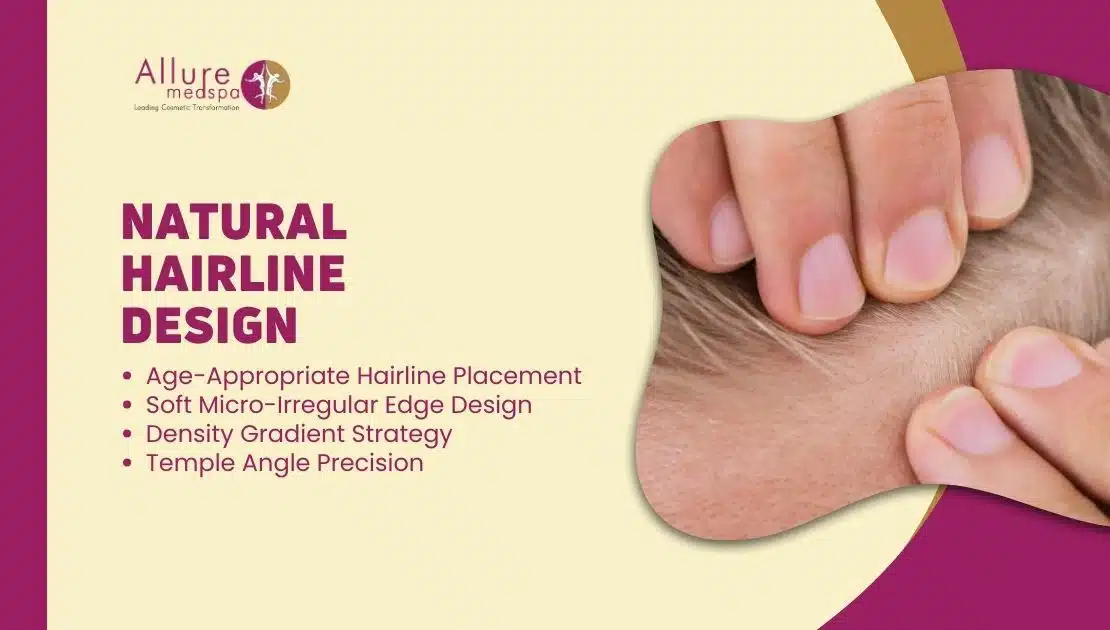
A natural hairline is not a straight line. It’s a soft, irregular, age-appropriate frame for the face. Most “fake” results come from wrong design + wrong angles, not from lack of grafts.
Quick Links: Hair Transplant Cost | Hair Loss Treatment | Hair Transplant Recovery Timeline
Want faster, denser hair growth after your transplant?
Hair Transplant Surgery Before and After Images
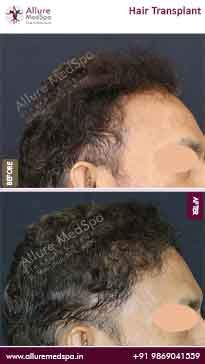
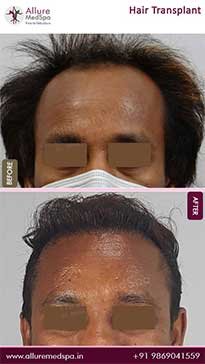
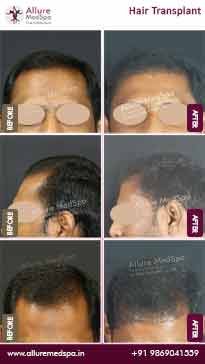
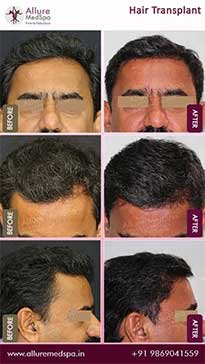
Hair Transplant Surgery Testimonials: Fine To Fabulous Journeys

Awarded by Google.com
Rating: 4.7
Reviews: 485+

Awarded by WhatClinic.com
Rating: 4.8
Reviews: 119+

Awarded by Realself
Rating: 4.9
Reviews:453+

Awarded by Facebook
Rating: 4.6
Reviews:105+
Dr Milan Doshi and his staff are very professional and committed as the centre is highly equipped with advanced technology. I had closed rhinoplasty 4 months back and I’m seeing the results as to how it becomes successful.
Deepika Shetty
The doctor explained everything clearly and the surgery was smooth. Recovery was faster than I expected and the team was very supportive.
Rahul Mehta
Very natural results and excellent staff. From consultation to follow-up, the experience was outstanding and boosted my confidence.
Sneha Kapoor
What is a “natural” hairline in hair transplant terms?
A natural hairline looks like it grew there. It has soft edges and controlled irregularity.
Natural hairline features
- Not straight. Not sharp.
- Single-hair grafts in the first rows
- Density gradient: light → medium → dense
- Correct direction and angles
- Temples blend (no abrupt corners)
Why do many transplanted hairlines look fake?
Fake look happens when design is “too perfect.” Hair is never perfect in nature.
Top reasons
- Straight ruler line
- Too low for age (teenage line in a 35+ male)
- Dense packing at the edge
- Wrong temple direction
- Uniform thickness and spacing
Where should a hairline sit for a man?
It should match age + face shape + future hair loss risk. Low is not always better.
Practical rules
- A mature hairline is normal
- Forehead should not look “cut down”
- Hairline must still look good at 45 and 55
- Conservative beats trendy
How do you design the hairline shape?
Start with facial proportions. Then make it imperfect in a controlled way.
Design steps
- Mark midline and facial symmetry
- Choose an age-appropriate height
- Create soft curves, not flat lines
- Add micro-irregularity at the edge
- Avoid sharp “Nike tick” corners
What is micro-irregularity and why is it important?
Micro-irregularity breaks the artificial look. It makes the edge believable.
What it means
- Small zig-zag variation
- Not random chaos
- Controlled and consistent
- Works best with single-hair grafts
Why are temples the hardest part of hairline work?
Temple hair grows at low angles and specific directions. Small mistakes show instantly.
Temple rules
- Correct angle: very acute
- Correct direction: follows natural flow
- Density: usually lighter than frontal tuft
- Blend into existing hair (no “block” effect)
Why is graft selection critical at the hairline?
Wrong graft type at the edge makes the hairline look pluggy.
Graft selection basics
- Front edge: single-hair grafts
- Behind edge: 2–3 hair units for density
- Use a density gradient
- Never create a thick “wall” at the front
What density is realistic for the hairline?
Density is limited by donor capacity and blood supply. “Maximum density” is not always safe or natural.
Reality checks
- Visual density depends on hair thickness and curl
- Lighting changes perception
- Hairline should be soft, not overcrowded
- Long-term donor planning matters
How does future hair loss affect hairline design?
If you design only for today, you create a problem for tomorrow.
Future-proof planning
- Avoid too-low hairline
- Plan for thinning behind the hairline
- Consider medical support where appropriate
- Sometimes staging is smarter
What are the biggest mistakes patients should avoid?
Most mistakes happen before surgery—during decision-making.
Avoid
- Choosing low cost over surgeon skill
- Ignoring hairline design discussion
- Believing “no-scar” marketing
- Not asking who does critical steps
- Booking without seeing real comparable cases
What should you ask in consultation about hairline design?
A good consultation gives a plan. Not a promise.
Ask
- Where will my hairline sit and why?
- How will temples be designed?
- What graft types will be used at the edge?
- Who does the design and critical placement steps?
- What happens if hair loss progresses?
Where should you go next if you want a hairline transplant?
Education is step one. A personal plan is step two.
Action step
- See the clinical procedure page: Receding Hairline Hair Transplant in Mumbai
- See recovery expectations: Hair Transplant Recovery Timeline
FAQs About Natural Hairline Design Principle
Q1) What makes a hair transplant hairline look natural?
Ans. A natural hairline looks like it grew there. It isn’t straight or sharp. The front edge is built with single-hair grafts, followed by a gradual density increase behind it. Direction and angles must match natural growth, and temple areas should blend without abrupt corners. Small, controlled irregularity at the edge helps avoid the “drawn line” look.
Q2) Why do some hair transplant hairlines look fake?
Ans. Most fake results come from design choices that are too perfect. Common issues include a straight ruler line, placing the hairline too low for age, dense packing right at the edge, incorrect temple direction, and uniform spacing that doesn’t occur in nature. Natural hairlines have soft transitions and controlled irregularity.
Q3) Should a hairline be low for the best result?
Ans. Not always. A hairline should match your age, face shape, and future hair loss risk. A very low, “teenage” hairline in a 35+ male can look unnatural over time. The goal is a mature, believable hairline that still looks appropriate at 45 and 55—often a conservative plan looks more natural long-term.
Q4) What is micro-irregularity in hairline design?
Ans. Micro-irregularity means small zig-zag variation along the hairline edge. It is not random chaos—it’s controlled and consistent. This breaks the artificial look of a sharp, straight hairline and makes the edge believable. Micro-irregularity works best when the first rows use single-hair grafts to keep the transition soft.
Q5) Why are temples difficult in hairline design?
Ans. Temple hair naturally grows at very acute angles and in specific directions. Small mistakes are easy to notice, especially in how temple points blend into the hairline. Temples usually need lighter density than the frontal tuft and must follow the natural flow. A “blocky” or abruptly dense temple area can make results look unnatural.
Q6) What grafts should be used at the hairline edge?
Ans. Graft selection is critical. The front edge should use single-hair grafts to avoid a pluggy look. Behind the edge, 2–3 hair units can add density while keeping a gradual transition. The key is a density gradient—light to medium to dense—so the hairline doesn’t look like a thick wall at the front.
Q7) What questions should I ask in a hairline design consultation?
Ans. Ask where your hairline will sit and why, how temples will be designed, and what graft types will be used at the edge. Also ask who performs the design and critical placement steps, and what the plan is if hair loss progresses. A good consultation gives a clear plan, not an unrealistic promise.
Final Thoughts: Design Before Density
A natural hairline is created through thoughtful design, proper graft selection, and long-term planning — not by making it low or overly dense.
When your hairline suits your age, face, and future hair loss pattern, the result looks authentic for life.
Always choose experience, transparency, and medical expertise over shortcuts.
Because the best hair transplant is the one no one notices.