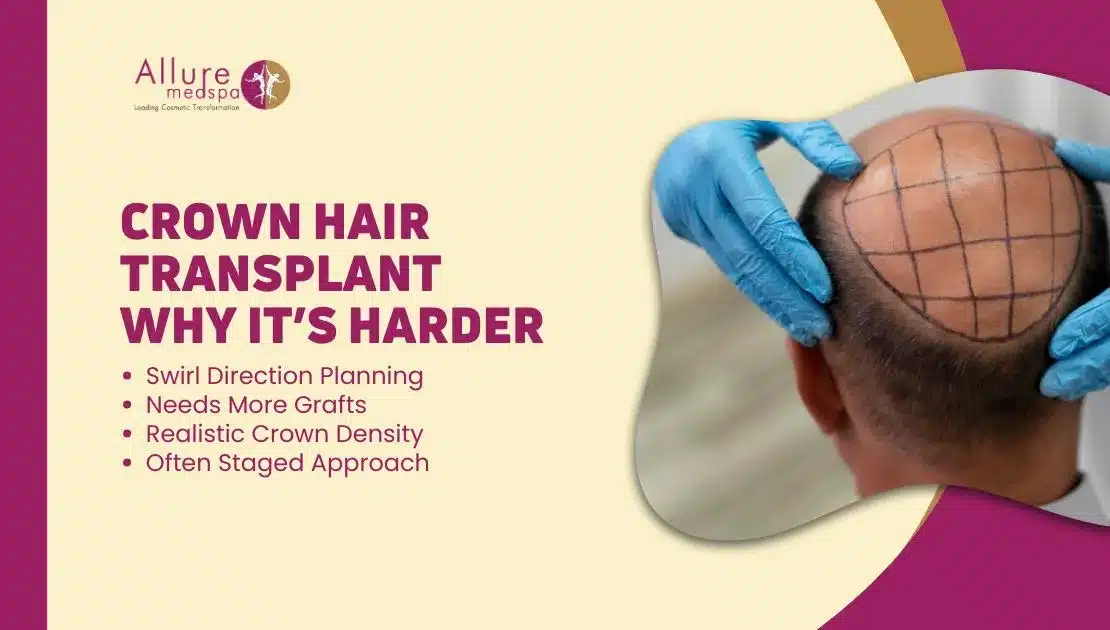
A crown (vertex) hair transplant is harder than the hairline because the crown has a swirl pattern, shows scalp more under overhead light, and often needs more grafts for visible coverage. Many cases need a staged plan.
Quick Links: Hair Transplant Cost | Hair Loss Treatment | Hair Transplant Recovery Timeline
Not sure how many grafts your crown needs? Get expert advice from Dr. Milan Doshi.
Hair Transplant Surgery Before and After Images


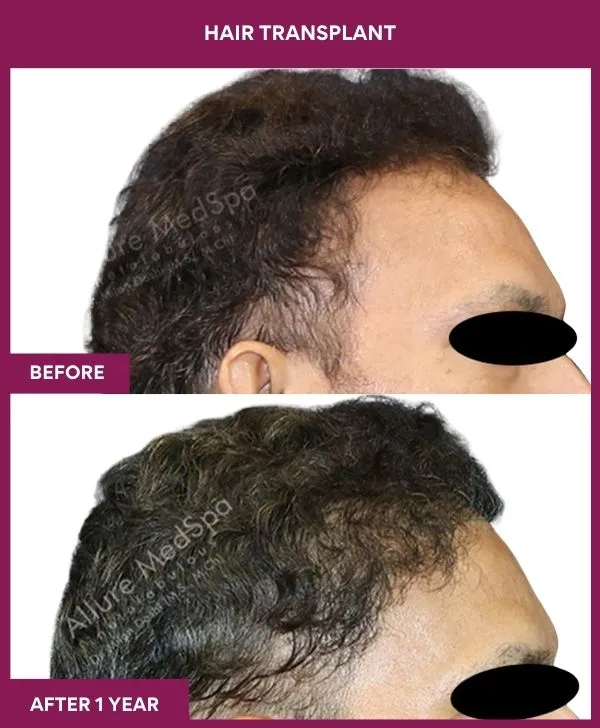
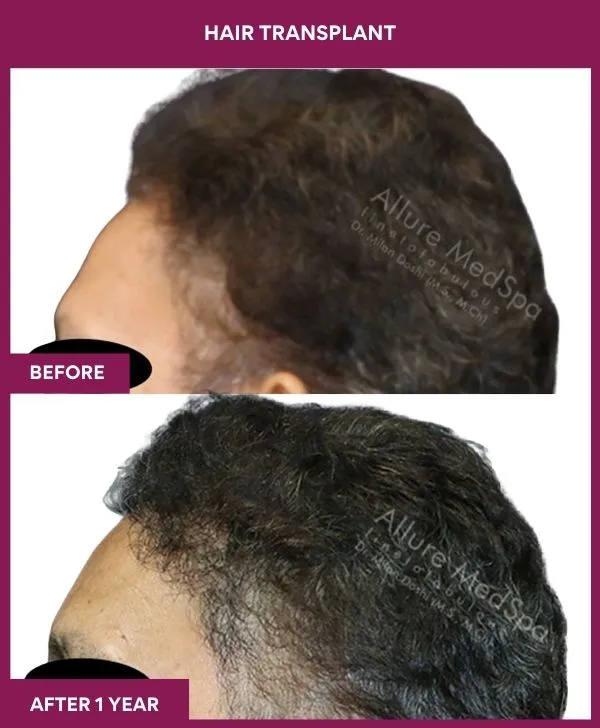
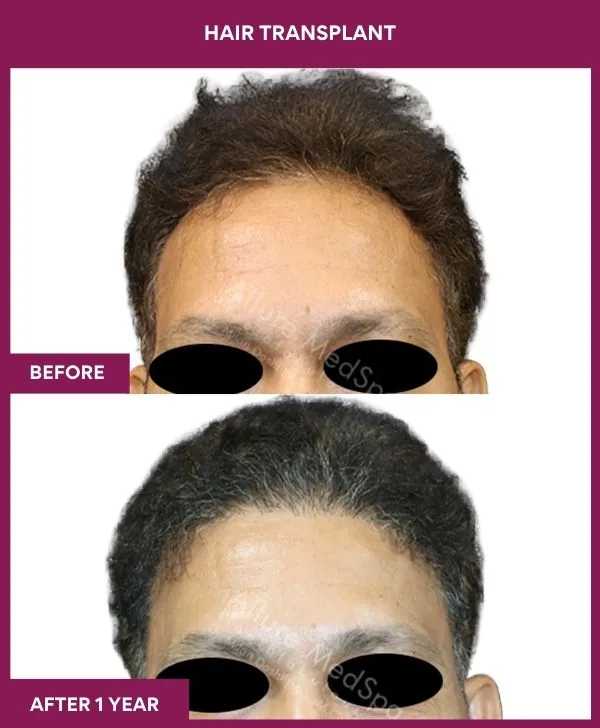
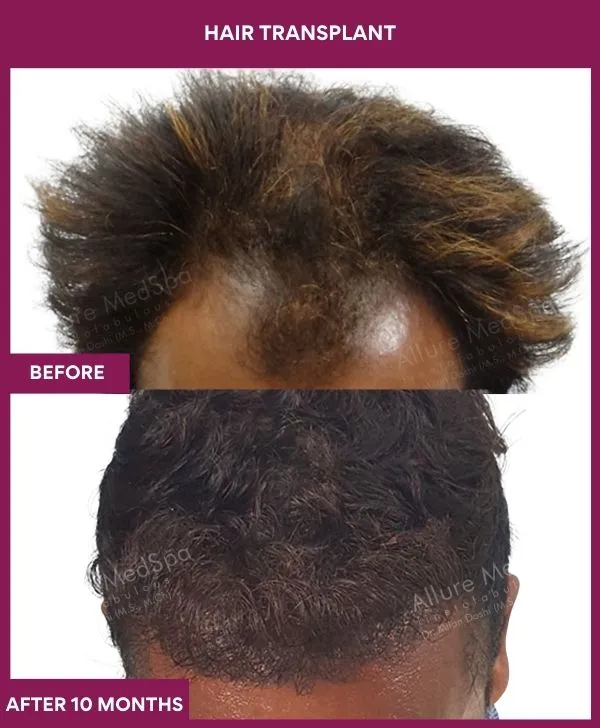
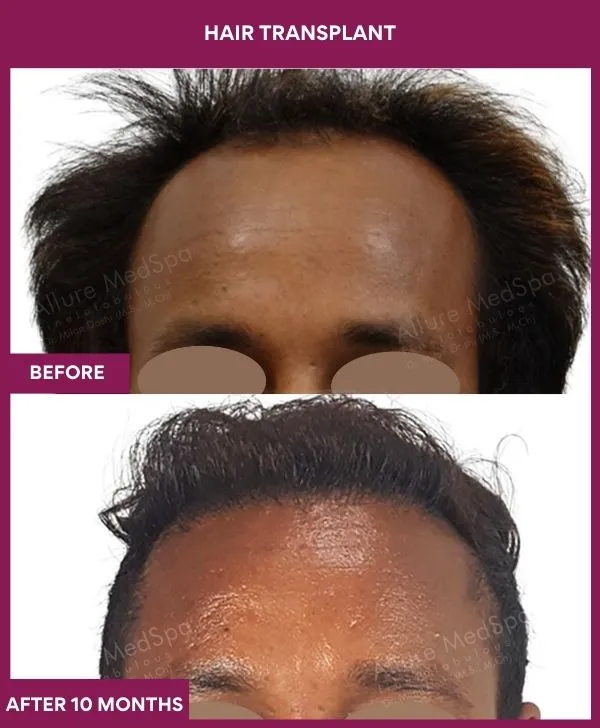

“Hair Transplant Surgery Mumbai”
Hair Transplant Surgery Testimonials: Fine To Fabulous Journeys

Awarded by Google.com
Rating: 4.7
Reviews: 485+

Awarded by WhatClinic.com
Rating: 4.8
Reviews: 119+

Awarded by Realself
Rating: 4.9
Reviews:453+

Awarded by Facebook
Rating: 4.6
Reviews:105+
Dr Milan Doshi and his staff are very professional and committed as the centre is highly equipped with advanced technology. I had closed rhinoplasty 4 months back and I’m seeing the results as to how it becomes successful.
Deepika Shetty
The doctor explained everything clearly and the surgery was smooth. Recovery was faster than I expected and the team was very supportive.
Rahul Mehta
Very natural results and excellent staff. From consultation to follow-up, the experience was outstanding and boosted my confidence.
Sneha Kapoor
Why is crown baldness harder to treat than the hairline?
The crown shows thinning faster because hair splits in multiple directions and light hits the area directly.
Main reasons
- Swirl pattern: hair radiates in a circle, so coverage is harder
- Overhead lighting: scalp “glare” makes the area look thinner
- Visual coverage is lower: even good density can look modest
- More graft demand: the crown often needs higher graft numbers for “seen” density
- Progression risk: crown thinning can expand over time, affecting planning
What this means for patients
- Expect improvement, not “hairline-like fullness”
- A crown plan must protect the donor for future needs
(Reference: Hair Transplantation overview — NCBI Bookshelf)
What is the crown swirl and why does direction matter?
The crown grows in a circular flow; wrong angle/direction looks unnatural and reduces coverage.
The crown swirl (vertex whorl)
- Hair grows around a central point
- Each zone of the swirl points in a different direction
- If grafts are placed “straight,” hair can stand up or clash with natural flow
Why direction matters
- Natural look: matches surrounding hair movement
- Better styling: easier to comb and set
- Less scalp show: correct angle improves lay-down coverage
- Avoids spiky look: improper angles can create “standing hair”
(Reference: Hair growth direction and recipient-site angle concepts — PubMed)
Do all crown baldness cases need a hair transplant?
No—many cases need stabilization first or a staged surgical plan.
You may delay or avoid surgery (temporarily) if
- Thinning is early or diffuse
- Hair loss is actively progressing
- Donor is limited (needs conservation)
- You need medical support to protect existing hair
- Your main concern is cosmetic but your pattern is not stable yet
When surgery becomes more suitable
- Pattern looks stable
- There is a clear target area
- Donor quality/quantity is sufficient for your goals
- You accept realistic crown density expectations
(Reference: Hair Transplantation overview — NCBI Bookshelf)
How do you decide whether crown should be done now or later?
Timing is based on stability, donor safety, and how much the crown may expand in future.
Timing rules (easy decision framework)
- Stable hair loss pattern: crown can be planned confidently
- Unstable pattern: stage it; avoid overcommitting grafts early
- Limited donor: prioritize what changes your look most (often front framing)
- Large crown: aim for coverage illusion, not maximum density everywhere
Common staging approach
- Stage 1: prioritize front framing/hairline zone if needed
- Stage 2: crown coverage with realistic density
- Stage 3 (optional): refine density if donor allows
How many grafts are usually needed for the crown?
Crown often needs more grafts than patients expect; exact numbers require an in-person exam.
Why graft requirements rise
- Crown area is often larger than it looks in photos
- Swirl forces multi-directional placement
- Crown needs more grafts for the same “visual density” effect
What affects graft count
- Area size (diameter of thinning zone)
- Hair calibre (thick vs fine)
- Hair-skin contrast (high contrast shows scalp more)
- Curl/wave (adds coverage illusion)
- Existing miniaturized hair (needs protection)
- Donor capacity (your lifetime graft bank)
Red flags
- “Fixed graft quote” without scalp measurement + donor evaluation
- Promises like “full density guaranteed” for large crowns
What density is realistic in the crown?
Crown density is usually natural-looking improvement, not full thickness like a teenage crown.
Reality checks
- Crown rarely matches hairline density
- Overhead light makes crown look thinner than it is
- Wet hair = crown looks more see-through
- Short haircuts can show scalp more than longer styles
Who looks denser with fewer grafts
- Thick/coarse hair
- Wavy/curly texture
- Low hair-skin contrast
Who may need more grafts
- Fine hair
- Straight hair
- High contrast (dark hair/light scalp or vice versa)
- Very large crown zones
Is one session enough for crown baldness?
Sometimes, but staging is common—especially for large crowns or limited donors.
One session may be enough if
- Crown area is small
- Donor is strong
- Hair is thick/coarse
- Thinning is moderate
- You accept realistic crown density
Staging is likely if
- Crown is large
- Donor is limited
- Hair is fine
- Progression risk is high
- You want higher density but donor must be protected
What are common mistakes in crown transplant planning?
Most crown dissatisfaction comes from unrealistic expectations and donor overuse.
Common mistakes
- Trying to “finish crown first” and neglecting framing zones
- Expecting hairline-level density in the crown
- Spending too many grafts early (no donor left for future loss)
- Not mapping the swirl properly (direction/angle errors)
- Choosing graft count based on marketing, not scalp math
What a safer plan looks like
- Set a density target aligned with donor capacity
- Choose a coverage-first strategy
- Plan for future thinning, not just today’s photos
How long does crown transplant take to look good?
Crown often matures slower than the hairline; visible improvement builds gradually.
Timeline basics (patient-friendly)
- 0–2 weeks: healing/scabs settle
- 2–8 weeks: shedding can occur (“shock loss”/telogen shed)
- 3–6 months: early growth appears
- 6–9 months: density improves more noticeably
- 9–12+ months: texture + blending improve further
Why crown feels slower
- Lighting and swirl make changes harder to “see” early
- Growth looks uneven until hair length increases
What should you ask in consultation for crown baldness?
Ask for a plan (timing + graft math + donor safety), not hype.
Consultation questions
- Should crown be done now or staged?
- What density is realistic for my hair type and crown size?
- How will you plan swirl direction and angle?
- How many grafts are safe from my donor, long term?
- What’s the plan if hair loss progresses?
- Will we prioritize front framing first if needed?
FAQs About Crown Transplant
1) What is a crown baldness hair transplant?
Ans. A hair transplant focused on the crown/vertex area.
It requires precise swirl-direction planning to maintain natural hair flow.
The goal is visible coverage improvement, not extreme density.
2) Why is vertex hair transplant harder than hairline?
Ans. The crown has a natural swirl pattern that splits hair in multiple directions.
Overhead lighting exposes the scalp more easily in this area.
It typically requires more grafts to achieve the same visible density as a hairline.
3) How many grafts do I need for a crown transplant?
Ans. The number of grafts depends on crown size, hair type, and donor strength.
Fine hair or high scalp-to-hair contrast usually requires more grafts.
Avoid fixed graft promises without a proper clinical examination.
4) Will my crown look fully dense after transplant?
Ans. Usually, it will not appear as dense as a hairline.
You can expect natural coverage improvement with proper length and styling.
Bright lighting or wet hair may still reveal some scalp.
5) Is one session enough for crown baldness?
Ans. Sometimes, if the area is small and the donor area is strong.
Staged procedures are common for larger crowns or progressive hair loss.
A long-term plan helps preserve donor hair for the future.
6) When should I do a crown transplant—now or later?
Ans. If your hair loss pattern is stable, it is safer to plan now.
If the pattern is unstable, staging the procedure is often better.
When the donor area is limited, prioritizing framing zones may be advisable.
7) What questions should I ask my surgeon for crown thinning?
Ans. You should ask strategic, long-term planning questions.
Can my crown be treated now or should it be staged?
What density is realistically achievable for my hair type?
How will you map the swirl direction and graft angles?
How many grafts are safe for me in the long term?
Conclusion
Great surgery starts the journey; great aftercare finishes it. Sleep smart, wash gently, protect your scalp, and go easy on exercise. Be patient—most people see early growth at 3–4 months and full results by 9–12 months.
Authority Backlink:
– Hair transplantation techniques and planning
– Hair restoration procedures and graft planning
– Hair transplant treatment for hair loss
– Hair transplant procedure overview
– Hair transplant surgery and recovery