
Buttock Liposuction in Mumbai: Shape and Proportion, Not Just Reduction

Indian Board Certified Plastic Surgeon
M.CH, MS, ISAPS Mentor
16000+ Cosmetic Surgeries
4000+ Liposuction Surgeries
Buttock liposuction reshapes the gluteal region by removing selected fat from the buttock and the areas around it — the hips, the fold beneath the buttock and the upper thighs — to improve proportion rather than simply reduce size.
Pathway callout: Less from the buttock is often more.
Too much bulk: genuine excess fat can be reduced — conservatively.
Poor shape at an acceptable size: often improved by treating the flanks, hips or thighs around the buttock.
Not enough volume: a fat-transfer or augmentation discussion, not liposuction.
Sagging with loose skin: a skin-removal discussion, not liposuction.
Cost: quoted after examination, because the units treated decide the plan.
Dr. Milan Doshi plans this region conservatively, because some of the fat and fibrous tissue around the buttock is doing structural work — remove too much and the buttock descends rather than improves. This guide helps you find which of the eight gluteal units is creating your shape, how the operation and the sitting-heavy recovery work, and when the honest answer is a different operation. → Liposuction Surgery · Liposuction Body Areas
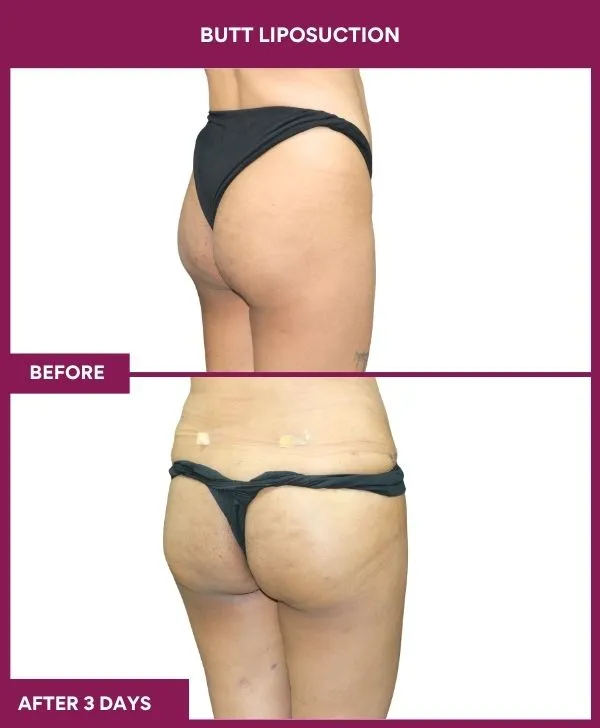
Buttock Liposuction surgery Before After Images
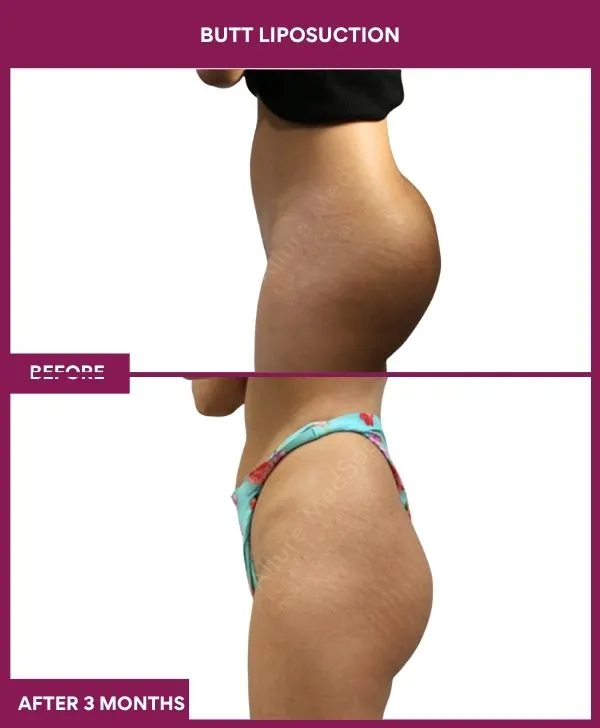
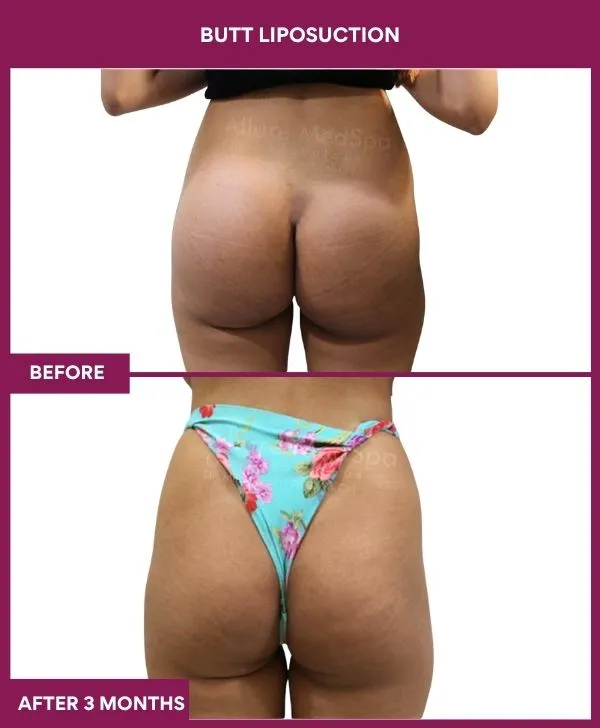
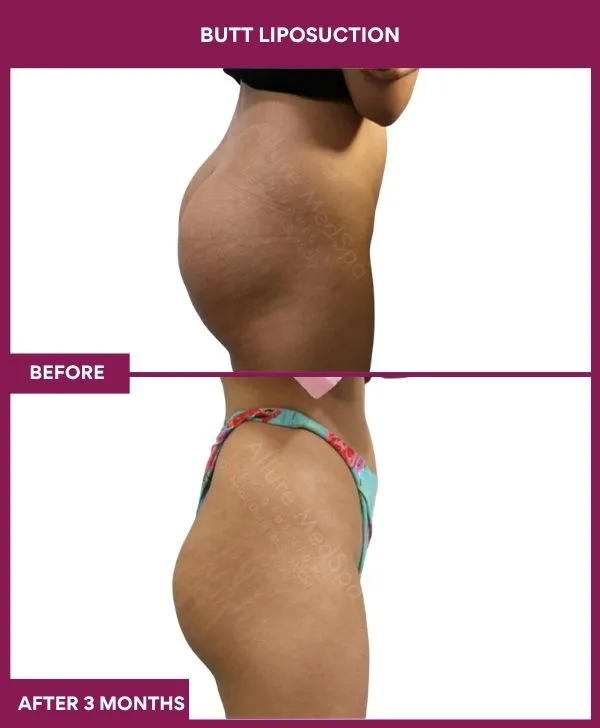
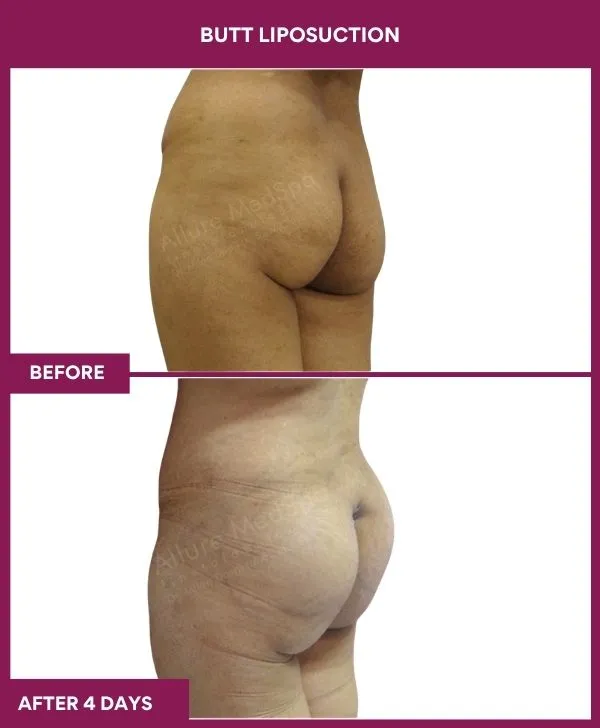
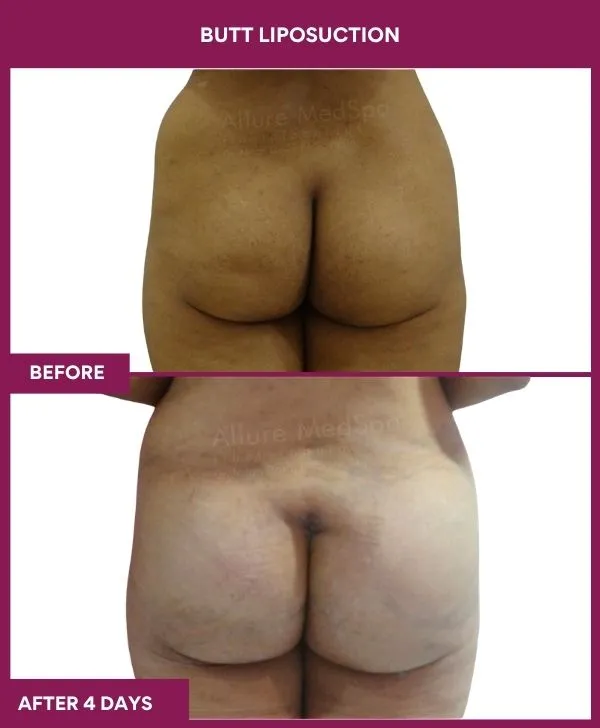
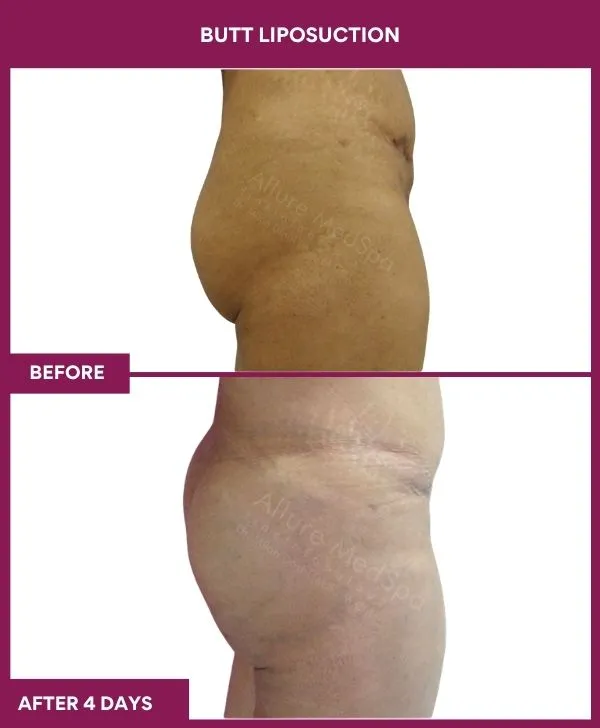
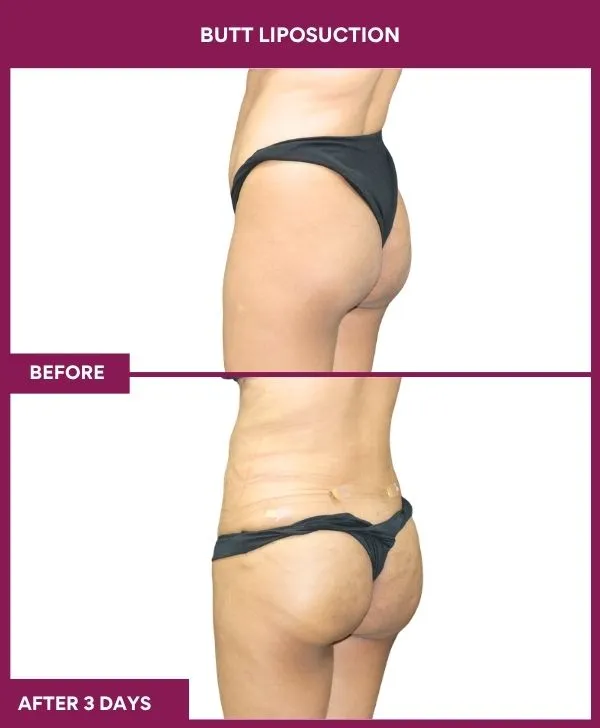
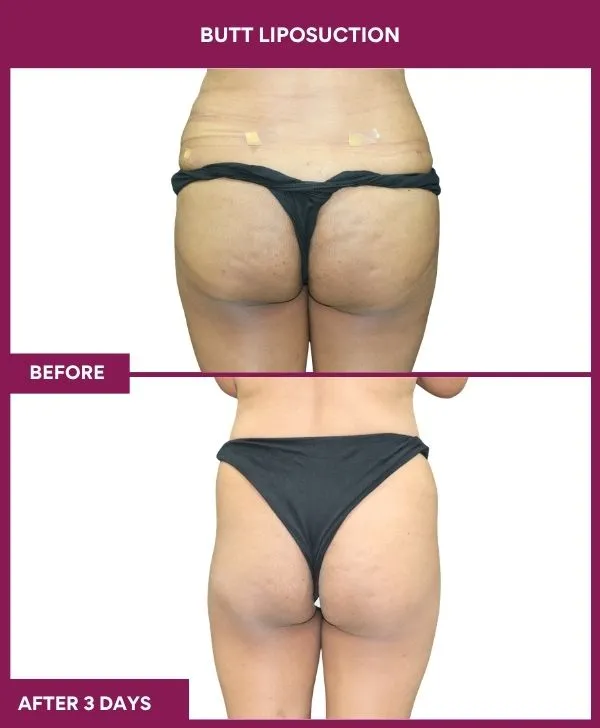
“Liked the results? Let’s plan yours.”
Liposuction Surgery Patient Testimonials: Fine To Fabulous Journeys

Awarded by Google.com
Rating: 4.7
Reviews: 485+

Awarded by WhatClinic.com
Rating: 4.8
Reviews: 119+

Awarded by Realself
Rating: 4.9
Reviews:453+

Awarded by Facebook
Rating: 4.6
Reviews:105+
Dr Milan Doshi and his staff are very professional and committed as the centre is highly equipped with advanced technology. I had closed rhinoplasty 4 months back and I’m seeing the results as to how it becomes successful.
Deepika Shetty
The doctor explained everything clearly and the surgery was smooth. Recovery was faster than I expected and the team was very supportive.
Rahul Mehta
Very natural results and excellent staff. From consultation to follow-up, the experience was outstanding and boosted my confidence.
Sneha Kapoor
Inspired by Their Transformation
Video: Liposuction Surgery Explain By Dr. Milan Doshi
Dr Milan Doshi is describing the Liposuction Surgery in detail with benefits, candidacy, associated risks and significance
Am I a Candidate?
(4 quick questions)
Quick Facts About Buttock Liposuction Surgery
TIME REQUIRED
1–3 hours
ANESTHESIA
General / local
HOSPITAL STAY
Day care
PAIN LEVEL
Mild–moderate
BACK TO WORK
3–7 days
Final RESULTS
3–6 months
SUCCESS RATE
97–98%
COMPLICATIONS
Under 2–3%
How Much Does Buttock Liposuction Surgery Cost in Mumbai?
Liposuction at Allure Medspa ranges from about ₹60,000 to ₹2,50,000 overall, depending on the areas, technique and extent — and combined sessions cost less than separate procedures. Buttock liposuction is rarely priced as a single “buttock area”, because the treatment frequently involves the units around it — which is why a reliable quote follows examination.
| What is treated | Allure price |
|---|---|
| Buttock shaping alone | Quoted after examination |
| Buttock + banana roll | Quoted after examination |
| Buttock + hips and outer thighs | Quoted as a combination — each added area roughly ₹30,000–₹40,000 [CONFIRM price] |
| Buttock as part of Lipo 360 | ₹1,50,000–₹2,00,000 |
| Consultation | ₹1,500 |
| Is the consultation fee adjusted against surgery? | Yes — adjusted against surgery if the surgery is done within 6 months. |
| GST | Shown separately on your invoice |
| EMI | Available |
What is included — and what isn’t?
| Included | Not included |
|---|---|
| Surgeon, anaesthetist and surgical team | Blood tests and pre-operative checks |
| Operating theatre and day-care stay | GST — shown as its own line |
| VASER or other device where used | Overnight admission, if needed |
| First pressure garment | A spare garment, if you’d like one |
| Initial postoperative medication | Travel and accommodation |
| Scheduled follow-up reviews | Treatment of unrelated conditions |
What changes the price?
- How many units are genuinely treated — buttock, banana roll, hips, flanks, sacral area, thighs.
- Technique — ultrasound or power assistance where tissue justifies it.
- Anaesthesia and operating time.
- Whether this is a revision — correcting previous liposuction is a different plan.
Insurance: elective cosmetic surgery isn’t insured. → Full cost breakdown
Get your exact quote & surgery plan
Share your details — our team responds within working hours with cost, EMI options and next steps.
Most Common Question People Ask
Q1. Can liposuction lift my buttocks?
Ans. No. Buttock liposuction removes fat; it does not lift the buttock, and removing too much can make it descend, because fat and fibrous tissue around the gluteal region contribute to support. If loose skin or sagging is the main problem, the correct discussion is skin removal rather than more fat removal.
Q2. Should I have buttock liposuction or fat transfer (BBL)?
Ans. Buttock liposuction is for reduction or reshaping; fat transfer — a Brazilian Butt Lift — moves fat into the buttock to add volume. They are different operations with different indications and very different safety considerations: gluteal fat grafting needs careful control of the injection plane and a separate safety discussion.
Q3. Is buttock liposuction painful?
Ans. Most patients describe soreness, pressure and tenderness rather than severe pain, although sitting can be especially uncomfortable because it places direct pressure on the treated region. Sudden, severe or worsening one-sided pain is not an expected recovery feature and needs prompt assessment.
Q4. How long before I can sit normally?
Ans. Sitting is limited and broken up frequently during early recovery, with a cushion placed under the thighs rather than directly under the buttocks. Return to prolonged seated work depends on how many hours your job requires you to sit, and is confirmed individually at follow-up rather than promised in advance.
Q5. Will the fat come back after buttock liposuction?
Ans. Fat cells removed during buttock liposuction do not return, but the cells that remain can enlarge if you gain weight, changing the proportion between buttock, waist, hips and thighs. Long-term contour therefore depends strongly on maintaining a reasonably stable weight after recovery, with regular activity once you’re cleared.
Q6. What is the banana roll, and can it be removed?
Ans. The banana roll is the horizontal pad of fat just below the crease under the buttock. It can be treated only conservatively, because removing too much fat beneath a structural fold can deepen and lengthen the crease — making the area look worse despite having less fat.
Q7. Will buttock liposuction make my buttock look flat?
Ans. It can if excessive fat is removed, which is why a deliberately conservative endpoint is used and why treatment frequently focuses on the hips, flanks or thighs instead of emptying the buttock. The goal is proportional reduction, not maximum reduction.
Q8. Can buttock liposuction treat cellulite?
Ans. No. Cellulite is caused by fibrous bands tethering skin to deeper tissue rather than by one simple fat pocket. Liposuction does not remove that structural cause and can sometimes make dimpling more visible once the volume underneath is reduced. Cellulite needs its own, separate treatment discussion.
Q9. Can a previous buttock liposuction result be corrected?
Ans. Sometimes, but revision is harder because scarred tissue behaves differently, and correcting descent may require adding volume rather than removing more fat. One published case of severe deformity below the buttock fold after liposuction needed five separate reconstructive fat-transfer operations.
Q10. Is buttock liposuction covered by insurance?
Ans. Usually not. Most buttock liposuction is cosmetic — reducing bulk or improving proportion in a healthy patient. Reconstructive indications, such as abnormal fat accumulation or correcting a contour deformity after previous surgery, depend on a documented medical indication and the insurer’s approval.

Why Choose Dr. Milan Doshi?
Dr. Milan Doshi, MCh, MS — Indian board-certified plastic surgeon · ISAPS Mentor · 27+ years in aesthetic surgery in Mumbai · 16,000+ cosmetic surgeries. Buttock liposuction requires restraint more than aggressive fat removal, and his planning focuses on identifying whether the concern belongs to the buttock itself or to the surrounding waist, hip, fold or thigh.
What does that mean for your buttock?
- All eight gluteal units assessed — standing, with weight evenly distributed.
- Routing away from liposuction when the problem is volume or loose skin.
- A conservative endpoint — support around the fold deliberately preserved.
- Staged rather than aggressive — a small second session is preferred to taking too much once.
- Revision experience — correcting over-suctioned buttocks informs every first operation.
The Complete Guide About Buttock Liposuction
What is Buttock Liposuction (Gluteal Suction Lipectomy)?
Buttock liposuction removes selected subcutaneous fat from the gluteal region to reduce excess bulk or improve proportion — but it is deliberately more conservative than liposuction in many other areas, because too much removal can alter buttock support. “Gluteal” simply means relating to the buttocks.
Why isn’t it one single operation?
Four different concerns are commonly grouped under the same request.
| What you actually have | What it needs |
|---|---|
| Too much bulk | Liposuction may reduce genuine excess fat |
| Poor shape at an acceptable size | Often better improved by treating the flanks, hips or upper thighs around the buttock |
| Not enough volume or projection | Not a liposuction problem — fat transfer or augmentation |
| Sagging with loose skin | Not a liposuction problem — skin removal or lifting |
Two of these four get worse if the surgeon simply removes more fat. That is why diagnosis matters more than choosing a device.
Is buttock liposuction cosmetic or reconstructive?
Most buttock liposuction is cosmetic — reducing excess bulk or improving proportion in a healthy patient — and shouldn’t be expected to attract health-insurance coverage. Reconstructive indications, such as abnormal fat accumulation or correction of a contour deformity after previous surgery, depend on a documented, medically necessary indication and insurer approval.
Synonyms for buttock liposuction
| Patients say | Medically |
|---|---|
| Butt liposuction · buttock reduction · bum liposuction | Gluteal liposuction · gluteal lipoplasty |
| Banana roll removal | Infragluteal contouring |
| Hip and buttock shaping | Gluteal contouring · suction-assisted lipectomy of the gluteal region |
| कूल्हे की चर्बी हटाने की सर्जरी | Gluteal liposuction |
Sources: American Society of Plastic Surgeons. Liposuction · Centeno RF, Sood AK, Young VL. Clinical anatomy in aesthetic gluteal contouring. Clin Plast Surg. 2018;45(2):145–157, PMID 29519484 · Wu S, Coombs DM, Gurunian R. Liposuction: concepts, safety, and techniques in body-contouring surgery. Cleve Clin J Med. 2020;87(6):367–375
Does Your Shape Bother You More Than Your Weight?
Buttock liposuction is most relevant when your weight is reasonably stable but one part of the buttock–hip–thigh silhouette is out of proportion, because the concern is then regional shape rather than general body weight.
What do patients commonly ask?
- “Why does my buttock look lower even though my weight hasn’t changed?”
- “Is the problem actually my buttock, or the roll underneath it?”
- “Everyone online seems to be adding fat — do I need less or more?”
These are different anatomical questions, and some patients don’t need the buttock treated at all. They may need hip contouring, flank contouring, outer-thigh reduction — or no procedure. The more useful question is: which anatomical unit is creating the shape you dislike?
How common is liposuction?
| ISAPS Global Survey | Finding |
|---|---|
| 2023 | Liposuction was the most common aesthetic surgical procedure worldwide — more than 2.2 million |
| 2024 | Liposuction was the second most common surgical procedure — about 2.09 million, just behind eyelid surgery |
| 2024 — India | About 677,040 surgical aesthetic procedures, about 97,160 of them liposuction |
Those figures describe liposuction overall, not buttock liposuction specifically. Popularity is not a reason to choose it — anatomy is.
Sources: International Society of Aesthetic Plastic Surgery (ISAPS). Global Survey 2024 — full report (published June 2025) · ISAPS. Global Survey 2024 — press release · ISAPS. Global Survey 2023 — press release
What Are the Benefits of Buttock Liposuction?
Buttock liposuction can reduce disproportionate fat and improve the transition between waist, buttock and thigh when fat excess is genuinely the cause — but the benefit comes from proportion, not maximum reduction.
| Benefit | What it means |
|---|---|
| Better proportion | The buttock can appear more balanced relative to the waist and upper thigh |
| Reduced bulk | Selected excess gluteal fat can be reduced |
| Under-curve refinement | The banana roll may be improved — conservatively |
| Smoother thigh transition | Treating the surrounding units can improve how the buttock meets the leg |
| Long-term fat-cell reduction | Removed fat cells don’t return, although remaining cells can enlarge with weight gain |
| Small access points | Entry sites can usually be placed in natural folds or concealed areas |
Does it improve health?
No. Buttock liposuction is a shape operation, not a metabolic treatment. A study published in the New England Journal of Medicine removed roughly 18–19% of participants’ total body fat by liposuction and found no improvement in insulin sensitivity, blood pressure, blood glucose or blood lipids. Fat being removed does not mean metabolic risk was treated.
Sources: Klein S, Fontana L, Young VL, et al. Absence of an effect of liposuction on insulin action and risk factors for coronary heart disease. N Engl J Med. 2004;350(25):2549–2557, PMID 15201411 · Spalding KL, Arner E, Westermark PO, et al. Dynamics of fat cell turnover in humans. Nature. 2008;453(7196):783–787, PMID 18454136 · Carman W. Ten common misconceptions about liposuction. American Society of Plastic Surgeons, 2018
Which Problems Can Buttock Liposuction Correct?
It can address genuine excess gluteal fat and selected fullness beneath the buttock fold, but it doesn’t reliably correct sagging, loose skin, cellulite or insufficient projection — and can worsen some of those.
| Concern | Relevance to liposuction | Approach / where to read more |
|---|---|---|
| Heavy, bulky buttock at stable weight | Core target | Conservative gluteal reduction — this page |
| Poor shape but acceptable size | Often a surrounding-unit problem | Flank, hip and outer-thigh contouring → Love Handles & Hips |
| Banana roll below the fold | May be treated carefully | Light refinement with support preserved |
| Outer-thigh fullness | Not primarily a buttock problem | Outer-thigh contouring → Thighs & Legs |
| Full flanks above the buttock | Not primarily a buttock problem | Flank and hip contouring → Love Handles & Hips |
| Full circumferential midsection | Wider contour issue | → Lipo 360 |
| Buttock hanging over the fold | Can worsen with liposuction | Skin excision or lift → Body Lift Surgery |
| Wanting more projection | Not corrected by liposuction | Fat transfer or implant → Brazilian Butt Lift · Buttock Augmentation |
| Cellulite or dimpling | Doesn’t correct it | A structural rather than simple fat problem |
What are the eight gluteal aesthetic units?
Plastic surgeons don’t assess the buttock as one isolated mound. A widely used classification divides the gluteal region into eight aesthetic units.
| Unit | Where it is | Is it the buttock? |
|---|---|---|
| Left flank | Side of the waist above the hip | No |
| Right flank | Side of the waist above the hip | No |
| Sacral triangle | The lower back immediately above the buttocks | No |
| Left buttock | The gluteal mound | Yes |
| Right buttock | The gluteal mound | Yes |
| Infragluteal diamond | The region at and below the buttock fold | No |
| Left upper (lateral) thigh | Below and beside the buttock | No |
| Right upper (lateral) thigh | Below and beside the buttock | No |
Six of the eight units are not the buttock itself. Someone who says “I don’t like the shape of my buttock” may actually have full flanks above it, heavy outer thighs below it, an indistinct fold, or disproportion between several neighbouring areas. Removing fat directly from the buttock can be the wrong answer.
Why does the fold matter?
The infragluteal fold is a structural attachment. At the fold, the superficial fascial tissue fuses firmly with the deep gluteal fascia, with little deep fat in between. That fibrous anchoring and the fat around it help determine how the buttock sits — which is why aggressive removal around the fold can lengthen the crease, cause descent of the buttock and leave contour deformity.
Sources: Centeno RF. Gluteal aesthetic unit classification: a tool to improve outcomes in body contouring. Aesthet Surg J. 2006;26(2):200–208, PMID 19338900 · Centeno RF, Sood AK, Young VL. Clinical anatomy in aesthetic gluteal contouring. Clin Plast Surg. 2018;45(2):145–157, PMID 29519484 · Cuenca-Guerra R, Quezada J. What makes buttocks beautiful? A review and classification of the determinants of gluteal beauty and the surgical techniques to achieve them. Aesthetic Plast Surg. 2004;28(5):340–347 · Vilensky JA. Buttocks anatomy: a review of its beauty and shape as considered by the plastic surgery literature. Clin Anat. 2025 · Carman W. Ten common misconceptions about liposuction. American Society of Plastic Surgeons, 2018 · Dixit VV, Wagh MS. Unfavourable outcomes of liposuction and their management. Indian J Plast Surg. 2013;46(2):377–392, PMID 24501474
What Are the Limitations of Buttock Liposuction?
Buttock liposuction cannot lift the buttock, add volume, remove significant loose skin or treat cellulite — and excessive removal can cause gluteal ptosis, meaning descent of the buttock, which is far harder to correct than to prevent. The buttock is shaped by bone, muscle, skin, fat and fibrous attachments; liposuction changes only one of those.
Why does too much liposuction make the buttock drop?
Fat around the gluteal region isn’t simply unnecessary volume; part of it contributes to support and contour. Published reports link post-liposuction gluteal ptosis to three things:
- Loss of fat volume that was helping hold the shape.
- Destruction of the fibrous tissue that sustains the buttock.
- Resulting skin laxity around the smaller volume.
Why is over-suction difficult to correct?
Once supporting tissue has been removed, correction may require adding volume back. One published report of severe post-liposuction infragluteal deformity described a patient who needed five separate reconstructive fat-transfer operations. An aggressive result is not always easily reversible.
Can treating the banana roll make the fold worse?
Yes. The roll below the fold can look like the problem, but reducing too much fat directly beneath a structural crease can make that crease deeper, longer and more visible — despite there being less fat.
What else can’t be promised?
Natural asymmetry exists before surgery and usually remains afterwards. Buttock liposuction also can’t make your anatomy reproduce someone else’s proportions.
Sources: Yang M, Gu Y, Sun J, et al. Difficulty of severe post-liposuction infragluteal deformity correction with autologous fat transplantation: a case report. Front Surg. 2022;9:758566 · Yang M, Li J, Dong W, et al. Lower gluteal liposuction combined with upper gluteal and infragluteal region fat grafting: a novel concept to improve gluteal ptosis. Aesthet Surg J. 2024;44(5):NP329–NP336, PMID 38324894 · Carman W. Ten common misconceptions about liposuction. American Society of Plastic Surgeons, 2018
Why Consult Before Buttock Liposuction?
The consultation is primarily a diagnostic assessment — to determine whether the visible concern comes from excess buttock fat, the surrounding hips or thighs, loose skin, loss of volume, or a combination requiring a different procedure. You are assessed standing with weight distributed evenly, because buttock position and the fold change when you lie down.
| Assessed | Why |
|---|---|
| Fat distribution across all eight units | Finds where the shape is really coming from |
| Skin elasticity by pinch | Predicts how skin will re-drape |
| Whether the buttock sits above or hangs over its fold | Separates a fat problem from a sagging problem |
| Upper-thigh, hip and flank contour | The surrounding units often decide the result |
| Pre-existing asymmetry | Shown to you before surgery, not discovered after |
| Standing photos from behind and three-quarter view | A baseline you can’t otherwise see yourself |
| Medicines, nicotine, medical and surgical history | Including previous fat transfer, fillers or energy treatments |
| Your goals in your own words | Less volume, better shape, or more volume |
You should leave understanding what the diagnosis actually is, what treatment is recommended, the alternatives (including no treatment), realistic improvement, risks, recovery — and how a sitting-heavy or standing-heavy job affects your timeline.
What should you prepare?
- Your main concern — less volume, better shape, or more volume.
- A proper photograph from behind.
- A medication and supplement list.
- Medical history — including previous surgery and anaesthetic issues.
- Previous treatments in the area.
- An honest count of how many hours a day you sit.
Which area is actually causing your buttock shape concern?
| If you want… | Then… |
|---|---|
| More volume rather than less | This is the wrong page — read the fat-transfer safety discussion first |
| Better proportion at a stable weight | Book an assessment of all eight units |
| A first opinion from outside Mumbai | Request a preliminary WhatsApp review with standing photographs |
A preliminary photo assessment may be possible for patients outside Mumbai — standing back view, three-quarter view and side view, even natural lighting, fitted underwear, no filters. Photographs can’t assess skin elasticity, tissue mobility or how much fat is providing support, so a definitive diagnosis and final quote require in-person assessment. Consultation fee ₹1,500 — adjusted against surgery if the surgery is done within 6 months.
Sources: American Society of Plastic Surgeons. Executive Summary — Practice Advisory on Liposuction · National Health Service (UK). Liposuction · Centeno RF, Sood AK, Young VL. Clinical anatomy in aesthetic gluteal contouring. Clin Plast Surg. 2018;45(2):145–157, PMID 29519484
Which Techniques Are Used in Buttock Liposuction?
Buttock liposuction can use tumescent, ultrasound-assisted, power-assisted or fine-cannula techniques — but the most important technical decision is not the device. It is where the surgeon sets the endpoint and how much supporting tissue is deliberately preserved.
| Technique | How it works | May suit | Relative extent |
|---|---|---|---|
| Tumescent foundation | Dilute local anaesthetic with adrenaline infiltrated first | Every case, as the base technique | Baseline |
| Ultrasound-assisted / VASER | Ultrasound energy emulsifies fat before suction | Fibrous tissue or selected refinement | Moderate |
| Power-assisted / PAL | A mechanically vibrating cannula assists removal | Efficiency when several neighbouring units are treated | Moderate |
| Fine-cannula refinement | Small cannulas and a deliberately limited endpoint | Fold and banana-roll region | Conservative by design |
What does the evidence on VASER actually show?
The best-known randomised trial compared VASER with standard suction on opposite sides of the same patients and reported better skin retraction and about 26% less blood loss with VASER. It enrolled 20 patients, and its trial registration lists the device manufacturer as sponsor — so it is supportive rather than conclusive.
Is more aggressive better here?
No — this is one of the clearest examples where removing more fat produces a worse result.
- Removing excessive fat encourages descent.
- A cannula can’t carve a natural structural crease.
- Correction can be very difficult — one published severe case needed five fat-transfer operations.
- Surrounding areas often matter more — hip and outer-thigh treatment can improve the buttock’s appearance without emptying it.
The better consultation question is: how much can safely come out, and which area should it actually come from?
Sources: Nagy MW, Vanek PF Jr. A multicenter, prospective, randomized, single-blind, controlled clinical trial comparing VASER-assisted lipoplasty and suction-assisted lipoplasty. Plast Reconstr Surg. 2012;129(4):681e–689e, PMID 22456382 · ClinicalTrials.gov. VASER-assisted lipoplasty compared with suction-assisted lipoplasty, NCT00731354 · Yang M, Gu Y, Sun J, et al. Difficulty of severe post-liposuction infragluteal deformity correction with autologous fat transplantation: a case report. Front Surg. 2022;9:758566 · Centeno RF, Sood AK, Young VL. Clinical anatomy in aesthetic gluteal contouring. Clin Plast Surg. 2018;45(2):145–157, PMID 29519484
What Are the Types of Buttock Liposuction?
Each type is defined by which anatomical units are treated, not by the device used.
| Type | What it involves |
|---|---|
| 1. Gluteal reduction | Genuine reduction of excess fat within the buttock itself — less commonly needed than patients expect, because the visible concern often belongs to neighbouring areas |
| 2. Proportional reshaping | The buttock may remain largely untreated while the flanks, hips or outer thighs are reduced so the buttock reads more clearly in relation to them |
| 3. Banana-roll refinement | Conservative reduction of the horizontal pad below the fold, with particular restraint because excessive removal deepens or lengthens the crease |
| 4. Buttock treatment within Lipo 360 | The gluteal region as part of a broader circumferential plan, where several connected zones genuinely need treatment |
| 5. Correction after previous liposuction | Revision behaves differently — scar tissue changes how fat can be removed and how skin moves; correction may require adding fat rather than removing more |
Which procedures are not buttock liposuction? For more volume, Brazilian Butt Lift; for augmentation by another method, Buttock Augmentation Surgery; for significant loose skin or sagging, Body Lift Surgery.
Why is gluteal fat transfer a separate safety discussion?
Gluteal fat grafting appears to carry a higher mortality rate than any other aesthetic surgical procedure, which is why it belongs to a separate safety discussion rather than being offered as a casual alternative.
| ASERF Task Force finding (2017) | Detail |
|---|---|
| Estimated mortality | Three estimation methods gave figures from about 1 in 2,351 to about 1 in 6,200 procedures |
| 12-month survey figure | About 1 in 3,448 |
| How to read these | The Task Force stressed none should be taken as the actual rate — and considered the true rate likely higher than 1 in 4,000 |
| Documented deaths | Twenty-five US deaths over five years, documented unequivocally |
| Technique advice | Avoid injection into the muscle, cannulas smaller than 4 mm, and pointing the injection cannula downwards |
Multi-society safety guidance is explicit: fat should only be placed in the subcutaneous tissue — never in the muscle. If you’re considering fat transfer, ask which tissue plane is used, whether the cannula tip is kept above the muscle, how cannula depth is confirmed — for example, with real-time ultrasound — and what cannula diameter is used.
Sources: Mofid MM, Teitelbaum S, Suissa D, et al. Report on mortality from gluteal fat grafting: recommendations from the ASERF Task Force. Aesthet Surg J. 2017;37(7):796–806, PMID 28369293 · Multi-Society Task Force for Safety in Gluteal Fat Grafting. Urgent warning to surgeons performing fat grafting to the buttocks, July 2018 · American Society of Plastic Surgeons and The Aesthetic Society. Gluteal fat grafting: a joint safety statement, 2022
How Is Buttock Liposuction Performed Step-by-Step?
Buttock liposuction is performed with conservative fat removal through small access points, usually face down, while the surgeon repeatedly checks the fold and surrounding units to avoid removing tissue that contributes to support.
| Step | What happens |
|---|---|
| 1. Consultation and planning | All eight aesthetic units assessed; treatment versus alternatives agreed |
| 2. Preoperative preparation | Medical assessment, investigations, anaesthetic review, medicines and nicotine instructions |
| 3. Surgical marking | Buttock, fold, banana roll, hip and thigh marked while standing |
| 4. Anaesthesia | General or local with sedation, decided with the anaesthetist, with continuous monitoring |
| 5. Positioning | Usually face down; repositioning if hips, flanks or thighs are also treated |
| 6. Tumescent infiltration | Dilute anaesthetic solution to control discomfort, bleeding and tissue firmness |
| 7. Access points | Small openings in natural creases and concealed locations |
| 8. Deep-layer reduction | Fine cannulas, cross-pattern passes, used conservatively |
| 9. Fold and banana-roll refinement | Light treatment with support deliberately preserved |
| 10. Surrounding-unit treatment | Hip, outer thigh or flank treated where planned |
| 11. Endpoint check | Pinch thickness and symmetry assessed against the opposite side |
| 12. Open drainage and dressing | Access points left open to drain; absorbent pads and compression applied |
| 13. Immediate observation | Monitored recovery; day-care discharge for most cases |
What elements may be used?
- Fine-bore cannulas for controlled removal where over-resection must be avoided.
- Ultrasound assistance for denser fat — selected for anatomy, not marketing.
- Tumescent solution dosed by body weight, within published lidocaine limits.
- Open drainage — fluid usually drains for the first couple of days.
- Compression shorts that must not create a band across the buttock fold.
- A positioning cushion placed under the thighs, not beneath the buttocks.
Sources: Klein JA, Jeske DR. Estimated maximal safe dosages of tumescent lidocaine. Anesth Analg. 2016;122(5):1350–1359, PMID 26895001 · Klein JA. Post-tumescent liposuction care: open drainage and bimodal compression. Dermatol Clin. 1999;17(4):881–889, doi:10.1016/S0733-8635(05)70135-2 · Mysore V. Tumescent liposuction: standard guidelines of care. Indian J Dermatol Venereol Leprol. 2008;74 Suppl:S54–S60, PMID 18688105 · Wu S, Coombs DM, Gurunian R. Liposuction: concepts, safety, and techniques in body-contouring surgery. Cleve Clin J Med. 2020;87(6):367–375
When Will I See Final Buttock Liposuction Results?
There is an early reduction initially hidden by swelling, a contour that becomes progressively clearer over several weeks, a first fair assessment of the settled shape at around two to three months, and final refinement over three to six months.
| Time | What you may notice |
|---|---|
| First few days | Drainage, swelling and tightness — don’t judge shape |
| 1 week | Swelling still significant; sitting often the main discomfort |
| 2–4 weeks | Swelling reducing; firmness or ridging can be felt |
| 4–6 weeks | Tissue softening; contour becoming clearer |
| 2–3 months | Shape largely settled — the first fair point to assess the result |
| 3–6 months | Final refinement; access marks continue to fade |
What affects the final result?
- Which of the eight units were treated.
- How conservative the endpoint was.
- Skin elasticity.
- Whether the removed fat was contributing to structural support.
- A stable weight afterwards.
- Garment and sitting-protocol compliance.
- Previous treatment in the region, nicotine use and individual healing.
Sources: Klein JA. Post-tumescent liposuction care: open drainage and bimodal compression. Dermatol Clin. 1999;17(4):881–889, doi:10.1016/S0733-8635(05)70135-2 · Mysore V. Tumescent liposuction: standard guidelines of care. Indian J Dermatol Venereol Leprol. 2008;74 Suppl:S54–S60, PMID 18688105 · National Health Service (UK). Liposuction
What Is the Aftercare After Buttock Liposuction?
Aftercare differs from many other liposuction areas because sitting places direct pressure on the treated tissue, making sitting position, duration and pressure relief central to early recovery.
What should you do?
- Follow the sitting protocol — limit prolonged sitting and break it up frequently.
- Use the cushion correctly — under the thighs, not directly beneath the buttocks.
- Wear compression that covers the treated region without creating a band across the fold.
- Walk regularly — short, frequent walking begins early.
- Care for drainage sites — change pads and keep access points clean as demonstrated.
- Take medicines correctly — don’t independently restart anything affecting bleeding.
- Attend follow-up — this region is difficult to inspect yourself.
| Avoid | Why |
|---|---|
| Prolonged sitting without breaks | Sustained direct pressure increases discomfort and may affect settling |
| Sitting directly on the buttocks early | Pressure should transfer toward the thighs where instructed |
| Nicotine in any form | Reduces tissue blood flow and worsens healing |
| Heavy lifting and straining | Can increase bleeding and swelling |
| Strenuous exercise too early | Increases swelling before tissue stabilises |
| Driving before clearance | Combines prolonged sitting with possible medication effects |
| Swimming or soaking before sites heal | Raises wound-contamination risk |
| Tight garment bands across the fold | Can create an unwanted pressure line |
| Judging results early | Swelling and firmness distort early contour |
Sources: Mysore V. Tumescent liposuction: standard guidelines of care. Indian J Dermatol Venereol Leprol. 2008;74 Suppl:S54–S60, PMID 18688105 · Klein JA. Post-tumescent liposuction care: open drainage and bimodal compression. Dermatol Clin. 1999;17(4):881–889, doi:10.1016/S0733-8635(05)70135-2 · National Health Service (UK). Liposuction · World Health Organization. Smoking greatly increases risk of complications after surgery. 20 Jan 2020
What Are the Risks and Complications of Buttock Liposuction?
Buttock liposuction carries the general risks of liposuction plus an important region-specific risk: excessive fat removal can contribute to gluteal ptosis — descent of the buttock — which is difficult to correct once supporting tissue has been lost.
| Meta-analysis (2024) | Scope | Overall complication rate |
|---|---|---|
| Comerci et al. | 39 studies · 29,368 patients · liposuction generally | 2.62% — contour deformity most common, at 2.35% |
| Aljerian et al. | 60 studies · 21,776 patients · aesthetic liposuction performed in isolation | 12% — contour irregularity and seroma about 2% each |
The difference reflects which studies and definitions each review included; neither figure is a prediction for an individual.
| Category | What it includes |
|---|---|
| Expected during normal healing (not complications) | Drainage for the first couple of days, bruising, swelling, firmness, sitting discomfort, temporary numbness and temporary asymmetry |
| Uncommon complications | Contour irregularity or asymmetry, seroma, haematoma, prolonged swelling, delayed wound healing, pigmentation around access points, infection, dissatisfaction or revision |
| Rare but important | Gluteal ptosis (the region-specific concern), skin compromise, significant bleeding, anaesthetic complications, deep-vein thrombosis and pulmonary embolism |
Indian dermatosurgery guidance notes that Indian skin shows a tendency to pigmentation at the access sites — one reason they are placed in concealed creases.
| Risk area | How we work to minimise it |
|---|---|
| Gluteal ptosis | Conservative endpoint; support around the fold preserved; a staged approach preferred over excessive single-session removal |
| Contour irregularity | Standing marking, cross-pattern passes, symmetry checks, limited superficial work |
| Wrong operation | Assessment across all eight units and routing away where liposuction is unsuitable |
| Seroma and swelling | Open drainage with appropriate staged compression |
| Nicotine-related healing problems | Nicotine cessation before and after surgery |
| Local anaesthetic toxicity | Weight-based tumescent dosing documented within published limits |
| DVT and PE | Preoperative risk assessment, early mobilisation, prophylaxis where indicated |
| Infection | Sterile theatre protocol; antibiotics where clinically indicated |
| Pigmentation | Concealed access points and a preoperative discussion of Indian-skin risk |
Sources: Comerci AJ, Arellano JA, Alessandri-Bonetti M, et al. Risks and complications rate in liposuction: a systematic review and meta-analysis. Aesthet Surg J. 2024;44(7):NP454–NP463, doi:10.1093/asj/sjae074 · Aljerian A, Abi-Rafeh J, Hemmerling T, Gilardino MS. Complications of aesthetic liposuction performed in isolation: a systematic literature review and meta-analysis. Plast Surg (Oakv). 2024;32(1):19–32, PMID 38433796 · Yang M, Gu Y, Sun J, et al. Difficulty of severe post-liposuction infragluteal deformity correction with autologous fat transplantation: a case report. Front Surg. 2022;9:758566 · Mysore V. Tumescent liposuction: standard guidelines of care. Indian J Dermatol Venereol Leprol. 2008;74 Suppl:S54–S60, PMID 18688105 · Dixit VV, Wagh MS. Unfavourable outcomes of liposuction and their management. Indian J Plast Surg. 2013;46(2):377–392, PMID 24501474 · NHS. Deep vein thrombosis (DVT) · Emergency Response Support System, Government of India. Dial 112
What Is the Buttock Liposuction Recovery Timeline?
Recovery depends heavily on how much time you normally spend sitting. Walking begins the same day, many patients return to work within about three to seven days — longer if the job means long hours seated — and the settled shape becomes clearer around two to three months.
| Timepoint | What typically happens |
|---|---|
| First 24–48 hours | Drainage, swelling and tightness; garment on; short, frequent walks; sitting limited and cushioned |
| Days 3–7 | Bruising most visible; drainage usually stopping; many patients return to work, standing jobs first |
| Weeks 1–2 | Swelling reducing; sitting tolerance improving; avoid lifting and straining |
| Weeks 2–4 | Firmness and ridging may remain; longer walks; gym still restricted |
| Weeks 4–6 | Staged return to exercise after clearance; lower-body training later |
| 2–3 months | Shape largely settled and suitable for meaningful assessment |
| 3–6 months | Continued refinement and fading of access marks |
| Key recovery point | Why it matters |
|---|---|
| Sitting is the main variable | A desk worker and a standing worker have different practical recoveries |
| Don’t compare timelines | Another patient’s clearance is not yours |
| Photograph the area | You can’t inspect it properly yourself |
| Attend reviews | They matter for detecting asymmetry or fluid |
| Travel | Needs individual written clearance |
→ Complete liposuction recovery guide
Sources: Mysore V. Tumescent liposuction: standard guidelines of care. Indian J Dermatol Venereol Leprol. 2008;74 Suppl:S54–S60, PMID 18688105 · American Society of Plastic Surgeons. Executive Summary — Practice Advisory on Liposuction · National Health Service (UK). Liposuction
Medical Codes for Buttock Liposuction
Procedure (CPT) codes describe what was done; diagnosis (ICD-10) codes describe why. They mainly matter for documentation, insurers and the occasional reconstructive case.
| CPT code | CPT description | ICD-10 code |
|---|---|---|
| 15877 | Suction assisted lipectomy; trunk | E65 Localized adiposity · Z41.1 Encounter for cosmetic surgery |
| 15879 | Suction assisted lipectomy; lower extremity — used for the upper-thigh units | E65 · Z41.1 |
| 15835 | Excision, excessive skin and subcutaneous tissue (includes lipectomy); buttock — where skin removal is required | Z41.1 |
- There is no buttock-specific liposuction code: whether gluteal liposuction is reported under the trunk or the lower-extremity code varies by payer, so confirm with the insurer before any claim.
- Codes describe, they don’t decide cover: cosmetic surgery is a standard exclusion in Indian health insurance policies (IRDAI Excl08).
Sources: AAPC. CPT 15877 — Suction assisted lipectomy; trunk · AAPC. CPT 15879 — Suction assisted lipectomy; lower extremity · AAPC. CPT 15835 — Excision, excessive skin and subcutaneous tissue (includes lipectomy); buttock · AAPC. ICD-10-CM E65 — Localized adiposity · ICD10Data. Z41.1 — Encounter for cosmetic surgery · IRDAI. Guidelines on Standardization of Exclusions in Health Insurance Contracts, Ref. IRDAI/HLT/REG/CIR/177/09/2019, 27 Sep 2019 — Excl08
(FAQs) Frequently Asked Question About Buttock Liposuction
Q1. Is buttock liposuction safe?
Ans. For appropriately selected patients it is generally safe, but it is real surgery. A 2024 meta-analysis of 29,368 liposuction patients reported an overall complication rate of about 2.6%, most often contour irregularity. On the buttock, the main avoidable risk is removing so much fat that the buttock descends — which is why the endpoint is deliberately conservative.
Q2. How long does buttock liposuction take?
Ans. Usually about one to three hours, depending on how many of the eight units are treated — the buttock alone, the banana roll, or the hips, flanks and outer thighs as well — whether ultrasound or power assistance is used, and how often you need repositioning. Most cases are day care with monitored recovery.
Q3. Can men have buttock liposuction?
Ans. Yes. The same rules apply: the fat must be pinchable, the skin must recoil, and the plan is set across all eight units rather than the buttock alone. Men more often ask about the flanks and the sacral area above the buttock, which frequently change the buttock’s appearance without treating it directly.
Q4. Will I have scars after buttock liposuction?
Ans. Only small access points, a few millimetres long, placed in natural creases and concealed areas. They usually fade over months. Indian skin shows a tendency to darker marks at access sites, so they are positioned where clothing hides them, and sun protection and early review help if pigmentation appears.
Q5. When can I exercise after buttock liposuction?
Ans. Short, frequent walks start the same day and are part of recovery. A staged return to exercise usually begins around four to six weeks after clearance at your review, with lower-body training — squats, lunges and cycling — later, because they load and press on exactly the tissue that is healing.
Q6. Can buttock liposuction be combined with thigh or hip liposuction?
Ans. Often — and the neighbouring units frequently matter more than the buttock itself. Treating the hips, flanks or outer thighs can improve how the buttock reads without emptying it. Combined areas are priced as a combination, because theatre, anaesthesia and follow-up are shared, but each added area adds swelling and recovery.
Q7. Do I need to stop smoking before buttock liposuction?
Ans. Yes. Nicotine in any form reduces blood flow to the healing tissue and raises the risk of wound problems and other complications. The World Health Organization advises stopping smoking before surgery; follow the timings the surgical team gives you before and after the operation, including nicotine patches, gum and vaping.
Q8. When can I travel or fly after buttock liposuction?
Ans. Travel needs individual written clearance, because long journeys combine prolonged sitting with blood-clot risk after surgery. Short local trips are often possible within days. For longer journeys, agree the timing after your first review, walk at intervals, stay hydrated and wear your garment as advised. Outstation patients can start with a photo review.
Q9. Is buttock liposuction suitable after major weight loss?
Ans. Often not on its own. After major weight loss the main problem is usually loose skin rather than excess fat, and removing the remaining fat can make the buttock sit lower. A body lift or skin-removal discussion is usually more appropriate; liposuction may still refine neighbouring units once the weight has been stable for some months.
Related Links
-
- Liposuction Before & After Gallery
- Liposuction Body Areas
- Liposuction Techniques
- VASER Liposuction
- Laser Liposuction
- Mega Liposuction
- Liposuction for Men
- Liposuction vs Tummy Tuck
- Fat-Dissolving Injections
- Non-Surgical Lipolysis
- Tummy Tuck Surgery
- Gynecomastia Surgery
- Body Lift Surgery
- Brazilian Butt Lift
- Fat Injection Surgery
- Bariatric Surgery