Gynecomastia surgery is cosmetic sculpting, not cancer surgery. The goal is a natural masculine chest that looks good shirtless, not a hollow chest with a stuck-down nipple. That’s why experienced surgeons often preserve a thin support layer under the nipple–areola—to help avoid dents, crater deformity, and unnatural contours.
Related links: Gynecomastia Surgery in Mumbai | Gynecomastia Surgery Cost | Gynecomastia Before & After Images | Gynecomastia Recovery & Aftercare
Get rid of man boobs. Regain your confident look.
Gynecomastia Surgery Before After Results
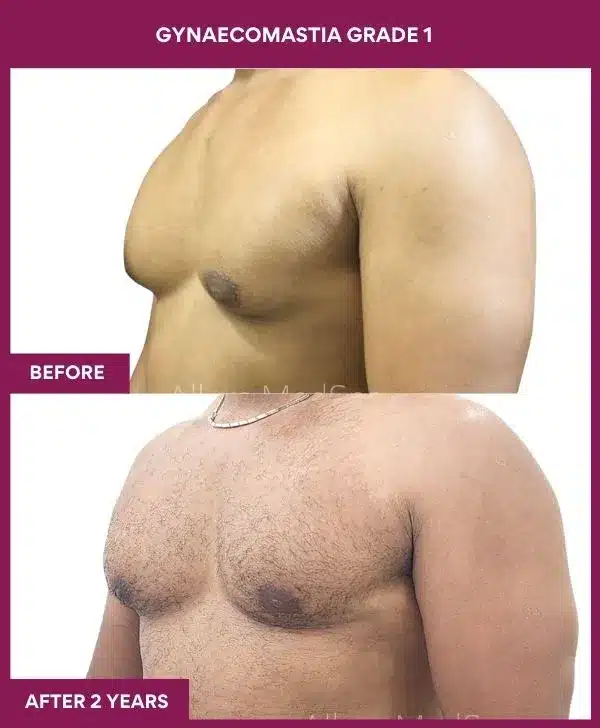
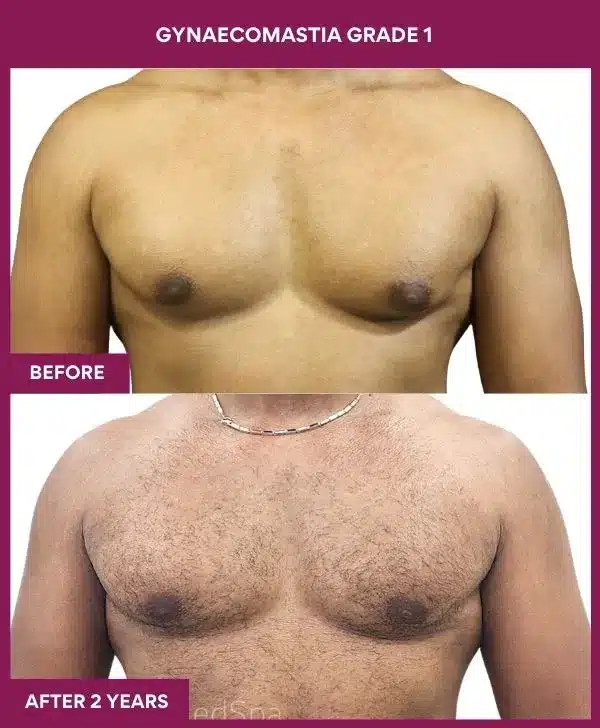
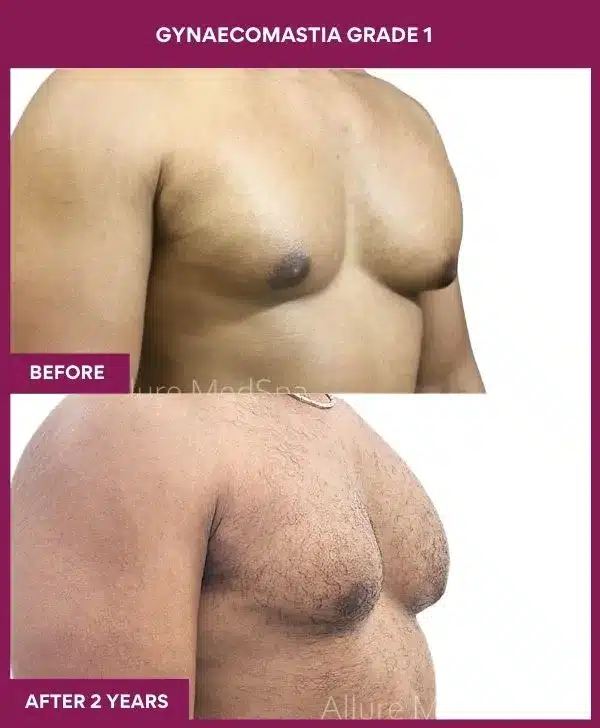
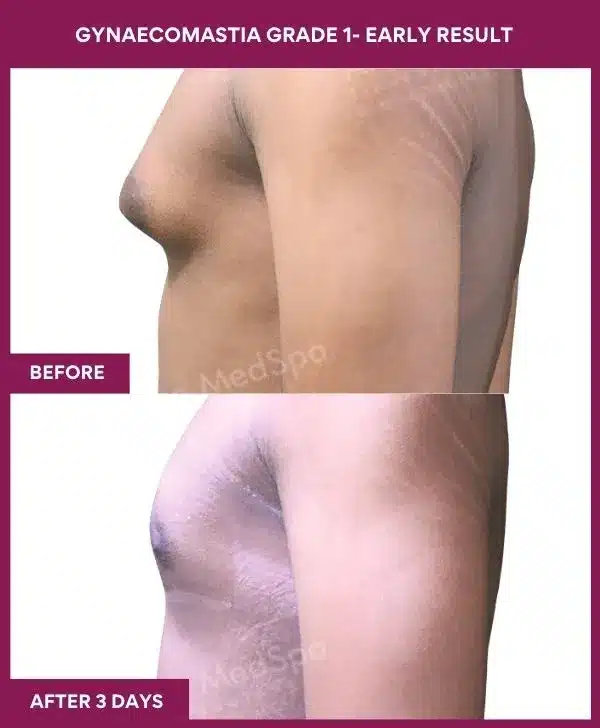
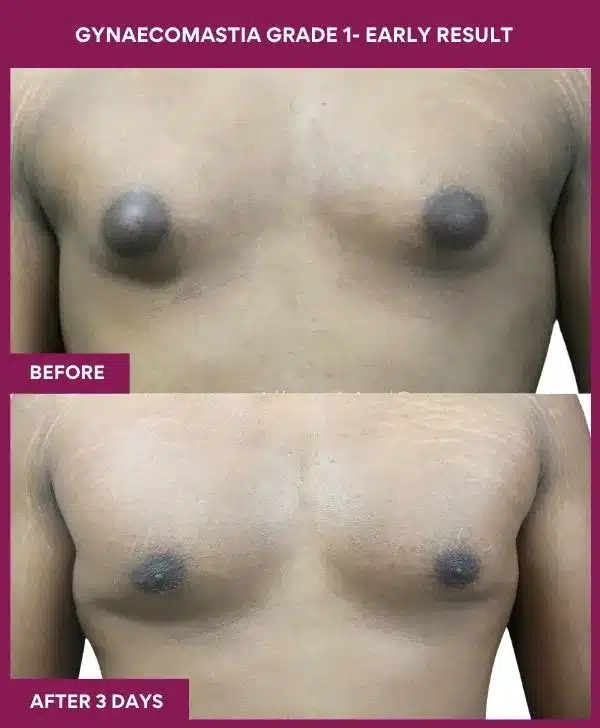
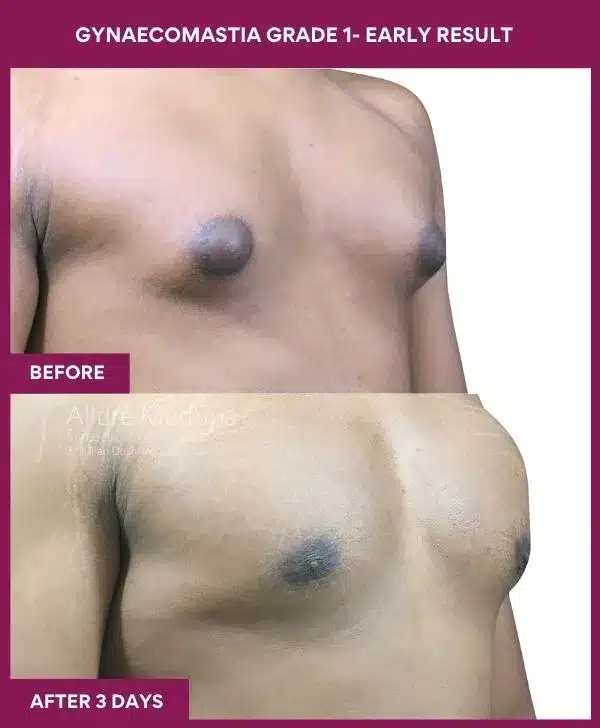
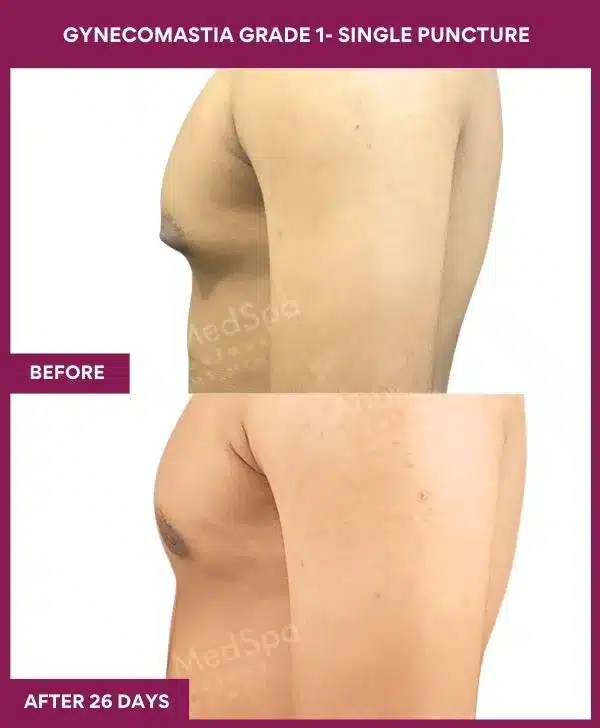
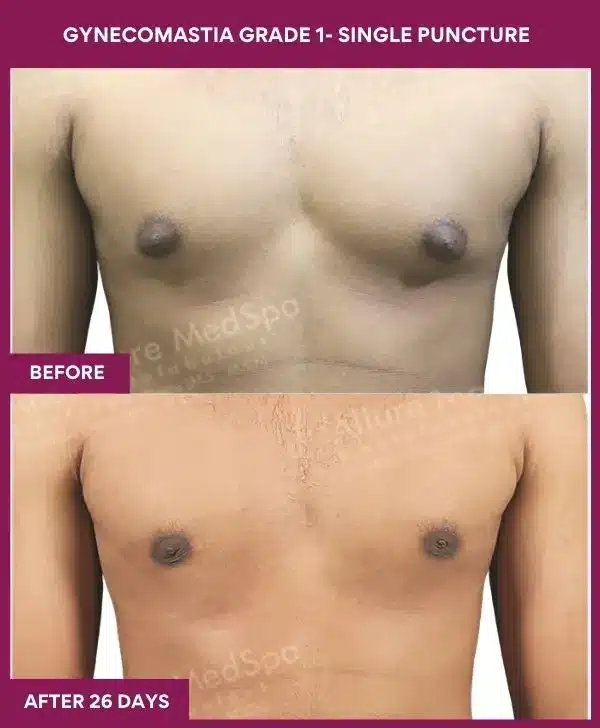
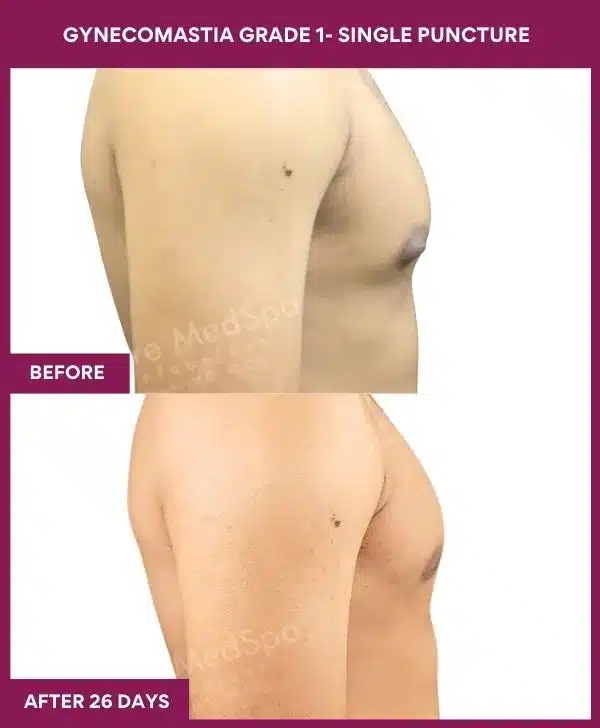
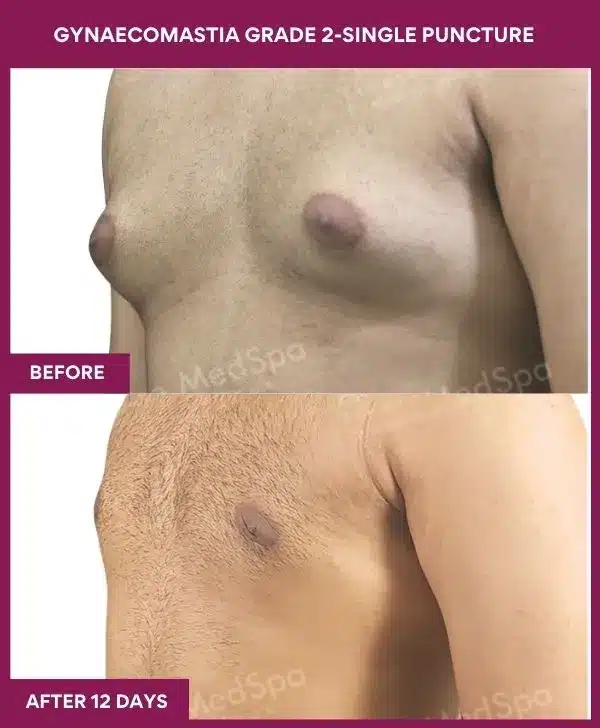
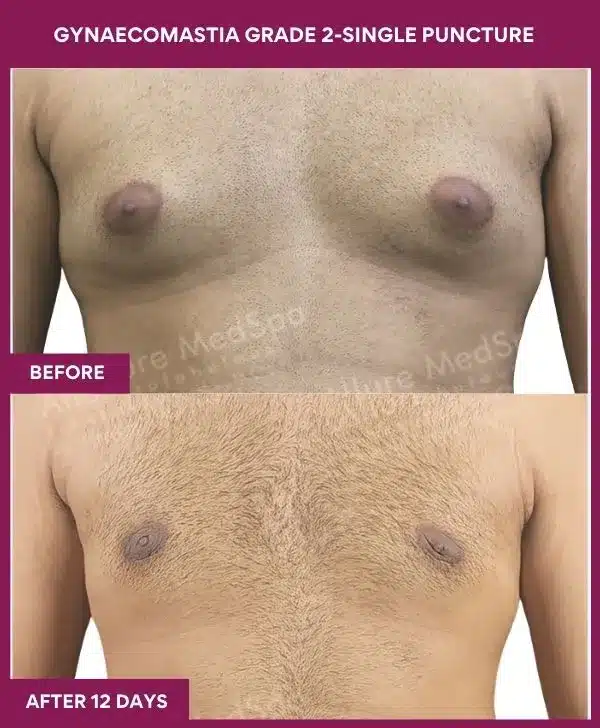
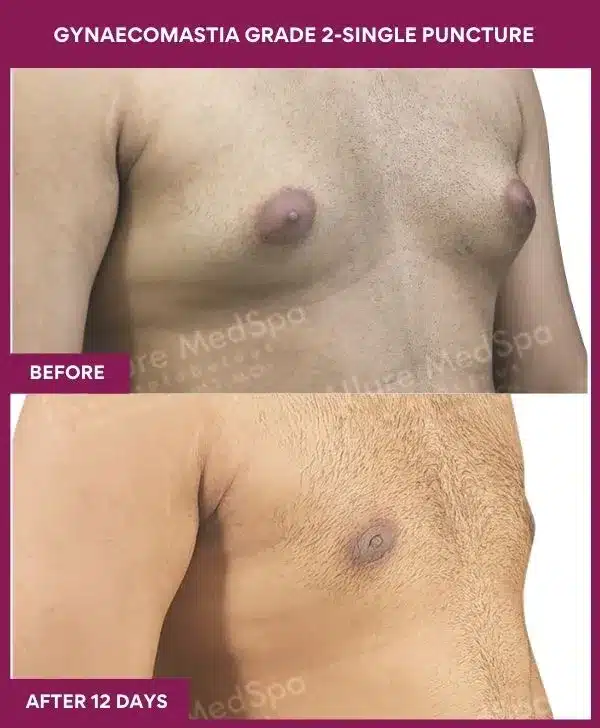
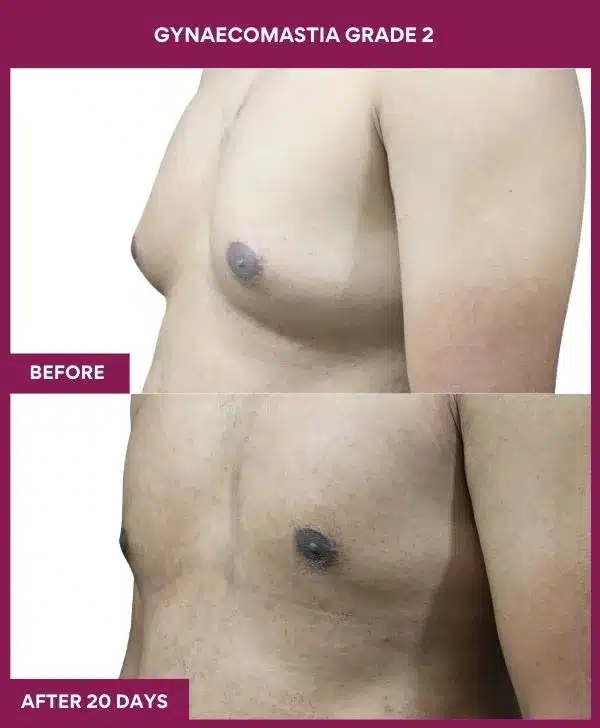
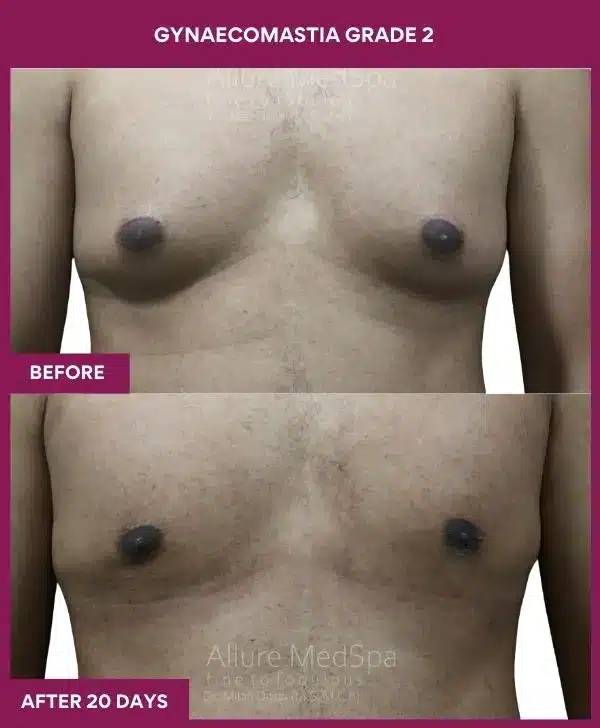
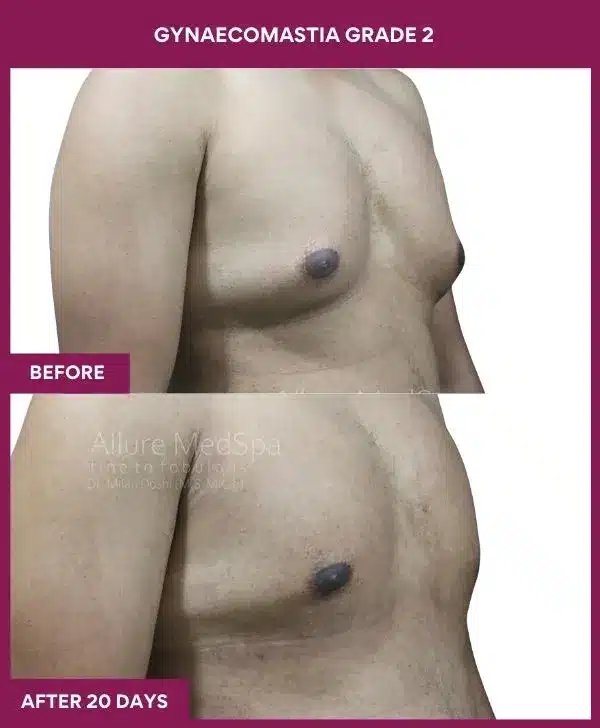
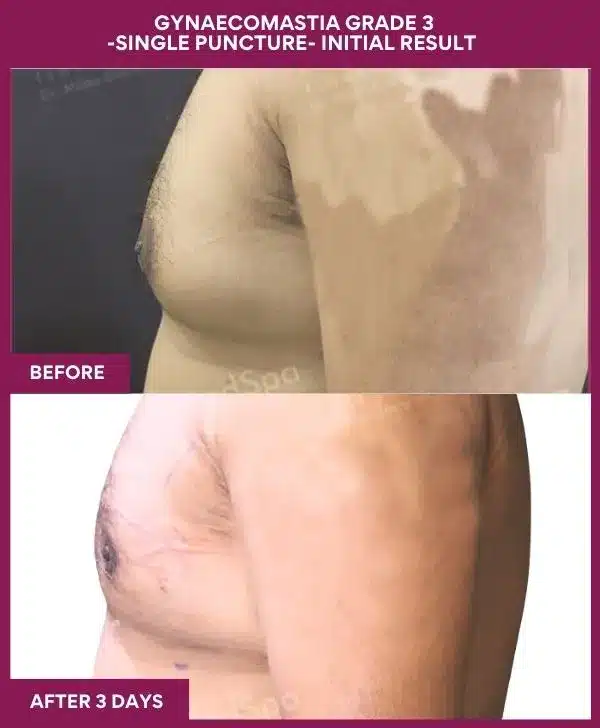
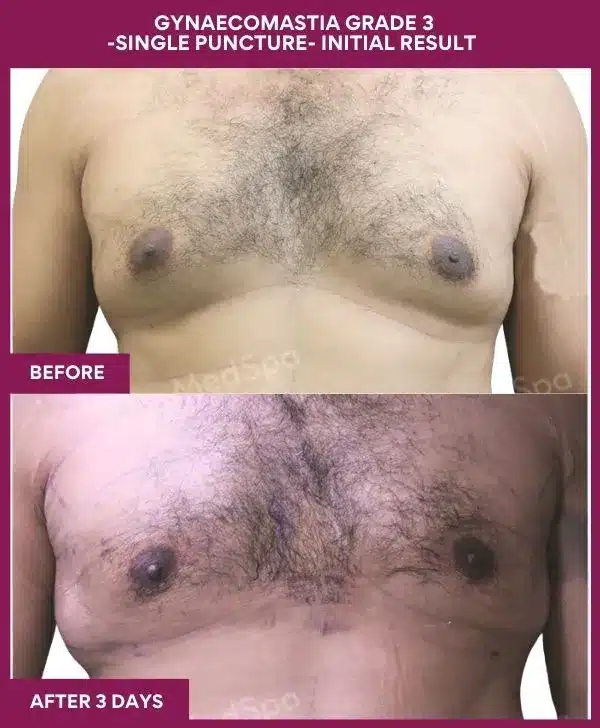
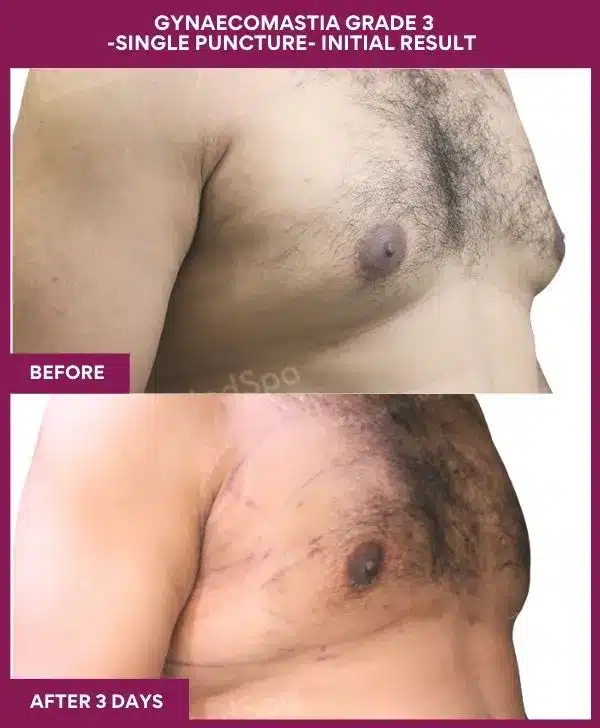
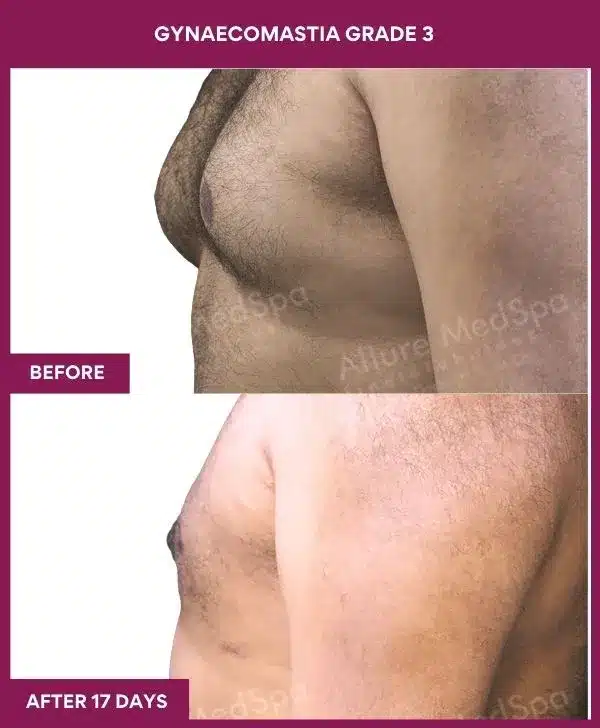
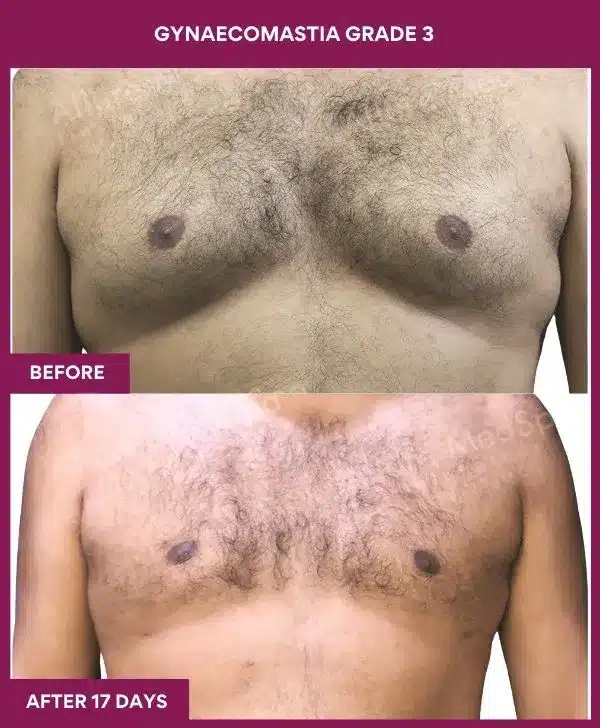
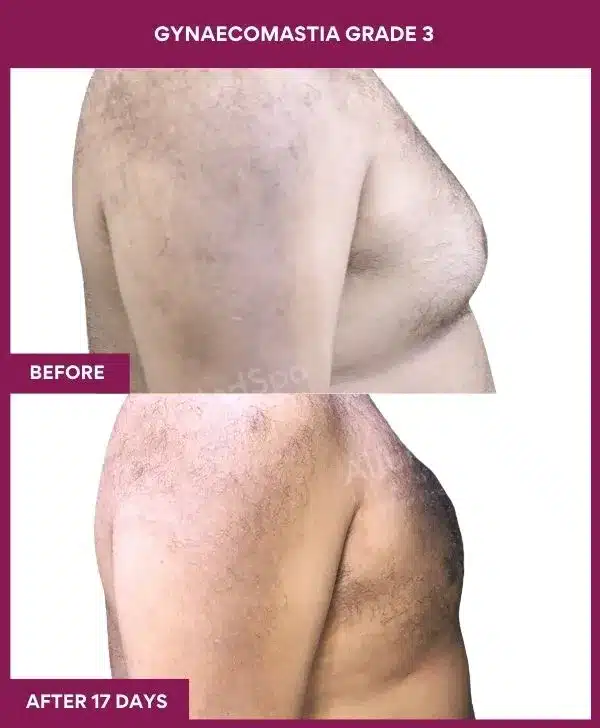
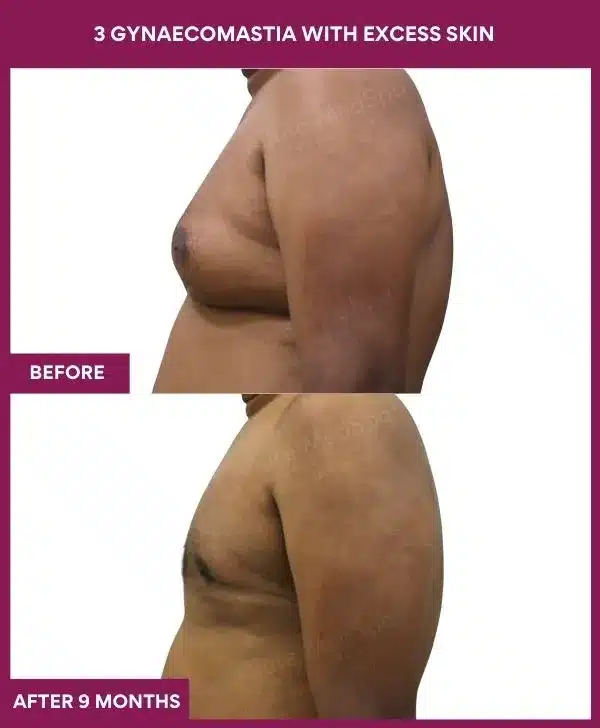
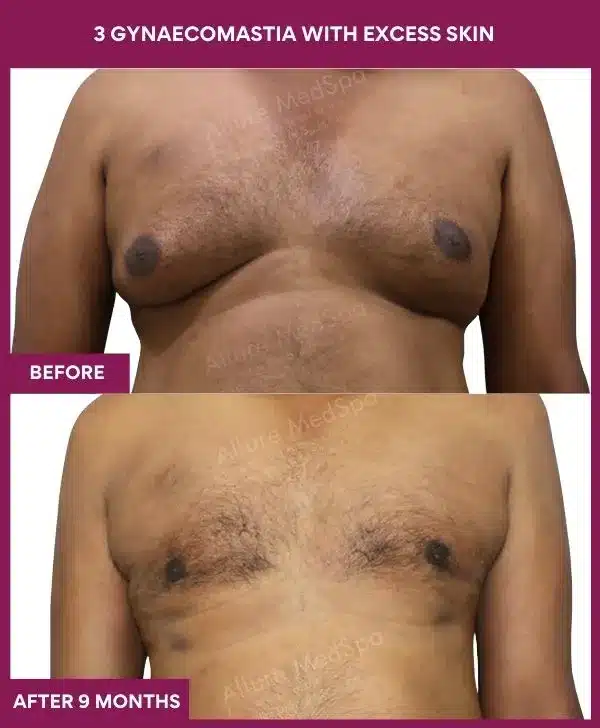
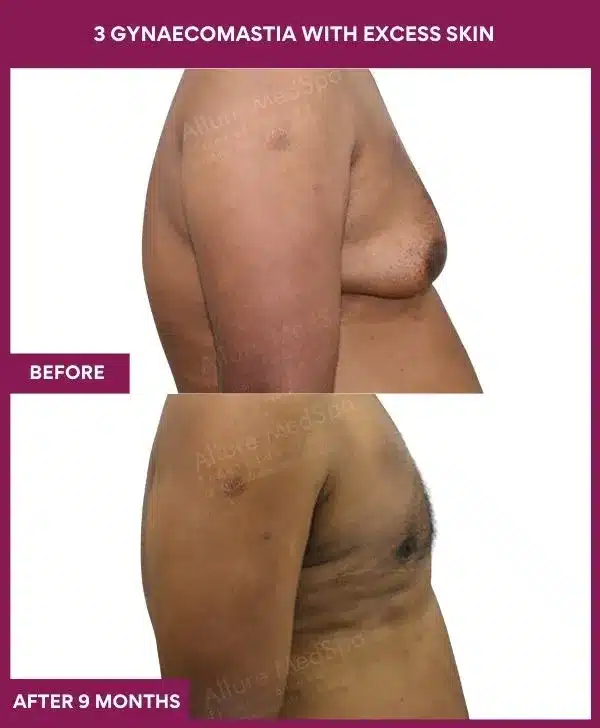
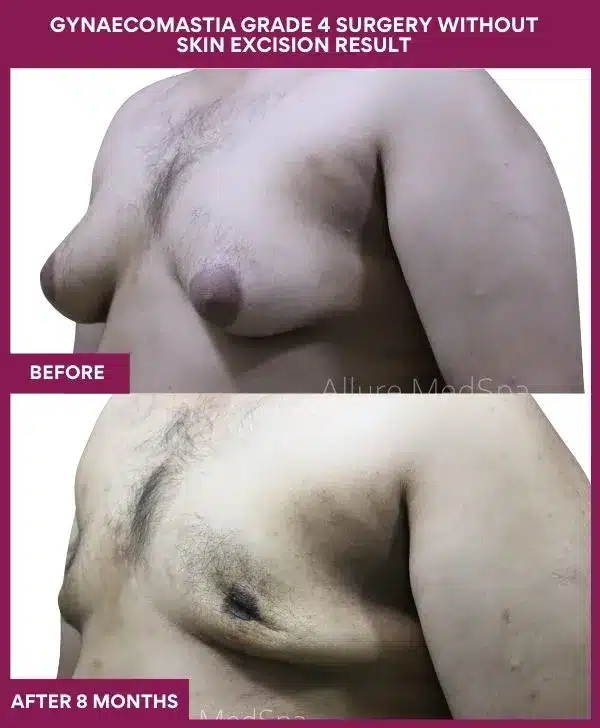
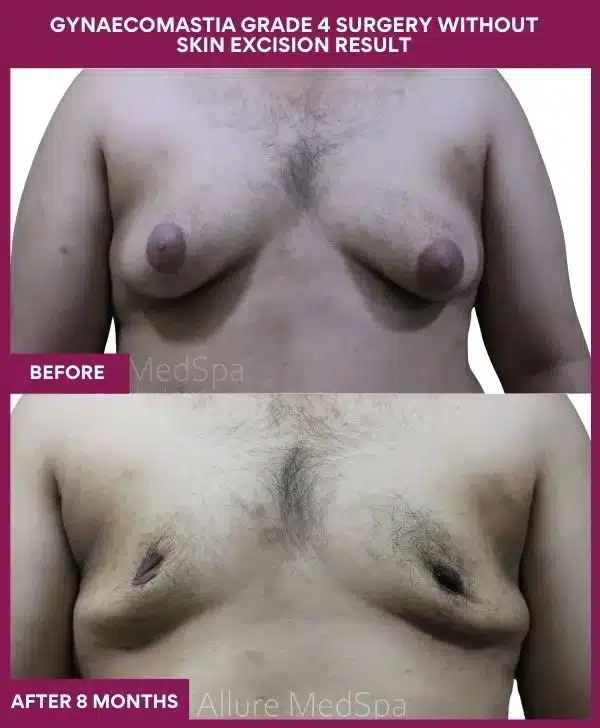
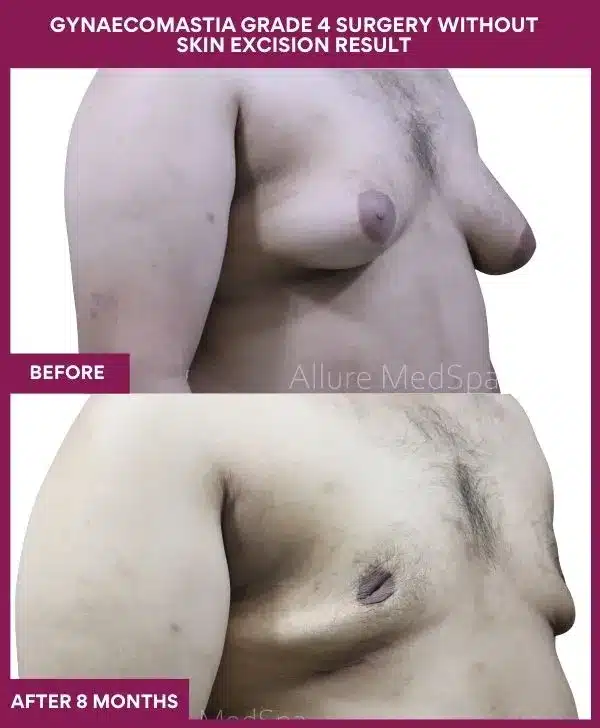
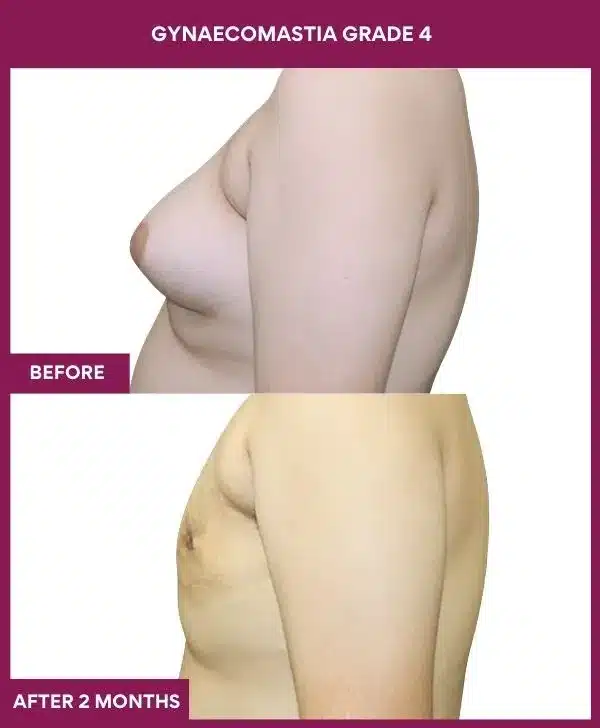
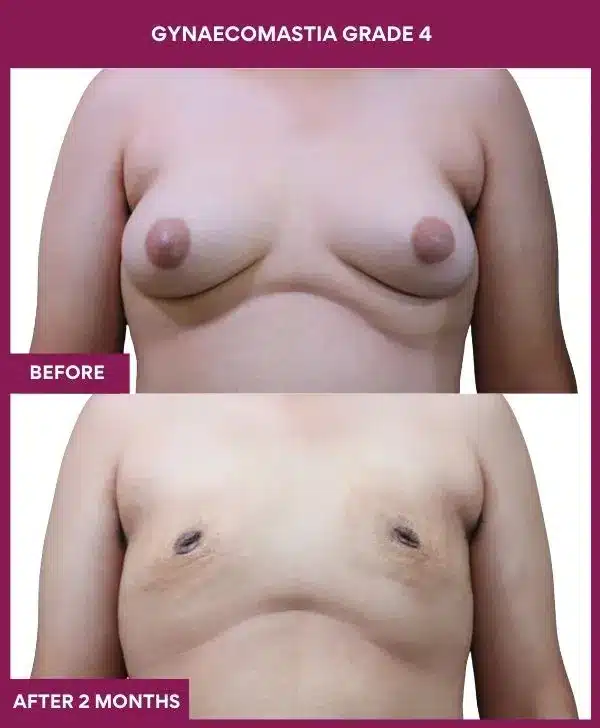
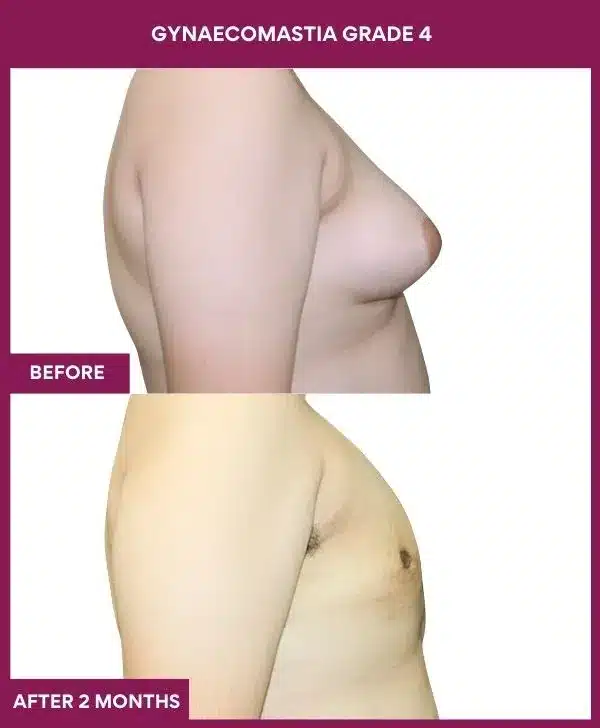
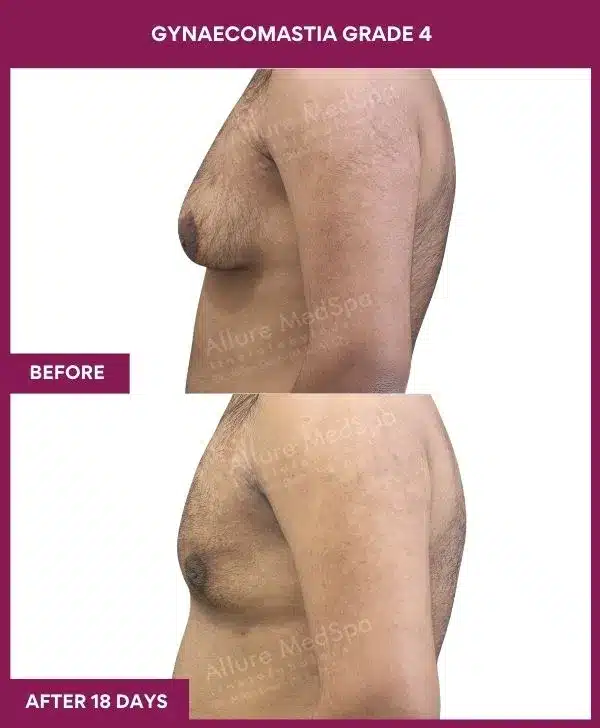
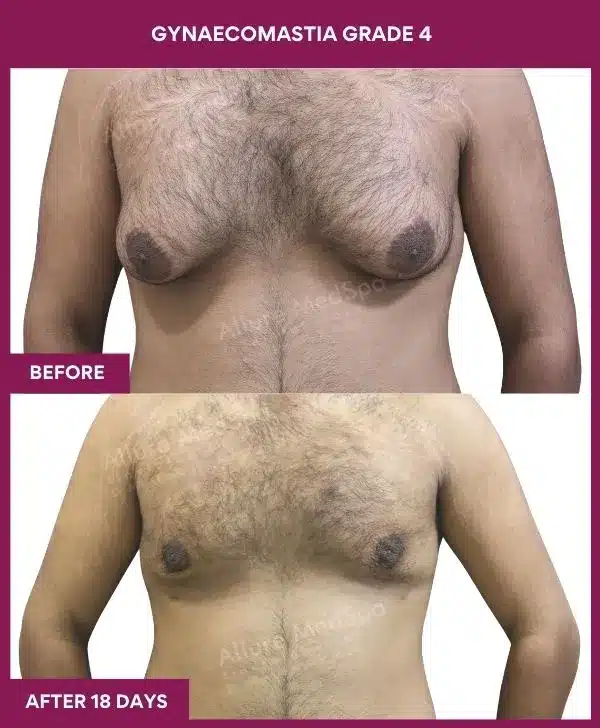
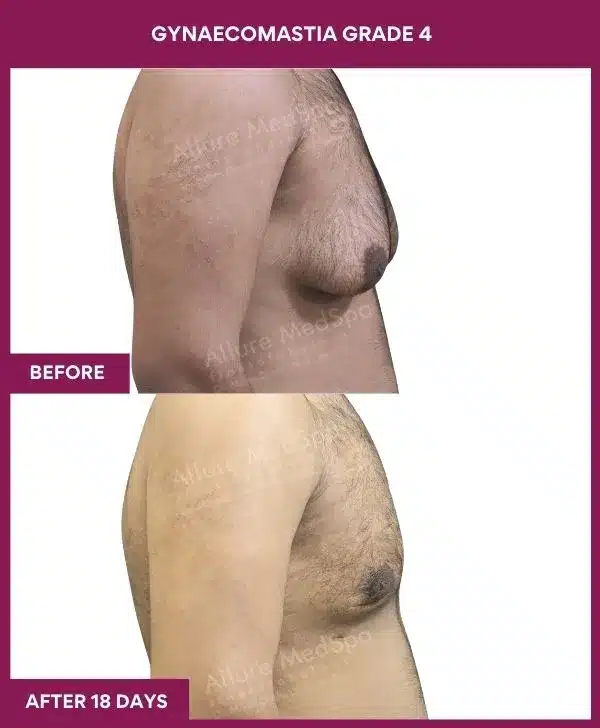
From self-conscious to self-assured—see the change.
Gynecomastia Surgery Testimonials: Fine To Fabulous Journeys

Awarded by Google.com
Rating: 4.7
Reviews: 485+

Awarded by WhatClinic.com
Rating: 4.8
Reviews: 119+

Awarded by Realself
Rating: 4.9
Reviews:453+

Awarded by Facebook
Rating: 4.6
Reviews:105+
Dr Milan Doshi and his staff are very professional and committed as the centre is highly equipped with advanced technology. I had closed rhinoplasty 4 months back and I’m seeing the results as to how it becomes successful.
Deepika Shetty
The doctor explained everything clearly and the surgery was smooth. Recovery was faster than I expected and the team was very supportive.
Rahul Mehta
Very natural results and excellent staff. From consultation to follow-up, the experience was outstanding and boosted my confidence.
Sneha Kapoor
Ready to start your transformation?
Stop hiding. Start living with confidence. Thousands of men have taken the first step—you can too.
- Scarless, painless, permanent correction
- 1,500+ surgeries done by Dr. Milan Doshi
- Trusted by men across India & abroad
You’re one step away from your own transformation story.
Video: Gynecomastia Surgery Explained by Dr Milan Doshi
Dr Milan Doshi is describing the Male Breast Reduction Surgery in detail with benefits, candidacy, associated risks and significance
Get expert insights from Dr. Milan Doshi on scarless chest correction.
Why don’t you remove all gland and fat in gynecomastia surgery?
We don’t remove “everything” under the nipple because it can create a visible dent (crater deformity) or make the nipple look stuck to the muscle. A thin support layer helps maintain a smooth transition and a more natural areola shape.
This aligns with standard patient education: the procedure may involve removing excess fat, gland tissue, or both—and planning is individualized to your anatomy rather than a fixed “one technique for all.”
Authority link: ASPS – Gynecomastia surgery overview
What happens if a surgeon removes too aggressively?
Too-aggressive removal can lead to contour issues that patients often notice most under bright light, in motion, or when shirtless.
Common problems after over-removal
- Crater deformity / saucering: a dip beneath the areola
- Stuck-down nipple: nipple appears tethered to the chest wall
- Contour step-off: a sharp edge between treated and untreated areas
- Asymmetry that becomes obvious in motion or lighting
- Need for fat grafting later to restore contour (more time, more cost/charges, more recovery)
Blunt truth: Correcting an over-resection dent is often more involved than refining mild under-correction.
What does “preserving a thin support layer” actually mean?
It means we avoid making the area under the nipple “paper-thin.” The nipple–areola needs a small cushion/transition layer so it sits naturally and blends into the surrounding chest.
Think of it like tailoring: cutting too much fabric ruins the fit. In a chest, removing too much tissue can spoil the contour—especially under strong lighting or when you raise your arms.
How is gynecomastia surgery different from cancer breast surgery?
Gynecomastia surgery is different because the aim is aesthetic balance, not oncologic clearance. Cancer surgery focuses on margins; gynecomastia surgery focuses on a chest that looks flat, smooth, and natural.
That’s why applying “cancer surgery logic” to cosmetic contouring can produce avoidable dents and tethering. The chest is ultimately judged on how it looks in real life—shirtless, in fitted clothes, and in movement.
Does leaving a support layer increase the risk of recurrence?
Leaving a thin support layer alone does not usually explain what patients call “recurrence.” What people commonly describe as recurrence is often one of these:
- Swelling/scar thickening early on (temporary; needs time)
- Residual gland that was never the main driver (sometimes a perception issue during healing)
- Fat increase from weight gain (the chest can store fat again)
- Hormonal triggers that stimulate gland tissue (e.g., anabolic steroids, certain medications, endocrine causes)
Medical references emphasize that gynecomastia is influenced by hormonal balance and underlying causes, so evaluation and counseling matter—not just removal.
Safer, honest statement for patients:
If triggers are controlled, significant regrowth is uncommon—but fat can return with weight gain, and gland can respond to hormones/medications in susceptible patients.
Authority link: NCBI Bookshelf (Endotext) – Gynecomastia: Etiology, Diagnosis, and Treatment:
How do we balance “flat chest” vs “no dents” in real surgery?
We balance it by aiming for a chest that is flat enough to look masculine without creating an unnatural dip under the areola.
We aim for three outcomes together:
- Flat enough to look masculine
- Smooth enough to look natural in light and movement
- Safe enough to heal predictably with stable areola position
That balance is why “what we preserve” matters as much as what we remove—and it can influence overall value, recovery time, and revision-related fees.
When might a patient still feel “something is left”?
Patients may feel “something is left” during healing because early changes can mimic residual tissue, even when the contour is on track.
Common reasons:
- Early swelling mimicking residual tissue
- Scar firmness under the areola during healing
- Chest asymmetry that existed before surgery
- Loose skin (especially after weight loss) creating shadow and projection
- True residual gland needing refinement (less common when planned correctly)
Internal link (place here): Gynecomastia Surgery Cost by Grade (1–4) (anchor: cost/price factors by severity)
How can you avoid revision surgery?
You can reduce revision risk by choosing the right technique for your chest type and ensuring the plan addresses fat, gland, and skin appropriately—without over- or under-resection under the areola.
What reduces revision risk:
- Clear diagnosis: fat vs gland vs skin
- Explicit plan: lipo-only vs lipo + gland excision vs skin strategy
- Surgeon experience with male chest contouring
- Strict recovery discipline: garment + follow-ups + timing of workouts
Read more: Gynecomastia Revision Surgery Cost
Source: PMC – Gynecomastia: clinical evaluation and management
What should you ask your surgeon in consultation?
Ask targeted questions that reveal whether the plan is built for a natural contour—especially under the areola—rather than a one-size approach.
- What is my problem mainly—fat, gland, skin, or a combination?
- How will you avoid dents under the nipple?
- Will gland excision be done if gland is present?
- If I have loose skin, what is the skin plan?
- What is the recovery system (garment + follow-ups + activity timeline)?
- If I don’t like the contour after healing, what is your refinement approach and likely fees/charges if any?
FAQs: Frequently Asked Question
Q1. Is it “bad” if some tissue is preserved under the nipple?
Ans. No. Preserving a thin support layer can help prevent dents and support a more natural-looking chest contour, especially under the nipple–areola where over-removal can create a visible dip.
Q2. Will leaving a support layer cause recurrence?
Ans. Not by itself. Changes people call “recurrence” are more commonly related to weight gain, hormonal triggers, certain medications, or early swelling and scar firmness during healing. Endocrine factors can play a role in susceptible patients. (Reference: Endotext, NCBI Bookshelf)
Q3. Can over-removal be fixed?
Ans. Often yes, but correction can be more involved than prevention. Treatment may include scar release and sometimes fat grafting to restore a smoother contour, depending on the deformity and tissue quality.
Q4. How long should I wait before judging the final contour?
Ans. Healing evolves over months. Early swelling and firmness under the areola can make the chest look misleading at first, so it’s best to follow your surgeon’s timeline for follow-ups before deciding if refinement is needed.
Realistic “worth it” summary (quick decision rule)
VASER is worth it when: fibrous chest + contour precision matters + plan includes gland/skin decisions properly.
VASER is not worth it when: it’s being sold as a replacement for gland excision or skin correction, or the quote is vague.