Male Facelift in Mumbai - Natural Rejuvenation for Men by Dr. Milan Doshi

Indian Board Certified Plastic Surgeon
M.CH, MS, ISAPS Mentor
16000+ Cosmetic Surgeries
500+ Face Lift Surgeries
Most men considering a facelift are not trying to look dramatically younger. They want the jawline back, the neck to look cleaner and the face to appear less heavy without looking operated on.
A male facelift uses the same fundamental principles as facelift surgery generally, but male anatomy changes important parts of the plan. Beard-bearing skin has a rich blood supply, increasing concern about postoperative haematoma. Sideburns, facial hair and future hair loss affect where scars can be placed. And the aesthetic objective usually emphasises preserving masculine facial character rather than producing an overly smooth or tightened appearance.
Dr. Milan Doshi assesses male facial ageing at Allure Medspa in Andheri West, Mumbai, with surgery performed at the NABH-accredited surgical centre in Goregaon.
Male Facelift Surgery Before And After Images
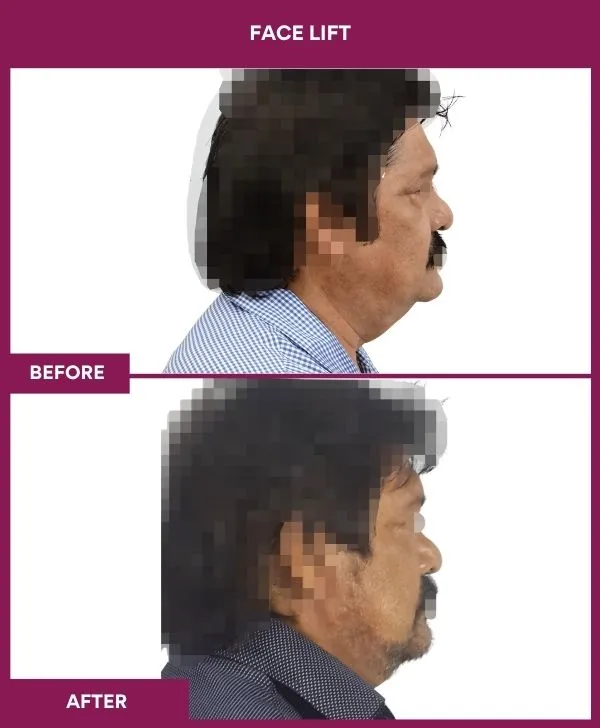
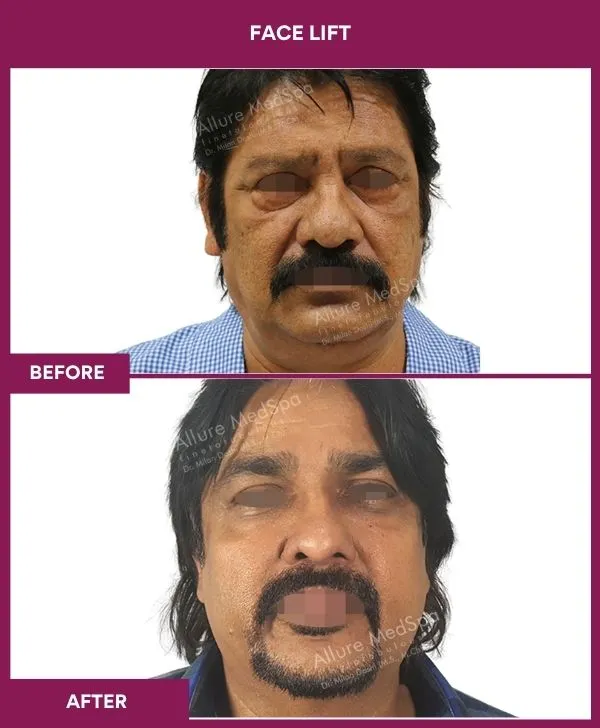
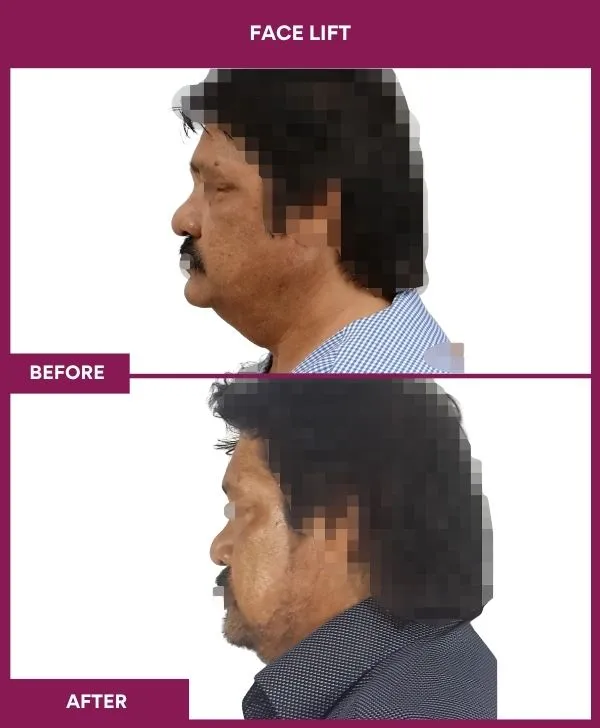
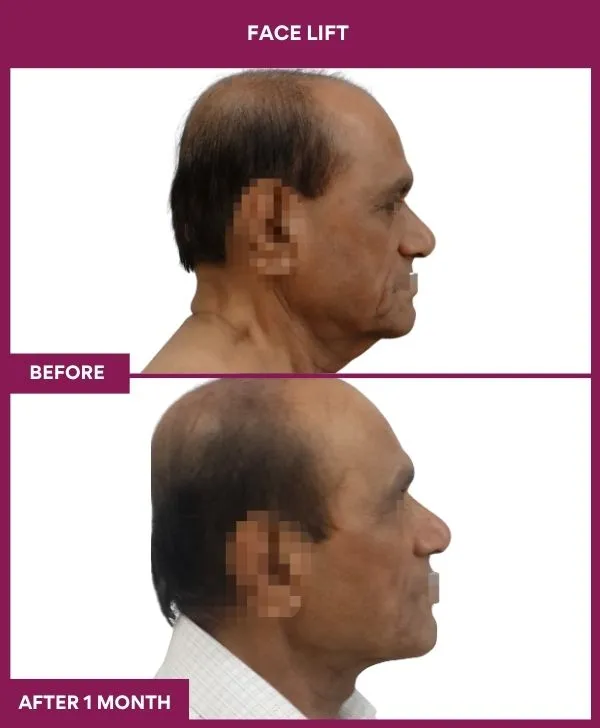
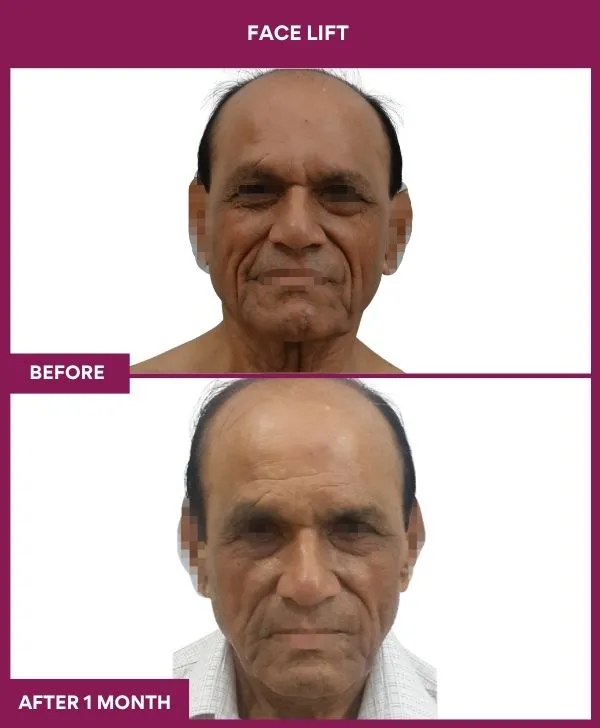
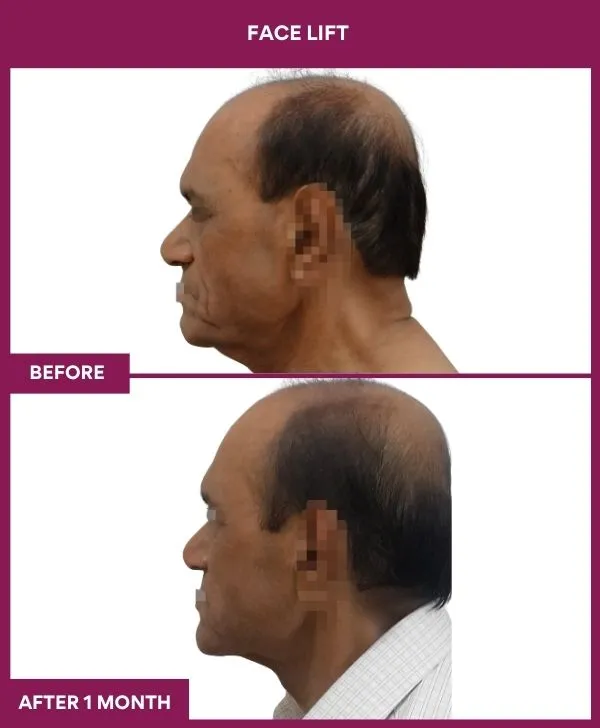
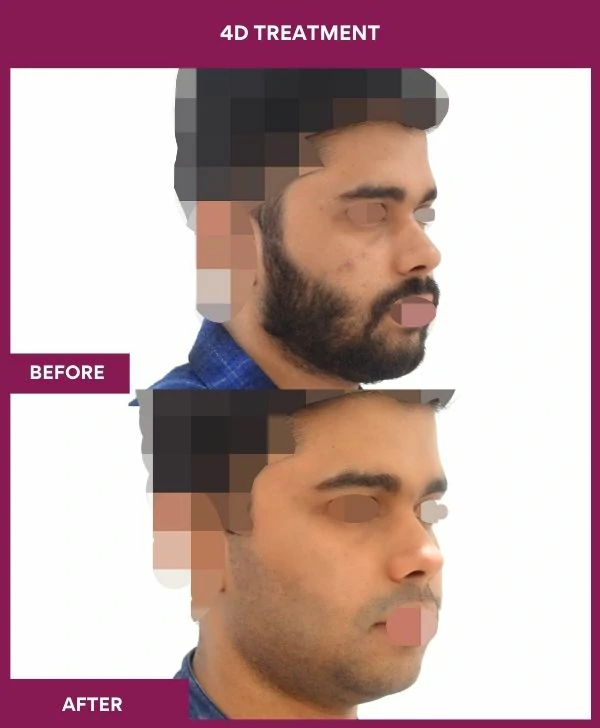
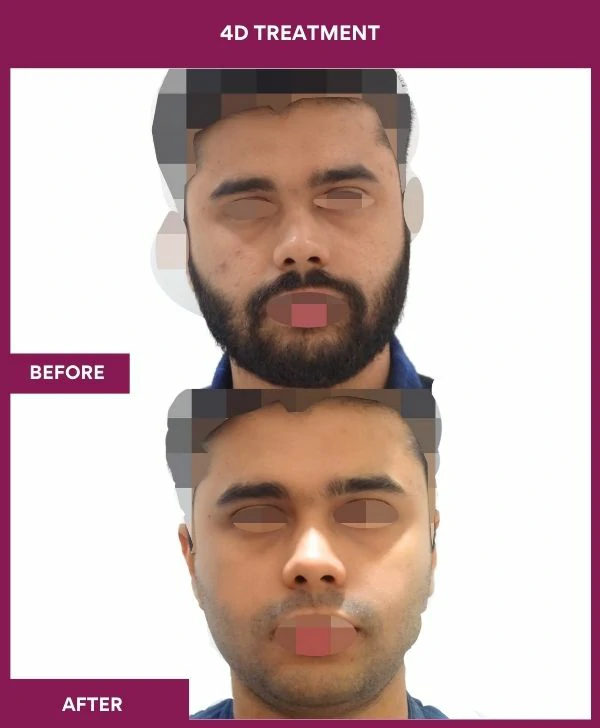
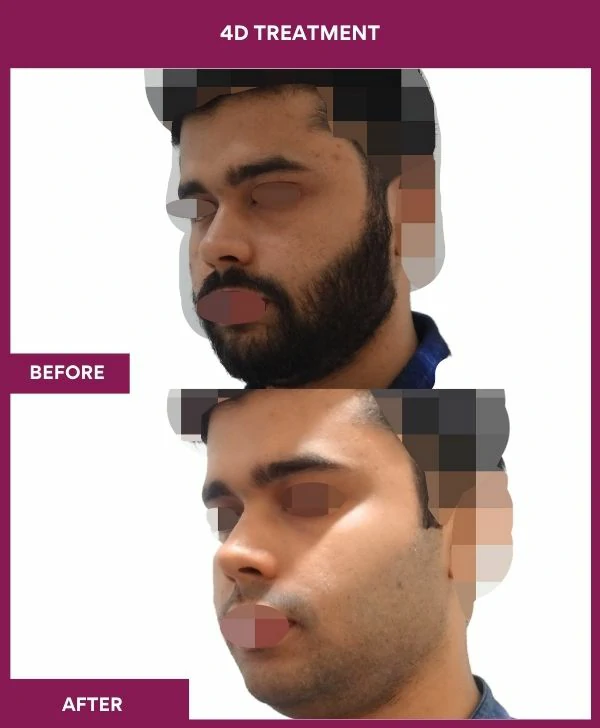
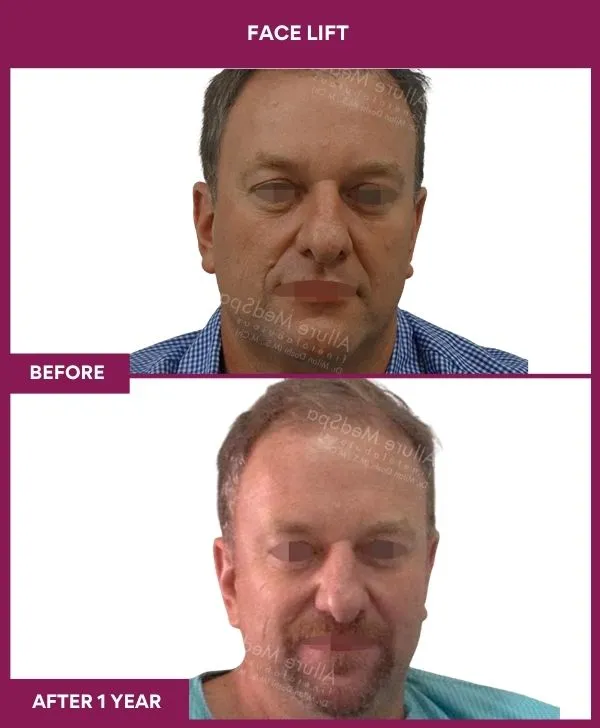
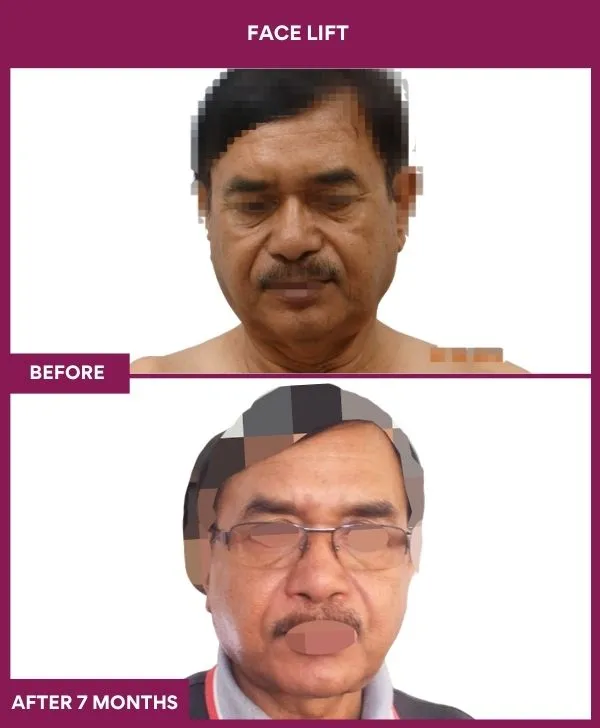
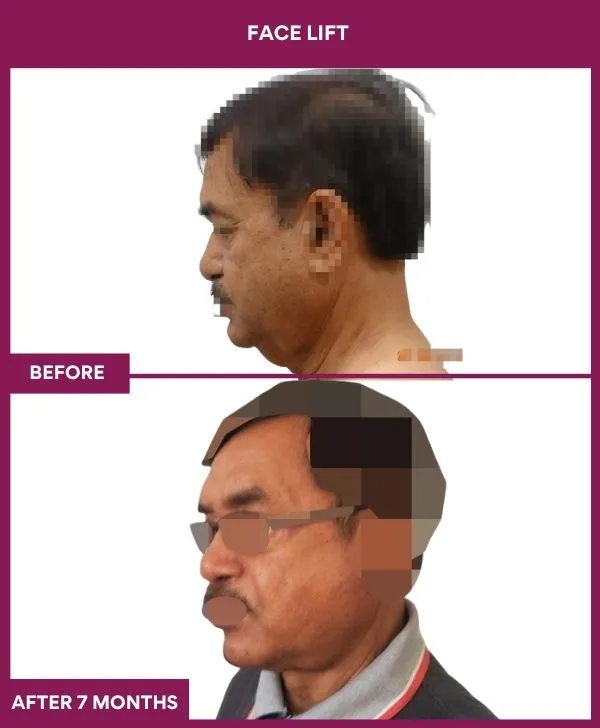
See real transformations from fine to fabulous — achieved with precision and care.
Facelift Surgery Testimonials: Fine To Fabulous Journeys
Thousands have trusted Dr. Milan Doshi to turn back time with natural, youthful results.
Video: Facelift Surgery Explained By Dr. Milan Doshi
Dr. Milan Doshi explains how a natural facelift is planned — technique, safety and realistic results.
Am I a Candidate?
(4 quick questions)
Quick Facts About Male Facelift Surgery
TIME REQUIRED
4 - 5 Hours
ANESTHESIA
General
HOSPITAL STAY
Over night
PAIN LEVEL
Mild–moderate
BACK TO WORK
2–3 weeks
RESULTS LAST
10–12 years
SUCCESS RATE
97–98%
COMPLICATIONS
Under 2–3%
How Much Does Male Facelift Surgery Cost in Mumbai?
A Male facelift in Mumbai typically ranges from ₹1,60,000 to ₹3,00,000 lower than a full facelift because the surgical scope, operating time, and facility requirements are smaller. But the number that actually matters isn’t the starting price, it’s the price of the procedure you need, and that can only be determined after an in-person examination and a written surgical plan not from photos or a phone call.
What you’re paying for isn’t just the surgery itself, it’s the hands doing it. Your procedure would be performed by Dr. Milan Doshi is an Indian Board Certified Plastic Surgeon (M.Ch, MS), ISAPS Mentor, with 16,000+ cosmetic surgeries and 500+ facelifts performed. That volume of facelift-specific experience is what shapes a safer plan, a more predictable outcome, and a quote that holds up once you’re in the room, not a rough guess that changes later.
Type of lift | Indicative price range |
Mini facelift (short-scar) | ₹1,60,000 – ₹2,00,000 |
Lower facelift | ₹1,70,000 – ₹2,20,000 |
Full / SMAS facelift | ₹2,00,000 – ₹2,60,000 |
Neck lift alone | ₹1,60,000 – ₹2,10,000 |
Face and neck lift | ₹2,30,000 – ₹3,00,000 |
+5% GST · Includes surgeon, anaesthesia, OT, hospital stay, medicines and follow-ups. EMI available.
Why the range moves: how much lifting the jawline actually needs, whether the neck has to be included, anaesthesia and facility time, and whether volume restoration is planned alongside the lift. A mini facelift chosen for price rather than anatomy is the most expensive version of this operation, because an under-corrected result may need revision surgery later.
Get your exact quote & surgery plan
Share your details — our team responds within working hours with cost, EMI options and next steps.
Most Common Question People Ask
Q1. What is a male facelift, and how is it different for men?
Ans. A male facelift uses standard facelift principles but adapts them to male anatomy and priorities. Beard-bearing vascular skin influences bleeding risk, sideburns and hair loss affect incision planning, and the aesthetic goal generally prioritises jawline and neck definition while preserving masculine facial character.
Q2. Do men have a higher risk of facelift complications?
Ans. Men have a recognised higher risk of postoperative haematoma in a prospective series of 11,300 facelift patients, male sex carried a relative risk of 3.9 and was an independent predictor.
But that risk is one of the most modifiable in facial surgery. Blood-pressure control, smoking status, medicines and supplements affecting bleeding, and operative haemostasis all matter. Protocols built around strict perioperative blood-pressure control have reported haematoma rates under 1%.
Q3. Where are facelift incisions placed in men?
Ans. Incision position depends on beard growth, sideburn height, skin laxity and hairline pattern. Surgeons may use pretragal or retrotragal approaches and adapt temporal and post-auricular scars to remain discreet despite short hair or future balding.
No single incision is ideal for every male patient.
Q4. Will a facelift affect my beard or sideburns?
Ans. It can if hair-bearing skin is not planned carefully. Facelift skin redraping can potentially move beard-bearing tissue toward the tragus or alter sideburn height.
Male-specific incision design aims to preserve natural facial-hair boundaries and minimise these changes.
Q5. Will a male facelift make me look feminine or “done”?
Ans. That should not be the intended result. Male-facelift planning aims to restore support and jaw-neck definition while preserving individual masculine proportions.
Excessive skin tension, altered hairlines or overcorrection can create an unnatural appearance, which is why conservative, anatomy-led planning matters.
Q6. How long is male facelift recovery?
Ans. Most men follow the general facelift recovery pattern rather than a unique male timetable. Visible swelling and bruising usually improve over the first few weeks, while subtle swelling and altered sensation may last longer.
Men should take early bleeding precautions particularly seriously because haematoma risk is higher.
Q7. How long do male facelift results last?
Ans. Results may remain meaningful for years, but no exact duration applies to every man. Surgery resets facial and neck contours; it does not stop aging.
Technique, skin quality, weight change and lifestyle affect durability.

Why Choose Dr. Milan Doshi?
Dr. Milan Doshi, MCh, MS — Indian board-certified plastic surgeon with 27+ years in aesthetic surgery. ISAPS mentor, trusted by patients from 70+ countries. Consults at Andheri West; surgeries at the NABH-accredited surgical centre, Goregaon West.
Male facial rejuvenation depends on planning around anatomy that a general facelift approach does not encounter: hypervascular beard-bearing skin, a sideburn whose position is visually load-bearing, and a hairline that will keep changing after the operation.
Dr Doshi Note: “The commonest thing I change in a male plan is scar position, and the reason is almost always the hairline rather than the face.”
The Complete Guide About Mini Facelift Surgery
What Is a Male Facelift?
A male facelift is facial rejuvenation surgery adapted to male anatomy, hair patterns and aesthetic goals. The operation may reposition deeper facial tissues, improve jowls and refine the jawline and neck, but planning must also protect the beard, sideburns and hairline while preserving a natural masculine appearance.
The underlying principles overlap substantially with other facelift surgery: deeper tissues such as the SMAS are supported or repositioned, excess skin is redraped, and the lower-face contour is refined. What differs is the context in which those steps are performed.
Male-facelift surgical literature highlights several specific considerations: male facial skin tends to be thicker and more vascular; beard-bearing skin changes peri-auricular incision planning; short hairstyles and future male-pattern hair loss make scar camouflage less forgiving; sideburn position should be preserved; the operation should avoid shifting hair-bearing skin onto the tragus; and aesthetic planning should retain the patient’s masculine facial character.
A male facelift is therefore not simply the same operation with a different patient profile.
Source
How Is a Male Facelift Different From a Female Facelift?
Three differences matter most: thicker, more vascular facial skin can increase postoperative bleeding risk; beard, sideburn and hairline patterns complicate incision placement; and the aesthetic objective generally prioritises a defined jawline and natural masculine character without excessive tightening or feminisation.
| Factor | In men | Why it matters |
|---|---|---|
| Skin and vascularity | Often thicker and more vascular, especially in hair-bearing areas | Male sex is associated with higher haematoma risk |
| Beard | Hair-bearing skin extends close to the ear | Incisions and skin redraping must avoid unwanted beard growth on the tragus |
| Sideburns | Shape and height are visually important | Excessive elevation can look unnatural |
| Hairline | Short hair and progressive balding are common | Scars that are concealed today may become visible later |
| Scar camouflage | Often less hair coverage and no makeup | Incision placement becomes especially important |
| Aesthetic goal | Usually a defined jawline and neck while retaining character | Avoid an overly smooth, tight or feminised result |
Published male-facelift texts specifically identify hypervascular skin, beard and hairline differences, short hairstyles and future hair loss as reasons male surgery requires different planning.
These are tendencies rather than rules for every man. Hair density, beard pattern, skin thickness and desired outcome still need individual assessment.
Sources
How Are Incisions Planned Around a Beard, Sideburns and Hairline?
Incision planning is one of the most genuinely male-specific parts of facelift surgery. The surgeon must preserve the sideburn, avoid dragging beard-bearing cheek skin onto the ear, position scars where short hair will not expose them unnecessarily, and anticipate how future male-pattern hair loss could reveal an incision that is hidden today.
Beard and tragus. Incisions are planned to prevent beard-bearing skin from shifting onto the tragus. Pretragal or retrotragal placement is selected according to beard pattern, skin quality, laxity and scar considerations.
Sideburn preservation. Careful planning helps maintain the natural height and shape of the sideburn.
Future hair loss. Incisions must also consider thinning or receding hair, as scars hidden within the hairline today may become visible later.
The aim is not automatically to use the shortest scar possible. If more skin needs to be managed, restricting incision length simply to advertise a “short-scar” operation can compromise correction.
Source
- Steinbrech DS, Cohen O. The Male Face-Lift. In: Male Aesthetic Plastic Surgery. Chapter 7. Thieme; 2021. — on beard distribution, sideburn preservation, short hairstyles, future hair loss and male-specific incision planning.
What Are the Aesthetic Goals of a Male Facelift?
The goal is usually a fresher, better-defined version of the same male face not a uniformly smooth one. Jawline and neck definition matter, but so do preserving facial character, avoiding excessive skin tension, and keeping the result proportionate to the patient’s brow, cheeks, chin, beard pattern and overall facial structure.
Male-facelift surgical literature emphasises restoration of the jawline and neck while preserving a natural, relaxed masculine appearance, and specifically cautions against an over-operated result that may appear pulled or feminised.
That may mean deliberately not eliminating every crease.
Ageing affects several structures at once: skin, fat, deeper support, neck muscle and skeletal proportions. Attempting to erase all evidence of age by increasing skin tension can move the face away from its original identity.
At Allure Medspa, the broader aim is natural refinement: restore support and definition while preserving the patient’s own proportions and ethnic character.
The useful visual endpoints for many male patients are:
- a clean jowl-to-jaw transition
- improved neck-jawline definition
- preserved sideburn and beard patterns
- a normal-looking ear and tragus
- no obvious lateral pull
- enough natural texture and character to keep the face recognisable
Source
- Steinbrech DS, Cohen O. The Male Face-Lift — on preserving masculine character and a natural, relaxed appearance.
Do Men Have a Higher Risk of Haematoma After Facelift Surgery?
Yes. Male sex is a recognised risk factor for postoperative haematoma after facelift surgery, because male facial and beard-bearing tissues are more vascular. But sex is only one part of risk and it is one of the more modifiable risks in facial surgery.
A haematoma is a collection of blood beneath the operated skin. It may cause increasing swelling, pressure and pain and is the most frequently encountered early facelift complication.
How large is the risk? Published rates average approximately 3–4%, although figures vary between studies. In a prospective study of 11,300 facelift patients, haematoma occurred in 1.1% of cases, and male patients had a higher relative risk.
What does this mean for male patients? Careful blood-pressure control is especially important. Patients should disclose all medicines and supplements, follow instructions regarding blood-thinning products, avoid nicotine and respect early activity restrictions. Significant pain, vomiting or sudden one-sided swelling must be reported immediately.
→ For urgent postoperative symptoms and complete red-flag guidance, see the facelift recovery guide.
Sources: Mayo Clinic — Face-lift.
Am I a Good Candidate for a Male Facelift?
A suitable candidate has meaningful jowling, lower-face or neck laxity that surgery can improve, acceptable medical fitness and realistic expectations about scars, recovery and results.
Blood pressure, nicotine exposure, medicines, hair pattern, beard distribution and the degree of neck ageing all affect planning.
Age alone does not decide candidacy. A man in his forties with significant neck laxity may have a clearer surgical indication than an older patient whose structural changes remain relatively mild.
Assessment should consider:
- degree of jowling
- neck skin and platysmal bands
- submental fullness
- skin thickness and elasticity
- sideburn and beard pattern
- current and likely future hairline
- blood-pressure history
- nicotine exposure
- previous surgery
- medical fitness
- whether the expected correction matches the patient’s goals
Mayo Clinic emphasises that facelift consultation should include medical history, medication review, facial anatomy and an explicit discussion of what surgery can and cannot achieve.
Surgery may appropriately be postponed or declined if health risks are not adequately controlled, or if the requested result is not realistically achievable.
Sources
- Mayo Clinic — Face-lift
- Gupta V, et al. Aesthet Surg J. 2016.
How Is a Male Facelift Performed?
After male-specific incision planning, the deeper facial tissues are supported or repositioned according to the selected facelift technique, the jawline and neck are addressed where indicated, and excess skin is redraped without excessive tension. The operation is individualised rather than using one standard “male facelift technique”.
The exact deeper approach may involve a SMAS-based, deep-plane or other anatomical strategy depending on the patient’s facial ageing. That technical comparison belongs in the facelift types and techniques guide.
If platysmal bands, loose neck skin or submental fullness are major parts of the problem, the surgical plan may also incorporate a neck lift or platysmaplasty.
Large-scale studies have not found a significant relationship between facelift technique and haematoma risk. So a man comparing quotes should not assume a particular named technique is safer for him — the difference is made by blood-pressure management, not by the operation’s name.
Sources
- Kleinberger AJ, Spiegel JH. What is the best method for minimizing the risk of hematoma formation after rhytidectomy? — Laryngoscope TRIO Best Practice review.
- Steinbrech DS, Cohen O. The Male Face-Lift.
What Is Male Facelift Recovery Like?
Male facelift recovery follows the same broad biological phases as facelift recovery generally: swelling and bruising are most visible early, social appearance improves over the following weeks, and residual tightness, numbness and swelling settle more gradually.
Men need particular attention to early bleeding precautions, because male sex is a recognised haematoma risk factor.
Do not assume that thicker male skin automatically produces a specific longer recovery timeline. Available sources support the anatomical difference but do not establish one universal male-versus-female recovery duration.
The important early priorities are:
- follow blood-pressure and activity instructions
- avoid nicotine
- take only approved medicines
- keep incisions protected
- avoid strenuous activity until cleared
- report rapidly increasing one-sided swelling, pressure or pain urgently
→ The full day-by-day timeline, aftercare and red flags: facelift recovery guide.
Sources: Mayo Clinic — Face-lift, on recovery and complication factors.
How Long Do Male Facelift Results Last?
Male facelift results can remain meaningful for years, but surgery does not stop facial ageing. Exact longevity varies with technique, tissue quality, weight change, sun exposure, nicotine use and the degree of correction performed.
Current Mayo Clinic facelift guidance does not give a fixed decade-long promise. It states that facelift results are not lifelong and that the face continues to age after surgery.
Source: Mayo Clinic — Face-lift
What Makes a Male Facelift Look Natural?
A male facelift is not defined simply by the patient’s sex. The operation must account for vascular skin, beard distribution, sideburns, current and future hair loss, neck anatomy, jawline structure and the degree of correction that still looks natural on that individual face.
If you are considering a male facelift in Mumbai, book an assessment with Dr. Milan Doshi at Allure Medspa in Andheri West, or request a preliminary WhatsApp review. When surgery is appropriate, it is performed at the NABH-accredited surgical centre in Goregaon.
The objective is refinement without replacing identity.