
Mole, Wart & Skin Tag (Acrochordon) Removal in Mumbai: Clear, Confident Skin — Safely

Indian Board Certified Plastic Surgeon
M.CH, MS, ISAPS Mentor
16000+ Cosmetic Surgeries
500+ Skin Tag Removal
Mole, wart and skin tag removal is a minor dermatological procedure that clears unwanted skin growths — including DPN (dermatosis papulosa nigra) — using laser, radiofrequency, cryotherapy or minor excision under local anaesthesia. Most growths are harmless, but any suspicious or changing mole is first assessed and, when needed, excised with histopathology — so at Allure Medspa removal is always safe first, cosmetic second, and a plastic surgeon chooses the method that leaves the least mark on Indian skin.
Mole, Wart & Skin Tag Removal Before and After Images
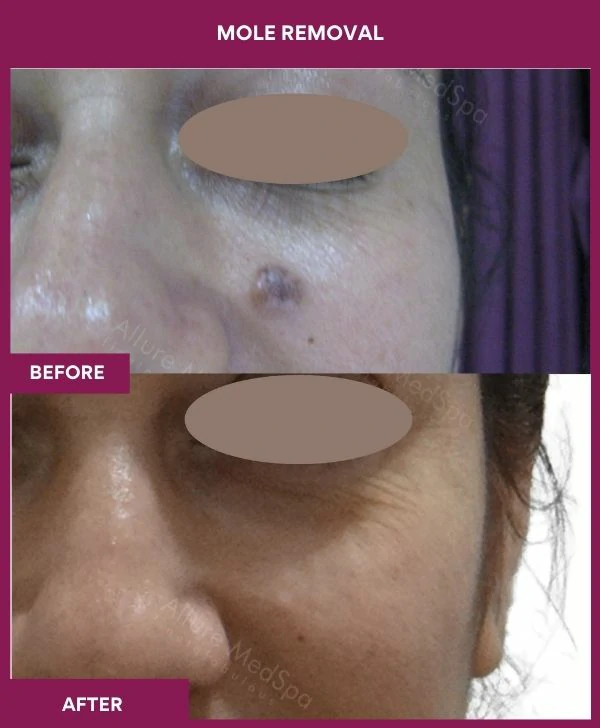
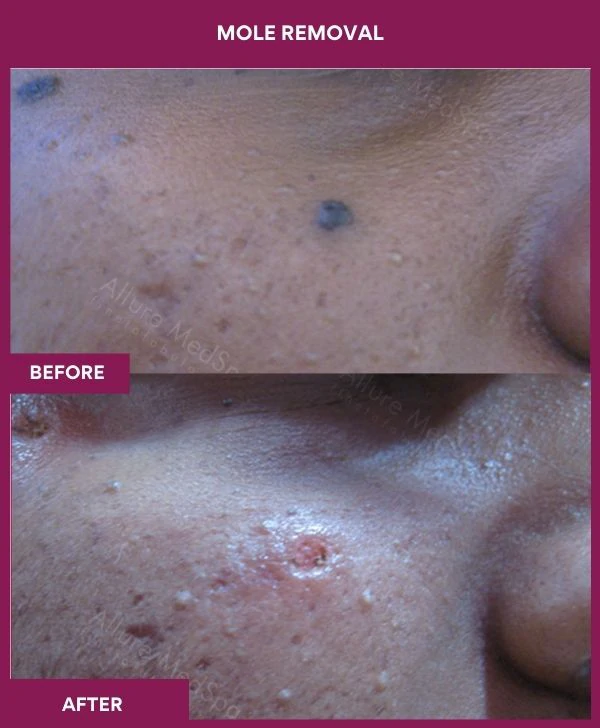
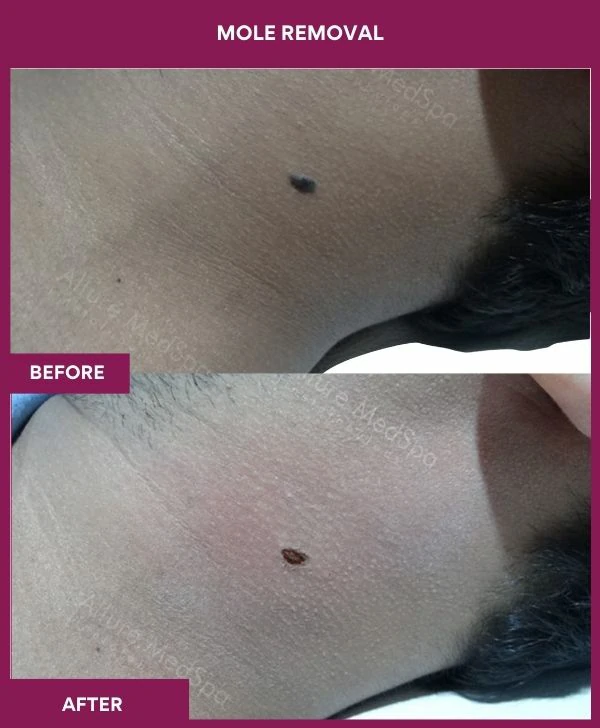
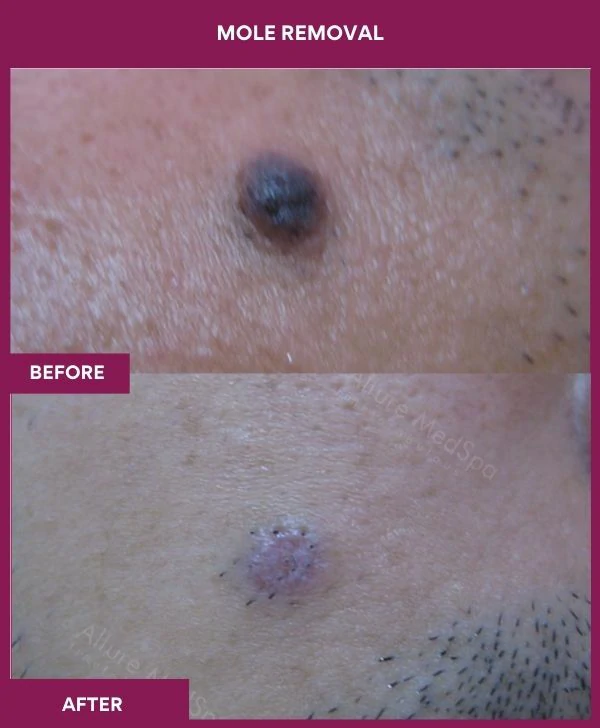
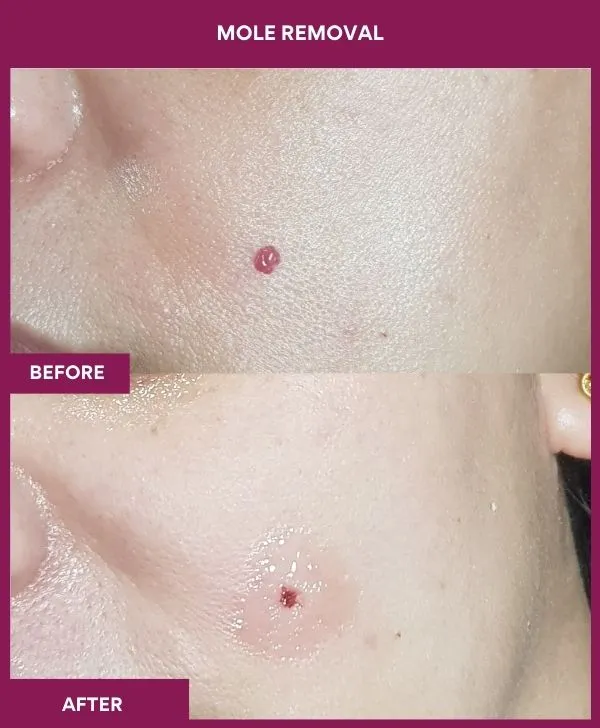
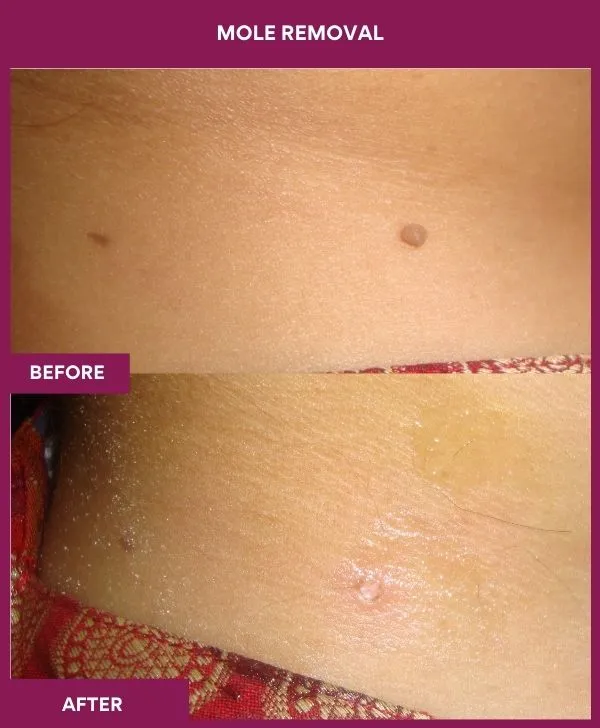
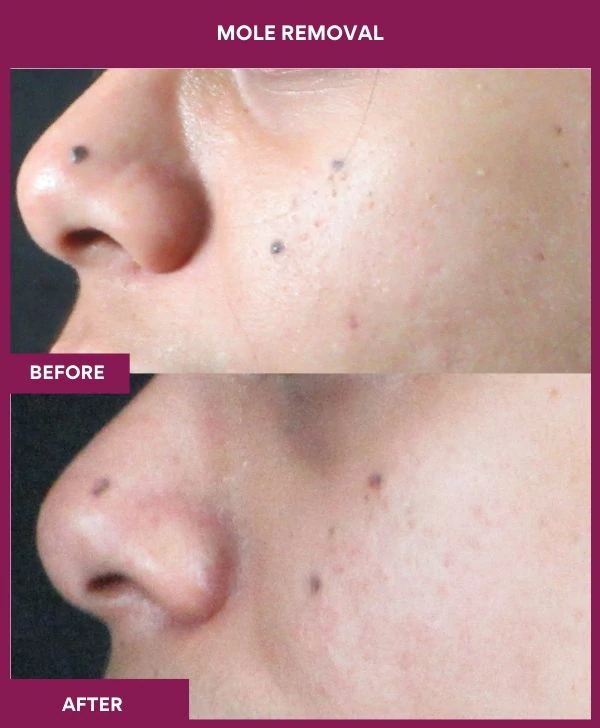
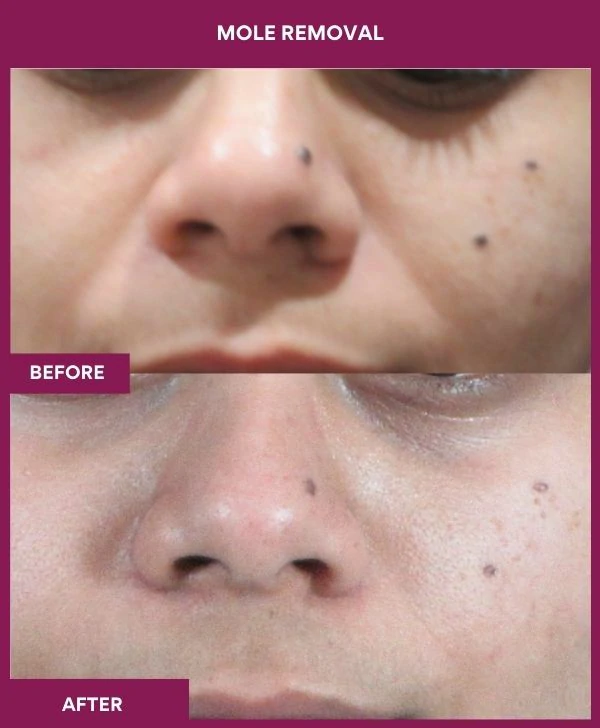
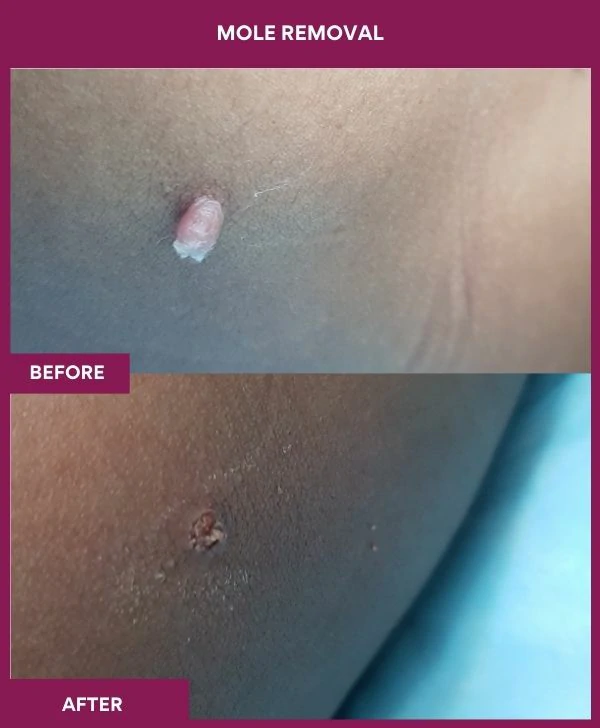
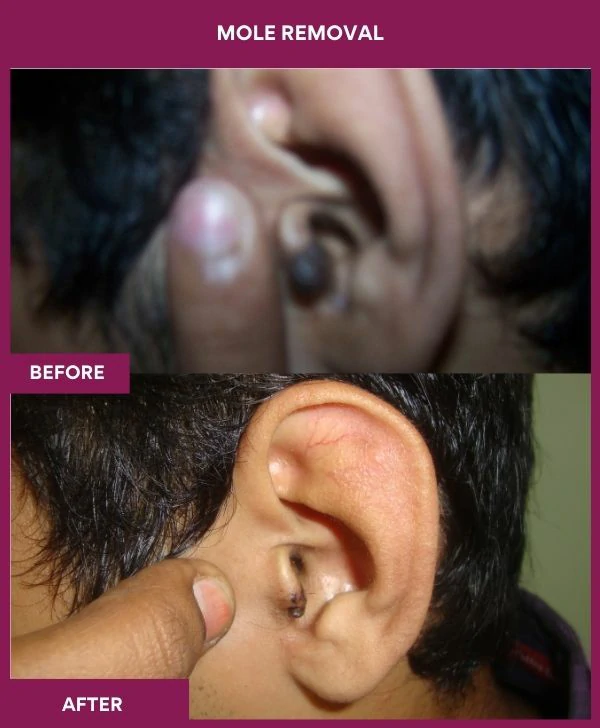
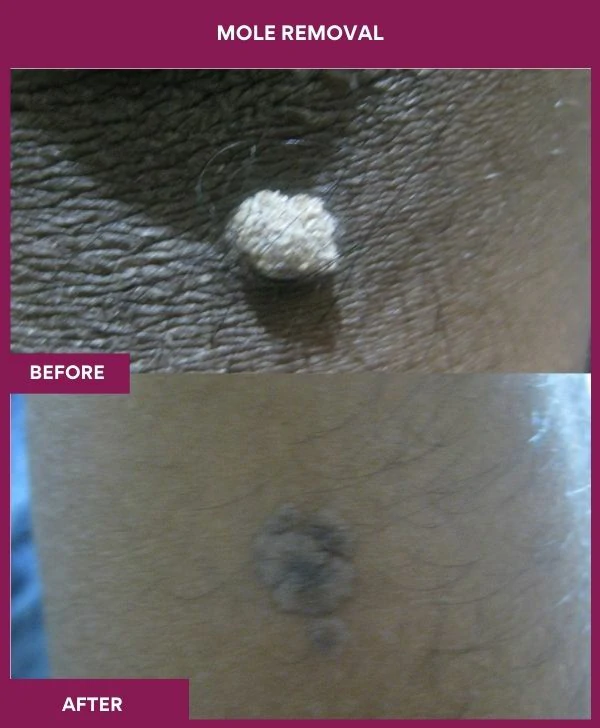
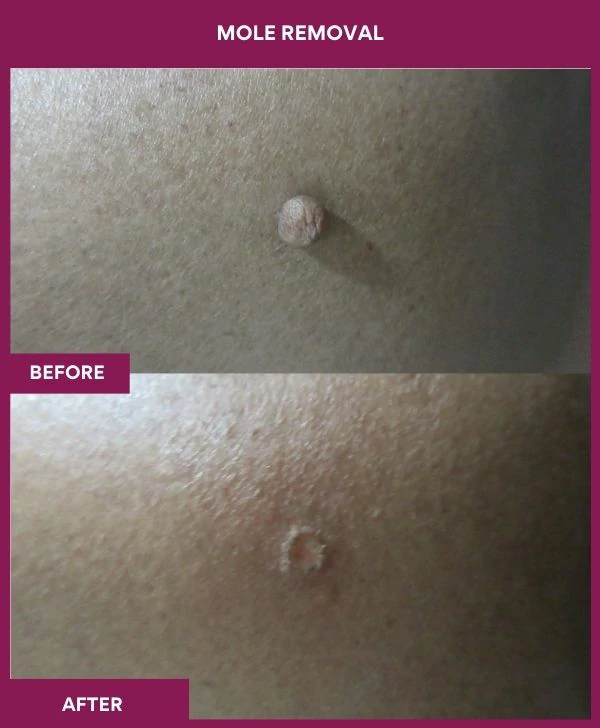
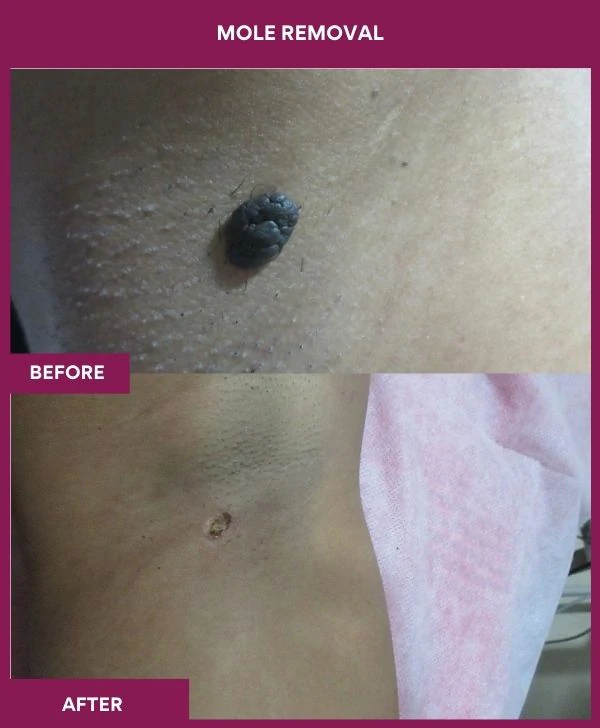
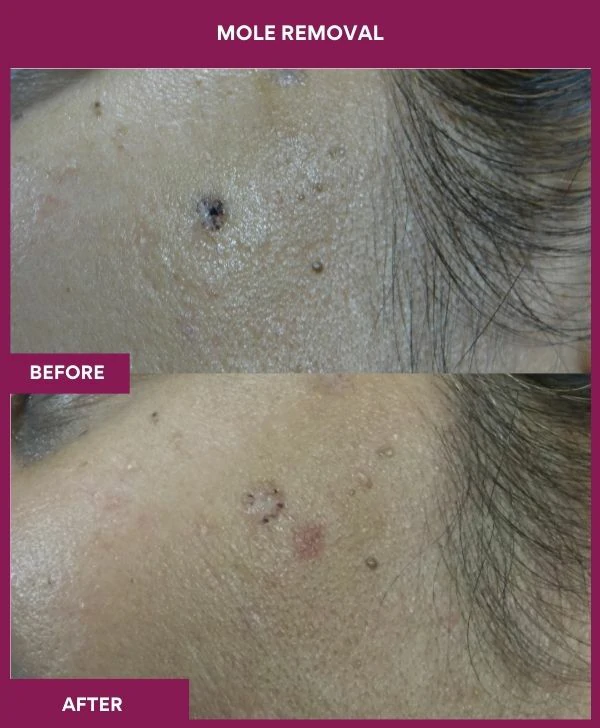
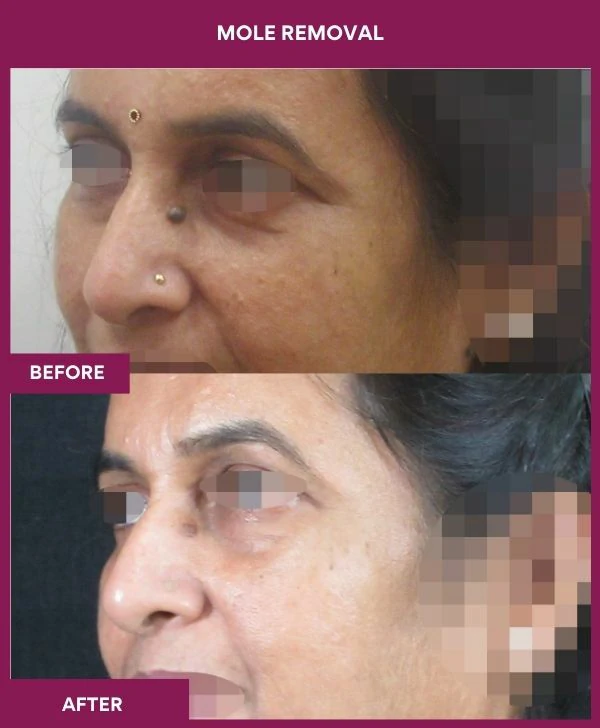
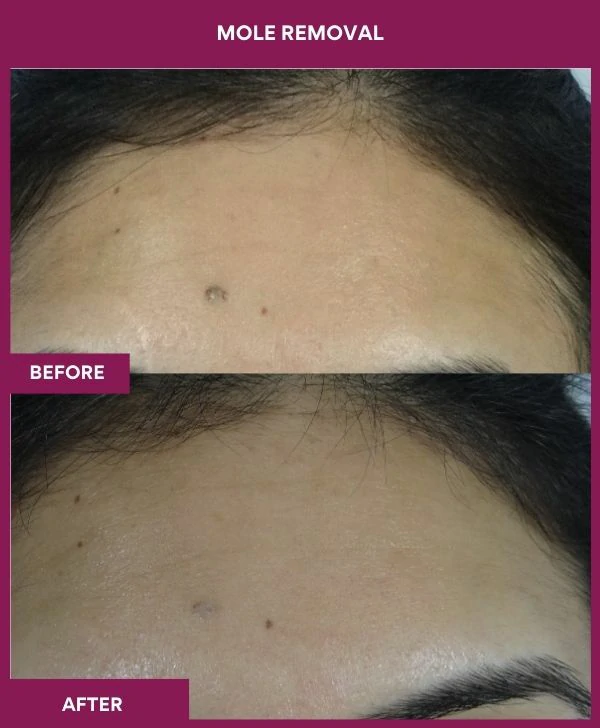
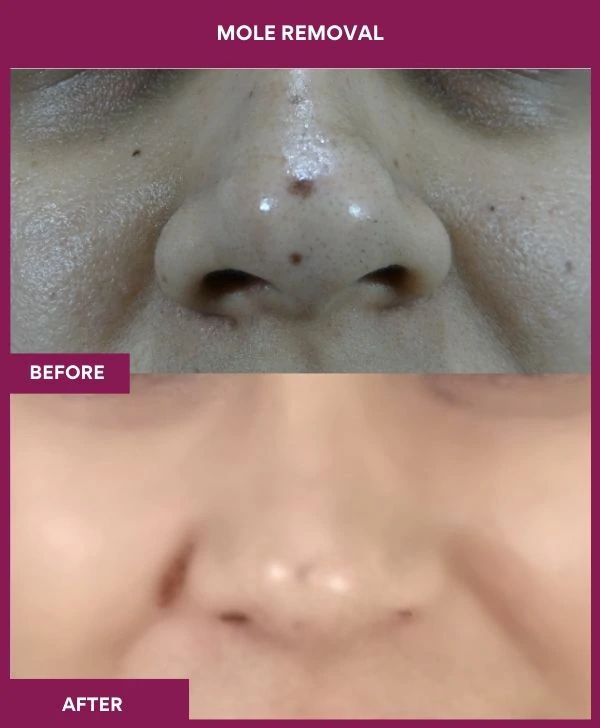
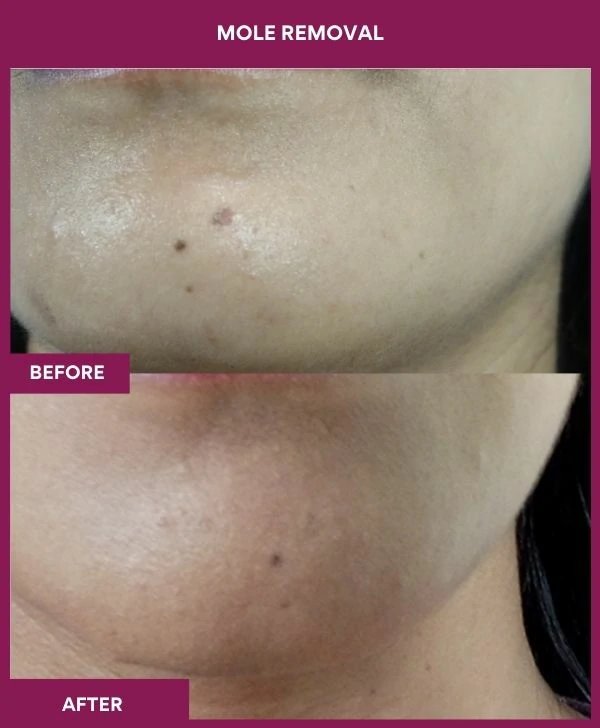
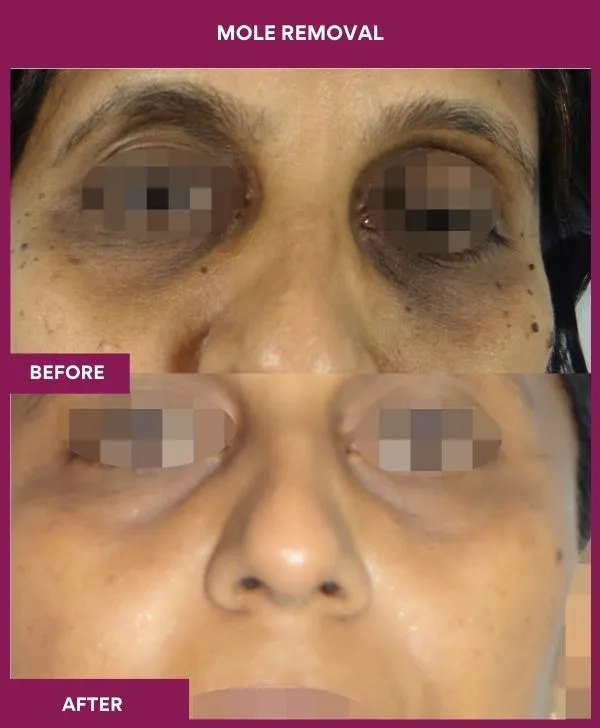
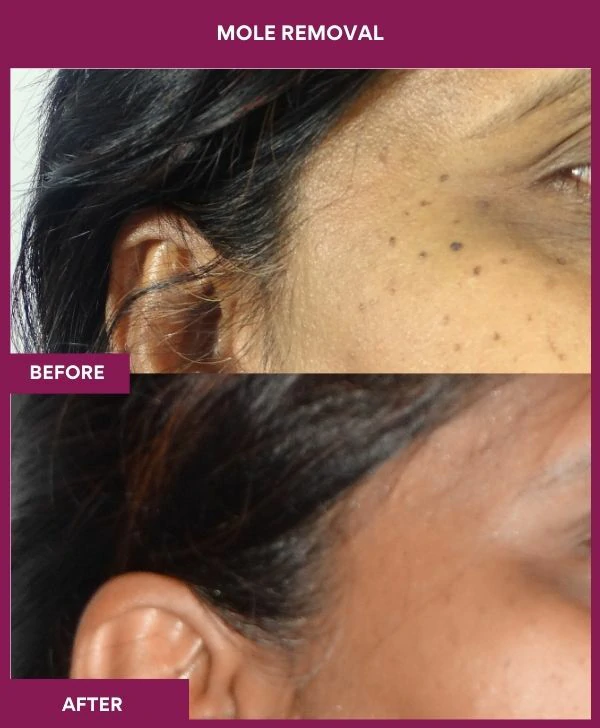
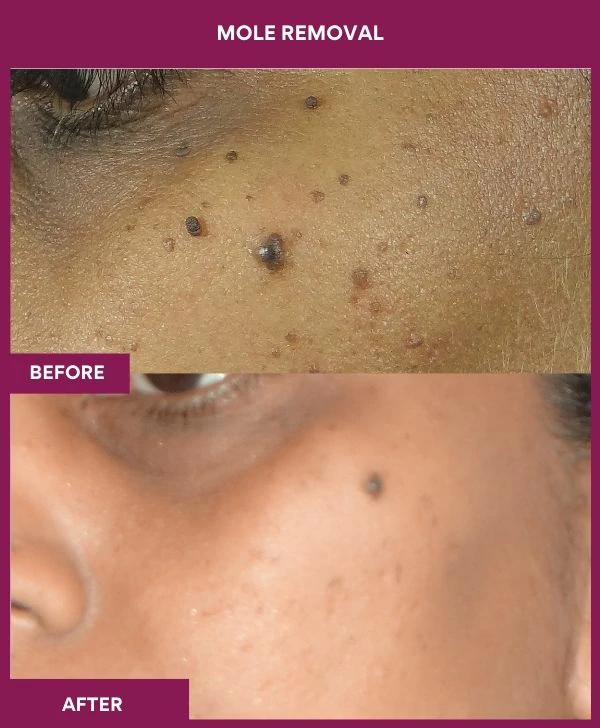
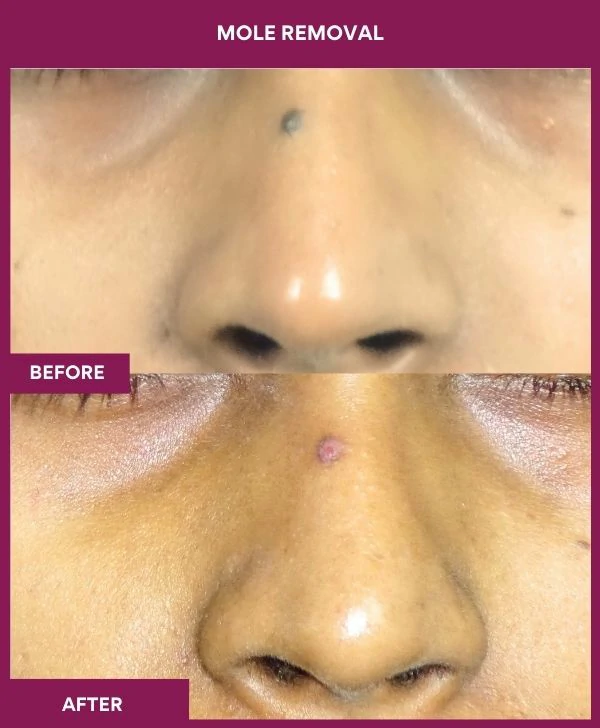
“Liked the results? Let's plan yours.”
Mole, Wart & Skin Tag Removal Testimonials: Fine To Fabulous Journeys

Awarded by Google.com
Rating: 4.7
Reviews: 485+

Awarded by WhatClinic.com
Rating: 4.8
Reviews: 119+

Awarded by Realself
Rating: 4.9
Reviews:453+

Awarded by Facebook
Rating: 4.6
Reviews:105+
Dr Milan Doshi and his staff are very professional and committed as the centre is highly equipped with advanced technology. I had closed rhinoplasty 4 months back and I’m seeing the results as to how it becomes successful.
Deepika Shetty
The doctor explained everything clearly and the surgery was smooth. Recovery was faster than I expected and the team was very supportive.
Rahul Mehta
Very natural results and excellent staff. From consultation to follow-up, the experience was outstanding and boosted my confidence.
Sneha Kapoor
Can My Growth Be Removed?
(4 quick questions)
Type, change, site, health — four questions decide the method.
Check My GrowthHonest routing — including biopsy
Quick Facts About Mole, Wart & Skin Tag Removal
SESSION TIME
20–45 minutes
ANESTHESIA
Numbing cream or local
SESSIONS
Usually 1
RESULTS SHOW
Immediate
DOWNTIME
2–5 days
RESULTS LAST
Permanent
SIDE-EFFECT RATE
Under 1%
COST
₹3,000 – ₹8,000
What Is The Cost Of Mole, Wart & Skin Tag Removal In Mumbai?
In Mumbai, mole, wart and skin tag removal typically costs ₹3,000–₹8,000 per session; the total depends on the number and type of lesions and the technique, with some cases needing more than one session. Cost drivers: lesion type / number / size, site (face vs body), technique (laser, cautery, cryo, excision) and anaesthesia. Add-ons: PRP to speed healing (optional), histopathology / biopsy if indicated, follow-ups. An accredited facility and board-certified surgeon reduce complications and pigment change. EMI options are on our payment process page.
| Lesion / method | Cost (₹) | Notes |
|---|---|---|
| Skin tags — up to 5, snip / RF | 3,000 – 4,000 | Single visit 🩺 |
| Skin tags — 6–15 | 4,000 – 6,000 | Per session 🩺 |
| Wart — cryotherapy per session | 1,500 – 3,000 | 1–3 sessions 🩺 |
| Wart — RF / laser per lesion | 3,000 – 5,000 | Stubborn or plantar 🩺 |
| DPN — per cheek session | 4,000 – 8,000 | By count 🩺 |
| Mole — laser (clearly benign) | 3,000 – 6,000 | Per mole 🩺 |
| Mole — excision with histopathology | 6,000 – 12,000 | Includes lab fee 🩺 |
Get your exact quote & surgery plan
Share your details — our team responds within working hours with cost, EMI options and next steps.
Most Common Question People Ask
Q1. Can I remove a mole without surgery?
Ans. Some clearly benign moles can be removed cosmetically with laser or radiofrequency, but any suspicious or changing mole should be surgically excised so the tissue can be tested for melanoma. A specialist assesses it first.
Q2. Why can’t a suspicious mole just be lasered off?
Ans. Because laser vaporises the tissue, leaving nothing to examine under a microscope — which can hide or delay a melanoma diagnosis. Suspicious moles are excised whole and sent for histopathology.
Q3. Is the procedure painful?
Ans. Only mildly — numbing cream or local anaesthetic is used, so most people feel little more than brief pressure or warmth.
Q4. How much does removal cost in Mumbai?
Ans. Roughly ₹3,000–₹8,000 per session (+5% GST), varying by the number and type of lesions and the technique; per-lesion pricing applies for single small growths.
Q5. Can I remove a skin tag or mole myself?
Ans. No — DIY removal risks infection, scarring and, crucially, missing a skin cancer. Even dermatologists examine a mole before deciding how to remove it.
Q6. Can warts be removed permanently?
Ans. The visible wart can be fully cleared, but because HPV can remain dormant, warts sometimes recur — full clearance plus good hygiene reduces this.
Q7. Is laser effective for DPN in darker skin?
Ans. Yes, with the right settings — low-energy cautery or Er:YAG / CO₂ laser suits DPN, but darker skin needs conservative technique to limit post-inflammatory pigmentation, and new spots can appear over time.

Why Choose Dr. Milan Doshi?
Dr. Milan Doshi, MCh, MS — Indian board-certified plastic and cosmetic surgeon, ISAPS mentor, 27+ years and 16,000+ procedures. The best doctor for mole, wart and skin tag removal is one who diagnoses accurately (with dermoscopy and biopsy when needed) and removes lesions safely with the right technique for your skin. Board-certified care — accurate diagnosis and planning; histopathology when indicated. Advanced techniques — CO₂ / Er:YAG lasers, radiofrequency / electrocautery, cryotherapy, shave / punch / excision. Safety first — NABH-grade protocols and ethnic-skin settings to reduce PIH, keloids and scarring. Natural outcomes — scar-minimising closures, SPF-led pigment control and clear aftercare. Allure Medspa: NABH-accredited; dermoscopy and biopsy on site; sterile workflow and anaesthesia support. Outstation and overseas patients supported end-to-end
The Complete Guide About Mole, Wart & Skin Tag Removal
What Is Mole, Wart & Skin Tag Removal Treatment?
Mole, wart and skin tag removal is a cosmetic-dermatological procedure that eliminates unwanted skin growths on the face, neck, underarms or body using precise, minimally invasive techniques — chosen by lesion type, size, location and your skin tone. Laser therapy (CO₂ / Er:YAG) gives precise, scar-minimised removal of select benign lesions; radiofrequency / electrocautery is quick with minimal downtime and seals tiny vessels; cryotherapy freezes warts and certain lesions (used cautiously on darker skin); minor surgical excision handles larger, deeper or suspicious moles and allows histopathology to rule out cancer.
| Removal (benign lesion) | Excision with histopathology |
|---|---|
| Laser, RF, cautery or cryo; no stitches; scab 3–7 days | Lesion cut out whole and sent to the lab; sutures 5–14 days |
| Skin tags, warts, DPN, clearly benign moles | Any changing, irregular or atypical mole; deep or large lesions |
| ₹3,000–8,000 per session | ₹6,000–12,000 incl. lab 🩺 → Scar Revision Surgery for the scar plan |
Also called: mole removal, wart excision, skin tag removal, DPN removal, benign skin lesion removal, acrochordon removal.
Sources: Diagnostic excision & histopathology for pigmented lesions — DermNet
Do Moles, Warts Or Skin Tags Make You Self-Conscious — Can Removal Help?
- Are you worried about bumps on your face or body that refuse to go away?
- Do moles, warts, or skin tags make you feel self-conscious in social or professional settings?
- Are you tired of hiding these marks with makeup or clothing, wishing for naturally clear skin?
We understand how frustrating it can be. While warts, moles, skin tags, or even DPN (Dermatosis Papulosa Nigra) are usually harmless, they can affect your confidence, appearance and daily comfort. Many patients describe the constant worry of spots being noticed, snagging on clothes, or multiplying over time — which only deepens the emotional burden. Here’s the good news: wart, mole and skin tag removal is quick, safe and highly effective when performed by an experienced specialist. Using laser, radiofrequency, cryotherapy or minor excision, these growths can be removed with minimal discomfort, little scarring and lasting results — for smooth, even-toned skin and renewed confidence. Where relevant, we also treat pigmentation and support healing with PRP.
Global & Indian trends (ISAPS 2024): Globally, over 2.1 million minor skin-lesion removal procedures (warts, moles and benign growths) were performed in 2023, reflecting rising demand for skin clarity · In India, mole, wart and skin tag removal is rising steadily in metro cities like Mumbai, Delhi and Bangalore.
Sources: ISAPS Global Survey 2024
What Are The Benefits Of Mole, Wart & Skin Tag Removal?
Smoother skin, no more snagging or bleeding, less wart spread, a cancer check where needed and a confidence boost — with minimal downtime.
- Cosmetic clarity — cleaner contours and even tone; makeup sits better, shaving is easier.
- Comfort & function — ends rubbing on clothing / jewellery, shaving nicks and recurrent bleeding.
- Spread control — clearing warts reduces viral spread to other sites or people.
- Medical assurance — suspicious moles can be removed with histopathology to rule out melanoma.
- Low-downtime options — snip / cautery, cryotherapy or CO₂ / Er:YAG laser, chosen to suit lesion and skin tone.
- Precision & safety — dermoscopic mapping, sterile technique and scar-minimising methods.
What Are The Four Types Of Growth — Moles, Skin Tags, Warts And DPN?
Moles are pigment-cell clusters, skin tags friction growths, warts HPV infections and DPN tiny dark papules on darker skin — each removed differently.
| Growth | What it is | Where / who | Removal | Watch for |
|---|---|---|---|---|
| Moles (naevi) | Benign clusters of melanocytes; flesh, pink, brown or black; congenital, acquired or atypical | Anywhere; genetics, UV, hormones | Shave / punch / excision (histology); laser only if clearly benign | ABCDE: Asymmetry, Border, Colour, Diameter, Evolving |
| Skin tags (acrochordons) | Soft stalked growths 2–5 mm; friction + collagen / vessel clustering | Neck, armpits, groin, eyelids, under breasts; age, obesity, pregnancy, diabetes | Snip excision, electrocautery / RF, cryo for tiny tags | Many sudden tags → check for insulin resistance |
| Warts (verrucae) | HPV infection of the top skin layer; rough bump | Hands, feet (plantar), face (filiform), nails, genital; spread by contact | Cryotherapy, electrocautery, laser, chemical cautery, salicylic acid, immunotherapy | Rapid growth, pain, facial / nail / genital sites, diabetes |
| DPN | Benign 1–5 mm dark papules; genetic + photo-ageing | Cheeks, eyelids, neck, chest; Fitzpatrick IV–VI; from puberty | Low-energy cautery / RF, gentle curettage, Er:YAG / CO₂ with ethnic-skin settings | Aggressive cryo avoided; new lesions form over time |
Sources: Atypical moles & histopathology; pigment-change risk in darker skin — wisconsinplasticsurgery.com; DermNet melanoma
What Causes Moles, Warts, Skin Tags And DPN?
Moles come from genes, UV and hormones; warts from HPV; skin tags from friction and metabolic factors; DPN from genetics and photo-ageing.
- Moles (naevi) — genetics, UV exposure and hormonal shifts (puberty, pregnancy) cluster melanocytes.
- Warts — HPV, spread by contact / shared items; micro-trauma, moisture and low immunity raise risk.
- Skin tags — friction in folds, obesity / insulin resistance, age, pregnancy and family history.
- DPN — genetic predisposition in darker skin; photo-ageing and friction contribute.
- Prevention — broad-spectrum SPF 50+, sun avoidance, regular self-checks; hygiene for warts.
What Are The Limitations Of Mole, Wart & Skin Tag Removal?
Warts can recur, new skin tags and DPN can form, suspicious moles need excision not laser, and darker skin carries a pigment-change risk.
- A suspicious or atypical mole is never lasered — it is excised whole for histopathology, which leaves a fine scar.
- Warts can recur because HPV may persist; 1–3 sessions and hygiene reduce this.
- Skin tags and DPN are removed, not prevented — new ones can form with age, friction or weight gain.
- Darker skin tones risk temporary darkening or lightening at the site; conservative settings and SPF are essential.
- Keloid-prone areas (chest, shoulders) and keloid-prone patients need a modified plan.
- Very large or deep lesions may need staged excision and a scar-revision plan.
When Should You Consult A Doctor Before Mole, Wart Or Skin Tag Removal?
See a specialist whenever a spot changes, bleeds, hurts, spreads or worries you — especially on the face, nails or genitals — before removal.
- ABCDE warning signs — Asymmetry, Border irregularity, mixed Colour, growing Diameter, Evolving change.
- High-risk locations — face / eyelids, lips, nose, ears, nails, genitals, soles.
- Symptoms — pain, itching, bleeding, crusting, non-healing, rapid spread or recurrent irritation.
- Personal risk — family / personal skin-cancer history, immunosuppression, pregnancy, heavy sun damage.
- Expert evaluation — dermoscopy ± biopsy distinguishes benign lesions from those needing excision.
How to prepare
- Tell us about keloids, diabetes, blood thinners, pregnancy, immunosuppression and cold sores.
- No sun or tanning on the area for 2 weeks; SPF daily.
- Arrive with clean skin; no make-up or creams on the lesion; men shaved around facial lesions.
- Bring older photographs of a mole if you have them — change over time matters.
Online consultation
A close-up daylight photo (with a coin for scale) and a video call settle the type and method for most lesions; dermoscopy is done in clinic: Online Consultations · in person → Contact Us
Which Treatment Is Best For Moles, Warts, Skin Tags And DPN?
Excision for suspicious or raised moles, laser for clearly benign ones, cryo or cautery for warts, snip or RF for skin tags, low-energy RF for DPN.
| Lesion | First choice | Alternatives | Never |
|---|---|---|---|
| Mole — raised, atypical or changing | Excision / shave / punch with histopathology | Staged excision if large | Laser or cautery ablation |
| Mole — clearly benign, flat | CO₂ / Er:YAG laser or RF after dermoscopy | Shave excision | DIY creams or threads |
| Wart — common / plantar | Cryotherapy (several sessions) | Electrocautery, laser, chemical cautery, salicylic acid, immunotherapy | Cutting at home; sharing razors |
| Wart — filiform (face) / periungual | Electrocautery or laser | Cryotherapy with care | Aggressive cryo near nails |
| Skin tag | Snip excision or electrocautery / RF | Cryotherapy for tiny tags | Tying with thread at home |
| DPN (darker skin) | Low-energy electrocautery / RF | Gentle curettage; Er:YAG / CO₂ with ethnic-skin settings | Aggressive cryotherapy |
Numbing cream or local anaesthesia is used; expect brief redness / scab for 3–7 days and strict SPF to prevent pigment change. Suspicious lesions are always mapped with dermoscopy and biopsied when indicated.
Is laser always the “better” option?
No. Laser is precise and scar-minimising for clearly benign lesions, but it destroys the tissue — so for any mole with a question over it, excision that preserves the specimen is the safer and better choice.
Sources: Don’t laser-ablate suspicious naevi — melanoma risk (case series) · Never DIY mole / skin tag removal — Skin Cancer Foundation
How Is Mole, Wart & Skin Tag Removal Performed? (Step By Step)
Examination with dermoscopy, numbing, removal by the chosen method, dressing and aftercare — usually 20–45 minutes; suspicious moles go to the lab.
| Step | What happens | Why it matters |
|---|---|---|
| 1 | Consultation: history, dermoscopy of every pigmented lesion; photographs; consent | Benign vs suspicious decided first |
| 2 | Pre-care: no sun 2 weeks; blood thinners reviewed; keloid history noted | Safe healing |
| 3 | Cleansing; numbing cream (20–30 min) or local anaesthetic injection | Comfort |
| 4 | Eye protection for laser; sterile field | Safety |
| 5 | Skin tags: snip at the base or RF; bleeding sealed | Instant, minimal mark |
| 6 | Warts: cryotherapy freeze–thaw, or cautery / laser to the base | Virus-bearing tissue destroyed |
| 7 | DPN: low-energy RF touch to each papule with ethnic-skin settings | No pigment change |
| 8 | Benign moles: laser / RF layer by layer; suspicious moles: excised whole, sutured, sent for histopathology | Diagnosis preserved when needed |
| 9 | Antibiotic ointment and dressing; aftercare sheet; SPF | Clean healing |
| 10 | Review at 1 week (sutures out 5–14 days); histology result discussed; photographs at 6 weeks | Closure and follow-up |
What Results Can You Expect — And When?
The growth is gone at once; a scab heals in 3–7 days, pink new skin blends over 4–8 weeks and an excision scar matures over 3–6 months.
| Time | What you see |
|---|---|
| Same day | Lesion gone; small raw spot or sutured line; mild redness |
| Days 1–3 | Pinpoint crust (tags, RF); blister then crust (cryo) |
| Days 3–7 | Surface healed for tags / RF / laser; sutures out on the face |
| Weeks 2–4 | Pink new skin; body sutures out at 10–14 days |
| Weeks 4–8 | Tone blends with surrounding skin |
| Months 3–6 | Excision scar matures and fades |
What Aftercare Is Needed After Removal?
Keep the site clean and dry, apply the ointment, don’t pick the scab, avoid heat and sweat for 48 hours and use SPF 50+ for 6–8 weeks.
- Keep the site clean and dry for 24 hours; then gentle washing and the prescribed ointment.
- Do not pick the scab — it is where pigment change and scarring start.
- Avoid heat, sauna, swimming and heavy exercise for 48 hours.
- SPF 50+ on the site for 6–8 weeks once the surface has healed.
- Warts: separate towels and razors; treat other warts to prevent spread.
- Sutures: keep dry until removal; no stretching of the area.
| Avoid | For how long |
|---|---|
| Picking or scratching the scab | Until it falls off |
| Heat, sauna, swimming, gym | 48 hours (1 week after excision) |
| Make-up over the site | Until the surface has healed (5–7 days) |
| Sun without SPF | 6–8 weeks (always, for moles) |
| Shaving over the site | 1 week |
| Tight collars / jewellery on a tag site | 1 week |
What Side Effects Or Risks Should You Know?
Most removals cause brief redness or a scab; rarely infection, temporary pigment change, a small scar or keloid — and warts can recur.
Common and short-term
- Redness, swelling, pinpoint bleeding, mild soreness, a tiny scab (3–7 days).
Uncommon
- Laser — temporary darkening / lightening (pigment change), rare burn or blister — strict SPF lowers this.
- Cryotherapy — blistering, transient numbness; hypopigmentation more likely on darker skin if over-frozen.
- Wart-specific — recurrence or spread without full clearance and hygiene.
Rare
- Infection; a small scar or keloid in scar-prone areas (chest / shoulders); incomplete removal needing a second session.
| Risk | How it is minimised at Allure Medspa |
|---|---|
| Missing a melanoma | Dermoscopy of every pigmented lesion; excision with histopathology when in doubt |
| Pigment change | Low-energy settings on darker skin; no aggressive cryo for DPN; SPF; test spot |
| Scar / keloid | Scar-minimising closures; steroid or silicone plan for keloid-prone patients |
| Wart recurrence | Complete clearance; hygiene advice; 1–3 sessions |
| Infection | Sterile technique; ointment; dry dressing |
How Long Does It Take To Heal — And Do Growths Come Back?
Tags and warts heal in 3–7 days, laser sites in 5–10, sutured excisions in 5–14; removed lesions stay gone, though warts can recur.
| Method | Healing | Back to routine |
|---|---|---|
| Skin tag snip / cautery | Pinpoint crust 1–3 days; surface heals 3–7 days | Same day |
| Cryotherapy (warts / tiny tags) | Blister 1–3 days, then crust off 7–14 days | Same day; no heavy exercise 48 h |
| Laser (CO₂ / Er:YAG) | Pink new skin by 5–10 days; tone blends 4–8 weeks | Next day |
| Sutured mole excision | Stitches out face 5–7 days, body 10–14; scar matures 3–6 months | Desk work next day |
Medical Codes for Mole, Wart & Skin Tag Removal
ICD-10 L91.8 (skin tags), B07.x (warts), D22.x (moles), L82.1 (DPN); CPT 11200/11201 tags, 17110/17111 destruction, 11400 series excision.
| Code system | Code | Description |
|---|---|---|
| ICD-10 | L91.8 | Other hypertrophic disorders of skin (skin tags / acrochordon) |
| ICD-10 | B07.0 / B07.8 / B07.9 | Plantar wart / other viral warts / viral wart unspecified |
| ICD-10 | D22.x | Melanocytic naevi (moles) by site — added |
| ICD-10 | L82.1 | Other seborrhoeic keratosis (DPN is classified here) — added |
| ICD-10 | Z41.1 | Encounter for cosmetic procedure |
| CPT | 11200 / 11201 | Removal of skin tags, up to 15 / each additional 10 |
| CPT | 17110 / 17111 | Destruction of benign lesions (laser, electrosurgery, cryo), up to 14 / 15 or more |
| CPT | 11400–11446 | Excision of benign lesion by size and site |
| CPT | 17999 | Unlisted procedure, skin (advanced laser methods) |
(FAQs) Frequently Asked Question About Mole, Wart & Skin Tag Removal
Q1. What causes moles, warts and skin tags?
Ans. Moles form when pigment cells cluster (genetics, sun, hormones); warts are caused by HPV; skin tags result from friction and metabolic factors like insulin resistance.
Q2. What is the fastest way to remove a wart?
Ans. Clinical methods like cryotherapy, laser or electrosurgery are fastest; over-the-counter salicylic acid works more slowly and isn’t always effective for stubborn warts.
Q3. Do moles, warts and skin tags need the same treatment?
Ans. No — warts need virus-targeted therapy, skin tags are snipped or cauterised, and moles may need excision with histology. Treatment is customised to each lesion.
Q4. Can toothpaste, castor oil or tea tree oil remove skin tags or moles?
Ans. No — there is no good evidence these home remedies are safe or effective, and for moles they can irritate the skin or delay diagnosis of something serious.
Q5. Why am I suddenly getting skin tags or warts?
Ans. Skin tags can rise with hormonal change, weight gain, friction or insulin resistance; warts appear with HPV exposure, especially through cuts or on moist skin. Multiple new lesions warrant a check.
Q6. How many sessions are needed for wart removal?
Ans. Usually 1–3, depending on size, number and method — laser and electrosurgery often need fewer sessions than topical therapy.
Q7. Do warts go away on their own?
Ans. Some do, especially in children, but others persist or spread. Treatment is advised if they are painful, spreading or cosmetically bothersome.
Q8. Is mole removal safe?
Ans. Yes — it is a routine outpatient procedure with minimal risk when done by a trained specialist, and suspicious lesions are always tested to rule out cancer.
Q9. What kind of mole is dangerous?
Ans. Irregular, asymmetrical, multi-coloured, rapidly growing, bleeding or changing moles may signal melanoma. The ABCDE rule helps flag suspicious ones — get them checked promptly.
Q10. Will mole removal leave a scar?
Ans. Laser or RF removal of a benign mole usually leaves a faint mark that blends in weeks; excision leaves a fine line scar that matures over 3–6 months and can be improved with scar care.
Q11. Can DPN come back after removal?
Ans. Treated spots do not return, but DPN is a tendency of the skin, so new papules can appear over years; a maintenance session every year or two keeps the cheeks clear.