
Birthmark Removal in Mumbai: Safe, Effective, Expert Care For Clear, Even-Toned Skin
Indian Board Certified Plastic Surgeon
M.CH, MS, ISAPS Mentor
16000+ Cosmetic Surgeries
350+ Birthmark Removal
Birthmark removal uses dermatological and laser-based procedures to lighten or clear pigmented birthmarks (like café-au-lait spots and congenital naevi) and vascular birthmarks (like port-wine stains and hemangiomas), restoring a more even skin tone. The right method depends on the birthmark’s type, depth, colour and your skin — and some birthmarks also need medical evaluation first, which is why at Allure Medspa every birthmark is diagnosed before it is treated, and the ones that need a specialist are referred, not lasered.
Birthmark Removal Treatment Before and After Images
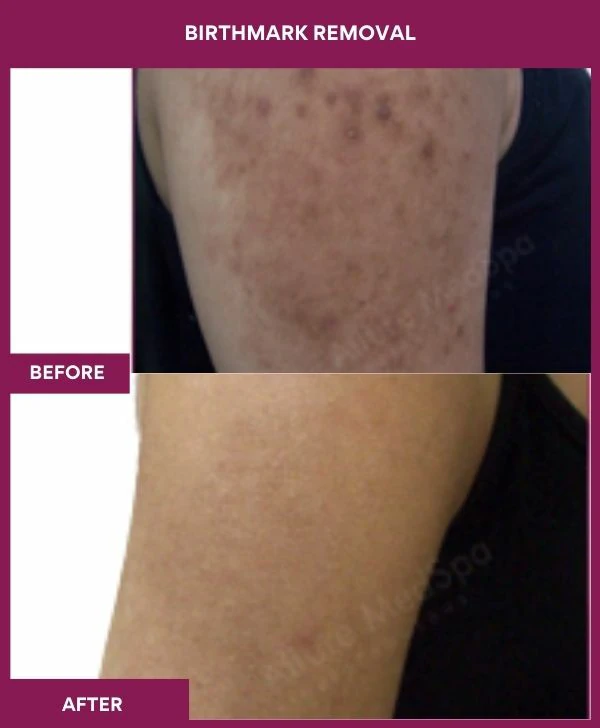
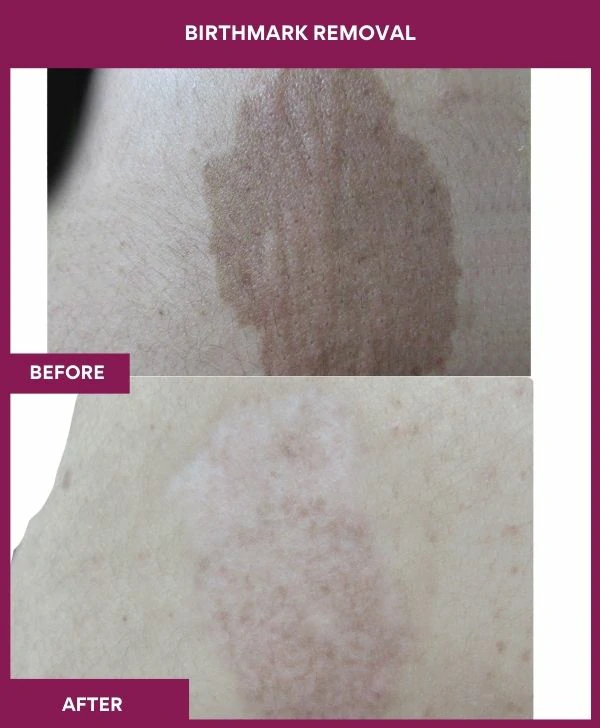
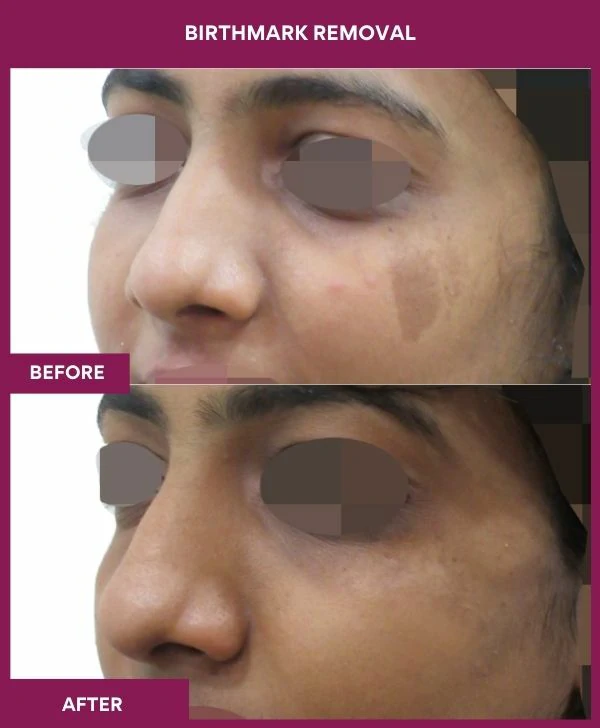
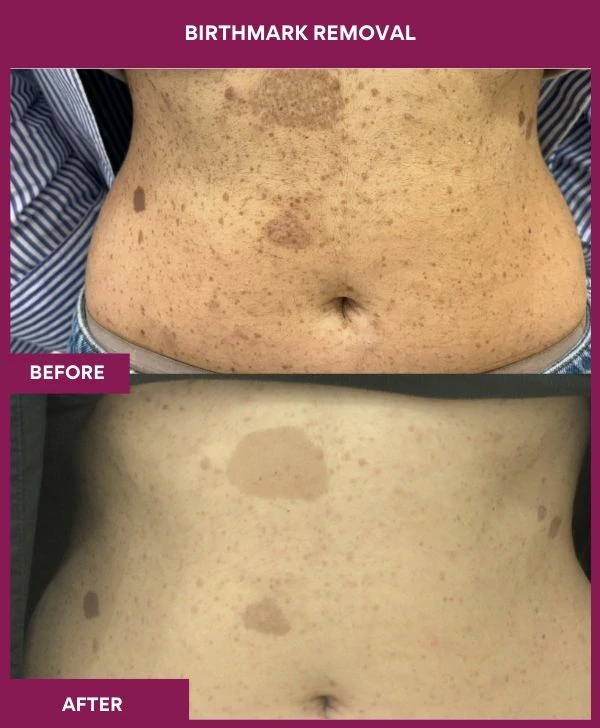
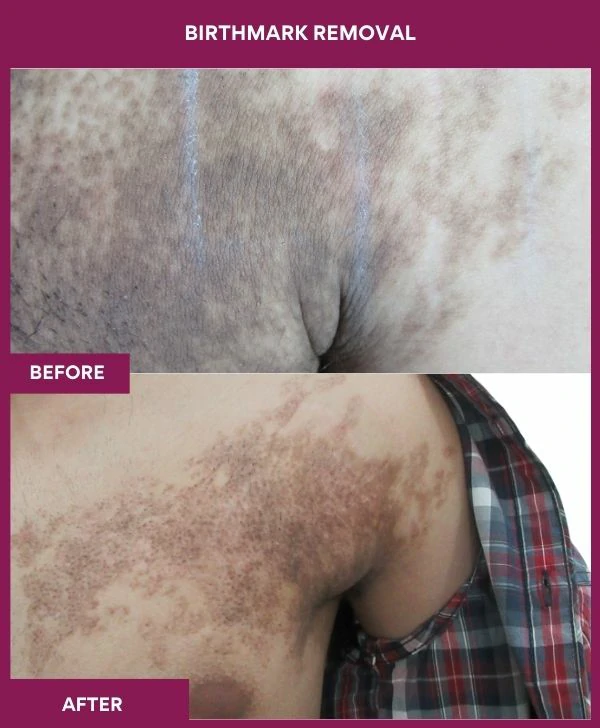
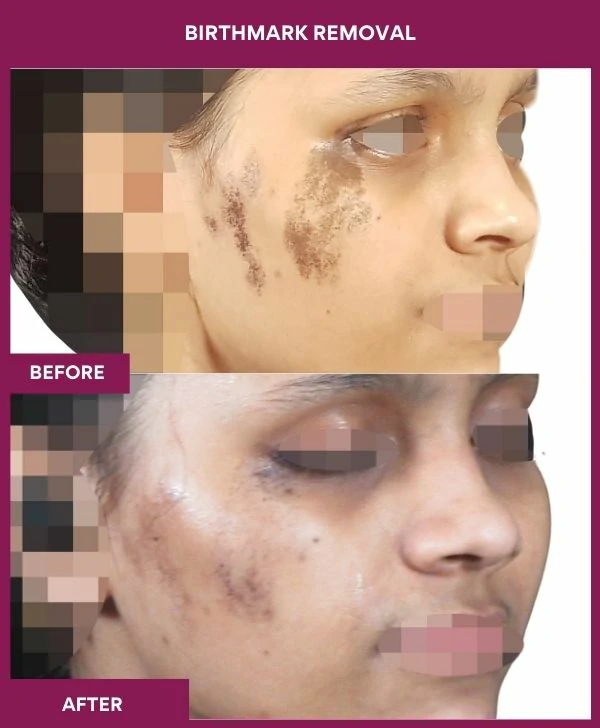
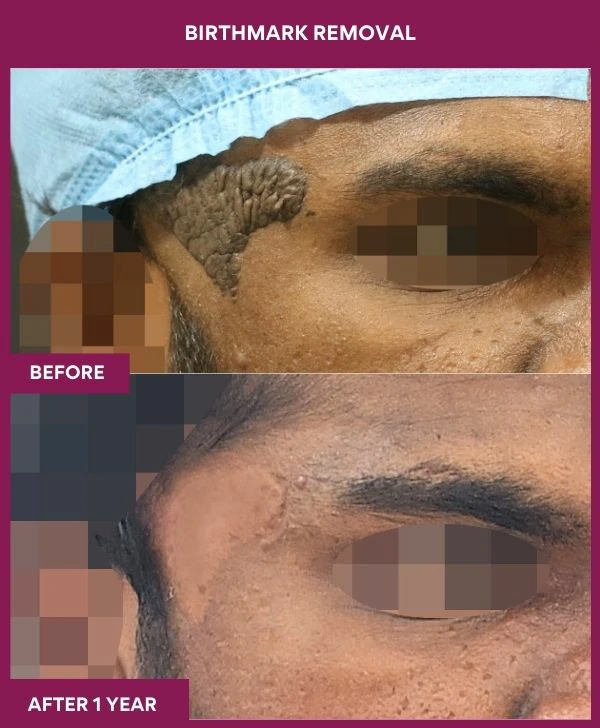
“Your Birthmark Removal Cost”
Birthmark Removal Testimonials: Fine To Fabulous Journeys

Awarded by Google.com
Rating: 4.7
Reviews: 485+
Awarded by WhatClinic.com
Rating: 4.8
Reviews: 119+

Awarded by Realself
Rating: 4.9
Reviews:453+

Awarded by Facebook
Rating: 4.6
Reviews:105+
Dr Milan Doshi and his staff are very professional and committed as the centre is highly equipped with advanced technology. I had closed rhinoplasty 4 months back and I’m seeing the results as to how it becomes successful.
Deepika Shetty
The doctor explained everything clearly and the surgery was smooth. Recovery was faster than I expected and the team was very supportive.
Rahul Mehta
Very natural results and excellent staff. From consultation to follow-up, the experience was outstanding and boosted my confidence.
Sneha Kapoor
Can My Birthmark Be Treated?
(4 quick questions)
Colour, change, size, age — four questions decide the pathway.
Check My BirthmarkHonest routing — including referral
Quick Facts About Birthmark Removal
SESSION TIME
15–45 min
ANESTHESIA
Local
SESSIONS
Course of 4–8
RESULTS SHOW
2–3 sessions
DOWNTIME
2–5 days
RESULTS LAST
Permanent
SIDE-EFFECT RATE
Under 1%
COST
₹15,000 – ₹30,000
What Is The Cost Of Birthmark Removal In Mumbai?
In Mumbai, birthmark removal typically costs ₹15,000–₹30,000 per session, depending on the birthmark’s type (vascular vs pigmented), size and location, the technology used and the number of sessions. Vascular and deep pigmented marks usually need several sessions; add-ons such as PRP for healing are extra. An assessment gives an accurate, all-inclusive estimate. EMI options are on our payment process page.
| Birthmark / method | Per session (₹) | Typical sessions | Note |
|---|---|---|---|
| Small café-au-lait / lentigo — pigment laser | 15,000 – 20,000 | 4–6 | Can recur; maintenance possible 🩺 |
| Large pigmented patch — pigment laser | 20,000 – 30,000 | 6–8 | By area 🩺 |
| Port-wine stain — pulsed dye laser | 20,000 – 30,000 | 6–10+ | Earlier treatment, better clearance 🩺 |
| Superficial hemangioma — PDL ± topical beta-blocker | 15,000 – 25,000 | 3–6 | Paediatric pathway; medicines prescribed separately 🩺 |
| Raised / superficial lesion — ablative laser or cryotherapy | 10,000 – 20,000 | 1–3 | Selected cases 🩺 |
| Congenital naevus — surgical excision | Quoted as surgery | 1 (staged if large) | Histology; scar-revision plan → Scar Revision Surgery |
Get your exact quote & surgery plan
Share your details — our team responds within working hours with cost, EMI options and next steps.
Most Common Question People Ask
Q1. Can all types of birthmarks be removed?
Ans. Not always completely. Success depends on the type (vascular or pigmented) and the depth of pigment or vessels. Many fade significantly, but some — especially deep or extensive marks — may leave a trace, and that is said honestly before you start.
Q2. Which laser is best for birthmarks?
Ans. The 595-nm pulsed dye laser is the standard for vascular marks (port-wine stains, hemangiomas), while Q-switched / pigment lasers are used for pigmented marks like café-au-lait spots. Raised lesions may need an ablative laser or excision.
Q3. How many sessions are needed?
Ans. Often 4–8 sessions, spaced weeks apart, depending on the type, size, depth and colour of the birthmark and how your skin responds; port-wine stains can need more.
Q4. Can a birthmark be cancerous?
Ans. Most are harmless, but rare types — such as giant congenital melanocytic naevi — carry a melanoma risk. Any changing, growing, bleeding or irregular mark needs specialist evaluation before cosmetic treatment.
Q5. How much does birthmark removal cost in Mumbai?
Ans. Typically ₹15,000–₹30,000 per session (+5% GST) depending on type, size and sessions. Medically necessary cases may follow a different pathway.
Q6. Is birthmark removal painful?
Ans. Most treatments cause only mild discomfort — a tingling or warm snap with laser — and topical anaesthesia is used. Excision is done under local anaesthetic.
Q7. Will removing a birthmark leave a scar?
Ans. Laser treatments usually don’t scar when performed correctly with good aftercare. Surgical excision leaves a fine scar, which scar-management can improve.
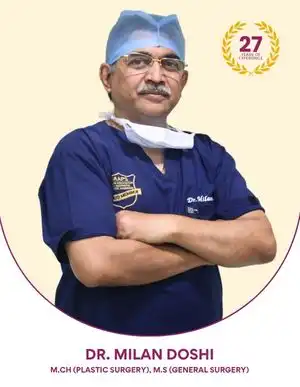
Why Choose Dr. Milan Doshi?
Dr. Milan Doshi, MCh, MS — Indian board-certified plastic and cosmetic surgeon with 27+ years and 16,000+ procedures. The best doctor for birthmark removal is one experienced in vascular and pigment lasers who can diagnose the type and match the safest technique to your skin — and, when a lesion is deep, suspicious or raised, can excise it with a scar-revision plan rather than lasering it inappropriately. Diagnostic expertise — distinguishes vascular from pigmented and flags medically significant marks; right-laser skill — PDL for vascular, pigment lasers for pigmented, surgery where needed; safety focus — correct settings and cooling to limit pigment change and scarring; honest guidance — realistic clearance by birthmark type and skin tone. Allure Medspa: NABH-accredited, with laser and surgical options under one roof, dermatology-led protocols and a paediatric pathway for hemangiomas. Outstation and overseas patients supported end-to-end
The Complete Guide About Birthmark Removal
What Is Birthmark Removal Treatment?
Birthmark removal treatment is a set of dermatological and laser-based procedures that lighten or clear birthmarks to restore an even, natural skin tone — with the method chosen to match the birthmark’s type, size, depth and colour and your skin type. Two main categories: pigmented birthmarks (excess melanin) and vascular birthmarks (abnormal blood vessels). Key technologies: the 595-nm pulsed dye laser (vascular), Q-switched / pigment lasers (pigment), and ablative fractional CO₂ / Er:YAG for selected raised lesions. It is performed in a clinical setting with little downtime; several sessions are often needed; and some birthmarks are medically significant, so evaluation comes before any cosmetic treatment.
| Pigmented birthmarks | Vascular birthmarks |
|---|---|
| Excess melanin — café-au-lait, Mongolian spots, naevus of Ota, congenital naevi | Abnormal vessels — port-wine stains, hemangiomas, salmon patches |
| Q-switched / Pico pigment lasers; excision for naevi | 595-nm pulsed dye laser; beta-blockers for infantile hemangiomas |
| 4–8 sessions; recurrence possible | 6–10+ sessions; earlier is better for port-wine stains |
Also called: laser birthmark removal, pigmented lesion removal, vascular lesion treatment, birthmark reduction.
Is A Visible Birthmark Affecting Your Confidence — Can Birthmark Removal Help?
- Is a visible birthmark making you feel self-conscious in professional or social settings?
- Do you find yourself hiding behind makeup, clothing, or hairstyles to cover it up?
- Has it impacted your confidence, relationships, or even career opportunities?
For many, birthmarks are more than just skin differences — they can become daily reminders of unwanted attention, awkward questions, or personal insecurities. Whether it’s on the face, neck, or another visible area, the emotional toll can be as significant as the physical mark itself. The good news? Modern birthmark removal treatments offer safe, effective and minimally invasive ways to lighten or clear many types of birthmark, from pigmented to vascular. Using advanced laser technology and dermatologist-led protocols — alongside pigmentation and vascular treatments where relevant — these can restore your skin’s natural tone and help you face the world with renewed confidence.
Global & Indian trends (ISAPS 2024): Laser skin treatments — including birthmark removal — rank among the fastest-growing non-surgical cosmetic procedures worldwide · In India, demand for non-surgical dermatological procedures (including pigmentation and birthmark removal) has grown at over 15% a year in the past five years, reflecting rising awareness and access.
Sources: ISAPS Global Survey 2024
What Are The Benefits Of Birthmark Removal?
Birthmark removal can reduce the visibility of vascular, pigmented or raised birthmarks by matching the treatment to the type of lesion. Depending on the diagnosis, treatment may involve vascular or pigment lasers, or surgical excision for selected marks. The goal is to improve colour, contour or prominence while also confirming that the birthmark is suitable for cosmetic treatment.
- Type-matched treatment — a vascular laser for vessels, a pigment laser for melanin, excision for naevi; nothing generic.
- Non-surgical for most marks — no incisions or stitches; little downtime.
- Even skin tone — significant fading of café-au-lait spots and lightening of port-wine stains.
- Medical reassurance — the diagnosis step rules out the rare lesions that matter.
- Early treatment advantage — port-wine stains and some hemangiomas respond better when treated young.
- Confidence — no more concealing, explaining or avoiding photographs.
What Are The Different Types Of Birthmarks?
Birthmarks are marks present at birth or soon after, classified as vascular (from blood vessels) or pigmented (from melanin) — and treatment is tailored to each type. They may be flat or raised, any colour or size, anywhere on the body.
| Type | Examples | Treatment |
|---|---|---|
| Vascular | Hemangiomas (strawberry marks), port-wine stains, salmon patches | PDL; propranolol / timolol for infantile hemangiomas; salmon patches often fade alone |
| Pigmented — flat | Café-au-lait spots, Mongolian spots, naevus of Ota, lentigines | Q-switched / Pico pigment lasers |
| Pigmented — raised / hairy | Congenital melanocytic naevi (moles) | Excision with histology; laser only for selected superficial cases |
| Mixed / other | Lesions with both vascular and pigment components; epidermal naevi | Combination; ablative laser for raised epidermal naevi |
What Causes Birthmarks?
Birthmarks form from variations in skin pigment or blood-vessel development before or shortly after birth; the exact cause isn’t always known, and treatment targets the visible pigment or vessels rather than a single “cause”.
- Genetics — family history can influence the amount, type and location of pigmentation.
- Cell-growth patterns — overgrowth of pigment cells (melanocytes) or blood vessels creates visible marks.
- Developmental changes — differences during fetal development can alter pigmentation or vessel formation.
- Pigment distribution — how melanin is produced and spread affects a birthmark’s look.
- Mostly harmless — but a professional check rules out any underlying concern.
What Are The Limitations Of Birthmark Removal?
Birthmark removal can significantly reduce the appearance of many marks, but complete clearance is not always possible. Deep pigmented lesions, extensive vascular birthmarks and some recurrent marks may need several sessions or combination treatment. Certain birthmarks, such as congenital naevi or infantile hemangiomas, also require a different medical approach rather than routine laser treatment.
- Not every birthmark clears completely — deep dermal pigment and thick or extensive vascular lesions are the most resistant and may need combination treatment over several sessions.
- Some birthmarks can partly return, particularly café-au-lait spots and marks treated in childhood; follow-ups monitor for recurrence.
- Congenital naevi are not lasered away — removing pigment from a mole that needs histology is unsafe; they are excised.
- Infantile hemangiomas mostly resolve on their own; treatment is for the ones that grow fast, ulcerate or threaten vision or breathing, and starts with medicine, not laser.
- Darker skin tones carry a higher risk of temporary pigment change and need conservative settings and more sessions.
- Purely cosmetic removal is usually not covered by insurance; medically necessary cases may be.
How Are Birthmarks Diagnosed — And Why Does It Come First?
A doctor diagnoses birthmarks by clinical examination (sometimes with a Wood’s lamp or biopsy) — and this step matters because a minority of birthmarks are medically significant, so evaluation always comes before cosmetic removal.
- Physical examination — an experienced clinician identifies most birthmarks visually, with dermoscopy where useful.
- Wood’s lamp — ultraviolet light highlights pigment depth and helps rule out conditions like vitiligo.
- Biopsy (if needed) — confirms the type or rules out rare concerns.
- When to be proactive — rapidly growing, bleeding or ulcerating marks; a mark near the eye, lip or airway; or multiple / large café-au-lait spots.
- Possible associations — some port-wine stains relate to Sturge-Weber syndrome; giant congenital naevi carry a melanoma risk; six or more café-au-lait spots prompt evaluation for neurofibromatosis — specialist review is essential.
Why consult before treatment?
Consulting ensures an accurate diagnosis, screens for medical significance and produces a personalised, safe plan — the exact type and cause; marks that need management or monitoring rather than cosmetic removal; a plan matched to size, location, depth, skin type and history; the right technology; and realistic expectations for sessions, likely clearance and aftercare, set honestly upfront.
How to prepare (pre-care)
- See a board-certified specialist to confirm suitability and technique.
- Share medical history — medications, allergies, keloid tendency and prior skin treatments.
- Avoid sun and tanning; SPF 30+ daily to reduce pigment-change risk.
- Pause blood thinners or specific supplements only if your doctor advises.
- Arrive with clean skin — no makeup, creams or oils on the day.
Online consultation
A daylight photo with a coin for scale and a video call usually settle the type and pathway; a biopsy or specialist referral is arranged when needed: Online Consultations · in person → Contact Us
What Are The Treatment Options — By Birthmark Type?
Options include laser therapy, prescription medicines, cryotherapy and surgery — chosen by birthmark type, size, depth, location and any medical need. For vascular birthmarks, the 595-nm pulsed dye laser is the standard, regulator-cleared choice.
| Option | How it works | Used for | Note |
|---|---|---|---|
| Pulsed dye laser (595 nm) | Yellow light absorbed by haemoglobin closes abnormal vessels; skin cooling protects the surface | Port-wine stains, superficial hemangiomas, salmon patches | Vascular-specific; bruising (purpura) for 5–10 days is expected |
| Q-switched / Pico pigment lasers | Nanosecond / picosecond pulses shatter melanin | Café-au-lait, naevus of Ota, lentigines, selected flat naevi | Overlaps with pigmentation treatment → Pigmentation Treatment |
| Ablative lasers (CO₂ / Er:YAG) | Vaporise superficial tissue layer by layer | Selected raised or superficial lesions, epidermal naevi | Not first-line for flat vascular marks → Fractional CO₂ Laser |
| Prescription medicines | Oral propranolol or topical timolol shrink infantile hemangiomas | Many infantile hemangiomas — first-line | Doctor-prescribed only; corticosteroids in selected cases |
| Cryotherapy | Liquid nitrogen freezes selected raised lesions | Certain small raised lesions | May need several sessions; pigment-change risk on dark skin |
| Surgical excision | Lesion removed under local anaesthetic; histology | Deep, suspicious or function-affecting lesions; congenital naevi | Scar-revision plan supports the result → Scar Revision Surgery |
| Combination | e.g. PDL plus a topical beta-blocker for hemangiomas | Many cases | Tailored mix |
Is the strongest laser the best laser?
No — the correct laser is the one whose wavelength is absorbed by the target (haemoglobin or melanin) and not by the surrounding skin. Using a pigment laser on a vascular mark, or a high-energy pass on Indian skin, produces pigment change rather than clearance.
What Happens During A Birthmark Removal Procedure? (Step By Step)
Birthmark removal begins with confirming the type of birthmark and choosing the treatment that matches it. Depending on whether the mark is vascular, pigmented or raised, treatment may involve a vascular laser, pigment laser, medication or surgical excision. The area is prepared, treated with appropriate eye protection and cooling when needed, and follow-up sessions are planned according to the response.
| Step | What happens | Why it matters |
|---|---|---|
| 1 | Diagnosis confirmed; photographs; consent; test spot on the mark | Right pathway; settings proven on your skin |
| 2 | Pre-care: no sun for 4 weeks; history and medications reviewed | Lower pigment-change risk |
| 3 | Cleansing; topical numbing 30–45 minutes (local anaesthetic for excision) | Comfort |
| 4 | Laser-safe eye protection for everyone in the room | Eye safety — essential for facial marks |
| 5 | Laser therapy: precise light energy breaks down pigment or closes abnormal vessels | Selective targeting |
| 6 | Cooling throughout; soothing cream and, for PDL, expectation of bruising explained | Surface protection |
| 7 | For excision: lesion removed, sutured, sent for histology | Diagnosis confirmed under the microscope |
| 8 | Topical / injectable medicines for specific types (e.g. beta-blockers for hemangiomas) | Type-specific |
| 9 | Session 15–45 minutes; home the same day | Little downtime |
| 10 | Next session in 4–8 weeks; photographs each visit | Course tracking |
What Results Can You Expect?
Birthmark removal results develop gradually and depend on the type, depth, size and colour of the mark. Some birthmarks begin to fade after the first few sessions, while deeper or more extensive lesions may need several treatments and may not disappear completely. Final colour and skin tone usually continue settling after the treatment course is finished.
| Time | What you see |
|---|---|
| Session day | Redness, swelling; bruising (purpura) after PDL; grey-white frosting after pigment laser |
| Days 4–7 | Scabbing, flaking or bruising settles |
| Week 2 | Pigment may look temporarily lighter or darker |
| After 2–3 sessions | Noticeable fading |
| After the course (4–8+ sessions) | Significant clearance; some deep marks leave a trace |
| 1–3 months after the last session | Skin remodelling completes; final tone |
What After-Care Is Needed?
After birthmark treatment, keep the area clean, protected and out of direct sun while it heals. Use prescribed creams or ointments as advised, avoid picking scabs or rubbing the area, and wait until the skin is intact before restarting make-up or active skincare. Regular follow-up is important to monitor healing and decide whether further treatment is needed.
- Protect from sun — daily SPF 30+ to prevent pigment changes.
- Use prescribed products — creams or ointments exactly as directed.
- Don’t touch or scratch — prevents infection, scarring and delayed healing.
- Keep it clean and dry — mild cleanser; avoid harsh scrubbing.
- Attend follow-ups — to monitor healing and plan further sessions.
| Avoid | For how long |
|---|---|
| Sun exposure and tanning | Whole course; SPF always |
| Picking scabs or bruises | Until healed |
| Hot showers, sauna, swimming | 3–5 days |
| Make-up over the treated area | Until skin is intact (3–7 days) |
| Exfoliants, retinoids, acids | 1 week |
| Strenuous exercise | 48 hours |
What Are The Risks Or Side Effects?
Birthmark removal is generally well tolerated when the treatment is matched correctly to the lesion, but temporary redness, swelling, bruising, peeling or scabbing can occur. Less common risks include temporary lightening or darkening of the skin, while scarring, infection, incomplete clearance or recurrence are uncommon. Careful diagnosis, conservative settings, cooling, sun protection and proper aftercare help reduce these risks.
Common and temporary
- Redness and swelling — usually settle within days. Scabbing or peeling — a normal part of healing after laser or cryotherapy. Bruising for 5–10 days after PDL. Mild discomfort — manageable with prescribed medication.
Uncommon
- Pigment change — temporary lightening or darkening, more likely in darker skin.
Rare
- Scarring — risk rises with deeper lesions or poor aftercare. Infection — very rare; keep the area clean. Incomplete clearance or recurrence.
| Risk | How it is minimised at Allure Medspa |
|---|---|
| Pigment change | Type-matched wavelength; test spot; conservative settings on darker skin; strict SPF |
| Scarring | Correct fluence and cooling; no over-treatment; excision with a scar plan where a mole needs removal |
| Missing a medical lesion | Diagnosis first; biopsy or referral for changing, giant or syndromic marks |
| Infection | Clean technique; ointment; no picking |
Choosing a board-certified specialist and following pre- and post-care greatly reduces these risks; pulsed dye laser has a well-documented low rate of permanent effects.
What Is The Recovery Timeline?
Recovery depends on the method and your skin, but most people heal over 1–4 weeks, with final results (for laser / surgery) settling over 1–3 months.
| Phase | What happens | Your part |
|---|---|---|
| Day 1–3 | Mild redness, swelling or tenderness; PDL bruising | Avoid touching or scratching; cool compress |
| Day 4–7 | Scabbing, flaking or slight bruising begins to settle | Keep using prescribed ointments |
| Week 2 | Visible healing; pigment may look temporarily lighter or darker | SPF; patience |
| Week 3–4 | Most redness fades; tone starts blending with surrounding skin | Photographs; next session planned |
| 1–3 months | For laser / surgery, skin remodelling completes and final results appear | Maintenance / recurrence check |
Healing is faster with strict sun protection, good wound care and follow-up visits.
🩺 Dr. Doshi’s Note — “Parents often bring a baby with a strawberry mark asking for laser. Most of these hemangiomas shrink on their own by school age, and the ones that need treatment respond to a simple beta-blocker prescribed by a paediatric specialist. I would rather explain that and follow the child up than laser a mark that was going to fade anyway. Lasers are for the marks that will not.”
Medical Codes for Birthmark Removal
Codes below are for administrative and documentation reference. All codes must be verified against the current CPT and ICD-10 code sets before publication and before any use in documentation.
| Code system | Code | Description |
|---|---|---|
| ICD-10 | Q82.5 | Congenital non-neoplastic naevus (port-wine stain, café-au-lait, Mongolian spot) |
| ICD-10 | D18.01 | Hemangioma of skin and subcutaneous tissue — added |
| ICD-10 | D22.x | Melanocytic naevi of skin (congenital mole) — added |
| ICD-10 | L81.8 / L81.9 | Other specified / unspecified disorder of pigmentation |
| ICD-10 | Z41.1 | Encounter for cosmetic procedure (elective birthmark removal) |
| CPT | 17106 / 17107 / 17108 | Destruction of cutaneous vascular proliferative lesions — under 10 / 10–50 / over 50 sq cm (port-wine stain, hemangioma) |
| CPT | 17110 / 17111 | Destruction of benign skin lesions — up to 14 / 15 or more (non-vascular) |
| CPT | 11400–11446 | Excision of benign lesion by size and site (congenital naevus) — added |
| CPT | 17999 | Unlisted procedure, skin (laser removal not otherwise specified) |
(FAQs) Frequently Asked Question About Birthmark Removal
Q1. Can a dermatologist or surgeon remove birthmarks?
Ans. Yes — dermatologists and cosmetic surgeons use lasers, prescription medicines, cryotherapy or surgery depending on the type and size of the birthmark; a surgeon adds the option of excision with scar planning.
Q2. Are birthmarks linked to health conditions?
Ans. Some are — for example, certain port-wine stains relate to Sturge-Weber syndrome, and multiple café-au-lait spots can indicate neurofibromatosis. A specialist assesses whether evaluation beyond cosmetic removal is needed.
Q3. Do birthmarks grow back after removal?
Ans. Some can return if the underlying cells aren’t fully cleared, particularly café-au-lait spots and marks treated in children. Follow-ups monitor for recurrence.
Q4. Can lemon juice or home remedies remove birthmarks?
Ans. No. Home remedies may irritate or temporarily lighten skin but are ineffective and potentially unsafe for genuine birthmark removal. Medical treatment is far more reliable.
Q5. What is the best age to remove a birthmark?
Ans. For some vascular marks like port-wine stains, earlier laser treatment can improve results. Adults can also be treated safely; a specialist advises on timing.
Q6. Can red (vascular) birthmarks be removed?
Ans. Yes — pulsed dye laser (and sometimes IPL) is commonly used for red marks like strawberry hemangiomas and port-wine stains.
Q7. Do infantile hemangiomas need treatment?
Ans. Many resolve on their own and need no treatment. Some that grow rapidly, bleed, ulcerate, or affect vision or breathing are treated — first-line with propranolol or topical beta-blockers, sometimes with pulsed dye laser.
Q8. Is birthmark removal covered by insurance?
Ans. If removal is medically necessary (a growing, bleeding or vision-blocking lesion), some plans may offer partial coverage. Purely cosmetic removal usually isn’t covered.
Q9. Which birthmarks are hardest to remove?
Ans. Deep dermal pigmented marks and thick or extensive vascular lesions are the most resistant and may need combination treatment over several sessions.
Q10. Can a mole birthmark be lasered?
Ans. Flat, superficial ones sometimes; raised or hairy congenital naevi are excised so the tissue can be examined and the scar planned — lasering a mole that needs histology is unsafe.
Q11. Is birthmark removal safe on dark Indian skin?
Ans. Yes with the correct wavelength, a test spot and conservative settings; the main risk is temporary pigment change, which strict sun protection minimises.