
Fat Dissolving Injections in Mumbai — Targeted Fat Reduction, Honestly Explained

Indian Board Certified Plastic Surgeon
M.CH, MS, ISAPS Mentor
16000+ Cosmetic Surgeries
500+ Fat Dissolving Injection
Fat dissolving injections use deoxycholic acid to break down small, stubborn fat pockets, which the body then clears over several weeks — 2–6 sessions, 3–6 months to the full result, ₹8,000–₹40,000 per session. They are approved worldwide for one area only, the double chin; use elsewhere is off-label, and they are not reversible. For anything larger than a small pocket, liposuction (https://www.alluremedspa.in/liposuction-surgery/) is more predictable and often better value, which is why Dr. Milan Doshi at Allure Medspa, Andheri West, screens every pocket — ruling out lipoma, lipoedema and hormonal causes — before a single vial is opened.
Fat Dissolving Injection Before And After Images
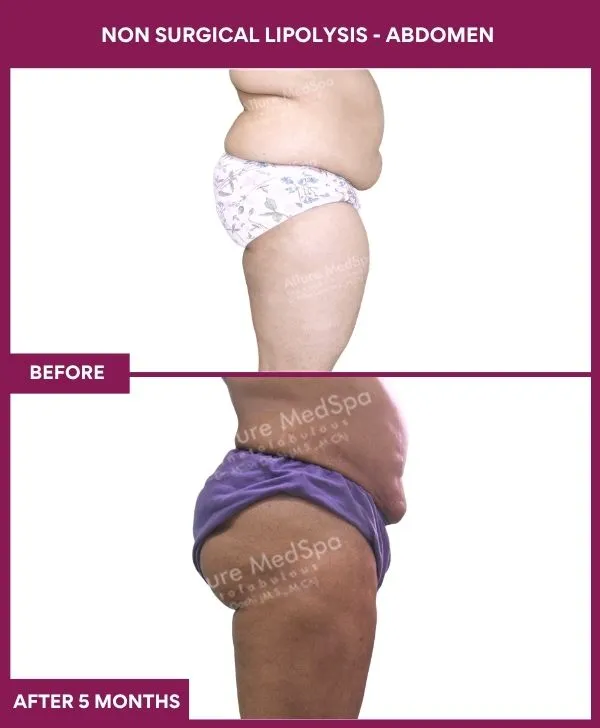
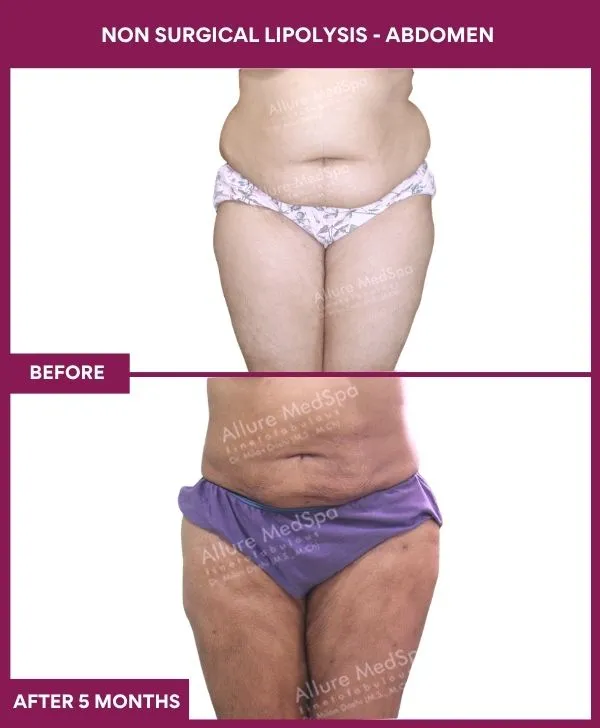
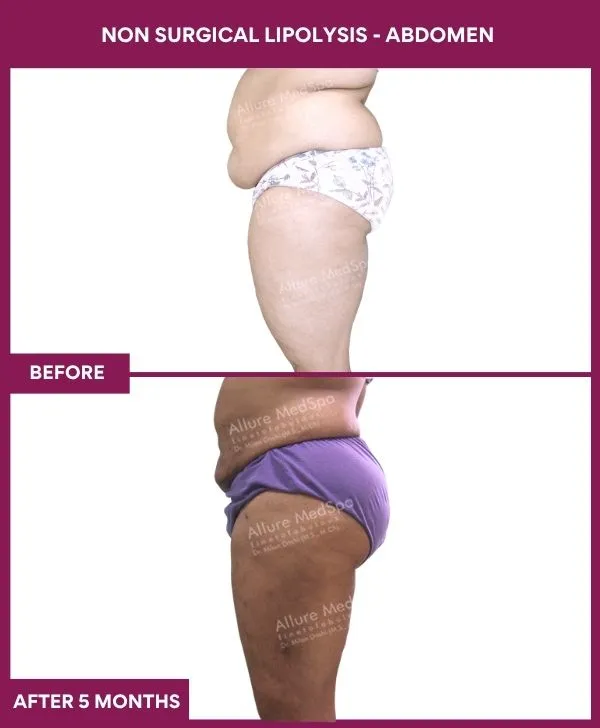
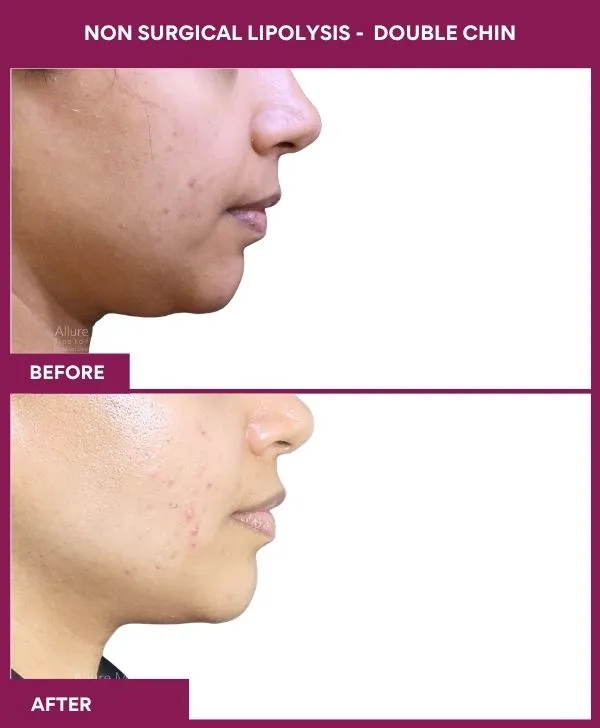
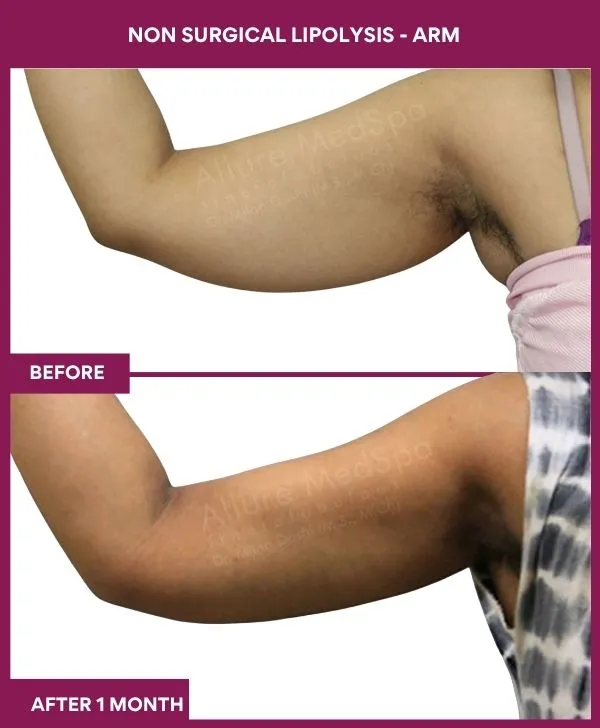
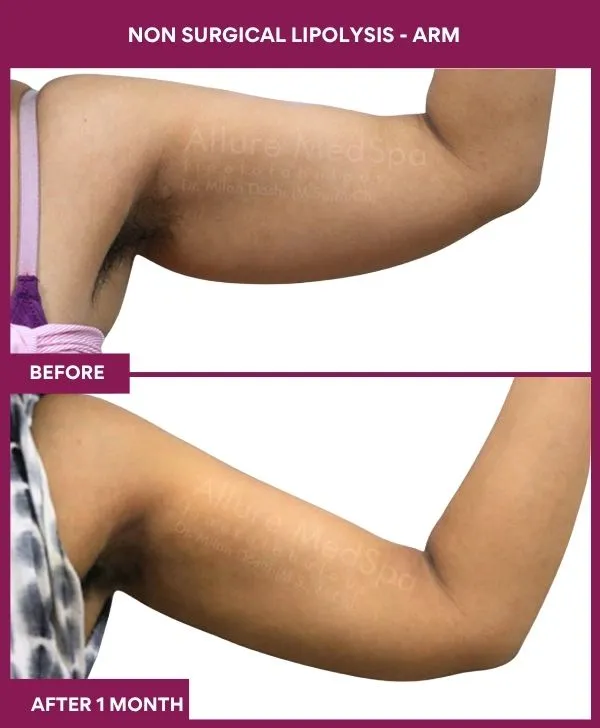
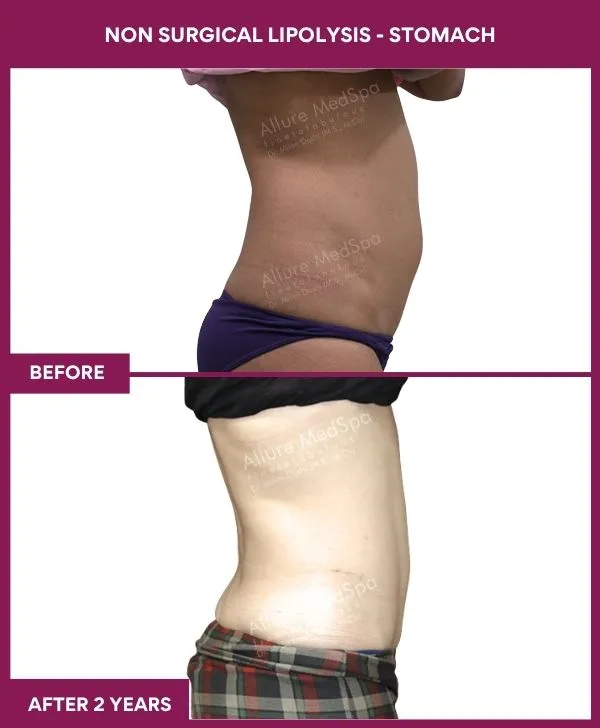
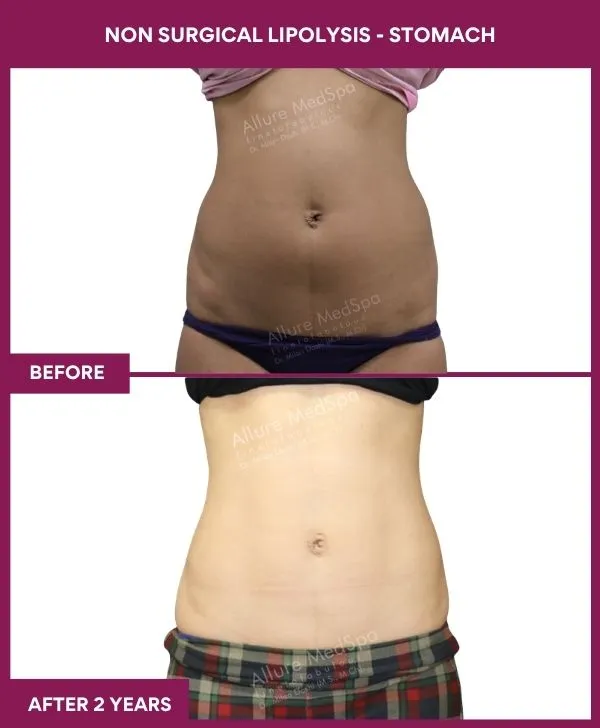
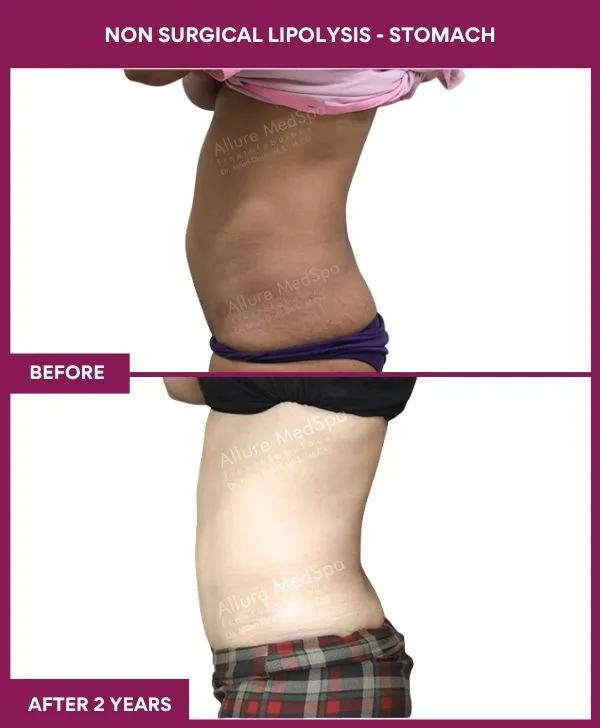
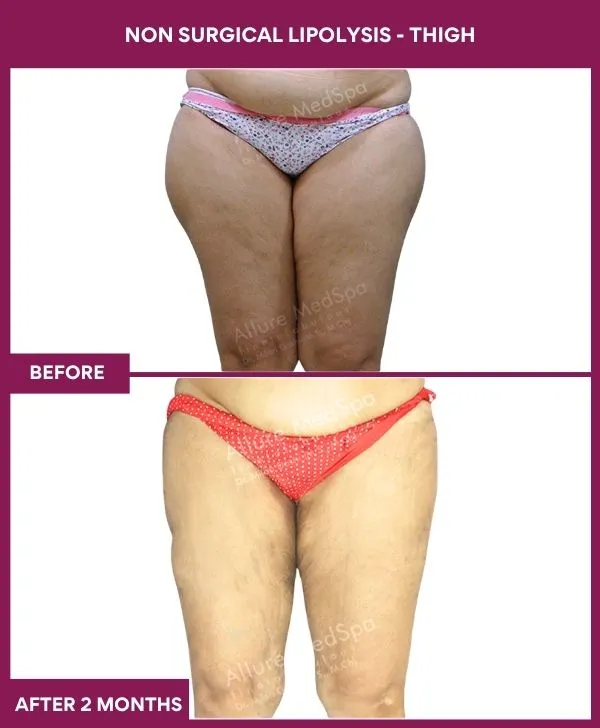
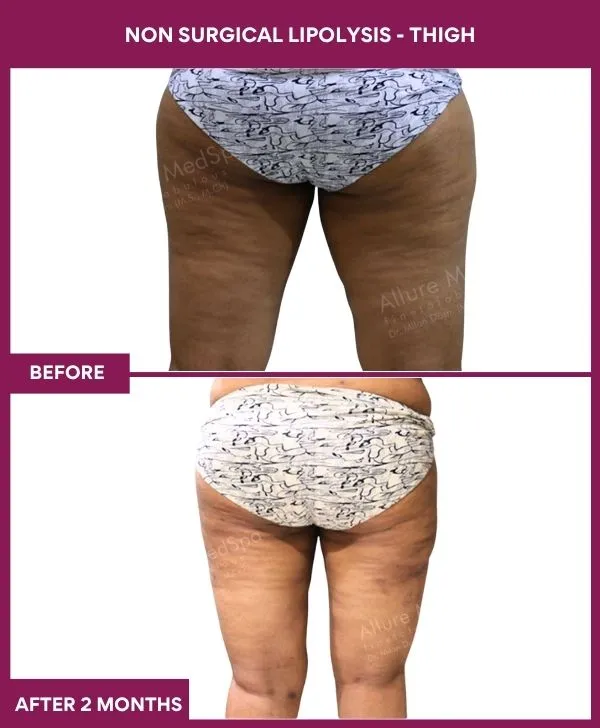
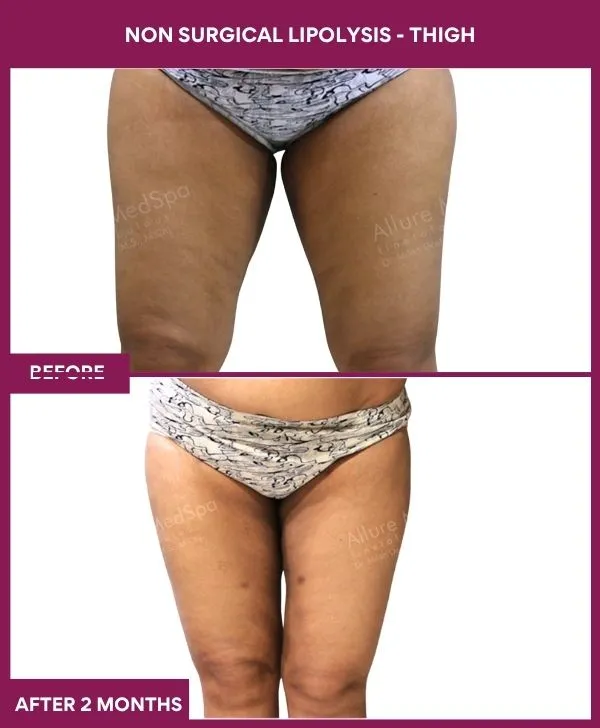
See real transformations from fine to fabulous — achieved with precision and care.
Fat Dissolving Injections Testimonials: Fine To Fabulous Journeys

Awarded by Google.com
Rating: 4.7
Reviews: 485+

Awarded by WhatClinic.com
Rating: 4.8
Reviews: 119+

Awarded by Realself
Rating: 4.9
Reviews:453+

Awarded by Facebook
Rating: 4.6
Reviews:105+
Dr Milan Doshi and his staff are very professional and committed as the centre is highly equipped with advanced technology. I had closed rhinoplasty 4 months back and I’m seeing the results as to how it becomes successful.
Deepika Shetty
The doctor explained everything clearly and the surgery was smooth. Recovery was faster than I expected and the team was very supportive.
Rahul Mehta
Very natural results and excellent staff. From consultation to follow-up, the experience was outstanding and boosted my confidence.
Sneha Kapoor
Is Fat Dissolving Injection right for you?
Are Fat Dissolving Injections Right For Me?
(4 quick questions)
Small pocket, right place, realistic goal — check all three in one visit.
Check My SuitabilityHonest opinion, zero pressure
Quick Facts About Fat Dissolving Injections
SESSION TIME
30–60 minutes
ANESTHESIA
Topical/Local
SESSIONS
Courses of 2–6
FIRST CHANGE
3–4 weeks
DOWNTIME
2–3 days
FULL RESULT
3–6 months
SUCCESS RATE
97–98%
COST
₹8,000 – ₹40,000
What Is The Cost Of Fat Dissolving Injections In Mumbai?
Fat dissolving injections in Mumbai cost ₹8,000–₹40,000 per session at Allure Medspa by area, vials and product; 2–6 sessions are usual.
| Cost factor | Why it matters |
|---|---|
| Treatment area and size | Double chin needs 1–3 vials; a body pocket needs more |
| Amount of fat | Determines vials per session |
| Number of sessions | 2–6 — the biggest driver of true cost |
| Product and regulatory status | Approved deoxycholic acid costs more than unapproved PPC products — and that difference is the point |
| Expertise and follow-up | Surgeon-led injection, nerve-safe technique, review visits |
| Treatment | Estimated cost (₹) 🩺 PROPOSED rows |
|---|---|
| Double chin — per session (1–2 vials) | 15,000 – 30,000 |
| Jowls / jawline — per session | 12,000 – 25,000 |
| Small body pocket (bra roll, knee, lower abdomen) — per session | 8,000 – 40,000 |
| Full course (chin, 2–4 sessions) | 30,000 – 1,00,000 |
| Chin liposuction (for comparison) | See Double Chin Liposuction |
| Other non-surgical methods (cryolipolysis, laser, RF) | ₹4,000 – ₹40,000 per session → Non-Surgical Fat Reduction |
- Compare honestly: six injection sessions can approach the cost of a single liposuction, with a less predictable result and no ability to correct over-treatment
- EMI options → Cosmetic Surgery Payment Process · online pre-assessment → Online Consultations
Get your exact quote & surgery plan
Share your details — our team responds within working hours with cost, EMI options and next steps.
Most Common Question People Ask
Q1. Do fat dissolving injections actually work?
Ans. Yes, for small, localised fat pockets. Deoxycholic acid breaks down fat cells, which the body then clears. Approved for the double chin and used off-label elsewhere. Not a weight-loss treatment.
Q2. What is actually in the injection?
Ans. The approved active ingredient is deoxycholic acid. Some products also contain phosphatidylcholine (PPC), which the FDA has not approved for fat dissolution and has specifically warned about. Ask your clinic exactly which product is used.
Q3. Are fat dissolving injections FDA-approved?
Ans. Deoxycholic acid is FDA-approved for submental (under-chin) fat only, as Kybella. Any other area is off-label. PPC products such as Aqualyx are not FDA-approved, though some carry a CE mark in Europe.
Q4. Can they be reversed?
Ans. No. Unlike hyaluronic acid fillers there is no reversal agent; the fat cells are destroyed permanently, so over-treatment cannot be undone. Start conservatively.
Q5. How long do results take?
Ans. Gradual reduction from around 3–4 weeks; full results at 3–6 months. Swelling in the first weeks is not the result.
Q6. How many sessions will I need?
Ans. Typically 2–6, spaced 3–4 weeks apart, depending on the area and your response. Ask for the total course cost.
Q7. Are they painful?
Ans. Mild to moderate discomfort. Numbing cream is applied and the solution contains local anaesthetic, but stinging during injection and aching afterwards are common.

Why Choose Dr. Milan Doshi?
Dr. Milan Doshi, MCh, MS — Indian board-certified plastic surgeon with 27+ years and 16,000+ cosmetic surgeries who injects conservatively because the result cannot be undone, knows the marginal mandibular nerve from facial surgery, and offers liposuction when a pocket is too big for a syringe. Consults and treats at Andheri West; surgeries at the NABH-accredited surgical centre, Goregaon West.
Dr Doshi Note: “At Allure Medspa, we use fat-dissolving injections, after confirming its regulatory status and suitability for the treatment area. I first rule out lipoma or other fat disorders. These injections are best for small, localised fat pockets; for larger areas or limited response after 2 to 4 sessions, I usually recommend liposuction instead.”
The Complete Guide About Fat Dissolving Injections
What Are Fat Dissolving Injections?
Fat dissolving injections place deoxycholic acid — a bile acid — into a small fat pocket to rupture fat cells; the body clears the fat over weeks.
- Approved for one area — the double chin (submental fat) is the only indication approved by the US FDA
- Used off-label elsewhere — abdomen, arms, thighs and flanks, at the clinician’s discretion and with your informed consent
- Given in a short series — typically 2–6 sessions, 3–4 weeks apart
- Best for people near goal weight with localised, pinchable deposits
- Permanent and irreversible — destroyed fat cells do not return, and the treatment cannot be undone
- Not a substitute for surgery — for anything larger than a small pocket, liposuction gives a more predictable result → Liposuction Surgery
Synonyms for fat dissolving injections
Injection lipolysis, lipolytic injections, fat reduction shots, adipose-dissolving injections and Kybella all describe this treatment.
- Patient terms: fat dissolving injections, fat reduction shots, double chin injection, Kybella, Aqualyx (a PPC product — see contents)
- Medical terms: injection lipolysis, injection adipolysis, lipolytic injections, deoxycholic acid (ATX-101) injection
- NOT listed here — “non-surgical fat reduction” and “non-surgical lipolysis”: those are the head terms of the five-method umbrella page → Non-Surgical Fat Reduction
Source: FDA — Kybella (deoxycholic acid) is the only approved fat-dissolving injectable, for the double chin.
What Causes Excess Fat To Collect — And When Is A “Fat Pocket” Not Fat?
Genetics, inactivity and metabolism drive ordinary fat pockets; lipoedema, lipodystrophy, Cushing’s syndrome and lipomas look alike but don’t respond.
| Cause | What it means for injections |
|---|---|
| Genetics and sedentary lifestyle | Ordinary, pinchable subcutaneous fat — the only kind injections treat |
| Lipoedema | Chronic, often painful fat accumulation in arms and legs, mostly women; resistant to diet, exercise and injections; managed with conservative therapy and lymph-sparing liposuction |
| Lipid metabolism disorders | Excess storage from processing imbalance — medical assessment first |
| Hormonal and medication causes | Cushing’s syndrome, lipodystrophy and some drugs cause characteristic fat redistribution (e.g. an upper-back hump) — endocrine assessment, not a cosmetic injection |
| A discrete, mobile lump | May be a lipoma, which needs surgical removal → Lipoma Removal |
What Is In A Fat Dissolving Injection — Deoxycholic Acid vs Unapproved PPC Products?
The approved active ingredient is deoxycholic acid; phosphatidylcholine (PPC / “PCDC”) products are unapproved; the FDA warns of scars and infection.
| Ingredient | Status | What you should know |
|---|---|---|
| Deoxycholic acid (ATX-101) | FDA-approved for submental fat (Kybella) — the only approved fat-dissolving injectable drug | A bile acid your body already makes to break down dietary fat; everywhere other than the chin is off-label and needs informed consent |
| Phosphatidylcholine (PPC) ± sodium deoxycholate (“PCDC”) | NOT FDA-approved; FDA safety communication issued | Reports to the FDA of permanent scars, serious infections, skin deformities, cysts and deep painful knots at injection sites |
| Named unapproved brands | Aqualyx, Lipodissolve, Lipo Lab, Kabelline (FDA list) | Some carry a CE mark in Europe and may be lawfully available in India under CDSCO — not the same as FDA approval, and the safety data is not equivalent |
What to ask your clinic before the first injection
Ask exactly which product and brand, its status in India, whether your area is on-label, how many vials, who injects and who manages complications.
- Which product, which brand, which batch — and may I see the vial?
- Is my treatment area on-label or off-label, and what does the consent form say?
- How many vials per session and how many sessions do you expect?
- Who injects — a plastic surgeon or a technician — and who manages a nerve or skin complication?
- What is the plan if there is limited response after 2–4 sessions? (The honest answer is often liposuction)
Sources: FDA — Using Fat-Dissolving Injections That Are Not FDA Approved Can Be Harmful · FDA warning coverage — Plastic Surgery Practice.
How Do Fat Dissolving Injections Work?
Micro-injections place deoxycholic acid in the subcutaneous fat; it ruptures fat-cell membranes and the body clears the released fat over weeks.
| Step | What happens |
|---|---|
| 1 | The solution enters the subcutaneous fat layer through a grid of small micro-injections |
| 2 | Fat-cell membranes are destabilised and broken down |
| 3 | Liquid fat is released and emulsified |
| 4 | The body clears it over weeks via normal metabolic and lymphatic pathways |
| 5 | An inflammatory response follows — swelling and tenderness are expected, not incidental; they are part of the mechanism |
| 6 | The effect is permanent and irreversible — destroyed fat cells do not regenerate |
What Are The Benefits Of Fat Dissolving Injections?
No incisions or scars, local anaesthesia, 30–60-minute sessions, a day or two of downtime, gradual natural change and permanent loss of treated cells.
- No incisions, no scars — genuinely non-surgical
- Minimal pain with topical or local anaesthesia
- Little downtime — routine within a day or two, though swelling is expected
- Quick sessions — 30–60 minutes
- Gradual, natural-looking change — no overnight transformation to explain
- Permanent fat-cell reduction when paired with a stable weight
- Well suited to the double chin — the approved indication and where it performs best; if skin laxity is also present, a neck lift may be the better answer → Neck Lift Surgery
On Which Body Areas Can Fat Dissolving Injections Be Used?
Approved for the double chin; used off-label on jowls, small belly pockets, thighs, knees, bra rolls and flanks; some areas need a diagnosis first.
| Category | Areas | Note |
|---|---|---|
| Approved indication | Double chin (submental fat) | The only FDA-approved indication and where it performs best; surgical alternative → Double Chin Liposuction |
| Common off-label areas | Jowls and jawline · small abdominal pockets · inner / outer thighs, knees · bra rolls and flanks | Small-volume contouring only; the marginal mandibular nerve runs along the jaw, so technique matters |
| Needs medical assessment first | “Buffalo hump” (upper-back fat) · ankles (“cankles”) | A hump can signal Cushing’s syndrome, lipodystrophy or a medication effect; ankle fullness is often lymphoedema, venous or cardiac/renal — thin skin, poor lymphatics, real risk |
| Wrong tool | Buttocks for shape · male chest | Shape → fat grafting or implants → Body Surgery · firm male chest is usually glandular gynaecomastia → Gynecomastia Surgery |
Source: FDA — Kybella (deoxycholic acid) is approved for submental fat only.
Am I The Right Candidate For Fat Dissolving Injections?
You are a good candidate if you are healthy, near goal weight, want a small pinchable pocket reduced and accept a gradual, modest, permanent result.
| You may be a good candidate if you | You should avoid it, or seek an alternative, if |
|---|---|
| Are near your ideal weight with localised, pinchable fat | You want meaningful weight loss → bariatric surgery or medical weight management → Bariatric Surgery |
| Are not pregnant or breastfeeding, and in good general health | You have a large fat volume or loose skin → Liposuction Surgery, Tummy Tuck Surgery or Body Lift Surgery |
| Are a non-smoker or willing to quit | There is active infection at the injection site — an absolute contraindication |
| Have realistic expectations of gradual, modest change over months | You have a bleeding disorder or take blood thinners — discuss first |
| Understand it is irreversible and are comfortable with that | You have unexplained swelling or a fat pad in an unusual distribution — diagnosis first |
| Your “fat pocket” is a discrete, mobile lump — possibly a lipoma → Lipoma Removal |
Source: Deoxycholic acid contraindications — Kybella prescribing information.
Why Should You Consult A Plastic Surgeon Before Fat Dissolving Injections?
A plastic surgeon confirms the pocket is fat and not lipoma, lipoedema or oedema, knows the nerve anatomy, doses cautiously and can offer surgery.
- Confirms suitability and whether the area is on-label or off-label
- Identifies the root cause — simple fat vs lipoedema, lipodystrophy, lipoma or oedema
- Knows the anatomy — the marginal mandibular nerve when treating the chin and jawline
- Builds a realistic plan — sessions, total cost, honest expected outcome
- Reviews medications, bleeding risk and prior treatments
- Can offer the alternative — Liposuction Surgery, Neck Lift Surgery or Chin Augmentation — and perform it
- Book online → Online Consultations or in person → Contact Us · consultation fee ₹1,500 🩺
How Is The Fat Dissolving Injection Procedure Performed?
Under topical and local anaesthesia, a marked grid of micro-injections places deoxycholic acid into the fat layer, well away from the jaw nerve.
| Step | What happens |
|---|---|
| 1 | The target area is marked on a treatment grid and disinfected under sterile conditions |
| 2 | Topical anaesthetic is applied |
| 3 | Deoxycholic acid is prepared, usually mixed with a local anaesthetic such as lignocaine |
| 4 | Using a pinch technique, multiple micro-injections are placed into the subcutaneous fat on the grid |
| 5 | Topical antibiotic and a cold compress; written aftercare; review booked at 3–4 weeks |
| Critical for the chin | Injections stay within the marked submental area and away from the marginal mandibular nerve |
| Never inject into | Salivary glands, lymph nodes or muscle |
Source: Kybella administration and injection-site guidance (existing live citation).
What Are The Risks And Complications Of Fat Dissolving Injections?
Swelling, bruising, tenderness and numbness are expected; trials show ~4% temporary smile weakness and ~2% swallowing difficulty, all resolved.
| Category | What is reported |
|---|---|
| Common and expected | Swelling — significant, especially under the chin, up to ~2 weeks · bruising, redness, tenderness at each point · firmness or nodules that soften over weeks · temporary numbness |
| Documented in deoxycholic acid trials | Marginal mandibular nerve injury — asymmetric smile or facial weakness in ~4% of trial subjects; all resolved, median 44 days, range to 298 days · dysphagia ~2%, all resolved · injection-site ulceration or necrosis (wrong plane) · hair loss at the site in men → Hair Loss Treatment |
| Reported with unapproved PPC / “PCDC” products | Permanent scars · serious infections including a documented Mycobacterium case at Lipodissolve sites · skin deformities, cysts, deep painful knots — all reported to the FDA |
| When to call the clinic | Asymmetric smile or trouble swallowing after chin treatment · escalating pain, spreading redness or fever · skin breakdown or ulceration · a hard, painful lump not settling after several weeks |
Sources: Kybella prescribing information — marginal mandibular nerve injury 4%, dysphagia 2% · FDA safety information on unapproved fat-dissolving injections.
Can Fat Dissolving Injections Be Reversed?
No — unlike hyaluronic acid fillers, which hyaluronidase dissolves, fat dissolving injections destroy fat cells permanently; there is no antidote.
- The mechanism is destructive — membranes are ruptured; the cells are gone
- No reversal agent exists — there is no equivalent of hyaluronidase → compare reversible fillers Dermal Fillers
- Over-treatment is not correctable — hollowing or a contour dent may need fat grafting to repair → Fat Grafting
- Nodules and irregularity may soften with time and massage, but can persist
- Which is why conservative dosing and staged sessions matter far more than with fillers: easy to add a session, impossible to take one back
- Practical takeaway — start with fewer sessions than you think you need and reassess at 3 months
What Are The Limitations Of Fat Dissolving Injections?
They treat small pockets only, need 2–6 sessions, swell predictably, take 3–6 months, cannot tighten skin and cannot be undone; large areas need lipo.
| Limitation | Why it matters |
|---|---|
| Small areas only | The volume safely treated per session is limited |
| Multiple sessions | 2–6, spaced 3–4 weeks apart — drives the true cost |
| Swelling, bruising, redness, itching | Expected, not rare |
| Results take time | Gradual breakdown over 3–6 months |
| Cannot tighten loose skin | Removing fat may make laxity more visible → neck lift or tightening |
| Irreversible | Over-correction cannot be undone |
| Larger volumes need surgery | One liposuction is more predictable and often better value than six sessions → Liposuction Surgery |
How Long Do Fat Dissolving Injections Take To Show Results?
First gradual change at 3–4 weeks, full result at 3–6 months per session; swelling in the first two weeks is not the result; judge at 3 months.
| Time | What you see | What to do |
|---|---|---|
| Day 0 | Immediate swelling and tenderness; the area looks fuller, not smaller | Cold compress; sleep head-up |
| Days 2–3 | Swelling peaks under the chin; bruising appears | Avoid alcohol, exercise, saunas, anti-inflammatories |
| Week 1–2 | Swelling settles; firmness or small nodules may be felt | Gentle routine; no aggressive massage unless instructed |
| Weeks 3–4 | First softening of the pocket | Review; next session if planned |
| Month 3 | The honest assessment point for each session | Decide on further sessions from photos and pinch thickness |
| Months 3–6 | Full result of the course | Maintain weight; the destroyed cells do not return |
What Aftercare Should You Follow After Fat Dissolving Injections?
For 48 hours: cold compresses; no alcohol, smoking, hard exercise, saunas or anti-inflammatories; keep it clean, no massage; report asymmetry.
| Do / avoid | Why |
|---|---|
| Expect swelling; use cold compresses; plan around social commitments for up to 2 weeks (chin) | Swelling is the mechanism at work, not a complication |
| Avoid alcohol and smoking for 24–48 hours | Limits swelling and bruising; smoking slows clearance |
| Skip strenuous exercise, saunas and steam for 24–48 hours | Heat and exertion increase swelling |
| Avoid anti-inflammatory medication unless advised | The inflammatory response is part of how the treatment works |
| Keep the area clean; apply the topical antibiotic as directed | Reduces infection risk |
| Do not massage aggressively unless instructed | Prevents spreading product beyond the planned zone |
| Attend your review; report facial asymmetry, swallowing difficulty or skin breakdown immediately | Early review changes outcomes |
How Do Fat Dissolving Injections Compare With Other Non-Surgical Methods?
Injections are the most targeted option for a small pocket, especially the chin; cryolipolysis, laser, RF and ultrasound suit larger pinchable areas.
- Fat freezing (cryolipolysis) is non-invasive, aches for up to two weeks and rarely causes paradoxical adipose hyperplasia; injections are more targeted, swell predictably and cannot be reversed
- Laser, RF and ultrasound devices treat broader, thinner layers over 4–6 sessions
- The five methods are compared side by side — sessions, sensation, evidence, cost and risks — on the non-surgical fat reduction page → Non-Surgical Fat Reduction
Medical Codes for Fat Dissolving Injections
Codes below are for administrative and documentation reference. All codes must be verified against the current CPT and ICD-10 code sets before publication and before any use in documentation.
| CPT Code | CPT Description | ICD-10 Procedure |
|---|---|---|
| 15847 | Excision, excessive skin and subcutaneous tissue | Z41.1 |
| 15828 | Rhytidectomy (facelift), including neck and submental area | Z41.1 |
| 15822 | Rhytidectomy (facelift), including skin only | Z41.1 |
| 15823 | Rhytidectomy (facelift), including fascial tightening | Z41.1 |
(FAQs) Frequently Asked Question About Fat Dissolving Injections
Q1. What are the side effects?
Ans. Swelling, bruising, tenderness, firmness and numbness are expected. In trials about 4% had marginal mandibular nerve injury — an asymmetric smile — and about 2% had difficulty swallowing; all resolved, though nerve recovery took up to 298 days in some.
Q2. What warning signs should I watch for?
Ans. An asymmetric smile, trouble swallowing, spreading redness or fever, skin breakdown, or a hard painful lump that is not settling. Contact the clinic immediately.
Q3. Does the fat come back?
Ans. No. Destroyed fat cells do not regenerate. But remaining fat cells can enlarge with weight gain, in treated and untreated areas alike.
Q4. Do they leave loose skin?
Ans. In small areas skin usually retracts. In larger zones, or where laxity already exists, reducing fat can make it more visible; a neck lift or skin tightening may be needed.
Q5. What should I avoid afterwards?
Ans. Alcohol, smoking, strenuous exercise, saunas and anti-inflammatory medication for 24–48 hours. Expect visible swelling, especially under the chin.
Q6. Who should not have them?
Ans. Anyone pregnant or breastfeeding, with active infection at the site, a bleeding disorder, or unexplained swelling or a fat pad in an unusual distribution — which needs diagnosis first.
Q7. Can they be used on a “buffalo hump” or the ankles?
Ans. Both need medical assessment first. An upper-back fat pad can indicate Cushing’s syndrome or lipodystrophy; ankle fullness is often lymphoedema or venous swelling, not fat.
Q8. Fat freezing or fat dissolving injections — which is better?
Ans. Neither universally. Freezing is non-invasive but can ache for two weeks and rarely causes PAH; injections are more targeted but swell and cannot be reversed. Your anatomy decides.
Q9. Is Aqualyx the same as Kybella?
Ans. No. Kybella is approved deoxycholic acid; Aqualyx is a PPC-based product the FDA lists as unapproved, though it carries a CE mark in Europe. Ask which one your clinic uses.
Q10. Can I have injections after chin liposuction, or liposuction after injections?
Ans. Yes to both, after healing. Injections can refine a small residual pocket after liposuction; liposuction can treat a pocket that responded poorly to injections.
Q11. Can I combine them with Botox or fillers?
Ans. Yes — a chin or jawline plan often pairs fat reduction with chin filler for projection or with a jawline-slimming toxin, usually on separate days.
Q12. Will it help a “double chin” caused by loose skin or a small chin?
Ans. No. Loose skin needs a neck lift; a receding chin needs chin augmentation. The pinch test tells them apart.
Q13. How many vials per session for the chin?
Ans. Usually 1–3, depending on the pocket; conservative first-session dosing is deliberate because the result cannot be undone.
Q14. Is there any downtime for body areas?
Ans. Less visible than the chin, but swelling and tenderness for a week are normal; avoid tight waistbands on a treated abdomen.
Q15. Are results permanent?
Ans. The treated cells are permanently gone. Weight gain enlarges the remaining cells, so a stable weight keeps the result.
Q16. How much do they cost in Mumbai?
Ans. Roughly ₹8,000–₹40,000 per session by area and vials. Since 2–6 sessions are usual, ask for the total course cost.
Related Links
- Non-Surgical Fat Reduction — five methods compared
- Liposuction Surgery (hub)
- Double Chin Liposuction
- Liposuction Body Areas
- Liposuction Before & After
- Vaser Liposuction
- Neck Lift Surgery
- Chin Augmentation
- Lipoma Removal
- Dermal Fillers (reversible, for comparison)
- Fat Grafting
- Gynecomastia Surgery
- Tummy Tuck Surgery
- Body Lift Surgery
- Bariatric Surgery
- HIFU Skin Tightening
- Meet Dr. Milan Doshi