
Laser Hair Removal in Mumbai: Safe, Comfortable & Long-Lasting Smooth Skin With Expert Care

Indian Board Certified Plastic Surgeon
M.CH, MS, ISAPS Mentor
16000+ Cosmetic Surgeries
600+ Laser Hair Reduction
Laser hair removal is a safe, minimally invasive procedure that delivers concentrated light into hair follicles to achieve long-lasting, permanent hair reduction — smoother skin with far less regrowth than waxing, shaving or threading. Because Indian skin carries more melanin, the choice of wavelength and cooling matters more than anywhere else; at Allure Medspa every plan starts with a skin-and-hair assessment and a test patch, and you are told plainly that the result is long-term reduction, not guaranteed removal.
Laser Hair Reduction Before and After Images
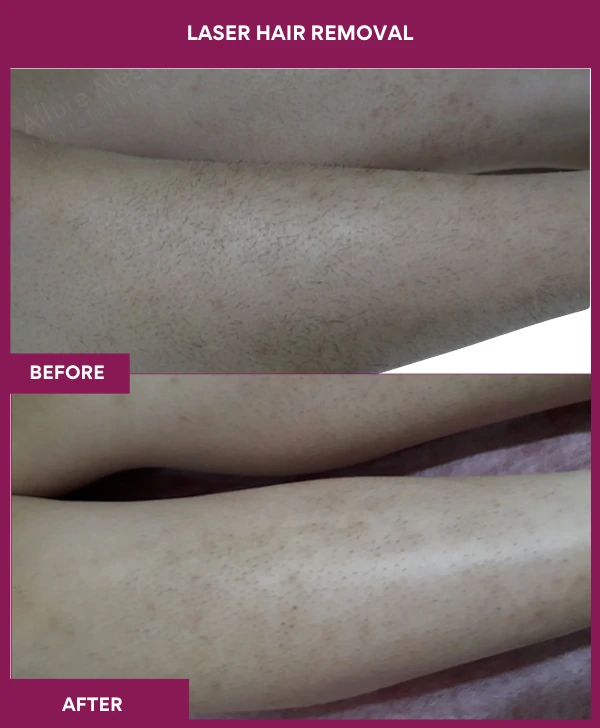
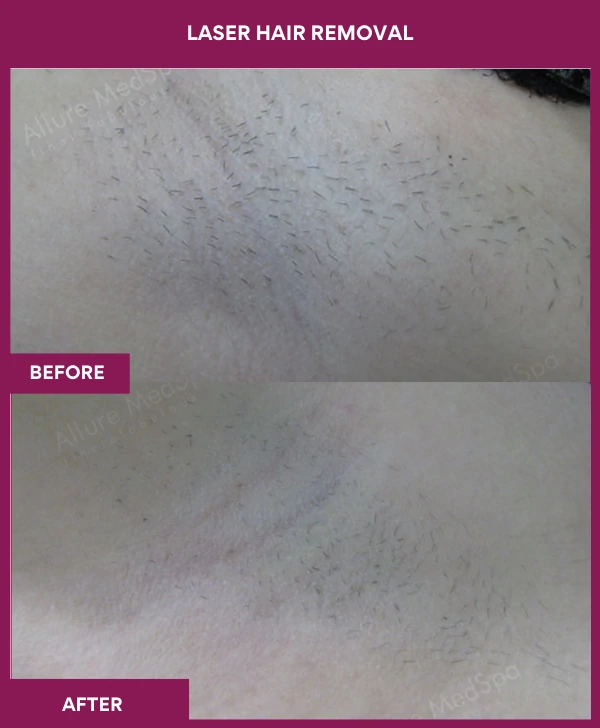
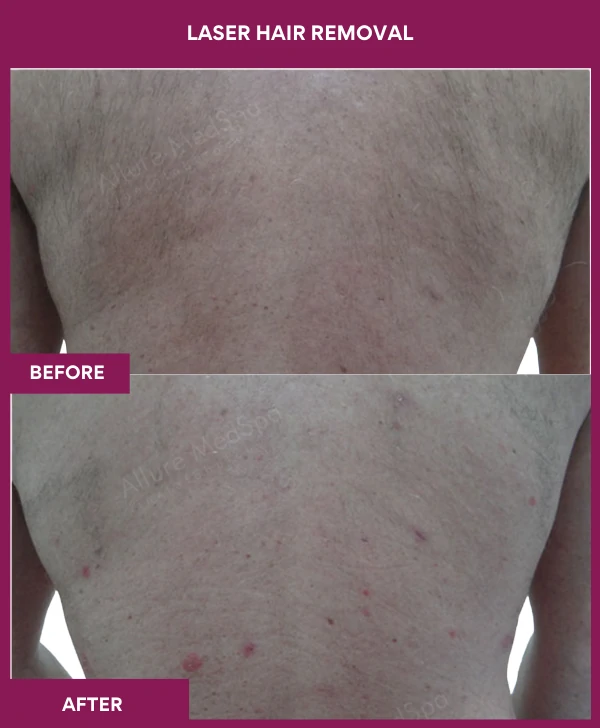
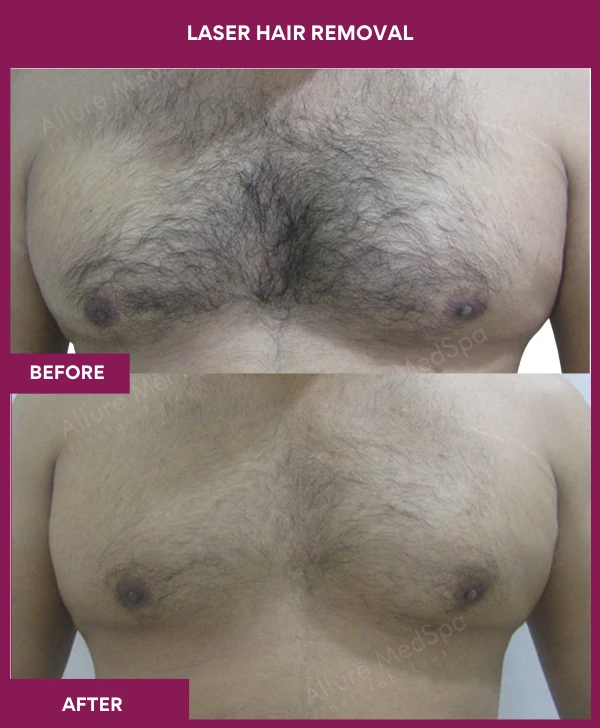
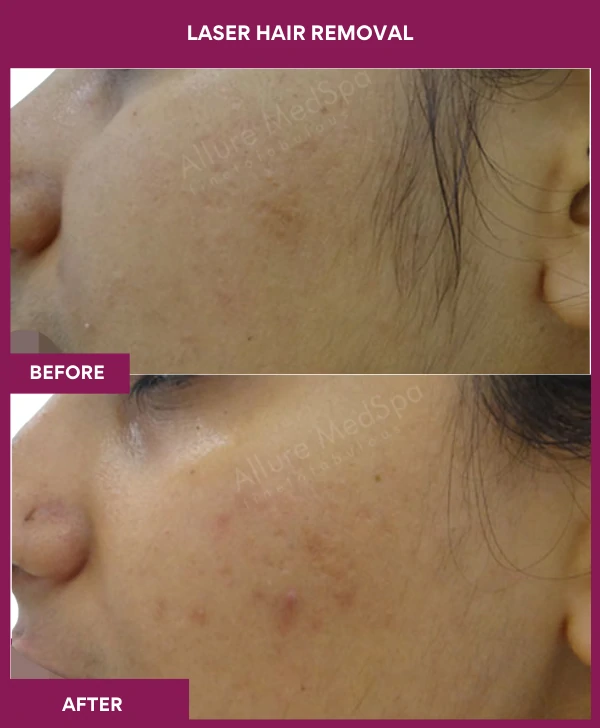
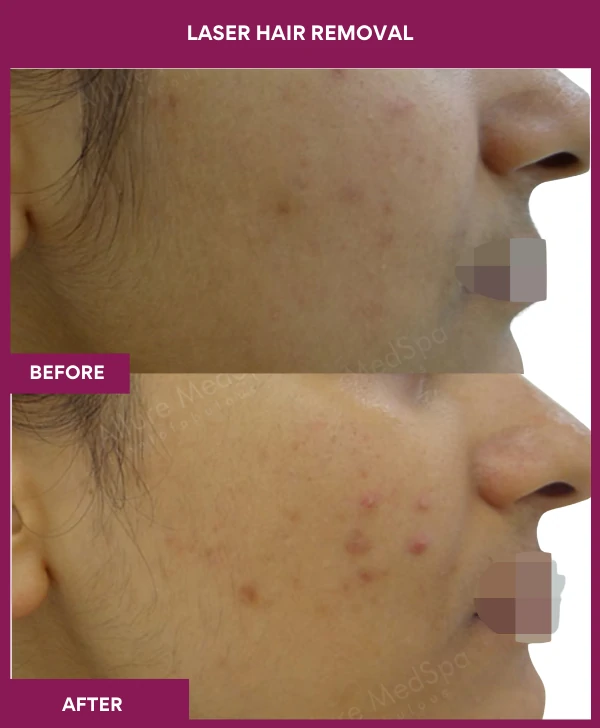
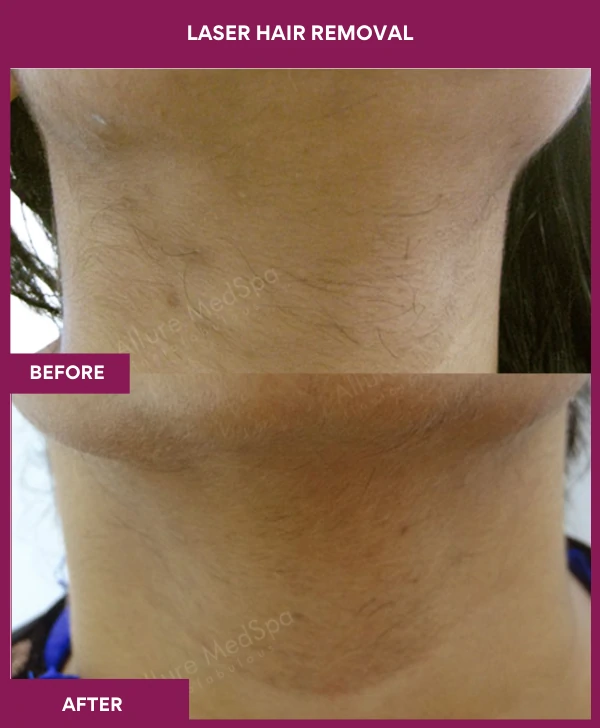
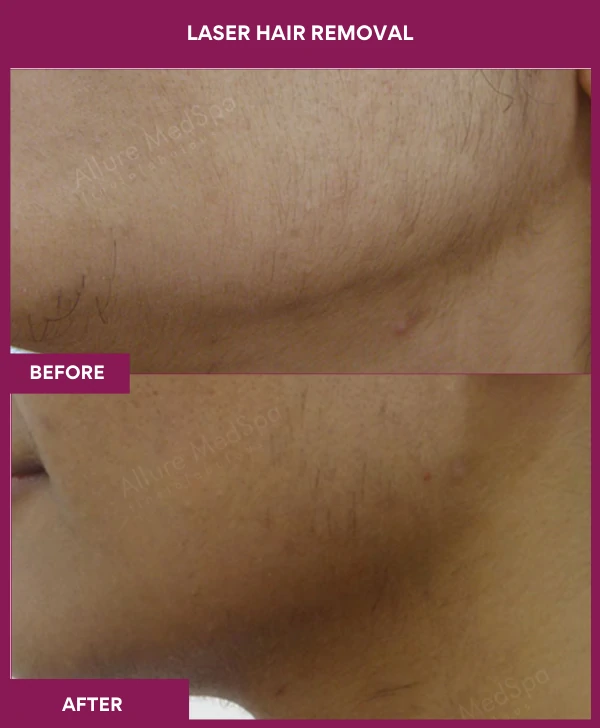
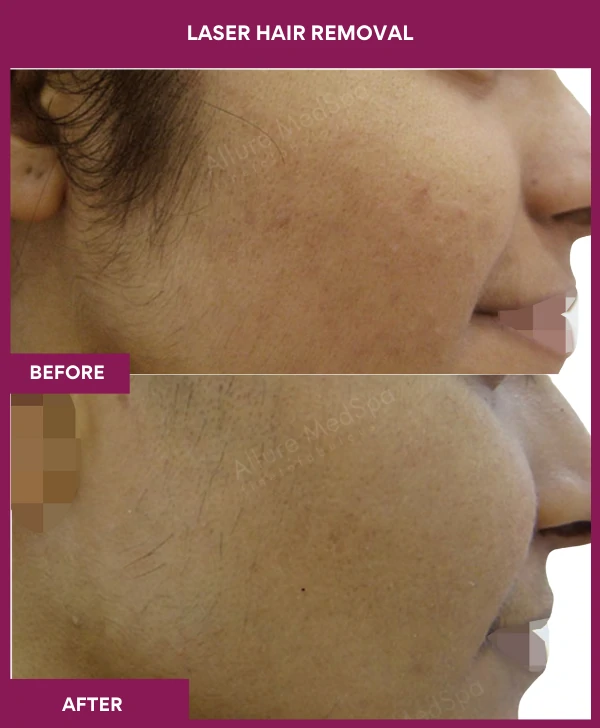
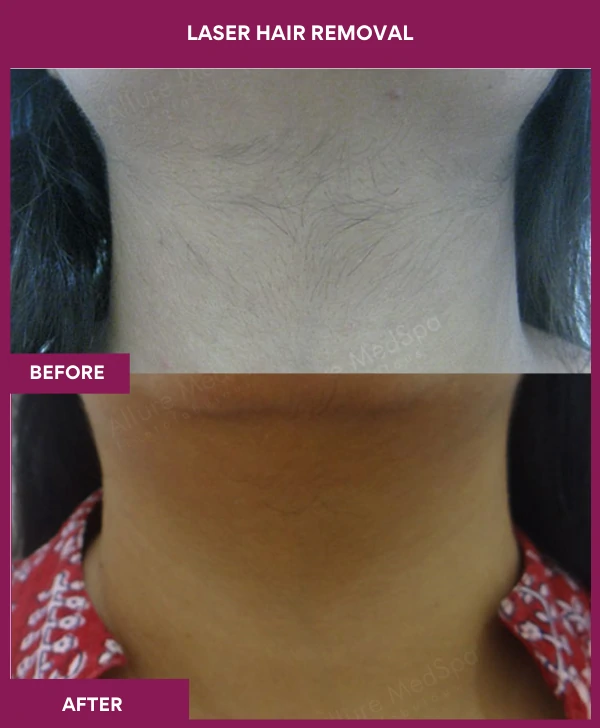
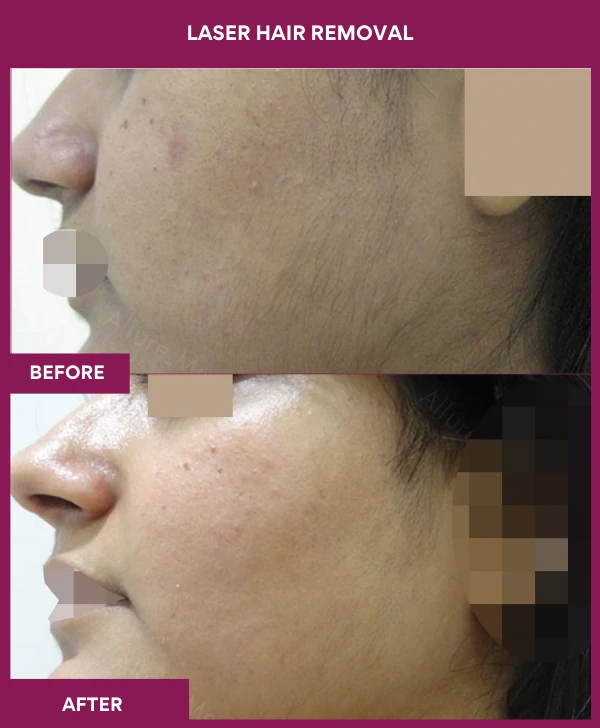
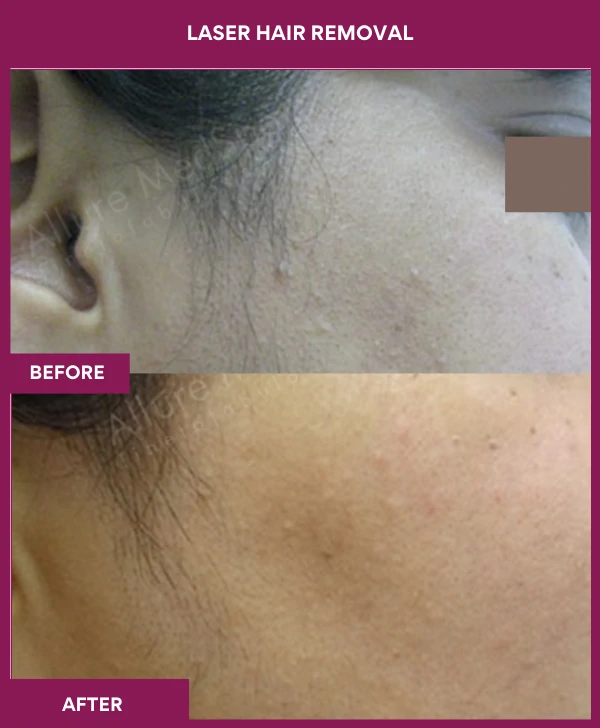
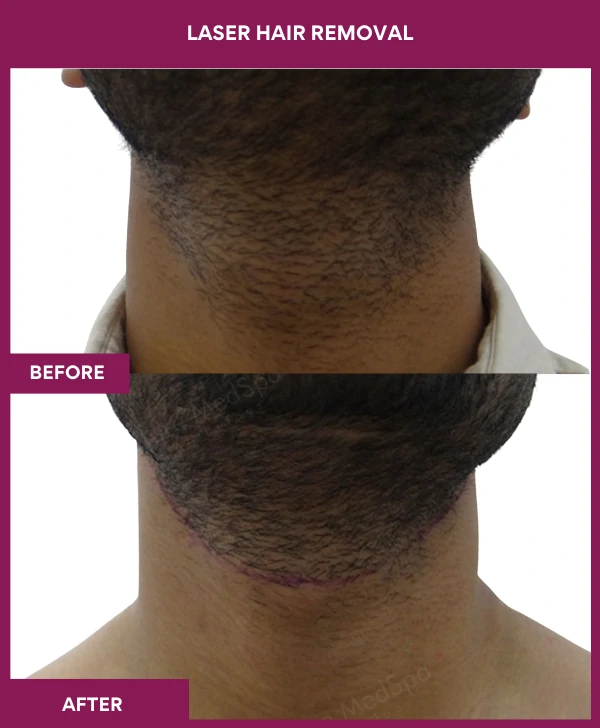
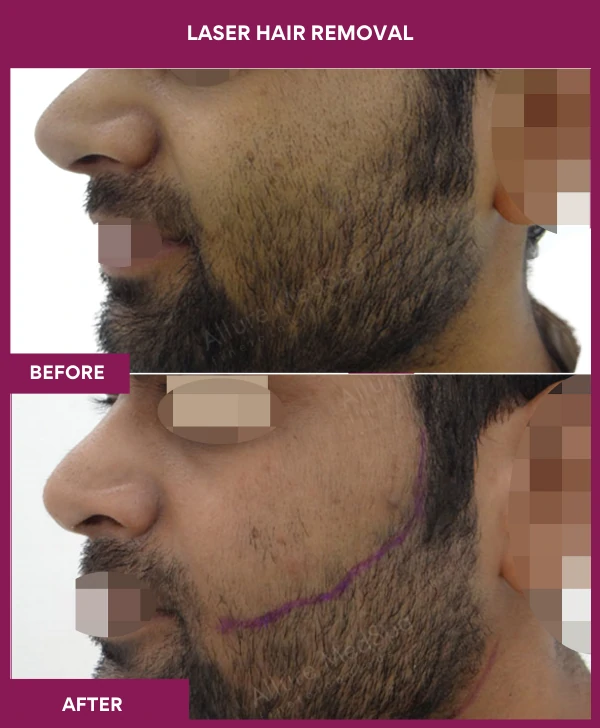
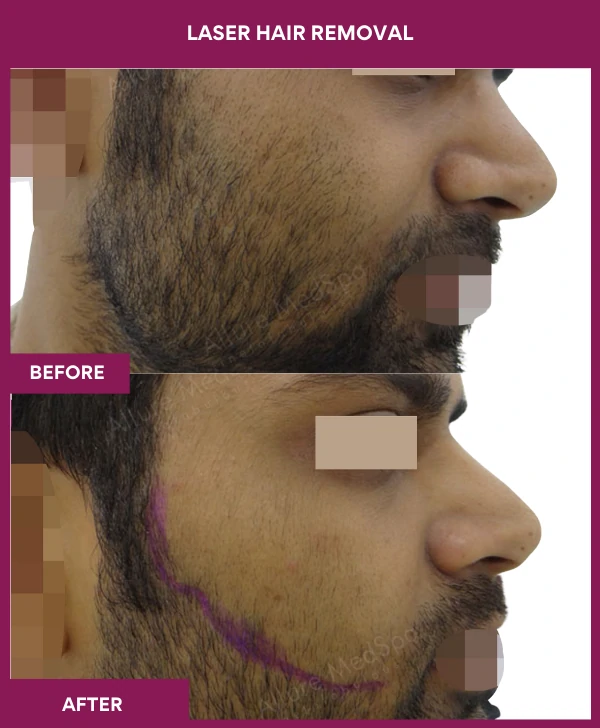
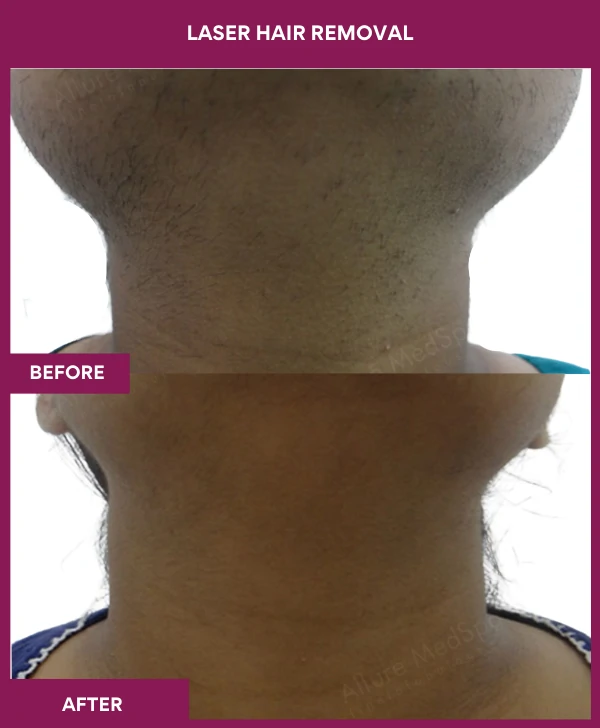
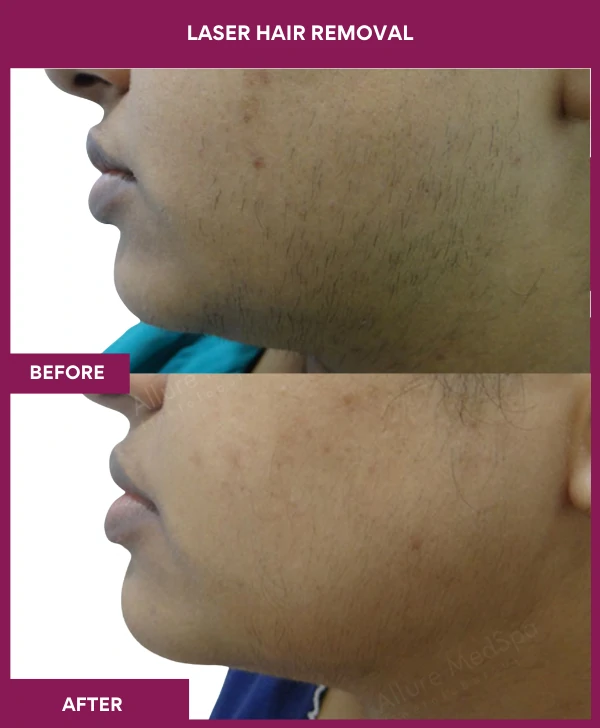
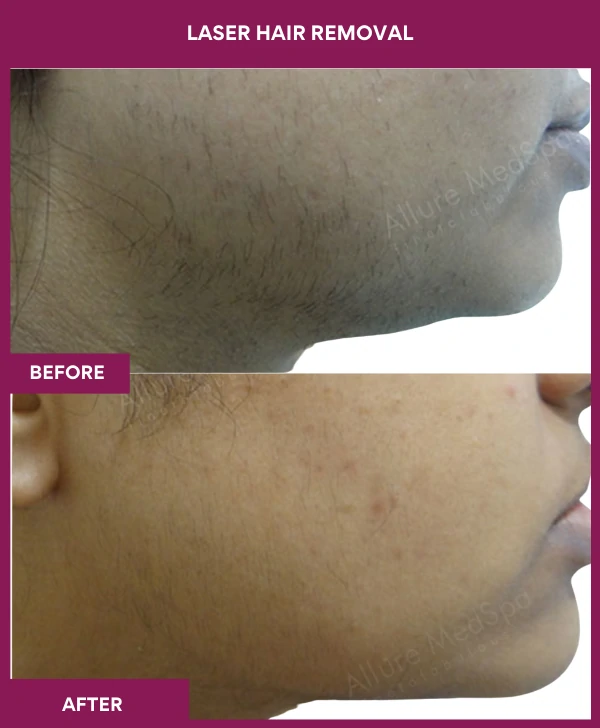
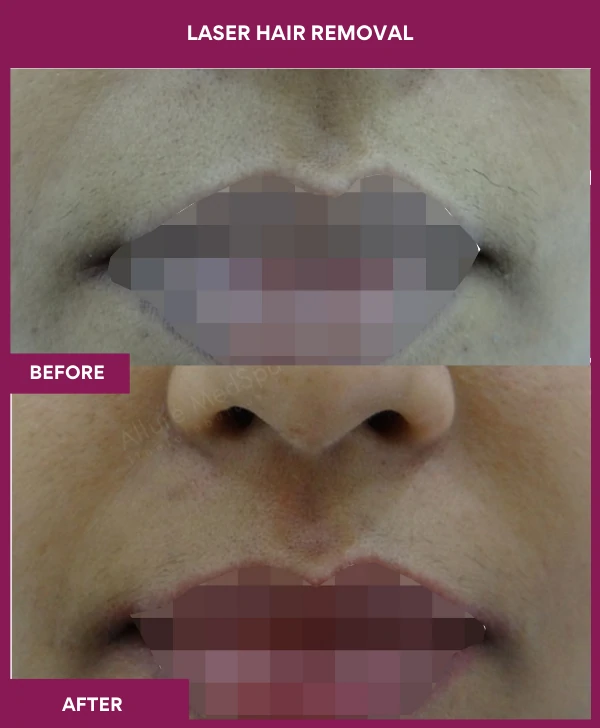
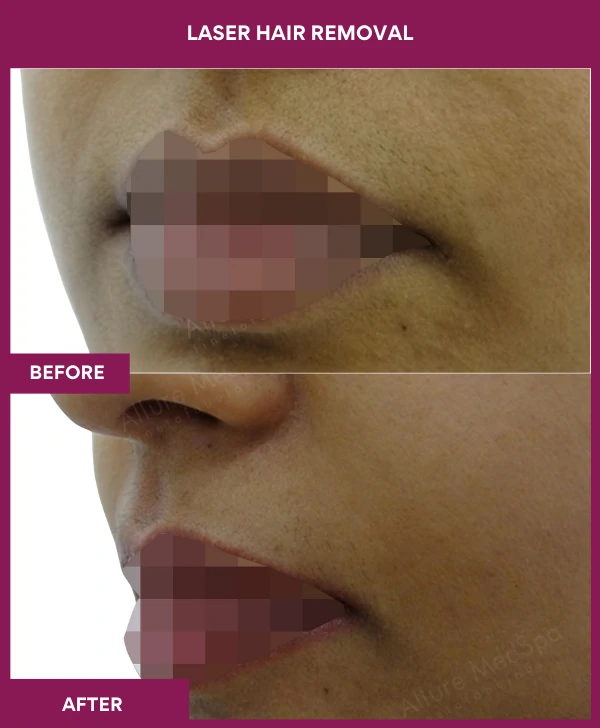
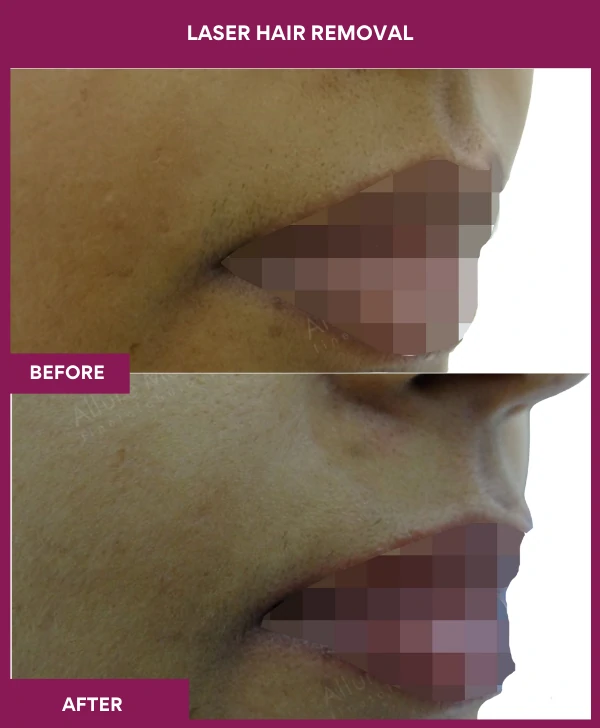
“Liked the results? Let's plan yours.”
Laser Hair Removal Treatment Testimonials: Fine To Fabulous Journeys

Awarded by Google.com
Rating: 4.7
Reviews: 485+

Awarded by WhatClinic.com
Rating: 4.8
Reviews: 119+

Awarded by Realself
Rating: 4.9
Reviews:453+

Awarded by Facebook
Rating: 4.6
Reviews:105+
Dr Milan Doshi and his staff are very professional and committed as the centre is highly equipped with advanced technology. I had closed rhinoplasty 4 months back and I’m seeing the results as to how it becomes successful.
Deepika Shetty
The doctor explained everything clearly and the surgery was smooth. Recovery was faster than I expected and the team was very supportive.
Rahul Mehta
Very natural results and excellent staff. From consultation to follow-up, the experience was outstanding and boosted my confidence.
Sneha Kapoor
“Inspired by their journey? Start yours.”
Is Laser Hair Removal Right For Me?
(4 quick questions)
Hair colour, skin tone, hormones — four questions start the plan.
Check My SuitabilityHonest routing
Quick Facts About Laser Hair Removal
SESSION TIME
10–90 minutes
ANESTHESIA
None
SESSIONS
Course of 6-8
RESULTS SHOW
After 2–3 sessions
DOWNTIME
1–2 days
RESULTS LAST
70–90% long-term
SIDE-EFFECT RATE
Under 1%
COST
₹1,500 – ₹15,000
What Is The Cost Of Laser Hair Removal In Mumbai?
In Mumbai, laser hair removal pricing varies by area, device, sessions and expertise — typically ₹1,500 (upper lip) to ₹12,000–₹15,000 (full body) per session. Key cost factors are area size and time, number of sessions, device (Diode / Nd:YAG / IPL), cooling technology and accreditation. Surgeon- or dermatologist-led care may cost more but improves safety and outcomes. Area bundles and multi-session packages usually reduce the per-session cost; ask for an itemised quote (sessions, touch-ups, test patch, consumables, taxes) before starting. EMI options are on our payment process page.
| Area | Per session (₹) | Time | 6-session package (₹) |
|---|---|---|---|
| Upper lip | 1,500 | 10 min | 7,500 🩺 |
| Chin / sides of face | 2,000 – 3,000 | 15 min | 10,000 – 15,000 🩺 |
| Full face | 4,000 – 6,000 | 30 min | 20,000 – 30,000 🩺 |
| Underarms | 2,500 – 4,000 | 15 min | 12,000 – 20,000 🩺 |
| Bikini line | 3,000 – 5,000 | 20 min | 15,000 – 25,000 🩺 |
| Arms (full) | 5,000 – 7,000 | 40 min | 25,000 – 35,000 🩺 |
| Legs (full) | 7,000 – 10,000 | 60 min | 35,000 – 50,000 🩺 |
| Chest or back (men) | 6,000 – 9,000 | 45 min | 30,000 – 45,000 🩺 |
| Full body | 12,000 – 15,000 | 90 min | 60,000 – 75,000 🩺 |
Get your exact quote & surgery plan
Share your details — our team responds within working hours with cost, EMI options and next steps.
Most Common Question People Ask
Q1. Is laser hair removal permanent?
Ans. Realistically it gives 70–90% long-term reduction after a full course — disabled follicles stay inactive, but it is a permanent reduction, not a guaranteed permanent removal. Any regrowth is finer, lighter and slower, and occasional maintenance keeps areas smooth.
Q2. How many sessions are needed?
Ans. Most people need 6–8 sessions 4–6 weeks apart, because hair grows in cycles and the laser only disables follicles in the active phase. The face often needs more than limbs; hormonal hair may need 1–3 maintenance sessions a year.
Q3. Is laser hair removal safe for dark or Indian skin?
Ans. Yes — with the right wavelength (usually Nd:YAG for deeper tones, Diode for medium) and cooling, it is safe across skin tones. Correct settings and a test patch are essential to avoid burns or pigment change.
Q4. How painful is it?
Ans. Most describe a mild pinprick or rubber-band snap. Sensitive areas may need numbing cream, and the cooling tip makes it well tolerated.
Q5. How much does laser hair removal cost in Mumbai?
Ans. Roughly ₹1,500 for the upper lip up to ₹12,000–₹15,000 for full body per session (+5% GST), with packages reducing the per-session cost.
Q6. Can I shave between sessions?
Ans. Yes — shaving is allowed and recommended. Avoid waxing, plucking or threading, which remove the follicle the laser needs to target.
Q7. Does laser hair removal affect fertility or cause cancer?
Ans. No. The laser only reaches hair follicles near the skin surface; it does not reach internal organs, is not ionising radiation and has no effect on fertility.

Why Choose Dr. Milan Doshi?
Dr. Milan Doshi, MCh, MS — founder of Allure Medspa, is a globally trained cosmetic surgeon in Mumbai known for precision and safety across skin tones — surgeon-led laser protocols delivered with an experienced dermatology team. Personalised protocols for Indian and international patients and all skin types; medical-grade Diode and Nd:YAG lasers with epidermal cooling; test patches, cooling and strict hygiene minimise risk and downtime; clear counselling, realistic expectations and upfront pricing — session planning and maintenance guidance are explained before you start. Allure Medspa: NABH-accredited, with laser hair removal, tattoo removal, fractional lasers and photo-facials under one roof. Outstation and overseas patients supported end-to-end
The Complete Guide About Laser Hair Removal
What Is Laser Hair Removal?
- Are you tired of wasting time and money on waxing, shaving or threading only to see the hair grow back in days?
- Do unwanted facial or body hairs make you feel self-conscious, forcing you to avoid sleeveless outfits or backless dresses?
- Have you been wishing for a long-lasting solution that frees you from the endless cycle of painful, temporary methods?
The answer lies in laser hair removal — a safe, advanced and effective procedure that uses concentrated light energy to target hair follicles and slow future growth. With technologies like Diode, IPL and Nd:YAG, it provides long-lasting smoothness and freedom from unwanted hair. Over a few sessions, you can achieve significant permanent hair reduction, smoother skin and renewed confidence.
Global & Indian trends (ISAPS 2024): Globally, over 1.8 million laser hair removal procedures were performed in the latest survey, up ~9.5% year on year · Laser hair removal remains one of the top non-surgical cosmetic procedures worldwide, among men and women · In India, demand for permanent hair reduction is rising steadily in cities like Mumbai, Delhi and Bangalore as people shift from temporary methods.
Sources: ISAPS Global Survey 2024
Tired Of Waxing And Shaving — Could Laser Hair Removal Be The Long-Term Solution?
- Are you tired of wasting time and money on waxing, shaving or threading only to see the hair grow back in days?
- Do unwanted facial or body hairs make you feel self-conscious, forcing you to avoid sleeveless outfits or backless dresses?
- Have you been wishing for a long-lasting solution that frees you from the endless cycle of painful, temporary methods?
The answer lies in laser hair removal — a safe, advanced and effective procedure that uses concentrated light energy to target hair follicles and slow future growth. With technologies like Diode, IPL and Nd:YAG, it provides long-lasting smoothness and freedom from unwanted hair. Over a few sessions, you can achieve significant permanent hair reduction, smoother skin and renewed confidence.
Global & Indian trends (ISAPS 2024): Globally, over 1.8 million laser hair removal procedures were performed in the latest survey, up ~9.5% year on year · Laser hair removal remains one of the top non-surgical cosmetic procedures worldwide, among men and women · In India, demand for permanent hair reduction is rising steadily in cities like Mumbai, Delhi and Bangalore as people shift from temporary methods.
Sources: ISAPS Global Survey 2024
How Does Laser Hair Removal Benefit You?
Laser hair removal provides long-term reduction of unwanted hair by selectively targeting pigment in the hair follicle while protecting the surrounding skin. It can reduce frequent shaving, waxing and threading, help minimise ingrown hairs and razor bumps, and leave the treated area smoother over a planned course of sessions. Most patients can return to normal activities immediately after treatment.
- Selective targeting — melanin-guided energy hits coarse, dark hair while sparing surrounding skin.
- Speed & coverage — upper lip in minutes; larger zones (legs / back) in under an hour.
- Minimal downtime — resume routine immediately with simple post-care.
- Smoother skin — softens texture and reduces razor bumps and ingrown hairs.
- Long-lasting reduction — typically 6–8 sessions for significant, lasting hair reduction.
- Cost-efficient over time — fewer parlour visits than waxing / threading.
- Medical benefit — helps folliculitis, pseudofolliculitis barbae (shaving bumps) and hirsutism management alongside hormonal treatment.
Who Is An Ideal Candidate — And What Are The Limitations?’
Laser hair removal works best on dark, coarse hair because the laser needs pigment in the hair follicle to absorb its energy. It can be performed across different skin tones when the device and settings are appropriately selected, but grey, white, red and very light blonde hair respond poorly. It produces long-term hair reduction rather than guaranteed permanent removal, and hormonal conditions such as PCOS may mean additional maintenance sessions are needed.
- Best responders — dark, coarse hair with lighter skin; high hair–skin contrast speeds results.
- All skin tones — safe across Fitzpatrick I–VI when parameters and cooling are tailored.
- Light / grey / red hair — lower pigment reduces effectiveness; manage expectations.
- Thin / fine hair — may need more sessions; reduction rather than complete removal.
- Stable health — no active infections, open wounds or recent sunburn on the area.
- Medication check — photosensitising drugs (e.g. isotretinoin) require deferral / clearance.
- Hormonal factors — PCOS or endocrine causes may need maintenance sessions.
Limitations
- It cannot treat grey, white, red or very blonde hair — there is no pigment for the laser to find; electrolysis is the alternative.
- It is a reduction: some fine regrowth is normal and maintenance may be needed, especially with PCOS.
- It cannot be done on tanned skin — 4 weeks without sun before each session.
- It cannot treat over a tattoo (the ink absorbs the energy and can burn) or over active infection.
- Hormonal hair keeps being stimulated; the underlying cause (PCOS, thyroid) should be managed in parallel → Hyperhidrosis Treatment is a sister page for other medical concerns.
Why Is A Consultation Necessary Before Laser Hair Removal?
A consultation is important to confirm that laser hair removal is suitable for your skin and hair type and to select safe treatment settings. The doctor assesses skin tone, hair thickness, tanning, medications, hormonal factors and any conditions that may increase risk. A test patch may also be performed so the device settings, cooling and treatment plan can be adjusted before the full session.
- Expert screening — a cosmetic surgeon / dermatologist evaluates whether you are a suitable candidate.
- History & meds check — reviews conditions (PCOS, keloids), tanning and drugs like isotretinoin.
- Skin–hair analysis — Fitzpatrick type, hair thickness and growth cycles guide device / settings.
- Test patch & parameters — trials fluence, pulse width and cooling for efficacy and safety.
- Contraindications flagged — pregnancy, infections, photosensitising meds, active dermatitis, open wounds.
- Realistic plan — session count, intervals, maintenance and expected timelines.
How to prepare (pre-operative care)
- Avoid tanning — no outdoor or indoor tanning for at least 4 weeks before.
- No sunless products — avoid self-tanners and bronzing lotions.
- Daily sunscreen — broad-spectrum SPF 30+, water-resistant.
- Shave only — shave 24 hours before; avoid waxing or plucking (they remove the target).
- Medical disclosure — share history of scarring, keloids, herpes or acne medication (e.g. isotretinoin).
- Skip actives — no scrubs, glycolic acid or retinol for 2 days before.
Online consultation
A photo of the area in daylight and a video call settle skin type, hair type and the device: Online Consultation
Which Laser Is Used — And How Is It Chosen For Your Skin?
Laser hair removal can be performed on most areas of the face and body, including the upper lip, chin, underarms, arms, chest, back, abdomen, bikini area, buttocks and legs. Treatment time and the number of sessions vary by area, hair thickness and hormonal influence. Facial hair often needs more sessions and maintenance, while coarse hair on areas such as the underarms, back and legs may respond more predictably.
| Area | What is treated | Time | Sessions | Note |
|---|---|---|---|---|
| Face | Cheeks, upper lip, lower lip, chin, sides, ears | 10–30 min | 8+ | Hormonal; more sessions; often maintenance |
| Upper body | Neck, shoulders, underarms (axillae), upper arms, forearms | 15–40 min | 6–8 | Underarms respond best |
| Torso | Chest, breasts, abdomen, back | 30–60 min | 6–8 | Popular with men; back hair coarse — good responder |
| Lower body | Bikini line, buttocks, upper and lower legs | 20–60 min | 6–8 | Bikini: numbing gel optional |
| Full body | All of the above | 90 min | 6–8 | Split across two visits if preferred |
Every plan is customised by Dr. Milan Doshi and the dermatology team for precision, safety and proven results.
Which Body Areas Can Be Treated — And What Differs By Area?
Laser hair removal can be performed on most areas of the face and body, including the upper lip, chin, underarms, arms, chest, back, abdomen, bikini area, buttocks and legs. Treatment time and the number of sessions vary by area, hair thickness and hormonal influence. Facial hair often needs more sessions and maintenance, while coarse hair on areas such as the underarms, back and legs may respond more predictably.
| Area | What is treated | Time | Sessions | Note |
|---|---|---|---|---|
| Face | Cheeks, upper lip, lower lip, chin, sides, ears | 10–30 min | 8+ | Hormonal; more sessions; often maintenance |
| Upper body | Neck, shoulders, underarms (axillae), upper arms, forearms | 15–40 min | 6–8 | Underarms respond best |
| Torso | Chest, breasts, abdomen, back | 30–60 min | 6–8 | Popular with men; back hair coarse — good responder |
| Lower body | Bikini line, buttocks, upper and lower legs | 20–60 min | 6–8 | Bikini: numbing gel optional |
| Full body | All of the above | 90 min | 6–8 | Split across two visits if preferred |
Every plan is customised by Dr. Milan Doshi and the dermatology team for precision, safety and proven results.
How Is Laser Hair Removal Performed — And What Safety Measures Are Followed?
Laser hair removal is performed by directing controlled pulses of laser energy at hair follicles while protecting the surrounding skin with appropriate cooling. Before treatment, the skin and hair are assessed, the area is shaved and cleaned, and suitable device settings are selected based on skin type and hair characteristics. Protective eyewear, test pulses and skin cooling are used to improve safety and comfort.
| Step | What happens | Why it matters |
|---|---|---|
| 1 | Consultation: skin type, hair type, history; test patch on the area | Settings proven on your skin |
| 2 | Pre-care: no sun 4 weeks; shave 24 hours before; no actives 2 days | Target hair in the follicle; no burn |
| 3 | Preparation: the area is cleaned; numbing gel for sensitive areas (30–60 min) if wanted | Comfort |
| 4 | Protective eyewear: patient and provider wear laser-safe goggles | Eye safety |
| 5 | Test pulses first — settings confirmed; no adverse reaction | Avoids burns |
| 6 | Laser application: skin kept taut; pulses of light target follicles precisely | Every follicle in the grid |
| 7 | Cooling: contact cooling tip, cold gel or cryogen protects the epidermis and eases discomfort | Surface protected |
| 8 | Post-procedure: ice packs soothe; soothing cream and SPF applied | Calm skin |
| 9 | Back to routine immediately; strict hygiene throughout (single-use consumables) | No downtime |
| 10 | Next session scheduled in 4–6 weeks; photographs at each visit | Course tracking |
What Results Can You Expect?
Expect 70–90% long-term hair reduction after a full laser hair removal course; mild redness or bumps settle quickly, and most people resume normal activities within a day.
| Time | What you see |
|---|---|
| Days 1–3 | Hair appears to still be there — it is dead in the follicle |
| Weeks 1–3 | Treated hair sheds; skin feels smoother |
| After session 2–3 | Noticeable reduction; slower, patchier regrowth |
| After session 6–8 | 70–90% reduction; regrowth finer and lighter |
| Long term | Lasting smoothness; 1–3 maintenance sessions a year for hormonal or fine hair |
Individual factors: skin tone, hair thickness / colour, device and pre / post-care adherence.
What Aftercare Is Needed After Laser Hair Removal?
After laser hair removal, keep the treated skin cool, clean and protected from sun while temporary redness or follicular bumps settle. Avoid heat, strenuous exercise and irritating skincare for the first day or two, use sunscreen on exposed areas, and shave rather than wax, thread or pluck between sessions. Following these precautions helps reduce irritation and keeps the follicles available for the next treatment.
- Avoid heat — no gym, hot showers or saunas for 24 hours.
- Skip actives — no scrubs, glycolic acid or retinol for 2 days after.
- Delay peels — avoid chemical peels and harsh cosmetics for 1–2 weeks.
- Protect — daily broad-spectrum sunscreen on treated skin.
- Soothe — cool compresses or the recommended moisturiser; make-up usually safe from the next day.
- Shave, don’t pluck — between sessions.
| Avoid | For how long |
|---|---|
| Gym, hot showers, sauna | 24 hours |
| Scrubs, acids, retinol | 2 days before and after |
| Chemical peels, harsh cosmetics | 1–2 weeks |
| Waxing, threading, plucking the area | For the whole course |
| Sun exposure and tanning | 4 weeks before and 1 week after each session; SPF always |
| Tight clothing on treated area | 24 hours |
What Are The Risks And Side Effects?
Laser hair removal commonly causes temporary redness, mild swelling or small follicular bumps that usually settle within hours to a couple of days. Less common risks include dryness, itching and temporary pigmentation changes, while burns, blistering, infection or paradoxical hair growth are uncommon. Appropriate wavelength selection, test patches, cooling, conservative settings and avoiding treatment on recently tanned skin help reduce these risks.
Common and short-term
- Redness, irritation, follicular bumps / milia and mild swelling; settle within hours to 48 hours. Cool compresses, soothing moisturiser and strict SPF 30+.
Less common
- Itching, transient dryness or perifollicular oedema; usually self-limited.
Rare
- Crusting, blistering, burns, post-inflammatory hyper- / hypopigmentation or infection; paradoxical hypertrichosis (increased fine hair at the edge of the treated area, mostly on the face in darker skin).
| Risk | How it is minimised at Allure Medspa |
|---|---|
| Burns and pigment change | Correct wavelength for skin type; test patch; contact cooling; no treatment on tanned skin |
| Infection | Clean skin; single-use consumables; no treatment over active lesions |
| Paradoxical hair growth | Adequate fluence (not under-treating); reassessment if fine hair increases |
| Eye injury | Laser-safe goggles for everyone in the room |
| Poor response | Candidacy screening — hair colour, hormones, medication |
Higher-risk situations: recent tanning, high fluence, photosensitising meds, active dermatitis or poor aftercare.
⚠️ Call the clinic for: persistent pain, spreading redness, pus, fever, or pigment changes that do not fade.
How Many Sessions — What Is The Recovery — And How Permanent Is It?
Most people need 6–8 laser hair removal sessions 4–6 weeks apart, with occasional maintenance; counts vary by area, hair, skin tone, hormones and device. Recovery is quick — redness and mild sunburn-like sensitivity fade within 1–2 days.
| Phase | What happens | Your part |
|---|---|---|
| Session day | Mild redness, warmth, follicular bumps | Cool compress; SPF; no heat |
| Days 1–2 | Redness settles; make-up from next day | Gentle care |
| Weeks 1–3 | Shedding — hairs fall out; gaps between are normal | Shave, don’t pluck |
| Weeks 4–6 | New anagen hairs appear — the next session’s target | Attend on schedule; no sun |
| After 6–8 sessions | 70–90% reduction | Photographs; maintenance plan |
| Yearly | Fine or hormonal regrowth | 1–3 maintenance sessions |
How permanent are the results?
Realistically, laser hair removal gives 70–90% long-term reduction after a full course — disabled follicles stay inactive, but it is a permanent reduction, not a guaranteed permanent removal; any regrowth is finer and slower. Durability depends on hair–skin contrast, body area, hormones (e.g. PCOS), device and settings. Complete the full course, follow pre / post-care and protect from sun; grey, red and blonde hair respond less.
🩺 Dr. Doshi’s Note — “The patients who are disappointed with laser are almost always the ones who were promised “permanent removal in four sessions”. I promise something less exciting and more true: after six to eight sessions most of the coarse hair is gone for good, what returns is fine and slow, and if you have PCOS you will need a top-up now and then. Told that way, nobody is disappointed.”
Medical Codes for Laser Hair Removal
Codes below are for administrative and documentation reference. All codes must be verified against the current CPT and ICD-10 code sets before publication and before any use in documentation.
| Code system | Code | Description |
|---|---|---|
| ICD-10 | L68.0 | Hirsutism (excessive hair growth, often treated with laser) |
| ICD-10 | L68.2 | Localised hypertrichosis |
| ICD-10 | L68.9 | Hypertrichosis, unspecified |
| ICD-10 | L73.1 | Pseudofolliculitis barbae (shaving bumps) — added |
| ICD-10 | Z41.1 | Encounter for cosmetic procedure (purely aesthetic hair removal) |
| CPT | 17380 | Electrolysis epilation, each 30 minutes (traditional method) |
| CPT | 17999 | Unlisted procedure, skin, mucous membrane and subcutaneous tissue (commonly used for laser hair removal) |
| CPT | 96999 | Unlisted dermatologic service or procedure (alternative for IPL / laser hair removal) |
(FAQs) Frequently Asked Question About Laser Hair Removal
Q1. What are the risks of laser hair removal?
Ans. Common risks are temporary redness, swelling, irritation and pigment changes. Rare side effects include burns, scarring or infection if performed improperly — which is why the right wavelength for your skin and a test patch matter.
Q2. What should I avoid after laser hair removal?
Ans. Sun exposure, hot showers, saunas and harsh products for 24–48 hours; do not exfoliate or pick at the area; shave rather than wax between sessions.
Q3. Can I do laser hair removal at home?
Ans. Home devices exist but are less powerful and may not suit darker skin types. For safer, more effective results — especially on Indian skin — clinical treatment with the correct wavelength is recommended.
Q4. Is laser hair removal worth the cost?
Ans. For many, yes — it reduces long-term spending on razors, waxing and threading, especially for dense hair, and saves time. A six-session underarm package costs less than two years of monthly waxing.
Q5. Is laser hair removal better than waxing?
Ans. For long-term reduction, yes — waxing is temporary, while laser targets follicles for lasting reduction with less repeated skin trauma, fewer ingrowns and less pigmentation over time.
Q6. Does hair grow back after laser treatment?
Ans. Some regrowth can occur, but it is finer, lighter and slower. Multiple sessions target follicles at different growth stages for lasting reduction.
Q7. Is it safe to laser the underarms and bikini area?
Ans. Yes — these are commonly and safely treated at certified clinics with proper hygiene and comfort measures; the bikini area can be numbed if wished.
Q8. What is the most effective laser for my skin?
Ans. Diode and Alexandrite suit fair skin, while Nd:YAG is best for darker / Indian skin tones. The right choice depends on your skin–hair type and is set at consultation and test patch.
Q9. What is the recovery time?
Ans. Most people resume daily activities immediately, with only minor redness that subsides within hours.
Q10. Who should avoid laser hair removal?
Ans. Those with skin infections, active acne in the area, keloid tendencies, recent tanning, pregnancy, or on medications like isotretinoin should defer or delay — always consult a doctor first.
Q11. Can men have laser hair removal?
Ans. Yes — back, chest, shoulders, neck and beard-line shaping are the commonest male areas; coarse dark body hair responds especially well.