
IPL / Laser Photofacial Treatment in Mumbai: Clear, Even-Toned Skin With Expert Care

Indian Board Certified Plastic Surgeon
M.CH, MS, ISAPS Mentor
16000+ Cosmetic Surgeries
500+ Laser Photofacial Treatment
A photofacial is a non-surgical skin rejuvenation treatment that uses intense pulsed light (IPL) — or, for some concerns, a true laser — to target pigment, sun spots, redness, fine lines and dullness at a cellular level while stimulating collagen, giving clearer, smoother, more even-toned skin over a series of sessions. It is a light-based treatment, so it works best on lighter to medium skin with distinct spots or redness; at Allure Medspa the filter, energy and even the choice between IPL and a laser are set to your skin tone and concern after a proper assessment — and you are told when a pigmentation plan would serve you better.
Laser Photofacial Treatment Before and After Images
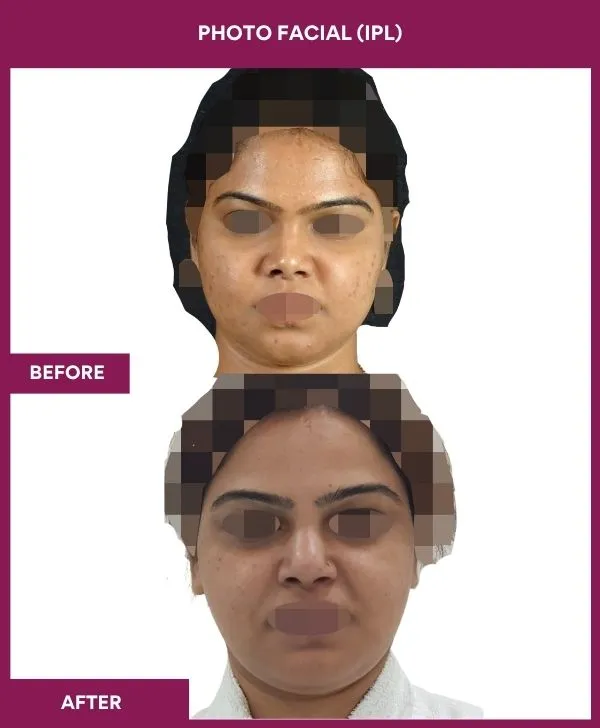
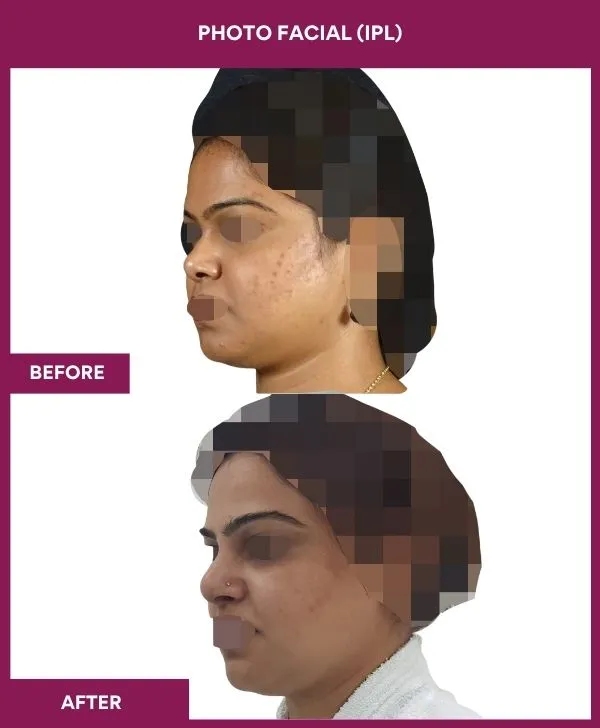
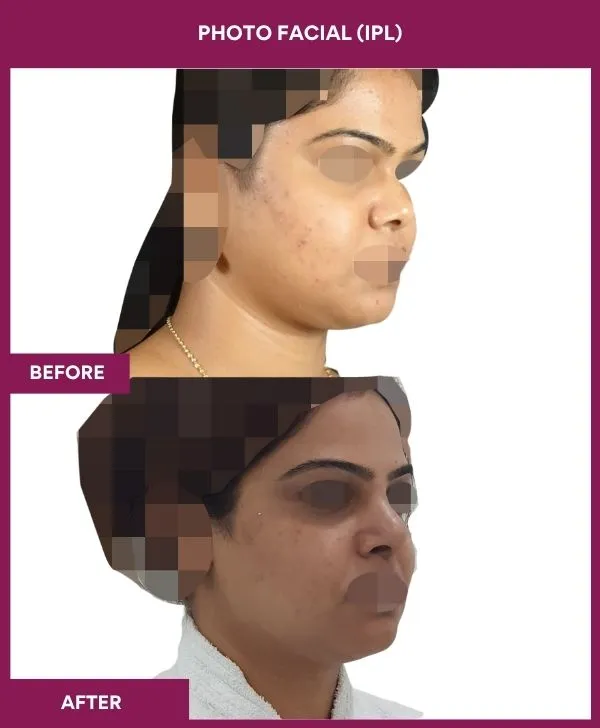
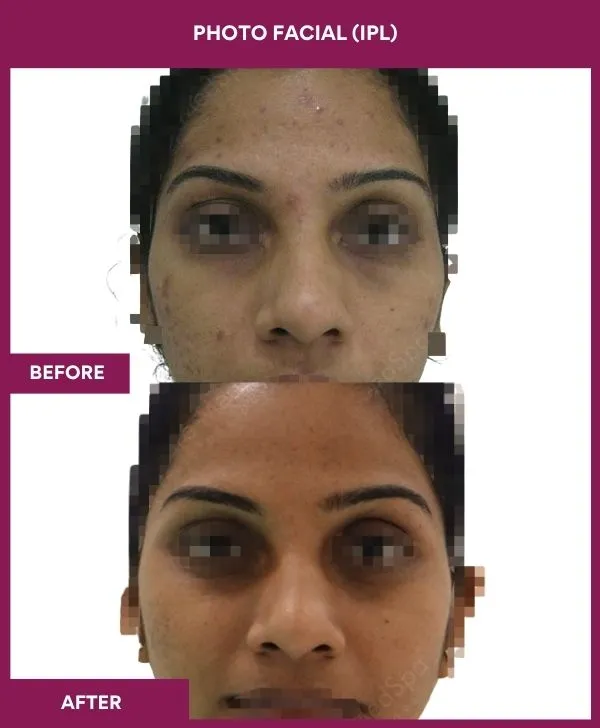
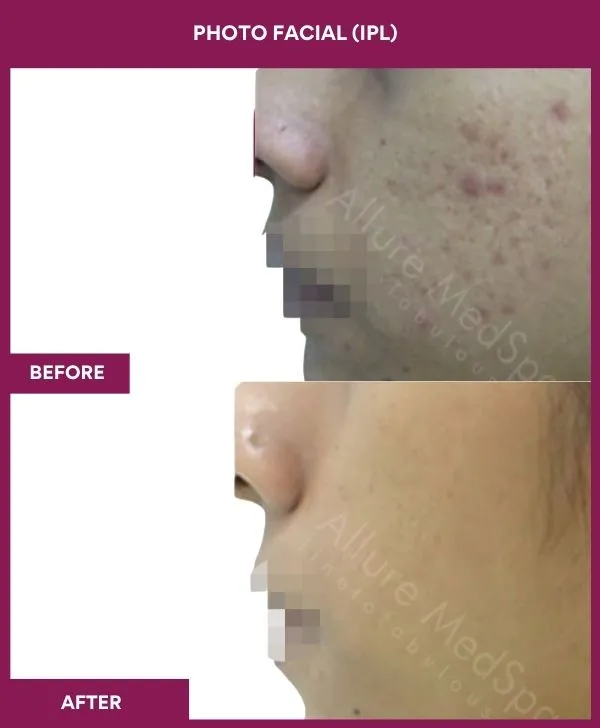
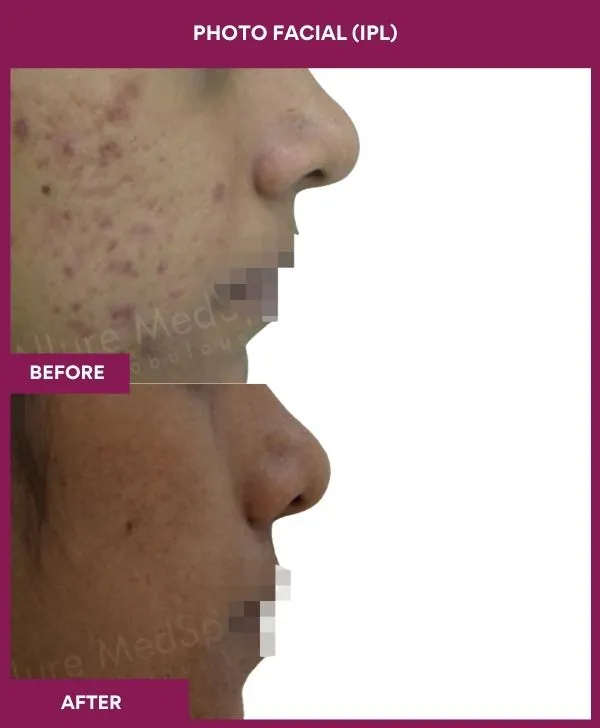
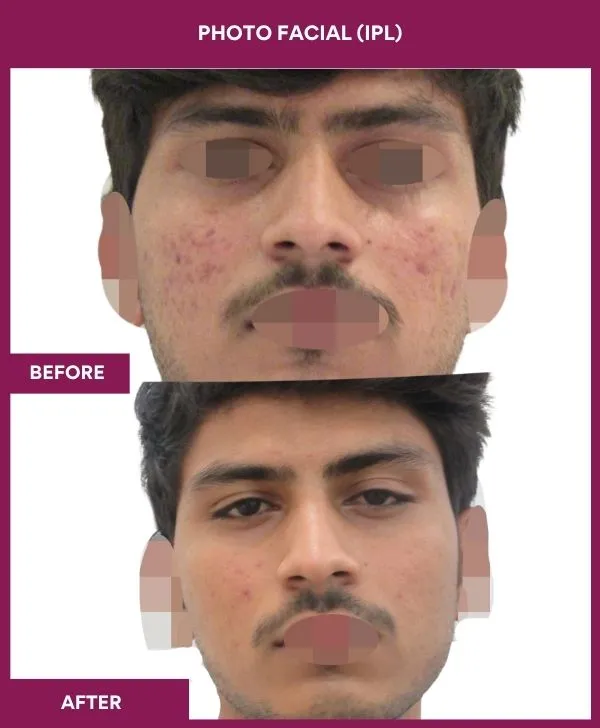
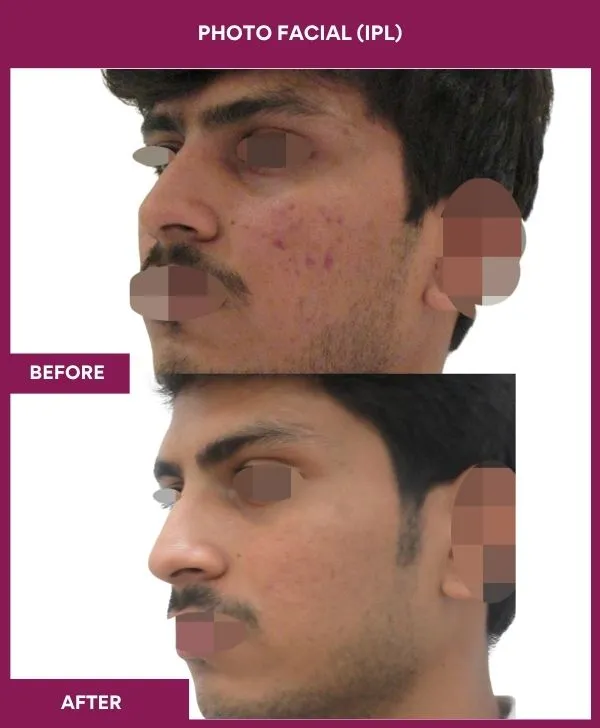
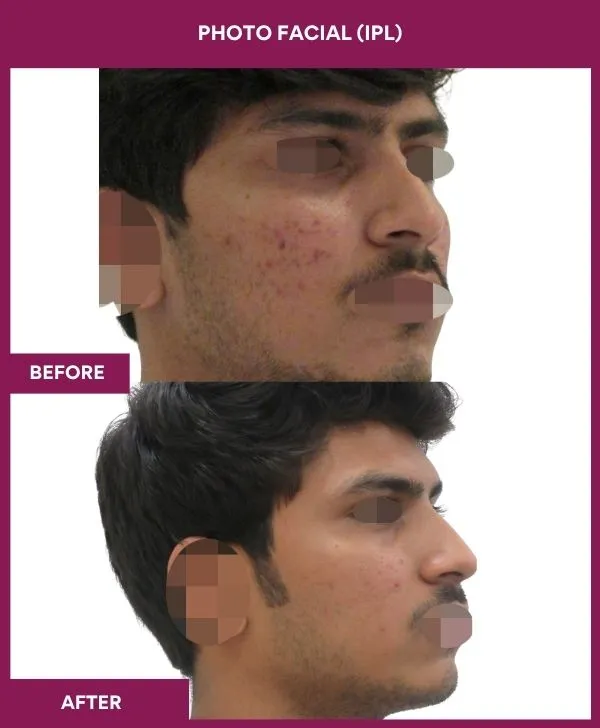
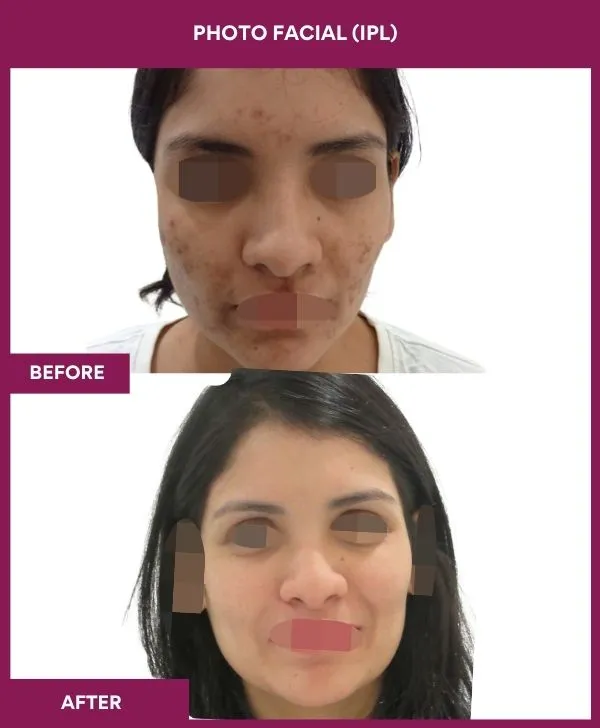
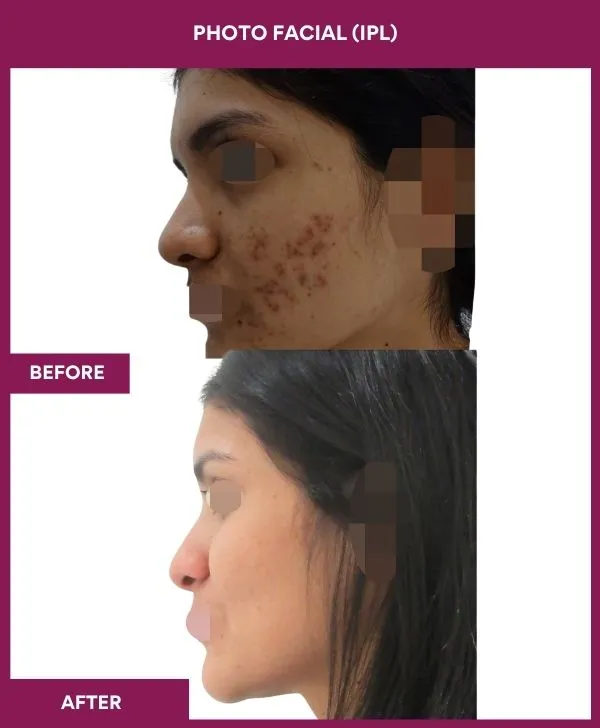
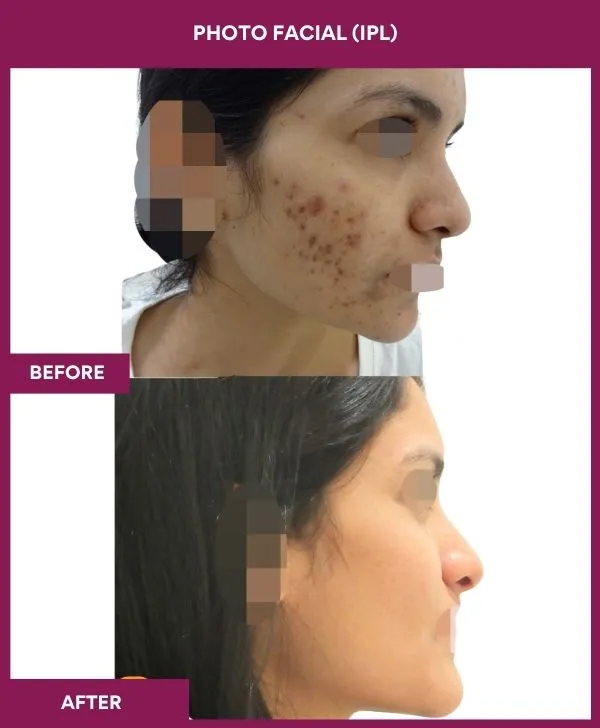
“Inspired by their journey? Start yours”
Laser Photofacial Treatment Testimonials: Fine To Fabulous Journeys

Awarded by Google.com
Rating: 4.7
Reviews: 485+

Awarded by WhatClinic.com
Rating: 4.8
Reviews: 119+

Awarded by Realself
Rating: 4.9
Reviews:453+

Awarded by Facebook
Rating: 4.6
Reviews:105+
Dr Milan Doshi and his staff are very professional and committed as the centre is highly equipped with advanced technology. I had closed rhinoplasty 4 months back and I’m seeing the results as to how it becomes successful.
Deepika Shetty
The doctor explained everything clearly and the surgery was smooth. Recovery was faster than I expected and the team was very supportive.
Rahul Mehta
Very natural results and excellent staff. From consultation to follow-up, the experience was outstanding and boosted my confidence.
Sneha Kapoor
“Inspired by their journey? Start yours”
Am I a Candidate?
(4 quick questions)
Spots, redness or patches — four questions decide light or laser.
Check My SuitabilityHonest routing
Quick Facts About Photofacial Treatment
SESSION TIME
30–60 minutes
ANESTHESIA
None
SESSIONS
Course of 3–5
RESULTS SHOW
Immediately
DOWNTIME
2 days
RESULTS LAST
6-12 months
SIDE-EFFECT RATE
Under 1%
COST
₹2,000 – ₹4,000
What Is The Cost Of Photofacial Treatment In Mumbai?
| Area / plan | Per session (₹) | Sessions |
|---|---|---|
| Cheeks or forehead only | 2,000 – 2,500 | 3–5 |
| Full face | 3,000 – 4,000 | 3–5 |
| Face + neck | 4,000 – 5,500 | 3–5 |
| Chest (décolletage) or hands | 3,000 – 4,000 | 3–4 |
| Acne (blue-light filter) course | 2,500 – 3,500 | 4–6 |
| Course of 4 — full face | 11,000 – 14,000 | 4 |
| Maintenance session | 3,000 – 4,000 | 1–2 / year |
Get your exact quote & surgery plan
Share your details — our team responds within working hours with cost, EMI options and next steps.
Most Common Question People Ask
Q1. How many photofacial sessions are needed?
Ans. On average 3–5 sessions spaced 3–4 weeks apart, then maintenance every 6–12 months. Mild improvement shows after the first session; the clear change comes after 3–4.
Q2. Is a photofacial painful?
Ans. Most describe a mild stinging or rubber-band snap. Cooling gel and, if wished, numbing cream keep it comfortable; no anaesthesia is needed.
Q3. Will a photofacial remove dark spots and tan?
Ans. Yes for distinct sun spots, freckles and age spots — the light breaks down the excess melanin, the spot darkens for a few days and then flakes away. Diffuse pigmentation and melasma need a different plan; IPL can worsen melasma.
Q4. Is it safe on Indian skin?
Ans. On fair to wheatish skin, yes, with the right filter and a test spot. On dusky or deep-brown skin the melanin in the whole skin absorbs the light, so a 1064 nm laser is chosen instead — which is why the consultation comes first.
Q5. How much does a photofacial cost in Mumbai?
Ans. ₹2,000–₹4,000 per session (+5% GST) for the face; neck, chest and hands are priced by area; a course of 4 is packaged.
Q6. Is there any downtime?
Ans. No. The skin may look pink for a few hours to two days, and treated spots darken before flaking off within a week; you can work the same day.
Q7. Is a photofacial permanent?
Ans. Results are long-lasting but not permanent — sun, ageing and lifestyle keep affecting the skin, so maintenance every 6–12 months and daily sunscreen keep the result.
Why Choose Dr. Milan Doshi?
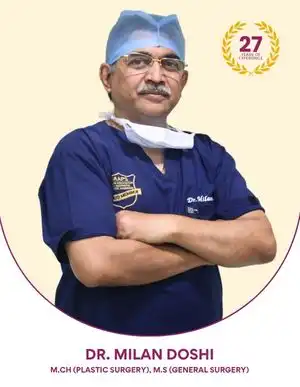
Dr. Milan Doshi, MCh, MS — Indian board-certified plastic and cosmetic surgeon with 27+ years and 16,000+ procedures, under whose expertise photofacial treatment at Allure Medspa is planned. Extensive experience in aesthetic medicine and skin rejuvenation across diverse skin concerns; protocols kept aligned with the latest IPL and laser developments; a safety-first approach focused on skin-type analysis, filter and energy selection; personalised consultation covering concerns, goals, lifestyle and prior treatments; medically guided pre- and post-care including skincare, medications, supplements and sun protection. What to expect at consultation: detailed skin assessment and diagnosis; confirmation of whether IPL is the right choice; customised session planning and expected outcomes; clear preparation and aftercare guidance. Allure Medspa: modern IPL and laser systems; expert-led, supervised treatments; strict hygiene and post-treatment protocols; the full range of aesthetic care under one integrated medical setup; NABH-accredited. Outstation patients supported end-to-end.
The Complete Guide About Photofacial Treatment
What Is Laser / IPL Photofacial Treatment?
Photofacial treatment is a non-surgical skin rejuvenation procedure that uses intense pulsed light (IPL) — or targeted laser energy — to treat pigmentation, sun spots, redness, fine lines and dull skin. The light selectively targets melanin and haemoglobin in damaged cells while stimulating collagen production, resulting in a clearer, smoother and more even-toned complexion over a series of sessions. It is commonly used on the face, neck, chest and hands, with minimal discomfort and little to no downtime.
IPL photofacial | Q-switched / Pico laser |
Broad-spectrum light shaped by filters; treats spots, redness and acne in one session | Single wavelength; precise pigment shattering |
Fair to medium skin; distinct spots and redness | All skin tones incl. deep brown (1064 nm); melasma, naevus of Ota, tattoos |
₹2,000–4,000 · 3–5 sessions | Priced per plan → https://www.alluremedspa.in/pigmentation-treatment/ |
Also called: photofacial laser treatment, IPL photofacial, photorejuvenation, laser skin rejuvenation, light-based skin correction, pigmentation light treatment, skin brightening light therapy.
Rediscover Clear, Even-Toned Skin With Photofacial Treatment
Do sun spots, pigmentation, or redness make your skin look uneven and tired?
Are fine lines, dullness, or enlarged pores affecting your natural glow?
Do you feel that creams, serums, and facials give only temporary results?
When skin tone and texture don’t improve despite consistent care, it can quietly affect confidence — especially in photos, meetings and everyday interactions. It’s time for a smarter, skin-correcting solution. Photofacial treatment is an advanced light-based skin rejuvenation procedure designed to target pigmentation, sun damage, redness, fine lines and uneven skin tone at a cellular level. By delivering controlled light energy into the skin, it stimulates collagen production, improves circulation and breaks down excess melanin — revealing brighter, clearer and more youthful-looking skin over time. The treatment is non-invasive, gentle on the skin and ideal for patients seeking visible results with minimal downtime.
Global & Indian statistics (ISAPS 2024): Globally, over 1.2 million non-surgical laser and light-based skin rejuvenation procedures were performed, showing a steady year-on-year rise driven by demand for pigmentation correction and skin-tone improvement · India ranked among the fastest-growing markets for laser photofacial and IPL-based treatments, particularly for sun damage, acne marks and uneven complexion.
Sources: ISAPS Global Survey 2024 — https://www.isaps.org/media/razfvmsk/isaps-global-survey-2024.pdf
What Are The Benefits Of IPL Photofacial Treatment?
IPL offers a safe, non-invasive way to improve skin tone, texture and clarity while addressing multiple concerns in a single treatment plan.
No scarring or cuts: a completely non-surgical procedure with no incisions or stitches.
Minimal downtime: most patients resume daily activities immediately or within a few hours.
Quick recovery: mild redness usually settles within 24–48 hours.
Minimal discomfort: feels like a mild snap or warmth and is well tolerated.
Low risk profile: under medical supervision IPL has a strong safety record.
Treats multiple concerns at once: by changing light filters, IPL can target pigmentation, sun spots, redness, acne marks, fine lines and dull skin in the same session.
Improves overall skin quality: stimulates collagen for brighter, smoother, more even-toned skin over time.
IPL is especially popular in Mumbai for its quick sessions, office-friendly recovery and natural-looking results.
What Are The Indications Of IPL Photofacial Treatment?
IPL suits people with pale to light-brown skin and distinct targets — and can reduce or improve:
Concern | IPL effect | Note |
Sun damage, sun spots, age spots, freckles | Excellent — spots darken then flake | The core indication |
Redness, flushing, rosacea, broken capillaries | Very good — haemoglobin target | Bruising possible |
Red, blotchy or uneven tone | Good | Series of sessions |
Post-acne red and brown marks; active acne | Good with blue / yellow filters | Not for cystic acne alone → https://www.alluremedspa.in/acne-treatment/ |
Fine lines, mild texture, pores | Mild collagen benefit | Lines need injectables or CO₂ |
Melasma, diffuse pigmentation | Poor — can worsen | https://www.alluremedspa.in/pigmentation-treatment/ |
Unwanted hair, stretch marks, spider veins | Limited | Dedicated pages → https://www.alluremedspa.in/laser-hair-removal/ · https://www.alluremedspa.in/stretch-mark-removal/ · https://www.alluremedspa.in/spider-vein-treatment/ |
What Are The Limitations Of A Photofacial?
IPL photofacial works best for selected superficial pigmentation, sun spots and redness, but it is not suitable for every skin concern or skin type. It does not adequately treat deep pigmentation, melasma, pitted acne scars or significant wrinkles, and darker or recently tanned skin may require alternative treatments because of a higher risk of pigment changes. Results usually require a course of sessions followed by sun protection and maintenance.
It works by pigment contrast — the darker the surrounding skin, the less safe and effective IPL becomes; deep-brown skin needs a 1064 nm laser instead.
It can worsen melasma and diffuse pigmentation; those need a pigmentation programme.
It does not resurface — pitted scars, etched lines and rough texture need fractional CO₂ or MNRF.
It is not a hair-removal or vein-removal treatment, whatever the filter menu suggests.
Results need 3–5 sessions and maintenance; sun undoes them.
Not on tanned skin, in pregnancy, on photosensitising medicines or isotretinoin.
Why Should You Consult Before A Photofacial?
Not all pigmentation, redness or dullness has the same cause — a consultation identifies whether your concern is sun damage, melasma, acne marks, a vascular issue or ageing; selects IPL, a laser or an alternative; personalises the plan to skin type, sensitivity, lifestyle and goals; reviews previous treatments, infections, medications and conditions to reduce risk; and sets the number of sessions, settings, intervals and pre / post-care. A single consultation can significantly improve results and long-term skin health.
How to prepare
- No sun or tanning for 2–4 weeks; SPF daily.
- Pause retinoids, acids and scrubs for 3–5 days.
- Tell us about melasma, pregnancy, photosensitising medicines, isotretinoin and cold sores.
- Arrive with clean skin — no make-up, sunscreen or creams; men shaved.
Online consultation
A daylight photo and a video call settle skin type, target and light-vs-laser.
How Does IPL Work — And Which Wavelengths Or Filters Are Used?
IPL delivers controlled pulses of broad-spectrum light through interchangeable filters in a handheld probe; each filter passes a band of wavelengths matched to the target — melanin (pigment) or haemoglobin (redness). The target absorbs the light, converts it to heat and is destroyed while surrounding tissue is spared (selective photothermolysis); over the following weeks the body clears the damaged cells and collagen production is stimulated.
| Filter / wavelength | Target | Used for |
|---|---|---|
| 420 nm | Porphyrins in Cutibacterium acnes | Active acne |
| 530 nm | Superficial melanin | Sun spots, freckles, uneven tone |
| 550 nm | Inflammation / superficial vessels | Inflamed acne lesions, calming |
| 590 nm | Haemoglobin; sebaceous glands | Redness, flushing; oil regulation |
| 640–695 nm | Deeper vessels; deeper pigment | Rosacea, darker skin (with care) |
| 750 nm | Hair follicles | Hair reduction — dedicated laser preferred |
- Selection: the doctor chooses the filter, pulse duration and energy for the concern and skin type; several filters can be used in one session.
- Cooling: a chilled gel and / or cooled crystal protect the epidermis.
- Why it is not a laser: IPL emits many wavelengths at once; a laser emits one — which is why a laser is chosen for deeper or darker-skin pigment.
Is IPL the same as BBL?
BBL (BroadBand Light) is a newer generation of IPL with finer filter control and better cooling; the principle is the same.
IPL Photofacial Versus Carbon Peel, Q-Switched / Pico Laser, Chemical Peel And Fractional CO₂
IPL, carbon laser peel, pigment lasers, chemical peels and fractional CO₂ treat different skin concerns and depths. IPL mainly targets selected pigmentation and redness, carbon peel focuses on oiliness, congestion and dullness, Q-switched or Pico lasers target specific pigment concerns, chemical peels exfoliate the skin at controlled depths, and fractional CO₂ provides deeper resurfacing for scars and etched lines. The most suitable option depends on skin tone, pigment type, texture and acceptable downtime.
| Option | How it differs | Best for | Full guide |
|---|---|---|---|
| IPL photofacial | Filtered broad-spectrum light; spots, redness, acne in one session; no downtime | Sun spots, freckles, redness on fair–medium skin | This page |
| Carbon laser peel | Carbon + 1064 nm laser; cleansing and glow | Oily skin, pores, tan, dullness | Carbon Laser Peel |
| Q-switched / Pico laser | Single wavelength; safe on all tones | Melasma, deep pigment, naevi, tattoos; deep-brown skin | Pigmentation Treatment |
| Chemical peel | Acid exfoliation | Pigmentation, texture, fine lines; some flaking | Chemical Peel |
| Fractional CO₂ | Ablative resurfacing | Scars, etched lines, sun damage; a week of downtime | Fractional CO₂ Laser Treatment |
| HydraFacial / microdermabrasion | Surface exfoliation and hydration | Dull, dry skin; complements IPL | Microdermabrasion Treatment |
Combinations
IPL pairs well with a chemical peel or carbon peel on alternate visits, and with a topical pigment regimen; it is often the finishing treatment after a CO₂ course for residual spots.
How Is IPL Photofacial Treatment Performed? (Step By Step)
IPL photofacial is performed by delivering controlled pulses of broad-spectrum light to selected areas of pigmentation or redness. After assessing the skin and choosing appropriate filters and energy settings, cooling gel and protective eyewear are used before the handpiece is passed systematically over the treatment area. The session finishes with soothing skincare and sunscreen, and most patients can return home immediately.
| Step | What happens | Why it matters |
|---|---|---|
| 1 | Consultation: skin type, target, history; test spot | Light vs laser decided; settings proven |
| 2 | Pre-care: no sun for 2–4 weeks; no actives for 3–5 days | No burn; even result |
| 3 | Cleansing; numbing cream if wished (20 minutes) | Comfort |
| 4 | Cooling gel applied to the treatment area | Protects the surface; couples the light |
| 5 | Dark protective glasses for patient and staff | Eye safety |
| 6 | Filter and energy selected per concern; the glass probe is placed on the gel | Selective targeting |
| 7 | Pulses delivered across the area; mild snap and warmth | Melanin / haemoglobin heated |
| 8 | Second filter if a second concern (e.g. redness after spots) | Multiple targets in one session |
| 9 | Gel removed; soothing cream and SPF applied; about 30 minutes total | Calm skin; protection |
| 10 | Home at once; next session in 3–4 weeks; photographs each visit | Course tracking |
What Results Can You Expect — And When?
IPL results develop gradually as treated pigment darkens and sheds and redness becomes less noticeable. Early improvement may be visible within 1–3 weeks, while clearer and more even-looking skin usually develops over a course of several sessions. Results can be maintained for longer with consistent sunscreen and periodic maintenance when needed.
| Time | What you see |
|---|---|
| Session day | Pinkness; spots look slightly darker |
| Days 3–7 | Spots darken (“coffee grounds”) and flake off; redness fades |
| Weeks 2–3 | Clearer, more even tone; mild improvement after session 1 |
| After sessions 3–4 | Dramatic change as pigment clears and collagen builds |
| After the course | Long-lasting with sunscreen; maintenance every 6–12 months |
What Aftercare Is Needed After A Photofacial?
After an IPL photofacial, keep the skin cool, moisturised and protected from sun while temporary redness and darkening of treated spots settle. Avoid picking flaking pigment, hot baths, strenuous exercise and irritating skincare for the advised period, and use broad-spectrum sunscreen every day. Make-up and active skincare should be restarted only once the skin is calm and intact.
- Cool water and a gentle cleanser after 4–6 hours; no hot water or scrubbing for 48 hours.
- Moisturise; do not pick the darkened spots — let them flake.
- Broad-spectrum SPF daily; avoid direct sun for a week and tanning for the whole course.
- Make-up after 24–48 hours; no actives (retinoids, acids) for 5 days.
| Avoid | For how long |
|---|---|
| Sun exposure and tanning | 1 week strict; SPF always |
| Hot baths, sauna, vigorous exercise | 48 hours |
| Harsh skincare, retinoids, acids, scrubs | 5 days |
| Picking at flaking spots | Until gone |
| Make-up | 24–48 hours |
| Waxing, threading, facials on the area | 1 week |
What Are The Side Effects Of IPL Photofacial Treatment?
Side effects are usually mild and temporary when performed by a trained, qualified practitioner.
Common and temporary
- Mild burning or warmth: during or shortly after treatment.
- Redness or pinkness: a few hours to 1–2 days.
- Mild swelling: especially around sensitive areas; settles quickly.
- Temporary darkening: pigmented spots darken before they flake — expected.
Uncommon
- Bruising: in up to 10% of patients, more with vascular targets.
- Cold-sore reactivation; acne flare.
Rare
- Blistering, burns or lasting pigment change if excessive energy is absorbed by pigmented skin, on tanned skin, or with the wrong settings.
| Risk | How it is minimised at Allure Medspa |
|---|---|
| Burn / pigment change | Skin-type assessment; laser instead of IPL on darker tones; test spot; no tan; correct filter and energy |
| Melasma worsening | Melasma diagnosed and routed to a pigmentation plan, not IPL |
| Eye injury | Protective glasses; no treatment inside the orbital rim |
| Cold sores | Prophylaxis for HSV history |
What Is The Recovery — And How Long Do Results Last?
Most people have minor redness or swelling that subsides within 2–3 days and resume normal activities immediately; treated spots flake within a week. Results are long-lasting but not permanent — maintenance every 6–12 months is recommended as ageing, sun exposure and lifestyle keep affecting the skin.
| Phase | What happens | Your part |
|---|---|---|
| Hours 0–24 | Pinkness, warmth | Cool water; no heat; no make-up |
| Days 2–7 | Spots darken and flake | SPF; do not pick |
| Weeks 3–4 | Next session | Course of 3–5 |
| After the course | Even tone held | Daily SPF; skincare |
| Every 6–12 months | Maintenance session | Especially after summer |
🩺 Dr. Doshi’s Note — “The best photofacial patient is the one who books in October. Sun is the enemy of every pigment treatment, and the winter months give three or four sessions with the least risk and the longest-lasting result — and a face that is clear by wedding season.”
Medical Codes for Photofacial Treatment
Codes below are for administrative and documentation reference. All codes must be verified against the current CPT and ICD-10 code sets before publication and before any use in documentation.
| Code system | Code | Description |
|---|---|---|
| ICD-10 | L81.4 | Other melanin hyperpigmentation (sun spots, lentigines) |
| ICD-10 | L57.0 | Actinic keratosis / L57.8 photo-ageing changes — added |
| ICD-10 | L71.9 | Rosacea, unspecified — added |
| ICD-10 | L70.0 | Acne vulgaris (blue-light IPL) |
| ICD-10 | R23.4 | Changes in skin texture |
| ICD-10 | Z41.1 | Encounter for cosmetic procedure |
| CPT | 17999 | Unlisted procedure, skin (IPL photorejuvenation) |
| CPT | 96999 | Unlisted dermatological service or procedure |
| CPT | 17106–17108 | Destruction of cutaneous vascular proliferative lesions — if vascular lesions are the medical indication |
(FAQs) Frequently Asked Question About Photofacial Treatment
Q1. What are the disadvantages of a photofacial?
Ans. Temporary redness, swelling, mild discomfort and darkening of spots before they flake; rarely blistering, scarring or burns — mostly when performed on tanned or dark skin by an untrained provider, or on melasma.
Q2. Which is better — HydraFacial or photofacial?
Ans. HydraFacial hydrates and exfoliates the surface; a photofacial targets pigment and redness beneath it. They address different things and complement each other.
Q3. Can a photofacial remove facial hair?
Ans. It is not designed for hair removal; some fine hair may reduce incidentally. Laser hair removal is the effective treatment.
Q4. Is a photofacial good for acne-prone skin?
Ans. Yes — blue and yellow filters reduce acne bacteria and redness, and later sessions fade post-acne marks. It is done alongside, not instead of, an acne plan.
Q5. When can I wash my face after a photofacial?
Ans. Gently, with cool water, 4–6 hours after; avoid hot water, harsh cleansers or scrubbing for 48 hours.
Q6. Will I see results after the first session?
Ans. Mild improvement is common after one session; the dramatic change appears after 3–4 as pigment clears and collagen builds.
Q7. What should my face look like after a photofacial?
Ans. Slightly pink or flushed, with dark spots temporarily darker before flaking; within a week the skin looks clearer and more even.
Q8. Can I wear make-up after a photofacial?
Ans. Wait 24–48 hours so the skin can settle; mineral make-up first.
Q9. What is the difference between IPL and BBL?
Ans. Both use intense pulsed light; BBL (BroadBand Light) is a newer generation with finer filter control and better cooling.
Q10. Is a photofacial cheaper than laser treatments?
Ans. Usually yes per session, and it treats several concerns at once — but it suits superficial spots and redness on lighter skin; deeper pigment and darker skin need a laser.
Q11. What are the benefits of a photofacial over a chemical peel?
Ans. A photofacial treats spots and redness without peeling or downtime; a chemical peel exfoliates and can reach texture and fine lines. Many plans alternate the two.