
Skin & Pregnancy Stretch Mark Removal Treatment in Mumbai: Smoother, More Confident Skin

Indian Board Certified Plastic Surgeon
M.CH, MS, ISAPS Mentor
16000+ Cosmetic Surgeries
500+ Stretch Mark Reduction
Stretch mark removal (more accurately, stretch mark reduction) is a cosmetic-dermatology treatment that visibly fades striae — the streaks left when skin stretches faster than its collagen and elastin can adapt. Options like fractional CO₂ laser, RF microneedling and PRP rebuild collagen to smooth texture and blend tone; early red marks respond best and mature white marks improve more gradually. At Allure Medspa the plan is made by a plastic surgeon who can also offer a tummy tuck when loose skin, not just marks, is the problem — so you are told honestly what each route can and cannot do.
Stretch Mark Reduction Treatment Before and After Images
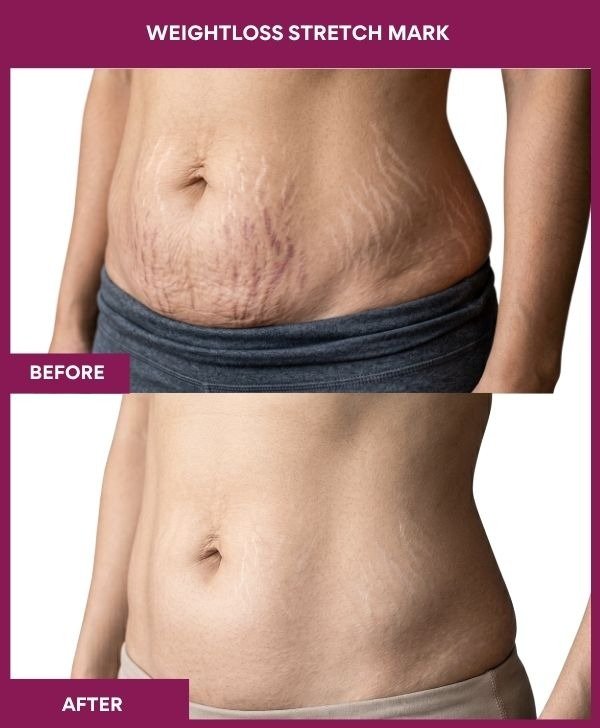
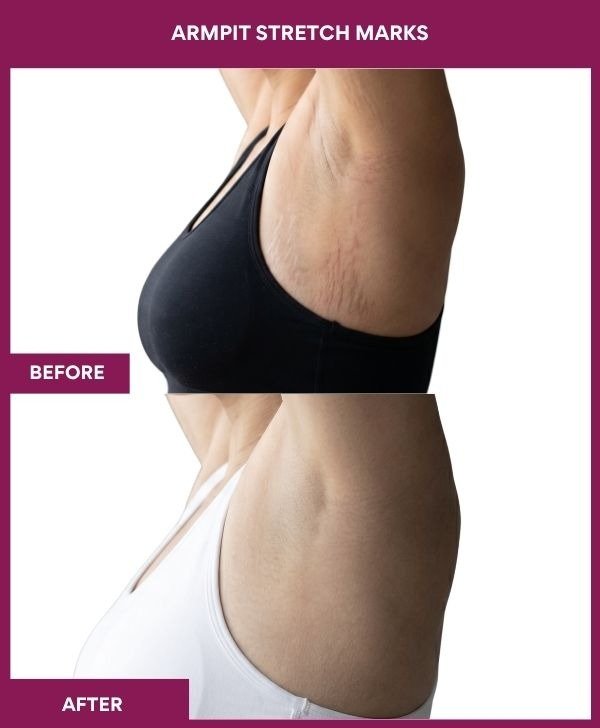
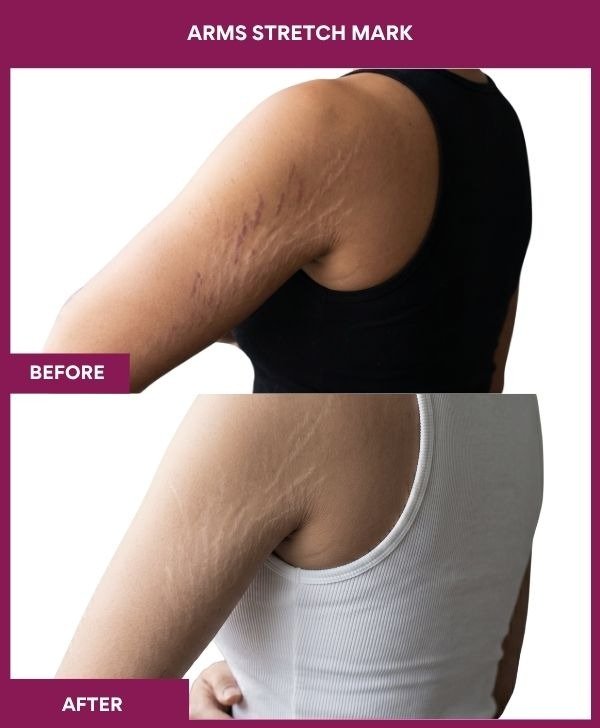
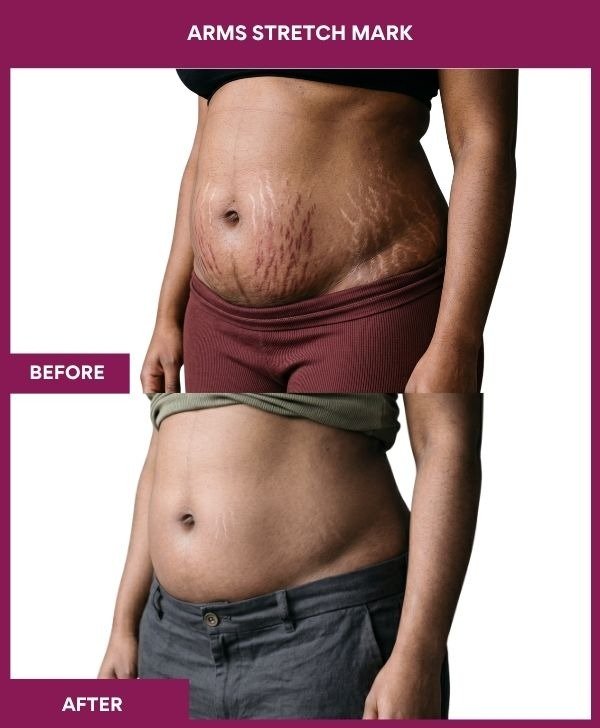
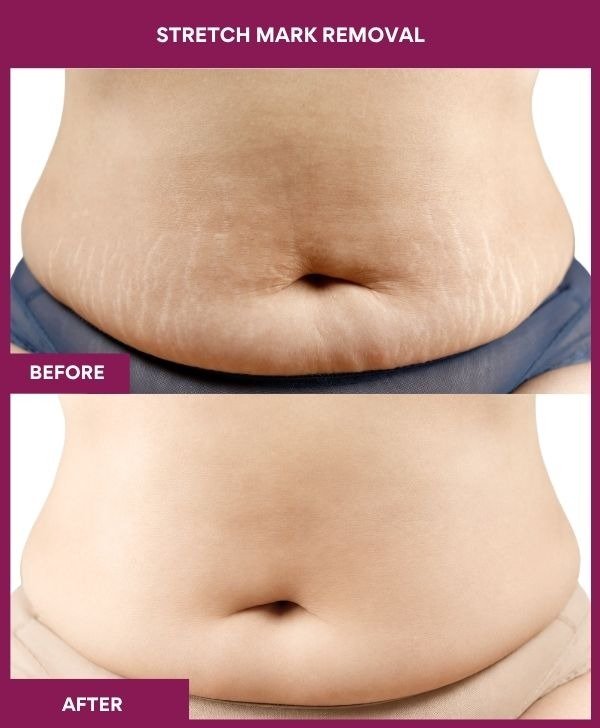
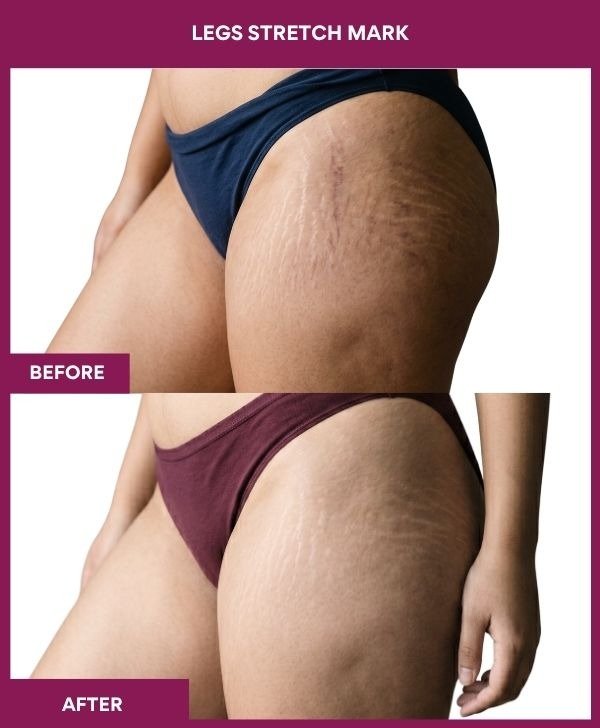
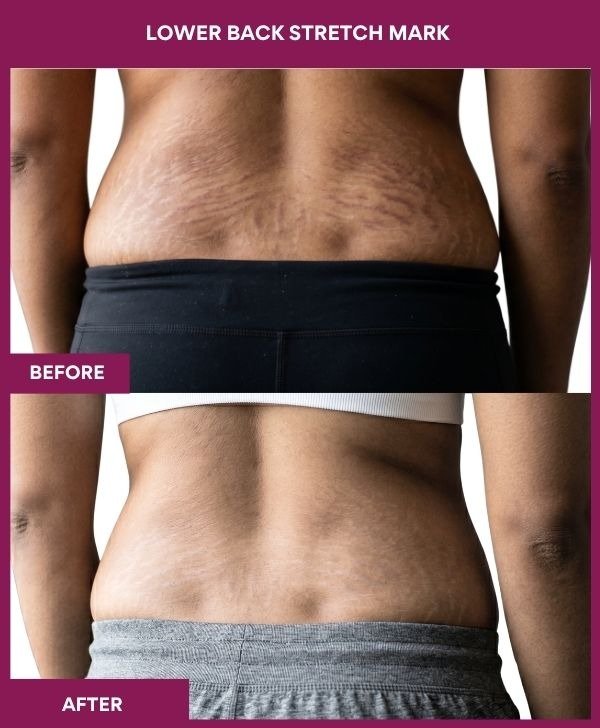
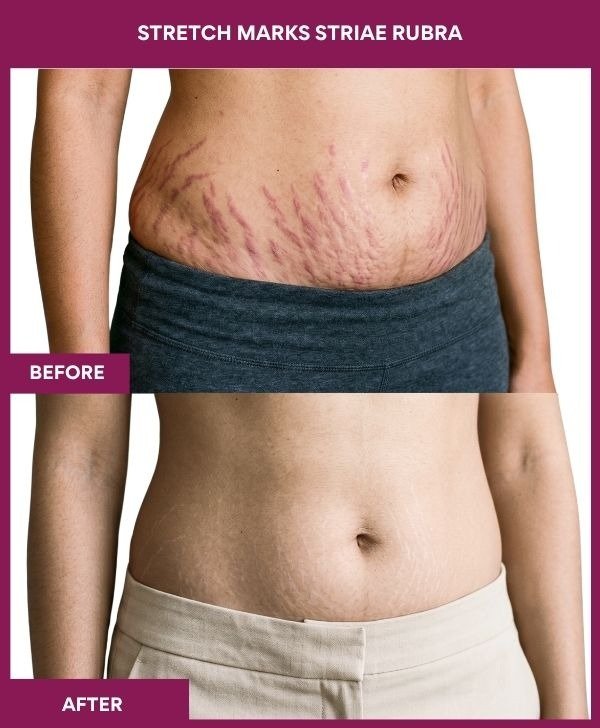
“Liked the results? Let's plan yours.”
Stretch Mark Removal Testimonials: Fine To Fabulous Journeys

Awarded by Google.com
Rating: 4.7
Reviews: 485+

Awarded by WhatClinic.com
Rating: 4.8
Reviews: 119+

Awarded by Realself
Rating: 4.9
Reviews:453+

Awarded by Facebook
Rating: 4.6
Reviews:105+
Dr Milan Doshi and his staff are very professional and committed as the centre is highly equipped with advanced technology. I had closed rhinoplasty 4 months back and I’m seeing the results as to how it becomes successful.
Deepika Shetty
The doctor explained everything clearly and the surgery was smooth. Recovery was faster than I expected and the team was very supportive.
Rahul Mehta
Very natural results and excellent staff. From consultation to follow-up, the experience was outstanding and boosted my confidence.
Sneha Kapoor
“Inspired by their journey? Start yours”
Is Stretch Mark Treatment Right For Me?
(4 quick questions)
Colour, skin, pregnancy, safety — four questions set the plan.
Check My SuitabilityHonest routing — including surgery
Quick Facts About Facelift Surgery
SESSION TIME
45–90 minutes
ANESTHESIA
None
SESSIONS
Course of 3–6
RESULTS SHOW
2–4 weeks
DOWNTIME
3–7 days
RESULTS LAST
Long Lasting
SIDE-EFFECT RATE
Under 1%
COST
₹3,000 – ₹15,000
What Is The Cost Of Stretch Mark Removal In Mumbai?
| Area / method | Per session (₹) | Sessions |
|---|---|---|
| Small area (arms, armpits, knees) — MNRF | 3,000 – 6,000 | 3–5 |
| Belly or thighs — MNRF | 6,000 – 10,000 | 3–5 |
| Belly or thighs — fractional CO₂ | 8,000 – 15,000 | 3–6 |
| PRP add-on | +4,000 – 8,000 | Per session |
| Chemical peel course (early red marks) | 2,500 – 5,000 | 6–7 |
| Microdermabrasion | 1,500 – 3,000 | 6+ |
| Tummy tuck (loose skin with marks) | Quoted as surgery | 1 |
Get your exact quote & surgery plan
Share your details — our team responds within working hours with cost, EMI options and next steps.
Most Common Question People Ask
Q1. Can stretch marks be removed permanently?
Ans. Complete, permanent removal is rare. Laser and microneedling significantly reduce their appearance and good skincare maintains it — but the honest goal is major fading, not a guaranteed erase.
Q2. Which stretch marks respond best to treatment?
Ans. Early red or purple marks (striae rubrae) respond best; older white marks (striae albae) improve more slowly and modestly. Starting sooner gives better results.
Q3. How many sessions are needed?
Ans. Most people need 3–6 sessions, 4–6 weeks apart, depending on severity, age of the marks, skin type and method.
Q4. Is stretch mark removal safe for Indian / darker skin?
Ans. Yes, with care. Darker skin has a higher risk of temporary pigment change, so conservative settings, priming and strict sun protection are used.
Q5. How much does stretch mark removal cost in Mumbai?
Ans. Roughly ₹3,000–₹15,000 per session (+5% GST) depending on area, method and add-ons like PRP, with 3–6 sessions usually needed.
Q6. What is the best stretch mark cream?
Ans. Creams with retinoids (not in pregnancy), hyaluronic acid or Centella may help early marks; topical results are limited compared with in-clinic laser, microneedling or peels.
Q7. Is stretch mark treatment painful?
Ans. Minimally — topical numbing is used, so you mainly feel warmth or tingling during laser or microneedling.
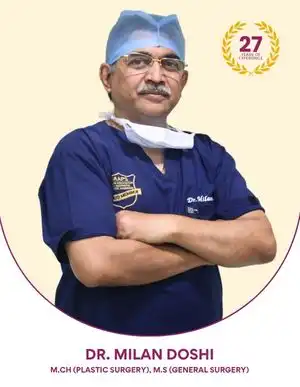
Why Choose Dr. Milan Doshi?
Dr. Milan Doshi, MCh, MS — Indian board-certified plastic and cosmetic surgeon with 27+ years and 16,000+ procedures, trusted in Mumbai for personalised, skin-type-aware stretch mark treatment. Extensive experience in cosmetic and laser dermatology; advanced technology — fractional CO₂ laser, RF microneedling, PRP and peels; custom plans tailored to mark type, skin tone and depth; skin-type expertise — settings adjusted to protect Indian skin from pigment change; and, uniquely, the surgical option — tummy tuck or body lift — when marks sit on loose skin that no laser can tighten. Allure Medspa: state-of-the-art cosmetic-dermatology facility in Andheri; expert-led skin team; surgical and non-surgical under one roof; strict sterilisation and aftercare protocols; NABH-accredited. Outstation and overseas patients supported end-to-end
The Complete Guide About Facelift Surgery
What Is Stretch Mark Removal?
Stretch mark removal is a cosmetic-dermatology treatment that reduces the appearance of stretch marks (striae) — the streaks that form when rapid stretching from pregnancy, weight change, puberty or muscle gain breaks down collagen and elastin in the skin. Treatments such as fractional CO₂ laser, RF microneedling, PRP and chemical peels stimulate new collagen to remodel the marks. Honest expectation: the goal is to blend marks with your natural tone and texture — reduction and smoothing, not a guaranteed “erase”. Early red / purple marks (striae rubrae) respond best; older white marks (striae albae) improve more slowly.
| Non-surgical reduction | Surgical removal |
|---|---|
| Laser, MNRF, PRP, peels rebuild collagen; marks fade and flatten | Tummy tuck / body lift excises the marked lower-abdominal skin with the excess |
| 3–6 sessions; 0–7 days downtime each | One operation; 2 weeks recovery; a surgical scar → Tummy Tuck Surgery |
| ₹3,000–15,000 per session | Quoted as surgery; often part of a mommy makeover |
Also called: stretch mark reduction, laser stretch mark treatment, striae treatment, skin resurfacing for striae.
Sources: Evidence-based striae treatment — fractional CO₂, tretinoin, microneedling RF (as cited on the live page)
Do Stretch Marks Make You Self-Conscious — Can Treatment Help?
Yes — fractional CO₂ laser, RF microneedling, PRP and peels rebuild collagen and visibly fade marks, best while they are still red.
- Are you worried about the lines and grooves that appeared on your skin after pregnancy, weight loss, or sudden growth?
- Do these marks make you feel self-conscious while wearing swimsuits, fitted clothes, or sleeveless outfits?
- Have countless home remedies and creams failed to deliver the smooth, clear skin you hoped for?
Stretch marks can deeply impact not only your appearance but also your confidence. Many individuals feel embarrassed, avoid social gatherings, or hide behind clothing because of these stubborn marks. The frustration of trying multiple solutions with little to no improvement can leave you feeling defeated and anxious about your body image. Thankfully, modern aesthetic science offers safe, effective stretch mark reduction. Using advanced technologies like fractional CO₂ laser, RF microneedling, PRP and chemical peels, these treatments stimulate collagen and elastin regeneration — visibly reducing the appearance of stretch marks and improving skin tone, smoothness and texture. Results are best for newer marks, and a personalised plan sets realistic expectations.
Global & Indian trends (ISAPS): Skin-resurfacing and stretch-mark procedures continue to rise globally, reflecting growing demand for smoother, more even skin · India ranks among the leading Asian countries for cosmetic dermatology, with rising demand for laser stretch-mark reduction in Mumbai, Delhi and Bangalore.
Sources: ISAPS Global Survey 2024
What Are The Benefits Of Stretch Mark Treatment?
Narrower, flatter, better-blended marks, smoother texture, no surgery for most, results that last years, and a plan matched to red or white marks.
- Visible fading — marks become narrower, flatter and closer to your skin tone.
- Smoother texture — collagen remodelling improves the whole treated area, not just the streaks.
- Non-surgical for most — no incisions; short downtime; back to routine in 1–3 days.
- Type-matched — red marks get one plan, white marks another, darker skin its own settings.
- Lasting — improvements from laser and microneedling last years with skincare.
- Honest escalation — when loose skin is the real issue, surgery is offered rather than more sessions.
What Causes Stretch Marks — And How Do They Form?
Stretch marks form when skin stretches faster than its collagen can adapt — from pregnancy, growth spurts, weight change, muscle gain or steroids.
- Pregnancy — especially in the second and third trimesters (striae gravidarum).
- Puberty growth spurts — rapid height / weight gain stretches skin quickly.
- Rapid weight change — gain or loss stretches skin fibres beyond their limit.
- Muscle growth — fast gains in bodybuilders or athletes.
- Corticosteroids — long-term use weakens skin elasticity.
- Medical conditions — Cushing’s syndrome or Marfan syndrome, among others.
- How they form — the dermis tears, deeper layers show through; marks start red / purple and fade to white; common on abdomen, thighs, hips, breasts and arms.
Stretch marks aren’t harmful to health, but they can affect confidence — and early treatment, while marks are still red, tends to work best.
What Are The Limitations Of Stretch Mark Removal?
Marks fade but rarely vanish; white marks improve slowly; loose skin needs surgery; darker skin risks pigment change; new marks can form later.
- Complete erasure is rare — the realistic goal is major fading and smoothing.
- Mature white marks respond more slowly and modestly than early red ones.
- No laser tightens loose lower-abdominal skin — that is a tummy tuck question.
- Darker skin carries a higher risk of temporary pigment change; conservative settings mean more sessions.
- Retinoids and most in-clinic treatments are deferred in pregnancy and breastfeeding.
- Future pregnancy or weight change can create new marks; maintenance may be needed.
Why Is A Consultation Important Before Stretch Mark Removal?
A consultation identifies mark type and stage, rules out pregnancy and contraindications, plans pigment-safe settings and sets sessions and cost.
- Assessment — skin type, colour and depth of marks (rubrae vs albae).
- Cause and context — pregnancy, weight change, hormones or medical factors.
- Safety — rules out contraindications (pregnancy, active infection); plans pigment-safe settings.
- Custom combination — laser, microneedling, PRP or topical retinoids matched to your marks.
- Expectations and cost — realistic results, session count, downtime and a clear estimate.
How to prepare
- No sun or tanning on the area for 2–4 weeks; SPF daily.
- Pause retinoids and exfoliants for 3–5 days before energy treatments.
- Tell us about pregnancy plans, keloids, isotretinoin and blood thinners.
- Priming cream for darker skin types before laser 🩺.
- Arrive with clean skin; loose clothing over the area.
Online consultation
Daylight photos in side-light and a video call settle mark type, stage and the plan: Online Consultations · in person → Contact Us
What Are The Most Effective Treatments — And Do Home Remedies Work?
In-clinic fractional CO₂ laser, RF microneedling and PRP, often combined, are most effective; early retinoids help; oils and butters do not.
| Treatment | What it does | Best for | Sessions | Downtime |
|---|---|---|---|---|
| Fractional CO₂ laser | Deep collagen remodelling | Older white striae; wider marks | 3–6 | 3–7 days → Fractional CO₂ Laser |
| RF microneedling / microneedling | Collagen induction with radiofrequency heat | Newer marks; darker skin (lower pigment risk) | 3–5 | 2–5 days → MNRF |
| PRP | Growth factors boost repair | Add-on to microneedling or laser | With each session | 1–2 days → PRP Treatment |
| Chemical peels | Resurfacing for newer marks | Early red marks; texture | 6–7 | 3–7 days → Chemical Peels |
| Microdermabrasion | Surface resurfacing | Mild white marks | Multiple | 24–48 h → Microdermabrasion |
| Prescription tretinoin 0.1% | Clinically proven for early striae | Recent red marks (not in pregnancy / breastfeeding) | Nightly for months | None |
| Hyaluronic acid / Centella | Modest improvement used early | Prevention and early marks | Daily | None |
Do home remedies or creams help?
Almond oil, cocoa butter, olive oil and vitamin E have no proven benefit in clinical studies; hyaluronic acid and retinoids may help when used early; massaging products in daily slightly boosts effectiveness; self-tanners only camouflage marks; retinol must be avoided in pregnancy or breastfeeding. For significant results, evidence-based clinic treatments — laser, microneedling, PRP or peels — are needed.
Is one method enough?
Combination therapy generally outperforms any single method — the gold-standard approach is a personalised combination (for example, CO₂ laser with PRP, or MNRF alternating with peels) chosen for your mark type and skin tone.
What Are The Different Types Of Stretch Marks — And Which Need Surgery?
Striae rubrae (red) respond best; albae (white) improve slowly; gravidarum are pregnancy marks; nigrae are dark; loose skin needs surgery.
| Type | Appearance | Response | Plan |
|---|---|---|---|
| Striae rubrae | Early red / pink / purple with active vessels | Most responsive | MNRF, peels, early tretinoin; laser |
| Striae albae | Older white / silvery; collagen already broken down | Slower, modest | Fractional CO₂ + PRP; MNRF |
| Striae gravidarum | Pregnancy marks on belly, breasts, thighs | Good if treated after breastfeeding | MNRF / laser; tummy tuck if skin is loose |
| Striae nigrae / caerulea | Dark brown / black or bluish on darker skin | Needs pigment-aware care | Conservative MNRF; priming; SPF |
| Striae atrophicans | Thin-skin marks from Cushing’s or steroid overuse | Variable; treat cause | Medical review first |
Surgical — for skin excess, not marks alone
A tummy tuck or body lift removes lower-abdominal marks together with the excess skin, leaving a surgical scar; it is often part of a mommy makeover and is the right answer when the skin is loose, not just marked.
How Is A Stretch Mark Treatment Session Performed? (Step By Step)
Marks are mapped and numbed, then the laser or RF-microneedling pass is made and PRP applied; 45–90 minutes, home the same day, next in 4–6 weeks.
| Step | What happens | Why it matters |
|---|---|---|
| 1 | Consultation: mark type, skin type, photographs, consent; priming plan for darker skin | Right method; pigment risk managed |
| 2 | Pre-care: no sun 2–4 weeks; no retinoids 3–5 days | Safe healing |
| 3 | Cleansing; numbing cream 30–45 minutes | Comfort |
| 4 | Treatment area marked; settings by mark type and skin tone | Conservative on darker skin |
| 5 | Fractional CO₂ pass or RF-microneedling pass over each mark | Collagen remodelling |
| 6 | PRP (your own platelet-rich plasma) applied or micro-injected while channels are open | Growth factors; faster healing |
| 7 | Cooling; healing ointment; SPF or dressing | Calm skin |
| 8 | Home the same day; 45–90 minutes total | Minimal disruption |
| 9 | Review at 1 week (laser) or as needed; next session in 4–6 weeks | Course tracking |
| 10 | Photographs at 3–6 months after the course | Judge the result when collagen has built |
What Results Can You Expect — And When?
Texture improves from 2–4 weeks, marks narrow and lighten across 3–6 sessions, and collagen keeps building for 3–6 months after the course.
| Time | What you see |
|---|---|
| Days 1–7 | Redness, mild swelling or flaking; skin heals |
| Weeks 2–4 | Smoother texture; early softening of marks |
| After sessions 2–3 | Marks narrower and lighter |
| After the course | Significant fading; white marks blended closer to tone |
| Months 3–6 | Peak collagen result |
| Years | Maintained with skincare and stable weight; touch-ups every 6–12 months if wished |
What Aftercare Is Needed After Stretch Mark Treatment?
Keep the area clean and moisturised, avoid heat and friction for 48 hours, use SPF daily, don’t pick flaking skin and keep weight stable.
- Gentle cleanser and moisturiser; healing ointment after laser.
- No heat, sauna, swimming or gym for 48 hours (longer after CO₂).
- Loose clothing over the area; no friction from belts or waistbands.
- SPF daily on exposed areas; no sun for 4 weeks after laser.
- Do not pick flaking skin; no retinoids or acids for a week.
- Hydrate, eat protein, keep weight stable — collagen needs it.
| Avoid | For how long |
|---|---|
| Heat, sauna, swimming | 48 hours (1–2 weeks after CO₂) |
| Gym, sweating, friction | 48 hours |
| Retinoids, acids, scrubs | 1 week |
| Sun on the area | 4 weeks; SPF always |
| Picking or peeling flakes | Until healed |
| Waxing / laser hair removal over the area | 2 weeks |
What Are The Risks And Side Effects Of Stretch Mark Removal?
Mostly mild, temporary redness, swelling or flaking; the main risk on Indian skin is temporary pigment change, minimised by careful settings and SPF.
Common and temporary
- Redness and swelling after laser, peels or microneedling — settles in 2–5 days; peeling / flaking after peels or microdermabrasion; dryness or tightness for a few days.
Uncommon
- Pigment change (key for Indian skin) — temporary hyper- or hypopigmentation, more common in darker phototypes; conservative settings, priming and SPF reduce it.
- Sun sensitivity — treated skin burns more easily.
Rare
- Infection, scarring or prolonged redness if aftercare is not followed; cold-sore reactivation near the mouth is not relevant here but herpes prophylaxis applies to facial work.
| Risk | How it is minimised at Allure Medspa |
|---|---|
| Pigment change | Priming; conservative density and energy; MNRF over CO₂ for deeper tones; strict SPF |
| Infection | Sterile technique; post-care kit; review at 1 week |
| Disappointment | Honest expectation set at consultation — reduction, not erase |
| Wrong route | Loose skin recognised and offered surgery instead of endless sessions |
Sources: PIH more common in darker phototypes; adverse events and skin-type considerations (as cited on the live page)
What Is The Recovery Timeline — And How Long Do Results Last?
Most non-surgical options need 1–3 days off; laser and microneedling results last years with skincare, though pregnancy or weight change adds marks.
| Method | Recovery | How long results last |
|---|---|---|
| Topical creams | None | While used; modest |
| Chemical peels | Mild redness and peeling 3–7 days | Temporary; repeat |
| Microdermabrasion | Sensitivity / dryness 24–48 hours | Temporary; repeat |
| Microneedling / MNRF | Redness and flaking 2–5 days | Years with skincare |
| Fractional CO₂ laser | Swelling / pinkness 3–5 days; healed 7–10 | Years with skincare |
| PRP | Mild bruising / swelling 1–2 days | Supports the above |
Prolong results: moisturise, use SPF, keep weight stable; laser / microneedling touch-ups every 6–12 months may help. New marks can form with pregnancy, weight change or growth.
Medical Codes for Stretch Mark Treatment?
CD-10 L90.6 striae atrophicae, L90.5 scar, R23.4 texture, Z41.1 cosmetic; CPT 17999 laser / MNRF, 96999 combination, 15788/15789 peels.
| Code system | Code | Description |
|---|---|---|
| ICD-10 | L90.6 | Striae atrophicae (stretch marks) |
| ICD-10 | L90.5 | Scar conditions and fibrosis of skin (striae as atrophic scars) |
| ICD-10 | R23.4 | Changes in skin texture |
| ICD-10 | L81.9 | Disorder of pigmentation, unspecified (pigmented striae) |
| ICD-10 | Z41.1 | Encounter for cosmetic procedure |
| CPT | 17999 | Unlisted procedure, skin (laser stretch mark treatment, RF microneedling) |
| CPT | 96999 | Unlisted dermatologic service (combination therapies) |
| CPT | 15788 / 15789 | Chemical peel; epidermal / dermal (facial codes used by analogy) |
| CPT | 15780 / 15781 | Dermabrasion, total face / segmental — surgical dermabrasion; reference only |
| CPT | 15830 / 15847 | Excision of excessive skin, abdomen (tummy tuck) — surgical route — added |
(FAQs) Frequently Asked Question About Stretch Mark Reduction?
Q1. Can a laser remove stretch marks permanently?
Ans. Laser markedly reduces visibility and stimulates collagen but usually cannot erase marks entirely; several sessions are typically needed and results last years.
Q2. Can PRP therapy help stretch marks?
Ans. Yes — PRP releases growth factors that support collagen and elastin, and works best combined with microneedling or laser.
Q3. How do you reduce stretch marks fast?
Ans. In-clinic options (fractional CO₂ laser, microneedling, PRP) work faster and more reliably than over-the-counter products, especially for early red marks.
Q4. Will stretch marks disappear if I lose weight?
Ans. They may fade somewhat with weight loss but usually won’t vanish; clinical treatments are needed for significant reduction, and loose skin may need surgery.
Q5. How do I treat white (mature) stretch marks?
Ans. Mature white marks respond best to fractional CO₂ laser, microneedling or PRP, though improvement is more gradual than for early red marks.
Q6. What is the latest treatment for stretch marks?
Ans. Combination therapy — fractional CO₂ with PRP and / or RF microneedling — and newer non-ablative fractional lasers are among the most advanced approaches.
Q7. Can a dermatologist or surgeon remove stretch marks?
Ans. They can significantly reduce them using laser, microneedling, microdermabrasion and peels tailored to your skin; a plastic surgeon can also excise marked loose skin.
Q8. Which surgery removes stretch marks?
Ans. For severe lower-abdominal marks with loose skin, a tummy tuck removes the marked skin — a surgical option with a scar, not suitable for everyone.
Q9. Can stretch marks be prevented?
Ans. Not reliably, but moisturising, managing weight gradually and using early retinoids (when not pregnant) may reduce their severity.
Q10. When can I treat stretch marks after pregnancy?
Ans. Once breastfeeding has ended — and the sooner after that the better, while the marks are still red.
Q11. Are stretch marks on darker skin treated differently?
Ans. Yes — conservative energy, priming and MNRF over aggressive lasers reduce the higher risk of pigment change; more sessions at lower settings is the safer route.