
Microneedling Radiofrequency (MNRF) Treatment in Mumbai: Rebuild, Rejuvenate & Reveal Radiant Skin

Indian Board Certified Plastic Surgeon
M.CH, MS, ISAPS Mentor
16000+ Cosmetic Surgeries
500+ MNRF Treatments
Microneedling radiofrequency treatment (MNRF) is a non-surgical skin-rejuvenation procedure that combines fine microneedles with radiofrequency energy delivered into the deeper skin, stimulating collagen and elastin to firm skin and improve acne scars, pores and texture. Because the RF heat works below the surface with minimal damage to the epidermis, it’s considered safer for darker (Indian) skin than many lasers. It’s the energy-powered upgrade to standard microneedling — and at Allure Medspa the depth and energy are set for your skin by the doctor, with active acne treated first.
Microneedling Radiofrequency Results: Before & After
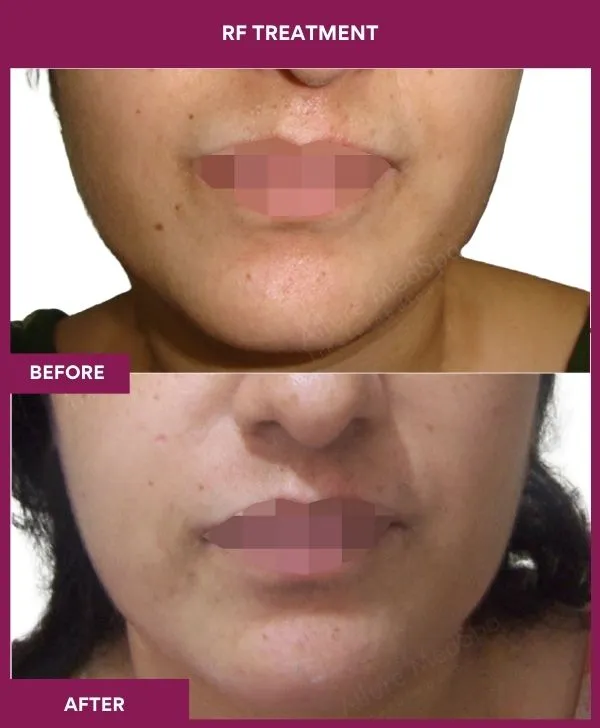
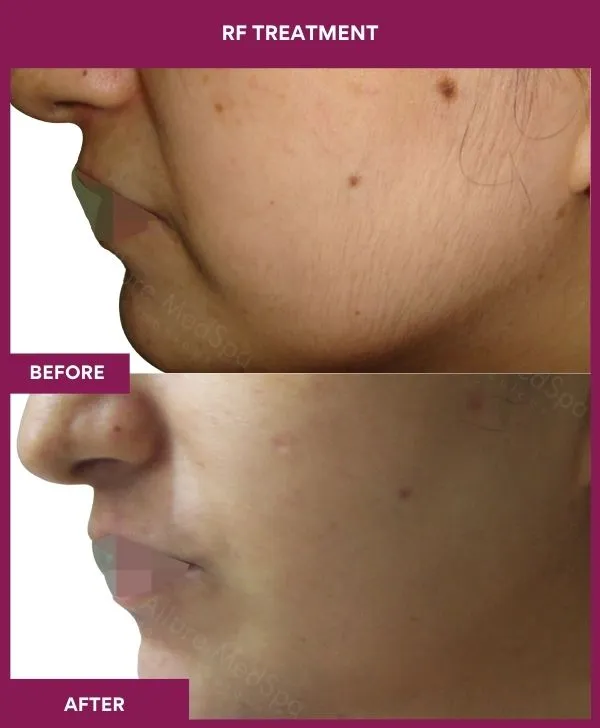
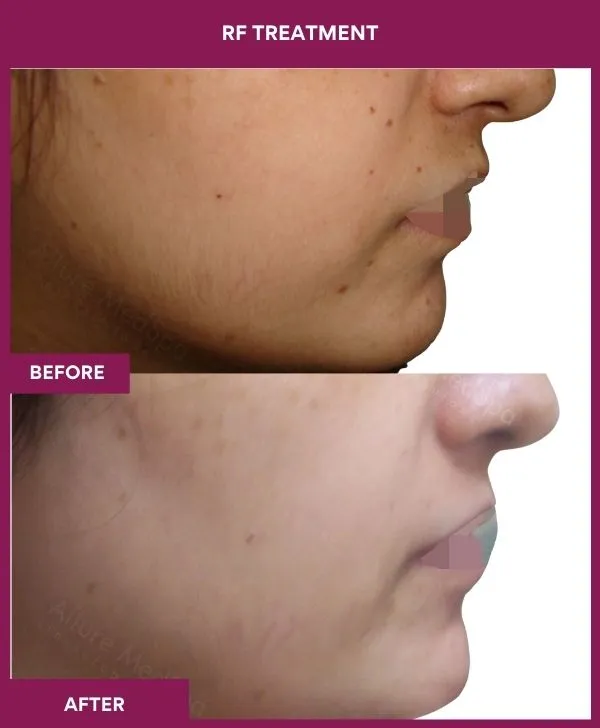
“Liked the results? Let's plan yours.”
Microneedling Radiofrequency Testimonials: Fine To Fabulous Journeys

Awarded by Google.com
Rating: 4.7
Reviews: 485+

Awarded by WhatClinic.com
Rating: 4.8
Reviews: 119+

Awarded by Realself
Rating: 4.9
Reviews:453+

Awarded by Facebook
Rating: 4.6
Reviews:105+
Dr Milan Doshi and his staff are very professional and committed as the centre is highly equipped with advanced technology. I had closed rhinoplasty 4 months back and I’m seeing the results as to how it becomes successful.
Deepika Shetty
The doctor explained everything clearly and the surgery was smooth. Recovery was faster than I expected and the team was very supportive.
Rahul Mehta
Very natural results and excellent staff. From consultation to follow-up, the experience was outstanding and boosted my confidence.
Sneha Kapoor
Is Microneedling Radiofrequency right for you?
Is MNRF Right For Me?
(4 quick questions)
Quick Facts About Microneedling Radiofrequency Treatment
SESSION TIME
45–90 minutes
ANESTHESIA
Topical numbing cream
SESSIONS
Course of 3–4
RESULTS SHOW
Early glow at 5–7 days
DOWNTIME
2–4 days
RESULTS LAST
Maintenance every 6–12 months
SIDE-EFFECT RATE
Under 1%
COST
₹10,000 – ₹25,000
What Is The Cost Of Microneedling Radiofrequency Treatment In Mumbai?
At Allure Medspa, microneedling radiofrequency treatment costs ₹10,000–₹25,000 per session, depending on the area (full face vs targeted zone), depth of scarring and treatment goals; most people need 3–4 sessions, and packages may reduce the per-session cost. Cost also depends on skin thickness, scar depth, device and expertise. A consultation gives your exact plan; EMI options are on our payment process page.
| Plan | Typical range (₹) | Notes | Full guide |
|---|---|---|---|
| Targeted zone (cheeks / temples / neck) | 10,000 – 15,000 per session | Localised scars or laxity | — |
| Full face | 15,000 – 25,000 per session | Scars, pores, mild laxity | — |
| Full face + neck | 20,000 – 30,000 per session | Tightening plans | Anti-Aging Treatment |
| Course of 4 (full face) | 55,000 – 90,000 | Package pricing | — |
| MNRF + PRP | + 5,000 – 8,000 per session | Growth factors through channels | PRP Treatment |
| MNRF + subcision / TCA CROSS (deep scars) | Quoted | Combination scar plan | Acne & Scar Treatment |
| Body area (stretch marks) per area | 12,000 – 20,000 | 3–4 sessions | Stretch Mark Removal |
| Plain microneedling (for comparison) | 3,000 – 5,000 per session | Mechanical only | Dermaroller Treatment |
Get your exact quote & surgery plan
Share your details — our team responds within working hours with cost, EMI options and next steps.
Most Common Question People Ask
Q1. Is MNRF treatment effective?
Ans. Yes — fractional RF microneedling is well-supported for acne scars, texture and skin tightening, with a recent systematic review confirming it as an effective treatment for facial acne scarring.
Q2. Is MNRF better than laser?
Ans. For darker (Indian) skin, MNRF is often preferred because it spares the surface and carries a lower risk of post-inflammatory pigmentation than ablative lasers, while still remodelling collagen. The best choice depends on your skin and concern.
Q3. How painful is MNRF?
Ans. Discomfort is mild-to-moderate; a topical numbing cream is applied first, so most people tolerate it well.
Q4. How many sessions are needed?
Ans. Usually 3–4 sessions spaced 4–6 weeks apart; severe scarring or laxity may need 4–6.
Q5. How much does MNRF cost in Mumbai?
Ans. At Allure Medspa, typically ₹10,000–₹25,000 per session (+5% GST) depending on area and severity; course packages reduce the per-session cost.
Q6. Are MNRF results permanent?
Ans. Results are long-lasting but not permanent — skin continues to age, so maintenance sessions every 6–12 months help sustain firmness and clarity.
Q7. Is MNRF safe for darker skin tones?
Ans. Yes — because it largely spares the epidermis, it’s considered one of the safer resurfacing options for skin of colour, though conservative settings are still important.

Why Choose Dr. Milan Doshi?
Dr. Milan Doshi, MCh, MS — Indian board-certified plastic and cosmetic surgeon, 27+ years, 16,000+ procedures and 500+ MNRF patients. The best doctor for MNRF is one experienced in energy-based devices who can match depth and settings to your skin — crucial for safe results on Indian skin: device expertise in RF-microneedling settings and safety; skin-type-matched conservative protocols to avoid pigmentation; scar and combination skills pairing MNRF with subcision, PRP or laser when needed; and an accredited, NABH-certified, hygienic setting. Allure Medspa combines modern RF-microneedling devices, specialist-led personalised protocols and a full skin menu — MNRF alongside laser, PRP, peels and subcision — trusted by patients from India and abroad. Outstation and overseas patients are supported end-to-end
The Complete Guide About Microneedling Radiofrequency Treatment
What Is Microneedling Radiofrequency (MNRF) Treatment?
Microneedling radiofrequency treatment is a minimally invasive procedure that uses ultra-fine needles to deliver radiofrequency (RF) heat into the dermis, creating controlled micro-injuries and thermal zones that trigger deep collagen remodelling for firmer, smoother skin.
- Dual action — microneedling + RF heat for deeper collagen stimulation than needling alone
- Spares the surface — minimal epidermal damage, so lower pigmentation risk than ablative lasers
- Best evidence for — atrophic acne scars, enlarged pores, texture and mild skin laxity
| MNRF (energy microneedling) | Plain microneedling (dermaroller / pen) |
|---|---|
| Needles + RF heat at set depth → thermal zones in the dermis; collagen AND tightening | Needles only → mechanical micro-injury; collagen, no heat |
| Scars, pores, laxity, stretch marks | Texture, pores, mild scars, product delivery |
| ₹10,000–25,000 / session; 3–4 sessions | ₹3,000–5,000 / session; 3–6 sessions → Dermaroller Treatment |
Also called: RF microneedling, fractional RF microneedling (FRM), MNRF, RF skin tightening, radiofrequency needling.
Sources: FRM monotherapy systematic review, 2025 · MNRF for acne scars (PMC)
Frustrated By Acne Scars, Wrinkles Or Sagging Skin?
If scars, fine lines or loose skin are denting your confidence and skincare isn’t enough, microneedling radiofrequency treatment offers a science-backed way to rebuild collagen and firm your skin — without surgery or downtime.
- Are fine lines around your eyes and mouth making you look older than you feel?
- Does your skin look dull, uneven or lax no matter how much skincare you try?
- Is your confidence affected by visible acne scars, enlarged pores or loss of firmness?
These concerns aren’t just skin-deep — premature ageing, uneven texture or acne scarring can quietly chip away at self-esteem, especially when makeup won’t cover them. The reassuring news: MNRF combines micro-injuries with RF heat to stimulate natural collagen and elastin, tightening skin and softening scars and fine lines — restoring a smoother, radiant complexion without surgery. For deeper concerns it pairs well with PRP, fractional CO₂ laser or subcision / scar revision.
Global & Indian trends (ISAPS 2024): RF-based skin treatments were among the fastest-growing non-surgical procedures worldwide in the latest survey · India is a high-demand market for RF microneedling, particularly for acne scars and skin tightening · RF microneedling ranks among the leading non-surgical skin-rejuvenation treatments globally.
Sources: ISAPS Global Survey 2024
What Are The Benefits Of MNRF Treatment?
MNRF firms skin, softens scars and refines texture with minimal downtime — and, importantly, with lower pigmentation risk on darker skin than ablative lasers.
- Skin tightening — RF heat stimulates deep collagen for firmer skin
- Scar & texture improvement — softens acne scars and refines pores
- Safer for Indian skin — spares the epidermis, lowering PIH risk vs many lasers
- Minimal downtime — usually 2–4 days of mild redness; resume routine quickly
- Natural, gradual results — collagen builds over weeks for a natural look
- Works on oily, acne-prone skin — RF reduces sebaceous activity, so pores and oiliness improve together
Sources: FRM safety in skin of colour (ASJ)
Which Skin Concerns Can MNRF Address — And How Does It Work?
MNRF can help improve depressed acne scars, enlarged pores, uneven texture, fine lines, mild skin laxity, stretch marks and overall skin quality. It works by delivering radiofrequency energy through fine microneedles into controlled depths of the skin, creating thermal zones that stimulate collagen and elastin remodelling. Because much of the energy is delivered beneath the surface, MNRF can improve texture and firmness with relatively limited surface injury.
| Concern | What MNRF does | Learn more / combined with |
|---|---|---|
| Acne scars (atrophic / depressed) | Its strongest, best-evidenced use | Acne & scars → Acne & Scar Treatment · subcision / TCA CROSS for ice-pick |
| Enlarged pores & texture | Refines rough, uneven skin | Peels → Chemical Skin Peels |
| Fine lines & mild laxity | Firms early sagging on face and neck | Anti-aging → Anti-Aging Treatment · HIFU → HIFU Treatment |
| Stretch marks | Improves appearance over a course | Stretch Mark Removal |
| Photoageing, dull tired skin | Skin rejuvenation | PRP → PRP Treatment |
| Post-inflammatory pigment | Evens tone as an adjunct | Pigmentation → Pigmentation Treatment |
How it works
- Needle insertion — ultra-fine needles reach a controlled, set depth
- RF energy — heat is released from the needle tips into the deeper skin
- Thermal micro-zones — controlled heating creates zones of collagen renewal
- Remodelling — new collagen and elastin firm and smooth the skin over weeks
- Surface spared — minimal epidermal damage → lower pigmentation risk
Sources: MNRF indications review (PMC)
What Are The Limitations Of MNRF?
MNRF is effective for selected scars, texture concerns and mild to moderate skin laxity, but it cannot replace surgery for significant sagging or treat every type of scar or pigmentation problem. Deep ice-pick scars often need combination treatments, while pigment and vascular concerns may respond better to other procedures. Results also develop gradually and usually require a course of sessions followed by several weeks to months of collagen remodelling.
- It does not reduce facial fat, and it does not replace a facelift for significant sagging — it firms mild to moderate laxity.
- Deep ice-pick scars need combination (subcision, TCA CROSS, laser); MNRF alone under-delivers on them.
- Pigment and vascular marks are not its target — peels, laser toning or IPL are.
- Not with a pacemaker or metal implant in the field, in pregnancy, on active acne or infection, on keloid-prone skin without review, or within ~6 months of isotretinoin 🩺.
- Results need a course of 3–4 sessions and 3 months of collagen building; one session is not a scar treatment.
Why Should You See A Doctor Before MNRF?
A doctor makes MNRF safe and effective — confirming you’re a suitable candidate, setting the right depth and energy for your skin, and preventing complications like pigmentation: assessing your skin type, scars and concerns; tailoring needle depth and RF energy; planning session count and any combinations (PRP, subcision, laser); and treating active acne or pigmentation first.
How to prepare
- Active acne controlled first (Dr. Doshi’s rule).
- Stop retinoids and exfoliating acids 3–5 days before; no sun, waxing or laser on the area for a week.
- Disclose cold-sore history (antiviral cover), keloids, implants, isotretinoin, blood-thinners, pregnancy.
- Come without make-up; daylight photographs help.
Online consultation
Photographs and a video call settle suitability and sessions:
Online Consultations
Which Depth, Energy And Device Are Used?
MNRF settings are customised according to the skin concern, treatment area, scar depth and skin type rather than using one fixed setting for everyone. Shallower depths and lower energy are generally used for pores, texture and fine lines, while deeper scars, stretch marks and selected areas of laxity may require greater needle depth and carefully adjusted radiofrequency energy. Medical-grade RF microneedling devices use sterile single-use tips, with depth, energy and pulse duration controlled during treatment to balance effectiveness with skin safety.
| Concern | Typical needle depth | Energy approach on Indian skin |
|---|---|---|
| Open pores, texture, fine lines | 0.5–1.0 mm | Low–moderate; superficial dermis |
| Rolling / boxcar acne scars | 1.5–2.5 mm | Moderate; layered passes over sessions |
| Deep scars (with subcision) | 2.5–3.5 mm | Moderate; conservative on first session |
| Mild laxity — jawline, neck | 2.0–3.5 mm | Moderate–higher; SMAS-adjacent |
| Stretch marks (body) | 2.0–3.5 mm | Moderate |
Device: a medical-grade fractional RF-microneedling system with insulated / non-insulated sterile single-use tips; depth, energy and pulse duration set per area. Devices such as Morpheus8 are FDA-cleared for this use.
Is deeper and hotter always better?
No — on Indian skin the safe result comes from conservative depth and energy delivered over several sessions, not one aggressive pass. Insulated needles keep heat off the epidermis; the doctor increases settings only once the skin has shown how it responds.
MNRF Versus Microneedling, Laser And PRP
MNRF works deeper than plain microneedling because it combines fine needles with radiofrequency energy to stimulate collagen within the dermis. Compared with fractional CO₂ laser, it causes less surface injury and may offer a lower pigmentation risk in darker skin types, while PRP can be added to support healing and rejuvenation. Chemical peels mainly target surface pigmentation and tone, whereas HIFU is used more for lifting and tightening. The most suitable option depends on whether the main concern is scarring, pigmentation, pores, texture or laxity.
| Option | How it differs | Best for | Full guide |
|---|---|---|---|
| MNRF | Needles + RF heat in the dermis; surface spared | Acne scars, pores, mild laxity, oily skin | This page |
| Plain microneedling (dermaroller / pen) | Mechanical only; no heat; cheaper | Texture, mild scars, product delivery | Dermaroller Treatment |
| Fractional CO2 laser | Ablative heat from the surface down; strongest resurfacing; higher PIH risk on dark skin; 5–7 days downtime | Deep scars and wrinkles on lighter skin | Fractional CO2 Laser Treatment |
| MNRF + PRP | Growth factors applied through the channels | Faster healing; scars and rejuvenation | PRP Treatment |
| HIFU | Focused ultrasound to SMAS; no needles | Lifting jowls / neck; no scar benefit | HIFU Treatment |
| Chemical peels | Surface exfoliation | Pigment marks, tone | Chemical Skin Peels |
Chemical peel or MNRF — which is better?
Peels exfoliate the surface; MNRF works deeper for scars, pores and firmness. For textural acne scars and laxity MNRF is usually more effective, though they can be complementary.
What Is The MNRF Procedure? (Step By Step)
MNRF treatment begins with skin assessment, cleansing and numbing, followed by controlled delivery of radiofrequency energy through fine microneedles at customised depths. The device is passed systematically over the treatment area, with settings adjusted according to scar depth, skin type and concern. PRP or suitable serums may be added when planned, and the session is completed with cooling, sunscreen and aftercare instructions.
| Step | What happens | Why it matters |
|---|---|---|
| 1 | Consultation: concern, skin type, contraindications; acne controlled; photographs; plan | Safety and settings |
| 2 | On the day: skin checked; consent; make-up removed | No treatment on active infection |
| 3 | Cleanse with an antiseptic solution | Sterile field |
| 4 | Topical numbing cream, ~20–30 minutes | Comfort |
| 5 | Numbing removed; sterile single-use tip fitted; depth and energy set per zone | Matched to skin |
| 6 | Device delivers RF through fine needles across the area in a grid; scar zones may get a second pass | Controlled thermal zones |
| 7 | PRP or serum applied through the channels if planned | Faster healing |
| 8 | Cooling gel or mask | Calms the skin |
| 9 | Sunscreen; gentle skincare guidance; aftercare sheet | Protects the result |
| 10 | Next session in 4–6 weeks; review after the course | Course planning |
When Will You See Results After MNRF?
You’ll see an early glow within a week, with firmness and texture improving over 1–2 months as collagen rebuilds — and continuing for up to 3 months after each session.
| Time | What you see |
|---|---|
| Days 1–3 | Redness, dryness, slight swelling — like mild sunburn |
| Days 5–7 | Initial glow and smoother feel |
| After session 2 | First visible improvement in scars / pores |
| 1–2 months | Firmness and texture visibly improve |
| Up to 3 months after each session | Collagen remodelling continues |
| After the full course (+3 months) | Best results; assess and plan maintenance |
Sources: Neocollagenesis timeline (ASJ)
What Aftercare Does MNRF Require?
After MNRF, aftercare focuses on calming the skin, protecting the healing barrier and reducing the risk of pigmentation or irritation. Use a gentle cleanser, bland moisturiser and daily sunscreen, and avoid make-up, retinoids, acids, scrubs, heat and strenuous exercise for the advised period. Mild redness or swelling is expected initially, and the treated skin should not be picked or rubbed while it heals.
- Sunscreen daily; avoid direct sun for a week.
- Gentle cleanser, bland moisturiser; no actives for 5 days.
- No make-up for 24 hours; no picking dryness or flaking.
- Cold compress for redness; sleep with the head raised the first night.
- Antiviral as prescribed if you are prone to cold sores.
| Avoid | For how long |
|---|---|
| Direct sun; no SPF | 1 week strictly; SPF daily throughout the course |
| Make-up | 24 hours |
| Retinoids, acids, scrubs | 5–7 days |
| Gym, sauna, swimming, hot yoga | 48–72 hours |
| Waxing, threading, laser on the area | 1–2 weeks |
| Facials, other treatments on the area | Until the next planned session |
What Are The Side Effects Of MNRF?
MNRF is generally safe in expert hands, with mild, temporary side effects — and a lower pigmentation risk than ablative lasers, though care is still needed in darker skin.
Common and temporary
- Redness, mild swelling, dryness or flaking for 2–4 days; itching or tenderness in treated areas; grid-pattern marks that fade in days.
Uncommon
- Cold-sore flare in those prone (tell your doctor); post-inflammatory hyperpigmentation — uncommon but possible; sun protection matters.
Rare
- Bruising; with poor technique, scarring or burns — why expert care matters.
| Risk | How it is minimised at Allure Medspa |
|---|---|
| PIH on Indian skin | Conservative depth and energy; insulated tips; no treatment on inflamed skin; strict SPF |
| Burns / track marks | Calibrated device; correct tip contact; doctor-set parameters |
| Infection / cold sores | Sterile single-use tips; antiseptic prep; antiviral cover |
| Poor result | Acne controlled first; combination plan for deep scars; full course completed |
Sources: FRM safety review (Dermatology Times / CCID)
How Many Sessions — And What Is The Downtime?
Most people need 3–4 sessions of MNRF, spaced 4–6 weeks apart, for the best collagen-building results; deeper scars or laxity may need more. Downtime is minimal — expect mild redness, dryness or slight swelling for 1–3 days, similar to a mild sunburn.
| Phase | What happens | Your part |
|---|---|---|
| Consultation | Acne controlled; settings and course planned | Stop actives; SPF habit |
| Session 1 | Conservative settings; response observed | 2–4 days redness; no sun |
| Sessions 2–4 (every 4–6 weeks) | Settings adjusted; first improvement usually after session 2 | Keep dates; photographs |
| 3 months after the last session | Best result; assess | Compare photographs |
| Maintenance | A session every 6–12 months | SPF for life |
Downtime detail: redness up to ~48 hours; dryness / flaking on days 2–3; most people don’t need to skip work or social life; sunscreen and gentle products speed recovery and protect results.
🩺 Dr. Doshi’s Note —
Medical Codes For Microneedling Radiofrequency Treatment
| Code system | Code | Description |
|---|---|---|
| ICD-10 | L70.0 | Acne vulgaris (commonly treated with microneedling RF for scarring) |
| ICD-10 | L90.5 | Atrophic facial scars (e.g., post-acne scars) |
| ICD-10 | R23.4 | Changes in skin texture (uneven, rough skin) |
| ICD-10 | L81.4 | Other melanin hyperpigmentation (dark spots, uneven tone) |
| ICD-10 | Z41.1 | Encounter for cosmetic skin procedure (aesthetic skin tightening, rejuvenation) |
| CPT | 17999 | Unlisted procedure, skin (commonly used for microneedling with RF) |
| CPT | 15788 | Chemical peel, epidermal (if used with superficial peel in combo) |
| CPT | 96999 | Unlisted dermatological procedure (alternative for fractional RF procedures) |
(FAQs) Frequently Asked Questions About MNRF
Q1. How many days after MNRF do you see results?
Ans. Many people notice an early glow within 7–10 days, with collagen-driven improvement continuing for up to 3 months after each session.
Q2. Can I go out after MNRF treatment?
Ans. Yes — downtime is minimal, but avoid direct sun and use broad-spectrum sunscreen for several days to prevent irritation or pigmentation.
Q3. Why is my skin darker after microneedling?
Ans. Temporary post-inflammatory hyperpigmentation can occur, especially in darker skin without proper aftercare. Sun protection and correct settings minimise it.
Q4. Does MNRF reduce face fat?
Ans. No — MNRF targets the dermis for collagen remodelling and mild tightening; it doesn’t reduce facial fat.
Q5. Does microneedling cause hair loss?
Ans. No — in fact, scalp microneedling is sometimes combined with PRP to support hair growth.
Q6. Is MNRF good for acne scars?
Ans. Yes — it’s one of the better-evidenced options for atrophic acne scars, remodelling the dermis with controlled RF heat; deep ice-pick scars are combined with subcision or TCA CROSS.
Q7. What are the risks of RF microneedling?
Ans. Risks are low with a qualified provider — usually redness, swelling, temporary pigment change or minor bruising. Poor technique can rarely cause burns or scarring.
Q8. Chemical peel or MNRF — which is better?
Ans. Peels exfoliate the surface; MNRF works deeper for scars, pores and firmness. For textural acne scars and laxity, MNRF is usually more effective, though they can be complementary.
Q9. Is MNRF FDA-cleared and safe?
Ans. RF microneedling devices are FDA-cleared for this use, and MNRF is considered safe and effective for most skin types when performed by a trained provider with settings matched to the skin.
Q10. Can MNRF be done with active acne?
Ans. Dr. Doshi prefers to control active acne first, because ongoing breakouts affect healing and results; a short medical plan usually precedes the first MNRF session.
Q11. Can MNRF tighten the neck and jawline?
Ans. Yes, for mild to moderate laxity — RF heat at deeper settings firms the lower face and neck; significant sagging responds better to HIFU, threads or a facelift, which the consultation will say honestly.
Related Links
- Dermaroller (plain microneedling)
- Acne & Scar Treatment
- PRP Treatment
- Fractional CO2 Laser
- HIFU Treatment
- Anti-Aging / Skin Tightening
- Anti-Aging Injections
- Stretch Mark Removal
- Chemical Skin Peels
- Pigmentation Treatment
- Face Rejuvenation
- Scar Revision Surgery
- Outstation Patients
- Online Consultations