
Dark Circle Removal Treatment in Mumbai: Brighten Your Eyes With Expert Solutions

Indian Board Certified Plastic Surgeon
M.CH, MS, ISAPS Mentor
16000+ Cosmetic Surgeries
500+ Dark Circle Treatments
Dark circle removal refers to a set of targeted treatments that reduce pigmentation, puffiness and hollowness under the eyes to restore a fresh, youthful appearance. The under-eye area darkens for four different reasons — pigment in the skin, visible blood vessels under thin skin, a hollow that casts a shadow, or a fat bulge that casts one — and each needs a different treatment. That is why Dr. Milan Doshi’s approach starts with diagnosis: a stretch test, a light test and a skin scope tell which type you have before any peel, laser, PRP, filler or surgery is suggested.
Dark Circle Treatment Before and After Images
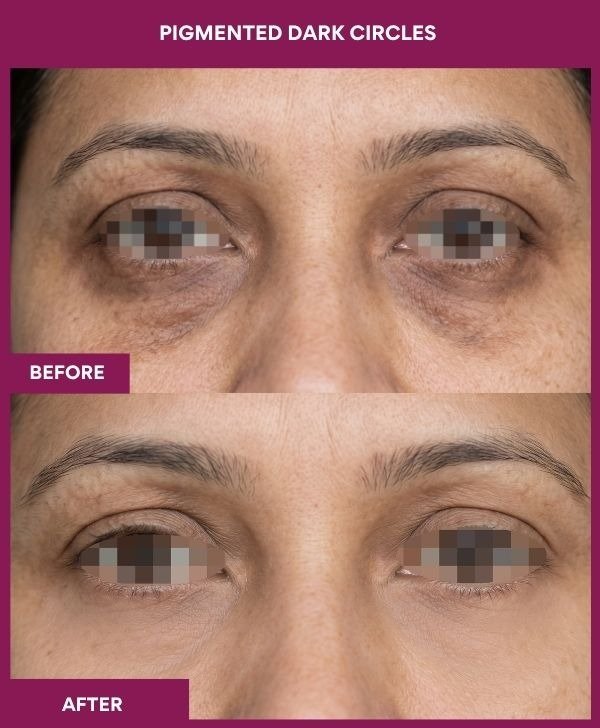
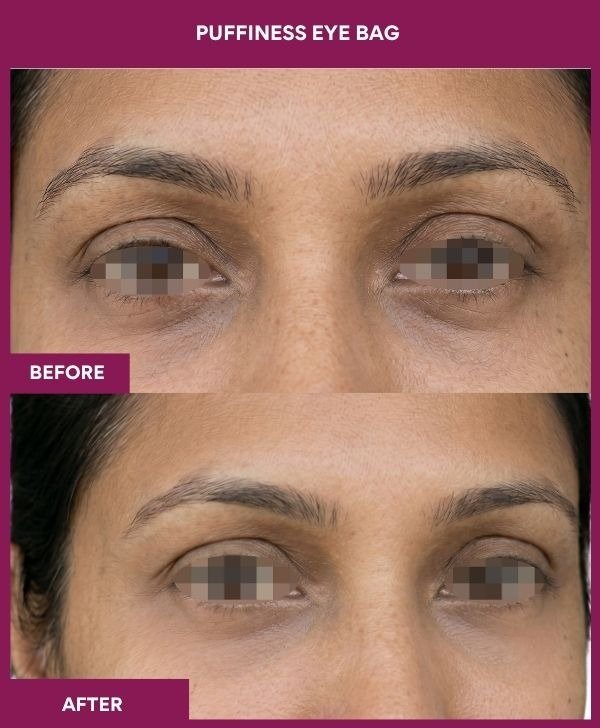
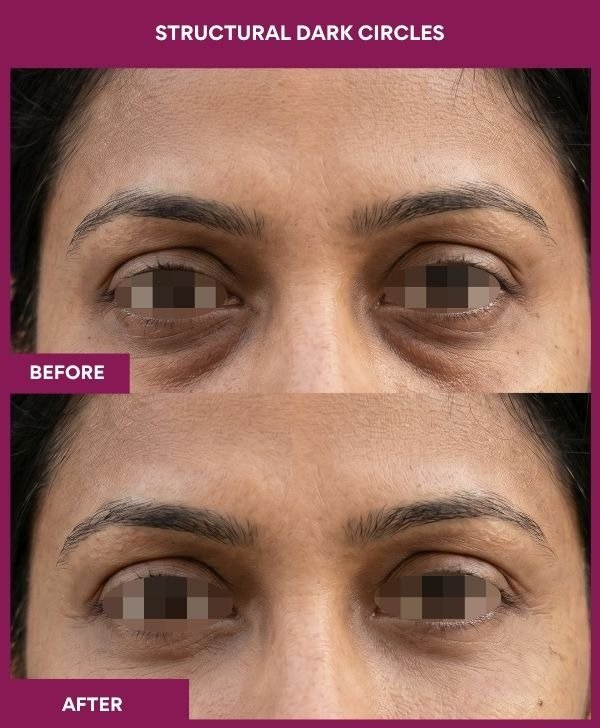
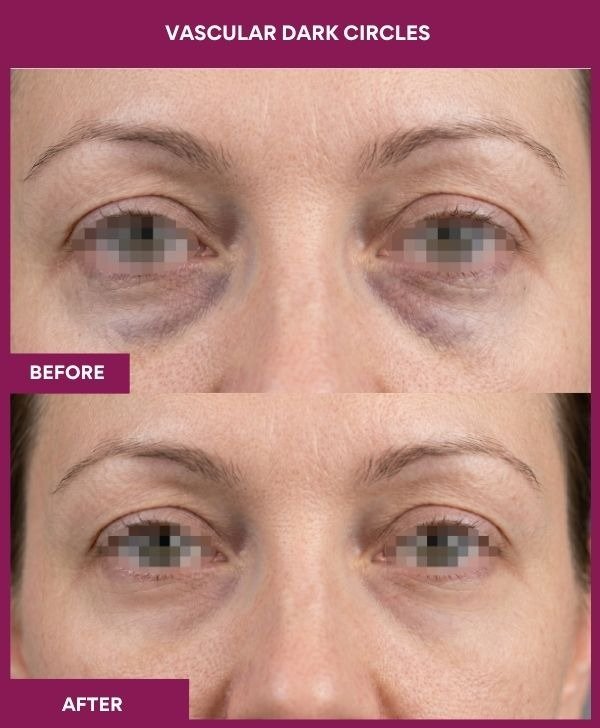
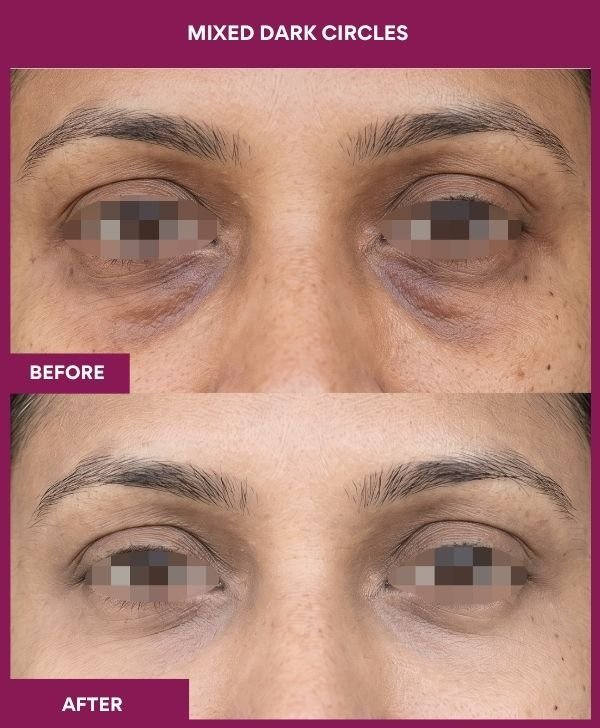
“Liked the results? Let's plan yours.”
Dark Circle Treatment Testimonials: Fine To Fabulous Journeys

Awarded by Google.com
Rating: 4.7
Reviews: 485+

Awarded by WhatClinic.com
Rating: 4.8
Reviews: 119+

Awarded by Realself
Rating: 4.9
Reviews:453+

Awarded by Facebook
Rating: 4.6
Reviews:105+
Dr Milan Doshi and his staff are very professional and committed as the centre is highly equipped with advanced technology. I had closed rhinoplasty 4 months back and I’m seeing the results as to how it becomes successful.
Deepika Shetty
The doctor explained everything clearly and the surgery was smooth. Recovery was faster than I expected and the team was very supportive.
Rahul Mehta
Very natural results and excellent staff. From consultation to follow-up, the experience was outstanding and boosted my confidence.
Sneha Kapoor
“Inspired by their journey? Start yours”
What Type Of Dark Circles Do I Have?
(4 quick questions)
Quick Facts About Dark Circle Treatment
SESSION TIME
30–60 minutes
ANESTHESIA
None
SESSIONS
3–6 session
RESULTS SHOW
Immediate, settles in days
DOWNTIME
1–3 days of mild redness
RESULTS LAST
Maintenance Required
SIDE-EFFECT RATE
Under 2–3%
COST
₹6,000 – ₹25,000 per session
What Is The Cost Of Dark Circle Removal Treatment In Mumbai?
Dark circle treatment cost from ₹6,000 to ₹25,000 varies based on the technique used, skin condition and the number of sessions required — PRP, fillers, laser, peels or combination procedures. Each plan is tailored to your cause and goals, and the consultation guides you to the most effective and budget-friendly option. A written estimate follows examination; EMI options are on our payment process page.
| Treatment | Typical range (₹) | Course | For | Full guide |
|---|---|---|---|---|
| Under-eye chemical peel (arginine / lactic / glycolic) | 3,000 – 6,000 per session | 4–6 | Pigment | Chemical Skin Peels |
| Cosmelan under-eye protocol | 20,000 – 30,000 | 1 + home cream | Stubborn pigment | Cosmelan Peel Treatment |
| Laser toning / Pico / fractional | 6,000 – 12,000 per session | 3–6 | Pigment; thin skin | Fractional CO2 Laser |
| PRP under-eye | 8,000 – 12,000 per session | 3–4 | Thin, crepey, vascular skin | PRP Treatment |
| Microneedling ± PRP | 8,000 – 15,000 per session | 3–4 | Texture, fine lines | Microneedling Radiofrequency |
| Tear-trough hyaluronic-acid filler | 18,000 – 25,000 per syringe | 1 (9–12 months) | Hollow / shadow | Dermal Fillers |
| Fat grafting to tear trough | See fat grafting page | 1 | Hollow; longer-lasting | Facial Fat Grafting |
| Lower blepharoplasty | See eyelid surgery page | 1 | Bags / fat bulge | Laser Eyelid Surgery |
Get your exact quote & surgery plan
Share your details — our team responds within working hours with cost, EMI options and next steps.
Most Common Question People Ask
Q1. What is the best treatment for dark circles under the eyes?
Ans. The one that matches the cause. Pigment responds to peels, laser and topicals; thin vascular skin to PRP and laser; a hollow to filler or fat grafting; bags to blepharoplasty. Home remedies like cold compresses or sleep help only mild, temporary darkness. A consultation identifies the cause before anything is recommended.
Q2. Can dark circles be removed permanently?
Ans. Structural causes (hollows, bags) can be corrected for years with fat grafting or surgery; filler lasts 9–12 months. Pigment and vascular dark circles are controlled and greatly reduced, but need maintenance and sun protection — ageing and sun exposure continue. Constitutional (hereditary) pigmentation is managed, not erased.
Q3. How much does dark circle removal cost?
Ans. From ₹6,000 to ₹25,000 per session or procedure (+5% GST) depending on the treatment — peels at the lower end, filler and laser courses at the upper. The final cost includes the doctor’s fee, consumables and the NABH-accredited facility.
Q4. Are fillers good for dark circles?
Ans. Yes — for the hollow (tear trough) type. Hyaluronic-acid filler restores the lost volume so the shadow disappears; results are immediate and last 9–12 months. Filler does not treat pigment or vascular dark circles and can look worse if used on the wrong type.
Q5. Is dark circle treatment safe?
Ans. Peels, laser, PRP and microneedling are safe in trained hands with skin-type-matched settings. Under-eye filler is safe when injected by an experienced doctor who knows the anatomy — the area carries a rare but serious risk of vascular blockage, which is why it is never a “quick” treatment.
Q6. How long does a session take?
Ans. Around 30–60 minutes including numbing; filler and PRP sessions are the shortest, peels and laser slightly longer with cooling.
Q7. Which doctor treats dark circles?
Ans. A dermatologist or a plastic / cosmetic surgeon trained in the under-eye area. Because dark circles can need anything from a peel to a filler to eyelid surgery, a clinic that offers the full range — as Allure Medspa does under Dr. Milan Doshi — can match the treatment to the cause rather than to what is available.

Why Choose Dr. Milan Doshi?
Dr. Milan Doshi, MCh, MS — Indian board-certified plastic and cosmetic surgeon with 27+ years in cosmetic treatments and facial rejuvenation, 16,000+ procedures and 500+ dark-circle patients, including Bollywood celebrities and international clients. Every face is different — he customises the plan by cause using peels, lasers, PRP, fillers, fat grafting and, where bags are the problem, lower blepharoplasty — the full range under one roof, so the treatment follows the diagnosis. Known for natural-looking outcomes with minimal risk and downtime. Allure Medspa is a NABH and ISO-certified centre preferred by celebrities and international patients.
The Complete Guide About Facelift Surgery
What Is Dark Circle Removal?
Dark circle removal refers to a set of targeted treatments that reduce pigmentation, puffiness, and hollowness under the eyes to restore a fresh, youthful appearance. It is not one treatment but a diagnosis-led choice between topical care, peels, laser, PRP, microneedling, fillers, fat grafting and eyelid surgery.
| Pigment type | Vascular type | Structural type (shadow / bags) |
|---|---|---|
| Brown–black colour that stays when the skin is stretched and under direct light | Blue–purple tint that darkens when the skin is stretched; thin skin over vessels | Skin-coloured hollow (tear trough) or a bulge (fat pad) that disappears under direct light |
| Peels, topicals, laser, Cosmelan | PRP, laser, microneedling; skin-thickening | Filler, fat grafting, blepharoplasty |
Also called: under-eye dark circle treatment, eye brightening therapy, dark under-eye correction, periorbital hyperpigmentation treatment, under-eye lightening, tear trough treatment.
Feeling Tired Even When You’re Not?
- Do people often ask if you’re feeling unwell or tired — even when you’re fully rested?
- Do you notice those stubborn under-eye shadows that just won’t go away despite creams and home remedies?
- Are your dark circles affecting how you look in photos or how confident you feel in public or professional settings?
Dark circles can make you appear older, stressed, or constantly fatigued — even when you feel energetic inside. They can be emotionally exhausting, pushing you to cover up with concealers daily or avoid close-up moments altogether. This under-eye issue isn’t just cosmetic — it’s deeply tied to how you feel about yourself. Thankfully, today’s advanced dark circle removal treatments offer scientifically proven solutions that target pigmentation, volume loss, or vascular visibility with precision. From dermal fillers and laser therapy to peels and topical treatments, you can finally restore brightness and freshness to your eyes — without looking overdone.
Global & Indian trends (ISAPS 2024): Over 2.4 million non-surgical aesthetic treatments targeting the eye area were performed globally · India ranks among the top 5 countries for non-surgical facial rejuvenation procedures · Dermal filler usage for tear trough correction increased by 19.2% in 2023 compared to the previous year.
Sources: ISAPS Global Survey 2024
What Are The Benefits Of Dark Circle Treatment?
Dark circle treatment can make the under-eye area look brighter, smoother and more rested by addressing the main cause of darkness. Depending on whether the problem is pigmentation, visible vessels, hollowness, skin thinning or under-eye bags, treatment may improve colour, contour and skin quality. Most options are non-surgical with limited downtime, while surgical correction may provide longer-lasting improvement when structural changes are the main cause.
- Looks rested and younger — the single most common comment patients hear afterwards.
- Treats the cause, so the result lasts: pigment lightened, vessels less visible, hollows filled, bags removed.
- Mostly non-surgical, lunch-hour sessions with 1–3 days of downtime.
- Less concealer, fewer filters — confidence in photographs and video calls.
- Improves under-eye skin quality (PRP, microneedling) — fine lines and crepiness soften too.
- Surgical correction when needed gives years of result.
What Causes Dark Circles — And What Types And Grades Are There?
Dark circles under the eyes can develop for many reasons. Understanding the root cause is key to choosing the right treatment.
| Lifestyle / general cause | How it darkens the under-eye |
|---|---|
| Age | Thinning skin and collagen loss make blood vessels more visible |
| Genetics | Family history; can start in childhood; may relate to thyroid disease |
| Fatigue & sleep deprivation | Dull skin and fluid retention → puffiness and shadow |
| Eye strain | Prolonged screen time dilates vessels around the eyes |
| Allergies | Histamine dilates vessels; rubbing darkens skin |
| Dehydration | Sunken, dull skin close to bone |
| Sun exposure | UV boosts melanin around the eyes |
| Smoking & alcohol | Reduced circulation and oxygenation |
Anatomical and dermatological causes
- Bulging fat pockets (eye bags): protrusion of lower eyelid fat casts shadows.
- Volume loss / tear trough deformity: hollowing beneath the eyes creates a trough-like shadow — corrected with hyaluronic-acid filler or fat grafting.
- Hyperpigmentation: genetic or medication-induced darkening, worse with sun.
- Thin skin over blood vessels: reveals muscle and vessels — bluish / purplish tint.
- Allergies or rosacea: inflammation, puffiness, discolouration; fillers or surgery can worsen it if misdiagnosed.
- Sinusitis: fluid build-up and inflammation.
- Skin conditions: xanthelasma, syringomas, chronic dryness, frictional dermatitis from rubbing.
Types of dark circles (by cause — Ranu et al. classification)
| Type | What you see | Treated by |
|---|---|---|
| Constitutional | Natural pigmentation forming a brown-to-black arc under (and over) the eyes | Topicals, peels, laser — managed long-term |
| Post-inflammatory | Brown / grey patches from eczema, rubbing, irritation; allergic history | Treat the allergy / rubbing first; then peels, topicals |
| Vascular | Reddish / bluish hue from visible vessels; more evident when skin is stretched | PRP, laser, skin-thickening; sleep, allergy control |
| Shadow effect | Darkness from tear troughs, puffiness or sagging; disappears under direct light | Filler, fat grafting, blepharoplasty |
| Other causes | Anaemia, nutritional deficiency, hormonal change, laxity, chronic illness | Blood tests; treat the condition |
Grading (by severity)
- Grade 0: skin tone matches surrounding facial skin.
- Grade 1: faint pigmentation along the under-eye fold.
- Grade 2: noticeably darker pigmentation under the eyes.
- Grade 3: deep, dark discolouration involving all four eyelids.
- Grade 4: severe pigmentation spreading beyond the under-eye area.
What Are The Limitations Of Dark Circle Treatment?
Dark circle treatment can improve under-eye darkness, but the result depends on the underlying cause. Hereditary pigmentation may only lighten and require ongoing maintenance, while hollows or under-eye bags need structural treatments rather than creams. Pigment, vascular changes and thin under-eye skin may also need multiple carefully selected sessions, and medical or lifestyle causes such as allergies, anaemia or thyroid problems should be addressed for the best result.
- Constitutional (hereditary) pigmentation is lightened and managed, not permanently erased; maintenance and SPF are for life.
- No cream, vitamin or home remedy corrects a hollow or a fat bag — those are structural and need filler, fat or surgery.
- Filler treats only the shadow type; on pigment or vascular circles it can look puffy or bluish (Tyndall effect).
- Laser on thin under-eye skin needs conservative settings, especially on Indian skin — several sessions, not one.
- If allergies, rubbing, sinus disease, anaemia or thyroid problems are the driver, treatment fails until they are managed.
- Results are judged in soft frontal light; harsh overhead light shadows every under-eye.
Why Is A Consultation Important — And How Are Dark Circles Diagnosed?
A thorough consultation ensures an accurate diagnosis and customised treatment plan tailored to your specific cause: it identifies pigmentation, volume loss, vascularity or skin laxity; differentiates superficial from deep pigmentation with visual and skin-scope examination; decides between fillers, laser, chemical peels, PRP or surgery; reviews medical history, allergies and expectations; and prevents unnecessary treatments and dissatisfaction.
Clinical examination
- Skin scope analysis: is the pigment superficial (epidermal) or deep (dermal or vascular)?
- Observation with light: if the darkness improves under direct light, it is a shadow from the tear trough or skin folds.
- Eyelid stretch test: if the dark circle fades → skin laxity or volume loss; if it darkens → vascular congestion under the skin.
Blood tests where indicated
- Complete blood count: anaemia.
- IgE: if allergy is suspected.
- Serum TSH: thyroid dysfunction.
- SGPT & serum cholesterol: liver health and lipid profile (xanthelasma).
- Random blood sugar: diabetes-related pigmentation changes.
How to prepare
- Come without under-eye make-up; bring creams and medicines you use; note allergy, sleep and screen habits.
- A photograph in daylight from a year ago helps.
Online consultation
A front-lit photograph and a video call can usually settle the type: Online Consultations
Which Treatment For Which Cause?
Dark circle treatment includes options like chemical peels, lasers, fillers and PRP, chosen based on the cause for lasting, visible improvement.
| Cause | First-line treatment | Add-on / advanced | Full guide |
|---|---|---|---|
| Pigment (constitutional / post-inflammatory) | SPF + prescription topicals; light peels (glycolic, lactic, arginine) | Cosmelan / retinol peels; Pico or Q-switched laser; microdermabrasion; electroporation of brightening serums | Chemical Skin Peels · Cosmelan Peel Treatment |
| Vascular / thin skin | PRP; sleep and allergy control | Microneedling ± PRP; fractional laser to thicken skin; IPL for visible capillaries | PRP Treatment |
| Hollow / tear trough shadow | Hyaluronic-acid filler (immediate, 9–12 months) | Fat grafting for longer-lasting volume | Dermal Fillers · Facial Fat Grafting |
| Eye bags / fat bulge | Lower blepharoplasty (fat removal or repositioning) | Combined with peel or laser for skin | Laser Eyelid Surgery |
| Skin laxity / fine lines | Radiofrequency or ultrasound tightening | Microneedling RF; PRP | Microneedling Radiofrequency |
| Resistant pigment | Combination approach: peels + laser + topicals | Medical camouflage tattoo in selected cases | Consultation |
Is filler the quickest answer?
For a true hollow, yes — and it is the only cause filler should treat. Put into pigmented or vascular circles it adds volume where none is missing, can look puffy or bluish, and wastes money. That is why the stretch test and light test come first: they take two minutes and decide whether the answer is a syringe, a peel course or a scalpel.
What Are The Different Treatments — And Do Home Remedies Help?
Dark circle treatment depends on the underlying cause and may include creams, fillers, chemical peels, lasers, PRP, microneedling, skin-tightening treatments or surgery. Home remedies such as cold compresses, adequate sleep, head elevation and sunscreen may temporarily reduce puffiness or improve appearance, but they cannot correct structural hollows, persistent pigmentation or prominent under-eye bags. The best treatment is chosen after identifying whether the darkness is mainly pigmentary, vascular, structural or mixed.
| Treatment | What it does | Notes |
|---|---|---|
| Topical treatments | Vitamin C serums (brightening), retinol (collagen), hyaluronic-acid eye creams (hydration), caffeine gels (puffiness) | Foundation and maintenance; try consistently for 4–6 weeks before judging |
| Injectable fillers | Hyaluronic-acid tear-trough filler restores volume, removes the shadow | Immediate; minimal downtime; expert injector essential |
| Chemical peels | Light peels (glycolic, lactic, arginine) for superficial pigment; medium-depth for persistent | Improves tone and texture |
| Laser therapy | Q-switched / Pico / fractional lasers for dermal pigment; tighten thin skin | Multiple sessions; conservative on Indian skin |
| PRP therapy | Your own growth factors improve texture, thickness and discolouration | Natural; 3–4 sessions |
| Microneedling ± PRP / serums | Stimulates collagen; fine lines, firmness, pigmentation | 3–4 sessions |
| RF / ultrasound tightening | Non-invasive tightening of loose skin | Collagen stimulation |
| Surgery | Blepharoplasty for severe bags or fat repositioning; fat grafting for hollows | When non-surgical options are not enough |
Home remedies — what they can and cannot do
- Cold compress: shrinks dilated vessels; 15–20 minutes daily reduces puffiness.
- Sleep: 7–8 hours; quality matters more than quantity.
- Elevate the head: an extra pillow reduces morning fluid pooling.
- Cold tea bags: caffeine and antioxidants; 10–20 minutes over closed eyes.
- Sunscreen and sunglasses: the one remedy that changes the long-term course.
- Concealer: a temporary fix; remove before sleep.
What Happens In A Dark Circle Treatment Session? (Step By Step)
A dark circle treatment session begins by identifying whether the problem is mainly pigmentation, visible vessels, hollowness, thin skin or a combination of causes. Based on that assessment, treatment may involve a peel, laser, PRP, microneedling or filler. The under-eye area is carefully prepared and treated with conservative settings, followed by cooling, sunscreen, aftercare instructions and a planned review.
| Step | What happens | Why it matters |
|---|---|---|
| 1 | Diagnosis at consultation: stretch test, light test, skin scope; blood tests if indicated; photographs | Treatment matched to cause |
| 2 | Priming for pigment types: SPF, topicals for 2–4 weeks | Safer peels / laser on Indian skin |
| 3 | On the day: skin check (no eczema flare, infection); consent | Safety |
| 4 | Make-up removed; cleansing; numbing cream 20–30 minutes (laser, microneedling, filler) | Comfort |
| 5 | Eye protection placed for laser | Safety |
| 6 | Treatment — peel applied and neutralised / laser passes at conservative settings / PRP drawn, spun and injected / filler placed deep on the bone with cannula in small volumes | Precision in a delicate area |
| 7 | Cooling; pressure to prevent bruising (injections) | Comfort; less downtime |
| 8 | Sunscreen; written aftercare; warning signs explained (filler) | Safety at home |
| 9 | Review at 2 weeks (filler) or 4 weeks (courses); next session | Course planning |
When Will I See Results?
The timeline for dark circle improvement depends on the treatment used and the underlying cause. Fillers may show an immediate change in hollowness, while peels, lasers, PRP and microneedling usually improve pigmentation and skin quality gradually over several weeks and multiple sessions. Surgical treatment such as blepharoplasty takes longer to settle, with the final result developing over a few months.
| Treatment | Time | What you see |
|---|---|---|
| Filler | Immediately; settles in 3–7 days | Hollow gone; slight swelling first days |
| Peels | After 2–3 sessions (4–6 weeks) | Lighter, smoother under-eye |
| Laser | After 2–3 sessions | Pigment lifting; skin firmer over months |
| PRP / microneedling | 4–8 weeks after the 2nd session | Thicker, brighter skin; vessels less visible |
| Cosmelan | 2–4 weeks | Marked lightening; home cream maintains |
| Blepharoplasty | 2–4 weeks (bruising resolves); final 3 months | Bags gone; smooth lid–cheek junction |
What Aftercare Does Dark Circle Treatment Require?
Aftercare for dark circle treatment depends on the procedure used, but the main goals are to protect the delicate under-eye skin, reduce swelling and prevent further pigmentation. Daily sunscreen and sunglasses are important, while rubbing, pressure, heat and irritating skincare should be avoided during healing. After fillers, lasers, peels, PRP or microneedling, follow the specific instructions given for make-up, exercise, active skincare and cold compresses.
- General: avoid direct sun; broad-spectrum SPF 30+ daily; sunglasses.
- Fillers: minor swelling — cold compress; results settle within days; no pressure or massage unless told; no flights or saunas for 48 hours 🩺.
- Laser: slight redness / puffiness; heals within a week; no retinoids for 5 days.
- Peels & microdermabrasion: mild redness, dryness or tingling for 2–3 days; follow the skincare routine prescribed.
- PRP / microneedling: pinpoint marks and mild bruising 2–3 days; no make-up for 24 hours.
- Stop rubbing the eyes; treat allergies; sleep with the head raised.
| Avoid | For how long |
|---|---|
| Rubbing or pressing the under-eye | Always — the biggest driver of post-inflammatory dark circles |
| Sun without SPF and sunglasses | Always |
| Make-up on treated skin | 24 hours (peels / needles); until healed (laser) |
| Strenuous exercise, saunas, alcohol | 24–48 hours after injections |
| Retinoids, acids under the eye | 5–7 days after peels / laser |
| DIY lemon, potato, bleaching remedies | Always |
What Are The Risks — Including Filler Safety?
Dark circle treatments are generally well tolerated, but risks vary depending on whether treatment involves peels, lasers, PRP or fillers. Temporary redness, swelling and bruising are common, while less common problems include pigmentation changes, infection, filler lumpiness or a bluish Tyndall effect. With under-eye filler, vascular occlusion is a rare but serious complication that can damage the skin and, very rarely, affect vision, which is why treatment should be performed by an experienced doctor with appropriate emergency measures available.
Expected and temporary
- Redness, mild swelling, tingling for 1–3 days.
- Bruising after injections (filler, PRP) for up to a week.
Uncommon
- Post-inflammatory darkening after peels or laser on Indian skin — settings and priming reduce it.
- Filler: puffiness, lumpiness, a bluish tinge (Tyndall) if placed too superficially — reversible with hyaluronidase.
- Infection at needle sites.
Rare but serious
- Filler vascular occlusion — filler blocking a blood vessel — can cause skin damage and, extremely rarely, vision loss. It is why under-eye filler must be done only by an experienced doctor who knows the anatomy, in small volumes, with a cannula, with hyaluronidase available.
- Eye injury from laser without proper shields.
| Risk | How it is minimised at Allure Medspa |
|---|---|
| Vascular occlusion (filler) | Anatomy-led placement; cannula; small volumes; aspiration; hyaluronidase on site; warning signs explained |
| Tyndall / lumps | Deep placement on bone; conservative volume; review at 2 weeks |
| Pigmentation after peel / laser | Priming; skin-type-matched settings; test patch; SPF |
| Wrong treatment for the type | Stretch test, light test, scope before any plan |
| Eye safety | Protective shields for every laser session |
How Many Sessions — And What Does The Course Look Like?
Most patients see visible improvement in 2–4 sessions, depending on the severity and treatment method chosen.
| Treatment | Sessions | Spacing | Maintenance |
|---|---|---|---|
| Cosmelan peel | 1 major session | — | Cosmelan home cream |
| PRP therapy | 3–4 | 4 weeks apart | Yearly top-up |
| Laser or fractional treatment | 3–6 | 3–4 weeks | As needed with SPF |
| Light peels | 4–6 | 2–3 weeks | Every 1–2 months |
| Fillers | 1 | — | Results last 9–12 months; minimal touch-up |
| Blepharoplasty / fat grafting | 1 | — | Years |
Medical Codes For Dark Circle Treatment
Codes below are for administrative and documentation reference. All codes must be verified against the current CPT and ICD-10 code sets before publication and before any use in documentation.
| Code system | Code | Description |
|---|---|---|
| ICD-10 | L81.4 | Other melanin hyperpigmentation (periorbital hyperpigmentation) |
| ICD-10 | L81.0 | Post-inflammatory hyperpigmentation |
| ICD-10 | H02.83- (H02.831–H02.836) | Dermatochalasis of eyelid — for bags / skin excess (right / left, upper / lower) |
| ICD-10 | R23.4 | Changes in skin texture (dullness, sagging, tired look) |
| ICD-10 | Z41.1 | Encounter for cosmetic procedure |
| CPT | 15788 | Chemical peel, facial; epidermal |
| CPT | 11950 – 11954 | Subcutaneous injection of filling material (collagen / HA) by volume |
| CPT | 15820 / 15821 | Blepharoplasty, lower eyelid; with extensive herniated fat pad |
| CPT | 17999 | Unlisted procedure, skin (PRP, microneedling, laser toning) |
Frequently Asked Questions About Dark Circle Treatment
Q1. Can dark circles be removed by laser treatment?
Ans. Yes, for pigment and thin-skin types. Pico and Q-switched lasers reduce melanin with gentle pressure waves that spare surrounding tissue; fractional lasers thicken and tighten the skin. Several sessions at conservative settings are needed on Indian skin.
Q2. Which vitamin deficiency causes dark circles?
Ans. Dark circles are rarely caused by a single vitamin deficiency; anaemia (iron / B12) and thyroid problems can contribute, which is why blood tests are ordered when the history suggests it. Vitamin creams (C, K, retinol) help mild pigment and thin skin, but they do not correct hollows or bags.
Q3. How can I remove dark circles permanently at home?
Ans. You cannot. Cold compresses, tea bags and sleep reduce puffiness temporarily; sunscreen slows pigment; but hollows, pigment and vascular circles need in-clinic treatment for lasting change.
Q4. Which acid is best for dark circles?
Ans. Hyaluronic acid — as a filler for hollows, and in eye creams for hydration; arginine, lactic and glycolic acids in light peels for pigment. The “best” one depends on the type.
Q5. Can you go blind from under-eye filler?
Ans. It is extremely rare, but filler injected into a blood vessel can block the supply to the eye. Risk is minimised by an experienced injector using anatomy-led placement, small volumes, a cannula and immediate access to hyaluronidase — which is why under-eye filler should never be a walk-in treatment.
Q6. Why do I get dark circles even when I sleep enough?
Ans. Because sleep only affects the fluid / vascular component. Constitutional pigment, allergies and rubbing, thin skin, a tear-trough hollow or a fat bag are unaffected by sleep — and quality of sleep matters more than hours.
Q7. Can massage or vitamin C creams get rid of eye bags?
Ans. Massage and cold reduce fluid puffiness for a few hours; vitamin C and retinol improve skin quality over months. True eye bags (herniated fat) respond only to blepharoplasty; hollows to filler or fat.
Q8. Can a dermatologist remove dark circles?
Ans. Yes — a dermatologist treats pigment and vascular types with peels, laser, PRP and topicals. Hollows and bags are treated by a plastic / cosmetic surgeon with filler, fat grafting or surgery; Allure Medspa offers both under one roof.
Q9. Are dark circles hereditary — and can they be cured?
Ans. Constitutional dark circles run in families and often start in childhood. They can be lightened substantially and kept controlled with SPF, topicals, peels and laser, but they are managed rather than cured.
Q10. How long does filler last under the eyes?
Ans. 9–12 months on average; some patients hold results longer. A small top-up maintains it. If the result is ever uneven it can be dissolved with hyaluronidase.
Q11. Can dark circle treatment be combined with other treatments?
Ans. Often — filler for the hollow plus a peel course for pigment, or blepharoplasty plus laser for the skin. Combination plans are sequenced by the doctor so the delicate area is not over-treated.
Related Links
- Dermal Fillers (tear trough)
- Chemical Skin Peels
- Cosmelan Peel Treatment
- PRP Treatment
- Microneedling Radiofrequency
- Fractional CO2 Laser
- Facial Fat Grafting
- Laser Eyelid Surgery (Blepharoplasty)
- Microdermabrasion
- Pigmentation Treatment
- Skin Whitening / Brightening
- Anti-Aging Treatment
- Total Skin Care
- Online Consultations