Acne Treatment in Mumbai — Clear, Confident Skin with Expert Dermatology Care
Acne treatment is a personalised, dermatologist-led plan to clear active breakouts, calm inflammation and treat acne scars — combining proven medical therapies with in-clinic procedures. At Allure Medspa, active acne is treated medically first, while chemical peels, laser and microneedling are used mainly to improve acne scars and texture.
What Is Acne and What Does Acne Treatment Involve?
Acne is a common skin condition where excess oil (sebum) and dead skin cells clog hair follicles, causing whiteheads, blackheads, pimples and, in severe cases, painful cysts. Acne treatment aims to clear active lesions, prevent scarring and manage marks — early treatment significantly reduces the risk of permanent scars and pigmentation.
What it is — a follicular condition driven by oil, dead skin, bacteria (C. acnes) and inflammation
Who it affects — most common in teens, but affects adults of all ages too
Why treat early — prevents scars, dark spots and the emotional toll of ongoing breakouts
Also known as — pimple/blemish treatment, acne scar therapy, breakout management
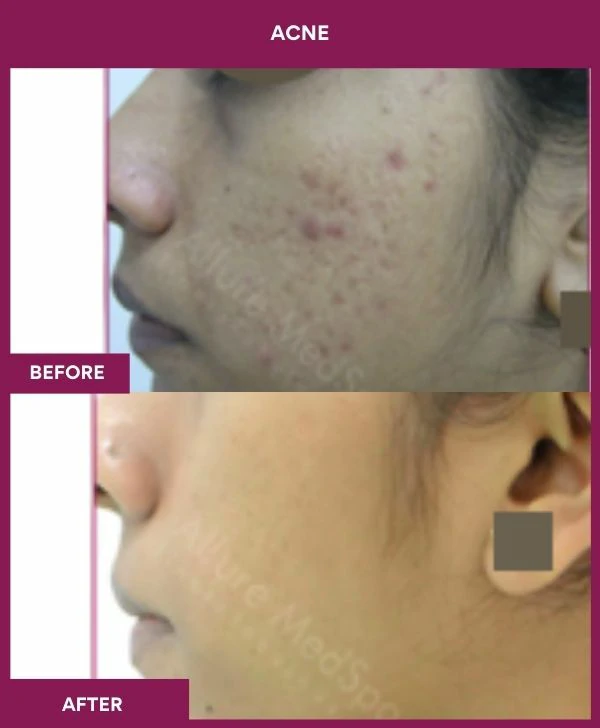
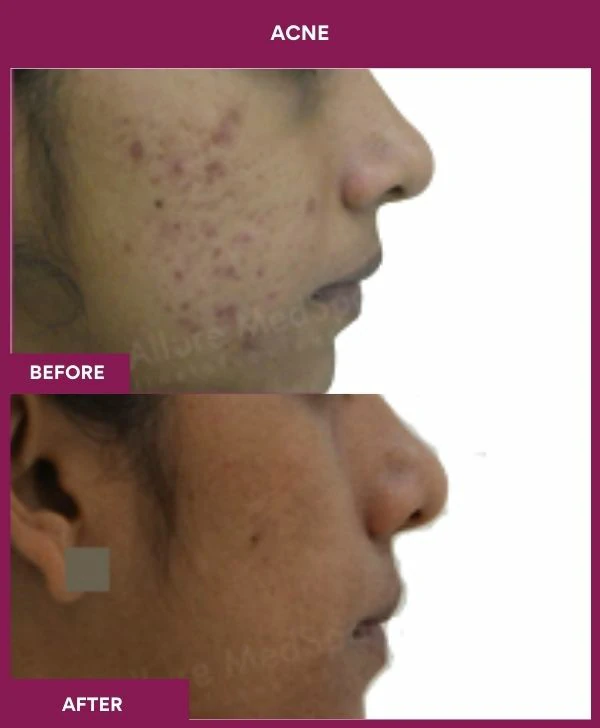
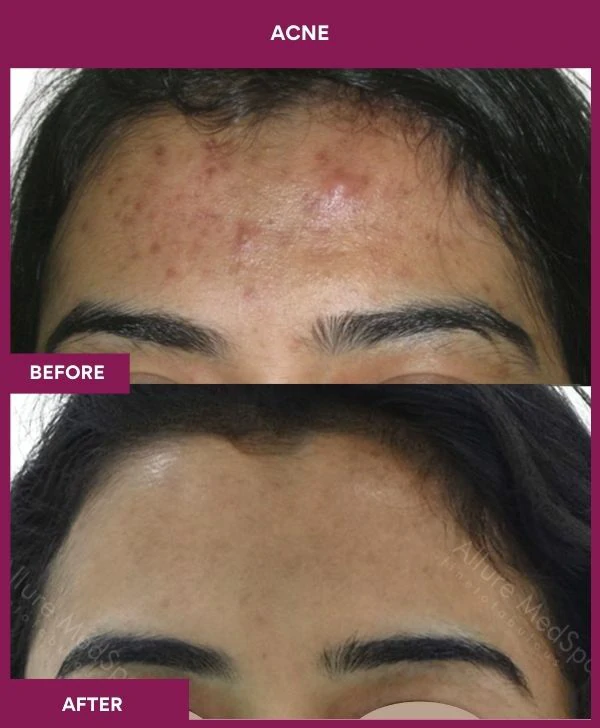
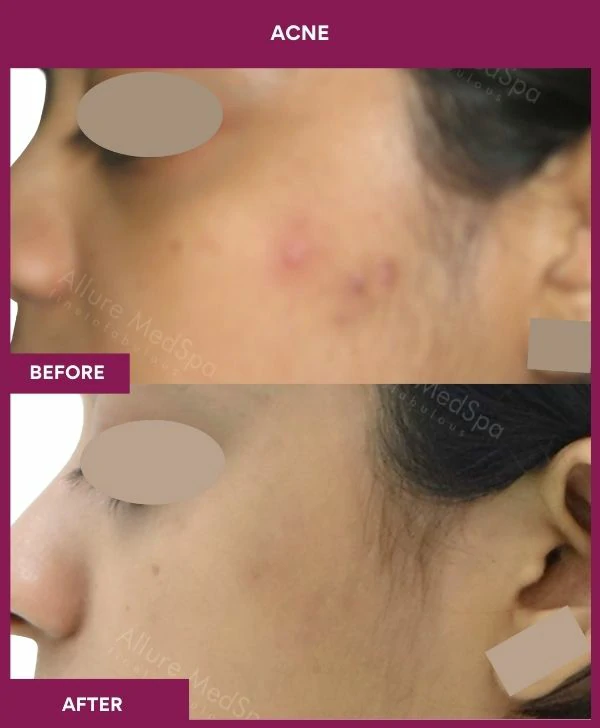
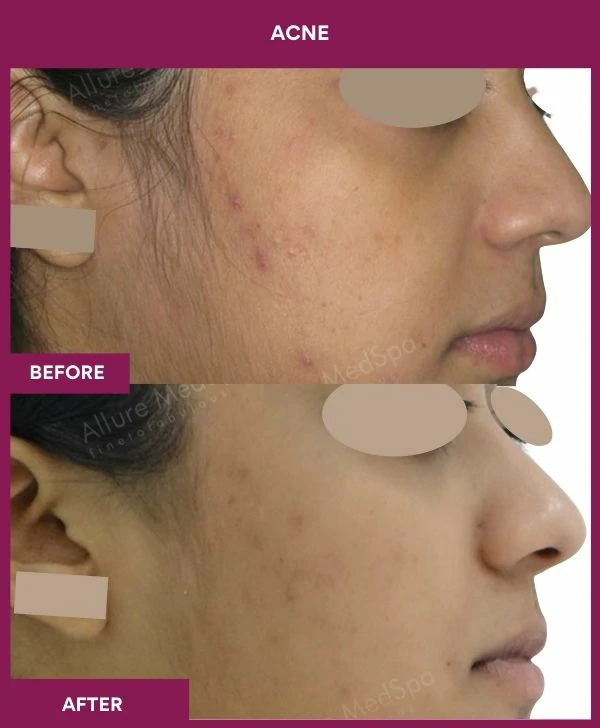
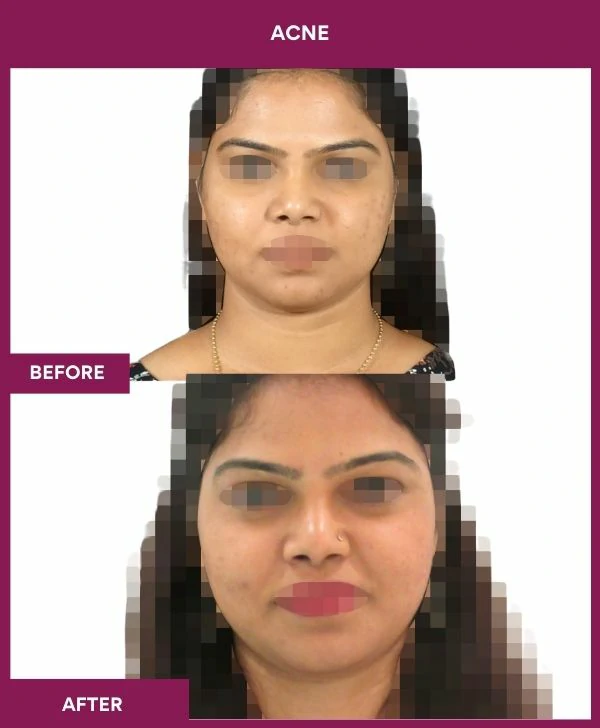
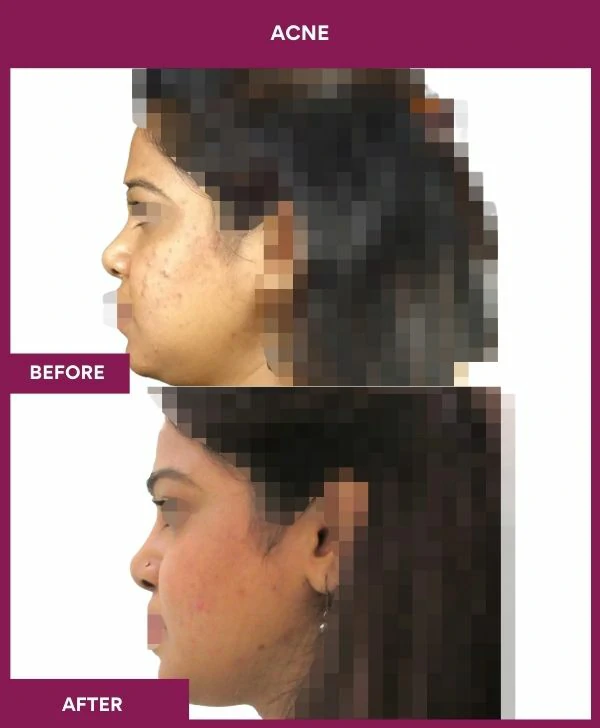
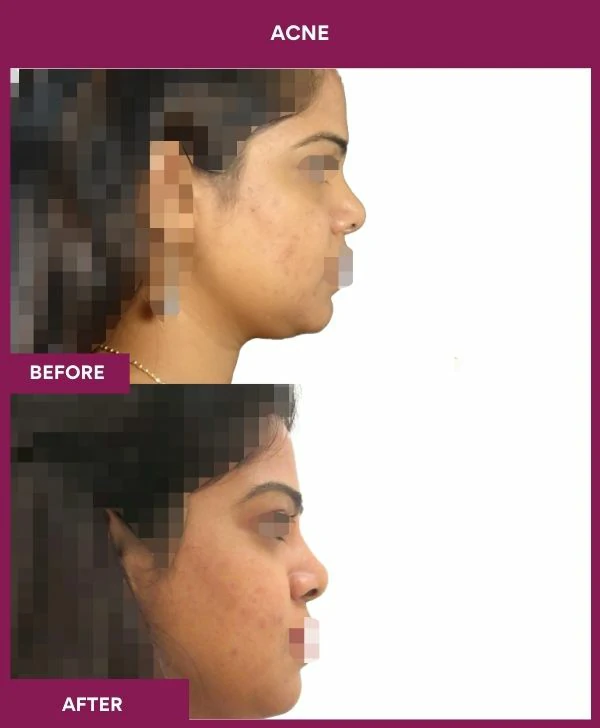
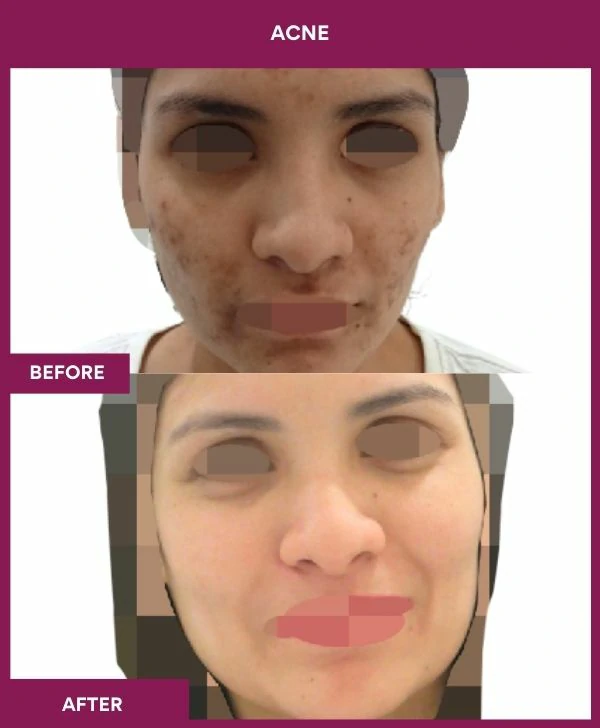
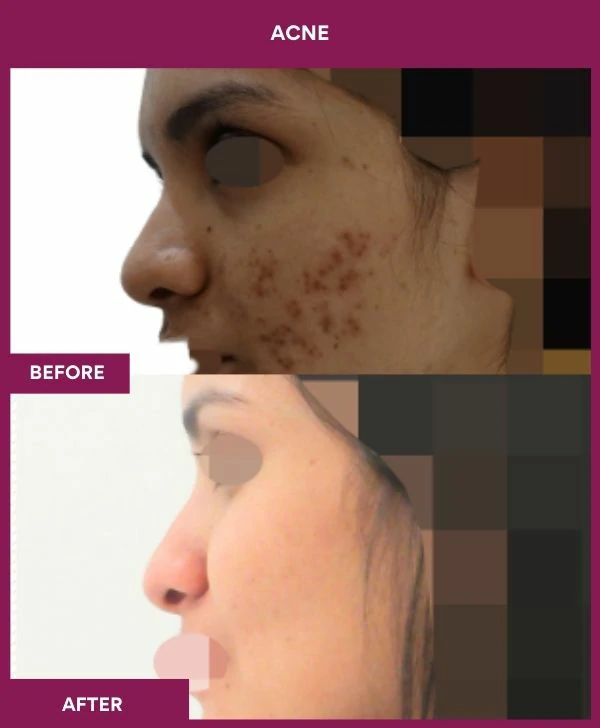
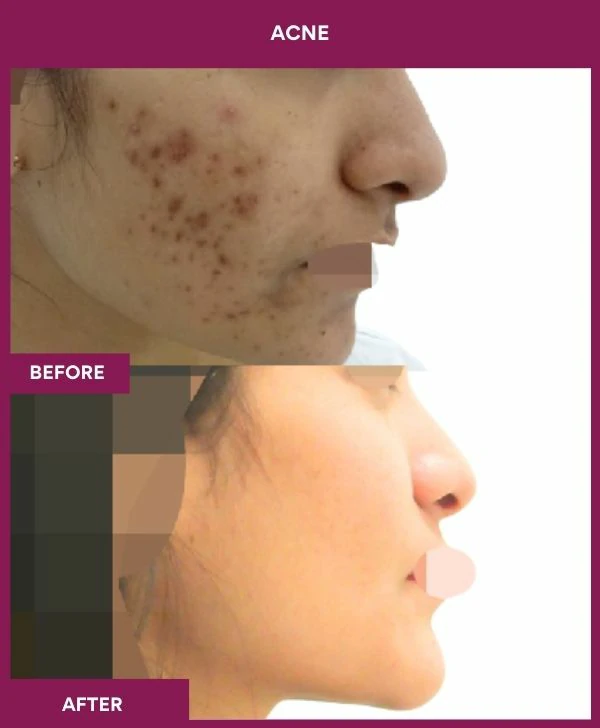
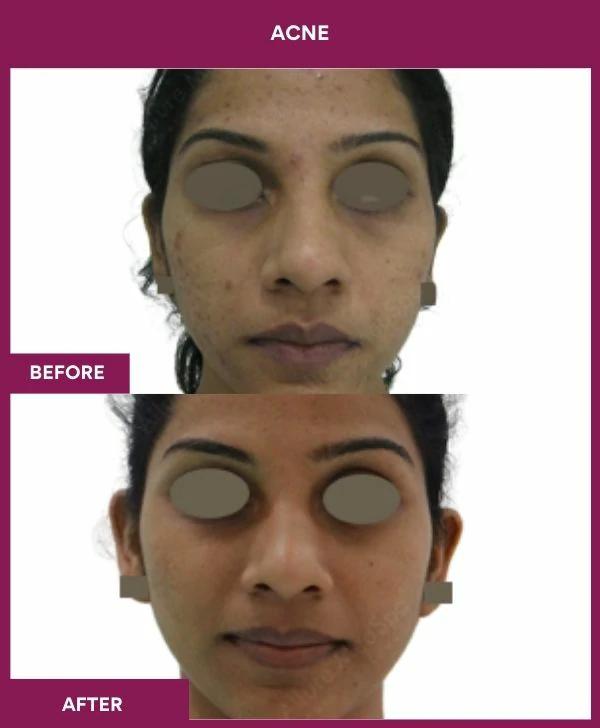
Acne Treatments Before and After Images
“Acne Treatment Cost”
Acne Treatment Testimonials: Fine To Fabulous Journeys

Awarded by Google.com
Rating: 4.7
Reviews: 485+
Awarded by WhatClinic.com
Rating: 4.8
Reviews: 119+
Awarded by Realself
Rating: 4.9
Reviews:453+
Awarded by Facebook
Rating: 4.6
Reviews:105+
Dr Milan Doshi and his staff are very professional and committed as the centre is highly equipped with advanced technology. I had closed rhinoplasty 4 months back and I’m seeing the results as to how it becomes successful.
Deepika Shetty
The doctor explained everything clearly and the surgery was smooth. Recovery was faster than I expected and the team was very supportive.
Rahul Mehta
Very natural results and excellent staff. From consultation to follow-up, the experience was outstanding and boosted my confidence.
Sneha Kapoor
“Get Rid Of Acne Now”
Tired of Acne and Scars Taking a Toll — Ready for Real Acne Treatment?
If breakouts and scars are affecting your confidence and nothing’s worked, professional acne treatment offers a clinically proven way to restore clear, smooth skin — you’re far from alone.
Do breakouts make you feel embarrassed or shy about facing people?
Have countless creams, face washes and home remedies failed to deliver results?
Are stubborn acne scars and pigmentation making you avoid mirrors or hide behind makeup?
You’re not alone. Acne is one of the most common skin concerns worldwide, and its emotional toll is real — from avoiding social gatherings to anxiety before big events, especially when scars linger long after the pimples fade.
The good news: acne and acne-scar treatment offers a clinically proven path to clearer, smoother skin. At Allure Medspa, dermatologist-led care combines proven medical therapy for active acne with advanced procedures like laser, chemical peels and microneedling for scars — customised to your skin type.
Global & Indian trends (ISAPS 2024)
Skin treatments, including acne-scar correction, rank among the top non-surgical aesthetic procedures globally.
India has seen significant growth in demand for advanced acne-scar treatments, especially among people aged 18–35.
Laser-based acne-scar reduction is one of the fastest-growing skin-rejuvenation services in urban centres.
Source: ISAPS Global Survey 2024
“Acne Treatment Cost”
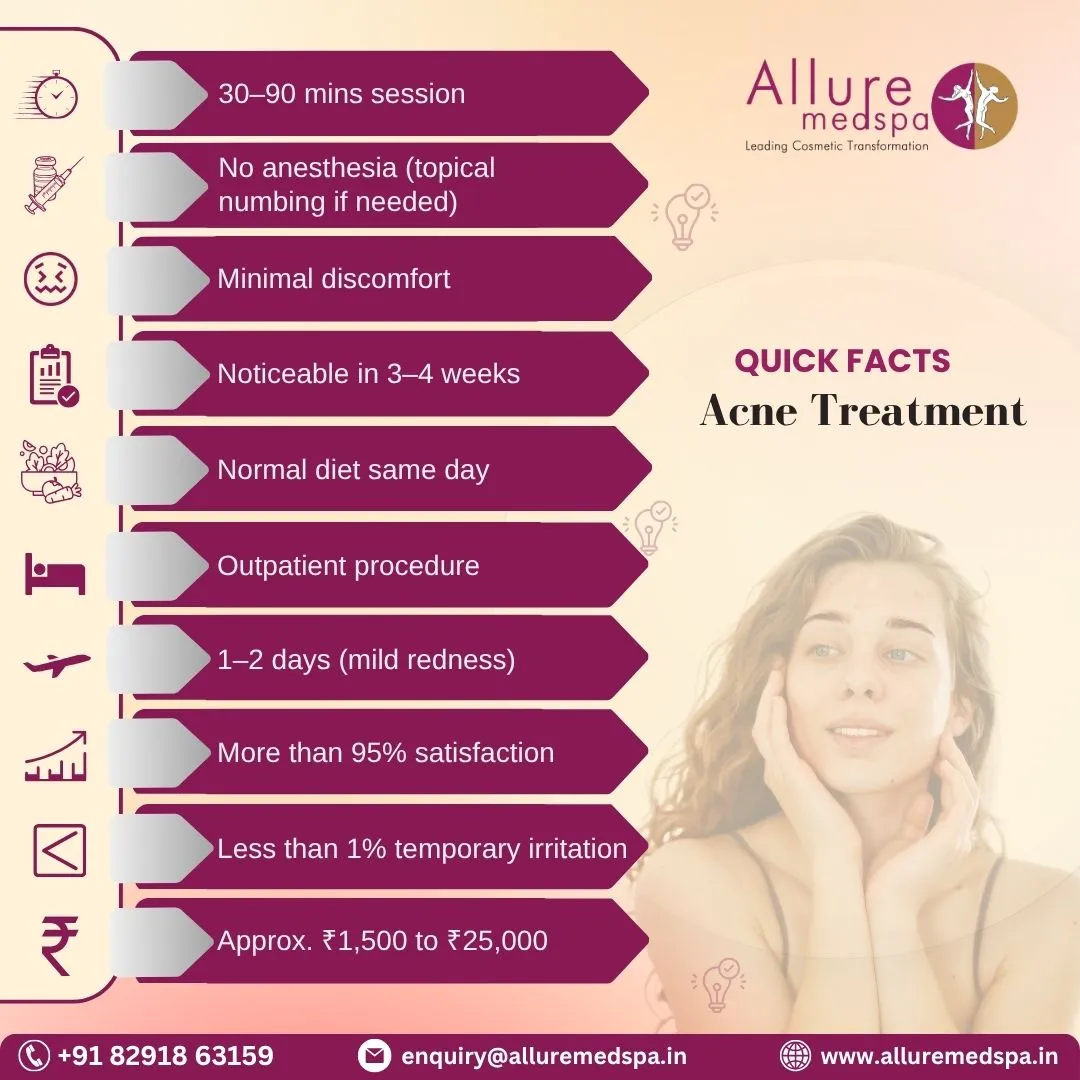
Quick Facts About Acne Treatments
| Time Required | 30–90 mins session |
| Anesthesia | No Anesthesia (topical numbing if needed) |
| Pain Level | Minimal discomfort |
| Flyback | 1–2 Days |
| Success Rate | 95% to 98% |
| Result | Major improvement immediately; final result in 3–4 weeks |
| Diet | No Restrictions |
| Complication Rate | Less than 1% temporary irritation |
| Cost in Mumbai | INR 1,500 to 25,000 Approx. |
“Acne Treatment Cost”
What Causes Acne and What Are the Common Acne Triggers?
Acne forms when excess oil, dead skin cells and C. acnes bacteria clog and inflame pores — and hormones, stress, diet, genetics and certain medicines can worsen it. Understanding your triggers is central to effective acne treatment.
Main factors behind acne
Excess sebum — overactive oil glands
Clogged follicles — oil + dead skin cells block pores
Bacteria — C. acnes overgrowth in blocked pores
Inflammation — the immune response that causes redness and swelling
Triggers that worsen acne
Hormonal changes — puberty, periods, pregnancy, PCOS
Medications — corticosteroids, testosterone, lithium
Diet — high-glycaemic foods and possibly dairy may aggravate acne in some people
Stress & genetics — stress worsens existing acne; family history raises risk
“Know More Acne Treatment”
What Are the Common Myths About Acne (and Acne Treatment)?
Many acne beliefs are myths — chocolate and ‘dirty skin’ don’t cause acne, and harsh scrubbing makes it worse. Knowing the facts helps you avoid habits that sabotage your acne treatment.
Chocolate/greasy food — no strong evidence they directly cause acne (though high-glycaemic diets may aggravate it)
Hygiene — acne isn’t caused by dirty skin; over-washing/scrubbing irritates and worsens it
Makeup — non-comedogenic, oil-free products are safe and won’t block treatment
“Know More Acne Treatment”
What Are the Different Types and Grades of Acne?
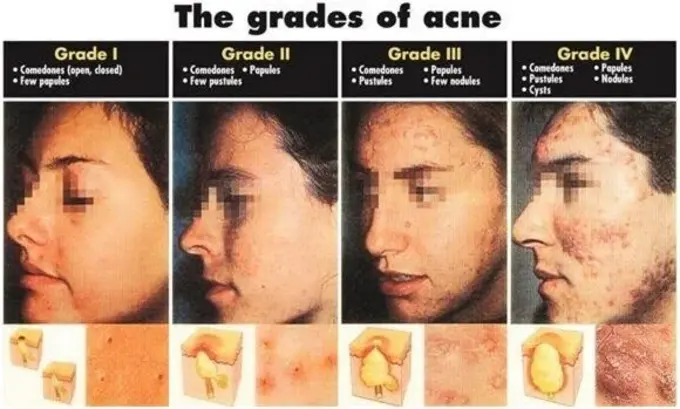
Acne ranges from mild blackheads to severe cystic lesions, and is graded 1–4 by severity — the grade guides which acne treatment is appropriate.
Acne grading
Grade 1 — comedones (blackheads/whiteheads), occasional papules
Grade 2 — papules, comedones, a few pustules
Grade 3 — predominant pustules, nodules
Grade 4 — severe cystic/nodular acne (highest scarring risk)
Common types
Comedonal — whiteheads and blackheads
Inflammatory / nodulocystic — papules, pustules, painful nodules and cysts
Hormonal / adult acne — often jawline and chin, after age 25
Other — acne excoriée (picked), drug-induced, infantile and others
“Know More Acne Treatment”
Which Areas of the Face Does Acne Affect, and Does Acne Treatment Differ?
Acne commonly affects the T-zone, cheeks, jawline and hairline — and the location can hint at the cause, which helps tailor acne treatment.
T-zone (forehead, nose, chin) — higher oil production; frequent breakouts
Hairline & temples — oily hair products can clog pores
Cheeks — ‘acne mechanica’ from phones, helmets, pillowcases
Jawline — often hormonal, linked to cycles or stress
“Get Desire Look”
What Are the Complications of Untreated Acne?
Untreated or picked acne can cause dark spots, scarring and lasting skin damage — which is exactly why early acne treatment matters.
Post-inflammatory hyperpigmentation — dark marks after acne heals (common in Indian skin; can last months)
Scarring — ice-pick, rolling, boxcar or raised scars, usually after severe/inflamed acne
Excoriated acne — sores and scabs from picking/squeezing, which can worsen scarring
“Get Safe Acne Treatment”
What Are the Benefits of Early Acne Treatment?
Early acne treatment prevents scars, shortens the course, reduces severe breakouts and protects mental wellbeing — the sooner you start, the better the long-term result.
Prevents scars & PIH — the biggest reason to treat early
Faster results — shorter treatment time
Stops progression — keeps mild acne from becoming severe/cystic
Less strong medication — may avoid needing the strongest drugs
Protects wellbeing — improves self-esteem and reduces distress
🩺 Doctor’s note: “In Indian skin, delaying acne treatment often increases the risk of dark marks and scars. I first control active acne before starting scar procedures, because treating scars while breakouts continue gives poor results. Early, gentle, and consistent treatment helps protect both skin texture and pigmentation.”
“Know More About Your Acne Treatment”
How Is Acne Diagnosed Before Acne Treatment?
Acne is usually diagnosed by a visual skin exam; tests are rarely needed unless ruling out infection or a hormonal imbalance. Accurate diagnosis is what makes acne treatment effective.
Visual examination — assessing lesions, comedones and inflammation
Swab/scraping — if infection is suspected
Hormonal blood tests (women) — if PCOS or hormonal imbalance is suspected
“Get Rid Of Acne Now”
What Skin Problems Look Like Acne but Need Different Treatment?
Conditions like rosacea, folliculitis and keratosis pilaris can mimic acne but have different causes — which is why a dermatologist’s diagnosis matters before starting acne treatment.
Rosacea — vascular redness/bumps, not clogged pores
Folliculitis — inflamed hair follicles, often bacterial
Keratosis pilaris — rough, gooseflesh-like bumps
Miliaria / drug rashes — heat rash or medication-induced eruptions
“Your Acne Treatment Cost”
What Are the Best Treatment Options for Active Acne?
For active acne, the strongest evidence is for medical therapy — topical retinoids and benzoyl peroxide, antibiotics, and isotretinoin for severe cases — with in-clinic procedures playing a supporting role. This is what a good acne treatment plan is built around.
First-line medical therapy (strong evidence)
Topical retinoids — adapalene, tretinoin, tazarotene — unclog pores and reduce inflammation
Benzoyl peroxide — reduces acne bacteria; often combined with a retinoid or antibiotic
Topical/oral antibiotics — e.g. clindamycin, doxycycline — always paired with benzoyl peroxide, never alone (resistance)
Isotretinoin — for severe, scarring or treatment-resistant acne (medical supervision; avoid in pregnancy)
Hormonal therapy (women) — combined oral contraceptives or spironolactone for hormonal acne
Supporting in-clinic procedures
Comedone extraction & acne facials — for blackheads/whiteheads and deep cleansing
Chemical peels — salicylic/glycolic peels can help some acne and post-acne marks (adjunct, not first-line)
Intralesional steroids — to settle large, painful cysts quickly
Sources: AAD acne guidelines, 2024, AAFP summary of AAD guidelines
“Get Rid Of Acne Now”
What Is the Best Acne Treatment for Hormonal Acne?
Hormonal acne treatment responds best to hormonal therapy (in women) and topical retinoids, with isotretinoin reserved for severe, resistant cases — all under medical supervision.
Hormonal therapy (women) — combined oral contraceptives; spironolactone to reduce androgen-driven oil
Topical retinoids + benzoyl peroxide — core topical combination
Isotretinoin — for severe/resistant hormonal acne (supervised; not in pregnancy)
Lifestyle — low-glycaemic habits, stress management, non-comedogenic skincare
“Get Rid Of Acne Now”
What Are the Best Ways to Treat Acne Scars?
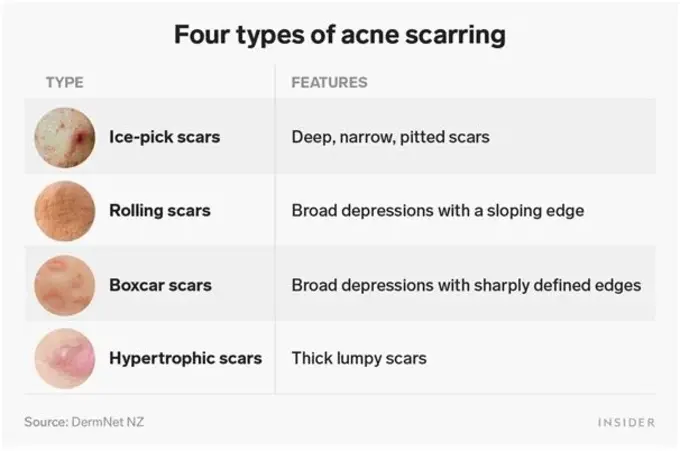
Acne scar treatment is where in-clinic procedures shine — lasers, microneedling, subcision, peels and fillers improve texture, matched to your scar type (ice-pick, rolling, boxcar or raised).
Scar type guides the treatment
Resurfacing — fractional CO₂ laser, microneedling RF and peels stimulate collagen for rolling/boxcar scars
Subcision & TCA CROSS — for tethered rolling scars and ice-pick scars
Injectables — HA fillers or fat grafting lift depressed scars; steroids flatten raised scars
Combination therapy — PRP + microneedling RF + laser often gives the best result
Surgical — scar revision (excision/punch grafting) for select deep scars
Most treatments reduce scar depth and visibility; results depend on scar type, skin and expertise.

“Get Your Confidence Back”
Do Diet and Lifestyle Affect Acne and Acne Treatment?
Yes — high-glycaemic foods, stress and poor sleep can worsen acne, so balanced habits support your acne treatment (though they don’t replace it).
Diet — high-glycaemic foods and possibly skim milk may aggravate acne; whole grains, lean protein and omega-3s help
Stress — raises cortisol, which stimulates oil glands
Sleep — poor sleep affects hormones and skin healing
Exercise & hygiene — cleanse after sweating to avoid clogged pores
“Get Rid Of Acne Now”
Why Should You Consult a Dermatologist for Acne Treatment?
A dermatologist ensures accurate diagnosis, a personalised plan, safe medication use and effective scar management — the difference between guessing and getting lasting results from acne treatment.
Expert diagnosis — identifies acne type and rules out mimics like rosacea
Customised plan — tailored to your grade, skin type and scars
Safety — monitors drugs like isotretinoin to prevent side effects
Scar management — advanced options for texture and marks
“Book online Consultation with Dr. Milan Doshi”
What Is the Cost of Acne Treatment in Mumbai?
The cost of acne treatment in Mumbai starts from around ₹1,500 for basic care and rises to ₹25,000 or more for advanced laser and combination scar therapies — your exact plan is set at consultation. EMI options are on our payment process page.
| Item | Indicative cost |
|---|---|
| Consultation | ₹500–₹1,500 per visit |
| Chemical peel | ₹2,000–₹5,000 per session |
| Laser treatment | ₹8,000–₹25,000 per session |
| Microneedling with PRP | ₹10,000–₹18,000 per session |
Costs vary by treatment type, severity, sessions and clinic — always get a personalised quote.
“Book online Consultation”
Who Is the Best Doctor for Acne and Scar Treatment in Mumbai?
The best doctor for acne treatment is a qualified dermatologist / cosmetic physician who can diagnose accurately, prescribe safely and manage scars — crucial for Indian skin, which is prone to marks.
Accurate diagnosis — acne type, grade and scar pattern
Evidence-based prescribing — topicals, antibiotics, isotretinoin used safely
Scar expertise — laser, microneedling, subcision and fillers
Personalised plans — matched to your skin and severity
Meet the team on the clinic’s specialist page.
“Book online Consultation with Dr. Doshi"
Which Is the Best Clinic for Acne Treatment in Mumbai?
Allure Medspa is a NABH & ISO-certified centre offering complete acne treatment — medical, procedural and scar care — under one roof.
Accredited & safe — NABH/ISO-certified with strict protocols
Complete care — medical therapy, peels, laser and microneedling in one place
Expert-led — dermatology-led team
Personalised — plans for acne, scars and rejuvenation
Outstation and overseas patients are supported end-to-end — see our outstation patients guide.
“Get Rid Of Acne Now”
Medical Code for Acne Treatment
ICD-10 Codes for Acne
| ICD-10 Code | Description |
|---|---|
| L70.0 | Acne vulgaris |
| L70.1 | Acne conglobata (severe acne) |
| L70.2 | Acne varioliformis |
| L70.3 | Acne tropica |
| L70.4 | Infantile acne |
| L70.5 | Acne excoriee |
| L70.8 | Other acne |
| L70.9 | Acne, unspecified |
CPT Codes for Acne Treatment
| CPT Code | Description |
|---|---|
| 99213 | Office or outpatient visit for evaluation and management (low complexity) |
| 99214 | Office or outpatient visit for evaluation and management (moderate complexity) |
| 10040 | Acne surgery (e.g., drainage of abscess, comedone extraction, cyst excision) |
| 17110 | Destruction of benign lesions (up to 14), may include acne scar treatment |
| 17111 | Destruction of benign lesions (15 or more), e.g., acne scars or keloids |
| 96573 | Photodynamic therapy (per session, used for acne treatment) |
| 96910 | Photochemotherapy (e.g., PUVA), per session |
| 96912 | Phototherapy, including UV, per session |
| 15788 | Chemical peel, facial; epidermal (for acne and acne scars) |
| 15789 | Chemical peel, facial; dermal (for deeper acne scar treatment) |
| 17360 | Chemical exfoliation (superficial acne treatment) |
(FAQ's) Frequently Asked Question for Acne Treatment
Q1. How do I remove acne?
Ans. Start with a gentle skincare routine, including a mild cleanser and non-comedogenic moisturizer. Over-the-counter products with benzoyl peroxide or salicylic acid can help. For persistent acne, consult a dermatologist.
Q2. How to get rid of acne fast?
Ans. Avoid touching your face, reduce sugar and dairy intake, and use dermatologist-approved topical treatments. In severe cases, oral medications or professional treatments like chemical peels or laser therapy may be required.
Q3. How long does acne last?
Ans. Mild acne may clear in weeks with treatment, but untreated acne can persist for 4–5 years. Chronic cases often require medical care to prevent scarring.
Q4. Should I pop my acne?
Ans. No, popping pimples can worsen inflammation, push bacteria deeper into the skin, and cause permanent scars.
Q5. What causes acne?
Ans. Acne develops when excess oil, dead skin cells, and bacteria clog pores. Hormonal fluctuations, diet, stress, and genetics can worsen the condition.
Q6. Is acne a sign of poor health?
Ans. Not necessarily. Acne is usually related to clogged pores or hormonal imbalance, but persistent or severe acne may indicate an underlying issue requiring medical advice.
Q7. Which foods cause acne?
Ans. High-glycemic foods like sugar, refined carbs, and dairy products can trigger breakouts in some individuals.
Q8. Does ice help acne?
Ans. Yes, applying ice for short periods can reduce redness and swelling in inflamed pimples but does not treat the root cause.
Q9. Which cream is best for pimples?
Ans. Products containing benzoyl peroxide, salicylic acid, or retinoids are commonly recommended. Prescription creams may be needed for severe cases.
Q10. How to remove acne marks?
Ans. Mild marks can fade with scar creams and sunscreen. Deep scars may need chemical peels, microneedling, or laser resurfacing under a dermatologist’s supervision.
Q11. What age is acne the worst?
Ans. Acne commonly peaks during teenage years (ages 12–18) due to hormonal changes but can persist into adulthood.
Q12. How to clear acne in 24 hours?
Ans. Complete clearing in 24 hours isn’t realistic, but spot treatments with benzoyl peroxide or salicylic acid can reduce inflammation overnight.
Q13. How to permanently clear acne?
Ans. Permanent control often requires a combination of lifestyle changes, topical treatments, oral medications, and in some cases, hormonal therapy prescribed by a dermatologist.
Q14. Can aloe vera help with pimples?
Ans. Aloe vera has soothing and anti-inflammatory properties, which can help calm redness, but it is not a primary treatment for acne.
Q15. How to prevent acne breakouts?
Ans. Maintain a proper skincare routine, avoid harsh scrubbing, keep makeup non-comedogenic, and manage stress. A balanced diet also helps in reducing breakouts.
“Get Rid Of Acne Now”
Author Note & Disclaimer
Content reviewed by the treating dermatologist / cosmetic physician at Allure Medspa. This information is educational and not a substitute for a personal consultation, examination and diagnosis. Acne is a common, treatable but often chronic condition; results vary by type, grade and skin. For personal guidance, consult a qualified doctor. In an emergency, call your local emergency number.
Related Links
Note: The author of this content is Dr. Milan Doshi, An Indian board-certified plastic & cosmetic Surgeon wholly & solely confirms the authenticity of the information & knowledge delivered by this write-up.