
Eyelid Surgery (Blepharoplasty) in Mumbai — Refreshed Eyes, Honestly Explained

Indian Board Certified Plastic Surgeon
M.CH, MS, ISAPS Mentor
16000+ Cosmetic Surgeries
320+ Blepharoplasty Surgery
Eyelid surgery (blepharoplasty) removes or repositions excess skin, fat and muscle from the upper and/or lower eyelids to refresh tired, hooded or puffy eyes — and, where heavy upper-lid skin blocks your view, to improve sight. It is a day-care procedure of about 1–3 hours under local anaesthesia with sedation, most people are presentable in 10–14 days, and upper-lid results often last 10–15 years. At Allure Medspa it typically costs ₹60,000–₹1,00,000. “Laser-assisted” blepharoplasty uses a laser as a surgical tool to reduce bleeding and bruising — it is still surgery, not a scar-free shortcut, and Dr. Milan Doshi will tell you honestly whether your concern is your lids, your brow, or simply dark circles.
Eyelid Surgery Before and After Images
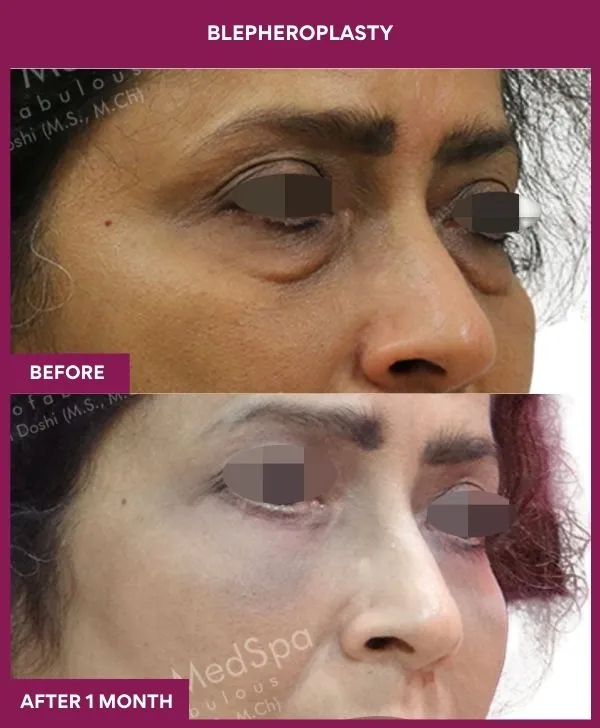
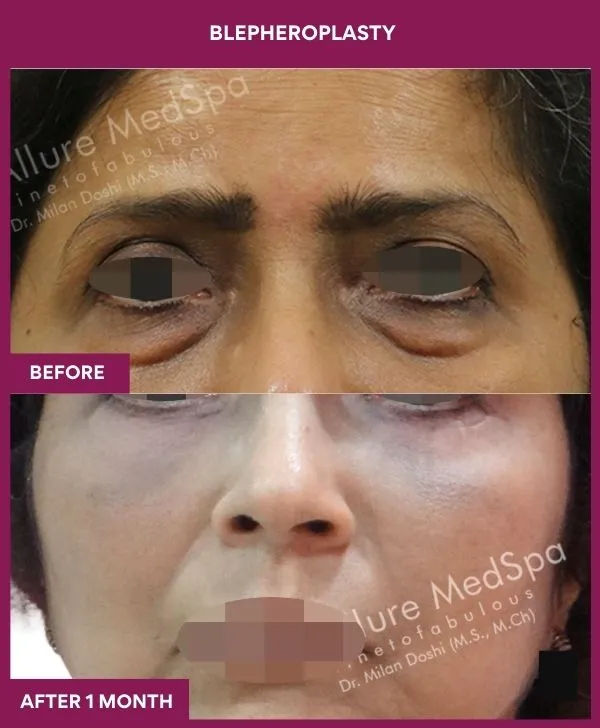
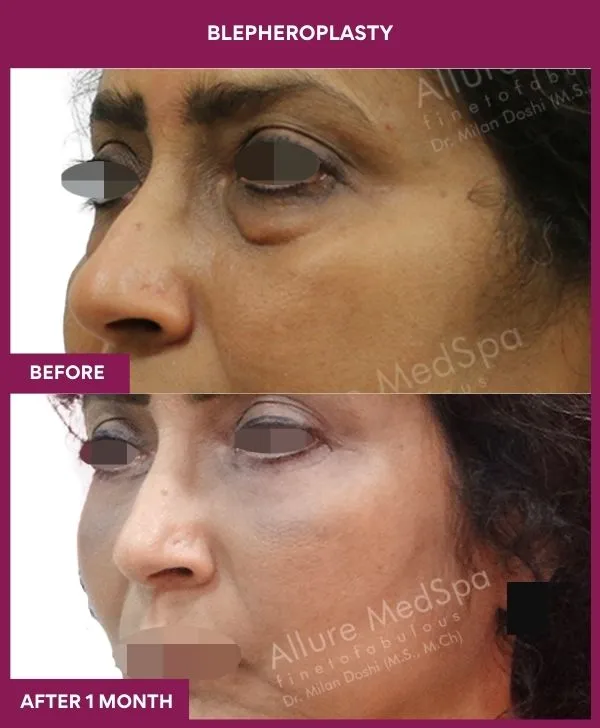
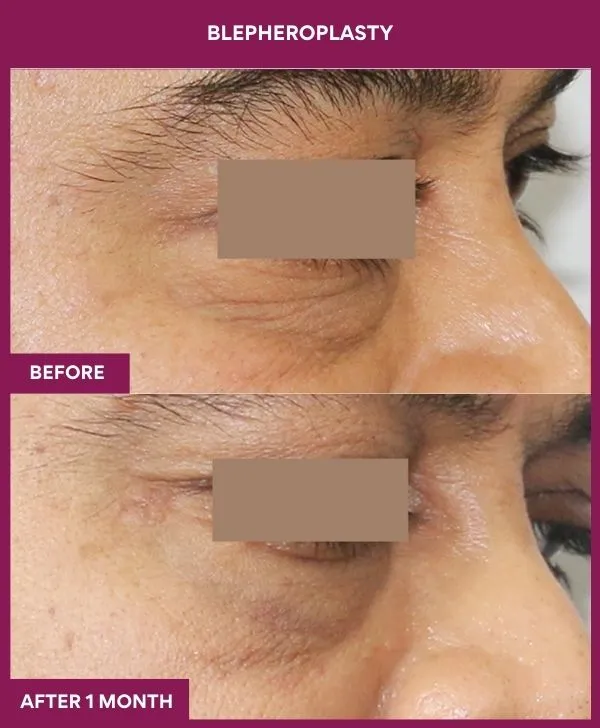
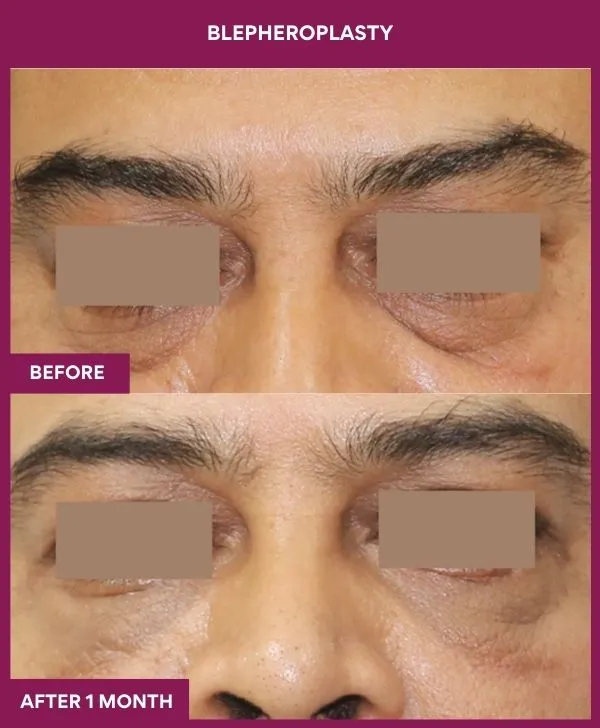
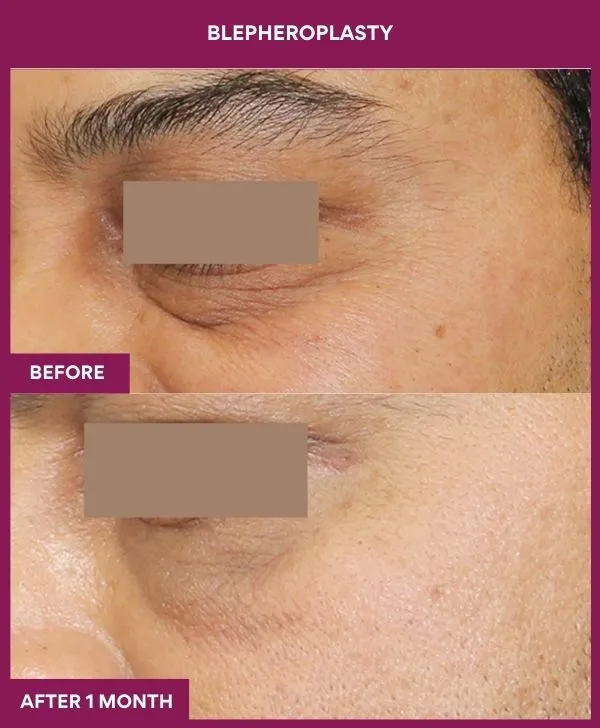
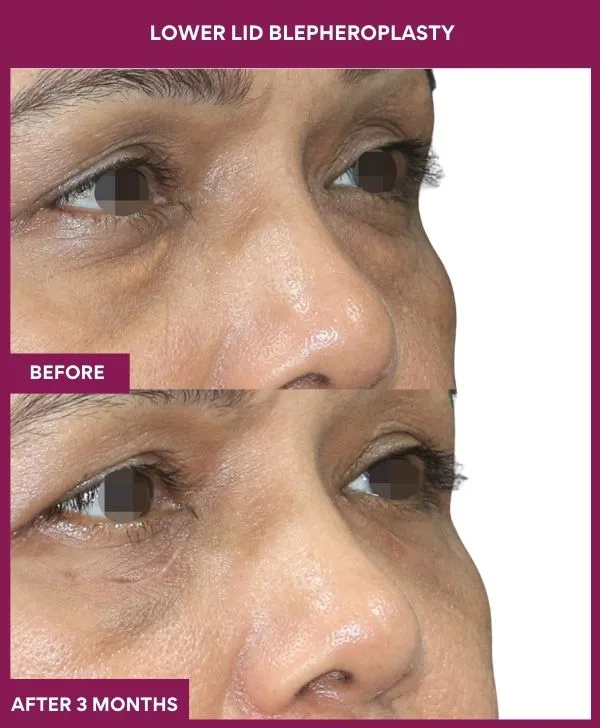
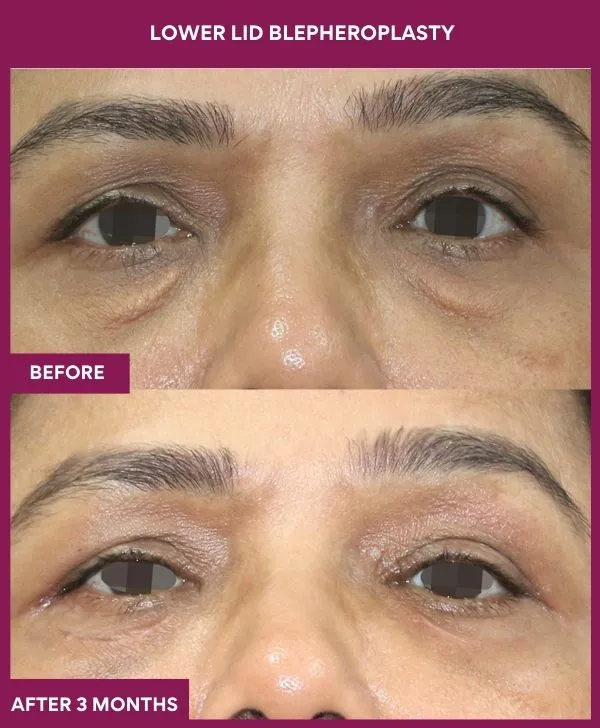
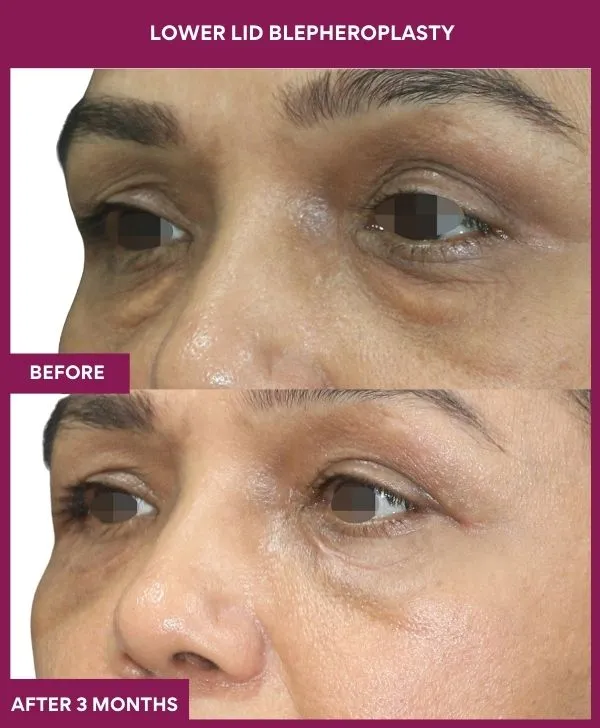
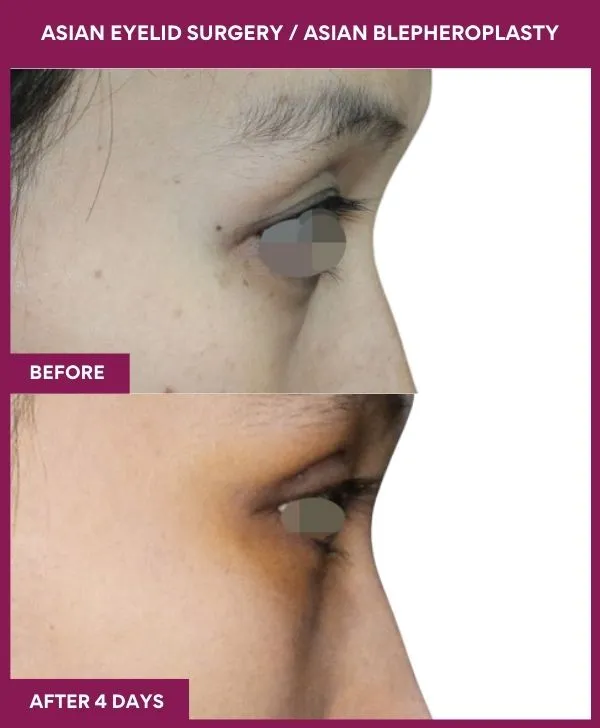
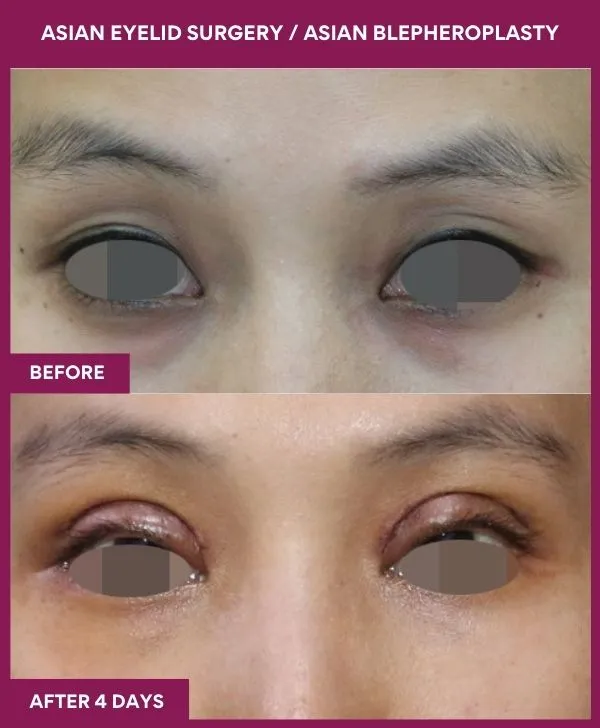
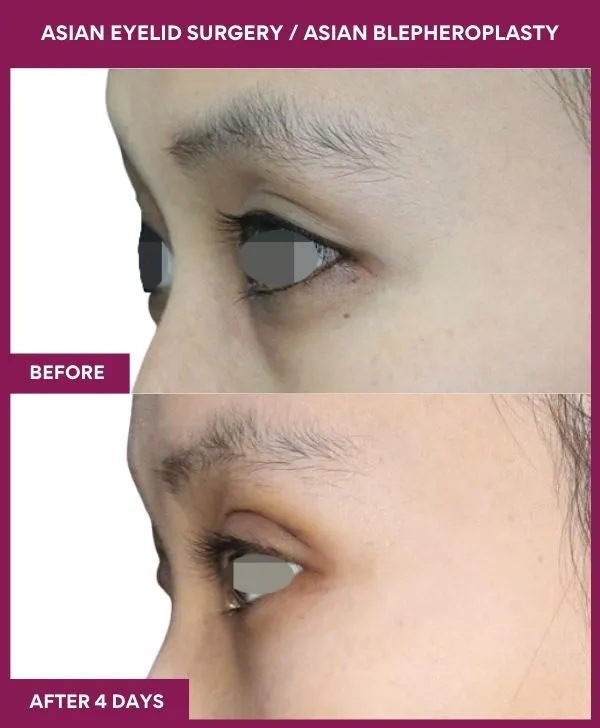
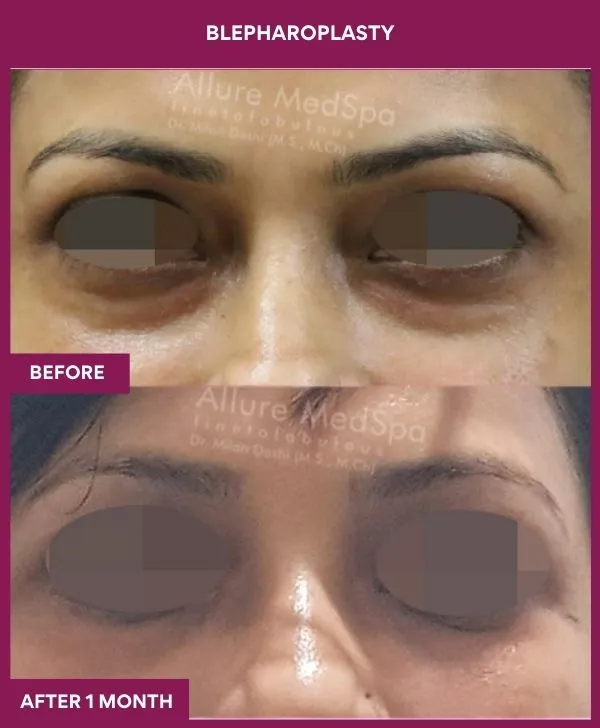
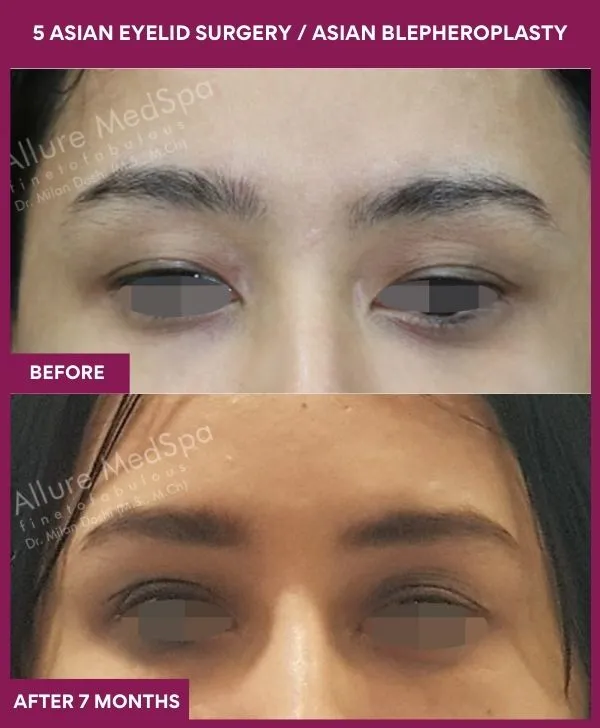
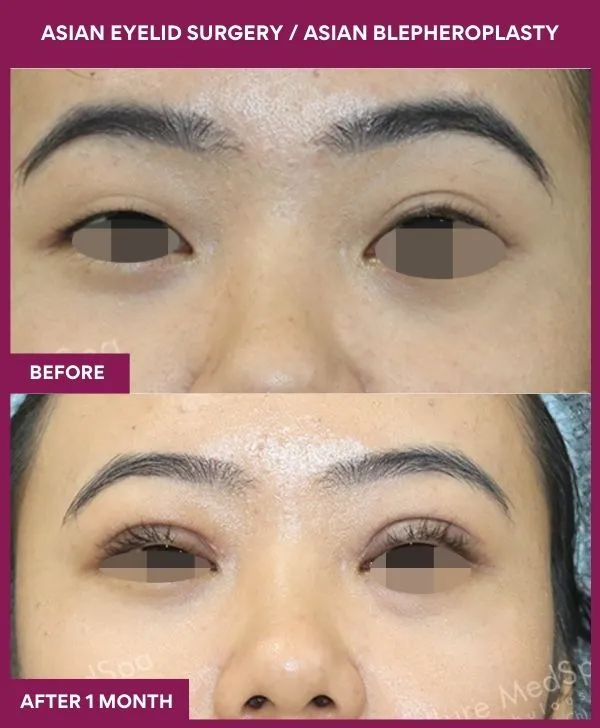
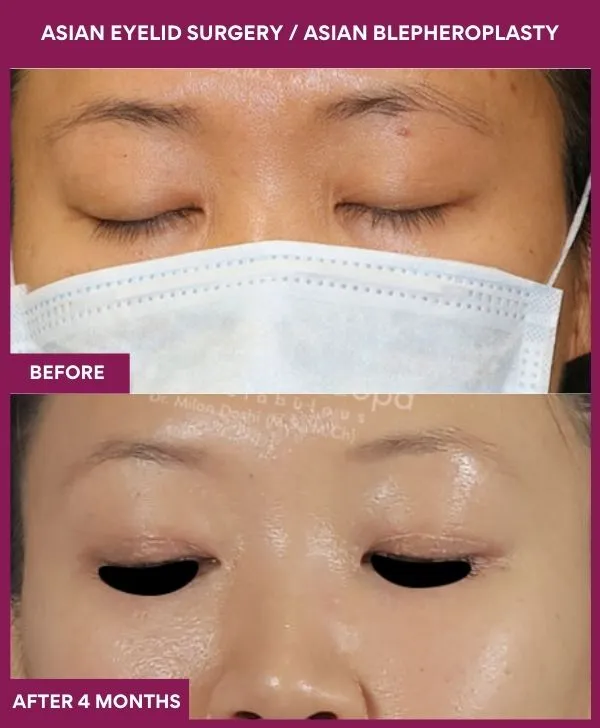
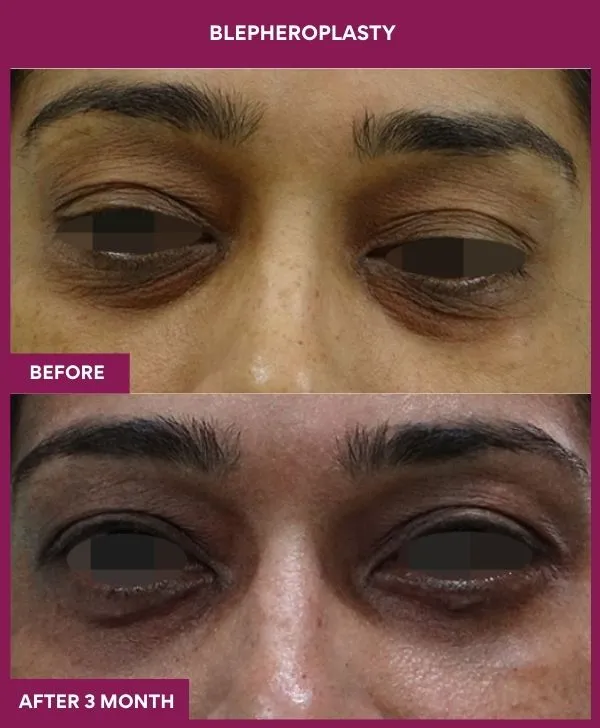
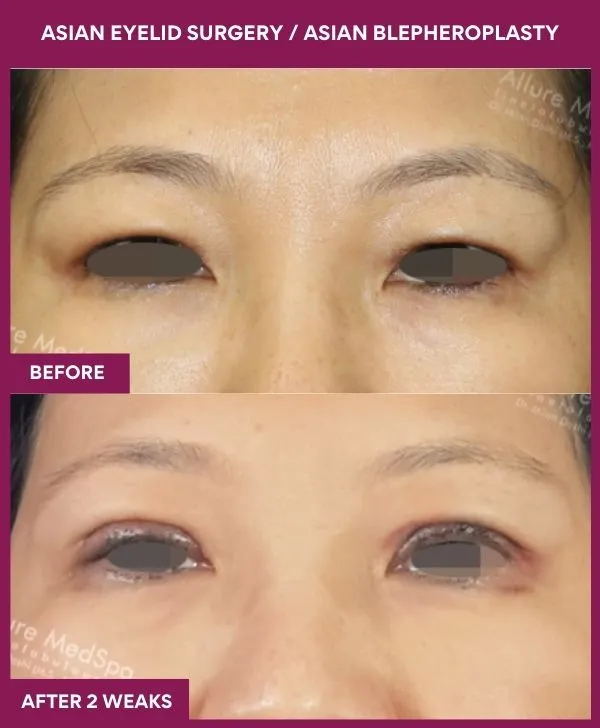
“Eyelid Surgery Mumbai”
Eyelid Surgery Testimonials: Fine To Fabulous Journeys

Awarded by Google.com
Rating: 4.7
Reviews: 485+

Awarded by WhatClinic.com
Rating: 4.8
Reviews: 119+

Awarded by Realself
Rating: 4.9
Reviews:453+

Awarded by Facebook
Rating: 4.6
Reviews:105+
Dr Milan Doshi and his staff are very professional and committed as the centre is highly equipped with advanced technology. I had closed rhinoplasty 4 months back and I’m seeing the results as to how it becomes successful.
Deepika Shetty
The doctor explained everything clearly and the surgery was smooth. Recovery was faster than I expected and the team was very supportive.
Rahul Mehta
Very natural results and excellent staff. From consultation to follow-up, the experience was outstanding and boosted my confidence.
Sneha Kapoor
"Blepharoplasty Surgery in Mumbai"
Is Eyelid Surgery Right For Me?
(4 quick questions)
Lids, sight, health, downtime — four questions start the plan.
Check My SuitabilityHonest routing — including non-surgical
Quick Facts About Facelift Surgery
TIME REQUIRED
1–3 hours
ANESTHESIA
General/Local
HOSPITAL STAY
Day care
PAIN LEVEL
Mild–moderate
BACK TO WORK
7–10 days
RESULTS LASTS
10–15 years
SUCCESS RATE
97–98%
COMPLICATIONS
Under 2–3%
What Is The Cost Of Eyelid Surgery In Mumbai?
Eyelid surgery at Allure Medspa typically costs ₹60,000–₹1,00,000, depending on upper, lower or both lids, fat repositioning and laser use.
| Option | Typical Cost |
|---|---|
| Upper eyelids | ₹60,000 – ₹75,000 |
| Lower eyelids | ₹70,000 – ₹90,000 |
| Upper + lower eyelids (4-lid) | ₹90,000 – ₹1,20,000 |
| Lower eyelid with fat repositioning / canthopexy | ₹85,000 – ₹1,10,000 |
| Brow lift + upper blepharoplasty | ₹1,50,000 – ₹2,50,000 |
| Laser-assisted blepharoplasty | ₹70,000 – ₹1,10,000 |
| Consultation | ₹1,500 |
- What changes the price — number of lids, fat repositioning, canthopexy, laser use, combined brow lift
- EMI → Cosmetic Surgery Payment Process
- Exact quote after assessment
Get your exact quote & surgery plan
Share your details — our team responds within working hours with cost, EMI options and next steps.
Most Common Question People Ask
Q1. How painful is eyelid surgery?
Ans. Usually not very. Most people feel mild discomfort, swelling and tightness, well managed with medication and cold compresses.
Q2. How long does eyelid surgery take?
Ans. Typically 1–3 hours, depending on whether upper lids, lower lids or both are treated. You go home the same day.
Q3. How much does eyelid surgery cost in Mumbai?
Ans. At Allure Medspa it is typically ₹60,000–₹1,00,000, depending on the lids treated and any added steps. Your exact quote is confirmed at consultation.
Q4. Will there be visible scars?
Ans. Upper-lid scars sit in the natural crease and fade to a fine line; lower-lid surgery can often be done from inside the lid with no external scar.
Q5. How long does swelling last?
Ans. Most swelling and bruising settle within 1–2 weeks, with final results over about 2–3 months.
Q6. Is upper eyelid surgery permanent?
Ans. It is long-lasting — often 10–15 years for the upper lids — but ageing continues, so the eyes still change slowly over time.
Q7. Does insurance cover eyelid surgery?
Ans. Not when it is cosmetic. It may be covered when drooping upper-lid skin is documented to block vision — ask your insurer about pre-authorisation.
Why Choose Dr. Milan Doshi?
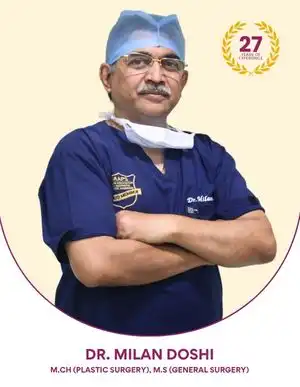
Dr. Milan Doshi, MCh, MS — Indian board-certified plastic surgeon with 27+ years and 320+ blepharoplasties who screens for dry eye and brow position first, removes tissue conservatively, prefers the inside-the-lid approach where suitable, and uses laser only where it helps. Consults at Andheri West; surgery at Vardan Hospital, Goregaon West.
Dr Doshi Note: “Before eyelid surgery, I check for dry eye, lid laxity, medical fitness, and blood-thinner history. I remove skin and fat conservatively, and for suitable lower-lid cases, I prefer an inside-the-lid approach to reduce lid pull-down risk. Sudden pain, vision change, or rapidly increasing swelling in the first 24 hours needs urgent attention.”
The Complete Guide About Blepharoplasty Surgery
What Is Eyelid Surgery (Blepharoplasty)?
Blepharoplasty removes or repositions excess skin, fat and muscle from the upper and/or lower lids to refresh tired eyes and sometimes vision.
- Upper eyelids — corrects hooded, drooping lids that make the eyes look tired
- Lower eyelids — reduces under-eye bags, puffiness and fine crepey skin
- Both lids — for complete eye rejuvenation in one sitting
- Functional — when heavy upper-lid skin narrows the field of vision
- Related surgery: brow lift → Brow Lift Surgery · facelift → Facelift Surgery
What are other names for eyelid surgery?
Blepharoplasty, eyelid lift, eye lift, eyelid rejuvenation, upper and lower lid surgery, eye bag removal and periorbital rejuvenation.
- “Eye lift” is a popular term but blepharoplasty does not lift the brow — a low brow needs a brow lift
- “Double eyelid surgery” (Asian blepharoplasty) creates a crease and is a distinct variant
- “Laser eyelid surgery” and “laser blepharoplasty” describe the same operation done with a laser tool
What does “laser” eyelid surgery actually mean?
A laser is used instead of a scalpel to cut or resurface, which seals small vessels and can mean less bruising — the operation itself is the same.
| Claim you may read | The honest version |
|---|---|
| “Scarless laser eyelid surgery” | Upper lids still need a crease incision; only the inside-the-lid lower approach avoids an external scar — with or without laser |
| “No downtime” | Less bruising for some, but swelling and the 7–10-day social downtime are similar |
| “Laser removes eye bags” | Bags are fat — they are removed or repositioned surgically; resurfacing lasers only tighten fine skin |
What Are The Benefits Of Eyelid Surgery?
A more open, rested look, smoother lower lids, and — where lid skin was in the way — a wider field of vision, with long-lasting results.
- Removes sagging upper-lid skin — opens up hooded, tired-looking eyes
- Reduces under-eye bags and puffiness — smoother lower lid
- Can improve vision — when heavy upper-lid skin obstructs the field of view
- Makes eye make-up easier — a visible lid space again
- Rested, not “done” — the aim is your own eyes, ten years fresher
- Long-lasting — removed skin and fat do not come back, though ageing continues
Can eyelid surgery improve dry eye?
Sometimes — a 2025 meta-analysis found dry-eye symptoms fell after upper blepharoplasty, but existing dry eye still needs checking first.
What Causes Hooded Eyelids And Under-Eye Bags?
Upper, lower, combined, functional and double-eyelid surgery — each chosen for your anatomy, with laser as an optional tool for any of them.
| Type | What it does | Incision |
|---|---|---|
| Upper blepharoplasty | Removes hooded skin (± a strip of muscle / fat) | Hidden in the natural crease |
| Lower blepharoplasty — transconjunctival | Removes or repositions bag fat; no skin removed | Inside the lower lid — no external scar |
| Lower blepharoplasty — subciliary (skin) | Fat plus excess crepey skin | Just below the lashes |
| Functional upper blepharoplasty | Clears vision-blocking skin | Crease; documented visual-field loss |
| Double-eyelid (Asian) surgery | Creates an upper-lid crease while keeping your identity | Crease or suture method 🩺 |
| Laser-assisted | Any of the above with a laser tool | Same incision sites |
Upper or lower eyelid surgery — what is the difference?
Upper surgery removes hooding through a crease scar; lower surgery treats bags, often from inside the lid, with a slightly longer recovery.
| Upper eyelids | Lower eyelids | |
|---|---|---|
| Main concern | Hooding, heavy lids | Bags, puffiness, crepey skin |
| Scar | In the crease — fades to a fine line | None (inside the lid) or just below the lashes |
| Typical time | About 1 hour | 1–2 hours |
| Key risk | Under- or over-correction; dry eye | Lid pulling down (retraction / ectropion) |
| Insurance | Possible if vision is blocked | Almost always cosmetic |
Why is the inside-the-lid approach often preferred for lower lids?
It removes bag fat without cutting skin or the lid’s supporting muscle, which lowers the risk of the lower lid pulling down afterwards.
- Suits younger patients with bags but good skin tone
- If there is loose skin too, a small skin pinch or laser resurfacing can be added → Fractional CO₂ Laser Treatment
- Dr. Doshi’s note reflects this preference for suitable lower-lid cases
What Are The Different Types Of Eyelid Surgery?
Upper, lower, combined, functional and double-eyelid surgery — each chosen for your anatomy, with laser as an optional tool for any of them.
| Type | What it does | Incision |
|---|---|---|
| Upper blepharoplasty | Removes hooded skin (± a strip of muscle / fat) | Hidden in the natural crease |
| Lower blepharoplasty — transconjunctival | Removes or repositions bag fat; no skin removed | Inside the lower lid — no external scar |
| Lower blepharoplasty — subciliary (skin) | Fat plus excess crepey skin | Just below the lashes |
| Functional upper blepharoplasty | Clears vision-blocking skin | Crease; documented visual-field loss |
| Double-eyelid (Asian) surgery | Creates an upper-lid crease while keeping your identity | Crease or suture method 🩺 |
| Laser-assisted | Any of the above with a laser tool | Same incision sites |
Upper or lower eyelid surgery — what is the difference?
Upper surgery removes hooding through a crease scar; lower surgery treats bags, often from inside the lid, with a slightly longer recovery.
| Upper eyelids | Lower eyelids | |
|---|---|---|
| Main concern | Hooding, heavy lids | Bags, puffiness, crepey skin |
| Scar | In the crease — fades to a fine line | None (inside the lid) or just below the lashes |
| Typical time | About 1 hour | 1–2 hours |
| Key risk | Under- or over-correction; dry eye | Lid pulling down (retraction / ectropion) |
| Insurance | Possible if vision is blocked | Almost always cosmetic |
Why is the inside-the-lid approach often preferred for lower lids?
It removes bag fat without cutting skin or the lid’s supporting muscle, which lowers the risk of the lower lid pulling down afterwards.
- Suits younger patients with bags but good skin tone
- If there is loose skin too, a small skin pinch or laser resurfacing can be added → Fractional CO₂ Laser Treatment
- Dr. Doshi’s note reflects this preference for suitable lower-lid cases
Who Is A Good Candidate For Eyelid Surgery?
A healthy adult with healthy eyes, excess lid skin or bags, no smoking, and realistic expectations of a refreshed — not different — look.
- Good general health — no condition that impairs healing
- Healthy eyes — pre-op check of tear film, lid laxity and vision
- Non-smoker — or able to stop for 2–4 weeks around surgery
- Realistic expectations — rested, natural eyes; crow’s feet and dark pigment are not removed
- Men and women — men often prefer a lower, more natural crease
Who should wait or be assessed further?
People with significant dry eye, thyroid eye disease, recent LASIK, uncontrolled blood pressure or diabetes, or on blood thinners.
- Dry or irritable eyes — tell the surgeon; surgery can worsen dryness temporarily
- Thyroid eye disease — stabilise first; needs specialist planning
- Recent LASIK / eye surgery — allow full healing; your eye doctor advises 🩺
- Blood thinners — never stop without your prescribing doctor
- Uncontrolled blood pressure — raises bleeding risk behind the eye
- Pregnancy — defer
What Happens At An Eyelid Surgery Consultation?
Your goals and history, an eye and lid check (tear film, laxity, brow position), photos, options with risks, and a written estimate.
- Goals — upper, lower, both; what bothers you in photos
- Medical, eye and medication history — glasses / contacts, LASIK, dry eye, thyroid, blood thinners, supplements, smoking
- Examination — brow position, skin excess, fat bulges, lower-lid snap-back (laxity), tear function
- Visual-field test or eye-doctor report if insurance is planned
- Photos — eyes open, closed and looking up
- Online consultation for outstation patients → Online Consultations
What should you ask the surgeon?
Ask whether your issue is lids or brow, which incision they would use, whether laser helps you, how dry eye is managed, and who handles emergencies.
- Upper, lower or both — and is my brow part of it?
- Inside-the-lid or skin incision for my lower lids — why?
- Will laser make a difference for me?
- How many blepharoplasties have you done? Can I see healed scars?
- What is the plan if I have pain or vision change on the first night?
What Pre-Operative Steps Should You Follow?
Medical clearance, stopping blood thinners and supplements only as advised, no smoking, arranging an escort home, and stocking cold packs.
- Tests — blood work and medical fitness as advised
- Medicines — aspirin, anti-inflammatories, fish oil, vitamin E and herbal supplements stopped 7–10 days before, only as advised
- Smoking — stop at least 2 weeks before and after
- Contacts — switch to glasses for the first 2 weeks
- At home — cold compresses, extra pillows, sunglasses, lubricating drops
- Escort — someone to take you home and stay the first night
How Is Eyelid Surgery Performed Step By Step?
Lids are marked sitting up, numbed, then skin and fat are removed or repositioned through hidden incisions and closed with fine sutures.
| Step | What happens |
|---|---|
| 1. Marking | Crease and excess skin marked with you sitting upright |
| 2. Anaesthesia | Local with IV sedation, or general — your choice with the anaesthetist |
| 3. Upper lid | Incision in the natural crease; excess skin (± a strip of muscle / fat) removed |
| 4. Lower lid | Inside the lid (transconjunctival) or just below the lashes; fat removed or repositioned into the hollow |
| 5. Laser (if used) | Laser as the cutting tool to reduce bleeding; optional resurfacing of fine lower-lid skin |
| 6. Support | Canthopexy (outer-corner tightening) if the lower lid is lax |
| 7. Closure | Fine sutures or skin adhesive; sutures out at 5–7 days |
| 8. Recovery room | Observed for bleeding and vision before going home |
How long does the operation take?
About an hour for upper lids, 1–2 hours for lower lids, and 2–3 hours for all four lids or when combined with a brow lift.
Is Eyelid Surgery Painful?
No pain during surgery under anaesthesia; afterwards most people feel tightness, mild soreness and gritty eyes, eased by cold compresses.
- Pain relief — simple painkillers; avoid aspirin-type medicines
- Cold compresses — 48 hours, 10–15 minutes at a time
- Severe or increasing pain is NOT normal — call immediately (see risks)
What Should You Expect During Eyelid Surgery Recovery?
Swelling and bruising peak at 2–3 days and fade over 1–2 weeks; stitches come out at 5–7 days and most return to desk work in 7–10 days.
| Time | What to expect | What to do |
|---|---|---|
| Night 1 | Tightness, watering, blurry vision from ointment | Rest, head raised, cold compresses; someone with you |
| Days 2–3 | Swelling and bruising at their peak | Keep compresses; no bending or lifting |
| Days 5–7 | Sutures out; bruising turning yellow | Gentle face washing; lubricating drops |
| Days 7–10 | Back to desk work for most | Sunglasses; limit screens if eyes feel dry |
| Weeks 2–3 | Light exercise; eye make-up after about 2 weeks | Contacts after about 2 weeks |
| Weeks 4–6 | Full exercise; residual swelling small | Daily SPF on the scar |
When should you call the clinic urgently?
Immediately for sudden or increasing pain, a tense or bulging eye, fast-rising swelling or any vision loss — especially in the first 24 hours.
- This can be bleeding behind the eye (retrobulbar haemorrhage) — a sight-threatening emergency treated within 1–2 hours
- Also call for fever, discharge, or being unable to close the eye after the first week
- Ask at booking for the 24-hour post-op number 🩺
How Long Does It Take To Heal After Eyelid Surgery?
Around 10–14 days to look presentable, 4–6 weeks for most swelling to go, and 2–3 months for the final result as scars fade.
| Activity | Usually from |
|---|---|
| Reading / TV (short spells) | Day 2–3 |
| Desk work | Day 7–10 |
| Driving | When vision is clear and you are off sedating medicines (about 1 week) |
| Eye make-up | About 2 weeks |
| Contact lenses | About 2 weeks |
| Gym / swimming | 3–4 weeks |
| Flying home (outstation) | After suture removal and review, usually day 7 🩺 |
What Results Can You Expect After Eyelid Surgery?
More open, rested eyes with less hooding and fewer bags, fine hidden scars and, in functional cases, a wider field of vision.
- Refreshed, alert eyes — less hooding, fewer bags, smoother contour
- Functional gain — improved field of vision where heavy upper-lid skin was in the way
- Natural, not “done” — rested, age-appropriate eyes
- What does not change — crow’s feet, dark pigment and a low brow need other treatments
When will I see the final result?
You see the improvement within 2 weeks, but the final shape and scar take 2–3 months — and up to 6 months for lower lids.
How Long Do Eyelid Surgery Results Last?
Upper-lid results often last 10–15 years; lower-lid bag removal rarely needs repeating, though natural ageing continues slowly.
- Why they last — removed skin and fat do not return
- What affects longevity — genetics, skin quality, sun, smoking, weight change
- How to maintain — daily SPF, sunglasses, no smoking, good sleep
- Later options — a brow lift or minor upper-lid touch-up a decade or more later
Sources: Live cites rieyeinstitute.com (another clinic’s site) for longevity — replace with a peer-reviewed source or remove the link
What Are The Risks And Complications Of Eyelid Surgery?
Most effects are minor and temporary; lower-lid malposition and dry eye matter most, and bleeding behind the eye is rare but sight-threatening.
| Common, usually temporary | Less common but important |
|---|---|
| Swelling and bruising — settle over 1–2 weeks | Lagophthalmos (incomplete closure) — short-lived from swelling; if it persists the cornea needs protection |
| Dry, gritty or watery eyes — usually temporary | Lower-lid retraction / ectropion — mainly after skin-approach lower surgery; much rarer with the inside-the-lid approach |
| Blurred vision from ointment or swelling — clears in days | Asymmetry, visible scar or slow healing — occasionally needs revision |
| Tightness and sensitivity to light | Infection — rare, thanks to the lids’ rich blood supply |
| Retrobulbar haemorrhage with vision loss — very rare (below) |
How rare is vision loss after eyelid surgery?
Very rare: in 269,433 operations, bleeding behind the eye occurred in about 1 in 1,800 and permanent vision loss in about 1 in 22,000.
- Most bleeds happened within the first 3 hours and risk dropped sharply after 24 hours
- Linked factors — high blood pressure, aspirin, vomiting and early exertion
- Treated urgently by releasing pressure (lateral canthotomy) — why the warning signs and early monitoring matter
Can eyelid surgery cause dry eye?
It can worsen dry eye for a few weeks, and occasionally longer — so tear function is checked before surgery and lubricants are used after.
Can Eyelids Be Lifted Without Surgery?
Only slightly. Injections, fillers, lasers and HIFU can soften mild laxity or hollows for months; only surgery removes true excess skin and bags.
| Option | What it can do | Limit |
|---|---|---|
| Anti-wrinkle injection “brow lift” | Lifts the outer brow a few mm | 4–6 months → Anti-Aging Injections |
| Tear-trough filler | Fills the hollow below a small bag | Can worsen puffiness; 8–18 months → Dermal Fillers |
| Fractional CO₂ laser | Tightens crepey lower-lid skin | Does not remove fat → Fractional CO₂ Laser Treatment |
| HIFU / threads | Mild brow and skin lift | Modest, temporary → HIFU Treatment · Thread Lift |
| Dark-circle treatment | Pigment and hollows | Not hooding or bags → Dark Circle Removal |
- Creams and home “eyelid tapes” cannot remove excess skin or fat
Can Eyelid Surgery Be Combined With Other Procedures?
Yes — commonly with a brow lift, facelift, CO₂ laser resurfacing or fillers, planned so the eyes match the rest of the face.
| Combination | Why |
|---|---|
| Brow lift | Low brow + hooded lids — the most common pairing → Brow Lift Surgery |
| Facelift / neck lift | Full-face rejuvenation in one recovery → Facelift Surgery · Neck Lift Surgery |
| Fractional CO₂ laser | Fine lines and crepey lower-lid skin → Fractional CO₂ Laser Treatment |
| Fillers or fat to the tear trough | Smooths the lid–cheek junction → Dermal Fillers |
Does Insurance Cover Eyelid Surgery In India?
Usually not for cosmetic reasons; it may be covered when documented drooping upper-lid skin or ptosis blocks vision.
- May be covered — functional upper-lid surgery with documented visual-field loss
- Not covered — cosmetic eyelid surgery and add-ons such as a brow lift
- What helps — an ophthalmologist’s report with a visual-field test, and insurer pre-authorisation
Medical Codes for Eyelid Surgery
Cosmetic blepharoplasty uses ICD-10 Z41.1; functional cases use dermatochalasis codes (H02.83-), with CPT 15820–15823 for the operation.
| ICD-10-CM | Description |
|---|---|
| Z41.1 | Encounter for cosmetic surgery |
| H02.831 / H02.834 | Dermatochalasis of right / left upper eyelid |
| H02.832 / H02.835 | Dermatochalasis of right / left lower eyelid |
| H02.411 / H02.412 / H02.413 | Mechanical ptosis of right / left / bilateral eyelids |
| H57.811 / H57.812 / H57.813 | Brow ptosis, right / left / bilateral |
| CPT | Description |
|---|---|
| 15820 | Blepharoplasty, lower eyelid |
| 15821 | Blepharoplasty, lower eyelid; with extensive herniated fat pad |
| 15822 | Blepharoplasty, upper eyelid |
| 15823 | Blepharoplasty, upper eyelid; with excessive skin weighting down lid |
| 67900 | Repair of brow ptosis (supraciliary, mid-forehead or coronal approach) |
(FAQs) Frequently Asked Question About Eyelid Surgery
Q1. What is the best age for eyelid surgery?
Ans. Most patients are in their 40s–60s, when hooding and bags become noticeable — but younger people with hereditary puffiness or a functional issue may also benefit.
Q2. Can I have it without being older?
Ans. Yes — if you have vision-obstructing upper-lid skin or significant hereditary bags, age is not a barrier.
Q3. Does the anaesthesia hurt?
Ans. Local anaesthesia with sedation keeps the procedure comfortable; you feel the first small injections, then no pain during surgery.
Q4. Can I wear contact lenses afterwards?
Ans. Avoid contacts for about 2 weeks; wear glasses during early recovery.
Q5. When can I wear make-up?
Ans. Avoid eye make-up for about 10–14 days to protect the healing incisions.
Q6. Why is my vision blurry afterwards?
Ans. Usually from swelling, ointment or temporary dryness, and it clears within days. Sudden vision change with increasing pain in the first 24 hours is different — seek help immediately.
Q7. When can I use my phone or laptop?
Ans. Short spells from day 2–3; screens dry the eyes, so take breaks and use lubricating drops for the first 2 weeks.
Q8. Is eyelid surgery risky?
Ans. It is generally safe in experienced hands. Most issues are minor and temporary; serious complications, including a very rare risk to vision, exist and are why close monitoring matters.
Q9. What is double eyelid surgery?
Ans. It creates a natural upper-lid crease for a more open eye — popular among people of East Asian descent — while preserving your identity.
Q10. Do men have eyelid surgery?
Ans. Yes — often for heavy upper lids or bags. The crease is kept lower and less defined for a natural male look.
Q11. Can eyelids be lifted without surgery?
Ans. Injections and energy-based skin tightening give temporary improvement for mild laxity; only surgery removes true excess skin and bags.
Q12. Can I tighten my eyelids at home?
Ans. Creams may help very mild laxity but cannot remove excess skin or bags — that needs surgery.
Q13. I live outside Mumbai — how many days should I stay?
Ans. Plan about 7 days for the suture removal and review, with online follow-ups after → Outstation Patients.
Q14. Why choose a board-certified plastic surgeon?
Ans. For eye surgery in particular, experience lowers the risk of complications like lid malposition and means rare serious risks are recognised and managed quickly.