
Facelift Surgery in Mumbai: Natural Facial Refinement That Restores Your Own Contours

Indian Board Certified Plastic Surgeon
M.CH, MS, ISAPS Mentor
16000+ Cosmetic Surgeries
500+ Face Lift Surgeries
Facelift surgery (rhytidectomy) repositions descended facial tissues to soften jowls, restore jawline definition and improve loose skin across the lower face and neck. At Allure Medspa Mumbai, Dr. Milan Doshi plans each lift around the SMAS layer rather than skin tension — so the face looks rested and recognisably your own, not operated.
Facelift Surgery Before And After Images
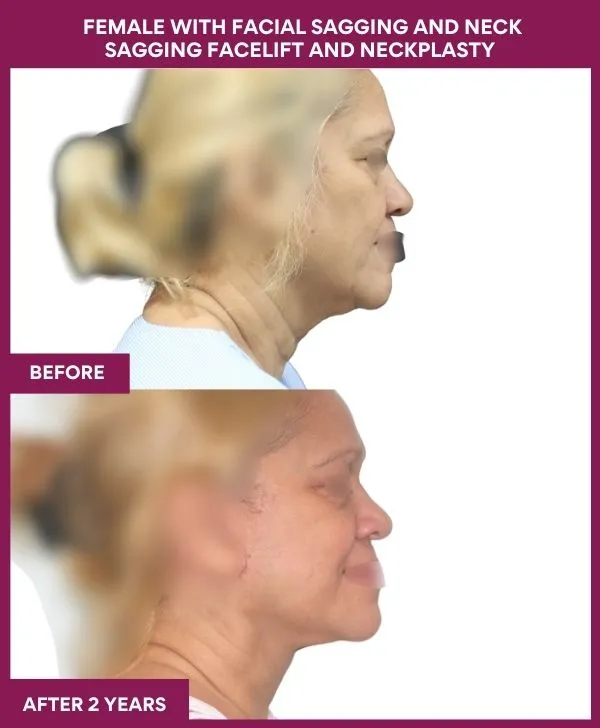
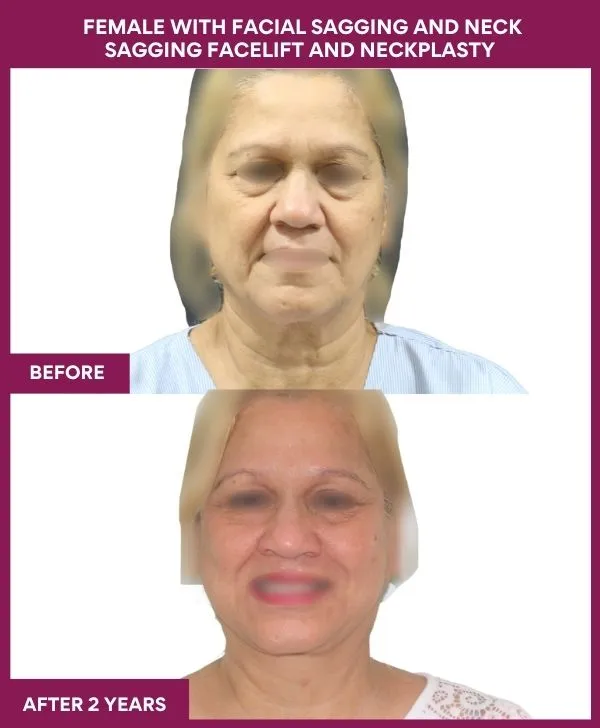
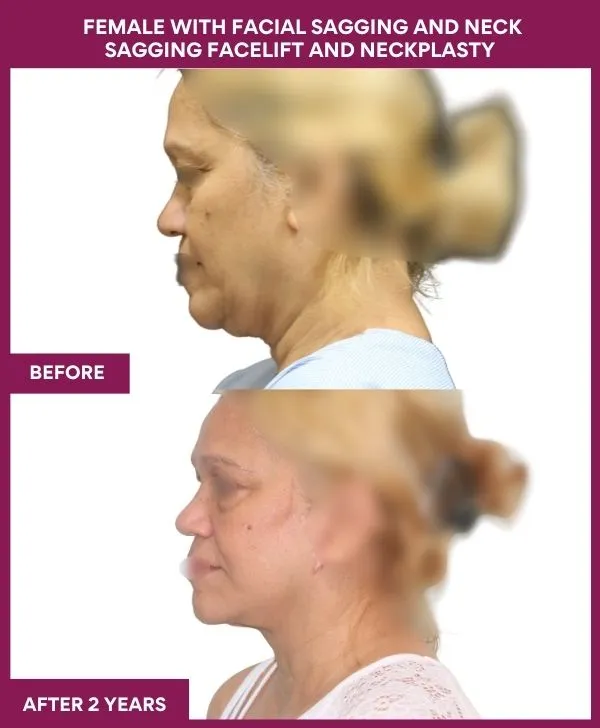
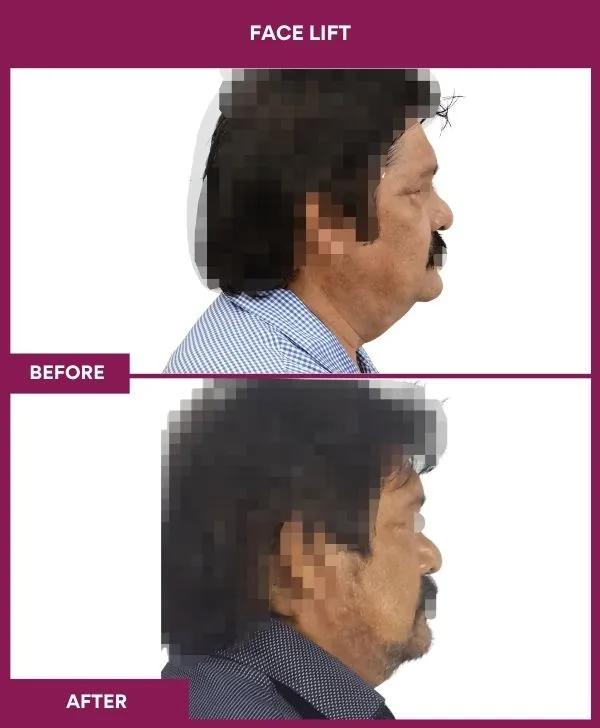
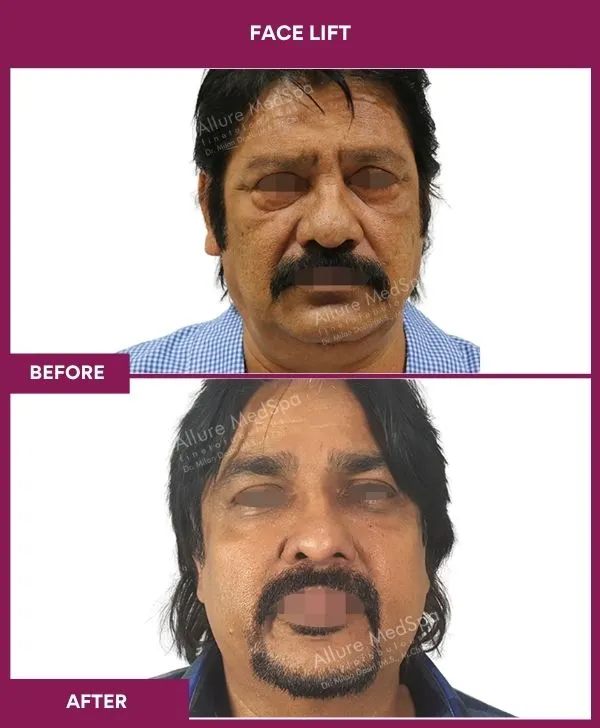
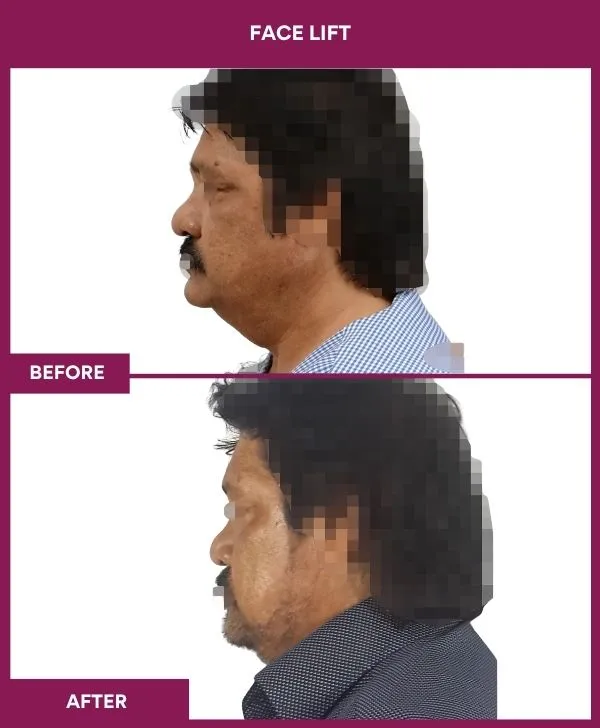
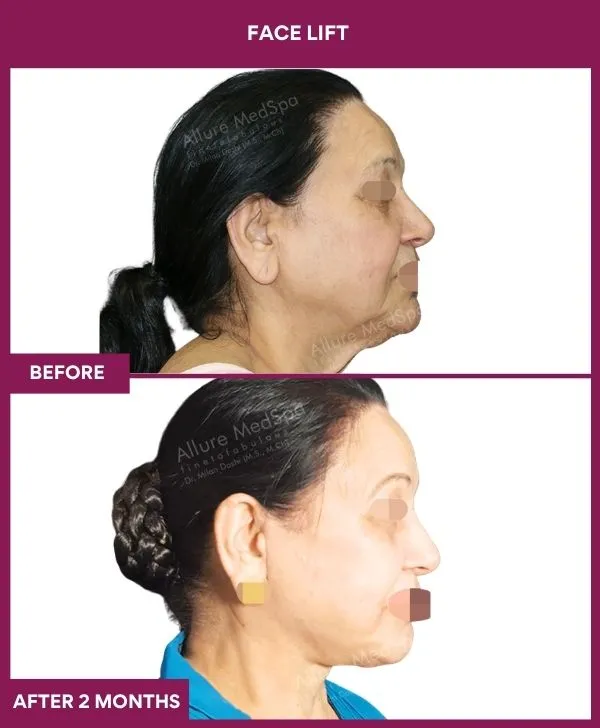
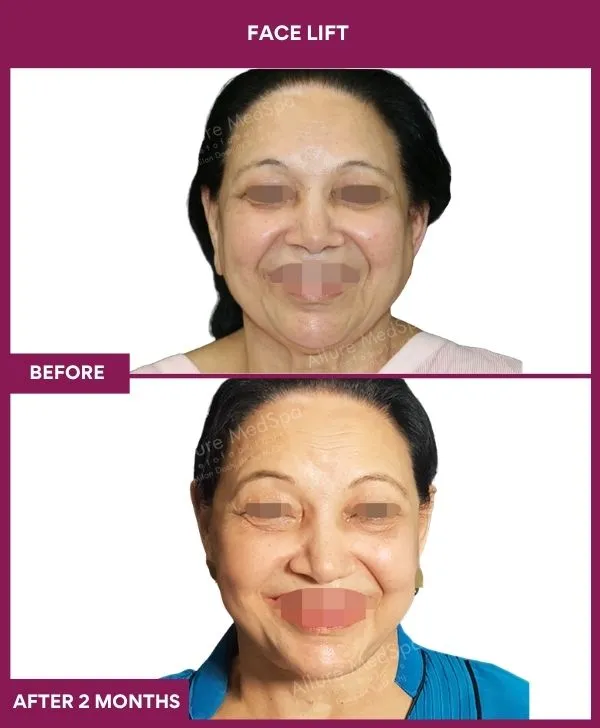
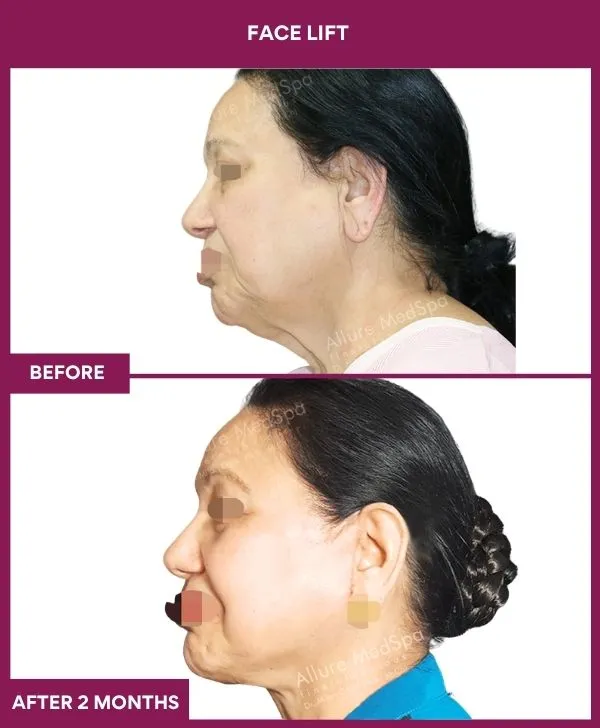
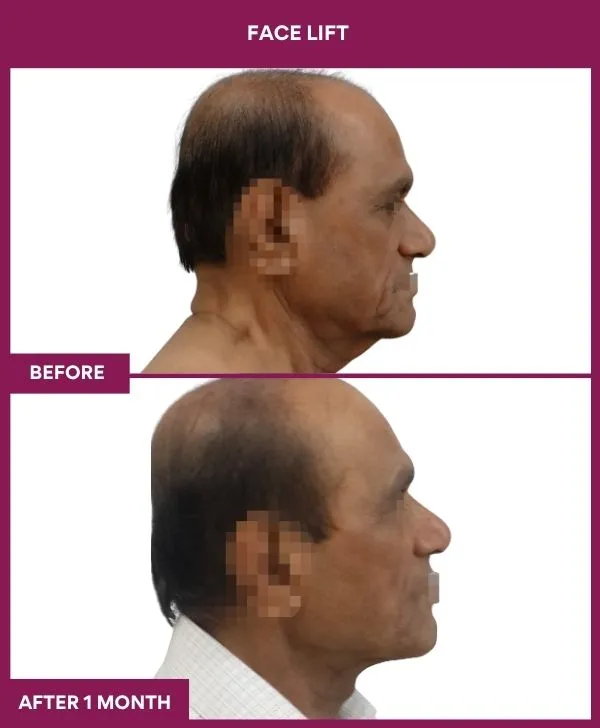
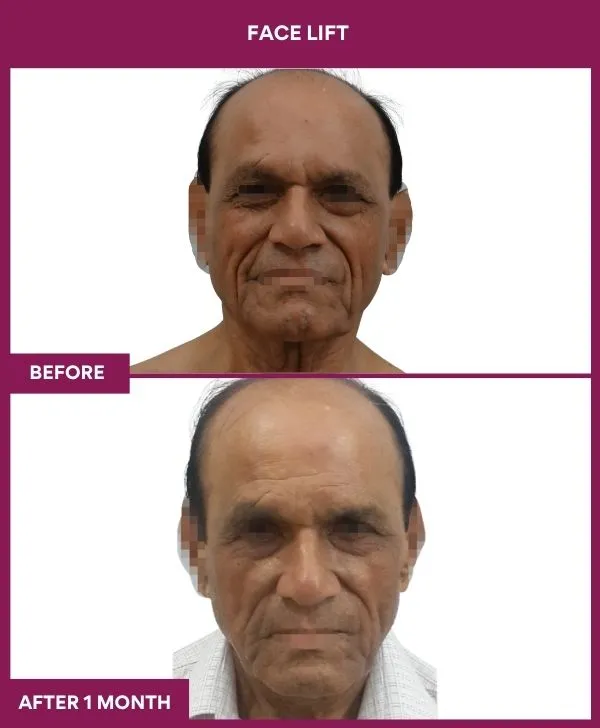
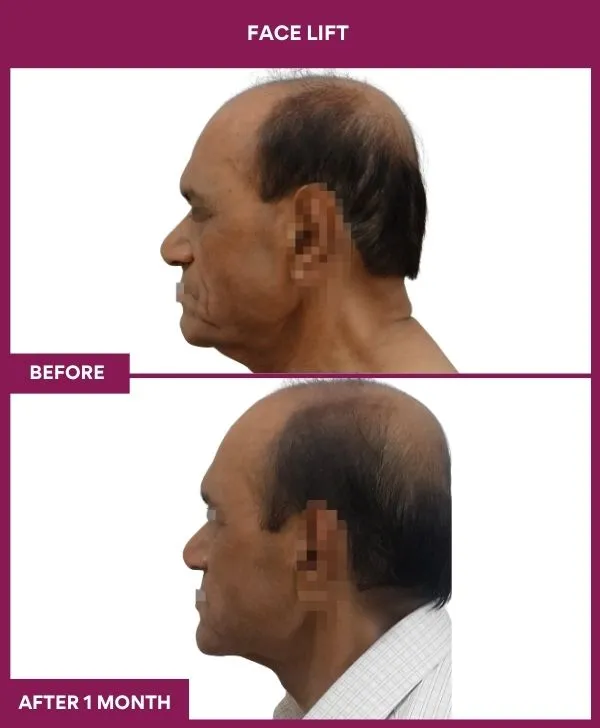
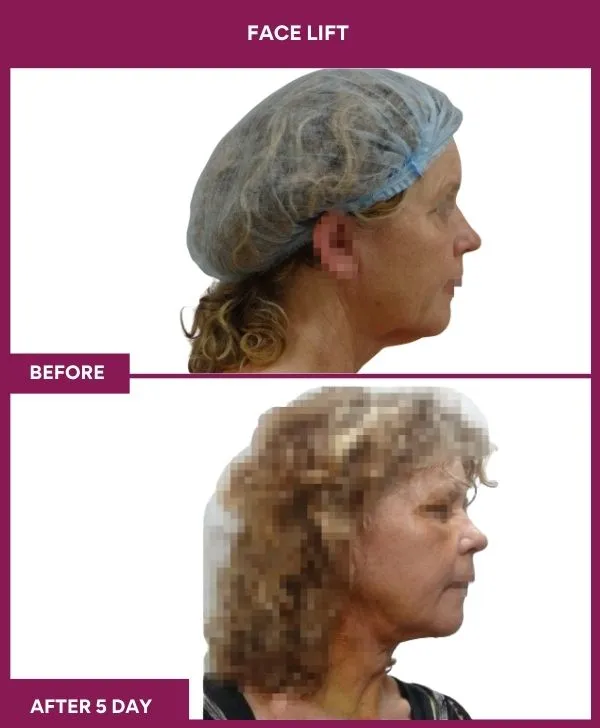
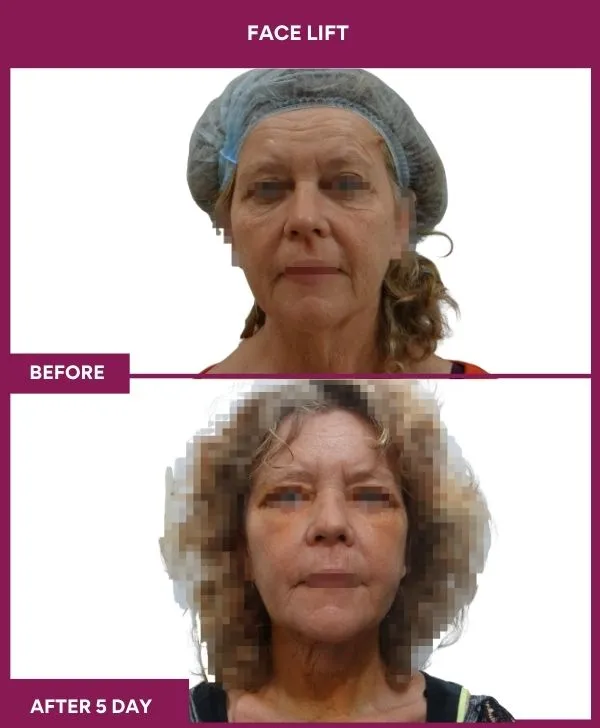
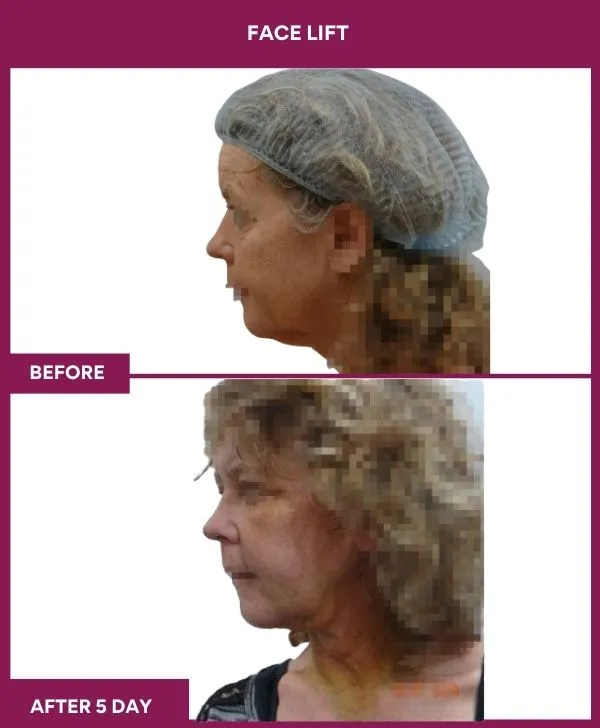
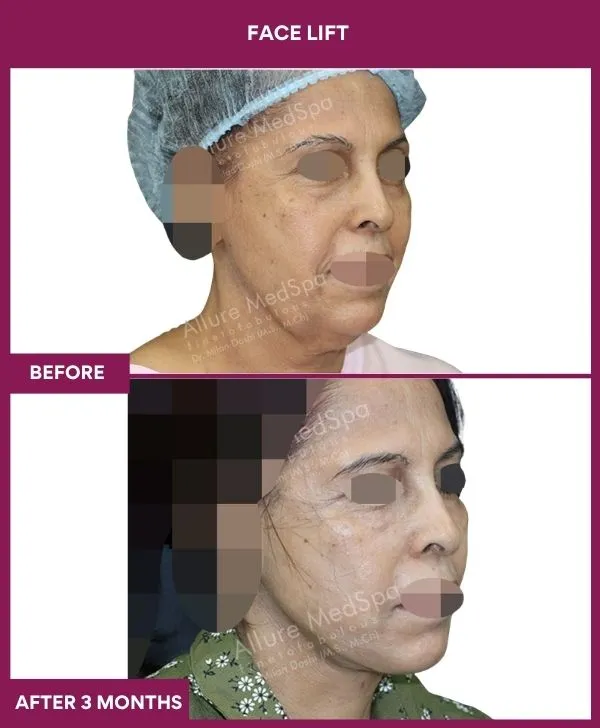
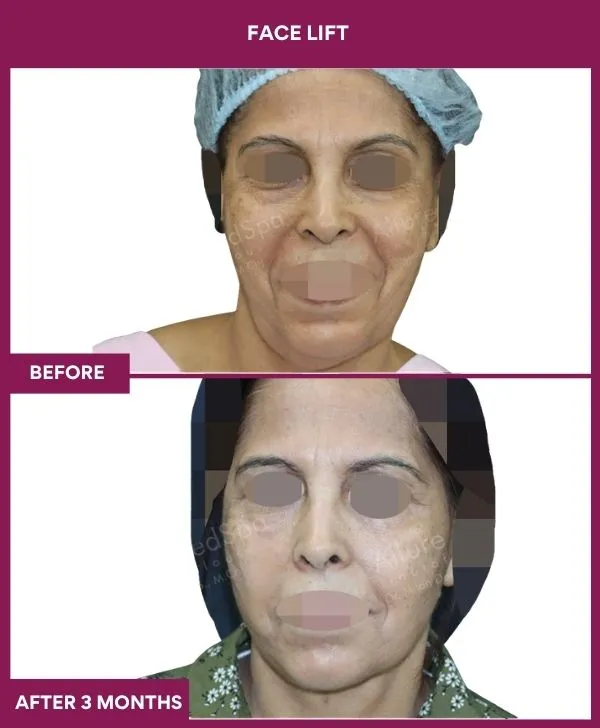
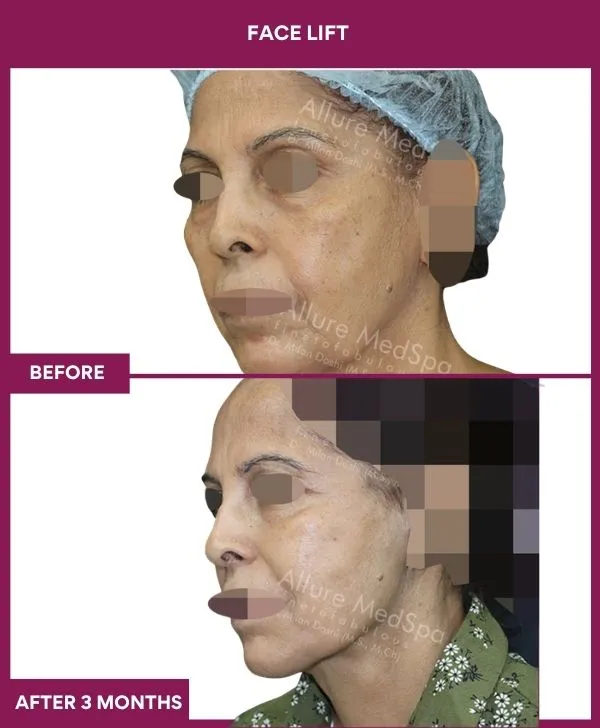
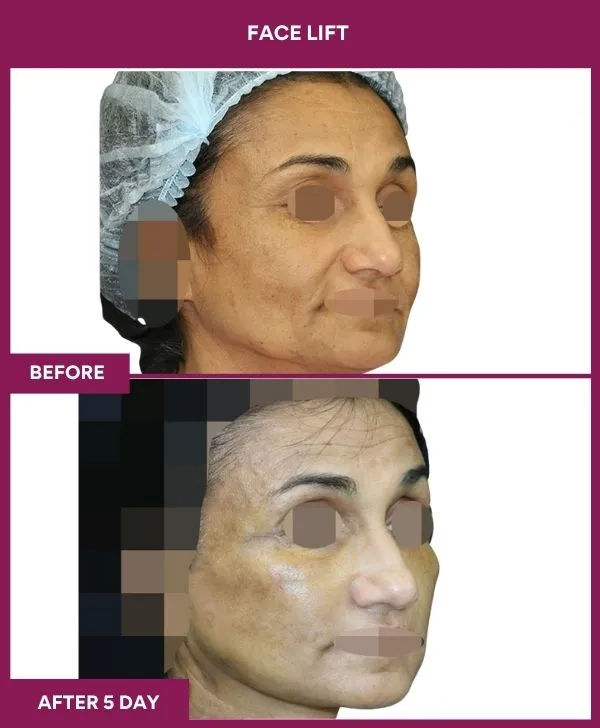
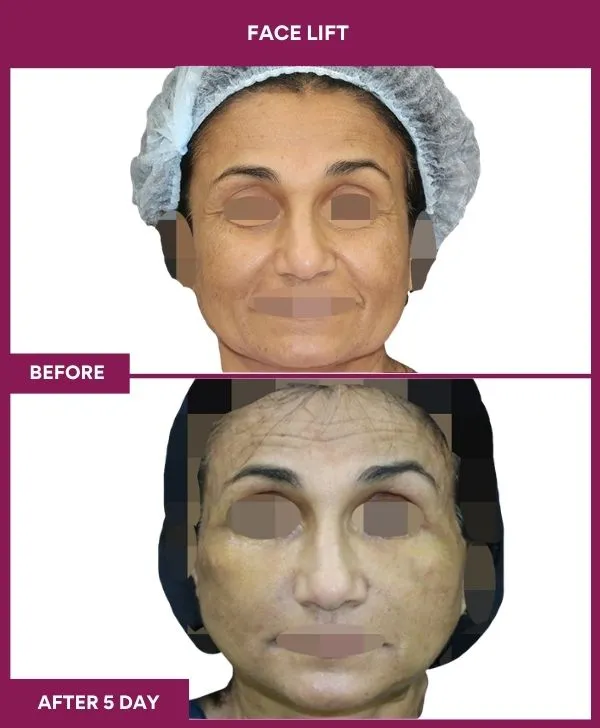
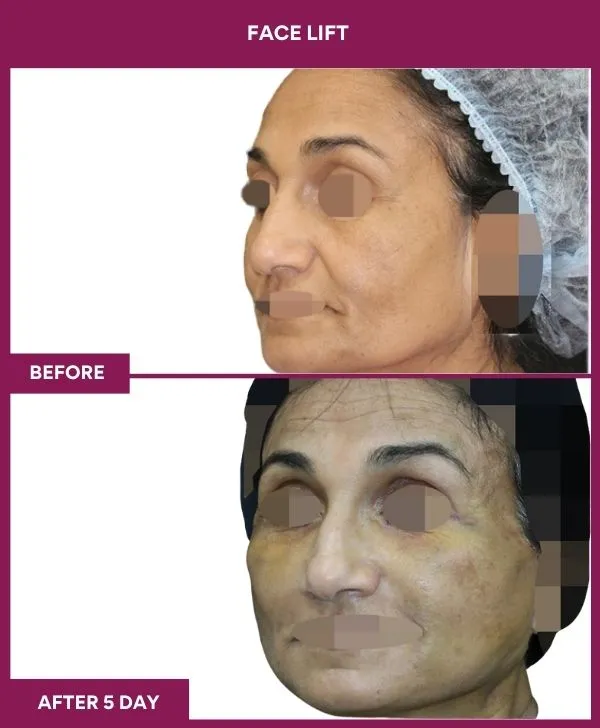
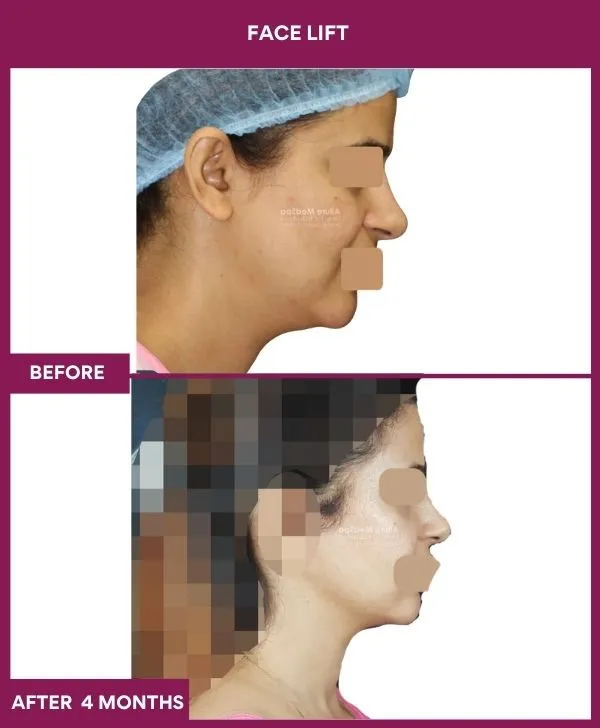
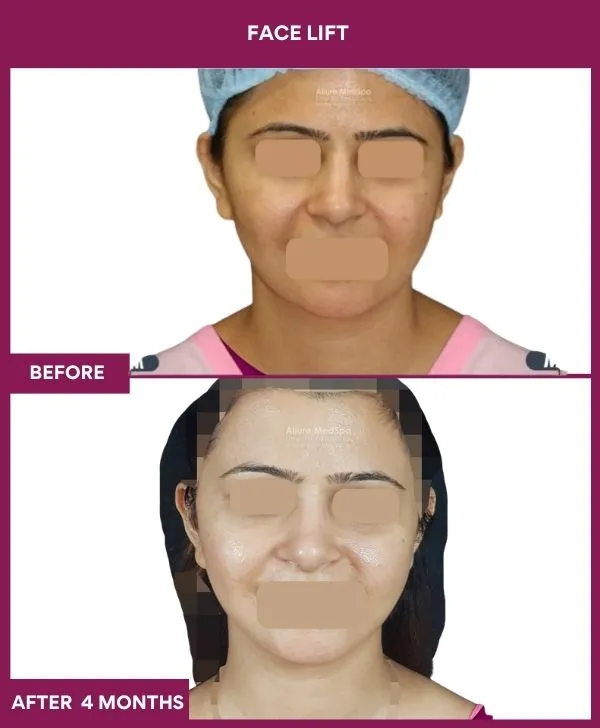
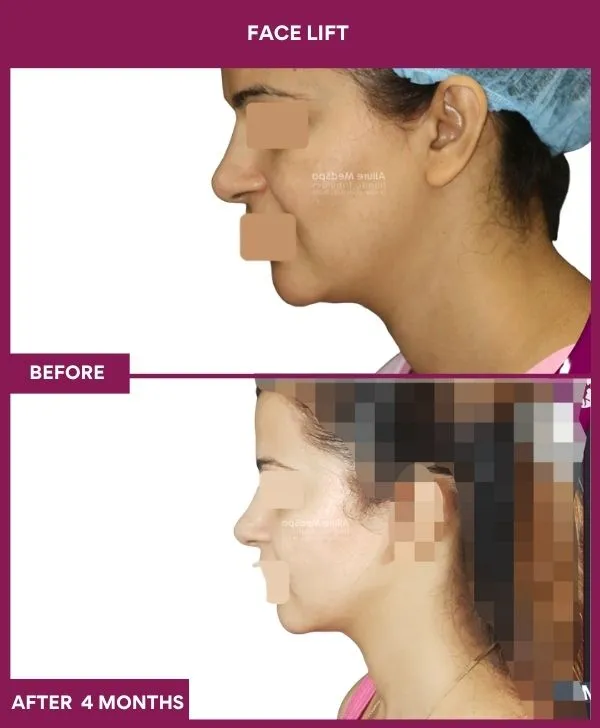
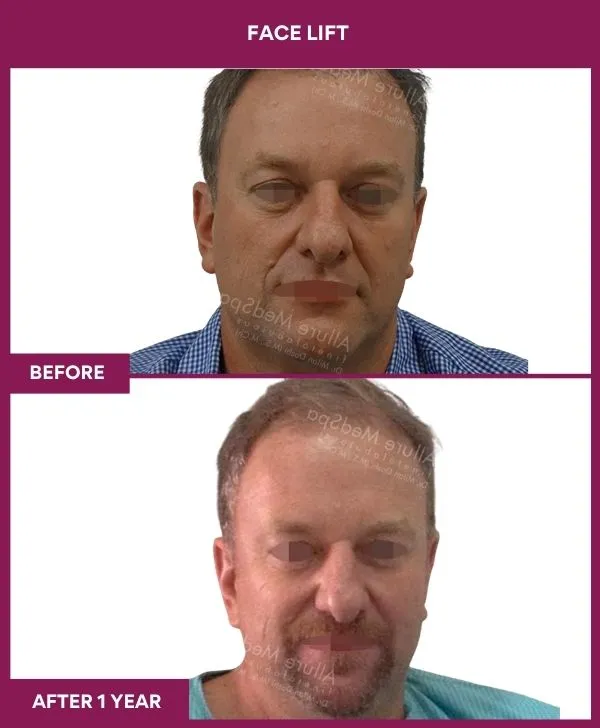
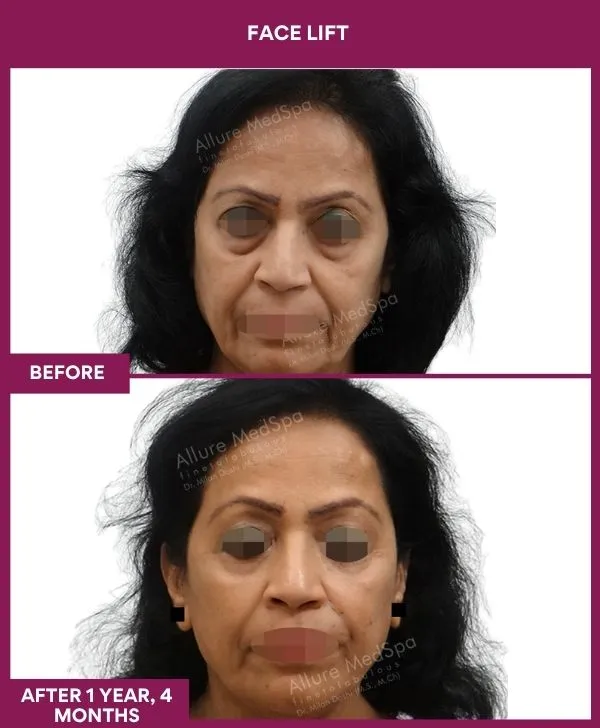
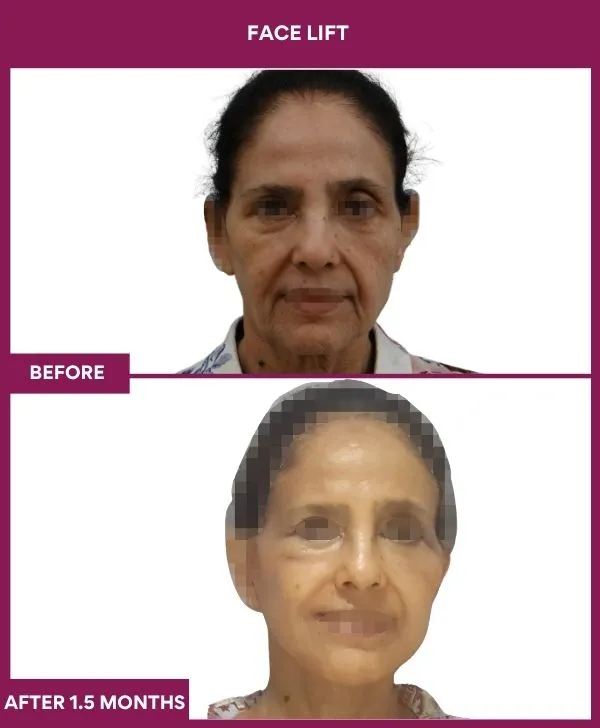
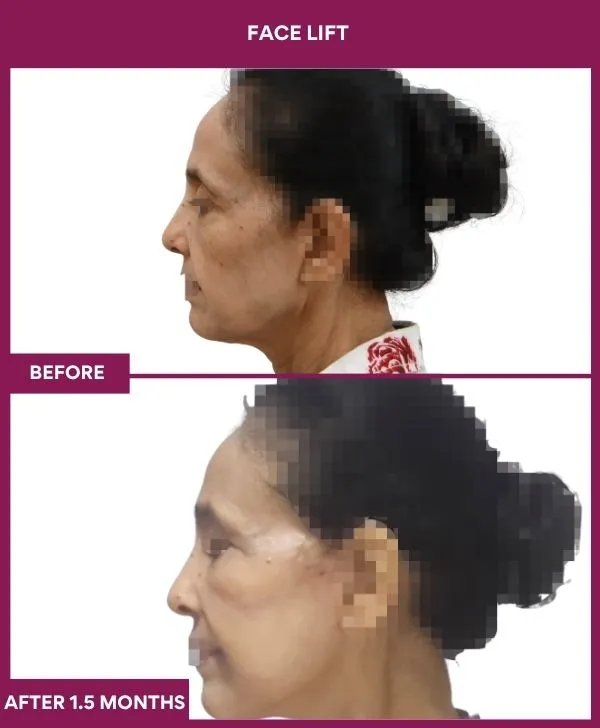
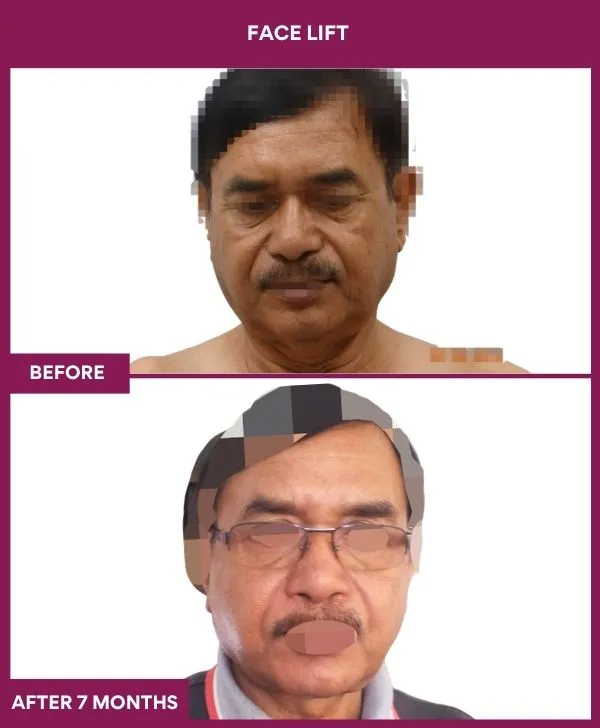
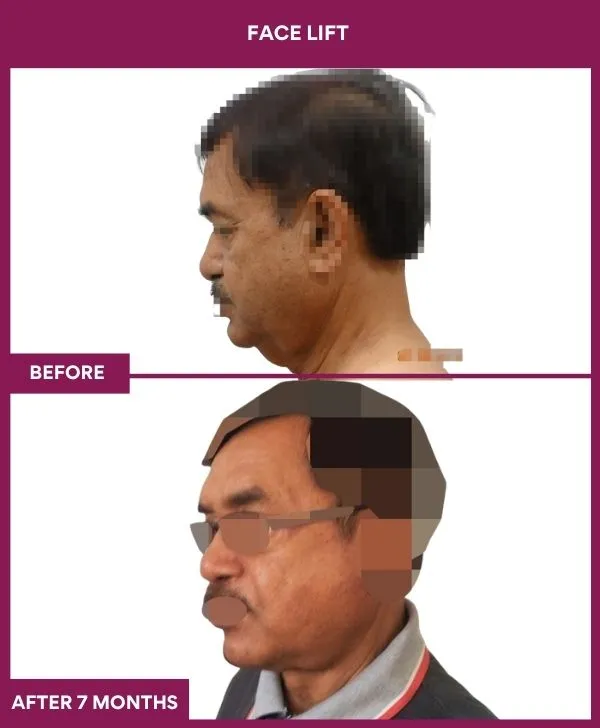
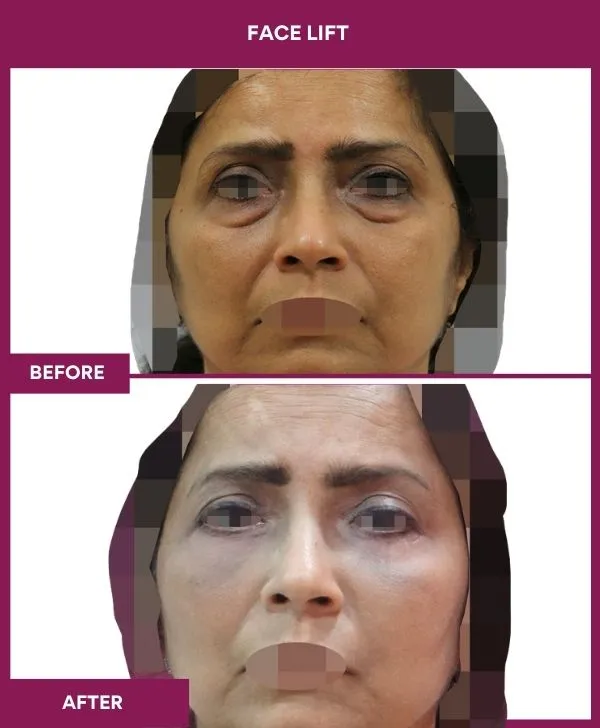
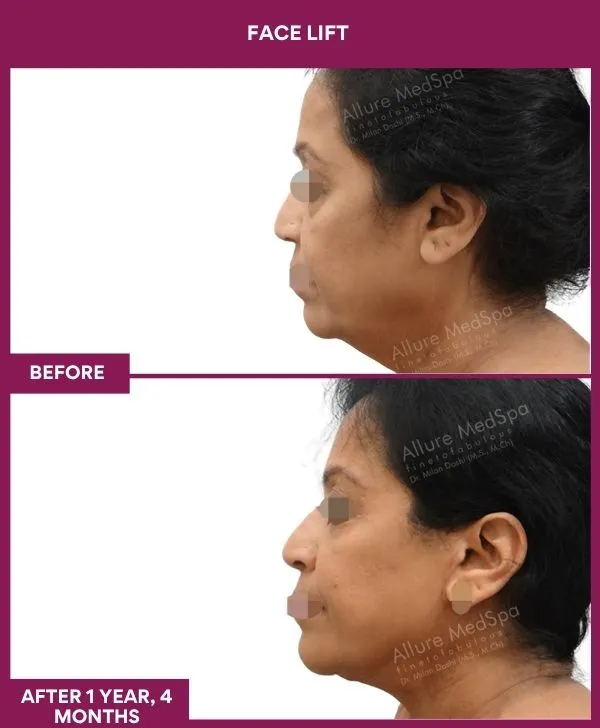
See real transformations from fine to fabulous — achieved with precision and care.
Facelift Surgery Testimonials: Fine To Fabulous Journeys
Thousands have trusted Dr. Milan Doshi to turn back time with natural, youthful results.
Video: Facelift Surgery Explained By Dr. Milan Doshi
Dr. Milan Doshi explains how a natural facelift is planned — technique, safety and realistic results.
Am I a Candidate?
(4 quick questions)
Quick Facts About Facelift Surgery
TIME REQUIRED
3–4 hours
ANESTHESIA
General
HOSPITAL STAY
1–2 days
PAIN LEVEL
Mild–moderate
BACK TO WORK
10–14 days
RESULTS LAST
8–12 years
SUCCESS RATE
97–98%
COMPLICATIONS
Under 2–3%
How Much Does Facelift Surgery Cost in Mumbai?
Facelift surgery in Mumbai starts from ₹1,60,000 to ₹3,00,000 and varies with the extent of face and neck correction, the technique required, anaesthesia and facility time, and whether the case is primary or revision. A final quotation follows examination and a written surgical plan — it cannot be given accurately by phone or from photographs.
| Facelift type | Indicative price range |
|---|---|
| Mini facelift | ₹1,60,000 – ₹2,00,000 |
| Lower facelift | ₹1,70,000 – ₹2,20,000 |
| Full / SMAS facelift | ₹2,00,000 – ₹2,60,000 |
| Deep-plane facelift | ₹2,40,000 – ₹3,00,000 |
| Face and neck lift | ₹2,30,000 – ₹3,00,000 |
| Neck lift alone | ₹1,60,000 – ₹2,10,000 |
| Facelift with fat grafting | ₹2,20,000 – ₹2,90,000 |
| Revision facelift | ₹2,50,000 – ₹3,00,000 |
+5% GST · Includes surgeon, anaesthesia, OT, hospital stay, medicines and follow-ups. EMI available.
Get your exact quote & surgery plan
Share your details — our team responds within working hours with cost, EMI options and next steps.
Most Common Question People Ask
Q1. Is facelift surgery painful?
Ans. Most patients describe tightness, pressure and soreness rather than severe pain. Prescribed medication usually controls expected discomfort, and the first 48 hours are typically the most uncomfortable. Sudden, severe or increasing pain on one side is not expected and requires urgent contact with the surgical team.
Q2. How much does a facelift cost in Mumbai?
Ans. Facelift cost in Mumbai starts from ₹1,60,000 and depends on the type and extent of lift, whether the neck is included, the technique, anaesthesia and facility requirements, and any combined procedures. A final quotation follows examination and a written surgical plan.
Q3. Does a facelift leave visible scars?
Ans. Yes — facelift surgery leaves permanent scars, usually placed along the hairline and natural ear contours, with a small incision beneath the chin if the neck is treated. They generally fade and become inconspicuous but do not disappear. Visibility depends on incision design, tension, healing and aftercare.
Q4. What is the best age for a facelift?
Ans. There is no single correct age. Suitability depends on the degree of tissue descent, skin quality, neck involvement, medical fitness and expectations. Some patients benefit in their forties; others are better served considerably later — or not at all. Anatomy matters more than the birth date.
Q5. How long do facelift results last?
Ans. Facelift results commonly remain meaningful for [8–12 / 10–12] years, but surgery does not stop ageing — it repositions tissue at one point in time. Technique, tissue quality, weight change, sun exposure and smoking all influence how long the correction holds.
Q6. When can I go back to work after a facelift?
Ans. Many patients return to desk work around 2–3 weeks after surgery, depending on the extent of the operation and individual healing. Physically demanding work needs longer and specific clearance. Your surgeon confirms timing at follow-up rather than in advance.
Q7. Will my facelift look natural?
Ans. A natural facelift result depends on accurate diagnosis, deeper-tissue support, appropriate vector selection and conservative skin removal. The aim is a rested, better-defined version of your own face rather than a changed one. Results vary between individuals and cannot be guaranteed.
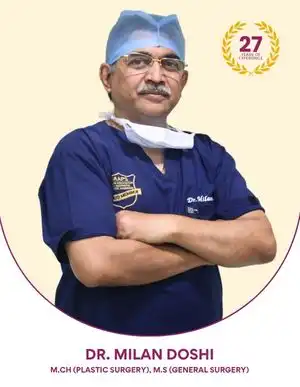
Why Choose Dr. Milan Doshi?
Dr. Milan Doshi, MCh, MS — Indian board-certified plastic surgeon with 27+ years in aesthetic surgery. ISAPS mentor, trusted by patients from 70+ countries. Consults at Andheri West; surgeries at the NABH-accredited surgical centre, Goregaon West.
Dr Doshi Note: “Patients often ask how much skin I will remove, expecting more to mean a better result. It is the opposite. The tight, operated look almost always comes from over-resection of skin combined with insufficient deeper support. My planning starts with the SMAS and treats the skin as the last, most conservative step.”
The Complete Guide About Facelift Surgery
What is Facelift Surgery (Rhytidectomy)?
A facelift, medically called rhytidectomy, lifts and repositions descended facial tissues, supports the deeper facial layers and gently redrapes loose skin. Modern planning works with the SMAS — the supportive sheet of tissue beneath the skin — instead of relying on skin tension alone.
This distinction matters. Pulling skin tighter creates tension at the incisions, tends to relapse and can produce an operated appearance. Repositioning the deeper layer allows the skin to be redraped without excessive tension.
A facelift primarily addresses structural descent — the gradual downward movement of deeper tissues, fat compartments and skin. It is not primarily a treatment for fine lines, pigmentation, pore size or generalised volume loss.
The three separate problems of facial ageing:
- Descent and laxity → addressed by lifting (facelift, neck lift, brow lift)
- Volume loss → addressed by volumising (fat grafting, fillers)
- Surface change — texture, pigmentation, fine lines → addressed by resurfacing and skin treatment
Adding volume to a lax face can make it look heavier. Tightening skin without deeper support can make the result look operated. Accurate diagnosis of which problem dominates is the single most important step.
Is facelift surgery cosmetic or reconstructive?
| Type | Main purpose | Common example |
|---|---|---|
| Cosmetic (aesthetic) | Improve appearance in a healthy face — soften jowls, redefine the jawline, improve face-neck contour | Standard rhytidectomy for age-related descent |
| Reconstructive / functional | Restore form or function after disease, injury or congenital difference | Facial reanimation, post-trauma or post-tumour facial reconstruction |
Most facelifts in private practice are cosmetic. Cosmetic facelift surgery should not be assumed to be covered by health insurance; coverage, where it exists, applies only to specific medically necessary indications and requires prior verification with your insurer.
Synonyms for facelift surgery
Patient terms: facelift, face lift, face tightening surgery, face and neck lift, sagging face surgery
Medical terms: rhytidectomy, cervicofacial rhytidectomy, SMAS facelift, extended SMAS facelift, deep-plane facelift, mid-face lift, lower facelift, facial rejuvenation surgery
Sources: Cervicofacial Rhytidectomy, StatPearls | ASPS – Facelift | Cleveland Clinic – Facelift
Does Your Face Look Older Than You Feel?
Many people describe the same experience with facial ageing: they feel well and sleep reasonably, yet see a face in photographs that looks tired, heavier along the jaw, or simply older than they feel. That gap is real and worth discussing.
Three questions patients actually ask at consultation:
- “Why does my jawline look blurred even though my weight hasn’t changed?”
- “I keep getting filler — so why does my face look heavier rather than lifted?”
- “My neck bothers me more than my face. Is that still a facelift?”
These concerns do not automatically mean surgery is needed. Mild laxity may suit a limited procedure, a skin-focused plan or a non-surgical approach. Advanced tissue descent usually cannot be corrected by repeatedly adding filler or using tightening devices. The useful question is not “which treatment is popular?” but “what has changed anatomically?”
Global & Indian facelift trends
Facelift surgery is growing globally rather than being replaced by injectables. The International Society of Aesthetic Plastic Surgery recorded 737,028 facelifts worldwide in 2024 — the ninth most common surgical procedure, accounting for 4.2% of all cosmetic surgery. That is a 7.4% rise on 2023 and a 75.9% rise on 2020. In India, ISAPS recorded 11,200 facelifts and 11,200 neck lifts in the same year, within a total of 677,040 cosmetic surgical procedures. India ranks seventh worldwide for total cosmetic procedures, and face-and-head surgery is the country’s second-largest surgical category.
What Are the Benefits of Facelift Surgery?
The main benefits of facelift surgery are reduced jowls, a clearer jawline, corrected lower-face and neck laxity, and softening of deep folds caused by tissue descent. Because the lift comes from the deeper SMAS layer, the correction is structural and longer-lasting than non-surgical alternatives.
Cosmetic benefits
- Improvement in jowls — descended tissue along the lower face is repositioned, reducing heaviness either side of the chin.
- Restored jawline definition — a clearer transition between face and neck, one of the most consistently valued outcomes in suitable patients.
- Correction of lower-face laxity — excess skin removed or redistributed conservatively, so contour improves without an overly tight appearance.
- Softening of deep folds associated with descent, particularly nasolabial and marionette folds — these may soften rather than disappear.
- Support for downturned mouth corners caused by descending tissue.
- Improved neck contour and selected platysma bands when neck correction is included.
Which Problems Can Facelift Surgery Correct?
| Concern | Facelift relevance | Possible approach | Learn more |
|---|---|---|---|
| Jowls / weak jawline | Core target | Descended tissue repositioned, excess skin redraped | [INTERNAL LINK REQUIRED — jowls & sagging jawline] |
| Lower-face laxity | Core target | SMAS support with conservative skin redraping | [INTERNAL LINK REQUIRED — techniques] |
| Loose neck skin / platysma bands | Frequently addressed | Neck lift or platysma correction, alone or combined | Neck lift surgery |
| Nasolabial / marionette folds | May soften, may not disappear | Facelift ± fat grafting where volume loss contributes | Facial fat grafting |
| Flat cheeks / midface volume loss | Not corrected by lifting alone | Fat grafting with or without lifting | Facial fat grafting |
| Thin or volume-deficient face | Lifting alone may look hollow | Facelift with planned volume restoration | [INTERNAL LINK REQUIRED — facelift with fat grafting] |
| Brow descent / upper-face heaviness | Not corrected by a lower facelift | Brow or temporal lift | Brow lift surgery |
| Upper- or lower-eyelid ageing | Not corrected by a facelift | Eyelid surgery (blepharoplasty) | Laser eyelid surgery |
| Fine lines, pigmentation, texture | Not corrected by structural lifting | Laser resurfacing, medical skin treatment | Skin treatments |
| Mild laxity in a younger face | Surgery may be disproportionate | Non-surgical options or no treatment | Non-surgical facelift |
The anatomy of facial ageing — the layers a facelift works on
Understanding a few terms makes consultation far easier.- Skin — the outer layer. Loses elasticity with age and sun exposure. It influences how tissue redrapes and how scars mature, but it is not the structure that does the lifting.
- Facial fat compartments — fat sits in discrete pockets, not one even layer. These deflate unevenly and descend, which is why the midface flattens while the lower face looks heavier.
- SMAS (superficial musculoaponeurotic system) — the fibrous, muscular sheet beneath the skin connected to the facial muscles. This is the structural scaffolding of the lift.
- Retaining ligaments — fibrous bands anchoring skin and SMAS to deeper structures. As surrounding tissue descends, these anchor points create visible transitions and folds.
- Platysma — the broad, thin sheet of muscle across the front of the neck. When its edges separate and slacken, vertical neck bands appear.
- Midface, lower face and neck — the three zones assessed together, since an uncorrected neck limits the perceived improvement in the jawline.
What Are the Limitations of Facelift Surgery?
A facelift cannot stop ageing, remove every wrinkle, correct pigmentation or texture, restore lost volume, or erase scars. It repositions tissue at one point in time. Being clear about these boundaries before surgery is one of the strongest predictors of satisfaction afterwards.
Facial tissue is not clay. It is biological tissue with individual thickness, elasticity, blood supply and healing behaviour — it cannot be sculpted without anatomical limits. A facelift cannot make you look like a specific other person; your bone structure, soft-tissue thickness and facial proportions set the boundaries. It cannot guarantee symmetry either: most faces are naturally asymmetrical before surgery and some asymmetry usually remains.
A lifted but deflated face can look drawn, so volume restoration is a separate decision. Some patients need complementary treatment — fat grafting, eyelid surgery, brow surgery or skin treatment — to address what a facelift does not cover, and further treatment may eventually be wanted as ageing continues. Results vary by individual anatomy and healing.
Sources: Mayo Clinic – Face-lift | ASPS – Facelift Results
Why Consult Before Facelift Surgery?
A facelift consultation is a diagnostic appointment, not a sales appointment. Its purpose is to determine what has changed anatomically — descent, volume loss or skin damage — and whether a surgical procedure is the proportionate answer.
What happens during a facelift consultation?
Assessment typically covers the face and neck together with the patient upright (gravity affects tissue position); the degree and pattern of tissue descent; facial volume, distinguishing deflation from descent; skin quality and elasticity; jawline definition; neck assessment including platysma bands, submental fat and chin projection; documented facial asymmetry; full medical history including medicines, supplements and nicotine use; previous facial surgery, threads, fillers, energy devices or laser; and your goals in your own words. You should leave understanding your diagnosis, the recommended plan, the alternatives including no treatment, the realistic extent of improvement, the risks and the recovery required.
What should I prepare before consultation?
- Your main concerns, written down in order of priority.
- All medicines and supplements, including blood thinners, herbal supplements and hormone therapy.
- Medical and surgical history, including any anaesthetic problems.
- Previous facial treatments — fillers, threads, HIFU, lasers, prior surgery — with approximate dates.
- Photographs of yourself from 5–10 years ago, which help separate descent from long-standing features.
- Reference photographs, useful for discussing goals — not as a target to replicate.
Is an online facelift consultation possible?
If you are outside Mumbai, you can request a preliminary WhatsApp photo pre-check with front, side and three-quarter photographs in even, natural lighting, without makeup or filters. This is preliminary guidance only. Photographs cannot assess skin elasticity, tissue mobility, muscle tone, bone support or medical fitness, and no definitive diagnosis, technique recommendation or final quotation can be given from them.
Consultation fee: ₹1,500
Which Techniques Are Used in Facelift Surgery?
“Technique” in facelift surgery refers to how the deeper facial layer is managed — plicated, partially excised, elevated as a flap, or released beneath the SMAS. This is a surgical decision made from your anatomy, not a menu item selected by brand name.
Technique comparison:
| Technique | How the deeper layer is managed | May suit | Relative extent |
|---|---|---|---|
| SMAS plication | SMAS folded and stitched onto itself for support, without raising a separate flap | Mild to moderate descent; thinner tissue | Less extensive |
| SMASectomy | A strip of SMAS is removed and the edges joined, tightening along a chosen vector | Selected moderate descent | Moderate |
| SMAS flap / extended SMAS | SMAS raised as a flap and repositioned separately from skin, allowing independent vectors | Moderate to advanced lower-face and neck laxity | More extensive |
| Deep-plane facelift | Dissection continues beneath the SMAS in selected areas, releasing retaining structures so skin and SMAS move as one unit | Selected midface descent, jowls and deeper folds in appropriate anatomy | More extensive |
| Platysma / neck correction | Neck muscle edges tightened or repositioned, with fat addressed as indicated | Neck bands, poor neck-jaw definition | Variable; often combined |
SMAS facelift: The SMAS facelift supports or repositions the superficial musculoaponeurotic system so the lift comes from the deeper layer rather than skin tension. Skin is then redraped and trimmed conservatively. Depending on tissue thickness and direction of descent, the SMAS may be plicated, partially excised or elevated as a flap. This remains the workhorse approach for most patients with moderate lower-face and neck laxity.
Extended SMAS facelift: An extension of the SMAS flap approach in which dissection continues further, allowing greater independent movement of the deeper layer — particularly useful where midface descent contributes to the ageing pattern.
Deep-plane facelift: Dissection proceeds beneath the SMAS in selected areas and releases specific retaining ligaments, so skin and SMAS move together as a composite unit. Because the layers move together, tension on the skin closure is reduced. It requires precise anatomical knowledge of facial nerve branch positions.
Platysma and neck correction: Where neck bands or poor neck-jaw definition are present, the platysma edges may be tightened and submental fat addressed, often through a small incision beneath the chin — as part of a facelift or as a separate neck-lift component.
Is a deep-plane facelift always better than a SMAS facelift?
No. No single facelift technique is universally superior — worth stating plainly, because “deep plane” has become a marketing term as much as a surgical one.
- Anatomy matters most. Tissue thickness, skin elasticity, the pattern and depth of descent, and neck involvement determine which plane gives a meaningful result.
- Surgeon experience matters. A technique performed well within a surgeon’s established expertise generally serves a patient better than an unfamiliar technique chosen for its label.
- Extent of ageing matters. Early laxity may be well served by a limited approach; advanced descent may not respond adequately to one.
- Evidence is genuinely mixed. Published comparisons are limited by inconsistent definitions of each technique, heterogeneous outcome measures and variable follow-up; comparative reviews have not established universal superiority of either approach (Khoury et al., Aesthetic Plastic Surgery, 2025 — see §24).
- More extensive is not automatically better. A larger dissection carries longer recovery and a different risk profile, without guaranteeing a better contour in a patient who did not need it.
The right question at consultation is not “do you do deep-plane?” but “which plane does my anatomy require, and why?”
Dr. Doshi’s Note — “There is no single facelift technique suitable for every patient. I select between SMAS, extended SMAS and deep-plane release according to whether the face is male or female, heavy or thin, the degree of tissue descent, skin laxity, neck involvement and the patient’s natural facial structure. A thin or volume-deficient face may also benefit from carefully planned fat grafting. The aim is not to perform the most extensive technique, but to choose the right combination that restores youthful contours while keeping the face natural and recognisably yours.”
What Are the Types of Facelift Surgery?
Where technique describes how the deeper layer is handled, type describes the scope — which regions are treated and how extensive the operation is. Scope is matched to the pattern and severity of ageing.
- Full facelift — addresses moderate to advanced lower-face and neck laxity. Deeper support is established and skin redraped without using tension as the main lift. The most comprehensive standard option.
- Mini facelift — a limited lift for early jowls and smaller amounts of excess skin, with more restricted incisions and dissection. Recovery may be shorter, but the achievable correction is also more limited. It is not a smaller version of a full result; it is a different operation for a smaller problem.
- Face and neck lift — combines lower-face correction with loose neck skin, platysma bands and neck-jawline definition. Often the right scope when the neck, not the face, is the main concern. → Neck lift surgery
- Lower facelift — concentrates on jowls, jawline and lower-face laxity without extending into the midface or upper face.
- Male facelift — requires specific attention to beard-bearing skin, sideburn position, hairline preservation and masculine facial character. Male skin is typically thicker and more vascular, affecting both planning and bleeding risk.
- Revision facelift — addresses recurrent laxity, unsatisfactory scars, hairline or sideburn distortion, asymmetry or an operated appearance after earlier surgery. Prior surgery alters tissue planes, blood supply and scar behaviour.
- Facelift with fat grafting — for ageing patterns that include both descent and deflation. Lifting restores position; grafted fat restores volume. Photographs of such cases should label the two contributions separately. → Facial fat grafting
Combined facial rejuvenation: add a related procedure only when it solves a separate anatomical concern — neck lift, fat grafting, eyelid surgery, brow lift, rhinoplasty, skin resurfacing or thread lift. More procedures do not automatically mean a better result, and each addition extends operating time, anaesthetic exposure and recovery demands.
Non-surgical options: HIFU, threads, injectables and energy-based devices may offer modest correction for selected early concerns. They cannot remove substantial excess skin, reposition the SMAS or reproduce a surgical lift — a reasonable option for mild laxity, and an unreasonable substitute for advanced descent. → Non-surgical facelift
How Is Facelift Surgery Performed Step-by-Step?
Facelift surgery repositions the deeper tissues first, then redrapes the skin with controlled tension. Incisions are planned within the hairline and around natural ear contours, with a small incision beneath the chin added when the neck also requires treatment.
Procedure step by step:
| Step | What happens |
|---|---|
| 1. Consultation and planning | Diagnosis of descent, volume loss and skin quality; selection of type and technique; discussion of alternatives, risks and recovery |
| 2. Preoperative preparation | Medical assessment, investigations, anaesthetic review, medication and supplement adjustment, confirmed nicotine cessation |
| 3. Surgical markings | Jowls, neck bands, hairline, sideburn position, ear contours, planned vectors and existing asymmetry marked with the patient upright |
| 4. Anaesthesia | Usually general anaesthesia; selected limited lifts may use local with sedation. Monitoring is continuous |
| 5. Incision and elevation | Incisions follow hairline and ear contours; submental incision added if the neck is treated. Skin elevated to expose the deeper layer |
| 6. SMAS management | SMAS plicated, partially excised, or elevated and repositioned — or a deep-plane release performed — along the chosen vector |
| 7. Neck / platysma correction | Platysma edges tightened or repositioned and submental fat addressed as indicated |
| 8. Skin redraping | Skin redraped over the newly supported deeper layer along a natural, unforced direction |
| 9. Conservative skin removal | Only true excess removed. Over-resection is the common cause of a tight, operated appearance |
| 10. Closure | Closure follows natural junctions — hairline, sideburn, ear contour — with minimal skin tension to support favourable scar maturation |
| 11. Dressings and drains | Supportive facial dressing applied; small drains may be used to reduce fluid collection |
| 12. Immediate observation | Monitored recovery watching pain, swelling, symmetry and any one-sided swelling suggesting haematoma; overnight observation as indicated |
Surgical elements and devices:
| Element / device | Possible role | Important consideration |
|---|---|---|
| Absorbable sutures | Support of SMAS and deeper layers; deep dermal closure | Choice affects how long deep support is held while tissue heals |
| Non-absorbable sutures | Suspension of deeper structures where prolonged support is required | Require removal or remain permanently, depending on placement |
| Skin sutures / clips | Skin approximation along hairline and ear contours | Timing of removal influences scar appearance |
| Surgical drains | Removal of fluid collection in the early postoperative period | Used selectively; require correct handling and output recording |
| Supportive dressing / garment | Support and swelling control in early healing | Must not be adjusted or removed by the patient without instruction |
| Fat grafting equipment | Harvest, processing and transfer of the patient’s own fat | A proportion of grafted fat resorbs; volume outcome is not fully predictable |
| Tissue sealants (where used) | May reduce fluid collection in selected cases | Use varies by surgeon and case; not routine in all facelifts |
When Will I See Final Facelift Results?
Early facelift contour change is visible within days, but swelling obscures it. A clearer sense of the new jawline emerges at 2–3 weeks, contours refine over 2–3 months, and scar maturation continues for a year or longer.
how the result settles:
| Time | What you may notice |
|---|---|
| First few days | Contour change present but obscured by swelling, bruising and dressings. Do not judge the result at this stage |
| 1 week | Swelling remains significant. Early tightness is normal and does not represent the final tension |
| 2–3 weeks | Most visible bruising and much swelling improve. A clearer sense of the new jawline and neck contour emerges |
| 4–6 weeks | Contours become more defined; tissues begin to feel softer. Firmness along dissected areas is common |
| 2–3 months | The face generally feels settled, though mild swelling, firmness or altered sensation may persist in areas |
| Several months on | Contour becomes refined; residual firmness continues to soften |
| Up to 12 months+ | Scar maturation — incision lines flatten and fade. Scars do not disappear but usually become inconspicuous |
What can affect the final facelift result?
Technique and vector selection; degree and pattern of ageing at the time of surgery; tissue quality and thickness; skin elasticity; whether the neck was included; previous facial surgery or treatments; smoking and nicotine exposure; individual healing response; weight fluctuation afterwards; sun exposure on healing scars; and adherence to aftercare, activity restriction and follow-up.
What Is the Aftercare After Facelift Surgery?
What care is usually advised after facelift surgery?
- Keep your head elevated when sleeping and resting, as instructed, to help control swelling.
- Protect the dressings and incisions — keep the area clean and dry; do not remove dressings, pull sutures, pick scabs or apply unapproved products.
- Care for drains correctly if used — empty and record output as demonstrated; do not pull, twist or disconnect them.
- Take medicines exactly as prescribed and do not restart blood-thinning medicines or supplements without approval.
- Walk gently — short walks support circulation, while bending, straining, heavy lifting and vigorous exercise wait until cleared.
- Wear front-opening clothes and follow the washing, shaving and grooming instructions you are given.
- Attend all follow-up appointments — reviews monitor swelling, wounds, drains, sutures, scars and facial movement, and catch problems early.
What should patients avoid after a facelift?
| Avoid | Why |
|---|---|
| Smoking, vaping, nicotine in any form | Reduces blood supply to skin flaps; significantly increases delayed healing, skin loss and poor scarring |
| Heavy lifting | Raises blood pressure and strains healing tissue; increases bleeding and haematoma risk |
| Strenuous exercise | Increases blood pressure, swelling and bleeding risk before tissues stabilise |
| Bending forward or straining | Raises pressure in head and neck, worsening swelling and bleeding risk |
| Driving before clearance | Sedating medicines and restricted head movement impair safe reaction |
| Unapproved medicines or supplements | Some affect bleeding, blood pressure or healing — check every product with your surgeon |
| Direct sun on healing scars | Can cause persistent darkening of scars |
| Salon, hair-colour or chemical treatments | Chemicals and traction can affect healing incisions and hairline scars |
| Sleeping flat or on the side too early | Increases swelling and places pressure on healing tissue |
| Judging your result in the first weeks | Swelling and firmness make early appearance unrepresentative |
What Are the Risks and Complications of Facelift Surgery?
Facelift surgery is generally safe for an appropriately selected patient operated on by a trained plastic surgeon in an equipped facility, but it remains major surgery with recognised risks. Expected postoperative effects must be separated from true complications — and no surgeon can eliminate risk.
Common / expected early effects (normal healing, not complications): swelling and bruising; tightness and firmness across treated areas; numbness or altered sensation, particularly around the ears and cheeks; temporary asymmetry during the swelling phase; mild-to-moderate discomfort; temporary difficulty with facial movement due to swelling; fatigue in the first week.
Uncommon complications: haematoma — a collection of blood beneath the skin flap and the most frequently reported early complication of facelift surgery, which may require urgent drainage; infection; delayed wound healing, particularly at areas of tension or in nicotine users; conspicuous, widened or thickened scars; hair loss around incisions; contour irregularity or asymmetry requiring revision; seroma; prolonged altered sensation; dissatisfaction leading to a request for revision.
Rare but important: skin compromise or necrosis, most strongly associated with nicotine exposure and excessive tension; facial nerve weakness — usually temporary, with permanent weakness rare but recognised; great auricular nerve injury affecting ear sensation; significant bleeding requiring return to theatre; anaesthesia-related complications; thromboembolic events.
TABLE — how risk is minimised (this describes responsible risk reduction; it does not promise that complications can be eliminated):
| Risk area | How we work to minimise it |
|---|---|
| Inappropriate patient selection | Honest assessment of whether anatomy, expectations and health justify surgery; willingness to decline or defer |
| Undetected medical risk | Preoperative medical evaluation, investigations and anaesthetic review before scheduling |
| Nicotine-related healing failure | A clear, enforced nicotine cessation requirement before and after surgery |
| Bleeding and haematoma | Medication and supplement review, blood-pressure control, meticulous haemostasis, selective drain use, early observation |
| Poor surgical planning | Upright marking, technique matched to anatomy, appropriate vector selection, conservative skin excision |
| Facility and equipment risk | Surgery at an NABH-accredited surgical centre with appropriate equipment |
| Infection | Sterile technique, theatre sterilisation protocols, appropriate perioperative antibiotics, wound-care instruction |
| Anaesthetic events | Qualified anaesthesia team with continuous intraoperative monitoring |
| Delayed recognition of a problem | Structured postoperative observation, written warning signs, accessible follow-up |
| Scar problems | Tension-minimising closure at natural junctions, scar-care instruction, sun protection guidance |
Dr. Doshi’s Note: “The single change that most reduces facelift risk is not a technique — it is complete nicotine cessation. Nicotine narrows the small vessels supplying the skin flap, and the flap is exactly what a facelift depends on. When a patient tells me they will cut down rather than stop, I would rather postpone the surgery than accept that risk.”
⚠️ WHEN TO SEEK URGENT MEDICAL ATTENTION
Seek urgent advice or immediate emergency care for: rapidly increasing swelling on one side of the face or neck · severe or escalating pain · heavy or continuing bleeding · difficulty breathing · a concerning change in skin colour over the face or neck · fever · abnormal discharge or foul smell from an incision.
In an emergency, go to the nearest emergency department or call emergency services. Do not wait for a WhatsApp or email reply.
What Is the Facelift Recovery Timeline?
Facelift recovery is gradual. Bruising and swelling are most noticeable in the first few days and commonly improve over 2–3 weeks, with most patients returning to desk work around 2–3 weeks. Tightness, numbness and firmness take longer to settle.
TABLE — week by week:
| Timepoint | What typically happens |
|---|---|
| First 24–48 hours | Swelling, bruising, tightness, numbness and mild-to-moderate discomfort expected. Facial dressing and small drains may be in place. Rest head-elevated; monitored observation as indicated |
| Days 3–7 | Swelling and bruising remain visible but begin reducing. Dressings, drains and sutures checked at scheduled follow-up. Gentle walking encouraged; most people remain at home |
| Weeks 2–3 | Most visible bruising and swelling improve. Many patients feel comfortable returning to desk work or limited social activity. Camouflage with hairstyle and makeup may be possible once permitted |
| Weeks 3–6 | Contours become clearer; tissues feel softer. Exercise, lifting, travel and salon treatments resume only after your surgeon’s approval |
| 2–3 months | The face generally feels settled, though mild swelling, firmness or altered sensation may remain in some areas |
| Several months on | Incisions continue healing, scars flatten and fade, contour refines. Scar maturation may continue for a year or longer |
Key recovery points: swelling is greatest in week one and settles progressively, with subtle swelling persisting for months · bruising typically resolves over 2–3 weeks · early tightness is normal and is not the final tension · numbness around the ears and cheeks usually improves over weeks to months · social downtime is often 1–2 weeks after a more extensive facelift · travel and flying require written clearance at follow-up, so do not book non-refundable travel around an assumed date.
Do not use another patient’s timeline as permission for driving, exercise, travel, hair treatment or restarting medication.
Dr. Doshi’s Note: “Almost every facelift patient has the same low point around day four or five — swelling peaks, bruising is at its most colourful, and the face does not yet look like the plan. I now warn people about that day in advance, because knowing it is coming changes it from alarming to expected.”
Medical Codes for Facelift Surgery
Codes below are for administrative and documentation reference. All codes must be verified against the current CPT and ICD-10 code sets before publication and before any use in documentation.
| CPT Code | CPT Description | ICD-10 Procedure |
|---|---|---|
| 15847 | Excision, excessive skin and subcutaneous tissue | Z41.1 |
| 15828 | Rhytidectomy (facelift), including neck and submental area | Z41.1 |
| 15822 | Rhytidectomy (facelift), including skin only | Z41.1 |
| 15823 | Rhytidectomy (facelift), including fascial tightening | Z41.1 |
(FAQs) Frequently Asked Question About Facelift Surgery
Q1. Can a facelift fail or need revision?
Ans. A facelift can under-correct, relapse as ageing continues, or produce scars, asymmetry or contour irregularity that a patient wants addressed. Revision surgery is possible in suitable patients but is technically more demanding, because previous surgery alters tissue planes, blood supply and scar behaviour.
Q2. Is facelift surgery safe in India?
Ans. Facelift surgery is generally safe for an appropriately selected patient when performed by a qualified plastic surgeon in an accredited facility with proper anaesthetic support. Recognised risks remain — including haematoma, infection, healing problems and temporary nerve weakness. Judge the surgeon’s qualification and the facility’s accreditation, not the country.
Q3. How long does facelift surgery take?
Ans. A full facelift commonly takes around 3–4 hours. Neck correction, revision surgery and combined procedures may extend the operation considerably. The planned duration is confirmed only after examination and surgical planning.
Q4. What is the difference between a SMAS and a deep-plane facelift?
Ans. A SMAS facelift supports or repositions the SMAS layer beneath the skin. A deep-plane facelift dissects beneath the SMAS and releases retaining structures so skin and SMAS move together. Neither is universally superior; the appropriate plane depends on individual anatomy and surgeon experience.
Q5. Can a facelift correct the neck?
Ans. A facelift may improve the neck when neck correction is included — through platysma tightening, fat management and skin redraping. Isolated neck concerns may be better addressed by a dedicated neck lift. Assessing face and neck together determines the appropriate scope.
Q6. Facelift vs thread lift — what is the difference?
Ans. A facelift surgically repositions deeper tissues and manages excess skin. A thread lift provides a modest, temporary lift for selected mild laxity. Threads cannot reproduce a surgical result where jowls or neck laxity are advanced.
Q7. Can facelift surgery be combined with eyelid surgery or fat grafting?
Ans. Yes, when each procedure has a clear separate indication — such as eyelid ageing or volume loss that lifting cannot restore. Combining procedures increases operative time, anaesthetic exposure and recovery demands, so medical fitness and total surgical scope must be assessed together.
Q8. Can men have facelift surgery?
Ans. Yes. Male facelift planning requires specific attention to beard-bearing skin, sideburn position, hairline preservation and masculine facial character. Male skin is often thicker and more vascular, which influences both surgical planning and bleeding risk.
Q9. Can a second or revision facelift be performed?
Ans. Yes, in suitable patients. Previous surgery alters tissue planes, blood supply and scar behaviour, and existing incisions constrain planning, so revision surgery is technically more demanding. It requires assessment of what the earlier surgery did and did not achieve.
Q10. When can I fly after facelift surgery?
Ans. Only after written clearance at a follow-up review. Timing depends on the extent of surgery, drain and suture management, and healing progress. Do not book non-refundable travel around an assumed date.
Q11. Does insurance cover facelift surgery?
Ans. Cosmetic facelift surgery should not be assumed to be covered by health insurance. Coverage, where it exists at all, applies only to specific medically necessary indications and must be confirmed directly with your insurer before surgery.