

Indian Board Certified Plastic Surgeon
M.CH, MS, ISAPS Mentor
16000+ Cosmetic Surgeries
1100+ Tummy Tuck Surgeries
Tummy Tuck Surgery (Abdominoplasty) in Mumbai: Benefits, Types, Safety, Recovery
Tummy tuck surgery (abdominoplasty) removes excess abdominal skin and fat and repairs separated abdominal muscles — the only way to correct what diet and exercise cannot after pregnancy or major weight loss. It is a major operation, not a lunchtime procedure: it carries real risks, leaves a permanent (though low, hidden) scar, and needs a genuine recovery. Done well, on the right patient, it is one of the most satisfying operations in plastic surgery.
What Is Tummy Tuck Surgery?
Tummy tuck surgery, or abdominoplasty, removes excess fat and skin from the abdomen and tightens the underlying muscles to restore a flatter, firmer abdominal contour.
What it corrects — loose skin, lower-abdominal stretch marks, and separated abdominal muscles (diastasis recti)
What diet can’t fix — stretched skin and separated muscle don’t respond to exercise; this is the specific problem a tummy tuck solves
Lipoabdominoplasty — combining liposuction with skin tightening is now the globally preferred approach, giving better contour with good safety when properly performed
Also called — abdominoplasty, abdominal contouring, lipoabdominoplasty, belly tuck. Related: liposuction, mommy makeover, body lift.
Tummy Tuck Before and After Pictures
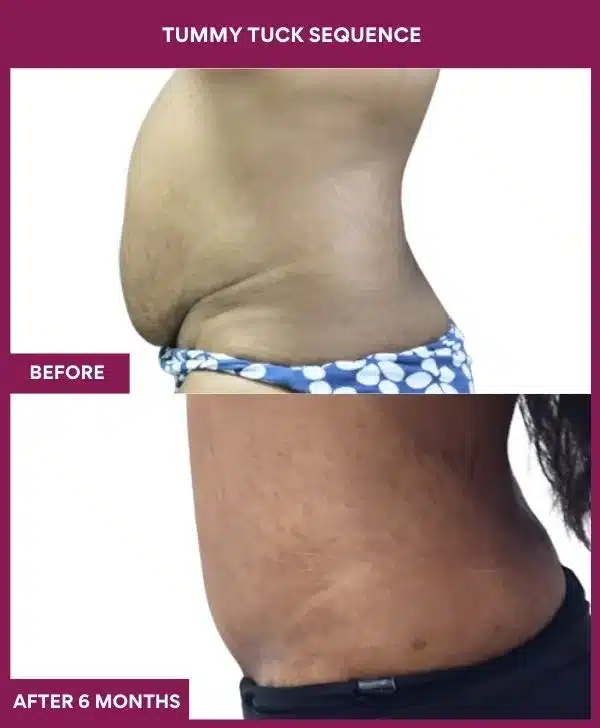
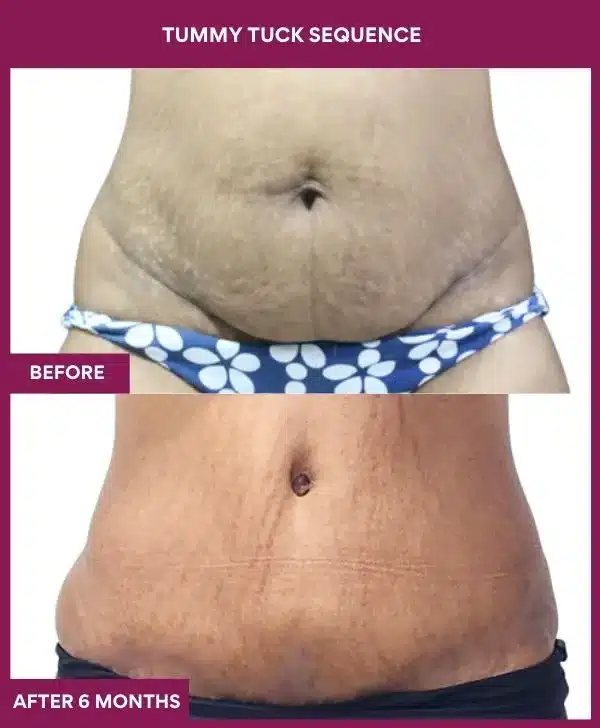
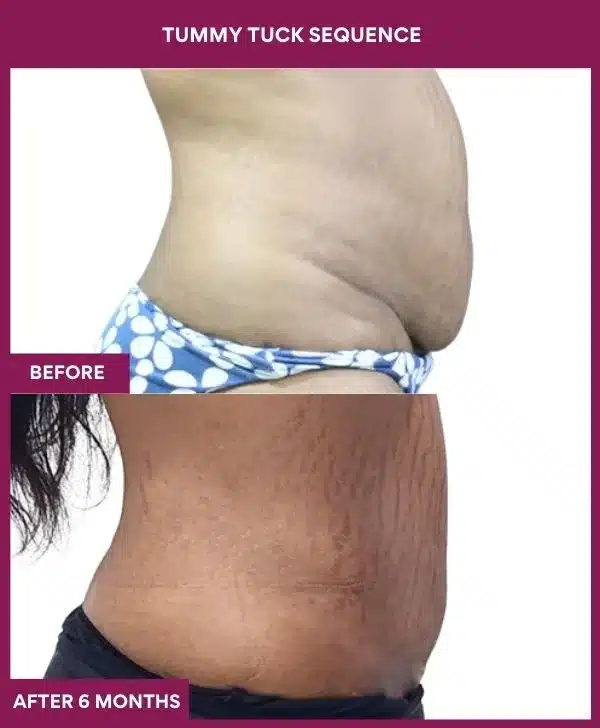
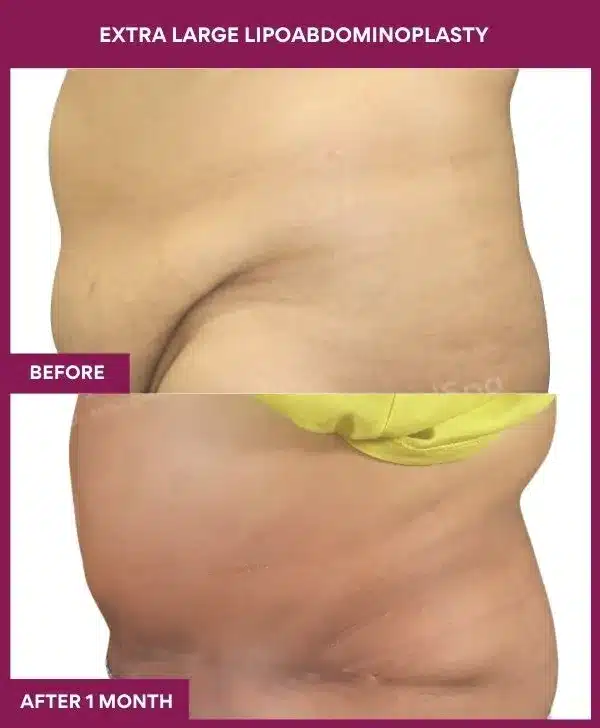
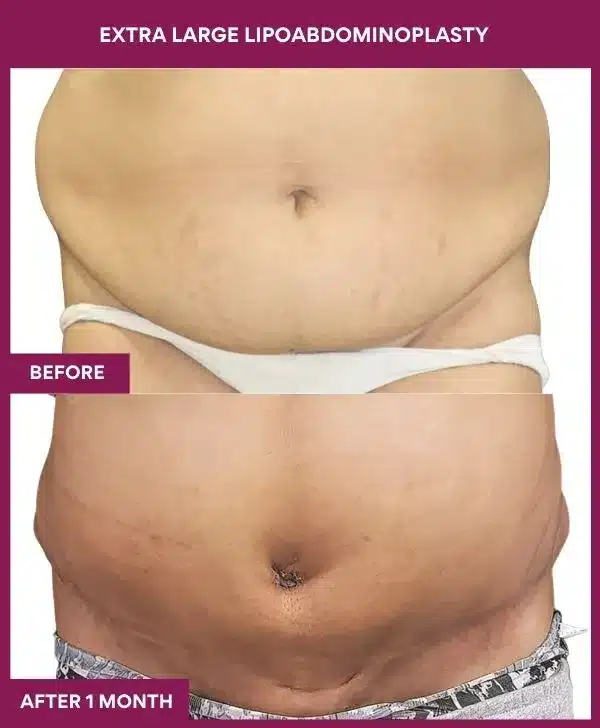
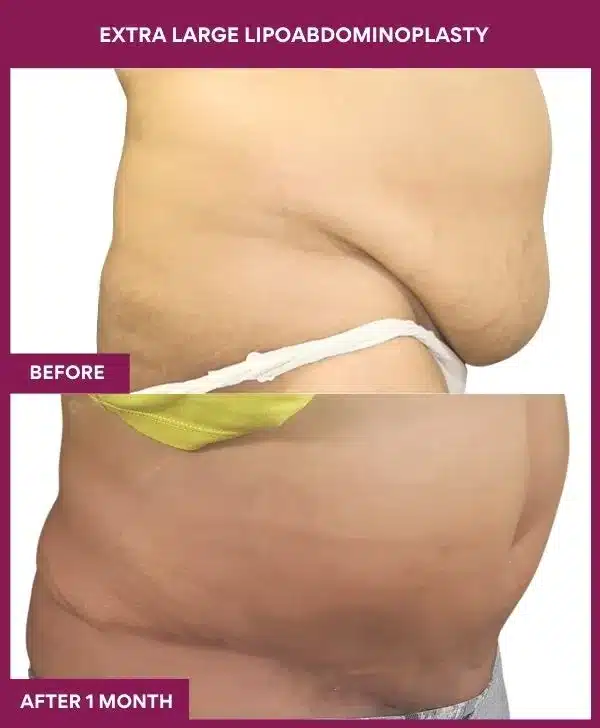
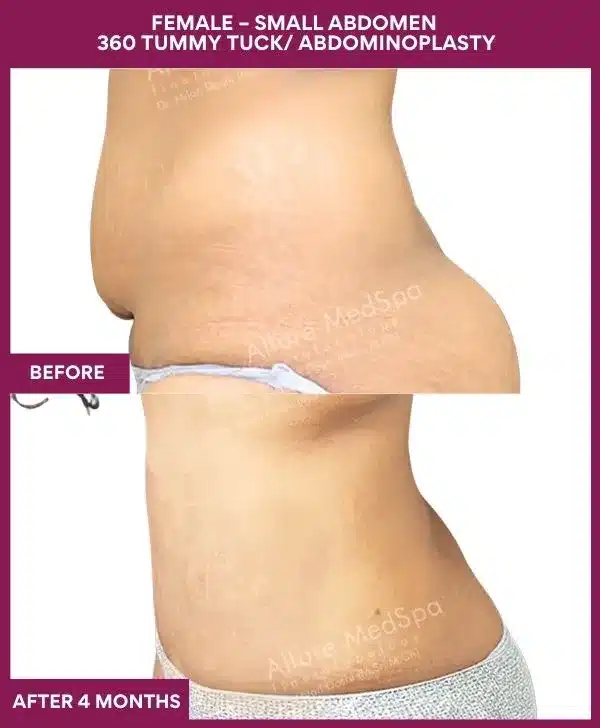
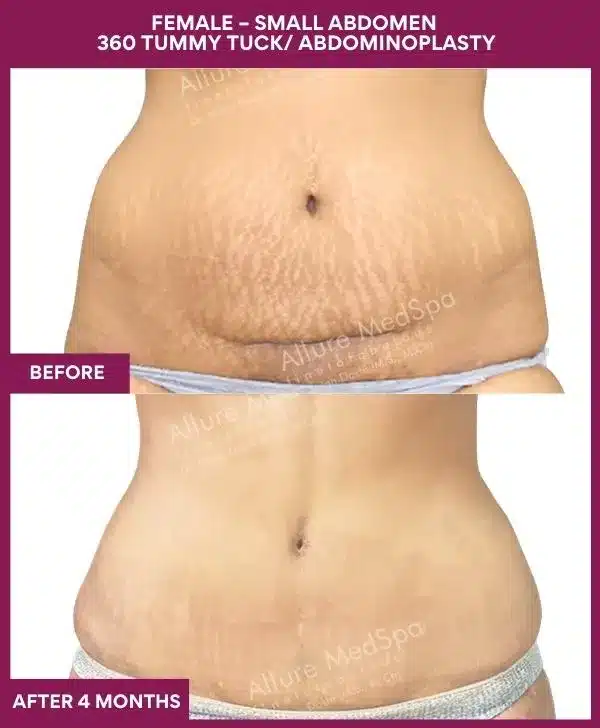
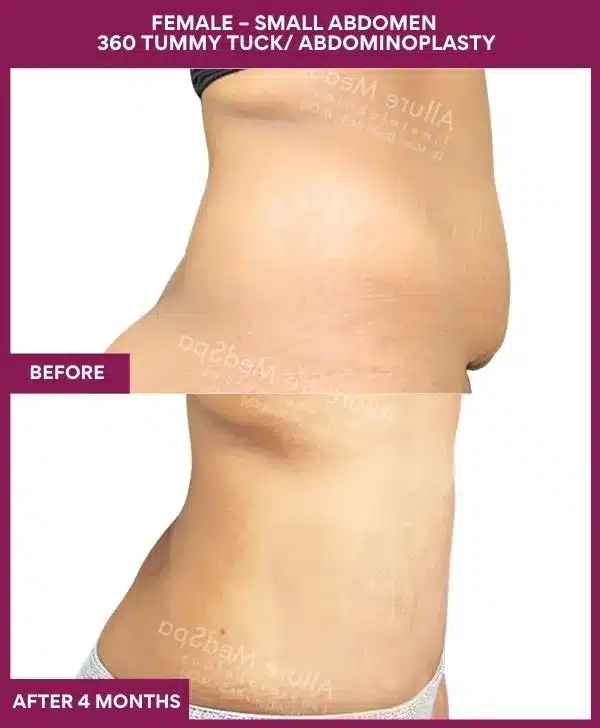
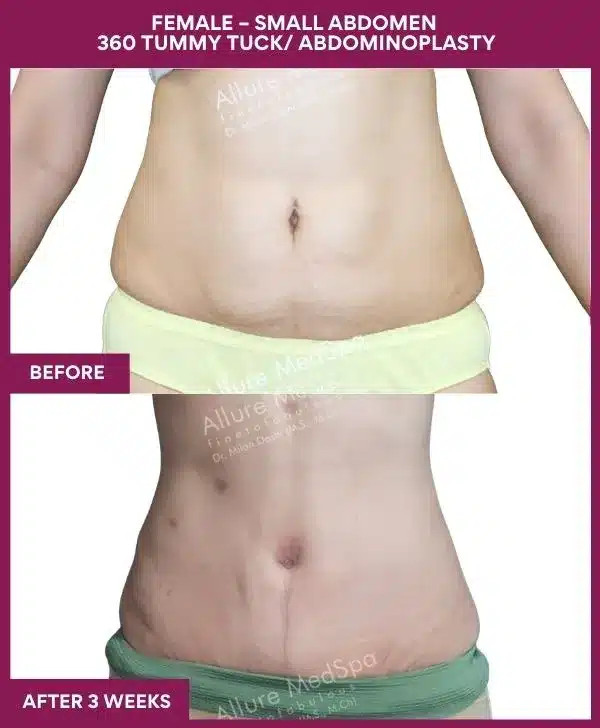
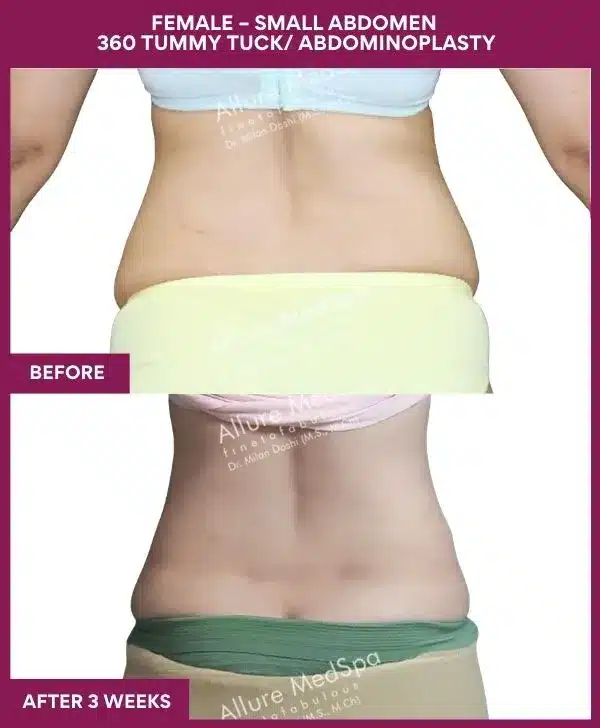
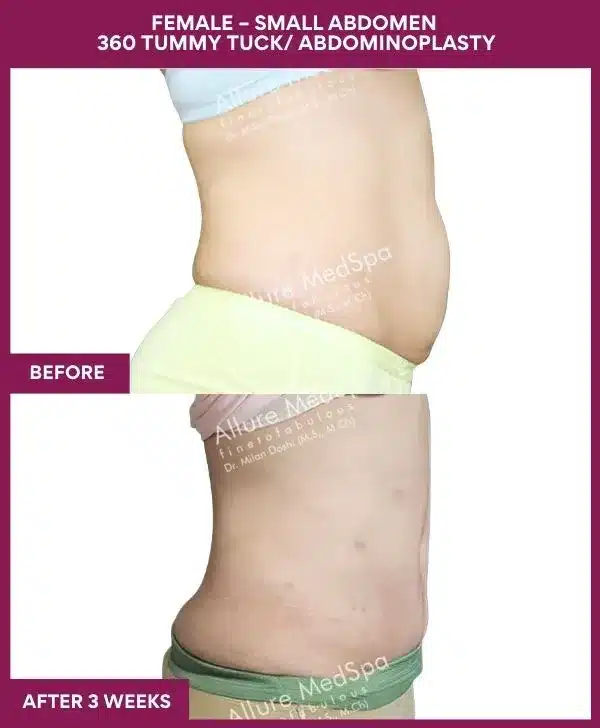
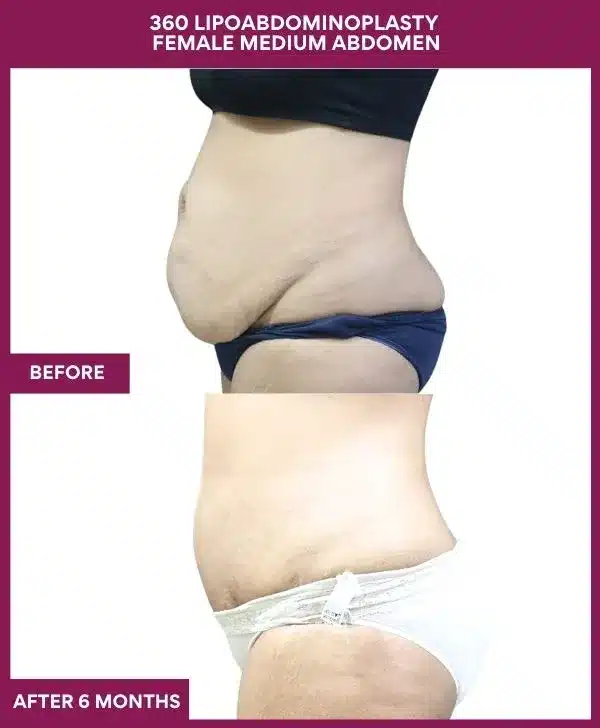
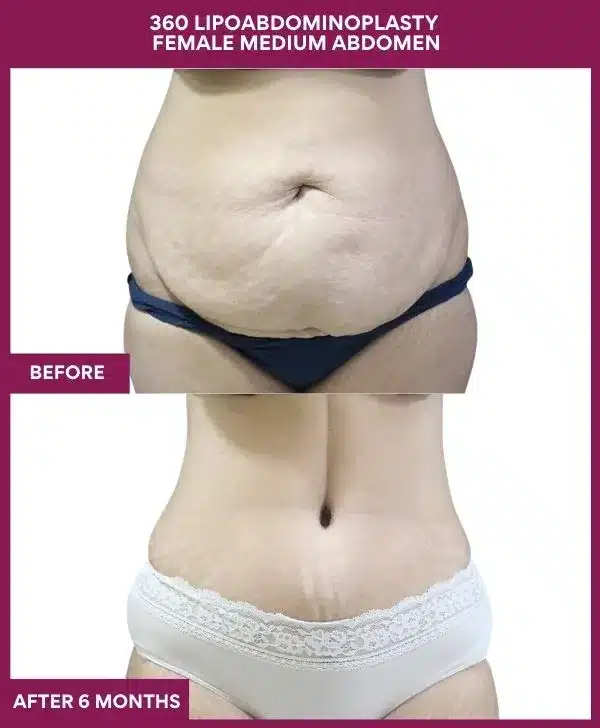
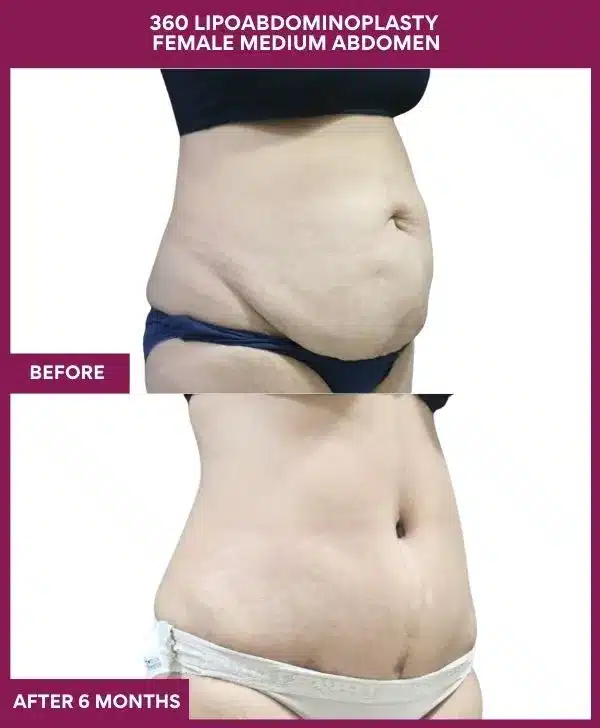
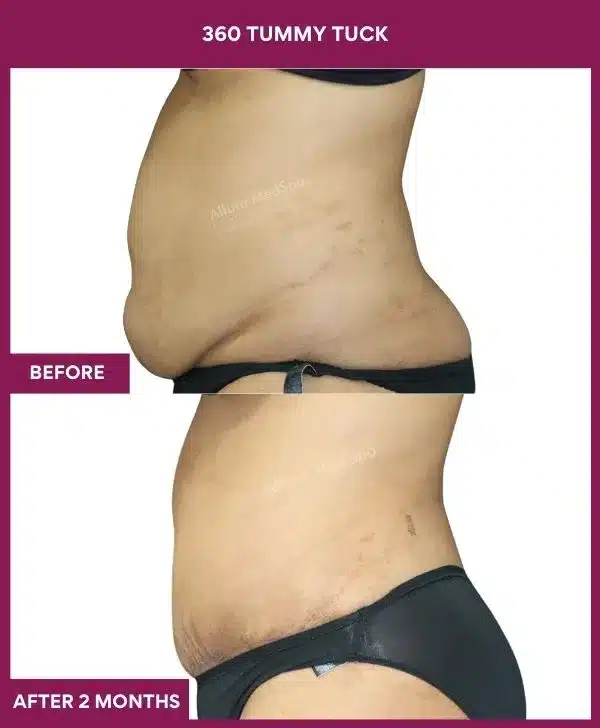
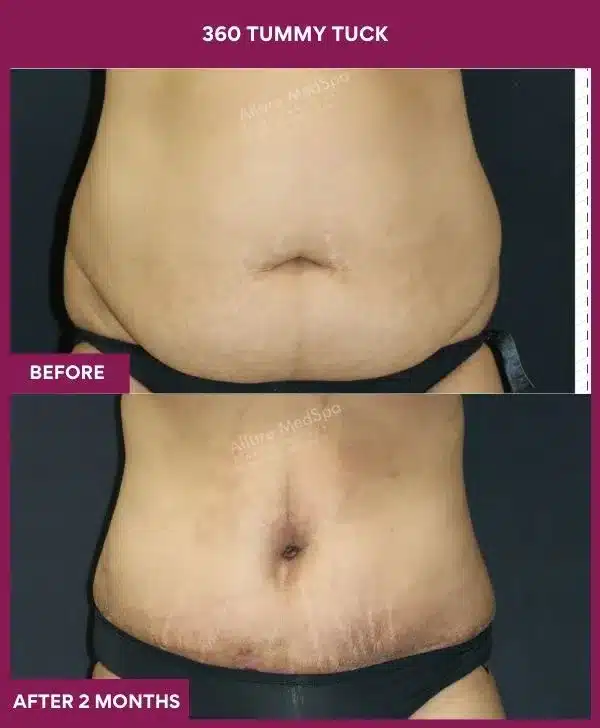
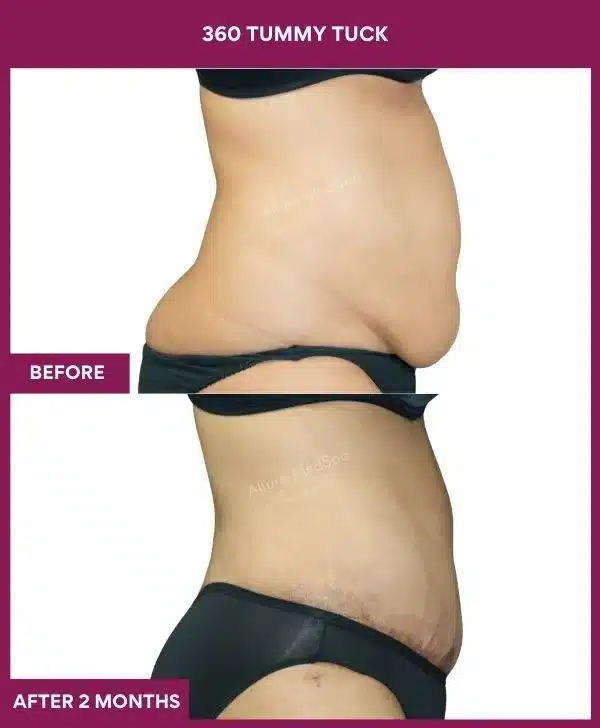
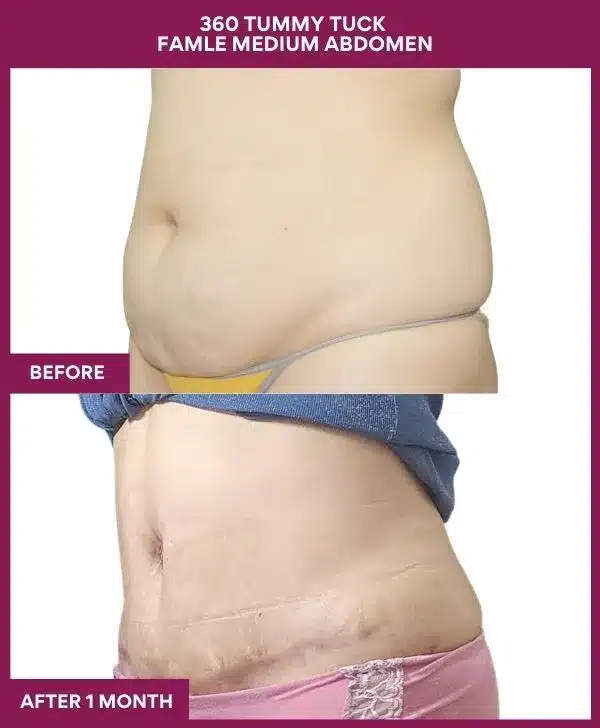
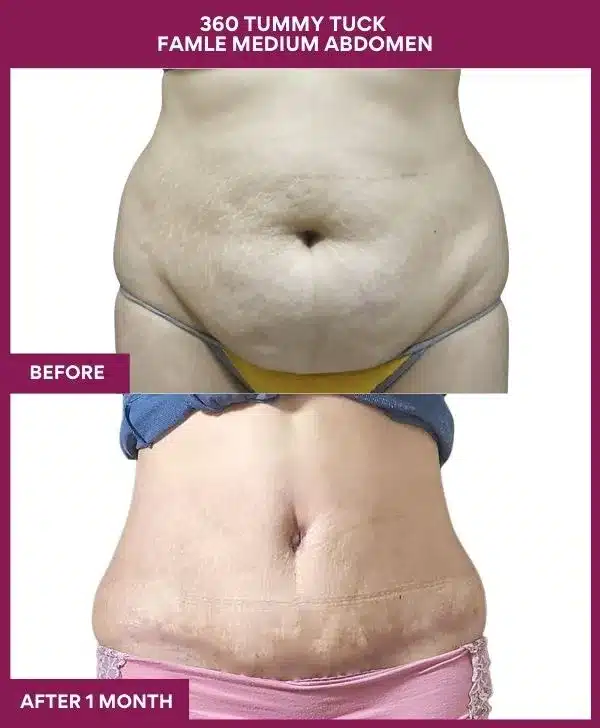
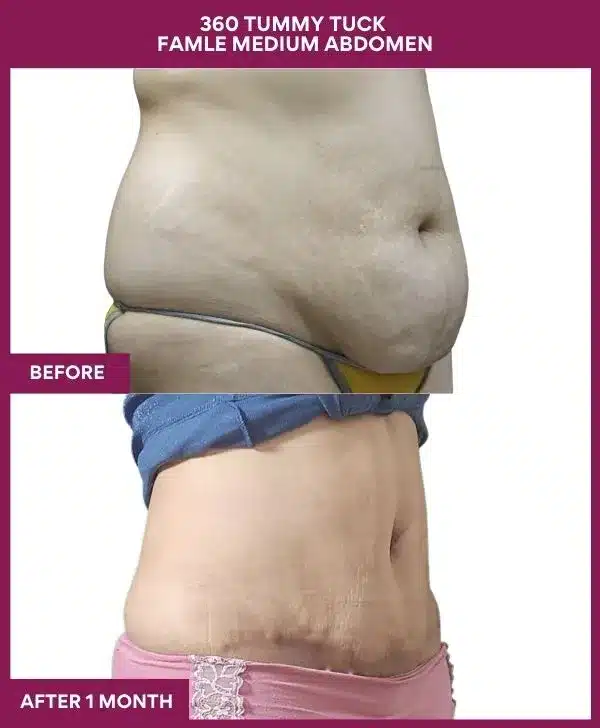
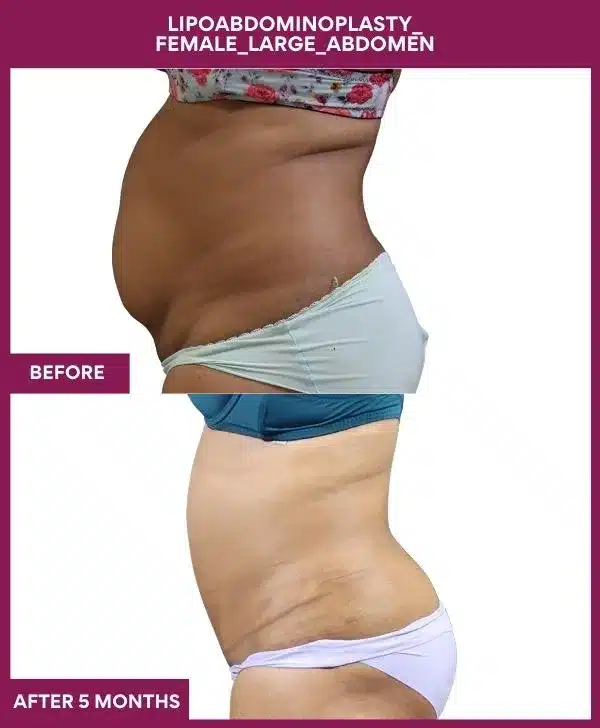
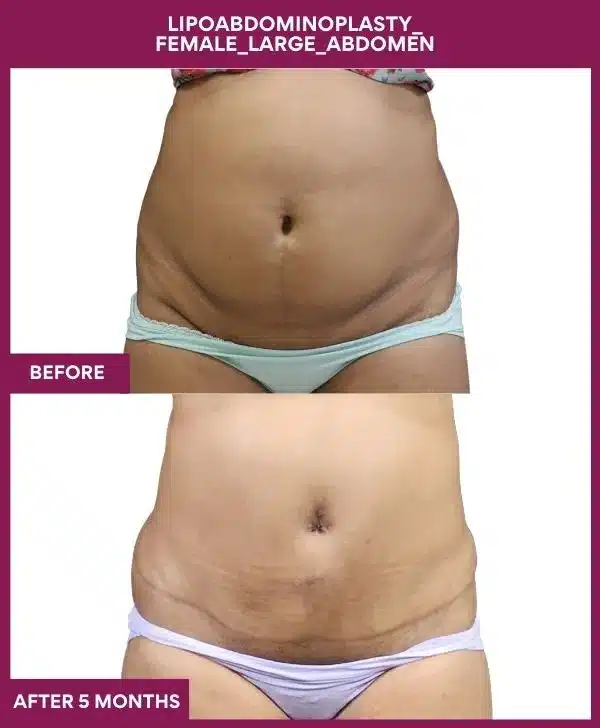
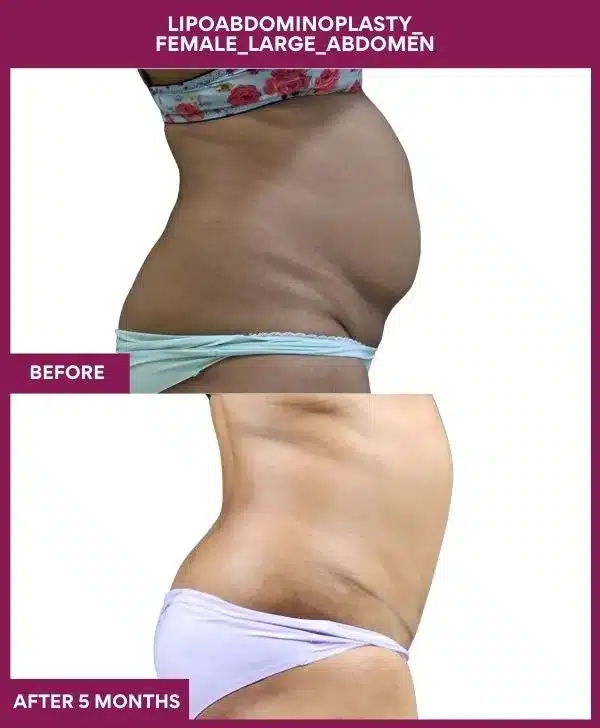
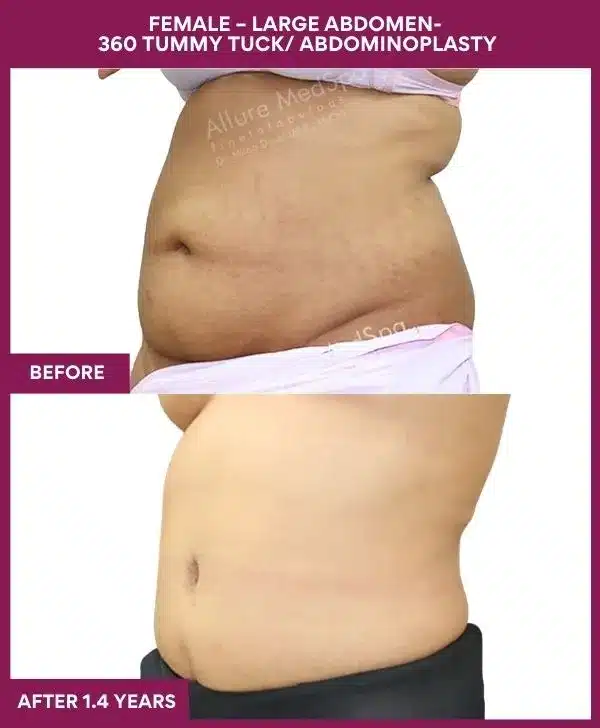
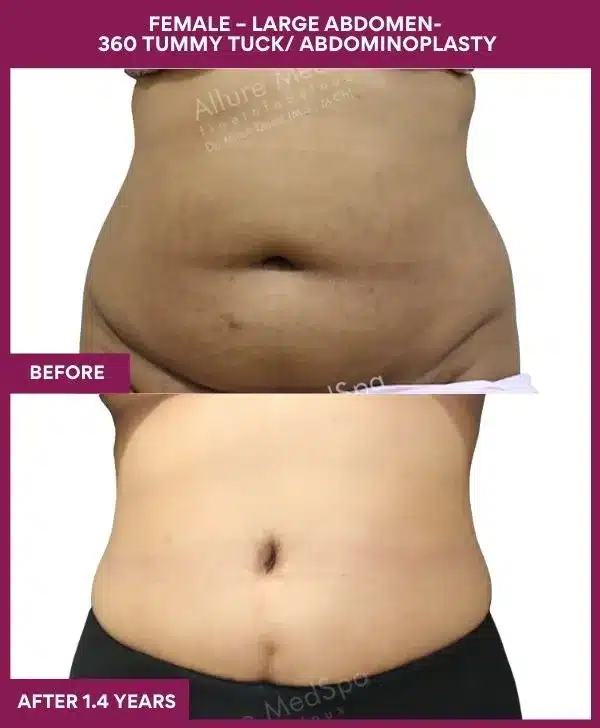
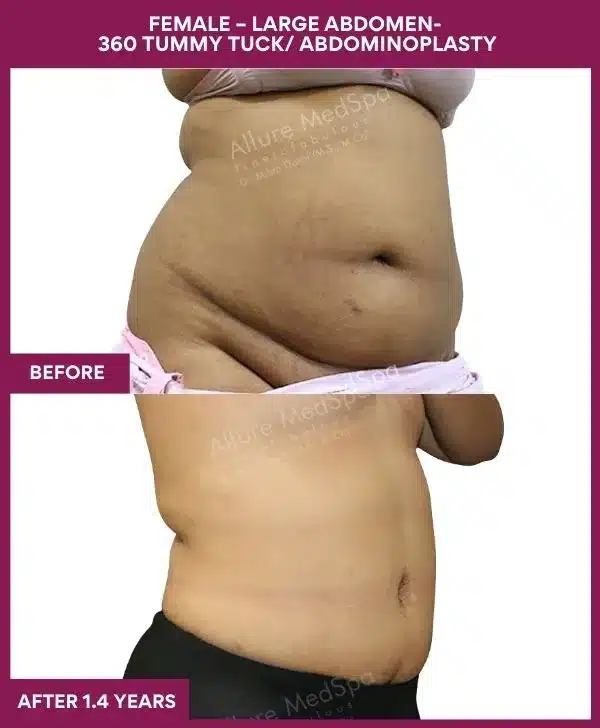
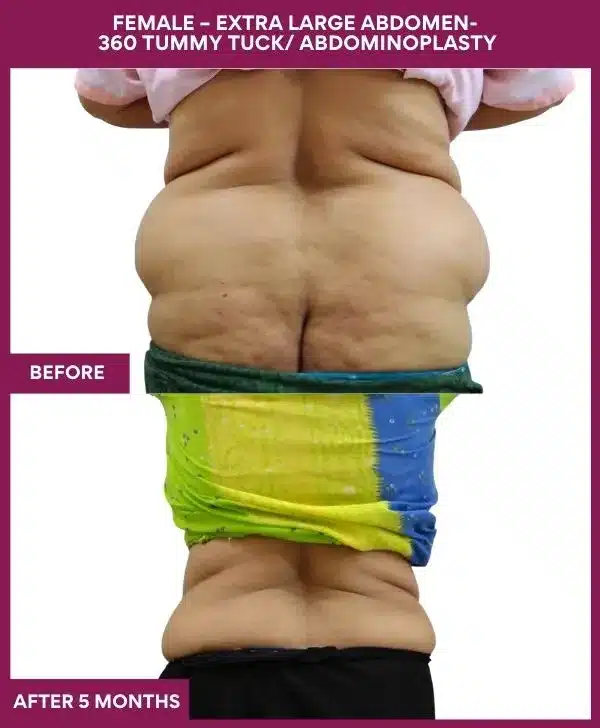
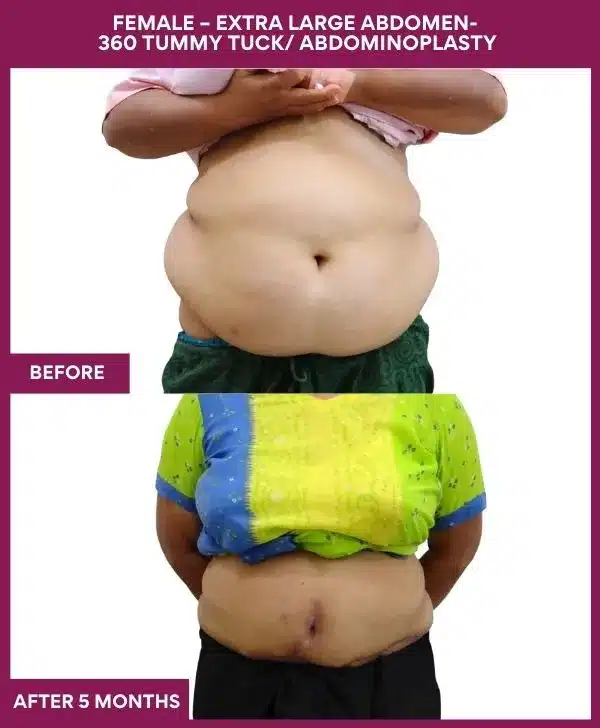
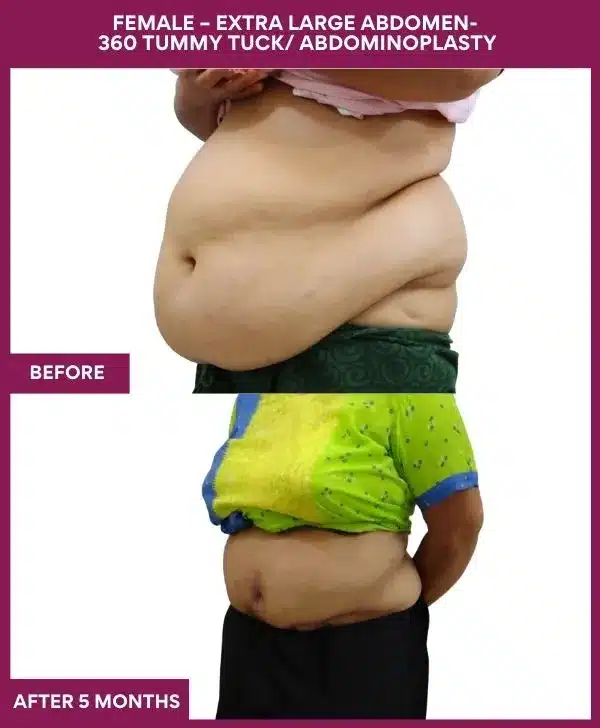
Ready to See Similar Results?
Tummy Tuck Surgery Testimonials: Fine To Fabulous Journeys

Awarded by Google.com
Rating: 4.7
Reviews: 485+

Awarded by WhatClinic.com
Rating: 4.8
Reviews: 119+

Awarded by Realself
Rating: 4.9
Reviews:453+

Awarded by Facebook
Rating: 4.6
Reviews:105+
Dr Milan Doshi and his staff are very professional and committed as the centre is highly equipped with advanced technology. I had closed rhinoplasty 4 months back and I’m seeing the results as to how it becomes successful.
Deepika Shetty
The doctor explained everything clearly and the surgery was smooth. Recovery was faster than I expected and the team was very supportive.
Rahul Mehta
Very natural results and excellent staff. From consultation to follow-up, the experience was outstanding and boosted my confidence.
Sneha Kapoor
Inspired by Their Transformation?
Struggling With Loose Skin and a Bulging Belly — Can a Tummy Tuck Help?
If loose skin, stretch marks or a bulging lower belly persist despite diet and exercise, a tummy tuck is the surgical solution — removing the skin and repairing the muscle separation underneath.
Are you suffering from a lingering baby bump, loose skin, or stretch marks after pregnancy?
Is hanging skin after major weight loss affecting your confidence — and your wardrobe choices?
Do you have a pendulous abdomen that makes movement uncomfortable or affects your posture?
Is your personal or social life taking a hit because you don’t feel good in your body?
These are more than aesthetic concerns. Excess skin, weakened abdominal muscles and stubborn fat around the midsection can deeply affect your comfort, confidence and quality of life. And when diet and exercise just aren’t enough, it can leave you feeling defeated.
There is a surgical solution that has changed lives worldwide — tummy tuck surgery, also known as abdominoplasty. It removes excess skin, tightens the abdominal muscles and reshapes your waistline. The honest part: this is major surgery with a real recovery and a permanent scar, so it suits people who are at a stable weight, have finished having children, and understand the trade-off.
Global & Indian trends: abdominoplasty
Among the world’s most-performed operations — abdominoplasty ranked fourth globally in 2023, after liposuction, breast augmentation and eyelid surgery
Over a million a year — roughly 1.08 million abdominoplasty procedures performed worldwide, the large majority on women
Growing in India — with rising demand among post-weight-loss and postpartum patients
Sources: ISAPS Global Survey 2024, ISAPS 2023 survey: liposuction, breast augmentation, eyelid surgery, abdominoplasty, rhinoplasty as top procedures
Ready for a Flatter, Firmer Tummy?
Tummy Tuck Surgery Video Explained By Celebrity Cosmetic Surgeon Dr.Milan Doshi
Dr Milan Doshi is describing the Tummy Tuck Surgery in detail with benefits, candidacy, associated risks and significance
Ready to Consult Dr. Milan Doshi?
Tummy Tuck Surgery Quick Facts
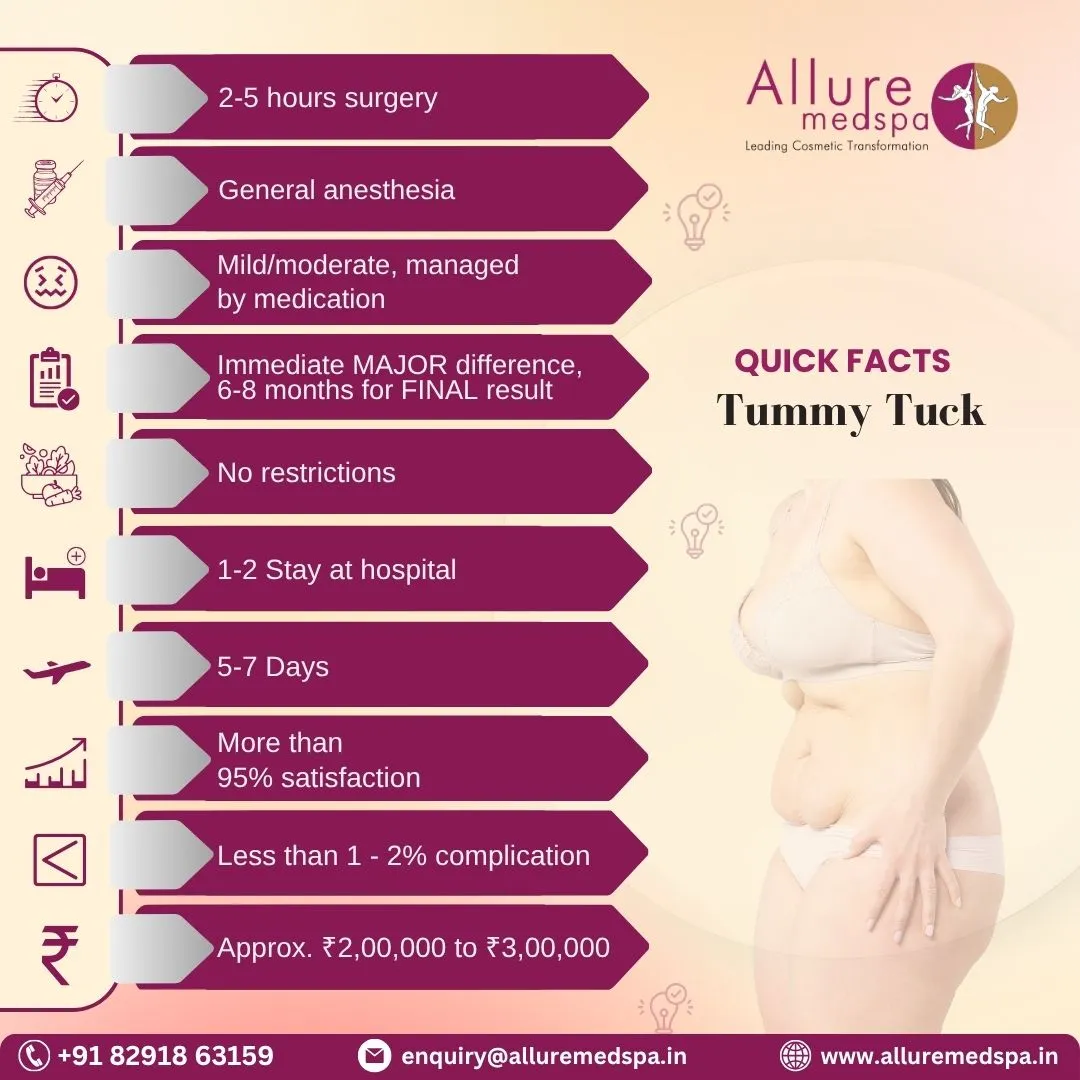
| Time Required | 2–5 Hours |
| Anesthesia | Local anesthesia - small/singleGeneral Anesthesia |
| Pain Level | Mild/moderate, managed by medication |
| Hospital Stay | 1-2 Days |
| Flyback | 5–7 Days |
| Success Rate | More than 95% |
| Result | Major improvement immediately; final result in 6–8 months |
| Diet | No Restrictions |
| Complication Rate | Less than 1–2% |
| Cost in Mumbai | INR 2,00,000 to 3,00,000 Approx. |
Got the Facts? Now Take the Next Step
What Are the Benefits of Tummy Tuck Surgery?
A tummy tuck flattens and tightens the abdomen, repairs separated muscles, removes lower-abdominal stretch marks, and resolves the skin-fold irritation that excess skin causes — benefits that are functional as well as cosmetic.
Contour & waistline
Removes excess skin and fat — from the abdomen, for a flatter profile
Sculpts the waistline — and advanced techniques can simultaneously lift the mons pubis and adjacent areas
Muscle repair & posture
Repairs diastasis recti — tightening separated abdominal muscles can improve core support and posture, and may help with associated back discomfort
Fat removal
Long-lasting fat reduction — combined with VASER liposuction (lipoabdominoplasty), fat cells removed don’t return — though remaining fat cells can still enlarge with weight gain, so results depend on maintaining a stable weight
Fat can be reused — harvested fat may be used for fat grafting elsewhere
Comfort, hygiene & confidence
Ends skin-fold problems — eliminating the irritation and fungal infections caused by an overhanging fold
Clothing and confidence — most patients drop 1–2 clothing sizes and report improved body image
What Abdominal Changes Happen During Pregnancy and Weight Gain?
Pregnancy and weight gain permanently change the abdominal skin, fat and muscle — which is why a tummy tuck is often the only thing that restores the contour.
Skin
Overstretched collagen and ruptured elastin — produce thinned skin and stretch marks; marks start red and fade to pale
Skin rarely retracts fully — even after weight loss or delivery
Fat
Hormonal fat accumulation — around the abdomen during pregnancy, often persisting afterwards
Visceral fat can’t be removed surgically — fat around the internal organs responds only to diet and exercise, not to liposuction or a tummy tuck
Muscle
Diastasis recti — the midline connective tissue (linea alba) between the rectus muscles separates, causing a bulge that no amount of core work will close; surgical repair is the only correction
This section is one of the strongest pieces of patient education on the site — it explains why surgery is needed and, just as importantly, what surgery cannot do (visceral fat). Keep it.
Am I the Right Candidate for Tummy Tuck Surgery?
You may be a good candidate for a tummy tuck if you have loose abdominal skin, separated muscles or stubborn fat that won’t respond to diet and exercise, your weight is stable, and your family is complete.
Persistent abdominal pooch or loose skin — post-pregnancy or post-weight-loss
Diastasis recti — separated or weakened abdominal muscles
Stable weight for 6+ months — close to your goal weight, at a weight you can maintain
Family complete — future pregnancy will undo the muscle repair
Physically fit and a non-smoker — smoking substantially raises wound-healing complications
Low clot risk — assessed formally at consultation (see risks); a clotting history changes the plan
Realistic and prepared — for the scar, the recovery and the lifestyle commitment
What Are the Limitations of Tummy Tuck Surgery?
A tummy tuck cannot do everything: it leaves a permanent scar, removes only lower-abdominal stretch marks, cannot touch visceral fat, and needs lifelong weight stability to hold.
A permanent scar — inevitable, but placed low enough to hide under underwear or a bikini; scar treatments can improve its appearance over time
Only lower stretch marks go — marks within the excised skin are removed; upper-abdominal marks shift downward and may be improved with fractional CO2 laser or PRP therapy
Visceral fat stays — fat around the internal organs can only be reduced by diet and exercise
Not a weight-loss operation — and results require stable weight, balanced diet and activity
This limitations section is unusually honest for a clinic page — it’s kept intact and is a genuine trust asset.
Tummy Tuck vs Liposuction — What's the Difference?
Liposuction removes fat; a tummy tuck removes skin and repairs muscle. They solve different problems — and combining them (lipoabdominoplasty) is often the best answer.
| Aspect | Liposuction | Tummy tuck |
|---|---|---|
| Main purpose | Fat removal | Skin removal + muscle repair |
| Best for | Good skin elasticity, no loose skin | Loose skin, stretch marks, diastasis recti |
| Scarring | Tiny puncture scars | Long scar hidden below the bikini line |
| Recovery | About 3–7 days | About 2–4 weeks |
| Stretch marks | Not removed | Lower abdomen only |
| Muscle tightening | No | Yes |
| Risk profile | Lower | Higher — major surgery |
Many patients are best served by lipoabdominoplasty — both together — for a flatter, better-sculpted result.
What Should I Expect During a Tummy Tuck Consultation?
A tummy tuck consultation determines whether surgery is safe and suitable for you, which technique fits, and what result is realistically achievable.
What you’ll learn — suitability, the right technique (mini, full, extended, circumferential), realistic outcomes, downtime, and total cost with EMI options
What to share — childbirth and weight history, diet and activity, medications, allergies, past abdominal or cosmetic surgery
What your surgeon evaluates — fat distribution, skin elasticity, stretch marks, muscle tone and diastasis, and your general health
Clot-risk assessment — formal scoring (e.g. Caprini) guides whether you need blood thinners as well as mechanical prevention
Visual planning — marking of liposuction and excision zones, before-and-after references, and Crisalix 3D imaging for real-time virtual consultations if you can’t travel
Source: Caprini risk assessment guides VTE prophylaxis in abdominoplasty
What Are the Different Types of Tummy Tuck Surgery?
The right tummy tuck depends on where your loose skin is, whether your muscles need repair, and how much contouring you want — from a mini tuck to a circumferential belt lipectomy.
| Type | Best for | Notes |
|---|---|---|
| Mini tummy tuck | Loose skin below the navel only | Smaller scar, faster recovery, lower risk |
| Endoscopic tummy tuck | Tight skin but weak muscles | Muscle repair through tiny incisions |
| Standard / traditional | Loose skin above and below the navel + muscle laxity | The classic operation |
| Lipoabdominoplasty | Fat + skin + muscle together | Globally preferred; better contour |
| Extended tummy tuck | Love handles and side bulges | Scar extends beyond the hips |
| 360° torsoplasty | Front, flanks and back | Adds circumferential liposuction |
| Circumferential / belt lipectomy | Post-massive-weight-loss | Most extensive — see the body lift page |
| Dermolipectomy | Excess skin, good muscle tone | Skin only |
| Fleur-de-Lis | Vertical and horizontal excess | Inverted-T scar; after massive weight loss |
- Note on the biggest options — circumferential and Fleur-de-Lis procedures are really body lift territory, with a substantially higher complication profile; they’re discussed in full there.
How Is Tummy Tuck Surgery Performed, Step by Step?
A tummy tuck is performed under general anaesthesia: the abdomen is marked, liposuction contours the area, excess skin is excised, the muscles are tightened, the navel repositioned, and the incision closed low.
Before surgery — full check-up, control of medical conditions, stop smoking, stop relevant medications
Admission & marking — detailed markings for liposuction zones, incision and muscle tightening, planned with you
Clot prevention (before the first incision) — compression devices on the legs, careful positioning, and blood thinners where your risk score indicates — this is the step that prevents the operation’s most serious complication
Anaesthesia — general anaesthesia
Liposuction — VASER or tumescent liposuction removes stubborn fat (including the back in a 360° torsoplasty)
Incision & skin excision — a low incision below the bikini line; the skin flap is elevated and excess skin removed
Muscle tightening — the rectus muscles are repaired in the midline (and laterally for waist definition)
Umbilicus repositioning — a natural-looking navel is created in the correct position
Mons pubis lift — the pubic area is lifted and repositioned where needed
Closure & drains — layered buried sutures; drains or quilting sutures to reduce fluid collection
Early walking — you’ll be mobilised the same day — again, primarily to prevent clots
🩺 Dr. Milan Doshi’s note: “In tummy tuck surgery, safety planning is as important as contouring. I place the scar low, tighten the muscle carefully, and combine liposuction only where it is safe. Clot prevention includes risk assessment, compression devices, early walking, and blood thinners when medically indicated.”
How Long Does It Take to See Tummy Tuck Results?
You’ll see a dramatic change immediately after a tummy tuck, with most improvement by one month and final refinement at 6–12 months.
Immediately — a dramatic contour change is visible
First week — swelling peaks then begins reducing
1 month — major improvement in shape and skin tone
6–8 months — final result, with contour settled and muscle tone evident
8–12 months — continued collagen remodelling refines the result further
Holding the result — fat cells removed don’t return, but remaining cells enlarge with weight gain — stable weight is what preserves it
How Will You Recover After Tummy Tuck Surgery?
Most people are back to desk work in about a week after a tummy tuck, driving at 7–10 days, light cardio at 2–3 weeks and heavy exercise at 2–3 months.
Activity timeline
Walking — same day (important for clot prevention)
Office work — 5–7 days
Driving — 7–10 days
Light cardio — 2–3 weeks
Heavy workouts — 2–3 months
Compression garment
First 3 weeks — 24/7 (remove only to bathe)
Next 3 weeks — 10–12 hours daily
Care — avoid wrinkles, wash in tap water, air-dry only
Other
Pain — mild to moderate, comparable to a C-section, well controlled with medication
Bruising — settles in 2–3 weeks
Diet — no restrictions, but high-protein and low-fat supports healing
Outstation patients — arrive 1 day before and stay 5–7 days after; see our outstation patients service
Want a Smooth Tummy Tuck Recovery? Let’s Plan It Together.
What Post-Operative Care Is Needed After Tummy Tuck Surgery?
Good tummy tuck aftercare means medication, compression, early gentle walking, protein-rich nutrition and attending every follow-up.
Medications — painkillers, antibiotics and supplements as prescribed
Diet — liquids to soft to normal; high-protein, low-fat supports healing
Positioning — sleep with the head elevated (~45°), knees slightly bent; don’t lie flat
Mobility — walk gently from day one and move your legs regularly — this is clot prevention, not just comfort
Drainage care — expect fluid discharge for 1–2 days; you’ll be taught dressing changes before discharge
Bathing — only once drainage stops and your doctor permits; no bathtubs
Follow-ups — at 3 days, 7 days, 15 days and 1 month, then 3 and 6 months
Call your doctor urgently if — excessive swelling, redness, pain, hardness or uncontrolled fluid leakage — and add: calf pain or swelling, breathlessness or chest pain, which may signal a blood clot
Worried About Downtime? Get Your Personalized Recovery Plan Today
What Are the Risks and Complications of Tummy Tuck Surgery?
A tummy tuck carries a higher complication rate than other cosmetic procedures — around 4% major complications versus 1.4% — and the most serious risk is blood clots (VTE), for which abdominoplasty has the highest rate of any aesthetic operation.
The most serious: blood clots (VTE)
Why abdominoplasty specifically — the operation combines vascular trauma, general anaesthesia and reduced mobility afterwards — all three elements that drive clot formation
How it’s prevented — formal risk scoring (Caprini), compression devices during surgery, early walking, and blood thinners (LMWH) where indicated
Warning signs — calf pain or swelling, breathlessness, chest pain — seek urgent care
Other risks
Haematoma — the most common major complication after abdominoplasty; may need a return to theatre
Infection — uncommon; managed with hygiene and antibiotics
Seroma — fluid under the skin; open drainage and quilting sutures reduce it; may need drainage
Wound-healing delay — with tight closure, thick fat or smoking; may need revision
Contour irregularities — from uneven fat removal or thin skin
Numbness or hyperesthesia — usually temporary; occasionally permanent
Pigmentation changes — usually temporary
Fat embolism (rare) — dislodged fat entering the bloodstream; needs immediate attention
Lidocaine toxicity (rare) — from infiltration fluid; affects heart/CNS
Fluid shifts (mega-liposuction) — can stress kidneys, heart and lungs
Internal organ injury (extremely rare) — cannula misplacement
Anaesthesia risks — from allergy to fluid shifts
Combining raises risk — major complications rise from ~3.1% for abdominoplasty alone to ~10.4% when combined with body contouring plus liposuction; see the mommy makeover page
Reducing risk — a board-certified plastic surgeon experienced in lipoabdominoplasty, a NABH-accredited facility with overnight care, no smoking, and clot prophylaxis
Sources: Abdominoplasty 4% major complications vs 1.4% other cosmetic; haematoma most common, then infection, VTE, lung problems; 3.1% alone → 10.4% combined (ASPS/CosmetAssure), ‘Abdominoplasty carries a significant risk of VTE’; Caprini scoring vs systematic LMWH prophylaxis, Abdominoplasty has the highest VTE risk among cosmetic procedures
Your Safety Comes First—Book Your Tummy Tuck with Confidence.
How Much Does Tummy Tuck Surgery Cost in Mumbai?
A tummy tuck in Mumbai costs roughly ₹2,50,000 to ₹3,00,000 depending on the technique. The detailed breakdown by type is on our tummy tuck cost page; EMI options are on the payment process page.
| Type of tummy tuck | Indicative cost (INR) |
|---|---|
| Mini tummy tuck | ₹1,25,000 – ₹1,50,000 |
| Endoscopic tummy tuck | ₹1,30,000 – ₹1,50,000 |
| Standard / traditional | ₹1,20,000 – ₹1,40,000 |
| Lipoabdominoplasty | ₹1,40,000 – ₹1,70,000 |
| Extended tummy tuck | ₹1,50,000 – ₹1,80,000 |
| 360° torsoplasty | ₹1,60,000 – ₹1,80,000 |
| Circumferential / belt plasty | ₹2,00,000 – ₹2,40,000 |
| Dermolipectomy / panniculectomy | ₹1,20,000 – ₹2,00,000 |
| Fleur-de-Lis | ₹2,00,000 – ₹2,50,000 |
Included
- Surgeon, anaesthetist, theatre — consumables, OT medicines, facility charges, up to 1-day stay, compression garment, immediate follow-ups.
Not included
- Pre-op fitness tests, take-home medicines — existing-condition expenses, and rare complications.
- GST — 5% applicable; insurance does not cover cosmetic surgery; EMI available.
Curious about your tummy tuck cost? Get your personalized quote today.
Which Is the Best Centre for Tummy Tuck Surgery in Mumbai?
Allure Medspa is a NABH-accredited cosmetic surgery centre in Mumbai with two locations, advanced liposuction technology and overnight recovery facilities — the setting a major abdominal operation needs.
NABH-accredited — safety protocols and hygiene standards; surgery at Vardan Hospital facility
Overnight stay — the Goregaon centre offers in-house night stay, which matters for a 1–2 day admission
Advanced technology — VASER, laser, power-assisted and tumescent liposuction under one roof for lipoabdominoplasty
Two locations — Andheri (access) and Goregaon (privacy + night stay)
Virtual & outstation — Crisalix 3D simulation consultations and full outstation support with a dedicated patient coordinator
Book your tummy tuck with Mumbai’s most trusted centre today.
Who Is the Best Tummy Tuck Surgeon in Mumbai?
Dr. Milan Doshi is an Indian board-certified plastic surgeon in Mumbai with 27+ years’ experience and a high volume of tummy tuck procedures, specialising in lipoabdominoplasty and low-incision scar placement.
Board-certified plastic surgeon — M.Ch, specialising in body contouring; 27+ years
Tummy tuck volume — 1100+ tummy tuck procedures including mini, extended, lipoabdominoplasty and revision cases [clinic to confirm ONE figure]
Technique range — laser, VASER and power-assisted liposuction; low incision below the bikini line
Combined procedures — nano fat grafting, BBL, breast enhancement and facial rejuvenation where appropriate
ISAPS mentor — and internationally recognised for body-contouring results
Trusted by 10,000+ patients—now it’s your turn to consult the expert.
Medical Code for Tummy Tuck Surgery
ICD-10 ,CPT Code and Description about Tummy Tuck Surgery:
| CPT Code | CPT Description | ICD-10 Procedure |
|---|---|---|
| 15847 | Excision, excessive skin and subcutaneous tissue (including lipectomy); | Z41.1 |
| 15830 | Standard abdominoplasty combined with a panniculectomy | Z41.1 |
“Are you travelling from other cities for your Tummy Tuck Surgery? We got you covered!“
(FAQs) Frequently asked questions of Tummy Tuck Surgery
Q1. Is a tummy tuck painful?
Ans. You’re asleep for the surgery. Afterwards expect tightness and discomfort for a few days — often compared to a C-section — well controlled with medication and improving within a week.
Q2. How long will a tummy tuck last?
Ans. Long-lasting with stable weight and a healthy lifestyle. Significant weight change or a future pregnancy will affect the result.
Q3. Is a tummy tuck a serious surgery?
Ans. Yes. It’s a major operation under general anaesthesia, with a higher complication rate than most cosmetic procedures (around 4% major complications versus 1.4%). It needs proper assessment, an accredited facility and real recovery time.
Q4. What’s the best age for a tummy tuck?
Ans. Usually 30–55 — after pregnancy or major weight loss, once you’ve finished having children and can hold a stable weight. Age matters less than health and weight stability.
Q5. Can I get pregnant after a tummy tuck?
Ans. Yes, but pregnancy will stretch the repaired muscles and skin and compromise the result. It’s best to complete your family first.
Q6. Can a tummy tuck fail?
Ans. Poor outcomes are uncommon but can follow infection, wound-healing problems or significant weight change. Following instructions and not smoking matters a great deal.
Q7. Is a tummy tuck safer than a C-section?
Ans. They’re different operations for different reasons and aren’t directly comparable. A tummy tuck is elective and planned, which helps — but it is still major surgery with real risks.
Q8. How painful is recovery?
Ans. Mild to moderate for the first few days, improving markedly within a week with proper pain management.
Q9. Will my stomach stay flat?
Ans. Yes, with stable weight and a healthy lifestyle. Fat cells removed don’t return, but remaining cells enlarge if you gain weight.
Q10. Does a tummy tuck leave scars?
Ans. Yes — a permanent scar, placed low below the bikini line. It fades over a year or more with proper scar care and sun protection.
Q11. Can I lose hanging belly fat without surgery?
Ans. Diet and exercise reduce fat but cannot remove loose skin or repair separated abdominal muscles. Those need surgery.
Q12. Liposuction or tummy tuck — which is better?
Ans. They solve different problems: liposuction removes fat; a tummy tuck removes skin and repairs muscle. Combining them (lipoabdominoplasty) is often best. Note the tummy tuck carries more risk.
Q13. What happens 3 months after?
Ans. Most swelling has settled, scars are starting to fade, and the contour improvement is clearly visible.
Q14. What is a mini tummy tuck?
Ans. A smaller operation for loose skin below the navel only — smaller incision, faster recovery, lower risk.
Q15. How many clothing sizes will I lose?
Ans. Usually one to two, depending on how much skin and fat is removed.
Q16. What weight should I be?
Ans. Close to your goal weight, and stable for at least six months. Being at a healthy weight also lowers your complication risk.
Q17. Is laughing bad after a tummy tuck?
Ans. Laughing or coughing feels uncomfortable early on but won’t damage your repair if you follow post-op instructions.
Q18. When is the best time?
Ans. Once you’ve reached your goal weight, completed pregnancies, and can take about 2–4 weeks off for recovery.
Q19. What are the risks?
Ans. The most serious is a blood clot (DVT/PE) — abdominoplasty has the highest clot risk of any cosmetic procedure. Others include haematoma (the most common major complication), infection, seroma, wound-healing problems, numbness and scarring. Major complications run around 4%, and rise substantially if procedures are combined.
Q20. Can I strain on the toilet after a tummy tuck?
Ans. Avoid straining during the first week — it puts tension on the muscle repair. Your surgeon will usually prescribe a stool softener and recommend a high-fibre diet and good hydration to make this easier.
Got doubts about tummy tuck? Get instant answers from our expert now.
Related Links
Note: The author of this content is Dr. Milan Doshi, An Indian board-certified plastic & cosmetic Surgeon wholly & solely confirms the authenticity of the information & knowledge delivered by this write-up.