
Arm Liposuction — The Complete Guide to Slimmer Arms (and When You Need More)

Indian Board Certified Plastic Surgeon
M.CH, MS, ISAPS Mentor
16000+ Cosmetic Surgeries
4000+ Liposuction surgeries
Arm liposuction is one part of a wider body-contouring plan. It should be chosen according to the amount of fat, the quality of the upper-arm skin, and how the arm connects visually to the shoulder, underarm and upper back.
The arm is the least forgiving area for a wrong decision. This guide explains why arm fat collects, how arm liposuction is done, recovery week by week, when it won’t work, and how to choose between liposuction and an arm lift. → Liposuction Surgery · Liposuction Body Areas
Arm Liposuction Surgery Before and After Images
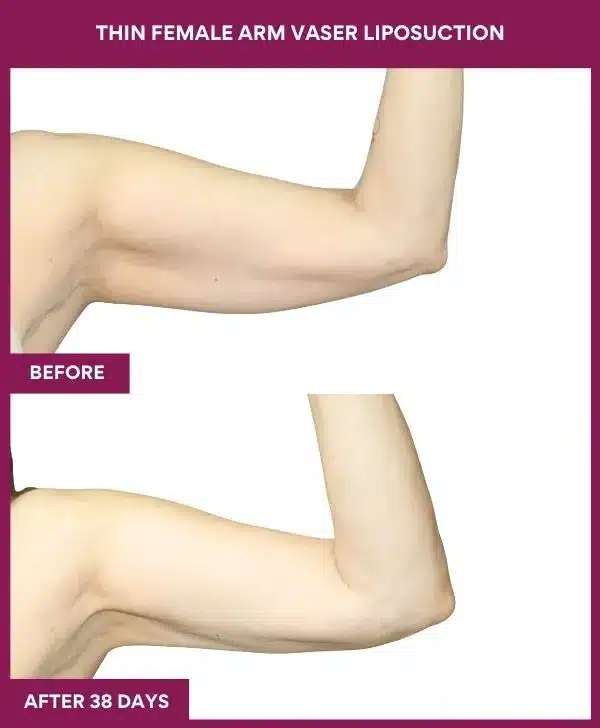
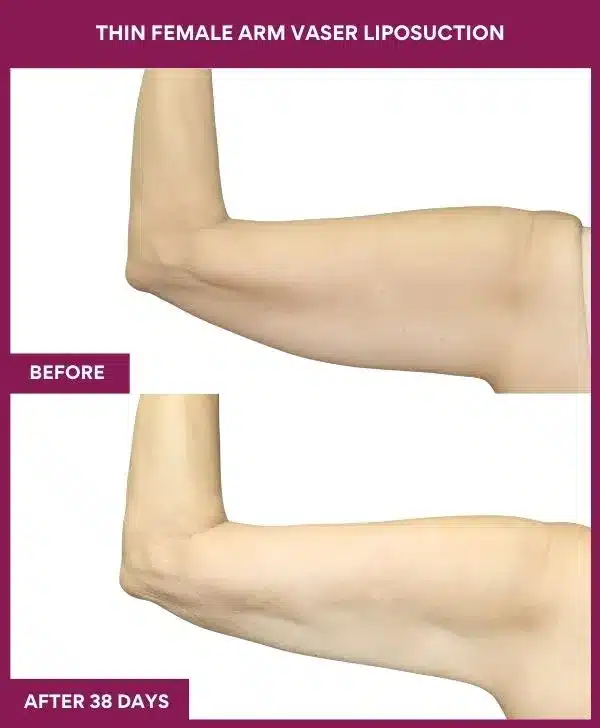
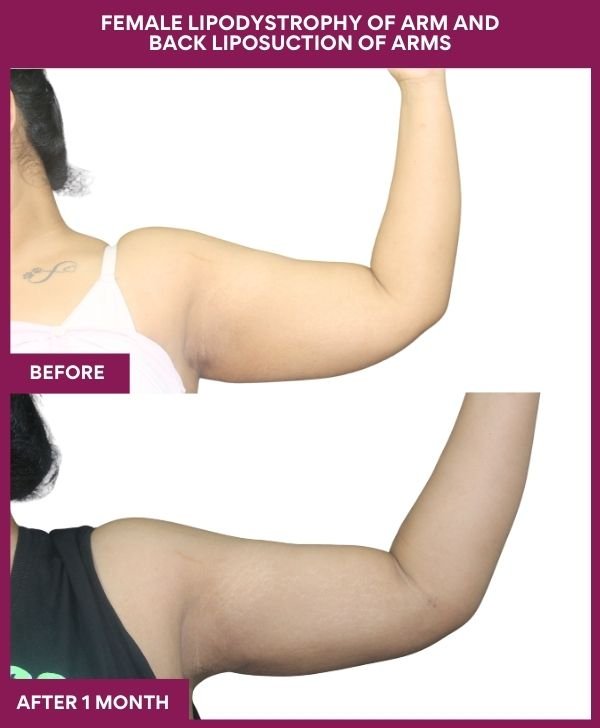
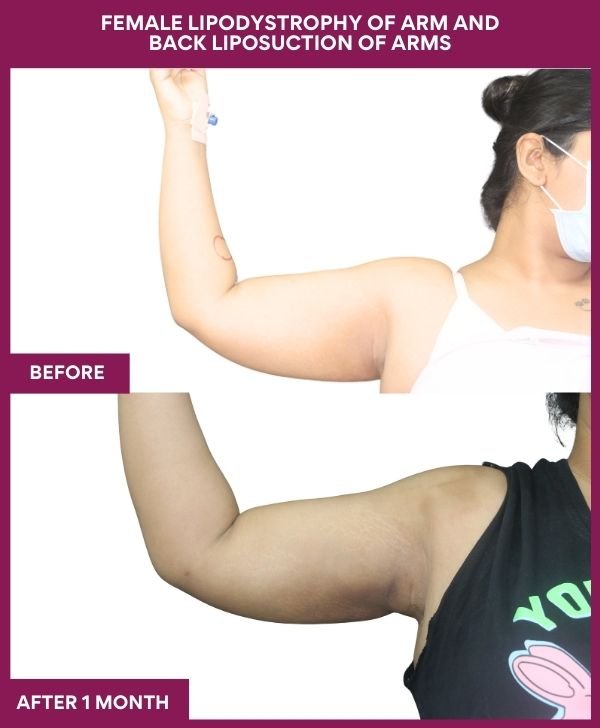
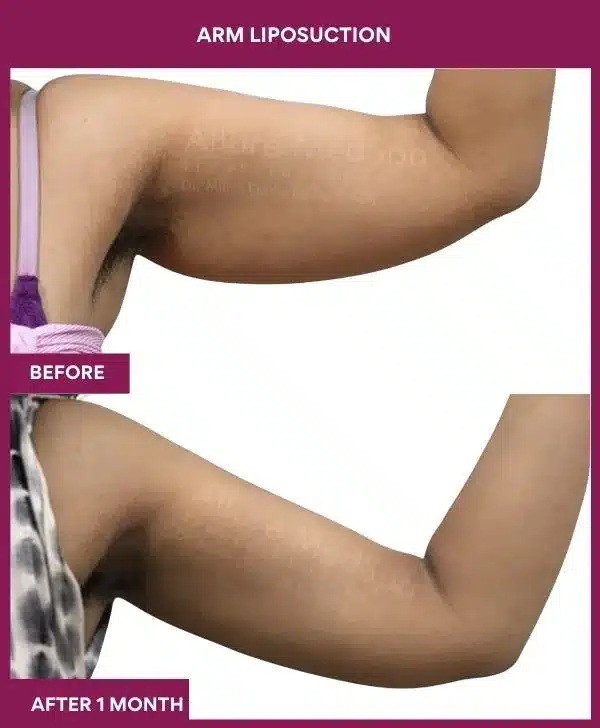
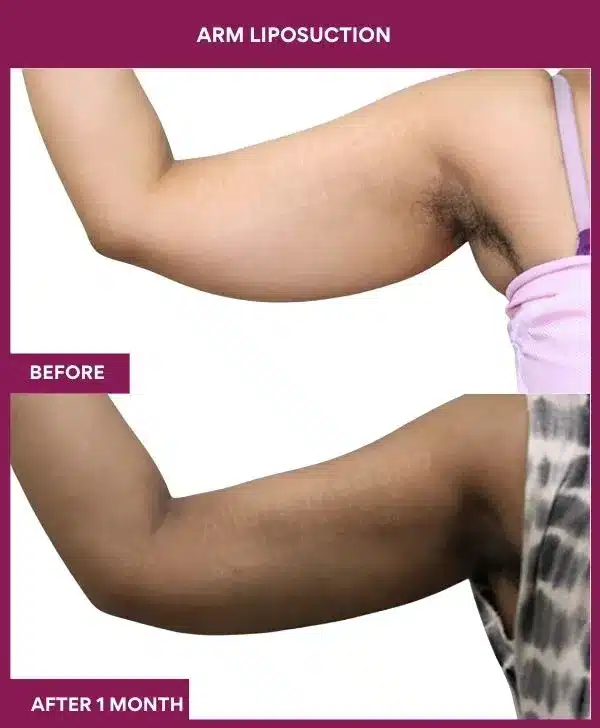
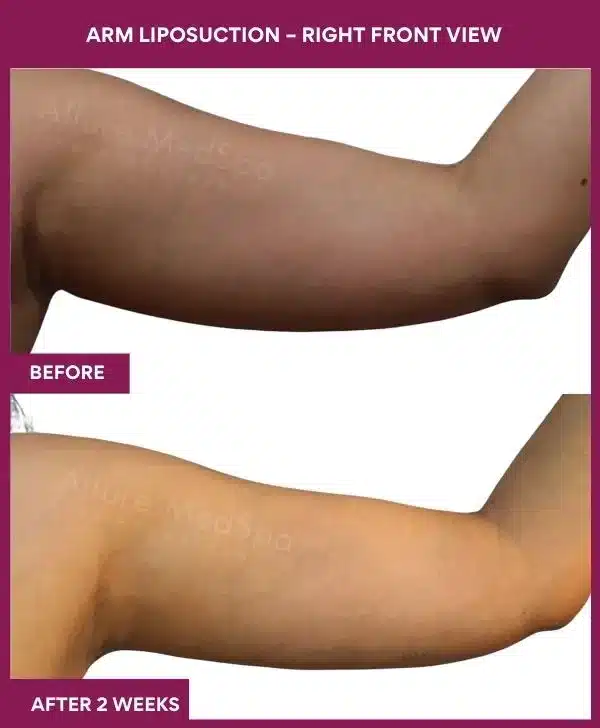
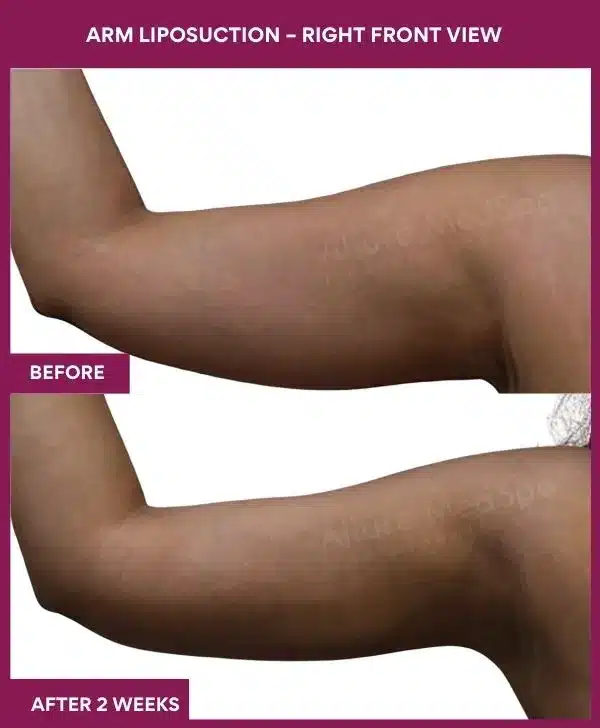
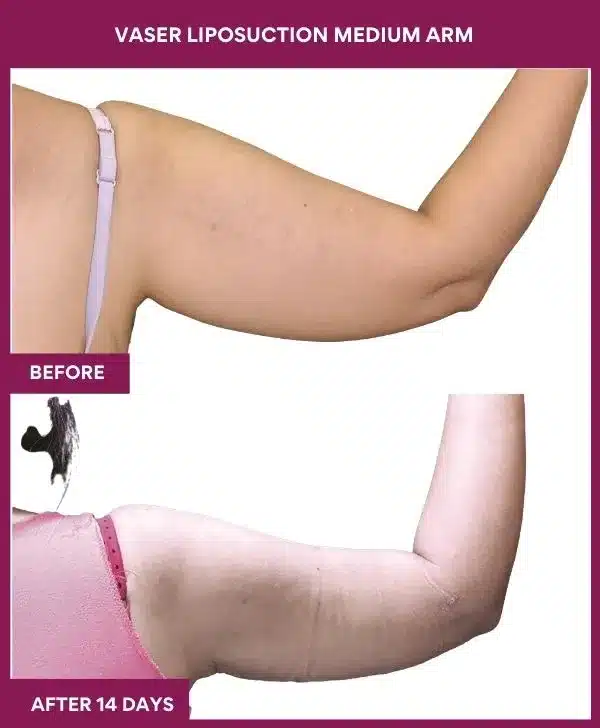
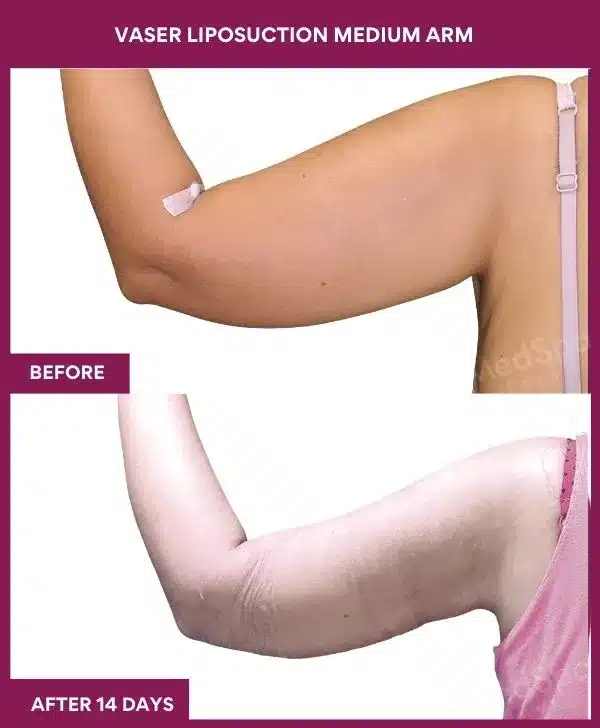
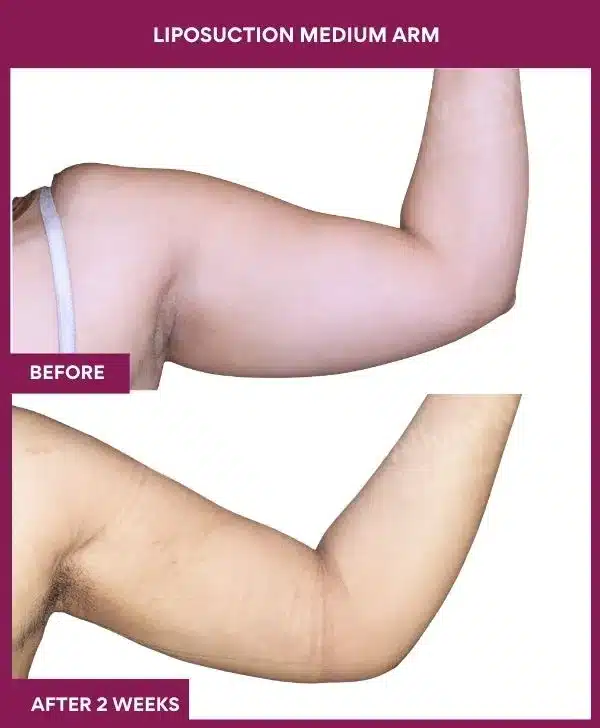
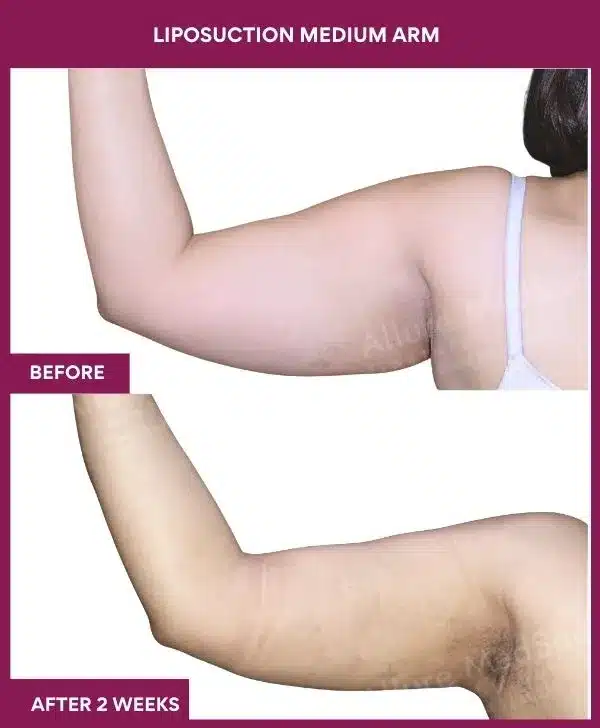
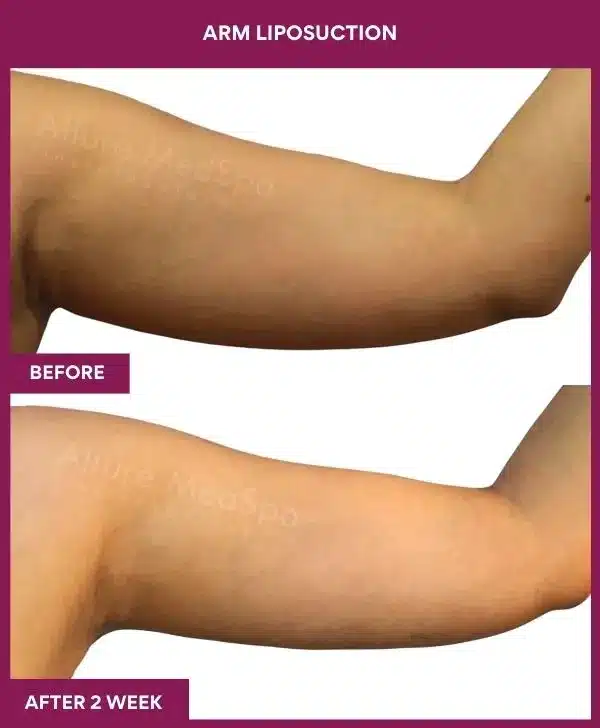
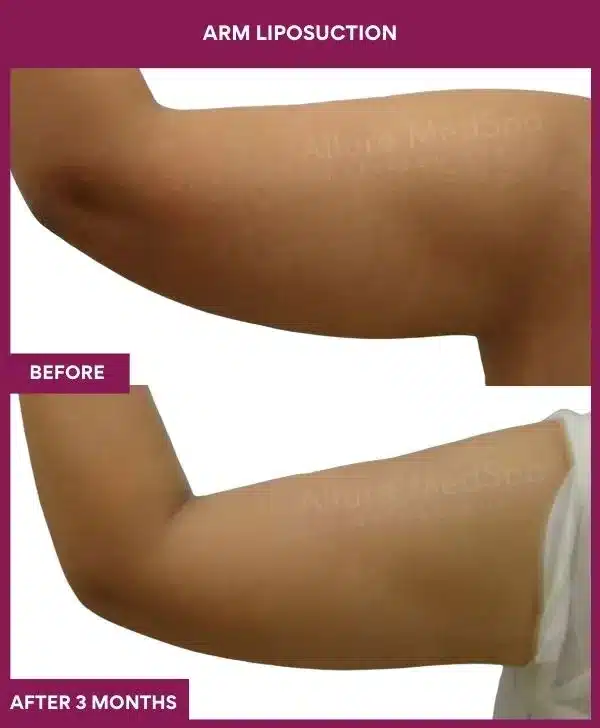
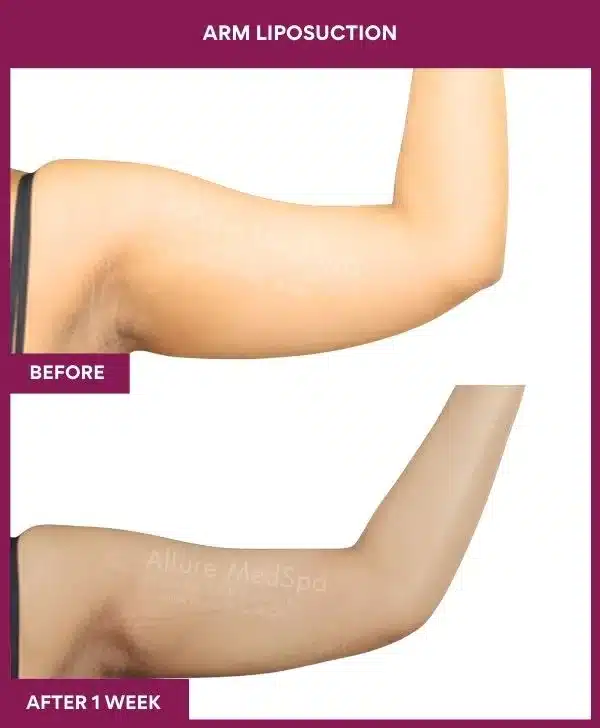
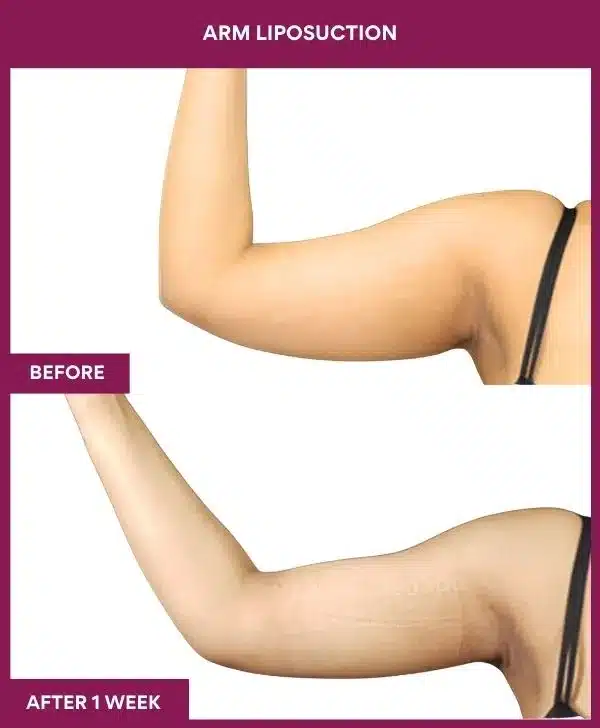
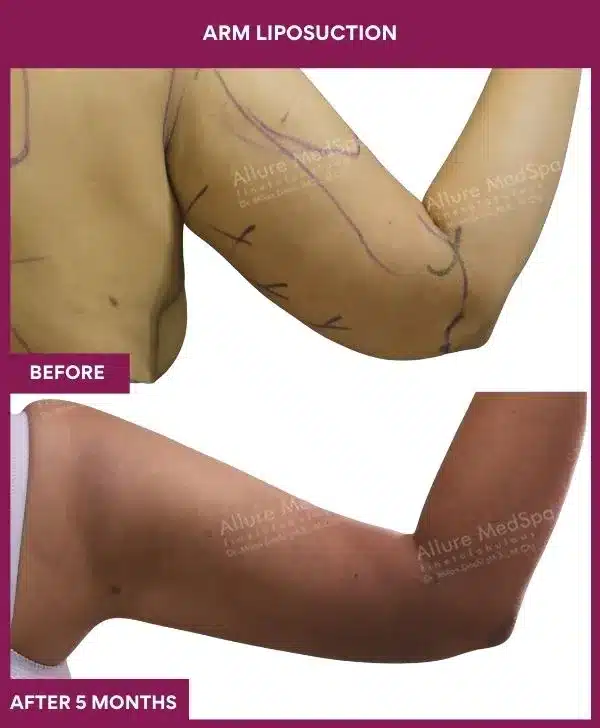
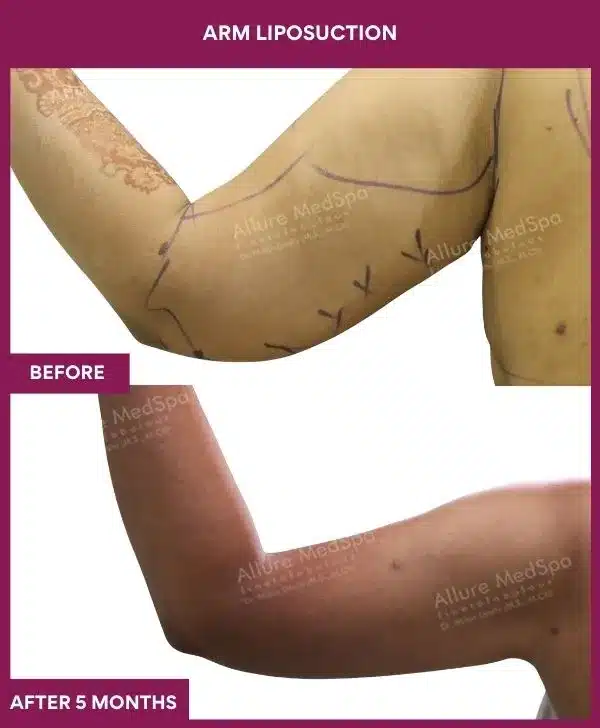
Arm Liposuction by India’s Leading Cosmetic Surgeons – Check Cost in Mumbai
Liposuction Surgery Patient Testimonials: Fine To Fabulous Journeys

Awarded by Google.com
Rating: 4.7
Reviews: 485+

Awarded by WhatClinic.com
Rating: 4.8
Reviews: 119+

Awarded by Realself
Rating: 4.9
Reviews:453+

Awarded by Facebook
Rating: 4.6
Reviews:105+
Dr Milan Doshi and his staff are very professional and committed as the centre is highly equipped with advanced technology. I had closed rhinoplasty 4 months back and I’m seeing the results as to how it becomes successful.
Deepika Shetty
The doctor explained everything clearly and the surgery was smooth. Recovery was faster than I expected and the team was very supportive.
Rahul Mehta
Very natural results and excellent staff. From consultation to follow-up, the experience was outstanding and boosted my confidence.
Sneha Kapoor
“Inspired by their journey? Start yours.”
Video: Liposuction Surgery Explain By Dr. Milan Doshi
Dr Milan Doshi is describing the Liposuction Surgery in detail with benefits, candidacy, associated risks and significance
Am I a Candidate?
(4 quick questions)
Fullness, weight, recoil, skin — four questions start the plan.
Discuss My ResultNon-diagnostic — an examination confirms it
Quick Facts About Facelift Surgery
TIME REQUIRED
1–3 hours
ANESTHESIA
General / local
HOSPITAL STAY
Day care
PAIN LEVEL
Mild–moderate
BACK TO WORK
3–7 days
Final RESULTS
3–6 months
SUCCESS RATE
97–98%
COMPLICATIONS
Under 2–3%
How Much Does Arm Liposuction Surgery Cost in Mumbai?
Arm liposuction in Mumbai typically ranges from ₹50,000 to ₹1,20,000. The final cost depends on the amount of upper-arm fat, technique, anaesthesia, and whether connected areas such as the underarm roll or upper back are treated in the same procedure.
| Item | Allure price |
|---|---|
| Arm liposuction (both upper arms) | ₹50,000 – ₹1,20,000 |
| Arms with upper back | Priced as a combination — closer to one area than two |
| Arm lift (brachioplasty) | Quoted after examination |
| Consultation | ₹1,500 |
| Is the consultation fee adjusted against surgery? | Yes — adjusted against surgery if the surgery is done within 6 months. |
| GST | Shown separately on your invoice |
| EMI | Available |
What changes the arm price?
- Fat: the amount of upper-arm fat.
- Technique: standard tumescent, or ultrasound assistance where the tissue needs it.
- Anaesthesia: local with sedation, or general when combined with other areas.
- Connected areas: the underarm roll or upper back in the same session.
Full Liposuction Cost Guide → area-wise prices, technique premiums, inclusions, GST and EMI.
Get your exact quote & surgery plan
Share your details — our team responds within working hours with cost, EMI options and next steps.
Most Common Question People Ask
Q1. Will arm liposuction leave me with loose skin?
Ans. It depends mainly on your skin elasticity. If your upper-arm skin springs back after being lifted, it may re-drape over the reduced fat layer. If it stays lifted — particularly after major weight loss — removing fat can make existing laxity more visible, and an arm lift may be more appropriate.
Q2. Should I have arm liposuction or an arm lift?
Ans. Choose according to the tissue: liposuction when excess fat is the main issue and the skin has useful recoil; an arm lift when loose skin dominates. Liposuction leaves small access marks. An arm lift removes skin but leaves a longer inner-arm scar, with a 28.9% overall complication rate in one review — mostly minor, scar- and wound-related.
Q3. When can I lift weights again after arm liposuction?
Ans. A staged return to upper-body exercise is commonly considered around four to six weeks, starting with lighter resistance and increasing only after surgical clearance. Walking begins much earlier. Pushing, pulling and overhead lifting return later, because they load the healing upper-arm tissue directly.
Q4. Does arm liposuction leave scars?
Ans. Only small access-point marks — usually two or three, near the elbow and in the armpit fold. They are placed where they are least visible and away from the ulnar nerve, and they tend to fade over several months. Indian skin can develop temporary pigmentation at access sites, so sun protection and patience help while they settle.
Q5. Is arm liposuction done under local or general anaesthesia?
Ans. Arm liposuction alone may be possible under local anaesthesia with sedation in selected patients. General anaesthesia may be more appropriate when the arms are combined with other areas such as the upper back. The tumescent lidocaine dose is calculated for your body weight, and your anaesthetic plan is confirmed once the treatment map is agreed.
Q6. How soon can I go back to work after arm liposuction?
Ans. Many desk-based patients return within about three to seven days, once bruising and tightness have eased. Lifting, pushing and pulling stay restricted for longer, because they load the healing upper-arm tissue, and compression sleeves are worn as advised. Jobs that involve carrying or overhead work usually need more time — your surgeon will advise on your own role.
Q7. When will I see my final arm result?
Ans. Visible change appears within the first few weeks, but swelling and firmness keep settling for longer. Judge the final shape at around three months, with full settling over three to six months, not from an early photograph. Expect temporary differences between the arms before then — the arm you use more often swells more.
Q8. Can arms and the upper back be treated together?
Ans. Yes, when fullness continues from the upper arm into the underarm and bra line. Treating the connected area in the same session can avoid a visible step between a slimmer arm and a fuller back. The combined price is closer to one area than two, because theatre, anaesthesia and follow-up visits are paid once.
Q9. Do I need VASER for arm liposuction?
Ans. Not necessarily. Ultrasound-assisted liposuction such as VASER may be considered in selected arms, particularly in the middle group with moderate fat and some laxity, where a small 2023 study reported good contour change. It isn’t needed for every arm — the technique is chosen according to your tissue, not the other way round.
Q10. Will exercise alone fix my arms?
Ans. Strength training builds the triceps and improves shape, but it can’t choose where your body burns fat. If a substantial fat layer sits over the muscle, training alone may not remove it — and if the arm is already lean, the gym may be all you need.

Why Choose Dr. Milan Doshi?
Dr. Milan Doshi, MCh, MS — Indian board-certified plastic surgeon · ISAPS member · 27+ years in aesthetic and body-contouring practice in Mumbai · 16,000+ cosmetic surgeries. Because arms reward restraint and punish optimism, he examines every arm hanging and raised, separates stable-weight fat from post-weight-loss skin, and treats the arm conservatively — recommending an arm lift, the gym or no treatment when that’s the honest answer.
What does that mean for your arms?
- Two-position examination — hanging and raised.
- Skin assessed first — the pinch test decides lipo versus lift.
- Conservative fat removal — blending, not emptying.
- Neighbouring zones considered — underarm and upper back.
- Both options explained — including the arm-lift scar trade-off.
The Complete Guide About Facelift Surgery
What is Arm Liposuction (Upper-Arm Suction Lipectomy)?
A facelift, medically called rhytidectomy, lifts and repositions descended facial tissues, supports the deeper facial layers and gently redrapes loose skin. Modern planning works with the SMAS — the supportive sheet of tissue beneath the skin — instead of relying on skin tension alone.
This distinction matters. Pulling skin tighter creates tension at the incisions, tends to relapse and can produce an operated appearance. Repositioning the deeper layer allows the skin to be redraped without excessive tension.
A facelift primarily addresses structural descent — the gradual downward movement of deeper tissues, fat compartments and skin. It is not primarily a treatment for fine lines, pigmentation, pore size or generalised volume loss.
The three separate problems of facial ageing:
- Descent and laxity → addressed by lifting (facelift, neck lift, brow lift)
- Volume loss → addressed by volumising (fat grafting, fillers)
- Surface change — texture, pigmentation, fine lines → addressed by resurfacing and skin treatment
Adding volume to a lax face can make it look heavier. Tightening skin without deeper support can make the result look operated. Accurate diagnosis of which problem dominates is the single most important step.
Is facelift surgery cosmetic or reconstructive?
| Type | Main purpose | Common example |
|---|---|---|
| Cosmetic (aesthetic) | Improve appearance in a healthy face — soften jowls, redefine the jawline, improve face-neck contour | Standard rhytidectomy for age-related descent |
| Reconstructive / functional | Restore form or function after disease, injury or congenital difference | Facial reanimation, post-trauma or post-tumour facial reconstruction |
Most facelifts in private practice are cosmetic. Cosmetic facelift surgery should not be assumed to be covered by health insurance; coverage, where it exists, applies only to specific medically necessary indications and requires prior verification with your insurer.
Synonyms for facelift surgery
Patient terms: facelift, face lift, face tightening surgery, face and neck lift, sagging face surgery
Medical terms: rhytidectomy, cervicofacial rhytidectomy, SMAS facelift, extended SMAS facelift, deep-plane facelift, mid-face lift, lower facelift, facial rejuvenation surgery
Sources: Cervicofacial Rhytidectomy, StatPearls · ASPS – Facelift · Cleveland Clinic – Facelift
Do Your Arms Look Heavier Than You Feel?
Many people describe the same thing: their weight is stable, they exercise, yet the backs of their arms still look fuller than the rest of them — in sleeveless clothes, in photographs, or when they wave. That gap is usually anatomy, not lack of effort.
Three questions patients actually ask at consultation:
- “I’ve lost weight — why are my arms still big?” Fat-cell number is fairly stable in adulthood; weight loss mainly shrinks cells, and you can’t choose where the body becomes leanest first.
- “Is it fat, or is it loose skin?” The pinch test — and the arm raised and hanging — answers that.
- “Will the gym fix it?” Strength training shapes the triceps but can’t remove the fat layer over it.
What are the three common ways arms change?
| Change | What happens | What it means |
|---|---|---|
| Weight gain | Existing fat cells enlarge; the arm thickens across the back and inner surface | If skin stays elastic, weight reduction may improve the contour substantially |
| Weight loss | Fat cells shrink, but skin stretched by a larger arm may not contract to the same degree | An arm that still hangs after fat loss is mainly a skin-laxity problem, not a fat problem |
| Age | Skin and its supporting connective tissue become less elastic | The same fat can produce a very different contour at two ages — but skin quality matters more than age alone |
Why separate stable-weight arms from post-weight-loss arms?
| Patient A | Patient B |
|---|---|
| Has always had disproportionately full upper arms | Has lost a large amount of weight |
| Weight stable | Now has hanging or deflated arm skin |
| Often a fat problem | Usually a skin problem |
Global & Indian liposuction trends
- Worldwide (ISAPS 2024): 2,087,189 liposuction procedures — the second most performed surgical aesthetic procedure — and 212,223 upper-arm lifts.
- India (ISAPS 2024): 677,040 surgical aesthetic procedures in total, including 97,160 liposuction procedures.
- What it means for you: a common operation still needs an individual decision — the arm is where the wrong one shows most.
Sources: Spalding KL, Arner E, Westermark PO, et al. Dynamics of fat cell turnover in humans. Nature. 2008;453(7196):783–787, PMID 18454136 · El-Fahar MH, El-Gharbawi AH. Aesthetic Plast Surg. 2023;47(1):260–268, PMC9944711 · Carman W. Ten common misconceptions about liposuction. American Society of Plastic Surgeons, 2018 · International Society of Aesthetic Plastic Surgery (ISAPS). Global Survey 2024 — full report, published June 2025
What Are the Benefits of Arm Liposuction?
The main benefits of arm liposuction are a smoother, slimmer upper-arm line, better proportion with the shoulders and upper back, and clothes that fit more easily — through small access marks rather than a long scar, when the fat layer is the problem and the skin can re-drape.
Cosmetic benefits
- Less fullness at the back and inner upper arm.
- A smoother taper from shoulder to elbow, without flattening the shoulder.
- A cleaner underarm transition when the axillary fullness is treated too.
- Better proportion with the upper back and chest when neighbouring zones are planned together.
- Minimal scarring — two or three small access points near the elbow and armpit.
- More muscle visible where a thin fat layer was hiding existing triceps definition.
Comfort and day-to-day benefits
- Sleeves and blouses fit without straining at the upper arm.
- A short functional recovery — many desk-based patients return within three to seven days.
- Confidence in sleeveless clothing — phrased honestly: results vary with anatomy and healing.
- A lasting change in the treated area — removed fat cells don’t return, though remaining ones can enlarge with weight gain.
Sources: American Society of Plastic Surgeons. Liposuction · El-Fahar MH, El-Gharbawi AH. Ultrasound-assisted liposuction (UAL) arm contouring in non-post-bariatric patients: no rush for brachioplasty. Aesthetic Plast Surg. 2023;47(1):260–268, PMC9944711 · Carman W. Ten common misconceptions about liposuction. American Society of Plastic Surgeons, 2018
Which Problems Can Arm Liposuction Correct?
Arm liposuction mainly treats excess fat along the back and inner upper arm in people with stable weight and skin that springs back. It does not reliably correct hanging skin, crepey texture, post-weight-loss arms, muscle bulk or the arm-to-armpit fold when that is skin rather than fat.
| Concern | Arm liposuction relevance | Possible approach | Learn more |
|---|---|---|---|
| Fullness at the back of the upper arm (“bingo wings”) | High — the classic pattern | Arm liposuction | Step-by-step |
| Inner upper-arm fullness | High when skin recoils | Arm liposuction | Step-by-step |
| Underarm (axillary) fullness | Moderate — part fat, part skin | Liposuction ± assessment of the fold | Limitations |
| Fullness running into the bra line and upper back | High when treated together | Arms + upper back in one session | Back liposuction |
| Mild sagging with moderate fat (El Khatib 2a) | Often suitable | Liposuction alone | Limitations |
| Moderate sagging with large fat (2b) | Sometimes | Ultrasound-assisted liposuction or a shorter-scar skin approach | Techniques |
| Severe sagging (3) or hanging skin with little fat (4) | Low | Arm lift (brachioplasty), ± liposuction | Types |
| Post-weight-loss arms | Low | Arm lift | Arm lift guide |
| Crepey or wrinkled skin | Low — volume, not texture | Skin assessment; liposuction may make texture more visible | Limitations |
| Large muscular arms with little fat | Very low | Strength training; no surgery | Types |
The anatomy of the upper arm — what arm liposuction works on
- Back (posterior) and inner surfaces hold most of the fat that’s treated.
- The bicipital groove — the line between the biceps and triceps regions — is a marking landmark; its inner part carries nerves and vessels and is avoided.
- The ulnar nerve runs behind the elbow (the “funny bone”), so the elbow access point is placed to protect it.
- The shoulder region usually holds little fat; over-treating it flattens the shoulder-to-arm transition.
- The fat layer is thin compared with the abdomen — less room for error.
- The skin envelope must re-drape by itself; liposuction doesn’t tighten it.
Sources: El Khatib HA. Classification of brachial ptosis: strategy for treatment. Plast Reconstr Surg. 2007;119(4):1337–1342, PMID 17496609 · El-Fahar MH, El-Gharbawi AH. Ultrasound-assisted liposuction (UAL) arm contouring in non-post-bariatric patients: no rush for brachioplasty. Aesthetic Plast Surg. 2023;47(1):260–268, PMC9944711 · Wu S, Coombs DM, Gurunian R. Liposuction: concepts, safety, and techniques in body-contouring surgery. Cleve Clin J Med. 2020;87(6):367–375
What Are the Limitations of Arm Liposuction?
Arm liposuction won’t correct an upper arm where loose skin is the main problem. Removing fat beneath skin that has already lost substantial elasticity can leave the arm looking emptier while making the laxity more visible — arms are less forgiving than most areas when the procedure is chosen incorrectly.
The arm is not a sculpture block. Liposuction changes the fat layer; it can’t create muscle, tighten stretched skin or change crepey texture.
It doesn’t replace weight loss. If your weight is still changing, the arm the operation was planned on will keep changing too.
More is not better. A slightly under-treated arm looks like a normal arm; an over-treated arm looks hollow, and that is hard to correct.
What is the El Khatib upper-arm classification?
- A published clinical classification grades upper arms by fat excess and brachial ptosis — sagging of the upper-arm skin, measured in centimetres.
- More useful than “good” or “bad” skin — it supports a graduated approach from liposuction alone to a full arm lift.
| Stage | Fat and sagging | General treatment direction |
|---|---|---|
| Stage 1 | Minimal fat, no sagging | Often no major surgical treatment needed |
| Stage 2a | Moderate fat, mild sagging (under 5 cm) | Liposuction alone can often be suitable |
| Stage 2b | Large fat deposit, moderate sagging (5–10 cm) | Liposuction may still be considered, often with ultrasound assistance; some need a shorter-scar skin approach |
| Stage 3 | Large fat deposit, severe sagging (over 10 cm) | Skin removal becomes increasingly important — combined liposuction and arm lift discussion |
| Stage 4 | Minimal or no fat, severe sagging | A skin problem — conventional arm lift; not a liposuction case |
The 2023 ultrasound-assisted arm study treated stages 2a, 2b and 3 in patients who’d never had weight-loss surgery, and stated that stage 4 post-bariatric patients are not candidates for liposuction alone — the conventional arm lift remains the gold standard there.
When may liposuction be the wrong arm treatment?
| Situation | Why liposuction may fail |
|---|---|
| Skin stays lifted after the pinch test | Removing more volume underneath can make hanging more obvious |
| Major weight-loss arms | The problem is excess skin left after fat volume has already fallen |
| Thin, crepey or heavily wrinkled skin | Liposuction changes volume, not texture — less support can make texture more noticeable |
| The upper arm is mainly muscular | If the pinchable fat layer is small, there’s little meaningful fat to remove |
| The underarm fold isn’t simply fat | The arm-to-armpit transition can be a mix of skin and soft tissue |
- If liposuction isn’t appropriate, you still get an answer: an arm lift, weight stabilisation, reassessment after further weight change, a non-surgical discussion for very mild laxity, or no treatment at all.
Sources: El Khatib HA. Classification of brachial ptosis: strategy for treatment. Plast Reconstr Surg. 2007;119(4):1337–1342, PMID 17496609 · El-Fahar MH, El-Gharbawi AH. Aesthetic Plast Surg. 2023;47(1):260–268, PMC9944711 · Carman W. Ten common misconceptions about liposuction. American Society of Plastic Surgeons, 2018
Why Consult Before Arm Liposuction?
An arm liposuction consultation is a diagnostic appointment, not a sales appointment. Its job is to decide whether your arm is a fat problem, a skin problem or both — and whether liposuction, an arm lift, the gym or nothing is the honest answer.
What happens during an arm liposuction consultation?
- Two positions: the arm is examined hanging naturally and raised out to the side — a contour issue visible only with the arm lifted may be a different mix of skin and fat.
- The pinch test: fat thickness and whether the skin springs back.
- Weight history and health: medicines, smoking, clotting history and any major weight loss.
- Neighbouring zones: underarm, bra line and upper back.
- A written plan and quote: technique, anaesthesia, recovery and what’s included.
What should I prepare before consultation?
- Photos with arms down and arms raised, front and back.
- Your weight history — especially any loss of 20 kg or more.
- Medicines and supplements, including blood thinners and herbal products.
- Previous surgery or liposuction in the same area.
- What bothers you — fullness, hanging skin, sleeves, underarm.
- Your question: “What will liposuction not fix for my arms?”
Is an online arm liposuction consultation possible?
Yes — a virtual first consultation is available for outstation and international patients, using photos and video with the arm hanging and raised; the plan is confirmed at examination. Consultation fee ₹1,500, adjusted against surgery if the surgery is done within 6 months. → Online consultations
Sources: American Society of Plastic Surgeons. Executive Summary — Practice Advisory on Liposuction · National Health Service (UK). Liposuction · El Khatib HA. Classification of brachial ptosis: strategy for treatment. Plast Reconstr Surg. 2007;119(4):1337–1342, PMID 17496609
Which Techniques Are Used in Arm Liposuction?
“Technique” in arm liposuction means how the fat is loosened and removed — standard tumescent suction, power-assisted or ultrasound-assisted — while the access points, the treatment zone and the conservative endpoint stay the same.
| Technique | How it works | May suit | Relative extent |
|---|---|---|---|
| Tumescent suction-assisted (SAL) | Dilute local anaesthetic is infiltrated, then fat is removed with fine cannulas | Most arms with good skin recoil | Standard |
| Power-assisted (PAL) | A vibrating cannula helps move through fibrous fat | Denser or previously treated fat | Standard, with less surgeon effort |
| Ultrasound-assisted (UAL / VASER) | Ultrasound energy loosens fat before suction | Selected middle-group arms — moderate fat with some laxity | More superficial work possible; needs care with energy settings |
| Liposuction combined with skin excision | Fat reduction plus removal of a strip of skin | Significant fat and skin excess | A different operation — arm lift |
Tumescent suction is the foundation: the lidocaine dose is calculated for your body weight, and fine cannulas make even passes through a thin fat layer.
Ultrasound assistance can help in selected arms. A 2023 study treated 28 women who had never had weight-loss surgery, with moderate-to-significant fat and mild-to-moderate sagging, using ultrasound-assisted liposuction alone: mid-arm circumference fell by about 23.5% at two months, no complications were reported and most patients were very satisfied.
Is VASER always better than tumescent liposuction for arms?
- No. The technique is chosen for the tissue, not the other way round.
- Most arms with good skin do well with standard tumescent liposuction.
- The ultrasound evidence for arms is small and short-term — 28 patients, two-month follow-up.
- Energy devices add a burn and skin-injury risk if settings or treatment time are wrong.
- No device tightens truly hanging skin — that remains an arm-lift decision.
Sources: El-Fahar MH, El-Gharbawi AH. Ultrasound-assisted liposuction (UAL) arm contouring in non-post-bariatric patients: no rush for brachioplasty. Aesthetic Plast Surg. 2023;47(1):260–268, PMC9944711 · Wu S, Coombs DM, Gurunian R. Liposuction: concepts, safety, and techniques in body-contouring surgery. Cleve Clin J Med. 2020;87(6):367–375 · Klein JA, Jeske DR. Estimated maximal safe dosages of tumescent lidocaine. Anesth Analg. 2016;122(5):1350–1359, PMID 26895001 · Comerci AJ, Arellano JA, Alessandri-Bonetti M, et al. Risks and complications rate in liposuction: a systematic review and meta-analysis. Aesthet Surg J. 2024;44(7):NP454–NP463, doi:10.1093/asj/sjae074
What Are the Types of Arm Liposuction?
Where technique describes how the fat is removed, type describes the scope of the operation — arms alone, arms with neighbouring zones, or liposuction as part of skin removal.
- Arm liposuction alone — back and inner upper arm, both sides.
- Arms + underarm — when the axillary fullness is fat rather than skin.
- Arms + upper back / bra line — one continuous contour, priced closer to one area than two.
- Ultrasound-assisted arm liposuction — selected middle-group arms.
- Short-scar arm lift — limited skin removal near the armpit, sometimes with liposuction.
- Full arm lift (brachioplasty) — a skin-removal operation, often with liposuction.
- Revision arm liposuction — for residual fat or unevenness after earlier surgery, once healed.
Non-surgical options: overall weight loss reduces fat-cell size across the body but can’t target the arms; strength training builds the triceps but can’t remove the fat over it.
| Option | What it can do | What it can’t do | Usually best when |
|---|---|---|---|
| Overall weight loss | Reduces fat-cell size across the body | Can’t selectively reduce only the arms | Weight is still above a stable target |
| Strength training | Builds triceps and improves muscular shape | Can’t selectively remove the fat over the muscle | The arm is already relatively lean |
| Arm liposuction | Removes selected fat from the upper arm | Can’t remove significantly loose skin | Fat is the main issue and skin has good recoil |
| Arm lift / brachioplasty | Removes excess skin and can address fat | Avoid a longer permanent scar | Loose skin is the main concern |
Arm lift (brachioplasty) vs liposuction — which do you need?
| Feature | Arm liposuction | Arm lift / brachioplasty | Combined approach |
|---|---|---|---|
| What it removes | Fat | Excess skin, usually with fat | Fat reduction plus skin removal |
| Scar | Two or three small access-point marks | Long inner-arm scar, commonly elbow toward armpit | Arm-lift scar remains |
| Usually suited to | Fat excess with useful skin recoil | Significant loose skin, especially after major weight loss | Significant fat and skin excess |
| Anaesthesia | Local with sedation, or general | General | General |
| Recovery | Shorter functional recovery | Longer wound-healing recovery | Longer recovery |
| Published complication data | Overall liposuction complication rate around 2.6% in a 2024 meta-analysis | 28.9% across 27 studies (1,065 patients) — mostly minor | Depends on the combined procedure |
| Revision data | Generally lower | 0–21% across studies | Case-dependent |
| Main trade-off | Minimal scarring, but can’t remove loose skin | Removes excess skin, but leaves a permanent visible scar | Greater correction, greater surgical burden |
- Arm-lift figures measure different things: 28.9% overall (mostly minor — raised scarring about 11%, seroma about 7%, delayed healing about 6%) versus major complications in 3.4% of 2,294 patients in a US database.
- A middle group exists: the 2023 “No Rush for Brachioplasty” study used ultrasound-assisted liposuction to avoid a long scar in non-post-bariatric arms — stage 4 arms weren’t candidates.
Sources: Sisti A, Cuomo R, Milonia L, et al. Complications associated with brachioplasty: a literature review. Acta Biomed. 2017;88(4):393–402, PMID 29350652 · Nguyen L, Gupta V, Afshari A, et al. Incidence and risk factors of major complications in brachioplasty: analysis of 2,294 patients. Aesthet Surg J. 2016;36(7):792–803, PMID 27217588 · El Khatib HA. Plast Reconstr Surg. 2007;119(4):1337–1342, PMID 17496609 · El-Fahar MH, El-Gharbawi AH. Aesthetic Plast Surg. 2023;47(1):260–268, PMC9944711 · Comerci AJ, Arellano JA, Alessandri-Bonetti M, et al. Risks and complications rate in liposuction: a systematic review and meta-analysis. Aesthet Surg J. 2024;44(7):NP454–NP463, doi:10.1093/asj/sjae074 · Spalding KL, et al. Nature. 2008;453(7196):783–787, PMID 18454136
How Is Arm Liposuction Performed Step-by-Step?
Arm liposuction is performed by marking the arm standing with the arm out to the side, infiltrating tumescent solution, then removing fat through two or three small openings with fine cannulas — checking thickness and symmetry throughout rather than aiming for a volume.
| Step | What happens |
|---|---|
| 1. Consultation plan confirmed | Areas, technique, anaesthesia and the treatment map agreed; pre-operative tests reviewed |
| 2. Marking | Standing, arm held out to the side (about 90°), rotated outward and the elbow bent — fullness and hanging show clearly |
| 3. Photographs | Arms down and arms raised, front and back |
| 4. Anaesthesia | Local with sedation for arms alone in selected patients; general when combined with other areas |
| 5. Access points | Near the elbow — over the lower triceps tendon, behind the course of the ulnar nerve — and in the armpit fold |
| 6. Tumescent infiltration | Dilute lidocaine and adrenaline, dose calculated for your body weight, numbs the area and reduces bleeding |
| 7. Fat removal | Fine cannulas, even criss-cross passes along the back and inner upper arm; the inner bicipital groove is avoided |
| 8. Transitions | The underarm and shoulder are blended so there’s no step between treated and untreated zones |
| 9. Endpoint check | Pinch test arm to arm — an even residual thickness, not a target volume |
| 10. Dressings and sleeves | Absorbent pads and compression sleeves that cover the treated area evenly |
| 11. Recovery and discharge | Day care for most arm cases; walking the same day |
Surgical elements and devices
| Element / device | Possible role | Important consideration |
|---|---|---|
| Fine cannulas | Remove fat in a thin layer evenly | Too aggressive near the skin causes waviness |
| Tumescent solution | Anaesthesia and less bleeding | Lidocaine dose calculated and documented |
| Power-assisted handpiece | Helps through fibrous fat | A tool, not a different result |
| Ultrasound (VASER) | Loosens fat in selected arms | Energy settings and time control burn risk |
| Access-point placement | Protects the ulnar nerve and hides marks | Indian skin can pigment at access sites |
| Compression sleeves | Support the contour and reduce swelling | Even pressure — no tight band at the elbow |
Sources: El-Fahar MH, El-Gharbawi AH. Ultrasound-assisted liposuction (UAL) arm contouring in non-post-bariatric patients: no rush for brachioplasty. Aesthetic Plast Surg. 2023;47(1):260–268, PMC9944711 · Klein JA, Jeske DR. Estimated maximal safe dosages of tumescent lidocaine. Anesth Analg. 2016;122(5):1350–1359, PMID 26895001 · Wu S, Coombs DM, Gurunian R. Liposuction: concepts, safety, and techniques in body-contouring surgery. Cleve Clin J Med. 2020;87(6):367–375 · Mysore V. Tumescent liposuction: standard guidelines of care. Indian J Dermatol Venereol Leprol. 2008;74 Suppl:S54–S60, PMID 18688105
When Will I See Final Arm Liposuction Results?
Early arm-liposuction contour change is visible within the first few weeks, but swelling and firmness hide part of it; the final upper-arm shape is usually judged at around three months and settles fully over three to six months.
| Time | What you may notice |
|---|---|
| Days 1–2 | Drainage from small access points, swelling and tightness; sleeves on |
| Week 1 | Bruising visible; arms feel heavy; many desk-based patients back at work |
| Weeks 2–4 | Firm or ridged areas under the skin; one arm may look bigger than the other |
| Weeks 4–6 | Swelling clearly less; staged return to upper-body training after clearance |
| Month 2 | In the 2023 ultrasound study, mid-arm circumference was down about 23.5% |
| Around month 3 | Contour more settled — the first fair time to judge |
| Months 3–6 | Firmness softens; access-point marks keep fading |
What can affect the final arm liposuction result?
- Skin recoil — the single biggest factor.
- Weight stability — remaining fat cells enlarge with weight gain.
- How evenly compression is worn.
- Hand dominance and activity — swelling is often asymmetric early.
- Technique and endpoint — conservative, even removal.
- Smoking and general health.
Sources: El-Fahar MH, El-Gharbawi AH. Aesthetic Plast Surg. 2023;47(1):260–268, PMC9944711 · Klein JA. Post-tumescent liposuction care: open drainage and bimodal compression. Dermatol Clin. 1999;17(4):881–889, doi:10.1016/S0733-8635(05)70135-2 · National Health Service (UK). Liposuction
What Is the Aftercare After Arm Liposuction?
Arm liposuction aftercare centres on evenly fitted compression sleeves, early walking, keeping the access points clean while they drain, and a staged return to lifting — with your own written instructions deciding the details.
What care is usually advised after arm liposuction?
- Compression sleeves covering the treated area evenly — fit matters more than tightness.
- Duration as instructed — Indian guidance describes roughly 2–4 weeks; the 2023 arm study used 6–8 weeks.
- Absorbent pads over open access points while blood-tinged fluid drains in the first days.
- Walking from the same day to reduce clot risk.
- Medicines exactly as prescribed.
- Follow-up reviews at the times given.
- Ask at consultation which sleeve is used, whether it’s included, and whether wear is full-time or staged.
What should patients avoid after arm liposuction?
| Avoid | Why |
|---|---|
| Heavy lifting, pushing and pulling early | They load the healing upper-arm tissue directly |
| Overhead lifting before clearance | Strains exactly the area that’s healing |
| Upper-body gym work before about 4–6 weeks | Staged return protects the contour |
| A sleeve that rolls into a tight band | Can leave a pressure line at the elbow |
| Removing compression early | Swelling settles less evenly |
| Smoking | Slows healing and raises complication risk |
| Aspirin or anti-inflammatories unless prescribed | Can increase bleeding |
| Sun on fresh access points | Indian skin can pigment at access sites |
| Judging the result at week three | Asymmetric swelling is normal then |
| Ignoring warning signs | See Topic 12 — call the team |
Sources: Mysore V. Tumescent liposuction: standard guidelines of care. Indian J Dermatol Venereol Leprol. 2008;74 Suppl:S54–S60, PMID 18688105 · Klein JA. Post-tumescent liposuction care: open drainage and bimodal compression. Dermatol Clin. 1999;17(4):881–889, doi:10.1016/S0733-8635(05)70135-2 · El-Fahar MH, El-Gharbawi AH. Aesthetic Plast Surg. 2023;47(1):260–268, PMC9944711 · World Health Organization. Smoking greatly increases risk of complications after surgery. 20 Jan 2020
What Are the Risks and Complications of Arm Liposuction?
Arm liposuction is generally safe for an appropriately selected patient operated on by a trained plastic surgeon, but it is real surgery with recognised risks — and on the arm, the biggest avoidable risk is choosing liposuction when the problem is skin.
Common / expected: swelling, bruising, tightness, temporary numbness and asymmetric swelling in the first weeks.
Uncommon: contour irregularity or waviness, seroma (a fluid pocket), temporary pigmentation at access points in Indian skin, prolonged numbness.
Rare but important: infection, skin injury or burn with energy devices, nerve injury, blood clots (DVT/PE), local-anaesthetic toxicity and anaesthesia reactions.
| Complication (2024 meta-analysis, 29,368 patients, all areas) | Reported pooled rate |
|---|---|
| Any complication | 2.62% |
| Contour deformity / touch-up | 2.35% |
| Hyperpigmentation | 1.49% |
| Seroma | 0.65% |
| Haematoma | 0.27% |
| Infection | 0.02% |
A broader 2024 meta-analysis (60 studies, 21,776 patients) reported 12% overall — studies count complications differently, so neither number is your personal risk.
| Risk area | How we work to minimise it |
|---|---|
| Choosing lipo for a skin problem | Two-position examination, pinch test and El Khatib staging before booking |
| Contour irregularity / hollowing | Fine cannulas, even passes, conservative endpoint, pinch test arm to arm |
| Ulnar nerve | Elbow access point placed behind its course |
| Inner-arm nerves and vessels | The inner bicipital groove is avoided |
| Local-anaesthetic toxicity | Tumescent lidocaine dose calculated by body weight and documented |
| Blood clots | Risk assessment, walking the same day, extra prophylaxis when indicated |
| Seroma and swelling | Open drainage and evenly fitted sleeves |
| Burn or skin injury (ultrasound) | Controlled energy settings and treatment time |
| Access-point pigmentation | Discreet placement, sun protection, early topical care |
| Infection | Sterile theatre protocol; antibiotics where indicated |
Sources: Comerci AJ, Arellano JA, Alessandri-Bonetti M, et al. Risks and complications rate in liposuction: a systematic review and meta-analysis. Aesthet Surg J. 2024;44(7):NP454–NP463, doi:10.1093/asj/sjae074 · Aljerian A, Abi-Rafeh J, Hemmerling T, Gilardino MS. Complications of aesthetic liposuction performed in isolation: a systematic literature review and meta-analysis. Plast Surg (Oakv). 2024;32(1):19–32, PMID 38433796 · Iverson RE, Lynch DJ; ASPS Committee on Patient Safety. Practice advisory on liposuction. Plast Reconstr Surg. 2004;113(5):1478–1490, PMID 15060366 · Klein JA, Jeske DR. Estimated maximal safe dosages of tumescent lidocaine. Anesth Analg. 2016;122(5):1350–1359, PMID 26895001 · National Health Service (UK). Liposuction · NHS. Deep vein thrombosis (DVT) · Emergency Response Support System, Government of India — Dial 112
What Is the Arm Liposuction Recovery Timeline?
Arm liposuction recovery is gradual but short functionally — many desk-based patients return to work within three to seven days, while compression, activity limits and swelling continue for weeks.
| Timepoint | What typically happens |
|---|---|
| Days 1–2 | Drainage from small access points, swelling, tightness and a heavy feeling in the arms; compression sleeves in place |
| Days 3–5 | Bruising more visible; many desk-based patients feel able to return to work |
| Weeks 1–2 | Swelling gradually reduces; lifting, pushing and pulling remain restricted |
| Weeks 2–4 | Firm or ridged areas can be felt beneath the skin as tissues heal |
| Weeks 4–6 | Staged return to upper-body training, after clearance |
| Around month 3 | Contour more settled; access-point marks continue fading |
Key recovery points: desk work in about three to seven days · walking from day one · upper-body training staged from about four to six weeks · sleeves as instructed (often 2–4 weeks, longer in some protocols) · no special sleep positioning · swelling may move toward the elbow and forearm under gravity · judge the result at around three months. → Complete recovery, compression and red-flag guide
Sources: Mysore V. Tumescent liposuction: standard guidelines of care. Indian J Dermatol Venereol Leprol. 2008;74 Suppl:S54–S60, PMID 18688105 · Klein JA. Post-tumescent liposuction care: open drainage and bimodal compression. Dermatol Clin. 1999;17(4):881–889, doi:10.1016/S0733-8635(05)70135-2 · El-Fahar MH, El-Gharbawi AH. Aesthetic Plast Surg. 2023;47(1):260–268, PMC9944711 · National Health Service (UK). Liposuction
Medical Codes for Arm Liposuction
Codes below are for administrative and documentation reference.
| CPT code | CPT description | ICD-10 code |
|---|---|---|
| 15878 | Suction assisted lipectomy; upper extremity — arm liposuction | E65 Localized adiposity · Z41.1 Encounter for cosmetic surgery |
| 15836 | Excision, excessive skin and subcutaneous tissue (includes lipectomy); upper arm — arm lift (brachioplasty) | L98.7 Excessive and redundant skin and subcutaneous tissue · Z41.1 |
- Codes describe, they don’t decide cover: cosmetic surgery is a standard exclusion in Indian health insurance policies (IRDAI Excl08).
(FAQs) Frequently Asked Question About Arm Liposuction
Q1. Is arm liposuction safe?
Ans. For appropriately selected patients it is generally safe, but it is real surgery. A 2024 meta-analysis of 29,368 liposuction patients reported an overall complication rate of about 2.6%, most often contour irregularity. On the arm, the biggest avoidable risk is choosing liposuction when loose skin is the real problem.
Q2. How long does arm liposuction take?
Ans. Arm liposuction usually takes about one to three hours, depending on how much fat is treated, whether ultrasound assistance is used and whether the underarm or upper back is added. Most arm cases are day care, so you go home the same day once you have recovered from the anaesthesia.
Q3. Is arm liposuction painful?
Ans. Most patients describe mild to moderate discomfort — tightness, soreness and a heavy feeling in the arms for the first few days — controlled with prescribed medicines. Tumescent local anaesthetic numbs the area during surgery. Bruising peaks in the first week, and lifting stays restricted while the tissue heals.
Q4. Will the fat come back in my arms?
Ans. Fat cells removed from the treated area don’t return, because adult fat-cell number is fairly stable. Remaining fat cells can still enlarge if you gain weight, which can change the shape again. A stable weight and regular activity after recovery help keep the arm contour you were planned for.
Q5. Can men have arm liposuction?
Ans. Yes. The assessment is the same: the pinch test, the arm hanging and raised, and weight history. Men who train often have more muscle under the fat, so the plan focuses on revealing the triceps rather than shrinking the arm — and very muscular arms with little fat may need no surgery.
Q6. Can I have arm liposuction after weight-loss surgery?
Ans. Usually liposuction alone isn’t the answer. After major weight loss, arms hang mainly because stretched skin hasn’t contracted, and the 2023 arm study excluded stage 4 post-bariatric arms from liposuction alone. An arm lift, sometimes combined with liposuction, is commonly recommended once your weight has been stable.
Q7. When can I travel or fly after arm liposuction?
Ans. Short trips are often possible within days, but long flights add clot risk, so timing is agreed with your surgeon after your first review. Keep walking, stay hydrated and wear your sleeves as advised. Outstation patients can start with a virtual consultation and plan follow-up back home.
Q8. Does insurance cover arm liposuction?
Ans. Usually no. Cosmetic surgery is a standard exclusion in Indian health insurance policies under IRDAI guidelines, and arm liposuction for contour is treated as cosmetic. The medical codes describe the procedure but don’t decide cover. EMI is available, and your written quote shows exactly what is included.
Q9. Can I combine arm liposuction with other areas?
Ans. Often, yes — the upper back and bra line are the most natural combination, and the abdomen, flanks or male chest can be added when each is independently suitable. Combining areas may mean general anaesthesia and a longer recovery, and the total volume removed is planned for safety.
Related Links
-
- Liposuction Before & After Gallery
- Liposuction Body Areas
- Liposuction Techniques
- VASER Liposuction
- Laser Liposuction
- Mega Liposuction
- Liposuction for Men
- Liposuction vs Tummy Tuck
- Fat-Dissolving Injections
- Non-Surgical Lipolysis
- Tummy Tuck Surgery
- Gynecomastia Surgery
- Body Lift Surgery
- Brazilian Butt Lift
- Fat Injection Surgery
- Bariatric Surgery